Blog

  • There was an Old Lady Who Swallowed Some Snow: Book Companion/Activity Pack

    Slide1


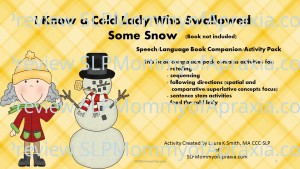
    As we move into January and I’m spending some time off during my winter break snowed in, I decided to create a follow up companion pack to my most popular companion pack to date, which was “I know an Old Lady Who Swallowed a Bell.”

    This is a similar repetitive story named, “There was an Old Lady Who Swallowed a Bell.”  This companion pack follows a similar format:

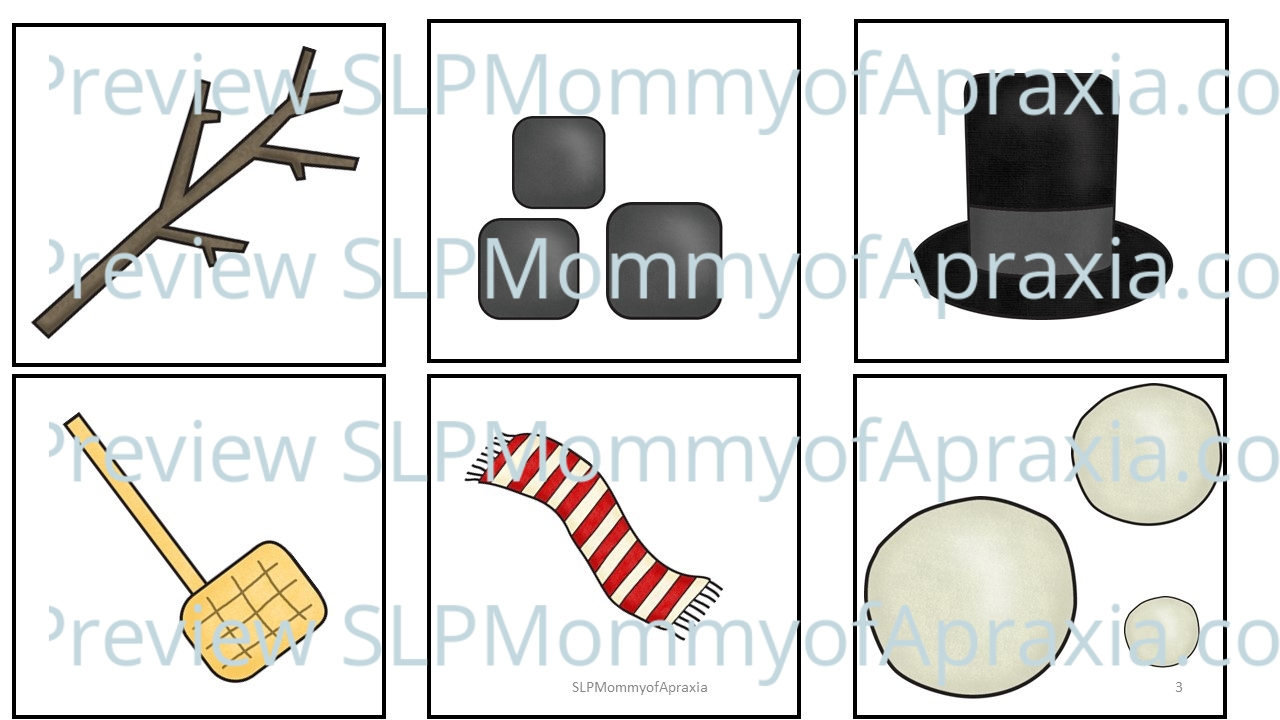
    I start with blown up pictures to aid in story participation.  When I’m in a group, I give each child a picture and then they are to read that “part” of the book when it comes up.

    Slide3


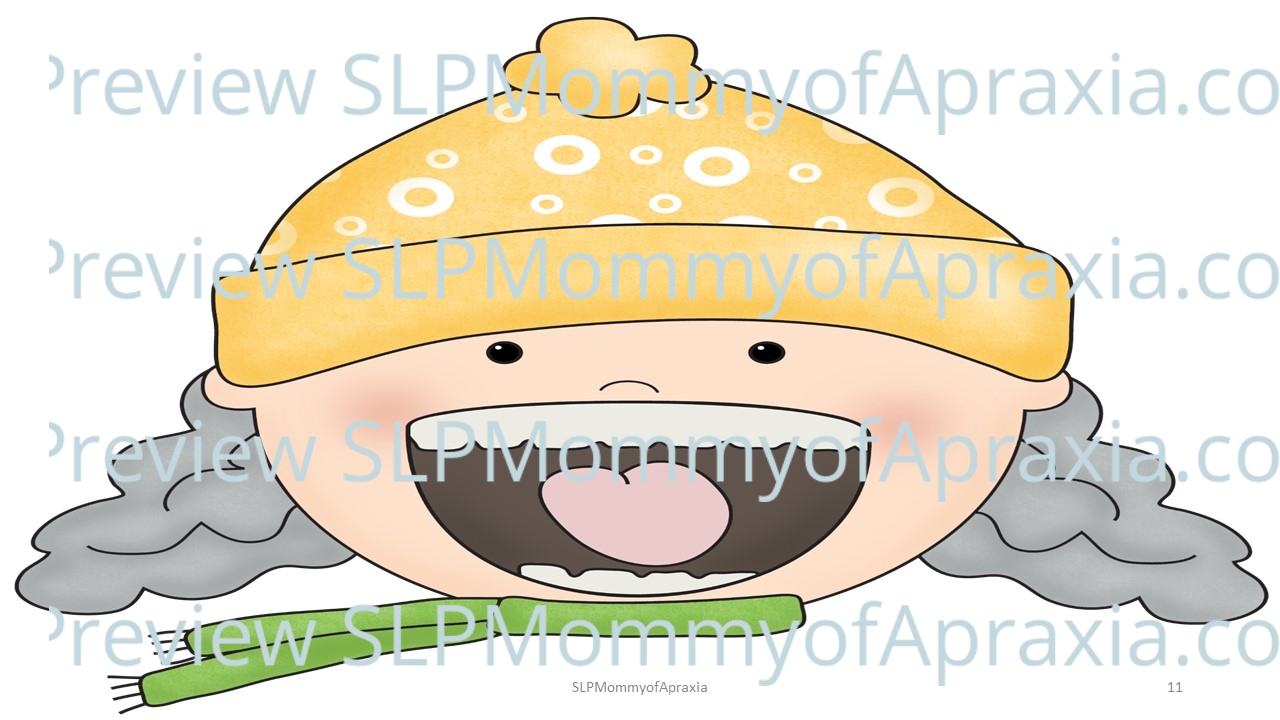
    Afterward, they take these pictures and “feed” the lady the items.  I have this blown up picture glued to a manila envelope with the mouth cut out.

    Slide11


    Next I have a story pictures and sequencing grid to have the children sequence the story and then have the option of visual aids to use for the story retell.

    Slide4


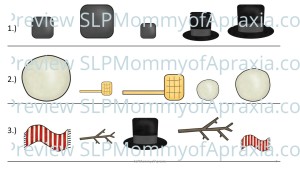
    I did a following directions activity focusing on comparatives and superlatives.  The directions ask the child to circle the smallest coal lump, or draw a line above the largest snowball etc.

    Slide7


    For an added challenge, I included an additional page to work on temporal concepts.  Directions include things like, “Before you touch the smallest coal lump, touch the largest hat.”

    Finally, I included 3 sentence stem worksheets.  “She saw….” “She has…..” “She ate…..”

    To get this activity, please visit my TpT store at: SLPMommyofApraxia.  Stay warm!

  • SLPMommyofApraxia Top Posts of 2014

    SLPMommyofApraxia Top Posts of 2014

    top posts 2014
    Graphics by MyCuteGraphics

    [mojoitem platform=’wordpress’ type=’themes’ item=’popular’ quantity=’3′ seller=’ [pinit] ‘ aff=”]

    I initially started blogging as a writing outlet to express my feelings; however, it is has turned into so much more.  I’m so grateful for everyone who emailed me or reached out to tell me their story this past year, and look forward to connecting with many more.

    Here are my top ten viewed posts from 2014

    1. Interview with Sharon Gretz, founder of apraxia-kids about her journey with a son who has apraxia and what parents should be seeing in therapy:  Read here

    2. If we don’t say we’re scared, does it mean we don’t have fears? Read here

    3. Apraxia is elusive, even to professionals. Read here

    4. Interview with Tonya from Therapy Fun Zone about motor planning issues related to gross and fine motor skills. Read here

    5. What is DTTC therapy for CAS?  An interview with Dr. Ruth Stoeckel from the Mayo Clinic.  Read here

    6. The Day I realized Apraxia was a blessing.  Read here

    7. What is your future like when you have global apraxia.  Read here

    8. Apraxia: How does that affect her vision/hearing? Read here

    9. There are no easy answers, only tough choices.  Read here

    10. Apraxia Intensive Training Institute aka Bootcamp.  Read here


    In case you missed it.  These are 10 of my personal favorites

    1. Did I cause her apraxia? Read here

    2. Just Love: Read here

    3. She really does have special needs: Read here

    4. People will forget what you said…but will never forget how you made them feel: Read here

    5. I saw the light go out in her eyes: Read here

    6. My apraxia star sparkled at her first Walk for CAS: Read here

    7. Kids say the Darndest things….unless they don’t because they have CAS: Read here

    8. Working our way out of the apraxia tunnel: Read here

    9. Wait, is she the ……R word?: Read here

    10. Oh my goodness…Ashlynn turns 5: Read here


  • Christmas 2014 updates

    Christmas 2014 updates

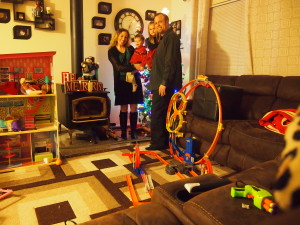
    Christmas 2015!  Ashlynn is now 5 years 2 months old.  Last year, we hit so many milestones I had waited for, for so long, and I was happy, very happy.  She could jump, ask basic questions, and tell us what she wanted for Christmas.

    This year, I’m not sure if we hit any other major milestones for which I had spent so much time praying.  However, we hit milestones for which I NEVER spent time praying, and that my friends, is even better.

    I learned this year, that Ashlynn really is a leader and not a follower.  Without language or motor skills, Ashlynn is forced to follow her peers around and play with what interests them.  However, this year at our Christmas party, she kept asking to sing Christmas carols and she was front in center.

    FRONT AND CENTER.

    Rocking back and forth singing loud and proud.  The Baskall’s are a family of singers.  My brother, sister, and two nieces were all in choir.  I wasn’t in choir, but I can brag that I have won some karaoke awards in my day ;), and I will say my dad had an awesome voice to accompany him on the guitar.  Oh, and my husband was also a singer before he swore it off after his voice changed (but he can still sing).  Could it be my daughter, the girl who struggled to say every sound and every word, could actually be a singer?  Time will tell, but she’s pretty freaking awesome at it at five.

    I learned this year Ashlynn just may be a crafter. My husband’s side of the family are very crafty, so much in fact, when I married him he told me he expected I would just fall in line.  Um…not exactly.  I have no desire to craft, though I think those who do and what they make are AWESOME.  However, my desire has become a lot stronger now that I see how much Ashlynn thrives with it.  Santa bought her a whole bucket full of supplies: foam pieces, stickers, glue, tape, buttons, glitter, and tissue paper.  She has spent the last two days “crafting.”

    Every parent I think imagines what their child will be and do when they are born, and I’m pretty sure it’s based off of what THEY did or have done.  I definitely had visions of an awesome basketball player, a beautiful writer, an expressive dancer, an angelic singer,  a fierce debater, or an amazing orator.  Can you guess those might be MY interests?

    I’m pleasantly surprised though to realize my daughter just may be the best cook this side of the Colorado Divide, or the Martha Stewart of the Rocky Mountains.  These aren’t my passions, but to see they are hers is something so much more awesome.  To see my daughter has passions outside of any of my expectations lets me see HER.  Something I mourned for so long seeing,  since she couldn’t really talk to me and her motor skill difficulties made it hard for her to manipulate anything.

    Who knows?  I have no doubt though that the girl who has apraxia of speech, a disorder that affects speech AND prosody, the MELODY of speech, may turn out to be one badass singer.  I mean, the girl sings a mean Jingle Bells and Rudolph the Red Nosed Reindeer, just saying. I wish I had a video.  Or, the girl who struggled to coordinate both hands together, just may be one amazing cook.

    I see my daughter more each year. This Christmas was pretty great.

    Oh! I also confirmed my suspicions she has an incredible visual memory like her daddy.  Girl could remember and would tell us every spot Gimbel our elf had been in this year.

    Aside from apraxia though, other issues are more glaring this year.  Her SPD has really kicked in and she CONSTANTLY had her hands in her mouth or anything else she could find to suck on. Family events become so overstimulating that she has noticeably more meltdowns than normal.  In fact, she may have had more tantrums than my two year old. 🙁  These incidents are still hard to watch. They still fill me with worry and with a touch of sadness. Sadness though, that carries hope.

    We got Ashlynn a dollhouse this Christmas to work on imaginative language, something she lacks.  I knew it was a good purchase though when I heard her mimic hours later something I had modeled earlier, “oh how lovely it is outside.”  My husband, amused clarified, “Is it lovely outside?”  Yep….that’s what she said.

    He also got her a scooter to help her work on her balance at a recommendation from his brother.  Sure enough, yesterday she couldn’t even hop forward on it, but today, she could quickly balance while taking little hops.

    That’s the thing though with special needs.  We buy our toys based on how it will help our children with their deficits, and that still leaves me kinda sad.

    However, Ashlynn’s not sad.  She’s amazing.  She perseveres.  She always perseveres, and you know what?  A person who perseveres is a successful person.
     

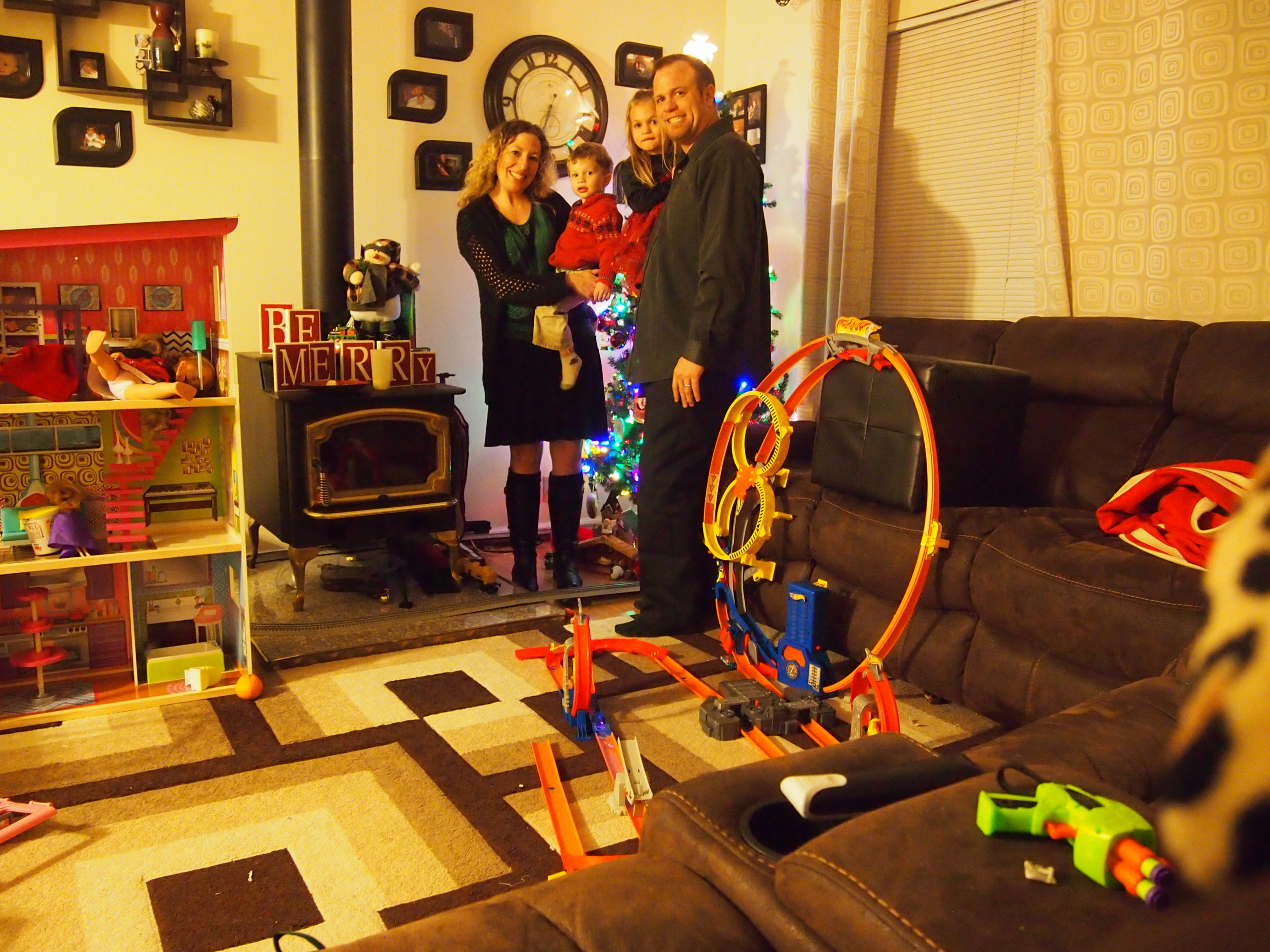
    OLYMPUS DIGITAL CAMERA

  • Can you have a talent if you have global apraxia?

    That question in the subject line.  Yes.  I’ve asked it.  Many times.  To whom I am asking, I don’t really know, but my fear is that the answer to my rhetorical question is…..No.

    I never told anyone this, though I was probably hinting when I would ask my husband, “what do you think Ashlynn will be when she grows up?”

    It’s not that I don’t believe in Ashlynn.  Oh the farthest things is from the truth.  However, when I am forced to think about global motor planning issues, what on earth could you be truly “talented” at?

    But then that got me thinking.  What is talent? I was always taught our talents are God-given gifts.  We are naturally inclined to be good at some skills than other people.  I mean, who can doubt some people are simply better at singing than others, no matter how much they practice?

    However, ,who can also deny that some people hone a skill, and become better at it simply because they practiced and worked harder than maybe someone who had the talent, but never utilized it.

    Ok, true but when you have global motor planning issues, and NOTHING comes naturally or easily, does it still work the same way?  Practice and work harder and you will be good at it?

    I had a mentor who used to tell me to look for the strengths in every child, because every child has them.  At the time I was young, and kinda absorbed her words and dismissed them at the same time.  Oh of course.  Every child is good at something.

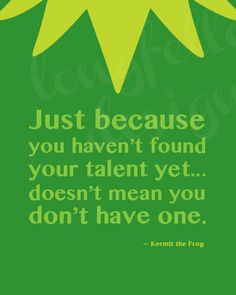
    Until I had Ashlynn.  Then I started thinking about this a lot.  What was Ashlynn naturally good at?  She has trouble with everything that involves any sort of motor skill.  Of course even Kermit would say:

    163513eb6f497e5fd40fd57d8d33baad

    I consoled myself with the fact that she is kind.  The kindest child I know in fact.  She is happy, she is social, and she can connect to people without words. She really is that good. Yes, I would think . That MUST be her talent.  That is until I talked to an adult with her disorder, and he said that very quality in fact turns out NOT to be valued by society.  That talent caused him to be used and taken advantage of.  When he saw a person begging for money, he genuinely believed they must have needed it, until he got burned and taken for all of his bank account.  “Some talent,” he had thought.

    I’m on Winter Break this week, so I have more time to just “be” with my kids.  My mother-in-law watches my children when I work, and she happens to be a very good baker and cook.  Actually, she happens to be quite talented at basically everything crafty.  I have never been crafty and really never had the desire.  However, Ashlynn is very crafty despite all of her limitations.  In addition, she absolutely loves cooking and baking.  Fortunately she has a grandma with ample amounts of patience who loves cooking with her.

    I came home from work one day to see Ashlynn and her Grandma covered in flour from an “accident” where Ashlynn turned on the blender before they got the lid on.  I’m glad it was her grandma and not me, because sadly when I come home from work my patience is very thin and I’m not sure I could create a learning rich environment such as this moment.

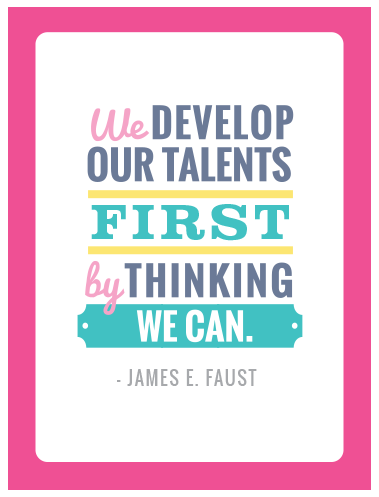
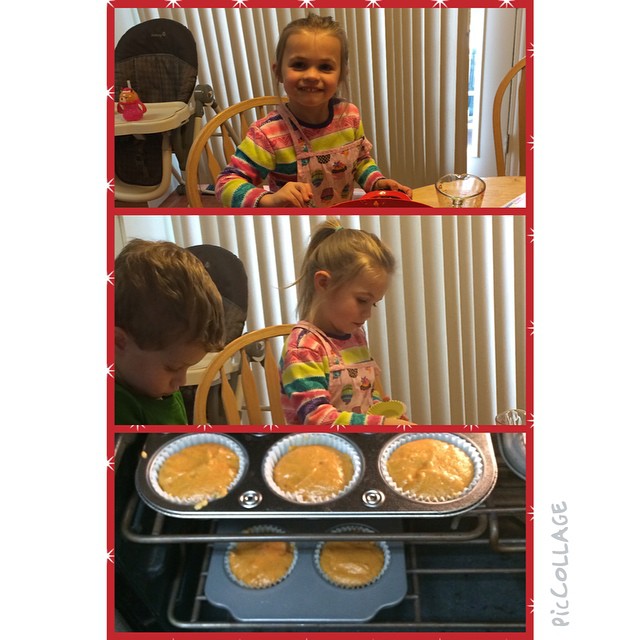
    On break though is a different story.  As a said, I had Ashlynn bake muffins with me.  She impressed me with her egg cracking that she did all by herself.  She measured out the baking soda being careful to slide it along the top to make it “smooth” as she said.  She carefully measured the water to line on the measuring cup that I asked her fill up, and methodically spooned out all the pumpkin from the can.  My son tried to “help” too, but quickly became bored and would just pop in and out.  Not Ashlynn though. She stayed with me to the very end.  I started thinking about talent again, and I ran across this quote:

    Thoughts_Quote_Day08_WEB


    I’ve decided that talent may include your natural God-given gifts; however, true talent is born from passion and determination.  Ashlynn has those in spades.  Plus, the only thing Ashlynn has to overcome is motor planning.  Once she masters the motor plan, she has mastered it.  Plain and simple.  Talent doesn’t seem to be so important anymore, and I know my husband’s right when he answers me,

    “Ashlynn will be and do whatever she wants to do.”  Just look at that smile!

    1469922_10203965489630176_7742200900676801700_n


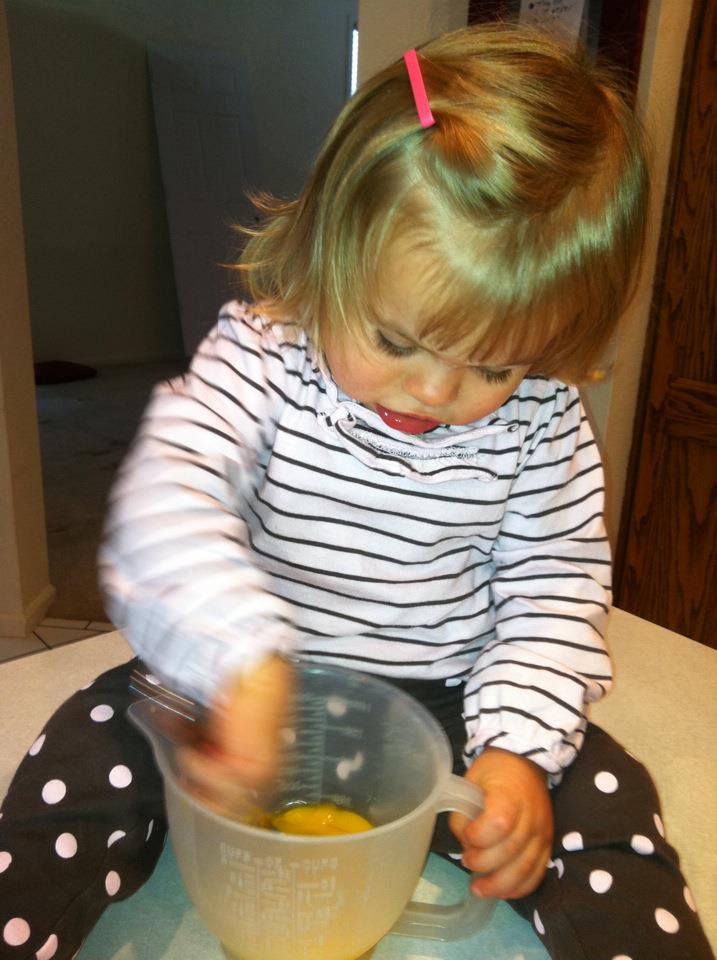
    Ashlynn not yet two years old making scrambled eggs with Grandma.


    302972_300090636673090_369283188_n


  • What exactly is CAS?

    What is Childhood Apraxia of Speech?

    Definition and characteristics

    Childhood Apraxia of Speech is a speech disorder that results from difficulty with programming, planning and sequencing the precise movements needed for clear speech.

    The American Speech/Language Hearing Association (ASHA), denotes three main characteristics that must be present for a diagnosis of CAS.

    • Inconsistent production on consonant and/or vowels in repeated productions of syllables and words.
      • An example of the word doggy for my daughter who has apraxia ended up being produced doddy, do-yee, daddy, da-yee.
    • Difficulty sequencing syllables and words of increasing complexity.
      • The child might be able to say “dada,” but when words or added like “my dada” the child might say ‘da-da-da.’
    • Errors with prosody
      • Prosody can include syllable stress, and kids with CAS might stress the first syllable in each word: BAnana instead of baNAna or may give equal stress to every syllable BA-NA-NA.
      • Can include difficulty with volume control.  This was definitely true with my daughter.  She could not be loud even when she tried in her younger toddler years.
      • May have prolonged sounds and prolonged pauses, possibly giving the child ad staccato sound to their voice

    Other soft signs that should be considered include:

    Speech

    • Vowel errors and/or reduced vowel inventory
      • May have a tendency to reduce vowels to the schwa (uh).  For example, buh-buh/bye bye.
    • Groping
      • The child’s mouth seems to make a lot of unnecessary movements while they “grope” for the correct placement
    • Loss of words or sounds that were previously produced
    • Consonant omissions in the initial position of words
    • May be more successful with automatic versus volitional speech
      • A child may say “mama” but then when asked to repeat “mah” may be unable to do so correctly
    • Limited babbling as a baby, or limited sound variation in their babbling
    • Typically comprehends much more than they can speak

     Non-speech

    • Oral apraxia (difficulty planning and executing non-speech oral motor movements
      • May have trouble blowing raspberries, puckering, sucking out of straw or blowing out a candle
    • General awkwardness or clumsiness
    • Limb apraxia
    • Low muscle tone

    Who diagnoses Childhood Apraxia of Speech?

    According to ASHA, a qualified Speech/Language Pathologist is the IDEAL professional to diagnose CAS.  However, diagnosis can be tricky, so you want to make sure you find an SLP who has experience and/or specializes in CAS.  Currently, CAS is both over-diagnosed and under-diagnosed, so don’t be afraid to ask questions to gauge your SLP’s experience and knowledge of it.  A good SLP will not mind being asked questions about their experience with CAS or answering questions related to it.

    The Childhood Apraxia of Speech Association of North America provides an advanced training for SLP’s who already have extensive experience in the disorder called the Childhood Apraxia of Speech Intensive Institute.   You can read more about my boot-camp experience here:

    What should therapy for CAS look like?

    There are many programs out there that say they are geared toward the treatment of CAS.  There is a growing body of evidence that the principles of motor learning affect the most change.  In short, you should be seeing:

    •    frequent repetitions of target sounds or words (mass practice)
    •    feedback that is specific.  The SLP should be giving them feedback such as “you’re lips were open, not closed,” rather than just “good job” “try again” or “that was great.”
    •    carefully chosen speech targets that take into account the child’s current phonetic repertoire and then practicing a variety of movement gestures (sound to sound, syllable to syllable, word to word) with these sounds.
    •    Cues – can be visual (SLP may pop her hand out for /p/) verbal (close your lips and use your humming sound), or tactile (SLP may use physical touch cues on the child like in PROMPT).

    For a great description on what parents should look for in CAS treatment, see my interview the executive director and founder of apraxia-kids.org Sharon Gretz.


    For a detailed description of DTTC, a therapy approach for apraxia, see my interview with Dr. Ruth Stoeckel from the Mayo Clinic.


    A note about the school-age population

    Since I have spent most of my 10 year career in the schools, I think it’s important to also address some symptoms SLP’s may see that vary slightly from toddler presentations.

    By the time a child with CAS reaches Kindergarten, an SLP may run into three scenarios:

    • The child who has almost resolved due to intense and appropriate early intervention
    • The child who is still struggling significantly with motor planning, and is very unintelligible.
    • The child is still essentially non-verbal

    In scenario one, a child’s speech may be highly intelligible, with only residual articulation errors evident like a lisp, or an /r/ distortion of substitution.  It’s important to review the file closely and see what prompted the initial diagnosis of CAS.  This is important, because children may have additional issues after the CAS is resolved.  With one particular 4th grader, his speech only contained persistent errors with three speech sounds; however, his sentence formulation, grammar and syntax remained very problematic.  What is syntax?  One element is to correctly sequence the words in a sentence.  If a child had difficulty with the planning and sequencing of sounds, it ‘s not far off to think he/she may also have difficulty sequencing words correctly in a sentence.  I treated him differently and used the principles of motor learning to guide his treatment, unlike my other kids with an expressive language delay that never had an apraxia diagnosis.

    Other issues may include: pragmatics, narrative language, and persistent prosodic errors.

    In scenario two, a child may be speaking but is highly unintelligible.  By this age, they might actually have a vast repertoire of sounds, and actually be able to produce most sounds correctly in isolation.  One year I had a five year old walk through my school door.  One day he took out an alphabet BINGO and proceeded to name all the letters and letter sounds correctly in isolation.  However, this kid could not string two sounds together or consistently.

    In scenario three, the child may still be essentially nonverbal.  Until the child can commit to a motor speech exam, meaning he can or will at least attempt to imitate a variety of sounds and movement gestures, a definitive diagnosis cannot yet be made.  Aside from using Assistive Technology which can eventually facilitate speech, I would recommend starting with a functional core vocabulary book you two can make together that includes highly motivating syllables or words the child can work toward using sounds in his current repertoire.  With one five year old I had, he could only produce bilabials (b,p,m) and and /n/.  We started with word and word approximations to help him be more successful:  i.e. 1. no 2. bah/ball 3. mah-mah/mama etc.  Then we drilled them using the principles of motor learning that included massive amounts of repetition, involving visual and verbal cues, using specific feedback.


    CAS is a complicated disorder that is many times over-diagnosed and under-diagnosed.  In addition, the treatment approach varies from other traditional speech sound disorders.

    For resources I recommend the apraxia-kids.org webiste.  There is a wealth of information for parents and professionals.

    To find  CASANA certified SLP’s see the professional friends directory on the apraxia-kids webiste.

    Laura Smith is a speech/language pathologist in the Denver Metro Area specializing in Childhood Apraxia of Speech.  CASANA recognized for advanced training and expertise in Childhood Apraxia of Speech, she splits her time between the public schools and the private sector.  She is dedicated to spreading CAS awareness.  Her passion is fueled by all of her clients, but especially her own daughter who was diagnosed with Childhood Apraxia of Speech.  For more information visit SLPMommyofApraxia.com

    CAS


  • The Gingerbread Man Speech/Language Activity/Companion Pack

    The Gingerbread Man Speech/Language Activity/Companion Pack

    Slide1

    The Gingerbread Man is a classic story that all my kid’s love.  It is a repetitive style book, and as you know, I love using repetitive books in therapy!  The first page has some pictures to cut out and use while reading the story as props.  You can even glue them onto popsicle sticks if you’re so inclined!


    Slide3


    Next, if you’ve bought any of book companions, you know what a fan I am of sequencing activities.  This one contains one too with sequencing grid.

    Slide4


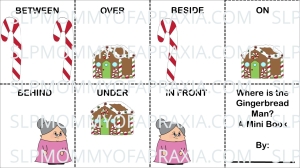
    The mini book in this unit works on “where” questions and teaching early spatial concepts.  The child glues the gingerbread men on a preceeding page in the correct places in the mini book.


    Slide6


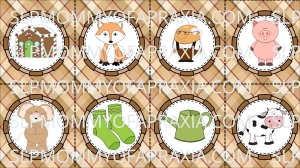
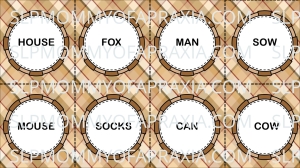
    The next four pages contain 8 sets of rhyming words in picture and written form for you kids to match or play with to work on early phonemic awareness skills.


    Slide7

    Slide8


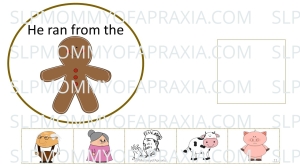
    The last two pages have sentence stem activities for repetitive practice for regular past tense and an irregular past tense verb using the story vocabulary.Slide12

    Slide11


    To get this activity, go to my TpT store!