Category: dyslexia

  • Woes of regression

    Woes of regression

    If you’ve ever watched your baby fail to meet the simplest of milestones..

    If you’ve sat in meetings and offices and were told things like 1% percentile

    If you’ve felt a pain you can’t describe that is only eased by hope..

    You know why regression hurts so much.

    If you’ve ever driven your child back and forth to countless therapies..

    If you’ve ever felt a mix of pride, happiness, grief and so much more when they finally met a goal..

    If you’ve cried because you are always filled with a hidden grief but ecstatic at the same time when they made progress..

    You know why regression hurts so much.

    If you’ve ever watched your baby spend hours in an office while others kids played…

    If you’ve ever comforted them when they said life wasn’t fair needing comfort yourself because you agreed…

    But then watched them say a new word, jump, or write a letter thanks to those therapies..

    You know why regression hurts so much

    If you’ve ever been faced with professionals who don’t understand your child or their disability..

    If you’ve ever stayed up all hours with bloodshot eyes scouring Dr. Internet just to help your child..

    If you’ve ever then found a team and plan that was finally working for your child..

    Then..

    You know why regression hurts so much.

    Laura Smith, M.A. CCC-SLP is the mother to two beautiful children, one of which has a rare genetic mutation that caused a variety of developmental disabilities. She is the author of Overcoming Apraxia and has lectured throughout the United States on CAS and related issues. Currently, Laura is a practicing SLP specializing in apraxia at her clinic A Mile High Speech Therapy in Aurora, Colorado. 

  • The IEP meeting I wanted to attend.

    The IEP meeting I wanted to attend.

    I never knew before I had a child with an IEP (individualized education plan), how awful these meetings can be for parents.

    Before I had my daughter, IEP meetings were part of my job and I attended them weekly with a room full of colleagues and the parent or parents. I had no idea how it felt being on the parent side. I do now and it feels scary, nerve wracking, and very intimidating.

    I haven’t gone back and added it up, but today was at least the 9th and probably 10th IEP meeting (individualized education plan) we’ve had for my daughter Ashlynn. I don’t think I’ve ever had a meeting where I wanted to go to it. I can particularly remember the meetings that gutted me. Looking back it probably wasn’t any one educator’s fault. It was my position in the process of it all. It was like additional problems kept adding up. Just when I thought I had apraxia down, she would get ADHD, dyspraxia, issues with memory, issues with language comprehension……and the meetings were full of her can’ts. I could talk about how to write a strengths based report or run a strengths based meeting, but in the end even that wouldn’t have been enough to fill or patch the holes from the stab wounds from all of her can’ts.

    This time though was different.

    Starting last year, Ashlynn started to turn a corner. She was no longer speaking in as many “scripts” but was formulating her own novel sentences. She grew exponentially on her reading. The special education team got to know her and they saw what I saw and believed what I believed Ashlynn was capable of. Instead of the words “she requires more repetition than most,” hurting my soul, I was encouraged because they said it with the conviction behind it that they would get her those extra reps because she is capable.

    This entire past year I’ve felt the momentum and seen her IEP goals in action in Ashlynn’s everyday life.

    From SPED, I’ve seen Ashlynn finally understand money, time, and her math facts. She has RETAINED these facts. Did it take one hell of a lot of repetition? You betcha, but they did it and when Ashlynn has learned something, it’s like riding a bike; she doesn’t lose it. Ashlynn’s reading has continued to improve and we are working toward closing that gap. We aren’t there yet, but I SEE it. I SEE it and I feel the momentum. I’ve seen it within her book choices and through her reading out loud. In addition, many skills she needed accommodations for she is now independent with. She has mastered the classroom routine, she doesn’t need direct line of sight supervision for safety, and she is independent with basically all of her ADL’s (Activities of Daily Living). The one that made me smile was teaching Ashlynn to stop and think and give her time to process and understand what was being said so that she could give a thoughtful answer instead of just blurting out anything. We all laughed because she will frequently now tap her brain and say “hmmmm” to give herself time to think. Again, seeing IEP goals materialize in my child is not something I can quite explain. It’s phenomenal.

    From her SLP I saw the direct result from her working on formulating more complex sentences with “so” and “because” come to life at home. In addition, all the vocabulary work done in speech has seemed to literally lift Ashlynn out of her language disorder fog. Where before language was literally just flying over her head, she is comprehending and making connections like she was never able to before, and again I’m seeing that in her everyday conversations with me as well.

    From PT we remarked at how she can perform tasks like standing on one leg for 6-9 seconds and doing jumps etc, something that once seemed like a pipe dream with her hypotonia, cerebral palsy, and major motor planning problems. I told her how she could now ride a bike with no training wheels and that Ashlynn chooses to do workout videos and could follow along.

    From OT we marveled at her mastery of her ADL’s around school, how she can tie her shoes now, and her ability to follow up to 3 step directions that involve motor planning tasks. With adapted graph paper, Ashlynn’s can complete writing assignments and really is just working on putting it all together: getting thoughts on paper, letter formation, spacing, punctuation and legibility. She can do all of those tasks adequately if given separately. I’ll take that. There was a time she couldn’t write her name. That took “more repetition than most, ” but I smiled this time. I had it all wrong before when that phrase would burn me. No one said she can’t do it, and that’s what’s important. More repetition than most? Deal. Bring it on. THAT we can do.

    From mental health she is doing great with whole body listening and finding more peers to play with and inserting herself into play on the playground. Next step is learning how to engage socially with peers in conversation.

    The whole meeting was amazing. I was on cloud nine. The takeaway? Ashlynn’s going to make it.

    I sat there and thought back to Ashlynn’s early days. Was this really the same girl? The girl who would get too distracted she couldn’t even hang up her coat and backpack and get to class without assistance? Was this the girl who spent all of preschool, kinder, and preschool just learning the letters of the alphabet, much less learning how to read? Was this the girl who spent Kinder, 1st, and 2nd grade trying to master addition and subtraction and now was rocking that but also money and time? Was this the girl who was so clumsy and uncoordinated that she couldn’t ride a tricycle or put her shoes on the right feet much less tie them?

    It was and she was freaking killing it.

    Though there were many, many, many times I felt defeated, I NEVER was defeated. I always held the vision for Ashlynn. I held it steadfastly in my mind and promised her that even if I was the only person who ever saw her potential, I would never give up on her and I would fight to the end. I was prepared for war. I listened to inspirational songs and videos to keep the faith. I also worried and fought and lost sleep and prayed. Oh did I pray, but it wasn’t that she would overcome. I always knew that you see. I always knew she had a divine purpose. I prayed for a team that would see Ashlynn like I do and help her fly.

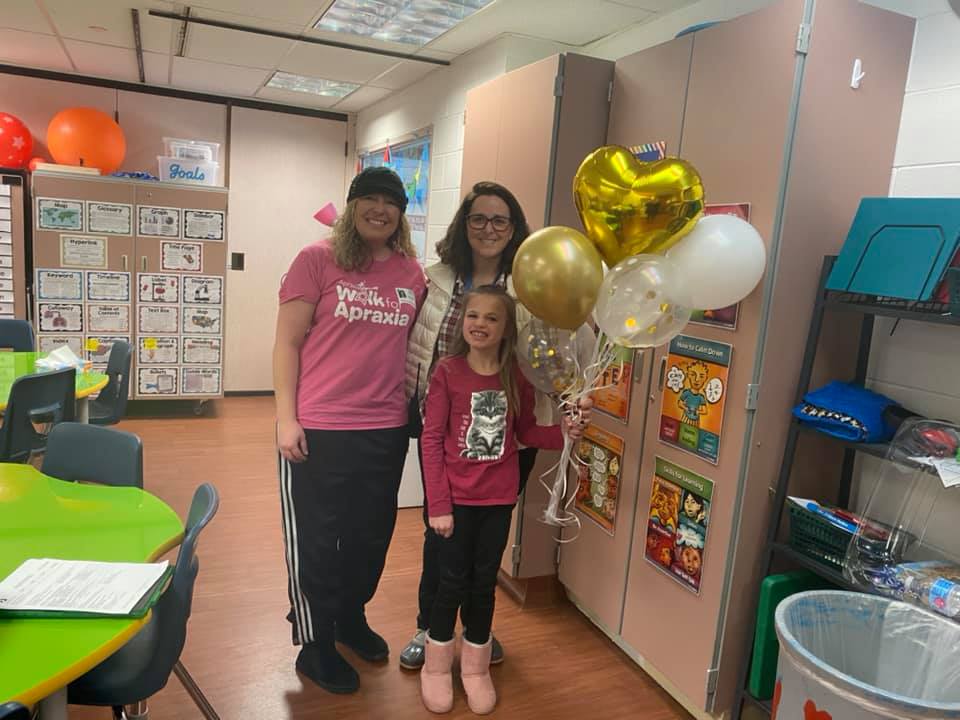
    A couple of months ago, filled with gratitude, I nominated her SPED teacher for a district award.

    It’s called the Golden Heart Award and is bestowed to any educator in special education who has gone above and beyond for a student in the program. Because coincidences are the Universe or God’s way of talking to us, Colleen received notice she was awarded this honor TODAY – the day of Ashlynn’s IEP.

    I thought to myself,

    “Sounds about right.”

    Laura Smith, M.A. CCC-SLP is a 2014 graduate of Apraxia Kids Boot Camp, has completed the PROMPT Level 1 training, and the Kaufman Speech to Language Protocol (K-SLP). She is the author of Overcoming Apraxia and has lectured throughout the United States on CAS and related issues. Currently, Laura is a practicing SLP specializing in apraxia at her clinic A Mile High Speech Therapy in Aurora, Colorado. 

    Purchase Overcoming Apraxia on Amazon.

  • Will you push me, Mama?

    Will you push me, Mama?

    “Will you push me, Mama?”

    Lying on the couch after work, mindlessly scrolling social media when my sweet nine year old daughter says, “Will you push me on the swing, Mama?”

    I’m a pediatric speech/language pathologist and my job is AMAZING, but it’s also very demanding and zaps me mentally and physically by the end of the day. An introvert at heart, I need alone time to recharge and refuel. Needless to say, pushing her on the swing was not on my agenda for the night. However, as I looked into her bright eyes sparkling with hope, I put my phone down and asked her to give me five minutes. Enthusiastically she ran to the clock, figured out how long five minutes would be, and then bounded out the door.

    “Will you push me, Mama?”

    There was a time my daughter with apraxia couldn’t say “Mama” and had to go to speech therapy to learn it. Once she had words, she had to learn how to put them together to make a phrase because she also has a developmental language disorder. There was a time she had to go to speech therapy to learn how to add the /s/ to /s/ blend words, words in which an /s/ is next to another consonant as in “swing.” There was a time she had to learn how to use verb tenses correctly and once she understood and used verb tenses correctly, there was a time she had to then practice “interrogative reversals” in order to ask questions correctly. Those days seemed so long. The struggle seemed so long. Yet here she stood, effortlessly doing all those things as though she never spent hours in therapy offices learning how to do them. Here she stood asking to be pushed on the swing, something most kids were doing while she was working hard to find her voice.

    “Will you push me, Mama?”

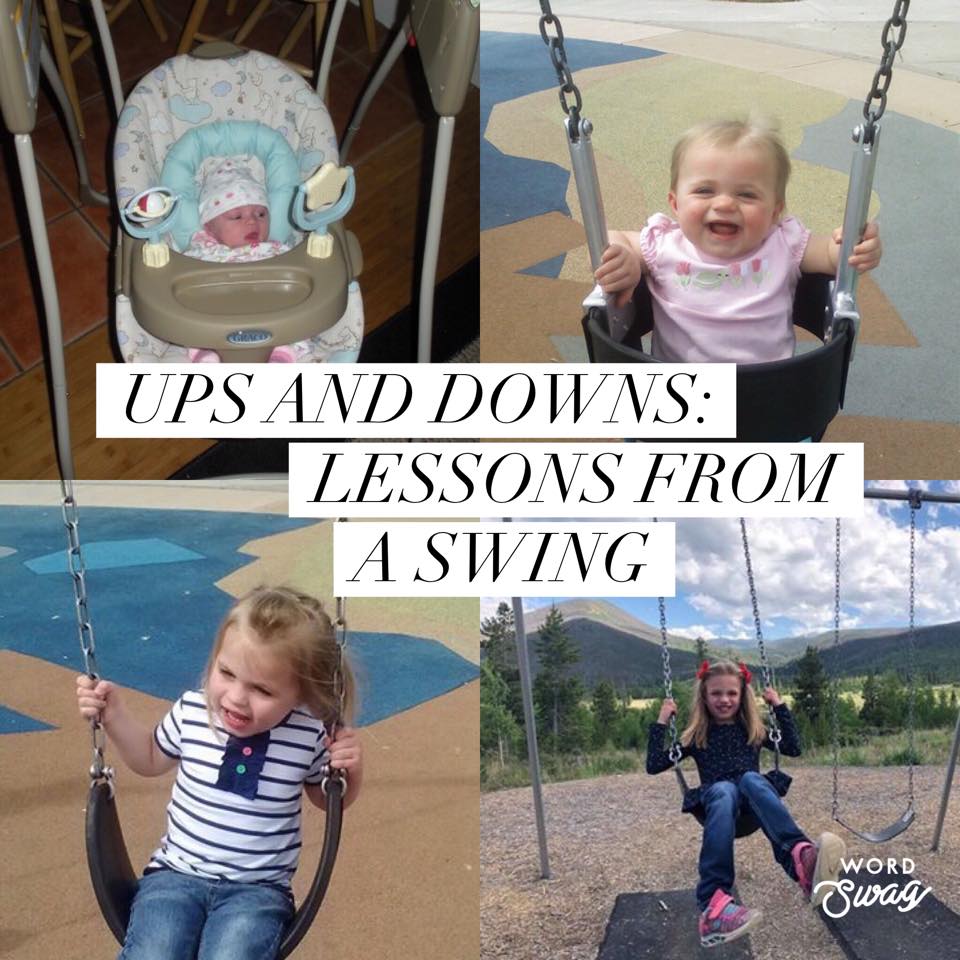
    Though my daughter can pump her legs herself now and swing, there was a time she had to spend hours in occupational therapy and physical therapy before her core strength could even support the act of sitting up on and pumping a swing. Then, once she was strong enough, she needed more therapy to get the coordination of the movements down. As she got taller, she then needed to learn how to change the motor plan and move her ankles out to the side so her feet wouldn’t hit the ground. Yet, here she stood, able to do all of these things now but still asking me to push her. She’s nine years old. We are getting close to her never asking me this question again and the gravity of that sunk in. Would this be the last time she asked me to push her? My mind flashed back to her beautiful smile when she is swinging. She literally came out of the womb and hogged the swing in the nursery. The nurses all laughed and mused at the baby who was only happy in the swing. It never stopped there. I have numerous pictures, too many to count, of her swinging in various ages of her life.

    “Will you push me, Mama?”

    I thought about how swings go up and down and up and down and how Ashlynn smiles and giggles through it all. I thought about how swings are a lot like life in that way. Ashlynn has a lot of challenges. She has a genetic mutation called BCL11A that has caused numerous disabilities and her life is anything but easy street. If anything, it’s more like the swing in that there are ups and downs, successes and challenges. Through it all though, she smiles.

    “Will you push me, Mama?”

    I thought about all the areas I’ve had to push her. Sometimes I wonder if I pushed too hard. Did I let her be a kid enough? Will she only remember speech therapy, occupational therapy, physical therapy, and tutoring? Nights struggling through homework? Nights struggling through activities of daily living that are so hard for her, such as brushing her teeth or getting dressed, because I know she needs to learn to do them for herself?

    “Will you push me, Mama?”

    So on this cool summer evening in June, tired from work and craving alone time, I got up and pushed her for an hour that night in the backyard. We laughed and giggled and made up games. I reveled in the fact my daughter still wanted me to push her, and I prayed to find a balance in the future of pushing her not a breaking point, but further and further to her potential. Oh, and making sure we find time to keep smiling and laughing along the way.

    Laura Smith is a mother to two beautiful children, one of which was diagnosed with a rare genetic mutation that caused a multitude of learning challenges.  She is a Denver based Speech/Language Pathologist now specializing in Childhood Apraxia of Speech. To learn more visit SLPMommyofApraxia.com

  • Shaming parents about home carryover

    Shaming parents about home carryover

    I’ve been on this special needs journey with Ashlynn for a long time now.

    I have grieved, recovered, grieved, and recovered again. I have developed thick skin.  I have felt guilt, then peace, more guilt, and then peace.

    I thought I was past all the BS.  I have accepted Ashlynn has severe needs.  I have accepted my journey with Ashlynn is going to be MUCH longer than I ever anticipated and I have embraced it.  This girl goes to school from 8 to 2:45, and almost every day after school she has some sort of therapy or tutoring strategically scheduled to help her overcome all of her learning disabilities.

    I’ve been done making excuses for not doing homework.

    I finally just started being honest and saying “We will see. She is a very busy and overscheduled little girl,” when therapists would ask about homework .  Ashlynn goes to school and then has therapies after school, and then we hope to get home to eat and then finally do her SCHOOL homework.

    That doesn’t mean there isn’t any other homework.  Oh no.  For all the therapies she receives after school there is also homework.  Always homework.  So not only does the average kid NOT go to therapy or tutoring everyday after school, they also then don’t have the homework assignments from said appointments after school.

    My daughter has it all.

    Go to school and get homework, and then attend therapy and tutoring that takes away from homework time after school and receive MORE homework on top of school homework for the extra after school services.  Oh, and my daughter has global motor planning issues, so any homework assigned is usually homework that needs to be done everyday.

    Everyday my daughter is expected to do regular school homework and then follow through homework for OT, PT, Speech and tutoring as well.

    If for some reason said homework isn’t done or done to the fidelity of a therapist’s expectations, I get to see the raised eyebrows and judgemental eyes.  I know what they are thinking even if they don’t say it.  “You couldn’t carve out 5 minutes for some simple yoga poses?  Speech word practice? Sight word drills?”

    Again, I thought I was past this.  I was done feeling guilt.  My whole life is running around trying to get my daughter the help she needs and then coming home and trying to be a mom and get dinner and then at least getting through her school homework. I have been done for a LONG time apologizing for not getting the therapy homework done.

    That was until today

    Two weeks ago I put Ashlynn into a therapy called oral facial myology to help with her mouth breathing, tongue thrust and immature swallow.  I knew going into this the homework component was going to be big.  I knew this! We received a sticker chart to keep us honest.  Ideally she would do the exercises 2x – 3x  a day and we would reconvene in 10 days.

    Today was our second follow-up appointment. I was so proud of Ashlynn!  We had done the exercises every single day!  A handful of days we managed 3x, most days we did 2x a day, and on three days including one where she spent the night at her grandma’s we did 1x a day.

    I was proud of us.  That was no easy feat. Sometimes it cut into bedtime but I knew this was important and I was willing to go the extra mile.

    My sails were immediately shredded within 5 minutes of our second visit.

    The swallowing therapist was warm and inviting as usual.  We were seven minutes late because we were driving from PT and I had forgotten to ask the physical therapist to end 5 minutes before and instead she ended 5 minutes late.  We still made it though! School ended at 2:45, we were at PT at 3:30 and then we were at swallowing therapy at 4:25. I was proud of myself for getting her to all these places.

    “How did the homework go?  Did you complete it?” the therapist asked Ashlynn.  Ashlynn enthusiastically nodded yes as I took out the sticker chart and the therapist looked on disapprovingly.  So there are three days here you could only do one practice session?  For this program to be successful, she needs to be doing the exercises at least 2x a day.

    “There are a couple days we did three!  Does that cancel out the three days we could only fit in one?” I laughed nervously.

    I looked up to a face of disapproval.

    “For this program to work, you really need to be more consistent,” she lectured.

    I swallowed a big swallow and collected our things. I think I literally gulped back tears.  I was paying a lot of money for this therapy.  Of course I wanted to see it be successful.  Of course I wanted to practice with Ashlynn as much as I could.  Guess what though?  I also needed to make sure we completed her homework and read at least 10 minutes per night.  Then and only then did I need to make sure she was doing her homework for reading tutoring, OT, PT, and speech as well.  Oh and she also needed to eat at some point and take a shower.  Being a kid?  Nope.  That’s not in the cards apparently.

    The guilt and responsibility is overwhelming

    I cried as I left the swallowing woman’s office.  I was trying!  I thought Ashlynn and I had done amazing!  We practiced what seemed like every spare minute we had together, which actually is very little spare time together!  I was proud of our dedication, but this woman had only criticism.  She told me if the program was to work, I really needed to get more serious about practice.

    I went home that night in a state of anger.

    I was yelling at my kids, my husband, the computer..really anyone who would listen.  I was devastated at having a therapist, a well respected therapist basically tell me if I didn’t take the homework seriously and with the fidelity it needed to be, my child wouldn’t improve.

    I railed against everyone and then I messaged an ally.

    The ally I messaged is an SLP who specializes in apraxia and oral facial myology.  I was so lucky to meet her at L.A.’s Walk to Talk for Apraxia when I took Ashlynn at 8 years old.  Her name is Lisa Klein and she has a reputation for not only being an amazing therapist, but being an incredible friend, mentor, and encourager. I barely know her yet knew I needed to talk to her.   Fortunately for me, she told me I could call her on my way home and like a crazy mom who is desperate I did.  I talked in a long winded series of run on sentences and questions and when I stopped she said the most impactful thing to me that brought me to tears.

    Laura, first of all, you are a great mom and that girl has come so far because of you.

    I started balling.  Not like crying either or tearing up.  No. Chest heaving ugly cry balling.  I just needed that validation.  She went onto say things that our myofunctional therapist suggested too like going every other week.  She brainstormed how to get in practice or what exercises we absolutely couldn’t miss. She said all of this though with compassion and free from judgement, and that is exactly the type of therapist I aim to be too.  We need to meet parents where they are at and we need to know parents are under an insane amount of pressure and are doing the best they can with the tools that they have.  I need a therapist to understand that.  I’m constantly shocked by the number of therapists who have so most judgement. I say this all the time but I say it again.  Please, if you are a therapist reading this please have compassion and understanding for the parents.  We are fighting daily battles and crying tears no one ever sees.  Please be kind.  Please.

  • Did I cause her apraxia?

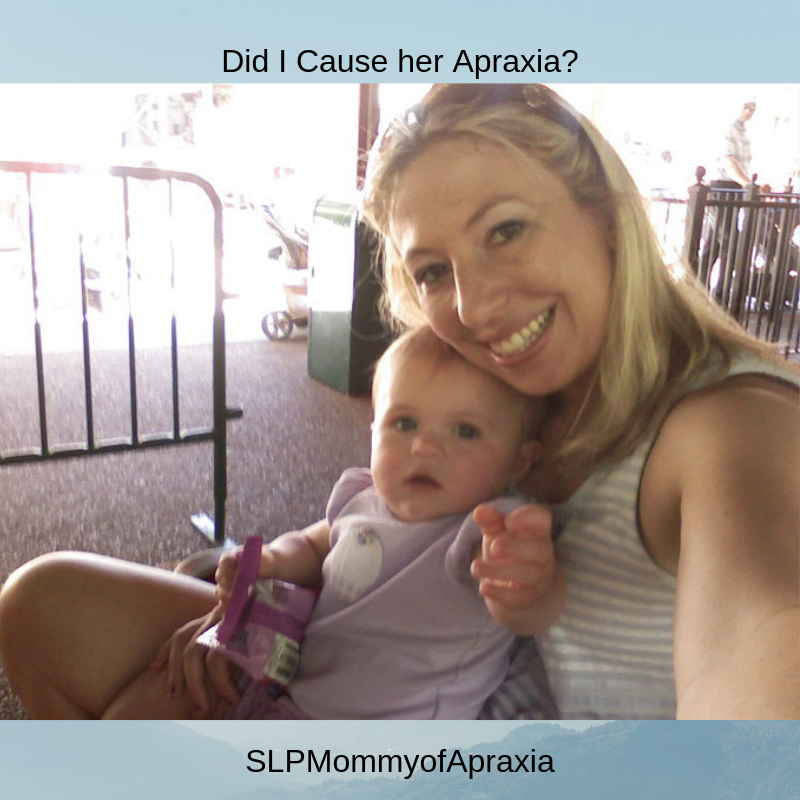
    Did I cause her apraxia?


    When Ashlynn was first diagnosed with Childhood Apraxia of Speech, I think most parents will relate when I say I spent (pointless) hours wondering what had caused it.

    Back in 2012 when Ashlynn was diagnosed, the most current information we had at the time was that it could have three main causes:

    1. Brain Trauma such as a stroke in utero
    2. Genetic causes
    3. Idiopathic – meaning of no known cause

    Though I knew this, I couldn’t help but cycle back to questions.  Questions that kept me up at night.  Any parent of a child with special needs has probably done this endlessly.  It is probably one of the main causes of sleep deprivation in special needs parents right behind “am I doing enough? and goes something like this.

    Was it that time when I was 6 months pregnant and I had the stomach flu?  Did I wear the painting mask long enough when I painted her baby room?  Was it because I had to have a C-Section?  What about the vaccines, giving her Tylenol, or that time she bumped her head?  Maybe it was……..

    And before I know it, I’m deep into the weeds unable to find my way out.

    It doesn’t help I had been privy to professional “inside” comments with colleagues who blamed parents for lack of reading, lack of talking, lack of stimulation etc.  You can read about my snub to those “opinions” in my article where I snub the 30 million word gap theory.

    It also didn’t help I would hear stories from other apraxia mamas who would share their personal experiences of being blamed and shamed.  

    So, I sought answers. It was a revolving door of specialists, waiting lists, and additional diagnoses, but still no answers as to the cause.  I would cycle through periods of acceptance and guilt, such as in this post I wrote when she was a little over 4 about a year after her CAS dx.

    Earlier this year, I thought we had found our answers when we went to rehabilitation specialist at Children’s Hospital who diagnosed her with dystonic cerebral palsy. Though I had more answers to her disability profile, I still didn’t have any answers as to what caused all the issues.

    No answers that is, until we found ourselves in the office of a genetic doctor and genetic counselor.  This is not to be confused with general genetic testing that a pediatrician can order either.  It was there that we would learn the cause of everything.  It was there, I would finally know why Ashlynn had apraxia, dyspraxia, hyptonia, ADHD, dysarthria, SPD, CP, and learning disabilities.  The answer was housed in a small set of letter and number combinations called:

    BCL11A

    A quick pub med article revealed that of the few case studies we have, children shared commonalities with:

    1. Non-verbal or low verbal status
    2. Abnormal muscle tone
    3. Gross motor delays
    4. Childhood Apraxia of Speech
    5. Dysarthria
    6. Hypotonia
    7. Dyslexia susceptibility

    The doctor explained the genetic mutation was “de novo” meaning it was not inherited and happened at conception.  It was a complete fluke when the sperm and egg came together that this mutation happened on the 2nd chromosome.

    Is it possible to be completely stunned and then not surprised at all at the same time?  Is there a word for that?  If there is, that is how I felt.  I knew as a professional researching this endlessly it wasn’t my fault.  Mom guilt though.  Mom guilt is a real thing.  It is strong, irrational, and overwhelming. So, in that sense, I wasn’t surprised.

    Knowing though that a genetic mutation was the single cause for all of her disabilities was shocking, but then quickly reaffirming. So many things went through my mind with the biggest one being,

    “This really wasn’t my fault, and furthermore, there is nothing more I could have done to change this.”

    The genetic landscape regarding apraxia is a new and quickly changing field.  We are going to see more research and information coming out now recommending that genetic testing be pursued.  Look for a follow up post with me talking about this new and changing frontier.

    For now though, I need time to process and learn.  A mother does better research than the FBI after all, when searching for answers about their child.


    Laura is a speech/language pathologist specializing in Childhood Apraxia of Speech and mom to two amazing children, one neurotypical and one neurodiverse. Laura is a speaker, writer, Denver Walk Coordinator for Apraxia, and is the voice behind the website SLPMommyofApraxia where she is passionate about Apraxia Awareness. 


  • When inclusion works: my hope for the rest of 3rd grade

    When inclusion works: my hope for the rest of 3rd grade

    This past break, I went over my posts from 2018, and read the article I wrote at the beginning of the year.  In it, I begged parents to teach their children to be kind as I wrote about the importance of inclusion.

    You can read about here.

    I was filled with worry and trepidation as Ashlynn started third grade.

    Last year in second had been one of her worst years with peers and friendships.  She frequently came home with bloodied shirts from her picking her fingernails.  Many times, the nurse had to change her shirt it was so bad.  She always reported that she hadn’t played with anyone at recess and my heart broke for her nearly everyday.  In second grade, she was also bullied in the bathroom but thankfully some other students heard and told the teacher.  Fresh off the heels of a great summer, I worried to see her go back to school again.

    This year though in third grade, has been one of her best years for growth not only academically, but also with friends and feeling like she was part of the class.

    The teacher told me at parent/teacher conference in November that she had told her class if they see Ashlynn sitting alone to go grab her and include her because many times it’s not that she doesn’t want to play; but rather that she has a hard time jumping into a situation.  The teacher went on to explain the kids initially did it because they were instructed to, but as they got to know her they now do it because they wanted to.

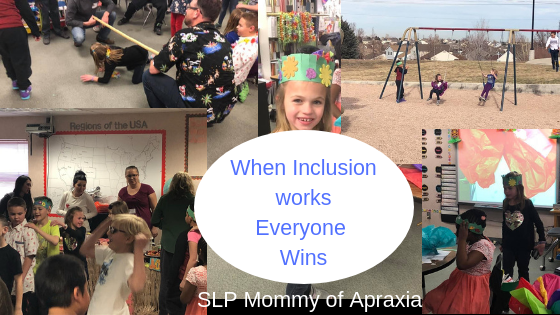
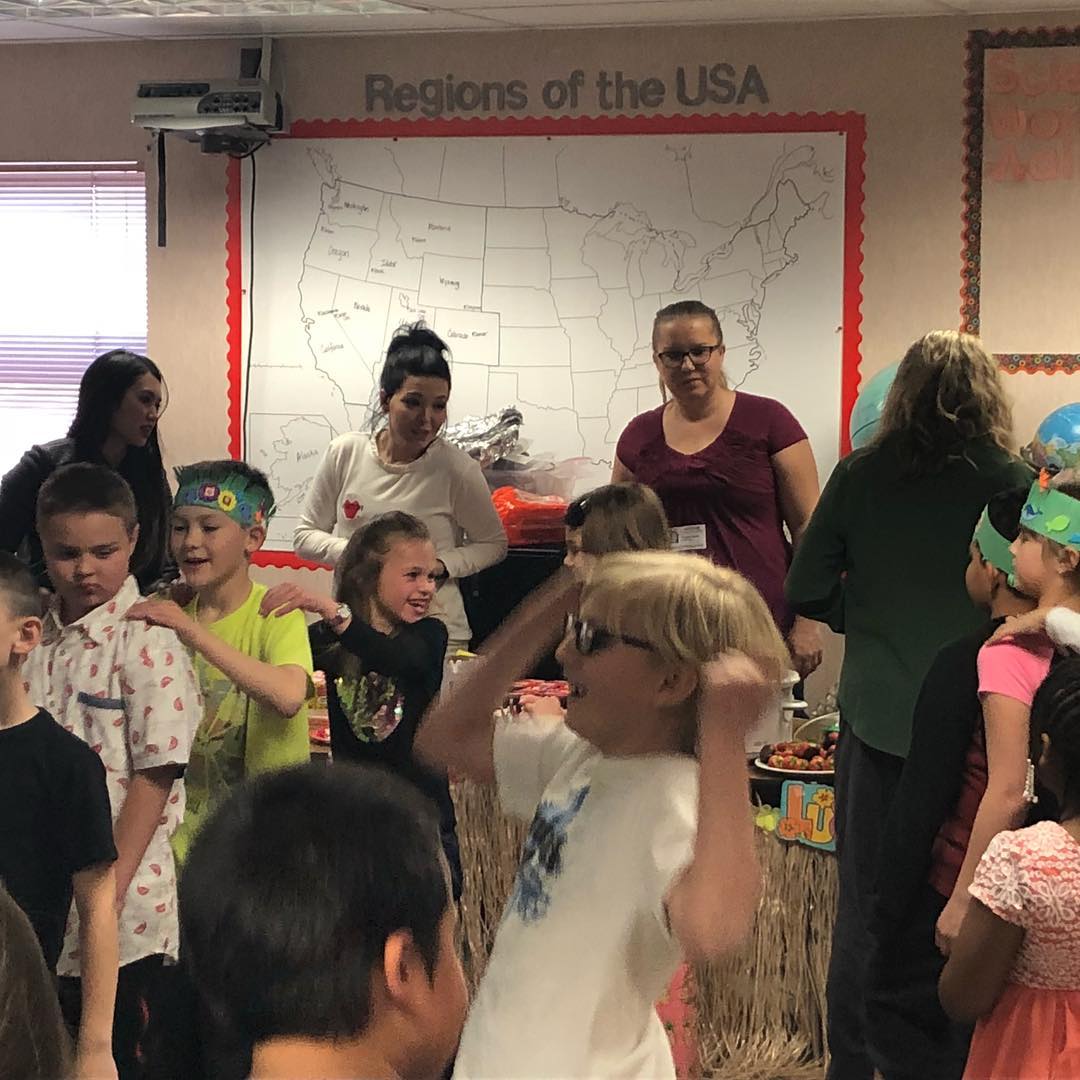
    Every year before winter break, 3rd grade throws a Luau party to add some fun and a twist to a normal Winter celebration.  I volunteered to run a craft with the class. I couldn’t believe what I saw when I got there.  Ashlynn was completely assimilated into the classroom as one of the kids, and not the “special ed kid” or the “ILC kid.”

    As she talked to her friends I thought of her speech therapy.   As she navigated the limbo stick like any of the other classmates I thought of her work in occupational and physical therapy. Her special education teacher wrapped up her current progress monitoring showing how she had rocked her goals because she knew it would be the best Christmas present to see all of her success and she was right.

    As she completed some seat work independently I thought of her TA who understands the difference between enabling and helping.

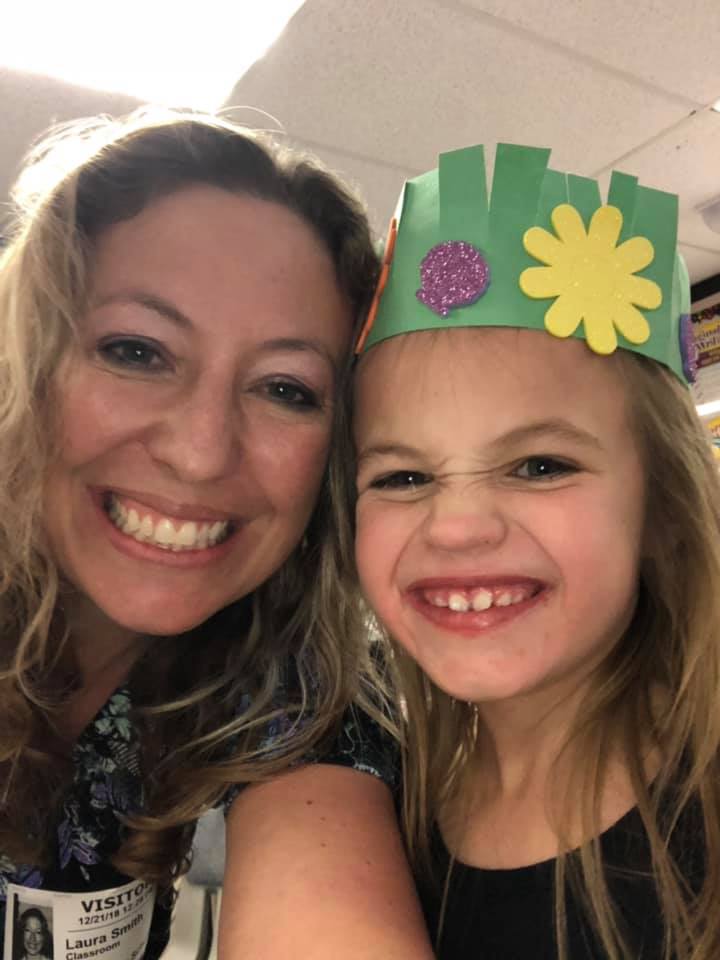
    This is how inclusion is supposed to look. Every human whether they have differences or not all want the same thing. They want to feel useful, included, and loved. Her smile says it all.

    Honestly I didn’t need any Christmas presents this year.  My cup was overflowing.  I just pray as Winter Break is over and she heads back to school, that the second semester will be as amazing as the first.

    Laura Smith is a mother to two beautiful children, one of which was diagnosed with a constellation of issues including apraxia that can be traced back to a genetic mutation entitled BCL11A. She is a Denver based Speech/Language Pathologist now specializing in Childhood Apraxia of Speech.