Category: Apraxia

  • Growing up apraxia: “I want them to learn what it is.”

    Growing up apraxia: “I want them to learn what it is.”

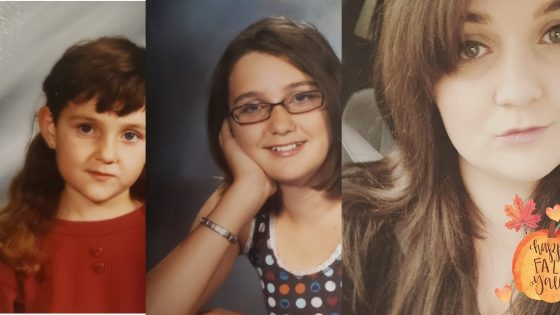
    Hi Alexis!  I remember first seeing you on the facebook page apraxia awareness and hearing you do a very real and raw live Q&A.  That was very brave of you! You were so gracious to answer so many questions openly and honestly.  This past year, I set a goal to reach people outside of the United States.  I want to help those who have apraxia worldwide get the help they need and deserve!! Having you on this blog post to start May and Apraxia Awareness month is helping achieve just that!!  Thank you for your bravery!

    To start, can you begin by telling us a little about yourself and your journey with CAS?

    I am 23 years old. I am an insurance advisor in Alberta, Canada with the Co-operators. I took speech therapy from kindergarten until grade 5. I remember really realizing for the time that I had a speech impediment when I was about 7. I became interested in learning more about it in grade 6 – what it was & why I had it.

    What do you remember as a child with CAS and speech therapy?

    Like I said, I started speech therapy in kindergarten. I have really vivid memories of the hearing test they would do. Putting a headset on and listening for the beeping. You’d have to tell the person what side the beeping was coming from. I was always so proud because I aced those tests every time. The pride was usually met with confusion the first few times though. I did so well, you told me I got all of them right, so why do I have to come meet with you for lessons?

    I remember being told I had a speech impediment. I remember all of the “that’s not how you pronounce that”, “listen to me”, “watch my mouth”, “it still doesn’t sound right”, but I didn’t get it. I can remember being frustrated and angry. This woman would tell me all these things over and over again and I was sitting there thinking lady, I just heard myself say it, it sounds exactly the same as when you do it. Of course, it didn’t.

    When I say the first time I remember really knowing I had this was 7, it’s because I’m fairly sure that was the first time my speech therapist used a tape recorder. This thing was the bane of my existence. I’m 7, over confident, and a little annoyed with this woman because we’re saying the same thing. Was I ever showed up. This tape recorder comes out because after give or take two years my speech therapist must of realized I really didn’t hear what she was hearing. My voice in my head has no speech impediment and I was too young to understand that I just wasn’t hearing it right. I was about to have my little world crushed.

    Every session started with me telling her about my last week. This session, she recorded it. The moment she hit play and I had to hear my actual voice, instead of the one in my head, I wanted to disappear forever. She’s not wrong when she says my sounds aren’t right. All of a sudden two years of fighting this woman came crashing down around me. I was wrong, she was totally right, and I sounded (to my very young self) weird. I can not tell you how miserable I was hearing this recording. I did everything I could after that to prevent her from using the tape recorder again. It did help though. My sessions went better and I got more done, because I knew I actually was saying the sounds wrong, even if I couldn’t hear it.

    Were you ever bullied?

    I know this isn’t what parents are going to want to hear, but yes, I was bullied a ton. The bullying continued all the way into highschool. Luckily for me, I had a great few friends and family members. We really started to look at people who said anything about it as just being sad, or a little pathetic. It might sound harsh, but really of all the things to choose to pick on someone for, this was pretty ridiculous (it’s always ridiculous though). Honestly, “they talk a little different then me so I’m going to bully them”. We’d think about their bullying in that really point blank way, and just laugh at them. That train of thought is may more ridiculous sounding then I’ll ever be.

    How has apraxia affected your life, or has it?  Do you have any residual issues?

    The bullying did affect my life. Most days my above tactics worked great, but of course everyone has their off days where it just sucks. It still does just suck sometimes, but that’s not the end of my world. I still can’t say any of my R sounds. R sounds were the last thing to work on when I was in grade 5, and due to a lack of speech therapists in the school and time, I was seen 3 times that year. Once I got into middle school it wasn’t provided through the schools anymore and the cost was too high to do it privately. Now, I’m 23 years old with no real talent for R sounds. My last name is Berger and I work in the insurance field. Good choice, self. Other than that I have no real side effects or issues concerning my Apraxia.

    Most parents are so worried about the future when their child gets an apraxia diagnosis.  What would you tell them?

    Your child is going to find their voice, it might be missing a few sounds or it might be through something less conventional than talking, but they will find it. We look at speech as so important, and it is, but you can live such a full life without being perfect at it. They are going to have talents and skills all their own that have nothing to do with how they talk, and chances are their speech being a little off won’t affect it at all. Support them, be there for them, and be ready to answer questions if they have them, but don’t make their entire life be Apraxia. You can find your voice without talking perfectly; talking is really the smallest part of it.

    What do you wish more people knew about apraxia?

    That it existed. No, really, just that it existed. I have been explaining this to people for about 11 years now. What it is, what it does, why I sound the way I do, and answering their questions. I just feel like if more people had known what it was when I was in school, it wouldn’t have been such a big deal to them.

    What would you tell a child who is currently struggling to speak or who lives with a dx of CAS?

    Don’t feel pressured to tell people it’s an accent. Most of my life people have thought that’s why I sound like I do. On an almost daily basis people ask me where I’m from. I always politely tell them it’s a speech impediment and give them some basic info. I want them to learn what it is. The most common response? “Oh, you should just tell people it’s an accent”. This is my absolute biggest pet peeve. The truth is, if someone tells you to say it’s an accent it is because they are uncomfortable with your explanation and with the truth. They feel a bit bad that they asked you where you from and they were wrong about it. They wouldn’t have to feel that little awkwardness if you had told them it was an accent and played along. I can promise you this is the real reasoning 99% of the time, even if people deny it. Do not let someone tell you to say you have an accent, unless that is truly more comfortable for you and what you want to do. You have a speech impediment. It is a part of you and there is absolutely nothing wrong with having one.

    Aside from that, if you are working through your speech therapy at the moment, listen to them when they tell you to practice at home. I was supposed to practice my sounds in front of a mirror for at least 20 minutes a night and I flaked on it all the time. Don’t flake on it. Practice the sounds, it really will help things.

    What do you think professionals such as teachers and therapists need to know about CAS?

    Number one thing is that it exists and what it is. I have had so many awkward moments with teachers over the years. The second thing is how to handle it. If the student is old enough, ask them if you can help in some way. If they are still quite young, ask the parents.

    I had teachers make me repeat an answer in class (in middle and high school) over and over and over because they couldn’t understand what I was saying. It was embarrassing. The other students would laugh and the teacher still wouldn’t realize that they should probably just stop. I would go up and just write what I was saying on the board. Then I’d get in trouble because it was unnecessary to do. Let your students help themselves and help you understand them.

    If a teacher didn’t understand me after a few tries often one of my friends would just repeat my answer to them. This was great for me. I loved and appreciated them for doing this. Sometimes the teachers would get angry about it though. Let them help if need be!

    Another big one is if you pick me to read something out loud I might take an extra second to read a word out. I would be thinking of how to pronounce it and trying to be sure it was going to come out properly. The teacher would just interrupt and say the word themselves. Let your students at least try to get it out. If they do happen to mispronounce it, see if they correct themselves. If they don’t correct themselves and just keep going, then leave it. Do not point out their mispronunciation in front of an entire body of students. If they are still in speech therapy you could try writing it down and letting them know after class which words came out wrong. Then they can take that to their next session as helpful information.

    Thank you Alexis!  This has been one of my favorite interviews.  Your honesty and candidness are exactly what people need to here.  I love your perspective. I just can’t say enough. Thank you for your willingness to share your story!

    Growing up CAS is part of an ongoing series that aims to celebrate neurodiversity and highlight those who have grown up with Childhood Apraxia of Speech and related struggles.  If you are interested in being featured, send an email to lauraslpmommy@gmail.com


  • Who diagnoses Childhood Apraxia of Speech?

    Who diagnoses Childhood Apraxia of Speech?

    Many parents often wonder who diagnoses Childhood Apraxia of Speech? They wonder where to seek help when questioning if their child has Childhood Apraxia of Speech (CAS).

    Many professionals claim to be able to diagnose, and in fact parents report getting their child a diagnosis from professionals such as neurologists, developmental pediatricians, and psychologists to name a few.  This is concerning because CAS is a speech disorder, and only speech/language pathologists are qualified to diagnose.  In addition, not just any speech/language pathologist (SLP) is qualified to diagnose either.  SLP’s need to have advanced knowledge and expertise in motor speech disorders and motor learning principles.

    The American Speech/Language Hearing Association has a position statement on the matter.

    You can read it here.  https://www.asha.org/policy/PS2007-00277/  
    It’s important to look to credible resources such as these because even this position statement states it must not only be any SLP, but also and SLP who specializes in motor learning theory with skills in differential diagnosis.

    In it, it says:

    “It is the policy of ASHA that the diagnosis and treatment of CAS are the proper purview of certified speech-language pathologists with specialized knowledge in motor learning theory, skills in differential diagnosis of childhood motor speech disorders, and experience with a variety of intervention techniques that may include augmentative and alternative communication and assistive technology. It is the certified speech-language pathologist who is responsible for making the primary diagnosis of CAS, for designing and implementing the individualized and intensive speech-language treatment programs needed to make optimum improvement, and for closely monitoring progress.”

    There is sometimes confusion that CAS is a medical diagnosis. It is a label for a speech diagnosis. There may be co-occurring medical issues, but the speech problem does not require diagnosis by a medical SLP or doctor. School SLPs may be discouraged from making a diagnosis of CAS because they are expected to use the federal impairment categories, which include speech-language impairment, but not specifically apraxia.

    Other professionals  who do not have the skills and training of a speech/language pathologist may contribute to overdiagnosis.

    Getting a diagnosis of apraxia, a serious neurological speech disorder is a potentially emotionally traumatizing event to a family.  Professionals have an ethical responsibility to adhere to guidelines given from reputable sources such as the American Speech/Language Hearing Association.  However, if CAS is suspected, it would be appropriate for another professional to refer the child to a speech/language pathologist with advanced knowledge in motor speech disorders to provide a differential diagnosis.  In addition, the speech/language pathologist will be able to make recommendations for the treatment plan, recommended frequency of therapy visits, and personalized goals that other professionals cannot do.


    Laura Smith is a mother to two beautiful children, one of which was diagnosed with apraxia and dyspraxia. She is a Denver based Speech/Language Pathologist now specializing in Childhood Apraxia of Speech. To learn more visit SLPMommyofApraxia.com

  • Growing up with CAS: Still achieving her goals

    Growing up with CAS: Still achieving her goals

    Today, as part of my growing up with CAS series, I am so pleased to welcome back Reagan Crabtree!  I first interviewed Reagan when she was still a teenager a little over THREE years ago!  A lot can change in three years! Reagan is currently double enrolled at a community college and a university studying broadcast journalism and political science.

    Hi Reagan!  Thank you for coming back!  I have loved getting to know you more over the years and hope one day we can finally meet in person! I’m very interested to know how college is going.  

    What are you studying?

    Communications and political science

    Do you have or need accommodations?  

    Yes, I have accommodations. Extra testing quiet room, recording device for note taking. I go to a support room to do my tests. I still struggle with taking tests in the other room. I look up and around when I hear a sound.

    Since I haven’t talked to you since before you graduated high-school, can you tell me about your high–school graduation?  Who was there and what was the day like?

     It felt so great to look back on my journey and see how far I have come from when I started school.

    I know you are a huge advocate not only for apraxia, but for disabilities in general.  Can you tell me what your big dream is?

    To work on the Today show behind the senses and show people how children that have dreams can also achieve them.

    You recently participated in the Rose Bowl Parade on the Easter Seals float!  Can you tell my readers a little more about Easter Seals and how they have helped you?

    Easter Seals supports me with school and helping me talk to teachers. If I didn’t have Easter seals I would not be where I am today. I my fourth year of college working hard to achieve my goals.

    Despite so many challenges, you always seem to remain positive and upbeat.  What advice do you have for others in your situation who want to give up?

    Don’t give up and get supports that can help you in college.

    My final question is, what inspires you?  

    Karen Myers because all work in journalism being deaf from birth inspires me everyday to become I journalist. To show others that people with disabilities can do it. It might be hard but we can still achieve our goals!

    Thanks Reagan for coming back and updating us on your journey!  I just know you are meant for bigger things! You and I are huge advocates for neurodiversity, and there is such a need for more disability stories if we want a society that is fully inclusive for people of all different abilities!   I look forward to watching your continued journey and success!


  • Shaming parents about home carryover

    Shaming parents about home carryover

    I’ve been on this special needs journey with Ashlynn for a long time now.

    I have grieved, recovered, grieved, and recovered again. I have developed thick skin.  I have felt guilt, then peace, more guilt, and then peace.

    I thought I was past all the BS.  I have accepted Ashlynn has severe needs.  I have accepted my journey with Ashlynn is going to be MUCH longer than I ever anticipated and I have embraced it.  This girl goes to school from 8 to 2:45, and almost every day after school she has some sort of therapy or tutoring strategically scheduled to help her overcome all of her learning disabilities.

    I’ve been done making excuses for not doing homework.

    I finally just started being honest and saying “We will see. She is a very busy and overscheduled little girl,” when therapists would ask about homework .  Ashlynn goes to school and then has therapies after school, and then we hope to get home to eat and then finally do her SCHOOL homework.

    That doesn’t mean there isn’t any other homework.  Oh no.  For all the therapies she receives after school there is also homework.  Always homework.  So not only does the average kid NOT go to therapy or tutoring everyday after school, they also then don’t have the homework assignments from said appointments after school.

    My daughter has it all.

    Go to school and get homework, and then attend therapy and tutoring that takes away from homework time after school and receive MORE homework on top of school homework for the extra after school services.  Oh, and my daughter has global motor planning issues, so any homework assigned is usually homework that needs to be done everyday.

    Everyday my daughter is expected to do regular school homework and then follow through homework for OT, PT, Speech and tutoring as well.

    If for some reason said homework isn’t done or done to the fidelity of a therapist’s expectations, I get to see the raised eyebrows and judgemental eyes.  I know what they are thinking even if they don’t say it.  “You couldn’t carve out 5 minutes for some simple yoga poses?  Speech word practice? Sight word drills?”

    Again, I thought I was past this.  I was done feeling guilt.  My whole life is running around trying to get my daughter the help she needs and then coming home and trying to be a mom and get dinner and then at least getting through her school homework. I have been done for a LONG time apologizing for not getting the therapy homework done.

    That was until today

    Two weeks ago I put Ashlynn into a therapy called oral facial myology to help with her mouth breathing, tongue thrust and immature swallow.  I knew going into this the homework component was going to be big.  I knew this! We received a sticker chart to keep us honest.  Ideally she would do the exercises 2x – 3x  a day and we would reconvene in 10 days.

    Today was our second follow-up appointment. I was so proud of Ashlynn!  We had done the exercises every single day!  A handful of days we managed 3x, most days we did 2x a day, and on three days including one where she spent the night at her grandma’s we did 1x a day.

    I was proud of us.  That was no easy feat. Sometimes it cut into bedtime but I knew this was important and I was willing to go the extra mile.

    My sails were immediately shredded within 5 minutes of our second visit.

    The swallowing therapist was warm and inviting as usual.  We were seven minutes late because we were driving from PT and I had forgotten to ask the physical therapist to end 5 minutes before and instead she ended 5 minutes late.  We still made it though! School ended at 2:45, we were at PT at 3:30 and then we were at swallowing therapy at 4:25. I was proud of myself for getting her to all these places.

    “How did the homework go?  Did you complete it?” the therapist asked Ashlynn.  Ashlynn enthusiastically nodded yes as I took out the sticker chart and the therapist looked on disapprovingly.  So there are three days here you could only do one practice session?  For this program to be successful, she needs to be doing the exercises at least 2x a day.

    “There are a couple days we did three!  Does that cancel out the three days we could only fit in one?” I laughed nervously.

    I looked up to a face of disapproval.

    “For this program to work, you really need to be more consistent,” she lectured.

    I swallowed a big swallow and collected our things. I think I literally gulped back tears.  I was paying a lot of money for this therapy.  Of course I wanted to see it be successful.  Of course I wanted to practice with Ashlynn as much as I could.  Guess what though?  I also needed to make sure we completed her homework and read at least 10 minutes per night.  Then and only then did I need to make sure she was doing her homework for reading tutoring, OT, PT, and speech as well.  Oh and she also needed to eat at some point and take a shower.  Being a kid?  Nope.  That’s not in the cards apparently.

    The guilt and responsibility is overwhelming

    I cried as I left the swallowing woman’s office.  I was trying!  I thought Ashlynn and I had done amazing!  We practiced what seemed like every spare minute we had together, which actually is very little spare time together!  I was proud of our dedication, but this woman had only criticism.  She told me if the program was to work, I really needed to get more serious about practice.

    I went home that night in a state of anger.

    I was yelling at my kids, my husband, the computer..really anyone who would listen.  I was devastated at having a therapist, a well respected therapist basically tell me if I didn’t take the homework seriously and with the fidelity it needed to be, my child wouldn’t improve.

    I railed against everyone and then I messaged an ally.

    The ally I messaged is an SLP who specializes in apraxia and oral facial myology.  I was so lucky to meet her at L.A.’s Walk to Talk for Apraxia when I took Ashlynn at 8 years old.  Her name is Lisa Klein and she has a reputation for not only being an amazing therapist, but being an incredible friend, mentor, and encourager. I barely know her yet knew I needed to talk to her.   Fortunately for me, she told me I could call her on my way home and like a crazy mom who is desperate I did.  I talked in a long winded series of run on sentences and questions and when I stopped she said the most impactful thing to me that brought me to tears.

    Laura, first of all, you are a great mom and that girl has come so far because of you.

    I started balling.  Not like crying either or tearing up.  No. Chest heaving ugly cry balling.  I just needed that validation.  She went onto say things that our myofunctional therapist suggested too like going every other week.  She brainstormed how to get in practice or what exercises we absolutely couldn’t miss. She said all of this though with compassion and free from judgement, and that is exactly the type of therapist I aim to be too.  We need to meet parents where they are at and we need to know parents are under an insane amount of pressure and are doing the best they can with the tools that they have.  I need a therapist to understand that.  I’m constantly shocked by the number of therapists who have so most judgement. I say this all the time but I say it again.  Please, if you are a therapist reading this please have compassion and understanding for the parents.  We are fighting daily battles and crying tears no one ever sees.  Please be kind.  Please.

  • Growing up with Apaxia: A hidden card up his sleeve

    Growing up with Apaxia: A hidden card up his sleeve

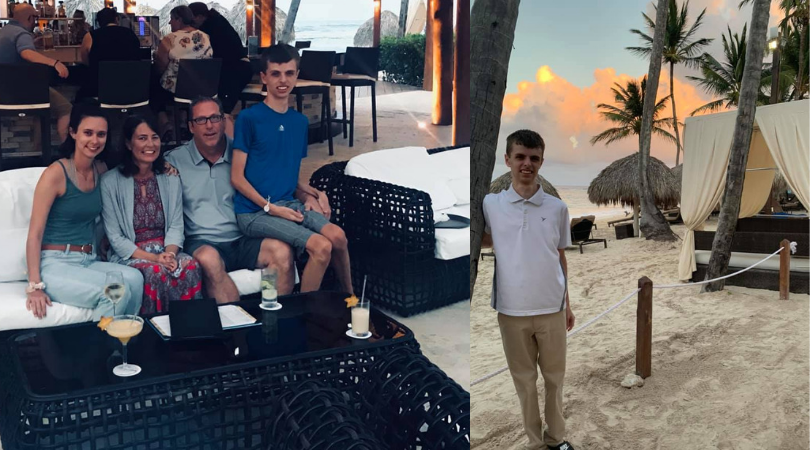
    Hi Mark!  I’m so excited to have you as part of my Growing up CAS series! You recently just completed your first year of college correct?

    No it was my first semester of college.

    Congratulations!  I hope you know by you sharing your story and experience you give other parents out there so much hope!  You are an inspiration and someone for our kids to look up to! 

    Can we start with you telling us a little bit about yourself?  

    I’m Mark Lippert and I’m 19 years old. I live in Saint Paul Minnesota with my Mom, Dad and my sister. When I was diagnosed with apraxia I was 2 ½ years old.

    What are your childhood memories of having apraxia and going to therapy?

    My early memory of being in speech therapy is that I needed my mom and sister to be in the speech therapy room with me or I would not work.  As a reward for me after speech therapy my mom would take me and my sister out for ice cream by my speech therapy center.  It was 40 minutes away from my house and my sister had to sit with me in many speech therapy sessions, so that is why she got ice cream too!  At the end of each summer speech therapy, my mom would take me and my sister to “Chuck e Cheese” which had 2 floors.  

    Did you have any additional academic struggles or co-morbidities?

    Yes i had a lot of struggles with school over the years. I had a IEP since I started school K-12. I got diagnosed with a learning disability when I was in 2nd grade.

    How has apraxia affected your life, or has it?  Do you have any residual issues?

    Apraxia has affected me and my whole life in good and bad ways.  My speech can be an issue but I  do not let it define my life.  For example, I might not be understood the first time when I’m talking to someone. But I do not let it interfere in the conversation with someone.  Apraxia has shaped me into who I have become and if I did not have Apraxia my whole world would change. I bet I would not have the same work ethic and motivation that I have. I have gotten so many compliments by teachers on work ethic and motivation that I show in my life.

    Work ethic is a huge key to success!  Speaking of school, what was your school experience like?

    My school experience has been mostly good where teachers would support me and what I had on my IEP where I might not have been as good as other students but they would always understand. For all of my school career I have been that type of student in the Special education program were the student would be flip flopped being in a regular classroom and being in every kind of special education classroom. My case managers over the years have been ok at best.  In high school I was  put in special education classrooms where it did not fit my educational needs in that it was really too easy for me. In total over having case managers excusing elementary school, I have had four with the the most being in high school. Overall my school experience has been good when my supports fall into place.

    What do you want people to know about you and others living with CAS?

    Trust your child’s class performance over IEP Re-evaluation testing.

                                IN SOME CASES     

    That apraxia kids can understand everything that you say. I think that apraxia kids’ brains can process at the same or a little faster as anyone can.

    What advice do you have for those growing up and/or living with CAS?

    Just keep fighting! I know that you might not want to go to speech therapy because you know that you can’t say the  word you have been trying to say as clearly as possible.  You might not say it that time but you are going to say it in the long run. When i was younger I hated when people said that I was going to speech therapy. I would tell them to just call it “Speech.”

    Most parents are so worried about the future when their child gets an apraxia diagnosis.  What would you tell them?

    Like my mom says “ there is always a light at the end of the tunnel.”

    Do not set any expectations for their education career and their life.  They might surpass them all like I did! My parents did not think I could ever be in college. They thought at the best I would go to a Trade school. Do not ever let the internet shape a picture of your child’s life going forward, because your child might have a card up their sleeve that they might not show you at their start of life, but at the end they are going to show you everyday!

    That gave me chills Mark!  You are helping to change the stigma around apraxia and special education!  I can’t wait to see what you do moving forward!  You definitely had a few cards up your sleeve and I’m sure your parents couldn’t be prouder!

    Growing up with apraixa is part of an ongoing series that aims to celebrate neurodiversity and highlight those who have grown up with Childhood Apraxia of Speech and related struggles.  If you are interested in being featured, send an email to lauraslpmommy@gmail.com
  • Growing up with CAS: Never stop dreaming

    Growing up with CAS: Never stop dreaming

    This month I’m excited to introduce Alyson Taylor! I’ve had the pleasure of hearing Alyson and her mother speak at the Apraxia-Kids National Conference; as well as speaking to her personally on a few occasions.  Alyson is smart, witty, funny and has a great outlook on life!  Oh, and she also grew up with Childhood Apraxia of Speech!  Welcome Aly!

    Can you tell my readers a little bit more about yourself?

    Hello! My name is Alyson Taylor and I am a former child with Apraxia of Speech. It was definitely a long journey-I didn’t fully communicate until I was 7 years old, early special education courses, and 13+ years of speech therapy. Fortunately, the journey itself gave me the strength and wisdom to find success as a young adult.

    With hard work and finding comfort in my speech, today I speak with what sounds like an accent. Despite this I attended and graduated from Emory University with my BA in Political Science and Spanish. I work now as a Paralegal at Thinkwell Group, an Experience Design Company known for their Theme Parks. I also volunteer and advocate for the Apraxia Cause; I’m on the Board of Directors for Apraxia Kids and also maintain my own blog “Girl With A Funny Accent.”

    My family and I understand how difficult the Apraxia Journey was with limited resources in the nineties, so today it’s exciting to contribute these resources for the next generation.

    What do you remember as a child about CAS and speech therapy?

    As a child, I actually didn’t know about CAS. Frankly, I thought I was speaking normally and everyone else had poor hearing. It wasn’t until I was about 9 that I even became aware of Apraxia and that I spoke ‘differently’ than others.

    As far as Speech Therapy, I enjoyed it when I was younger. The time passed quickly between games and toys. Also, my Speech Therapy was rather experimental. I was a Case Study at a local university studying Apraxia and how to treat it, so some of the practices were unique. One of them being peanut butter on the roof of my mouth to direct my tongue on how to say ‘R.’

    Sadly, I grew to resent Speech Therapy around the teen years. Understandably so, I was doing well in my courses, transitioning into higher Honors classes, and playing Varsity sports. Speech Therapy took time away from my personal interests and goals as a teenager, so I quit attending at 15/16 years old. Best and scariest decision I ever made; choosing to live the rest of my life with a Speech Impairment in turn for my personal goals-college, career, and advocacy.

    Were you ever bullied?

    Um, yes!

    Some bullies were worse than others I’ll admit. I knew to ignore them, stay silent, and avoid them. However, there were some bullies that my friends and family helped me with. Thank goodness, right?

    Overall, I’m thankful I had engaged parents and friends that knew when to get involved and help me. I was definitely more patient with bullies than I should have been. Some of my most notable bullies were those following me around the playground, demanding I said ‘Rose’ or ‘Rabbit,’ then laughing when I did or calling me stupid for not responding at all. The other most notable bully was one that threw a snow cone at me during a Cheerleading Fundraiser and suggested that “The Retard to go back to speech.”

    Thankfully that bully didn’t stain the Cheerleading Uniform. Both instances, my parents and my friends were always there to have my back, call the bullies out, and life went on. [On a side note, the snow cone Bully never bothered me again, my Dad had a one-on-one chat.]

    How has apraxia affected your life, or has it?  Do you have any residual issues?

    For one, I still have an accent that I constantly need to explain. This past weekend at a Happy Hour I explained to two bartenders what Apraxia is. Anyone else after who asked, I lied and said I was from London. It tries my patience sometimes, I want to enjoy my night out like anyone else without constantly explaining why I speak the way I do. I know those asking don’t know better, but it does try my friends’ and my own patience sometimes.

    Aside from my personal life, it hasn’t affected my professional life and I’ve been fortunate enough that no one has asked about it during an interview. Additionally, Apraxia gave me the tools I need for success-being resourceful, adaptable, and always working hard to figure it out. These skills help in any field and I truly believe it helped me get to where I am at now.

    Most parents are so worried about the future when their child gets an apraxia diagnosis.  What would you tell them?

    All parents worry about their child and their future-Apraxia or not. Sadly though, Apraxia is an immediate threat to their child’s potential. With it, parents lose hope and quit dreaming for their child to achieve those grandiose goals-like becoming a doctor, a lawyer, a firefighter, etc. They begin to settle for the bare minimum-for them to talk.

    My advice would be to never quit dreaming, to never quit being hopeful for your child. If you’re not hopeful for them, then who else will be?

    What do you wish more people knew about apraxia?

    In the very beginning of the Apraxia Journey, many adults say that their child isn’t speaking. To a certain extent that’s true; however, in a child’s perspective they are in fact communicating. In their heads, they are saying the words correctly yet everyone else cannot understand them. The purpose of speech therapy isn’t only to help the child speak, it’s retraining their mind as to what is considered communication and what is actual gibberish. I wish more people knew that treating Apraxia isn’t only physical practice through therapy, but it’s also mental training. You are changing what a child’s brain determines as the ‘right’ way and the ‘wrong’ way.

    What would you tell a child who is currently struggling to speak or who lives with a dx of CAS?

    1. Find your strengths and interests; cling onto those and appreciate them. We easily know our weaknesses (everyone seems to tell us), but our strengths are what carries us.
    2. Live as if you had nothing to fear or be embarrassed about. (Yes, this means speak up in class when you know the right answer)
    3. Find your friends, stay with your friends, and thank your friends.

    What do you think professionals such as teachers and therapists need to know about CAS?

    Professionals should understand that CAS hinders a child’s execution and delivery, but it does not hinder their intent. A child wants to succeed and be rewarded for their hard work

    Professionals should never confuse lack of delivery for lack of intent. A professional should never claim that a child will never succeed or be rewarded. In either incident, the professional is contributing to a child’s downfall more so than equipping them for success.

    Growing up CAS is part of an ongoing series that aims to celebrate neurodiversity and highlight those who have grown up with Childhood Apraxia of Speech and related struggles.  If you are interested in being featured, send an email to lauraslpmommy@gmail.com