Tag: CAS

  • Wait…is she the ….R word?

    Wait…is she the ….R word?

    Oh apraxia is a sneaky devil.  For so long I prayed to just hear her sweet voice say what she wanted to say.  At some point she started imitating really well.  She didn’t really call out to me “mama” and she didn’t really offer up “I love you” but she could say it in imitation, and this was good.  This was very good…because NOT hearing those words was devastating.

    I still hear my husband putting her to bed at night.

    Husband: “I love you Ashlynn.”

    Giggles

    Husband: Say, “I…love….you.”

    The progression was slow, but she would do it, in her own way using word approximations.  Never spontaneously though.

    The last two years are a blur of therapy appointments, speech practice, working toward the next goal. Despite what I would see at home, she would never show her skills to others so anytime she did something new at school or in therapy and they were so proud, I was just left giving a small thanks that at least she’s showing what she does at home.

    Family who knew her began understanding her more and more.  However, those who didn’t still questioned what she was saying.  Disappointing to say the least, but the honest feedback was a necessary reality check.  I know what she’s saying 99% of the time, so it sucks when even her school SLP rates her at about a 60%.  Oh well.  I need honesty, and that’s honest.

    On her fifth birthday though, it all started to change.  I posted a video of her, and the feedback was incredible.  Everyone could understand her!!  Other people were validating what I have seen for so long!!

    A progress note from school only lists a few artic errors: inconsistent ‘l’ and ‘l’ blends, a frontal lisp ‘s’ pattern, and occasional errors with multi-syllabic words and consonant clusters.  Of more concern now are expressive language delays including: grammar, sentence formulation, and word finding.

    That’s when it hit me.  Ashlynn is almost “resolved” from CAS.  Her motor plan (I’m tearing up), has caught up.

    What?  Could it be true? Can I actually start to even consider my daughter might be working toward resolved CAS?

    How could that be?  It’s only been two years, but then I remember the struggle has been so much longer.  Is this really the girl who could only say “hi” and “a dah” for everything?  The girl who said “nah” for “bus” and “dada” for “iPad?”

    I read something once that said,

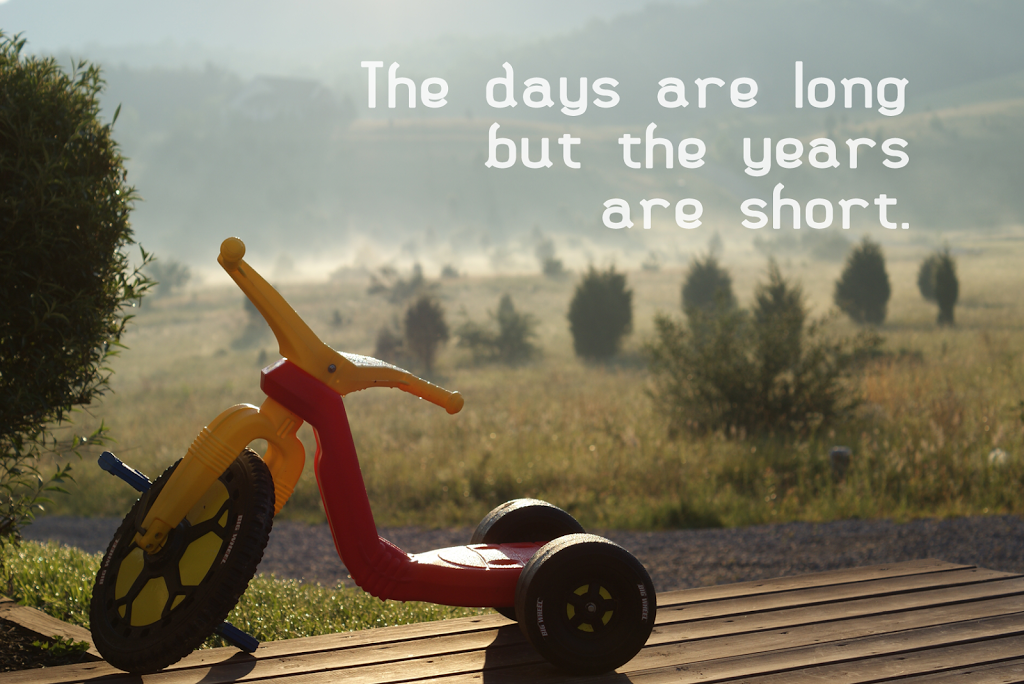
    The days are long but the years are short.

    Yes.  Yes.  Perhaps this is true.  At some point I stopped praying my nightly prayer that she would overcome apraxia.  When did that happen??

    I’m always looking toward the next problem.  The next goal.  She has an expressive language disorder now, and the future for a reading disability is still unknown.

    Maybe I need to stop for a minute.  Smell the roses Laura.  There was a time you yearned to hear that sweet voice.  That very voice today that told you, “I like you mama.  I like you.  I like daddy and I like Jace.  You’re my family.”

    What I would have traded or given to her those words two years ago.

    So yes, I’m going to pause.  I’m going to freeze time.  I’m going to think, if only for a moment, how sweet it is to hear my daughter’s voice.  A voice that is her own and able to express her own thoughts.

    I’m going to reflect on the fact, that in just two short years, I met the head of CASANA and went on to now have advanced training and expertise in CAS.  I literally have national apraxia experts a keystroke away via email.

    Say what?  How did that happen?  How did any of this happen?

    I just asked to join the facebook group for resolved apraxia but with new issues.  Yes.  That’s us.  We now fit into that category. My daughter talks so much I now know she needs help with expressive language.  How amazing is that?

    Even though I was late to the game in my opinion because I so wanted to believe Ashlynn was just a late talker, none of this would have been possible without early intervention…..wait…let me clarify…appropriate early intervention.

    For reasons I will probably address later, I’m so, so, so grateful that Ashlynn’s initial evaluating SLP (in the schools) told me it was CAS.  I knew then I had to get her private services.  I knew then I had to research this disorder.  I knew then our life would never be the same.

    I’d seen CAS before.  I’m an elementary SLP, and in my 10 years of experience, two kids walked through my door in Kindergarten nonverbal.

    That would have been Ashlynn had not appropriate therapy been initiated.  That meant that as an SLP, even I had to pay out of pocket.  $365 – $425 a month.  Yes.  Ouch.  Therapy is expensive, but it’s worth it.  I just had a baby in that time too and was on maternity leave.  We didn’t have any extra money.  You make sacrifices.  It’s necessary.

    I knew I didn’t want Ashlynn walking into a Kindergarten classroom nonverbal, so my husband and bit the bullet and went broke funding her therapy.

    It doesn’t matter now.  It was all worth it.  I’m so proud of her.

  • Kids say the darndest things….unless of course they don’t because they have apraxia.

    Kids say the darndest things….unless of course they don’t because they have apraxia.

    What was it that Bill Cosby always said?  Kids say the darndest things or something like that.  Unless of course, you know, they don’t because they have apraxia of speech and can’t even say the most basic things.  Or this that I just ran across:

    Unless of course, they don’t because they have Apraxia 

    When Ashlynn was born, I wondered what her personality would be, the funny things she would do and say.  I just expected it to happen.  She would be so witty.  She has two smart parents, and one in particular who is quite funny (I won’t name names but it’s not the SLP).

    As time marched on, I did see her personality, and she did do funny things, but it was all so limited. It’s pretty hard to say or do basic things, much less funny things when you have motor planning issues affect your entire body.

    Seeing other kids her age or younger on social media or worse in person, usually broke my heart.  It got to the point I didn’t want to take her around other kids her age and I had to hide friends on social media because I couldn’t bear another kids say the darndest things” moment, or really any moment that a typical developing child would have:

    Scenario:
    My crazy kid is doing back flips off our couch
    What I saw:
    Ashlynn can’t even jump yet

    Scenario:
    Look at our precious baby wearing her mom’s high heels.  We’re in trouble!
    What I saw:
    My precious baby still falls wearing her own sturdy tennis shoes

    Scenario:
    My son just imagined this carrot looked like an alien
    What I saw:
    Can my daughter even say carrot, and does she even know what an alien is?

    Scenario:
    Look at our big boy riding his two wheeler!
    What I saw:
    My big girl still can’t pedal a big wheel.

    Scenario:
    Little girl just said she wants to be a princess for Halloween.  She sure is daddy’s little princess!
    What I saw:
    My little princess has yet to say her name.

    The list goes on. Not that I wasn’t proud of all of these other kids, I was.  I was also happy for the parents, and maybe a little jealous.  How easy everything came.  All these cute little milestones taken for granted.

    Worse yet, the posts about their child’s annoying incessant talking.  If only there was some peace and quiet.

    Really?

    The quiet is our own little hell.  You can’t even to begin to understand how painful that is to hear as a mother who has a nonverbal child, when every quiet moment is spent praying that they will talk.

    That’s why my last post was so special I guess about Ashlynn confusing “coworkers” with “construction workers.”  She always comes along, just in her own time,

    and your kids will too.

  • Working our way out of the apraxia tunnel

    Working our way out of the apraxia tunnel

    Ashlynn has been saying things lately that are really showing higher level thinking. You’d think this would be glaringly apparent to me, but it really IS crazy how much language gives us an idea of what is going on in their brain.

    She’s been VERY interested in her schedule, and where she is going the next day.  I still haven’t made our visual schedule, but it’s on my to do list.  She usually asks me though while she’s laying in bed to go to sleep,
    “Mama, what are we doing today?”
    “you mean tomorrow?
    “yes”
    “Tell me that.  What are we doing tomorrow?”
    What are we doing, tomahyo?”
    And then we talk about it.  She loves it when her grandma drops her off at school and I get to take her to her class.  This happens on Tuesday and Wednesdays.  She used to just keep asking 
    “you takin me to school?”
    I would reply, “Grandma will take you to school and I’ll take you to class.”

    I’ve been telling her that since she started school.  This week she finally said, 
    “What are we doing today mama?”
    “you mean tomorrow?”
    “yes”
    “Say that, What are we doing tomorrow?”
    Instead of repeating it back to me, she asked, “Grandma take me to school and you take me to class?”  
    This may seem small, but I was sooo proud!
    She also asks me who I work with almost everyday and I usually tell her my coworkers or colleagues.
    Well the other night, she said, “who you go to work with, mama?  Construction workers?” 
    LOL  
    I love it.  It makes my heart smile, and in those moments, I know everything is going to be okay.
    My last update has to do with school.  This is her third year of preschool.
    The first year she came home singing (with 1-2 sounds) the melody to the baby bumblebee song.  By the end of that year, she was also telling me who her friends were in school.
    The second year, she would tell me who she played with for that day, but that was usually the extent of her school reporting.
    This year, her third year, she’s identifying the letters of her name all over the place.  She also told me the other day when we were talking about arctic animals and that polar bears live there, 
    “I live in Colorado.”  
    Me: “Did you just say you live in Colorado?”
    Ashlynn: “Yes, my teacher tell me that.”  
    I sat their in awe.  This is the first time she’s ever told me something she’s learned at the school.  Heck, this was the first time she said something that she hadn’t learned from me or that I hadn’t heard her say before. 
    I see the light at the end of this tunnel that is apraxia.  To be honest, I’ve seen it for some time now, but I feel we’re getting closer to making it completely out.
  • What to do when you can’t say “Trick or Treat”

    What to do when you can’t say “Trick or Treat”

    Ashlynn said her first “trick or treat” on command at the age of four.  At three…she had an approximation, but then she froze when we went trick or treating.

    Many people were polite and kind, not demanding she say something for her candy.  Others though, sat indignantly at the door waiting for “the magic words.”  Because Ashlynn’s strengths lie in social skills, she was always able to charmingly muster up the word “hi” instead, and most of them would give her the candy.

    However, many of my clients report anxiety around this time of year for them and for their child with apraxia.  I’ve heard of some creative ways around this.

    One client I had said she took her daughter with older cousins who all went in a group and spoke for her, if you will.

    Another client had a sign that said “Trick or Treat”

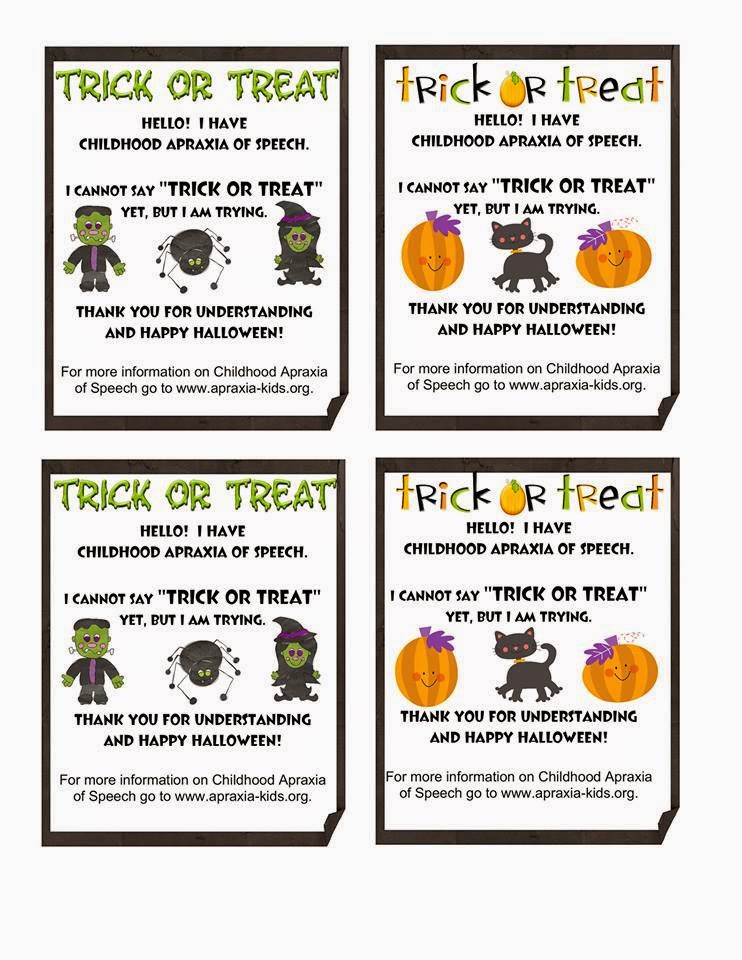
    A mom I’ve met through the fb group, made these cute and wonderful cards that not only say “trick or treat” for the child, but also spread awareness!!  I asked if I could share and she was happy to pass them along.

    So here they are!!  Thanks Shelley for your generosity!

    If you are finding these hard to print, feel free to email me at lauraslpmommy@gmail.com and I will be happy to send you along the PDF.

  • DTTC: Evidence Based Practice in Childhood Apraxia of Speech.  An interview with Dr. Ruth Stoeckel

    DTTC: Evidence Based Practice in Childhood Apraxia of Speech. An interview with Dr. Ruth Stoeckel

    Today I am honored to introduce Ruth Stoeckel, nationally recognized expert and published researcher on Childhood Apraxia of Speech.  I first saw Ruth Stoeckel speak back in 2005 when she presented in Colorado.  The packet she handed out during that talk helped me greatly in those early years when I was first learning about how therapy for apraxia is very different than therapy I had been doing for other speech sound disorders; and helped me treat the kids I did see with apraxia after that time.
    Since then, I was honored to be selected as part of CASANA’s intensive apraxia training institute in 2014, where Ruth was my mentor for four days.  I can say that during that time I was able to get to know Ruth better and I can tell you that she is absolutely passionate about CAS.
    Hi Ruth!  Thank you so much for guest blogging today.  To start, can you please talk a little about your background, where you work, and how you found yourself specializing in CAS. 
     
    Thanks for opportunity, Laura.   I’ve met a lot of great SLPs and parents through CASANA and I’m glad you are out there spreading the word to increase awareness.  
    How did I find my way to special interest in apraxia?  Lots of things seemed to push me in this direction. I did undergraduate work at University of Iowa at a time when  Penelope Meyers was there and talking with students about apraxia several years before she and Donald Robin co- wrote the book Developmental Apraxia of Speech: Theory and Clinical Practice.  When I moved to Minnesota, my clinical supervisor in the local school system was none other than Kathe Yoss, who together with Fred Darley had published an early study (1974) of a cohort of children who had a unique set of characteristics that they described as similar to adults with apraxia.  Kathe was a wonderful mentor and encouraged me to develop expertise in low incidence disorders like childhood apraxia.  A number of years later, I left the school system to work at Mayo Clinic.  I have had the opportunity  to work with and learn from two exceptional leaders in the field of motor speech disorders,  Joe Duffy and Edythe Strand.   Finally, I happened upon the Apraxia-Kids listserv  one night early in the evolution of what would become CASANA and was drawn in by the passion of the parents and SLPs who contributed there.  The combination of my work experiences and relationship with CASANA has allowed me to have great opportunities to develop my expertise and learn from both parents and colleagues!
     
    Almost weekly I get asked, “What is the BEST approach for CAS.”  I know that you are a proponent of DTTC.  Can you explain what this is, and do you feel this is the BEST approach? Why or Why not? 
     
    There is so much we still need to learn about how to treat CAS.  I have to say that, based on what we know right now, there is NO single “best” approach for treatment.  The greatest amount of empirical evidence is for Integral Stimulation/DTTC, but positive results are being seen in studies using other techniques, including PROMPT, ReST, and ultrasound in treatment. 
    I do use Dynamic Temporal and Tactile Cuing (DTTC) to guide my treatment.  DTTC is a flexible framework for dynamic decision-making in treatment – changing what you do moment to moment based on the child’s responses.  It was developed by Edythe Strand based on the adult 8-step continuum proposed for adults by Rosenbeck and colleagues.   This framework emphasizes the shaping of movement gestures for speech production using a systematic hierarchy of cues, with continued practice of those gestures in the context of speech. The focus of treatment is not on sounds – but on the movement gestures, or movement transitions for sound combinations. 
    DTTC is primarily an integral stimulation method that can incorporate whatever types of cues facilitate a child’s production, including visual, tactile and gestural.  Prosody is incorporated early on as well.  There is a temporal hierarchy (i.e. simultaneous production, immediate repetition, repetition after delay) in addition to the different types of cues.   The dynamic adjustments in temporal characteristics and level of cuing allow opportunities for the child to take increasing responsibility for assembling, retrieving and habituating motor plans.   This approach is individualized to the child by using a functional core vocabulary of words meaningful to them.  The principles of motor learning are integrated into this framework as well.  These principles are thought to be an important element for any treatment of motor speech disorder.
     
    What does the research say about DTTC?            
     
    Based on recent review studies, DTTC has the largest base of empirical research to suggest effectiveness for treatment of children with CAS.  However, the studies have been done with a small number of children, and further studies are needed to identify which elements of the framework may be key ingredients, and which may be less important.  As I said above, there is emerging evidence to  support other approaches as well.
    Since you mentioned principles of motor learning, can you provide a *brief* overview?  What do SLP’s really need to be doing differently from traditional articulation or phonological based therapy?
     
    Edwin Maas and colleagues wrote a great tutorial in 2008 that I recommend to anyone interested in motor speech disorders.  There have been a few small studies since then that have looked at these principles on a more individual basis, but there is still much to learn about how they apply to speech therapy.  
    Key aspects of treatment that are different for apraxia versus phonological disorder  are that apraxia therapy focuses on movementsequences rather than sound sequences and that it emphasizes working on movement sequences (coarticulation) within and between syllables.  Repetition is another key difference.  Based on just a couple of studies, there is evidence that we need a large number of repetitions per sessions to help a child establish the needed level of skill for producing a target.  It may take some time to build up to, but I try to get 100-200 repetitions of targets within a 20-30 minute session.  How those repetitions are organized is decided using the principles of motor learning. As they are laid out in the Maas article, we consider these principles as a way to influence how a child acquires a skill and then transfers or generalizes the skill.  They include the following:
     
    *Massed versus Distributed practice, which is many trials in a short period of time compared to practice of a given number of trials or sessions over a longer period of time.
    *Variable versus Constant practice, which is working on the same target in the same context as compared to practice on different targets in different contexts
    *Blocked versus Random practice, which is working on different targets in predictable blocks or treatment phases compared to mixing practice on various targets in less predictable ways.
    *Simple versus Complex task, which is a focus on “easier” sounds and sequences (what the child can say, or what is presumed easier or earlier developing) compared to more complex sounds and sound sequences.
    *Feedback on performance versus feedback on results, which is telling the child what behavior was produced accurately (e.g., you got your lips closed before you started”) need to do differently as compared to telling them “you got 3 out of 5 right.”
     
    Many SLP’s want to know how to pick therapy targets.  Where do you start when picking targets?
     
    I start by:  1) identifying the child’s phonetic repertoire; 2) their phonotactic (syllable) repertoire; and 3) finding out from the child and their caregivers what words are important and potentially motivating for that child.  In my motor speech exam, I probe the words that I might consider including as therapy targets by exploring what sequences the child can produce with different levels of help.  I want to try to expand their sound repertoire and their ability to sequence syllables, looking for how I can do that using a core functional vocabulary.
     
    What if the child has a later developing sound in their repertoire?  Would you include this in a potential target word?
     
    This comes up a lot.  Many SLPs are trained in their graduate programs to think of a “sequence” of sound development and to focus efforts on sounds thought to be earlier developing.  It seems that among the folks who have been doing this a while (it’s not validated in a study as of yet), the kids with apraxia “didn’t read the book” on speech sound development.  It’s possible they will have an “sh” or /r/ in several words before they have a consistent /b/or /m/.  That is why I think it is so important in assessment to survey the child’s phonetic and phonemic repertoire and to build the targets used in intervention on sounds that the child can produce either on their own or with help, regardless of where it is on a chart.  So, for example, the /s/ sound is very important in English for intelligibility and as a linguistic marker.  If a child is stimulable for it at all, I go for it in vocabulary targets, even though it’s considered later-developing.
     
    Do you ever use oral motor exercises in the treatment of CAS?  Why or why not?
     
    I want to be very clear in my response to this question.   Because speech is accomplished by moving the mouth, pretty much everything we do in speech therapy can be considered “oral motor” work.  The key distinction seems to be doing “exercises” vs “speech work.”   I do use some physical materials to assist with placement, like suckers or tongue depressors, and I do sometimes have a child practice a speech movement a number of times without speaking as a way to simplify the task at first.  But I always move the child as quickly as possible from that type of practice to using the movement in the context of a spoken target.  I don’t presume that practicing nonspeech tasks (e.g., chewing, blowing, etc. ) will result in improved speech movements and never ask a child to practice repetitions of isolated nonspeech movements or exercises to “strengthen” or “increase awareness of movement.”   Based on what we know of speech physiology, muscle movements are task-specific rather than muscle-specific.  That is, the activation pattern for a given muscle is different depending on the task that it is doing.  So we need to teach a movement in the context in which it will be used.
    What advice would you give for a beginning clinician who has minimal background on apraxia and apraxia therapy?  Do you have any webinars available for viewing, or good articles they could use as a start guide?
     
    I’d advise a clinician with minimal knowledge of background to do 2 things:  
    1) to find a colleague who has expertise and can provide mentoring; and 2) take advantage of the wealth of information available at the Apraxia-Kids website.  Next, they could attend workshops or webinars sponsored by CASANA.   I think it’s usually more meaningful when seeking information to be pursuing it for a particular student – as it was for you, when deciding you needed to learn about apraxia because of Ashlynn.  I think the  information will be more relevant and perhaps “stick” better when it is being sought for an immediate purpose.  Then that learning can be transferred to how one thinks about additional students who come along later with apraxia or severe speech sound disorder.
    Thank you SO much Ruth for being here today!  I am honored and thrilled that you agreed to guest blog.  I continue to admire your work in the field, your dedication to the children and their families affected by CAS, as well as your contribution to the field with your research.
     
    Thanks so much for having me!

    To learn more on DTTC read this tutorial by Dr. Edythe Strand

    A free course is also available online for CEU’s at ChildhoodApraxiaTreatment.org 
     
    Ruth Stoeckel, Ph.D., CCC-SLP is a speech-language pathologist at the Mayo Clinic in Rochester, Minnesota.  She has experience working as a clinician and independent consultant in schools, private practice, private rehabilitation agency and clinical settings.   She specializes in assessment and treatment of children with severe speech sound disorders and developmental challenges.  Dr. Stoeckel has participated in research studies on apraxia treatment and on the relationship of speech sound disorders to later learning disorders. She has presented workshops and advanced trainings nationally and is known for presenting practical, evidence-based information that participants can put to immediate use in their day-to-day practice. Dr. Stoeckel is on the Professional Advisory Board of CASANA and has been a faculty member of the Intensive Training Institute sponsored by CASANA.
     

  • Annual IEP – year 3

    Annual IEP – year 3

    It’s been two years since Ashlynn was first identified as having CAS.  She is now almost 5.  At her first IEP meeting, I remember praying that she would talk.  If she would just talk, everything would be okay.

    Last year, she was talking, but they explained she had a hard time fitting in with her peer group.  She would tend to just repeat what others said, but she was at least “staying in the game” with this strategy.  At that meeting, I remember they also said they were concerned with her attention.  At one of the parent teacher conferences last year, they told me she couldn’t identify the letters of her name.  I worked on it every night.  I bought letter puzzles, alphabet cards, and we practiced identifying the letters of her name and sequencing them.

    This year, she can identify ALL the letters of her name.  She notices them on billboards and store signs.  She has this down….it’s just she has 20 more letters to learn before she goes to Kindergarten next year.  Sweet Jesus, why do babies need to know so much so early now!!

    They remain concerned with her attention.  It doesn’t really look like ADHD, but maybe it’s something we need to look at later.  Oh, and then there is the cognitive test.  They want one of those in the Spring too.  I don’t want a cognitive test.  My immediate reaction is “no.”  However, Deb, her private SLP and my friend pointed out that I should find out the reason they want the test.  If they want it to determine a label….no.  If they want it to find out other information to help her programming, maybe.

    I’m just worried because with her difficulties with fine motor skills, speech and language, and visual motor…..I know the score is going to come out low, and quite frankly, I can’t look at that right now.  Maybe I’m in denial, but I just don’t see how they can get an accurate score when she has so many difficulties that could influence it right now.

    Another issue I was flabbergasted to learn, was that Ashlylnn can’t categorize.  This is where children identify items based on similarities.  They sort items.  I clarified if they tested her receptively so she didn’t have to name them.  They did.  The school SLP said she had three categories: clothing, toys, and food and she didn’t categorize them correctly.  They did say attention could have been a factor, but then I took her to private SLP and she confirmed it.  Seriously??  I just did an activity this summer that she rocked it.  Sigh.  I don’t know why she’s not transferring it, but I can’t believe I have another basic skill that we need to work on.

    Her goal to sequence pictures was not met.  I knew this though.  She simply doesn’t look at the pictures and their details to realize what comes first, second, or third.  I need to work on that.

    And this folks is why even after attending probably hundreds of IEP meetings in my career, I absolutely LOATHE them when it’s my own kid.  Despite all of the positives ( oh did I mention she’s asking questions and socializing with peers), I have to hear all of the problems.  All of the things I need to work on and my shoulders feel so heavy.  Despite this though, I have to pull on my big girl panties and attack it.  I have to put aside my fears and just step one foot in front of the other.

    I’m choosing to think about ALL the gains she’s made in PT and OT recently.  The PT said she could navigate ALL the playground equipment now like any other kid, and even shows beginning swinging skills of pumping her legs that other kids her age don’t have yet.  My husband beamed.  This is his area.  This is his hard work paying off.

    Her legs and core are getting stronger.  In private OT she just pedaled her Big Wheel for 14 consecutive rotations!!  She fatigues, but she’s getting stronger.

    Her power wheel that was too much to motor plan pushing the throttle AND steering…..well she’s doing both now on our sidewalk.

    In private swim lessons she’s now holding her breath for 5 seconds while she kicks her legs for two laps straight before she tires.  When I watch it, I cry because this girl almost drowned and she got right back up and attacks it.  Every time.  She attacks it.

    If she attacks it, what excuse do I have?  My husband says every goal we’ve made she meets.  She does, it’s just so much work and it stresses me out.  I’m terrified she’ll have dyslexia on top of all of her learning difficulties.  I hate to see her struggle.  She’s struggled all of her short life.  When will she get a break?