Tag: CAS

  • Apraxia and the village.

    Apraxia and the village.

    I work in the schools a few days along with my private practice work.  I say I work in the schools because I like working in Ashlynn’s school, and that’s partially true.  However, I have always in my career had at least one child on my caseload with apraxia in every school in which I have worked.

    If you have a child with apraxia, you’re probably thinking, “what’s the big deal?”

    If you are an SLP, you might be thinking, “Wow!  I’ve only ever had one, or none, or….”

    Anyway, if you are in the apraxia community, you know about the “apraxia coincidences” and if you know me, you know I don’t believe in coincidences.  So part of me feels like I’m put at a school I am at because I can be of service and have a connection to a particular child, with Ashlynn’s school being no exception.

    Currently I have a 4th grader that I see and I can only say so much because of confidentiality, but I love this boy.  Actually, I wrote about him once.  You can read about it here, but it turns out, I was right.  He’s gifted.

    Ha!  As I went to link that last post, I had actually included this graphic two years ago.  How things come full circle right?

    Anyway, his nonverbal IQ is off the charts and now he’s in the gifted program.  However, he’s a fourth grader and still can’t read or write, such is the extent of his disability.  I can’t imagine being so smart, but being unable to read or write.  Such is his life.

    We have every AT tool at his fingertips.  Technology though still hasn’t totally caught up to the extent of his disability.  His grades remain sub-par, and he is unable (and many times defeated so he’s unwilling) to produce any written work.

    There are sooo many people in this boy’s life who believe in him and who want to help him.  Meeting after meeting takes place behind the scenes.  I’m serious.  If you don’t work in the schools, you have NO idea the mobilization and time occurring on behalf of our children.  I know his parents don’t.

    Anyway, after at least two major meeting of the minds with every professional expertise (OT, Speech, SPED, gen ed, ATRT specialist, TA), we finally came up with a plan we thought will help him become more independent with his school work regardless of current reading, writing, or spelling ability.

    We set a meeting date of today with ALL of these above listed professionals and the child.

    Let me take a quick digression.

    A week ago, I posted on my SLP Mommy of Apraxia/Dyspraxia Fb page that the librarian at the school stopped me to show me this book called “Fish in a Tree.”  The book is written by a woman who had dyslexia as a child, and writes a fictional novel based on real life events about her life and the people in it.

    The librarian read this one chapter to me the other week, in which the girl’s teacher listed famous minds of our past and current generation.  They all were brilliant, but as it turned out, they were all believed to have had dyslexia.  I was so inspired.  I couldn’t WAIT to read it to my 4th grader.  The librarian was going to read it aloud to the entire class during library time, but she wanted me to read it to this child first so he knew we were all thinking of him.

    Today I got the chance.  I asked him if he knew the names of the people and what they were famous for.  He didn’t disappoint.  He can’t read, but he knew most of them as I read them to him:

    Thomas Edison? – “Invented the light bulb”

    Alexander Graham Bell?  – “Invented the telephone”

    Albert Einstein? – “Really, really, really smart.” 🙂

    Walt Disney? – “Made Pluto!”

    The list went on, and as I read the pages to him, some he knew and some he didn’t, I swear I could see a spark glow in his eyes and it was everything I could do not to cry.  People, this boy is as brilliant as all these people I was reading to him.  I honestly believe that, and it’s not just me….EVERY professional who works with him feels the same way; but if  you can’t read, and you can’t write and you’re in the fourth grade, you don’t feel that way.

    I barely got through reading the entire thing without completely breaking down.  When I finished there were stars in his eyes.  I’m telling you.  Bright, bright stars, and he smiled as he said, “Wait, all those people were like me!  They couldn’t read, but they were super smart and they invented stuff BECAUSE they weren’t typical.”

    I nodded my head.  That may not be a completely accurate assessment but I sure wasn’t going to contradict it, would you?  Oh, and I should mention, his comment came after a therapy session we had a few weeks ago in which I showed him Mikey from Mikey’s Wish who was talking about “neurotypical” and “neurodiverse.”  I knew he was alluding to this because he was inspired by the idea of being “neurodiverse.” (Thanks Mikey).

    As fate or coincidence would have it (coincidences aren’t coincidences), let me take you back to the meeting of all the professionals, the village, that helps this 4th grade student.  We scheduled another meeting, this time to include him.  It just happened to be that it was right after I read him those excerpts on these brilliant minds needing to find another way to express themselves.

    I took him to class where the meeting was about to take place, and his awesome 4th grade science and math teacher, who had already prepped him (for being in such a daunting meeting by himself with so many adults) told him we are here because we believe in him, and sometimes great minds have to find another path to greatness.

    His eyes lit up.  “Like Albert Einstein, and Disney, and the guy who invented the telephone!”

    People, the tears were in full force behind my eyes, but I still didn’t let them go.

    As the entire special education and general education team piled in, I watched this incredible strong and resilient 9 year old, listen to the plan set before him.  He was surrounded by people who loved him, but still.  He was outnumbered by 1:9 and he listened to our plan on how to help him read and write using technology, and, get this….his VOICE.   Yes, his VOICE would be a huge part in his written output via voice memo, and that’s possible, because he has one.

    We are all under no illusions.  We know this will be hard for him.  We know he will be frustrated and maybe even resist.  But literally, 8/9 people at that table believe he is capable (the 1 out-liar being him), and as one of his reading specialists said, “Maybe he doesn’t believe he can do this, but hopefully he will remember all the adults who think he can and it will keep him moving forward.”

    I was so proud to be sitting there as part of his team….his village; because we all know, these kids need a village.  I was trying pretty hard to reign in my emotions.  I thought about how lucky Ashlynn is to have this village too.  I don’t need doubters in her corner, I need believers; and I really know we have that.

    Oh, and about my 4th grader.  Believe me when I tell you he has BIG ideas.  His ideas cannot be adequately explained through his reading, his writing, or even his voice. I predict one day these BIG ideas will be turn into something even bigger.  I look forward to seeing it.


  • The problem with school SLP’s.

    The problem with school SLP’s.

    I only realized after being a part of the special needs community that school SLP’s have a bad rap.  Like a really, REALLY, REALLY bad rap.  

    I’m preparing a talk next month for Colorado school SLP’s, and every time I prepare a talk for this demographic, I have to tell you they have a special place in my heart.  No, it’s not just because I started as one and work as one part time, but it’s because I have literally worked under, with, and around many, many, MANY of them. I have worked with so many of them, and I can tell you they are a jack of all trades.  They are the EXPERT in eclectic, and may be the ONLY person in the school who understand in depthly just how a student’s unique communication challenges actually affect them in school.

    In the schools, you don’t have the option to specialize.  Kids from every disability show up on your caseload and you are expected to be the expert.  It might be hard to understand as a parent, but there are soooo many different disabilities and speech and language disorders, and a parent (rightly so) expects the SLP to do right and best for their baby.

    Every single SLP I know and have met has a desire in their heart to help children.  Please, let that sink in.

    When I took Ashlynn to her first private SLP who had never worked in the schools she was asking me about qualification.  She asserted that she could never be a school SLP because she felt it was unethical to not qualify students who clearly had some sort of speech or language problem.  I had a hard time refuting her.  Aside from saying qualification is different in the private versus educational sector, I really had no excuse.  I know that funding is limited in the public sector so that obviously plays a part in qualification.  I also know if every SLP took her stance, than NO kids would be serviced in the public schools, and is that really what we are going for?

    Public school SLP’s have caseloads that are probably double if not more of the private SLP.

    Where the private SLP can see kids 1:1, school SLP’s rarely have that luxury.  With weekly caseload averages around 45 to 55 and some maxing out at 90 (Yes 90 people I’ve seen it), even the most skilled SLP will not be able to do what a private SLP can do 1:1 for 45 minutes (though they will kill themselves trying).

    The result?  Parents become outraged at the lack of progress or progress they feel the child should be making. They surmise the school SLP just isn’t as good as the private SLP and they become disillusioned and write them off.  They post memes about preparing for battle when going into an IEP meeting! This honestly breaks my heart.  I feel bad for the parent who feels the SLP doesn’t care, and I feel bad for the SLP who is trying to manage an unmanageable caseload, writing IEP’s at night, or staying up until 2 Am (true story from an SLP I just talked to last week) to write a lesson plan, only to be ravaged by a parent unsatisfied with the results.

    I’m not sure if everyone is aware of this, but ANY SLP in ANY setting is as qualified as the next SLP by basic certification standards.  What does that mean?  That means, as long as an SLP received their masters degree and the Certificate of Clinical Competence (CCC) through ASHA they can work anywhere.  So that means, your school SLP can apply for a job at Children’s Hospital right now and probably get hired tomorrow (because in case you didn’t know there is an SLP shortage as well).  For some reason though, there is this perception that the school SLP just isn’t as good as the private SLP.  If it’s true, it probably has MORE to do with caseload and workload size than it actually has to do with the qualification of the SLP.

    I get calls and emails all the time from concerned school SLP’s desperate to meet the needs of their kids with apraxia but not knowing how.  They want to see the kid more, or see the child 1:1, but their caseload simply does not allow for it.  They cannot add more hours to the day, yet they still call, or write and wonder if there is something they have not yet thought of.  Oh, and here’s a dirty secret.  Listen close.

    Are you listening because this is VERY important.

    If an SLP feels in their heart a child needs private, supplemental speech services, they CANNOT say it.  People, they CANNOT tell you this.  Why?  Well, their license and job is on the line.  In most cases, school SLP’s are told not to recommend any sort of outside therapy.  Why do you ask? Why?

    I’ll tell you.  If a school SLP recommends outside services, the parent can sue the district and win, and potentially disbar an SLP from ever practicing again.  Are you asking why again?  I’ll tell you.  If a school SLP recommends outside services, they are essentially saying that the child can not benefit or make progress from the therapies provided by the school, and the school is required by law to show progress.  If the SLP recommends outside service thereby saying the school is inadequate, the school gets worried or they will get sued for not providing adequate services and the SLP potentially fired.

    Would you take that risk?

    I’m not saying unilaterally every school district would do this, I’m just saying, school SLP’s are told this is a possibility, and so they would find it best not to recommend outside services.

    You need to know this as a parent of a child with any disability.  Some SLP’s will risk their professional license and recommend this to you.  Let me  tell you though what they are risking.  They are risking 4 years of a bachelor degree, 2 years of a masters degree, 1 year of a clinical fellowship, and the usually 3 years of probationary status as a teacher.  That is an entire decade of work and dedication to a profession they love and believe in.  Would you take the risk then to recommend a parent pursue outside therapy?  This is where they are at!  It is truly a catch 22.

    If you are upset about your school services, you probably have every right to be!  I was VERY unhappy with Ashlynn’s preschool, in-class only, speech/language services.  However, it is important to place the blame on the right entity and in most cases I can assure you it is NOT on the school SLP’s shoulders.  In Colorado, the Colorado Department of Education mandated an inclusion model only of special education services in preschool thus making it extremely difficult for any school SLP to pull a student out into a 1:1 session.

    My message today is this: School SLP’s are some of the most phenomenal group of people I ever have the honor to speak with or to. They do not get the option to specialize, and so they pursue advanced training and expertise in every disability that may affect communication: from Apraxia to Angelman’s Syndrome, from Developmental Delay to Down Syndrome, from Cerebral Palsy to Stuttering, from Language Impairment to Nonverbal Learning Disability, from Assistive Technology to Autism, from Auditory Processing Disorder to Articulation Disorder,  school SLP’s will see it all and be expected to rise to the challenge.  They cannot “refer out” or “discharge for lack of progress” as an can be done in private speech. No, the school SLP is expected to figure it out regardless of the lack of resources, lack of funding, or lack of time.

    They will be faced with limited or no space, they will be strapped with high caseloads, and criticized by parents; yet they will persist and pursue only becoming better for it, because of their love for the children and the profession.  I personally have witnessed it time, and time, and time again!

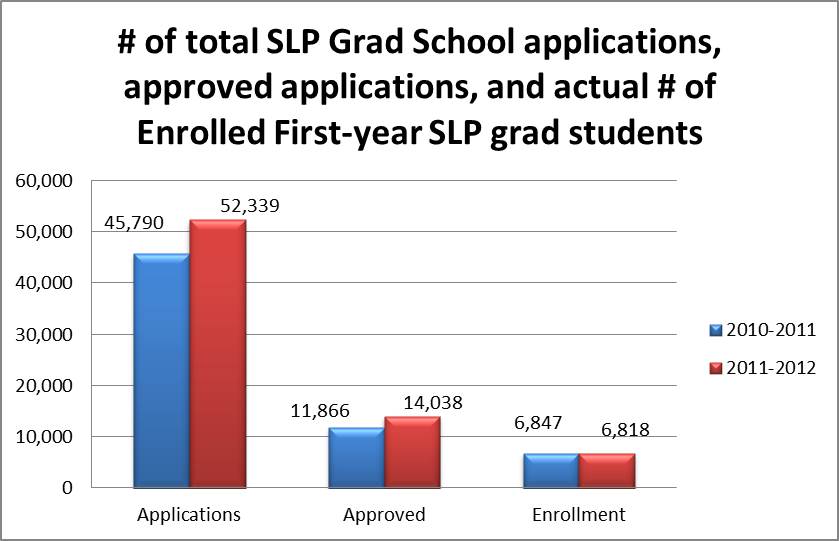
    I can tell you firsthand, getting into graduate school for speech/language pathology is VERY difficult.  It is highly competitive, and here in Colorado, the average COLLEGE GPA was a minimum of 3.87 when I applied.  I found this graphic from 2011 but I can tell you things have not changed much.  There is a HUGE gap between the number of applicants and the number of people selected. 

    The disparity should be striking, and please remember that MANY of these applicants will be YOUR school based SLP.  If you have the mentality that “C’s get degrees” and you are certain your school based SLP fits the latter, let me correct you.  NO average C students make it to graduate school in the first place for speech/language pathology.

    Truth

    For my final thoughts I wish not to be adversarial.  I hope that this article has persuaded you, a parent OR SLP, to reach out to the other side and bring about the change you wish to see.  I have the unique perspective of being on both sides, and as such, I have the utmost RESPECT and LOVE for both sides.  I truly wish for there to be a conduit of communication, and not a  ridge of animosity and distrust; and at the the forefront, I wish to impart a spirit of solidarity between my professional and special needs relationships.

    To read more from SLPMommyofApraxia follow her on facebook, pinterest, or twitter.


  • The Gift, Grandma, and more lessons in emotional intelligence

    The Gift, Grandma, and more lessons in emotional intelligence

    Ashlynn has always given us “papers” with her scribbles on them.  She constantly surrounds herself with papers and pens.  As impressed as I am with her always working hard, the paper obsession drives me mad.  I have papers all around my house!  They are treasures to her though, and you never want to refuse a gift from a child.

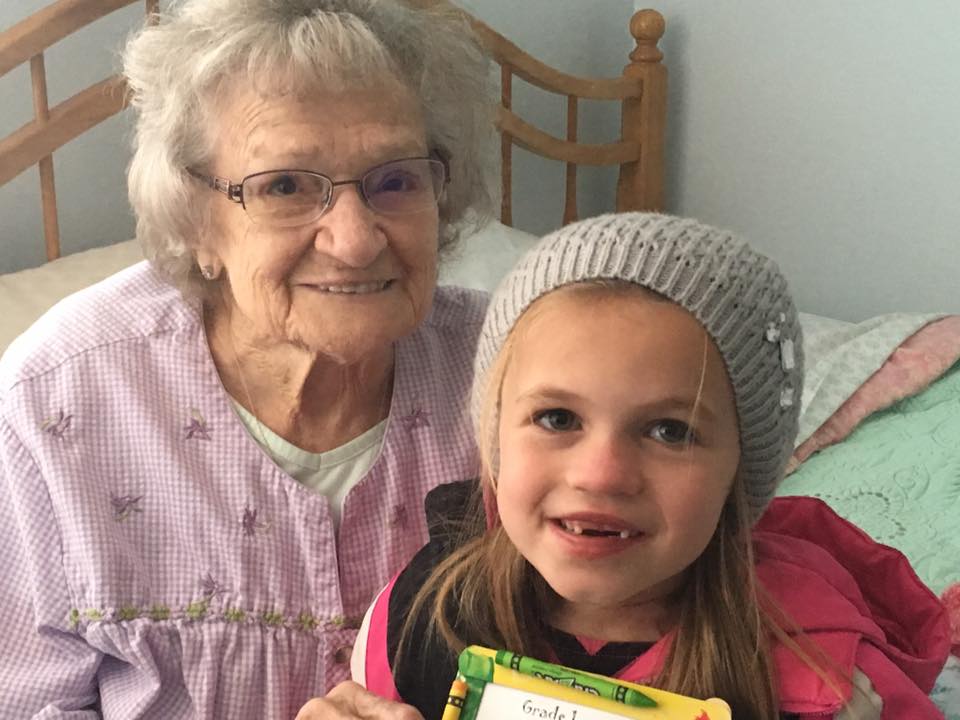
    Ashlynn has a Great Grandma Green who visits periodically and stays with her Grandma Smith.  I remember seeing the wall in the room she was staying papered with Ashlynn’s “cards.”

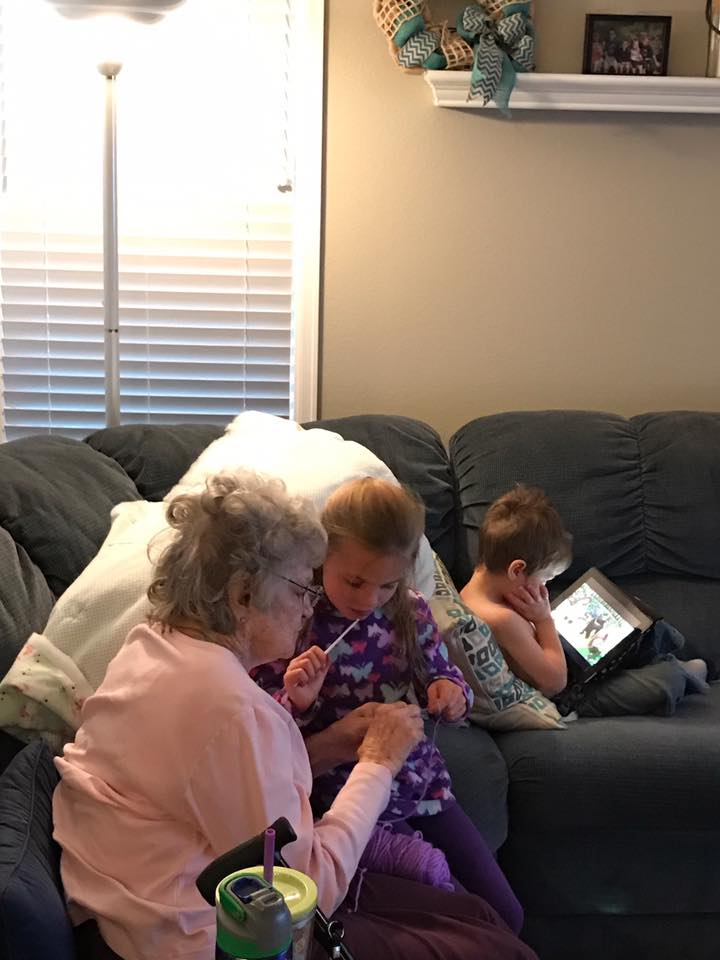
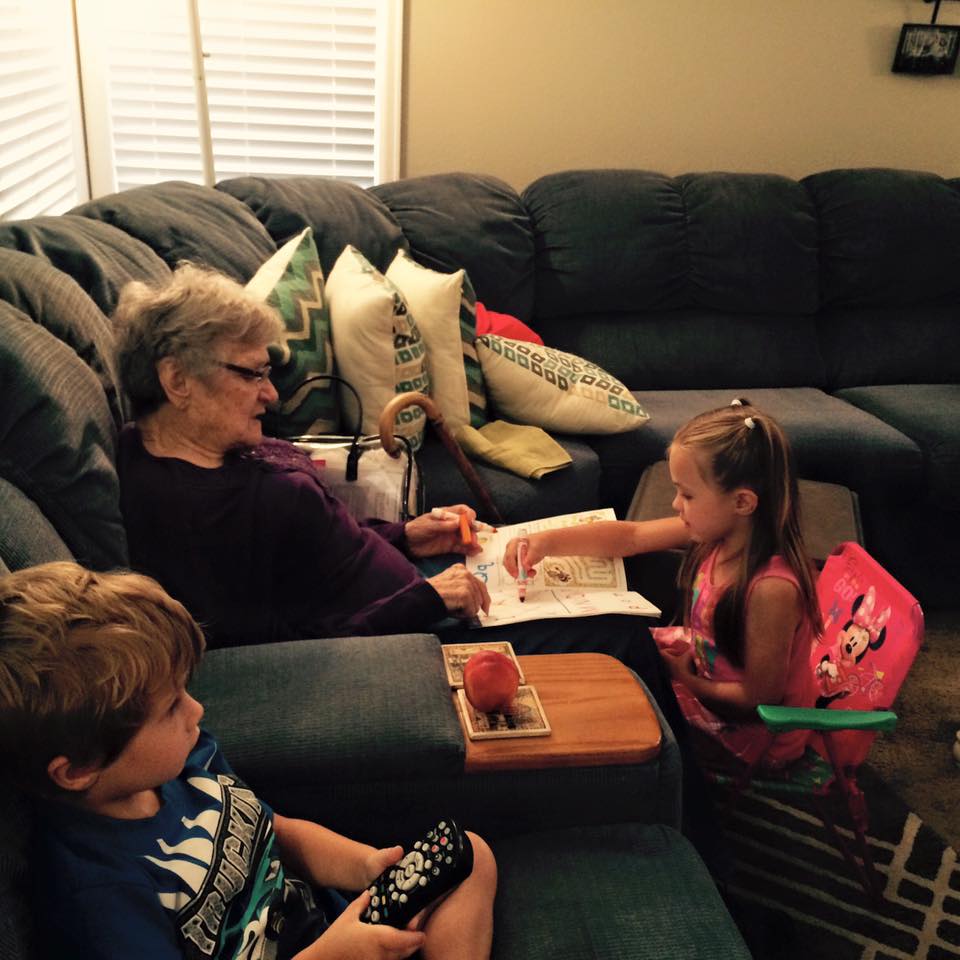
    Ashlynn has always been drawn to Grandma Green when she’s here.  It might be because Grandma gives her a ton of 1:1 attention.  Here is just  a peek of the two of them.


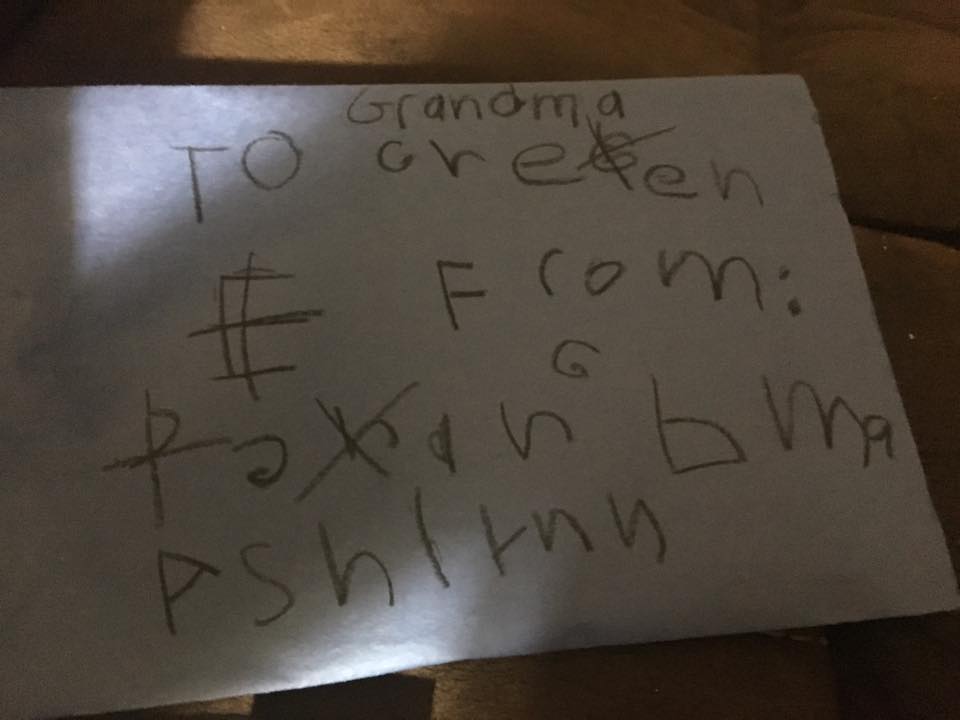
    Yesterday, Ashlynn came home with a “gift” in her backpack.  She made it at school.  It looked official.  It was wrapped in construction paper.  I was excited to see it.  I looked at the paper, and it was addressed to Grandma Green.  I’d be lying if I said I wasn’t jealous.  I showed my husband when he came home, and I gushed about how sweet and thoughtful she was, and then added, “and I’m sooo jealous!.” He admitted he was too.  I couldn’t wait to see what it was, but I knew it would be more fun to wait and see.

    I texted her Grandma Smith, who is the daughter of Grandma Green and she replied, “Oh boy, not feeling the love! lol.” “Hey Grandma Green will be excited” and then “Wow, I’ve been replaced.”  hahaha.  I think her Grandma Smith was just as jealous as we were!

    We stopped by her Grandma’s house on the way home from school to give her the present.  It was the cutest thing ever!  I was even more jealous, but at the same time, proud of the emotional intelligence my daughter exhibits daily.


    It reminded me of a special moment more than three years ago now where Ashlynn was still mostly speaking in scripts.  I titled it “God bless Grandma Green” and it was a special moment too.  Not sure what it is between these two, but it sure is special, so once again, God Bless Grandma Green.

  • The decline of the therapeutic relationship and why you don’t have to stand for it.

    The decline of the therapeutic relationship and why you don’t have to stand for it.

    I’ve noticed something since I’ve had my daughter in therapy.  Therapy offices that are small, with only a couple therapists and an actively involved owner, yield happy clients.  Conversely, therapy offices only interested in expanding their brand, that staff numerous therapists and have a relatively un-involved owner, have more unhappy clients.

    I used to work at a place this happened actually.  The owner was fantastic.  Smart, personable and caring, her clients improved, her families were happy, and her reputation grew.  Soon, she was staffing multiple therapists from two different disciplines and opened up a second location.  She became  stretched so thin, that she outlined a list of policies and procedures, and then delegated a supervisor and receptionist to enforcing them.  The result?  Common sense flies out the window.  The parent/therapist relationship becomes strained.  People leave.  I know personally now why this happened.

    Recently I was on the receiving end of this.  I took my daughter to what was supposed to be a well reputed therapy place in Denver, Amaryllis Therapy Network in the Highlands.  I wasn’t too pleased with the evaluation, because Ashlynn has been evaluated three times before with the very same test and this time she scored 20 points lower.  20??  I had to ask myself if that was really accurate and I had quite a long conversation with the therapist who said attention could have played a factor or this or that.  Ok.  Fine.

    However, then she was transferred to a different OT for treatment.  They initially wanted to have her see an assistant.  I have no problems with assistants.  I used to be an SLPA (which is an SLP assistant) and an assistant is more than capable of doing therapy.  However, what they are not able to do, no let me correct that, what they are not allowed to do,  is  change a treatment plan when they see something isn’t working.  They are required to consult with the supervising therapist who IS qualified to develop treatment plans before they change it, and that’s just assuming you have an assistant who is experienced enough to know it needs changing.  Anyway,   I needed someone who can change a treatment mid session if they see something is or isn’t working.  My daughter is not a typical case.  She’s involved and I don’t want to waste time.  I’m not trying to sound rude, but it’s just the way it is.  As a side note though, it does make we wonder how many parents reading this even know if their child is seeing an SLPA or a CODA.  If they are, just know that you want to make sure a supervising therapist is really staying on top of things in regard to your child’s treatment approach…just sayin.

    Anyway, they complied, and I was given a different OT.  I wanted a conference call set up between the new OT, me, and Ashlynn’s school OT who is also my colleague, a therapist I trust, and has been with Ashlynn since preschool.  When she called, it was clear she had not thoroughly read Ashlynn’s report and then mentioned how Ashlynn had done a “group” therapy.

    I’m sorry what? Group therapy?  Ashlynn can get group therapy in school.  I’m paying for private therapy.  I need INTENSE private therapy.  She quickly reassured me it was still 1:1 kid to therapist just participating in a group activity.  Ok…maybe….but that’s not what I was paying for which even furthered my resolve that we needed a group conference call.  I asked if she would email me and she agreed to set up a time.  I NEVER received an email.

    I’m reasonable.  Ok.  Maybe she entered my email address wrong?  I call the next week before another session has come and gone and tell the receptionist I never received an email, would she email me again.  She check the email address on file.  It’s correct.  Hmm.  Okay.  She’ll send another one.  Perfect, thanks.

    ANOTHER week goes by.  NO email.  My husband is the one that takes Ashlynn so I can’t just bring it up.  I’m pretty ticked about this to be honest, but it can still be dealt with…worked through.  Probably an honest mistake.  However, I’m going out of town and I don’t think I can make the carpool arrangements work to get Ashlynn there this week.

    Now, yes.  I know I signed  48 HOUR cancellation policy paper.  I actually remember signing it because it struck me as outrageous.  Who has a 48 hour cancellation policy?  Oh well.  There are people who do chronically abuse the system, and cancellation policies are in place to protect and respect the therapist’s time.  I get that….not only because I just get that…but because I AM A THERAPIST WHO DOES THIS EXACT SAME THING AS A JOB.

    Dang!  Why is that in caps you ask? Well, it’s because even when therapists, or doctors, or people in a field where they are to care about people have a cancellation policy, it’s usually only enforced to the chronic problem clients.  Any person with a heart and common sense, understands that things come up.  If someone is abusing the system, then yes.  A cancellation policy should be enforced.  I was NOT abusing the system.  I called 30 hours in advance, choosing to wait until the morning instead of the hour they closed.

    This was my first time cancelling, we aren’t late, and my husband probably spends close to 3 hours round trip getting her down there through rush hour traffic and back home. Not to mention the financial hardships families are already going through. You would think someone who actually has a heart and interest in caring about children would have been understanding. I know I am! I don’t even have my clients sign a cancellation fee policy, and if I did…I would give them chances. Unbelievable and SO sad. It’s not right we go through this when we are already bled dry from the cost of therapy. So now, I have to find a NEW place and begin the process again.

    Oh, and one more thing. The email situation?  The supervisor said it was documented she emailed me twice.  “Maybe I didn’t get it due to spam filters?”  I went along with it.  Afterall, I hadn’t yet checked spam, even though it’s ironic that I DO get all of THEIR spam email.  Well, low and behold I DID check, and by check I mean SCOUR my spam email and there was nothing.  NOTHING.  NO email from her…so now on top of it I can add lying.

    Anyway, I digress.  I have to find a new place and begin the process again.

    Oh…but I WILL begin it again, because I know there are places and therapists who do not feel the need to run their therapy office like a corporation and treat people, actual human beings, as only dollar signs.  I know, because I’m one of those people, and I know many, many other good therapists who are ALSO one of those people.

    My message to any parent reading, is if you feel like your child and your appointments are nothing but a dollar sign, then you need to leave.  That is so unacceptable.

    My message to any professional reading this, is you need to know and understand we are counting on you! We are putting our faith and literally our children’s success and outcomes in your hands.  Meet us halfway. We are your paycheck, but we are also human.  If you are a person running a therapy office like a corporation, take heed.  YOU may be an honest and awesome therapist, but don’t get caught in some black and white policy and procedures BS.  These are humans, humans with disabilities no less, that you are dealing with.  Have some freaking compassion beyond your rules and regulations.

    Oh, and for anyone considering Amaryllis Therapy Network in Denver, scratch them off your list and move on.  Developmental Fx is where I’m headed, and unlike Amaryllis, I know many families who have been happy with the outcome.

  • Anxiety as a special needs parent feels like…..

    Anxiety as a special needs parent feels like…..

    Anxiety as a special needs parent of Childhood Apraxia of Speech feels like……

    It’s my fault. Endless intrusive thoughts wondering what caused it, and despite coming up empty, still feeling like somehow it must have been something you did.

    I’m not doing enough. Despite working tirelessly and endlessly for your child, you will continue to see her struggle, and it feels like you have missed something; and the enormity of the responsibility is crushing.

    Doubt, doubt, and more doubt. There is always a decision to make in parenting, and it feels like there are never any easy answers, only tough choices, and you’re never sure you have made the right one.

    I’m failing. Thousands of dollars dumped into therapies that help, endless restless nights, tireless fights, but still seeing low scores leaves feelings of failure…and nothing is worse than feeling like you’ve failed your own child.

    Getting on and off the bus at the wrong stop over and over. Even after months, sometimes years of therapy, you still feel like there is no end. When one area seems to improve, another area of concern arises.

    I’m falling. Out of touch with friends, family, life outside of therapies, and yourself.

    Exhaustion. Physically. Mentally. Emotionally.

    Never ending worry. Am I doing enough? Will my child make friends? Will he/she be successful? Will people see past their disabilities and see their abilities?

    The weight of the world at times. A result of all of the above.

    Lonely. Finding support and others who truly understand this journey is difficult. Isolation is real.


    Thank you to Kendra Jenkins, an apraxia mom and advocate who commiserated and collaborated with me to write this simple, but hopefully powerful post.  There is nothing easy about being a special needs parent, but there is always a silver lining, and the silver lining is finding others who can bring you comfort simply by saying “me too.”

    10462352_321900191324982_8907452225282653177_n
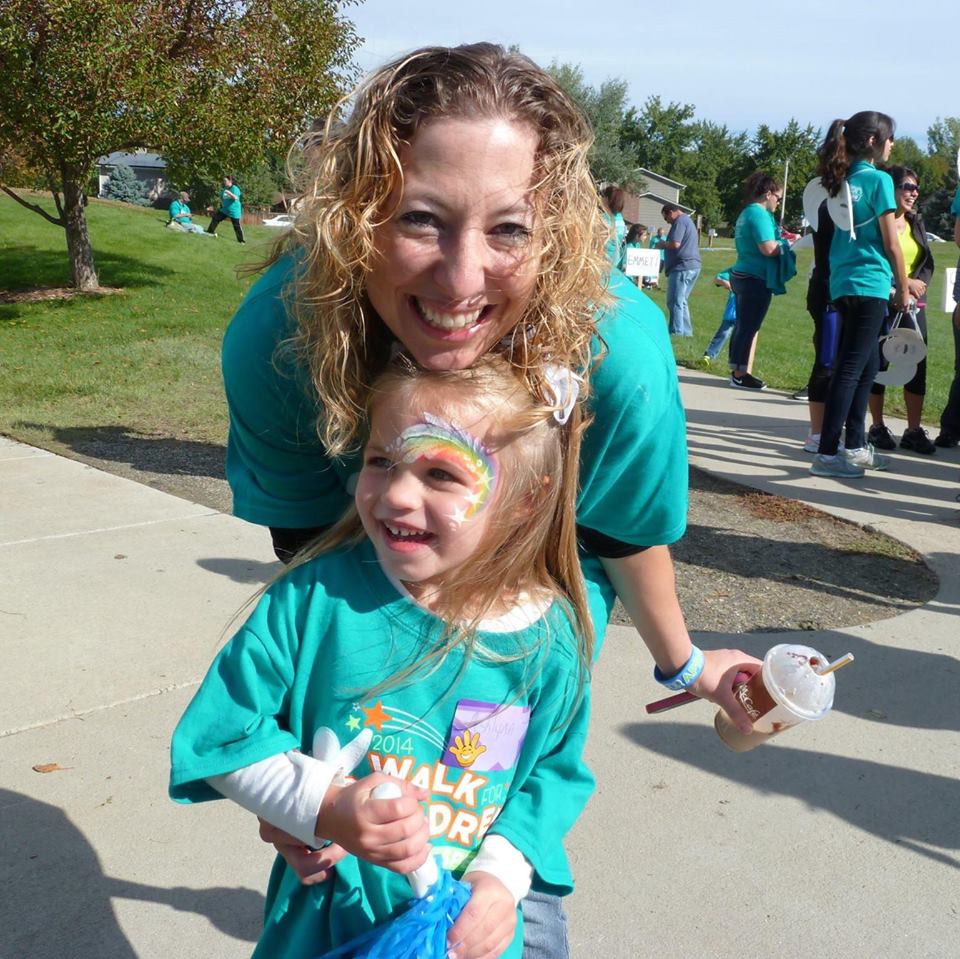
    Me and Ashlynn
    14797513_10210893354199552_68844369_n
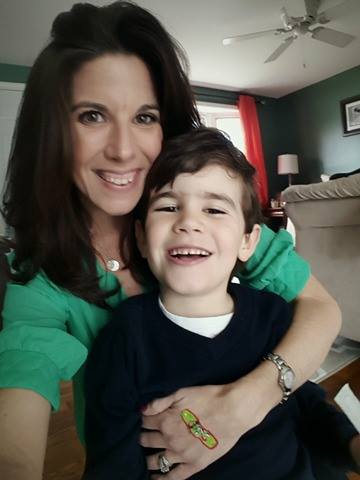
    Kendra and Talan


  • My head gets messed up sometimes

    My head gets messed up sometimes

    This is what Ashlynn has said to me twice today.  It’s rather timely since I just wrote about a post about letting our kids know they have apraxia so they have a name for the problems they experience.

    Ashlynn (I thought) has known she has apraxia, but I realized I said it a lot when we were still just trying to get her words out and her sounds right, but maybe I hadn’t said it lately.

    This morning she called me Grandma, stopped, and then hit her head and said “ugh.  WHY DO I DO THAT???  You’re not Grandma…you’re um………….”   I waited patiently.  “Mommy.  You’re mommy.  Ugh.  My head gets messed up sometimes,” and she hit her forehead.

    I quickly told her “Ashlynn, your head is not messed up.  You have apraxia, and that is what makes it hard to get the words out sometimes and also why you may say the wrong word.”  My husband quickly followed up with his own words of encouragement.

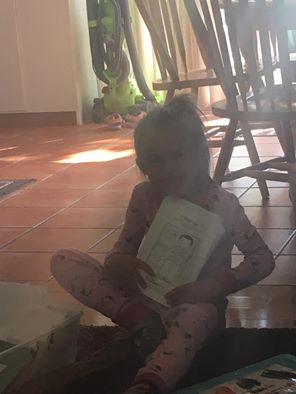
    Two hours later I was working on my computer, and she came over and started talking to me.  I was asking her what she wants for her birthday.  She told me her standard: cards, papers, pens.  She’s always fighting over Jace’s magna tiles, so I asked if she wanted magna tiles.  She immediately said yes!  Then she said, “I couldn’t think of that word: magna tiles.  I said Legos but that’s not right.  Ugh.  My head gets so messed up sometimes.”  I started to say something, and she interrupted and said, “That’s because I have apraxia?”  I quickly agreed and told her that’s why she goes to speech therapy.  (Except she hasn’t been to private speech lately because of some personal family extenuating circumstances).  So, literally two minutes later I look up and see this:

    14322205_10208408247856355_8135929580253810417_n

    It’s not the best picture, but she has a box of decodable books we keep in the living room open and she is trying to read them.  She noticed me looking at her and she asked, “When am I going back to speech therapy mommy?”

    Sigh

    Apraxia sucks.  Ashlynn is amazing and her head is anything but “messed up.”  Why does she have to work so damn hard.  Why does she have to know she has to work so damn hard.   Am I doing enough?  Am I saying the right things?  I swear being a parent is half doing what you think is right, and half second guessing what you said and did.  14358743_10208416578424614_2540639598855195286_n

    It’s such an invisible disability at this point.  No one would look at her and think apraxia.  No one would look at her and think her “head’s messed up.”  Ugh.  That kills me.  Look at her.  She’s looking out our window here taking it all in.  She is seeing and looking at WAY more than she says.  Maybe one day I will know everything in her head.  Maybe.

    Sometimes, I feel like I’ve been jipped. Other parents get to hear the thoughts behind this picture.  I try to read her eyes and her facial expressions.  Oh she talks.  That she does and she does it well now.  I still don’t know everything though, and she knows it now too…..and I don’t know whether or not to be sad or happy she is empowered to know why talking and getting the words out is hard for her.

    Sometimes I wonder if that’s unique to parenting a child with a communication disorder, or a more universal experience as a mother.  I think of the ABBA song I love so much:

    Do I really see what’s in her mind
    Each time I think I’m close to knowing,
    she keeps on growing,
    slipping through my fingers all the time.

    14333826_10208405647911358_6797084407173307315_n