Tag: CAS

  • What does the research tell us about NDT – Neurodevelopmental Treatment for childhood apraxia of speech (CAS)?

    What does the research tell us about NDT – Neurodevelopmental Treatment for childhood apraxia of speech (CAS)?

    In short: NOTHING

    You can now go about your day. If you are interested in reading more, I will summarize the research below.

    What is NDT?

    NDT stands for neurodevelopmental treatment. It was created by a physical therapist named Berta Bobath and her husband as a treatment for cerebral pasly (NDTA, 2005). According to (Paris, B. Theoretical Base of NDT), the Bobath’s believed that movement is not learned. Rather sensations of movement are what help children learn effectively.

    What does the research say?

    Since that time, it’s been researched since it’s conception primarily in the physical and occupational therapy realms. More specifically, with cerebral palsy and gross motor skills. I found no information related to NDT for childhood apraxia of speech. There was one paper that did a relational study looking at the effectiveness of NDT on gross motor function with children who had cerebral palsy and a general developmental delay. The criteria for developmental delay though was loose and it’s not clear if these children had a diagnosed motor planning disorder as in developmental coordination disorder (Lee K.H. et al, 2017)

    The most recent and up to date summary article on NDT was done in 2018 by Besios and colleagues. The conclusion,

    This review found that the effects of neurodevelopmental treatment for children with cerebral palsy are still uncertain. Further studies are required to assess the efficacy and safety of neurodevelopmental treatment for this purpose and until there, current evidence do not support its routinely use in practice.

    This does not even address children with dyspraxia, developmental coordination disorder or CAS.

    Do children with CAS need PT and OT?

    Research does show that many children with CAS can be at risk for motor impairments (Iuzzini-Seigel, 2019). However, it is out of the scope of a PT or OT to be treating childhood apraxia of speech.

    What does the research show is the best way to treat CAS?

    In a 2014 systematic speech review by Murray et.al, it states,

    Speech production is a complex motor skill with extraordinary spatiotemporal demands, requiring coordination across many different muscle groups.

    The review looked at 42 articles and 90% made explicit reference to utilizing the principles of motor learning.

    A recent 2020 review done by Springle and colleagues found,

    Findings of six systematic reviews, two of which were conducted with relative rigor, suggest that motor programming treatments have the best evidence base for treatment decisions pertaining to CAS. Clinicians are referred to online resources to implement these treatments according to published protocols.

    In short, NDT is not a recognized treatment in childhood apraxia of speech. CAS is a lifelong neurological disorder affecting the planning and programming of the movements needed for speech. As such, the best approach according to available research is treatment incorporating the principles of motor learning.

    Laura Smith, M.A. CCC-SLP is a 2014 graduate of Apraxia Kids Boot Camp, has completed the PROMPT Level 1 training, and the Kaufman Speech to Language Protocol (K-SLP). She is the author of Overcoming Apraxia and has lectured throughout the United States on CAS and related issues. Currently, Laura is a practicing SLP specializing in apraxia at her clinic A Mile High Speech Therapy in Aurora, Colorado. 

  • Top Ten SLP Mommy of Apraxia posts for 2019

    Top Ten SLP Mommy of Apraxia posts for 2019

    Hi readers! Not only another year, but another decade is coming to a close! My daughter Ashlynn was born in 2009, and it’s astounding all of the changes that set off in my life throughout the past ten years! This past decade was one of joy as a I built my family, but also sorrow facing numerous challenges with Ashlynn.

    I have faith though that this next decade will be one of overcoming! I know ten years from now I’m going to be writing another success and triumph story, much like I did in the book I published this year called “Overcoming Apraxia.” I also want this next decade to be one of exponential growth in apraxia awareness and information so all children have the access to the best therapy.

    Happy New Year and I wish you all a blessed 2020!

    Here are my top ten posts from 2019.

    1. The Exploding Genetic Findings in Childhood Apraxia of Speech
    Click here

    2. Growing up with CAS: Never Stop Dreaming

    Click here

    3. Adulting with Apraxia

    Click here

    4. Hammering out Apraxia

    Click here

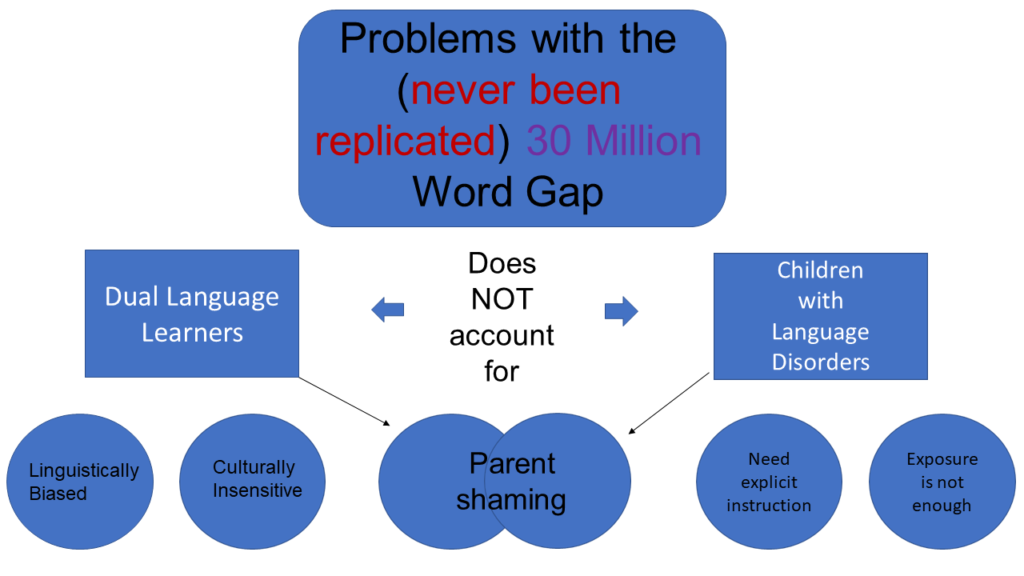
    5. Mind the (30 milllion) Gap: Beyond the Catchy Headline

    Click here

    6. Who diagnoses Childhood Apraxia of Speech?

    Click here

    7. Did I cause her CAS?

    Click here

    8. Oral Language and Phonological Skills May Be the Best Predictors for Reading Disorders in Childhood Apraxia of Speech

    Click here

    9.Shaming parents about home carryover

    Click here

    10. Growing up apraxia: I want them to learn what it is

    Click here

    Happy New Year friends! Always believe in the magic of new beginnings! Stay present. Love. Hope. Live.

    With Gratitude,
    Laura

  • Trainings and resources for SLP’s on childhood apraxia of speech (CAS).

    Trainings and resources for SLP’s on childhood apraxia of speech (CAS).

    I recently posted a quote from my book Overcoming Apraxia on social media that garnered quite a bit of attention. It wasn’t to criticize or disparage SLP’s. It’s just a fact many of us speech-language pathologists, (myself included) didn’t get adequate training in graduate school on how to treat apraxia. I had maybe 15 loose leaf pages on it, and that wasn’t about treatment.

    Many SLP’s asked what trainings I would recommend and many parents asked what questions they should ask. I’ve compiled a list of trainings and resources on childhood apraxia of speech for speech-language pathologists.

    SLP training and resources

    There are numerous online free trainings for apraxia, believe it or not.

    1. Currently Edythe Strand has a free course on DTTC (dynamic temporal tactile cueing) that gives you CEU’s through the University of Texas at Dallas found at Child Apraxia Treatment.
    2. Another FREE resource is out of the University of Syndney that has a free online training and AND supplemental materials for ReST (Rapid Syllable Transition Training)
    3. PROMPT (Restrucuring Oral Muscular Phonetic Targets) is a method of tactile cueing that only offers in person training and is pricey.
    4. Lynn Carahaly has the Speech EZ Apraxia program with videos for sale and workshop opportunities.
    5. Nancy Kaufman has a commercially available video detailing her method that I liked when I was first learning about CAS because she gives a lot of video examples.
    6. Apraxia-Kids.org offers on demand videos that can be accessed through a yearly subscription fee that is relatively cheap (around $90 for the entire year).
    7. ASHA.org has a recently updated practice portal on CAS.
    8. A book that is awesome on how to treat apraxia is by Margaret Fish called “Here’s how to treat childhood apraxia of speech.”
    9. Another book that is fantastic is by Cari Ebert and David Hammer called “The SLP’s Guide to Treating Childhood Apraxia of Speech.”
    10. A newer and AWESOME book targeted for parents and early intervention professionals is “Let’s Get Talking,” by Mehreen Kakwan. It explains direct therapy tips to use when a child has suspected motor planning difficulties including visual and verbal cueing ideas.

    *Both DTTC and ReST have the current highest evidence base in the research on apraxia*

    Fellow speechies, here’s the deal. Yes we come out of graduate school with a wealth of knowledge, and yes, the Certificate of Clinical Competence behind our name makes us qualified to treat speech/language disorders; however, the field is VAST. We should not apologize or feel bad about not being an “expert” in every speech and language disorder from birth to geriatrics.

    However we DO have a responsiblity to be honest with parents, clients, and families about our level of expertise in a given area, and whenever possible, try to gain additional training and expertise in that area if we are lacking.

    Laura Smith, M.A. CCC-SLP is a 2014 graduate of Apraxia Kids Boot Camp, has completed the PROMPT Level 1 training, and the Kaufman Speech to Language Protocol (K-SLP). She is the author of Overcoming Apraxia and has lectured throughout the United States on CAS and related issues. Currently, Laura is a practicing SLP specializing in apraxia at her clinic A Mile High Speech Therapy in Aurora, Colorado. 

  • Overcoming Apraxia – book release

    Overcoming Apraxia – book release

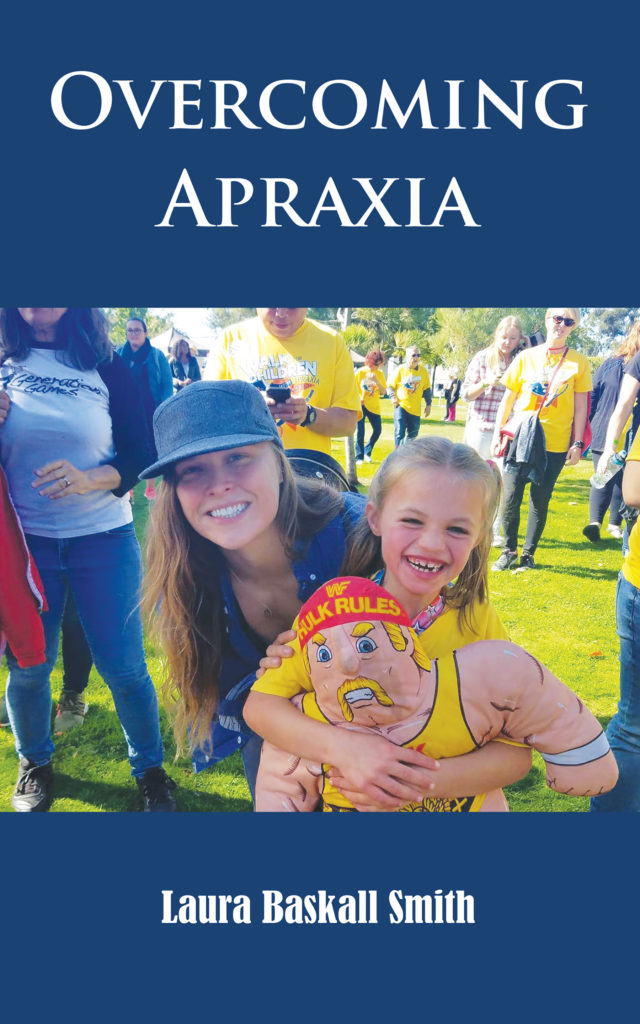
    Ashlynn actress and WWE star Ronda Rousey who overcame apraxia as well

    Almost seven years ago to the day, before my daughter Ashlynn’s 3rd birthday, I received news so significant, my life has never been the same. Though devastating at the time, the life lessons I have learned from it have far outnumbered any loss.

    What was this news?

    My daughter Ashlynn was diagnosed with one of the most severe neurological speech disorders in children. It is called “childhood apraxia of speech (CAS).

    Not only was this diagnosis devastating to hear as a parent, I was also a practicing speech/language pathologist and the diagnosis flew me into a tailspin. Reeling that I didn’t know enough about apraxia, I threw myself into education.

    Overcoming Apraxia is the culmination of this seven year journey.

    There has been hard ache, triumphs, incredible highs (like meeting famous UFC and WWE super star Ronda Rousey who had CAS) twice and desperate lows (bullying, financial cost of therapy, the toll on the family).

    Through it all though, Ashlynn maintained a positive attitude, incredible resiliency, kindness and bravery that I have never witnessed firsthand in another human being.

    Overcoming Apraxia is this story. Interspersed throughout are also professional definitions, advice, and tips and tricks for parents and professionals that I utilize in my professional practice. I cover topics such as: comorbidities, financial cost, the effect on siblings, advocacy, educational concerns, genetics, specialists and of course, Ashlynn’s story to success.

    Ashlynn and I are excited to share this story with you. Order your copy here: https://www.amazon.com/dp/B07Z1745GZ

    Laura Smith, M.A. CCC-SLP is a 2014 graduate of Apraxia Kids Boot Camp, has completed the PROMPT Level 1 training, and the Kaufman Speech to Language Protocol (K-SLP). She has lectured throughout the United States on CAS and related issues. Laura is committed to raising and spreading CAS awareness following her own daughter’s diagnosis of CAS and dyspraxia. She was the apraxia walk coordinator for Denver from 2015-2019, and writes for various publications including the ASHA wire blog, The Mighty, and on a website she manages slpmommyofapraxia.com.  In 2016, Laura was awarded ASHA’s media award for garnering national media attention around apraxia detailing her chance meeting with UFC fighter Ronda Rousey, and also received ASHA’s ACE award for her continuing education, specifically in the area of childhood motor speech disorders. Currently, Laura is a practicing SLP specializing in apraxia at her clinic A Mile High Speech Therapy in Aurora, Colorado. 

  • Who diagnoses Childhood Apraxia of Speech?

    Who diagnoses Childhood Apraxia of Speech?

    Many parents often wonder who diagnoses Childhood Apraxia of Speech? They wonder where to seek help when questioning if their child has Childhood Apraxia of Speech (CAS).

    Many professionals claim to be able to diagnose, and in fact parents report getting their child a diagnosis from professionals such as neurologists, developmental pediatricians, and psychologists to name a few.  This is concerning because CAS is a speech disorder, and only speech/language pathologists are qualified to diagnose.  In addition, not just any speech/language pathologist (SLP) is qualified to diagnose either.  SLP’s need to have advanced knowledge and expertise in motor speech disorders and motor learning principles.

    The American Speech/Language Hearing Association has a position statement on the matter.

    You can read it here.  https://www.asha.org/policy/PS2007-00277/  
    It’s important to look to credible resources such as these because even this position statement states it must not only be any SLP, but also and SLP who specializes in motor learning theory with skills in differential diagnosis.

    In it, it says:

    “It is the policy of ASHA that the diagnosis and treatment of CAS are the proper purview of certified speech-language pathologists with specialized knowledge in motor learning theory, skills in differential diagnosis of childhood motor speech disorders, and experience with a variety of intervention techniques that may include augmentative and alternative communication and assistive technology. It is the certified speech-language pathologist who is responsible for making the primary diagnosis of CAS, for designing and implementing the individualized and intensive speech-language treatment programs needed to make optimum improvement, and for closely monitoring progress.”

    There is sometimes confusion that CAS is a medical diagnosis. It is a label for a speech diagnosis. There may be co-occurring medical issues, but the speech problem does not require diagnosis by a medical SLP or doctor. School SLPs may be discouraged from making a diagnosis of CAS because they are expected to use the federal impairment categories, which include speech-language impairment, but not specifically apraxia.

    Other professionals  who do not have the skills and training of a speech/language pathologist may contribute to overdiagnosis.

    Getting a diagnosis of apraxia, a serious neurological speech disorder is a potentially emotionally traumatizing event to a family.  Professionals have an ethical responsibility to adhere to guidelines given from reputable sources such as the American Speech/Language Hearing Association.  However, if CAS is suspected, it would be appropriate for another professional to refer the child to a speech/language pathologist with advanced knowledge in motor speech disorders to provide a differential diagnosis.  In addition, the speech/language pathologist will be able to make recommendations for the treatment plan, recommended frequency of therapy visits, and personalized goals that other professionals cannot do.


    Laura Smith is a mother to two beautiful children, one of which was diagnosed with apraxia and dyspraxia. She is a Denver based Speech/Language Pathologist now specializing in Childhood Apraxia of Speech. To learn more visit SLPMommyofApraxia.com

  • How do you say I love you?

    How do you say I love you?

    There was a time I prayed for Ashlynn to tell me she loved me.

    Having apraxia and a language disorder made that tough.  Even when she could repeat “I love you” when given a model, that didn’t mean she could volitionally pull it out and say it spontaneously.  That took more years and work in therapy.

    Ashlynn, even before the birth of her brother, has always been attached to my hip.  An apraxia mom friend of mine lovingly calls them barnacle babies. I knew Ashlynn loved me before she could ever say it. Her actions have always spoken louder than her words.

    Ashlynn is now nine.  She has been able to say ‘I love you” without any prompts and on her own accord for at least 5-6 years now.  We had two back to back snow days in Denver thanks to a “bomb cyclone” blizzard that left Denver experiencing the lowest barometric pressure ever in its history.  That’s pretty incredible, but through it all, Ashlynn was attached to my side.  We don’t get a lot of down time.  We are always on the go from school to therapies to tutoring and then carving out family time, 1:1 time sitting at home and relaxing seems like an anomaly in our lives.  It seems like it, because it is.

    Wednesdays she usually goes to school.  Then I pick her up and we meet her dad at a place to drop off Jace and then I take her to PT and then swallowing therapy.  We get home around 6:30 where we gulp down dinner and then have to do her school homework and possibly the other hw from all of her therapies.

    Being a kid and relaxing doesn’t happen on this day.

    Thursdays she of course goes to school.  I’m working so her dad picks her up, lets her see her grandparents for an hour who live by school and then she comes to speech therapy at my office where my colleague/mentor treats her.  Afterward, we stop and get her a super nutritious meal from McDonald’s that she eats in the car before going to Girl Scouts, which has been nothing short of amazing for integrating her with her neurotypical peers and providing a “normal kid” activity among all of her therapies.  We then get home 10 minutes before 8 where we scramble to get her school homework done and I feel guilty for not getting to her OT, PT, and swallowing hw as she gets ready for bed.

    Not this week though.

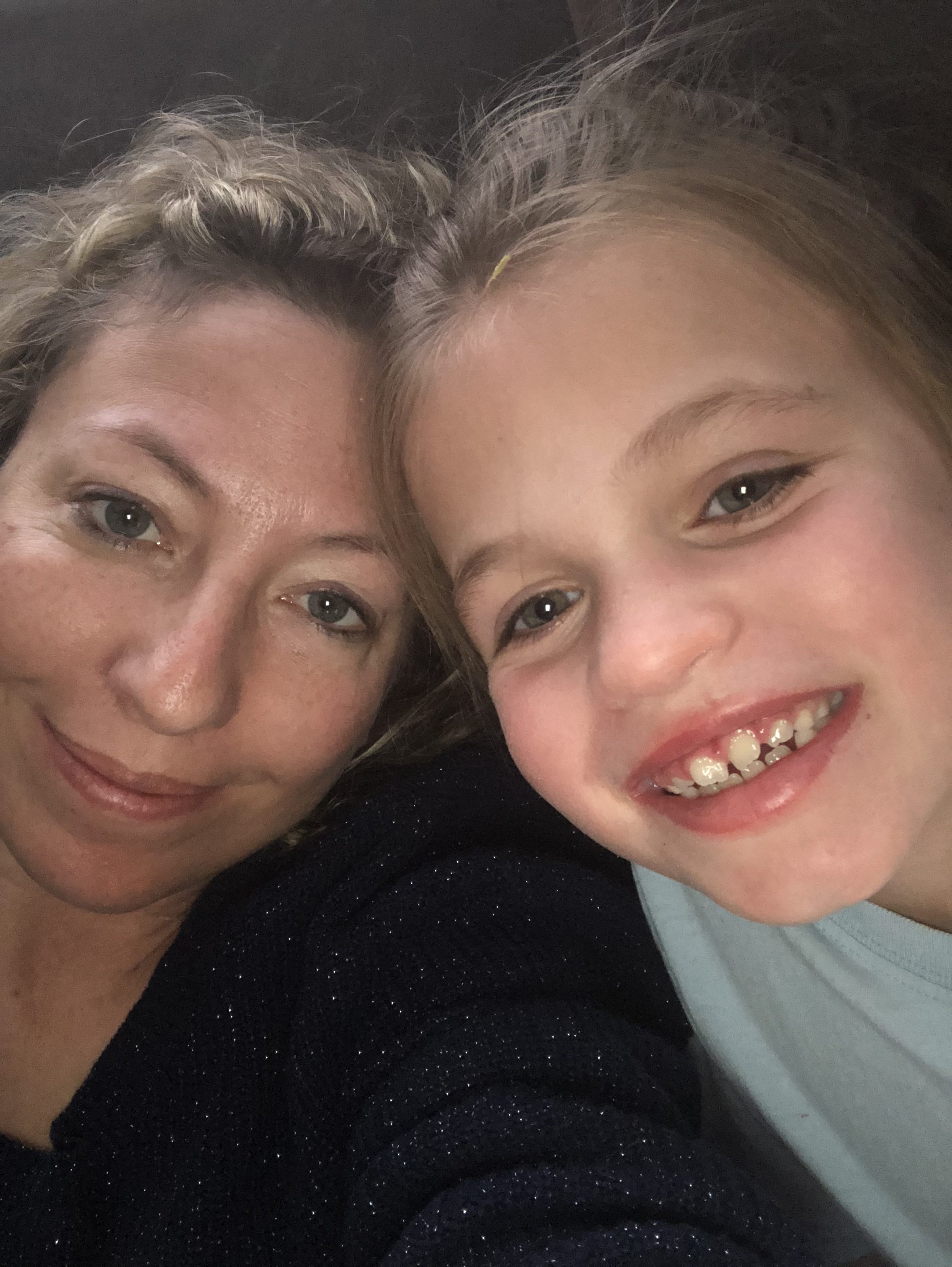
    ALL of that was cancelled thanks to the two consecutive snow days. We actually just hung out.  She sat by my hip and we talked, played with the dogs, watched the news that droned on about the blizzard and took silly selfies on my phone. It was amazing. Was this what life was like for “normal” people?  Are there any normal people?  What IS life like for kids who don’t have a therapy every day after school?  I’d ask my son, but he’s always caught in the cross hairs and even though he doesn’t personally have therapy, he has spent more than his fair share in waiting rooms.

    She must have told me “I love you” at least a dozen times or more.  I wasn’t doing anything special.  I was just here..and she was here…and we all were here snowed in.  I have to admit I didn’t even think about the days when I longed to hear “I love you” without having to prompt her.  I can’t believe that those three words started to lose their luster.

    Tonight was Thursday night.  In what was supposed to be a packed night of Jace’s Cub Scout Pack meeting and Ashlynn’s routine girl scout meeting, I also had an SLP meeting where I met with other area SLP’s.  My husband was to take the kids to both scout meetings that were now cancelled due to the weather.

    As I left, Ashlynn said goodbye as though nothing was wrong and then immediately her face fell and she started crying.

    “Ashlynn!  What’s wrong?  I’ll be back okay?”

    Ashlynn fought back tears and said she would miss me.

    “I’ll miss you too but I promise I will be back ok?” I said as my heart was breaking. She frequently gets like this when I leave.  I thought about the day and how she had told me she loved me at least a dozen times.  When you tell someone you love them that much it starts to lose its effect.  I think I (shamefully) started to take it for granted.  I gave her my work cell phone as a compromise.

    “If you miss me, text me and me only ok?”

    Her tears turned to a smile and she squeaked out an “ok.”

    “Do NOT text anyone else from this phone.  I will be busy but I promise I will text you back.”

    As I pulled out of the driveway I saw her face in the window.  She waved vigorously and then frantically blew me kisses.  I blew them back.  I wasn’t even off our street when she texted me her signature, “Ashlynn.”

    I usually make her text her name first because she uses my phone to text a small but approved list of family members who need to know it is her texting them.  I stopped at a stoplight and told her I would text her when I got to my meeting.

    In those two hours she texted me that she loved me three times.

    I wouldn’t think anything of it, except she frequently texts five other family members and though I know she loves them, that is not something she says to them.  She likes to send emojis, ask them what they are doing, or tell them about her day.  Due to her severe language disorder, I have many times talked about how Ashlynn talks in scripts.

    This “I love you” script though.  This particular “text” script was saved just for me.

    I almost cried reading it tonight at my meeting in between her emojis, selfie pics, and other comments.  I was sure this “script” was purposeful and meant just for me.  After one when I wrote back “I love you Ashlynn” I received an immediate response that said “I love you mom so much.”

    Ashlynn is nine.  NINE. Half her child life with me is gone.  My God.  Where did it go?  I still remember everything vividly.  Ashlynn was 2 years and 11 months when she was diagnosed and life took an accelerated pace after that.  We have been on the hamster wheel for six years now.  I can still look at the little table where I poured out those foam stickers while nursing my son and she said her first spontaneous “I love you.” I can close my eyes and remember like it was just yesterday.  I remember dancing in our living room to “Call me Maybe” and her laughing and throwing her head back like I was the most hilarious person on the planet.  And I remember wishing, hoping, and praying before I knew she had global motor planning problems that she would just try and imitate my dance moves much less my voice.

    As I sit here with tears in my eyes, I recognize  Ashlynn was and always has been so limited in what she could tell me.

    However I do believe now it was ALL going in.  I’ve always felt like my greatest job and purpose in life was to not only raise her and Jace, but to make them feel like the most incredible humans that they are.  With Jace it’s easier.  He talks to me.  I can get him to tell me his feelings.  That has never been the case with Ashlynn.  She struggles to express her basic thoughts much less complex feelings.  However, she has always found profound ways to express them with her limited language such as tonight when I was the recipient of multiple “I love you” texts.

    During the snow day we took selfies and she frowned at the pictures where I’m smiling but you can’t see my teeth.  “Why are you smiling like that? she demanded.  I thought to myself I liked how less of my wrinkles showed but instead just said, “I don’t know.’   She frowned disapprovingly.

    “Don’t smile like that, ” she said.

    I asked her why.  I wanted to know what was wrong with that smile.

    “It’s not YOUR smile mommy.  Smile real ok?”