Tag: Apraxia journey

  • Top Ten SLP Mommy of Apraxia posts for 2019

    Top Ten SLP Mommy of Apraxia posts for 2019

    Hi readers! Not only another year, but another decade is coming to a close! My daughter Ashlynn was born in 2009, and it’s astounding all of the changes that set off in my life throughout the past ten years! This past decade was one of joy as a I built my family, but also sorrow facing numerous challenges with Ashlynn.

    I have faith though that this next decade will be one of overcoming! I know ten years from now I’m going to be writing another success and triumph story, much like I did in the book I published this year called “Overcoming Apraxia.” I also want this next decade to be one of exponential growth in apraxia awareness and information so all children have the access to the best therapy.

    Happy New Year and I wish you all a blessed 2020!

    Here are my top ten posts from 2019.

    1. The Exploding Genetic Findings in Childhood Apraxia of Speech
    Click here

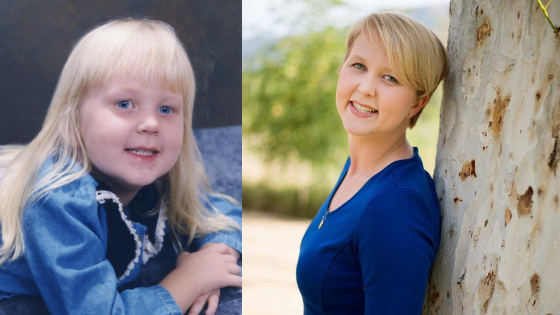
    2. Growing up with CAS: Never Stop Dreaming

    Click here

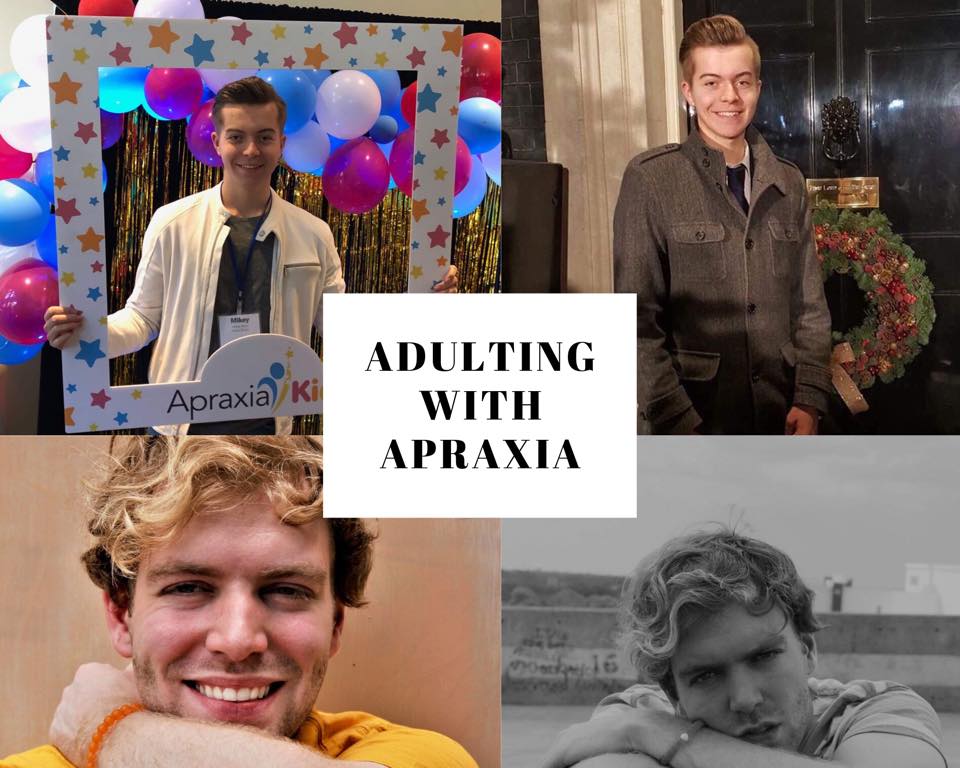
    3. Adulting with Apraxia

    Click here

    4. Hammering out Apraxia

    Click here

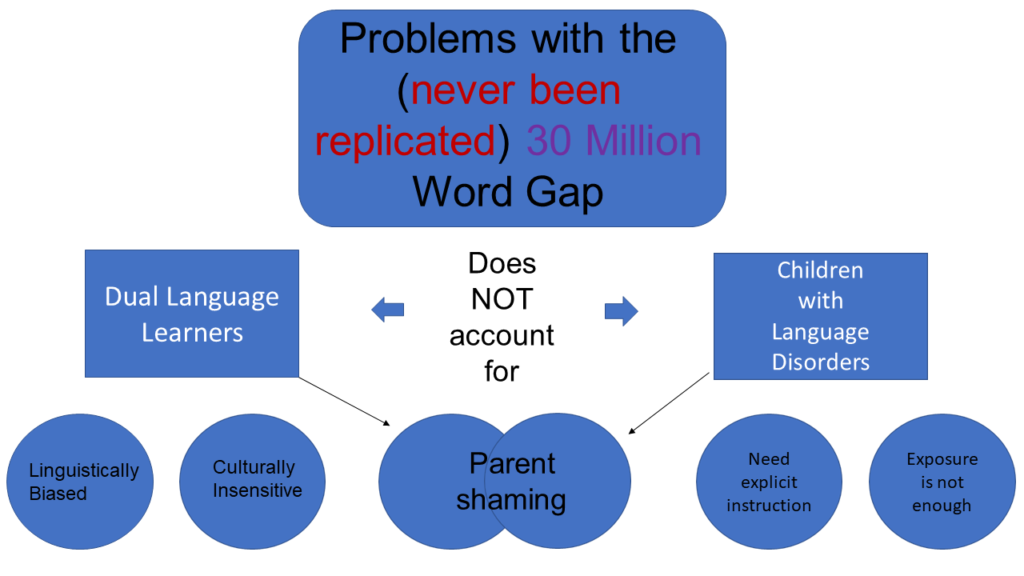
    5. Mind the (30 milllion) Gap: Beyond the Catchy Headline

    Click here

    6. Who diagnoses Childhood Apraxia of Speech?

    Click here

    7. Did I cause her CAS?

    Click here

    8. Oral Language and Phonological Skills May Be the Best Predictors for Reading Disorders in Childhood Apraxia of Speech

    Click here

    9.Shaming parents about home carryover

    Click here

    10. Growing up apraxia: I want them to learn what it is

    Click here

    Happy New Year friends! Always believe in the magic of new beginnings! Stay present. Love. Hope. Live.

    With Gratitude,
    Laura

  • Fighting for my voice: Interview with Jordan LeVan

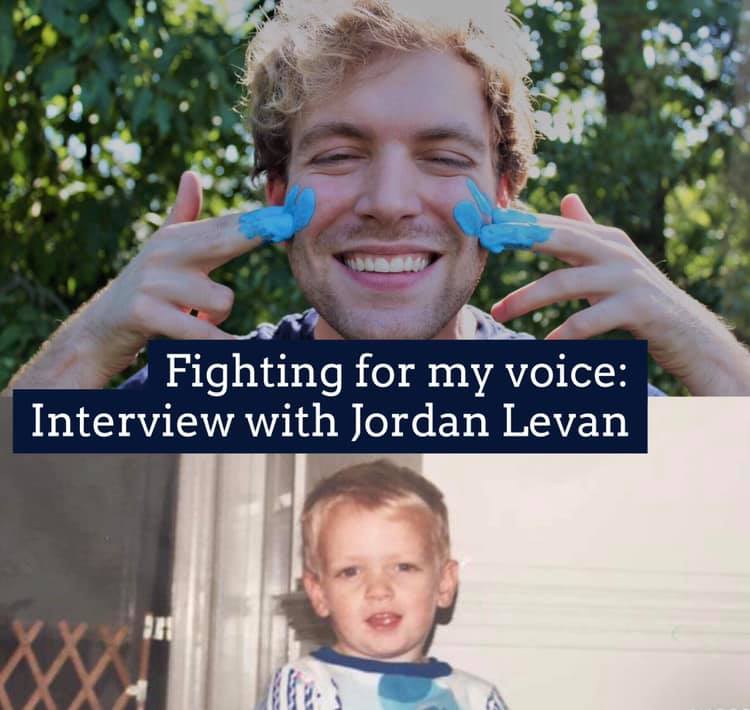
    Fighting for my voice: Interview with Jordan LeVan

    Today I am so excited to have Jordan LeVan with us to contribute and tell his story for my growing up with apraxia page!  Jordan is a 22-year-old in college studying psychology. I’ve gotten to know him through the magic of social media, where he shares stories about his life and posts informational and inspiring messages about living with verbal Apraxia. You should check him out on Facebook, Instagram, and YouTube!

    Hi Jordan!  Can you start by telling us a little bit about yourself?

    Hello! I’m Jordan, and I’m 22 years old. I was diagnosed with Verbal Apraxia at five years old, and since then, I have been fighting for my voice. I advocate for those with Apraxia and speech issues, and I run a page called “Fighting for my Voice: My life with Verbal Apraxia.” I’m currently a college student at Guilford College, and I am majoring in Psychology. I enjoy writing, photography, and making people laugh and smile. I enjoy using creative outlets. 

    When were you first able to speak? 

    I was considered “nonverbal” until the age of 5, and at that age, I began saying full words more. However, speaking was still extremely difficult for me. I remember at the age of eight stomping my foot into the ground, just trying to get out a single word. I was able to speak to strangers and be understood by the age of 12. 

    What was the hardest thing about growing up with Apraxia?

    Nobody knew what it was. The lack of education was so real. I had no resources or outlets besides speech therapy. None of my speech therapists during this time had ever worked with a kid with Apraxia; this was in 2002. I felt like I didn’t understand my condition at that age. It was so confusing, frustrating, and overwhelming all at the same time. I also didn’t think anybody else had Apraxia, due to the lack of awareness during this time; this was difficult for me because I never had anybody I could relate to.

    What was your school experience like?  Can you tell us how it affected you not only academically but socially?

    My school experience was rough, and I would be lying if I put it any other way. I couldn’t read nor write until I was in the third grade, and teachers weren’t understanding of this. I got unfair treatment from not only teachers but also speech therapists. My kindergarten speech therapist would leave me outside her classroom because she didn’t know how to treat a kid with a diagnosis of Apraxia. When teachers would come up and ask me who I was, I couldn’t tell them my name. The social aspect of not being able to say to others your name brought on feelings of panic from a young age. The social component of me connecting with my peers was challenging. I got bullied from a young age. I had to be pulled out of public school in the sixth grade; this was because the bullying was too extreme.

    How has Apraxia affected your life? What are some residual effects you have?

    Apraxia affected my life so early that I wouldn’t know a life without it. Some residual effects that I have are my voice volume level. I often speak quietly, and I sometimes don’t even realize it. Until others are like “Speak louder.” Those cues help me understand. It also affects my tone of voice. I often sound monotone if I’m not putting work into it. I also struggle with getting out words fully and fluency. I’m a constant work in progress. 

    Most parents are very worried about their child’s future when they are diagnosed with Apraxia.  What advice do you have for them?

    Be your child’s biggest advocate. You’re going to have to fight hard to get your child proper services. However, it is so worth it. Normalize conversations about Apraxia. Help them be open with others about their diagnosis. From a young age, help them accept this is a part of their life, and it will make them stronger. Along the way, teach them how to advocate for themselves. I’m always advocating for myself, and I know my rights. Just because I am not neurotypical, doesn’t make me any less of a person. Let them know their value and their rights. 

    You are truly an inspiration, and I’m so grateful for you speaking out!  Do you have any final thoughts?

    My life with Verbal Apraxia hasn’t been easy as you can tell. However, I wouldn’t be the person I am today if I didn’t have it. I’m not sure if I would trade it or not, because it’s made me a compassionate and understanding person. It’s showed me a different perspective on life. I don’t believe I went through my struggles for nothing. I believe I went through my struggles to help others. If I can help others, me struggling to get out words is worth it. I want other people with Apraxia to know that you were built for this. The fact you wake up everyday, and decide to push forward while your brain is trying to hold you back is brave. Despite my struggles, I refuse to go down without a fight.

    So well said Jordan! Refuse to go down without a fight. Thank you so much for guest blogging today! Keep spreading your message because you are helping more people than you even know.

    Growing up with apraixa is part of an ongoing series that aims to celebrate neurodiversity and highlight those who have grown up with Childhood Apraxia of Speech and related struggles.  If you are interested in being featured, send an email to lauraslpmommy@gmail.com

  • The biggest apraxia challenge: Graduation 2032

    The biggest apraxia challenge: Graduation 2032

    Day 21 of Apraxia Awareness Month is to discuss your biggest challenge.

    I read the various posts and related to all of them.  ALL of them.  Unfortunately when your daughter has a laundry list of disabilities with apraxia being just one of them, yes,  I could relate to everything.

    My son struggles with word finding.” Check

    “My son struggles with anxiety.” Check

    “My daughter struggles with attention.” Check

    “My child has difficulty navigating social situations.” Check

    “My child struggles with handwriting.” Check

    “My child struggles in school.” Check

    Literally the list goes on and I could check off almost everything else.  I’m farther in this journey now though and though we continue to have new challenges, I had an epiphany about them.

    The biggest challenge was realizing the very definition of challenge does not mean struggle.

    No.  The very definition means a contest, competition, or objection.  And guess what?  One can argue and overcome ALL of those things.  If you follow my social media pages, then you know Ashlynn is having a stellar last couple of months.  The girl with dyslexia who was more than two years behind in reading is testing on grade level.  She just graduated occupational therapy after being in private OT for SIX years. At field day, the girl with dyspraxia and cerebral palsy wowed her classmates by killing it on the hippity hop ball station, and the girl with a language processing disorder and apraxia is just “one of the gang” according to her general education classroom teacher.

    The biggest challenge was not just hoping, but holding firm my belief that Ashlynn could overcome them all.

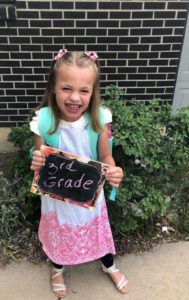
    Ashlynn just ended her third grade year and she is 9 1/2 years old. I have been through AT LEAST 8 IEP meetings.  I have been brought to the edge of despair.  I have watched my husband shed tears in front of strangers.  I have looked around a room of literally EVERY discipline (speech, OT, PT, Special Education, general education, psychology, social work) and listen as they ALL described deficits in my daughter.  I have sat, stone faced and quiet for fear that talking would reveal my anguish and diminish me to a weeping pile of sadness on the floor.  I refused to be that person. I was probably rude at times, but I promise it was for self-preservation and to ensure my daughter never ONCE thought I didn’t believe in her.

    As one who has been on this journey with Ashlynn, my biggest obstacle was in discovering no obstacle was ever too big.

    Armed with this knowledge now (at least in this current space of happy that I’m in), I truly look at current and future obstacles and say, “Bring it.  You have never met an opponent like us.  You can try to break us, but you won’t.  You can knock us down, but we’ll get up stronger.”

    An SLP Mommy friend I know posted a video and said “Apraxia created one gritty little girl” referring to her resilient daughter. I couldn’t agree more.  Apraxia was never our greatest obstacle.  Believing we could overcome anything was, and we did it.  I know there are more struggles, more obstacles, bigger mountains to climb but they don’t intimidate me anymore.  Ashlynn has proven time, and time, and time again that no matter what life throws at her, if you have a positive attitude, perseverance, and HEART…no one and nothing can beat you.

    Starting with one of my most popular posts “Lessons of a Tricycle” to “Lessons from a Bicycle” years later, success has always been waiting for us as along as we just keep pedaling.  Just kept trying and never, ever, EVER give up.

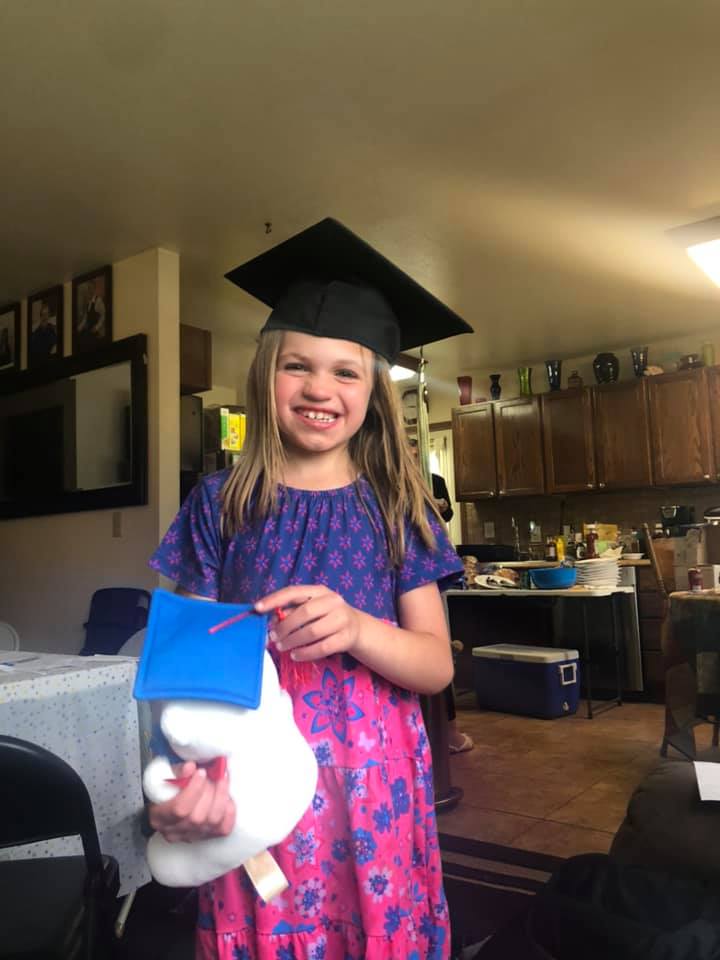
    This past weekend my niece graduated from college and Ashlynn wanted to try on her cap.  We snapped a picture and all commented, “how cute!” But inside, I was silently smiling and thinking, “Another challenge?  BRING IT 2032!”

    Love,
    Laura and Ashlynn


  • Growing up apraxia: “I want them to learn what it is.”

    Growing up apraxia: “I want them to learn what it is.”

    Hi Alexis!  I remember first seeing you on the facebook page apraxia awareness and hearing you do a very real and raw live Q&A.  That was very brave of you! You were so gracious to answer so many questions openly and honestly.  This past year, I set a goal to reach people outside of the United States.  I want to help those who have apraxia worldwide get the help they need and deserve!! Having you on this blog post to start May and Apraxia Awareness month is helping achieve just that!!  Thank you for your bravery!

    To start, can you begin by telling us a little about yourself and your journey with CAS?

    I am 23 years old. I am an insurance advisor in Alberta, Canada with the Co-operators. I took speech therapy from kindergarten until grade 5. I remember really realizing for the time that I had a speech impediment when I was about 7. I became interested in learning more about it in grade 6 – what it was & why I had it.

    What do you remember as a child with CAS and speech therapy?

    Like I said, I started speech therapy in kindergarten. I have really vivid memories of the hearing test they would do. Putting a headset on and listening for the beeping. You’d have to tell the person what side the beeping was coming from. I was always so proud because I aced those tests every time. The pride was usually met with confusion the first few times though. I did so well, you told me I got all of them right, so why do I have to come meet with you for lessons?

    I remember being told I had a speech impediment. I remember all of the “that’s not how you pronounce that”, “listen to me”, “watch my mouth”, “it still doesn’t sound right”, but I didn’t get it. I can remember being frustrated and angry. This woman would tell me all these things over and over again and I was sitting there thinking lady, I just heard myself say it, it sounds exactly the same as when you do it. Of course, it didn’t.

    When I say the first time I remember really knowing I had this was 7, it’s because I’m fairly sure that was the first time my speech therapist used a tape recorder. This thing was the bane of my existence. I’m 7, over confident, and a little annoyed with this woman because we’re saying the same thing. Was I ever showed up. This tape recorder comes out because after give or take two years my speech therapist must of realized I really didn’t hear what she was hearing. My voice in my head has no speech impediment and I was too young to understand that I just wasn’t hearing it right. I was about to have my little world crushed.

    Every session started with me telling her about my last week. This session, she recorded it. The moment she hit play and I had to hear my actual voice, instead of the one in my head, I wanted to disappear forever. She’s not wrong when she says my sounds aren’t right. All of a sudden two years of fighting this woman came crashing down around me. I was wrong, she was totally right, and I sounded (to my very young self) weird. I can not tell you how miserable I was hearing this recording. I did everything I could after that to prevent her from using the tape recorder again. It did help though. My sessions went better and I got more done, because I knew I actually was saying the sounds wrong, even if I couldn’t hear it.

    Were you ever bullied?

    I know this isn’t what parents are going to want to hear, but yes, I was bullied a ton. The bullying continued all the way into highschool. Luckily for me, I had a great few friends and family members. We really started to look at people who said anything about it as just being sad, or a little pathetic. It might sound harsh, but really of all the things to choose to pick on someone for, this was pretty ridiculous (it’s always ridiculous though). Honestly, “they talk a little different then me so I’m going to bully them”. We’d think about their bullying in that really point blank way, and just laugh at them. That train of thought is may more ridiculous sounding then I’ll ever be.

    How has apraxia affected your life, or has it?  Do you have any residual issues?

    The bullying did affect my life. Most days my above tactics worked great, but of course everyone has their off days where it just sucks. It still does just suck sometimes, but that’s not the end of my world. I still can’t say any of my R sounds. R sounds were the last thing to work on when I was in grade 5, and due to a lack of speech therapists in the school and time, I was seen 3 times that year. Once I got into middle school it wasn’t provided through the schools anymore and the cost was too high to do it privately. Now, I’m 23 years old with no real talent for R sounds. My last name is Berger and I work in the insurance field. Good choice, self. Other than that I have no real side effects or issues concerning my Apraxia.

    Most parents are so worried about the future when their child gets an apraxia diagnosis.  What would you tell them?

    Your child is going to find their voice, it might be missing a few sounds or it might be through something less conventional than talking, but they will find it. We look at speech as so important, and it is, but you can live such a full life without being perfect at it. They are going to have talents and skills all their own that have nothing to do with how they talk, and chances are their speech being a little off won’t affect it at all. Support them, be there for them, and be ready to answer questions if they have them, but don’t make their entire life be Apraxia. You can find your voice without talking perfectly; talking is really the smallest part of it.

    What do you wish more people knew about apraxia?

    That it existed. No, really, just that it existed. I have been explaining this to people for about 11 years now. What it is, what it does, why I sound the way I do, and answering their questions. I just feel like if more people had known what it was when I was in school, it wouldn’t have been such a big deal to them.

    What would you tell a child who is currently struggling to speak or who lives with a dx of CAS?

    Don’t feel pressured to tell people it’s an accent. Most of my life people have thought that’s why I sound like I do. On an almost daily basis people ask me where I’m from. I always politely tell them it’s a speech impediment and give them some basic info. I want them to learn what it is. The most common response? “Oh, you should just tell people it’s an accent”. This is my absolute biggest pet peeve. The truth is, if someone tells you to say it’s an accent it is because they are uncomfortable with your explanation and with the truth. They feel a bit bad that they asked you where you from and they were wrong about it. They wouldn’t have to feel that little awkwardness if you had told them it was an accent and played along. I can promise you this is the real reasoning 99% of the time, even if people deny it. Do not let someone tell you to say you have an accent, unless that is truly more comfortable for you and what you want to do. You have a speech impediment. It is a part of you and there is absolutely nothing wrong with having one.

    Aside from that, if you are working through your speech therapy at the moment, listen to them when they tell you to practice at home. I was supposed to practice my sounds in front of a mirror for at least 20 minutes a night and I flaked on it all the time. Don’t flake on it. Practice the sounds, it really will help things.

    What do you think professionals such as teachers and therapists need to know about CAS?

    Number one thing is that it exists and what it is. I have had so many awkward moments with teachers over the years. The second thing is how to handle it. If the student is old enough, ask them if you can help in some way. If they are still quite young, ask the parents.

    I had teachers make me repeat an answer in class (in middle and high school) over and over and over because they couldn’t understand what I was saying. It was embarrassing. The other students would laugh and the teacher still wouldn’t realize that they should probably just stop. I would go up and just write what I was saying on the board. Then I’d get in trouble because it was unnecessary to do. Let your students help themselves and help you understand them.

    If a teacher didn’t understand me after a few tries often one of my friends would just repeat my answer to them. This was great for me. I loved and appreciated them for doing this. Sometimes the teachers would get angry about it though. Let them help if need be!

    Another big one is if you pick me to read something out loud I might take an extra second to read a word out. I would be thinking of how to pronounce it and trying to be sure it was going to come out properly. The teacher would just interrupt and say the word themselves. Let your students at least try to get it out. If they do happen to mispronounce it, see if they correct themselves. If they don’t correct themselves and just keep going, then leave it. Do not point out their mispronunciation in front of an entire body of students. If they are still in speech therapy you could try writing it down and letting them know after class which words came out wrong. Then they can take that to their next session as helpful information.

    Thank you Alexis!  This has been one of my favorite interviews.  Your honesty and candidness are exactly what people need to here.  I love your perspective. I just can’t say enough. Thank you for your willingness to share your story!

    Growing up CAS is part of an ongoing series that aims to celebrate neurodiversity and highlight those who have grown up with Childhood Apraxia of Speech and related struggles.  If you are interested in being featured, send an email to lauraslpmommy@gmail.com


  • Top Ten SLP Mommy of Apraxia Posts for 2018

    Top Ten SLP Mommy of Apraxia Posts for 2018

    Hi readers!  I haven’t been as active on the blog as usual because my goal for 2018 was to write a book and I’m happy to say I completed that goal!  My goal of 2019 is for it to be published, so we will see!  In the meantime, I did manage to get some blogging done and here are my top 10 posts for 2018!  Thank you so much for your support and your love throughout the years.  It truly means so much.

    1. The Problem With School SLP’s

    A

    2. Interview with Mikey: The Wish That Turned Into a Passion

    3. Apraxia as a Symptom to a Bigger Picture

    4. Strategies to Promote Speech and Language in the Pre-Verbal or Minimally Verbal Child with Apraxia

    5. This School Year, Teach your Children to be Kind

    6. Finding our Umbrella

    7. Good SLP’s are Addressing the Head in the Hands

    8. The 6th Apraxia Awareness Day Brought Smiles, Tears, and a Jaw Dropping Moment

    9. Report Cards are Bitter Sweet in Special Needs Parenting

    10. Old Faces, New Faces, and the Passing of the Torch

    Cheers to an eventful 2018.  It was a year full of pain and happiness, love and sorrow, and hope and despair.  May we all remember that life can be intensely beautiful and irreparably sad all at once, because that my friends, is the definition of living.

    This 2019, I wish you all the gift of perspective in life.  We all have bad things happen.  We all have stress and we all have pain.  We also all have a choice, and that choice is to wake up each morning with a grateful heart and to focus on our happy and joyful moments rather than be sucked into the pain of despair and heartache.  There was a time Ashlynn’s dx seemed like the darkest event in my life, but I realized it was the beginning of my testimony to some of the most beautiful characteristics this human life affords us.  May God bless us all this year and always.
    Love and Peace,

    Laura

  • A fish in a tree and the teacher who helped her swim

    A fish in a tree and the teacher who helped her swim

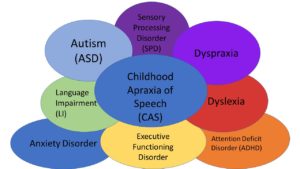
    Ashlynn is in 2nd grade and is in Girl Scouts.  She has been in Girls Scouts since Kindergarten.  She loves it; but honestly, Ashlynn loves most activities and new adventures.  Yes she has apraxia, dyspraxia, SPD, ADHD, learning disabilities and a language processing disorder; but despite all of those disabilities she is a true extrovert that one.

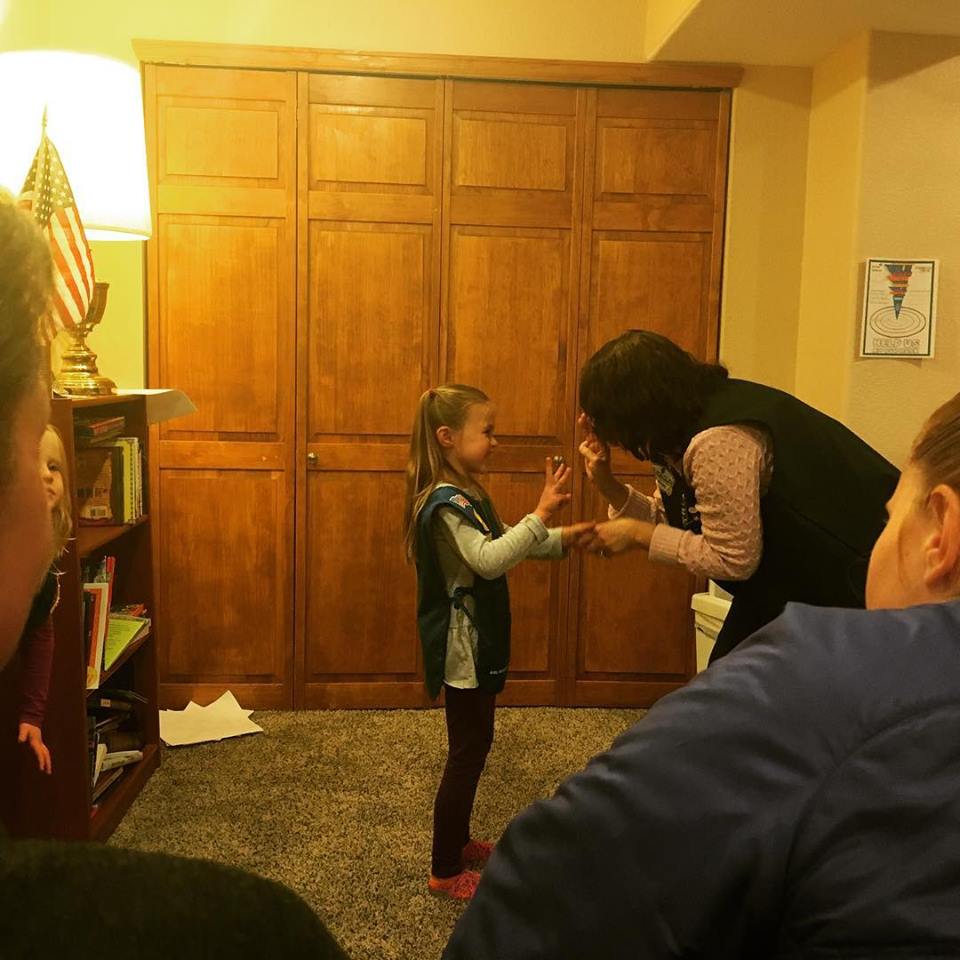
    Ashlynn’s Girl Scout troop leader is seriously amazing.  If there were an award, I would nominate her to be the best girl scout troop leader in the state, because she is.    A girl scout troop leader is a volunteer who donates their time.  This woman though I think must be a real life saint who deserves a salary.  When Ashlynn first started Girl Scouts I wrote a post about how she became misty eyed and told me that she knew what Ashlynn was going through.

    When I first met her, I noticed something a little off with her speech.  Later I found out she has a hearing disability, and has had one since birth.  From the beginning she was very concerned about Ashlynn’s needs.  I was also surprised to learn that she had never had anyone with a disability before.  She told me she just wanted to make sure this experience was the best possible experience for her, and that she was willing to make accommodations or help her however she could.  We ended up having to make a few accommodations, especially with requirements. For example, in Kindergarten the girls needed to have memorized their name AND address to earn a special pin.  It took everything we could do for Ashlynn to learn the address, but we could just not get the phone number at that time.  Ms. E made an accommodation like a trained special education teacher would; and said as long as she can memorize one of the two, she would earn her pin.

    The other night the girls had homework.  It was a picture where you had to find items hidden in the picture.  She sent home the actual picture; and then she found, on her own, a simpler picture and told me that Ashlynn just had to finish one.  In special education we call this modifying the curriculum.  This woman has never read Ashlynn’s IEP.  She does not in fact know her modifications or accommodations.  She intuitively does them.  I can’t help but think it’s because she understands.  She has walked Ashlynn’s shoes.  She totally, totally gets it.

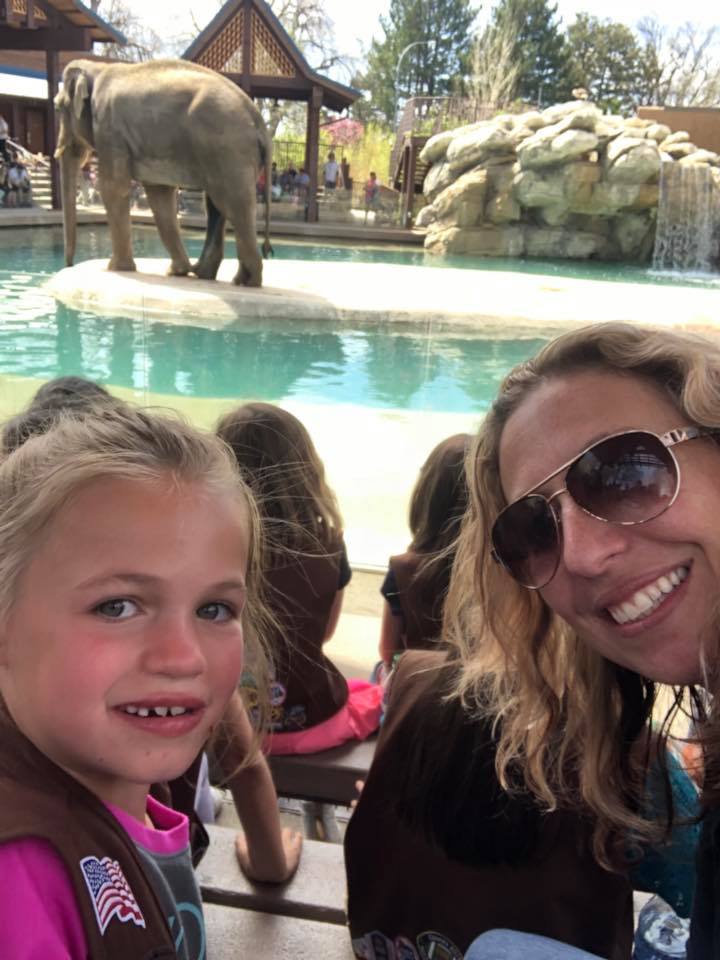
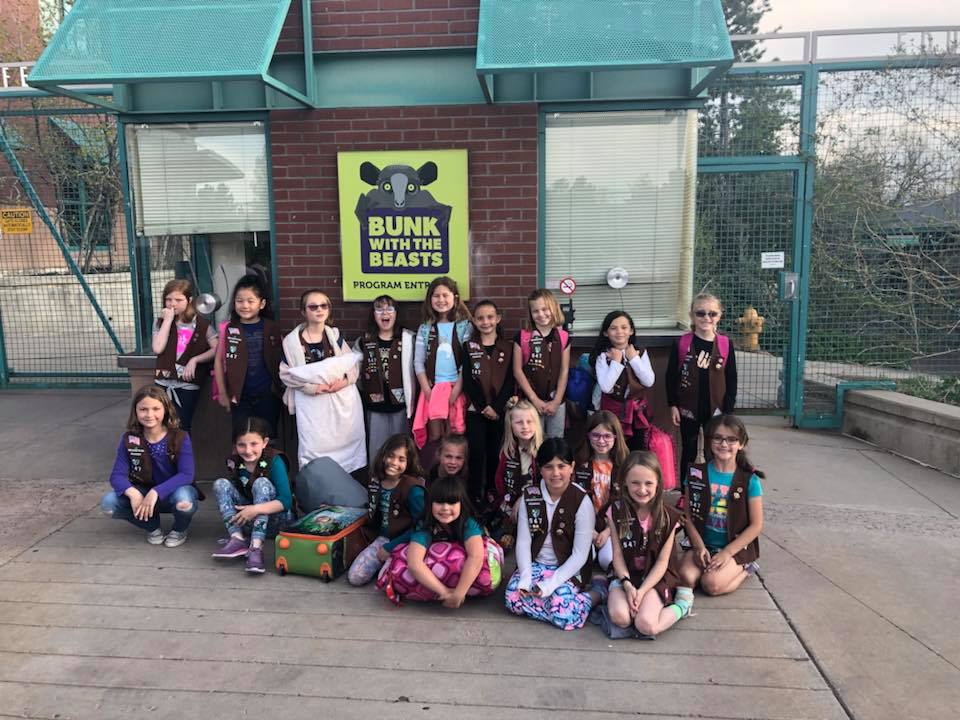
    This past weekend there was an event at the Denver Zoo called “Bunk with the Beasts.”  The girls would get to spend a night away from home and “camp” at the zoo.  Right after I received the group email about the event, her troop leader followed up with a personal email requesting that she know of any special accommodations or help that Ashlynn would need so she could do them.  She didn’t want Ashlynn to miss out.  I sent back a big list.  Ashlynn has dyspraxia.  Activities of daily living, like all the steps to get ready for bed are NOT easy. Her troop leader wrote back it wouldn’t be a problem.  A few days later a chaperone pulled out so I was asked to come.  I was thrilled!  I said yes immediately.  This way her troop leader could focus on the other 18 girls, and I could be there and help Ashlynn.

    When we arrived, there were 4 adults to 19 girls.  Her troop leader split them into groups of two.  She told me that usually a chaperone or leader is not placed with their girl, but in this case she made an exception.  So her and I were in charge of one group of girls in which Ashlynn was a part of, and the other two co scout leaders were in charge of the other group of girls for the zoo tour and excursions.  Some would find this preferential treatment; but it is in fact, an accommodation. I found a renewed sense of awe in this woman.  She went onto explain that many of the girls have developed “best friends” and she purposefully separated them for this event because a troop cannot be a troop unless they all learn how to work together.  I shrugged it off.  She looked at me more earnestly and said, “No, when I mean best friends I mean like this,” and she proceeded to hug my arm and not let go.  I still shrugged it off not realizing yet her point.

    As she gathered the girls and called out what group they were in, one of the girls was visibly shaken.  Her mom is a girl scout troop co-leader and I was standing next to her at the time.  She told me that this was a big reason her daughter wants to quit Girl Scouts next year, because Ms. E insists that the girls be separated from their best friends.  As she talked I looked on.  Most girls had a best friend in which they were sitting next too.  If not, they were still obviously part of the group.  Two girls sat in the back of the group slightly removed, but Ashlynn was basically completely removed in the back by herself.  Don’t get me wrong, she wasn’t acting upset or lonely.  Ashlynn loves girl scouts.  It just struck me in that moment that most girls had an “arm clinging” best friend, and my daughter had no one.  This mother I was standing next to felt so bad her daughter would feel alone and away from her best friend for a couple of excursions, and my daughter felt that way basically all the time.  I don’t fault this mom.  Maybe if I didn’t have a kid with a disability, I would feel the same way too.  Maybe I wouldn’t understand or even notice that another child in the group, the child with disabilities never had any of those best friend moments.  Maybe I would be sad that my child would be sad for a couple hours and never realize this girl in the same troop sitting in the back by herself doesn’t EVER have an “arm hugging” best friend. Maybe…..

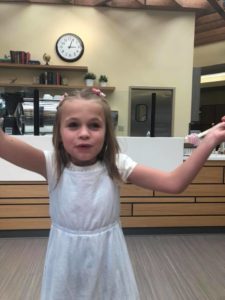
    Ms. E did though.  Ms. E noticed.  That’s why she split them up.  Society needs to stop casting those who are different to the outside, but including them and accepting them too!  We are all better when we work together.  Ashlynn and I had the best time.  Ms. E paired each child with a “buddy” and Ashlynn was thrilled to have a peer’s hand to hold as she walked around the zoo.  Ashlynn’s joy is so contagious and she is an adult magnet.  I could see though in this setting, just how unlike her peers she looks.  She’s not shy.  She doesn’t get embarrassed or worried about making mistakes.  She bonks into stuff and people and laughs at herself.  She loses attention easily and starts to wander which would annoy her buddy.  She would randomly start talking or singing when you weren’t supposed to and her buddy would have to shush her. It didn’t matter though.  It made Ashlynn’s entire night to be part of her peer group.

    I came home and cried to my husband I get why girls think she’s different.  She’s not stuck up.  She’s not concerned about what other people think.  It’s amazing how society gets it’s grasp into children as young as second grade.  I noticed so many girls tugging at their shirts, checking their appearance, and censoring what they say because they want to fit in.  I couldn’t help but look at Ashlynn and think of the Dr. Seuss quote, “Why fit in when you were born to stand out?”

    What’s ironic is these kids who “stand out” end up changing the world.  I am almost obsessed with successful people.  Notice I didn’t say “famous” people, though many might be famous.  No SUCCESSFUL people.  People actually changing the world and making it a better place.  The innovators and visionaries.  Most of them were kids who were a little different.  Some may have had a “disability” like ADHD, dyslexia, or whatever.  Bill Gates said once, “Be nice to the nerds.  You might end up working for them.”

    Last month in the news the boy scouts were under fire for revoking the eagle scout badge for a teen with Down Syndrome.  The parents filed a lawsuit claiming that their son was being discriminated against because without accommodations, there would be no way he could earn the necessary requirements to get the Eagle Scout Award.    

    The argument against him earning the award was that though he tried his hardest, he did not meet the requirements set forth.  If you don’t have a person with a disability in your family, I could see how this could make sense to you.  There are requirements that have been established, and if a person can’t meet them for whatever reason, they don’t.  There are able bodied children who don’t meet the requirements either and that’s just the way it is, right?

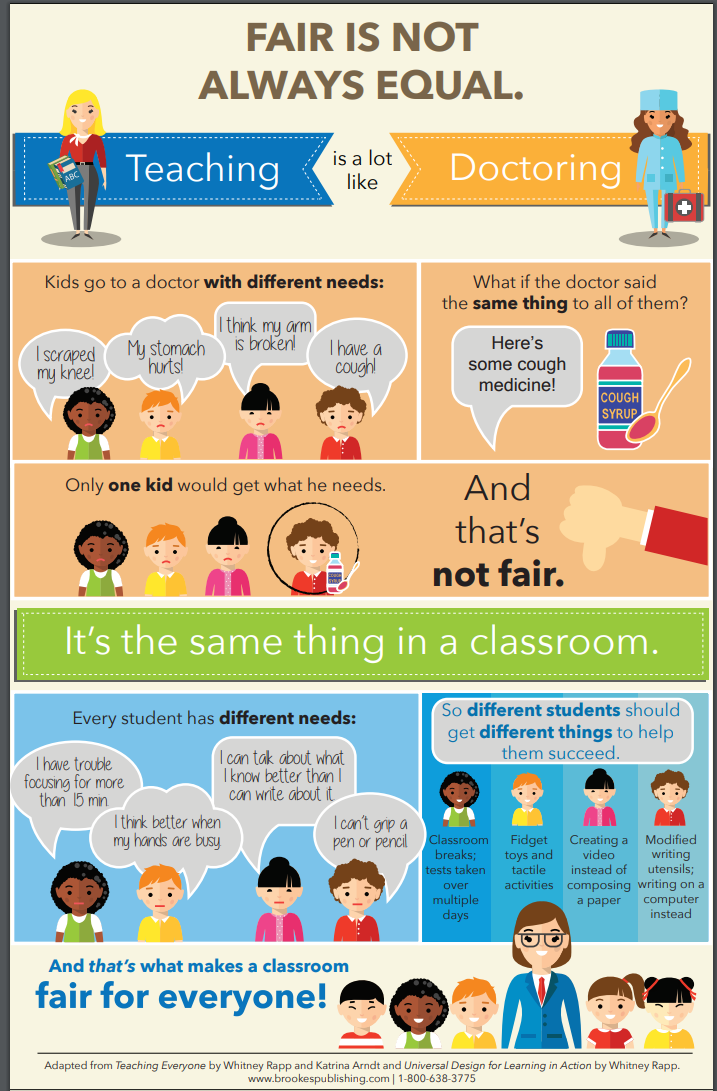
    Let me point out this graphic.

    This graphic compares teaching to going to a doctor.  Kids go to the doctor for different symptoms, and the doctor treats the symptoms.  It would be ridiculous though if you went in with a broken arm and the doctor prescribed antibiotics.  Under our current educational model that is not inherently inclusive; this is exactly what is happening.  The current educational model is based on a child without any learning, attention, or behavioral disabilities.  The lessons are made and the classrooms are set up for kids who can sit in a chair, listen and interpret information, and then attend to their work.  It is not equipped for  the child who needs sensory breaks, or the child who needs to use asisstive technology to help them write because they can’t, or the child who needs assistive technology to have something read to them because they can’t read.  It is not set up for the child who cannot learn through the auditory channel but learns best through visual and tactile channels.  Here is the most important piece though about all of this.  Children who are not “typical” CAN show their learning and skills in other ways if they are just given accommodations!!

    That’s not fair, you might say.  I would counter that it’s not fair we have a bunch of children with broken arms (learning disabilities) being forced to take antibiotics (traditional education), and then are penalized for failing. They are SET UP to fail.  A system that mandates all children must learn the same and prove they have learned the same is a broken, discriminatory system.  As Albert Einstein once said, “If you judge a fish by it’s ability to climb a tree, it will spend it’s whole life thinking it is stupid.”

    Ms. E understands this and I am so, so thankful to her.  The challenge today for apraxia awareness month was to recognize a teacher making a difference.  There are so many amazing people I could choose, but today I Thank you Ms. E, for recognizing my daughter is a fish and deserves a chance to swim.