Tag: Apraxia conference

  • Old faces, new faces, and the passing of the torch

    Old faces, new faces, and the passing of the torch

    Last year at the apraxia conference, we honored CASANA’s founder in a tearful sendoff.  Throughout this past year, CASANA went through numerous more transitions, the main one being it’s no longer CASANA but renamed “Apraxia Kids” to reflect, no emphasize, the two most important things to the organization:

    Apraxia and Kids.

    Another major change was that Kathy Hennessey, long time director of education, also accepted a new position as executive director of a beautiful arts center in Wisconsin.

    Change is always hard and I for one think I took it particularly hard.  I watched this past year with skeptical yet hopeful eyes as an interim director gave way to the new executive director Angela Grimm.  I was pleasantly surprised that she had reached out to me personally to introduce herself and she gave me a chance to tell her my story and why CASANA, now Apraxia Kids, was so important to me.  That phone call meant a lot because I was able to tell this woman how myself and so many others in my community had benefited from the organization.  I was able to tell her why I had decided to spend countless volunteer hours devoting myself to being a walk coordinator in Denver, and I was able to express that I wanted to make sure Apraxia Kids was still going to be an organization I could stand behind.  It’s very important to me that when I get up on that stage and look out to the 400 Denver Walkers, that I still believe in my soul the mission of the non-profit I’m asking them to donate money to.

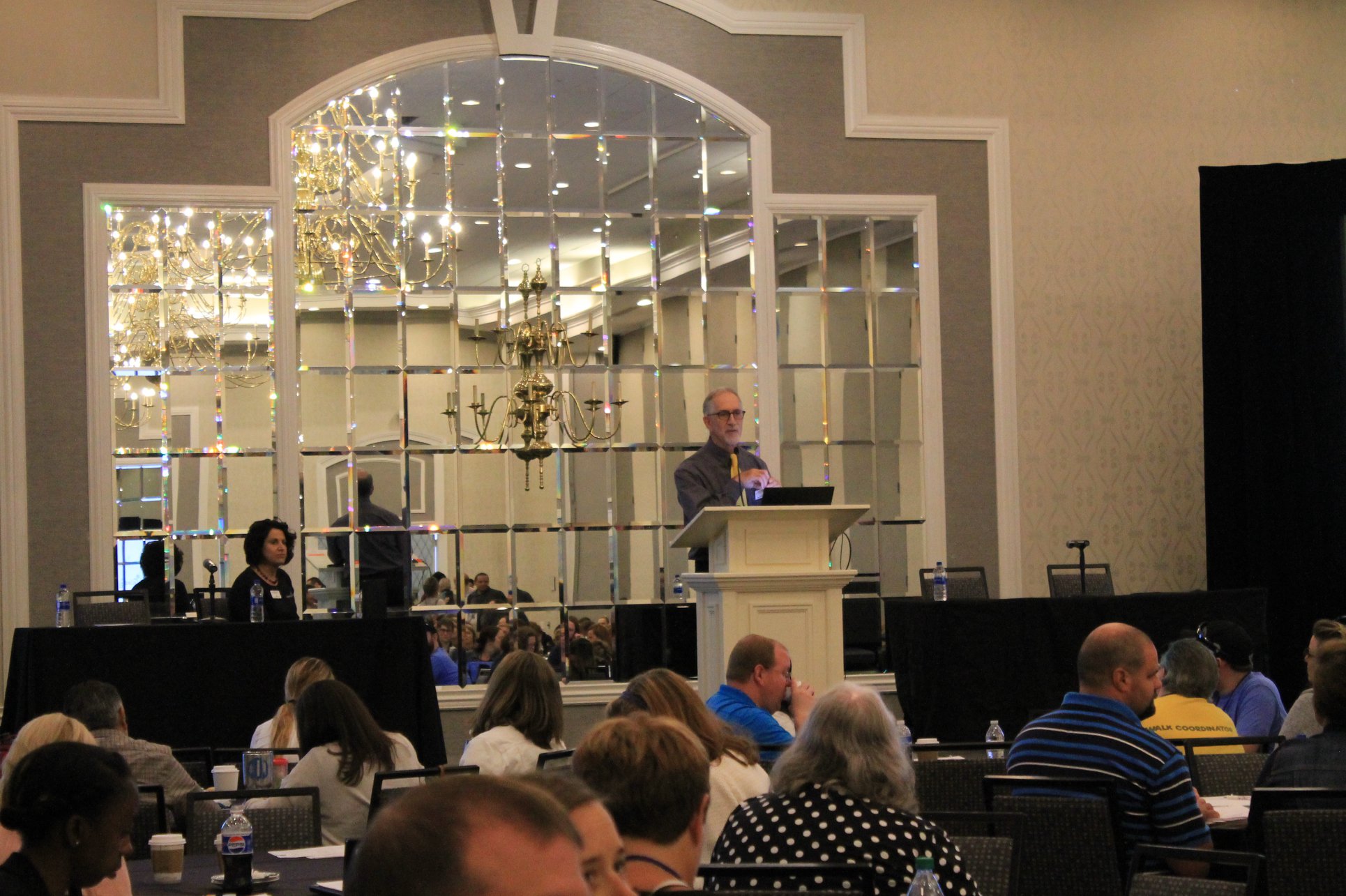
    International apraxia experts Dave Hammer and Ruth Stoeckel. Sad to see conference come to an end.

    Facebook and social media was another area I watched closely.  The founder and previous executive director Sharon, who is now my friend, literally built the base of the organization through social media.  Sharon had a unique way of connecting people in the community and so many parents of newly diagnosed children, like myself, found facebook, posted their fears, and were met with the compassion, love, and advice that only Sharon could give.  I wanted to make sure that whomever took over social media knew the importance of the role.  During the transition period, David Hammer, Vice President of programs, and Ruth Stoeckel who is a member of the Professional Advisory Committee, both stepped in to make sure parents were welcomed and given the warm and compassionate welcome they needed.  Soon, a new employee named Kara Bayer was hired to handle the social media aspects. I watched intently.  Though Kara didn’t have a personal connection to apraxia, she made sure to welcome every parent and respond to questions with philosophies reminiscent of Sharon’s comments that were always rooted in evidence-based practice.  During apraxia awareness month, Kara did something I had not seen done before.  She made a calendar with suggestions on how to celebrate apraxia awareness all month via social media outlets.  I absolutely loved the idea and participated!  I noticed that those in the community were participating as well.  The level of engagement was impressive and when you are trying to make an impact on social media, engagement is how you measure it! Kara has taken the position and ran with it and she’s doing a great job.
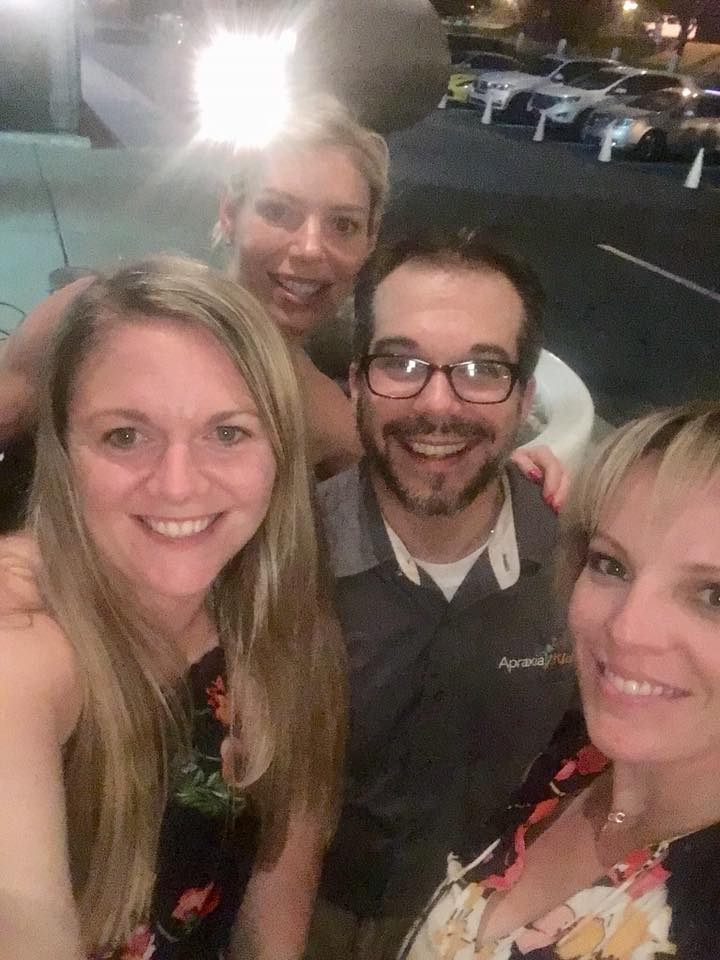
    Justin with three apraxia walk coordinators

    This year before the conference, Justin LeWinter, who is the director of fundraising and who had traditionally been the point of contact for all of the walks nationwide, organized a walk coordinator training along with his team.  This was the first time walk coordinators had a formal training in an effort to uniform our walks and learn how to make our walks more successful. Connecting the coordinators in this way made our role seem more formal and more important than ever.  The walks generate 2/3 of the revenue for Apraxia Kids!  2/3!!  Without us, the programs that Apraxia Kids funds and of which I am grateful for and believe in, would not be possible.  I was impressed with how much thought was put in the training and at how organized it was.  I was also pleasantly surprised by something else, something much bigger.

    I was impressed by the old AND many *new* faces of Apraxia of Kids that are the staff. 

    The entire staff, I felt, had a very real and deep understanding of just how much apraxia impacts the family.  They were sensitive, caring, dedicated and passionate.  They were all positive and had contagious energy. I am a sensitive one to energy.  Energy, positive or negative, spreads.  I couldn’t help but feel good about the future of this organization with new blood, new energy, and new enthusiasm like they had.  They definitely re-energized me and come August I know I can confidently tell my community we are raising money for the outstanding organization we all found it to be to begin with.  Yes, many old faces were missing and their presence, particularly that of Sharon’s was still felt by me very deeply.  Sadly though what I realized, the old faces aren’t the future.  As I met, talked with, and listened to all the new faces, I smiled because I realized these *new* faces are the future.
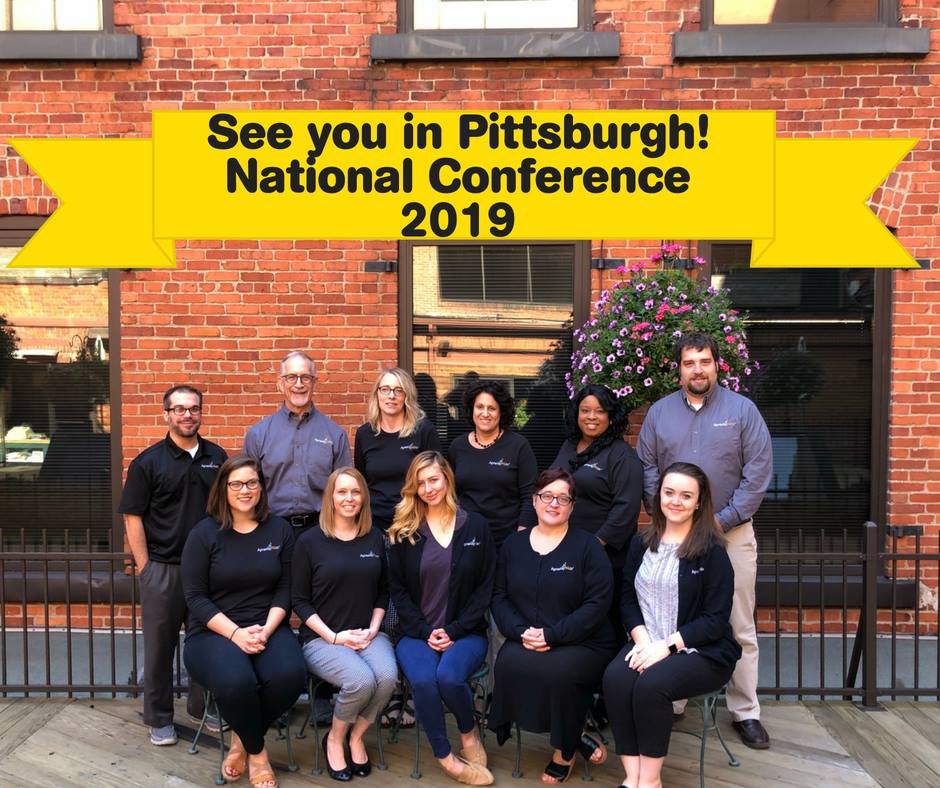
    I was also able to talk to many *old* faces (I’m not calling any of you old, just need a word for comparison sake!) still around such as Mary Sturm, President of the Board of Directors, and Sue Frieburger, Board Secretary and the person who started the walk 15 years ago.  I was able to listen to the stories and the legacies and I realized that though much had changed, the most important thing hadn’t changed at all.  Apraxia Kids is still full of dedicated parents and professionals who come together, share stories, and who develop instant friendships from our shared experiences.

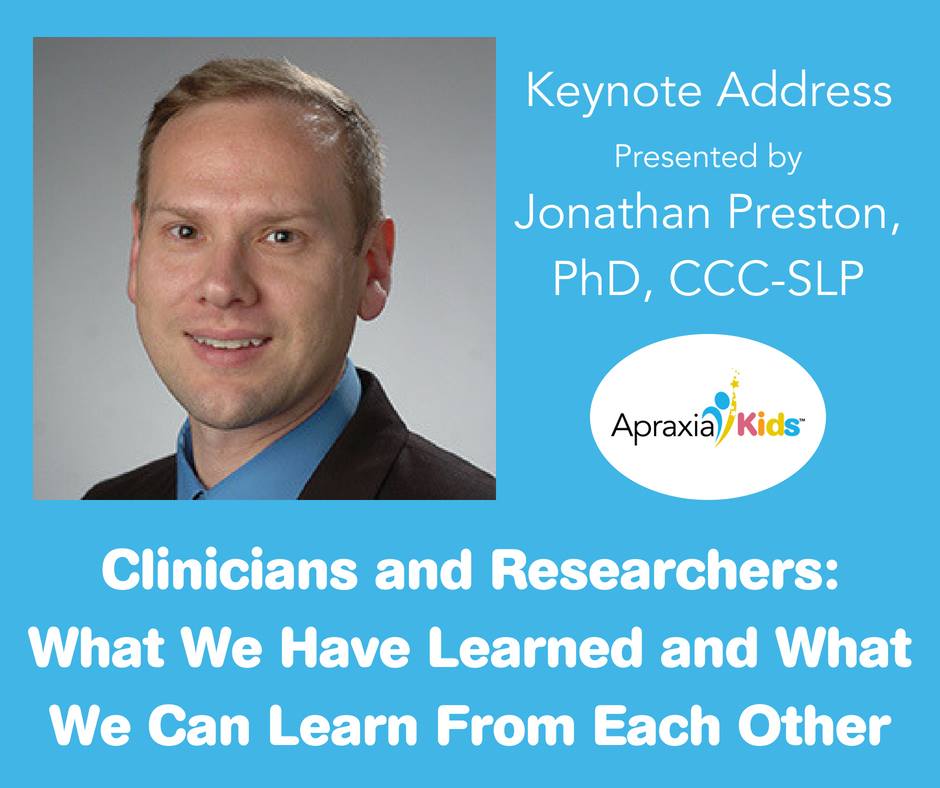
    There was David Hammer,  Vice President of Programs and international apraxia expert who introduced the keynote: There was esteemed researcher and clinician Jonathan Preston, who delivered the keynote:  The next morning there was the panel of national and international apraxia experts that presented many of the various treatment approaches to all the attendees:
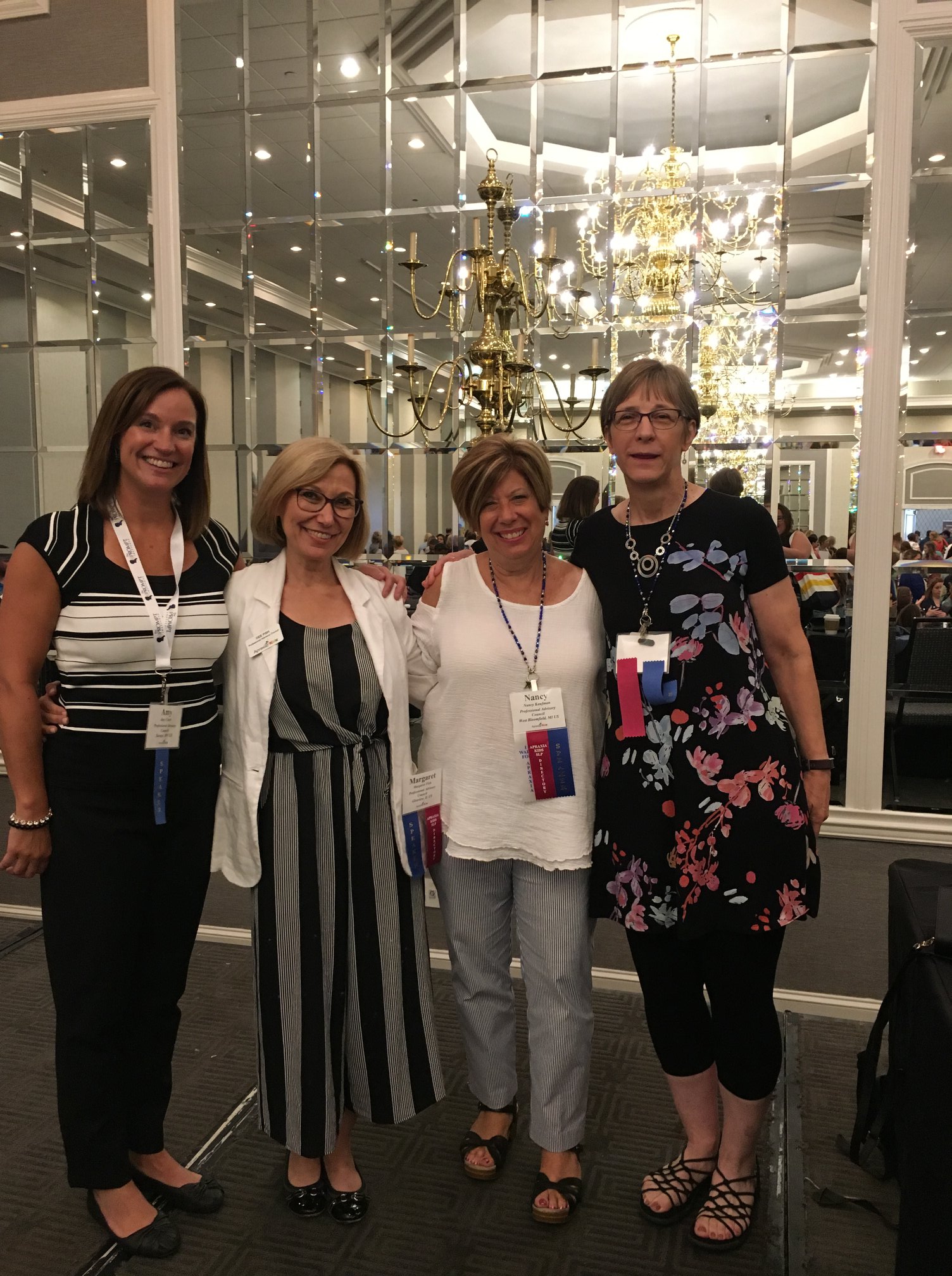
    Amy Clark, Margaret “Dee” Fish, Nancy Kaufman, Ruth Stoeckel

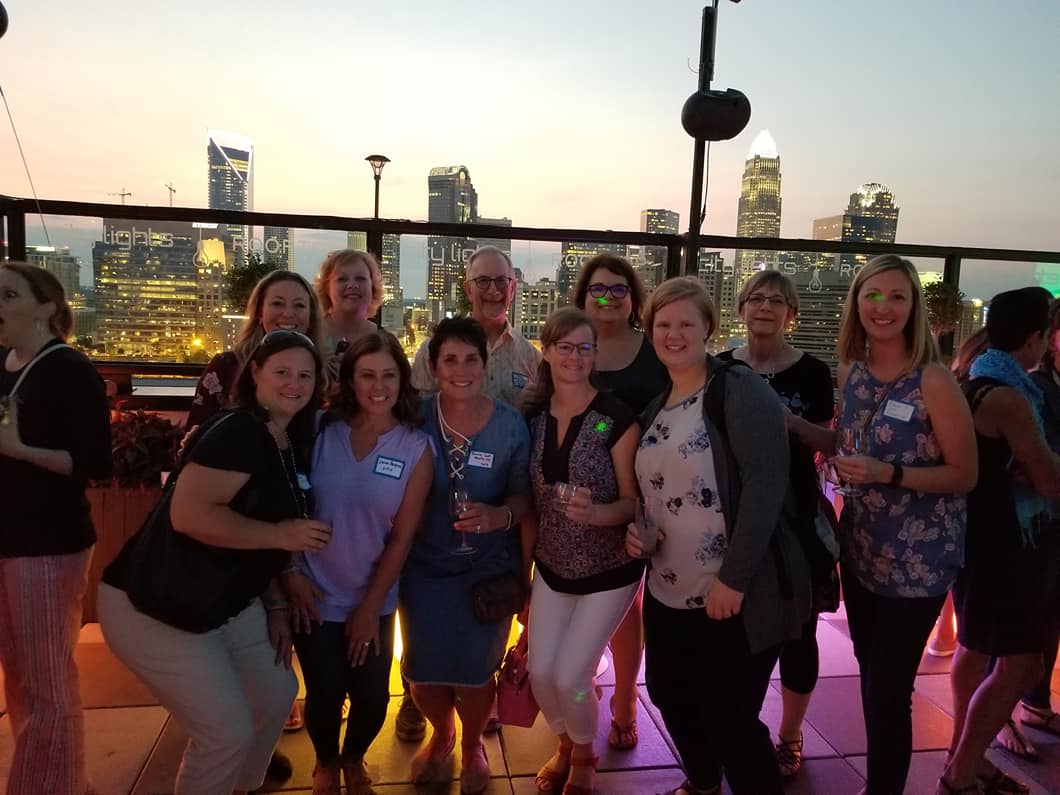
    Then there were the new wave and faces of “bootcampers” present, who are graduates of the Apraxia Kids intensive training institute.  I have so much respect and love for this group of amazing, dedicated and passionate professionals who have made serving kids with CAS and their families a top priority.  This group below comprises two of the veteran faces, David Hammer and Ruth Stoeckel, among the faces of up and coming experts around North America, and I say North America because three of them are from Canada!
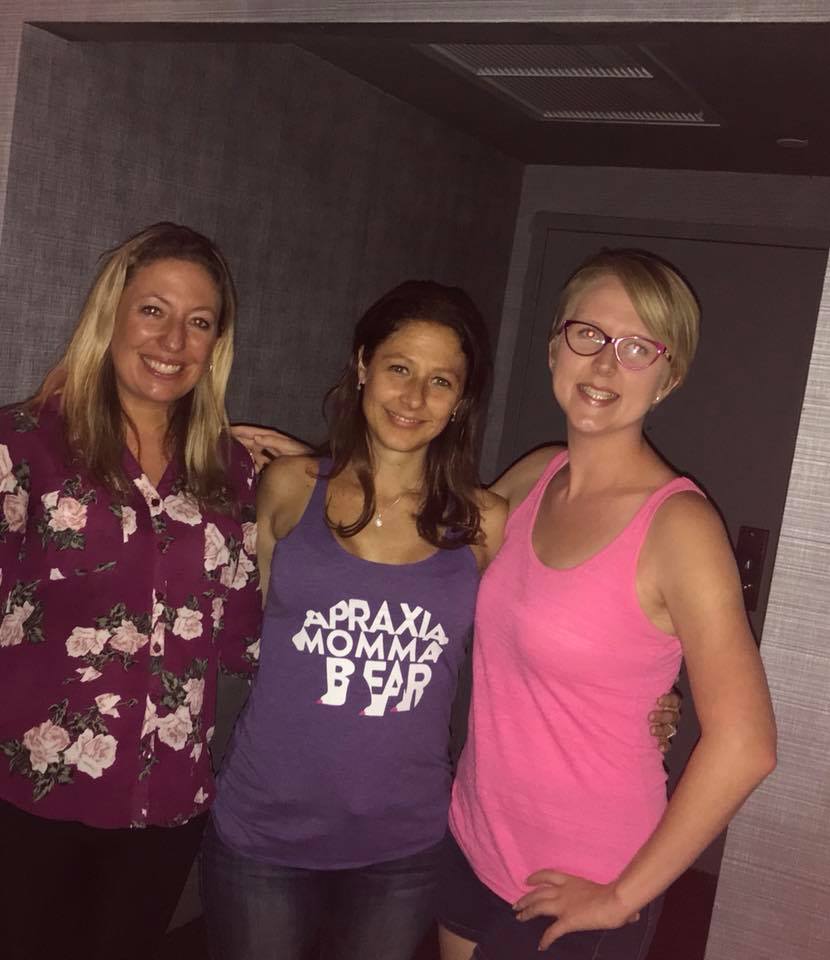
    At one point I looked around at the buzzing open area and I took a deep breath and smiled.  Sharon’s decision to step down was based out of selfless love for the non-profit she started.  Though I didn’t understand it at first, I understood now.  Apraxia Kids is still the organization it was.  A group of passionate professionals and experts who come together to network with parents and to arm them with knowledge, community, and power.  Though I personally felt Sharon’s loss, I now could be that same hope she had given to me and in turn give back like I always wanted to do.  Michelle of Apraxia Mama Bear and Alyson Taylor of Girl With a Funny Accent were there also doing the same thing.
    When I got to my hotel room that night, I called Sharon.  The words of her friend and Apraxia KIDS president Mary Sturm were ringing in my head.  Mary told me that Sharon said she knew she had to step down to advance the organization further; and Mary compared it to that of mother whose child leaves for college.  You send them off knowing this is the next step to them becoming independent and successful adults despite the pain in your heart that wants them to stay.  You do this because you know it’s the right thing to do, but you still watch with baited breath and an ache in your heart.  You watch their every move and cheer them on every step of the way.  I thought that analogy was amazing, so that night I told Sharon what Mary had said.  I told Sharon I finally understood why she did what she did.  I was so mad and sad and basically a hot mess when she told me she was stepping down; however I understood now.  I understood because it was unfolding before my eyes.

    Before we said goodbye, Sharon left me with these words,

    “Hearing this makes me so happy.  So this is life, this is us.  You pass it on.  I love you and all the others who have committed.  I know you.  I was you, and one day you will meet someone and you will have this mutual admiration and you will know that they are the future.”

    Old faces, new faces, and the passing of the torch.  The selfless individuals who had been there before were still there giving back like they always had and a new wave stood by their sides ready to continue the mission. I have so much respect and love for the past, and I’m so excited for the future!

    The mission has never changed and was never about any one person.  It’s about Apraxia and Kids.

    Every Child Deserves a Voice.

    Let’s see this mission continue to spread!
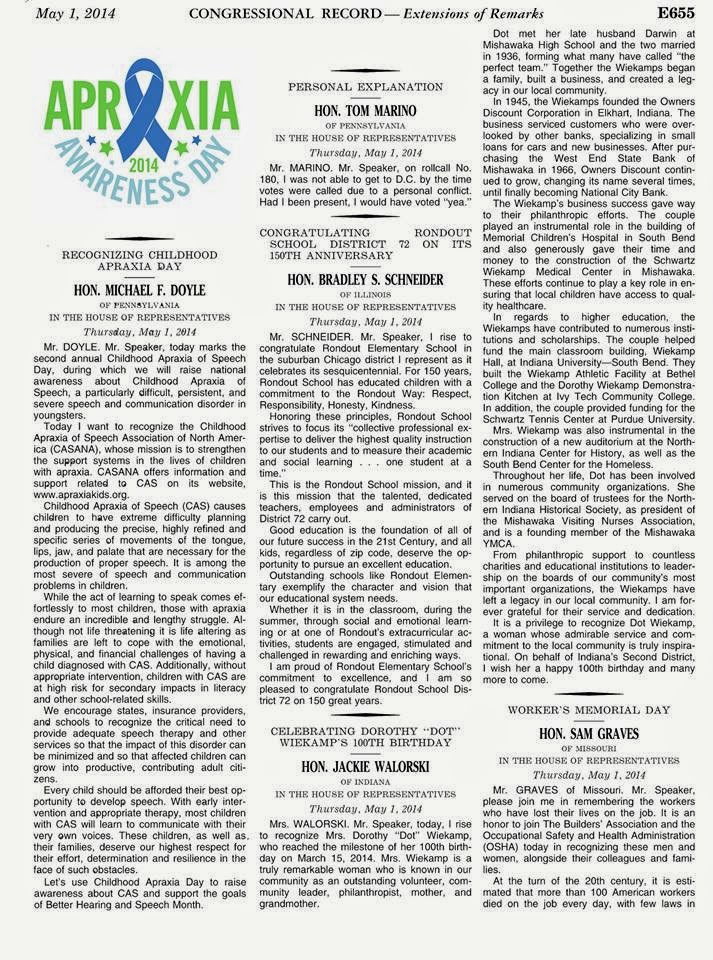
     

  • Apraxia is elusive, even to professionals.

    Apraxia is elusive, even to professionals.

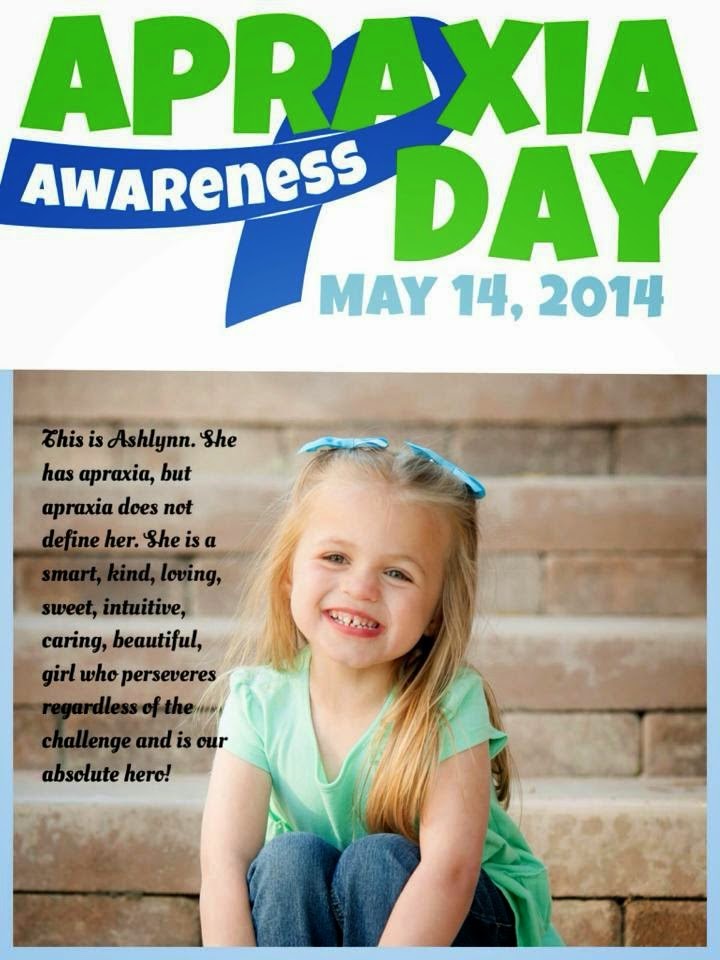
    Today is the second annual Apraxia Awareness Day, and in case you haven’t heard, this year it made its way into the United States Congressional Record!  That’s a big step in spreading awareness, but there is still a long way to go.

    I was able to blog about the very first apraxia awareness day here First annual apraxia awareness day and I’m so excited to be doing it again this year.

    Most people still haven’t even heard of apraxia.  Doctors, including my own pediatrician had only vaguely heard of it, and many SLP’s still don’t know how to treat it correctly.  I was one of them!  I had a 20 page small folder on Childhood Apraxia of Speech from graduate school, and that was it!  Luckily I had an amazing mentor who took me to an apraxia conference when I first started in the field, and I was able to treat the disorder successfully with the three kiddos I saw at the school-aged level.

    However, then my own daughter was born.  Her first year was stressful.  I hated the baby screeners at the doctor’s office.  She wasn’t cooing or really babbling, but she was so alert and had the best giggle!  Everyone assured me she would talk in her own time, but every screener put her further and further behind.  She crawled late, walked late, had poor balance and choked on her food and drinks, oh, and did I mention she wasn’t talking??  I attended conference after conference on early intervention for speech.  I then would work all day and then came home and used the techniques on her.  One problem, they didn’t work!!  I was stressed, worried, and constantly thinking about her development.  Even though I was treating it in the elementary school, it didn’t occur to me that this disorder was also behind her development delays.

    When I took her to Child Find I remember the evaluation like it was yesterday.  I knew she was behind, but seeing it with another SLP was heartbreaking.  I wanted to gather her up and leave so many times.  When the SLP came to talk to me, she said four words that I will never forget, and at the moment I instantly realized were true:  “Laura, this is apraxia.”

    My God.  How did I miss that???  However, I instantly knew she was right.  I was dealing with apraxia.
    Apraxia.
    Apraxia.
    Oh God no, not apraxia.  Why MY baby??  I cried in the car after the evaluation.  I sent a text to an SLP friend “She has apraxia.  I’m devastated.”

    My mother in law was watching my baby.  I went home and cried.  “Will she ever talk?” she asked.  “Oh yes” I responded.  She just has to face the biggest hills in order to do it.  I cried some more.

    I’m really not sure what’s worse.  Being a parent who doesn’t know what apraxia really is, or being a parent who knows exactly what the monster is, and just how hard she’ll have to work to overcome it.

    After the devastation….and to be honest I really did feel devastated, I mourned it, and then I became angry. I realized now why all the early intervention I was doing with her EVERY night wasn’t working!!  She had apraxia!!  Apraxia has to be treated differently.  You need a motor based treatment approach, not a language approach. Why didn’t I know the signs of apraxia in young children??  And you know what?  Once I put her with an SLP trained in apraxia, she made progress IMMEDIATELY.

    IMMEDIATELY!!

    I had a masters degree in this!!  It was unbelievable to me.  I reviewed all my early intervention conference notes and power points.  Not ONCE was apraxia mentioned.  It made me think, are early interventionists even looking at apraxia?  Why are we treating all speech delays the same way?

    After I got over being angry, I got determined.  This happened to me for a reason.  I had successfully treated two cases in the schools, but I needed to know the ins and outs of this disorder.  I’m an SLP and MY daughter had apraxia and I missed it.  I missed it!!  As I think of that right now I’m shaking my head.  That’s just not ok.  There needs to be more information out there.  It needs to be as well known to SLP’s as their everyday speech and language disorders are.

    That is my mission now.  I went to apraxia-kids.org and started signing up for webinars.  I went to every apraxia conference that came to Denver since that time, and was fortunate enough that the Apraxia National Conference came to Denver last summer in 2013.  I saw so many apraxia experts.  I found out about an apraxia intensive bootcamp.  I applied and I was accepted!  I go this July.   Last February, I gave my first ever professional presentation to a packed room of school based SLP’s.  I didn’t claim to be an expert, but I had come A LONG way since that mom crying in her car.  The interest was so great that people were sitting on the floor.  That’s how much SLP’s are craving this information.

    I asked my clinical director at the private practice to support me in my mission to specialize in apraxia.  She didn’t even blink.  I am so blessed to know her.

    I started this blog, and now I started a facebook page SLP Mommy of Apraxia.  I want to give simple tips on things to do at home, and also spread awareness.

    As for Ashlynn?  Well, she’s basically just pretty amazing.  She meets every challenge head on without
    frustration.  She overcomes every obstacle in her path, no matter how many time she has to try.  She’s speaking in 4-8 word sentences, started independently doing show and share at her school, and has many friends she plays and socializes with.  She still needs speech.  We still work everyday on correcting her errors and mapping the motor plan, but I know she’s going to be fine now. She’s not only my hero, but my inspiration and why I stand up on TODAY, May 14th for EVERY child who deserves a voice on this second ever Apraxia Awareness Day.

    Signs and Symptoms:
    – Little to no babbling
    – Only a few different consonant and vowel sounds
    – Inconsistent productions of vowel and consonant sounds
    – Disrupted prosody
    – Difficulty with co-articulation of speech sounds
    – Comprehends much more than they can speak

    Diagnosis
    – Only Certified SLP’s trained in this disorder should diagnose it.  Pediatrician’s and neurologists do not go through the extensive testing an SLP will do to provide a thorough differential diagnosis.

    Treatment
    – A motor based treatment approach to therapy must be initiated.  Therapy should be focusing on the planning, coordinating, and sequencing of speech sounds, usually with some sort of verbal or visual cueing system.
    – To find professionals in your area see this link: Apraxia Experts by state

    Most of all: Spread the Word!!  Knowledge is Power.

  • First professional CAS presentation

    First professional CAS presentation

    I stood waiting 30 minutes early to enter the room.  The room where I would present information on my personal and professional experiences and knowledge about Childhood Apraxia of Speech for the first time at a professional conference.

    As the door opened, people started clammering for a seat.  I looked around thinking to myself, “are they sure they know they are coming to see me?”  I took my place at the front and started to set up my power point presentation.  My cousin, and SLP from a neighboring school district found me and gave me a much needed hug and wished me good luck.  It wasn’t long before the room was so full that the side door had to be opened.  People asked me if I could request more chairs.

    I started to feel sick and any hunger feeling I did have during this brief lunch break was long gone.

    Soon, people crowded in and just sat on the floor.  They sat in front and in back, and pulled up chairs in the back and side hallway.  I found my mentor in the hallway and leaned on her shoulder proclaiming I was about to be sick.   With a reassuring pat she sent me back in ordering I save her a chair in front.

    Soon the announcer came up to introduce me.  Nervously I chatted with him stalling for time.  As he said my name I experienced an almost out of body experience.  I heard him in the background, but I thought of Ashlynn.

    I thought of the two boys I had treated with apraxia before her, and how they came to me nonverbal in Kindergarten. I suddenly remembered that I’m giving this talk so that another child with apraxia doesn’t have to wait longer than they have to to find their voice.  To say their name.  To tell their parents they love them, or even call their parents by name.  I realized  I have an audience of well meaning, awesome professionals who wake up each morning and help children find their voice and I have first hand experience and professional experience on how to help them make that happen. It was clear from the number in attendance that they want to know more; so, with a big breath I began my presentation drawing strength from my little ones with apraxia who have to be braver than me in that moment,  EVERY moment of their young lives on their journey to find their voice.

    If the email inviting me back for next year is any indication, I hope I did them all proud.

    A link to my presentation is here: Importance of Differential Diagnosis and Treatment Approach in Childhood Apraxia of Speech

  • Conference take aways 2013

    Conference take aways 2013

    The Apraxia conference was incredible to say the least.  On one hand it was information overload, but on the other hand I learned so much.
    I was beyond thrilled to meet Sharon Gretz, the founder of CASANA.  What an incredible women and inspiration she is to me, and when I met her she was so down to earth and humble.  We swapped stories and I immediately felt a kinship with her.  It was also amazing to meet her son who was nonverbal at 5 talking and taking pictures of the conference.  She reported he was in college maintaining a 3.25 GPA.  Incredible.
    The breakout sessions were awesome.  I was never bored, though by the end I was tired.  I just want to soak up as much as possible.

    Some things that really struck me at this conference

    – Apraxia could have a sensory feedback component as well as a motor component.  One study showed that kids with CAS had a greater number of vegetative utterances in the first year.  These include things like coughing, hicupping, and burping.  The theory is that perhaps sensory feedback is to blame.

    – Kaufman recommends taking sounds in the child’s repertoire, and then creating words from it.  She didn’t just advocate her picture cards.  She also said she chose items in her picture cards that were of high interest to the child.  However, she also uses pictures on the iPad and in other materials.  She’s also not concerned if the child doesn’t “remember” or “learn” some of the words since the goal is just to map the motor plan.  For example, she said a child could go their whole life not knowing “oboe” and would probably be fine.

    – Kaufman uses a lot of approaches for ABA verbal techniques.  One was called errorless learning, in which you anticipate the child’s mistake before they say it and give them a cue to increase success.

    – Brain imaging studies show that kids with apraxia have more brain centers lit up during talking tasks then do the neuro-typical peers.  It shows just how hard they are working to talk.

    – Children with apraxia are at increased risk for reading difficulties.  Some reading programs that have shown success with children who have apraxia are the LIPS program, which allows a child to learn sound correspondence and sound segmentation receptively, as well as Phonic Faces.

    I look forward to attending more conferences in the future!  I also learned about an “Apraxia Bootcamp.”  It’s a four day intensive training, but some of the top apraxia experts in the country.  It’s apparently highly competitive, but I’m up for the challenge.  I’m going to start gaining more experience with apraxia, and already started networking with other colleagues.  I’m excited for what the future brings!