Category: SPD

  • Woes of regression

    Woes of regression

    If you’ve ever watched your baby fail to meet the simplest of milestones..

    If you’ve sat in meetings and offices and were told things like 1% percentile

    If you’ve felt a pain you can’t describe that is only eased by hope..

    You know why regression hurts so much.

    If you’ve ever driven your child back and forth to countless therapies..

    If you’ve ever felt a mix of pride, happiness, grief and so much more when they finally met a goal..

    If you’ve cried because you are always filled with a hidden grief but ecstatic at the same time when they made progress..

    You know why regression hurts so much.

    If you’ve ever watched your baby spend hours in an office while others kids played…

    If you’ve ever comforted them when they said life wasn’t fair needing comfort yourself because you agreed…

    But then watched them say a new word, jump, or write a letter thanks to those therapies..

    You know why regression hurts so much

    If you’ve ever been faced with professionals who don’t understand your child or their disability..

    If you’ve ever stayed up all hours with bloodshot eyes scouring Dr. Internet just to help your child..

    If you’ve ever then found a team and plan that was finally working for your child..

    Then..

    You know why regression hurts so much.

    Laura Smith, M.A. CCC-SLP is the mother to two beautiful children, one of which has a rare genetic mutation that caused a variety of developmental disabilities. She is the author of Overcoming Apraxia and has lectured throughout the United States on CAS and related issues. Currently, Laura is a practicing SLP specializing in apraxia at her clinic A Mile High Speech Therapy in Aurora, Colorado. 

  • Sensory strategies

    Sensory strategies

    Sensory issues are a common co-morbidity to children with childhood apraxia of speech (CAS). Certainly my daughter with apraxia stemming from a genetic mutation has her own!

    In this post I’m going to share some various sensory related issues we have had throughout the years and strategies that helped.

    Sitting in Circle Time

    In preschool and even into Kindergarten, Ashlynn had a very difficulty time being able to sit in circle time without W sitting. In addition, attention was a major concern. To help with this, she started out with a cube chair and lap blanket that helped keep her seated and calm. In early elementary school, her regular chair was replaced by a hokey stool to allow her wiggle and move. These aren’t the only options though. I’ve seen backjack chairs, wiggle cushions, and yoga balls that have helped kids as well.

    Oral Stimulation

    One of the first sensory issues to pop up was Ashlynn, was she started chewing everything during late preschool and into early elementary school. She would soak her shirts, suck on her hair, and absentmindedly put anything in her mouth. Strategies that helped this were chewelry and the use of a Contigo cup whose straw was resilient enough not for her to bite through. We actually had an accommodation in her IEP allowing her to have her contigo cup during times other kids were not allowed to have them.

    (For extreme chewers I have heard from parents that ARK chewelry is the most robust and works best).

    Picking her nails

    In second grade Ashlynn developed a horrific habit of picking her nails. This wasn’t just a little pick either. I’m talking pick them and get hangnails that she would then rip off. Her fingers bled so much she had to get her shirts changed by the nurse. That year they introduced a rubber band ball as a replacement. It worked wonders and she carried it everywhere and used it when she needed it.

    After her nails she started picking her lips and so she has a sensory bag with chapstick in it as well as can be redirected to use that.

    Attention Concerns

    Ashlynn gets extremely distracted by auditory or visual stimuli. Sensory breaks are scheduled throughout her day. A visual schedule was made and looked something like the one below. Consulting with the OT is very important when developing one, because sensory profiles vary GREATLY depending on the child. I’ve seen kids need a ball pit, weighted blanket, or deep pressure.

    Fidgets

    Fidgets can serve a variety of purposes. They can help with attention, ease anxiety, or provide sensory input to name a few. I’ve tried a lot of fidgets for Ashlynn! The most popular ones like spinners and cubes never worked for her. She did the best with squishy balls, theraputty, pop tubes, or things she had to really squeeze.

    Vestibular Input

    Out of all the sensory strategies that we have used though the NUMBER ONE that always helps is swinging. I’m not an OT, but swinging is very beneficial and calms and helps center Ashlynn. It always has. I’m not alone either! Many parents report putting swings in their house! An adult with apraxia I know has a hammock out back she still uses. There are many different types of swings. Ashlynn loves them all but the most therapeutic for her might have been the platform swing. It helped her core strength and stability.

    What sensory strategies have worked for your child?

    Laura Smith, M.A. CCC-SLP is a 2014 graduate of Apraxia Kids Boot Camp, has completed the PROMPT Level 1 training, and the Kaufman Speech to Language Protocol (K-SLP). She is the author of Overcoming Apraxia and has lectured throughout the United States on CAS and related issues. Currently, Laura is a practicing SLP specializing in apraxia at her clinic A Mile High Speech Therapy in Aurora, Colorado.

  • Did I cause her apraxia?

    Did I cause her apraxia?


    When Ashlynn was first diagnosed with Childhood Apraxia of Speech, I think most parents will relate when I say I spent (pointless) hours wondering what had caused it.

    Back in 2012 when Ashlynn was diagnosed, the most current information we had at the time was that it could have three main causes:

    1. Brain Trauma such as a stroke in utero
    2. Genetic causes
    3. Idiopathic – meaning of no known cause

    Though I knew this, I couldn’t help but cycle back to questions.  Questions that kept me up at night.  Any parent of a child with special needs has probably done this endlessly.  It is probably one of the main causes of sleep deprivation in special needs parents right behind “am I doing enough? and goes something like this.

    Was it that time when I was 6 months pregnant and I had the stomach flu?  Did I wear the painting mask long enough when I painted her baby room?  Was it because I had to have a C-Section?  What about the vaccines, giving her Tylenol, or that time she bumped her head?  Maybe it was……..

    And before I know it, I’m deep into the weeds unable to find my way out.

    It doesn’t help I had been privy to professional “inside” comments with colleagues who blamed parents for lack of reading, lack of talking, lack of stimulation etc.  You can read about my snub to those “opinions” in my article where I snub the 30 million word gap theory.

    It also didn’t help I would hear stories from other apraxia mamas who would share their personal experiences of being blamed and shamed.  

    So, I sought answers. It was a revolving door of specialists, waiting lists, and additional diagnoses, but still no answers as to the cause.  I would cycle through periods of acceptance and guilt, such as in this post I wrote when she was a little over 4 about a year after her CAS dx.

    Earlier this year, I thought we had found our answers when we went to rehabilitation specialist at Children’s Hospital who diagnosed her with dystonic cerebral palsy. Though I had more answers to her disability profile, I still didn’t have any answers as to what caused all the issues.

    No answers that is, until we found ourselves in the office of a genetic doctor and genetic counselor.  This is not to be confused with general genetic testing that a pediatrician can order either.  It was there that we would learn the cause of everything.  It was there, I would finally know why Ashlynn had apraxia, dyspraxia, hyptonia, ADHD, dysarthria, SPD, CP, and learning disabilities.  The answer was housed in a small set of letter and number combinations called:

    BCL11A

    A quick pub med article revealed that of the few case studies we have, children shared commonalities with:

    1. Non-verbal or low verbal status
    2. Abnormal muscle tone
    3. Gross motor delays
    4. Childhood Apraxia of Speech
    5. Dysarthria
    6. Hypotonia
    7. Dyslexia susceptibility

    The doctor explained the genetic mutation was “de novo” meaning it was not inherited and happened at conception.  It was a complete fluke when the sperm and egg came together that this mutation happened on the 2nd chromosome.

    Is it possible to be completely stunned and then not surprised at all at the same time?  Is there a word for that?  If there is, that is how I felt.  I knew as a professional researching this endlessly it wasn’t my fault.  Mom guilt though.  Mom guilt is a real thing.  It is strong, irrational, and overwhelming. So, in that sense, I wasn’t surprised.

    Knowing though that a genetic mutation was the single cause for all of her disabilities was shocking, but then quickly reaffirming. So many things went through my mind with the biggest one being,

    “This really wasn’t my fault, and furthermore, there is nothing more I could have done to change this.”

    The genetic landscape regarding apraxia is a new and quickly changing field.  We are going to see more research and information coming out now recommending that genetic testing be pursued.  Look for a follow up post with me talking about this new and changing frontier.

    For now though, I need time to process and learn.  A mother does better research than the FBI after all, when searching for answers about their child.


    Laura is a speech/language pathologist specializing in Childhood Apraxia of Speech and mom to two amazing children, one neurotypical and one neurodiverse. Laura is a speaker, writer, Denver Walk Coordinator for Apraxia, and is the voice behind the website SLPMommyofApraxia where she is passionate about Apraxia Awareness. 


  • When inclusion works: my hope for the rest of 3rd grade

    When inclusion works: my hope for the rest of 3rd grade

    This past break, I went over my posts from 2018, and read the article I wrote at the beginning of the year.  In it, I begged parents to teach their children to be kind as I wrote about the importance of inclusion.

    You can read about here.

    I was filled with worry and trepidation as Ashlynn started third grade.

    Last year in second had been one of her worst years with peers and friendships.  She frequently came home with bloodied shirts from her picking her fingernails.  Many times, the nurse had to change her shirt it was so bad.  She always reported that she hadn’t played with anyone at recess and my heart broke for her nearly everyday.  In second grade, she was also bullied in the bathroom but thankfully some other students heard and told the teacher.  Fresh off the heels of a great summer, I worried to see her go back to school again.

    This year though in third grade, has been one of her best years for growth not only academically, but also with friends and feeling like she was part of the class.

    The teacher told me at parent/teacher conference in November that she had told her class if they see Ashlynn sitting alone to go grab her and include her because many times it’s not that she doesn’t want to play; but rather that she has a hard time jumping into a situation.  The teacher went on to explain the kids initially did it because they were instructed to, but as they got to know her they now do it because they wanted to.

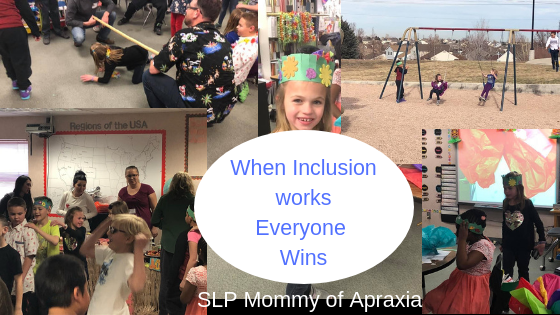
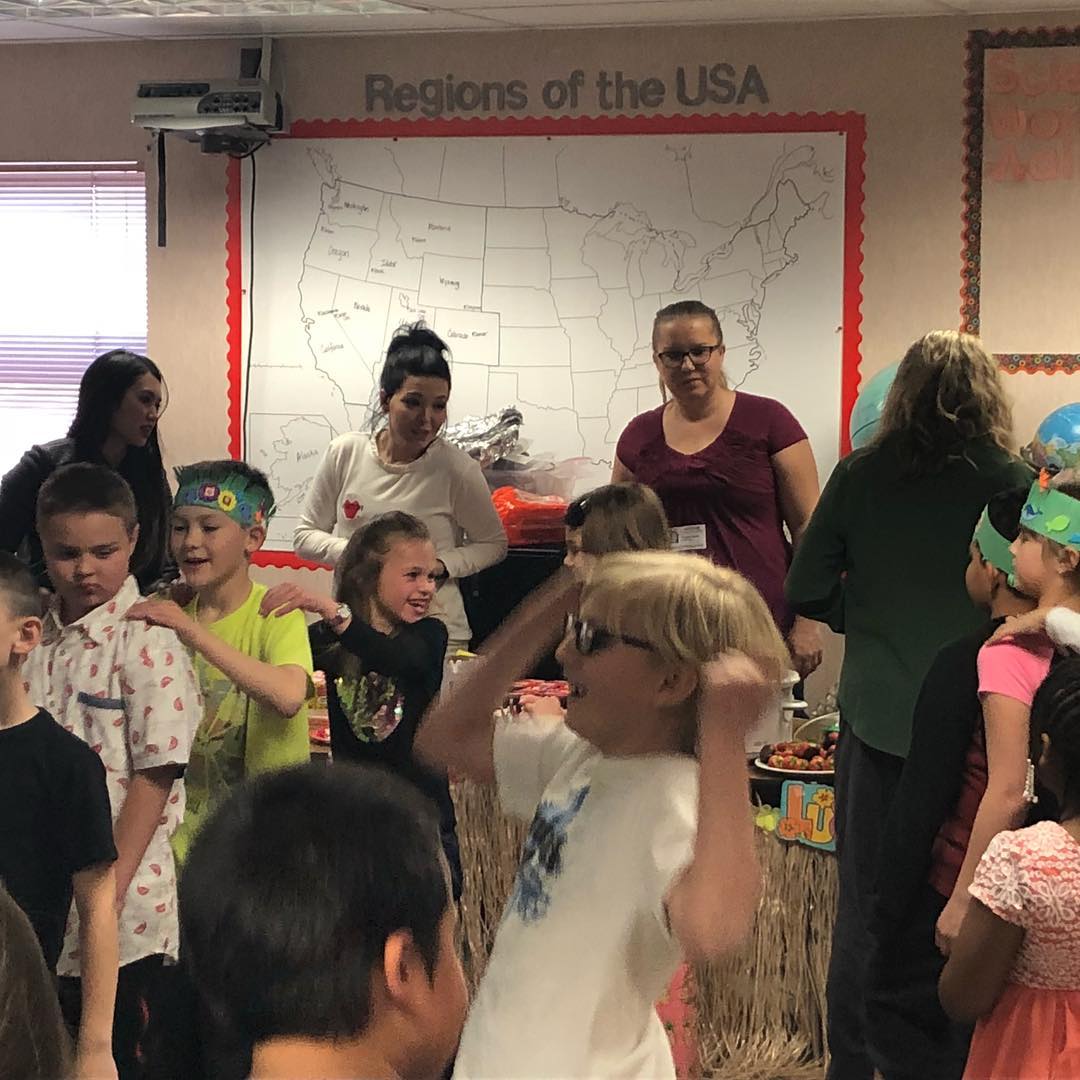
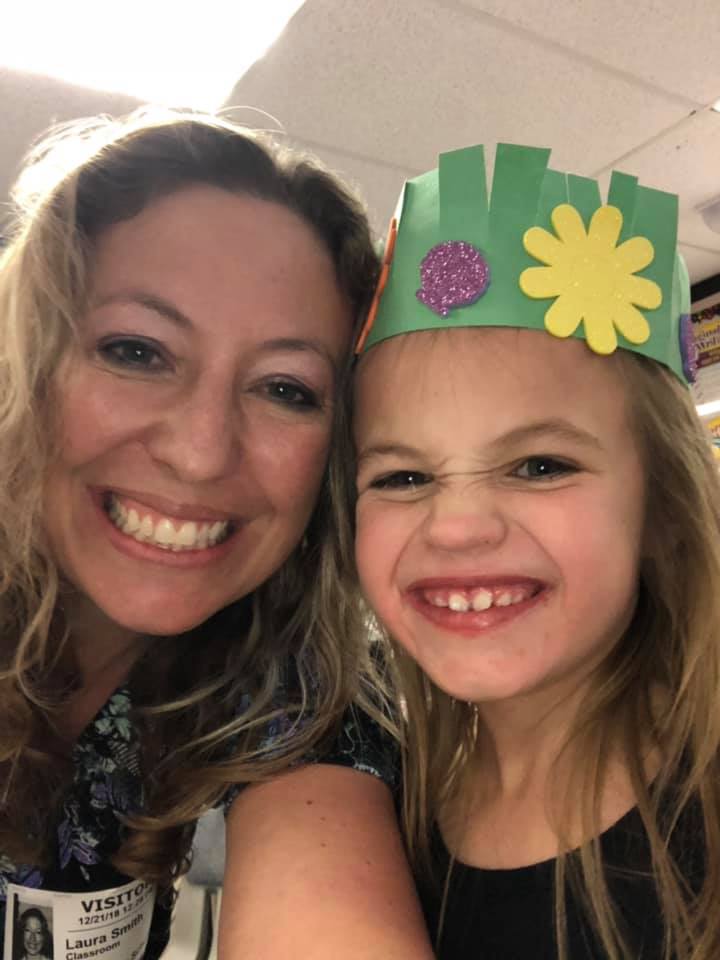
    Every year before winter break, 3rd grade throws a Luau party to add some fun and a twist to a normal Winter celebration.  I volunteered to run a craft with the class. I couldn’t believe what I saw when I got there.  Ashlynn was completely assimilated into the classroom as one of the kids, and not the “special ed kid” or the “ILC kid.”

    As she talked to her friends I thought of her speech therapy.   As she navigated the limbo stick like any of the other classmates I thought of her work in occupational and physical therapy. Her special education teacher wrapped up her current progress monitoring showing how she had rocked her goals because she knew it would be the best Christmas present to see all of her success and she was right.

    As she completed some seat work independently I thought of her TA who understands the difference between enabling and helping.

    This is how inclusion is supposed to look. Every human whether they have differences or not all want the same thing. They want to feel useful, included, and loved. Her smile says it all.

    Honestly I didn’t need any Christmas presents this year.  My cup was overflowing.  I just pray as Winter Break is over and she heads back to school, that the second semester will be as amazing as the first.

    Laura Smith is a mother to two beautiful children, one of which was diagnosed with a constellation of issues including apraxia that can be traced back to a genetic mutation entitled BCL11A. She is a Denver based Speech/Language Pathologist now specializing in Childhood Apraxia of Speech.

  • This school year, teach your children to be kind.

    This school year, teach your children to be kind.

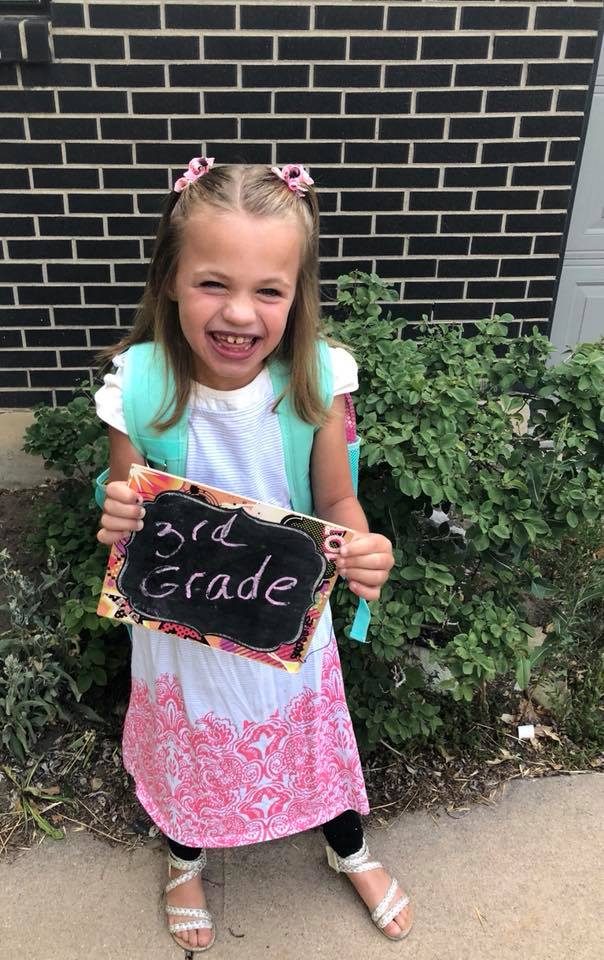
    Fresh backpack, lunchbox, shoes and school outfit are waiting tomorrow for my child’s first day of school.  There is an excitement in the air as we bought school supplies and met her teacher last week.  She picked out her name tag like the other kids and picked her seat.  She flashed a big smile to her new teacher and chattered endlessly about school starting again and how she was excited to go back and to learn.  We went and got a new haircut and she told the stylist how she was starting third grade.

    Tomorrow I will take the historic first day of school picture. I will probably proudly post it on all of my social media accounts.  I will most likely scroll back and look at it a couple of times and wonder where my baby has gone.  I will marvel at how this school aged girl with long legs is standing on my front porch.

    That is where the similarities will end.

    As many parents cheer and are relieved to get back to a routine, I’m left with only nerves and trepidation.  The summers in my house are happy.  My daughter is a child who can explore the outdoors and experience life as a carefree and curious kid.  She plays with neighbor children until bedtime and explores campgrounds on the weekend.  She makes mud pies and collects dirt under her fingernails that need to be clipped and scrubbed frequently.

    Unfortunately school brings other stories.  The child who played carefree until bedtime with neighbors is the same child who is frequently seen sitting with her teacher’s aid (TA) at lunch and playing by herself on the playground.  The fingernails that grew long and collected dirt over the summer are replaced with widdled down nubs during school that are bit, picked and chewed so much that her shirts frequently come home bloodied or on some really bad days, have to be changed completely.

    The girl who chatted endlessly to family and friends is the same girl who is quiet and reserved at school, frequently clamming up when put on the spot or asked a direct question.

    The child who could explore during the summer and jump from varying activities is the same child who frequently loses focus and can’t concentrate on subjects at school.

    My child has invisible learning disabilities.

    Many of them.

    However underneath them, she is still just a kid like your son or your daughter.  She is curious.  She is friendly.  She wants friends.  She craves connections.  She’s excited to learn.

    This year as you talk to you children about their new teacher, new classroom, and new adventures, I beg you to talk to your kids about being kind.  I beg you to explain to your child that children with disabilities are just like them, but it might take a little longer to understand or get to know them.  If nothing else though, please just teach your children to be kind.  Maybe ask about something they did that was kind alongside your questions of who they played with or what they learned.

    Our kids will thank you for it!

    Sincerely,

    A proud mama to a child with hidden disabilities

  • Executive functioning home intervention

    Executive functioning home intervention

    Let’s talk executive functioning.  If you follow my facebook page SLPMommyofApraxia (click here), you already know we are making our house an executive functioning friendly zone and you might have read a prior post I wrote a  “What is Executive Functioning, and Why Do You Need to Know?”

    What does an executive functioning friendly zone mean exactly?  I decided to put all of it into a post so you can see and hopefully help others who may have children with similar issues.

    Before I begin, I just want to say this:

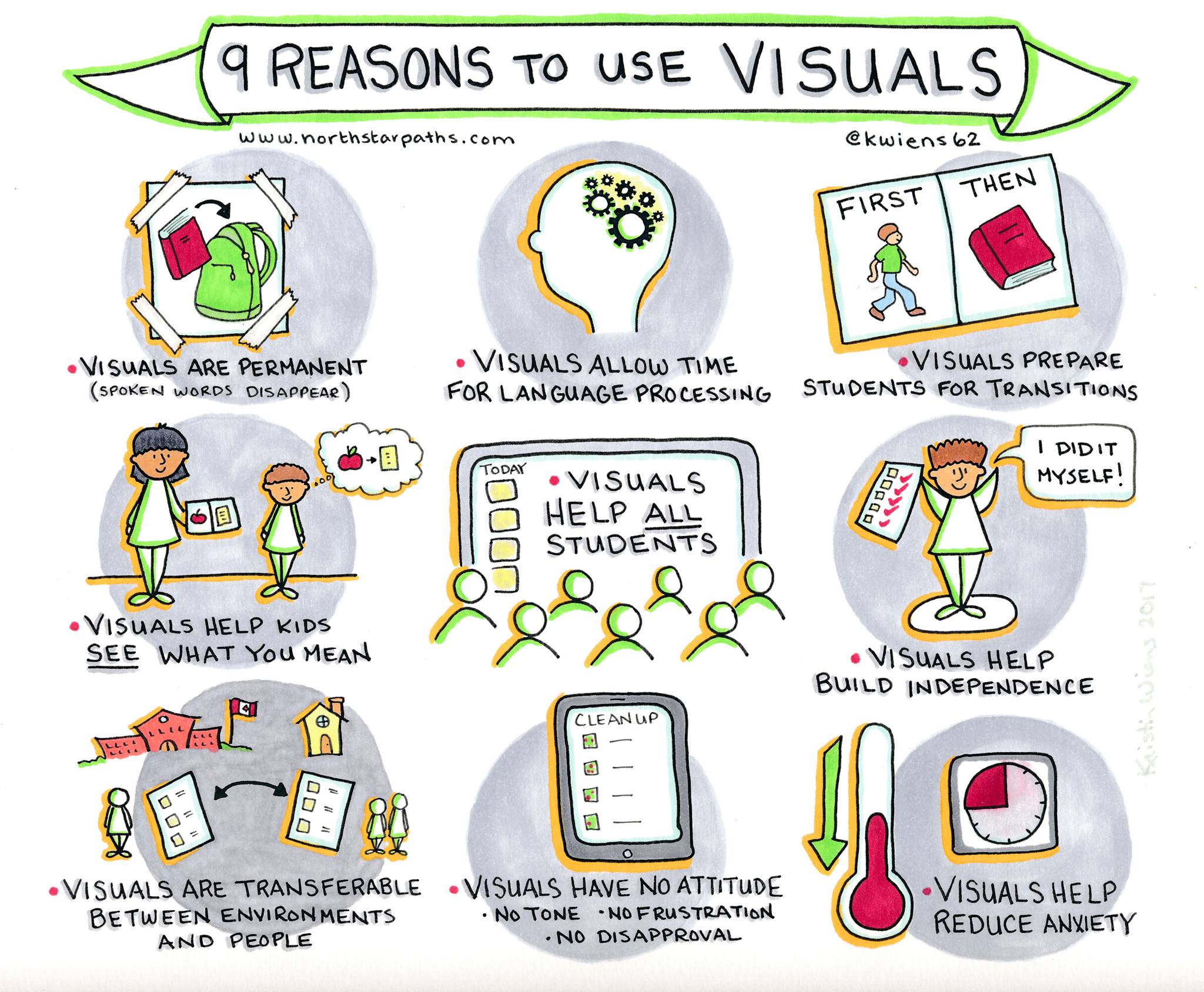
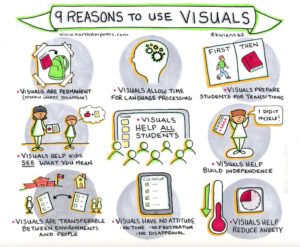
    Children with learning differences, many, many, MANY times benefit from the use of visuals.  There have a been a handful of cases in my career where visual aids actually confused the student more; but for the most part, visual aids benefit everyone.  This visual from northstarpaths really explains why:
    Executive functioning (EF) deficits are a common comorbidity with a variety of conditions including: ADHD, OCD, ID and others just to name a few.

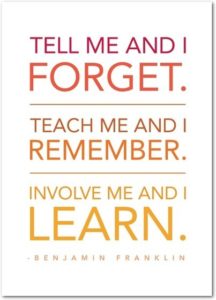
    Visuals are AMAZINGLY helpful for children with EF dysfunction.   The problem is, most teaching involves auditory input.  The teacher (or parent) talks, children listen, and learning takes place.  For kids like my daughter, who have a language processing impairment, the teacher (or parent)  talking is basically the equivalent to the teacher in the Peanuts comic series.  All the children hear are “wah wah, wah wah wah wah.”

    Visuals bridge the gap.  I couldn’t say it better than Benjamin Franklin, who himself had a learning disability when he said,
    Aside from just visuals though, kids with EF dysfunction benefit from organization and time management strategies.  The following is what we currently have implemented in my home.

    Morning Routine

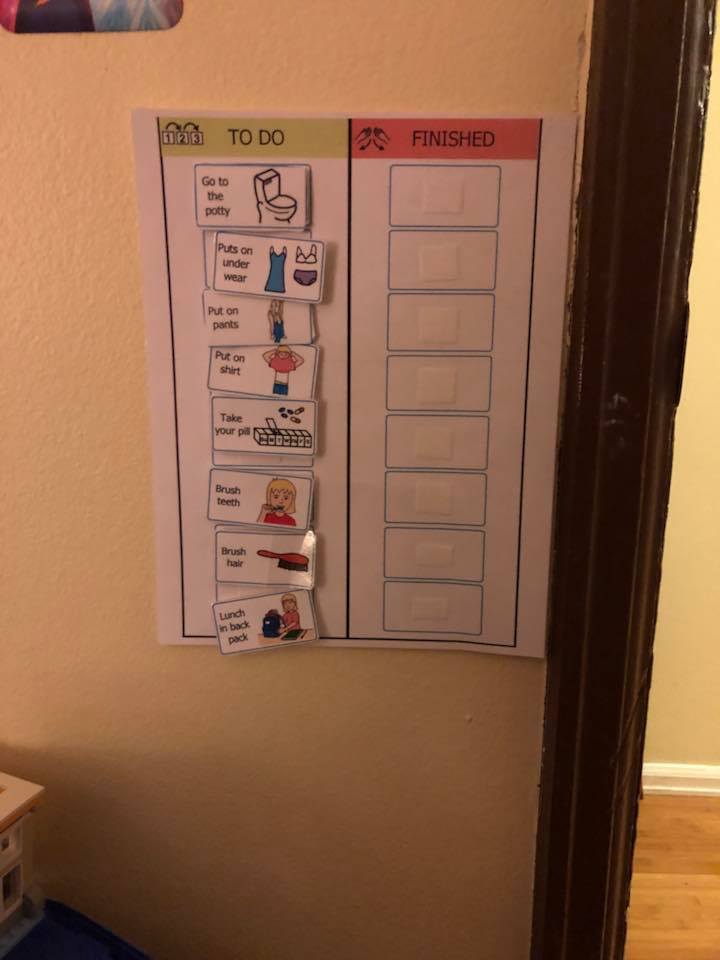
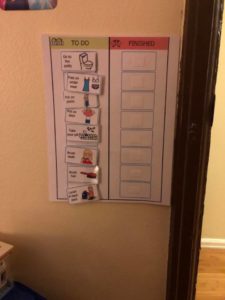
    The most recent example from my personal experience involved the steps to getting ready for school.  If I told Ashlynn what to do, she immediately forgot or I had to go through step by step and tell her, which is not promoting independence.  With the help of her SPED teacher, we made this visual schedule and she was successfully completing all of her steps without our help in about two weeks.
    Restroom steps

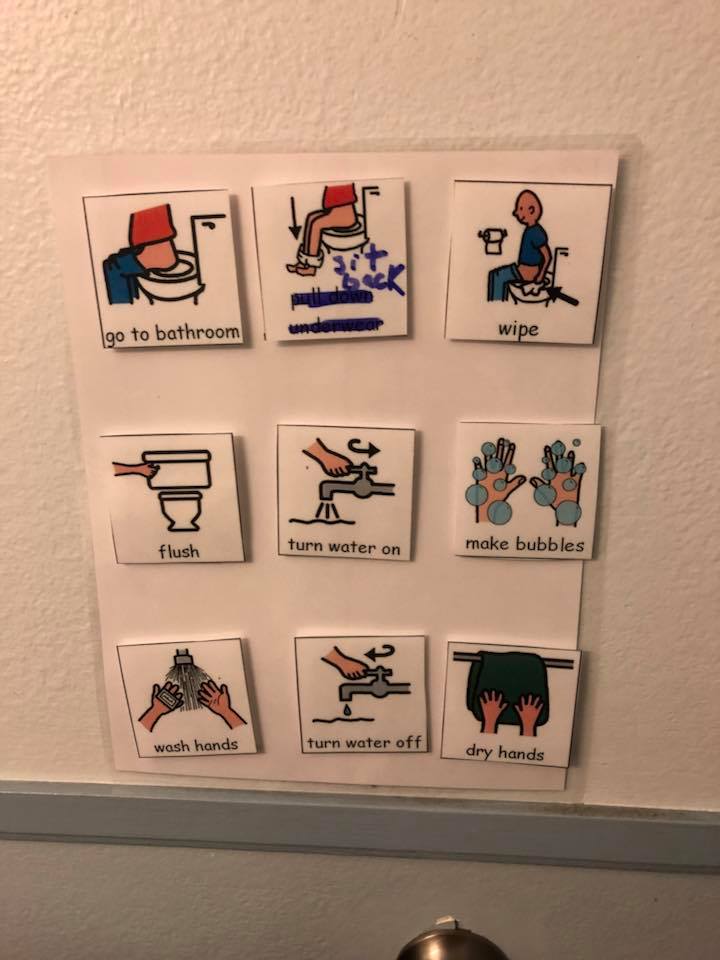
    We decided to make a visual schedule for completing bathroom steps.  Let me tell you that we have been working on remembering these for AT LEAST a year.  Last year in 2017, I sent her to Adam’s Camp and remember telling the therapists she can say all the steps but still is not consistent.  After Adam’s Camp she came home being able to sing them as well, and still, we could not get consistency.   So we made a visual schedule a little different than her morning schedule and it looked like this.
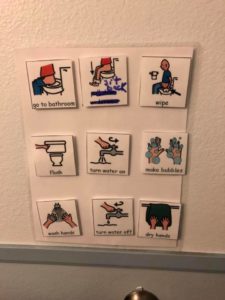
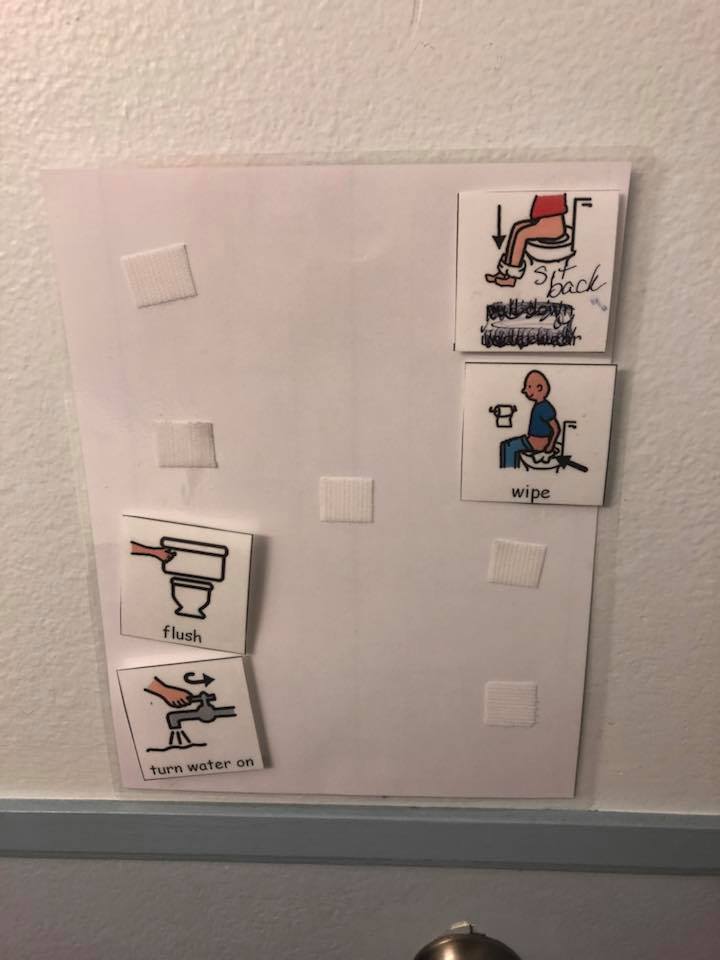
    This was NOT successful.  It probably has too many steps and it doesn’t have the nice left to right motion the morning schedule this, so I modified and made this.
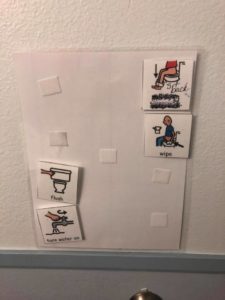
     

    I’d be lying if I said this was a complete success right off the bat, but it has worked better than any other strategy to date and now that the summer has hit, we have made sure she has to go back and complete her steps every single time.

    Cleaning her room

    The next step was to tackle completing a basic chore like cleaning her room.  I can’t even begin to explain the difficulty with this.  What I do know, is that many adults with ADHD continue to struggle with disorganization into adulthood.  It behooves us now to help our kids develop strategies that are going to serve them well throughout their lives.

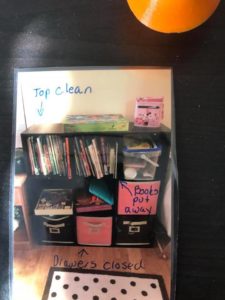
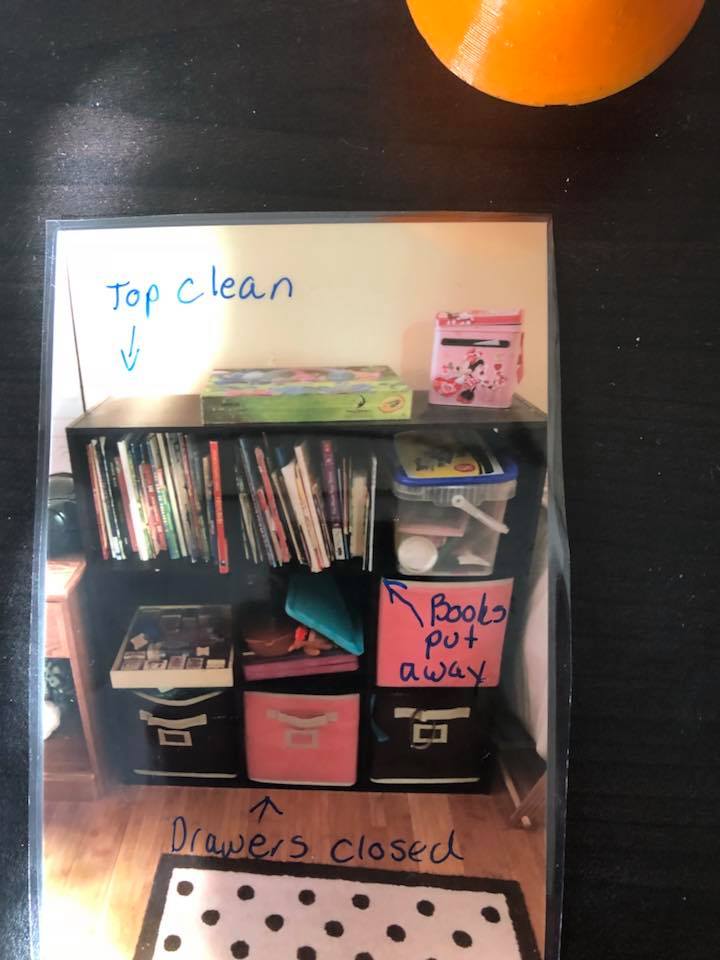
    The first step is to make sure everything has a place.  Classrooms are set up this way for a reason.  There is a specific space for each and every item that is used or played with in a classroom.  If not, things will inevitibely end up in a pile of clutter.  Ashlynn and I went through her room and designated certain drawers and bins for different things.  Everything has a spot.  There is a bookshelf, a lego bin, a writing utencil drawer, a baby clothes bin, you get the idea.

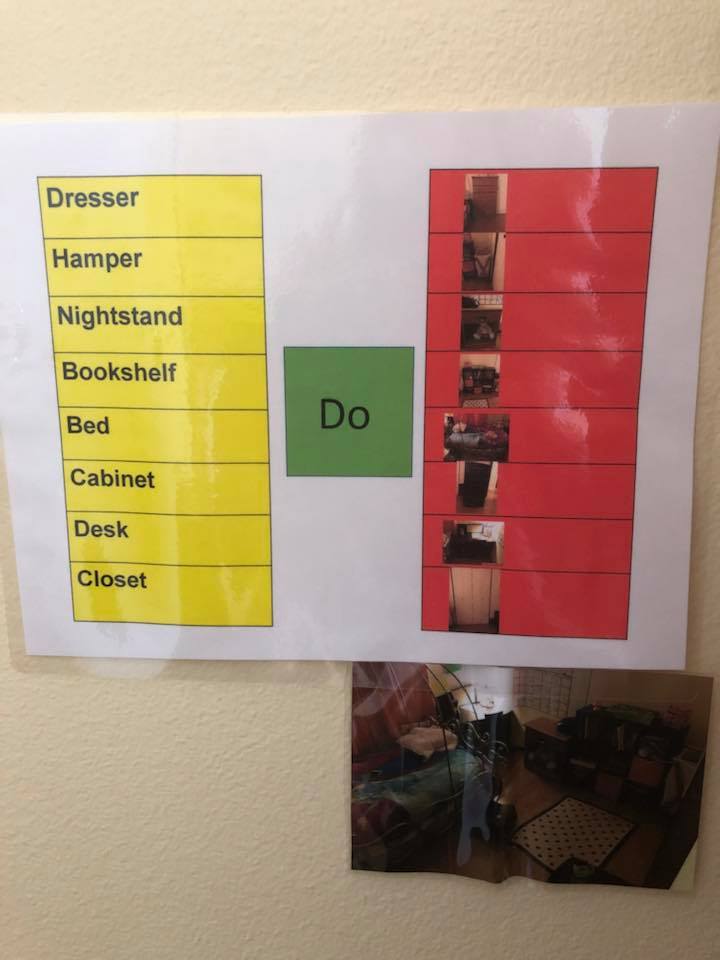
    I then created a visual schedule of each piece of furniture that she could check off as she went about her cleaning routine.
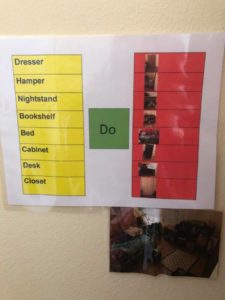
    I know it’s hard to read, but basically each furniture item is listed on the left, with a picture representation on the right of what it looks like done.  The picture on the bottom is a grand finale picture of what the entire room should look like clean after completing all of the steps for one last check.

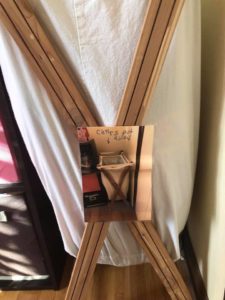
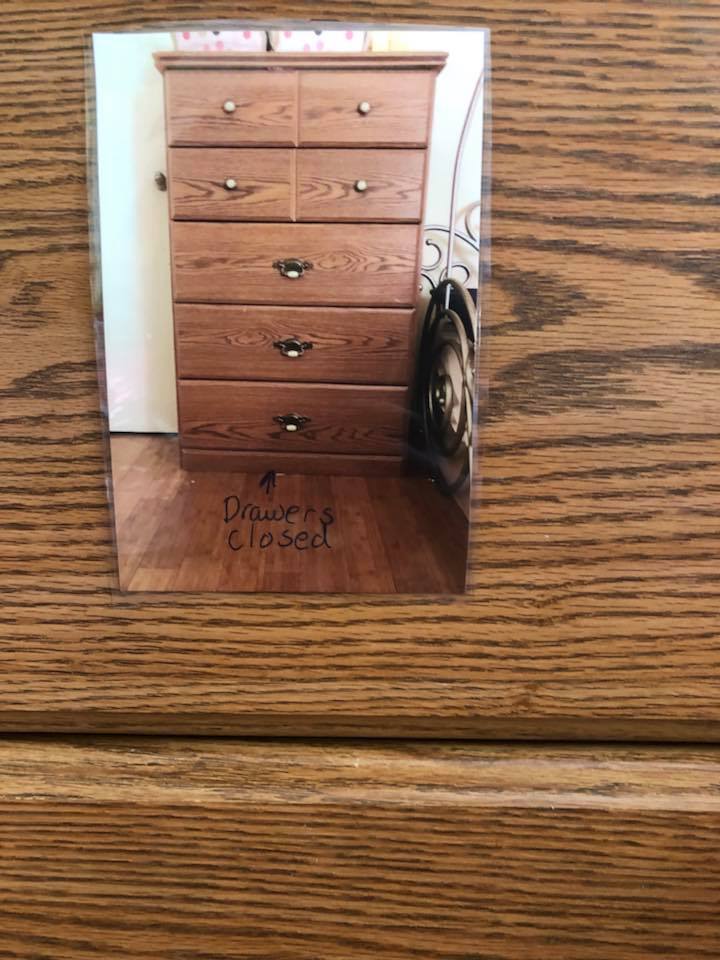
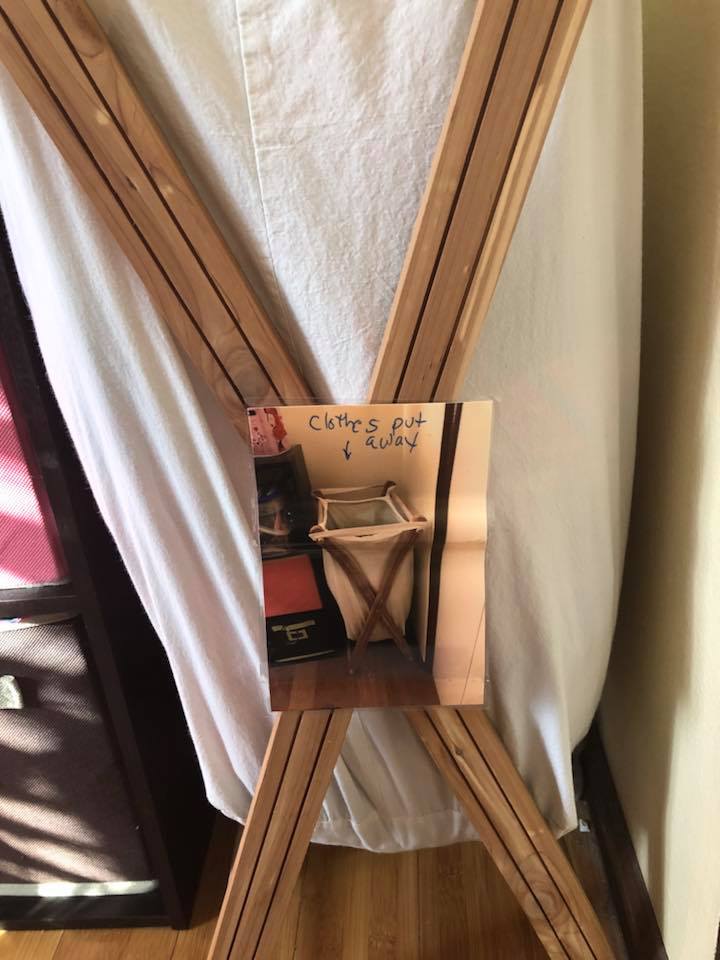
    Next up was to have bigger picture velcroed to all of the furniture items so she could see as she was cleaning them what they are supposed to look like.  I know it seems redundant, but seriously if you have a child who struggles this, then you will relate when I say that a dresser with closed drawers looks fine with clothes hanging out of it to her.  Same with a picked up hamper.  I even have a picture showing what the closet should like closed and no that doesn’t mean it is closed until it hits the piles of crap.  It means actually closed and looking neat.
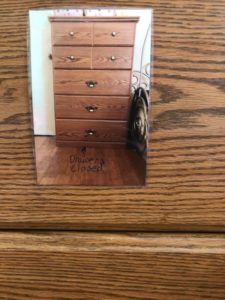


    I have to add that these helped, but still had to be taught.  In fact, it’s still a work in progress.  Some nights, I am so frustrated and just want to pull my hair my out.  I’m only human after all.  I do though, in those times, try and decompress and remind myself this is not a *fix* but a lesson.  Ashlynn doesn’t learn like other kids and that’s okay.  I have to realize though that all of this will pay off in the long run, and when we start early kids have the best outcomes.

    Homework

    Oh man don’t we hear horror stories about homework from parents of kids with varying learning differences.  Teachers make homework sound so easy.  Ten minutes for every grade you are in, so a first grader shouldn’t be more than 10 minutes a night.

    Say….what???  That assignment just took my kid an hour….and then when we went to second grade, that so called 20 minute assignment just took upwards off and on of two HOURS?  Minutes?  What?

    Know that homework can always be modified, but there are strategies that can be put in place to help with this too. Number one is to just start with a place that is going to make them successful for learning.  If you are like me, my first baby is the one with learning differences so instead of preparing for the ultimate learning environment, we were more focused on transitioning my son from a crib to a toddler bed and spent our money on that.  Needless to say, our kitchen table became her homework place.  Yes, the place that she eats and the chair in which she sits that her feet don’t touch on the ground yet is what we thought would be the perfect location for her to sit down and do that quick assignment in 10 minutes.  I should mention too it’s a thoroughfare in my house, so my kid with ADHD was also constantly distracted by the events taking place all around her.  Can we talk about set up to fail???

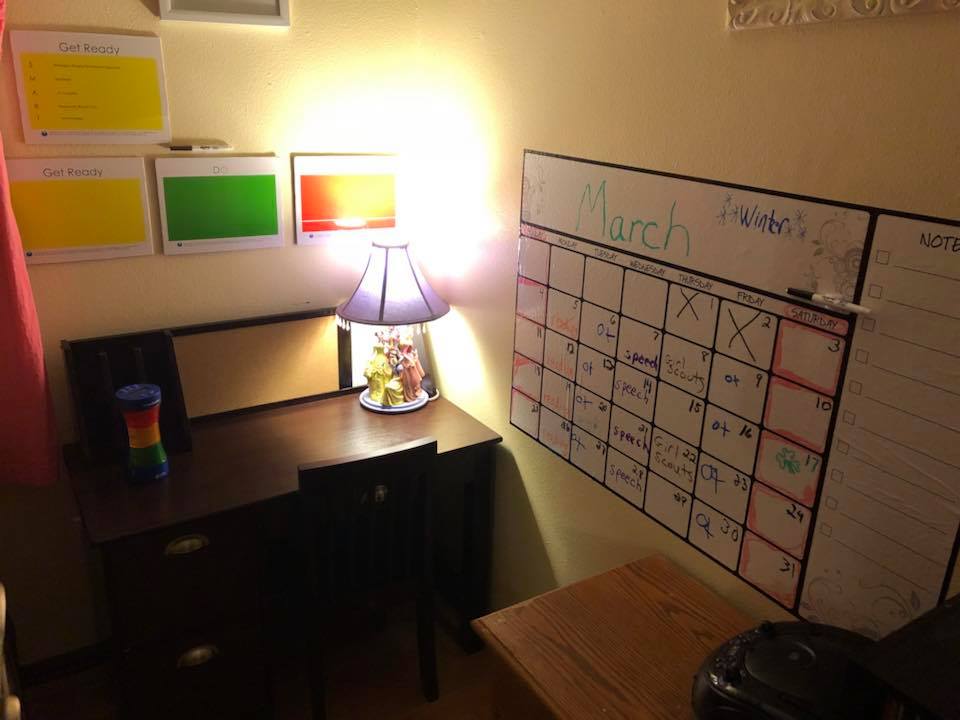
    I redid her room and created a homework corner.  I bought her a new desk in which she sat at a 90 degree angle, perpendicular to the floor, and decked it out with strategies from executive functioning queen Sarah Ward from the website Cognitive Connections.
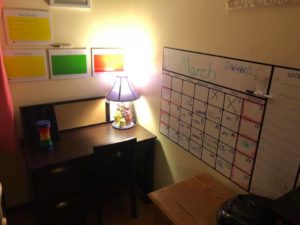
    New desk with feet on the floor

    As you can see, I have her own desk, in a corner of her own room, that is quiet and in which her feet touch the floor!

    Get ready, do, done boards

    The colored board above the desk are suggestions from the cognitive connections website.  In the yellow, we write everything we need to get ready.  It might be as simple as a pencil and it might be more complicated if doing a project.  (To modify for non-readers, you can tape or velcro pictures that you need.).

    The green stands for “doing.” These are the steps you need to do to reach the finished project.  The finished project then is the red board and reflects what the assignment looks like when it is finished.  For lower level, you can put a picture of what a completed assignment looks like, or for readers you can simply write it.  Sarah Ward also recommends to “start with the end in mind,” meaning kid with EF deficits benefit from knowing what the end is supposed to look like and then working backwards. For a more elaborate description, go see Sarah Ward talk.  She’s amazing.

    Calendar

    We have tried a few different things to help Ashlynn learn time, and I’m not just talking time management.  Ashlynn has had a lot of difficulty learning the seasons, days of the weeks, the months, and understanding the difference between yesterday, today, tomorrow, last week, next week etc.
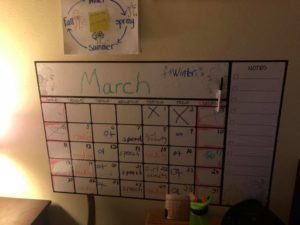
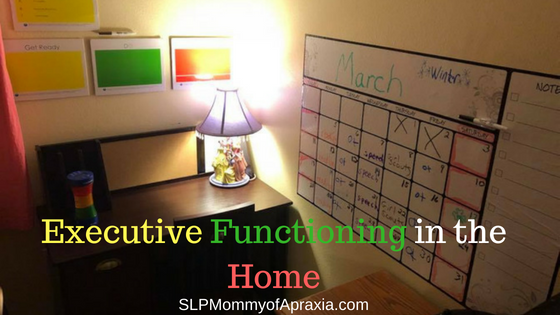
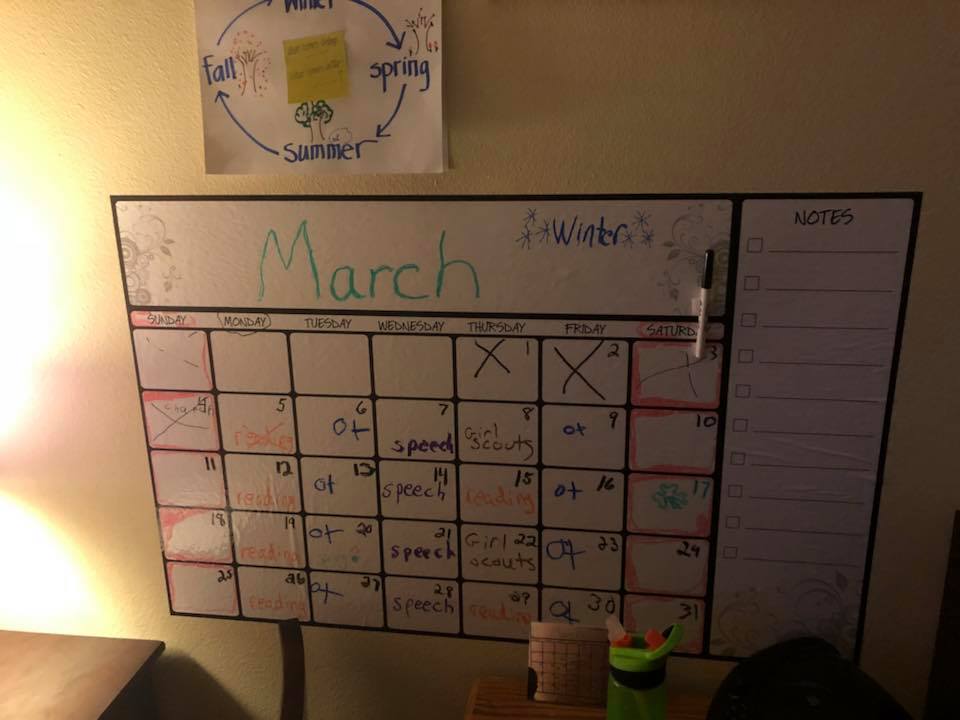
    I decided to buy this peeling dry erase calendar at target.  It’s huge and sits right by her desk.  Every month, she helps me write the month and the days.  We then go through and write her therapy/activity schedule and color code them.  Each activity is written in a different color.  The weekends are shaded on red since she has a difficult time understanding that Saturday and Sunday are one unit (the weekend) when they are split up on a normal calendar.  We then marked an X for each day that had passed and talked about yesterday and tomorrow.  This calendar has been AMAZING.  I might be so bold as to say it almost helped her understand days of the week right away.

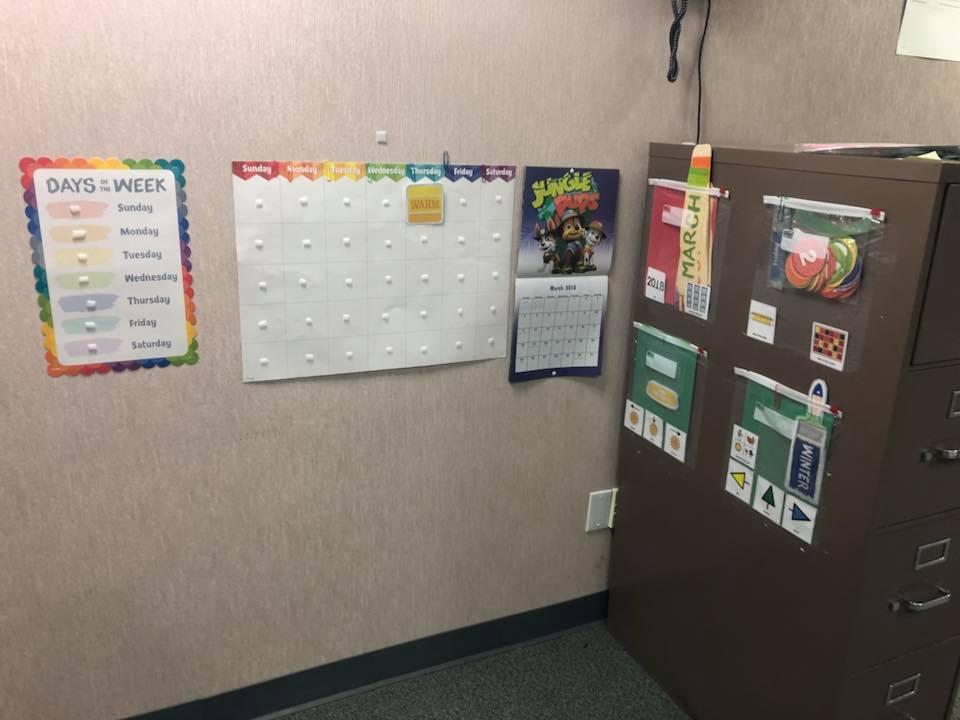
    Her school though also hit this hard visually and created the following corner in the SPED room just for her.
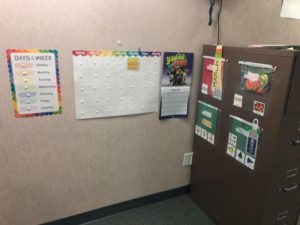
    This picture is also hard to see, but basically you see the basic calendar color coded by day in the middle.  To the left, each day of the week is color coded.  On the file cabinet on the right, the months are placed and she has to pick out the right month each day for added repetition.  The days are in the second bag, and there are tiles for the season and then arrows to talk about the concepts yesterday and tomorrow.  A normal calendar was provided as a reference to keep track of how her modified calendar related to a typical calendar.

    Timer

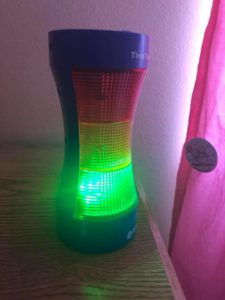
    Last to come is the timer I used for all of these tasks!  Time management is another HUGE skill that is difficult for those with EF deficits.

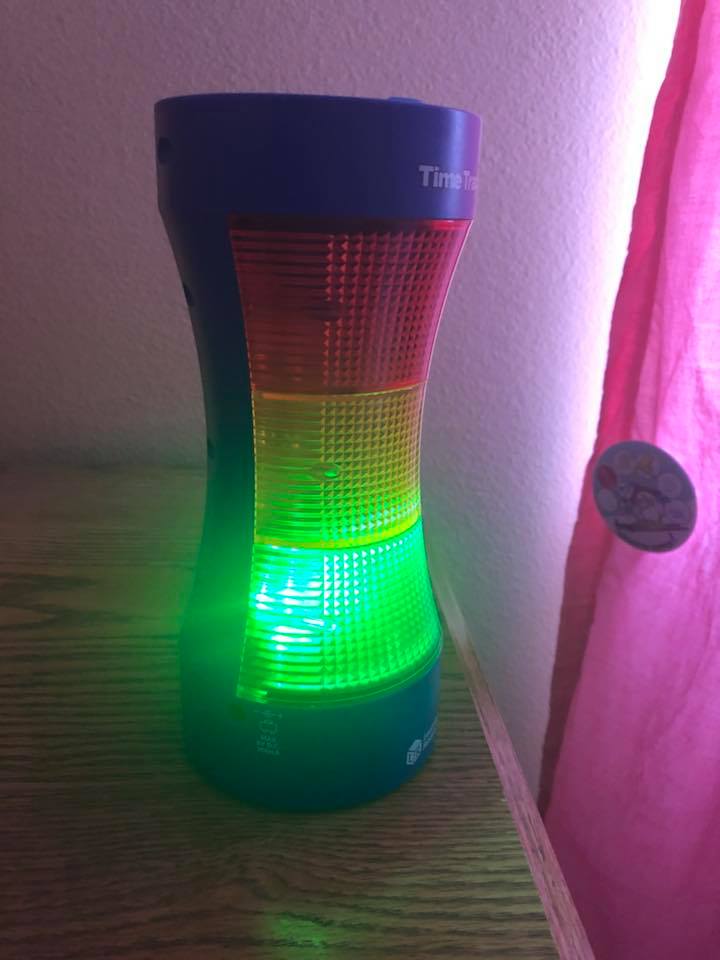
    The timer is from the autism community store here in Denver, but I’m sure you can find them on Amazon or other places.  This timer is amazing!!  The colors stand for different things similar to a stoplight.  Green means go, yellow means caution you are nearing the end, and red means you need to be done or stop NOW. What is best, is that each color is completely customizable by time.  For her morning routine, we usually set it for 3-3-3.  For homework, it might be  2-20-2.  Did I mention it also comes with sound?  So that means every color it changes to also has a sound to go with it, aka, an auditory cue.
    The impact

    I have to admit, there were times that as even I were making all of these materials and buying all these things that I wondered will this really make a difference?  Was all this work really worth it?? My answer came from Ashlynn.  As I was making these visuals, she probably thanked me more than 10 times.  She knows how she learns.  She was just waiting on me to help her.

    Laura Smith is a mom to two children, one of which who has multiple learning differences.  She is also an SLP (speech/language pathologist) specializing in CAS (Childhood Apraxia of Speech), a passion that was fueled by her daughter’s dx in 2012.  To learn more, visit slpmommyofapraxia.