Category: Apraxia

  • Accuracy of IQ scores with global apraxia

    Cognitive testing, psychological evaluation, IQ, psychologist, neuropsychologist.  What do all these have in common?  What do they have to do with a child who has a speech delay?  What does it matter?

    Tests of intelligence, commonly referred to as “cognitive” testing in the schools, are standardized measures usually administered to children as part of a complete battery of testing a child will receive when being considered for special education services (including just speech).

    Ashlynn never had a cognitive test administered when she was first found eligible for special education services because she was so young.  She is now five, and it is her three year review.  As part of the battery of assessments, the school district is really pushing for a cognitive assessment.  I’ve been hesitant for multiple reasons.  This article on apraxia-kids.org Special Considerations for Psychological/Educational of Children with No Speech or Unintelligible Speech  sums up my main fear.

    “The first thing to keep in mind when testing children with significant speech delays is that most standardized tests of intelligence will either be inappropriate or of questionable validity.”

    Apraxia of Speech definitely fits the bill in the definition of “significant speech delay.”  In the schools, at least in the districts I have worked in for the past ten years, the test of choice remains the WISC (Weshler Intelligence Scale for Children) and the WPSII (Weschler Preschool and Primary Scale of Intelligence).  These tests are great and provide a lot of information about how children learn.  However, as the article points out, they would “at best, provide a crude comparison of a child’s ability in certain areas.”  I would also add, that if a child has GLOBAL APRAXIA, meaning motor planning issues effecting the entire body, they are at even MORE of a disadvantage.  There are visual scanning and visual motor components that will obviously come out low if the child is still in OT working to improve these skills.  There are fine motor and  pencil/paper tasks that will also come out low if the child is still working to improve these motor skills.   To be blunt, I don’t think they are many subtests that could be validly assessed when a child is globally impacted.   Which leads to my second fear that again this article sums up nicely,

    “The second consideration (and most important), is that these types of tests should never be used to make predictions about a severely language impaired child’s eventual functioning.”

    I want to laugh, and this is really NOT funny.  I want to laugh because unfortunately this DOES happen ALL the time in the schools.  It’s sad to say but I hear this statement quite frequently, “Well, he’s performing to his potential.”

    Yep friends.  It’s not like I’ve heard this once.  I’ve heard this so, so, soooooo many times over my career.

    Now, it’s not all bad.  If the cognitive assessment is an accurate reflection of the child’s abilities, then it is important that we are not pushing a child to do something that they just cannot do.  It’s not fair to the child.  It causes stress, it makes them feel stupid, and many times they feel like failures.  Accepting a child where they are at is important.

    However, if the score is inaccuratethis is also not fair to the child.  That is why these types of tests should never be used to make predictions about the child’s eventual functioning……but as I’ve just explained, they are, more frequently than not, at least in my experience.

    So, what do we DO about this?  Well that certainly has been my dilemma as of late.  I can tell you what I am doing.  If the school pushes to test, then I will talk to the psychologist and make sure a nonverbal test of intelligence is administered.  I do not want a test that has a verbal section.  Period.

    I am going to take Ashlynn to a neuropsychologist for testing.  A school psychologist is trained and qualified to assess cognition, but they do not have the advanced training in neuropsychological and cognitive testing that a neuropsychologist does. Why is this important?  Well, I personally think a psychologist with more advanced training in neurological disorders and subsequent testing will yield more accurate results.

    Lastly, I’m still going to be Ashlynn’s biggest fan, the one who has her back, and the one in her corner.  I know her potential and I’m going to make sure she always knows it too.
    10959359_380345585480442_7809582703136476705_n

  • Why nature weighs more heavily than nurture

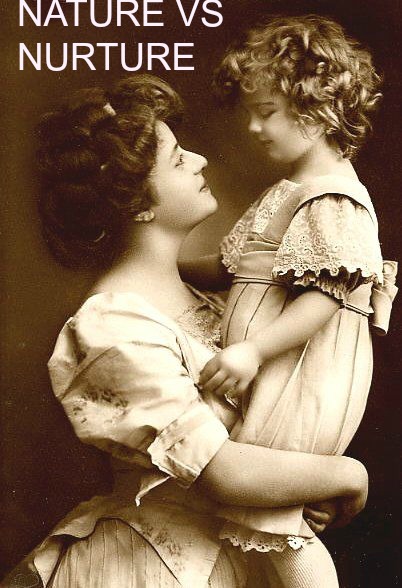
    Why nature weighs more heavily than nurture

    Nature versus nurture.  It’s a phrase that comes up in my profession, even if it’s unspoken.  I’m in the business of child language development, and nothing raises more eyebrows about nurture than a child who can’t talk…. or who has poor vocabulary knowledge…… or is lacking in language skills.

    Oh it comes up in psychology too.  We’ve all heard the stories of twins separated at birth and raised in different environments.  How do they turn out?  Are they a product of their environment, or did nature play a bigger part?  I don’t really know the answers to those particular studies except what I’ve seen on talk shows like all of you.

    However, I’m here to talk about speech and language development.   I’m a professional in it, but nothing could have taught me more about nature versus nurture than having two of my own children.

    Maybe that’s why it took me until my daughter with CAS was almost three to get tested.  Was I in denial?  What the heck?  Well,  I’ve seen the eyebrows from fellow colleagues about children I’ve treated.  I’ve been privy to the comments, “well, his parents just never read to him!” or  “they just don’t talk to their children” or “those parents anticipate all of his needs that he has no NEED to talk.”  So yeah, I’m pretty sure THOSE comments were exactly why I waited so long.

    Deep breath.

    Teachers and speech/pathologists, we need to talk.  This talk is cancerous.  If only you KNEW what a parent who has a child with delays goes through on a daily basis, you would instantly take back your words.

    I am a speech/language pathologist, and had been practicing five years prior to the birth of my daughter.  I might have been unknowingly pompous once.  Let’s face it, I was.  I was convinced my first child, my daughter, would come out practically gifted.  Heck, I had a master’s degree in childhood language development and disorders.  If anyone could give their child the upper hand, it was going to be this mama.  I remember when she was very young, maybe a month, I had a red and green light rattle that I would slowly move around her visual field.  I even think I wrote on facebook I was having withdrawals from my job and was just doing some “speech therapy” with my child.

    I remember cooing at her, using “motherese,” talking to her while I went about my activities, and even using baby sign with her paired with visual models each time she went to “eat” “drink” or wanted “more.” I remember locking toys out of reach so she would have to request them, demanding some sort of verbal response before she received anything of interest, and having her use AAC on my iPad. We (I) sang nursery rhymes, sang our ABC’s, and had letters all over the house like in the bathtub and on the fridge.  I read religiously to her EVERY, SINGLE, NIGHT.  She was going to be a prodigy.  I just knew it.

    It pains me to write her whole story in this post.  I have an entire blog for that.  Suffice it to say, things didn’t quite turn out as I had envisioned.  Her SLP mama who knew the tips and tricks didn’t seem to know the key to unlocking her voice, or her other motor skills.  Despite nightly therapy sessions, it seemed I was to be the only SLP on the planet who had a child who couldn’t talk.  Who I couldn’t TEACH to talk.  Despite going to work everyday and helping my students find their voice, my daughter struggled with hers.

    Despite throwing myself in research, attending conference after conference on early intervention, or consulting with my colleagues, my daughter STILL struggled to speak.

    I’ve come a long way in this journey, but let’s just say my guilt and feelings of failure for Ashlynn were so strong that I specialized in the disorder.  I love what I do, and I love CAS, but I thought at least if I were a specialist I could finally and truly say I really did EVERYTHING I could to help her.

    “You’re an SLP” you might be saying.  “I have parents who don’t care like that.”

    Let me just tell you, that your parents are now MY parents and I have treated many kids with CAS….and I can tell you with absolute, positive, and definitive truth, that EVERY mother feels or has felt like me.  They may manifest it in different ways, but isn’t that to be expected?  We are all individuals after all.  However, every mother I have met is worried.  Every mother I have met is a praying woman.  Every mother I have met feels helpless.  I felt helpless and I’m a speech pathologist!!!

    My dear colleagues, I don’t want to get another phone call from a mother in Arizona who has a bubbly voice and seemingly carefree personality, confess that despite every night that she lays her head on her pillow pleading with God that her child gets better and praying it was nothing she did, the SLP told her if she had just read to her daughter more, she would have been in a different position.

    This is not okay.

    If you don’t believe that mother, than believe me.  I have finally come to terms with the fact that nothing I could have done would have made my daughter talk on time.  Please, please, don’t add to that mother’s guilt.  I assure you, she is full to the brim already with it….despite the fact there is nothing she could have done.

    I have another SLP mommy I have met now with a child who has CAS get a note from an SLP that stated,”still remains delayed despite excellent familial support.”

    That statement, seemingly benign, implies that that SLP believes nurture plays more than nature, and she is having a difficult time reconciling such delays that are accounted for….GASP…..an actual disorder.

    Friends, speech and language disorders are your livelihood.  Please stop assuming nurture played more of a part.  My son was born in the midst of my daughter’s diagnosis.  He never received the FRACTION of therapy my daughter did, and he said mama at 8 months old.  He went onto to say and do things that left me speechless.  Not  because I doubted him, but because based on my experience with my daughter with global apraxia, I didn’t have to TEACH him any of it!  Time after time, I shook my head asking him, “how can you say that?” or “how can you do that?  I haven’t taught you that yet!”

    If this journey has taught me anything, it’s that speech and language delays really ARE an actual disorder like we all learned in graduate school; and SLP’s, your role couldn’t be more important.  Please don’t taint it by coming in with an assumption “if only they had…..”

    Come in with the assumption that “they have….and they are spent.”  Please, please be the parent’s champion as much as you are the child’s.


    nature vs nurture


  • She observes more than we know.

    It started with the name disintegration at Thanksgiving.  My concerns about her writing were brought up to the staff as she flitted playfully around her preschool room while we talked.  I cried and I made tough decisions.

    She noticed.

    I didn’t know it at first.  It started out innocently with her asking when she would see Dione (her private OT) again.  I told her I had to apply for more funding and then we could see her.  I figured that was the end of it…..but it came up again.

    ” I need to see Dione,” she said again randomly one day.

    Me: “Oh I know honey, I’m still waiting on funding and hopefully we’ll see her soon.”

    Weeks passed.

    Again out of the blue she says one day, “Mommy.  I NEED  to see Dione.”

    Me: “Oh sweetie, I know.  Hopefully soon.  I applied and now I’m just waiting to hear back.”

    Crying.

    “MOMMY!! BUT I NEED TO SEE HER.”

    Me looking confused, “honey, what’s wrong?  why?”

    Ashlynn talking through tears, “because I need to practice my yetters (letters).”

    With my heart breaking in two I give her a hug.  I tell her that her letters are perfect, and that she always works so hard and she has nothing to worry about.

    That got me thinking though.  I am the FIRST one to defend her receptive language, her comprehension.  However, apparently I’m also the first one to talk about heavy things in front of her and just assume she was too busy being a kid to notice.  Not true…..apparently.

    Fast forward a month.  Her dad had a bad day at work.  Nothing catastrophic, but a pretty tough day. I was relaying it to her grandma (her dad’s mom) one day when she dropped her off for me to take Ashlynn to school.  Ashlynn seemingly oblivious, was playing on the curb and sidewalk, jumping down, climbing up, being a kid!

    I took her to class and the kids have to “check in.”  They get their name and place it under a feeling picture.  Ashlynn ALWAYS picks happy.  She is happy!  However, today, she placed it under sad.  “Ashlynn” I say, “you put your name under sad?”

    “Yeah, I sad mommy”  she said.

    “You’re sad??  Why?” I asked.

    “I sad for daddy…for his work,” she said.

    I absolutely folded.  What’s worse, I would have never known she felt sad about what I was telling her grandma if she hadn’t of “checked in” right after that.

    Are typical kids able to express these feelings, or do they just stuff them too?  Stuff situations they don’t understand, or is it because of Ashlynn’s apraxia?  My mom made a good point that Ashlynn would have probably brought it up “out of the blue” eventually like she did her OT and letter concerns.

    Maybe.

    I don’t know.

    All I know, is my child is so much more than you see, what I see, what anyone sees.  A five year old shouldn’t have to worry about needing help for writing, or worry that her daddy had a hard day at work.  It makes me wonder what else she worries about of which I have no idea.

    I love this meme: “Don’t underestimate me because I’m quiet.  I know more than I say, think more than I speak and observe more than you know.”

    I will try to never underestimate you again, Ashlynn.  You were born to move mountains.

    thinks more

  • Strategies to promote speech and language in the pre-verbal or minimally verbal child with Apraxia

    Strategies to promote speech and language in the pre-verbal or minimally verbal child with Apraxia

    The great thing about speech and language, is that it a task that can be worked on in any activity.  Familiar routines in the home provide the perfect platform for encouraging speech and language, because this “routinized language” is predictable and context based.

    A fellow SLP and mommy of apraxia, Kim from Landonjourney.blogspot.com and I teamed up for Part I in my series of parent strategies to promote speech at home.  We wrote a list of some of the most effective strategies to encourage early speech in the pre-verbal child, including those with Childhood Apraxia of Speech (CAS).  Part II in the series will focus on strategies for the verbal child with CAS.

    Parents ask a lot, “How do I get my child to practice speech at home?”  Well, we are here to tell you, you don’t need worksheets and flashcards.  Basically, with kids who are minimally verbal, we look for opportunities to model and encourage functional language.  Functional language refers to language the child is more apt to use frequently throughout their day, or may be highly motivating to them.

    With kids who have apraxia, not only do we think just about functional language, but words that also contain simple syllable structures.    These are some of our favorite strategies and targets and how we incorporate them:


    Powerful motivators:

    As moms, Kim and I know that when you have a child who is nonverbal, you anticipate their needs for them.  After all, our babies can’t tell us when they hurt, or where they hurt if they are crying.  They can’t tell us they’re hungry or thirsty; and if they have global apraxia like our kids, they may even have trouble pointing to communicate to us that way.  However, as SLP’s we know that kids need to be motivated to communicate.  If we keep anticipating their needs, they never have a reason to really force themselves to try at something they know is hard for them anyway.   As the parent, you are truly the best person to encourage them to try, even when it’s hard.

    Teach and pair signs with a verbal model:

    Some worry that teaching sign will inhibit speech; however, as long as you make sure to always pair sign with verbal models and give verbal reinforcement after the child uses a sign, sign language can be a powerful bridge to helping the child say it once they begin speaking.

    • “help” “more” “go” and “bye” are good beginning signs to teach. Always provide a verbal model when you sign to your child, but encourage your child to sign, and reinforce any attempt by repeating the word and modeling the sign before giving your child what they want.

    Cloze activities:

    • Cloze activities are great for our kids with CAS because their mouth/body gets ready to respond, and the response is familiar. It reduces cognitive allocation and helps get the motor plan “set.” We do cloze for everything.
      • “Turn the music (pause) ” on, and wait for “on.”
      • “Ready, set (pause)” go!  We do “go” at every green light and I start the sentence and he tries to finish it. This has helped him feel more success at speaking “on command.”
      • “One, two _____” three!
      • Sing nursery rhymes and pause before the last word.  Ashlynn and I would sing “The Itsy Bitsy Spider” and “The Wheels on the Bus” and I would pause before some words that had simpler syllable structures.  For example “down came the rain and washed the spider (pause) out.” or “The wheels on the (pause) bus go round and round.”
      • Read repetitive story books, pausing before the predictable repetitive words.  To read more about repetitive books and to get a free download on how to use them visit my on repetitive books that are great for apraxia.

        • Keep reading for more cloze ideas. 

    Require your child to respond to your yes/no questions:

    • assessing your child’s understanding (i.e. Do you want to go outside?) can often be done with simple yes/no questions before your child is verbally able to respond more.
      • I require my child to answer yes/no questions in anyway he can. Before he could nod/shake his head (difficult for motor planning), I modeled the response based on how I knew he reacted.  Do you want help? (giggle giggle). Yes (nodding my head), I want help. I had to physically move his head before he was able to do this. Now, I will say “yes” or “no” and wait.  This has also helped my son to be able to say yes/no, and they are words we have targeted often. 

    Focus on functional words:

                (These are some of our favorites, but individualize them for your child!)

    1. Bye-bye

                * Bye bye is good because it can also signal the end to an activity if the child cannot say “more.” We say bye to each activity, place, and even to our toys at bedtime.  This works on the motor planning for waving, and then saying bye bye.

    1. In

                * Emphasize each time you put them in: bed, the bath, car-seat, highchair, stroller, park swing.

    * Model when pouring a drink in their cup etc.

    1. Out

                * Emphasize each time you take them out of: crib, bath, car-seat, highchair, stroller, park swing

    * In the kitchen, model each time you take food out of a container, the fridge, a cupboard.

    * In the bathroom, model when squeezing out: toothpaste, shampoo, tissue, diaper wipes, etc.

    1. On

    * Emphasize each time you put music on, water on, lights on.

    * In the bath, “ok let’s turn the water (pause) on.

    1. Down

    * Emphasize when going down the stairs, getting them down from highchair, putting them down,                                       when something falls down, playing “Ring Around the Rosie,” etc.

    * Use a cloze procedure here too, “uh oh! The cup fell (pause) down.” Or “We all fall (pause)                                                down.”

    Again, these are some of our favorites, but work with your SLP to determine your own that work for your child.  Other suggestions:

    Uh oh

    Hi

    Nigh-Night

    More (Mo)

    Child’s age

    Mama

    Dada

    Put

    Done

    Do

    Set activities to song:

    • Based off of research done with melodic intonation therapy, music can provide a bridge to stimulate language.
    • Have fun and make up your own silly songs set to melodies you already know, to make it easy.
      • During bath time, I would sing a body parts song to Ashlynn set to the tune of “Mary Had a Little Lamb”:
        • “Now we’re washing Ashlynn’s hands, Ashlynn’s hands, Ashlynn’s hands, Now we’re washing Ashlynn’s hands while we are taking a bath.”  You can use a cloze procedure here too: “while we are taking a (pause) bath.” 
    • To get on demand phonation, something that is hard for our kiddos,  set songs to Row, Row your Boat and change it to:
      • Row, row, row your boat, gently down the stream, if you see your feet, don’t forget to scream. For my son, this song works to assess areas that he often can’t tell me/show me on command, but in a song, he gets his body ready and is more interested/able to do so.

     Repeat and reinforce spontaneous utterances.  

    • If your child says a sound or word, try to say it back at them and encourage them to say it again.  On demand speech is hard for our kids, so getting them to imitate back to you might be easier when you first imitate something they just said.
      • Ashlynn had a “go to” sound “a dah” that she said for everything.  I would tell her, “a dah?  dah dah, dah, dah” and see if I could get her to say it again on demand.  If she did, then I would change the vowel and see if I could get that on demand, “a dee, dee, dee, dee.”  Play around with sounds and have fun with your child.  This should be a low stress activity and just seem like fun to your child.

    Praise and Encourage ALL communicative attempts           

    • Our kids know talking is hard. A little bit of praise goes a long way!

    Laura Smith M.A. CCC-SLP is a speech/language pathologist in the Denver Metro Area specializing in Childhood Apraxia of Speech.  CASANA recognized for advanced training and expertise in Childhood Apraxia of Speech, she splits her time between the public schools and the private sector.  She is dedicated to spreading CAS awareness.  Her passion is fueled by all of her clients, but especially her own daughter who was diagnosed with Childhood Apraxia of Speech.  For more information visit SLPMommyofApraxia.com  

    Kimberly Haas-McEneny M.S. CCC-SLP, mom to two boys: one with CAS and the other with suspected CAS.  Kim is a Bilingual SLP practicing in Syracuse, NY at the Syracuse City School District. She blogs about her experiences with being both a mom and SLP at landonjourney.blogspot.com

    Parent strategies


  • What exactly is CAS?

    What is Childhood Apraxia of Speech?

    Definition and characteristics

    Childhood Apraxia of Speech is a speech disorder that results from difficulty with programming, planning and sequencing the precise movements needed for clear speech.

    The American Speech/Language Hearing Association (ASHA), denotes three main characteristics that must be present for a diagnosis of CAS.

    • Inconsistent production on consonant and/or vowels in repeated productions of syllables and words.
      • An example of the word doggy for my daughter who has apraxia ended up being produced doddy, do-yee, daddy, da-yee.
    • Difficulty sequencing syllables and words of increasing complexity.
      • The child might be able to say “dada,” but when words or added like “my dada” the child might say ‘da-da-da.’
    • Errors with prosody
      • Prosody can include syllable stress, and kids with CAS might stress the first syllable in each word: BAnana instead of baNAna or may give equal stress to every syllable BA-NA-NA.
      • Can include difficulty with volume control.  This was definitely true with my daughter.  She could not be loud even when she tried in her younger toddler years.
      • May have prolonged sounds and prolonged pauses, possibly giving the child ad staccato sound to their voice

    Other soft signs that should be considered include:

    Speech

    • Vowel errors and/or reduced vowel inventory
      • May have a tendency to reduce vowels to the schwa (uh).  For example, buh-buh/bye bye.
    • Groping
      • The child’s mouth seems to make a lot of unnecessary movements while they “grope” for the correct placement
    • Loss of words or sounds that were previously produced
    • Consonant omissions in the initial position of words
    • May be more successful with automatic versus volitional speech
      • A child may say “mama” but then when asked to repeat “mah” may be unable to do so correctly
    • Limited babbling as a baby, or limited sound variation in their babbling
    • Typically comprehends much more than they can speak

     Non-speech

    • Oral apraxia (difficulty planning and executing non-speech oral motor movements
      • May have trouble blowing raspberries, puckering, sucking out of straw or blowing out a candle
    • General awkwardness or clumsiness
    • Limb apraxia
    • Low muscle tone

    Who diagnoses Childhood Apraxia of Speech?

    According to ASHA, a qualified Speech/Language Pathologist is the IDEAL professional to diagnose CAS.  However, diagnosis can be tricky, so you want to make sure you find an SLP who has experience and/or specializes in CAS.  Currently, CAS is both over-diagnosed and under-diagnosed, so don’t be afraid to ask questions to gauge your SLP’s experience and knowledge of it.  A good SLP will not mind being asked questions about their experience with CAS or answering questions related to it.

    The Childhood Apraxia of Speech Association of North America provides an advanced training for SLP’s who already have extensive experience in the disorder called the Childhood Apraxia of Speech Intensive Institute.   You can read more about my boot-camp experience here:

    What should therapy for CAS look like?

    There are many programs out there that say they are geared toward the treatment of CAS.  There is a growing body of evidence that the principles of motor learning affect the most change.  In short, you should be seeing:

    •    frequent repetitions of target sounds or words (mass practice)
    •    feedback that is specific.  The SLP should be giving them feedback such as “you’re lips were open, not closed,” rather than just “good job” “try again” or “that was great.”
    •    carefully chosen speech targets that take into account the child’s current phonetic repertoire and then practicing a variety of movement gestures (sound to sound, syllable to syllable, word to word) with these sounds.
    •    Cues – can be visual (SLP may pop her hand out for /p/) verbal (close your lips and use your humming sound), or tactile (SLP may use physical touch cues on the child like in PROMPT).

    For a great description on what parents should look for in CAS treatment, see my interview the executive director and founder of apraxia-kids.org Sharon Gretz.


    For a detailed description of DTTC, a therapy approach for apraxia, see my interview with Dr. Ruth Stoeckel from the Mayo Clinic.


    A note about the school-age population

    Since I have spent most of my 10 year career in the schools, I think it’s important to also address some symptoms SLP’s may see that vary slightly from toddler presentations.

    By the time a child with CAS reaches Kindergarten, an SLP may run into three scenarios:

    • The child who has almost resolved due to intense and appropriate early intervention
    • The child who is still struggling significantly with motor planning, and is very unintelligible.
    • The child is still essentially non-verbal

    In scenario one, a child’s speech may be highly intelligible, with only residual articulation errors evident like a lisp, or an /r/ distortion of substitution.  It’s important to review the file closely and see what prompted the initial diagnosis of CAS.  This is important, because children may have additional issues after the CAS is resolved.  With one particular 4th grader, his speech only contained persistent errors with three speech sounds; however, his sentence formulation, grammar and syntax remained very problematic.  What is syntax?  One element is to correctly sequence the words in a sentence.  If a child had difficulty with the planning and sequencing of sounds, it ‘s not far off to think he/she may also have difficulty sequencing words correctly in a sentence.  I treated him differently and used the principles of motor learning to guide his treatment, unlike my other kids with an expressive language delay that never had an apraxia diagnosis.

    Other issues may include: pragmatics, narrative language, and persistent prosodic errors.

    In scenario two, a child may be speaking but is highly unintelligible.  By this age, they might actually have a vast repertoire of sounds, and actually be able to produce most sounds correctly in isolation.  One year I had a five year old walk through my school door.  One day he took out an alphabet BINGO and proceeded to name all the letters and letter sounds correctly in isolation.  However, this kid could not string two sounds together or consistently.

    In scenario three, the child may still be essentially nonverbal.  Until the child can commit to a motor speech exam, meaning he can or will at least attempt to imitate a variety of sounds and movement gestures, a definitive diagnosis cannot yet be made.  Aside from using Assistive Technology which can eventually facilitate speech, I would recommend starting with a functional core vocabulary book you two can make together that includes highly motivating syllables or words the child can work toward using sounds in his current repertoire.  With one five year old I had, he could only produce bilabials (b,p,m) and and /n/.  We started with word and word approximations to help him be more successful:  i.e. 1. no 2. bah/ball 3. mah-mah/mama etc.  Then we drilled them using the principles of motor learning that included massive amounts of repetition, involving visual and verbal cues, using specific feedback.


    CAS is a complicated disorder that is many times over-diagnosed and under-diagnosed.  In addition, the treatment approach varies from other traditional speech sound disorders.

    For resources I recommend the apraxia-kids.org webiste.  There is a wealth of information for parents and professionals.

    To find  CASANA certified SLP’s see the professional friends directory on the apraxia-kids webiste.

    Laura Smith is a speech/language pathologist in the Denver Metro Area specializing in Childhood Apraxia of Speech.  CASANA recognized for advanced training and expertise in Childhood Apraxia of Speech, she splits her time between the public schools and the private sector.  She is dedicated to spreading CAS awareness.  Her passion is fueled by all of her clients, but especially her own daughter who was diagnosed with Childhood Apraxia of Speech.  For more information visit SLPMommyofApraxia.com

    CAS


  • The Gingerbread Man Speech/Language Activity/Companion Pack

    The Gingerbread Man Speech/Language Activity/Companion Pack

    Slide1

    The Gingerbread Man is a classic story that all my kid’s love.  It is a repetitive style book, and as you know, I love using repetitive books in therapy!  The first page has some pictures to cut out and use while reading the story as props.  You can even glue them onto popsicle sticks if you’re so inclined!


    Slide3


    Next, if you’ve bought any of book companions, you know what a fan I am of sequencing activities.  This one contains one too with sequencing grid.

    Slide4


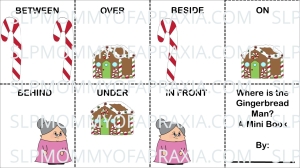
    The mini book in this unit works on “where” questions and teaching early spatial concepts.  The child glues the gingerbread men on a preceeding page in the correct places in the mini book.


    Slide6


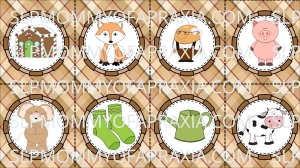
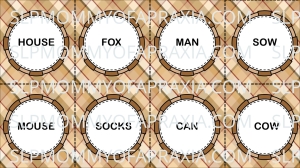
    The next four pages contain 8 sets of rhyming words in picture and written form for you kids to match or play with to work on early phonemic awareness skills.


    Slide7

    Slide8


    The last two pages have sentence stem activities for repetitive practice for regular past tense and an irregular past tense verb using the story vocabulary.Slide12

    Slide11


    To get this activity, go to my TpT store!