Category: Apraxia

  • Tips for carryover in Childhood Apraxia of Speech: Part 2 of 2

    Tips for carryover in Childhood Apraxia of Speech: Part 2 of 2

    We all know Childhood Apraxia of Speech is rare!  The odds then of having a mother who is an SLP?  Probably substantially rarer right?  When I first started on this journey, I knew of none.  Now I know at least 30!  We have a unique perspective for sure, and I wanted to team up with two other moms to tell you what we do in our own homes with our own children with CAS.  This is Part 2 of a 2 part series.  Our first one can be found here:

    Tips for Carryover in the Verbal Child with CAS: Part 1 of 2

    So, if you haven’t read that already, please do!  If you have, let’s continue!

    Powerful Motivators

    Sound familiar?  This was first and foremost in my last post on home strategies too.  Speech is hard!  Our kids have to not only think about what they want to say but how to say it, and that’s where we come in to help.  I can remember when Ashlynn started saying the final /k/ in the word “book” instead of substituting a /t/.  She loves books and even still looks forward to me reading a book to her before bed.  It’s a powerful motivator, and after I knew she could say “book” and not “boot,” I had her say it correctly before I read her the book.

    A huge motivator for my son too is really as simple as just saying “wow, I loved how you said your lifty sound (our reminder word for the L sound) in the middle of that word!” he gets so excited when I notice the work he puts into speaking. His face just lights up and it is so cute.  I try to do this as much as I can so that he can feel noticed for doing right instead of just maybe feeling corrected all the time.

    Motivation is an essential element for making progress and one to always keep in mind for home practice as well as during therapy with his regular SLP.  In fact, this is one of the top characteristics that I look for in an SLP for my son. He is a pretty easy-going, compliant client for any SLP, so he’ll do a lot of “work” in a therapy session without a lot of reinforcement.  While this may sound like a wonderful “problem” to have, I know that he needs motivation and reinforcement to keep his forward momentum going in his speech therapy, since we all know this is a marathon and not a sprint for kids with CAS.  We actually switched SLPs at one point because he wasn’t having fun and staying motivated during his therapy sessions with a former SLP.  I need an SLP who recognizes this critical component of therapy and want to stress its importance to all parents of kids with CAS.  For my little guy, the best reinforcement is when I get down on his level and play with him.  Having fun and playing games of his choosing is a way to keep our relationship strong, which carries over into the rest of our daily activities/practice opportunities.

    I completely agree! Therapy with an SLP needs to be meaningful, motivating, functional, and encouraging in order to work. It’s the same at home. Use the moments when your child is engaged with something they love and use that as an opportunity to get the best results.

    Praise!  Lots and Lots of Praise!

    I currently have a new young client, and she thrives on getting stickers.  When we first started, she would get a sticker for even just looking at my mouth when I asked!  As I was talking to her mom one day, her mom said something so simple but profound, “what person doesn’t like praise?”  She was right!  Aren’t you motivated to work harder at your job or help your spouse more when you get praise and you feel appreciated?  Make sure to acknowledge your child’s hard work!

    EVERYONE likes to feel successful. Children are no different. Praise becomes motivation as well so these two things really go hand in hand in my opinion. Once you start focusing on praising and positivity you will see willingness to participate increase. There was a time when I was so frustrated at my son’s eating, or lack thereof, that at the end of the day I realized that all I had been doing all day was talking negatively to him about not eating. It made the situation worse. In the morning, I started making sure I found things that he was good at in regards to eating and said things like “You are really good at using your tongue to taste food. You are my expert taste tester” I can’t say it helped him eat anymore, but it certainly made both of us in a better mood and he was willing to “taste test” more and smile at the thought of trying food instead of crying. It is no different with speech. Sometimes you just have to find the words that work best for your child. We’ve all said this a million times…it’s a marathon, not a sprint. It takes time to find what works best for you and your child. It is also important to remember that what works best for you and your child may not work best for your spouse and your child. Encourage your spouse, partner, family, whoever to find something that works for them, but don’t make them do everything the way you do it (oh and don’t forget praise for them either).We all have such different relationships and communication styles with our children.

    You two have already covered most of this topic, though I’d like to add the reminder to remember how hard our kids are working every single day, every single time they open their mouths to speak.  We witness it everyday and know how hard they are working.  We must be our children’s biggest cheerleaders.  Smile, laugh, and remember to have fun.  We’re in this for the long haul and want to enjoy our journey together as much as possible.  

    Know your cues!

    Since we are SLP’s, we already know tips and tricks to cueing speech sounds.  However, parents might not.  That’s why it’s so important parents are able to see therapy in action, whether that be in the room, or videotaped.  Most kids with apraxia respond well to cues.  Cues can be touch cues, visual cues, verbal cues, or even sign cues.  If you don’t know the cues your SLP is using, you’re probably going to be less successful at helping your child carryover his/her targets at home.  

    If the child cannot say the sound or is getting frustrated, it’s not a good target.

    If you have your powerful motivators, are using your cues, and your child is still not producing the word correctly, move on.  Ask your SLP for different targets.  Therapy for apraxia is hard enough.  Home practice should be easy, not miserable.

    If this was a post on facebook, I would try to like this comment a thousand times! Remember that old saying “pick your battles”? It applies to home practice too. They need to stay confident in order to want to keep working because let’s face it, they have to work really hard. If they stop wanting to work because something is physically unachievable at that time, you might as well throw in the towel. I sit in on every session and watch very closely to what they are doing. I make sure I am using the same verbal and visual cues that our SLP uses. This is extremely important for me in order to stay consistent, but it is also important to see how he reacts to cues in therapy so I can use that information to troubleshoot at home. Being in the room or behind a two way mirror also helps me to be able to ask questions based on what I have seen and tried at home and what I see in therapy. If something isn’t working at home, I tell our SLP. Sometimes I have suggestions on what could help based on his personality and sometimes we really have to work together to figure it out. It is a collaboration for sure.

    When there is a word or phrase that you know your child will have difficulty with, try to set them up for success to produce it correctly by giving the cues they need to say it accurately – it may be visual or verbal cues or a direct model.  If I can intercept an incorrect production, I try to do so.  The more he practices it correctly, the better off for everyone.  This applies best to emerging skills or those currently being targeted in therapy.  When your child reaches a higher level of proficiency for a skill, I will often let him try it on his own and only cue if there is an error. 

    It’s impossible to correct/cue for every speech and language error every time it happens during your daily interactions with your child.  I don’t want to present the idea that I catch and correct every error that my son produces every day because I’m an SLP.  That’s not realistic or accurate.  Early on in his therapy, and even now, when we have so many goals that need addressed, I have often felt overwhelmed when trying to work on them.  I feel the need to work on everything all the time.  It’s been helpful to me to choose one goal or one goal area to target at a time.  Right now, we’re working most on language goals and using helping verbs, prepositions, and articles (the “little” words in sentences), and those are what I cue for 75% of the time.  The other 25% are mostly speech errors on sounds that he can produce (consonant blends) or the occasional newer speech target (long vowels).  Soon, I’ll probably switch my focus back to cueing/working on speech goals (especially those vowels!) a majority of the time, and put the language goals on the “back burner.”

    It’s a marathon, not a sprint!  

    There’s that phrase again! Once our kids have finally passed the hurdle from being non-verbal to verbal, many times they rely on practiced or known “motor plans” to communicate…..which is AWESOME!  Our kids go so long not being able to say a single word despite having what they want to say in their head, I can only imagine how nice it must be to go on auto-pilot every once in awhile.  Unfortunately, sometimes their motor plans contain poor grammar.  

    The most common one I see is the child referring to themselves in third person, instead of saying “I.” Ashlynn definitely did this!  It makes sense though right?  We always teach them their name, and then when they finally get it, we are so proud.  Also, it has all the elements I just talked about right?  It’s a powerful motivator to say your name, they get lots of praise and reinforcement when they say their name, and parents probably practice this target throughout their day (distributed practice). I have many, many blog posts where I outline her sayings such as: Ashlynn happy, Ashlynn play boats, Ashlynn want muffin etc.  It took months, MONTHS, and that was with me correcting her EVERY TIME to break that and say “I” instead.  That is apraxia.  You can then only imagine how much longer that would have taken without that home element!

    Yes, once G moved into using short 3-4 phrases, this was a big milestone and so exciting!  However, those phrases were often learned as big chunks.  For example, he learned the phrase, “I like it!” but did not actually have functional use of the pronouns “I” and “it.”  He used the phrase as one unit and didn’t grasp independent use of those pronouns in other contexts or with other verbs.  However, once he did start using it, I made sure to model their use in other situations to get him to practice similar sentence structures.  I think of it as him having the motor plan for that sentence structure (subject-verb-object) and then we have to work on it growing and maturing to be strong enough to support more combinations of that sentence structure.  This “auto-pilot” scenario still occurs right now too, especially with new-to-him phrases.  For example, when watching the weather forecast one day, they predicted snow showers on Friday.  G said a new sentence, “Snow on Friday!” which was fantastic to hear!  However, now any other time we watch the weather report and talk about the rain or snow forecasted, he defaults back to saying, “Snow on Friday!” whether it’s correct or not.  Now that I know this about him, I try to intercept that automated response and repeat the correct words (“Rain on Monday!”) before he has a chance to say the inaccurate one.

    Don’t forget about Prosody!

    Prosody is sometimes referred to as the “melody” of speech.  It can include things like inflections, syllable stress, and volume.  To have an apraxia dx, children have to have difficulty with this.  When we are trying to get them to say a word correctly, we can exacerbate disordered prosody, which we don’t want to do.  Always be mindful of using varying inflections, and stressing the correct syllable when speaking to your child or having them say a word.

    Ashlynn had a habit of omitting medial consonants in CVCV words.  For example, daddy was da–ee and doggy was dah-eee.  When I would try to correct her, my first inclination is to of course tell her to say daDEE.  That is the wrong stress though for the word.  We don’t say daDDY.  We say DAddy.  Sometimes we can’t help but stress the wrong syllable, especially in the teaching phase; but it’s good to be mindful we want to move them to the correct stress as quickly as possible.

    I feel prosody is often an overlooked, but important aspect to remember with CAS. If you question if you are encouraging or modeling something correctly, try saying it in a sentence naturally to your spouse and see what kind of inflection you naturally put on the syllables in that word, then you can model it better for your child if you understand how it sounds in a natural way. I tend to say a word a little sing-songy when I’m trying to model good prosody in a word or sentence that is hard for him. For some reason, it really works for him by emphasizing the left out stress in the syllable without taking away the naturalness of it. He can hear it and model it a bit better when I do it like this, but if you have concerns on how to address it, ask your speech therapist. It can feel tricky at times. Also, my son would say things too high pitched and he still does occasionally, but we were able to come up with a system that worked for him. We color coded his high and low pitches so if he was getting too high, I would say “I heard your purple voice, let’s try saying that with your green voice instead of your purple voice.” Colors clicked with my son, but you may find using animals or something more meaningful as a voice reference is easier for your child.

    This is one of the trickiest aspects of CAS for me.  I was guilty of using unnatural prosody and stress A LOT with G, especially early on.  I wanted him to speak so badly and I was doing everything I possibly could to help.  Now that I know better, I do better. When working on a specific target, I do sometimes still stress sounds or syllables to help draw G’s attention to that sound and to help him produce it.  However, as soon as he produces the word or phrase accurately, I immediately return to normal prosody and try to elicit that immediately after.  We also use a sing-songy voice sometimes to help bridge the gap between an over-stressed isolated production and one with natural prosody.  I would say that I strategically use extra stress for omitted sounds, syllables, or words, but I try to use normal prosody first before doing this.  

    Listen and give them time!

    One of the biggest keys to success in our home is to listen. Ian needs extra time to speak, he needs to feel heard and this helps his confidence to continue to try even if he doesn’t always do it perfectly. Although it sometimes takes a painfully long time we let him finish what he is trying to say, and pause a moment before we answer, just in case he wants to fix something he missed on his own. I try to give opportunities for him to figure out and fix his mistakes on his own, and I’m not afraid to tell him if I didn’t understand something. We have always had a gesture or a word associated with a sound thanks to guidance from CAS specialists we have worked with, so if Ian forgets a sound in a word I try to first just do the gesture of the sound he missed or I do the word he may have left off of a sentence in sign language to help him remember without telling him first. Everything he has learned (from signs/visual cues to help with speech, to sounds, to words, to the prosody within those words and sentences) is still modeled heavily in our house whenever he doesn’t say it like I know he can. This is basically our everyday distributed practice. I do try to create moments to help him work on combining his new sounds with everyday speech, but for the most part I just go with the flow and most importantly I don’t give up. I guess I’m still afraid he will lose something and we might not see it again for months, or that he will get used to saying something that he already can say correctly the wrong way and have to start all over again, but whatever it is we never stop using everyday situations as practice. I’ve had to learn the hard way that thinking he has something mastered doesn’t mean I can give up correcting it. There have been times when his ability to speak correctly and efficiently waxes and wanes. I’m hoping it changes where one day he won’t need my help at all, but for now I can never let myself get lazy with helping him progress to the best speaker he can be and that’s why we use everyday moments to practice speech and not just ten minutes at a time.

    I couldn’t agree with this more!  Ashlynn needs a TON of processing time.  As much as we work on speech, I also make sure to step back and just wait for her to finish a sentence or a thought.  She also has crippling word finding difficulties and though it’s tempting to want to fill in the blank or give her a word, I wait for her to try and come up with it herself.  If she can’t, I also use sign cues like Nicole, or I give her the first sound and see if she can access it on her own.  

    While it’s true that all kids need time to accomplish something new on their own in order to feel independence and pride, this is especially poignant for our kids with CAS.  They often need extra time to formulate their replies and get their mouth to cooperate with what their brain wants to say.  I try to give G this extra time at home, in his safest environment, so he can build his confidence and skills to use his speech in the more hectic “real” world outside our home.  When listening to G, I too let him know when I do not understand what he’s saying and give him as many opportunities as possible to repair that communication breakdown (e.g. repeat, re-phrase, gestures, answer questions).  

    When thinking about G and his speech therapy goals, it’s so important for me to remember to “give them time.”  Some days, I feel discouraged about G’s speech and language skills and that I should be able to do more for him.  When this happens, I try to think about what he can do now compared with 6, 9, or 12 months ago.  Of course, those gains don’t come without a whole lot of work from him and us, but the progress is there, and he will keep making it, because we won’t give up.  

    I can’t thank Nicole and Kimberly enough for joining me on this journey and for guest blogging today.  When I had this vision for this blog post, it could not have been nearly as in depth or insightful as it is without their input!  Our children continue to make progress.  YOUR child will continue to make progress with the right elements and correct therapy approach.  
    mommy-2Band-2BashlynnLaura Smith M.A. CCC-SLP is a speech/language pathologist in the Denver Metro Area specializing in Childhood Apraxia of Speech.  CASANA recognized for advanced training and expertise in Childhood Apraxia of Speech, she splits her time between the public schools and the private sector.  She is dedicated to spreading CAS awareness.  Her passion is fueled by all of her clients, but especially her own daughter who was diagnosed with Childhood Apraxia of Speech.  For more information visit SLPMommyofApraxia.com
    12483712_10102672217441924_1074570947_nNicole Quaka M.A. CCC-SLP is a licensed speech and language pathologist in the Pittsburgh area who is currently a stay at home mom to her two boys. Her background is in adult swallowing and cognitive communication disorders related to TBI and degenerative neurological disorders. However, because of her eldest son’s diagnosis with CAS she has spent the last three years dedicated to continuing education on augmentative and alternative communication, childhood apraxia of speech, and related developmental disorders.
    12476212_10153908135074903_1729160114_nKimberly Peterman M.A. CCC-SLP is a speech language pathologist in the Columbus, Ohio area who is currently a stay-at-home mother to her two sweet, active sons.  She has experience with clients from preschool age through mature adults, and particularly enjoys working with clients in the areas of articulation, stuttering, hearing impairment, and language impairment.  Since her oldest son’s diagnosis of CAS one year ago, she has devoted all of her SLP continuing education, time, and resources to his ongoing speech therapy and is grateful to be able to do so.


  • Tips for Carryover in Childhood Apraxia of Speech: PART 1 of 2

    Tips for Carryover in Childhood Apraxia of Speech: PART 1 of 2


    take 2

    Thanks to the internet, I went from feeling I was the only SLP mommy of apraxia in the world, to meeting one other, to now knowing many others!  One year ago, I teamed up with one of them to write “Strategies to Promote Speech and Language in the minimally verbal or pre-verbal child with suspected Childhood Apraxia of Speech.”  

    Today, I’ve teamed up with two other SLP moms of apraxia to write a similar post for the verbal child with Apraxia of Speech.  Nicole Quaka and Kimberly Peterman are two fellow SLP’s who have a child with CAS.  

    Many parents and professionals are concerned about home practice.  

    Somewhere along the course of my career, I picked up the advice that parents can pick a time of day for maybe 10 minutes that they can set aside for home speech practice.  The idea was that it seems practical, parents can do this, and it’s not (hopefully) overwhelming.

    The more I have now learned about apraxia of speech, I definitely don’t agree with or like my old advice. Parents are an integral part of the therapy team, especially with CAS.  Research is consistently pointing to the importance of something called “distributed practice” in facilitating carryover and generalization of speech skills.  In short, kids will make progress, but kids will make faster progress using practice schedules based on motor learning theory that include a principles such as mass versus distributed practice.

    To me, setting aside 10 minutes a day was not overwhelming and seemed very doable, but the more I tried the more I realized it wasn’t practical. To just work on speech ten minutes a day, meant I was missing out on about 12 hours of actual communication time that could also be used as speech practice. Speech homework from therapists seemed boring, tedious, and it put strain on our relationship because while the work they did in therapy was great, I personally do not have the same style as the therapist and the dynamic of my relationship with my son was much different than the way the homework presented our relationship. It felt forced and it made our communication relationship feel unnatural. I realized that we all felt better and more confident when we did speech work as it came up in everyday situations. I could teach him so much more when he was ready to learn in the moment rather than pulling him aside and asking him to do speech.

    For us, home practice is very rarely structured or a specific time set aside each day.  From an SLP perspective, the idea of setting aside 10 minutes each day to devote to home practice sounds great – like an extension of a formal therapy session or a mini session.  But now that I’m on the other side of the equation, it’s not terribly practical and it’s not what I want to be doing with my son.  We work on his speech goals all day long, weaving them into our play, our meals, our drive times – in authentic communication situations.  I’ll leave the more structured therapy approaches and practice for his “speech teacher,” while I choose to work on these same goals in our everyday routine and play.

    What is Motor Learning Theory and why does it matter?

    Research coming out of the apraxia realm talks more and more about the theory of motor learning and it’s importance in the treatment of motor speech disorders.

    As I was talking to my SLP mommy of apraxia friends, I wanted to know one day how much practice they did at home.  For me, once I knew Ashlynn was able to produce a sound, sound combination, or word correctly, I always corrected her after that….every…single…time.  That seemed a bit extreme maybe, I thought.  Turns out, Nicole and Kimberly do the same exact thing.

    It does sound extreme, but there is also a certain ‘dance’ that goes along with knowing your child and knowing HOW to correct in that moment that makes it okay. I will gently correct (or at least model the correct way) every time, however I do not do it in a way that could be embarrassing to him or that makes him feel like he failed. If I notice that his non-verbal signs are showing me he is feeling a little upset at me correcting it, I simply will model the correct way using a hand gesture that represents and emphasizes the sound he left out and leave it at that and we all move on and he, so far,  has always been ok with me modeling anytime he slips. There have been times when he has smiled and told me “no, it is this way…” just being silly. I smile and say “that IS silly isn’t it? Instead of saying it with your fat, fluffy sound you said it with your smiley windy sound.” then we both laugh, I model the correct way and move on. I don’t argue with him or discourage him. It is a fine line, but once you’ve been doing the dance for a while it gets easier.

    Yes, this can be exhausting but is necessary to help keep G moving forward.  For him, consonant blends are the skill that he has but often slips up on.  I know that he can say them correctly, so I’m always on the lookout for them – both when he has an error and when he produces it correctly.  I’ll repeat back an errored word, which he’ll often imitate correctly.  Similarly, if he says a blend correctly, sometimes I’ll elicit it again a few more times to achieve additional correct productions, and thus strengthen that correct motor plan a bit more.  I try to do this in as natural of a way as possible, working it into our conversation.  In addition, it’s just as important to recognize when to ask for a correct production and when to let it slide.  If he’s tried to repeat it back four or five times and still isn’t getting it, I’ll recognize his effort (he is trying very hard!), and then continue playing.  I don’t want to lose a genuine moment of fun by asking him to repeat a word too many times.  I’ll make a mental note to mention that skill to his SLP and/or practice it in a different way at another point in time.

    What is mass versus distributed practice and how did it work for you?

    So let me explain the quick and dirty on this.  To put it simply, mass practice is getting in as many repetitions as possible of a child’s speech targets to solidify it in the motor plan, and distributed practice is where a child practices their targets across speech sessions, throughout the day, or throughout their week to get carryover and generalization.

    We did more mass practice in addition to our distributed practice in the beginning when my son was learning how to say sounds and combine them with other sounds. This helped tremendously, but now that he can consistently say those sounds in many word and sentence combinations I try to catch him anytime he slips. I don’t want him to lose those sounds ever again. Might sound extreme, but I’m sure many parents of children with apraxia can agree that the thought of losing sounds and words that they spent so much time practicing is scarier than keeping up on it and gently correcting them when they need it.

    Even though a 10 minute speech homework session could technically be considered distributed practice in the sense that it is in a different context, it’s still in a structured activity.  Ideally, parents should be working on speech targets throughout the child’s day.  Does that mean you need to be SLP’s like us?  Not at all, but it does mean you need to have a clear idea of your child’s weekly speech targets!

    Yes! The speech therapist chose those targets for a reason and are leaving some for later for a reason too. If you have questions, ask your SLP why they chose those targets. Maybe you are seeing different problems at home. You need to keep an open line of communication just like they need to keep an open line of communication with you.

    While I view our home practice as largely distributed practice, I do sneak in small bouts of mass practice when possible as a way to help strengthen the correct motor plans for his speech and language skills.  I like to call this “seizing the moment.”  For example, if he’s in a good mood and will practice a word/phrase that he’s struggling with, we will repeat it five to six times in that moment, using funny voices and big gestures (anything fun!) for as long as he’ll play along.  This is especially true for his speech goals, like vowel sounds, medial/final sounds, and consonant blends.  A specific example is when we play Bingo, and since I know he has difficulty rounding his lips for the long “o” sound at the end of that word, we yell “Bingo!” very loudly and many times when one of us wins the game.  It’s fun for both of us and he practices that vowel sound at least a dozen times when someone wins.

    Tune into tomorrow when I post Part 2: Turning theory into practice; when three of us SLP mommies discuss what we actually do in our own homes.  A few things might surprise you! There is guaranteed to be good information for both parents and SLP’s.  


    mommy-2Band-2BashlynnLaura Smith M.A. CCC-SLP is a speech/language pathologist in the Denver Metro Area specializing in Childhood Apraxia of Speech.  CASANA recognized for advanced training and expertise in Childhood Apraxia of Speech, she splits her time between the public schools and the private sector.  She is dedicated to spreading CAS awareness.  Her passion is fueled by all of her clients, but especially her own daughter who was diagnosed with Childhood Apraxia of Speech.  For more information visit SLPMommyofApraxia.com
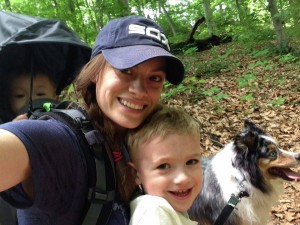
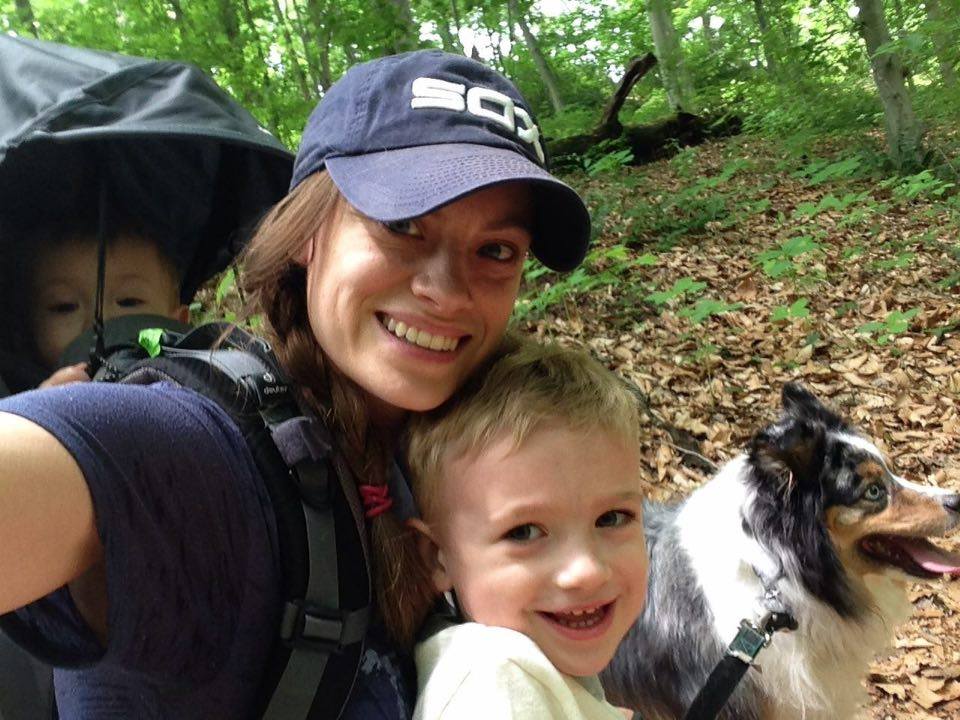
    12483712_10102672217441924_1074570947_nNicole Quaka M.A. CCC-SLP is a licensed speech and language pathologist in the Pittsburgh area who is currently a stay at home mom to her two boys. Her background is in adult swallowing and cognitive communication disorders related to TBI and degenerative neurological disorders. However, because of her eldest son’s diagnosis with CAS she has spent the last three years dedicated to continuing education on augmentative and alternative communication, childhood apraxia of speech, and related developmental disorders.
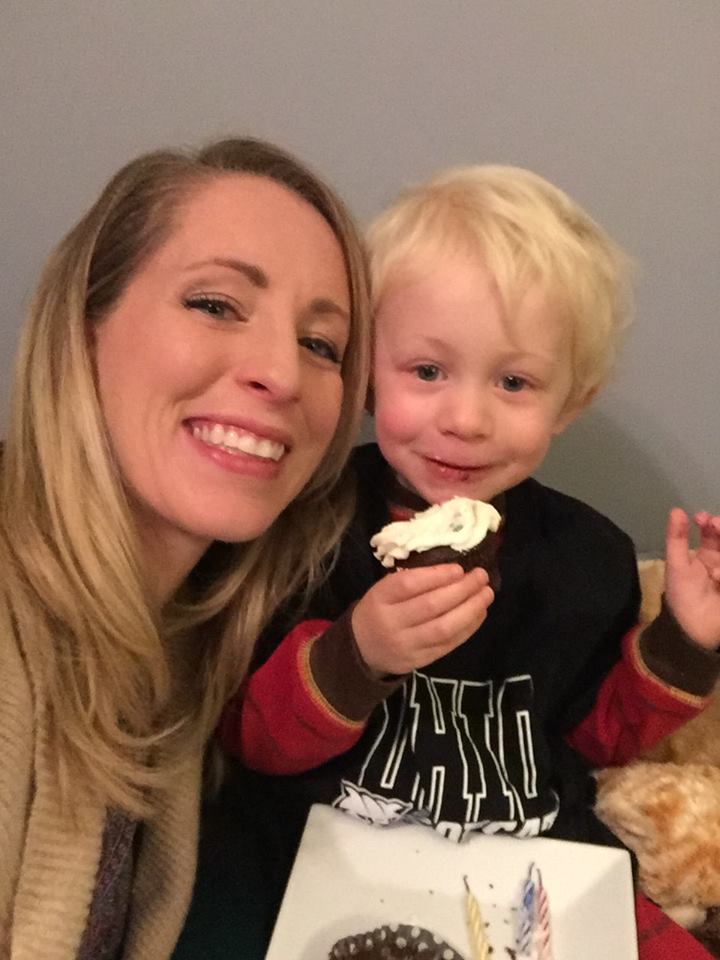
    12476212_10153908135074903_1729160114_nKimberly Peterman M.A. CCC-SLP is a speech language pathologist in the Columbus, Ohio area who is currently a stay-at-home mother to her two sweet, active sons.  She has experience with clients from preschool age through mature adults, and particularly enjoys working with clients in the areas of articulation, stuttering, hearing impairment, and language impairment.  Since her oldest son’s diagnosis of CAS one year ago, she has devoted all of her SLP continuing education, time, and resources to his ongoing speech therapy and is grateful to be able to do so.
  • Where we are at: apraxia, articulation, language

    Where we are at: apraxia, articulation, language

    It has been awhile since I posted directly about Ashlynn’s speech.  Once we all started to understand her, it didn’t seem as pressing anymore.  Her dyspraxic components (gross and fine motor skills) definitely started to take precedence.  However, she is still in speech for a reason, and that reason being percentile ranks well, well, well below average.

    Ashlynn is 6 years and 2 months.  She can say every single sound in the English language correctly, including an /r/, which is a victory for me!  If you’re an SLP you understand immediately; but if you’re not, you should know that an /r/ error is basically an entirely different monster that usually takes years to remediate.  Unfortunately, she also has a profound frontal lisp.  If you’re an SLP, again you understand immediately why I added unfortunately; but if you’re not, you should know that a lisp is also an entirely different monster that takes A LOT of time to remediate.

    Though I am paying for private therapy, a lisp is pretty low on the priority list.  She is understood in most contexts with varying communicative partners.  You might ask, “What is she in speech for then?”

    Oh baby, that is a loaded question.  We are called speech/LANGUAGE pathologists for a reason.  Where there is a speech delay (referring to sound production), there is frequently a language delay.  Language runs the gammit from receptive (what you understand), to expressive (what you say).  Expressive language includes but is not limited to: vocabulary, grammar, syntax, narrative language, and word finding.  Ashlynn has deficits in EVERY…SINGLE….ONE of those language areas.

    Her “speech” goals span the spectrum of just understanding complex directions and sentences, to actually producing sentences with a variety of nouns, verbs and adjectives.

    There is a physical therapist overseas who is marketing a therapy strategy that is supposed to be amazing for apraxia.  He doesn’t understand the uproar about a PT marketing therapy for a very specific and misunderstood speech disorder like apraxia.  May I direct your attention to my above statement about us being language therapists too.  He may have found some style that helps speech sound production, but is he the guy you want when your child has a low vocabulary?  Struggles with word finding?  Can’t get pronouns or tenses straight?

    Um yeah.  Probably not.  He won’t have a clue what to do, and an SLP will be automatically incorporating these elements into therapy.  Oh, but I digress.  That’s another topic!

    So for Ashlynn, she is working to her expand her vocabulary using more verbs and adjectives, but also to make sure she is using the correct pronouns, verb tenses, and temporal concepts (tomorrow, yesterday, last night etc).

    Word finding is a huge piece, but also vocabulary.  Vocabulary encompasses skills such as describing, defining, telling how two things are alike or different, categorizing, etc.   We are working on it though.

    Pronouns are getting better after correcting her for at least a year.  She knows the difference, but when she is speaking she messes them up. She is doing pretty good with subject/verb agreement and using present and regular past tense, but still needs to work on irregular past tense.

    Receptive language is also low.  I’m hoping we will see this improve as she is on her attention medication now and better able to focus.  She knows most of her positional concepts, but other ones like farthest, widest, etc are more difficult.  She knows the difference between all wh? questions (what, when, where, who, why), and can answer basic questions; but she is lost as they become more complex, particularly with a book that contains a lot of text.

    Oh and I forgot to mention phonemic awareness.  She is stuck at around 50% accurate for identifying rhymes and initial sounds.  Her SPED teacher is using both whole language and phonics approaches for her reading.  Edmark is a program that she uses and I have seen amazing progress with in regard to her other students, so I hope Ashlynn will be the same.

    Sometimes it’s a blessing a curse because I feel like I know too much.  I know her deficits, and I know if not remediated, what additional deficits they will cause.  I also hate that lisp, but seriously, priorities.  Everyone can understand her…..lisp or not, so that’s going to wait.

    Her next IEP will be this coming Spring.  I’m looking forward to all the growth she will make between now and then. We’ll keep on keeping on, and I’ll believe, like I always believe, that great things are waiting to happen.  When we look for negative things, we will find them, but the opposite is true too!  Here’s to 2016! Cheers!

    20160101_154202544_iOSAlways-believe-that-something-wonderful-is-about-to-happen

  • SLPMommyofApraxia Top Posts of 2015

    SLPMommyofApraxia Top Posts of 2015

    Untitled
    Graphics by MyCuteGraphics

    This year was definitely a big year for me and for apraxia awareness!  I coordinated the Walk for Apraxia in Denver, I was honored to be published in the ASHA blog and on The Mighty twice; and of course as you all know, my story on Ronda Rousey having apraxia went viral and was featured in national publications and on Good Morning America! This lead to our popular facebook group Ronda Rousey: Knock out Apraxia, and numerous posts featuring our apraxia fighters attached to the hashtag #knockoutapraxia.  It has been quite a year!

    Thank you to all who follow along, everyone who helps raise awareness, and all who have reached out via email or phone and connected to me!

    Here are my most viewed posts of 2015!

    1.) Her Fight our Fight: The day we met Ronda Rousey. Read here

    2.) Strategies to promote speech and language in the pre-verbal, or minimally verbal child with apraxia.  Read here

    3.) What is Childhood Apraxia of Speech? Read here

    4.) Repetitive books that are great for speech and language. Read here

    5.) Why nature weighs more heavily than nurture. Read here

    6.) Prognosis is not just a funny word, there is nothing funny about it. Read here

    7.) Global Apraxia, you brought your A-Game, but my daughter’s game is better.  Read here

    8.) Interview with Reagan, a 17 year old with CAS. Read here

    9.) Feed the Snowman Articulation Game for high repetitions. Read here

    10.) Interview with Sharon Gretz, the Executive Director of CASANA (apraxia-kids.org) about what you should be seeing in therapy.  Read here

    In case you missed it

    These are some of my personal favorites and topics since I started blogging throughout the years

    1.) IEP on the other side of the table chronicled Ashynn’s first IEP meeting and how I experienced first hand how difficult they are on a parent.  Read here

    2.) Ashlynn Play Boats with Daddy details persistent language and dyspraxic issues, but also progress and success.  Read here

    3.) DTTC: Evidence based treatment in CAS is an interview with national expert Ruth Stockel from the Mayo Clinic on treatment using this method.  Read here

    4.) Wait…is she the….R word? Read here

    5.) Experience is the Key Architect of the Brain in CAS. Read here

    6.) If We Don’t Say We’re Scared, Does it Mean We Don’t Have Fears? Read here

    7.) Did I Cause her apraxia? Read here

    8.) Lessons of a tricycle. Read here

    9.) ABC song and Happy Birthday Jace.  Read here

    10.) What if We Don’t Prove Them Wrong? Read here


    Happy New Year Everyone!

  • A ski slope, a girl, and global apraxia

    A ski slope, a girl, and global apraxia

    This year we spent Christmas in Utah with my husband’s brother and his family, and the day after Christmas we went up to a ski resort where Ashlynn could get a cheap lesson with the purchase of an adult lift ticket.  She has been only once before with us this year where we just had her practice getting the feel for it.

    Even though she’s only six, I really try to add additional activities like this as I can afford them, because if there is one line that has really stuck with me in all of my learning and experience with apraxia, it’s:

    Experience is the key architect of the brain

    Especially, experiences and interventions that are done early while the brain is still developing.  When the brain is still developing, you have an opportunity to rewire the neurological pathways, just like we did with speech.  Ashlynn’s speech disorder is a motor speech disorder.  It stems from a motor planning issue, which is why it requires principles of motor learning. If we could get Ashlynn to speak clearly ( and we have), we can also give her the best opportunity to live a life where she can do anything she wants to do, global apraxia or not.  At least, that’s what I believe.

    Therapies like OT and PT are necessary, but I also believe activities like swimming (which we have her in privately year round) and now skiing I know will all work together to rewire her brain.

    We knew skiing would be a challenge.  It requires balance, coordination, and well, motor planning. You know, all the things she has a disability in.  That was okay with us. We’ll start early and hopefully skiing will help improve all of those things too, even if she can’t ski.

    12376134_10206372482323489_6380600523338328549_n

    The first time we took her, my husband was so proud.  He must of carried her up a small hill close to 20 times and had her stay on her skis and just slide into his arms.  She fell a lot, but she was happy and smiling, and just the fact she could stay up a lot of the time too was amazing.  It’s amazing because we have seen her work so hard to do any gross motor task.  She was significantly delayed in walking, running and jumping.  Once she could walk she still fell CONSTANTLY and that lasted well into her third and fourth year of life.  Any terrain change or objects in her path, and she would immediately hit the pavement.  I don’t know what we expected for her first time, but I don’t think we expected her to be able to stand up at all.

    We were wrong, and our hearts swelled with pride.

    So back to this trip.  Her second trip.  We put her in a two hour lesson.

    “Will you be with her?” I fretted.

    “Yes, Laura.  I’ll stay with her,” Cody assured me.

    He went into buy the lesson and came back out with a registration card and also informed me we would not be allowed to be with her.  Inside I started to panic.

    “This card asks if there are any learning disabilities they should be aware of.  Should I put something?”

    I blinked at him indredulously.  He’s usually the practical and realistic one about her disability.  Should he put something???  Was he joking?

    “Yes you need to put something!  Our daughter has a disability in EVERYTHING that is required to ski!!”

    “Okay, Laura.  Calm down. Just tell me what to put.”

    I had him write down global apraxia, a disorder that affects balance, coordination, and planning motor movements; along with difficulty with attention and following complex directions.

    I was still panicking.  We can’t leave her alone with teenage instructors! She requires professional teachers.  This was a mistake.  We should have looked up the disability program.  I know they have them because  a psychologist I worked with who taught me how to snowboard was also an instructor for the disabled population at a ski resort.

    “Laura, stop helicoptering,” he said dryly, and just like that off my baby went holding her daddy’s hand.

    I looked at my 3 year old son.  He was having a meltdown.  He has some sensory issues too, the exact opposite of Ashlynn though.  He is hypersensitive to things and right now he was screaming his new ski boots were too tight and he didn’t want to go skiing.

    Sigh.  Dealing with him helped take my mind off of Ashlynn.

    Cody came back in and said we will be able to see her class from the lodge.  Yes!  I raced up to find a seat.  Cody said they were teaching the kids inside first on some equipment.  I could go look through the glass.  I went downstairs and she had an instructor giving her 1:1 attention and she was happy.  Laughing.  My anxiety went down a little.  I was happy they were still inside.  It was literally around 0 degrees outside, and I was worried Ashlynn could get frostbite.  Due to her additional expressive language delay she doesn’t tell anyone when she is cold, but also her under-responsive sensory system doesn’t feel cold like we do.

    Back upstairs, one of her cousins had already come back, cheeks red and feeling sick from being so cold.  Oh man. We’ll see how this goes when she gets out there.

    Then I saw her.  1923909_10206455086988554_4824117513420495045_nI looked down from the second story of the lodge to see my little girl with her pink and black coat in line with the other kids.  Skis in hand she was marching in her ski boots through the snow.  I almost cried.  I was thinking about how long it took her to walk and how ANYTHING would throw her off, and here she was walking in ski boots that are already hard to walk in, tromping through snow that has varying terrain, and she was holding equipment that throws off balance.  She didn’t fall once and proceeded to get on the “magic carpet” that took her up the hill.


    A kid in front of her fell.  My heart sank.  I knew she was next. I prepared myself for her to fall, and I watched this.

    148339_10206455087388564_8285325129291549153_n

    The first head in line by the cones is Ashlynn, standing on her two feet, riding up the magic carpet.  I blinked back tears.  It’s hard to describe if you aren’t a parent, but that is my heart in that pink and black coat.  I would die to protect her, and I was watching her spread her wings and fly, or ski, so it were.

    I watched her until she rode out of view.

    Meanwhile in the lodge, more of her cousins came back to warm up.  I kept staring out the window but never saw her come down.  I asked her 14 year old cousin where she was.  It was a spot on the other side of the lodge.  I raced over and looked out and soon my husband joined me.  It was a little ski area school with very small hills.  They were teaching the kids how to push their heels out to stop.  As I watched all the other kids go, I thought to myself I’d just be happy if she made it to the instructor without falling.  She fell a few times, but then, at the very end, after getting up at least 4 times……

    ….her heels went out and she stopped on her own.

    Tears immediately welled in my eyes.  I looked over and my husband was literally crying.  Our hearts were leaping for joy.

    We went back inside and I sat down.  I didn’t plan on going snowboarding this trip. For one, I just barely learned before Ashlynn was born and I fall a lot.  My muscles are always screaming the next day from pushing me back up so many times.  Second, I have really bad knees. Most people don’t know because they’ve been bad since I was 17, but they will just randomly give out on me and snowboarding is particularly hard on them.  It just didn’t seem worth the pain or embarrassment anymore.  My husband though had brought all my stuff this trip in a misguided belief he would be able to get me to go out on the slopes.

    Well anyway, as I was sitting there I couldn’t stop thinking about Ashlynn.  She has a disability that makes her work harder than everyone else to ski.  She has fallen her entire life.  I can’t imagine.  She fell multiple more times trying to learn to ski, and yet she always got back up.  No temper tantrums, no tears, just her discreet determination.  What the hell was my excuse?  I don’t have a disability.  I may have bad knees, but it’s not a disability.

    “Let’s go Cody.  I’m ready.”

    He looked at me and didn’t skip a beat.  He said he had to go out to the truck to get my board and he’d be back.

    I fell.  A LOT.  I fell so much that as I predicted, I’m in pain.  After falling at least 15 times I was frustrated and embarrassed.  How the heck does Ashlynn never get frustrated??  Again I thought, you don’t have a disability.  Get back up.  And you know what?  I had fun out there in the fresh air and beautiful snow-capped mountains spending time with my husband!

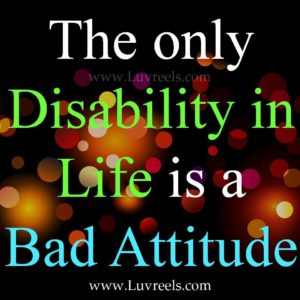
    I have seen this meme on disabilities and it never spoke to me until today.

    the-only-disability-in-life-is-a-bad-attitude-graphic-for-facebook-share

    I realized today personally what that means.

    I checked facebook and my nephew who is only 20 commented on my pictures that he was so proud of her, and that she teaches him a lot about fighting and never giving up. I teared up again.  When Ashlynn came back from ski school I read her what people had commented and she smiled and said, “Jerod say that to me?”  She looked so proud.

    My husband told her he was so proud of her with tears in his eyes.  She replied, “yeah, but I fall a lot daddy.”

    We both jumped in and gushed that everyone falls and it’s the getting back up part that counts.

    She smiled and replied, “yeah, and we try again tomahyo (tomorrow).”

    Yep Ashlynn.  That’s right baby.  When we fall, we get back up and we try again tomorrow.

    So yeah, this Christmas I learned the only disability in life is bad attitude and if my daughter with an actual disability doesn’t use that as an excuse, neither will I.


    11046572_10206436393481228_7116623044499486992_n
    Me and Ashlynn at the hotel in SLC. “You’re wearing your fancy hat mommy,” she said. We’ve come along way!


  • “Thank you” sounds so empty.

    “Thank you” sounds so empty.

    When I worked in Denver schools early on in my speech therapy career, I became numb to the phrase, “Thank you so much.  Thank you for everything.” The parents were soooo grateful for my help, and I didn’t understand.  It was my job.

    “You don’t have to thank me,” I would reply.  “Is there anything else I can do?  Any other goals you would like to be written?”

    The response was always the same.  “No, no?  Just thank you.  Thank you so much.”

    Early on in Ashlynn’s special education career, no one really seemed to know her.  Every time I went to school for a meeting, I always saw more at home than what they would report at school.  That is disheartening to be honest.  I know I’m a professional in an educational world, but that doesn’t mean I’m an expert in education.  I’m an expert in speech and language development.  I wanted the “experts” in education to report on my child and I saw more at home than what they said they did at school.

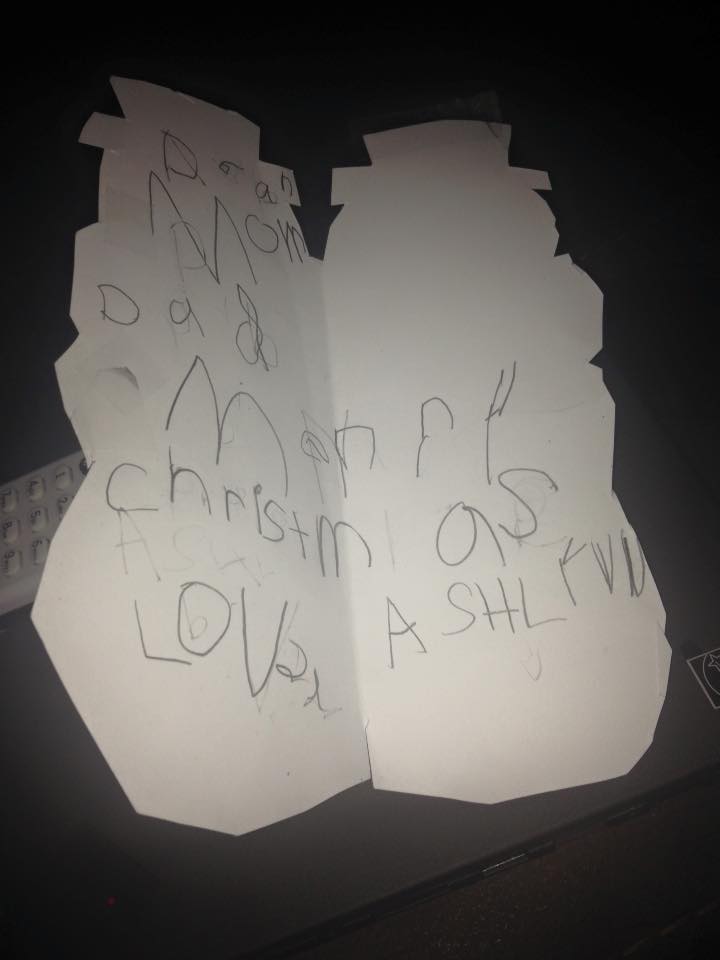
    I have spent soooo many posts waiting for a teacher who would believe in her.  Waiting for “professionals” to see what I see.  Today, before Christmas break, Ashlynn came home with this:

    12359922_10206415884928527_6894661311511169506_n

    If you have followed me or my story, you know that Cody, Ashlynn’s dad, is a realist.  He might tear up at her IEP meetings, but overall, he’s pretty practical about our situation.  When I am distraught over test numbers and percentile ranks, he is the one to calmly remind me she always makes progress and never goes backward.

    Please direct your attention the above picture.  When I saw it, I had an internal cheer.  Okay, this is it!!  Finally!  The money we are dumping into Kindergarten Enrichment, OT, and Speech is paying off!!   Last year at this time she STILL couldn’t write her name after years of practice.

    I looked over and saw Cody choked up.  I paused and realized how huge this was.  I’m always looking at the next goal I never celebrate these moments.  I’m proud, I’m INCREDIBLY proud, and it hit me.  Ashlynn came home with something I didn’t know she could do.

    That has RARELY happened before, and it’s been happening more and more this year.

    There was a time I was sad at the thought it took a team of people,

    a TEAM of professionals

    to help Ashlynn do things typical kids do so naturally.  When we handed out the teacher Christmas gifts this year, I wanted to hug each person: the teacher, the SPED teacher, the para, the SLP, the OT, the PT, the psychologist, and THANK THEM.  Thank them for helping my child.  I remembered me a few years ago wondering why people were thanking me for doing my job…and that’s when it hit me.

    I get it now.

    Ashlynn’s TEAM this year is a dream team. Every…single….one……. believes in her.

    11870728_10205720221057365_1459854136336260829_n

    This is Ashlynn’s first day of school pic.  The adult in the front is her teachers aid, and the adult in the back is her school SLP.  From day one they were there for her.  For the record, they both consider this “just doing their job.”  For me though, I knew she was taken care of from the start.  Ronnie, her teachers assistant (T.A), has bought her a book for her birthday AND for Christmas; and if you don’t know what T.A.’s make, let me put it bluntly and tell you they make shit.

    When I have told Ronnie thank you for buying Ashlynn these gifts, she only smiles as though she had no other choice and says “Of course!! It was her BIRTHDAY!!”

    It is incredibly humbling to know her salary, and know that she STILL felt like she owed my child a present.  I wish I could buy her the world.  I feel helpless to prove to her how much that means to me.

    11223847_10206415893248735_378095598294727277_n


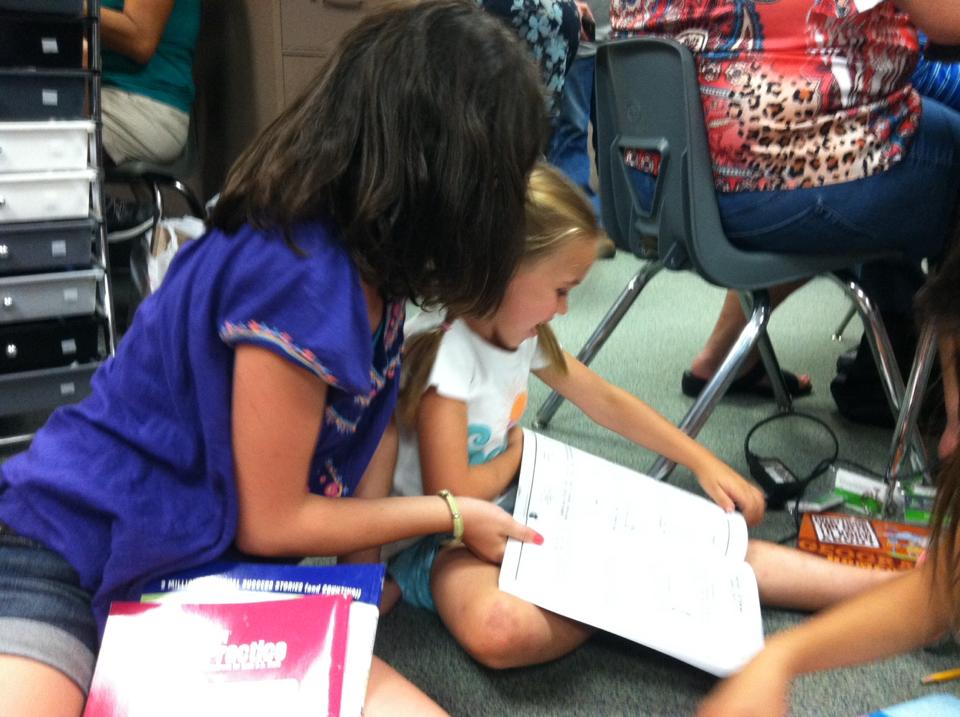
    Which brings me to my next picture.  Ashlynn’s SPED teacher is one of the best.  I really don’t even know where to start.  Teaching is her calling.  Her compassion, passion, and drive is so infectious, it spills into her children, her biological children that is. This is a picture of her youngest daughter “teaching” Ashlynn during a tornado drill. Her daughter wants to be a teacher, and judging from her current skills, is well on her way!  Colleen has high expectations.  Can I just cry right now?? Ms. Colleen has HIGH expectations from my daughter.

    I can’t tell you how many times I have told various teachers and therapists that Ashynn is capable.  She will rise to the occasion.  I also remember the countless “you poor thing” pity stares as though I were in denial.  That never deterred me from saying it though.

    True to form, I wrote a note at the beginning of the year to Colleen in Ashlynn’s back and forth book and I said, “Ashlynn will rise to the occasion.”

    Now that Ashlynn has Colleen, she is proving it.

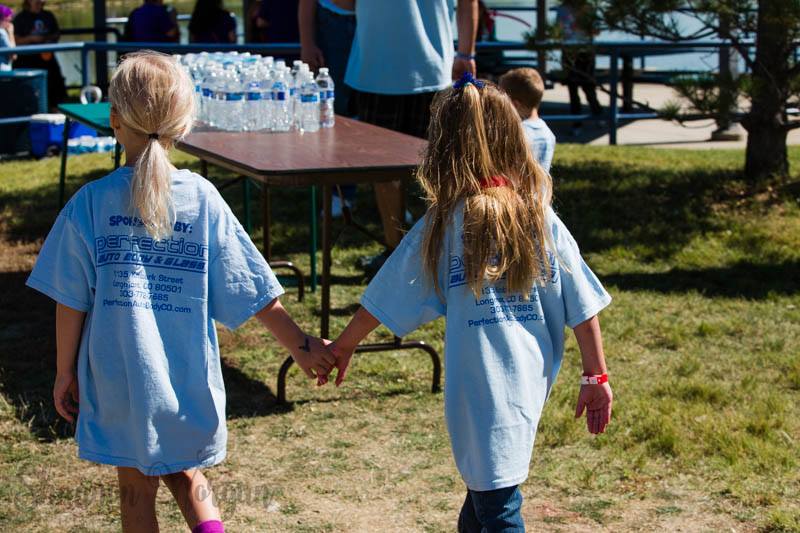
    12043207_10205988783131249_8742667403925880824_nThis next picture is Ashlynn at the Walk for Apraxia of Speech. The other girl in the picture is the daughter of Ashlynn’s school OT.  I’m a writer, and I can’t even….I can’t even….express the words to describe what this meant.  Why on Earth the school OT took time our of her weekend to bring her children to Ashlynn’s walk is beyond me.  I have no other choice but to feel blessed and humbled.  Even better is what these women are teaching their daughters.


    10253983_10206399163550503_6394156016204977654_n

    This last picture is Ashlynn’s Kindergarten teacher.  I’m so blessed to be in a district who values inclusion.  This is Ashlynn’s general education Kindergarten teacher. Ashlynn is in a very restrictive special education program, and sometimes kids in this program don’t feel as part of their general education peers as they should.  Ms. McDermott, her general education teacher, values and treasures Ashlynn as part of her class. She tracks Ashlynn’s progress and knows her skills just as well as Ashlynn’s SPED teacher. In addition, she strives to ensure the children LOVE school.  She is a gem and in short, teaching is her calling too.


    Though the words sound so empty, they are filled with deep emotion.  “Thank you.”  I’ll never take it for granted again.


    12208463_10153717820262905_2999797296433546326_n