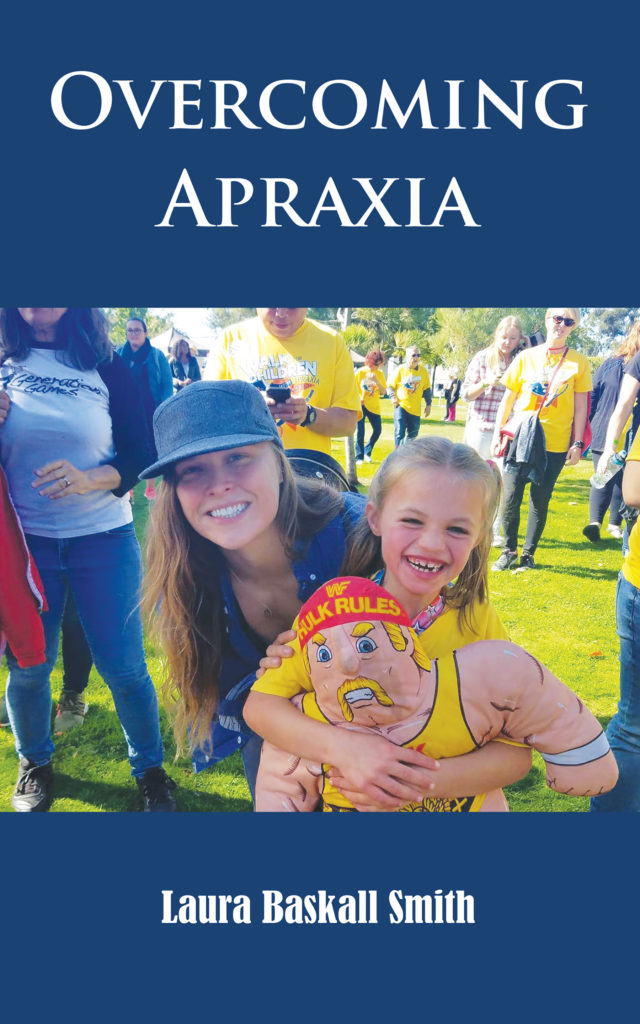
Ashlynn actress and WWE star Ronda Rousey who overcame apraxia as well
Almost seven years ago to the day, before my daughter Ashlynn’s 3rd birthday, I received news so significant, my life has never been the same. Though devastating at the time, the life lessons I have learned from it have far outnumbered any loss.
What was this news?
My daughter Ashlynn was diagnosed with one of the most severe neurological speech disorders in children. It is called “childhood apraxia of speech (CAS).
Not only was this diagnosis devastating to hear as a parent, I was also a practicing speech/language pathologist and the diagnosis flew me into a tailspin. Reeling that I didn’t know enough about apraxia, I threw myself into education.
Overcoming Apraxia is the culmination of this seven year journey.
There has been hard ache, triumphs, incredible highs (like meeting famous UFC and WWE super star Ronda Rousey who had CAS) twice and desperate lows (bullying, financial cost of therapy, the toll on the family).
Through it all though, Ashlynn maintained a positive attitude, incredible resiliency, kindness and bravery that I have never witnessed firsthand in another human being.
Overcoming Apraxia is this story. Interspersed throughout are also professional definitions, advice, and tips and tricks for parents and professionals that I utilize in my professional practice. I cover topics such as: comorbidities, financial cost, the effect on siblings, advocacy, educational concerns, genetics, specialists and of course, Ashlynn’s story to success.
Laura Smith, M.A. CCC-SLP is a 2014 graduate of Apraxia Kids Boot Camp, has completed the PROMPT Level 1 training, and the Kaufman Speech to Language Protocol (K-SLP). She has lectured throughout the United States on CAS and related issues. Laura is committed to raising and spreading CAS awareness following her own daughter’s diagnosis of CAS and dyspraxia. She was the apraxia walk coordinator for Denver from 2015-2019, and writes for various publications including the ASHA wire blog, The Mighty, and on a website she manages slpmommyofapraxia.com. In 2016, Laura was awarded ASHA’s media award for garnering national media attention around apraxia detailing her chance meeting with UFC fighter Ronda Rousey, and also received ASHA’s ACE award for her continuing education, specifically in the area of childhood motor speech disorders. Currently, Laura is a practicing SLP specializing in apraxia at her clinic A Mile High Speech Therapy in Aurora, Colorado.
There will be amazing times, not so amazing times, and some terrible times. Every human experiences this because it is the definition of what it is to live. During those down times in life, whatever they may be; the one thing worse than the situation is believing you’re alone in your situation.
Humans are social beings. The most important things we can do for ourselves on any journey in life is to find others who are going through the same experience.
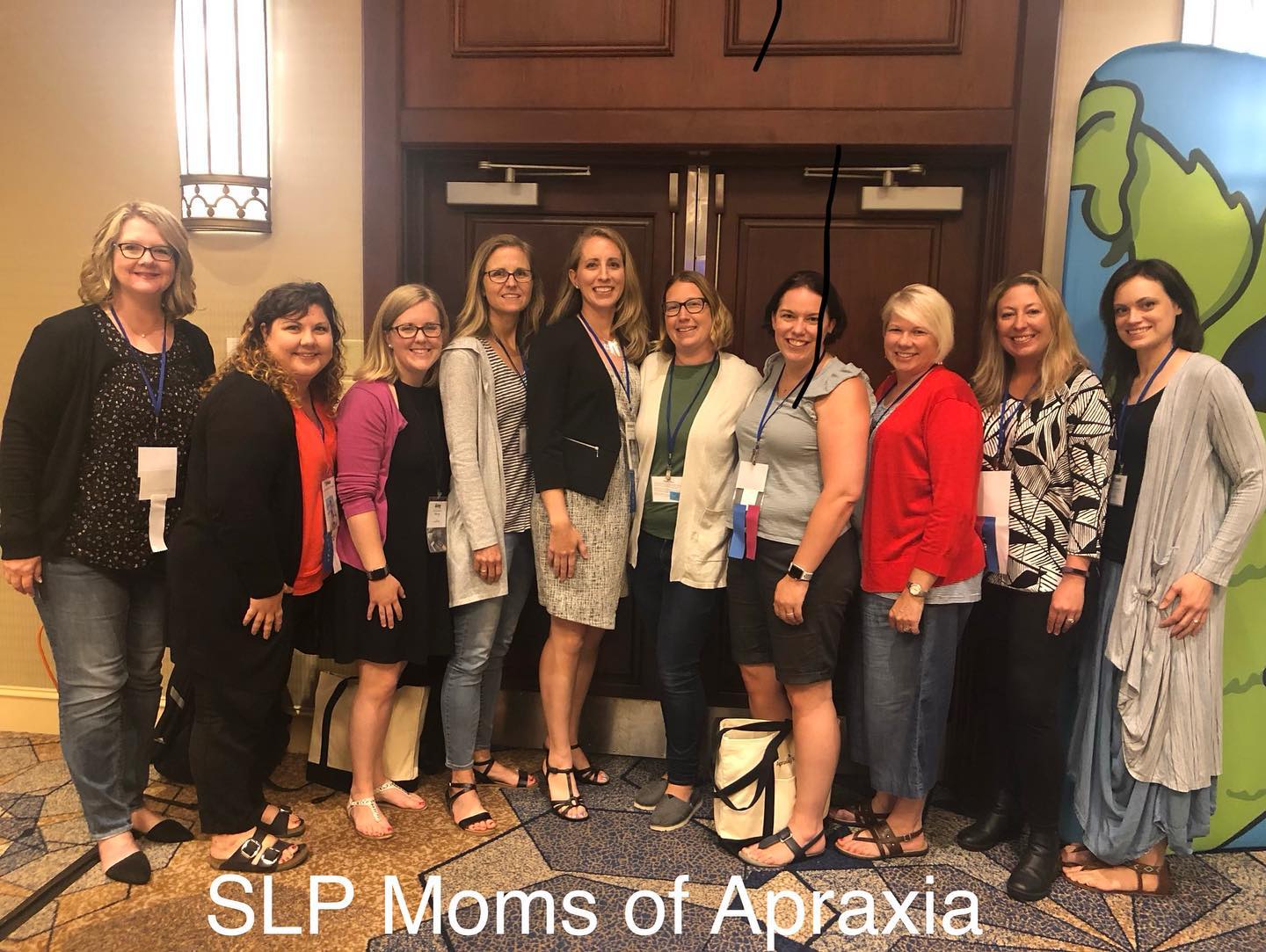
Seven years ago Ashlynn my daughter was diagnosed with apraxia, a rare but serious neurological speech disorder and my world came crashing down. I was quick to find an online support group, and though I related with everyone’s parental feelings, no parent could understand my added guilt of being a speech/language pathologist that couldn’t help her child speak. I was not alone, but still felt alone. That was until, I met another SLP Mommy of Apraxia Kim and we formed an online Facebook group called SLP Moms of Apraxia. Through this online group I connected not only with Kim, but with so many other moms nationwide going through the same struggle. I remember being awe struck. Once upon a time I truly believed I was the only SLP on the planet who had a kid with a rare speech disorder called apraxia. SLP’s are not necessarily a prolific profession and apraxia is seemingly rare. We formed this online group and suddenly we started to find our tribe. I know there are those who dismiss social media. However, it was truly a “bridge” that connected me in Colorado to other SLP Moms of Apraxia around the world.
When I attended my first conference I was nervous and didn’t know anyone.
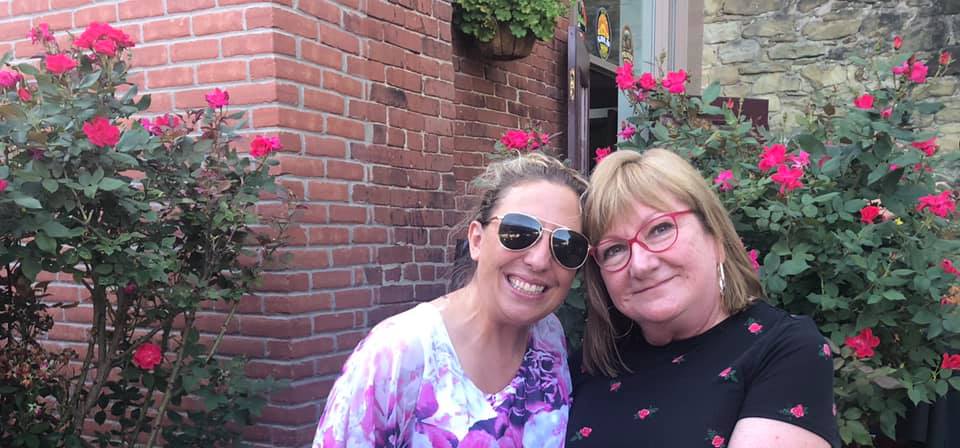
All I knew was this woman named Sharon who moderated the online parent group and lived in Pittsburgh, 1,450 miles away. She had come to Denver (my home town) and encouraged people to come find her at the national conference. I remember I took my husband to a meet and greet event. An event I would have never considered had I not been speaking to her via Facebook. We didn’t have money at the time but the personal connection pulled me in. I stopped dead in my tracks as we looked at the kind and unassuming woman greeting people in her Birkenstocks. I told my husband this was like meeting Julia Roberts! I remember his puzzled face. No, Sharon wasn’t famous in celebrity magazines, but thanks to the the modern development of social media she had pulled me and countless others out of the rabbit hole of grief. Unless you have experienced it, it’s impossible to explain our instant connection even though we only knew each other through Facebook group. Seven years later I would fly to Pittsburgh and meet her in her hometown where I would have my family in tow and she would have Luke. We would share a pretzel and cheese at Penn Brewery listening to local bands. This night I felt I had known Sharon my entire life.
Music, food, and brews in PA
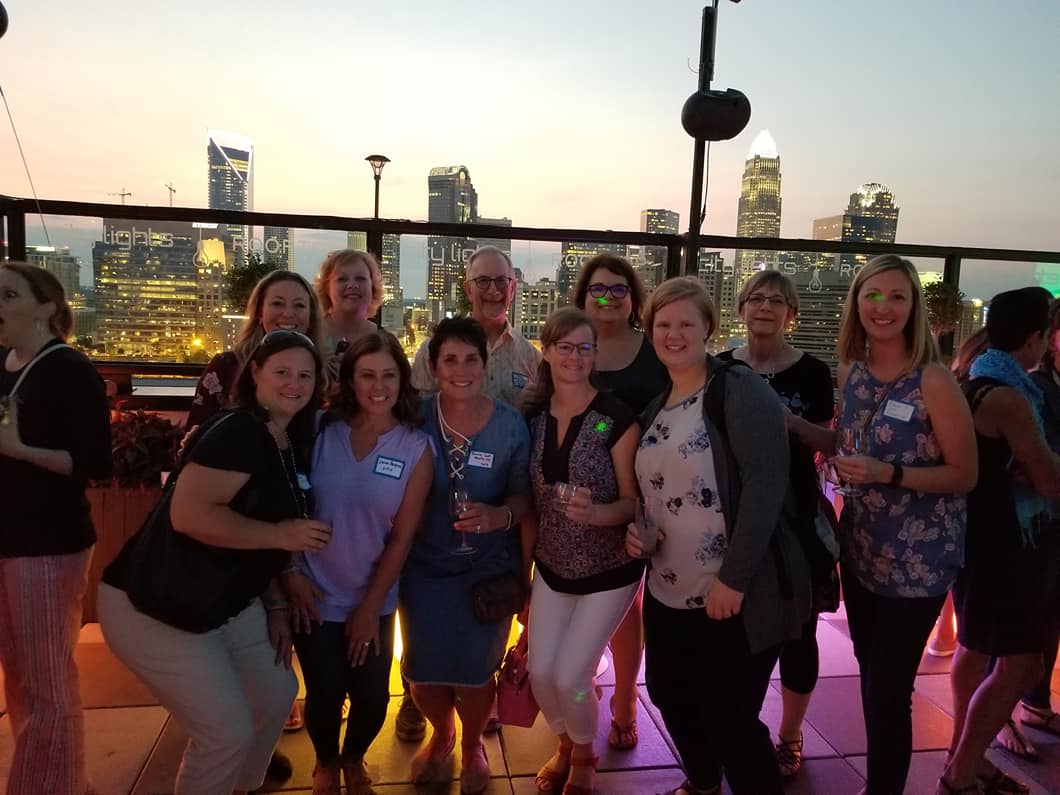
During this 2019 Conference I was also able to meet up with my social media blogger tribe!
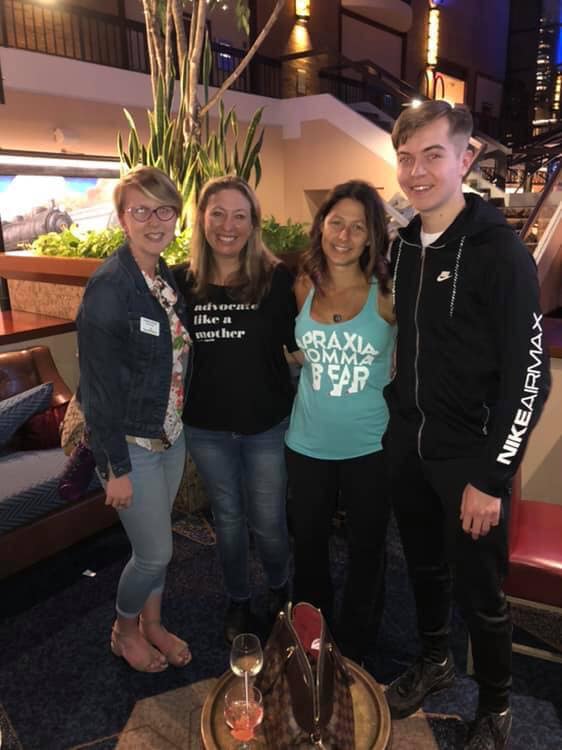
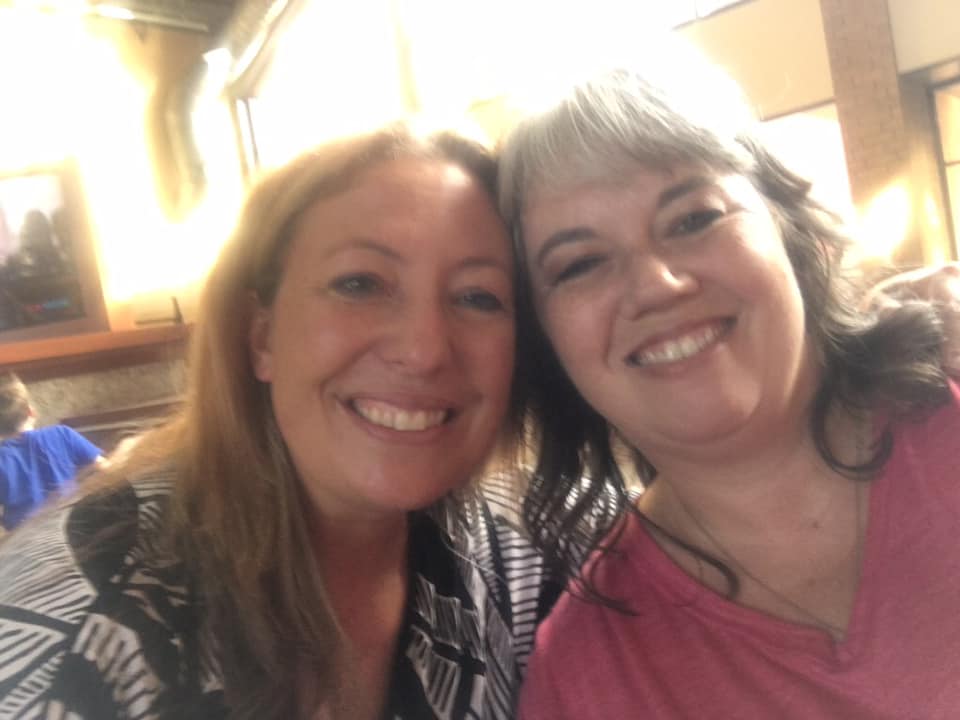
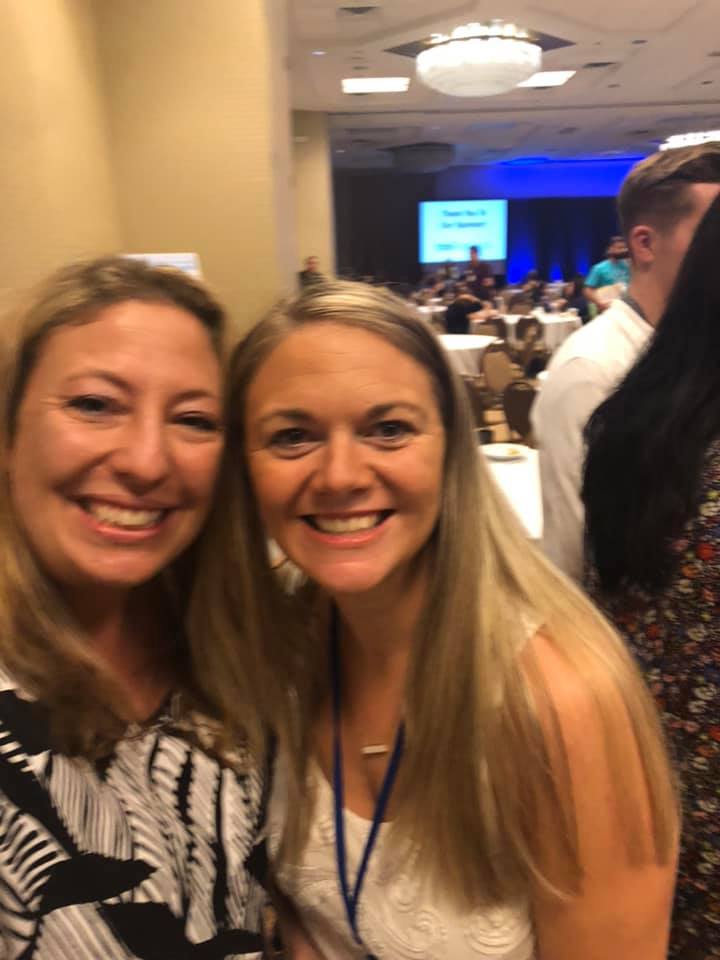
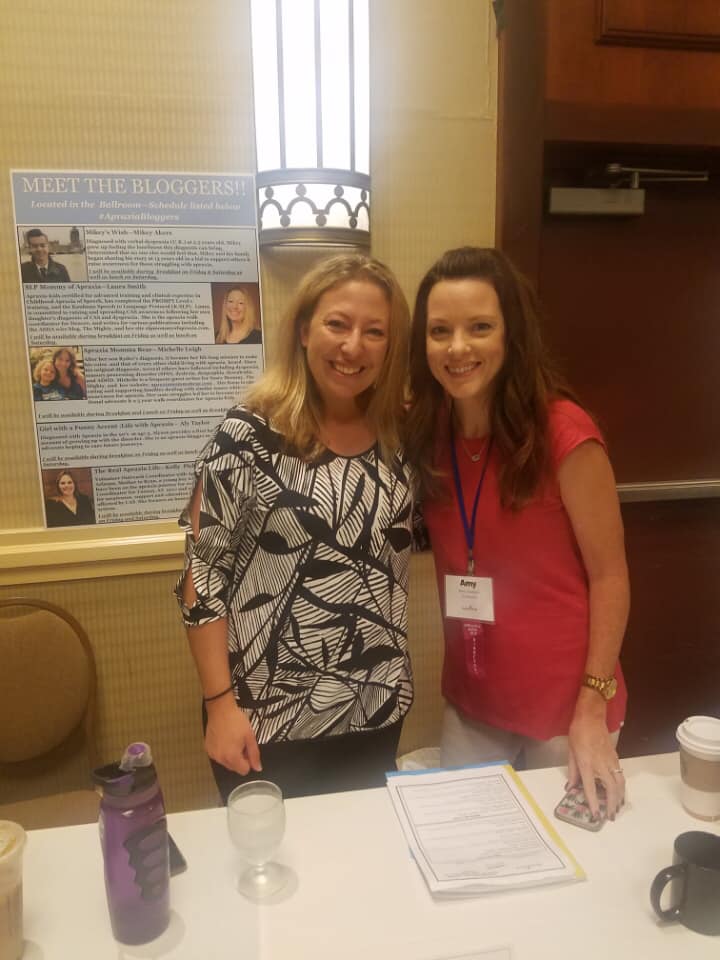
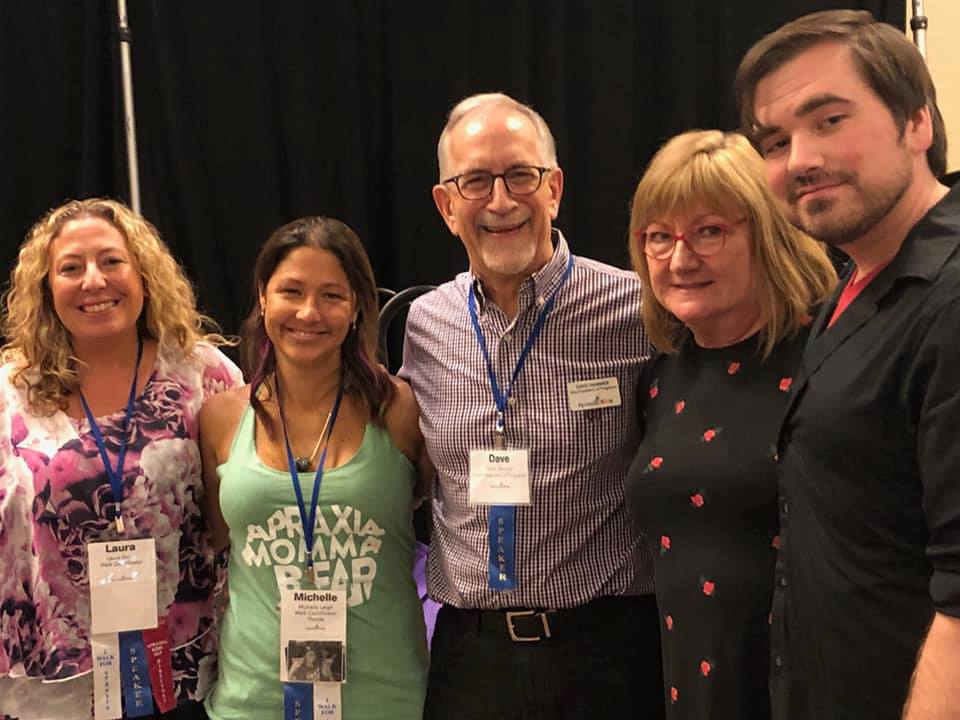
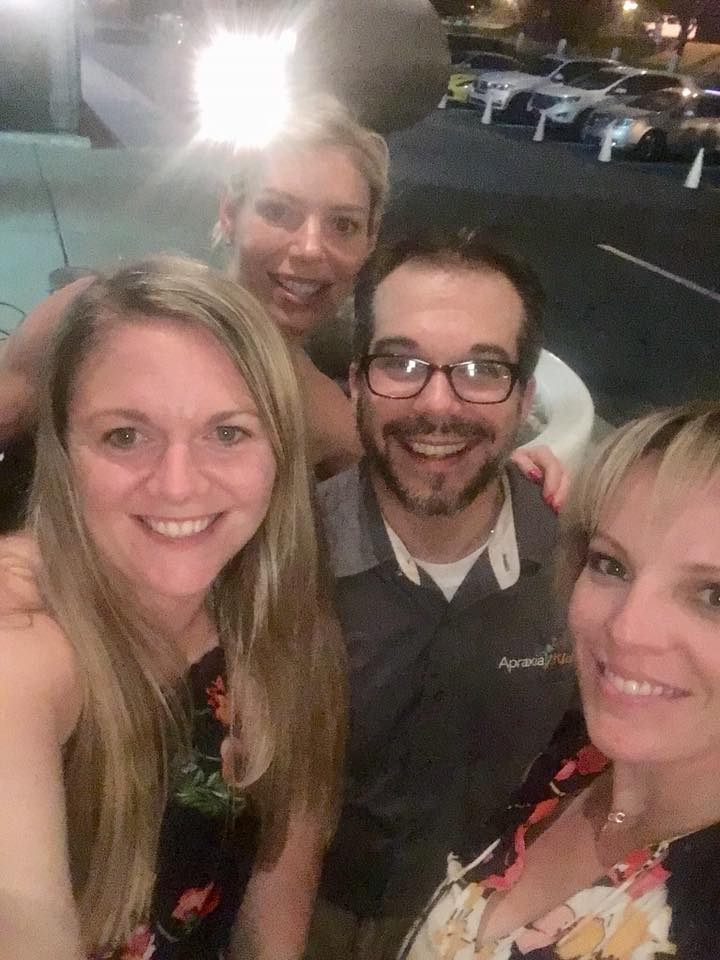
Back when I attended my first conference in 2013, there were no “bloggers” per se. There was a strong online community but blogging was relatively new. Fast forward to 2019 and I am standing next to prominent bloggers and social media influencers in the apraxia community. The minute I meet these people I again feel that immediate connection. They are my apraxia online buddies, but they are more than that…they are MY TRIBE. Aly from California (Girl with a Funny Accent) and Mikey (Mikey’s Wish: Verbal Dyspraxia Awareness) from the United Kingdom are individuals with apraxia, and Michelle (Apraxia Momma Bear) from Florida and me (SLP Mommy of Apraxia) from Colorado all have a social media presence. I can’t describe it but seeing them in person is just the icing on a solid foundation of cake that has already been made.
There was something striking to me though about this conference that I hadn’t realized in years past.
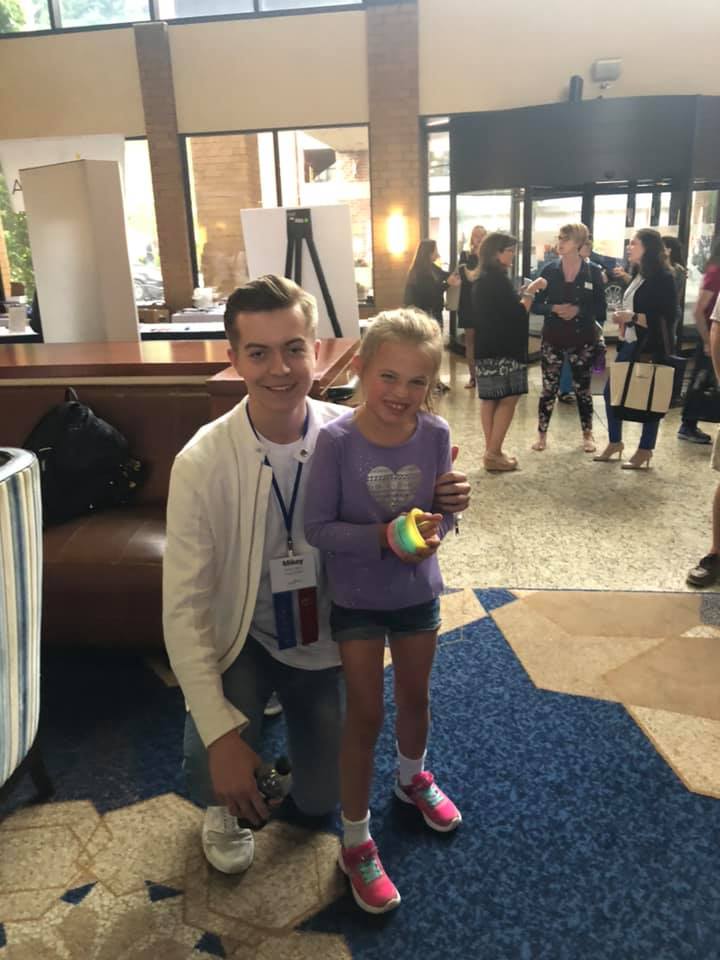
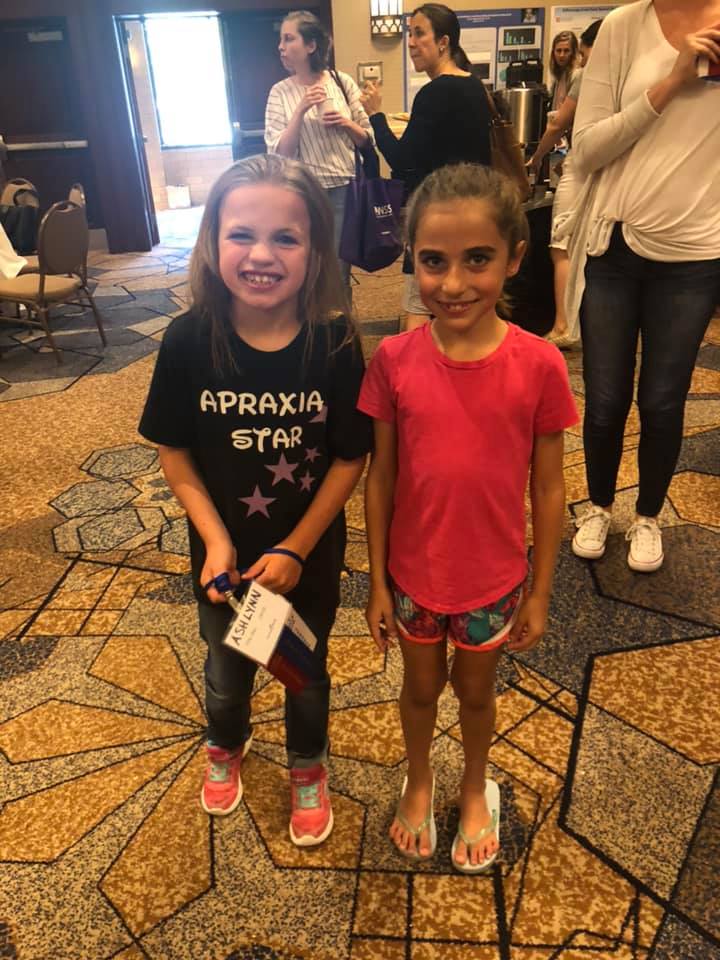
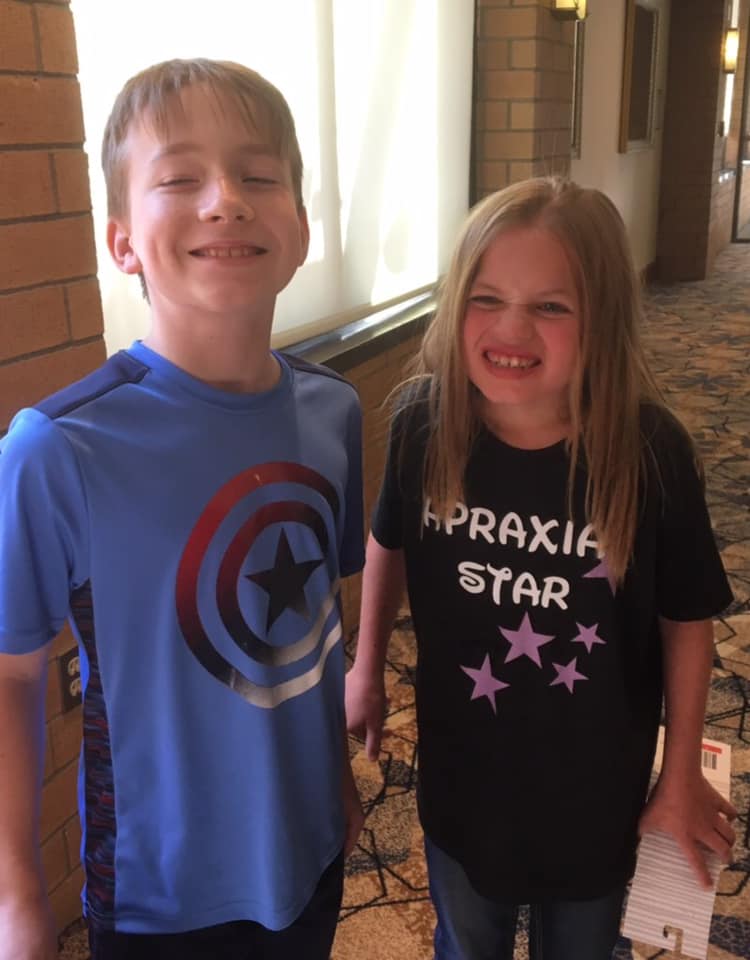
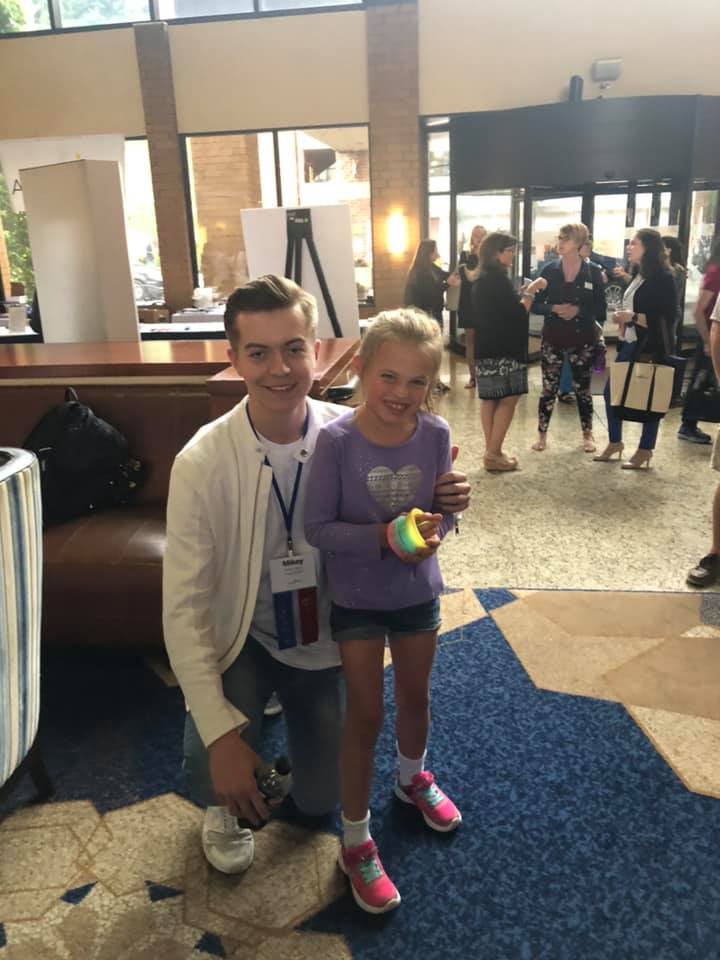
I brought Ashlynn because she was invited to speak at the young people/adult panel. She would be the youngest person ever to speak at the conference. I am very open with Ashlynn about what I post on my facebook SLP Mommy of Apraxia page. I have shown her posts from Mikey and Aly to help build her up and show her she’s not alone. She had never met Mikey or Aly in person until this conference. In EVERY situation where she saw Mikey she let out a squeal of joy “MIKEY!!!” She had never met Mikey. In fact, Mikey lives 3,625 miles away in the UK. She thought she had though because she followed him through social media.
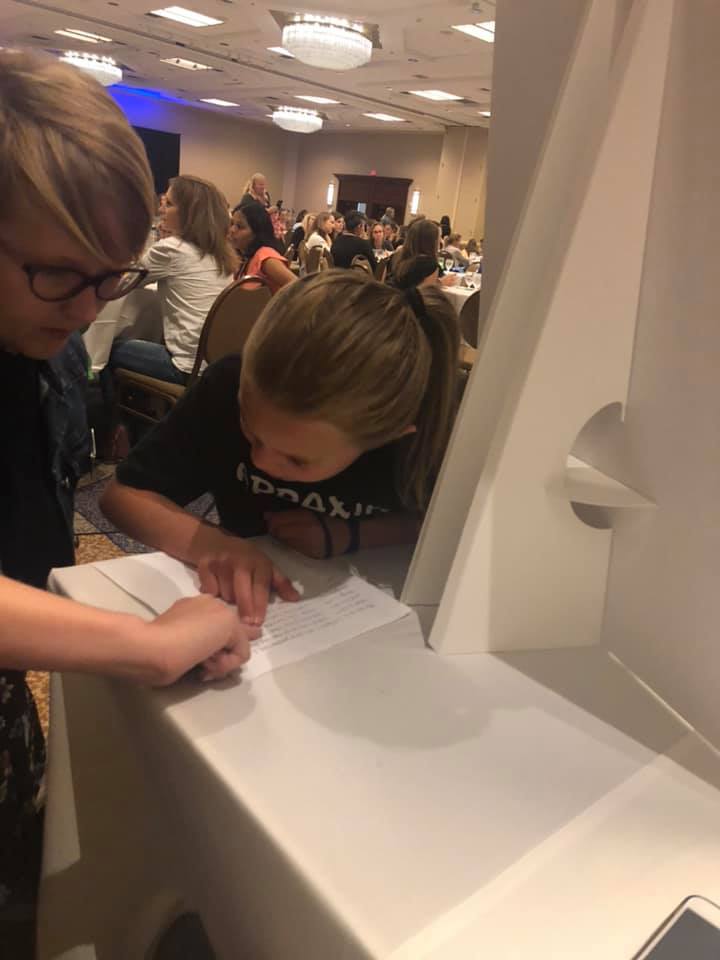
During another instance, I was sitting at the blogger table with Aly when I asked Ashlynn to practice her speech. Ashlynn immediately started railing against me when Aly stepped up and said,
“Ashlynn! Can I help you practice? Will you read it to me?”
Ashlynn smiled and read the entire speech to Aly. Aly looked apologetic and explained children don’t really want to practice with their parents. My heart smiled and was filled with gratitude. I thought it was just me who connected with Aly, but I realized Ashlynn did as well!
Finally, there were the pinnacle moments.
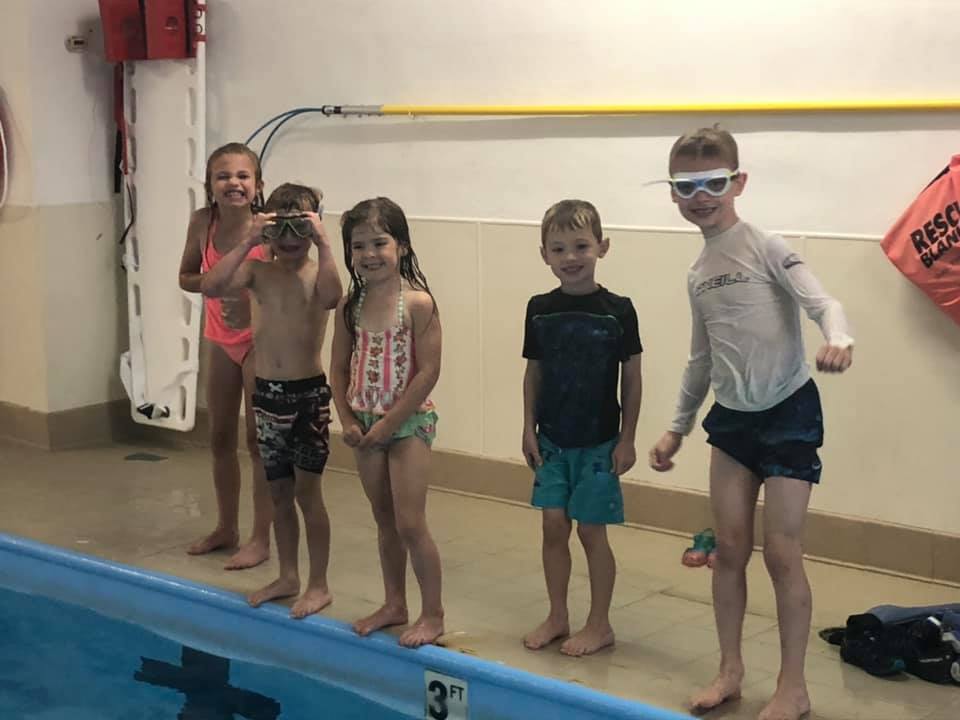
Two SLP Moms of Apraxia I knew were going to attend the conference and have their children in tow. I knew this of course through the social media network. I was able to invite Nicole from Home Educating Apraxia and Erika from PintSizedFoodie and their kids to our hotel for a swimming play-date. A play-date that would have never even been remotely conceptualized without social media. The connection between our kids was instant!
This year Ashlynn was going to speak in front of 500 people alongside Jayden LaVecchia, a 10 year old who had endured a lengthy and difficult struggle. Thanks to the social media, Ashlynn and Jayden were able to send each other video messages and “meet” each other through social media. The in person meeting was electric. You would have never known they live 1,896 miles apart. Through the power of social media, it’s like they had known each other their entire lives!
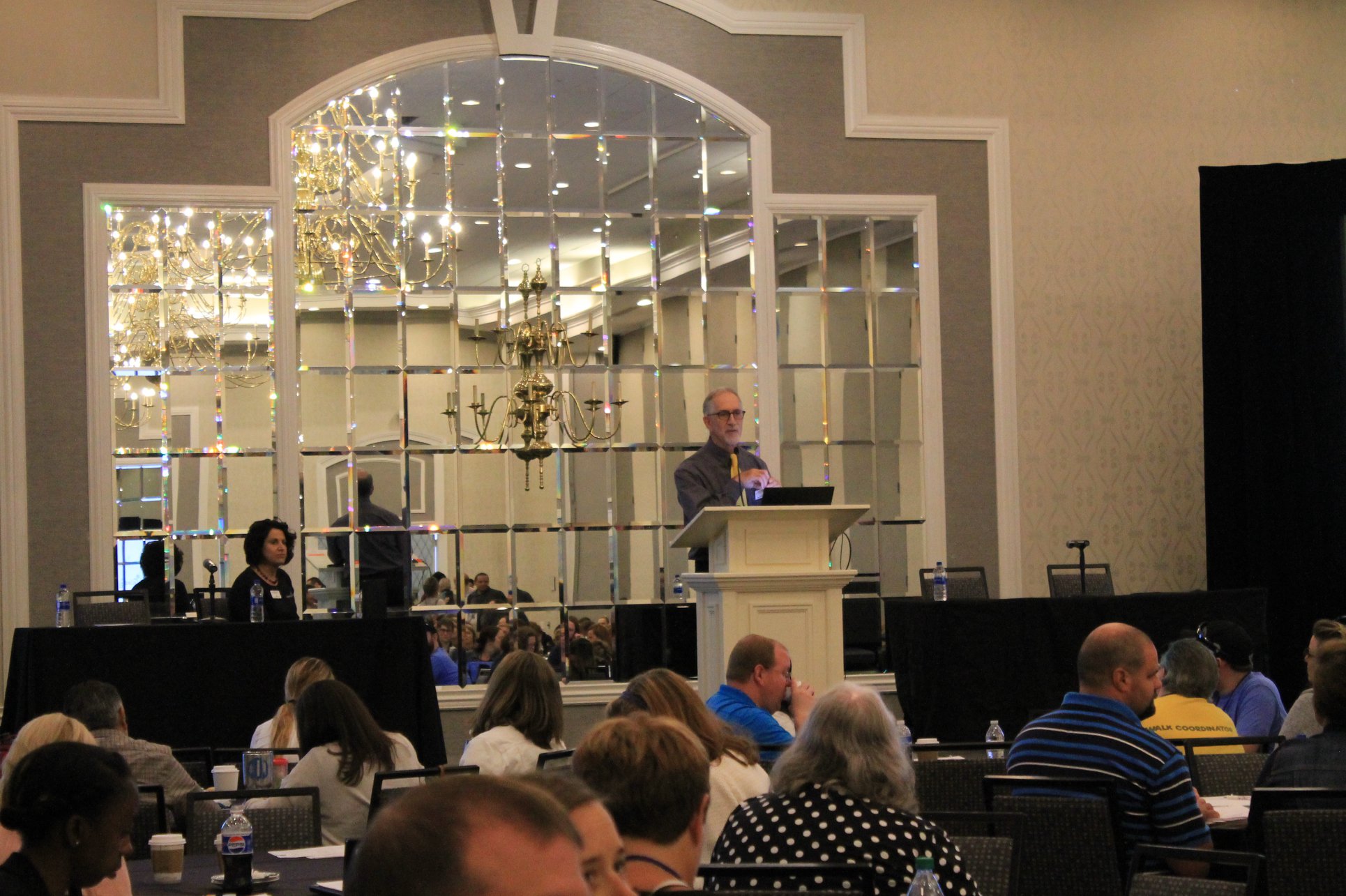
Watching the keynote of over 500 people
Find your tribe and love them hard.
I realized at this conference, our kids need their tribe as much as us parents do! Ashlynn was fully immersed with her people and absolutely thrived. Her penpal Maya and her mom Elisa who has a social media page called Sweatpants and Speech Therapy talked about how they want to create a camp for kids with apraxia! This would be a place for all kids with apraxia to come and be together. In our struggle as parents, we forget our children need their people too!! Though apraxia is rare, social media is a powerful tool to connect! Ashlynn knows her apraxia tribe locally because I coordinate the walk, but also nationally and even internationally because of social media!
New to the tribe, longtime member of the tribe, it all came together through social media.
Early in my journey I also met someone via social media living in Oklahoma. Shelley has been with me since my early days and we have followed each other and our kids through Facebook. Seeing Shelley feels as familiar as home. We always pick up right where we’ve left off. So funny to me that I would have never met her without Ashlynn having apraxia or without social media. Seven years ago and since our joke when we were crying on each others’ digital shoulders were emoji’s showing a jet airplane and a glass of wine. Through the years we’ve found ways to make those emoji’s come to life.
Then there was Scott from Apraxia Kids of Arkansas and Apraxia Mama Meghan from Instagram. Two passionate and fierce apraxia advocates! Scott lives in Arkansas and Meghan lives in the Bronx. I got to know these two well from social media. Though their communities are different, both of them have a heart and love I can’t begin to describe. I learn about their communities through social media and we instantly connect because we know each others’ story.
Professional connections
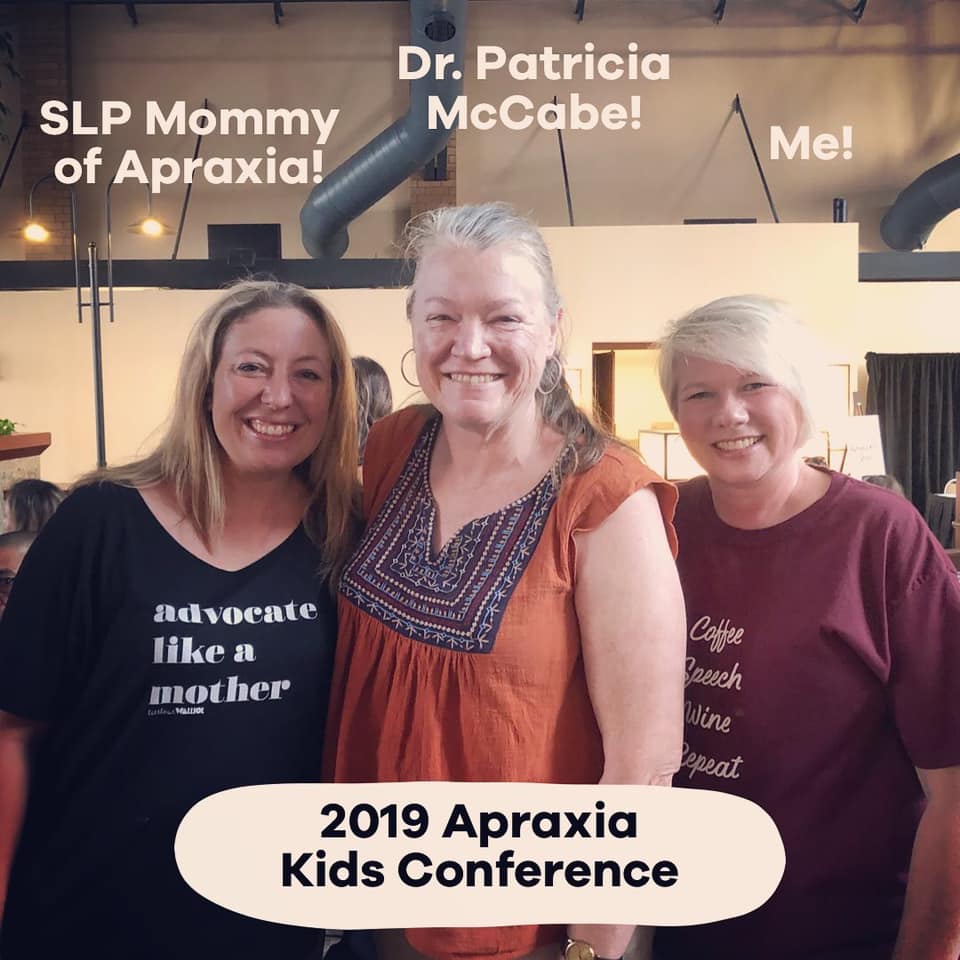
Professionals use social media as a way of extending their reach. I was able to have dinner with Cari Ebert, who has a strong Facebook and Instagram presence. It was amazing to talk to her and get to know her more. She also was the SWEETEST and made Ashlynn a sensory bag full of goodies and brought her some stickers. It was so touching that a child she had never met she thought about thanks to social media connections. Dr. Tricia McCabe from Australia has a strong Twitter presence, and meeting and chatting with her made it all come to life! Edited to add: A couple weeks later an Aussie SLP mom joined my SLP Moms of Apaxia group. When I asked her how she found our group, she said Tricia McCabe had told her about it after talking to Cari Ebert and me. Isn’t that funny? 8,000 miles away an SLP Mom whose child was dx with apraxia found a group online and never had to feel alone thanks to social media.
It was fun seeing Amy Graham of Graham Speech Therapy who has a strong Instagram presence at the conference. She lives in my state but I only really got to know her and her therapy practices through her numerous informative videos.
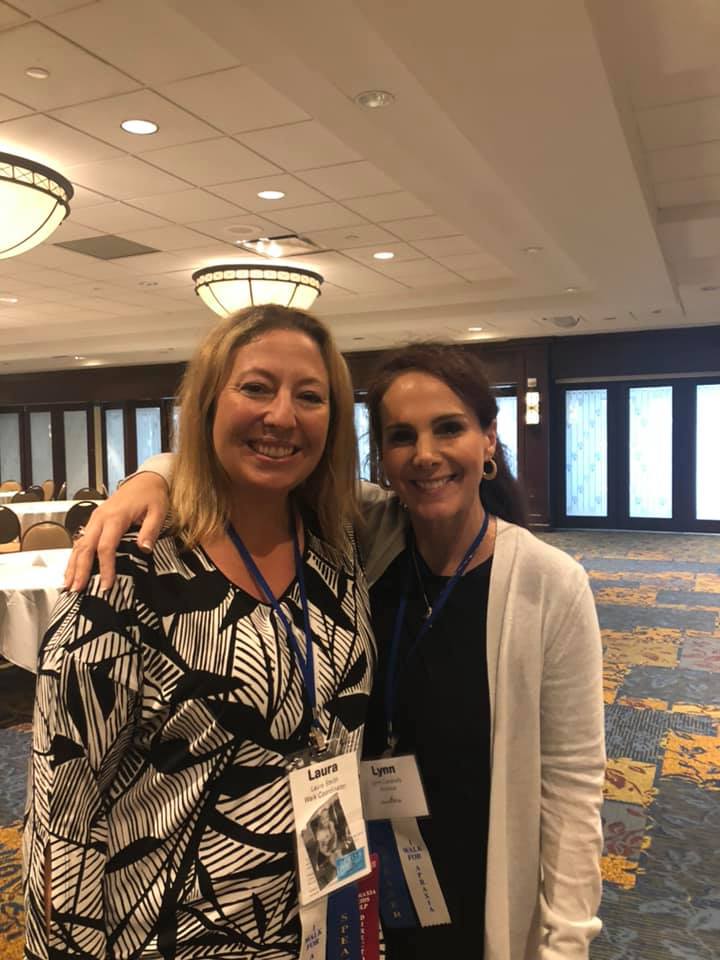
I was finally able to meet Lynn Carahaly who developed the Speech EZ program for apraxia. I had chatted with her via my Facebook page on numerous occasions so I felt like I already knew her! It was great though to actually meet her in person.
New faces!
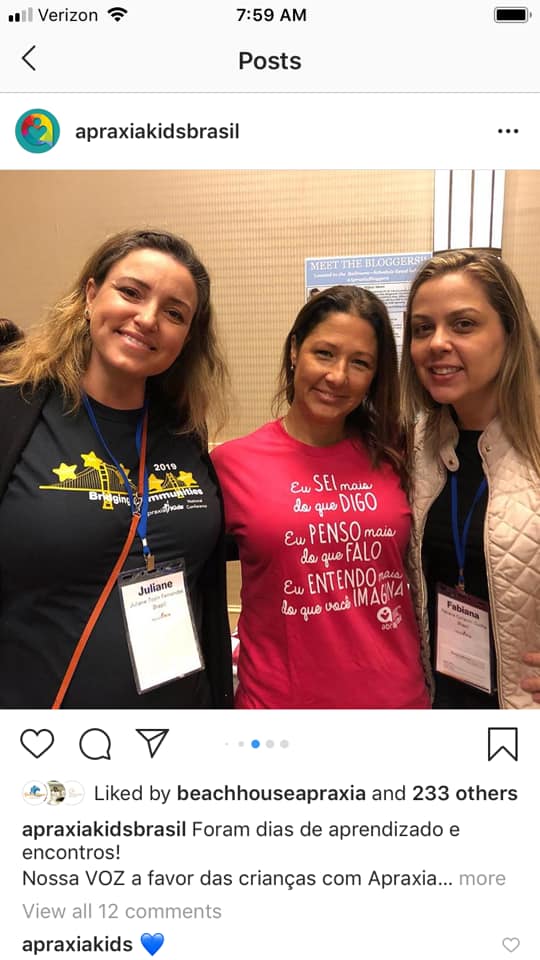
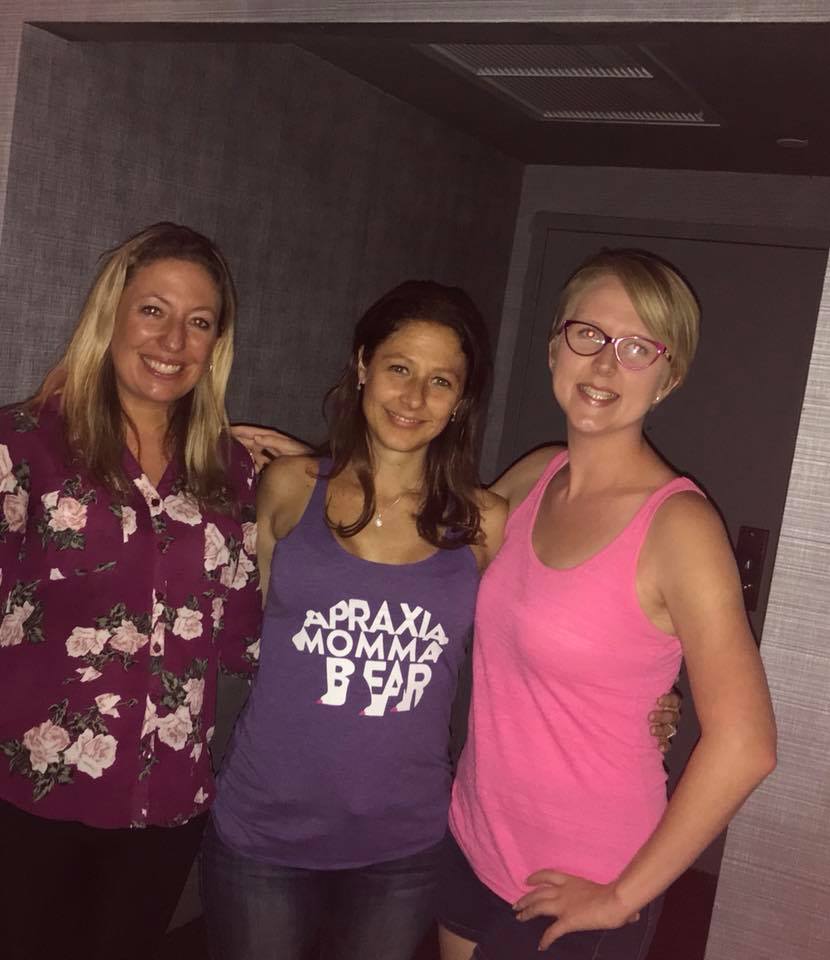
Finally, thanks to social media, people found me that I did not yet know! Two moms from Apraxia Kids Brazil were forging a path there for kids with apraxia came and introduced themselves. Living 4000 miles away they know everyone through…social media of course. We took a picture on someone’s phone but no one can find it so I’m posting them with Michelle of Apraxia Momma Bear! They gave me a shirt too and I wear it with pride!
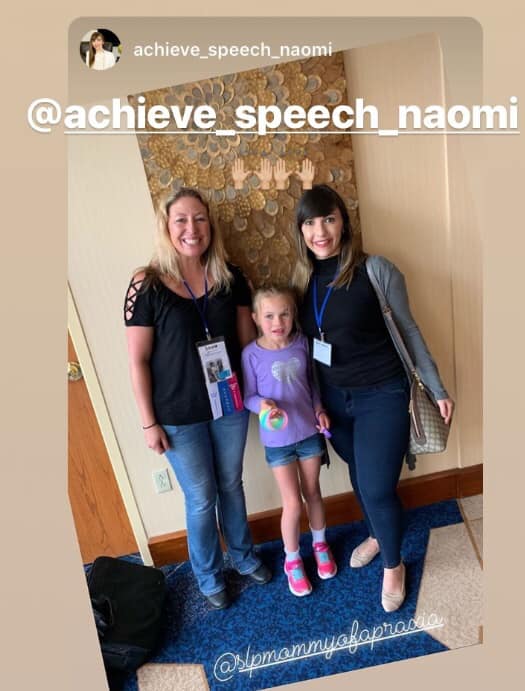
Though there were numerous, almost too many to count touching moments, my favorite was meeting Naomi. Naomi stopped me and Ashlynn and introduced herself. She told Ashlynn she was famous and she follows her on social media. Afterward Ashlynn told me, “Everyone knows me here!” with a big smile. I looked up Naomi on Instagram and found she lives in California and has over 10,000 followers! SHE was the famous one!
After Ashlynn and Jayden spoke, she caught them in the hallway and bent down on their level. She told them how brave they were and to always remember this moment. To be honest I don’t know what else she said because I had tears in my eyes and her sincerity and love flowed out of her onto them.
The theme of the conference was building bridges. I couldn’t help but think of all the way social media platforms have been a bridge connecting us all together. These invisible yet tangible bridges allowing us to connect and form relationships before we even meet. Personal and professional, national and international, old member and new members, social media connects us all.
And it all started, when Sharon Gretz found SLP David Hammer in Pittsburgh. Dave gave her son Luke a voice, and she decided she needed a way to help others the way she herself had been helped. She started a list serve. True to her city, the city of bridges; she extended the bridge of knowledge online to those who were ready to hear it. That bridge turned into social media and the apraxia network was born.
I want to continue the legacy of building bridges that Sharon started in her city of Pittsburgh. I don’t want any child with apraxia to not get the help they need regardless of their circumstances. I want to always ask myself if I’m building bridges in my life and I want to ask you if you are too?
On my last day of the conference my Uber Driver was a cool cat. In his Pittsburgh accent he told me Pittsburgh had more bridges than any other city. He then asked me,
“So, what brings you to the Buuurgh?”
I smiled. Bridges brought me here, just not the ones to which he was referring.
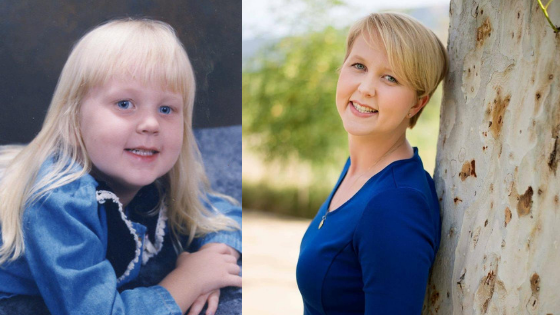
This month I’m excited to introduce Alyson Taylor! I’ve had the pleasure of hearing Alyson and her mother speak at the Apraxia-Kids National Conference; as well as speaking to her personally on a few occasions. Alyson is smart, witty, funny and has a great outlook on life! Oh, and she also grew up with Childhood Apraxia of Speech! Welcome Aly!
Can you tell my readers a little bit more about yourself?
Hello! My name is Alyson Taylor and I am a former child with Apraxia of Speech. It was definitely a long journey-I didn’t fully communicate until I was 7 years old, early special education courses, and 13+ years of speech therapy. Fortunately, the journey itself gave me the strength and wisdom to find success as a young adult.
With hard work and finding comfort in my speech, today I speak with what sounds like an accent. Despite this I attended and graduated from Emory University with my BA in Political Science and Spanish. I work now as a Paralegal at Thinkwell Group, an Experience Design Company known for their Theme Parks. I also volunteer and advocate for the Apraxia Cause; I’m on the Board of Directors for Apraxia Kids and also maintain my own blog “Girl With A Funny Accent.”
My family and I understand how difficult the Apraxia Journey was with limited resources in the nineties, so today it’s exciting to contribute these resources for the next generation.
What do you remember as a child about CAS and speech therapy?
As a child, I actually didn’t know about CAS. Frankly, I thought I was speaking normally and everyone else had poor hearing. It wasn’t until I was about 9 that I even became aware of Apraxia and that I spoke ‘differently’ than others.
As far as Speech Therapy, I enjoyed it when I was younger. The time passed quickly between games and toys. Also, my Speech Therapy was rather experimental. I was a Case Study at a local university studying Apraxia and how to treat it, so some of the practices were unique. One of them being peanut butter on the roof of my mouth to direct my tongue on how to say ‘R.’
Sadly, I grew to resent Speech Therapy around the teen years. Understandably so, I was doing well in my courses, transitioning into higher Honors classes, and playing Varsity sports. Speech Therapy took time away from my personal interests and goals as a teenager, so I quit attending at 15/16 years old. Best and scariest decision I ever made; choosing to live the rest of my life with a Speech Impairment in turn for my personal goals-college, career, and advocacy.
Were you ever bullied?
Um, yes!
Some bullies were worse than others I’ll admit. I knew to ignore them, stay silent, and avoid them. However, there were some bullies that my friends and family helped me with. Thank goodness, right?
Overall, I’m thankful I had engaged parents and friends that knew when to get involved and help me. I was definitely more patient with bullies than I should have been. Some of my most notable bullies were those following me around the playground, demanding I said ‘Rose’ or ‘Rabbit,’ then laughing when I did or calling me stupid for not responding at all. The other most notable bully was one that threw a snow cone at me during a Cheerleading Fundraiser and suggested that “The Retard to go back to speech.”
Thankfully that bully didn’t stain the Cheerleading Uniform. Both instances, my parents and my friends were always there to have my back, call the bullies out, and life went on. [On a side note, the snow cone Bully never bothered me again, my Dad had a one-on-one chat.]
How has apraxia affected your life, or has it? Do you have any residual issues?
For one, I still have an accent that I constantly need to explain. This past weekend at a Happy Hour I explained to two bartenders what Apraxia is. Anyone else after who asked, I lied and said I was from London. It tries my patience sometimes, I want to enjoy my night out like anyone else without constantly explaining why I speak the way I do. I know those asking don’t know better, but it does try my friends’ and my own patience sometimes.
Aside from my personal life, it hasn’t affected my professional life and I’ve been fortunate enough that no one has asked about it during an interview. Additionally, Apraxia gave me the tools I need for success-being resourceful, adaptable, and always working hard to figure it out. These skills help in any field and I truly believe it helped me get to where I am at now.
Most parents are so worried about the future when their child gets an apraxia diagnosis. What would you tell them?
All parents worry about their child and their future-Apraxia or not. Sadly though, Apraxia is an immediate threat to their child’s potential. With it, parents lose hope and quit dreaming for their child to achieve those grandiose goals-like becoming a doctor, a lawyer, a firefighter, etc. They begin to settle for the bare minimum-for them to talk.
My advice would be to never quit dreaming, to never quit being hopeful for your child. If you’re not hopeful for them, then who else will be?
What do you wish more people knew about apraxia?
In the very beginning of the Apraxia Journey, many adults say that their child isn’t speaking. To a certain extent that’s true; however, in a child’s perspective they are in fact communicating. In their heads, they are saying the words correctly yet everyone else cannot understand them. The purpose of speech therapy isn’t only to help the child speak, it’s retraining their mind as to what is considered communication and what is actual gibberish. I wish more people knew that treating Apraxia isn’t only physical practice through therapy, but it’s also mental training. You are changing what a child’s brain determines as the ‘right’ way and the ‘wrong’ way.
What would you tell a child who is currently struggling to speak or who lives with a dx of CAS?
Find your strengths and interests; cling onto those and appreciate them. We easily know our weaknesses (everyone seems to tell us), but our strengths are what carries us.
Live as if you had nothing to fear or be embarrassed about. (Yes, this means speak up in class when you know the right answer)
Find your friends, stay with your friends, and thank your friends.
What do you think professionals such as teachers and therapists need to know about CAS?
Professionals should understand that CAS hinders a child’s execution and delivery, but it does not hinder their intent. A child wants to succeed and be rewarded for their hard work
Professionals should never confuse lack of delivery for lack of intent. A professional should never claim that a child will never succeed or be rewarded. In either incident, the professional is contributing to a child’s downfall more so than equipping them for success.
Growing up CAS is part of an ongoing series that aims to celebrate neurodiversity and highlight those who have grown up with Childhood Apraxia of Speech and related struggles. If you are interested in being featured, send an email to lauraslpmommy@gmail.com
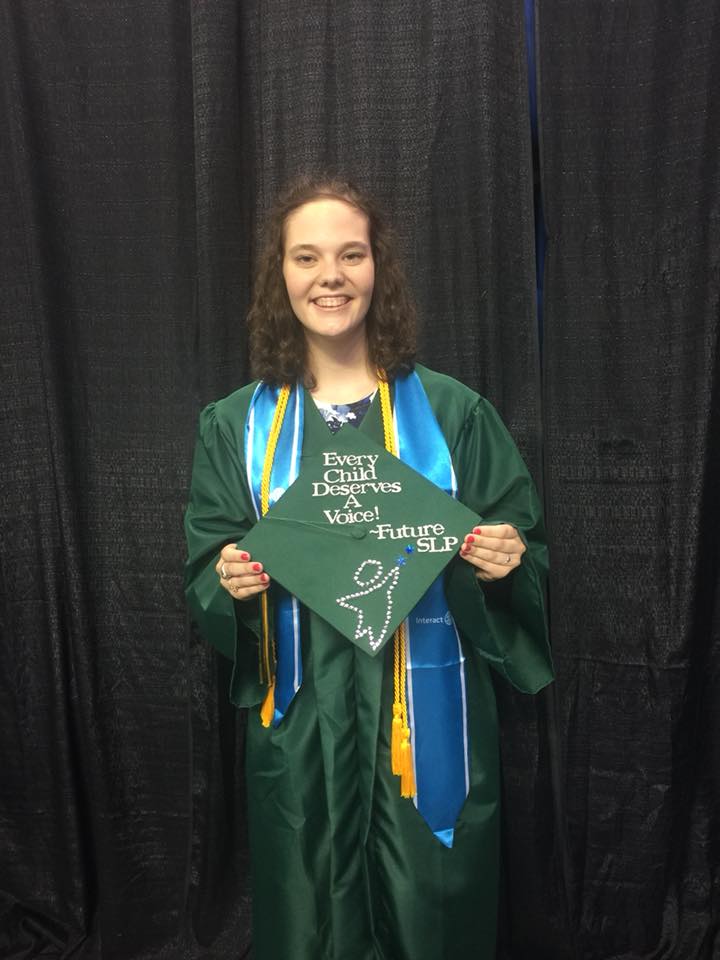
Hi Natalie! I had so much fun meeting you in person at the Apraxia National Conference this past July! I had already heard so much about you within the apraxia walk community, as you overcame apraxia and are now a walk coordinator for your area! All by the age of 16! That’s amazing! Let’s start with you telling us a little bit about yourself.
What do you remember about speech therapy and how long were you in it?
I just remember playing games and making crafts. I was in speech when I was 2 through second grade.
When did you know you had apraxia?
I was diagnosed with apraxia when I was two and a half.
How has apraxia affected your life, or has it? Do you have any residual issues?
Yes, apraxia has affected my life on multiple levels. I have been diagnosed with anxiety because of the slow processing. I don’t feel like I have enough time to finish tests. I also still have problems with my sensory. Also when I get tired my speech starts to slip.
What was your school experience like?
My parents and I have had to fight for everything I have in place. I have a 504, which allows me more time on test, but the 504 is for my anxiety and not for apraxia because no one understands what apraxia is at my school. I have to tell my teachers what I have and explain what it means.
Most parents are so worried about the future when their child gets an apraxia diagnosis. What would you tell them?
Apraxia is a long journey. It takes time. Don’t rush your kid’s speech, it will come. Everything happens for a reason and apraxia has influenced their life for some reason or another.
What do you wish more people knew about apraxia?
Apraxia doesn’t just affect your speech, it affects your processing speed and much more.
What inspired you to become a walk coordinator at such a young age?
I want to help families with kids with apraxia. My family has gone through the same things as others have. My parents didn’t know if I would ever be able to talk and live on my own. I want to give families hope, the same hope my parents got from Kate Hennessey.
Thank you so much Natalie, for all of your advocacy work and continued mission to spread awareness and help other kids with apraxia! You are absolutely a face of hope and inspiration!
Another major change was that Kathy Hennessey, long time director of education, also accepted a new position as executive director of a beautiful arts center in Wisconsin.
Change is always hard and I for one think I took it particularly hard. I watched this past year with skeptical yet hopeful eyes as an interim director gave way to the new executive director Angela Grimm. I was pleasantly surprised that she had reached out to me personally to introduce herself and she gave me a chance to tell her my story and why CASANA, now Apraxia Kids, was so important to me. That phone call meant a lot because I was able to tell this woman how myself and so many others in my community had benefited from the organization. I was able to tell her why I had decided to spend countless volunteer hours devoting myself to being a walk coordinator in Denver, and I was able to express that I wanted to make sure Apraxia Kids was still going to be an organization I could stand behind. It’s very important to me that when I get up on that stage and look out to the 400 Denver Walkers, that I still believe in my soul the mission of the non-profit I’m asking them to donate money to.
International apraxia experts Dave Hammer and Ruth Stoeckel. Sad to see conference come to an end.
Facebook and social media was another area I watched closely. The founder and previous executive director Sharon, who is now my friend, literally built the base of the organization through social media. Sharon had a unique way of connecting people in the community and so many parents of newly diagnosed children, like myself, found facebook, posted their fears, and were met with the compassion, love, and advice that only Sharon could give. I wanted to make sure that whomever took over social media knew the importance of the role. During the transition period, David Hammer, Vice President of programs, and Ruth Stoeckel who is a member of the Professional Advisory Committee, both stepped in to make sure parents were welcomed and given the warm and compassionate welcome they needed. Soon, a new employee named Kara Bayer was hired to handle the social media aspects. I watched intently. Though Kara didn’t have a personal connection to apraxia, she made sure to welcome every parent and respond to questions with philosophies reminiscent of Sharon’s comments that were always rooted in evidence-based practice. During apraxia awareness month, Kara did something I had not seen done before. She made a calendar with suggestions on how to celebrate apraxia awareness all month via social media outlets. I absolutely loved the idea and participated! I noticed that those in the community were participating as well. The level of engagement was impressive and when you are trying to make an impact on social media, engagement is how you measure it! Kara has taken the position and ran with it and she’s doing a great job.
Justin with three apraxia walk coordinators
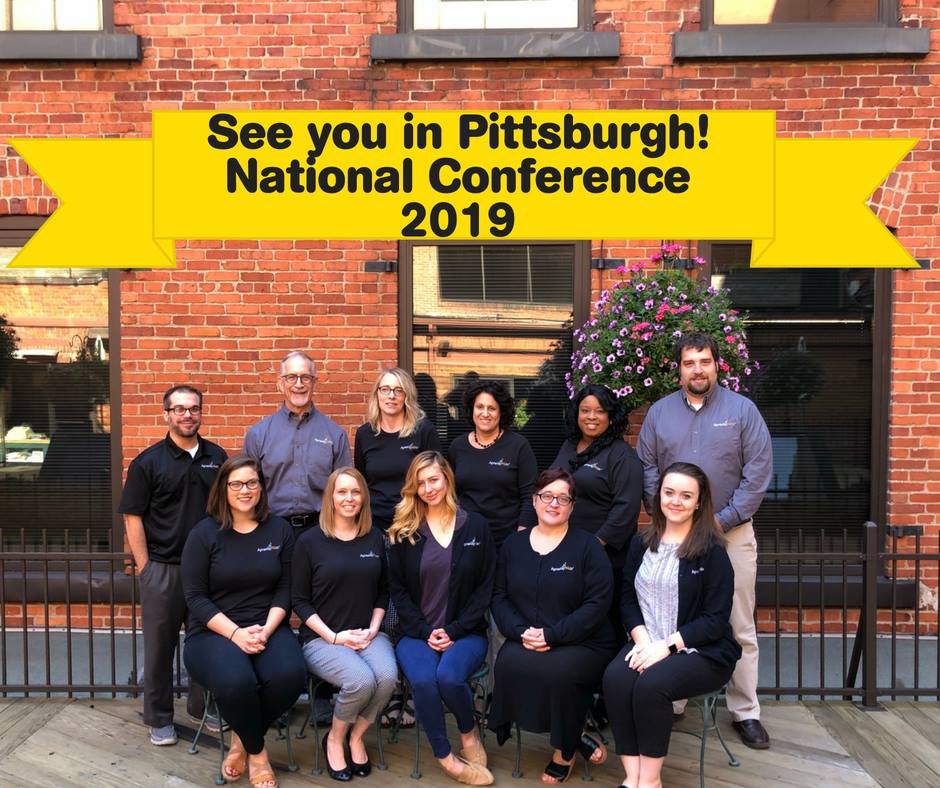
This year before the conference, Justin LeWinter, who is the director of fundraising and who had traditionally been the point of contact for all of the walks nationwide, organized a walk coordinator training along with his team. This was the first time walk coordinators had a formal training in an effort to uniform our walks and learn how to make our walks more successful. Connecting the coordinators in this way made our role seem more formal and more important than ever. The walks generate 2/3 of the revenue for Apraxia Kids! 2/3!! Without us, the programs that Apraxia Kids funds and of which I am grateful for and believe in, would not be possible. I was impressed with how much thought was put in the training and at how organized it was. I was also pleasantly surprised by something else, something much bigger.
I was impressed by the old AND many *new* faces of Apraxia of Kids that are the staff.
The entire staff, I felt, had a very real and deep understanding of just how much apraxia impacts the family. They were sensitive, caring, dedicated and passionate. They were all positive and had contagious energy. I am a sensitive one to energy. Energy, positive or negative, spreads. I couldn’t help but feel good about the future of this organization with new blood, new energy, and new enthusiasm like they had. They definitely re-energized me and come August I know I can confidently tell my community we are raising money for the outstanding organization we all found it to be to begin with. Yes, many old faces were missing and their presence, particularly that of Sharon’s was still felt by me very deeply. Sadly though what I realized, the old faces aren’t the future. As I met, talked with, and listened to all the new faces, I smiled because I realized these *new* faces are the future.
I was also able to talk to many *old* faces (I’m not calling any of you old, just need a word for comparison sake!) still around such as Mary Sturm, President of the Board of Directors, and Sue Frieburger, Board Secretary and the person who started the walk 15 years ago. I was able to listen to the stories and the legacies and I realized that though much had changed, the most important thing hadn’t changed at all. Apraxia Kids is still full of dedicated parents and professionals who come together, share stories, and who develop instant friendships from our shared experiences.
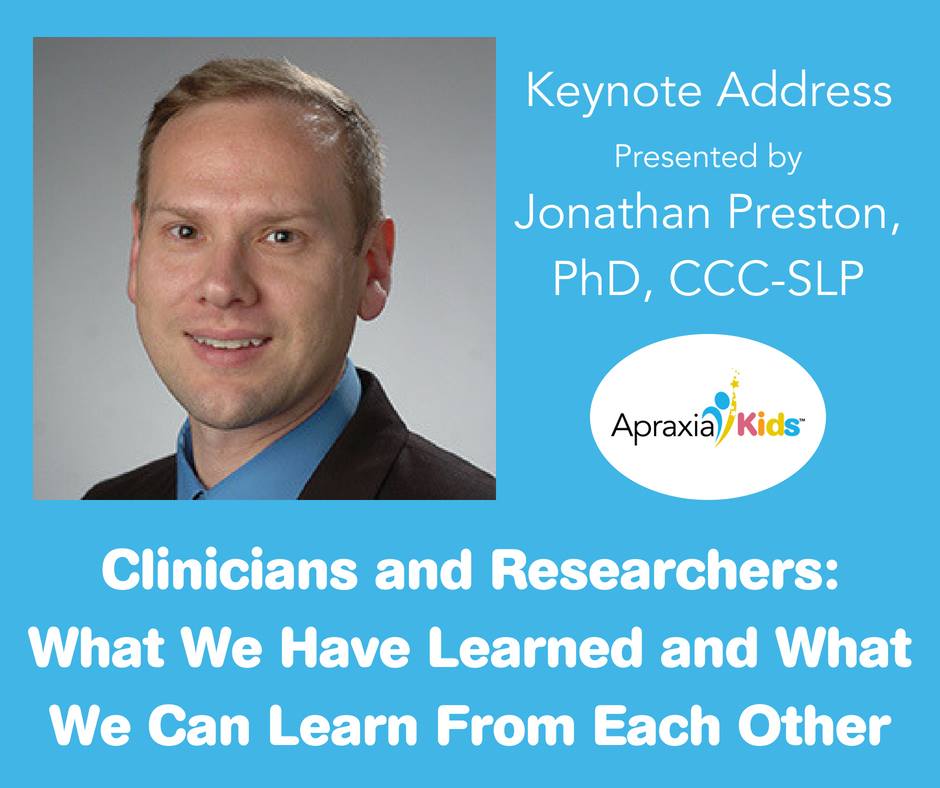
There was David Hammer, Vice President of Programs and international apraxia expert who introduced the keynote: There was esteemed researcher and clinician Jonathan Preston, who delivered the keynote: The next morning there was the panel of national and international apraxia experts that presented many of the various treatment approaches to all the attendees:
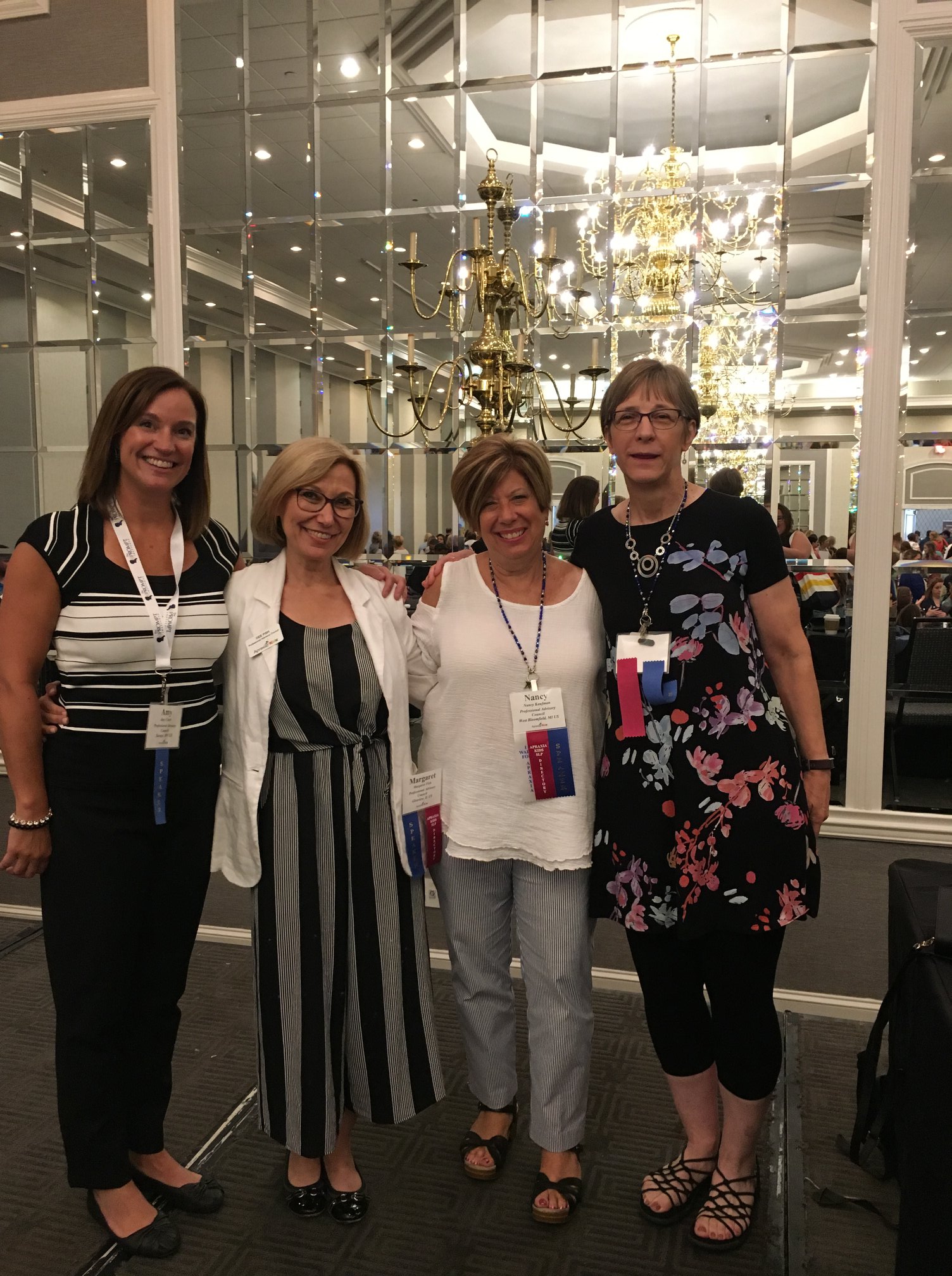
Amy Clark, Margaret “Dee” Fish, Nancy Kaufman, Ruth Stoeckel
Then there were the new wave and faces of “bootcampers” present, who are graduates of the Apraxia Kids intensive training institute. I have so much respect and love for this group of amazing, dedicated and passionate professionals who have made serving kids with CAS and their families a top priority. This group below comprises two of the veteran faces, David Hammer and Ruth Stoeckel, among the faces of up and coming experts around North America, and I say North America because three of them are from Canada!
At one point I looked around at the buzzing open area and I took a deep breath and smiled. Sharon’s decision to step down was based out of selfless love for the non-profit she started. Though I didn’t understand it at first, I understood now. Apraxia Kids is still the organization it was. A group of passionate professionals and experts who come together to network with parents and to arm them with knowledge, community, and power. Though I personally felt Sharon’s loss, I now could be that same hope she had given to me and in turn give back like I always wanted to do. Michelle of Apraxia Mama Bear and Alyson Taylor of Girl With a Funny Accent were there also doing the same thing.
When I got to my hotel room that night, I called Sharon. The words of her friend and Apraxia KIDS president Mary Sturm were ringing in my head. Mary told me that Sharon said she knew she had to step down to advance the organization further; and Mary compared it to that of mother whose child leaves for college. You send them off knowing this is the next step to them becoming independent and successful adults despite the pain in your heart that wants them to stay. You do this because you know it’s the right thing to do, but you still watch with baited breath and an ache in your heart. You watch their every move and cheer them on every step of the way. I thought that analogy was amazing, so that night I told Sharon what Mary had said. I told Sharon I finally understood why she did what she did. I was so mad and sad and basically a hot mess when she told me she was stepping down; however I understood now. I understood because it was unfolding before my eyes.
Before we said goodbye, Sharon left me with these words,
“Hearing this makes me so happy. So this is life, this is us. You pass it on. I love you and all the others who have committed. I know you. I was you, and one day you will meet someone and you will have this mutual admiration and you will know that they are the future.”
Old faces, new faces, and the passing of the torch. The selfless individuals who had been there before were still there giving back like they always had and a new wave stood by their sides ready to continue the mission. I have so much respect and love for the past, and I’m so excited for the future!
The mission has never changed and was never about any one person. It’s about Apraxia and Kids.