Category: apraxia blog

  • Global apraxia, you brought your “A game,” but my daughter’s game is better.

    Global apraxia, you brought your “A game,” but my daughter’s game is better.

    My friend introduced me to an AWESOME website call “The Mighty.”  During the month of March, they challenged readers to write an open letter to a disability that a loved one faces.  I have no idea if I’ll get accepted, but hey, at least I have a blog.  For as much writing I do about apraxia, it was definitely high time to talk to apraxia myself.

    Hello apraxia.  Hello global apraxia.  It’s hard to believe we’ve never talked, especialaughlly since I’ve certainly done my fair share of talking about you.  When I gazed into my new baby girl’s eyes, and laughed along happily to her hearty giggles, I had no idea then that you were there, lurking in the shadows.

    The day I discovered you were behind the delayed motor milestones and the lack of speech I cried heavy tears and felt a weight I don’t think I quite have shaken yet.  You certainly brought your “A game” global apraxia.  I hate to admit I have felt defeated by you before.  However, you never managed to crush a small little girl’s determination, attitude, resilience and perseverence.  We are told you will never go away.  Anything requiring a motor plan will always take “more repetition than most.”  Oh how many times have we heard that?  I hated you once.  I hated watching my baby girl struggle to: speak, to jump, to ride her bike, to drink without choking. In fact I still hate you as I continue to see her struggle to: dress herself, feed herself, and write her name.  In fact, I don’t think I’ll ever quite forgive you when I think about the day she almost drowned.

    Mostly though, I feel sorry for you.  You have no more power here in this house, because my little girl has shown she can beat you time and time again.  She is a hero who wins daily, weekly, and monthly battles, and that winning is something you will never know.  Bet you didn’t expect something so strong to come out of something so small did you?   Well, we actually have that in common.  My daughter’s bramightyvery took me by surprise too.

    You will never know winning here, but because of your stubborness, we only grow stronger and more confident, knowing that any obstacle in our way can be defeated with faith, tenacity, and an unrelenting positive attitude.


  • The day the page went blank.

    I can’t remember a time since I learned to write that I stopped writing.  I was the girl with diaries, journals, writing pads, and notebooks filled with writing.  Obviously now, I continue to write.  There was a time though my writing was noticeably absent.  I recently scoured my notebooks and old blogs searching for what I wrote around the time of Ashlynn’s diagnosis and came up empty.  I had many poems celebrating her birth and first year.  One of my last poems was this:

    Angel

    They told me me you were my baby girl
    as you cried hello to us.
    I believed them at the time
    admist the chaos and the fuss.

    They told me you were my baby girl
    and when I took you home,
    I would gaze upon the sweetest face
    I had every yet to know.

    They told me you were my baby girl
    and I would gaze at you at night.
    I would watch your lips
    flash smiles radiant and bright.

    They told me you were my baby girl
    and I have so many flaws;
    and you are perfect in every way,
    they must have got it wrong.

    They told me your were my baby girl
    and my baby girl you will always be,
    but I know the truth and the truth is,
    God sent an Angel to me.

    I stopped writing shortly after this.  This was the time during  her diagnosis.  I didn’t start again until a year later when I started this blog.

    I guess I could brush it off and say I was simply too busy.  After all, I WAS working full time and then coming home each night to continue speech therapy with her.

    That’s a lie though.  As I’m three years out now and I’m meeting parents who are new to the dx, I realize the devastation and the heaviness was to much for me to even write.  To WRITE.  My outlet, my creative platform, my emotional release.  I wanted to hide it all and be strong.  I had to push forward, but as my friend Kim has said, there is always an underlying sadness threatening to break way at unexpected times.  A mix of guilt, pain, and desperation to help your child that can only be released through tears.  Tears I fought back.

    As I met a mom last Saturday, she broke down three different times.  She seemed embarrassed to say she hand’t told anyone her son has apraxia because she doesn’t want him labeled.  I totally understood what she was saying.  If you read my poem, I would suspect it’s pretty universal.  We see perfection in our child and our children, and a label means other people see something less than perfect.  It is very painful, because despite any imperfections, in a mother’s eyes, our children were “fearfully and wonderfully made.” Psalm 139:14

    I’m glad I started writing again in 2012.

    quote-about-writing3


    My story, OUR story, has been one of success and triumphs.  Yes it is still of struggle, but through the struggles emerge victories, however small.  Yes there is still pain.  Gut punches from reading reports in black and white, but there is also progress and celebrations I might have taken for granted.  There are now friends I never would have met, people I never would have known, and admiration for a little five year old girl that might have never been as great.  If you talk to any mother who has a child with apraxia, they will no doubt agree that child is their

    Hero.


  • Sing, sing out loud!

    Apraxia is a journey.  Speech apraxia is a journey, but global apraxia?  Even MORE SO. So many skills to work on.  So many things to improve.  So many negative prognostic indicators to plow through.

    The good news is that Ashlynn doesn’t know anything about prognostic indicators.  She doesn’t know how heavily loaded she is in the negative column.  Not yet anyway.

    When I first had her receive services she was just under three. Her first week of Pre-K had her singing a melody similar to  the song “Baby Bumblebee” with a lot of repetitive /B/ sound combinations.  I was still able to pick up on it though.

    I remember her first real radio song that she sang.  I vowed to buy the CD back then.  Well, I never did, but I still remember the song, title, and artist like it was yesterday.

    Her current preschool teacher has been AMAZING for Ashlynn.  At parent night, she described herself as someone who puts on “A SHOW.”  I didn’t really understand what she meant, until recently.  She sets everything to song!!  Routines, concepts, new ideas….all set to melody.  Ashlynn has thrived!  She knows about hibernation, her native state of Colorado, and now the seven continents……because of song.

    Ashlynn has sang a song “What’s the matter” frequently since she started school.  That’s the only line she knew though.  Tonight we were eating dinner, and Ashlynn  just randomly busted out a “what’s the WEATHER” song.  OMG.  It’s not “what’s the matter!”  It’s “what’s the weather!!”  I figured out this time, because she sang it all the way through.

    Mommy fail.  Stupid apraxia, but Ashlynn awesomeness despite her apraxia!  Sing, sing out loud Ashlynn!

    Here is the song!  So proud of my girl.  


    20150217_162239981_iOS

  • Pot O’Gold Articulation Game for Apraxia

    Slide1 (2)

    I was finally able to make a new game for my kiddos with enough time to spare for St. Patrick’s Day! This game follows the same idea as my other repetitive games.  Kids have a game board, in this case, a black pot:

    Slide13


    The kids draw a card from the card deck.  If the card contains a shamrock with gold coins, the child collects the amount of coins shown and then practices their targeted speech sound/syllable that amount of times.

    Slide7 (2)


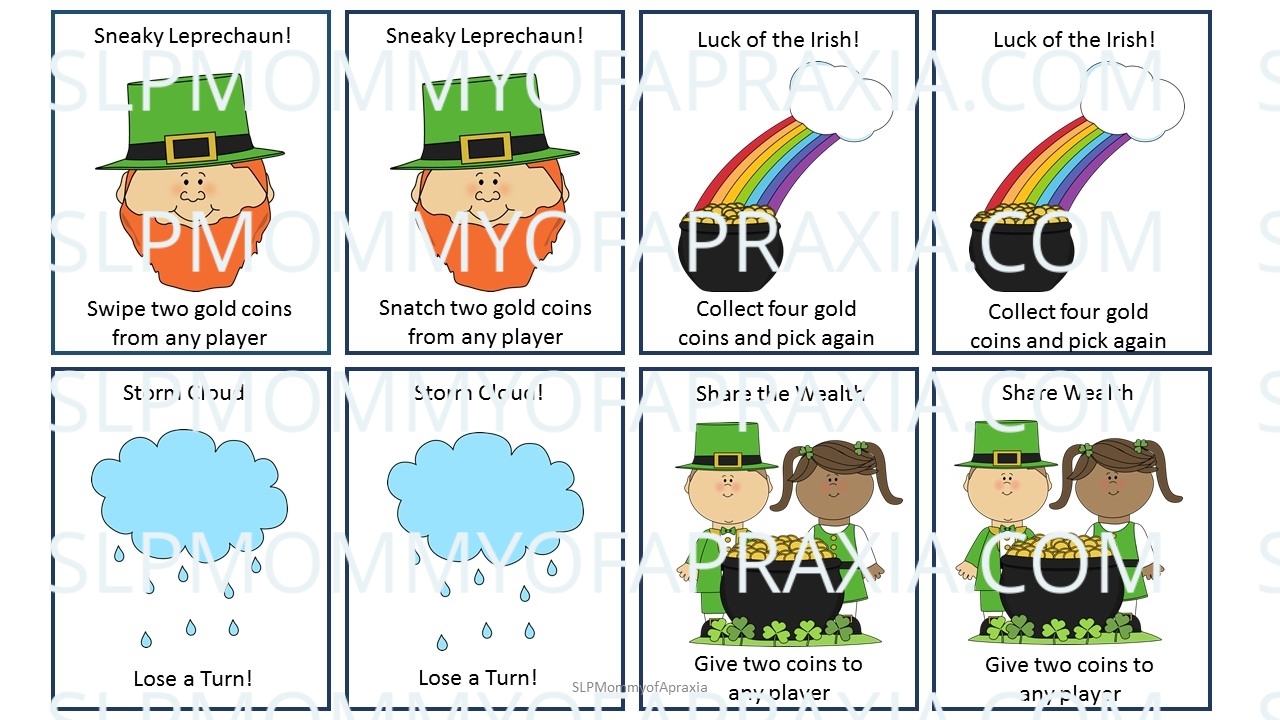
    Some cards have surprise twists that include “snatching coins from other players,” losing a turn, or giving some of their coins to other players.

    Slide11 (2)


    The player with the most coins at the end wins the game! My kids really enjoy these games and I hope kids on your caseload do too!  Enjoy!  Get it in my teachers pay teachers store for free for a short time!

  • There is a difference between not knowing, and not knowing yet!

    Professional development today found me in a room full of teachers checking boxes about our personality characteristics.  In the left column, characteristics were decidedly rigid, black and white, and defeatist.  On the right were characteristics that spoke of resilience, “can do” attitudes, and a try again spirit.

    I felt a little bad going through my own (private) personality.  I marked off mostly a “mixed” personality which was in the middle.  Sample statements?
    “You try to avoid making a mistake a second time.  You don’t like to think of them.”
    “Feedback and criticism make you a little embarrassed.  You may want to stop trying.”
    “You will practice things you are already good at.”
    “You may be willing to try something hard, but not if you are doing it in front of others.”

    In this activity, the right column contained statements of a “growth” personality.  It was clearly the superior and most effective personality to have, and I wished I could check off boxes in that column;  but I could only check off one out of seven.  As I read through them though, I realized Ashlynn fit them all:
    “You will choose something hard rather than easy if you have a choice.”
    “You see mistakes as a chance to learn.”
    “You enjoy practicing and you work hard at new things.”
    “You stick to it, and work hard.  If something is difficult, you try harder.”
    “You are willing to make mistakes.  You’d rather try and fail than never try.”

    Um, could I just pretend I was Ashlynn right now and look good?

    No but really.  That girl is truly UNBELIEVABLE.  Her persistence, bravery, tenacity, and positive attitude all come together to make a person who will be successful despite any challenge.  I’m embarrassed of all the skills I probably have that I just abandoned because I wasn’t naturally good at them.  She abandons nothing.  She faces fear after fear, disappointment after disappointment….head on.  This is the reason for her progress.

    One disadvantage to being in the profession while being her parent,  is I see something called “prognostic indicators.”  Every clinician, including myself, has to look at these indicators in making a prognosis. I mean, let’s face it.  Sometimes the prognosis for apraxia is not good.  Some might never achieve functional intelligible speech.  That’s just reality.  I told a mom the other day, apraxia is a beast.  It’s not just your typical speech and language delay.

    Ashlynn, unfortunately, has a TON of check marks in the negative column.  Each additional apraxia adds a check:
    Verbal
    Oral
    Gross
    Fine
    Visual
    Other co-morbidities add a check:
    Sensory Processing Disorder
    Attention issues

    That’s not a good starting point, and I haven’t even listed them all.  Let’s just say on the positive side “one kick ass family” falls in that column; as one woman I highly respect put it.
    Let’s just say, my family is on that side.  Powerfully on that side.  We have strength in numbers, we have prayer, we have God, and that is going to kick apraxia’s butt.

    As I sat there thinking this though, I started to realize, maybe I’m not so heavy in that Mixed column.  When it comes to my kids, I’m pretty heavy in the Growth Column.  That same woman I just said I respect, also told me I was underestimating my own resilience.  I didn’t hear her at the time, but maybe she’s right.   When it comes to my babies, I am 100% in.  No mountain is too big.  No criticism is too harsh because none of it matters.  I don’t care what people think my kids can’t do, because I know what they can do.  I know what I can do, and we’ll overcome them all together.

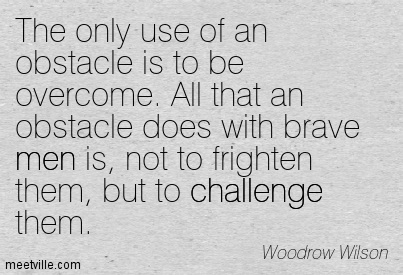
    Quotation-Woodrow-Wilson-challenge-men-Meetville-Quotes-92455


  • Accuracy of IQ scores with global apraxia

    Cognitive testing, psychological evaluation, IQ, psychologist, neuropsychologist.  What do all these have in common?  What do they have to do with a child who has a speech delay?  What does it matter?

    Tests of intelligence, commonly referred to as “cognitive” testing in the schools, are standardized measures usually administered to children as part of a complete battery of testing a child will receive when being considered for special education services (including just speech).

    Ashlynn never had a cognitive test administered when she was first found eligible for special education services because she was so young.  She is now five, and it is her three year review.  As part of the battery of assessments, the school district is really pushing for a cognitive assessment.  I’ve been hesitant for multiple reasons.  This article on apraxia-kids.org Special Considerations for Psychological/Educational of Children with No Speech or Unintelligible Speech  sums up my main fear.

    “The first thing to keep in mind when testing children with significant speech delays is that most standardized tests of intelligence will either be inappropriate or of questionable validity.”

    Apraxia of Speech definitely fits the bill in the definition of “significant speech delay.”  In the schools, at least in the districts I have worked in for the past ten years, the test of choice remains the WISC (Weshler Intelligence Scale for Children) and the WPSII (Weschler Preschool and Primary Scale of Intelligence).  These tests are great and provide a lot of information about how children learn.  However, as the article points out, they would “at best, provide a crude comparison of a child’s ability in certain areas.”  I would also add, that if a child has GLOBAL APRAXIA, meaning motor planning issues effecting the entire body, they are at even MORE of a disadvantage.  There are visual scanning and visual motor components that will obviously come out low if the child is still in OT working to improve these skills.  There are fine motor and  pencil/paper tasks that will also come out low if the child is still working to improve these motor skills.   To be blunt, I don’t think they are many subtests that could be validly assessed when a child is globally impacted.   Which leads to my second fear that again this article sums up nicely,

    “The second consideration (and most important), is that these types of tests should never be used to make predictions about a severely language impaired child’s eventual functioning.”

    I want to laugh, and this is really NOT funny.  I want to laugh because unfortunately this DOES happen ALL the time in the schools.  It’s sad to say but I hear this statement quite frequently, “Well, he’s performing to his potential.”

    Yep friends.  It’s not like I’ve heard this once.  I’ve heard this so, so, soooooo many times over my career.

    Now, it’s not all bad.  If the cognitive assessment is an accurate reflection of the child’s abilities, then it is important that we are not pushing a child to do something that they just cannot do.  It’s not fair to the child.  It causes stress, it makes them feel stupid, and many times they feel like failures.  Accepting a child where they are at is important.

    However, if the score is inaccuratethis is also not fair to the child.  That is why these types of tests should never be used to make predictions about the child’s eventual functioning……but as I’ve just explained, they are, more frequently than not, at least in my experience.

    So, what do we DO about this?  Well that certainly has been my dilemma as of late.  I can tell you what I am doing.  If the school pushes to test, then I will talk to the psychologist and make sure a nonverbal test of intelligence is administered.  I do not want a test that has a verbal section.  Period.

    I am going to take Ashlynn to a neuropsychologist for testing.  A school psychologist is trained and qualified to assess cognition, but they do not have the advanced training in neuropsychological and cognitive testing that a neuropsychologist does. Why is this important?  Well, I personally think a psychologist with more advanced training in neurological disorders and subsequent testing will yield more accurate results.

    Lastly, I’m still going to be Ashlynn’s biggest fan, the one who has her back, and the one in her corner.  I know her potential and I’m going to make sure she always knows it too.
    10959359_380345585480442_7809582703136476705_n