Category: apraxia blog

  • The five words and a report card that broke me

    The five words and a report card that broke me

    It started with 5 little words.

    I hope I did GREAT!” my ten year old daughter with about every learning disability possible said yesterday in the car.

    She was referring to her report card after her younger brother had pulled his out of his backpack and celebrated for getting all 3’s. With this new grading system, kids are given a number of 1-4. No one really gets a four because it would mean you know all the skills, so to get all three’s is outstanding.

    I hope I did GREAT,” was echoing in my ears before a deafening silence after looking over her report card.

    She is on a modified curriculum and so she is graded by her special education teacher through the IEP (individualized education plan). Last year for subjects in which the curriculum was modified her teacher put NA and Ashlynn looked for the classes in which she didn’t have modified curriculum. I had assumed it was the same this year.

    It was only when we got home did I realize the reason for the deafening silence. He report card was littered with all 1’s.

    I hope I did GREAT!!!” echoed in my ears again.

    So full of hope. So full of knowing. So sure that she had worked so hard and surely the grades would show it. As her eyes searched my face I couldn’t help tearing up.

    Oh Ashlynn, this doesn’t mean anything. You’re not graded by the general education teacher. You’re graded by your special education teacher through the IEP we just had and everyone said you ARE doing SO GREAT!!”

    “Can we read it mama?” she offered.

    I immediately went and grabbed her IEP and through tears read the first line,

    “Ashlynn is an amazingly hard worker, she never gives up trying and rarely can been seen without a smile on her face! She very much enjoys all aspects of school, from general education, to special education, lunch, recess and specials.”

    (as a side note thank you to the professionals who make a point of writing strengths based reports)

    Would you like to know what wiped the smile off that girl who is rarely seen without a smile?

    A report card full of 1’s.

    I hope I did GREAT!”

    It just broke me. There I was in a kitchen floor moment, as we call them in the apraxia world. Ashlynn gets worried when I cry so I explained I was crying happy tears because I was just so proud of her. Accepting this answer we went through all the rubrics from her service providers and always the positive Ashlynn, a smile returned to her face as she found all the big numbers and cheered for herself.

    My seven year old son came out of his room and told her things like, “Good job Ashlynn! You’re doing so great!”

    Even a seven year old knew how hard his sister worked and how devastating it would be to see all 1’s.

    I hope I did GREAT!” still rung in my ears.

    It was so painful I had to leave the house and just cry for her. She is always working. She is ALWAYS working. Her bedroom is full of books and papers. She practices all the time, not to mention all the work she does at school, in therapies, and at tutoring. She doesn’t deserve to do all this work just to see a report card full of 1’s.

    I’m going to develop a new plan for report cards so this doesn’t happen again. I’m hoping to either go back to getting NA on the report card for subjects in which the curriculum is modified, or I want an accommodation written into the IEP that report cards are not sent home with Ashlynn anymore.

    I hope I did GREAT!” needs to never, ever again be crushed in the little girl who is an “amazingly hard worker” and who “never gives up trying.”

    She did do great. She always does great. She IS great.
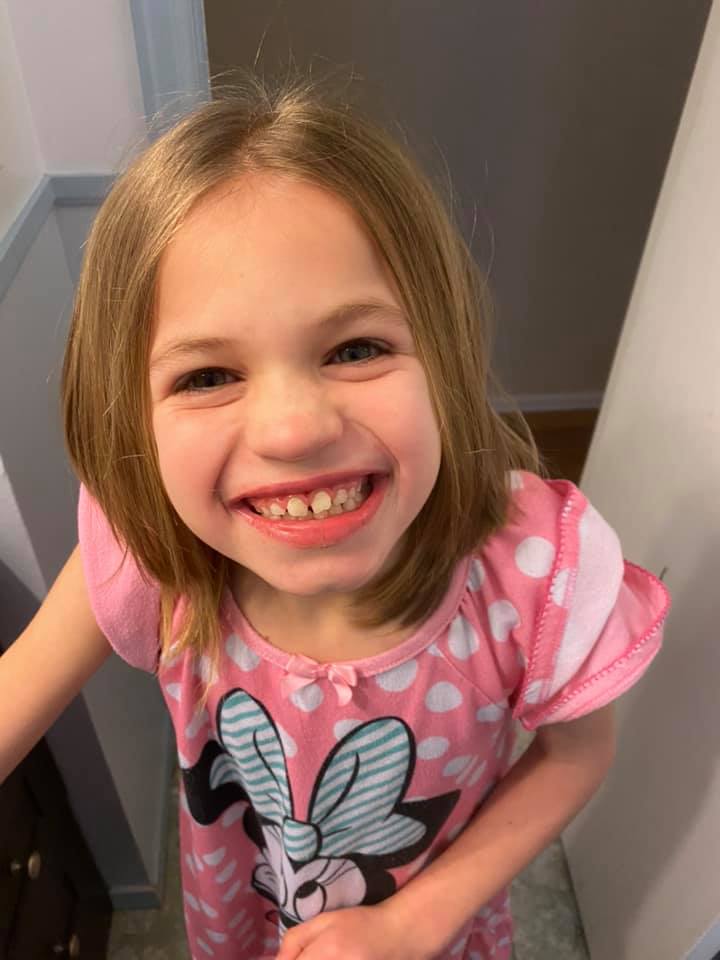
    Rarely seen without a smile

    Laura Smith, M.A. CCC-SLP is a 2014 graduate of Apraxia Kids Boot Camp, has completed the PROMPT Level 1 training, and the Kaufman Speech to Language Protocol (K-SLP). She is the author of Overcoming Apraxia and has lectured throughout the United States on CAS and related issues. Currently, Laura is a practicing SLP specializing in apraxia at her clinic A Mile High Speech Therapy in Aurora, Colorado. 

  • Apraxia and the Mamba Mentality

    Apraxia and the Mamba Mentality

    At the beginning of 2020, the world received word that world famous basketball player Kobe Bryant died in a helicopter crash with his daughter Gianna.

    After his death, people were chanting and hashtagging #mambamentality. Though I had heard of the “Black Mamba” and the “mamba mentality,” in relationship to Kobe, I have never followed professional basketball that closely, and didn’t really know the origin of the phrases or what they meant.

    After searching the “mamba mentality” I found this interview article in which Kobe describes it in his own words. While I was reading it, I realized that apraxia taught our kids the Mamba Mentality early on in their life. Here are a few quotes straight from the mouth of Kobe Bryant.

    The Mamba Mentality is:

    ” Doing more than the next guy and then trusting in the work you’ve put in when it’s time to perform.”

    ” If you have a goal or a dream, you need to apply the Mamba Mentality to achieve it. Everything worth achieving needs total focus and dedication.”

    ” Hard work outweighs talent – every time.” (this one is my favorite).

    Apraxia and the Mamba Mentality

    In the throws of an initial diagnosis, the apraxia diagnosis broke me. I was in despair for my daughter and determined to do anything in my power to help her speak. I gave it everything I had and getting her the help she needed took my total focus and dedication – Mamba Mentality

    Throughout the process of therapy and learning to talk, Ashlynn gave it everything she had, every session. My clients do the same. Ashlynn and children with apraxia put in WAY more work than other children just learning how to talk. When it was time to perform they many times may have fallen short, but always got up again. Speech for apraxia is intense and direct and talking didn’t come easy, but hard work outweighs talent every time. – Mamba Mentality

    I posted a video from Neil deGrasse Tyson the other day about a parent’s job not being so much to instill curiosity in children as to be being sure not to squash it. I might venture the same is true about the resiliency that apraxia taught our children early on. I think it’s easy for us to want to take away their pain and make life easy for them after watching them struggle to do a basic human right: Speak.

    However, that “struggle” built a natural “mamba mentality” and if they can keep that mentality throughout their entire life they are already ahead of game.

    I’ve had the privilege of meeting many older individuals who grew up with apraxia now, and by and large their work ethic, drive, determination, and resiliency continues to help them achieve great things. – Mamba Mentality

    Watching my daughter fight to overcome apraxia and then all of her other learning disabilities put this “mamba mentality” inside of me. I was not ever going to give up. I was going to keep my drive and determination no matter how many times I failed. I was going to keep working and striving not only for her but toward a greater vision of apraxia awareness and I was going to remember what Babe Ruth when he said, “You just can’t beat the person who never gives up.”

    It would seem Babe Ruth too had the mamba mentality.

    As the world said goodbye to Kobe Bryant at his celebration of life today, I thought about how a true legacy is not just achieving some amazing feat. A true legacy is an amazing feat paired with how many others were inspired to be better and be something greater because you existed.

    Who will you or your child inspire with their mamba mentality?

    Laura Smith, M.A. CCC-SLP is a 2014 graduate of Apraxia Kids Boot Camp, has completed the PROMPT Level 1 training, and the Kaufman Speech to Language Protocol (K-SLP). She is the author of Overcoming Apraxia and has lectured throughout the United States on CAS and related issues. Currently, Laura is a practicing SLP specializing in apraxia at her clinic A Mile High Speech Therapy in Aurora, Colorado. 

  • The IEP meeting I wanted to attend.

    The IEP meeting I wanted to attend.

    I never knew before I had a child with an IEP (individualized education plan), how awful these meetings can be for parents.

    Before I had my daughter, IEP meetings were part of my job and I attended them weekly with a room full of colleagues and the parent or parents. I had no idea how it felt being on the parent side. I do now and it feels scary, nerve wracking, and very intimidating.

    I haven’t gone back and added it up, but today was at least the 9th and probably 10th IEP meeting (individualized education plan) we’ve had for my daughter Ashlynn. I don’t think I’ve ever had a meeting where I wanted to go to it. I can particularly remember the meetings that gutted me. Looking back it probably wasn’t any one educator’s fault. It was my position in the process of it all. It was like additional problems kept adding up. Just when I thought I had apraxia down, she would get ADHD, dyspraxia, issues with memory, issues with language comprehension……and the meetings were full of her can’ts. I could talk about how to write a strengths based report or run a strengths based meeting, but in the end even that wouldn’t have been enough to fill or patch the holes from the stab wounds from all of her can’ts.

    This time though was different.

    Starting last year, Ashlynn started to turn a corner. She was no longer speaking in as many “scripts” but was formulating her own novel sentences. She grew exponentially on her reading. The special education team got to know her and they saw what I saw and believed what I believed Ashlynn was capable of. Instead of the words “she requires more repetition than most,” hurting my soul, I was encouraged because they said it with the conviction behind it that they would get her those extra reps because she is capable.

    This entire past year I’ve felt the momentum and seen her IEP goals in action in Ashlynn’s everyday life.

    From SPED, I’ve seen Ashlynn finally understand money, time, and her math facts. She has RETAINED these facts. Did it take one hell of a lot of repetition? You betcha, but they did it and when Ashlynn has learned something, it’s like riding a bike; she doesn’t lose it. Ashlynn’s reading has continued to improve and we are working toward closing that gap. We aren’t there yet, but I SEE it. I SEE it and I feel the momentum. I’ve seen it within her book choices and through her reading out loud. In addition, many skills she needed accommodations for she is now independent with. She has mastered the classroom routine, she doesn’t need direct line of sight supervision for safety, and she is independent with basically all of her ADL’s (Activities of Daily Living). The one that made me smile was teaching Ashlynn to stop and think and give her time to process and understand what was being said so that she could give a thoughtful answer instead of just blurting out anything. We all laughed because she will frequently now tap her brain and say “hmmmm” to give herself time to think. Again, seeing IEP goals materialize in my child is not something I can quite explain. It’s phenomenal.

    From her SLP I saw the direct result from her working on formulating more complex sentences with “so” and “because” come to life at home. In addition, all the vocabulary work done in speech has seemed to literally lift Ashlynn out of her language disorder fog. Where before language was literally just flying over her head, she is comprehending and making connections like she was never able to before, and again I’m seeing that in her everyday conversations with me as well.

    From PT we remarked at how she can perform tasks like standing on one leg for 6-9 seconds and doing jumps etc, something that once seemed like a pipe dream with her hypotonia, cerebral palsy, and major motor planning problems. I told her how she could now ride a bike with no training wheels and that Ashlynn chooses to do workout videos and could follow along.

    From OT we marveled at her mastery of her ADL’s around school, how she can tie her shoes now, and her ability to follow up to 3 step directions that involve motor planning tasks. With adapted graph paper, Ashlynn’s can complete writing assignments and really is just working on putting it all together: getting thoughts on paper, letter formation, spacing, punctuation and legibility. She can do all of those tasks adequately if given separately. I’ll take that. There was a time she couldn’t write her name. That took “more repetition than most, ” but I smiled this time. I had it all wrong before when that phrase would burn me. No one said she can’t do it, and that’s what’s important. More repetition than most? Deal. Bring it on. THAT we can do.

    From mental health she is doing great with whole body listening and finding more peers to play with and inserting herself into play on the playground. Next step is learning how to engage socially with peers in conversation.

    The whole meeting was amazing. I was on cloud nine. The takeaway? Ashlynn’s going to make it.

    I sat there and thought back to Ashlynn’s early days. Was this really the same girl? The girl who would get too distracted she couldn’t even hang up her coat and backpack and get to class without assistance? Was this the girl who spent all of preschool, kinder, and preschool just learning the letters of the alphabet, much less learning how to read? Was this the girl who spent Kinder, 1st, and 2nd grade trying to master addition and subtraction and now was rocking that but also money and time? Was this the girl who was so clumsy and uncoordinated that she couldn’t ride a tricycle or put her shoes on the right feet much less tie them?

    It was and she was freaking killing it.

    Though there were many, many, many times I felt defeated, I NEVER was defeated. I always held the vision for Ashlynn. I held it steadfastly in my mind and promised her that even if I was the only person who ever saw her potential, I would never give up on her and I would fight to the end. I was prepared for war. I listened to inspirational songs and videos to keep the faith. I also worried and fought and lost sleep and prayed. Oh did I pray, but it wasn’t that she would overcome. I always knew that you see. I always knew she had a divine purpose. I prayed for a team that would see Ashlynn like I do and help her fly.

    A couple of months ago, filled with gratitude, I nominated her SPED teacher for a district award.

    It’s called the Golden Heart Award and is bestowed to any educator in special education who has gone above and beyond for a student in the program. Because coincidences are the Universe or God’s way of talking to us, Colleen received notice she was awarded this honor TODAY – the day of Ashlynn’s IEP.

    I thought to myself,

    “Sounds about right.”

    Laura Smith, M.A. CCC-SLP is a 2014 graduate of Apraxia Kids Boot Camp, has completed the PROMPT Level 1 training, and the Kaufman Speech to Language Protocol (K-SLP). She is the author of Overcoming Apraxia and has lectured throughout the United States on CAS and related issues. Currently, Laura is a practicing SLP specializing in apraxia at her clinic A Mile High Speech Therapy in Aurora, Colorado. 
    Purchase Overcoming Apraxia on Amazon.

  • A letter to my son, a sibling to a child with a disability

    A letter to my son, a sibling to a child with a disability

    There’s this saying if you want to know how to treat a child with a disability or special needs, watch their sibling.

    Today after school I chatted with a mom who has a child with Down Syndrome in third grade. We’ll call him M. Ashlynn my daughter is in the integrated learning center program with him though she is in 4th grade, but they frequently see each other in the resource room. This mom and I have a lot in common and so it was good to catch up on a brisk but sunny day in The Mile-High City.

    My son who is in 2nd grade, darted off to play on the playground with the other kids whose parents were letting them play after school. Ashlynn and M played near us before finally going off to also play on the playground independently.

    This mom and I were talking about things parents who have kids with special needs/disabilities always do. Increasing independence. IEP’s. SPED teachers. Para support. Special needs camp. Opportunities for inclusion. Peer socialization. Basically none of the same things parents who don’t have children with unique needs talk about and so when you find someone in your tribe there is a lot ot catch up on.

    On the topic of peer socialization, we also had a lot in common. With other special needs kids our children our both leaders and outgoing. The problem lies with other “neurotypical” kids in society where it seems more difficult for them.

    As we looked out on the playground, our two kids were playing happily on the slide with each other, but completely isolated from the other kids. All the other kids (including my son) of all ages were all playing with each other on the swings or on the blacktop. It was a perfect visual example of what we were in fact just talking about. I embarassedly remarked that even my son it seemed excluded them.

    She was kind and laughed it off saying, “In his defense, he has to be around his sister all the time.”

    The mom then begain telling me that some kids in M’s class had asked about Down Syndrome one day when she was there. She said they asked questions like “how did he get it?” The tone of their voice made her think they thought maybe you could “catch it” from being around him. My mind instantly flashed back to an apraxia awareness day event I had with a 5th grade student with apraxia who asked Ashlynn’s 2nd grade class who thought they could “catch it like a cold” and every child raised their hand.

    I told her as much and we remarked that instead of OUR kids needing the socialization, perhaps it was the OTHER kids needing more education on those who have differences.

    That’s when we looked back to the playground. All the other kids were still on the swings and blacktop playing and interacting with each other. Our kids with unique needs were still isolated by themselves on the slide. But something was different. Something that brought tears to my eyes.

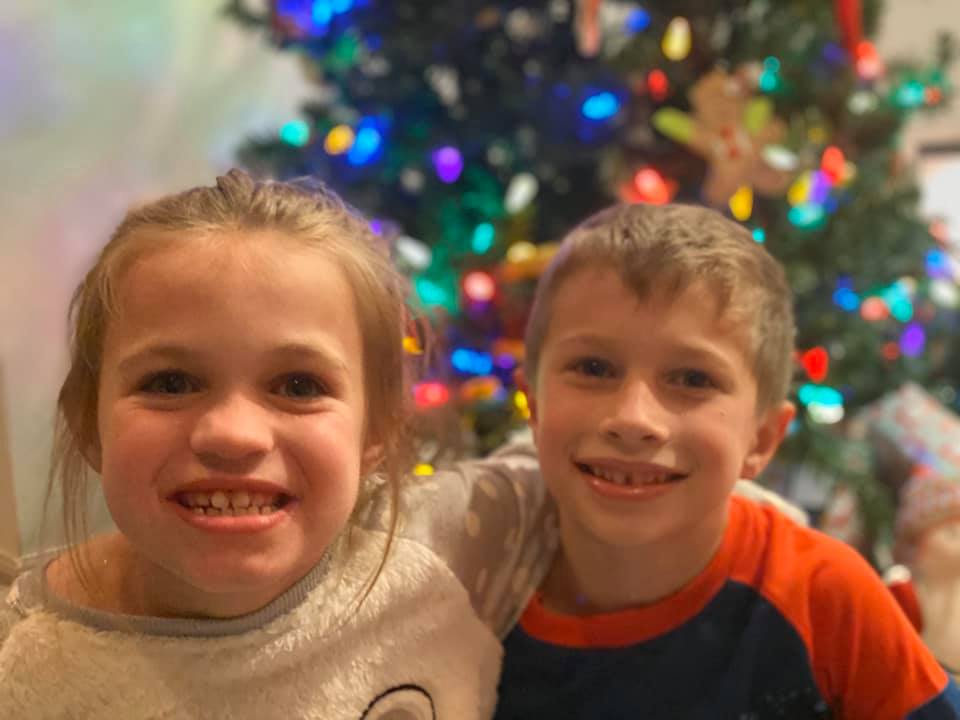
    My son Jace was on the slide with them. He was playfully giggling and engaging with both M and my daughter and they were all smiling and having the best time. From a distance it would have been impossible to tell there was a neurotypical kid, a kid with Down Syndrome, and a kid with a genetic mutation. From a distance there were just three kids playing on the slide.

    Siblings. So wise. So authentic.

    Literally one of the proudest days of my life being Jace’s mom.

    Jace has it hard. He does. It’s not easy street being the sibling to a child who seemingly gets so much more attention. But today, I remembered that every situation can break us, or teach us and in turn, we can teach the world the lesson we learned through our example.

  • Top Ten SLP Mommy of Apraxia posts for 2019

    Top Ten SLP Mommy of Apraxia posts for 2019

    Hi readers! Not only another year, but another decade is coming to a close! My daughter Ashlynn was born in 2009, and it’s astounding all of the changes that set off in my life throughout the past ten years! This past decade was one of joy as a I built my family, but also sorrow facing numerous challenges with Ashlynn.

    I have faith though that this next decade will be one of overcoming! I know ten years from now I’m going to be writing another success and triumph story, much like I did in the book I published this year called “Overcoming Apraxia.” I also want this next decade to be one of exponential growth in apraxia awareness and information so all children have the access to the best therapy.

    Happy New Year and I wish you all a blessed 2020!

    Here are my top ten posts from 2019.

    1. The Exploding Genetic Findings in Childhood Apraxia of Speech
    Click here

    2. Growing up with CAS: Never Stop Dreaming

    Click here

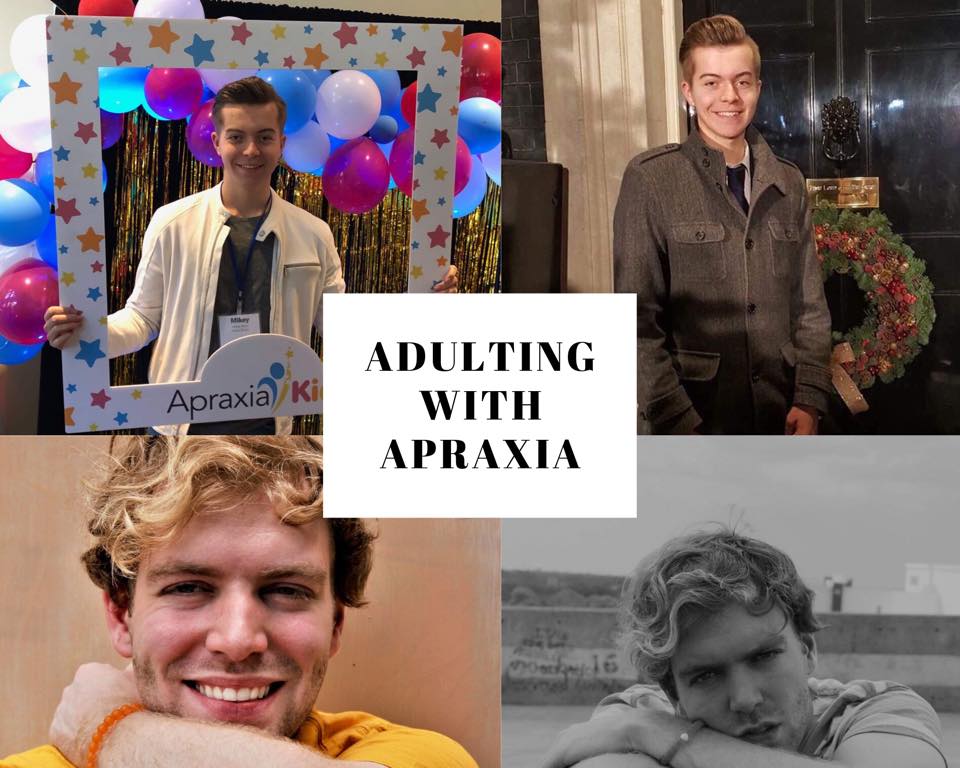
    3. Adulting with Apraxia

    Click here

    4. Hammering out Apraxia

    Click here

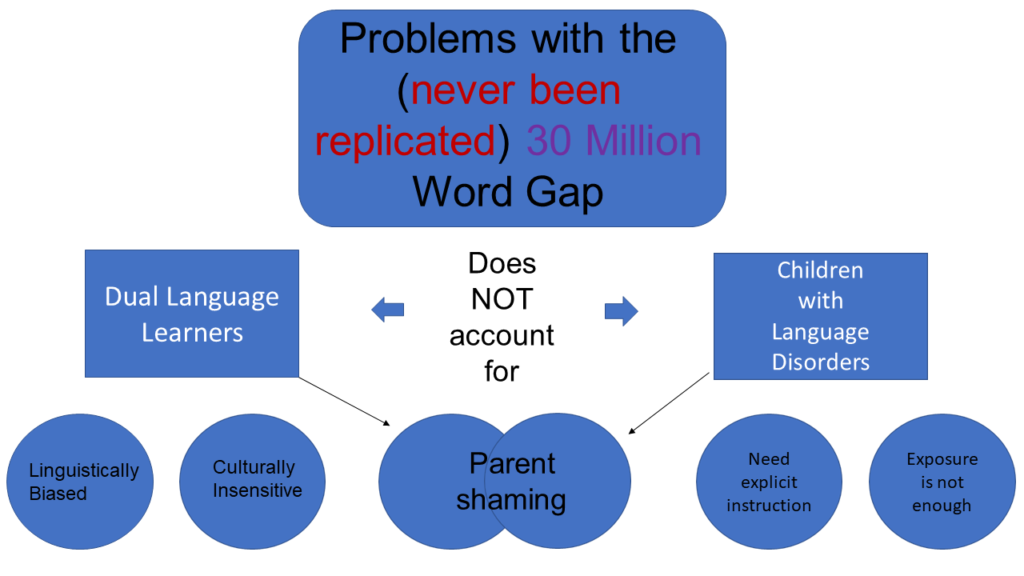
    5. Mind the (30 milllion) Gap: Beyond the Catchy Headline

    Click here

    6. Who diagnoses Childhood Apraxia of Speech?

    Click here

    7. Did I cause her CAS?

    Click here

    8. Oral Language and Phonological Skills May Be the Best Predictors for Reading Disorders in Childhood Apraxia of Speech

    Click here

    9.Shaming parents about home carryover

    Click here

    10. Growing up apraxia: I want them to learn what it is

    Click here

    Happy New Year friends! Always believe in the magic of new beginnings! Stay present. Love. Hope. Live.

    With Gratitude,
    Laura

  • Top Ten Questions for SLP’s treating CAS

    Top Ten Questions for SLP’s treating CAS

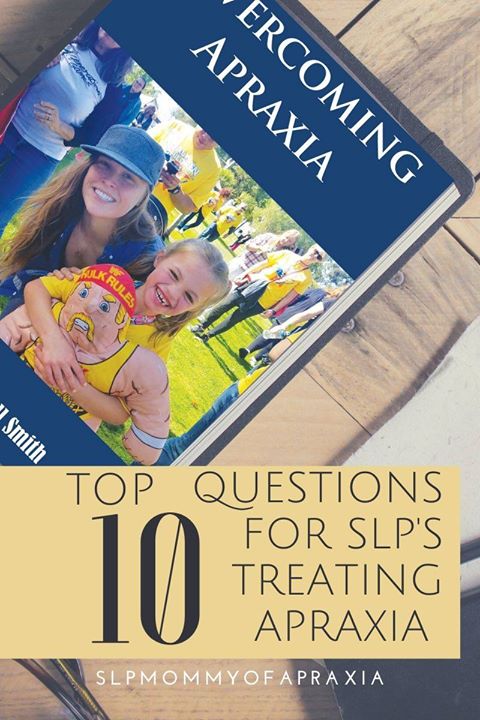
    I recently posted a quote from my book Overcoming Apraxia that was met with a lot of questions. The first question was from SLP’s asking about the additional trainings and resources I would recommend. You can read about that here. The second question came from parents wondering what questions to ask? I’ve created a (not exhaustive) list of questions to ask a potential SLP about their knowledge and experience treating childhood apraxia of speech.

    As I was writing them, I thought, though this list is a great starting list for parents, this is ALSO a great list for SLP’s to ask themselves when evaluating whether they are actually an expert in it! Self reflection is always good, right?”

    Okay so here we go! My top ten questions for speech-language pathologists!

    1. How comfortable do you feel treating childhood apraxia of speech?
    2. What treatment approach do you use?
    3. How is treatment for CAS different than other speech sound disorders?
    4. Do you have any additional trainings or certifications in apraxia?
    5. What causes apraxia?
    6. What are the red flags for apraxia?
    7. How do you diagnose apraxia?
    8. What are the principles of motor learning and how are they used in therapy?
    9. How many children have you treated with CAS?
    10. What resources would you recommend for parents?

    What other questions would you ask? Find me on social media under the handle SLP Mommy of Apraxia and let me know!

    Laura Smith, M.A. CCC-SLP is a 2014 graduate of Apraxia Kids Boot Camp, has completed the PROMPT Level 1 training, and the Kaufman Speech to Language Protocol (K-SLP). She is the author of Overcoming Apraxia and has lectured throughout the United States on CAS and related issues. Currently, Laura is a practicing SLP specializing in apraxia at her clinic A Mile High Speech Therapy in Aurora, Colorado.