Category: apraxia blog

  • Is medication a last resort, or is it a stone left unturned?

    Is medication a last resort, or is it a stone left unturned?

    If you really know me, I come from a family who believes in natural health.  That’s not to say I didn’t see a pediatrician; but it IS to say, I would see a chiropractor before I saw a pediatrician.

    I’m not here to debate this with you. I’m only mentioning it to describe my background.

    When I was pregnant and dreaming of my future children, medication for ADD was definitely no where in the schema.  Written in the said future schema included: one would look like my husband and be mischievous ( in a cute, I’ve never been a parent yet way), and one would look like me and follow all the rules.

    Sigh.  Smile.  Perfect.  Yes.

    I quickly figured out, God had other plans and they can be summarized basically by, “bahahahahahahahaha.”

    Okay, I might be exaggerating, but that is how it feels.

    The blow that Ashlynn had apraxia was blunt and powerful.  Ugh. Even as I write that, I can’t think of a word to describe how forceful the blow was.  It took my breath away.  It knocked me out.

    Why?

    Why MY baby?  My beautiful, sweet, kind, loving, baby.  Why her???  How dare it. Life is sooo not fair.

    I’ve reflected now, years later….and there is no ideal person to get apraxia.  How silly.  I was so indignant at the the time though.  MY baby didn’t deserve it.  Okay….but does that mean someone else’s did?  I see “someone else’s” babies in my work everyday, and I can tell you, they don’t “deserve” it either.

    Oh, but I’m off topic.

    When she first started her preschool center program at 3, I finally felt a small weight lifted off of my shoulders, thinking I finally had her started on a solid program to help her between school and private therapy.  That was until not even a week in and they told me they were ‘VERY CONCERNED” with her attention, and it was so bad, they wanted to put her on a behavior plan to help her.

    “No, no, no” I just remember thinking in my head.  I can’t handle more.  Apraxia is enough. Please don’t give her more….please don’t give me more.  I wrote about that day in my post: New Worries

    Since that time, attention has always come up in almost every parent teacher conference and IEP meeting.  I finally came to terms she did indeed have attention issues, but I was convinced it was part of her sensory processing disorder.  I actually still do believe that, but I’ve also discovered through the support groups, that almost every single kid with global apraxia and SPD also has attention issues.  Some have medicated and found great success, others were holding out like me, trying a variety of other things to help improve it.

    Recently, I was really happy  to see that the sensory breaks before and during school seemed to be really helping her “pay attention.”

    “Pay attention.”

    I put that in quotes because Ashlynn definitely looks like she’s “paying attention.”  She is sitting quietly and looking at the teacher most of the time.  I started to notice though, just because she learned how to look like she was paying attention, it wasn’t helping her learn.  She seemed to be allocating so many cognitive resources to the very act of looking like she was paying attention, there didn’t seem to be much room for processing things being taught.  Even basic questions she wasn’t answering.

    My husband had decided long ago she needed medication.  He was just waiting for me to come to terms with it.

    Sigh.  What to do, what to do.  She is learning, but could she learn more if she could free up resources going to “paying attention?”

    Pray.  Cry.  Pray. Worry.  Repeat.

    Then it came.  A “coincidence.”

    The ASHA conference came to Denver.  I got to see Sharon Gretz, the executive director of CASANA and talk to her for a bit 1:1.  We had just come out of a session that was summarizing longitudinal data showing that kids with apraxia were more at risk for psychosocial disorders (anxiety, ADD, etc) than typical and speech delayed peers.

    The topic leant itself to me talking about my worry regarding Ashlynn’s attention.

    “Laura,” she said, “why does it seem you are looking at medication as a last resort?”

    “Because it is.”

    “I disagree.  Why can’t you look at it as just something else to try?  If it doesn’t work so be it, try something else.”

    Silence

    “I…I…I feel like it’s so final.  I don’t know, like  I gave up on her and took the easy way out.”

    Her advice?

    “Try it for three months.  See what happens.  If it doesn’t work or there are ill affects, so be it.  Then you can try something else.”

    That was a couple weeks ago at least now.  I’ve been chewing on that.  Tossing it around in my head.  Cody just smiles and says he’s already come to terms with it.  He’s just waiting on me.

    Yes.  I know.

    I picked up the phone the next day, and put it down.

    I picked it up again and called, and then hung up.

    Sigh.

    I finally made the call.  She will start a very low dose this weekend.  I still can’t help feeling like I have given up.
     

    12341108_10208104144991065_2172785747545902086_n


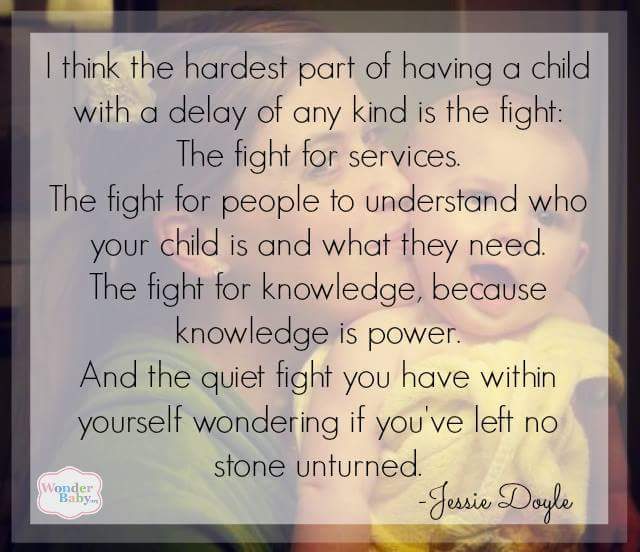
    It will always be an internal fight wondering if I’ve left no stone unturned.

  • Though we experience many defeats, we must never be defeated.

    Though we experience many defeats, we must never be defeated.

    12239653_918175701594506_5746509227756152157_n

    The dreaded parent teacher conference.  Man, I had NO idea before I had Ashlynn how emotional school meetings are for parents.  I’m pretty sure that is across the board regardless of a child having additional challenges or not, but it is SO brutal for us who have children with additional challenges.

    I think I was clueless for a couple reasons.

    1.) As a child, I loved parent teacher conference.  They were usually really predictable.  I had good grades, my teachers praised me and in turn my parents praised me, and everyone left with smiles.

    2.) As a professional in my pre-children days, I interpreted silence as many things such as: agreement, disinterest, lack of caring, inattention……..oh I could go on, but let’s not.  Let’s talk about what I have recently discovered silence usually means:

    PAIN, WORRY, IMMEDIATE PREOCCUPATION WITH WHAT I NEED TO BE DOING MORE OF…….

    It’s really that simple.

    I recently had Ashlynn’s conference and I was DREADING it.  I was talking to a client’s mom a couple weeks ago, and were commiserating that the conference serves to remind us that no matter how much growth or progress we are seeing, they are still remaining behind.  We are faced with numbers to prove to us how behind they are.  It sucks. What is there to say?  Then you’re left with so many things to help fix that you become instantly overwhelmed.  What is the priority?  How do I fit this in?

    Last year exactly a day ago today, I wrote my post about Ashlynn’s Pre-K conference.  

    It sucked. Out of 14 pre-literacy boxes, 4 were checked.  Basically she knew how to hold the book upright, find the cover, and turn a page.  Instead of being focused on that, all the teacher could talk about was how to help her with her routine.  I sat at that meeting wondering when we were going to talk about academic related stuff, but that never came.  So again, silence.  I guess that teacher didn’t think she could do that stuff so she just focused on her following a routine.

    Anyway, back to Ashlynn’s conference this year.  I was probably quieter than normal, but I was…happy?  Yes! Ashlynn is making progress in all areas.  Her teacher seems to genuinely love her, has actual data and data points showing me the progress and areas of need, and gave me stuff to take with me to work on.  I don’t have to go home and think, oh my gosh, how am I going to help her.  Everytime I think that, I have a folder full of stuff now.

    Ashlynn is following the routine, doing better at paying attention, apparently is a little actress during care and community, loves to sing, has a strength in MATH…yes people..you read that right…a teacher noticed she has a strength and then showed me the results.  It was still hard.  She’s still struggling in many areas, but I didn’t leave devastated.  I left with hope.  She has an amazing team.  Everyone is working together.  I could also see how private OT that is just doing Handwriting Without Tears has really helped her, because she couldn’t even write her name in the Spring and now she can copy letters or write letters when people dictate them.

    I was transported back to preschool when they were arguing with me that she has to write her name using both upper and lower case, and the OT’s were telling me we needed to stick in upper case or we would have a situation where she couldn’t do either.  I wrote about that here in a post entitled something I say all the time:

    There are no easy answers, only tough choices

    ……and I smiled.  I smiled because her letters are all in uppercase, but last spring she couldn’t even write her name and this year she can copy and write from dictation…and really that is only within maybe 6-9 months of intense handwriting work.  Talk about being worth every penny and talk about being happy I trusted my mommy gut.

    Throughout preschool I had to believe everything we are doing to help her will pay off, just like when she wasn’t speaking and I had to believe all the work I was putting in seemingly without any progress would also pay off.

    We have to work harder than everyone else, well, I mean, SHE has to work harder than everyone else, but luckily she has a mom who is not afraid of work; and now she has  TEAM behind her at school who isn’t afraid of hard work either and who I can tell genuinely believe in her like I do too.

    We’ve climbed a lot of mountains, and we have a lot more to go.  At least though I don’t feel anymore like we are slipping further and further behind while the mountain only grew taller.  We take it one step a time, but we are getting there.  We are getting there.

    b969be8a4c07e484b360ee2f54bc9d7bnelsonmandela178785


  • What can we do next?  #givingtuesday

    What can we do next? #givingtuesday

    The #knockoutapraxia movement:

    I want to thank everyone who participated in the #knockoutapraxia hashtag campaign on November 14th.  I along with many others watched Ronda lose to Holly Holm.   Our group was disappointed no doubt, but we all rebounded quickly.  Why?  We experience knockdowns everyday.  Our children do too.  If we didn’t rebound we’d never be able to keep moving forward.  Though our hashtag campaign is over (for now, until the next event maybe), our mission to spread awareness must not be blown off course.

    CAS, or Childhood Apraxia of Speech is an interesting disorder from a charity standpoint.  Trying to raise money and awareness is difficult for a few reasons the way I see it.

    Reason 1: When kids are first dx with CAS, the financial burden on the family is astronomical.  Many times (most times) insurance doesn’t pay and families are left to figure out how to fund therapy for at least 3x a week (current recommended frequency for CAS is 3-5 times per week).  Since CAS frequently has additional co-morbidities, additional cost of therapy for OT and PT may be warranted as well (also not covered under insurance).  During this time, families can barely stay above water much less donate money to the charity who has been working hard to make life better for them.

    Reason 2: Kids can overcome CAS with the appropriate treatment, frequency, and intensity.  As wonderful as this is, kids get better and people move on.  Around the time families might be able to donate, they move on as their child has overcome apraxia.  It’s unlike autism in this way.

    I wish what people realized, is that even though there is a lot of work to do, the resources available to families living with apraxia now are so much more prolific than they were 20 years ago.  That is not an accident or coincidence.  It’s the direct result of the work done by CASANA, the Childhood Apraxia of Speech Association of North America.  A mom, like me, like you, had a child who couldn’t speak.  She knew something was wrong but professionals told her not to worry.  They went a year with no progress before seeking out other options, and even then, she had to trust her mommy gut.  There wasn’t anyone to ask or bounce ideas off of. Her son’s disorder wasn’t even called apraxia then!    There were numerous professionals who didn’t think it existed! 

    That alone shows where we have come, but we came that far because of people like Sharon who founded CASANA. The efforts of CASANA made it possible for:

    • CAS to be recognized as a separate and distinct disorder only in 2007!  
    • Fund research so that SLP’s are using best practice and our kids have access to best practice to ensure the best possible outcomes
    • Headed the efforts for CAS to have a national awareness day on May 14th starting only a few short years ago
    • Disseminate information on their website apraxia-kids.org
    • Offer webinars and professional conferences for SLP’s looking to learn more about dx and treatment for apraxia
    • Moderate a facebook group where they provide invaluable advice for parents
    • Fund grants for speech therapy via Small Steps in Speech
    • Fund grants for iPads
    • Promote walks and offer support and materials for volunteers who would like to organize one in their hometown
    • Print information materials such as the brochure I gave Ronda that day where she read it front to back and knew instantly that was the disorder she had!
    • Ensure that 85% of profits return directly to CAS related programs.  85%!!!

    Friends, we are here and are in a better place because of CASANA.  Honestly, there is just no other truth than that.  I tell you this professionally and personally. I know the staff members at CASANA.  They all wake up every day with one goal: to make the lives of the children affected with CAS better; and you know what?  My child’s life, and your child’s life are better because of them.

    #GivingTuesday,  December 1st is a national “Day of Giving.”  Please, please consider donating to CASANA. #knockoutapraxia would not have been possible without them, because I wouldn’t have had their brochure the day I met Ronda. That brochure, so thoroughly and accurately explained CAS  that Ronda instantly knew that was what she had, even though they didn’t have a name for it back then.  That same brochure Ronda then reposted on her facebook account spreading awareness to millions!

    Many times when we give, we know our money goes to that charity, but we don’t necessarily know WHAT it goes to. I can tell you.  If they meet their goal of 25K, the money raised from this Giving Tuesday will go directly to help fund 50 iPads with protective cases for kids with apraxia of speech.  Donate here to help!

    CASANA Giving Tuesday Donation Page

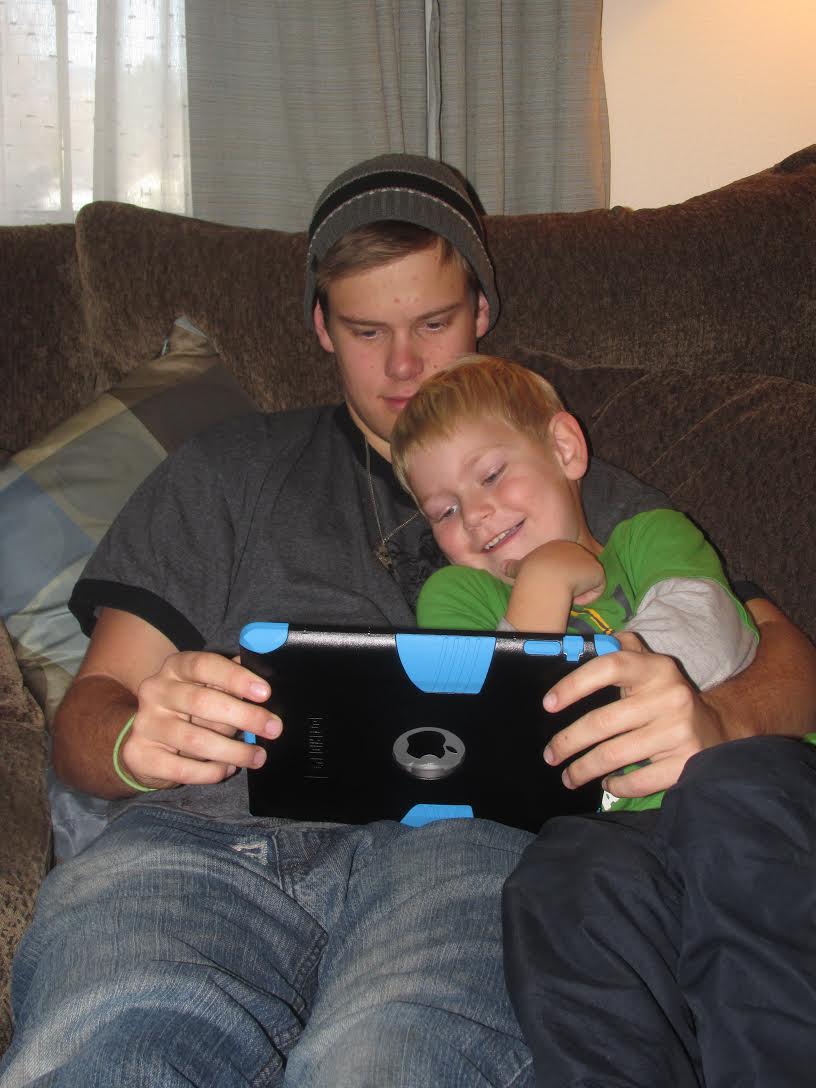
    A client of mine I know personally benefited from this program.  Look at him with his older brother here:

    unnamed (5)

    We have a saying amongst a group of us and it’s “we do this for our kids and we do this for all those who will come AFTER.”  I’m so grateful Sharon at CASANA had the vision and heart to continue to fight for all the children who came after, like my child…..so you can bet I will be participating this #givingtuesday and choosing CASANA.  Will you?  CASANA Giving Tuesday Donation Page

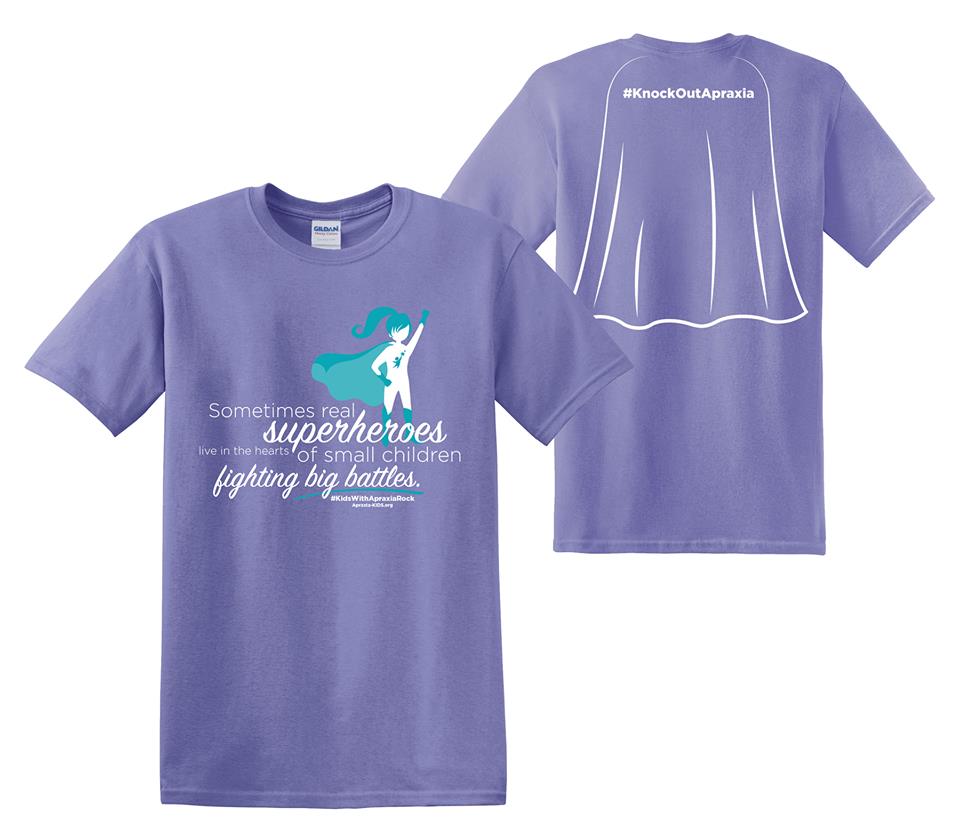
    If you donate $50.00, you can also get a limited edition shirt for your little apraxia fighter or for yourself!  12316361_924803280931748_2818964745271324178_n

    12191800_490615967786494_8755581625701177457_n

  • ASHA 2015: Conference Takeaways!

    ASHA 2015: Conference Takeaways!

    12122799_1073672629312652_6780745343761778989_n

    Wow!  I just completed a whirlwind three day national speech conference called the ASHA convention.  ASHA stands for the American Speech/Language Hearing Association, and it is the association that certifies SLP’s.  That CCC behind our name (i.e. Laura Smith MA. CCC-SLP) is from ASHA in case you have ever wondered.

    I’ve never been to ASHA before because it’s usually extremely expensive and somewhere to which I would have to fly. It has never really been in the cards for me.  However, this year, it came to Denver!  My friend in Syracuse always tells me “Everything comes to Denver!”  lol    It never felt like it before, but I am definitely riding the high of it now!

    Though Cody is convinced I only go to “play with my friends” it’s only partly true.  Those friends are the only group of people who love talking about speech pretty much 24/7.  It’s hard to nerd out on speech stuff with anyone else but a group of SLP’s!

    Okay so anyway, conference takeaways…..

    Informational

    I spent a lot of time updating my knowledge of Assistive Technology.  Not only do I see a lot of device users in the school, but assistive technology can and should be an important option when a child with apraxia is still non-verbal or minimally verbal.  Assistive technology is a dynamic and changing field.  The very word technology should allude to the fact SLP’s should be staying on top of this if they are working with device users because technology inherently changes very quickly.

    I learned that there is a raging debate between two theoretical perspectives in this field.  One group highly believes in the use of using only core words to start, adding in fringe and content specific vocabulary later; and another group believes in using more content specific words to start.  Though I do see both sides, and used more content specific 8 years ago, I really see the value and purpose of using a common core.  This is a set of words that the child starts with that comprises 75% of adult speech, with the theory being that chances for not only direct instruction, but modeling and exposure can occur throughout the child’s entire day.  One common example was with the word “turn.”  Turn is a core word that can be used in many different situations and even be a different part of speech.  Many of the talks provided a practical framework for SLP’s and special educators to implement.

    Reinforcing11707306_10206218411871824_3502618024942829927_n

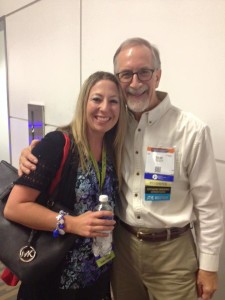
    It’s always good to have your current knowledge reinforced also in different areas. For me, it’s good to continue to go to talks on apraxia and have reinforced current best practices and diagnostic criteria.  The best talk on apraxia was by non other than David Hammer.  I’m not just saying that.  It was a packed house
    and no one left.  I have attended his talks before I went to bootcamp, and remember being slightly confused about his therapy that I couldn’t remember all of his activities.  Now that I have a solid understanding of the goal for apraxia therapy, I could attend his talk and soak in ALL of his creative ideas for making therapy fun and hopefully transfer that to my current practice!  Plus, it was fun to take this picture with him!  He is definitely a celebrity in my book!

    Puzzling

    Of all the talks I attended, the one that was by far the most puzzling was that of Susan Rvachew and Tanya Matthews who were giving a talk on Differential dx of Severe Phonological Disorder and Childhood Apraxia of Speech.  It’s probably never good when you start out your talk with the fact that you know people are expecting you to explain the difference based on your title, but that you were probably just as confused.  Not exactly a great way to earn credibility.

    The talk had people leaving left and right, with others just politely sitting on their phones scrolling through fb or planning out their next session.

    I genuinely wanted to hear their perspective, but it was hard to follow and confusing.  Of all things confounding was a new term I had not yet heard entitled, “Phonological planning deficit.”  Basically, they listed all the characteristics of mild to moderate CAS, called it phonological planning deficit, and then treated it successfully with the principles of motor learning theory that has been proved to help kids with CAS.  No wonder they were confused.  I was happy to get out of that room!

    Thought provoking

    A debate within the apraxia community pertains to that of autism spectrum disorder and a co-morbidity of CAS. Some are adamant it rarely occurs together, with yet others convinced there is a motor planning deficit present in so many.

    Shelley Velleman is definitely a name in this area who had done the most research surrounding this particular area. I attended her talk about ASD and motor speech and prosodic deficits.  The children in her study really didn’t display pure characteristics of CAS, in my opinion, but they definitely exhibited errors with prosody including timing, stress, and pitch deviations.  It’s interesting because many of the kids had good articulation but just deficits in prosody, and we currently believe prosodic errors to be a key feature in CAS.   This could be a different motor speech area that is new and fascinating.  A motor speech disorder NOS maybe since these kids don’t fit in a tidy definition of CAS or dysarthria.

    Powerful

    Perhaps one of the most powerful talks was moderated by Edythe Strand out of Mayo who created the program DTTC for kids with apraxia which her colleague Ruth Stoeckel once outlined in an interview I did here:

    DTTC: Evidence Based Practice in Childhood Apraxia of Speech

    She invited two parents to come speak to SLP’s about the parent perspective.  You know honestly, I was so proud to be part of the apraxia community professionally and personally in that moment.  I believe apraxia is the only speech disorder currently, second to stuttering, that has really taken into account the importance of SLP’s knowing about the family experience.  These two mothers shared their heartbreaking experiences.  To SLP’s, this is a job.  They care, and some care an awful lot, but some just do not realize the pain that an apraxia dx brings and the financial and emotional toll it can take on a family.  These two women had ended up divorced.  The toll just too much for each of their marriages.  I was brought back to bootcamp with Dave Hammer emphatically expressing to us that we should be open with parents and encourage them to take care of their marriage.  It was so great for SLP’s to hear this. Edythe Strand wiped away tears as did many others.  Fostering that understanding and empathy in SLP’s is something I am so proud of the apraxia pioneers for recognizing and doing.  I can’t help think Sharon Gretz, the founder of CASANA has had something to do with that.  She has been so open with her own child’s journey she has undoubtedly changed the course of the profession for the better.

    Impressions

    Yes many of the SLP’s come to play with their friends.  But there is more to it than that.  These “friends” are the only people who truly understand speech and who can hang in conversation of highly technical, possibly nerdy, speech talk.  Also, SLP’s are normal people too and many would probably prefer a nice vacation instead of leaving their families and holing up in a hotel for no other purpose than to continue their education.  In short, these people CARE. I care.  I love all of my clients and students.  We are in this field because we care, not because we don’t.  Some kids keep us up on night.  Some kids challenge us.  We go to these conventions to learn, to network, and to problem solve with the only other people on the planet who know our job like we do.  There is power in that.  Everywhere I went I saw professionals taking notes, talking about clients, talking about their job.  We as SLP’s do that because we care. My daughter’s SLP was there.  She’s a veteran, she’s amazing, she’s one of the top SLP’s in my opinion, but she always knows she can learn more and do better.  There were hundreds just like her, hopefully including me.

    I will close how the president of ASHA closed her letter in which she said Dr. Seuss perhaps said it best,

    “Unless someone like you cares a whole awful lot, nothing is going to get better.  It’s not.”

    I saw and was part of thousands of professionals who care an awful lot, and I can only believe things will get better, it can’t help but not.


  • The Hollywood Speech Convention: aka: ASHA conference

    The Hollywood Speech Convention: aka: ASHA conference

    I remember being an undergrad, and the professors were encouraging us to attend the ASHA convention.  ASHA stands for the American Speech/Language Hearing Association, and the convention is huge as it covers the scope of our entire field from babies to the geriatric population.  ASHA has never been in Denver, so when you add up the price to fly, stay, and then pay for the conference, you start thinking your money might be better spent elsewhere.

    This year though, it came to Denver, and the district I work for paid our way!  That’s significant because the conference costs over $400.00 to attend!

    It was fun seeing my cousin who is also an SLP, and seeing colleagues I worked with in my previous district!  I went to lunch with my mentor and Ashlynn’s SLP, and oh yeah, I also learned a lot in the sessions I attended!  Cody always tells me he thinks I want to go to these things just so I can “play with my friends.”  I tell him that’s not true, that I really do learn a lot (and I do!), but I have to admit a big part is that it is fun to go and see all my SLP friends and to be able to nerd out and talk speech stuff all day.

    I still have two more days, but I think I already experienced the cherry on top.  I was invited to the CASANA reception after today’s conference.  I was so nervous, but thankfully since I went to bootcamp I at least know three experts and of course Sharon Gretz, the executive director of CASANA.  Dave Hammer immediately said hello and I at least found a place to stand.  Part of me felt bad because I’m sure he would have preferred to talk to other experts, but he was so nice and started to introduce me to people he knew.  It reminded me of two years ago when he offered at bootcamp to drive me somewhere and I remember putting on facebook that I had to pinch myself because I was in David Hammer’s van!  lol  Now though, I can say I know him, and that in and of itself is still crazy.

    Anyway, I know some people aren’t good with names, but I am really good with names actually, and as he started talking I was blown away.  There’s Greg Lof (research papers with his name on them and a talk I attended of his a few years ago in Denver, pop in my head), Joe Duffy (my graduate school motor speech disorders text book with Joe Duffy as the author pops in my head), oh and that is Dee Fish (the book this is how your treat Childhood Apraxia of Speech with Margaret Fish as the author pops in my head), and over there is Jonathon Preston ( a research article using ultrasound feedback headed by him pops in my head).

    What the?? Where am I??  Why am I here??

    As I smiled politely and said hello, a woman walked up to the table I was standing at.  As I looked over, “Megan Overby??” popped out of my mouth.  Another name on published research.  “Yes? And you are?”

    I am….picking my jaw off the ground…oh, I’m just Laura Smith.  I’m an SLP here in Denver.

    After I talked to her I turned around and bumped into a name tag that said Edwin.  I looked up and realized it was Edwin Maas…..another huge name in the research.  It was seriously like I was Alice in Wonderland and I was transported into a world where all the authors of my text books and research articles came to real life…only, this was real life…I think.

    “Hello!!”  I heard a loud but kind voice greeting people next to me.  I turn my head and it’s none other than Nancy Kaufman.  Yeah, that Nancy.  If you have Kaufman cards or anything speech related with Kaufman on them, she’s the face behind the materials.

    The rest of the evening continued on much in this fashion.  I was able to hug Kathy Jekeilski, another expert and bootcamp mentor; and hang out with two of my fellow bootcampers Lucia and Marlo, who were in the same boat as me and who helped me feel so much more comfortable.

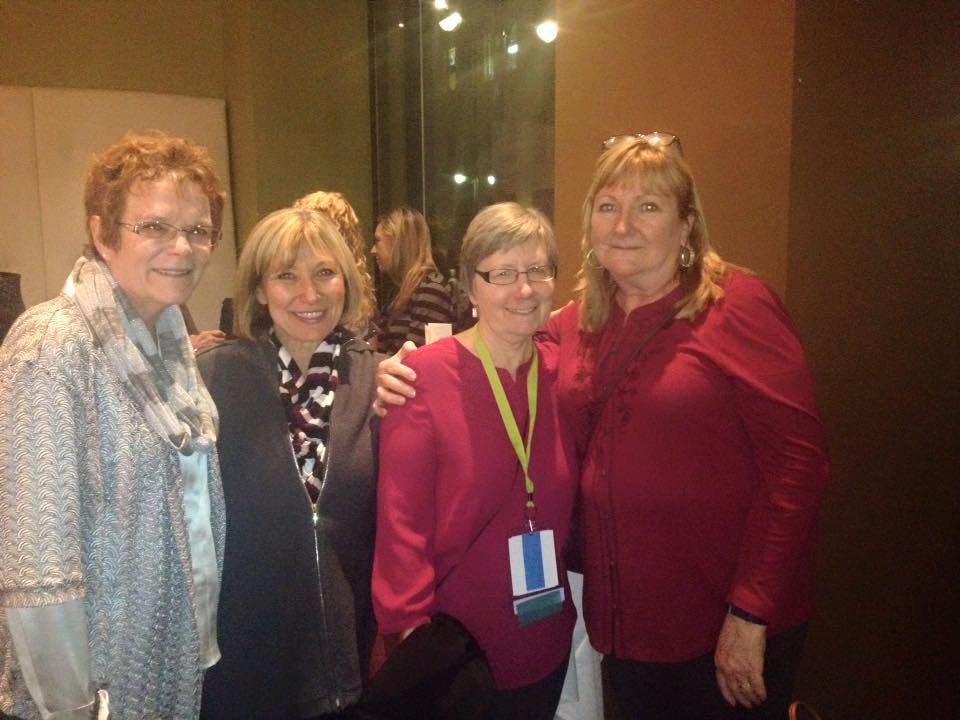
    As it was time to leave, I went to tell Sharon goodbye and Sharon introduced to me to none other than Edythe Strand.  I decided to take a picture of all the experts standing in that immediate area.  This is only a fraction of who were there, but it is a great picture and a night I’ll never forget.

    12241385_10206216159695521_3542479009220003174_n

  • Insurance, no insurance, money, lack of money, and other rants

    Insurance, no insurance, money, lack of money, and other rants

    I was filling out Ashlynn’s Small Steps in Speech Grant Application tonight sparing myself plenty of time since it is due tomorrow!  It’s always surreal to play the part of parent like this: stressing out, frantically collecting documents, invoices, cost verifications, reports, insurance denials and more only to turn around and provide therapy for parents who are doing the same thing.

    It’s always an awkward position to be a sounding board for  parents stressed about payments and cost of therapy, but to also be the source of their financial woes as well.

    Sometimes since I’m both a mom and SLP, the boundaries become a bit blurry for me.  I relate to them so personally, but in reality I need to be there for them professionally.

    Tonight I am full mode of parent.  Why insurance doesn’t cover a neurological disorder like apraxia is freaking beyond me.  Don’t get me wrong, some insurance companies do,  but most do not; and we are the lucky people to fall in that DO NOT category.

    a3877d4b8ebb7417833c33f7203f8583

    When Ashlynn was dx I was on maternity leave and was living partly off savings I had accrued while working full time.  I happen to be a good saver.  However, even the best saver in the world can’t prepare someone for paying $65 per 30 minutes every week….and that’s not even what research says a child should receive.  Yes, RESEARCH saying children with apraxia need 3-5 times per week of intense intervention.  We all quickly learn insurance companies don’t give a $hit about research.  Lucky for me I was an SLP so I could feel confident that I could continue the sessions throughout the week, but even still, that kind of money isn’t just chump change.

    Add on global apraxia challenges as is the case with Ashlynn, and we quickly find private OT and swim lessons adding up as well.  I seriously can hear “ching ching, ka-ching” in my head right now.

    Insert CASANA.  Two people on their staff of three dealt with the same issue back when their children were young.  They fought insurance companies and lost and charged up credit cards with therapy bills.  Thanks to their struggles and their desire to help those who came after, families like mine at least have the option to apply for grant money funded by CASANA when insurance companies indifferently give us the finger.

    I’m in such a better place now, emotionally than in the past.  Despite gains though, incredible gains really, Ashlynn is still so damn far behind; and when I have to fill out an application begging someone to help my child because insurance doesn’t consider it a congenital malformation or whatever the hell insurance companies have decided they will only cover….it sucks.  It sucks to put in writing how your child, who is your hero, who wakes up everyday with a smile and works so hard in therapy, still struggles to do a basic human right: communicate.  This was my plea tonight, and I thought I would share.

    Ashlynn was dx with CAS at the age of 2 years 11 months. Since that time the dx made a huge difference, as it afforded her the appropriate treatment approach. For as many gains as she has made with speech articulation, her scores do not show it. Recent testing in the Spring done by the school for her re-evaluation, revealed scores well below the average range in all areas, except for that on a single word articulation test, which came in barely within the average range. You cannot imagine how heartbreaking it was to realize how hard she works and how much improvement she has made, only to be faced with scores that are still significantly below average for receptive language, expressive language, word finding, motor planning, and pragmatic skills.
    These deficits are impacting her reading in the way of phonemic awareness, letter name and letter sound accuracy, among others. These deficits impact her socially because she can’t keep up with the complex imaginative language girls her age now have. These deficits impact her writing and classroom participation in group discussions.
    At home, she is still unable to accurately relate personal narratives due to her crippling word finding and expressive language deficits, despite seeing the wheels turning in her head desperate to come out.

    Ashlynn has to fight everyday. She has to fight to speak. I gain my strength in her and know if she is still willing to fight, then I have to fight for her and help her get the services she needs. I know she can overcome this. I KNOW it, but she needs so much repetition and help. She will rise to the challenge though, and that is why we need this grant. To continue the work Ms. Deb puts in along with Ashlynn’s team of other therapists, and of course, Ashlynn herself.  Thank you for your time and consideration.

    To learn more about the Small Steps in Speech Grant visit their website: http://www.smallstepsinspeech.org/