Category: apraxia blog

  • What is executive functioning and why do you need to know?

    What is executive functioning and why do you need to know?

    Does your child struggle with impulse control? Do they run out or touch things they know they shouldn’t but seem unable to help themselves despite consequences?  Do they struggle to get dressed?  Does it take you 30 minutes longer to get out the door in the morning than you think it should?  Do they frequently lose things like important papers from teachers? Is their desk, backpack, and folders completely disorganized and in disarray?  Do they have difficulties with attention?  Do they have emotional outbursts that seem atypical from other children?

    If any of these sound familiar to you, your child may be struggling with a deficit in executive functioning skills.  Executive functioning skills are regulated by the pre-frontal cortex in the brain. Many kids with developmental delays and disabilities such as: apraxia, dyspraxia, autism,  ADHD, sensory processing disorder, and others are at risk for deficits with executive function skills.  These skills include the following:

    • Impulse Control
    • Emotional Control
    • Flexible thinking
    • Working memory
    • Self monitoring
    • Planning and prioritizing
    • Task initiation
    • Organization

    My daughter has apraxia and developmental coordination disorder, but I think difficulties with executive functioning skills have the most impact on us and our life as a family.  Any task that involves planning, sequencing, organizing and then execution brings her a massive amount of anxiety and manifests itself as her looking defiant and oppositional.  Even a task like “brush your teeth” which she can and has done numerous times independently still stresses her out at times depending on how tired she is, or any other factors.  The same is true for getting dressed in the morning or at night, cleaning her room (not gonna happen), or doing her homework from start to finish without direction from us.

    How do I know it’s a deficit as opposed to her truly being defiant?  I just said she has done most of these things independently at some point. I know though, because when she becomes physically distressed at the thought of performing a task, when I offer to help her she immediately calms down and is willing to do anything that is requested of her; including cleaning her room.  An OT at Adam’s Camp this summer gave me this analogy.

    Have you ever changed oil on a car?  No?  Great.  It’s exactly like setting your in front of a car and telling you to change the oil.  You have no directions and you have no manual (think visuals), and you have no one there to direct you?  How would you act?

    This was such an “aha” moment for me.  Let’s look at our list above.  In this scenario, I’m going to struggle with: task initiation, planning and programming and organization at the very least.  If I can’t do it and feel I am messing up, it’s probably going to escalate into my emotional control which will potentially affect my flexible thinking and so on.

    All of these processes are independent, but they can also be tied together.

    So what do we do?  Can executive functioning skills be taught?

    The good news is YES.  There is so much more great research too coming out now, and I’ve seen educational institutions grabbing onto this idea and implementing strategies into their classrooms.  If you are a parent, accommodations to help executive functioning skills can be easily placed in the IEP under the accommodations sections; or if you want more targeted instruction, can be written as it’s own goal. Psychologist’s can administer a test to look at executive functioning skills. One such test we use at my school is called the BRIEF (Behavior Rating Inventory of Executive Functioning). Don’t be afraid to ask for testing if you think your child struggles with this.

    That’s great for school, but what can frustrated parents like you and me do at home? I wrote Part 2 to this series in which I outline strategies to do at home for various skills. (click here).

    In the meantime though, Sarah Ward is quickly becoming nationally recognized as a top expert in this area.  She gives talks nationwide and if you can see her I have one word of advice: GO.  She’s fantastic, fresh and has current ideas that incorporate technology and apps that I have never seen presented before.  Most talks on executive functioning that I go to now will almost always include a suggestion they got from Sarah Ward.  Her website is Cognitive Connections.

    You can also find books on the topic that have good reviews with practical suggestions for parents:


    These books are geared more for parents and what you can do at home.  I also found some kid books that I think are helpful when we are talking to our kids about their difficulties.


  • Local Walk for Apraxia gives a voice to children who struggle to find theirs.

    Local Walk for Apraxia gives a voice to children who struggle to find theirs.

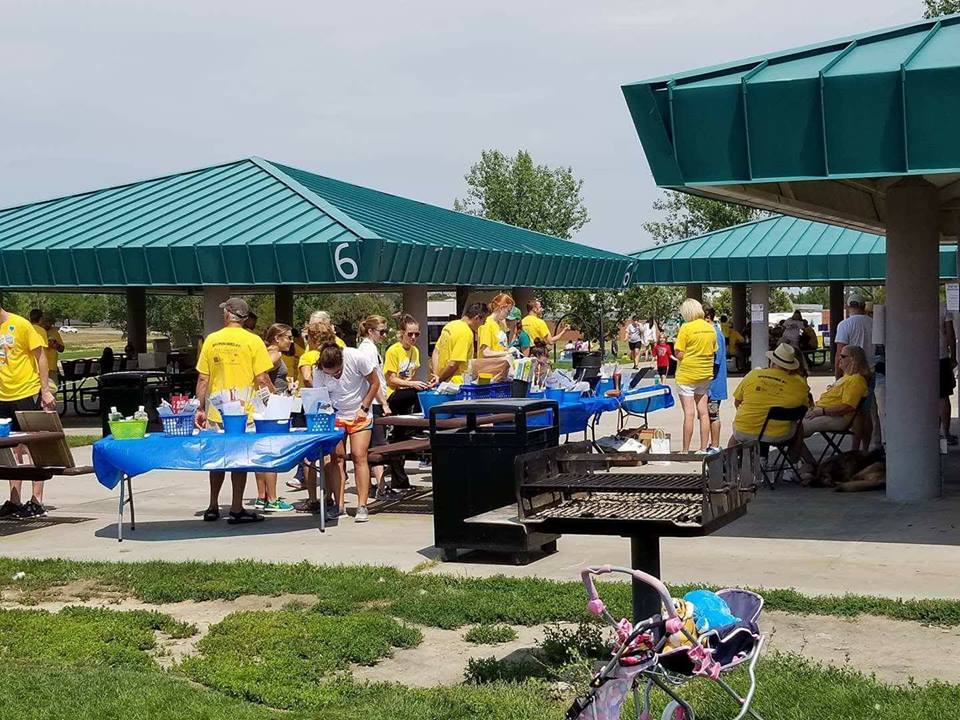
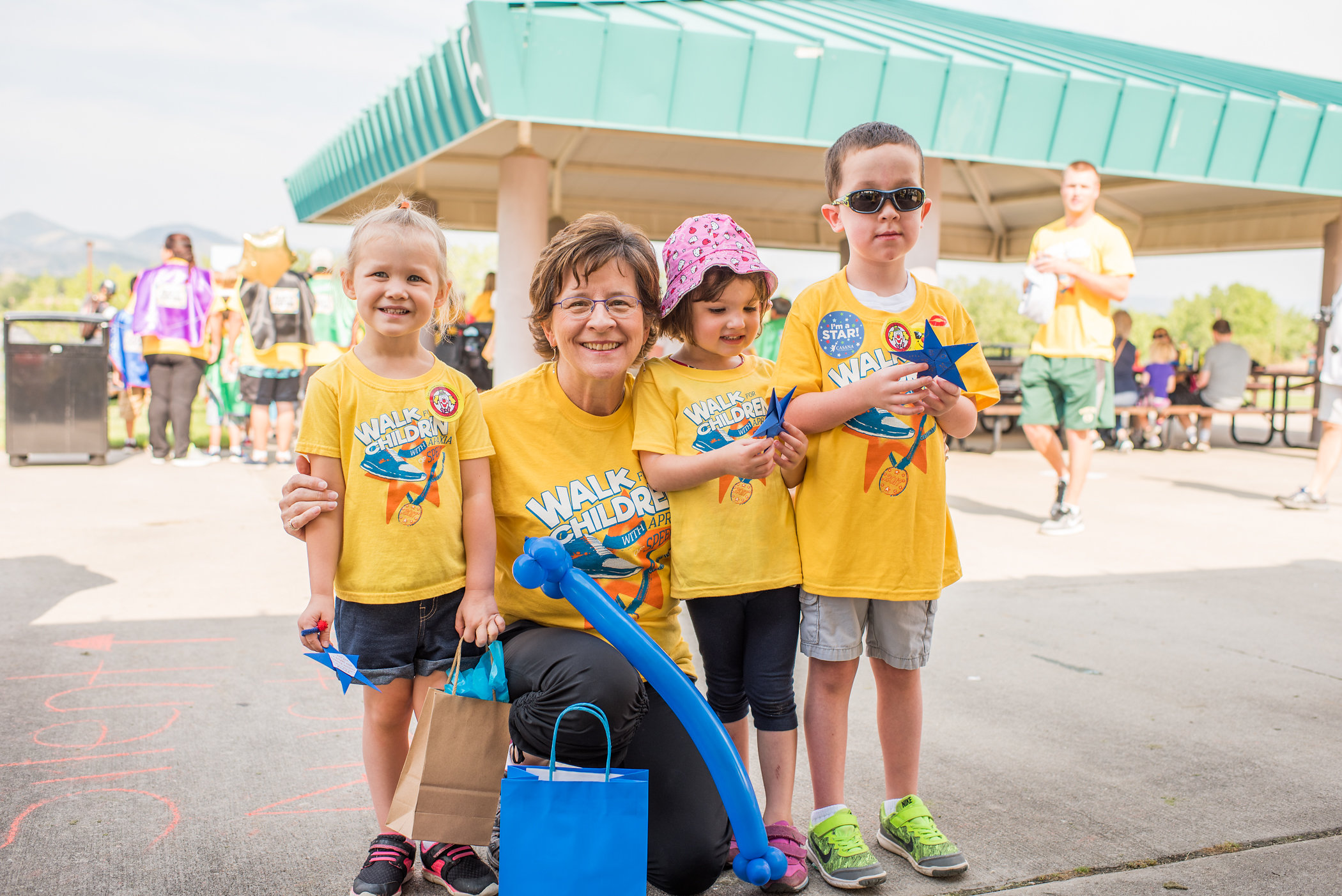
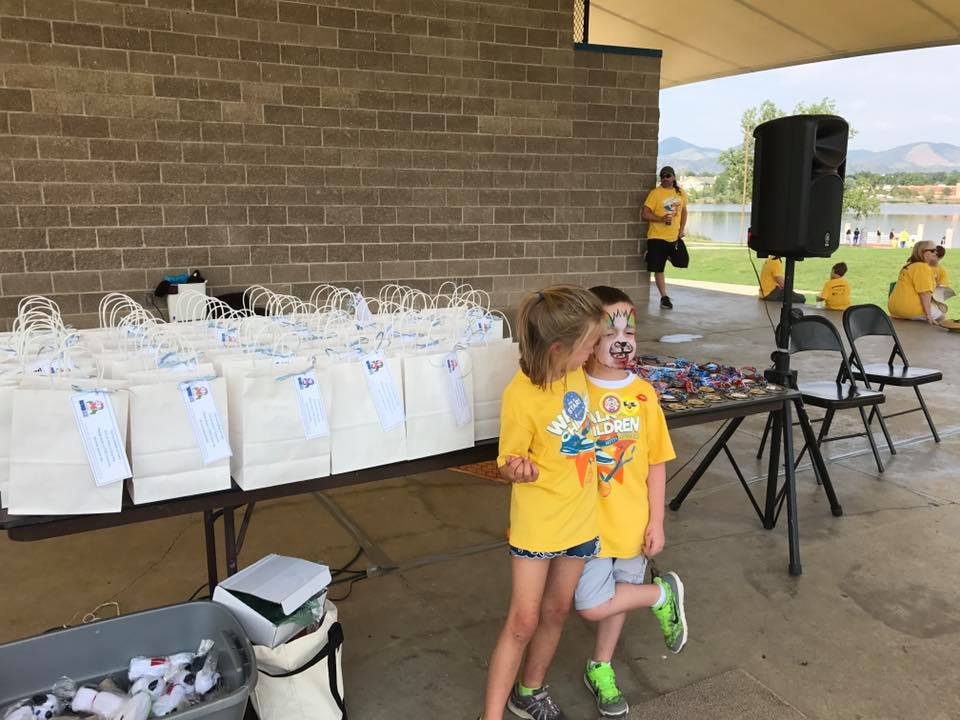
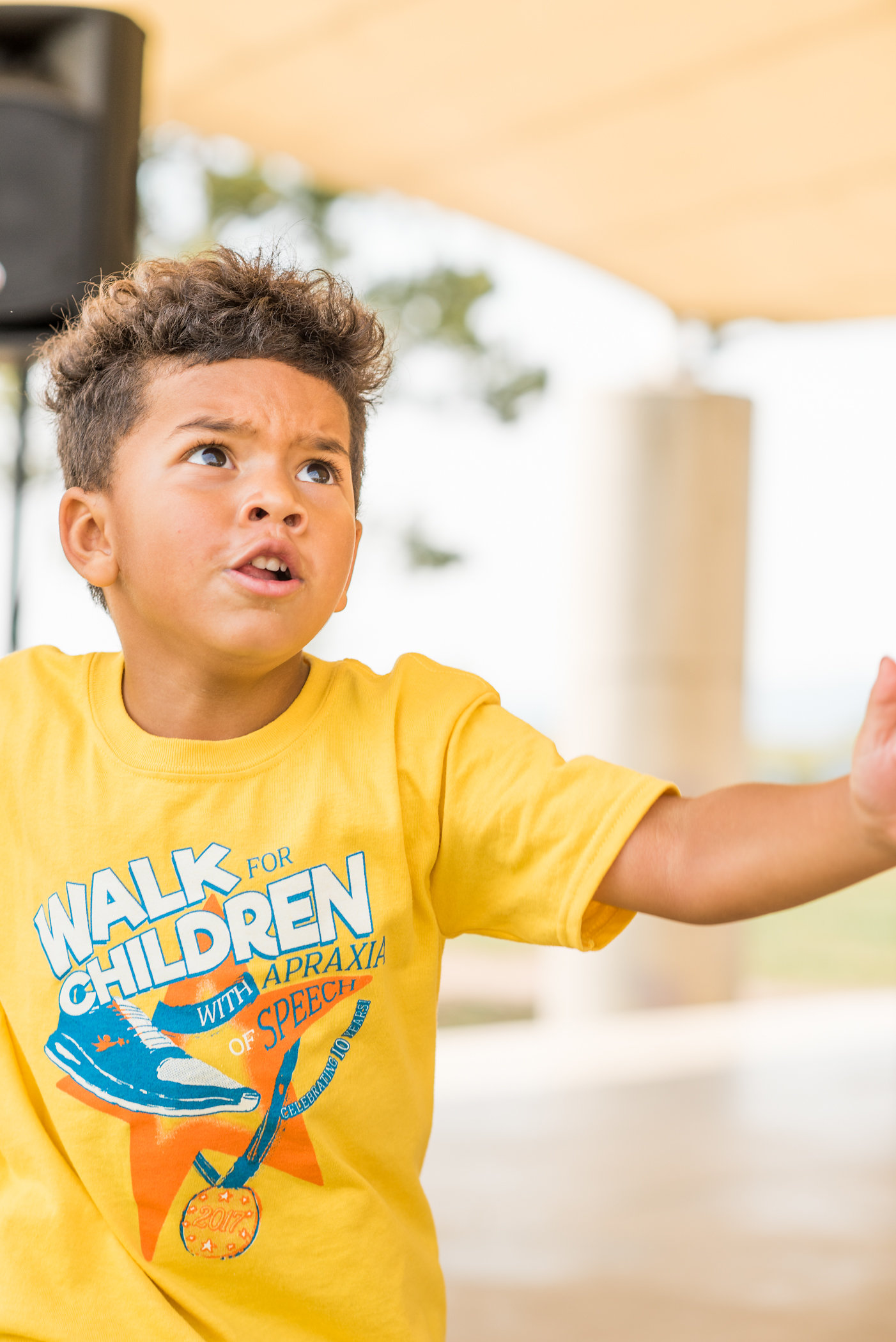
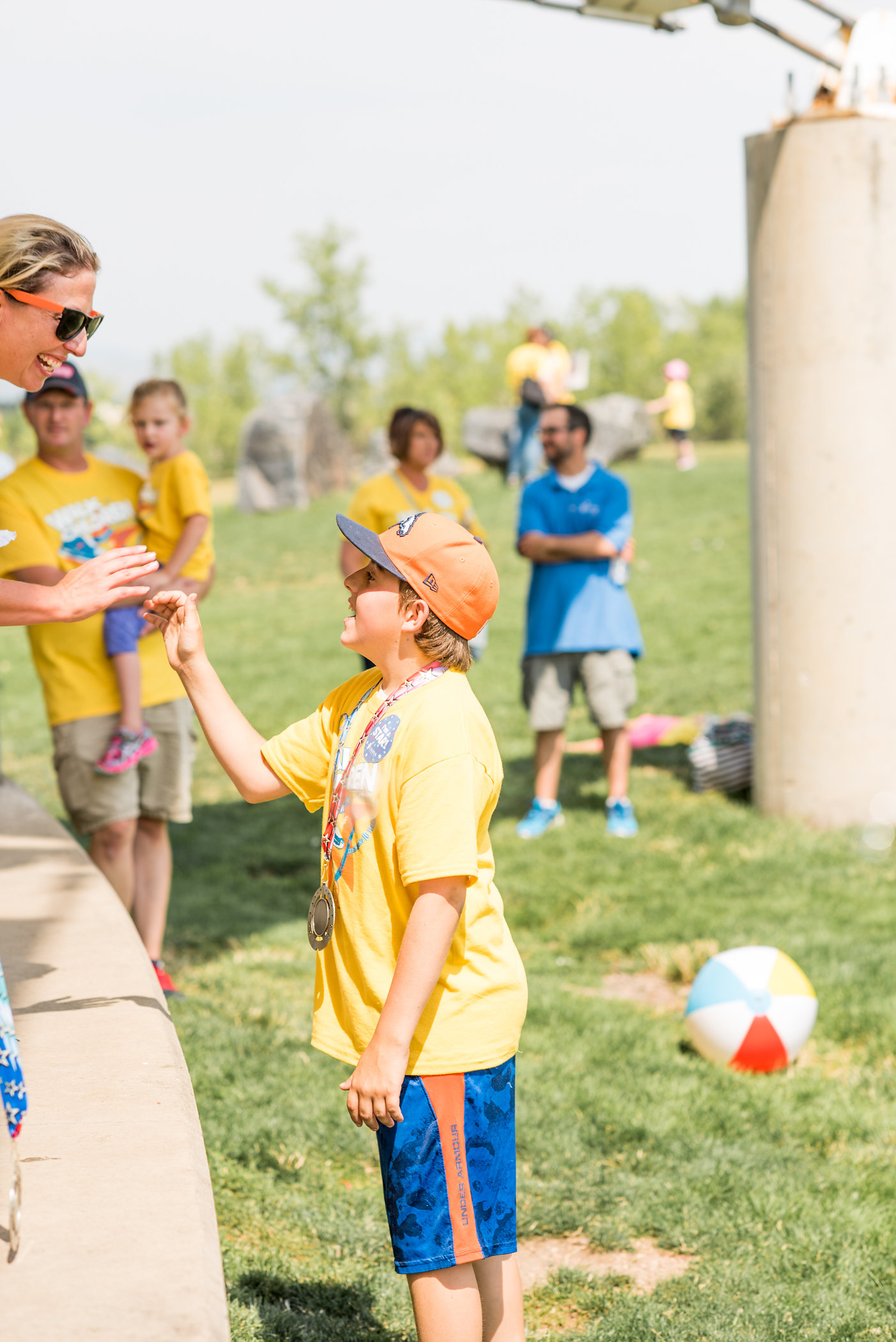
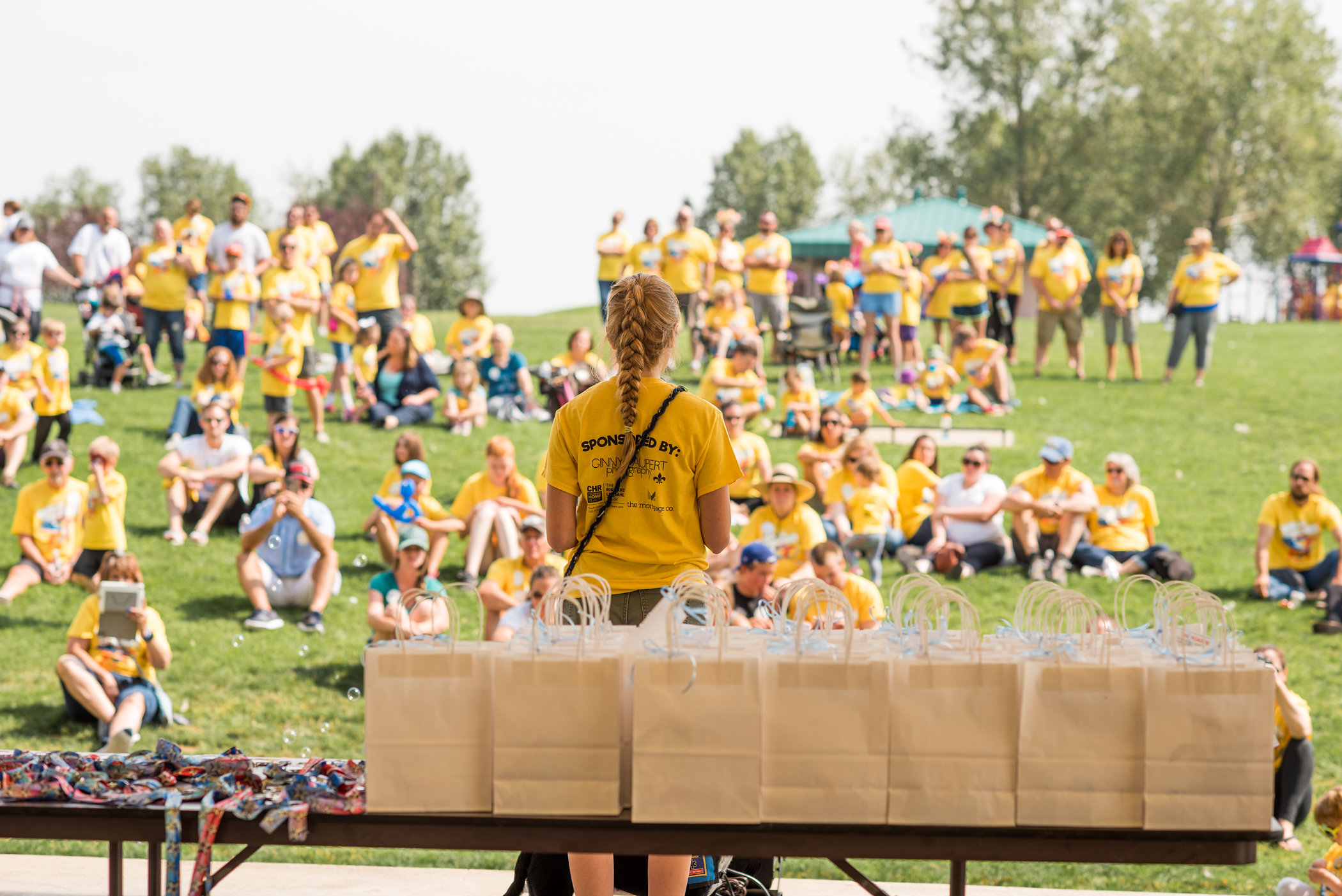
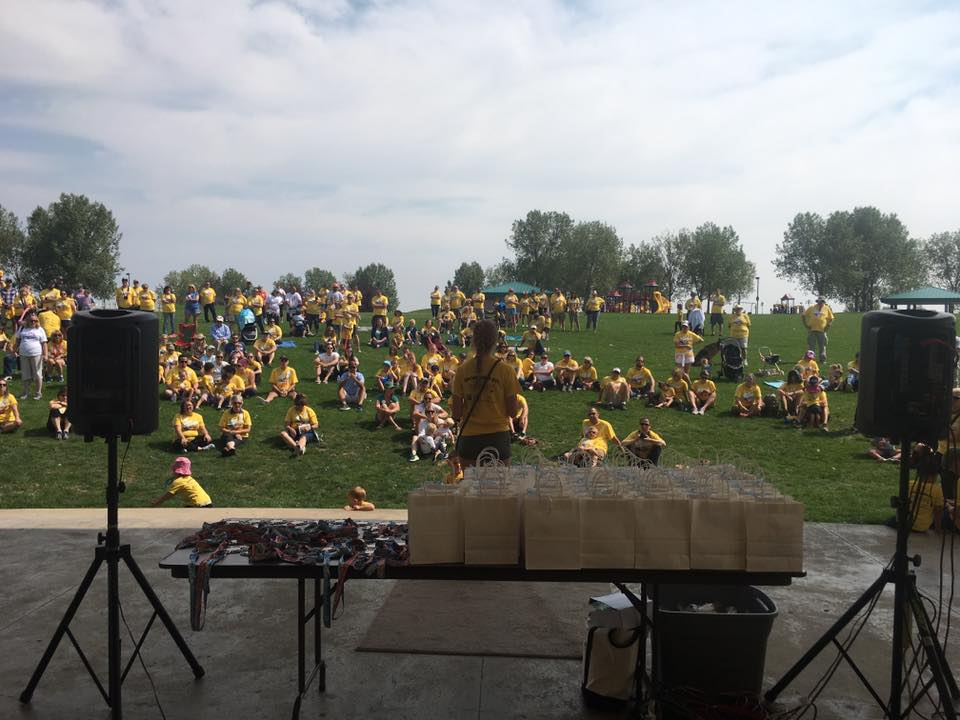
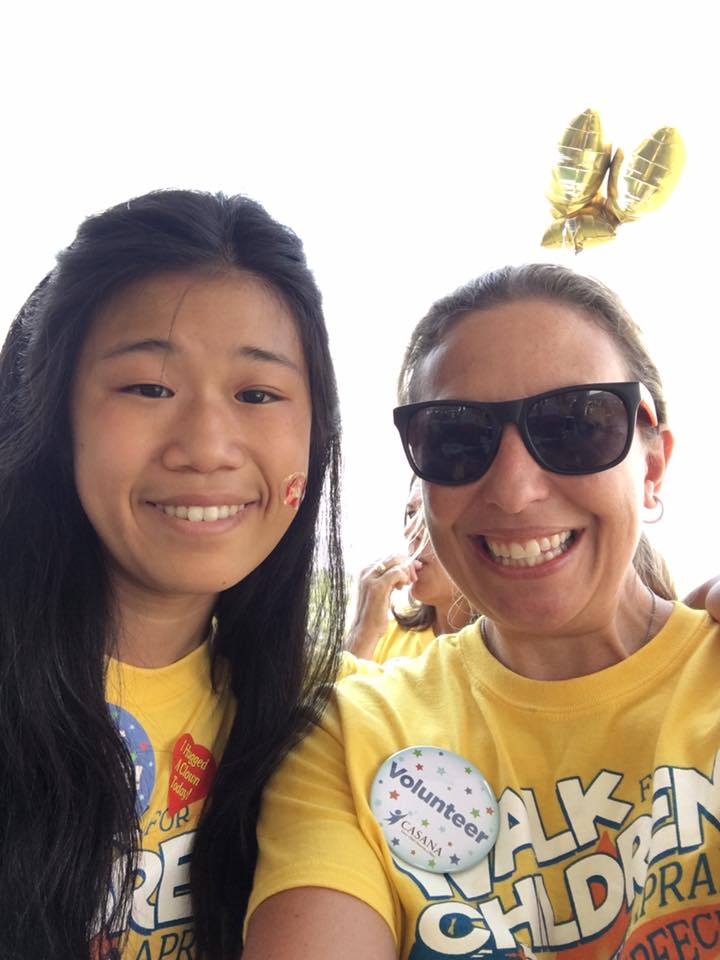
    This year the Denver Apraxia Walk was held August 5th, at Clement Park in Littleton.  Apraxia of speech is a severe speech disorder in children that makes the act of learning to speak very difficult.  Many endure years of speech therapy struggling to find their voice. I have to say this year was the BEST WALK YET, but it wasn’t do to me.  Denver has the most incredible, talented, and driven parents I have ever met.

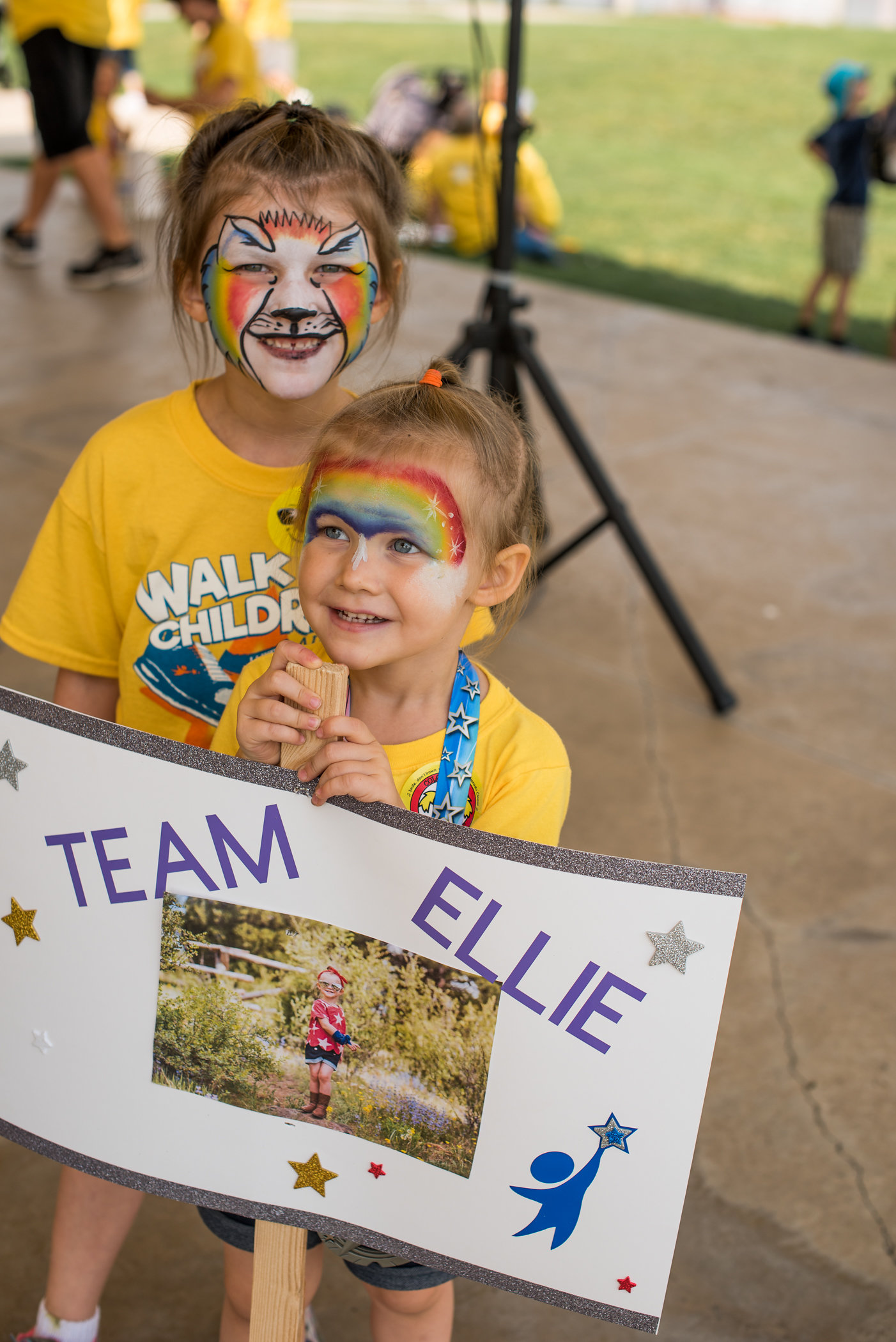
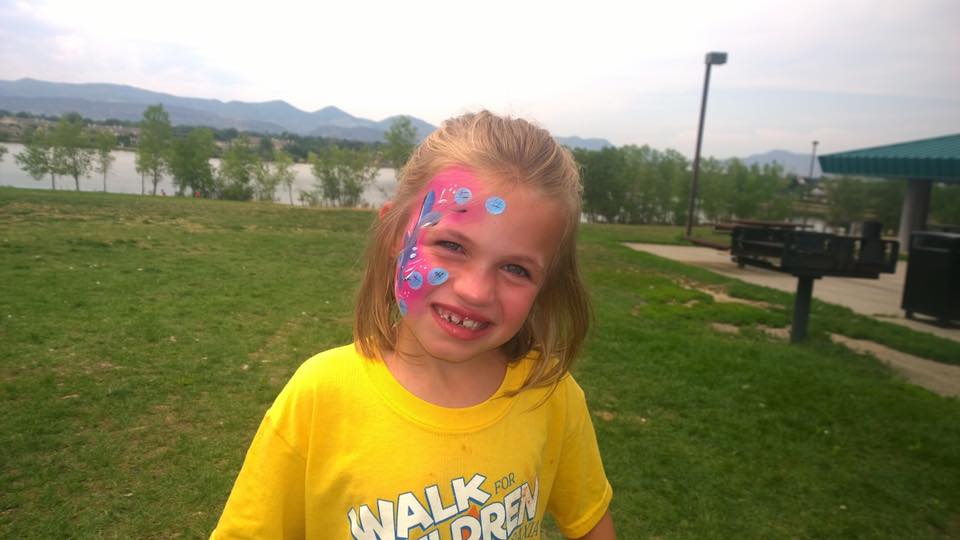
    When I started as walk coordinator, I had no idea what I was doing.  As the years have gone on though, more volunteers have stepped out to help and I realized every person has a unique and different perspective to bring and if each person is heard, the walk thrives.  For example, to me, a successful event always and I mean ALWAYS, has to have a face painter.  If my face was and had been painted, the day was nothing short of AWESOME.  Face painter Stephanie Harris from Color Me Fancy was touched.

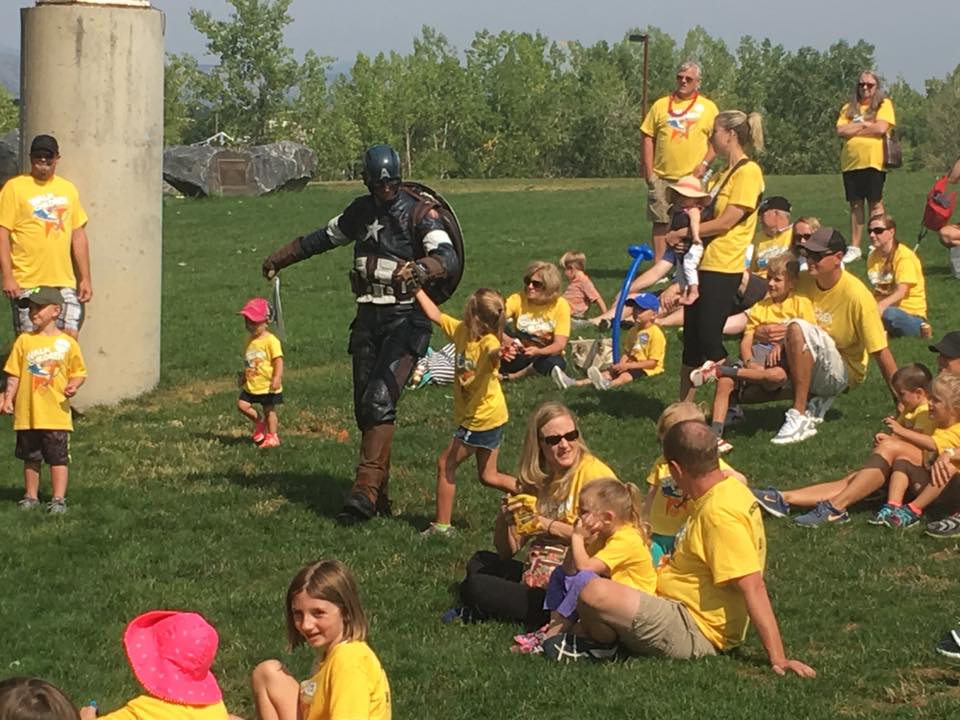
    That’s not true though for other people.  Katie Oberlander, a Denver mom told me she always cared less about a face painter, but had they had a Disney Princess there, now THAT was an event.  Local company Wands and Wishes provided princesses and even Captain America! 

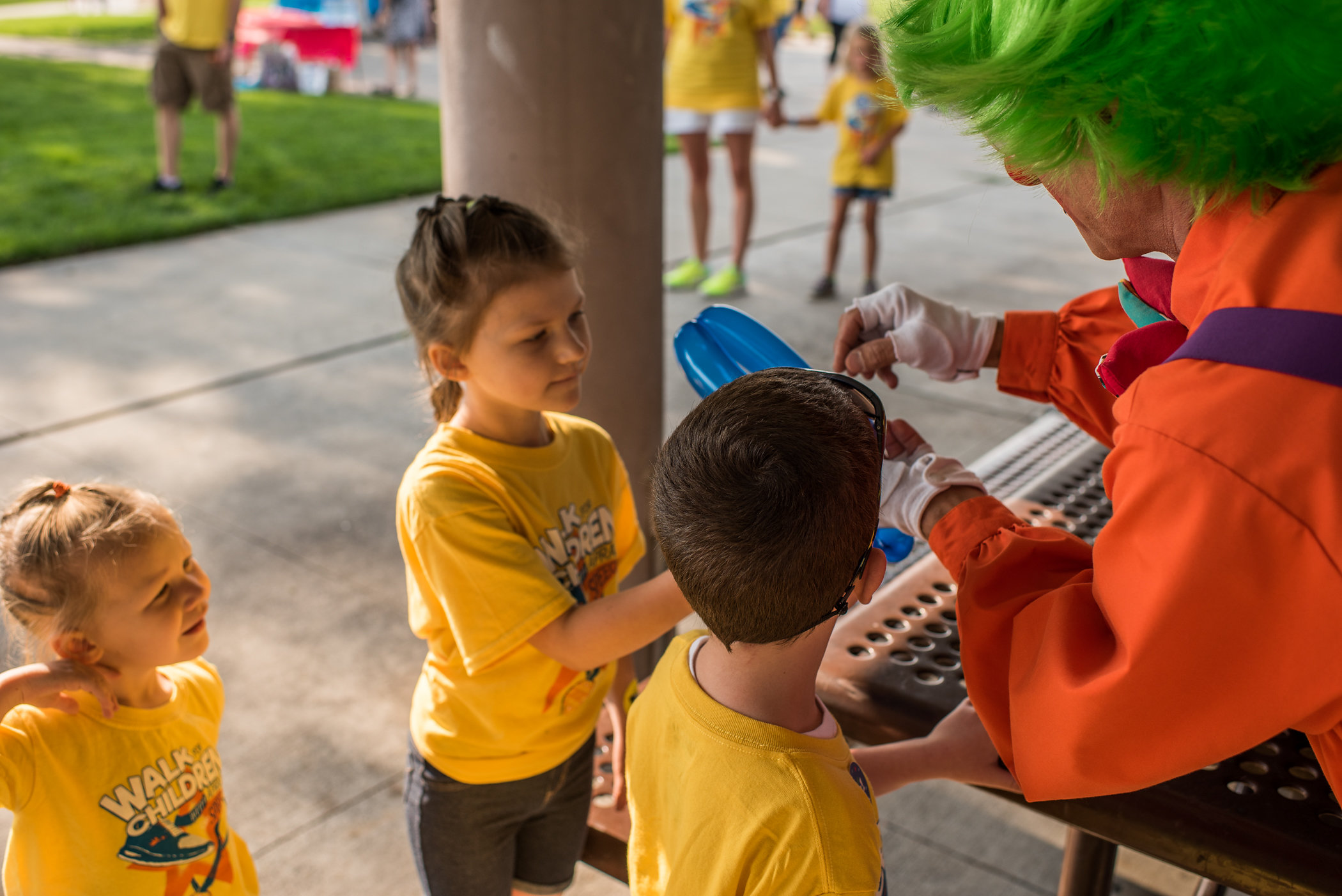
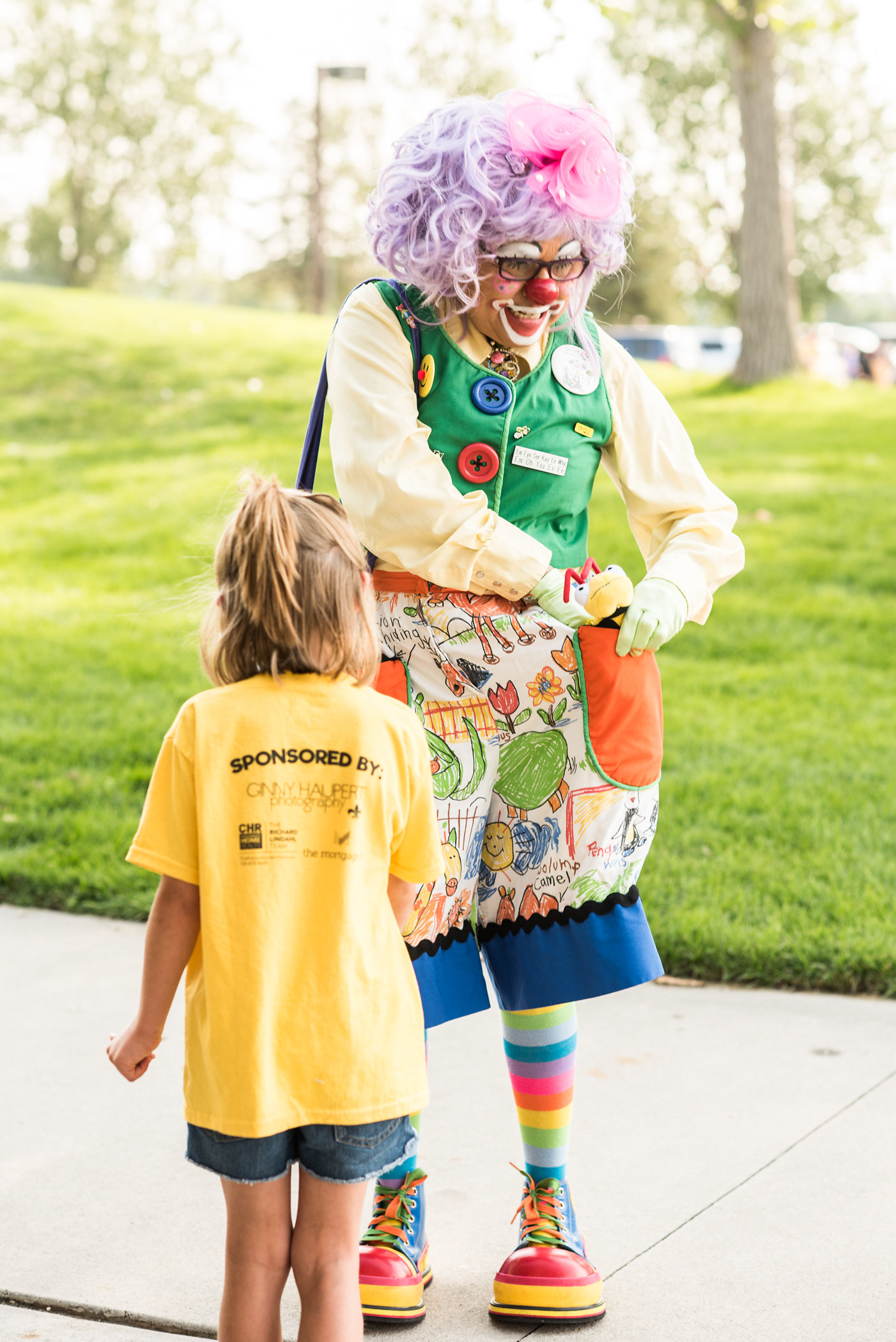
    Another volunteer loves clowns and balloons!  To them, a successful and memorable event includes clowns.  I personally dislike clowns.  There are two groups of clown people.  Those that love them, and those that are terrified of them.  I fall in the latter.  I have always hated clowns.  I don’t like I can’t see their face, I don’t like that they make me feel awkward, yeah…clowns.  However, as coordinator, I need to realize other people DO like clowns and they make an event special for some.  This year, mom Gina Berrecil said the amazing clowns from a local foundation helped her kids overcome their fear of clowns.

    Silent auction

    Having a group of volunteers is really the more the merrier.  We can cover a lot more ground and a lot more interests when we have a diverse group of people representing all perspectives.  If someone has an idea, I honestly never try to shoot it down because who am I?  I’m not them, and if they think something is cool and important, there is sure to be others who feel the same.  A silent auction was new this year and was incredibly successful!  A local Denver mom Amanda stepped up to coordinate it and raised over 3K!

    One thing everyone can get behind though is celebrating the kids.  I made a point to tell every kid with apraxia that I saw that it was their special day. I wanted them all to feel special. I want them to feel like this day was created for them, and it doesn’t matter how they celebrate it.  Many kids are not only surrounded by family, but their speech/language pathologists come too to celebrate them for their hard work like Mary Lou Johnson.  “It means so much to have Mason’s SLP here supporting him,” said mom Amanda Chambers.

    The walk is about raising money for CASANA, the Childhood Apraxia of Speech Association; however; my biggest goal is about the kids. That is what I want these kids

    to feel.  I don’t want them to feel it’s a day about conformity and trying to be normal.  I want them to just be themselves, whatever that looks like; and then I want them to be applauded for having the courage to do that.

    Normal is boring.  Besides.  What is normal?  People think I’m “normal” and I hate clowns, can’t stand people in masks, and have a bee phobia.

    The walk for apraxia is not just about embracing differences, it’s celebrating them!  Local mom Tracie Horsch said,

    “The walk means a lot to our family in that it celebrates all of these children and their accomplishments as they find their voice.  Coming together with “our people” helps us to know we are not alone on this journey.”

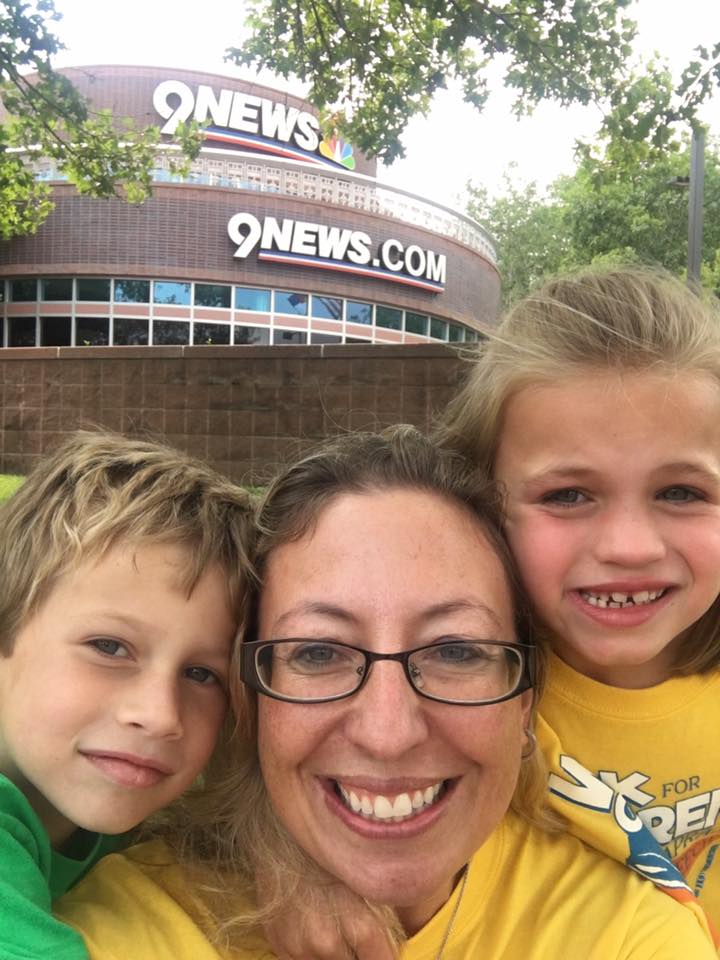
    We may not have gotten news coverage or a news article, so I’ll write it myself.  I personally find events like this very news worthy and something I would like to see on local news.  Would love your comments if you agree.


    A big thank you to the numerous local Denver sponsors who stepped up this year to give a voice for those struggling to find theirs.  Our goal this year was to raise 30K, and as of today we are 5k short.  If you want to donate to these children and help them find their voice, follow this link: Denver Walk for Apraxia


  • Book recommendations for Childhood Apraxia of Speech

    Book recommendations for Childhood Apraxia of Speech


    If you are like me, when your child was first diagnosed with apraxia, you turned to every source of information you could find, credible or not, just eager to gobble up any and all information on apraxia.  Heck, I’m an SLP and I did this!

    That’s why I wrote my book Overcoming Apraxia.  Though the book is a narrative story about our journey to overcome childhood apraxia of speech (CAS), it is also packed with information and resources for professionals as well.

    I think for me, though, my favorite books are always ones that inspire hope.  Actually, these are probably my favorite stories too.  I’m always looking for hope, because sometimes, in the middle of the struggle, it’s so easy to get discouraged.  I started his blog as a way to spread awareness and I found both hope and awareness the day I met Ronda Rousey.

    Not only was that moment and press coverage amazing, but honestly her book is full of inspiration and overcoming adversity that is chalk full of great quotes.  Knowing she had apraxia as a child is the icing on the top.  (Note this book does NOT directly talk about apraxia.  That was uncovered after she wrote the book).  To see that story go here.

    This year I went to the apraxia conference, and saw Kate Hennessey, a young woman who had grown up with apraxia, speak in front of all of us. She co-wrote the book “Anything but Silent” with her mom.  You can read my review here, but again, this book is full of inspiration!  Definitely one of my faves!   I devoured it.

    About two years ago, I was wishing for a book that explained childhood apraxia of speech (CAS) to children to use for classrooms or even in therapy with the child diagnosed with CAS.  My wish came true with the book “Billy Gets Talking.”  Written by an SLP, it’s an easy to read but powerful story with beautiful drawings that help explain the CAS journey in child terms.

    The same author of “Billy Gets Talking” Mehreen Kakwan, also wrote “Let’s Get Talking” as an introduction to help professionals target apraxia in early internvetion.  It’s a great starting place for early intervention SLP’s to learn how to pick simple, functional targets and incorporate visual and verbal cueing as well as specific feedback.

    Written by two apraxia experts David Hammer and Cari Ebert, “The SLP’s Guide to Childhood Apraxia of Speech” is a MUST have!  This manual is full of definitions, resources and my favorite, therapy ideas!

    I haven’t personally read “Waiting for a Voice,” but a few of my readers said it was good. It’s written by a mom who has a child with verbal dyspraxia, which is the term they use for Childhood Apraxia of Speech in the U.K.

    “Here’s How to Treat Childhood Apraxia of Speech”  is a technical book geared more toward SLP’s.  It’s written by an apraxia expert Margaret “Dee” Fish who gives talks and conferences nationwide.  It was recently updated too.  It’s a good manual for learning where to start.

    “Not What I Expected: Help and Hope for Parents of Atypical Children,” is written by a neuropsychologist who offers advice and hope for parents dealing with the emotional challenges they face.  This is on my book list.  It was a finalist for “Books for a Better Life Award,” and some readers said they found it very helpful and comforting.

    Have a book you think should be listed?  Comment below!

    Follow me on: Facebook: https://www.facebook.com/SLPMommy/ Instagram: https://www.instagram.com/slpmommyofa…

    Twitter: https://twitter.com/LauraSmithSLP

  • As children walk to find their voices, local news outlets stay silent

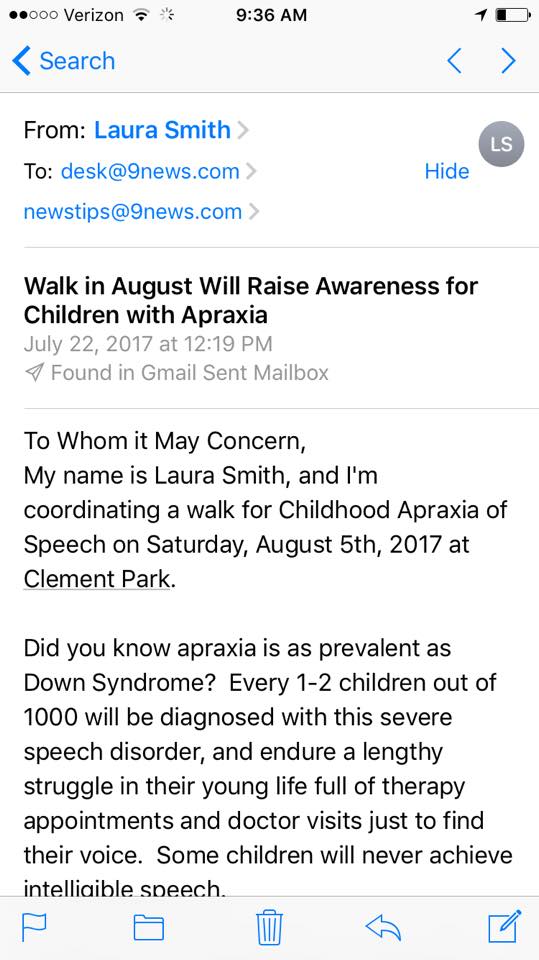
    Yesterday, August 5th 2017 was the Denver Walk for Apraxia at Clement Park.  The walk was largely successful, raising close to 25,000 to CASANA, which will directly impact our kids in Denver struggling with this rare speech disorder.

    This is ONE day out of the entire year kids who struggle to find their voice and endure hours and years of intense therapy, can be honored for their accomplishments that no one sees; just to do the one thing that comes so easily to many: SPEAK.

    There were clowns making balloons and  face painters.  


    Ashlynn dancing with Captain America

    There were activity stations with student volunteers, Disney princesses, Captain America riding in on his motorcycle and then dancing with my daughter while listening to princesses sing on stage, and three young adults who had grown up with apraxia there, two of which braved their anxiety and fears and spoke on stage to describe the heartbreaking and moving struggled they continued to face in school due to this rare neurological speech disorder they happened to be born with.

    Kelsey Belk, College student and young adult with apraxia speaking to the crowd.

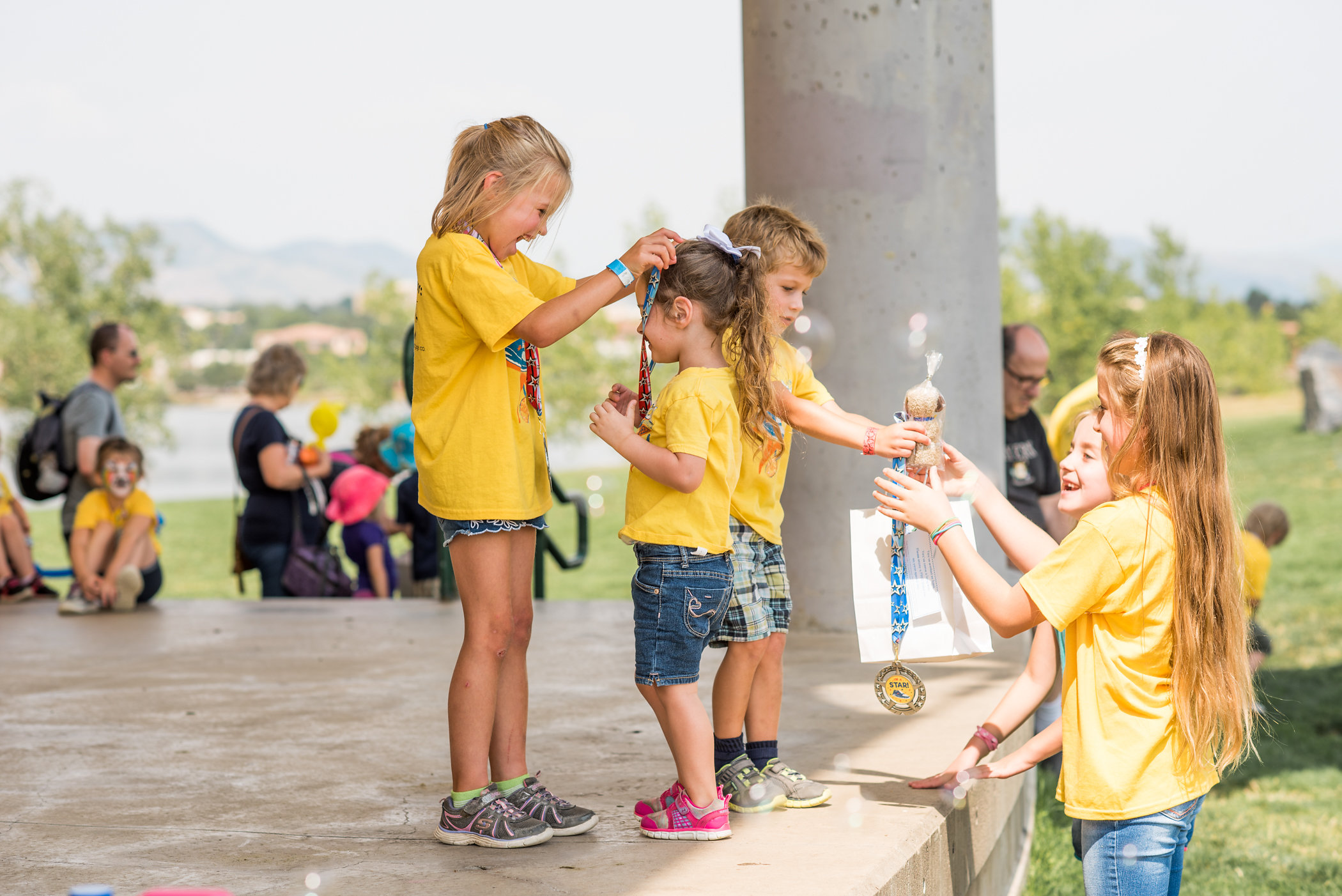
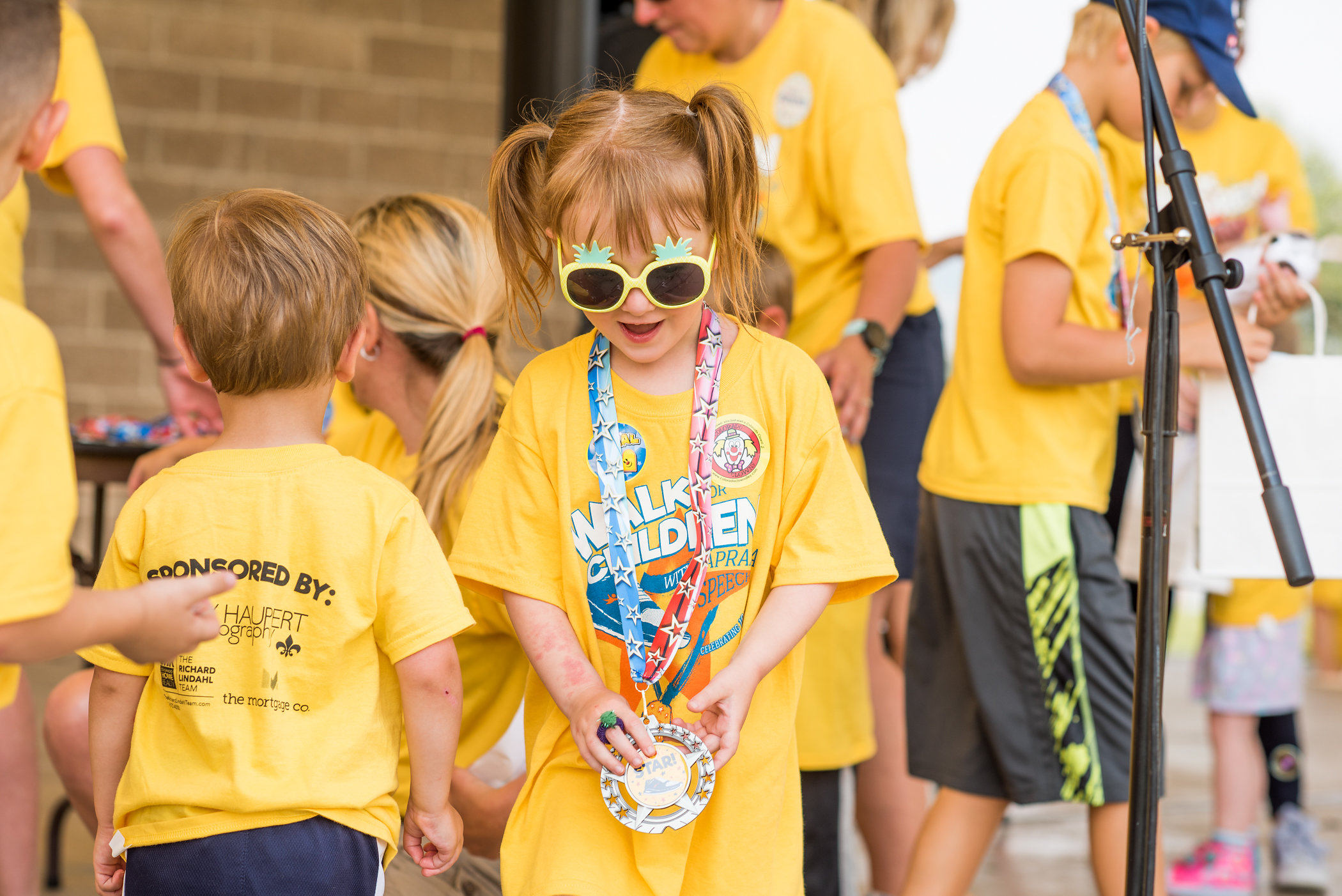
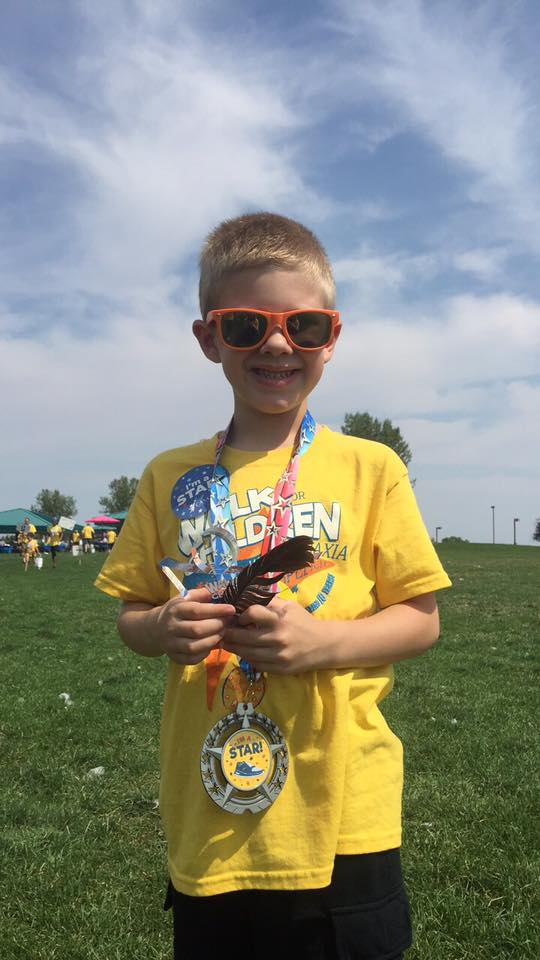
    The medal ceremony was full of big smiles and proud faces as each child received their medal and beamed.  For many of our kids, this is the best moment of the year for them.  In fact, my daughter has been caught many times sleeping with her walk medals and others have said their child said the apraxia walk was the ‘BEST DAY EVER.’

     We had free food, snacks, drinks, and a very successful silent auction.  One of the auction items included a book published by a girl with apraxia and dyslexia.

    .


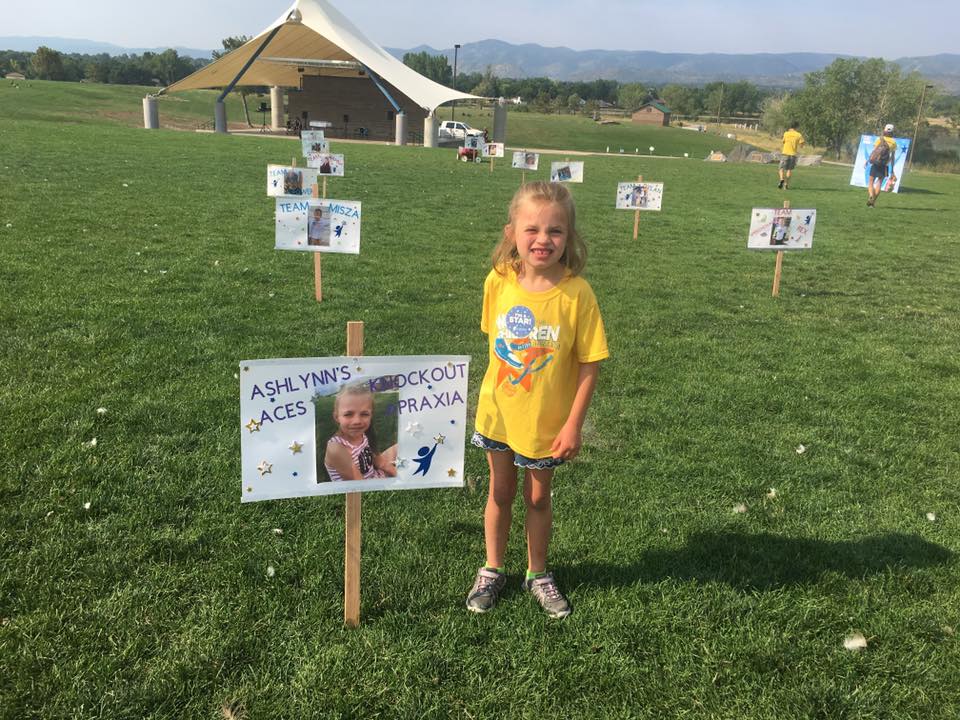
    I really loved our “walk of stars” which was a path made of posters featuring a picture of each child who has apraxia.

    The day was absolutely perfect, but for parents and countless volunteer planners it was void of one very big thing.

    Local media coverage was silent.

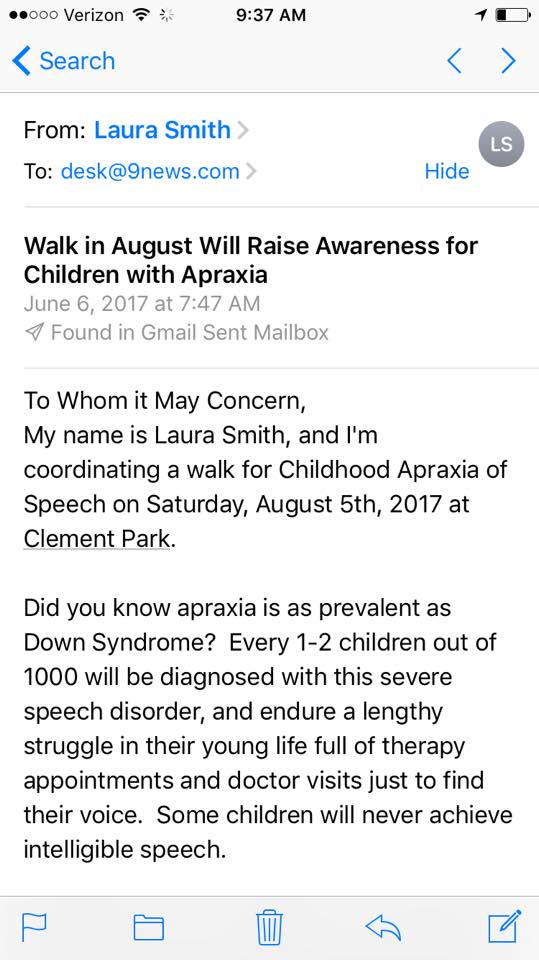
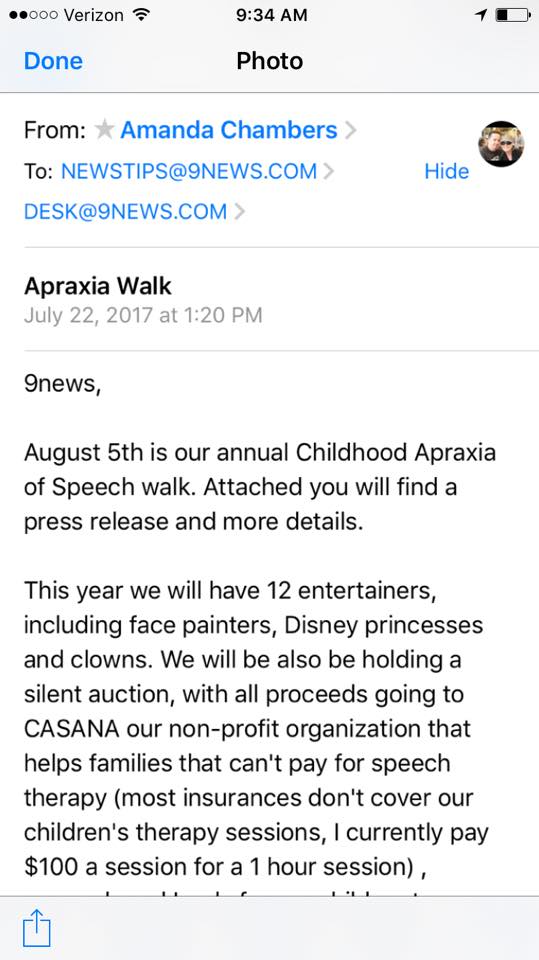
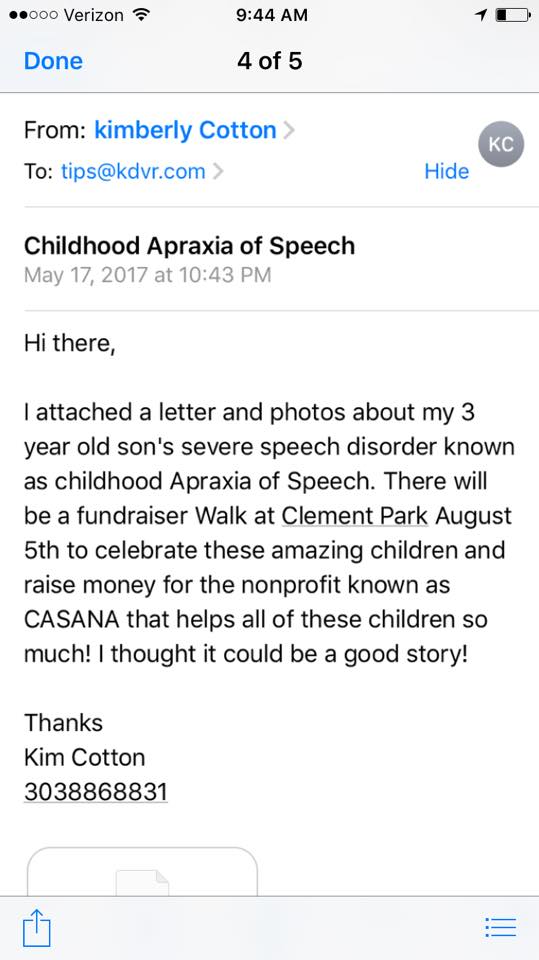
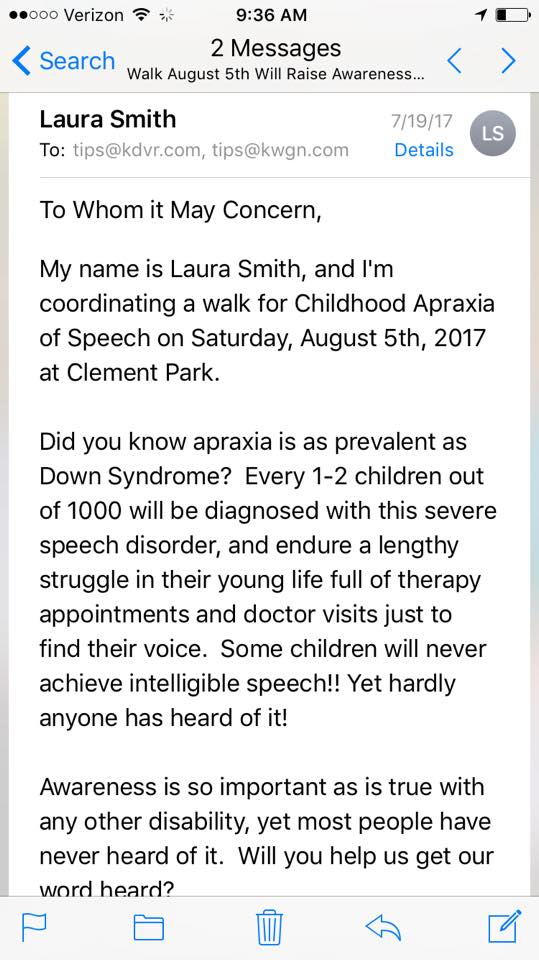
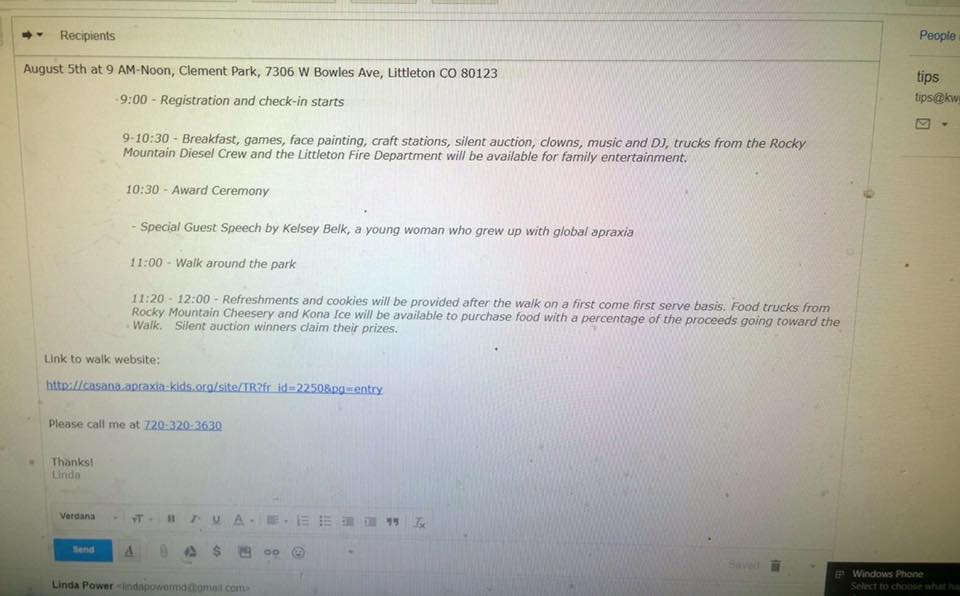
    Despite numerous messages and emails from various parents, along with phone calls and even in person drop offs, the walk was not mentioned anywhere, on any calendar, or even on the things to do in Denver on any news outlet.

    For parents trying to get their kids’ help for this disorder, it’s honestly not too much of a surprise. We’re used to knowing more about healthcare professionals about apraxia, we’re used to our children being ignored and bullied because of apraxia, the young college woman who spoke about her experience with apraxia describes being discriminated against.

    I was the walk coordinator this year, and as proud and accomplished as I felt after the walk, looking back retrospectively it makes me want to cry the only people who seem to care or recognize these kids is one small nonprofit named CASANA, and the parents and friends who love someone with apraxia.

    I played the song “Try Everything” from Zootopia for our kids after the medal ceremony.  The lyrics are reminiscent of our kids’ struggles since they fail time and time again trying to talk only to get up and try and again.

    “I messed up tonight
    I lost another fight
    I still mess up but I’ll just start again
    I keep falling down
    I keep on hitting the ground
    I always get up now to see what’s next”

    I have to say I want to give up sometimes.  It seems like no one is going to care and sometimes the fight just doesn’t seem worth it anymore.  But then I look at these smiling faces who never give up, and like the song says, I need to get up again to see what’s next.

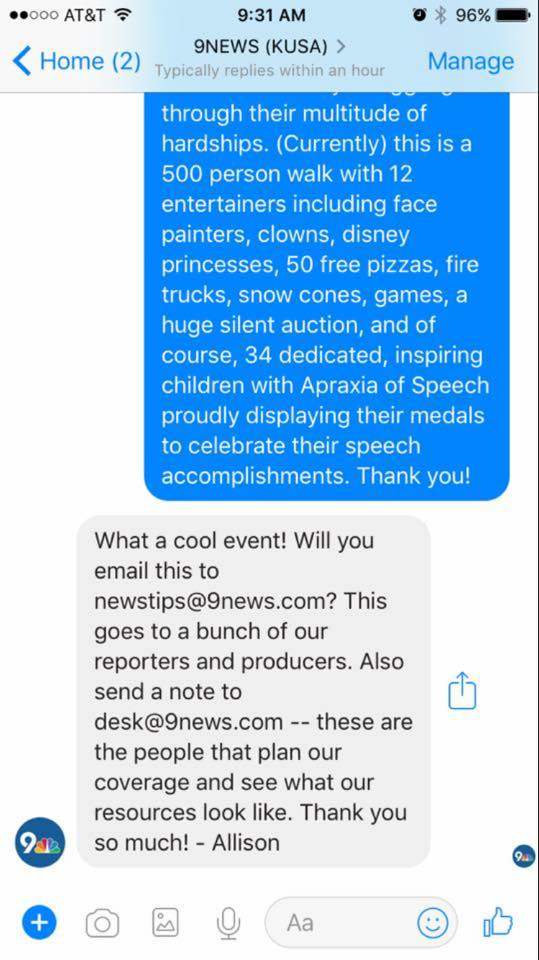
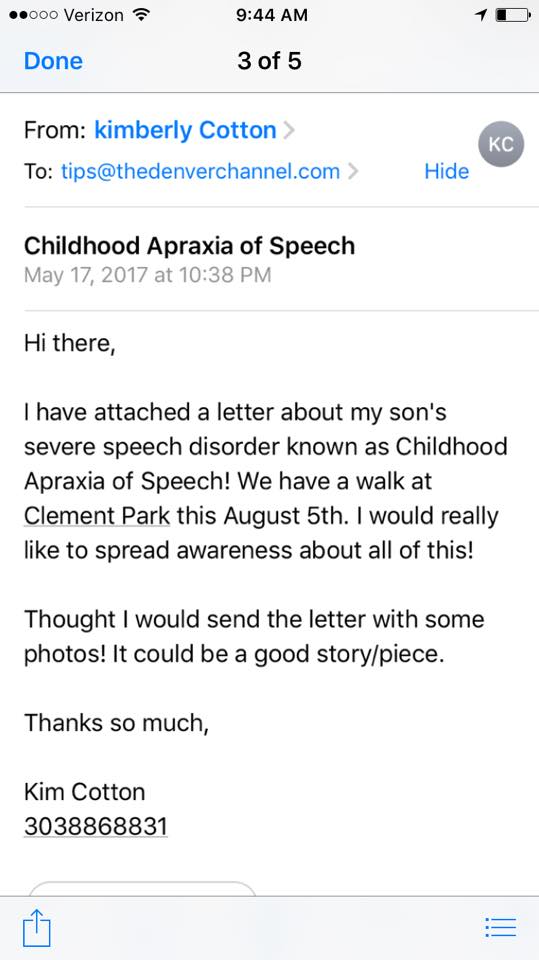
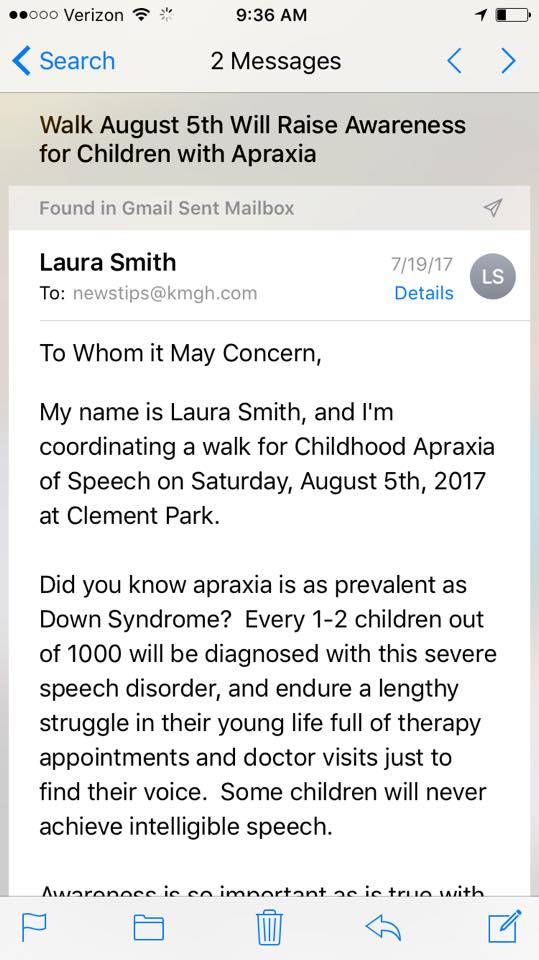
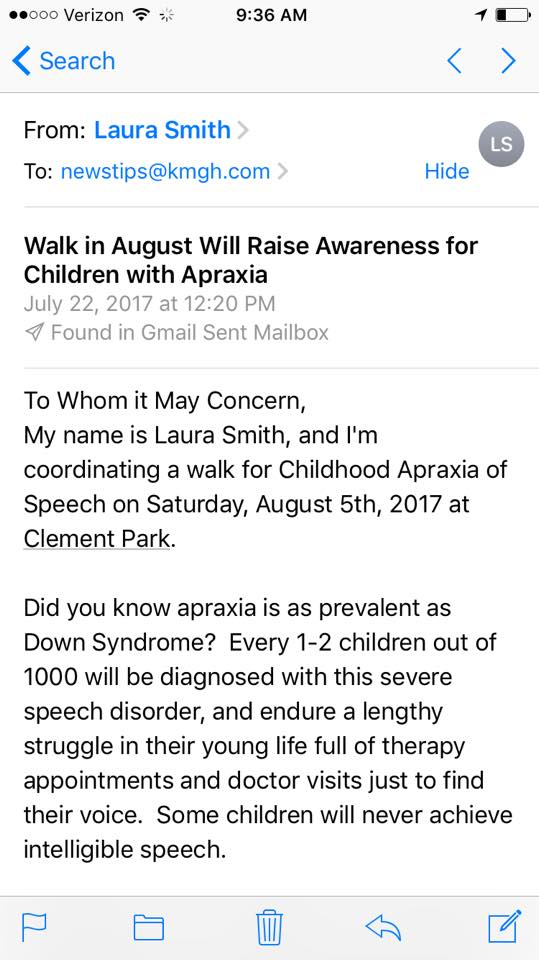
    Just a sample of emails and contacts sent to the news for this year.  Numerous emails from 2015 and 2016 have also been left unanswered.

  • What is Adam’s Camp in Colorado?

    What is Adam’s Camp in Colorado?

    I have known children who have attended Adam’s Camp in Granby, Colorado; and usually their needs were related to Autism, Down Syndrome, or Cerebral Palsy.  It has an incredible reputation. Children who have attended this camp during the summer, have a full packet of goals and progress written by their therapists to take back to their school district and private therapists for the coming year.  It is always a very impressive bunch of paperwork.  I had never considered sending Ashlynn until I talked to a mom of a client of mine who has global apraxia and who has been attending now for at least 3 years.

    The kids attend a 5 day camp in the mountains at a YMCA in Colorado, and they have therapy every day with a  team of therapists that include: speech, OT, music therapy, art therapy, and a SPED teacher.  In addition to this multi-disciplinary team approach to therapy, they go on fun outings that include: canoeing, swimming, tubing, horseback riding, and rock wall climbing.

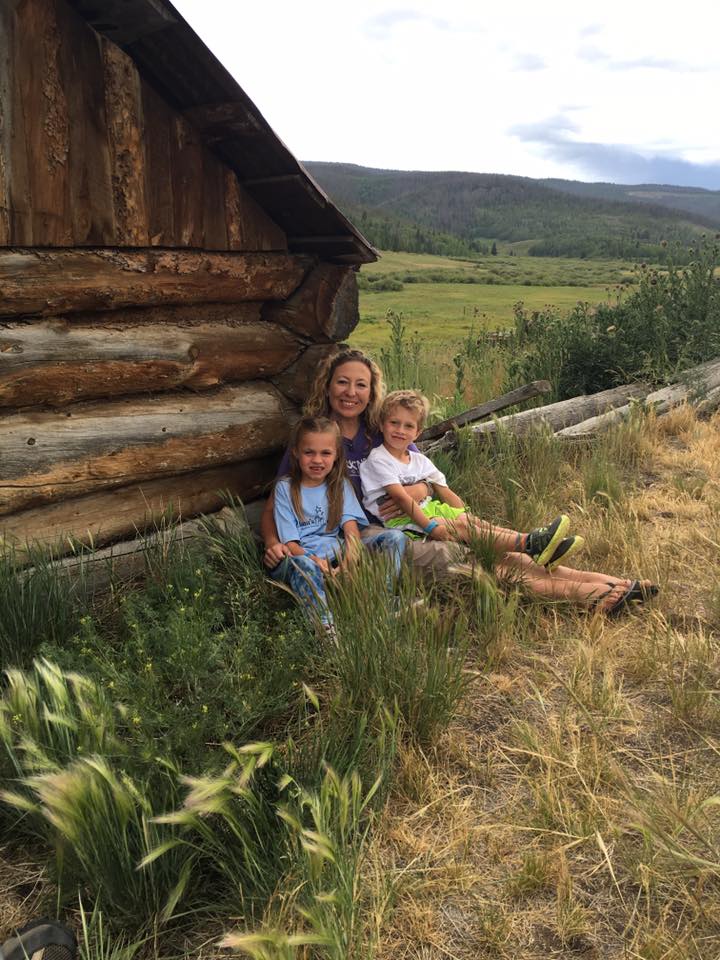
    I couldn’t wait for Ashlynn to have this experience.  They have different weeks tailored to different disabilities.  The global developmental delay group was full, but they found and opening for us on Down Syndrome Week and said there would still be kids with other disabilities.  I was a little hesitant, only because Ashlynn doesn’t have Down Syndrome.  lol.  However, Ashlynn doesn’t really fit in anywhere.  She has these major needs that require all those therapies, but she doesn’t have DS, or Autism, or CP.  I said yes.  Honestly, humans with Down Syndrome and Ashlynn have a lot in common; namely, their above average emotional intelligence.
    So here we were!  I rented a campsite because it was cheaper and had my husband haul our travel trailer up here, set us up in the campground, and then he drove back down to Denver to go back to work.  I didn’t realize it, but this campus is HUGE!  I NEEDED a car.   I hitched a ride the first day and then had my parents bring up a spare for me to drive while I was here!  It was quite the drama getting settled!

    Adam’s Camp was founded by a woman who had triplets back in the mid 1980’s.  One of them died shortly after birth, one of them, Adam, had CP, and the other was a typically developing child.  She felt the need to have a camp where all therapists came together to treat the child, but she also recognized the unfortunate and unintended negative impact on a sibling to a child with special needs.  They truly get the short end of the stick.  So, Adam’s Camp has an amazing siblings camp that is reasonably priced staffed by excellent, experienced teachers who are nothing short of A-MAZING.  Let’s put it this way.  I was more worried about my neuro-typical son at camp than I was Ashlynn!  He is very challenging and pushes every boundary. Also, he is very independent, opinionated, and moody; so if he doesn’t like something, we ALL are going to hear about it!
    My worries were completely unfounded.  Both kids had an AMAZING experience.  Absolutely exceeded ALL expectations.  I cannot say enough about this camp.

    Jace’s sibling camp was more than just fun.  It was therapeutic for him as well.  Kids get to talk about their difficulties and hardships within the family dynamics as part of their “therapy,” and then they also get to do super fun outings.  Jace did most of the things Ashlynn’s camp did plus roller skating, go-Karts, and more.  My son got therapy at a summer camp for being a sibling to kid with special needs….like how groundbreaking and amazing is that???

    Finally, parents’ emotional needs and well-being are also factored in and considered into this experience.  Adam’s Camp sets up a variety of parent activities that they offer for free, including a parent’s night out!  So many parents of kids with special needs find childcare hard.  Their marriages suffer and they don’t get many opportunities to be just a couple again.  Adam’s camp recognizes this as well.

    They really, REALLY have their pulse on the entire familial dynamic related to having a child with special needs and do their best to provide this amazing and holistic approach to every member of the family.  I’ve never seen anything like it honestly.

    I can’t wait to write more about their experiences.  I can’t do it all in this one blog post.  Long story short though, is if you can go to Adam’s Camp, DO IT.  More to come.

    Professional and FREE photos taken as part of the experience.

    I love you both with a love that has no bounds. I would breathe my dying breath for each of you. I know you have special challenges that each of you face, but I hope you also know you never have to face them alone.

  • It feels like home this year: Apraxia Conference 2017

    It feels like home this year: Apraxia Conference 2017

    Wow!  This conference in San Diego has been a WHIRLWIND.

    I was greeted with palm trees upon arrival, and being a Colorado native, anytime I see palm trees my mind thinks “hello vacation.”  I had some time to kill before my room was ready, so I was able to walk over to the beach.  My “beaches” in Colorado are sandy, but are man-made; so I’m always in awe of a beach literally littered with sea shells.  I was in heaven.  I took off my shoes and ventured out into the water.  Unlike the initial crisp temps in Colorado, the water was warm and inviting.

    Perhaps though, even more inviting than the warmth of the ocean or the sway of the palm trees, was when I arrived at this location miles from my home in Colorado, I started seeing familiar faces.  Sooo many familiar faces, and I still felt like I was home.  A different kind of home of course, but a home all the same.  These are my people.  This is my tribe.  More importantly, these are Ashlynn’s people and these are her tribe.

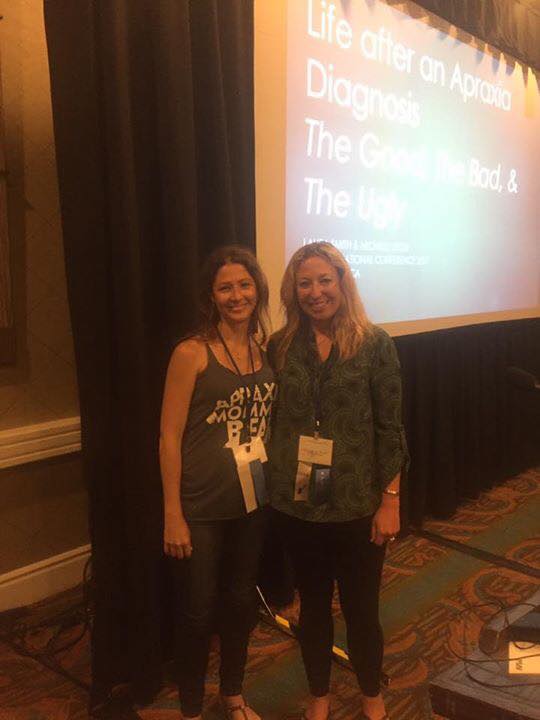
    SLP Moms of Apraxia

    co-presenter apraxia momma bear!

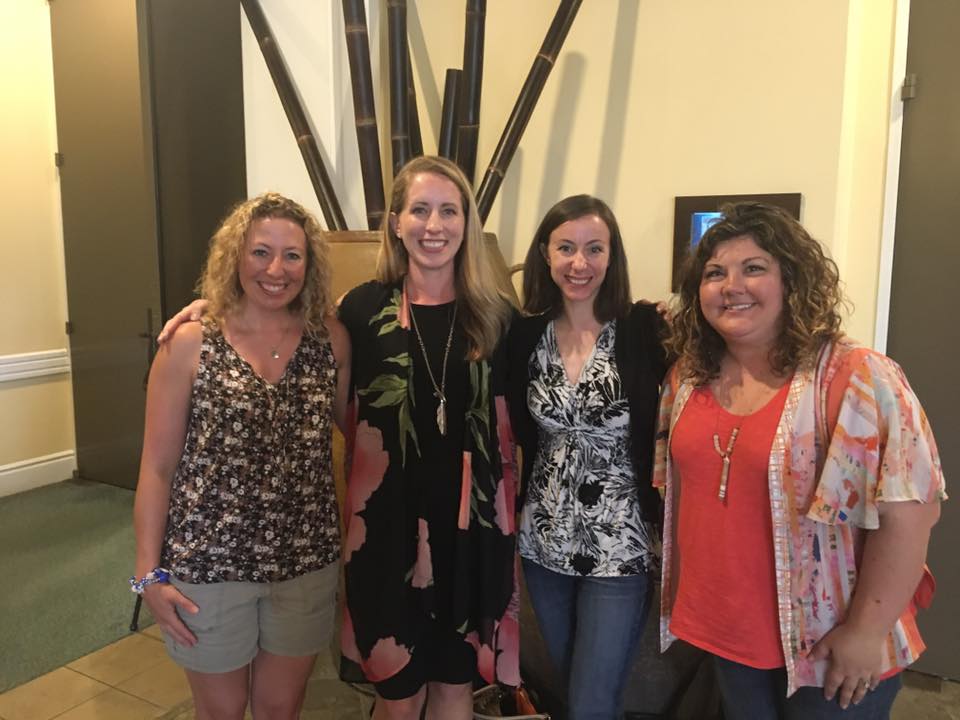
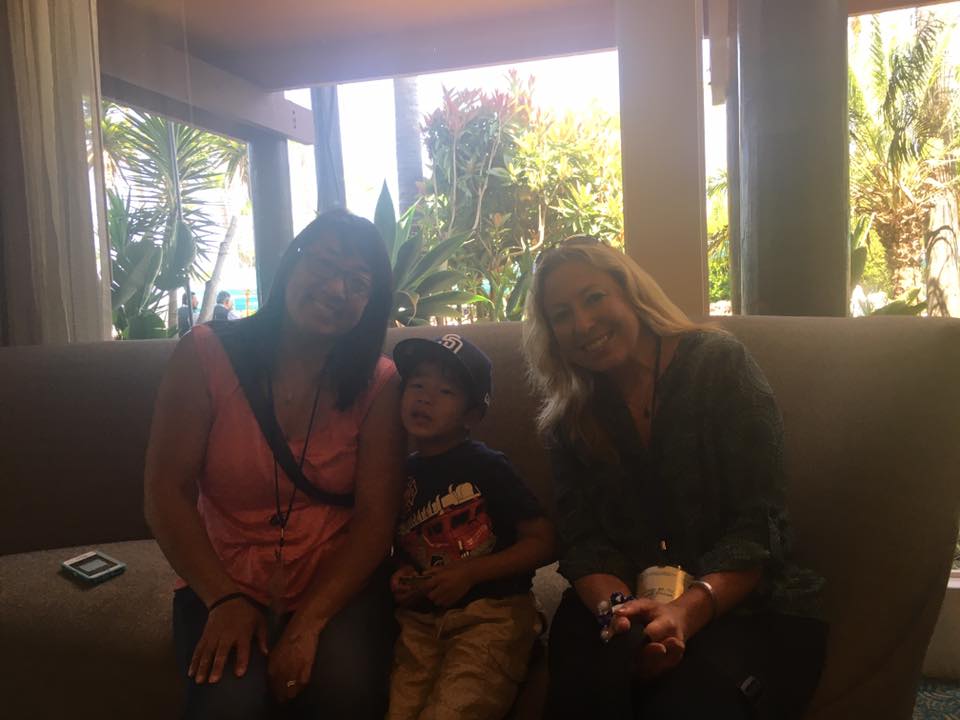
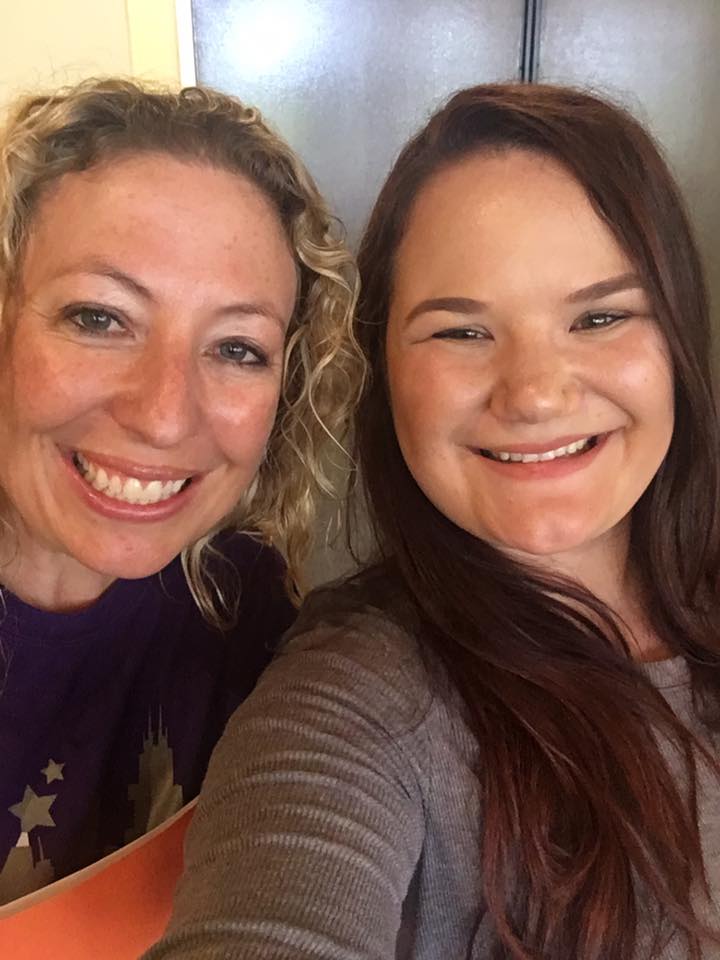
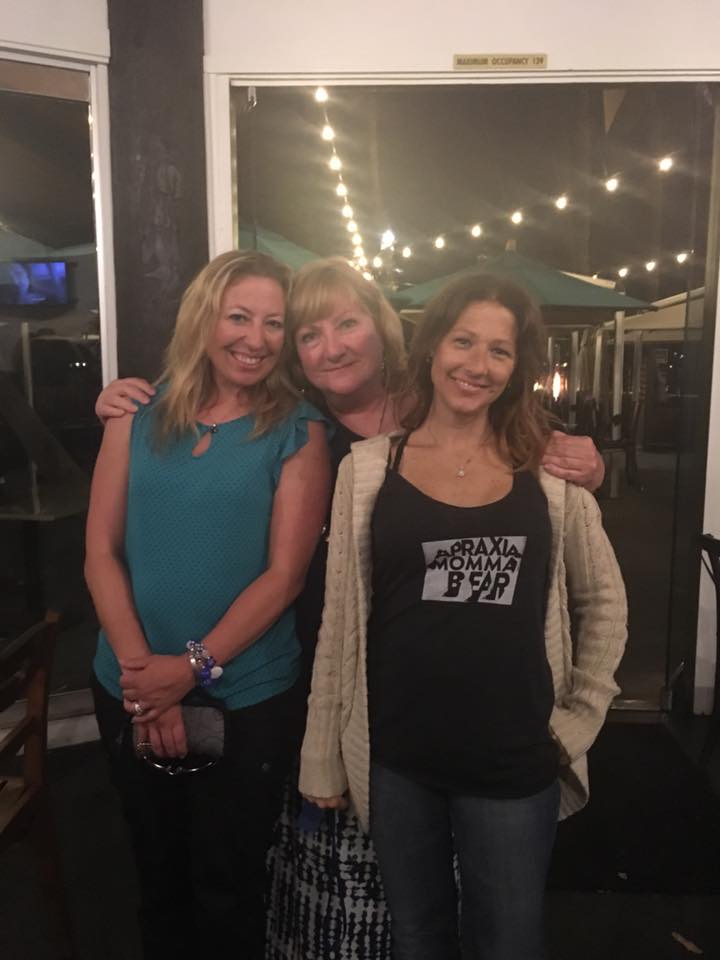
    I hugged numerous faces.  As an SLP AND a parent of a kid with apraxia, each of these people I could look at and say “me too.”  We all share similar experiences.  We all share this bond.  It sounds funny, but I got to “meet” in person people I feel like I already know via facebook.  Isn’t facebook an interesting phenomenon?  The pictures below are a just a sampling of a few people I talk to frequently but had actually never “met” in person.

    I was speaking the next day, but that night was what I was most nervous about.  The founder of CASANA, Sharon Gretz, had FINALLY agreed to come to the conference if only for one night; and this meant we could all honor her and give her the recognition she deserved.  The wheels had been in motion for a month or so with numerous people who love her throughout the country mobilizing via social media to give her a gift and a night she would remember and that she in fact so duly deserved.  Since many of these people couldn’t be in San Diego, it was up to me and a few others to make sure it went as planned.

    Initially we were told Sharon wasn’t going to go.  The founder, the previous executive director, but more importantly the woman who had become the face of CASANA and made it her personal mission to reach out to all of us in a personal way and who had helped 100’s if not 1000’s of our kids, wasn’t going to be there.  It was devastating, until an email was sent out about a month and a half before the conference that said she would be there for one night, and one night only.

    That set the wheels in motion.  Through the apraxia facebook network, a video was made with numerous apraxia parents and children spread out through North America who she had personally touched and helped.  In addition, a water color painting was brainstormed, ordered, made, and framed to be her surprise gift at the conference.  The picture is of her young son Luke, her reason CASANA even exists in the first place.

    The ceremony was emotional and absolutely perfect.  It was the proper way to honor someone who has changed the lives of thousands of kids with apraxia and their families for the better.  It felt incredibly rewarding to make her feel as special as she is.

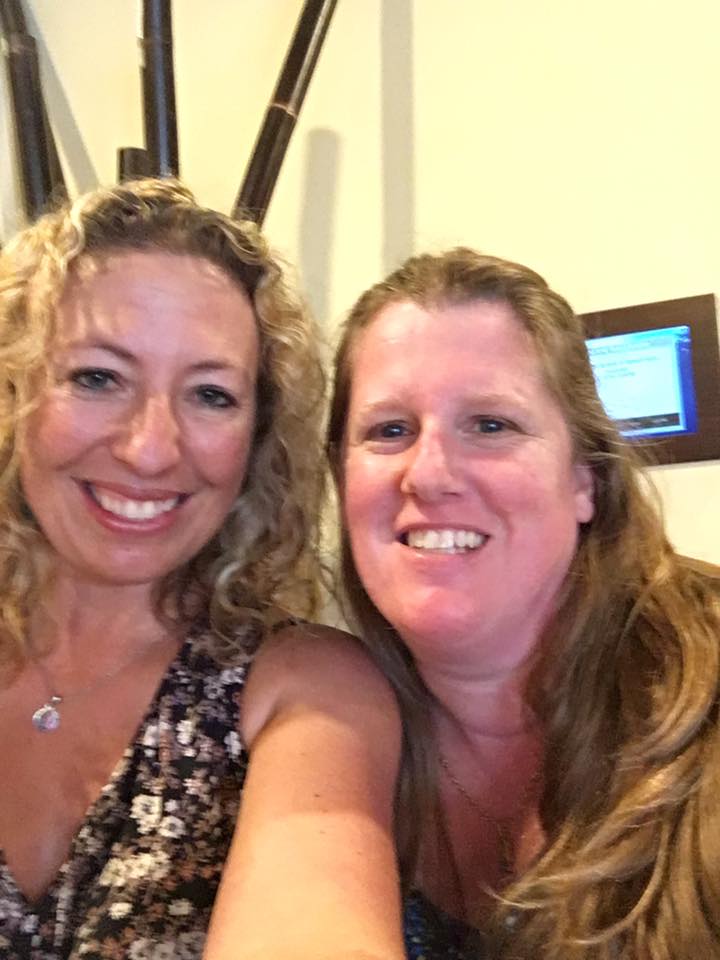
    Have you ever stopped to think, and then believe, that one person, ONE, could change the life of hundreds; if not thousands, if not millions of others?  I had not honestly until recently.  Sharon changed my life, and because of her kindness to me, I want to pay it forward as much as I can.  During this tribute to her though, I started to realize Sharon touched and inspired hundreds of others like me.  How incredible is that?  What is the ripple effect of one person?  I can’t answer that, but I can tell you this picture on the left represents two women who were helped by Sharon and now blog and have vowed to make it better for those coming after us.

    My take home message from Sharon’s life frankly is this: If you can’t change the world, that’s okay.  Change the life of ONE.  It doesn’t seem like a lot, but when you add up each day, and then each year, and then each year in your life; if you have vowed to help make even just ONE person’s life better each day, you will have touched hundreds, if not thousands, like Sharon Gretz.

    The keynote of this conference described planting a “seed.”  One seed to sow a village of support.  My takeaway, is one seed alone is small and insignificant, but planted next to others in the field, it grows a thick and abundant crop.  One seed in a forest doesn’t seem important, but that’s the wrong outlook to have.  EVERY seed in the forest is important, just as every family member in a family is important.  Only when each seed is properly nourished and supported, does one forest, or one garden flourish.  It flourishes based on the strength of each individual.

    One seed then my friends, is equally as important as the next.  I think true leaders see the value in each seed.  They see the value of each tree instead of looking at the entire forest.  Thank you for caring about this small seed in Denver, Colorado Sharon.

    With humble admiration.

    The life of just ONE.