Hi Mark! I’m so excited to have you as part of my Growing up CAS series! You recently just completed your first year of college correct?
No it was my first semester of college.
Congratulations! I hope you know by you sharing your story and experience you give other parents out there so much hope! You are an inspiration and someone for our kids to look up to!
Can we start with you telling us a little bit about yourself?
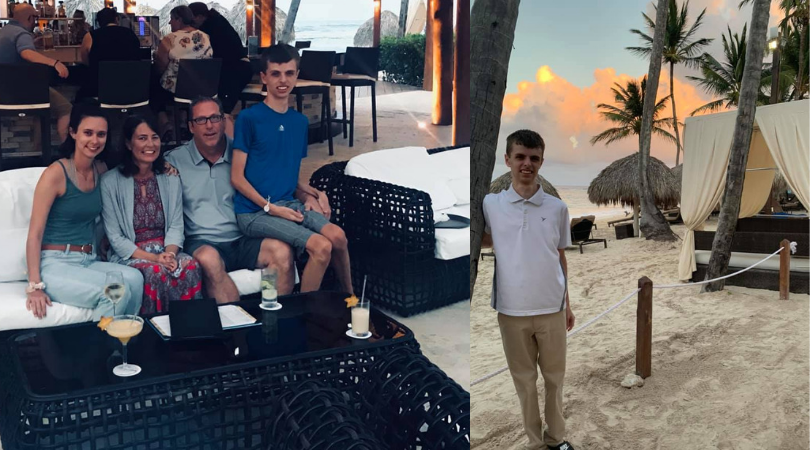
I’m Mark Lippert and I’m 19 years old. I live in Saint Paul Minnesota with my Mom, Dad and my sister. When I was diagnosed with apraxia I was 2 ½ years old.
What are your childhood memories of having apraxia and going to therapy?
My early memory of being in speech therapy is that I needed my mom and sister to be in the speech therapy room with me or I would not work. As a reward for me after speech therapy my mom would take me and my sister out for ice cream by my speech therapy center. It was 40 minutes away from my house and my sister had to sit with me in many speech therapy sessions, so that is why she got ice cream too! At the end of each summer speech therapy, my mom would take me and my sister to “Chuck e Cheese” which had 2 floors.
Did you have any additional academic struggles or co-morbidities?
Yes i had a lot of struggles with school over the years. I had a IEP since I started school K-12. I got diagnosed with a learning disability when I was in 2nd grade.
How has apraxia affected your life, or has it? Do you have any residual issues?
Apraxia has affected me and my whole life in good and bad ways. My speech can be an issue but I do not let it define my life. For example, I might not be understood the first time when I’m talking to someone. But I do not let it interfere in the conversation with someone. Apraxia has shaped me into who I have become and if I did not have Apraxia my whole world would change. I bet I would not have the same work ethic and motivation that I have. I have gotten so many compliments by teachers on work ethic and motivation that I show in my life.
Work ethic is a huge key to success! Speaking of school, what was your school experience like?
My school experience has been mostly good where teachers would support me and what I had on my IEP where I might not have been as good as other students but they would always understand. For all of my school career I have been that type of student in the Special education program were the student would be flip flopped being in a regular classroom and being in every kind of special education classroom. My case managers over the years have been ok at best. In high school I was put in special education classrooms where it did not fit my educational needs in that it was really too easy for me. In total over having case managers excusing elementary school, I have had four with the the most being in high school. Overall my school experience has been good when my supports fall into place.
What do you want people to know about you and others living with CAS?
Trust your child’s class performance over IEP Re-evaluation testing.
IN SOME CASES
That apraxia kids can understand everything that you say. I think that apraxia kids’ brains can process at the same or a little faster as anyone can.
What advice do you have for those growing up and/or living with CAS?
Just keep fighting! I know that you might not want to go to speech therapy because you know that you can’t say the word you have been trying to say as clearly as possible. You might not say it that time but you are going to say it in the long run. When i was younger I hated when people said that I was going to speech therapy. I would tell them to just call it “Speech.”
Most parents are so worried about the future when their child gets an apraxia diagnosis. What would you tell them?
Like my mom says “ there is always a light at the end of the tunnel.”
Do not set any expectations for their education career and their life. They might surpass them all like I did! My parents did not think I could ever be in college. They thought at the best I would go to a Trade school. Do not ever let the internet shape a picture of your child’s life going forward, because your child might have a card up their sleeve that they might not show you at their start of life, but at the end they are going to show you everyday!
That gave me chills Mark! You are helping to change the stigma around apraxia and special education! I can’t wait to see what you do moving forward! You definitely had a few cards up your sleeve and I’m sure your parents couldn’t be prouder!
Growing up with apraixa is part of an ongoing series that aims to celebrate neurodiversity and highlight those who have grown up with Childhood Apraxia of Speech and related struggles. If you are interested in being featured, send an email to lauraslpmommy@gmail.com