Tag: speech therapy apraxia

  • Word FLIPS giveaway!

    Day 5 leading up to Apraxia Awareness Day on May 14th has me offering a giveaway for Word FLIPS by Super Duper Publications.

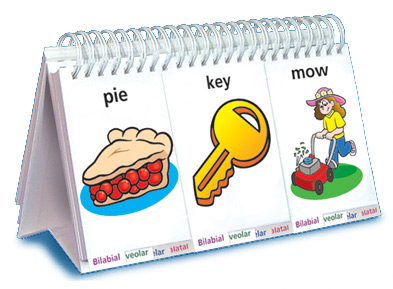
    wordflipsWord FLIPS can be a useful and handy tool to use with kids who have apraxia.  It allows practice for simple CV syllable shapes for up to 3 repetitions.  It also allows for combining combos to form other bisyllabic words i.e. tie+knee = tiny.  I usually give my kids one of those finger pointers and we take turns pointing at and saying the words.

    Taken from their website:

    Word FLIPS includes three sections of identical picture words with four tabs in each section that divide the words according to articulatory placement: Bilabial, Alveolar, Velar, and Palatal. Begin teaching severely unintelligible children by having them repeat identical earlier developing sounds, such as “boo-boo-boo.” Older or more verbal children can practice a variety of sequences, such as “tie-tea-shoe” as a warm-up to practicing sentences.

    Must be a U.S. resident.  Good luck!
    a Rafflecopter giveaway

  • Pot O’Gold Articulation Game for Apraxia

    Slide1 (2)

    I was finally able to make a new game for my kiddos with enough time to spare for St. Patrick’s Day! This game follows the same idea as my other repetitive games.  Kids have a game board, in this case, a black pot:

    Slide13


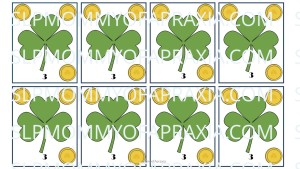
    The kids draw a card from the card deck.  If the card contains a shamrock with gold coins, the child collects the amount of coins shown and then practices their targeted speech sound/syllable that amount of times.

    Slide7 (2)


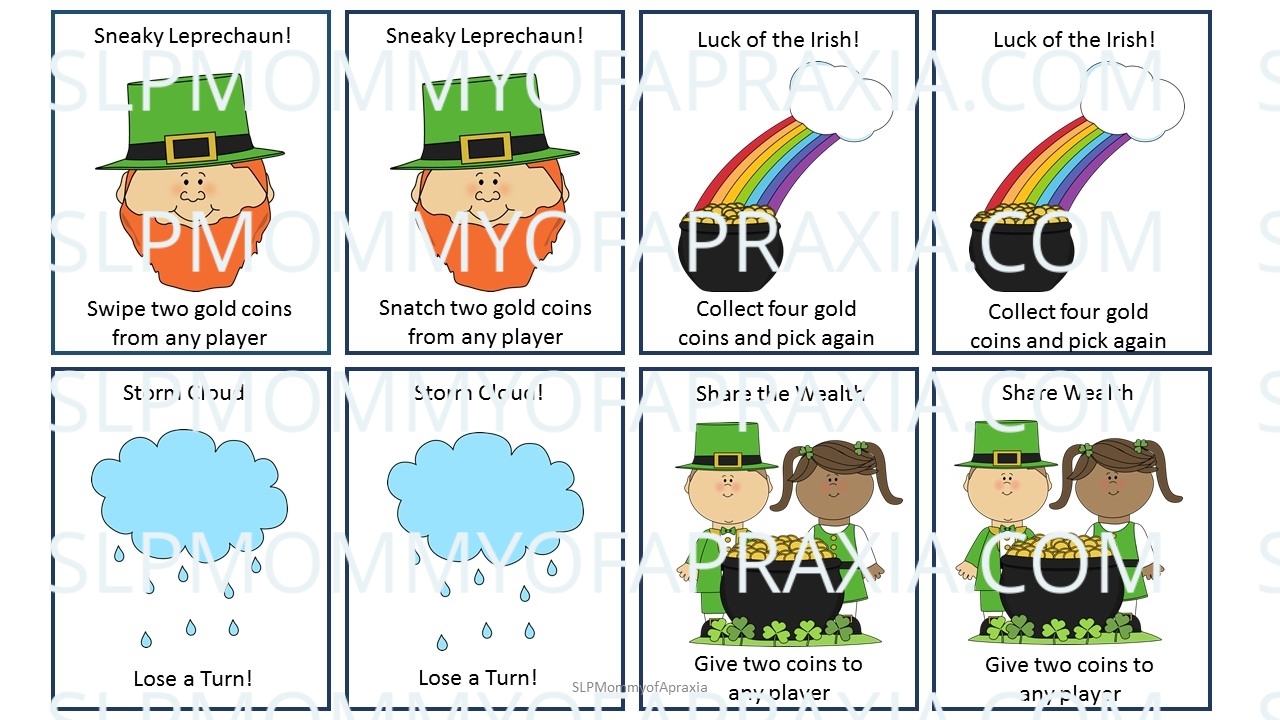
    Some cards have surprise twists that include “snatching coins from other players,” losing a turn, or giving some of their coins to other players.

    Slide11 (2)


    The player with the most coins at the end wins the game! My kids really enjoy these games and I hope kids on your caseload do too!  Enjoy!  Get it in my teachers pay teachers store for free for a short time!

  • Why nature weighs more heavily than nurture

    Why nature weighs more heavily than nurture

    Nature versus nurture.  It’s a phrase that comes up in my profession, even if it’s unspoken.  I’m in the business of child language development, and nothing raises more eyebrows about nurture than a child who can’t talk…. or who has poor vocabulary knowledge…… or is lacking in language skills.

    Oh it comes up in psychology too.  We’ve all heard the stories of twins separated at birth and raised in different environments.  How do they turn out?  Are they a product of their environment, or did nature play a bigger part?  I don’t really know the answers to those particular studies except what I’ve seen on talk shows like all of you.

    However, I’m here to talk about speech and language development.   I’m a professional in it, but nothing could have taught me more about nature versus nurture than having two of my own children.

    Maybe that’s why it took me until my daughter with CAS was almost three to get tested.  Was I in denial?  What the heck?  Well,  I’ve seen the eyebrows from fellow colleagues about children I’ve treated.  I’ve been privy to the comments, “well, his parents just never read to him!” or  “they just don’t talk to their children” or “those parents anticipate all of his needs that he has no NEED to talk.”  So yeah, I’m pretty sure THOSE comments were exactly why I waited so long.

    Deep breath.

    Teachers and speech/pathologists, we need to talk.  This talk is cancerous.  If only you KNEW what a parent who has a child with delays goes through on a daily basis, you would instantly take back your words.

    I am a speech/language pathologist, and had been practicing five years prior to the birth of my daughter.  I might have been unknowingly pompous once.  Let’s face it, I was.  I was convinced my first child, my daughter, would come out practically gifted.  Heck, I had a master’s degree in childhood language development and disorders.  If anyone could give their child the upper hand, it was going to be this mama.  I remember when she was very young, maybe a month, I had a red and green light rattle that I would slowly move around her visual field.  I even think I wrote on facebook I was having withdrawals from my job and was just doing some “speech therapy” with my child.

    I remember cooing at her, using “motherese,” talking to her while I went about my activities, and even using baby sign with her paired with visual models each time she went to “eat” “drink” or wanted “more.” I remember locking toys out of reach so she would have to request them, demanding some sort of verbal response before she received anything of interest, and having her use AAC on my iPad. We (I) sang nursery rhymes, sang our ABC’s, and had letters all over the house like in the bathtub and on the fridge.  I read religiously to her EVERY, SINGLE, NIGHT.  She was going to be a prodigy.  I just knew it.

    It pains me to write her whole story in this post.  I have an entire blog for that.  Suffice it to say, things didn’t quite turn out as I had envisioned.  Her SLP mama who knew the tips and tricks didn’t seem to know the key to unlocking her voice, or her other motor skills.  Despite nightly therapy sessions, it seemed I was to be the only SLP on the planet who had a child who couldn’t talk.  Who I couldn’t TEACH to talk.  Despite going to work everyday and helping my students find their voice, my daughter struggled with hers.

    Despite throwing myself in research, attending conference after conference on early intervention, or consulting with my colleagues, my daughter STILL struggled to speak.

    I’ve come a long way in this journey, but let’s just say my guilt and feelings of failure for Ashlynn were so strong that I specialized in the disorder.  I love what I do, and I love CAS, but I thought at least if I were a specialist I could finally and truly say I really did EVERYTHING I could to help her.

    “You’re an SLP” you might be saying.  “I have parents who don’t care like that.”

    Let me just tell you, that your parents are now MY parents and I have treated many kids with CAS….and I can tell you with absolute, positive, and definitive truth, that EVERY mother feels or has felt like me.  They may manifest it in different ways, but isn’t that to be expected?  We are all individuals after all.  However, every mother I have met is worried.  Every mother I have met is a praying woman.  Every mother I have met feels helpless.  I felt helpless and I’m a speech pathologist!!!

    My dear colleagues, I don’t want to get another phone call from a mother in Arizona who has a bubbly voice and seemingly carefree personality, confess that despite every night that she lays her head on her pillow pleading with God that her child gets better and praying it was nothing she did, the SLP told her if she had just read to her daughter more, she would have been in a different position.

    This is not okay.

    If you don’t believe that mother, than believe me.  I have finally come to terms with the fact that nothing I could have done would have made my daughter talk on time.  Please, please, don’t add to that mother’s guilt.  I assure you, she is full to the brim already with it….despite the fact there is nothing she could have done.

    I have another SLP mommy I have met now with a child who has CAS get a note from an SLP that stated,”still remains delayed despite excellent familial support.”

    That statement, seemingly benign, implies that that SLP believes nurture plays more than nature, and she is having a difficult time reconciling such delays that are accounted for….GASP…..an actual disorder.

    Friends, speech and language disorders are your livelihood.  Please stop assuming nurture played more of a part.  My son was born in the midst of my daughter’s diagnosis.  He never received the FRACTION of therapy my daughter did, and he said mama at 8 months old.  He went onto to say and do things that left me speechless.  Not  because I doubted him, but because based on my experience with my daughter with global apraxia, I didn’t have to TEACH him any of it!  Time after time, I shook my head asking him, “how can you say that?” or “how can you do that?  I haven’t taught you that yet!”

    If this journey has taught me anything, it’s that speech and language delays really ARE an actual disorder like we all learned in graduate school; and SLP’s, your role couldn’t be more important.  Please don’t taint it by coming in with an assumption “if only they had…..”

    Come in with the assumption that “they have….and they are spent.”  Please, please be the parent’s champion as much as you are the child’s.

     

    nature vs nurture


  • Strategies to promote speech and language in the pre-verbal or minimally verbal child with Apraxia

    Strategies to promote speech and language in the pre-verbal or minimally verbal child with Apraxia

    The great thing about speech and language, is that it a task that can be worked on in any activity.  Familiar routines in the home provide the perfect platform for encouraging speech and language, because this “routinized language” is predictable and context based.

    A fellow SLP and mommy of apraxia, Kim from Landonjourney.blogspot.com and I teamed up for Part I in my series of parent strategies to promote speech at home.  We wrote a list of some of the most effective strategies to encourage early speech in the pre-verbal child, including those with Childhood Apraxia of Speech (CAS).  Part II in the series will focus on strategies for the verbal child with CAS.

    Parents ask a lot, “How do I get my child to practice speech at home?”  Well, we are here to tell you, you don’t need worksheets and flashcards.  Basically, with kids who are minimally verbal, we look for opportunities to model and encourage functional language.  Functional language refers to language the child is more apt to use frequently throughout their day, or may be highly motivating to them.

    With kids who have apraxia, not only do we think just about functional language, but words that also contain simple syllable structures.    These are some of our favorite strategies and targets and how we incorporate them:


    Powerful motivators:

    As moms, Kim and I know that when you have a child who is nonverbal, you anticipate their needs for them.  After all, our babies can’t tell us when they hurt, or where they hurt if they are crying.  They can’t tell us they’re hungry or thirsty; and if they have global apraxia like our kids, they may even have trouble pointing to communicate to us that way.  However, as SLP’s we know that kids need to be motivated to communicate.  If we keep anticipating their needs, they never have a reason to really force themselves to try at something they know is hard for them anyway.   As the parent, you are truly the best person to encourage them to try, even when it’s hard.

    Teach and pair signs with a verbal model:

    Some worry that teaching sign will inhibit speech; however, as long as you make sure to always pair sign with verbal models and give verbal reinforcement after the child uses a sign, sign language can be a powerful bridge to helping the child say it once they begin speaking.

    • “help” “more” “go” and “bye” are good beginning signs to teach. Always provide a verbal model when you sign to your child, but encourage your child to sign, and reinforce any attempt by repeating the word and modeling the sign before giving your child what they want.

    Cloze activities:

    • Cloze activities are great for our kids with CAS because their mouth/body gets ready to respond, and the response is familiar. It reduces cognitive allocation and helps get the motor plan “set.” We do cloze for everything.
      • “Turn the music (pause) ” on, and wait for “on.”
      • “Ready, set (pause)” go!  We do “go” at every green light and I start the sentence and he tries to finish it. This has helped him feel more success at speaking “on command.”
      • “One, two _____” three!
      • Sing nursery rhymes and pause before the last word.  Ashlynn and I would sing “The Itsy Bitsy Spider” and “The Wheels on the Bus” and I would pause before some words that had simpler syllable structures.  For example “down came the rain and washed the spider (pause) out.” or “The wheels on the (pause) bus go round and round.”
      • Read repetitive story books, pausing before the predictable repetitive words.  To read more about repetitive books and to get a free download on how to use them visit my on repetitive books that are great for apraxia.

        • Keep reading for more cloze ideas. 

    Require your child to respond to your yes/no questions:

    • assessing your child’s understanding (i.e. Do you want to go outside?) can often be done with simple yes/no questions before your child is verbally able to respond more.
      • I require my child to answer yes/no questions in anyway he can. Before he could nod/shake his head (difficult for motor planning), I modeled the response based on how I knew he reacted.  Do you want help? (giggle giggle). Yes (nodding my head), I want help. I had to physically move his head before he was able to do this. Now, I will say “yes” or “no” and wait.  This has also helped my son to be able to say yes/no, and they are words we have targeted often. 

    Focus on functional words:

                (These are some of our favorites, but individualize them for your child!)

    1. Bye-bye

                * Bye bye is good because it can also signal the end to an activity if the child cannot say “more.” We say bye to each activity, place, and even to our toys at bedtime.  This works on the motor planning for waving, and then saying bye bye.

    1. In

                * Emphasize each time you put them in: bed, the bath, car-seat, highchair, stroller, park swing.

    * Model when pouring a drink in their cup etc.

    1. Out

                * Emphasize each time you take them out of: crib, bath, car-seat, highchair, stroller, park swing

    * In the kitchen, model each time you take food out of a container, the fridge, a cupboard.

    * In the bathroom, model when squeezing out: toothpaste, shampoo, tissue, diaper wipes, etc.

    1. On

    * Emphasize each time you put music on, water on, lights on.

    * In the bath, “ok let’s turn the water (pause) on.

    1. Down

    * Emphasize when going down the stairs, getting them down from highchair, putting them down,                                       when something falls down, playing “Ring Around the Rosie,” etc.

    * Use a cloze procedure here too, “uh oh! The cup fell (pause) down.” Or “We all fall (pause)                                                down.”

    Again, these are some of our favorites, but work with your SLP to determine your own that work for your child.  Other suggestions:

    Uh oh

    Hi

    Nigh-Night

    More (Mo)

    Child’s age

    Mama

    Dada

    Put

    Done

    Do

    Set activities to song:

    • Based off of research done with melodic intonation therapy, music can provide a bridge to stimulate language.
    • Have fun and make up your own silly songs set to melodies you already know, to make it easy.
      • During bath time, I would sing a body parts song to Ashlynn set to the tune of “Mary Had a Little Lamb”:
        • “Now we’re washing Ashlynn’s hands, Ashlynn’s hands, Ashlynn’s hands, Now we’re washing Ashlynn’s hands while we are taking a bath.”  You can use a cloze procedure here too: “while we are taking a (pause) bath.” 
    • To get on demand phonation, something that is hard for our kiddos,  set songs to Row, Row your Boat and change it to:
      • Row, row, row your boat, gently down the stream, if you see your feet, don’t forget to scream. For my son, this song works to assess areas that he often can’t tell me/show me on command, but in a song, he gets his body ready and is more interested/able to do so.

     Repeat and reinforce spontaneous utterances.  

    • If your child says a sound or word, try to say it back at them and encourage them to say it again.  On demand speech is hard for our kids, so getting them to imitate back to you might be easier when you first imitate something they just said.
      • Ashlynn had a “go to” sound “a dah” that she said for everything.  I would tell her, “a dah?  dah dah, dah, dah” and see if I could get her to say it again on demand.  If she did, then I would change the vowel and see if I could get that on demand, “a dee, dee, dee, dee.”  Play around with sounds and have fun with your child.  This should be a low stress activity and just seem like fun to your child.

    Praise and Encourage ALL communicative attempts           

    • Our kids know talking is hard. A little bit of praise goes a long way!

    Laura Smith M.A. CCC-SLP is a speech/language pathologist in the Denver Metro Area specializing in Childhood Apraxia of Speech.  CASANA recognized for advanced training and expertise in Childhood Apraxia of Speech, she splits her time between the public schools and the private sector.  She is dedicated to spreading CAS awareness.  Her passion is fueled by all of her clients, but especially her own daughter who was diagnosed with Childhood Apraxia of Speech.  For more information visit SLPMommyofApraxia.com  

    Kimberly Haas-McEneny M.S. CCC-SLP, mom to two boys: one with CAS and the other with suspected CAS.  Kim is a Bilingual SLP practicing in Syracuse, NY at the Syracuse City School District. She blogs about her experiences with being both a mom and SLP at landonjourney.blogspot.com

    Parent strategies


  • Winter holiday themed Dauber games for repetitive practice

    Slide01-1
    My kiddos love using BINGO daubers to for any activity.  The ones at Michael’s are the best as they are washable!   It’s great for getting repetitive practice for speech targets! Then we roll the dice and practice saying our target words the number of times on the dice while dobbing the board.  Give a board to each player, and whomever fills it up first wins!

    Slide03-1Slide09-1


    To shake it up, I included game cards and a spinner if you don’t want to use dice.

    Slide11-1Slide14-1

    Get this activity in my TpT store here!

  • A tale of two roles: navigating my role on both sides of apraxia.

    A tale of two roles: navigating my role on both sides of apraxia.

    I first met a fellow mommy of apraxia at the Denver Apraxia Walk.  She was pleasant with kind eyes, and said she felt her 5 year old son needed a change up in speech therapy services.

    The next week her son was scheduled for therapy at the private clinic in which I work.

    In most cases, I have my parents come with their child into my office.  I NEED them to see what I see.  I NEED them to do what I do.  They are with their child the most, and they are completely capable of carrying over what I am doing, as long as they know WHAT I am doing.

    Normally the child might be somewhat distracted by the parent; however, this day, I was the one distracted.  Not by my client, but by his mom.  There isn’t one word to describe her face, but there were multiple adjectives rolled into one: worry, anxiety, fear, hope.

    These are only a few, and honestly, they killed me.

    I understood more when she said she had successfully home schooled 4 other children, some even in college.  I admired her.  She not only stayed home and raised her kids, but she taught them school as well.  Their entire childhood development rested on her shoulders and she had done a good job.

    But her baby.  Her last child.  This one was different.

    I felt her pain.  I absorbed her worry.  I took responsibility for her hope.

    I knew I could help her son.  He wasn’t receiving the right therapy.  That was evident from his first session.

    I was so moved, I came home and told my husband.  I described her face and how it was hard for me to take because I kept absorbing all of her emotions.

    It’s hard to watch a mother visibly show almost every emotion I went through with Ashlynn’s dx, but then be able to turn that off and be the professional SLP I need to be.

    I recently watched an initial video I took when I saw him.  Again, though I was trying my hardest to focus on him, I couldn’t help but look at his mom in the background.  The worry on her face is tangible.  I just want to yell out, “I will help him mom.”  “Slow down.”  “Stop worrying.”  “He is going to be okay.”

    Unfortunately, I know saying all of those things is like telling the sun not to rise.  A mother’s worry cannot be extinguished.

    Last week though, something was different about her demeanor.  A softness was in her face. Upon further questioning, I discovered her oldest daughter came home from college and told her she saw a difference in her little brother’s speech.

    That’s all it took.  Outside validation from an inside source.

    I’m sure that doesn’t mean she’s still not worried, but I hope a small weight, even if ever so tiny, was taken off her shoulders.