Tag: speech and language therapy

  • The problem with school SLP’s.

    The problem with school SLP’s.

    I only realized after being a part of the special needs community that school SLP’s have a bad rap.  Like a really, REALLY, REALLY bad rap.  

    I’m preparing a talk next month for Colorado school SLP’s, and every time I prepare a talk for this demographic, I have to tell you they have a special place in my heart.  No, it’s not just because I started as one and work as one part time, but it’s because I have literally worked under, with, and around many, many, MANY of them. I have worked with so many of them, and I can tell you they are a jack of all trades.  They are the EXPERT in eclectic, and may be the ONLY person in the school who understand in depthly just how a student’s unique communication challenges actually affect them in school.

    In the schools, you don’t have the option to specialize.  Kids from every disability show up on your caseload and you are expected to be the expert.  It might be hard to understand as a parent, but there are soooo many different disabilities and speech and language disorders, and a parent (rightly so) expects the SLP to do right and best for their baby.

    Every single SLP I know and have met has a desire in their heart to help children.  Please, let that sink in.

    When I took Ashlynn to her first private SLP who had never worked in the schools she was asking me about qualification.  She asserted that she could never be a school SLP because she felt it was unethical to not qualify students who clearly had some sort of speech or language problem.  I had a hard time refuting her.  Aside from saying qualification is different in the private versus educational sector, I really had no excuse.  I know that funding is limited in the public sector so that obviously plays a part in qualification.  I also know if every SLP took her stance, than NO kids would be serviced in the public schools, and is that really what we are going for?

    Public school SLP’s have caseloads that are probably double if not more of the private SLP.

    Where the private SLP can see kids 1:1, school SLP’s rarely have that luxury.  With weekly caseload averages around 45 to 55 and some maxing out at 90 (Yes 90 people I’ve seen it), even the most skilled SLP will not be able to do what a private SLP can do 1:1 for 45 minutes (though they will kill themselves trying).

    The result?  Parents become outraged at the lack of progress or progress they feel the child should be making. They surmise the school SLP just isn’t as good as the private SLP and they become disillusioned and write them off.  They post memes about preparing for battle when going into an IEP meeting! This honestly breaks my heart.  I feel bad for the parent who feels the SLP doesn’t care, and I feel bad for the SLP who is trying to manage an unmanageable caseload, writing IEP’s at night, or staying up until 2 Am (true story from an SLP I just talked to last week) to write a lesson plan, only to be ravaged by a parent unsatisfied with the results.


    I’m not sure if everyone is aware of this, but ANY SLP in ANY setting is as qualified as the next SLP by basic certification standards.  What does that mean?  That means, as long as an SLP received their masters degree and the Certificate of Clinical Competence (CCC) through ASHA they can work anywhere.  So that means, your school SLP can apply for a job at Children’s Hospital right now and probably get hired tomorrow (because in case you didn’t know there is an SLP shortage as well).  For some reason though, there is this perception that the school SLP just isn’t as good as the private SLP.  If it’s true, it probably has MORE to do with caseload and workload size than it actually has to do with the qualification of the SLP.

    I get calls and emails all the time from concerned school SLP’s desperate to meet the needs of their kids with apraxia but not knowing how.  They want to see the kid more, or see the child 1:1, but their caseload simply does not allow for it.  They cannot add more hours to the day, yet they still call, or write and wonder if there is something they have not yet thought of.  Oh, and here’s a dirty secret.  Listen close.

    Are you listening because this is VERY important.

    If an SLP feels in their heart a child needs private, supplemental speech services, they CANNOT say it.  People, they CANNOT tell you this.  Why?  Well, their license and job is on the line.  In most cases, school SLP’s are told not to recommend any sort of outside therapy.  Why do you ask? Why?

    I’ll tell you.  If a school SLP recommends outside services, the parent can sue the district and win, and potentially disbar an SLP from ever practicing again.  Are you asking why again?  I’ll tell you.  If a school SLP recommends outside services, they are essentially saying that the child can not benefit or make progress from the therapies provided by the school, and the school is required by law to show progress.  If the SLP recommends outside service thereby saying the school is inadequate, the school gets worried or they will get sued for not providing adequate services and the SLP potentially fired.

    Would you take that risk?

    I’m not saying unilaterally every school district would do this, I’m just saying, school SLP’s are told this is a possibility, and so they would find it best not to recommend outside services.

    You need to know this as a parent of a child with any disability.  Some SLP’s will risk their professional license and recommend this to you.  Let me  tell you though what they are risking.  They are risking 4 years of a bachelor degree, 2 years of a masters degree, 1 year of a clinical fellowship, and the usually 3 years of probationary status as a teacher.  That is an entire decade of work and dedication to a profession they love and believe in.  Would you take the risk then to recommend a parent pursue outside therapy?  This is where they are at!  It is truly a catch 22.

    If you are upset about your school services, you probably have every right to be!  I was VERY unhappy with Ashlynn’s preschool, in-class only, speech/language services.  However, it is important to place the blame on the right entity and in most cases I can assure you it is NOT on the school SLP’s shoulders.  In Colorado, the Colorado Department of Education mandated an inclusion model only of special education services in preschool thus making it extremely difficult for any school SLP to pull a student out into a 1:1 session.

    My message today is this: School SLP’s are some of the most phenomenal group of people I ever have the honor to speak with or to. They do not get the option to specialize, and so they pursue advanced training and expertise in every disability that may affect communication: from Apraxia to Angelman’s Syndrome, from Developmental Delay to Down Syndrome, from Cerebral Palsy to Stuttering, from Language Impairment to Nonverbal Learning Disability, from Assistive Technology to Autism, from Auditory Processing Disorder to Articulation Disorder,  school SLP’s will see it all and be expected to rise to the challenge.  They cannot “refer out” or “discharge for lack of progress” as an can be done in private speech. No, the school SLP is expected to figure it out regardless of the lack of resources, lack of funding, or lack of time.
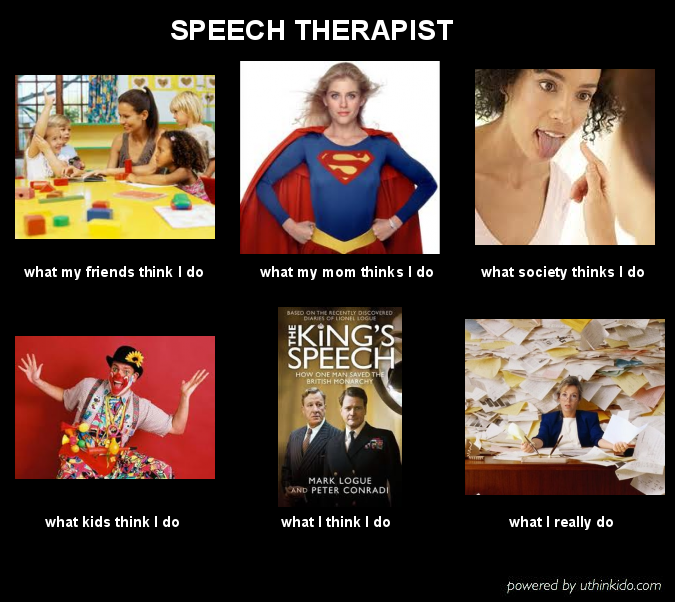
    They will be faced with limited or no space, they will be strapped with high caseloads, and criticized by parents; yet they will persist and pursue only becoming better for it, because of their love for the children and the profession.  I personally have witnessed it time, and time, and time again!

    I can tell you firsthand, getting into graduate school for speech/language pathology is VERY difficult.  It is highly competitive, and here in Colorado, the average COLLEGE GPA was a minimum of 3.87 when I applied.  I found this graphic from 2011 but I can tell you things have not changed much.  There is a HUGE gap between the number of applicants and the number of people selected. 
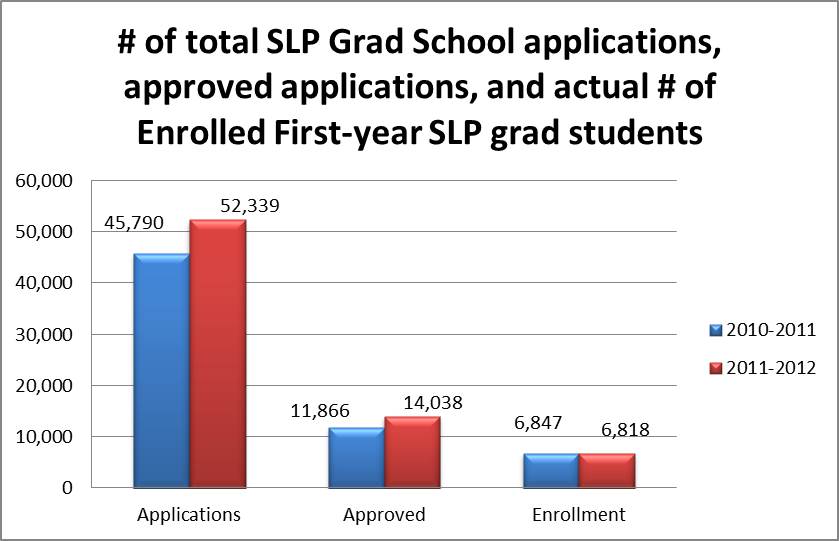
    The disparity should be striking, and please remember that MANY of these applicants will be YOUR school based SLP.  If you have the mentality that “C’s get degrees” and you are certain your school based SLP fits the latter, let me correct you.  NO average C students make it to graduate school in the first place for speech/language pathology.

    Truth

    For my final thoughts I wish not to be adversarial.  I hope that this article has persuaded you, a parent OR SLP, to reach out to the other side and bring about the change you wish to see.  I have the unique perspective of being on both sides, and as such, I have the utmost RESPECT and LOVE for both sides.  I truly wish for there to be a conduit of communication, and not a  ridge of animosity and distrust; and at the the forefront, I wish to impart a spirit of solidarity between my professional and special needs relationships.

    To read more from SLPMommyofApraxia follow her on facebook, pinterest, or twitter.


  • There is either fear or hope.  Pick one

    There is either fear or hope. Pick one

    Life would be so much less complicated if we lived on breaks.  haha.  Yes, that is my opener and I realize it’s not only a statement captain obvious would make, but it’s completely devoid of reality.

    Seriously though, breaks are awesome.  Family comments how far Ashlynn has come.  We are all stress free (well at least from school and work stress).  We can spend time as a family doing things together we wouldn’t normally have time to do.  We’re not in “go” mode all week trying to get to school, to therapy, get the homework done, and all the other million appointments we have.

    I don’t have a daily reminder of how hard things are for Ashlynn, like tonight, doing homework with her again.  Don’t get me wrong, she’s improving…so, so SO much.  It’s just, when we’re doing homework,  I realize we’re improving, but nowhere near the pace the class is going.  I feel like Ashlynn is more keenly aware of it too now, or maybe she always has been and now she can just verbalize it.  Tonight we did her reading, her math, and then practiced her spelling test.  I think she said at LEAST 8 times something like, “it’s just my brain!  ugh.”

    We are not punitive.  We are patient.  We tell her EACH time, something to the effect of, “Ashlynn, it’s okay sweetie.” and I might add, “you have apraxia and also have a hard time getting the words out, it’s okay.  The more you practice the better you’ll get,” but then she’ll stumble on a word again, or say the wrong number when we are counting by tens and hit her head and again announce “Ohhh my brain!’

    Hearing it once is hard.  Hearing her say it twice is hard.  Hearing her say it repeatedly despite our words of reassurance and patience is excruciating.

    Damnit.  Damnit.  I had to walk away and have my husband help her.  This isn’t fair!!!

    I got on my phone and checked fb.  In the apraxia group a woman posted a picture of her son crying while looking at a reading passage.  My heart broke all over again.  Stupid apraxia.  Stupid apraxia.  Ashlynn isn’t crying….yet.  Will she be? Will she get to that level of frustration?

    I was feeling down again.  Two weeks back at school and I feel sad again.  All that joy and happiness of the vacation gone.

    Then I read this.  A blog post by an adult who had grown up having apraxia.  She outlines the day she went back to her old reports and progress reports and how she discovered that in early elementary school she spent 80% of her time in special education. She says the reports all started with how teachers would comment she was a hard worker and tried hard. I immediately thought of Ashlynn.  Every report says that about her.

    She talks about how she just wanted to feel normal.  She says you could see her “subtle progress” through the years as she started spending more and more time in general education.  By highschool she still had report cards that said she was a hard worker and tried hard, but now she had a GPA of 4.5. She muses that she doesn’t even know when that transition from “special education” to “straight-A honors geek” even happened.

    She concluded that apraxia fueled her strong work ethic, and though she is sad she never achieved “normalcy” she decides maybe it was all for the best.

    I needed to read that right now.    I needed to read that because I needed hope.

    You know what drives parents of special needs kids?  You may think it is the love for them, and yes of course that is true.  However, at the core, even on the darkest days, what drives us to face a new day with strength while we hold their hand is….hope.

    Hope is the belief that despite any challenges we may face and how many times life will knock us down, we will wake up tomorrow still standing, still growing, and still achieving.  Sometimes hope may be a flicker, and other times a fire, but as long as it is still there, we will continue to rise

    again

    and again

    and again.

    Thank you Alyson for sharing your story AND re-igniting HOPE.


  • The decline of the therapeutic relationship and why you don’t have to stand for it.

    The decline of the therapeutic relationship and why you don’t have to stand for it.

    I’ve noticed something since I’ve had my daughter in therapy.  Therapy offices that are small, with only a couple therapists and an actively involved owner, yield happy clients.  Conversely, therapy offices only interested in expanding their brand, that staff numerous therapists and have a relatively un-involved owner, have more unhappy clients.

    I used to work at a place this happened actually.  The owner was fantastic.  Smart, personable and caring, her clients improved, her families were happy, and her reputation grew.  Soon, she was staffing multiple therapists from two different disciplines and opened up a second location.  She became  stretched so thin, that she outlined a list of policies and procedures, and then delegated a supervisor and receptionist to enforcing them.  The result?  Common sense flies out the window.  The parent/therapist relationship becomes strained.  People leave.  I know personally now why this happened.

    Recently I was on the receiving end of this.  I took my daughter to what was supposed to be a well reputed therapy place in Denver, Amaryllis Therapy Network in the Highlands.  I wasn’t too pleased with the evaluation, because Ashlynn has been evaluated three times before with the very same test and this time she scored 20 points lower.  20??  I had to ask myself if that was really accurate and I had quite a long conversation with the therapist who said attention could have played a factor or this or that.  Ok.  Fine.

    However, then she was transferred to a different OT for treatment.  They initially wanted to have her see an assistant.  I have no problems with assistants.  I used to be an SLPA (which is an SLP assistant) and an assistant is more than capable of doing therapy.  However, what they are not able to do, no let me correct that, what they are not allowed to do,  is  change a treatment plan when they see something isn’t working.  They are required to consult with the supervising therapist who IS qualified to develop treatment plans before they change it, and that’s just assuming you have an assistant who is experienced enough to know it needs changing.  Anyway,   I needed someone who can change a treatment mid session if they see something is or isn’t working.  My daughter is not a typical case.  She’s involved and I don’t want to waste time.  I’m not trying to sound rude, but it’s just the way it is.  As a side note though, it does make we wonder how many parents reading this even know if their child is seeing an SLPA or a CODA.  If they are, just know that you want to make sure a supervising therapist is really staying on top of things in regard to your child’s treatment approach…just sayin.

    Anyway, they complied, and I was given a different OT.  I wanted a conference call set up between the new OT, me, and Ashlynn’s school OT who is also my colleague, a therapist I trust, and has been with Ashlynn since preschool.  When she called, it was clear she had not thoroughly read Ashlynn’s report and then mentioned how Ashlynn had done a “group” therapy.

    I’m sorry what? Group therapy?  Ashlynn can get group therapy in school.  I’m paying for private therapy.  I need INTENSE private therapy.  She quickly reassured me it was still 1:1 kid to therapist just participating in a group activity.  Ok…maybe….but that’s not what I was paying for which even furthered my resolve that we needed a group conference call.  I asked if she would email me and she agreed to set up a time.  I NEVER received an email.

    I’m reasonable.  Ok.  Maybe she entered my email address wrong?  I call the next week before another session has come and gone and tell the receptionist I never received an email, would she email me again.  She check the email address on file.  It’s correct.  Hmm.  Okay.  She’ll send another one.  Perfect, thanks.

    ANOTHER week goes by.  NO email.  My husband is the one that takes Ashlynn so I can’t just bring it up.  I’m pretty ticked about this to be honest, but it can still be dealt with…worked through.  Probably an honest mistake.  However, I’m going out of town and I don’t think I can make the carpool arrangements work to get Ashlynn there this week.

    Now, yes.  I know I signed  48 HOUR cancellation policy paper.  I actually remember signing it because it struck me as outrageous.  Who has a 48 hour cancellation policy?  Oh well.  There are people who do chronically abuse the system, and cancellation policies are in place to protect and respect the therapist’s time.  I get that….not only because I just get that…but because I AM A THERAPIST WHO DOES THIS EXACT SAME THING AS A JOB.

    Dang!  Why is that in caps you ask? Well, it’s because even when therapists, or doctors, or people in a field where they are to care about people have a cancellation policy, it’s usually only enforced to the chronic problem clients.  Any person with a heart and common sense, understands that things come up.  If someone is abusing the system, then yes.  A cancellation policy should be enforced.  I was NOT abusing the system.  I called 30 hours in advance, choosing to wait until the morning instead of the hour they closed.

    This was my first time cancelling, we aren’t late, and my husband probably spends close to 3 hours round trip getting her down there through rush hour traffic and back home. Not to mention the financial hardships families are already going through. You would think someone who actually has a heart and interest in caring about children would have been understanding. I know I am! I don’t even have my clients sign a cancellation fee policy, and if I did…I would give them chances. Unbelievable and SO sad. It’s not right we go through this when we are already bled dry from the cost of therapy. So now, I have to find a NEW place and begin the process again.

    Oh, and one more thing. The email situation?  The supervisor said it was documented she emailed me twice.  “Maybe I didn’t get it due to spam filters?”  I went along with it.  Afterall, I hadn’t yet checked spam, even though it’s ironic that I DO get all of THEIR spam email.  Well, low and behold I DID check, and by check I mean SCOUR my spam email and there was nothing.  NOTHING.  NO email from her…so now on top of it I can add lying.

    Anyway, I digress.  I have to find a new place and begin the process again.

    Oh…but I WILL begin it again, because I know there are places and therapists who do not feel the need to run their therapy office like a corporation and treat people, actual human beings, as only dollar signs.  I know, because I’m one of those people, and I know many, many other good therapists who are ALSO one of those people.

    My message to any parent reading, is if you feel like your child and your appointments are nothing but a dollar sign, then you need to leave.  That is so unacceptable.

    My message to any professional reading this, is you need to know and understand we are counting on you! We are putting our faith and literally our children’s success and outcomes in your hands.  Meet us halfway. We are your paycheck, but we are also human.  If you are a person running a therapy office like a corporation, take heed.  YOU may be an honest and awesome therapist, but don’t get caught in some black and white policy and procedures BS.  These are humans, humans with disabilities no less, that you are dealing with.  Have some freaking compassion beyond your rules and regulations.

    Oh, and for anyone considering Amaryllis Therapy Network in Denver, scratch them off your list and move on.  Developmental Fx is where I’m headed, and unlike Amaryllis, I know many families who have been happy with the outcome.

  • Overgeneralization: a caution for clients with CAS

    Overgeneralization: a caution for clients with CAS

    overgeneralization


    Before I knew my daughter Ashlynn had CAS, and before I spent countless hours researching, taking trainings, and becoming an expert in CAS; I was an elementary school SLP.  Like any new SLP, I was relatively inexperienced with CAS.  One year, I transferred schools and a 3rd grade boy with a dx of CAS popped up on my caseload.  Most people, including his mother, still found him very hard to understand.  In her defense, it didn’t help that her first language was Spanish, and this boy only spoke English (apraxic English, you can say).11wwpm

    Anyway, I could understand him most of the time, but his errors were bizarre.  He had an /l/ substitution EVERYWHERE, but mostly for sounds he had not yet acquired including /r/ and /th/.  Some examples: (blown/brown, muller/mother, bruller/brother).

    This was my first experience with “over-generalization” and it’s potential to have a negative  lasting impact on kids with CAS.

    It was not my first experience though with over-generalization.  In kids with phonological disorder, this will happen occasionally.  For example, we might be focused on a pattern, let’s say, /s/ blends.  A child with a phono disorder will usually omit the /s/ in an /s/ consonant cluster.  One of my mentors used this example:

    “I see a star in the sky” would be “I tee a tar in the tye.”  There are a few phono processes going on here, but suffice it to say, the child is still omitting the /s/ which would be considered a consonant cluster reduction.

    When we start targeting /s/ blends, the child will usually (temporarily), start adding an /s/ before every sound. Soon after they learn the pattern without any real long term consequence to existing speech patterns.  This is generally regarded a positive sign with phonological disorder, because the child is showing they are making system-wide changes that are generalizing.

    This is NOT necessarily true if a child has a dx of CAS.  Over-generalization can cause havoc on an already faulty motoric system.  There is a limited research I found regarding this phenomenon; however, there is some in the adult literature regarding acquired apraxia of speech (AOS).   Wambaugh et.al. (1999) found that in adults with apraxia,  sound production training did yield system-wide positive changes in the acquisition of a sound; however, overall maintenance effects exhibited declines in sound production accuracy (intelligibility).  The authors concluded this decline was directly attributed to over-generalization of the taught target sound.  They recommended using multiple sound targets to increase variability and stabilization during training.

    I have searched for more research articles on the subject but have come up empty.  This is NOT to say; however, that it is not a common occurrence.  Research in the field of communication disorders isn’t exactly robust like it is in the medical field.  Even the research we have on apraxia, though more than it was, rarely meets the criteria for the highest level of evidence to be proven effective.  Many times we have to go on our clinical experience, and in treating kids with CAS, I have now seen plenty of cases of over-generalization directly caused by the current therapeutic approach.  Of course, questions like these usually lead to one pursuing a doctorate and doing a research study….but……that is for another time.  lol

    I do feel though I need to write on the topic.  So here it is.

    Therapy for apraxia needs to include many target sounds, sound placements, and syllable shapes.  This is very different from many (most) treatment approaches for other speech sound disorders.  Let me give you some examples.

    In articulation approaches, therapy focuses on one sound.  They work to get accuracy and generalization for that particular sound in many different places of words: initial, medial, and final.  Therapy then progresses from word, to phrase, to sentence, to conversation.

    In phonologic approaches, therapy focuses on patterns of errors.  For example, in a popular Cycles approach, kids consistently may delete final consonants (ca/cat, do/dog) or leave off consonant clusters (tar/star, no/snow), to name a few.  Therapy would then focus on including final consonants, or consonant clusters.

    These are common approaches to most speech sound disorders.  These are what most SLP’s will have experience with.  They will have seen these in their internships.  It’s no surprise then when we fall back on these therapies.

    However, this WILL not do for apraxia.  Let me give you many personal examples I have now seen in my experience.

    For my first example, let’s go back to my 3rd grade boy with crazy /l/ substitutions.  Recall he had a history of apraxia and when I met him he was substituting /l/ for sounds he had not yet acquired (r, th).  If you are an SLP, you will know this is a pretty unusual error.  It was also an error that, at the time, before I knew motor learning principles, I had an INCREDIBLE difficult time extinguishing.  I can’t help but wonder (actually I’m really sure now), that the child had fairly good apraxia therapy, and probably was working on /l/.  At younger ages, we typically don’t work on later developing sounds such as /th/ and /r/.  However, he overgeneralized ALL of his errors to mean he needed to produce an /l/ and there I met him in 3rd grade, and what I saw was a child now saying /l/ for every sound he still had in error.

    My second example is a child who has a TON of language, but who is severely apraxic.  Unlike my daughter, he can tell stories for hours, but the sounds are completely muddled, jumbled, and in no sensible order.  At the word level he would remember to include final consonants, but at the conversational level all of his final consonants were omitted.  I am working with his school SLP who is amazing, and she noticed this pattern (phonological disorders and apraxia CAN co-exist), and decided to remediate it.  She remediated it SO well, he was adding final consonant sounds to syllables and/or words he had previously mastered that DID NOT have a final consonant.  One phone call revealed the error, and we both worked feverishly to rid him of this overgeneralization pattern.  We were able to do it, but only after using principles of motor learning.  Had she not been so open, there is not doubt in my mind he would still be adding these final consonants to every word. Much like my first example, established motor plans in a child with apraxia is VERY hard to extinguish.

    My third example includes a child I started seeing in the very early stages.  Though she was able to say many early developing sounds in isolation, she had extreme difficulty sequencing them correctly at the word level.  I was seeing her along with another private SLP and school SLP.   Early on, she made incredible progress.  The other SLP’s  were using Kaufman cards, and the first set of Kaufman cards account for all the variables I mentioned above: varying sounds, sound positions, and syllable shapes.  When you are dealing with a motor planning disorder, a “sequencing” disorder, these three things are very important. In fact, Nancy Kaufman herself describes her method on her website as:

    This is performed through using cues, fading cues, using powerful and strategic reinforcement (motor learning principles), errorless teaching (cueing before failure), gaining many responses within a session, and mixing in varying tasks to avoid over generalization.

    Only problem with example number 3 is that she progressed beyond the level 1 cards and so the SLP defaulted on what she knows.  This client wasn’t producing any fricatives (s, f, sh) so she started with the fricative (/f/) and starting hitting it hard.  The result?  My shared client is now using this taught phoneme for all other current fricatives and errored phonemes, and getting her to eliminate this now very strong motor plan is taking longer than expected.  What SHOULD have happened is that we target all fricatives now (a variety of sounds) in all word positions and stimulable syllable shapes, STILL using the principles of motor learning theory.

    Overgeneralization.  It’s a PROBLEM in CAS.  If you are an SLP and you start seeing this, you need to look at what you need to change.  It’s not a positive indicator like it is for phonological disorder.  You are literally carving incorrect motor plans. Remember, we cannot focus on a single sound.   We cannot focus on a single pattern.  We cannot focus on a single word position.  We cannot focus on a single syllable shape.  We have to choose targets that are variating ALL of the above that are including sounds within a child’s repertoire.  If we don’t, we are going to have a kid with apraxia overgeneralize what we have taught them, and it’s going to cause havoc on their motor system, and potentially make them even less intelligible.

    In addition, you will always hear me talk about wasting TIME.  Time is so, SO precious to a parent with apraxia, more specifically, getting a child to improve as quickly as possible.

    This is ALSO why it’s SO important that even after a child has resolved, a dx of CAS always be included in the case history, because principles of motor learning theory are still the most effective in driving treatment.  This is true even when you have moved on to grammar or additional language targets.  Apraxia is a different monster.  Educate yourself.  Learn more. Vist apraxia-kids.org.

    30022940f


    Resources:
    Wambaugh, J. L., Martinez, A. L., McNeil, M. R., & Rogers, M. A. (1999). Sound production treatment for apraxia of speech: Overgeneralization and maintenance effects. Aphasiology, 13(9-11), 821-837.


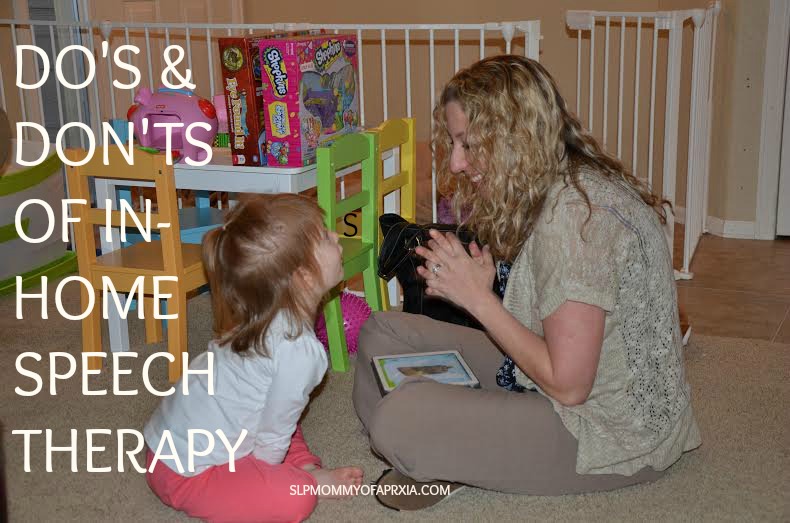
  • The Do’s and Don’ts of in-home speech therapy

    The Do’s and Don’ts of in-home speech therapy

    Being both an SLP AND a mother to a child with a severe speech disorder, I have this unique and sometimes bizarre perspective; that perspective, of course, being that I now intimately understand both sides.  That being said, I think parents/my clients, typically feel more comfortable telling me things parent to parent vs. parent to SLP.

    As a mother now to a child with apraxia, I have a new appreciation for the “other” side.  This post is targeted for all the amazing and well-meaning SLP’s out there, who may not understand some things because they haven’t been on the parent side.  Here are my top five Do’s and Dont’s for in-home therapy.

    Don’t spend therapy time talking about your wedding, the death of your dog, or your friend’s miscarriage. Do spend the therapy session focusing on the child and reserve personal conversations for a time outside the therapy session.

    Many times, our client’s mothers may have a lot in common with us.  However, literally every minute of therapy is as important to a parent as it is to the child.  I remember watching the digital clock in the first speech room Ashlynn was in.  If the SLP had to use the bathroom before seeing Ashlynn, I would of course understand; but honestly, I was staring at the clock hoping she didn’t waste too much of Ashlynn’s time.  I currently have a client who put those minutes into dollars.  For a 30 minute session at $50,  a person is paying almost $2.00 per minute!  We pay because we know they are valuable, but please, make sure all the minutes count.

    Many parents have told me that at times, they have been at fault for wasting minutes talking because they were with kids all day and craving another adult interaction; however, regardless of whose fault it is, always try to stay professional and keep the focus on the child.

    Don’t blurt out suspicions, concerns, or think out loud.  However, do make sure you make referrals and not withhold information if you feel there are additional concerns that need to be addressed.

    Parents have reported that therapists have flippantly mentioned apraxia and turned their world upside-down unnecessarily, only to find out later it was in fact, NOT apraxia.  In a different scenario,  I have had parents upset that an SLP never even mentioned apraxia, and now they were just finding out years later, distraught, worried, and feeling guilty they had not done something sooner; and in yet another scenario, a parent has told me her SLP casually mentioned a serious diagnosis like apraxia frequently without ever moving forward with a different treatment plan.

    As an SLP, you have a responsibility to relay a suspected dx in a responsible manner; and if you don’t know what to do, it’s your job to figure it out or make a referral.  There are so many more resources available now including apraxia-kids.org or ASHA’s practice portal.  We are counting on you!!

    Don’t start planning your lesson when you enter the house. Do have a plan heading into therapy.

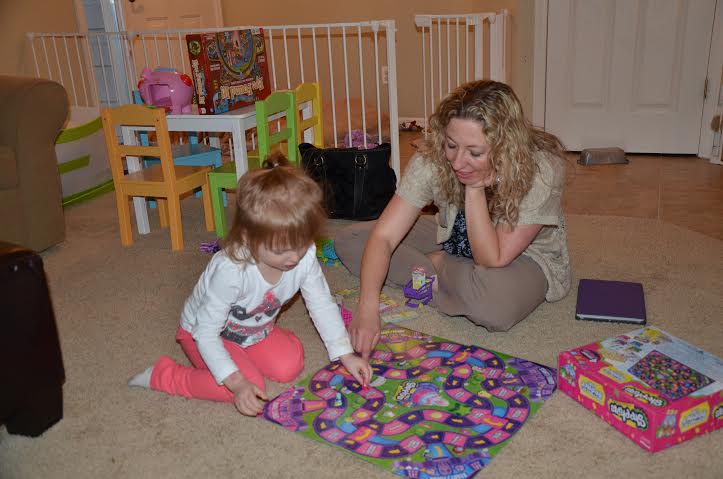
    Look, as an SLP I get it. Planning time isn’t exactly built into our pay.  Also, it can get overwhelming to carry a bunch of materials from house to house.  Shouldn’t we be teaching the parent how to use toys in their house?  Yes, that’s great, but you should STILL have a plan whether it’s using a child’s toys or your own.  Nothing looks more unprofessional than spending five minutes letting the child decide what toy or game to play. Remember my previous comment?  The parent just paid you almost $10.00 now just to plan the lesson and get started.

    If you are in early intervention, some of your time might be for planning and writing notes.  If so, please explain that to a parent before-hand so they aren’t thinking you are deliberately short-changing a session.

    Don’t continually cancel or run late.  Do respect people’s time and schedule, and refer out if you are unable to be a consistent provider.

    Okay, first of all, if you are consistently late or cancel a lot, you make the profession look bad.  However, even more important is that you are not helping the child the way you should when you do this.  Be conscientious, and if you are frequently late and/or cancelling, refer out.

    A parent also told me that a quick apology is nice, but an entire explanation is not necessary.  Parents do understand if you are late sometimes.

    Don’t assume parents aren’t worried, involved, invested, or not working with their child. Do provide resources, assume the parents are doing the best they can with the knowledge and tools they have, and that they are worried and just want the best for their child.

    I had a post last year entitled Nature Versus Nurture.  In it, I beg SLP’s not to assume nurture played more of a piece in a child’s language delay.  This is especially true for apraxia of speech.  I’m an SLP.  A pediatric SLP.  My daughter has a great language rich environment, and not only that, I DID work with her almost every night on speech.  Guess what?  She STILL had apraxia and continues to have a persistent receptive/expressive language delay.

    Parents are human too, and might not have the background we have in child language development. Please do not assume though, that they don’t care.  Even parents who seem like they don’t care, care….trust me.  If you are there, it’s because they care.  They had to make the phone call after all.

    The best thing you can do is not only to provide therapy, but provide them with resources.  Some parents may not use the resources, but I think it’s our job to provide them.  Give them articles, handouts, point them to online resources, support groups, walks, conferences, etc.


    Most of all, DO realize you are appreciated and valued more than you may ever realize.  Helping a child get their voice is one of the most amazing things I think we do as SLP’s.

    06a8417b-9bbf-4414-8e54-d5e557b66394

    Thank you to all the parents who added their feedback to this article.  

    LAURA SMITH M.A. CCC-SLP IS A SPEECH/LANGUAGE PATHOLOGIST IN THE DENVER METRO AREA SPECIALIZING IN CHILDHOOD APRAXIA OF SPEECH.  CASANA RECOGNIZED FOR ADVANCED TRAINING AND EXPERTISE IN CHILDHOOD APRAXIA OF SPEECH, SHE SPLITS HER TIME BETWEEN THE PUBLIC SCHOOLS AND THE PRIVATE SECTOR.  SHE IS DEDICATED TO SPREADING CAS AWARENESS. HER PASSION IS FUELED BY ALL OF HER CLIENTS, BUT ESPECIALLY HER OWN DAUGHTER WHO WAS DIAGNOSED WITH CHILDHOOD APRAXIA OF SPEECH.  FOR MORE INFORMATION VISIT SLPMOMMYOFAPRAXIA.COM


  • Speaking in scripts with a story in her eyes

    Thanks to funding from Small Steps, I have Ashlynn back in therapy with her private SLP, who is also my mentor and now friend.  The other night she was updating me on her progress and what happened in the session.  I take my daughter to her house, so occasionally her husband or dogs may walk by and apparently distract Ashlynn.  She was remarking on Ashlynn’s ability to hold a pretty good conversation.  After she went through a communication exchange Ashlynn had with her husband, I commented that everything Ashlynn said was a script she had been taught.  To a new communication partner, she sounds very adept, but to those who know her, the script rarely changes.

    I went onto say, that though Ashlynn speaks in sentences now, her speech is still predominantly in scripts because crippling word finding deficits and motor planning continue to impede her ability to effectively offer up new and novel information.

    I wrote the other day that I wanted a professional to know Ashlynn like I do, and I know my mentor is the one.  I know because she said this,

    “Yes, it is remarkable really, and not something I think many people, including other SLP’s would understand had they not witnessed her development themselves.  To think Ashynn has been taught everything she says is almost unbelievable even to me.”

    Yes!  Yes!  She gets it!!  She sees how remarkable Ashlynn is!!  Ashlynn does put some novel things together, but they are usually already scripted phrases she has learned and then she may combine them with another scripted phrase.

    SLP’s usually talk about a “language explosion” that most kids have.  Some kids have it late, thus needing speech, but most all will usually experience it.  I remarked that Ashlynn has never had a language explosion.  Never. Everything she has said she has worked for.

    I responded that Ashlynn has always learned, from a young age, to grab onto the scripts that would get her the most bang for her buck socially.  By 1 her first word was “hi” and she could use it to grab anyone’s attention.  By 3 I taught her to say “watcha doin?” which has since been refined but to which she still uses and has actually overgeneralized now to the point that she gets stuck on it and will say it over and over just to keep up the conversation.  In her last year of preschool, the social worker really worked with her to move from parallel play into interactive play by teaching her to say “you want to play with me?” and “do you want to be my friend?”  Once Ashlynn picked this up she was off and running and uses it now frequently in a variety of settings.

    My mentor went onto say that she had asked her about a recent camping trip we had just come back from.  When she mentioned camping, she said Ashlynn’s eyes lit up and danced.  She said she wished she could have been able to get inside her head because though she could see Ashlynn’s eyes dance with stories, Ashlynn took a lot of time before settling on “I ride my bike.”

    “Another script,” I said.

    That’s when the SLP said, “Well, and doesn’t that speak to her cognitive ability?  Being able to pull out and get the scripts that get her the most bang for buck and her ability to look like an effective communicator to a new partner despite only having access to pre-existing scripts in her motor plan….that is really quite remarkable.”

    I smiled.  Yes!  Finally!  Yes it IS remarkable.  It DOES speak to her cognitive ability but also her amazing resilience, ingenuity, and motivation.

    One day I know her word finding difficulties will improve as well.  We work on naming and word recall daily.  However on days when she was with her grandma, she will still call me “grandma….mommy” and on days she has been with me she will call her grandma “mommy…grandma.” She is learning to self-monitor and that is good, though that also speaks to the cognitive ability you MUST have to do these tasks.  Can you imagine?

    First she has to conceptualize the thought, then she has to have the speech motor plan for it but also the word finding.  If she wants to speak on auto-pilot (like we all do taking it for granted), she runs the risk of saying the wrong thing, like calling me grandma even though she knows I’m mommy……or saying it incorrectly (speech sound production), so then she has to monitor her speech and then correct it, but remember, correcting mean having to plan, program, and then re-try accurate execution of what you wanted to say.

    How exhausting is that?  Is it no wonder our kids get frustrated?  Tired?  Discouraged?  It’s no wonder to me; however, what is even more of a wonder to me is Ashlynn never gets frustrated or discouraged.  She’ll laugh.  She’ll try again.  She NEVER gives up.  She is insanely motivated, and for that, I am thankful.  So thankful.  I pray she never loses that.  I pray she will be the communicator she desires to be, the friend she desires to be, and whatever person she desires to be.  I pray I’m doing enough, but for now, I’ll just say a prayer of thanks for the hope that another professional finally sees a glimmer of what I see.


    1e03a96f2d7d101f776eb239f38859a311181815_10205042296109665_1924414283570680916_n