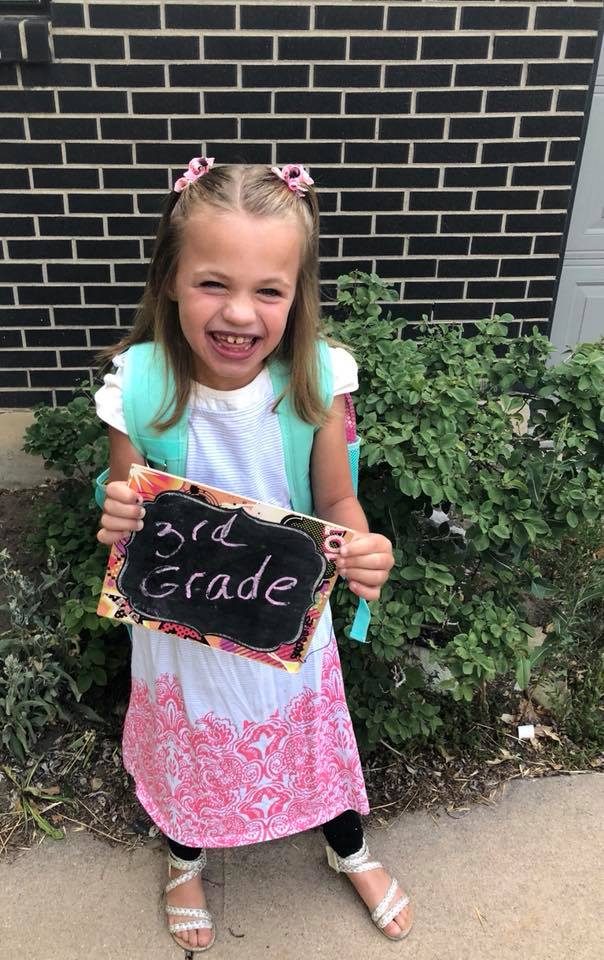
Sensory issues are a common co-morbidity to children with childhood apraxia of speech (CAS). Certainly my daughter with apraxia stemming from a genetic mutation has her own!
In this post I’m going to share some various sensory related issues we have had throughout the years and strategies that helped.
Sitting in Circle Time
In preschool and even into Kindergarten, Ashlynn had a very difficulty time being able to sit in circle time without W sitting. In addition, attention was a major concern. To help with this, she started out with a cube chair and lap blanket that helped keep her seated and calm. In early elementary school, her regular chair was replaced by a hokey stool to allow her wiggle and move. These aren’t the only options though. I’ve seen backjack chairs, wiggle cushions, and yoga balls that have helped kids as well.


Oral Stimulation
One of the first sensory issues to pop up was Ashlynn, was she started chewing everything during late preschool and into early elementary school. She would soak her shirts, suck on her hair, and absentmindedly put anything in her mouth. Strategies that helped this were chewelry and the use of a Contigo cup whose straw was resilient enough not for her to bite through. We actually had an accommodation in her IEP allowing her to have her contigo cup during times other kids were not allowed to have them.
(For extreme chewers I have heard from parents that ARK chewelry is the most robust and works best).


Picking her nails
In second grade Ashlynn developed a horrific habit of picking her nails. This wasn’t just a little pick either. I’m talking pick them and get hangnails that she would then rip off. Her fingers bled so much she had to get her shirts changed by the nurse. That year they introduced a rubber band ball as a replacement. It worked wonders and she carried it everywhere and used it when she needed it.

After her nails she started picking her lips and so she has a sensory bag with chapstick in it as well as can be redirected to use that.
Attention Concerns
Ashlynn gets extremely distracted by auditory or visual stimuli. Sensory breaks are scheduled throughout her day. A visual schedule was made and looked something like the one below. Consulting with the OT is very important when developing one, because sensory profiles vary GREATLY depending on the child. I’ve seen kids need a ball pit, weighted blanket, or deep pressure.

Fidgets
Fidgets can serve a variety of purposes. They can help with attention, ease anxiety, or provide sensory input to name a few. I’ve tried a lot of fidgets for Ashlynn! The most popular ones like spinners and cubes never worked for her. She did the best with squishy balls, theraputty, pop tubes, or things she had to really squeeze.


Vestibular Input
Out of all the sensory strategies that we have used though the NUMBER ONE that always helps is swinging. I’m not an OT, but swinging is very beneficial and calms and helps center Ashlynn. It always has. I’m not alone either! Many parents report putting swings in their house! An adult with apraxia I know has a hammock out back she still uses. There are many different types of swings. Ashlynn loves them all but the most therapeutic for her might have been the platform swing. It helped her core strength and stability.

What sensory strategies have worked for your child?
Laura Smith, M.A. CCC-SLP is a 2014 graduate of Apraxia Kids Boot Camp, has completed the PROMPT Level 1 training, and the Kaufman Speech to Language Protocol (K-SLP). She is the author of Overcoming Apraxia and has lectured throughout the United States on CAS and related issues. Currently, Laura is a practicing SLP specializing in apraxia at her clinic A Mile High Speech Therapy in Aurora, Colorado.