Tag: Repetitive story book for Apraxia

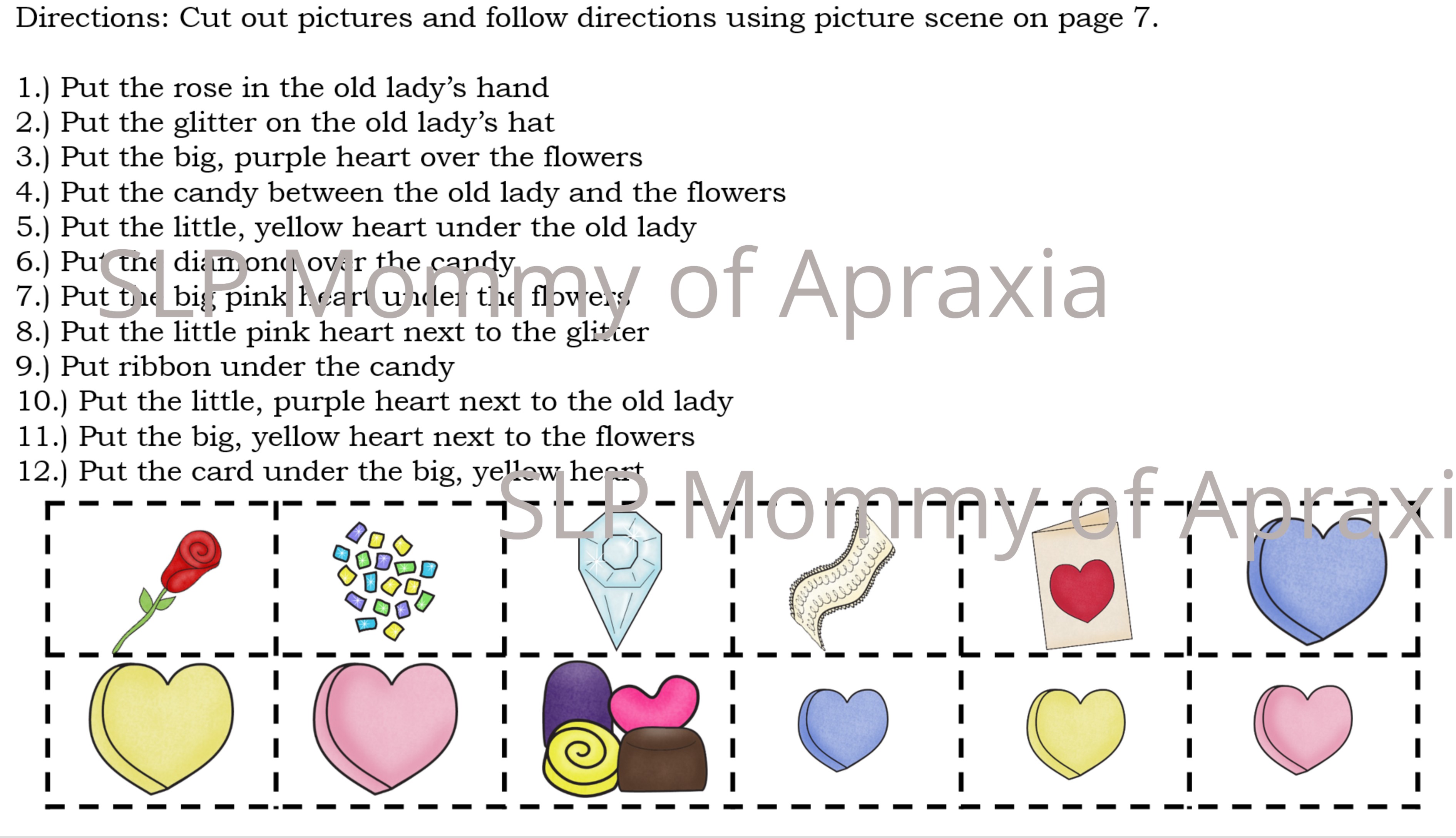
  • I Know an Old Lady Who Swallowed a Rose: Speech/Language Book Companion/Activity Pack

    I Know an Old Lady Who Swallowed a Rose: Speech/Language Book Companion/Activity Pack

    She’s baaack!! My students just LOVE these books.  Here is my latest speech/language book companion activity pack.  Since I LOVE repetitive stories for speech and language, it once again contains:

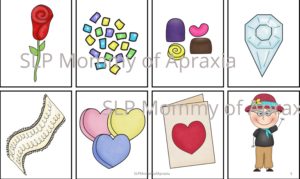
    • the repetitive vocabulary pictures from the book
    • a sequencing grid to practice sequencing and to aid in story retell
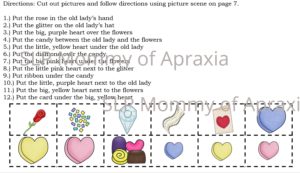
    • a following directions activity to cut and paste using positional/spatial concepts
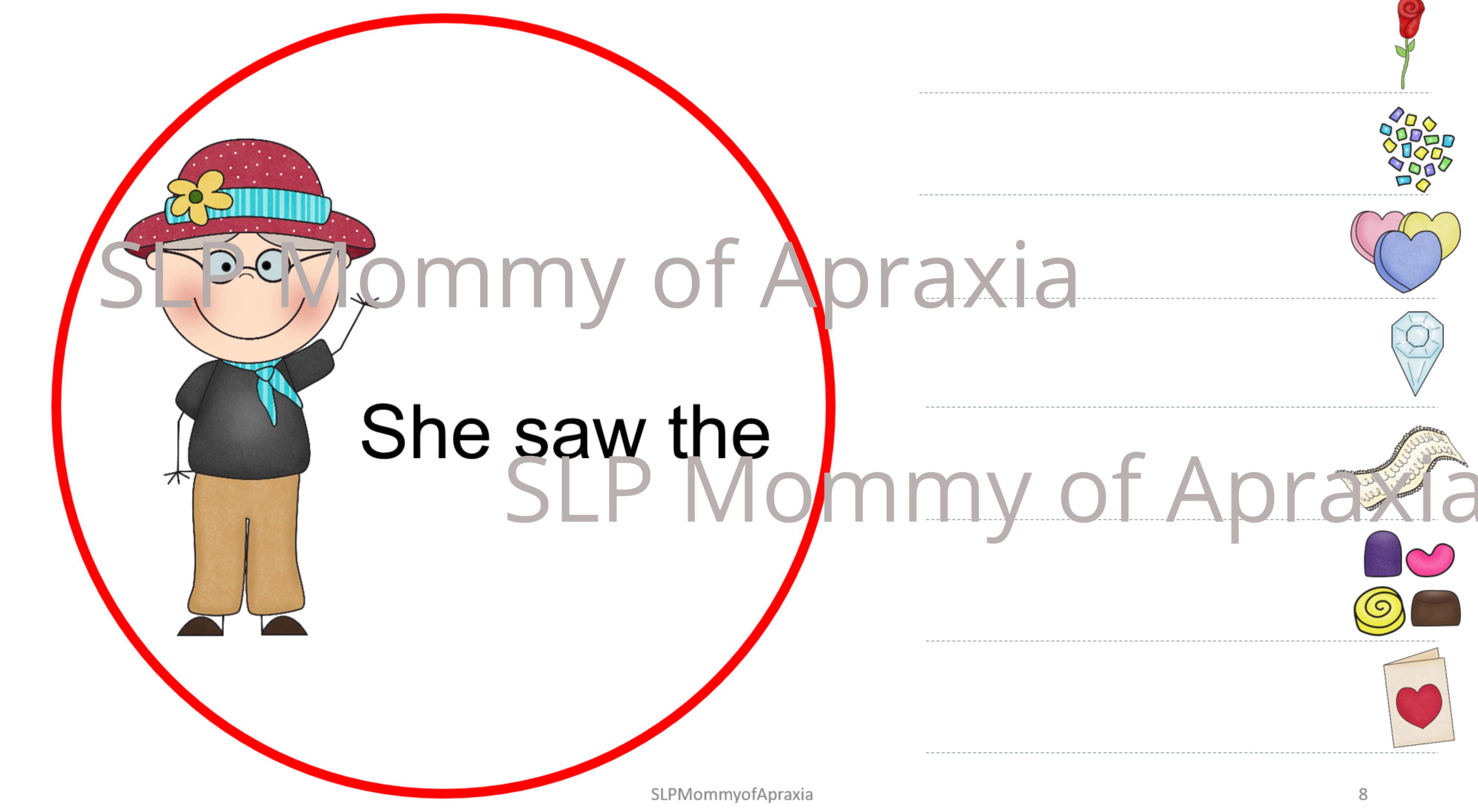
    • a four page mini book to practice the carrier phrases: she has, she saw, she wants, & she ate + book vocabulary pictures
    • an enlarged picture of the old lady to glue on a manila envelope or cereal box and “feed her” the vocabulary pictures.

    To find this activity in my TpT store, click here. Happy Thanksgiving!

  • The Gingerbread Man Speech/Language Activity/Companion Pack

    The Gingerbread Man Speech/Language Activity/Companion Pack

    Slide1

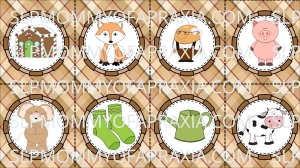
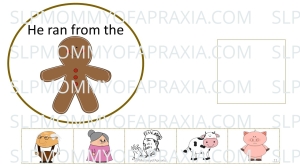
    The Gingerbread Man is a classic story that all my kid’s love.  It is a repetitive style book, and as you know, I love using repetitive books in therapy!  The first page has some pictures to cut out and use while reading the story as props.  You can even glue them onto popsicle sticks if you’re so inclined!


    Slide3


    Next, if you’ve bought any of book companions, you know what a fan I am of sequencing activities.  This one contains one too with sequencing grid.

    Slide4


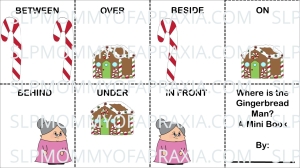
    The mini book in this unit works on “where” questions and teaching early spatial concepts.  The child glues the gingerbread men on a preceeding page in the correct places in the mini book.


    Slide6


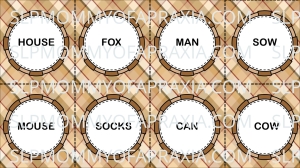
    The next four pages contain 8 sets of rhyming words in picture and written form for you kids to match or play with to work on early phonemic awareness skills.


    Slide7

    Slide8


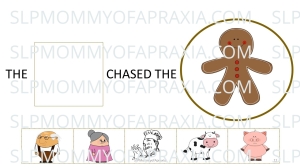
    The last two pages have sentence stem activities for repetitive practice for regular past tense and an irregular past tense verb using the story vocabulary.Slide12

    Slide11


    To get this activity, go to my TpT store!

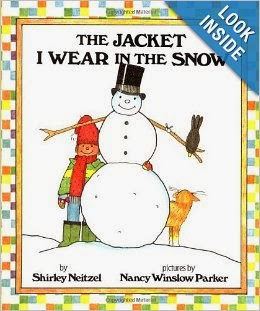
  • January book of the month: The Jacket I Wear in the Snow

    January book of the month: The Jacket I Wear in the Snow

    Winter is in full swing, and there is no shortage of books that talk about winter, snow, and winter clothing vocabulary. Also, the preschool in my district has winter clothing vocabulary on as part of the curriculum, so it’s perfect!

    The book is a repetitive, rebus style book that is great for practicing vocabulary, early reading skills, sequencing, and as always speech!

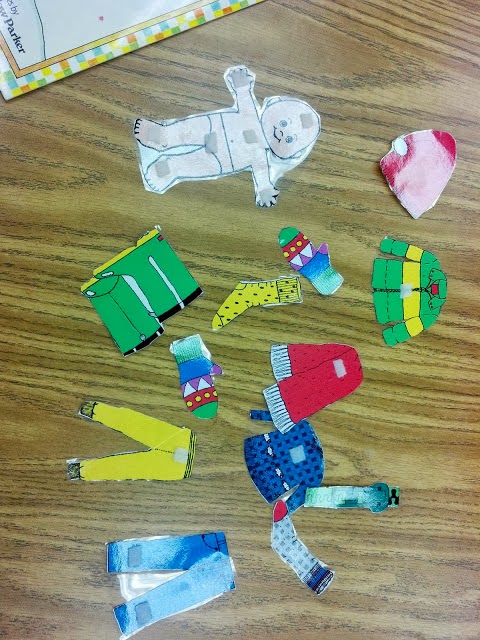
    I started with some cutouts from the story I found here:
    Winter clothes

    Then I printed them out, laminated them, and put velcro on so that the kids could dress the boy.  I used a printout doll from the website you can find here: Paper dolls

    This was the final result and it’s just so darn cute! All my kids from preschool up to even 4th grade love dressing up the boy.  For my speech kids, I strategically pick a clothing item for a sound they are working on.  There are a lot of good options including ‘s’ blend words that seem to be a constant therapy target for at least one group a year.  For a child with apraxia, there are some good basic CVC words you can use (i.e. cap, boot, sock,), or in my daughter’s case since her speech is improving so much, I gave her most of the cards and she had to practice recall while I read the book.  The use of the cutouts provide a visual and tactile aid to help kids learn and recall the vocabulary, so you will see I try to make cutouts to go with books I have whenever I can get my hands on them.  Unfortunately, I’m not very talented in the drawing department, so I have to rely on other sources as you see I did here!
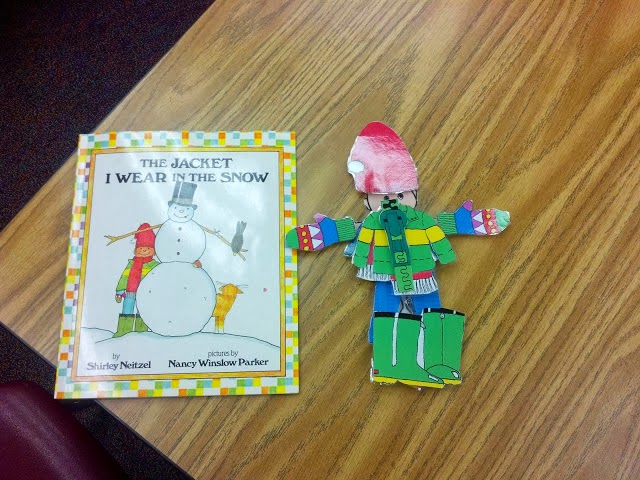
     For my older kids, we did silly things to practice following directions with spatial concepts: on top, under, over, etc to work on receptive language, and then they had to do a retell.  Again, the visuals really help in being able to sequence and retell the story for those kiddos who have weaknesses with language processing.

  • Pete the Cat home speech/language activities

    Pete the Cat home speech/language activities

    I was introduced to Pete the Cat, by Eric Litwin last year when my daughter went to preschool. Not only does it have a catchy song the kids can sing and listen to online here:( http://www.thelearninggroove.com/song-index-contents/pete-the-cat—i-love-my-white-shoes#!pete-the-cat-i-love-my-white-shoes/c164e), but it is great for teaching a variety of things in speech/language.  I’ll start with it’s benefit for apraxia.

    Research has shown that books encourage speech and language development.  My mentor taught me to use a literacy based approach to therapy whenever possible.  Not only do the kids enjoy it, but books provide vocabulary in context, which is more meaningful to children than just an artic card.  The use of repetitive story books are generally advocated for apraxia.  If you want to read more, you can find a great article here: http://www.apraxia-kids.org/library/repetitive-books-an-effective-therapeutic-tool-for-children-diagnosed-with-apraxia-of-speech/

    Pete the Cat is highly predictable and very repetitive, offering the perfect platform for intense practice needed for apraxia.  The carrier phrase in this book is, “I love my……”  The predictable sentence is “I love my ___ shoes.”  The shoes start out as white, but change colors depending on various items Pete steps in.

    Depending on your child’s verbal output, you could have them say the entire carrier phrase giving them the appropriate prompts and cues as needed, or just have them say one word.  Ashlynn is able to say the entire carrier phrase independently, but needed cueing to complete the rest of the sentence.  It’s fascinating to watch the motor plan during these activities, because once it has the plan, it doesn’t want to give it up easily. For example, after repeating “I love my white shoes” multiple times, she required a lot of modeling and cueing to change the motor plan to say, “I love my blue shoes.”

    I also created a book companion pack available in my store if you’re interested!