Tag: Mom of apraxia

  • My head gets messed up sometimes

    My head gets messed up sometimes

    This is what Ashlynn has said to me twice today.  It’s rather timely since I just wrote about a post about letting our kids know they have apraxia so they have a name for the problems they experience.

    Ashlynn (I thought) has known she has apraxia, but I realized I said it a lot when we were still just trying to get her words out and her sounds right, but maybe I hadn’t said it lately.

    This morning she called me Grandma, stopped, and then hit her head and said “ugh.  WHY DO I DO THAT???  You’re not Grandma…you’re um………….”   I waited patiently.  “Mommy.  You’re mommy.  Ugh.  My head gets messed up sometimes,” and she hit her forehead.

    I quickly told her “Ashlynn, your head is not messed up.  You have apraxia, and that is what makes it hard to get the words out sometimes and also why you may say the wrong word.”  My husband quickly followed up with his own words of encouragement.

    Two hours later I was working on my computer, and she came over and started talking to me.  I was asking her what she wants for her birthday.  She told me her standard: cards, papers, pens.  She’s always fighting over Jace’s magna tiles, so I asked if she wanted magna tiles.  She immediately said yes!  Then she said, “I couldn’t think of that word: magna tiles.  I said Legos but that’s not right.  Ugh.  My head gets so messed up sometimes.”  I started to say something, and she interrupted and said, “That’s because I have apraxia?”  I quickly agreed and told her that’s why she goes to speech therapy.  (Except she hasn’t been to private speech lately because of some personal family extenuating circumstances).  So, literally two minutes later I look up and see this:

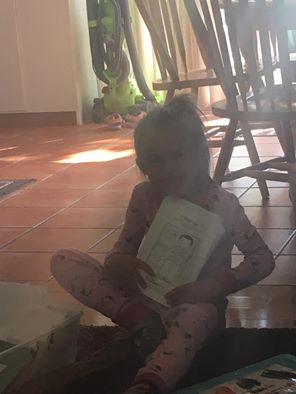
    14322205_10208408247856355_8135929580253810417_n

    It’s not the best picture, but she has a box of decodable books we keep in the living room open and she is trying to read them.  She noticed me looking at her and she asked, “When am I going back to speech therapy mommy?”

    Sigh

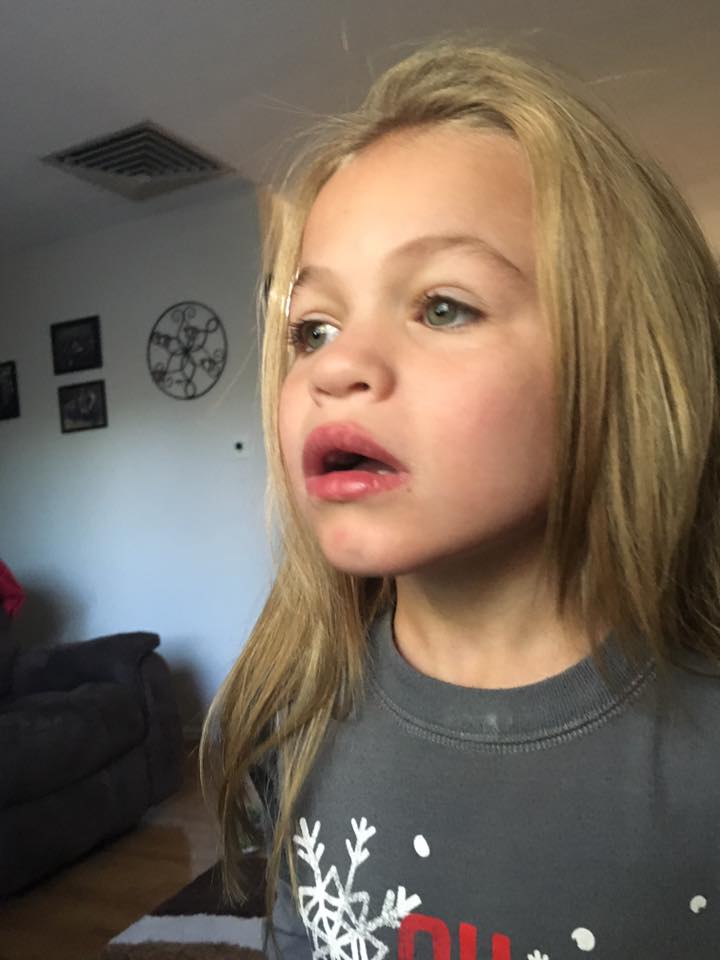
    Apraxia sucks.  Ashlynn is amazing and her head is anything but “messed up.”  Why does she have to work so damn hard.  Why does she have to know she has to work so damn hard.   Am I doing enough?  Am I saying the right things?  I swear being a parent is half doing what you think is right, and half second guessing what you said and did.  14358743_10208416578424614_2540639598855195286_n

    It’s such an invisible disability at this point.  No one would look at her and think apraxia.  No one would look at her and think her “head’s messed up.”  Ugh.  That kills me.  Look at her.  She’s looking out our window here taking it all in.  She is seeing and looking at WAY more than she says.  Maybe one day I will know everything in her head.  Maybe.

    Sometimes, I feel like I’ve been jipped. Other parents get to hear the thoughts behind this picture.  I try to read her eyes and her facial expressions.  Oh she talks.  That she does and she does it well now.  I still don’t know everything though, and she knows it now too…..and I don’t know whether or not to be sad or happy she is empowered to know why talking and getting the words out is hard for her.

    Sometimes I wonder if that’s unique to parenting a child with a communication disorder, or a more universal experience as a mother.  I think of the ABBA song I love so much:

    Do I really see what’s in her mind
    Each time I think I’m close to knowing,
    she keeps on growing,
    slipping through my fingers all the time.

    14333826_10208405647911358_6797084407173307315_n


  • What if we don’t prove them wrong?

    What if we don’t prove them wrong?

    I had a client recently who told me a well-meaning friend called her five year old son with apraxia “retarded.”  Apparently he meant it in a “well-meaning way” asking about services, but understandably the term shocked, appalled, angered, and then saddened her. Isn’t it interesting what we all presume about a child based on nothing more than their speech?

    She went onto say she didn’t even correct him because at this point she’s just tired.  She’s just tired of explaining it and what did it matter anyway.  She also went on to say she was mad at apraxia all week, and she wished they were in the future when she will hunt this man down and show him her successful, happy, thriving, “retarded” son.

    I smiled.  That moment.  Yes.

    What, when, and where will that moment be?  I know it will come.  I know one day, A will have her moment in the sun.  Maybe others won’t even know it is her moment.  Maybe it will just seem completely normal and average, but to me, I will revel in her moment.  I will cry in her moment.  I will cry tears of joy.  Tears no one may understand.  Maybe she won’t even understand.

    Will she roll her eyes in typical teen fashion and scold me for embarrassing her?  Will she smile too from the pride she feels in her own self?

    Yes.  That moment.

    I talk about that moment with every mother who has a child with apraxia.  That moment when our children will prove them all wrong, even if “them all” will be long gone or distant memories.  Hurtful memories are never too distant when their pain was so raw, and they seem to leave open wounds on our hearts and in our minds, seemingly unaffected by the passage of time.

    That moment.

    When the same eyes that cried tears of fear and sadness will now drop tears of triumph, victory, and pride.

    That moment.

    The vision of that moment, whatever it may be, keeps me going.  Keeps me fighting.  Keeps me working.  Keeps me hoping.

    I know it will be there.  Just like I knew she would talk.  Just like I knew she would sing.  Just like I knew she would ride her tricycle.  That moment has and will always be there, and in that moment, nothing on this planet will be sweeter.

    In that moment, maybe I shouldn’t look at it as proving them all wrong, but rather proving US right.

    d72ced984da23e4bc651d33fcc0f1223

  • Strategies to promote speech and language in the pre-verbal or minimally verbal child with Apraxia

    Strategies to promote speech and language in the pre-verbal or minimally verbal child with Apraxia

    The great thing about speech and language, is that it a task that can be worked on in any activity.  Familiar routines in the home provide the perfect platform for encouraging speech and language, because this “routinized language” is predictable and context based.

    A fellow SLP and mommy of apraxia, Kim from Landonjourney.blogspot.com and I teamed up for Part I in my series of parent strategies to promote speech at home.  We wrote a list of some of the most effective strategies to encourage early speech in the pre-verbal child, including those with Childhood Apraxia of Speech (CAS).  Part II in the series will focus on strategies for the verbal child with CAS.

    Parents ask a lot, “How do I get my child to practice speech at home?”  Well, we are here to tell you, you don’t need worksheets and flashcards.  Basically, with kids who are minimally verbal, we look for opportunities to model and encourage functional language.  Functional language refers to language the child is more apt to use frequently throughout their day, or may be highly motivating to them.

    With kids who have apraxia, not only do we think just about functional language, but words that also contain simple syllable structures.    These are some of our favorite strategies and targets and how we incorporate them:


    Powerful motivators:

    As moms, Kim and I know that when you have a child who is nonverbal, you anticipate their needs for them.  After all, our babies can’t tell us when they hurt, or where they hurt if they are crying.  They can’t tell us they’re hungry or thirsty; and if they have global apraxia like our kids, they may even have trouble pointing to communicate to us that way.  However, as SLP’s we know that kids need to be motivated to communicate.  If we keep anticipating their needs, they never have a reason to really force themselves to try at something they know is hard for them anyway.   As the parent, you are truly the best person to encourage them to try, even when it’s hard.

    Teach and pair signs with a verbal model:

    Some worry that teaching sign will inhibit speech; however, as long as you make sure to always pair sign with verbal models and give verbal reinforcement after the child uses a sign, sign language can be a powerful bridge to helping the child say it once they begin speaking.

    • “help” “more” “go” and “bye” are good beginning signs to teach. Always provide a verbal model when you sign to your child, but encourage your child to sign, and reinforce any attempt by repeating the word and modeling the sign before giving your child what they want.

    Cloze activities:

    • Cloze activities are great for our kids with CAS because their mouth/body gets ready to respond, and the response is familiar. It reduces cognitive allocation and helps get the motor plan “set.” We do cloze for everything.
      • “Turn the music (pause) ” on, and wait for “on.”
      • “Ready, set (pause)” go!  We do “go” at every green light and I start the sentence and he tries to finish it. This has helped him feel more success at speaking “on command.”
      • “One, two _____” three!
      • Sing nursery rhymes and pause before the last word.  Ashlynn and I would sing “The Itsy Bitsy Spider” and “The Wheels on the Bus” and I would pause before some words that had simpler syllable structures.  For example “down came the rain and washed the spider (pause) out.” or “The wheels on the (pause) bus go round and round.”
      • Read repetitive story books, pausing before the predictable repetitive words.  To read more about repetitive books and to get a free download on how to use them visit my on repetitive books that are great for apraxia.

        • Keep reading for more cloze ideas. 

    Require your child to respond to your yes/no questions:

    • assessing your child’s understanding (i.e. Do you want to go outside?) can often be done with simple yes/no questions before your child is verbally able to respond more.
      • I require my child to answer yes/no questions in anyway he can. Before he could nod/shake his head (difficult for motor planning), I modeled the response based on how I knew he reacted.  Do you want help? (giggle giggle). Yes (nodding my head), I want help. I had to physically move his head before he was able to do this. Now, I will say “yes” or “no” and wait.  This has also helped my son to be able to say yes/no, and they are words we have targeted often. 

    Focus on functional words:

                (These are some of our favorites, but individualize them for your child!)

    1. Bye-bye

                * Bye bye is good because it can also signal the end to an activity if the child cannot say “more.” We say bye to each activity, place, and even to our toys at bedtime.  This works on the motor planning for waving, and then saying bye bye.

    1. In

                * Emphasize each time you put them in: bed, the bath, car-seat, highchair, stroller, park swing.

    * Model when pouring a drink in their cup etc.

    1. Out

                * Emphasize each time you take them out of: crib, bath, car-seat, highchair, stroller, park swing

    * In the kitchen, model each time you take food out of a container, the fridge, a cupboard.

    * In the bathroom, model when squeezing out: toothpaste, shampoo, tissue, diaper wipes, etc.

    1. On

    * Emphasize each time you put music on, water on, lights on.

    * In the bath, “ok let’s turn the water (pause) on.

    1. Down

    * Emphasize when going down the stairs, getting them down from highchair, putting them down,                                       when something falls down, playing “Ring Around the Rosie,” etc.

    * Use a cloze procedure here too, “uh oh! The cup fell (pause) down.” Or “We all fall (pause)                                                down.”

    Again, these are some of our favorites, but work with your SLP to determine your own that work for your child.  Other suggestions:

    Uh oh

    Hi

    Nigh-Night

    More (Mo)

    Child’s age

    Mama

    Dada

    Put

    Done

    Do

    Set activities to song:

    • Based off of research done with melodic intonation therapy, music can provide a bridge to stimulate language.
    • Have fun and make up your own silly songs set to melodies you already know, to make it easy.
      • During bath time, I would sing a body parts song to Ashlynn set to the tune of “Mary Had a Little Lamb”:
        • “Now we’re washing Ashlynn’s hands, Ashlynn’s hands, Ashlynn’s hands, Now we’re washing Ashlynn’s hands while we are taking a bath.”  You can use a cloze procedure here too: “while we are taking a (pause) bath.” 
    • To get on demand phonation, something that is hard for our kiddos,  set songs to Row, Row your Boat and change it to:
      • Row, row, row your boat, gently down the stream, if you see your feet, don’t forget to scream. For my son, this song works to assess areas that he often can’t tell me/show me on command, but in a song, he gets his body ready and is more interested/able to do so.

     Repeat and reinforce spontaneous utterances.  

    • If your child says a sound or word, try to say it back at them and encourage them to say it again.  On demand speech is hard for our kids, so getting them to imitate back to you might be easier when you first imitate something they just said.
      • Ashlynn had a “go to” sound “a dah” that she said for everything.  I would tell her, “a dah?  dah dah, dah, dah” and see if I could get her to say it again on demand.  If she did, then I would change the vowel and see if I could get that on demand, “a dee, dee, dee, dee.”  Play around with sounds and have fun with your child.  This should be a low stress activity and just seem like fun to your child.

    Praise and Encourage ALL communicative attempts           

    • Our kids know talking is hard. A little bit of praise goes a long way!

    Laura Smith M.A. CCC-SLP is a speech/language pathologist in the Denver Metro Area specializing in Childhood Apraxia of Speech.  CASANA recognized for advanced training and expertise in Childhood Apraxia of Speech, she splits her time between the public schools and the private sector.  She is dedicated to spreading CAS awareness.  Her passion is fueled by all of her clients, but especially her own daughter who was diagnosed with Childhood Apraxia of Speech.  For more information visit SLPMommyofApraxia.com  

    Kimberly Haas-McEneny M.S. CCC-SLP, mom to two boys: one with CAS and the other with suspected CAS.  Kim is a Bilingual SLP practicing in Syracuse, NY at the Syracuse City School District. She blogs about her experiences with being both a mom and SLP at landonjourney.blogspot.com
    Parent strategies


  • A tale of two roles: navigating my role on both sides of apraxia.

    A tale of two roles: navigating my role on both sides of apraxia.

    I first met a fellow mommy of apraxia at the Denver Apraxia Walk.  She was pleasant with kind eyes, and said she felt her 5 year old son needed a change up in speech therapy services.

    The next week her son was scheduled for therapy at the private clinic in which I work.

    In most cases, I have my parents come with their child into my office.  I NEED them to see what I see.  I NEED them to do what I do.  They are with their child the most, and they are completely capable of carrying over what I am doing, as long as they know WHAT I am doing.

    Normally the child might be somewhat distracted by the parent; however, this day, I was the one distracted.  Not by my client, but by his mom.  There isn’t one word to describe her face, but there were multiple adjectives rolled into one: worry, anxiety, fear, hope.

    These are only a few, and honestly, they killed me.

    I understood more when she said she had successfully home schooled 4 other children, some even in college.  I admired her.  She not only stayed home and raised her kids, but she taught them school as well.  Their entire childhood development rested on her shoulders and she had done a good job.

    But her baby.  Her last child.  This one was different.

    I felt her pain.  I absorbed her worry.  I took responsibility for her hope.

    I knew I could help her son.  He wasn’t receiving the right therapy.  That was evident from his first session.

    I was so moved, I came home and told my husband.  I described her face and how it was hard for me to take because I kept absorbing all of her emotions.

    It’s hard to watch a mother visibly show almost every emotion I went through with Ashlynn’s dx, but then be able to turn that off and be the professional SLP I need to be.

    I recently watched an initial video I took when I saw him.  Again, though I was trying my hardest to focus on him, I couldn’t help but look at his mom in the background.  The worry on her face is tangible.  I just want to yell out, “I will help him mom.”  “Slow down.”  “Stop worrying.”  “He is going to be okay.”

    Unfortunately, I know saying all of those things is like telling the sun not to rise.  A mother’s worry cannot be extinguished.

    Last week though, something was different about her demeanor.  A softness was in her face. Upon further questioning, I discovered her oldest daughter came home from college and told her she saw a difference in her little brother’s speech.

    That’s all it took.  Outside validation from an inside source.

    I’m sure that doesn’t mean she’s still not worried, but I hope a small weight, even if ever so tiny, was taken off her shoulders.

  • Did I cause her apraxia?

    Did I cause her apraxia?

    It starts with a question: 
    Did I cause her apraxia?  I know I’m not the only mom to wonder this, or worse, believe this.  This is where the guilt sets in.  It set in early and would tap on my shoulder in the shower, at lunch, or when I was trying to go to bed.

    Even though I’m an SLP, and I tell parents all the time that the speech delays are not their fault, I still felt like somehow I must have done something wrong.  Maybe my C-Section had something to do with it.  Could it have been the petocin, the pain meds, the stress? Maybe if I had only taken my pre-natal vitamins more strictly and just dealt with the fact they made me sick.  Then, after she was born, maybe I didn’t talk to her enough.  Maybe I didn’t give her enough attention.  Maybe it’s because I went back to work and she was sad her mom wasn’t there full time.  Maybe it’s because I talked to her TOO much.  I was trying TOO hard to make her talk she never had a chance to just be herself.

    Ugh, enough already!  It’s exhausting to feel this way.  It’s exhausting to go through every scenario in my mind wondering if there was something else I could have done, not done, tried to do.  She has apraxia and the truth is, there is nothing I could have done to prevent it.

    I know it’s not my fault, but….is it really not my fault?
    Now, I just have to believe this. That’s the hard part. I’m not alone because I read stories almost daily on my support group page of parents wondering if it was the c-section, should they have breastfed or breastfed longer?  Was it the food they ate, a cold they got, a toxin they were exposed to……the list goes on.  Theories with no basis that mothers will beat themselves up over.  Well, I want to tell you to stop it.  I know it’s hard, I know it’s still in the back of your mind, but if our thoughts become our truths, then this thought process is a cancer.   Further more, it doesn’t matter.  It doesn’t change the fact your child or my child has it.  What does matter are our actions right now to make it better.  To fight for our child and help them through it.

    How I actually banished the guilt
    I have finally shed my guilt over it, and the credit is due to my son.  My typically developing son who is so eager to be older and to grow up.  He learns things and picks up things without me literallymighty doing anything.  He is 18 months and already sings his ABC”s.  I have NEVER worked on this song with him. That’s how easy talking is supposed to be.  Despite my daily dose of the alphabet song with Ashlynn well into her third year, she only could sing it at 3 1/2.  My son, on the other hand, picked up the iPad, listened to it on repeat for a couple days, and started singing it.  I remember watching a video on facebook of a friend’s  2 year old when Ashlynn was the same age and crying thinking what a bad mom I was.  This little girl was younger than Ashlynn, singing her ABC’s and I’m supposed to be an SLP no less and still my little girl wasn’t singing it.

    Last night we were eating noodles for dinner.  My four year old with apraxia kept resorting to using her fingers, and I kept prompting her helping her to use her fork.  It’s hard to pick up spaghetti noodles that need to be scooped rather than stabbed.  I briefly looked back at my son in his highchair, and he was not only scooping up the noodles like a pro, but he was stabilizing the bowl with his other hand to steady it.  I looked at this situation in awe.  Again, I have maybe once showed my son how to scoop with a fork instead of stab, and here he was, doing it as well, if not better, than Ashlynn.  That’s how easy it’s supposed to be.  He picked that up without any special help from me, and even after years of practice with Ashlynn, she still has a hard time.

    I start to realize even more, her progress or lack of progress or slow progress is apraxia’s fault.  It’s not my fault or her fault.

    This morning I was asking my kids what they wanted for breakfast.  I threw out two ideas to my son and he shook his head and said ‘no.’  I have never taught him the word no.  I never had to teach him that instead of stomping his feet and throwing a tantrum, he could simply say, ‘no.’  He just does it.  There was a time that the child throwing tantrums instead of saying ‘no’ was my daughter at 2 1/2.  Myself, my husband, and my mother-in-law literally had to tell her for months to stop and say “no.”  Yes, that happened.  I actually had to teach a child to say “NO.”  Chances are if you have a child with apraxia, you have been there done that.

    If you are a mother and are looking for something to fault, then I suggest you personify apraxia and fault the disorder.  It’s not your fault.  You hear me?? It’s NOT your fault.  Even if you have two kids with it, it’s still not your fault.  Stop the guilt.  Stop the obsession with trying to figure out why your child has it.  It doesn’t matter anyway.

    I say this to you again as a parent AND an SLP; talking should be easy.  Though it is a highly complex skill that parents only fully realize when they see their child struggle, a child should talk regardless of what you did or didn’t do.

    I just want to say one more thing.  I think parents get the message that it’s their fault when the SLP (myself included) gives them suggestions for home.  These suggestions might be to make their child grunt or make some type of sound or word approximation everytime they want something.  Don’t let them get away with saying a sound wrong that you have heard them say correctly in therapy.  Don’t let them point and give them what they want when they can say a word for it etc. etc.

    I want to tell you we say these things not to fault you.  Parents of typically developing children didn’t make their child talk.  Their child just naturally did so.  Don’t listen to your family member, or well meaning friend or whomever, tell you it is your fault because you never made them talk.  Children don’t have to be made to talk.  I really  BELIEVE this now with my son.  My pivotal moment occurred when I realized I have never made him talk.  He talks so much I can’t make him stop talking. In fact, the one time I did try to teach him a word I was trying to get him to say “Jake” when requesting the show “Jake and the Neverland Pirates,” since Jake would be easier to say.  Well guess what?   He didn’t say Jake, he said pirates instead and has continued to do so.

    So there you go.  I am the same mom, the same SLP I was with him as I was with Ashlynn;  and I am here to tell you I tried my DANGDEST to get her to talk.  I did everything I knew how to do as a professional.  Guess what though?  She has APRAXIA.

    Yes.  Apraxia.  I’ve channeled all that guilt and blamed it on Apraxia.  I wish you the same!

  • Don’t dare to compare

    Don’t dare to compare

    Ashlynn was my first child.  In a way, it was fortunate I had nothing to compare her to, and in a way, it was unfortunate I had nothing to compare her to.

    My son Jace is my second child and is currently 16 months.  He not only walks…he RUNS.  He not only babbles and says words, he puts two and three words together!!  Every time he hits a milestone, my heart bursts with pride; and every time he hits a milestone a tinge of sadness seeps in when I think of just how long it took Ashlynn to do anything he does. 

    I hate that.  I hate comparing.  I wish that when someone told me how they know they heard Jace say “what’s over there” in his baby jargon that they could understand, I could smile longer than a fleeting moment until I wondered when Ashlynn finally put those three words together.  I wish when someone told me how they swear they heard him singing the ABC’s, I could beam with pride longer than a second before my mind swirled to countless days singing ABC’s with Ashlynn on the iPad, the fridge toy, the vacuum toy, in the car, while reading a book and still not hearing her be able to say “A.”  I wish that when he drank out of a real cup, a straw, a water bottle and looked at me with pride, I could be there only in that moment with him, and not start to think about how Ashlynn still chokes drinking her sippy cup.

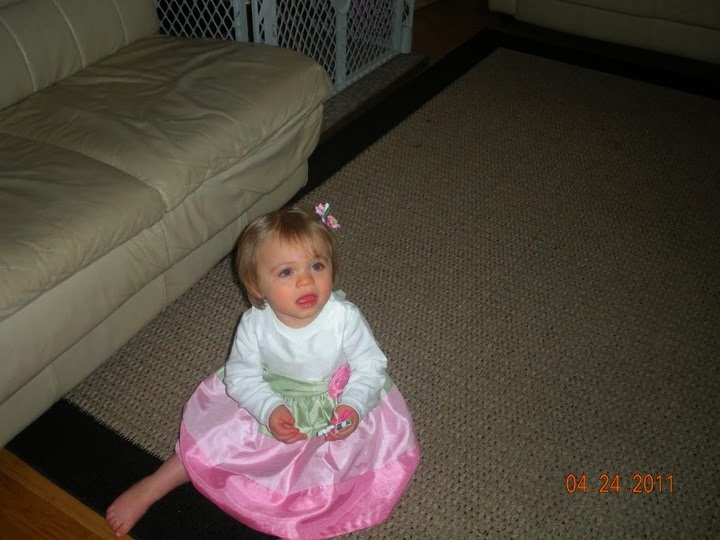
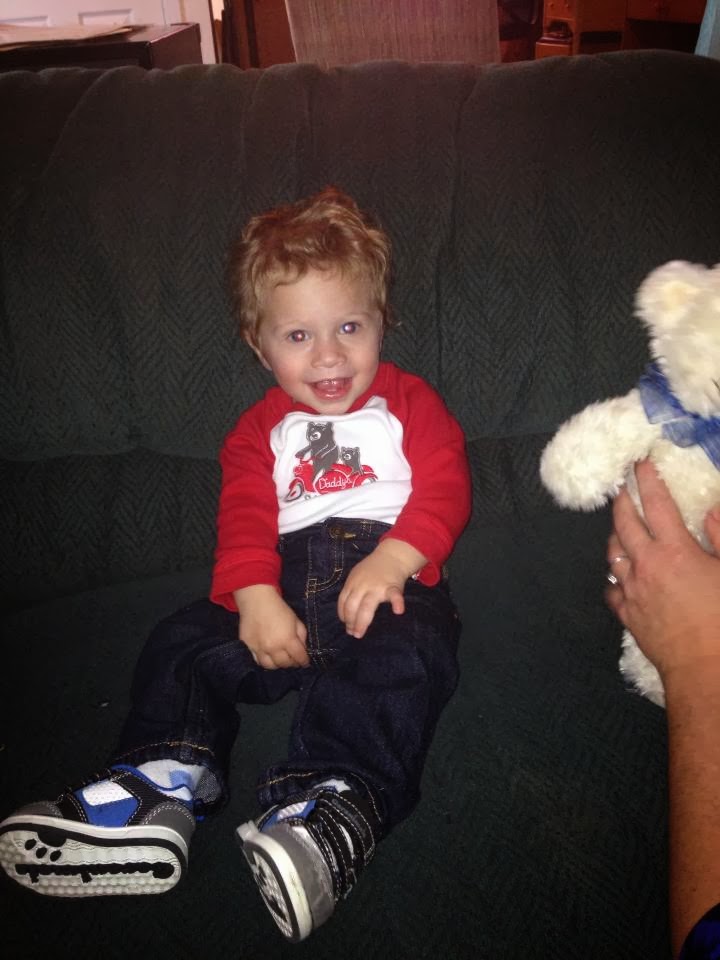
    These pictures show Jace age 16 months, and Ashlynn age 18 months.  In her picture you can see her open mouth posture (low tone) and also see the flexion in her feet.  She was just barely walking and walked on her toes.  I stretched out her calves everyday in the bathtub. 

    It makes me think about a quote from Temple Grandin, “There needs to be a lot more emphasis on what a kid can do, instead of what he cannot do.” 

    So let me say, even though Ashlynn didn’t talk, or sing her ABC’s, her sweet smile and bright eyes lit up a room.  Her soft and gentle touch melted hearts, and her giggle was and is still contagious.  She may not have drank from a real cup or a straw, but she would hold out a goldfish to a friend to “share” and she would pat the seat next to her forcing whomever to sit down and enjoy her company. She may not have ran when we went outside, but she would lay down next to me staring at the clouds and sharing a perfect moment in the summer sun.  She may not have told me when she was hurt, but she was the first to look concerned if she thought her dad or I was. 

    Yes, there does need to be a lot more emphasis on what a child CAN do, and from now on, I hope to not compare, but to focus on what each child does well!  I’m so proud of them BOTH and I want to be proud of each of them and revel in those moments.