Tag: home speech and language practice

  • Initial ‘T’ tic-tac-toe

    Initial ‘T’ tic-tac-toe

    One thing I’ve found, is that as an SLP, finding materials for apraxia can be challenging.  This is mostly due in part to the fact that syllable shape and complexity matter more for apraxia than they do for other speech sound disorders.

    For example, if you were working on the ‘T’ sound and opened a typical articulation workbook, it wouldn’t be uncommon to see a variety of single syllable and multi-syllabic words mixed in together.  As an SLP specializing in apraixa, I need materials and FUN worksheets that my kiddos with apraxia can use without having to say, “Let’s skip that word” or “Don’t worry about that one.”
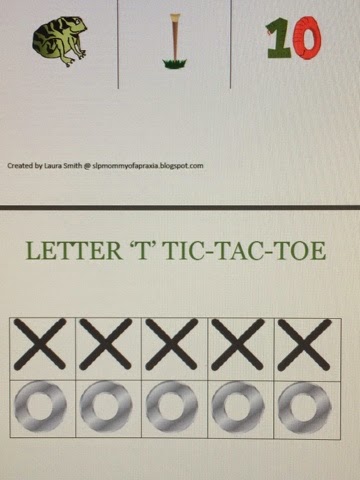
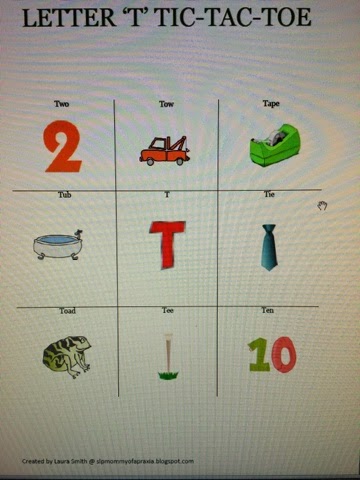
    Here is a tic-tac-toe game I made for a kiddo right now who needs a review and extra practice for initial ‘T.’ You will notice the syllable shapes are simple: CV and CVC.

    To get more repetitions in, I also had a basic deck of cards (minus the face cards) sitting by our game.  We had to pick a card and whatever number we picked was how many times we had to say our word!

    If you’re interested, you can find it on my TpT site here: Letter ‘T’ tic-tac-toe
  • Minimal pair sort

    Minimal pair sort

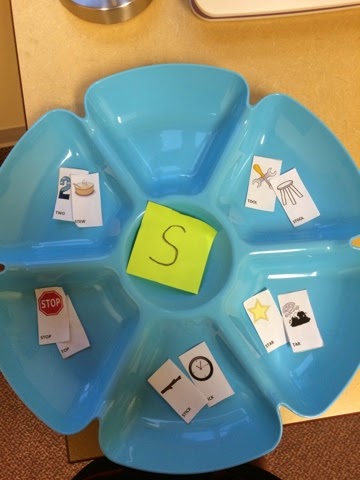
    I have a little guy in therapy right now who has a difficult time with /st/ blends.  He consistently drops the /s/ in this blend only.  To bring awareness to what he saying, SLP’s many times employ what is referred to as “minimal pair” therapy.

    Minimal pairs are two words that are similar except for one sound.  Many times, minimal pairs rhyme if the only sound changed occurs at the beginning of the word.

    In this case, I created five minimal pairs found hereST MINIMAL PAIRS

    I had him sort all initial /t/ words first.  He then traced his finger on the /s/ while making his “hissing sound” and then said the word.

    For example: “ssssssssssssss….tool.”  I then asked him what word he said, and we added the minimal pair “stool.”

    Having him physically sort the pictures and use his finger to trace the /s/ has a purpose.  Research is showing an increased connection between our hands and mouth.  (Think of when you’re trying to find a word you might circle your fingers etc).

    Having the child use their hands adds another pathway to the brain to aid in recall!

    Finally, save this tray because the possibilities are endless and I will have more ideas in the future.

  • Language with a loom

    Language with a loom

    OT and PTs can have fun and creative activities for children. They provide good tactile and/or sensory activities that can also be great for practicing speech and language at the same time. 

    This loom idea from the Inspired Treehouse is a perfect example! For instructions on this easy to make loom check it out here! http://theinspiredtreehouse.com/fine-motor-activities-simple-outdoor-weaving-loom/
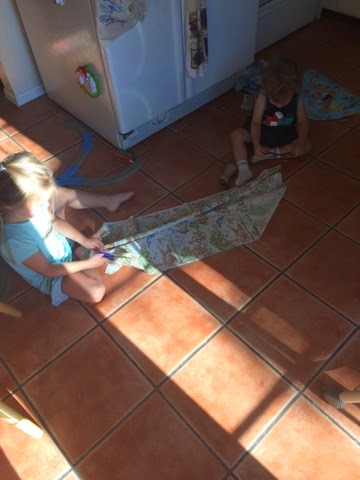
    We started first by cutting strips of material…a good fine motor activity. When my kids are cutting I have them say something for each cut. You can just make the /k/ sound, say “cut” if you’re working on initial /k/, final /t/, or on your CVC syllable shapes for apraxia therapy. For Ashlynn, we said “snip” since we are working in CCVC syllable shapes, including /s/ blends. 
    You could also practice sentences that you could set to song like “Are you sleeping” but sing “Are you cutting, are you cutting, yes I am!” 
    Melodic intonation therapy like this is easy and fun for parents to do at home!

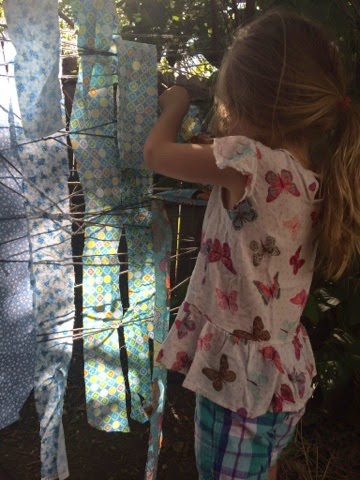
    Next, we set our sites on weaving. This activity is great for locational words such as: top, middle, bottom, under, over, up. Kids with language processing deficits frequently have difficultly with comprehension and following directions that include these concepts. 

    Ashlynn kept wanting to start in the middle of the loom and I had to keep reminding her and showing her to start at the bottom. Then while we were weaving we chanted “in then out, in then out” to get practice with these concepts; however you could also practice saying just “in” or “out” or “up” if you’re working on VC syllable shapes.
    When you’re done you can give silly directions like, “throw the ball OVER the loom” or “roll the ball “UNDER” the loom. 
    We made this over a course of two days and now the kids have a little hideaway in the backyard!