Tag: Developmental Coordination Disorder

  • Learning to swim means facing our fears

    Learning to swim means facing our fears

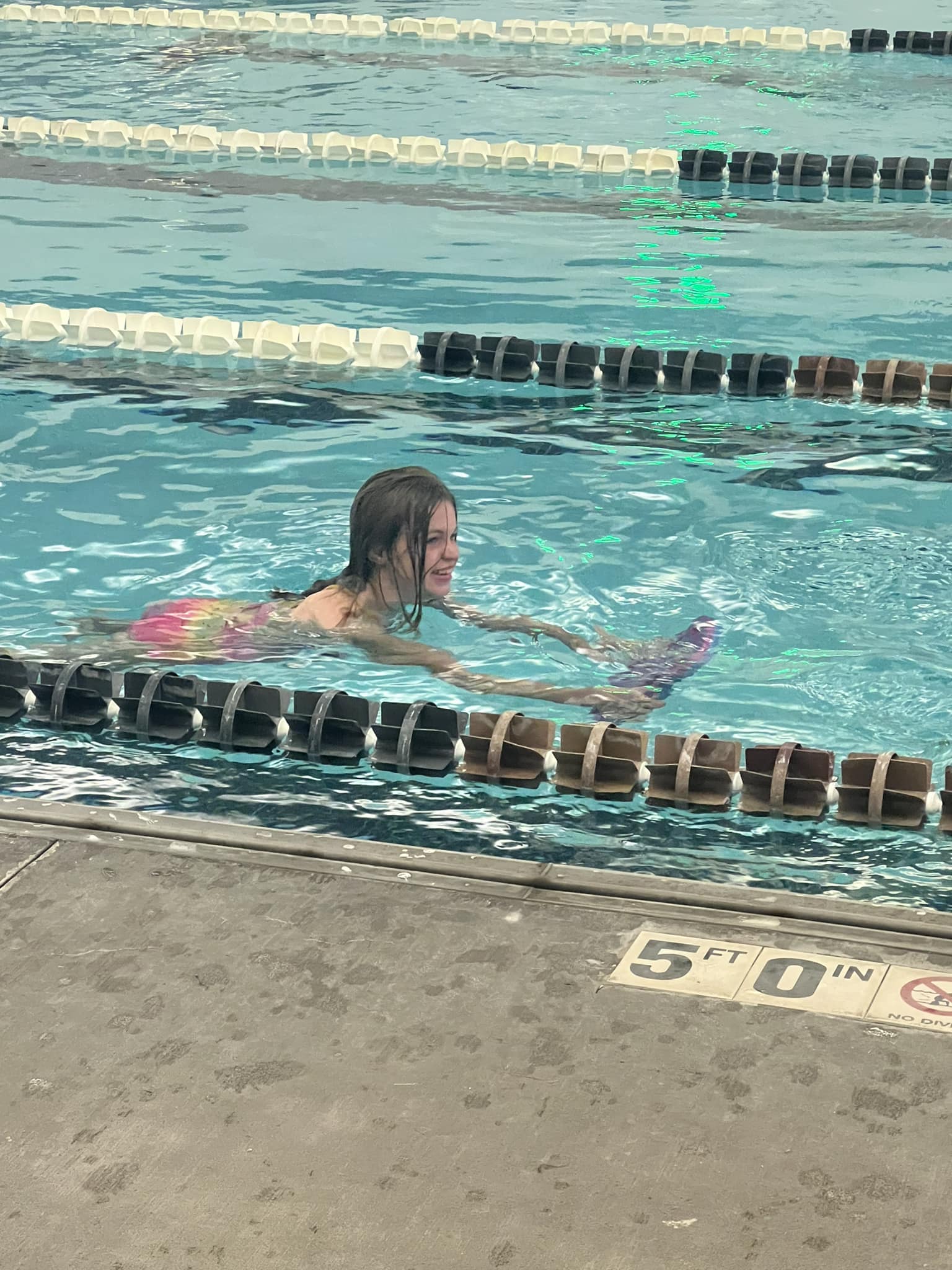
    Ashlynn is 14 years old. It’s almost unbelievable to me that a decade ago, an entire TEN years ago, we almost ended up a tragedy. It’s so traumatic even now I can never re-read the post. I‘ll link it here, but I’ll never re-read it. I don’t need to. It’s forever branded on my brain like a tattoo. She was four at the time. I still don’t know if she remembers it. If she does, I have no idea if it affects her. However, I have my theories.

    After the incident, Ashlynn did get back in the water. We all knew how important it was long term. I remember writing another post about that. I won’t re-read that one either. Learning to swim is such an important life skill. We kept on keeping on.

    After the incident, she never attended group lessons again. I hired the swim instructor and paid him privately for at least two years before the pool policy banned private swim lessons. I then switched her to recreational adaptive swim teachers. It seemed to be working, but then COVID hit.

    During COVID in 2020 through 2021, my husband and I booked hotel rooms as “outings.” We always chose ones with pools and tried to teach her ourselves. She had so many successes, but nothing carried over.

    My husband and I are water lovers. It’s weird to say because we live in the land locked state of Colorado. However, we find home at our “Colorado beaches” aka reservoirs. We spend our summers at campgrounds that have lakes attached to them so we can play on our jet ski.

    Ashlynn, even at an older age is VERY good about wearing a life vest. She doesn’t fight or argue, but still. She doesn’t know how to swim.

    This year, a client of mine who is her same age started Special Olympics swimming. His mom gave me all the info and I signed Ashlynn up. I wasn’t sure it was going to work. The coordinator was concerned she doesn’t really know how to swim and was worried about keeping her safe. She said the option of a 1:1 helper wasn’t available.

    I understood. Ashlynn is 14 now. Even specialized swim schools won’t take her because of her age. I left that night feeling defeated. We had helped Ashlynn triumph through soo much! Riding a bike! Reading! Getting on stage! Dancing! Learning to swim just didn’t seem to be in the cards.

    I emailed afterward and she told me to come back. She said she re-arranged some swimmers and had a plan to keep everyone safe. We showed up tonight, and there was a woman who had a son who was swimming independently and while she was watching she volunteered to help keep any other swimmers safe. That woman was assigned to Ashlynn. I could breathe. I felt my anxiety disappear, and honestly I think my anxiety holds Ashlynn back. She constantly ‘checks in” with me and if I don’t look completely relaxed, Ashlynn panics.

    Life is so serendipitous. As I watched my daughter with this woman a man with his child came up to take their picture. The man literally works in the SAME office building as my speech therapy practice. I was filled with awe at the Universe and then INSTANT gratitude. What were the chances?

    I KNOW Ashlynn can learn to swim. I KNOW it. It’s been a long, hard and complicated history. However, I KNOW she can. This is her year. Love you girl. I’m your biggest fan.

    Love,

    Mom

    Learning to swim
  • Will you push me, Mama?

    Will you push me, Mama?

    “Will you push me, Mama?”

    Lying on the couch after work, mindlessly scrolling social media when my sweet nine year old daughter says, “Will you push me on the swing, Mama?”

    I’m a pediatric speech/language pathologist and my job is AMAZING, but it’s also very demanding and zaps me mentally and physically by the end of the day. An introvert at heart, I need alone time to recharge and refuel. Needless to say, pushing her on the swing was not on my agenda for the night. However, as I looked into her bright eyes sparkling with hope, I put my phone down and asked her to give me five minutes. Enthusiastically she ran to the clock, figured out how long five minutes would be, and then bounded out the door.

    “Will you push me, Mama?”

    There was a time my daughter with apraxia couldn’t say “Mama” and had to go to speech therapy to learn it. Once she had words, she had to learn how to put them together to make a phrase because she also has a developmental language disorder. There was a time she had to go to speech therapy to learn how to add the /s/ to /s/ blend words, words in which an /s/ is next to another consonant as in “swing.” There was a time she had to learn how to use verb tenses correctly and once she understood and used verb tenses correctly, there was a time she had to then practice “interrogative reversals” in order to ask questions correctly. Those days seemed so long. The struggle seemed so long. Yet here she stood, effortlessly doing all those things as though she never spent hours in therapy offices learning how to do them. Here she stood asking to be pushed on the swing, something most kids were doing while she was working hard to find her voice.

    “Will you push me, Mama?”

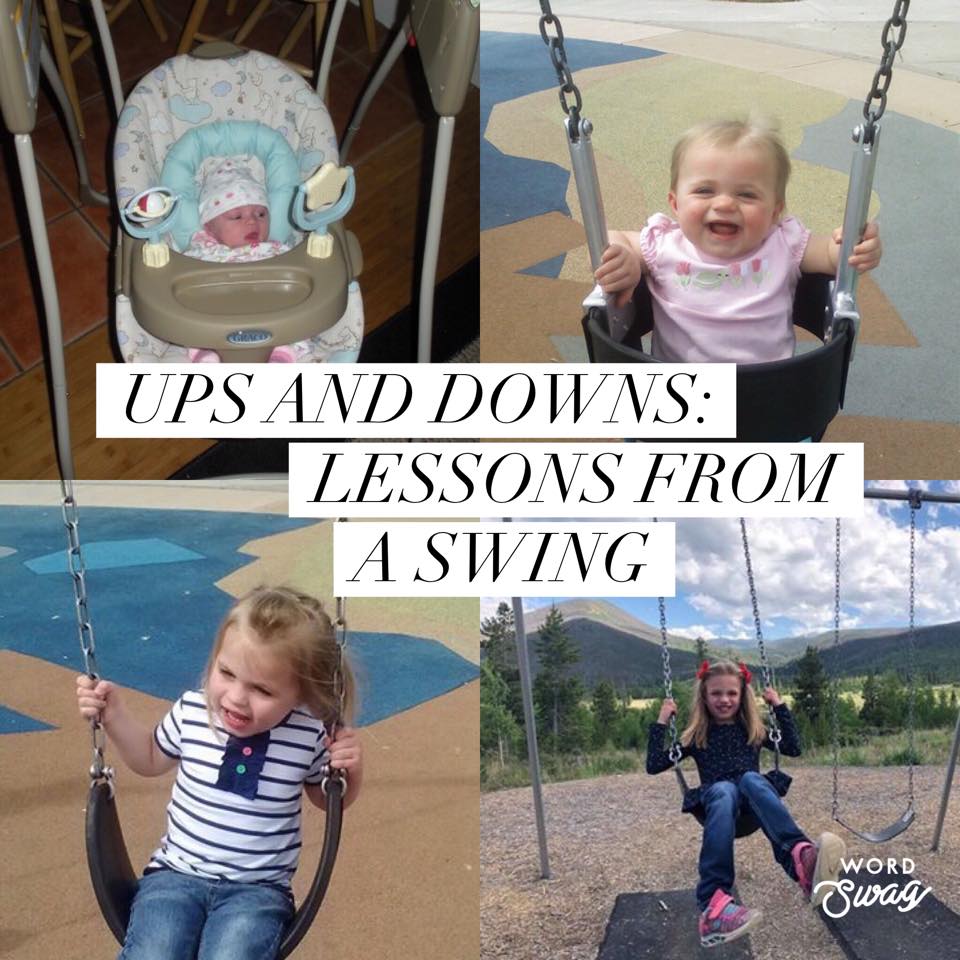
    Though my daughter can pump her legs herself now and swing, there was a time she had to spend hours in occupational therapy and physical therapy before her core strength could even support the act of sitting up on and pumping a swing. Then, once she was strong enough, she needed more therapy to get the coordination of the movements down. As she got taller, she then needed to learn how to change the motor plan and move her ankles out to the side so her feet wouldn’t hit the ground. Yet, here she stood, able to do all of these things now but still asking me to push her. She’s nine years old. We are getting close to her never asking me this question again and the gravity of that sunk in. Would this be the last time she asked me to push her? My mind flashed back to her beautiful smile when she is swinging. She literally came out of the womb and hogged the swing in the nursery. The nurses all laughed and mused at the baby who was only happy in the swing. It never stopped there. I have numerous pictures, too many to count, of her swinging in various ages of her life.

    “Will you push me, Mama?”

    I thought about how swings go up and down and up and down and how Ashlynn smiles and giggles through it all. I thought about how swings are a lot like life in that way. Ashlynn has a lot of challenges. She has a genetic mutation called BCL11A that has caused numerous disabilities and her life is anything but easy street. If anything, it’s more like the swing in that there are ups and downs, successes and challenges. Through it all though, she smiles.

    “Will you push me, Mama?”

    I thought about all the areas I’ve had to push her. Sometimes I wonder if I pushed too hard. Did I let her be a kid enough? Will she only remember speech therapy, occupational therapy, physical therapy, and tutoring? Nights struggling through homework? Nights struggling through activities of daily living that are so hard for her, such as brushing her teeth or getting dressed, because I know she needs to learn to do them for herself?

    “Will you push me, Mama?”

    So on this cool summer evening in June, tired from work and craving alone time, I got up and pushed her for an hour that night in the backyard. We laughed and giggled and made up games. I reveled in the fact my daughter still wanted me to push her, and I prayed to find a balance in the future of pushing her not a breaking point, but further and further to her potential. Oh, and making sure we find time to keep smiling and laughing along the way.

    Laura Smith is a mother to two beautiful children, one of which was diagnosed with a rare genetic mutation that caused a multitude of learning challenges.  She is a Denver based Speech/Language Pathologist now specializing in Childhood Apraxia of Speech. To learn more visit SLPMommyofApraxia.com

  • Lessons from a bicycle: Just keep pedaling

    Lessons from a bicycle: Just keep pedaling

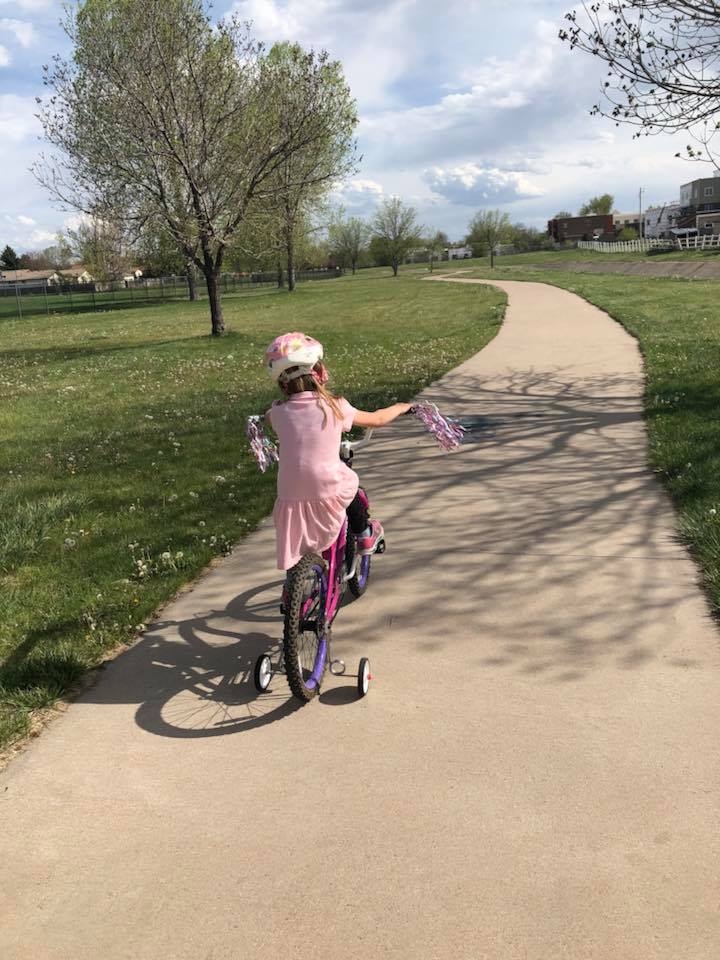
    Ashlynn is 8 1/2 years old.  Currently, she is riding this big girl bike, and yes, it still has training wheels; although the wheels are much smaller and looser than they have ever been.  Last year she took quite a tumble and refused to ride it, but this year she is back on it and pushing harder than ever before.

    Due to the severity of her dyspraxia, we have increased her time in private OT to 2x a week along with the OT and PT she gets in school.  The new private OT place is VERY focused on bilateral coordination, balance, strength, and sensory issues.  We noticed a difference right away in terms of her sensory issues, but we are also noticing a HUGE difference in her strength and increased endurance.

    She could TOTALLY, TOTALLY ride without training wheels, but she has a few more obstacles.  One is that different variables aside from a smooth plane throw her off.  This was true when she learned to walk too.  She could walk provided the surface was even and smooth; however, once anything changed she was falling to her knees.  This could include the slightest incline going downhill, uphill, or slant in the road.  Well, the same is true for learning to ride a bike as well.

    I should also mention, she doesn’t have typical reflexes thanks to her dyspraxia either; so where most children would at the very least put their legs down to help catch themselves, Ashlynn panics and ends up falling over.

    As I watched her tonight at the park, a wave of sadness rushed over me.  It’s so weird, these cycles of grief.  l know Ashlynn has dyspraxia.  I know it will take her longer to overcome this obstacle, and I also know she WILL overcome it.  However, I start to worry.  Am I doing enough?  Am I helping her enough?  What about those special needs bicycle camps another mom told me about.  Should I have picked that this year instead of choosing to send her back to the $3000 special needs camp she loved and adored last year?  After all, there is only so much money to go around.  Am I choosing the right thing?

    On the way home, she was gaining confidence.  Where I walked beside her on the way to the park, I was now jogging and at times running to make sure I kept up on the way home.  She was doing great with her balance.  We were riding on the sidewalk, and she would only tip over when going past a driveway where there would be a downward slant.  I would run beside her and steady the handle bars.  I started to notice though that she would stop pedaling during these times.  I encouraged her to KEEP pedaling through the hardest obstacle, which was the driveway. I realized the reason she was losing her balance wasn’t necessarily because of the driveway, or obstacle; but because she would STOP pedaling during it.

    It reminded me recently of a white water rafting trip we just took the kids on.  I joked (but was dead serious) that I only slightly panicked most of the time.  On the bus ride to the drop off, the guide was going through all of the safety precautions and I started to freak out. Truth be told, I actually go to the bank of the river and told the guide we weren’t going.  Fortunately for me and my family, he convinced me to get on the raft.  This after I explained dyspraxia and her difficulties with balance and coordination and my concerns for her safety and ability to follow directions if bumped out of the raft.

    He told me he would put me right behind her, would have straps my kids could hold onto for balance, and during the times he didn’t need me to paddle, I could hold onto her shoulder.  However, he did say that when he told us to paddle, he NEEDED us to paddle because that is what was going to ensure the best stability in the raft for getting through rapids.  I struggled with my fear.  I looked at my kids eager to go, my husband shaking his head at me disapprovingly for threatening to allow my fear to ruin the fun; but then ultimately I thought of Ashlynn and how she faces every fear head on and I knew I had to do the same and do what the guide told me to do.  I put every ounce of my being into paddling when he said to paddle and made sure I was in step with my husband’s paddle on the other side.

    During the times I didn’t have to paddle though, yes, I was holding her shoulder. 

    Not to make excuses, but I did watch this girl drown once and I still can’t re-read that post.

    Anyway, back to the bike.  At the driveways I kept yelling “keep pedaling Ashlynn.”  She stopped after awhile and told me she wanted to get off and walk her bike home.

    “No, Ashlynn.  I’m sorry.  I’m not yelling at you okay?  I’m proud of you!! I’m just telling you that to get through the hard parts you have to KEEP pedaling okay?  Remember last weekend when we went white water rafting and our guide told mommy and daddy to keep paddling during the really big rapids?”

    “Yes,” she replied hesitantly.

    “I was really scared Ashlynn.  I was so scared if I didn’t have my hand on your shoulder you would pop out but I knew to get through the rapid as smoothly as we did I had to keep paddling and not stop.”

    “Yeah?” she said.

    “Yeah baby.  So that’s all okay?  Don’t give up!!  During the hard times we have to keep paddling.  You have to keep pedaling and you won’t fall okay?”

    She looked ahead of her with grit on her face and she flexed her thigh muscles and started pedaling again.  I ran beside her all the way home.

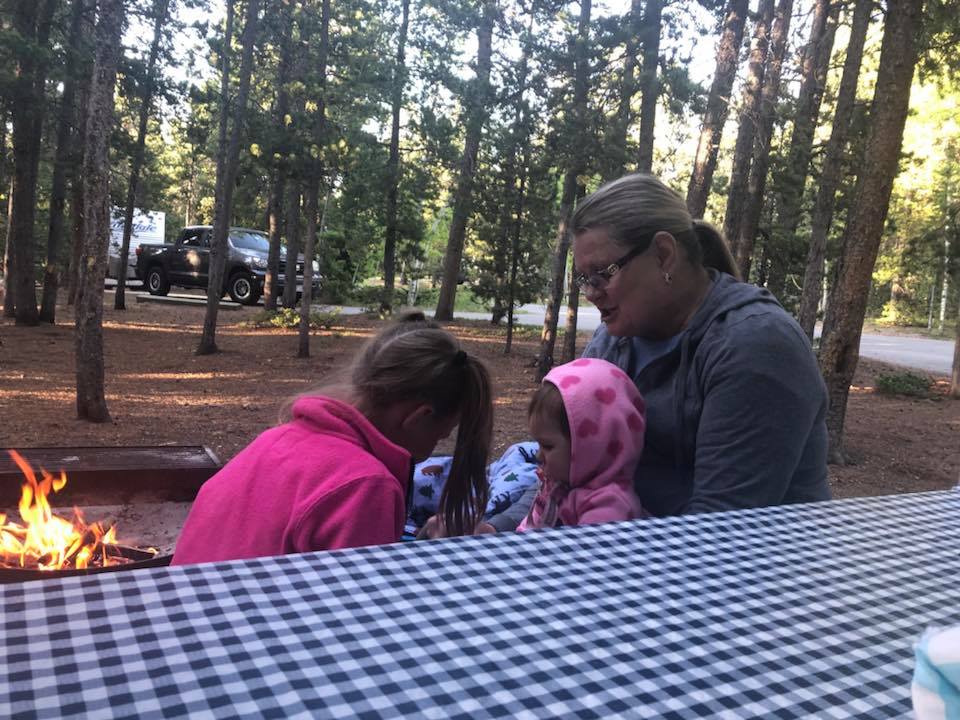
    As I was reflecting, I remembered a moment on our camping trip we came back from yesterday.  She was sitting with her Grandma and baby cousin reading “Brown Bear” to her.  I took this video, and when she caught me she said with a big grin,

    “I want to be a teacher mama.”

    As I hugged her tonight, I told her,

    “You already are.”

  • “She’s a puzzle” or…. she has dyspraxia

    “She’s a puzzle” or…. she has dyspraxia

    [wysija_form id=”1″]

    It’s no secret apraxia, dyspraxia, and developmental coordination disorder are not well known. Ask any parent, or heck, even any professional, and you will find out pretty quick few people really know what it is.

    Hey, I was one!  I was one of those professionals before my daughter was born. Here’s the thing.  I had my bachelor degree and masters degree AND my SLP CCC certification, and yet I had very few pages detailing apraxia of speech. Dyspraxia?  Developmental Coordination Disorder?  Pretty sure I never even learned those two terms.  My masters degree program taught us to research, but should I have really had to “google” to figure out how to treat a kid with apraxia?  Shouldn’t that have been addressed in school? Shouldn’t dyspraxia and developmental coordination disorder at least been given a shoutout like all the other rare disorders I had to remember including Fragile X and Rett Syndrome?

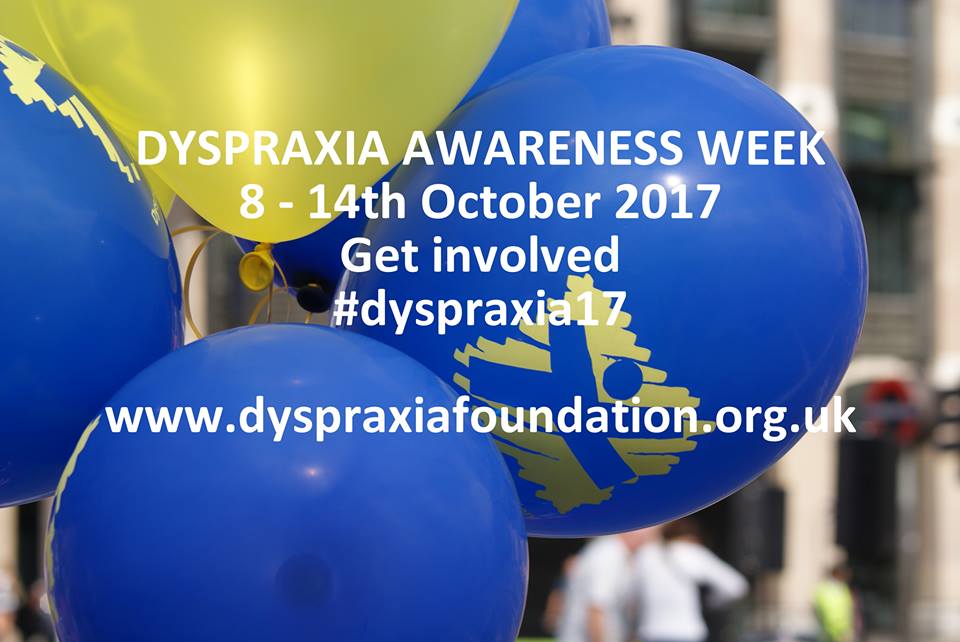
    I digress though.  THIS is why we need dyspraxia awareness week, this year October 8th through the 14th.  Oh, I should mention awareness week was started in the UK by the dyspraxia foundation.  I hope to carry it over here to the U.S., because just because my daughter lives here it doesn’t mean it’s any less prevalent. 

    When I took my daughter in for her first Child Find Evaluation, I remember the PT(physical therapist) telling me,

    “She’s a puzzle.”

    If you are a professional reading this like I was once, you probably didn’t think much about that last statement.

    “She’s a puzzle.”

    We all have one of those kids on our caseloads that we just can’t quite put our finger on exactly what’s going on; and part of the diagnostic process is testing a kid and finding out all the pieces to the puzzle to help develop the best treatment plan for the child.  Sounds about right.

    I can tell you though, hearing your child is a puzzle is quite frankly heartbreaking as a parent.  A puzzle is something you haven’t figured out yet.  As a noun, the definition of a puzzle is, ” a game, toy, or problem designed to test ingenuity or knowledge.” As a verb, the definition of puzzle is “to feel confused because they cannot understand or make sense of something.” So, with those two things in mind, think of how you might feel when professionals who treat children who exhibit similar problems like your child tell you “She’s a puzzle.”

    I don’t want professionals to tell me she’s a puzzle.  I don’t want to know that she’s so unusual that her very being challenged your knowledge, or that you are confused by her.  I mean seriously?  As I’m further on in this journey now, and as I’ve been able to talk to numerous parents nationwide who have a child with apraxia and dyspraxia, I can tell you she’s not a puzzle at all.  Her presentation, to varying degrees, is exactly the same presentation as other children with her disability.  This includes a high likelihood of sensory processing disorder and attention problems to name a couple. Despite this, I was still told last week by someone that her attention issues are a “puzzle.”  Sigh

    This fabulous research article probably puts it best in their opening statement positing,

    Dyspraxia is an enigma to many people, both professional and lay alike

    Enigma now!  It’s ridiculous if it weren’t completely true.  Dyspraxia IS an enigma to both professional and lay people alike.  Listen, the only puzzle, or enigma that I can see after being on this journey for about 5 years now is this.  It’s puzzling THAT PROFESSIONALS IN THE FIELD don’t know about apraxia and dyspraxia.  Now THAT is the puzzle.  I’m including myself friends.  I’m not exempting myself.  How is it, that according to some data it’s prevalent in as high as 10% of the population, yet my daughter is “a puzzle.”  There’s something wrong with that.

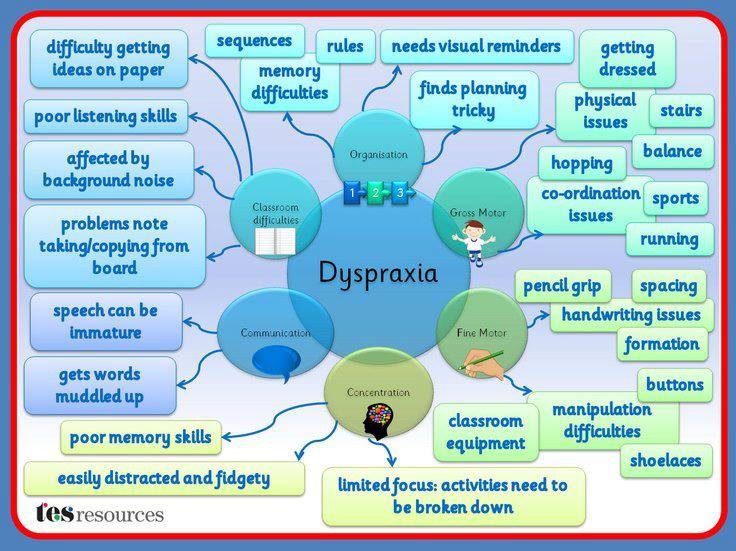
    A simple google search of dyspraxia, apraxia, and dyslexia though will reveal a list of symptoms that are exactly what my daughter has and experiences.  She’s not a puzzle at all.  She fits in all the little boxes of these graphics completely, like the one below. I could quite literally check every…single….box. I guess all the separate boxes resemble a puzzle, but if you put them together they all fit perfectly to complete that big box in the middle: dyspraxia.

    Ultimately though, this article is more than a rant.  This is a dyspraxia awareness post and this is what I want to see.  I want to see these disorders as understood and as well known as other relatively rare global developmental delays like Down Syndrome.  When a professional hears the word “Down Syndrome,” I can guarantee a list of characteristics common to those with DS will pop into their head.  There are always varying severities of course; but a professional is going to know what to expect and be better equipped to help them.

    I hope there is a day no other person with dyspraxia is told they are a puzzle or an engima and instead is greeted with, “Oh dyspraxia?  Okay.  We know exactly how to help you.”

  • The decline of the therapeutic relationship and why you don’t have to stand for it.

    The decline of the therapeutic relationship and why you don’t have to stand for it.

    I’ve noticed something since I’ve had my daughter in therapy.  Therapy offices that are small, with only a couple therapists and an actively involved owner, yield happy clients.  Conversely, therapy offices only interested in expanding their brand, that staff numerous therapists and have a relatively un-involved owner, have more unhappy clients.

    I used to work at a place this happened actually.  The owner was fantastic.  Smart, personable and caring, her clients improved, her families were happy, and her reputation grew.  Soon, she was staffing multiple therapists from two different disciplines and opened up a second location.  She became  stretched so thin, that she outlined a list of policies and procedures, and then delegated a supervisor and receptionist to enforcing them.  The result?  Common sense flies out the window.  The parent/therapist relationship becomes strained.  People leave.  I know personally now why this happened.

    Recently I was on the receiving end of this.  I took my daughter to what was supposed to be a well reputed therapy place in Denver, Amaryllis Therapy Network in the Highlands.  I wasn’t too pleased with the evaluation, because Ashlynn has been evaluated three times before with the very same test and this time she scored 20 points lower.  20??  I had to ask myself if that was really accurate and I had quite a long conversation with the therapist who said attention could have played a factor or this or that.  Ok.  Fine.

    However, then she was transferred to a different OT for treatment.  They initially wanted to have her see an assistant.  I have no problems with assistants.  I used to be an SLPA (which is an SLP assistant) and an assistant is more than capable of doing therapy.  However, what they are not able to do, no let me correct that, what they are not allowed to do,  is  change a treatment plan when they see something isn’t working.  They are required to consult with the supervising therapist who IS qualified to develop treatment plans before they change it, and that’s just assuming you have an assistant who is experienced enough to know it needs changing.  Anyway,   I needed someone who can change a treatment mid session if they see something is or isn’t working.  My daughter is not a typical case.  She’s involved and I don’t want to waste time.  I’m not trying to sound rude, but it’s just the way it is.  As a side note though, it does make we wonder how many parents reading this even know if their child is seeing an SLPA or a CODA.  If they are, just know that you want to make sure a supervising therapist is really staying on top of things in regard to your child’s treatment approach…just sayin.

    Anyway, they complied, and I was given a different OT.  I wanted a conference call set up between the new OT, me, and Ashlynn’s school OT who is also my colleague, a therapist I trust, and has been with Ashlynn since preschool.  When she called, it was clear she had not thoroughly read Ashlynn’s report and then mentioned how Ashlynn had done a “group” therapy.

    I’m sorry what? Group therapy?  Ashlynn can get group therapy in school.  I’m paying for private therapy.  I need INTENSE private therapy.  She quickly reassured me it was still 1:1 kid to therapist just participating in a group activity.  Ok…maybe….but that’s not what I was paying for which even furthered my resolve that we needed a group conference call.  I asked if she would email me and she agreed to set up a time.  I NEVER received an email.

    I’m reasonable.  Ok.  Maybe she entered my email address wrong?  I call the next week before another session has come and gone and tell the receptionist I never received an email, would she email me again.  She check the email address on file.  It’s correct.  Hmm.  Okay.  She’ll send another one.  Perfect, thanks.

    ANOTHER week goes by.  NO email.  My husband is the one that takes Ashlynn so I can’t just bring it up.  I’m pretty ticked about this to be honest, but it can still be dealt with…worked through.  Probably an honest mistake.  However, I’m going out of town and I don’t think I can make the carpool arrangements work to get Ashlynn there this week.

    Now, yes.  I know I signed  48 HOUR cancellation policy paper.  I actually remember signing it because it struck me as outrageous.  Who has a 48 hour cancellation policy?  Oh well.  There are people who do chronically abuse the system, and cancellation policies are in place to protect and respect the therapist’s time.  I get that….not only because I just get that…but because I AM A THERAPIST WHO DOES THIS EXACT SAME THING AS A JOB.

    Dang!  Why is that in caps you ask? Well, it’s because even when therapists, or doctors, or people in a field where they are to care about people have a cancellation policy, it’s usually only enforced to the chronic problem clients.  Any person with a heart and common sense, understands that things come up.  If someone is abusing the system, then yes.  A cancellation policy should be enforced.  I was NOT abusing the system.  I called 30 hours in advance, choosing to wait until the morning instead of the hour they closed.

    This was my first time cancelling, we aren’t late, and my husband probably spends close to 3 hours round trip getting her down there through rush hour traffic and back home. Not to mention the financial hardships families are already going through. You would think someone who actually has a heart and interest in caring about children would have been understanding. I know I am! I don’t even have my clients sign a cancellation fee policy, and if I did…I would give them chances. Unbelievable and SO sad. It’s not right we go through this when we are already bled dry from the cost of therapy. So now, I have to find a NEW place and begin the process again.

    Oh, and one more thing. The email situation?  The supervisor said it was documented she emailed me twice.  “Maybe I didn’t get it due to spam filters?”  I went along with it.  Afterall, I hadn’t yet checked spam, even though it’s ironic that I DO get all of THEIR spam email.  Well, low and behold I DID check, and by check I mean SCOUR my spam email and there was nothing.  NOTHING.  NO email from her…so now on top of it I can add lying.

    Anyway, I digress.  I have to find a new place and begin the process again.

    Oh…but I WILL begin it again, because I know there are places and therapists who do not feel the need to run their therapy office like a corporation and treat people, actual human beings, as only dollar signs.  I know, because I’m one of those people, and I know many, many other good therapists who are ALSO one of those people.

    My message to any parent reading, is if you feel like your child and your appointments are nothing but a dollar sign, then you need to leave.  That is so unacceptable.

    My message to any professional reading this, is you need to know and understand we are counting on you! We are putting our faith and literally our children’s success and outcomes in your hands.  Meet us halfway. We are your paycheck, but we are also human.  If you are a person running a therapy office like a corporation, take heed.  YOU may be an honest and awesome therapist, but don’t get caught in some black and white policy and procedures BS.  These are humans, humans with disabilities no less, that you are dealing with.  Have some freaking compassion beyond your rules and regulations.

    Oh, and for anyone considering Amaryllis Therapy Network in Denver, scratch them off your list and move on.  Developmental Fx is where I’m headed, and unlike Amaryllis, I know many families who have been happy with the outcome.