Tag: Childhood Apraxia of Speech

  • “You say it best, when you say nothing at all.”

    “You say it best, when you say nothing at all.”

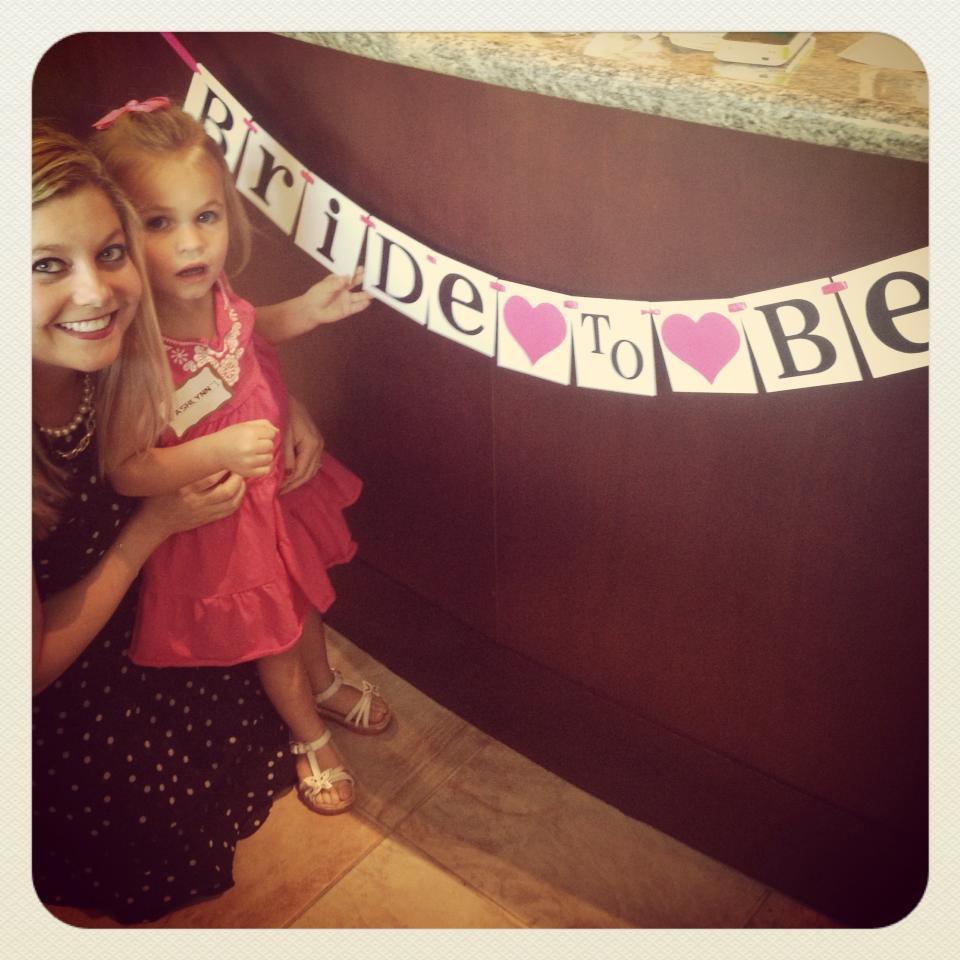
    Today I took Ashlynn to one of my BFF’s bridal shower.  There weren’t going to be any other kids there, but Ashlynn is so good around a group.  When I think of people who have charisma, I think of great speakers and people gifted with words.  The Martin Luther King’s and the John F Kennedy’s of the world.  But Ashlynn makes me realize charismatic people don’t need to speak.  There is so much else to them.  Their presence, their unseen light that people can feel and gravitate toward, their inner goodness that shines brighter than words can resonate.  The latter I believe, fits my daughter.

    She is talking now in 3-4 word phrases, but in a group she gets shy and I have to prompt her to even utter one word responses.  Somehow though, she manages to light up the room.  Flitting by from person to person, looking at them with her curious, kind eyes; touching them with her baby soft hand.  Yes I’m in a room full of women, but even so, strangers reach out to touch her hair, take joy in her smiles, feel happy in her presence.  They hold her hands, give her hugs, and let her sit on their laps.   I know I’m her mom, but I’m telling you, I can see it and not just because I’m her mom.

    She is so special to me, and even though she’s not this outwardly verbal person, she somehow demands attention in the room.  Eyes are drawn to her, smiles are cast upon her, and mutual love is relayed from each other.  All this, without her hardly speaking a word.

    There’s a country song by Allison Krause entitled, “You say it best, when you say nothing at all.”  Ashlynn truly personifies this.

    Dear Ashlynn,

    “The smile on your face lets me know that you need me, there’s a truth in your eyes saying you’ll never leave me.  The touch of your hand, says you’ll catch me whenever you fall.  You say it best, when you say nothing at all.”

  • Lessons from a tricycle

    Lessons from a tricycle

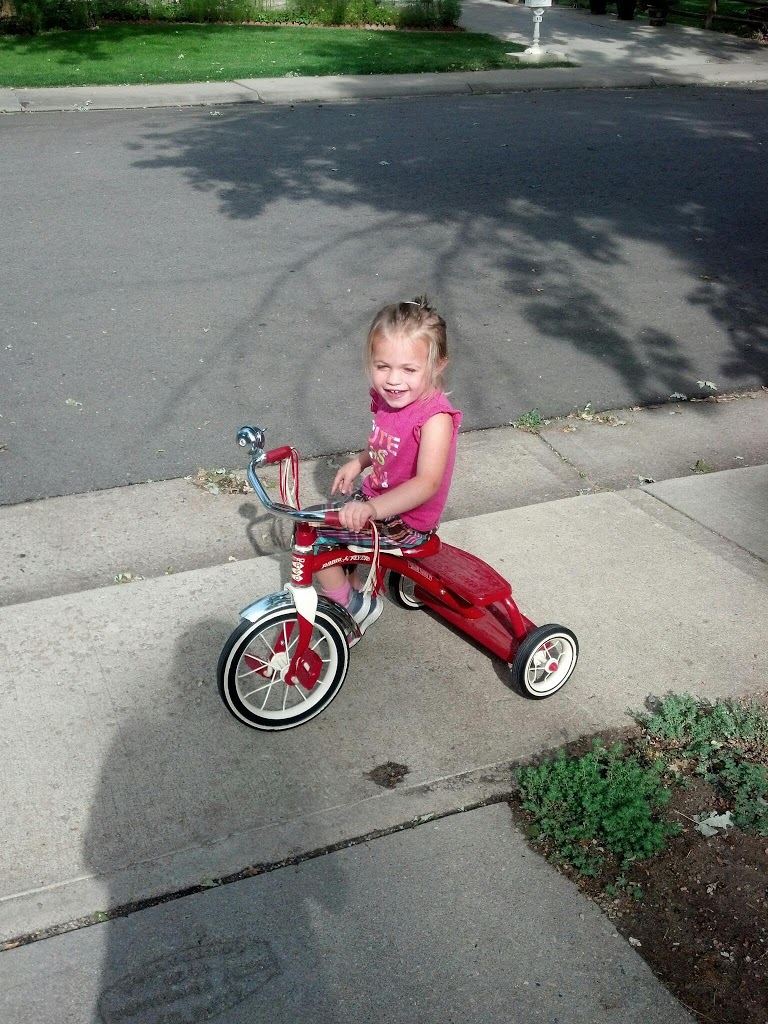
    We bought a tricycle for Ashlynn three months before her third birthday. My husband and I took her to Toys R Us, excited, full of hope and expectation. I had seen two-year old children on Facebook gleefully riding their trikes with big goofy smiles on their faces, and I couldn’t WAIT to snap that happy gleeful face on my little girl.
    Pregnant with my son, we all left the store and I had visions in my head of me walking to the park, with her riding her trike in front. I would occasionally have to call for her to stop so she wouldn’t get too far ahead………….
    ….but it was me getting too far ahead that night. One year later, with aching backs and frazzled patience, my Ashlynn still can’t ride a trike.  She has made progress though and can now not only keep her feet on the pedals, but can also keep them “straight” on the pedals where her heel isn’t constantly coming into contact with one of the bars.  As for the actual alternating pushing motion, that is still to come.  
    You’d think she would be frustrated, but the opposite is true.  As kids whiz by on their bikes, she happily laughs, giggles, and asks me, “See bicycle mama?”  and then with determination in her face she gets up on her tricycle again, ready to practice. Like most other motor tasks, this one too will take time.  It will be a journey to success, but success will surely be there; waiting more patiently than me.
    However, I’ve learned success is never really about the outcome, just as riding a bike is never really about the destination.  Every bike rider will tell you the fun and the meaning are found in the journey.  The sights seen, the hills climbed, and even possibly the falls taken.  The lesson learned from the tricycle is more than just learning to ride.  It’s a metaphor for life, and of one thing I”m certain.  Ashlynn will always be a success because she has already learned: the fun is in the journey.
  • Nine year old Katie with apraxia sings “Brave” and dedicates it to Ashlynn :)

    Nine year old Katie with apraxia sings “Brave” and dedicates it to Ashlynn 🙂


    CASANA has a parent support group on facebook called APRAXIA-KIDS – Every Child Deserves a Voice.  If you have a child with apraxia, I highly recommend joining this group. Sharon Gretz, the founder of CASANA, is an active member, but there are also other SLP’s, advocates, educators, and of course parents who care about these little ones.

    I recently vented to the group about my sadness over the park incident, but then shared my blog post about hearing the song “Brave” and how it made me feel better.  A parent to a nine year old girl sent me the following note:


    when Katie was diagnosed at 2 1/2 with CAS she was 

    considered severe and significantly delayed. She just turned 

    9. She told me to tell you this song is dedicated to Ashlynn. 


     http://www.youtube.com/watch?v=P5q907Ojdfc

    The video is her daughter singing “Brave!”  How awesome is that?  So inspiring for all of us with little ones who are struggling to talk.  

    Katie sings beautifully.  All the therapy, all the tears, all the sadness her mother felt are a distant memory when you hear her sing.  Katie found her voice and then some!  Ashlynn loved the video and told me, “sing dood.”  Yes, Ashlynn, Katie sure sings good and YOU will too some day 🙂


  • Ashlynn update 3.10 years

    Ashlynn is in a regular preschool this year with about 15 other kids.  Most are typical with about six on IEP’s.  I asked the SLP if she was talking at all in the classroom, and she looked at me like I was crazy and then answered “yes?”  I presumed it meant she was surprised that I didn’t think Ashlynn was!  In the Spring, Ashlynn was still gesturing and pointing in the the classroom to express her wants/needs, even though she was speaking at home in 2-4 word phrases; so this is major progress!

    Ashlynn for all intents and purposes can be considered verbal at this point.  She no longer gestures to comment or request; rather, she relies on her speech to communicate.  Her sentences are approximately 2-4 word in length, usually including a subject and verb.  Since she started school, I’m getting a lot more of, “momma wook(look)!!” or “momma! watch!”

    Her Grandma and Grandpa both had surgery recently, and a cute thing she said was,

    “Dama (Grandma) ha (have) an owie, Papa ha an owie…..daddy ha an owie too?”  Haha  She says a lot of stuff now that makes me laugh.  I remember waiting for the day I would hear her say cute things, and actually being sad thinking we were missing out on all the funny things kids say as they are learning language….but we are experiencing it…just a little later than some.


  • Speech Stickers App for Apraxia Review

    Speech Stickers App for Apraxia Review

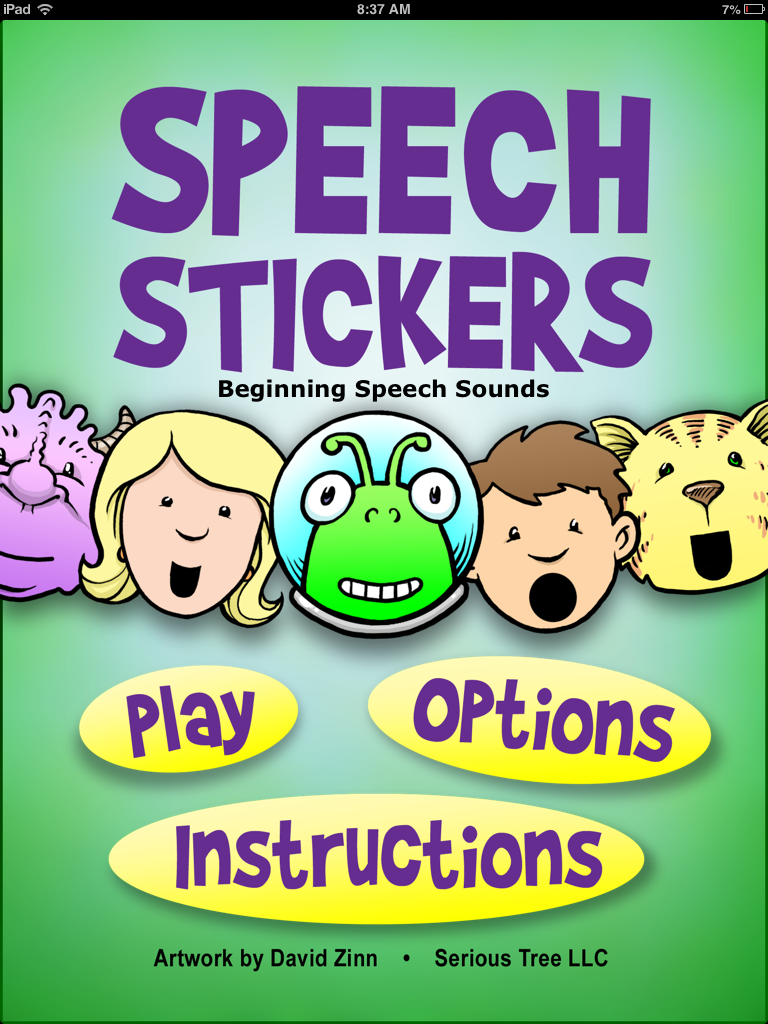
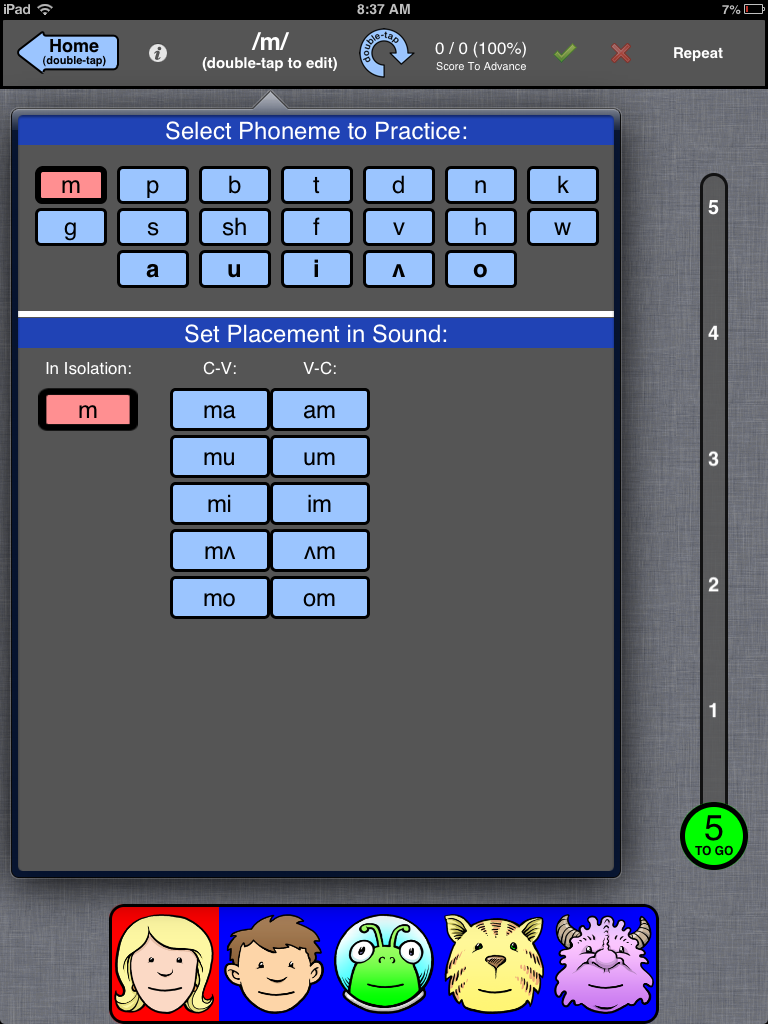
    Speech Stickers is the first app that I downloaded for Ashlynn (my daughter with apraxia) when she had first turned three.  I chose it because it was cheap, and said it was developed for children with apraxia.  The app is simple in design with not a lot of bells and whistles; however, my daughter loved practicing her speech with this app.

    The app is set up for kids in the very early stage of apraxia therapy.  The child can practice sounds in isolation and in CV(consonant-vowel) and VC(vowel-consonant) combos. The app is based around blocked practice with a lot of repetition that is necessary for apraxia therapy.

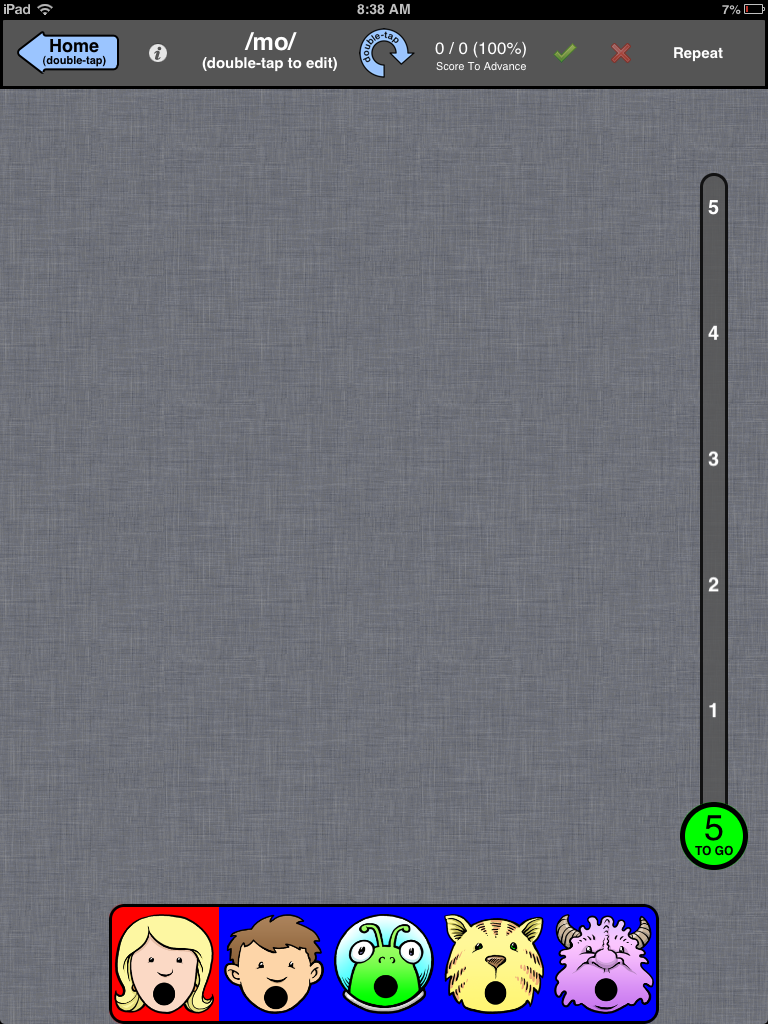
    After you pick your sound or sound combo, you can then decide how many times times the child has to say it before they get a “sticker” or a little animation as a reward.  Then, the child chooses between five characters on the bottom, all of which have a different pitch to their voice.  This is a bonus too, because children with apraxia have difficulty with “prosody” or the melody of speech.  The characters’ mouths model the correct placement.  The above picture is showing ‘m.’  Below the characters are modeling ‘mo.’ This is also great because it gives the kids a visual cue for the correct mouth posture.
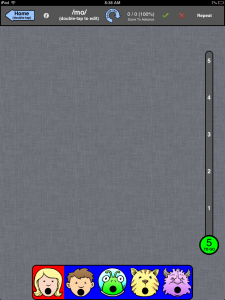
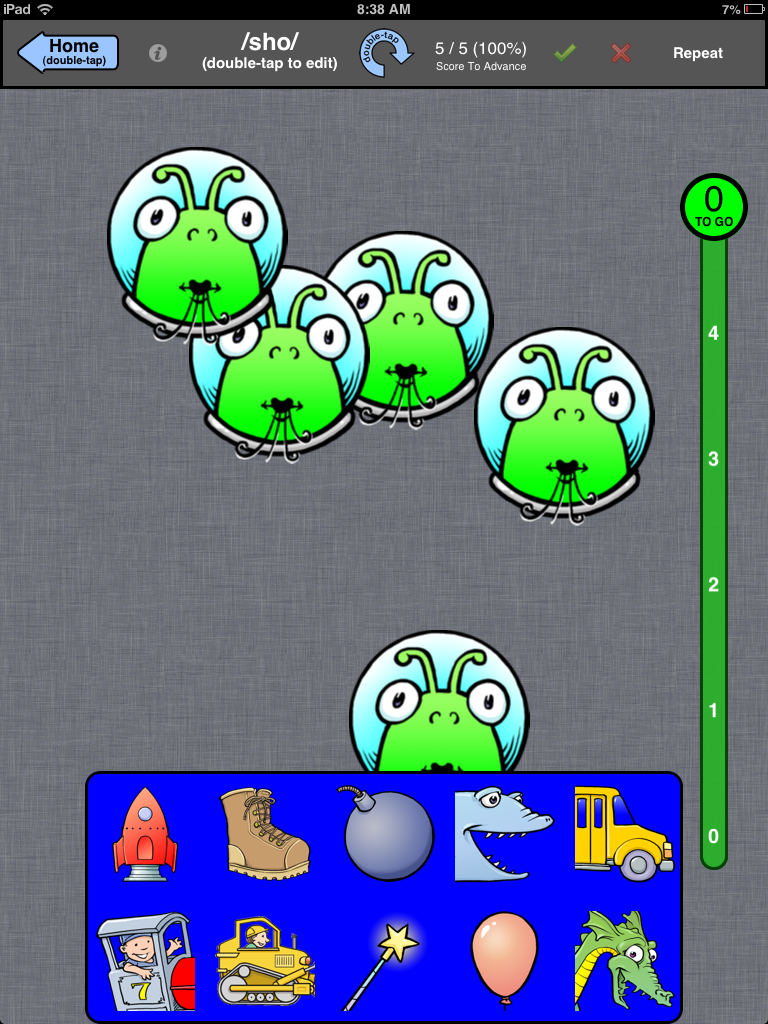
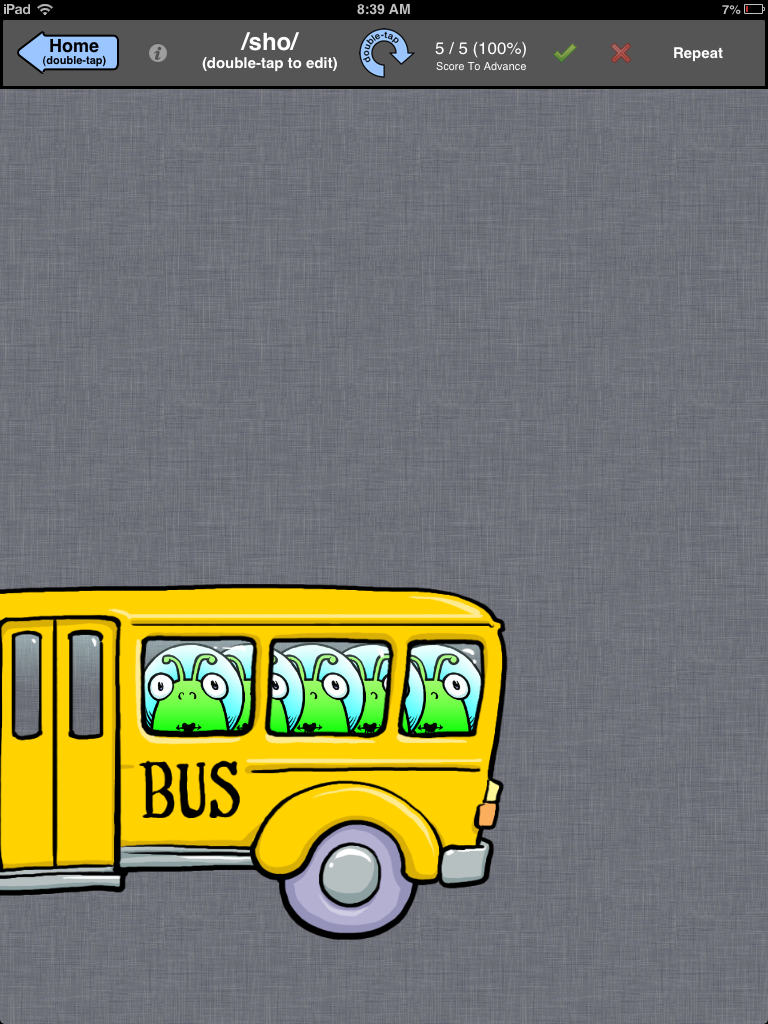
    A scoring bar at the top help score and keep track of data. You must press the green check or the red x to move onto the next practice sound.  The app is designed so that the bar can also turn upside down so that the therapist can discreetly score; however, my daughter picked up on this in a heartbeat and would push the buttons haphazardly just so she could move on!    Once you reach the set number you earn a “sticker” or reward.  You can choose from eight stickers seen below:

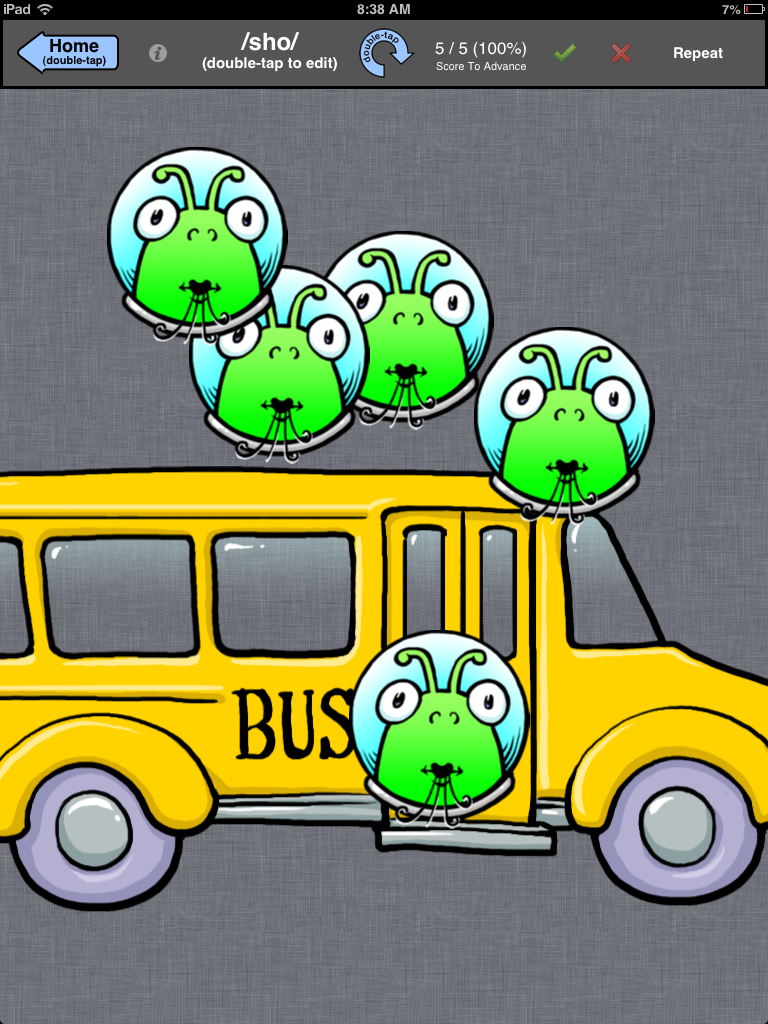
    They are so simple, but my daughter loved them.  I chose the bus just so you can get an idea of the animation.

    It has been almost three years since I have used this app for Ashlynn, but the app lives on with all of my clients!  Kids of all ages and disabilities LOVE this app.

    I have a 5th grade boy with Down Syndrome who laughs every time he earns a sticker and watches the animation.

    I have a 3 year old who loves picking the alien because it reminds him of a popular TV show right now “The Octonauts!”

    I could go on!  Really, I can’t say enough about this app, and when I reached out to the creator Carol Fast MSPA, CCC-SLP I realized why this app is soo good.  Here are some comments from her:

    “It’s truly been a labor of love for me and I’m always gratified to find that other SLPs appreciate what we do. I’m glad that you found Speech Stickers to be helpful for your daughter and other students.  I work mostly with preschoolers and have found a special interest and passion in my little nonverbal CAS kids. I really love helping find their true voice. This is probably the most rewarding work I’ve done in over 30 years as an SLP.”

    Thank you Carol!  Thank you for your passion for working with kids who have CAS and for a great app that allows us to get a lot of repetitions of targeted syllable shapes in a fun and engaging way for the kids.

    What I Love: 
    – Works on early developing syllable structures
    – It really helped us work on final consonants when my daughter wasn’t adding them.  Helped us get the final ‘n’ and final ‘t’
    – Gives a reward in the form of a short animation that is interesting to kids
    – Models different pitches and inflections, which is difficult for kids with apraxia

    What it’s Missing
    I would like the option for the child to record their voice
    – As an SLP, I would appreciate the option to email the data
    – It doesn’t include more complex syllable structures such as CVC and CVCV, so it’s only applicable for the early stages of therapy

    Impressions:
    This app was helpful during the early stages of therapy, when Ashlynn was struggling to sequence basic syllable structures.  She had just turned three, and was motivated to practice speech.  In addition, she loved the sticker rewards.  It did help us get those final consonants that she was struggling with too.
    As an SLP, I have also used this app with a five year old, and he enjoyed it too.  For the price, I would recommend this app if you have a kiddo in the early stages of therapy.

  • ApraxiaVille app review

    ApraxiaVille app review


    ApraxiaVille is an app from Smarty Ears, and is the newest speech app that I have downloaded to use at work and with Ashlynn my daughter with CAS.
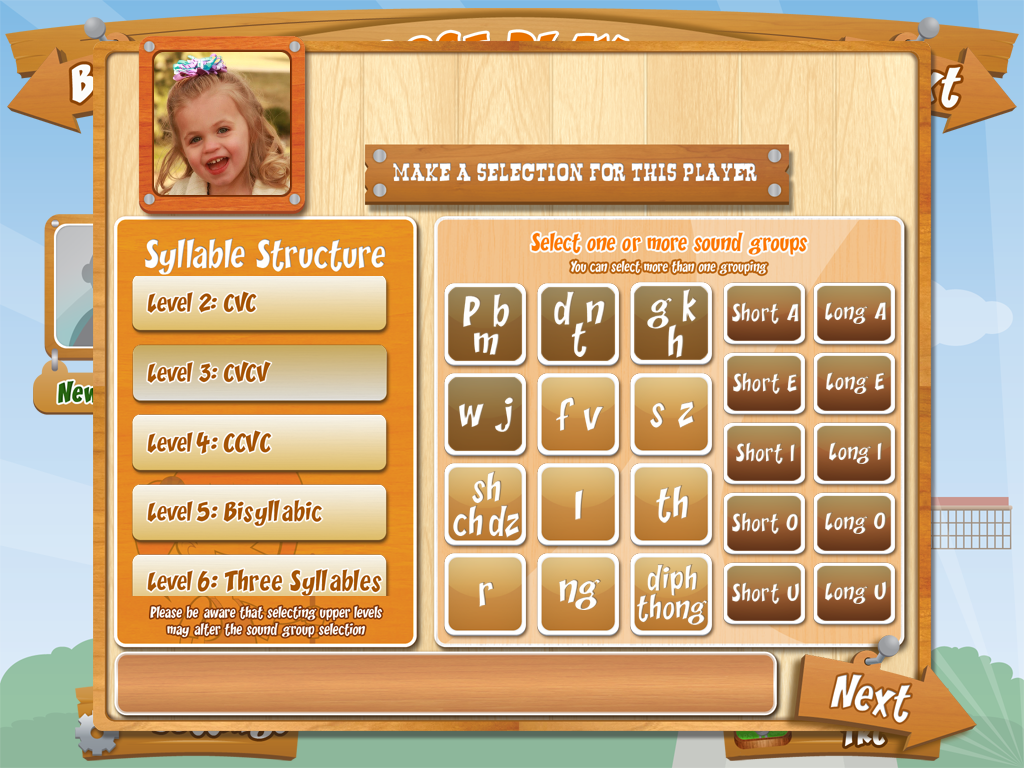
    To get started, you create your players.  You can make an avatar, or import your own picture.  The application allows up to four players, which is nice from an SLP perspective, since you can use it during group therapy.
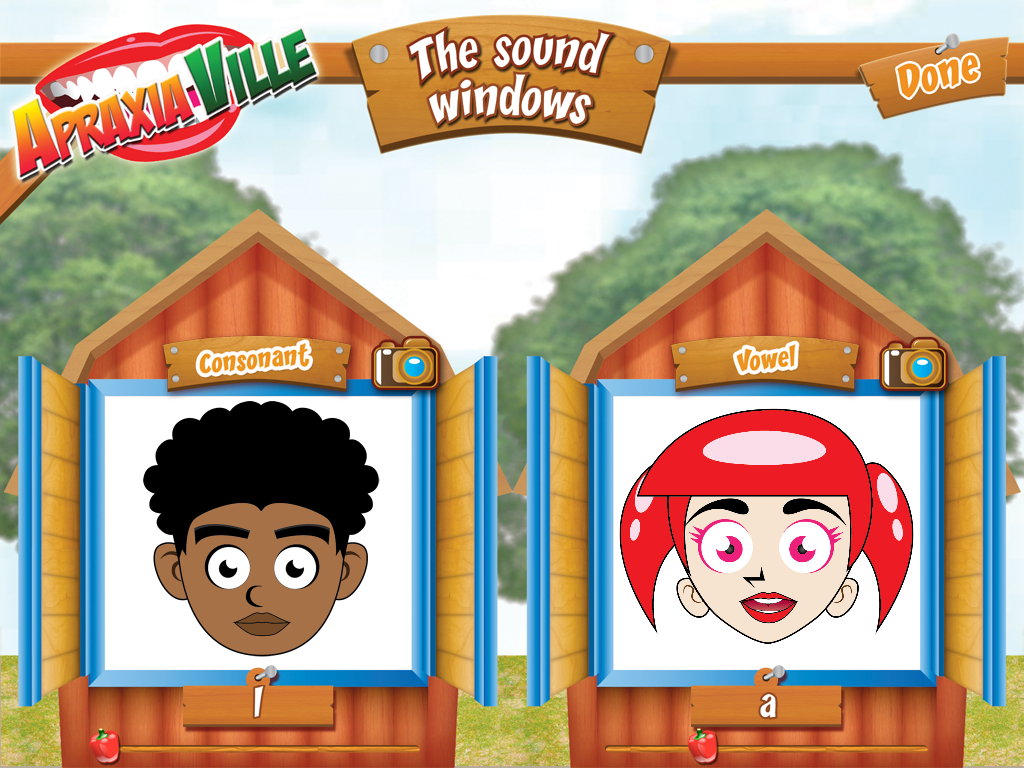
    Next, you choose your activity from a list of three.  The first activity is the sound windows, which allows the child to practice a sound.

    The avatar gives the child a visual and audio cue on how to say the sound.  In the upper right corner is a camera, and if you press it, the child can see themselves in the window as they try to mimic how to say the sound.  I was a little skeptical about this, but I tried it with Ashlynn (my daughter who is 3 and 1/2) on a sound she hasn’t been able to say.  /f/  I have cued her and showed her the current production many times, but she loved seeing it on the avatar and then looking at herself in the camera.  Guess what?  We have /f/ in isolation!  Wahoo!

    The next activity is the Farm house.  In this activity, you can choose from a variety of syllable structures and sound groups.  This is exactly how apraxia therapy is usually structured, from easier consonant vowel combinations all the way to four syllable words.

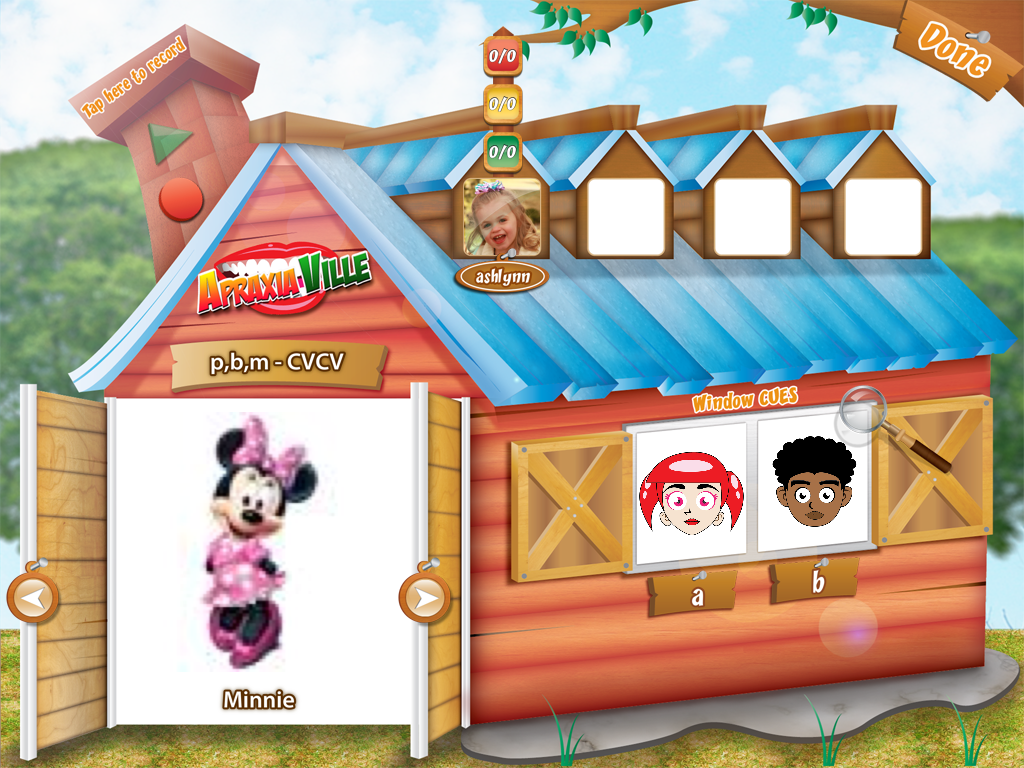
    What I really like, is that you can customize it for the child.  For example, they have consonant groups, but if your child can’t produce one of them, you can go to settings and just choose the words you want your child to work on.  You can also add your own words and pictures to the rotation, which is also awesome.  My daughter has a tendency to drop medial ‘n’ and ‘d.’  She really likes Mickey Mouse Clubhouse, so I added pictures of Minnie and Toodles. Then you can record the name to correspond with the picture.  I also think this would be great if you wanted your child to practice family member names, pet names, etc.

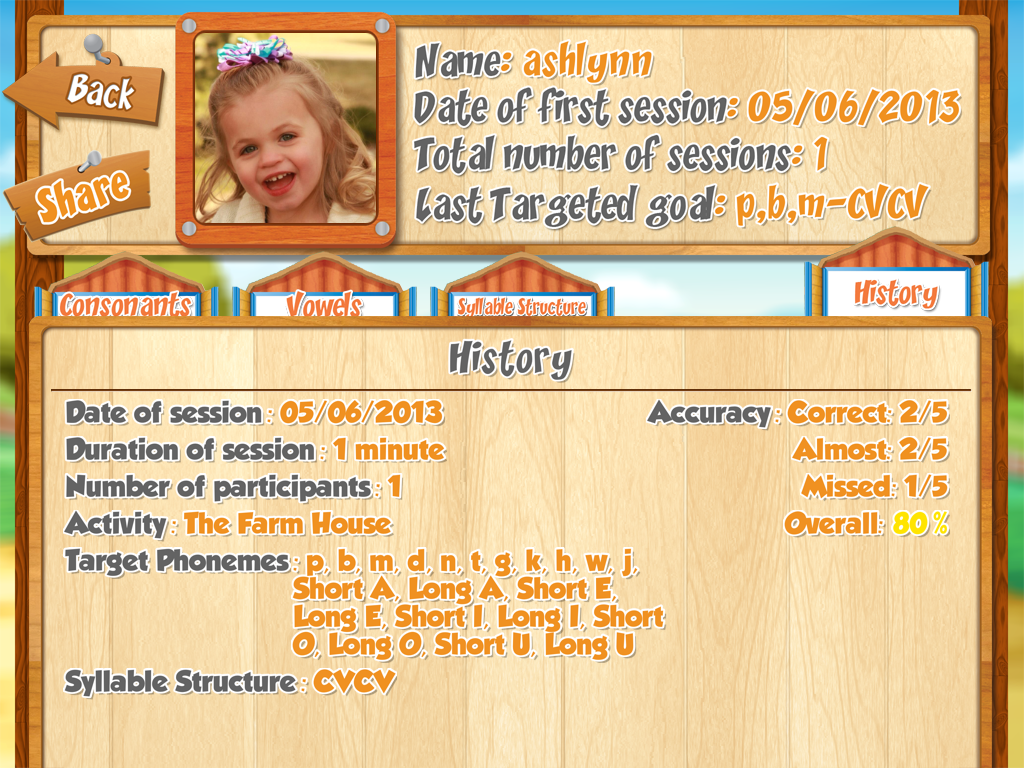
    Once in the farm house, you can practice the words.  A scoring system is set up above each child’s picture to record data.  There is a record feature in the chimney to record and playback the child’s production, and there are the avatars on the body of the barn to model appropriate production for a sound if needed.  After the activity, you can obtain a spreadsheet that collects the data with the option to email it.  I love this option as an SLP.

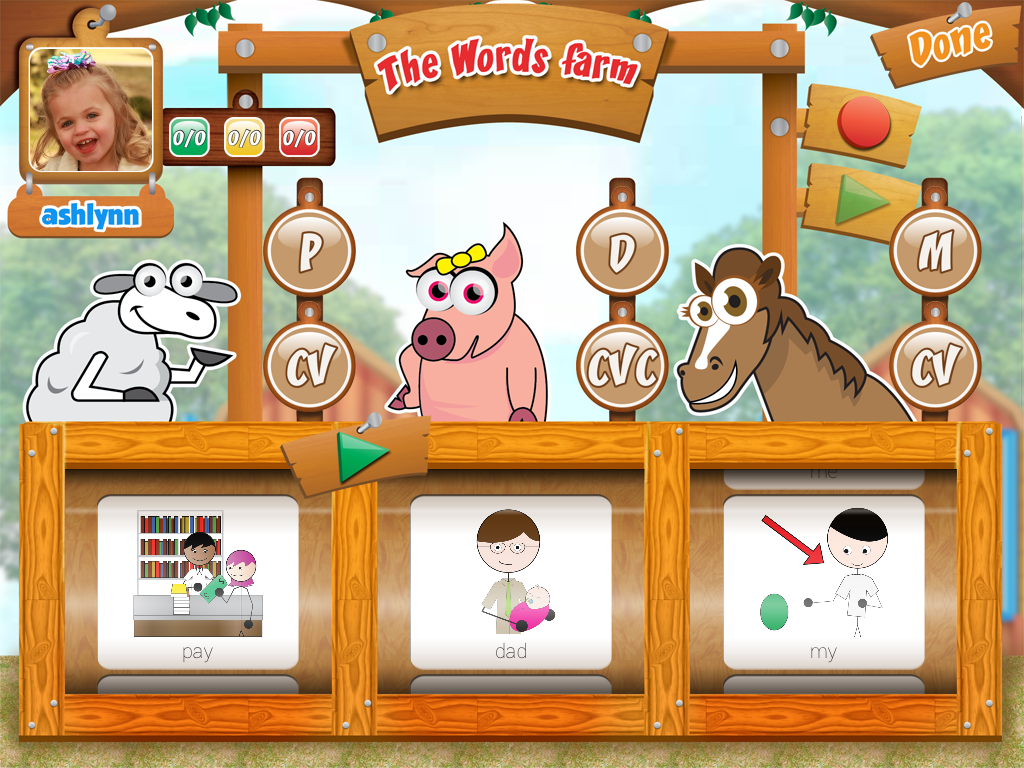
    Finally, the last activity is the Words Farm, where you can choose 2-3 words to practice.  This is great for doing targeted blocked and/or randomized practice necessary when using a motor based approach to therapy.  This activity only allows one child, but again there is a record/play function, and you can take data that will be generated into a spreadsheet at the end of the activity.

    What I Love:
    – Has practice items on a syllable structure hierarchy used with apraxia therapy
    – Can customize sound and syllable combinations to only include those in the child’s repertoire
    – Allows for adding your own additional pictures from your child’s own life with ability to record
    – Avatar’s give visual and auditory cues with a camera feature so the child can immediately practice
    – The second activity allows up to four players, which is helpful in group therapy
    – Data collection feature that is automatically generated into a spreadsheet and can be emailed and/or shared electronically

    What it’s Missing
    Though the app is colorful and visually appealing to kids, there really isn’t any game or reward to it.  It would be nice to have some fun reinforcement for practicing the words.

    Overall impressions
    Overall, I think this is a great app for young kids with Childhood Apraxia of Speech.  I would recommend this application to parents and SLP’s.