Tag: CASANA

  • An open letter to millennial cynicism, indifference or neither?

    An open letter to millennial cynicism, indifference or neither?

    Non-profit.

    What does that word mean to you exactly?  No really, I have over 300 email subscribers, 1300 fb subscribers,  and….this can’t be right…but according to my statistics I see 10,000 visitors per month.  That’s crazy considering I get maybe 40 likes on a good day on my fb page and a couple comments per month on the blog.  I know SOMEONE is reading this blog though,  so sincerely, I want to hear from you.

    I never thought about non-profits much before I became involved with CASANA. My family is Catholic, so my mom donated (and still does) to Little Sisters of the Poor, St. Jude’s, and I think…maybe some veterans group because my dad and her dad are veterans.

    When I started a family of my own, I followed in my mom’s footsteps donating to St. Jude’s and a couple of  times to March of Dimes.  My sister donate (s) (ed) to St. Jude’s too and at one point we had the conversation that the free stuff they send us with their mailers, which include note pads and address labels has at this point, exceeded the price in the donation we actually sent in!  Basically, what good was our donation actually doing?  It didn’t stop us from donating though.

    Well, then I had a daughter, and then she went onto have delayed milestones, and THEN she went on to be diagnosed with Childhood Apraxia of Speech, and THEN, I found CASANA.  CASANA…which in my mind was this HUGE non-profit.  Actually, though, I didn’t KNOW I had found CASANA at the time.  In my sad, lonely hour of desperation, I found a facebook group called “Apraxia Kids: Every Child Deserves a Voice.” It had a bunch of followers, so it seemed legit.  Only problem was, I had to request to join!  Why is that a problem, you ask?  Well, let me put it this way.  When your children go to bed, and you are awake, and one of them has just been diagnosed with a rare disorder….you have questions, you are sad, you want to meet someone….ANYONE…who knows what you are going through. Oh, and I’m a millennial, and I like things NOW.

    I was approved very quickly. Yes!  Score!  I read through some posts and posted my own.  I was sad and lonely and needed someone to tell me it would be okay.  Numerous people responded quickly.   I liked that. I hate to admit I’m that typical millennial…but instant gratification..yep.  This was my group!  One of them was Sharon Gretz.  That name meant nothing to me at the time, but she was kind, and welcoming, and seemed to understand.  I went on to post many, many more posts from my first.  Each time I was met with wonderful and supportive comments, and most of the time, Sharon would comment as well.  I’m not quite sure how long I was in the group, but I realized Sharon knew her stuff.  This Sharon lady got it.  Then I realized, this Sharon lady was the admin to the group.  She basically ran it and moderated it.  I appreciated her dedication to not only helping and responding to me, but to most of the posts that were written.

    Through the group I found out an apraxia conference was coming to Denver, where I lived.  My daughter was dx the previous year and I KNEW I had to go.  The conference seemed big and important.  I knew Sharon would be there and she asked people to say hi to her.  I still had not connected CASANA to apraxia-kids.org in my mind.  I actually never gave it a though that Sharon ran a non-profit and was behind the fb group but also the conference.  Seriously, not one thought in my mind.  I knew she was connected to apraxia though and she would be there.

    I met her and it was awesome.  There are only so many times I can talk about the encounter, so read more of my blog if you are interested.  I sat with a group of SLP’s who talked about a bootcamp.  This was when I first realized that apraxia-kids, the fb group and the website, was connected to a non-profit called CASANA.  I started to realize that Sharon was the founder.  After that conference, I had decided I wanted to get into bootcamp, but I also felt guilty because I had no money or funds to donate to CASANA.  I remember telling a previous bootcamp graduate and excellent SLP in NY Christine Murphy, that I felt incredibly guilty to know I had taken so much from CASANA and wasn’t able to give back.  As many parents who read this know, having a kid with apraxia means a lot of money goes to therapies since most insurances don’t cover.  She told me not to worry.  She said she had seen I was active in the apraxia-kids fb group, and THAT was giving back to CASANA.

    That really hit home with me.  It made me wonder why that was giving back.  Why would responding to posts be giving back to CASANA?  Then I realized.  Sharon takes her job as admin to that group very seriously.  She wants to give people help and advice, and not just ANY help and advice, but quality advice.  I remembered how she had approved my request to join late at night, and then answered my post. I realized in that moment, Sharon works more than her 9-5 for that non-profit.  She literally works around the clock.

    I was accepted to the bootcamp, and that’s where I REALLY understood the connection.  I met most of the CASANA staff members and was blown away.  These two women were once moms like me, who founded this non-profit not only of the love for their children, but to help other moms in their situation…moms like…ME.

    CASANA was offering this costly intensive training for minimal cost to the SLP’s attending it, so that quality therapy and expertise would be available to families spread out through the entirety of North America.  Yes friends.  Many neighbors to the north…aka…Canadians were there.  Sharon was VERY clear at the start of bootcamp that her expectation for every SLP in that room sitting before her would be dedicated to CAS education and awareness.  I actually was a little scared of disappointing her, her expectations seemed so large.  However, I KNEW this was a woman dedicated to the cause and dedicated to her non-profit.

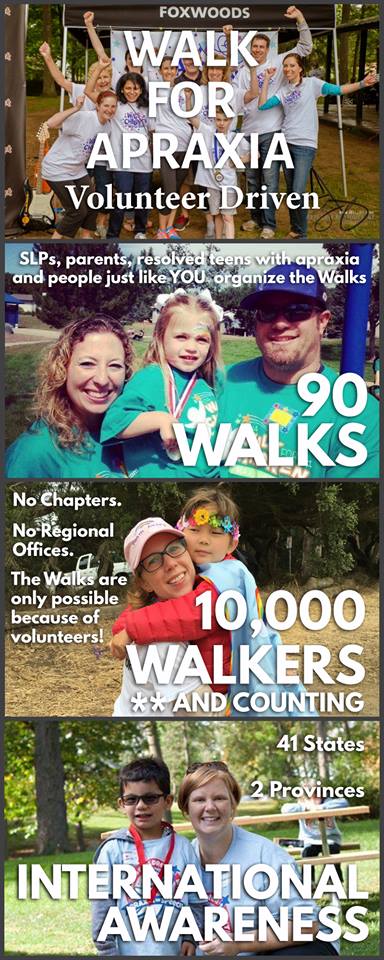
    After bootcamp, I went back to my Denver community and through a course of a conversation with Sharon realized the Denver Walk wouldn’t happen. As most of you know, this is what prompted me to become a walk a coordinator, and actually, my last post highlighted for me that this is how MOST walk coordinators around North America find themselves in the same position.  That was kinda news to me.  As I mentioned in my last post, I met another CASANA staff member through this endeavor named Justin, and if there were ever a person meant for his job as event manager…it’s him.  Calm, encouraging, kind, and supportive; despite 90 other walks taking place nationwide, Justin never makes you feel rushed or that you don’t matter.  Encouraging, passionate, and ALWAYS positive, Justin will help any person coordinating a walk feel they are the best.  We need him!  He talks to ALL 90 of us every year as part of his paid position.  The walks literally could not happen if we weren’t taking directions from Justin.

    That is why I was so taken aback to receive a private message the night after my walk from a random person in the U.S.  She was concerned about a post I made in the Ronda Rousey: Knock out Apraxia group in which I said 85% of funds go back to the community.  She said I was “mis-leading” donors.

    People, let’s just say she caught me on the wrong day.  I literally get this post after I am sitting on my couch, utterly worn out and exhausted from coordinating a walk of over 400 people….for FREE.  Literally, the last thing I need/want to hear after spending months and hours of my free time coordinating a walk for a non-profit I know personally now and believe in, is how I am misleading people.

    NO

    F that.

    What is wrong with this generation?  I actually typed that in and found this enlightening article. http://www.givinginstitute.org/news/258798/Breaking-Through-Millennial-Cynicism.htm

    Why doesn’t my generation trust non-profit’s anymore?  I wish I could say this woman was an outlier, but I don’t think she is.  My own husband the year I first coordinated the walk (and this was after I had received all this education from CASANA for only $500 and a plane ticket to go to bootcamp) asked me about the company’s money.  We actually pulled up the public IRS form.  I can’t recall exactly what it said Sharon made, but it was less than our salaries and I reminded him she literally worked around the clock.  She answered me in the wee hours at night when I needed her.  I’m not saying she does that all the time, but she  did that time.

    Something being touted this year, by others and by myself was that 85% of donations go directly back to the community via research, education, grants for therapy, and iPads for kids. This percentage was based on an independent audit of the 2014 form.  The reason for an audit and not just looking at numbers like the public can do on the IRS form is, if one were to JUST look at the money spent on grants or on iPads, it does NOT take into account the person (or persons) behind the scenes getting paid to process that paperwork and do the dirty work.  You can’t just look at one number that shows what is donated, without taking into account that some salary money ALSO made that happen.  It’s just common sense.  You can’t have CASANA donating this and that without someone behind it actually processing it.

    Oh..and what about the walks that actually bring in most of the donations.  They have two staff members helping 90 volunteer walk coordinators with that task.  TWO.  They rely on volunteer coordinators to  maximize the amount of money going directly back into programs and grants.  These people shouldn’t have to work for free!!  Yes…gasp.  They have a salary.  If they weren’t there, no walks could happen period. Volunteers can do a lot, but we can’t do everything.  Let me tell you, these two people work beyond their 9-5.  I have had them email and message me back and give me their private telephone numbers so they would be available on the weekend when walks take place.  That should speak volume to their dedication. They DESERVE their salary and work over their salary and shouldn’t be scrutinized and judged.

    I told this person that the Denver community had benefited greatly.  I knew numerous families who had received an iPad, and literally know tons of families, including myself,  who have now received the grant from Small Steps for therapy.  Oh, and we also have THREE SLP’s in the area who have been trained by CASANA under their “education” agenda.  That’s three SLP’s available to consult, provide differential dx, and to also see kids with apraxia for therapy ensuring they get the best possible therapy.  Folks, that is DIRECTLY affecting our community, and just because it’s not categorized under “therapy” on an IRS document, it doesn’t mean it wasn’t the outcome.  Just ask my clients, or the other bootcamper’s clients, or the people who have attended any presentation we have given.

    That brings us to research.  This person was concerned that in 2014, 30K was given to a research study.  Gasp.  How dare they?  I mean, really, what is the alternative?  CASANA should invest thousands of dollars into helping kids get speech therapy that doesn’t work for apraxia?  Seriously people, that is not an exaggeration.  Apraxia is THAT serious of a speech disorder.  If you are reading this blog and have any familiarity with apraxia at all, you know that is a potential outcome of the disorder, no matter HOW MUCH therapy you have.  We need research so we know what to do!!  So that the future generation of SLP’s currently in graduate school are TAUGHT what to do, unlike me.  If it wasn’t for CASANA, I still wouldn’t know how to help my kid!  I helped her for a year using what I thought were “research based” interventions….and they were…but NOT for apraxia!

    Finally, lets talk awareness.  Have you ever told someone  your kid has apraxia and they didn’t know what that was?  Okay let’s all have a good laugh now!  bahahahahahahaha

    I mean, parents reading this are ALL nodding their head right now and being like yeah…most people I say apraxia to don’t know what is is.  So guess what we need?  AWARENESS.  We need people to be aware so our kids can get the help and understanding they need for their unique needs and profile.  Guess what this takes?  A PERSON driving that.  A person who gets  a salary.  CASANA makes TONS of graphics, informational brochures, inspirational and informational memes for all of us to share spreading awareness. Apraxia Awareness Day is now a THING thanks to them.  I’m not quite sure what category that falls under on the IRS form..but I’m thinking it’s probably salary.   I could go on but this post is getting long.

    Bottom line is, why are we so cynical of non-profits?   I know it’s partly because major ones make the news14344244_1657729304539794_3707920287651978254_n about scandals, but people, CASANA is not this organization.  If it were, do you really think 90 volunteers nationwide would commit to coordinating walks that take an unfathomable amount of work and time?  All 90 of us know the staff members at CASANA and we don’t get ANYTHING in return than what CASANA offers to EVERY child and family affected by apraxia: quality research, education for parents and professionals, speech therapy grants, and iPads for kids.  We don’t get anything more, oh wait, I take that back.  They gave us a picture frame last year to frame our favorite walk picture.
    Come on!  Stop the cynicism.  Support the cause!  Our children need you!  Our children deserve a voice, and CASANA is working tirelessly!  With event managers texting on weekends, to the executive director responding to fb posts written by  desperate sad parents at night, CASANA is a non-profit dedicated to making sure every family feels supported and EVERY child has a voice!

    Oh, and as a last word, I do really want to hear from you.   What does the word non-profit mean to you?  Does it incite doubt and suspicion or hope and inspiration?  Maybe, you just have never thought about it much and indifference is the best word to use?  I don’t know.  That’s why I’m asking this last one is NOT rhetorical.  Tell me your thoughts.


  • To tell or not to tell……..your child they have apraxia of speech?

    To tell or not to tell……..your child they have apraxia of speech?

    I see a question that gets asked a lot.  In fact, I asked it myself.  It usually goes something along the lines of,

    “Did you tell your child they had apraxia?  If you did, how did you say it? What did you say?”

    I remember thinking when I first saw this question that I wouldn’t tell Ashlynn until way later….and then…maybe if she still seemed apraxic, I would tell her.  I didn’t want her to feel different.  I wanted her to know I believed in her and I wanted her to believe in herself.  I wanted her to know that she can do anything anyone else can do.

    Yep.  That was my stance…..

    Until,

    Sharon Gretz, the executive director of CASANA answered someone’s question.  She made so much sense, I couldn’t help but immediately question my own decision.  She told this parent that it’s important kids know from an early age what their problem is, so they have a name for the difficulties they are facing. Providing a name empowers the child because they realize their struggles are due to something that is real.  In this way, they have a name for the struggles they are experiencing, and don’t develop their own schemas about it.  These schemas anyway, are usually negative and may include: I’m stupid, I’m dumb, or, I’m different.

    Aren’t we as parents the first to tell anyone who questions our child’s abilities that they are smart??  Aren’t we the first people to defend their honor?  What do we use an excuse?  Well, we explain apraxia don’t we?  We defend our children’s honor by labeling them.  Right?

    So, why wouldn’t you offer that SAME defense to your child?  You’re the first one to say your child is smart. I’m the FIRST one to say my child is capable.  If I, if you, truly believe this; can you really think your child doesn’t know they are different?  Do you really think that, or are you just hoping they don’t know?

    I have a feeling it’s the latter.  I have this feeling, because I have hoped the same thing.

    Truth is, Ashlynn has always known.  I remember when she had JUST turned three and was put in preschool as a nonverbal child, the teachers reported she would just laugh when they asked her to do something.  I could see it in their eyes:

    Low cognition
    Poor comprehension

    However, I knew….I KNEW as her mother, that Ashlynn laughed as a coping mechanism because she couldn’t do what was being asked.  It didn’t matter if it was speech or otherwise.  Ashlynn has GLOBAL APRAXIA, meaning overall motor planning difficulties. It didn’t matter what they asked her to do, she couldn’t do it…so…she laughed.

    Every heard of emotional intelligence?  My daughter has it in spades.  If you haven’t, it’s because we live in a society who only values academic intelligence, completely ignoring the fact that a genius who can’t relate to people or get along with people can’t be successful in life.

    No.

    I’m ever so thankful I read that post and the response from Sharon.  Before I was even sure my daughter knew what I was saying, I told her she had apraxia.  Whenever she even remotely paused and looked upset, I would tell her “oh dangit.  That darn apraxia!”

    If you have read my blog for awhile, I talk about apraxia being the new stuttering.  Back in the day, no one wanted to tell a child they stuttered.  Surely they didn’t notice, so you didn’t want to draw attention to it.  Years of research later, low and behold children who stuttered DID know they were different, and instead of understanding their disability, they developed shame.

    Shame is a bitch.  Shame develops when you feel as though you have done something wrong.  If we don’t talk to our kids about apraxia, we risk them feeling ashamed of it.  Apraxia is NOTHING to be ashamed of.

    That leads me to my final thought.

    The walks for apraxia taking place around the country.

    I recently learned so many people think the walk is about awareness.

    I mean, I guess.  I can see that.  Certainly a part of the walks is about awareness.  Publicity leading up to the walk and various news stories all bring awareness and awareness is very good.

    However, it may surprise you to know, especially from me, that the walk itself has very, very little to do with awareness in my eyes.

    The walk, in particular, the medal ceremony, has EVERYTHING to do with honoring our children.

    No shame.

    We HONOR them for their struggle.  We HONOR them for differences.  We HONOR them for their perseverance and hard work..

    We HONOR them.  We RECOGNIZE them.  Their family and friends HONOR them.  Their therapists HONOR them.  We all honor them, because despite the odds, they persist and achieve.  We recognize their achievement in spite of apraxia, and they can feel pride, not shame.

    Even if your child is considered “resolved,” I would urge you to rethink your stance on not telling them. People………..they KNOW.  They may not know what apraxia means, but they know they aren’t like other kids. They know they are different.

    On final thought.  A label should never be used an excuse and trust me, our sweet babes are smart enough to use a label to their advantage.  I’ve definitely heard a story or two about, “oh I can’t do that because I have _____.”

    On the contrary, it’s a teachable moment to say, “It makes it more difficult for you, but YOU are capable and I believe in you.”

    If you don’t believe me, ask my daughter some day!  We are obviously an atypical family because I specialize in apraxia so I see kids all day with apraxia and of course Ashlynn has it; however, my youngest son asked me why he DIDN’T have apraxia.  lol.

    No shame in this house.  Only knowledge…and knowledge is power.

    14067711_10208822639500870_2427710843928303952_n
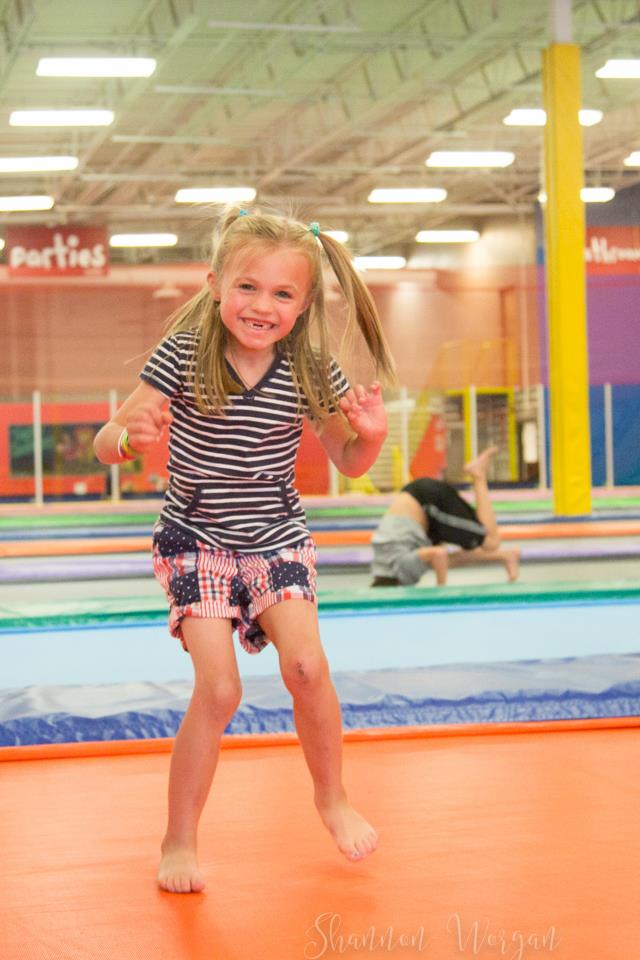
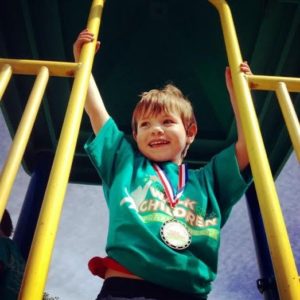
    Jumping her heart out at a fundraiser for the Apraxia Walk


  • What can we do next?  #givingtuesday

    What can we do next? #givingtuesday

    The #knockoutapraxia movement:

    I want to thank everyone who participated in the #knockoutapraxia hashtag campaign on November 14th.  I along with many others watched Ronda lose to Holly Holm.   Our group was disappointed no doubt, but we all rebounded quickly.  Why?  We experience knockdowns everyday.  Our children do too.  If we didn’t rebound we’d never be able to keep moving forward.  Though our hashtag campaign is over (for now, until the next event maybe), our mission to spread awareness must not be blown off course.

    CAS, or Childhood Apraxia of Speech is an interesting disorder from a charity standpoint.  Trying to raise money and awareness is difficult for a few reasons the way I see it.

    Reason 1: When kids are first dx with CAS, the financial burden on the family is astronomical.  Many times (most times) insurance doesn’t pay and families are left to figure out how to fund therapy for at least 3x a week (current recommended frequency for CAS is 3-5 times per week).  Since CAS frequently has additional co-morbidities, additional cost of therapy for OT and PT may be warranted as well (also not covered under insurance).  During this time, families can barely stay above water much less donate money to the charity who has been working hard to make life better for them.

    Reason 2: Kids can overcome CAS with the appropriate treatment, frequency, and intensity.  As wonderful as this is, kids get better and people move on.  Around the time families might be able to donate, they move on as their child has overcome apraxia.  It’s unlike autism in this way.

    I wish what people realized, is that even though there is a lot of work to do, the resources available to families living with apraxia now are so much more prolific than they were 20 years ago.  That is not an accident or coincidence.  It’s the direct result of the work done by CASANA, the Childhood Apraxia of Speech Association of North America.  A mom, like me, like you, had a child who couldn’t speak.  She knew something was wrong but professionals told her not to worry.  They went a year with no progress before seeking out other options, and even then, she had to trust her mommy gut.  There wasn’t anyone to ask or bounce ideas off of. Her son’s disorder wasn’t even called apraxia then!    There were numerous professionals who didn’t think it existed! 

    That alone shows where we have come, but we came that far because of people like Sharon who founded CASANA. The efforts of CASANA made it possible for:

    • CAS to be recognized as a separate and distinct disorder only in 2007!  
    • Fund research so that SLP’s are using best practice and our kids have access to best practice to ensure the best possible outcomes
    • Headed the efforts for CAS to have a national awareness day on May 14th starting only a few short years ago
    • Disseminate information on their website apraxia-kids.org
    • Offer webinars and professional conferences for SLP’s looking to learn more about dx and treatment for apraxia
    • Moderate a facebook group where they provide invaluable advice for parents
    • Fund grants for speech therapy via Small Steps in Speech
    • Fund grants for iPads
    • Promote walks and offer support and materials for volunteers who would like to organize one in their hometown
    • Print information materials such as the brochure I gave Ronda that day where she read it front to back and knew instantly that was the disorder she had!
    • Ensure that 85% of profits return directly to CAS related programs.  85%!!!

    Friends, we are here and are in a better place because of CASANA.  Honestly, there is just no other truth than that.  I tell you this professionally and personally. I know the staff members at CASANA.  They all wake up every day with one goal: to make the lives of the children affected with CAS better; and you know what?  My child’s life, and your child’s life are better because of them.

    #GivingTuesday,  December 1st is a national “Day of Giving.”  Please, please consider donating to CASANA. #knockoutapraxia would not have been possible without them, because I wouldn’t have had their brochure the day I met Ronda. That brochure, so thoroughly and accurately explained CAS  that Ronda instantly knew that was what she had, even though they didn’t have a name for it back then.  That same brochure Ronda then reposted on her facebook account spreading awareness to millions!

    Many times when we give, we know our money goes to that charity, but we don’t necessarily know WHAT it goes to. I can tell you.  If they meet their goal of 25K, the money raised from this Giving Tuesday will go directly to help fund 50 iPads with protective cases for kids with apraxia of speech.  Donate here to help!

    CASANA Giving Tuesday Donation Page

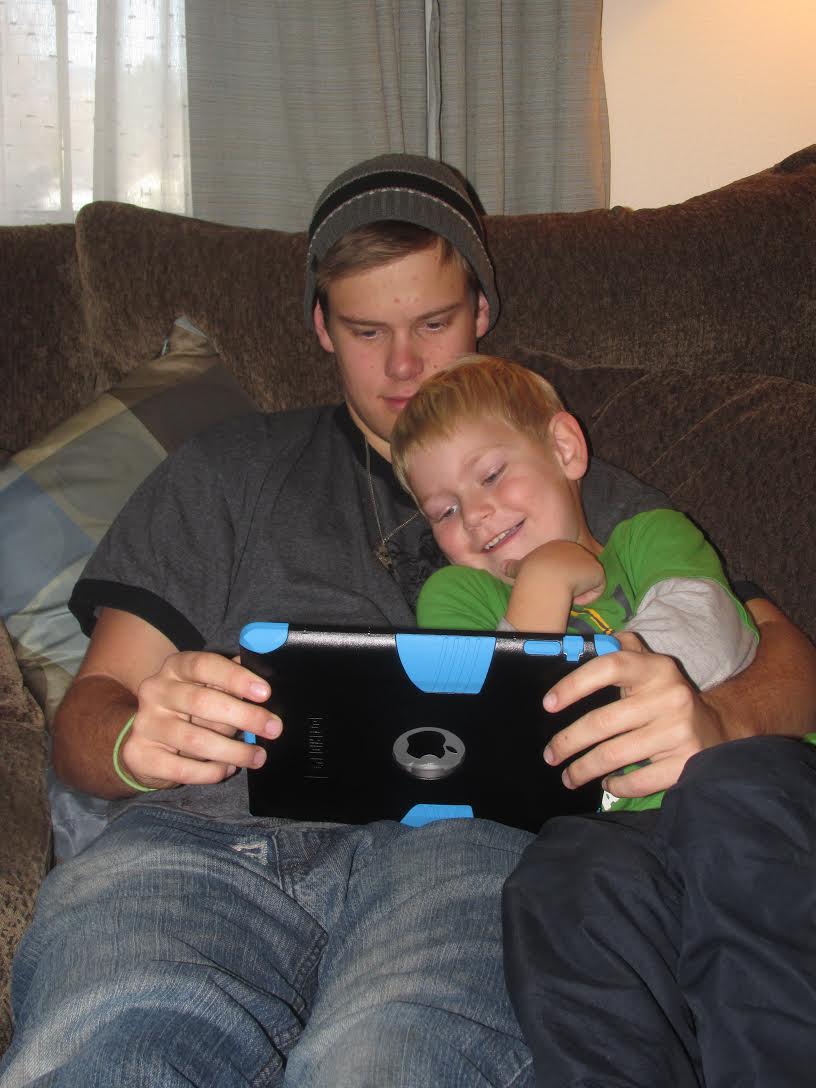
    A client of mine I know personally benefited from this program.  Look at him with his older brother here:

    unnamed (5)

    We have a saying amongst a group of us and it’s “we do this for our kids and we do this for all those who will come AFTER.”  I’m so grateful Sharon at CASANA had the vision and heart to continue to fight for all the children who came after, like my child…..so you can bet I will be participating this #givingtuesday and choosing CASANA.  Will you?  CASANA Giving Tuesday Donation Page

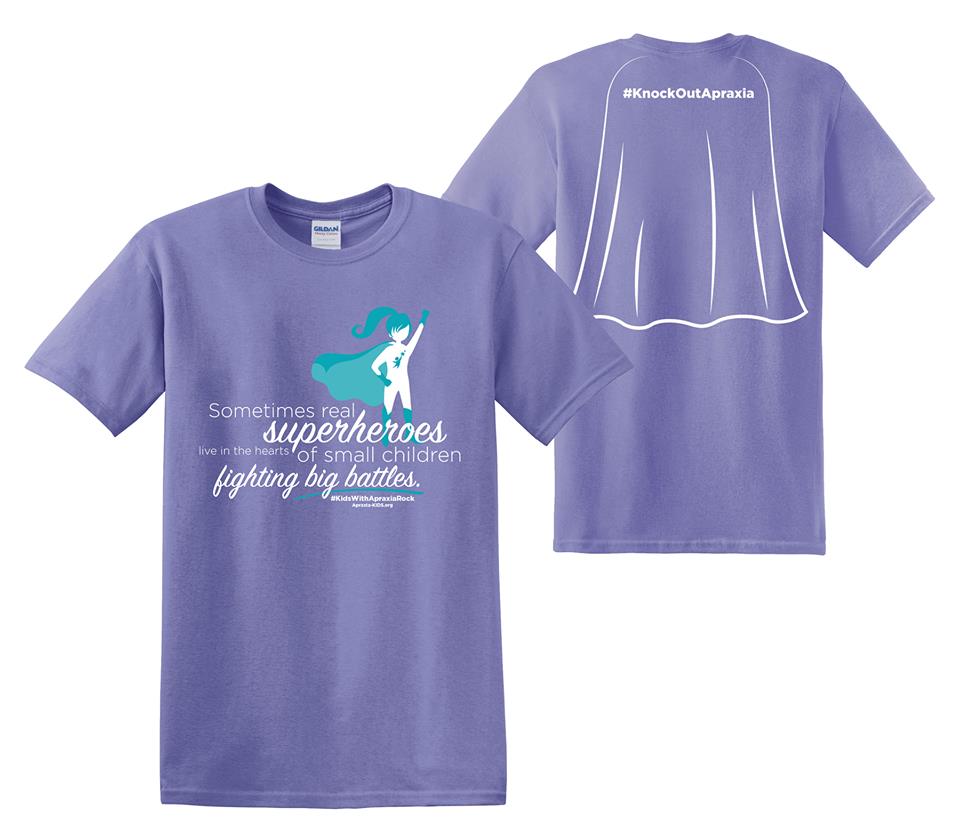
    If you donate $50.00, you can also get a limited edition shirt for your little apraxia fighter or for yourself!  12316361_924803280931748_2818964745271324178_n

    12191800_490615967786494_8755581625701177457_n

  • Walker Spotlight: An SLP shares her view on why she walks for her clients AND a bigger cause, by Lynn Zimmerman

    Last fall, I attended the 2owen014 Denver Walk for Apraxia with a client and his family. In my private practice, I have the privilege of working with many children with CAS and appreciate deeply the work of the CASANA community. Walks such as this, are a beneficial experience to share as a Speech professional with the community of families connected to the cause.
    As Speech Language Pathologists, we dedicate hours, weeks, and sometimes years to developing and nurturing a working relationship with each client — focused on maximizing the child’s communication potential. However, within such relationships, there is rarely opportunity to bond with a client without a progress-centered agenda. Participating in Denver Walk for Apraxia gave me a chance to share leisure time with a long-term client and his family. With no speech drills to practice, we instead spent the morning in the beautiful Colorado sunshine. Charity walks are occasions that, on the surface, raise money and awareness for a cause. But to a child, too young to understand the mission, the event is a celebration of their hard work.  It’s a party full of hope and excitement. As a professional, it was heart-warming to share with a client and family how much the community supports and embraces them.

    These charity walks draw in hundreds of cheerful, open-hearted people to a festive day in honor of families living owen 2with unique circumstances. To these families, who can come to feel isolated, such an event is a tangible manifestation of how supportive and optimistic the world can be. It is an opportunity for children, like those we see on our case-loads, to have fun amidst a friendly gathering in celebration of those on a common journey. Every day, parents strive to balance their child’s intense therapy schedule, frustrating social interactions, sibling relationships, and much more. But, at the event, I delighted in seeing parents bond as peers over their shared experiences and mission.

    While spending time with my client celebrating a charitable mission, I reflected on the idea that, as health professionals, the focus of our practices is on enhancing the lives of individuals. On this single-child basis, working with an SLP can be life-changing but a charity walk is an opportunity to further that statement by standing up on a larger scale for the global community of children like those we help. Donating to a charity that supports research and advocacy for people with communication challenges is a chance to help not just one child at a time, but to promote hope and long-term change in the scope of the cause.


    Lynn Zimmerman MA,CCC-SLP is the owner and primary clinician of Cobblestone Speech Language and Learning LLC, a Littleton, Colorado based pediatric Speech and Language private practice.

  • Turning Pain into a Purpose

    Turning Pain into a Purpose

    Two years ago,
     I found out my almost three year old first born had Childhood Apraxia of Speech (CAS).  Despite being an SLP and treating CAS at the elementary level, I failed to recognize it in my baby.
    It was a VERY difficult time filled with overwhelming sadness for my daughter and guilt as her mother…an SLP who didn’t realize she had CAS.

    It rocked my world.  
    Not only did the dx devastate me, but her silence and struggle to speak was truly heartbreaking.  You CANNOT  appreciate how complex speech is until you watch a child struggle to speak.
    I was sad and I was angry.  I had a master’s degree in Speech/Language Pathology, but my education about CAS consisted of 20 short pages. Every time I think about this, write this, or say this, I can’t help but shake my head.  This isn’t right.

    I decided soon after I would become an expert in CAS and I would help not only my daughter, but other children who were the same.  I had NO idea how I was going to do this.  I researched like crazy.  I found out a national Apraxia conference was coming to Denver the next year.  I took it as a sign.  I signed up for webinars.  I created a binder full of CAS treatment and research.  I watched a three hour Kaufman video at my private practice.   I talked to my cousin who is also an SLP, and she said she had two videos from David Hammer and Ruth Stoeckel I could borrow.  I devoured them.   I expressed my desire to specialize in CAS to my clinical director.  She didn’t blink.  I had her full support 100%.

    After attending the Apraxia National Convention, I found out about an apraxia bootcamp.  I wanted in.  I talked to the founder of CASANA, and she explained it was highly competitive.  The wind kinda went out of my sails.  She still encouraged me to apply, but I didn’t feel confident.  The clinical director at my private practice started filtering the kids with apraxia to me.  Her faith in me was affirming, and I was more determined than ever.

    Then, I found out I got in.  I was a mix of emotions.  This is what I wanted, but it also meant leaving my family for FOUR days. Being without my babies, my heart, would be hard…..but I absolutely believed in this cause.  I was going to go, but…. I had never flown alone.  I had never been to the East Coast.  I had never left my babies for this long.  I read a quote, “if it’s both terrifying and amazing, then you should definitely pursue it.”  Check and check.  Its “go time” as my daughter would say.

    Then today, a little over two years after my affirmation, I received this.

    CONGRATULATIONS go to Laura Smith for successfully completing her case study and now being:

    CASANA Recognized for Advanced Training and Expertise in Childhood Apraxia of Speech. 

    I AM an apraxia expert, recognized by CASANA for advanced expertise. I am elated.  The road here was difficult, but amazing.  I once read that the definition of happiness is “the feeling we feel when striving toward our potential.”

     When striving toward our potential.  NOT when we achieve it.  So here I am.  What is my next goal?  What is my NEXT potential?  What am I striving toward?  I have some ideas.  Some small and some REALLY big.

    One thing I’ve learned from Ashlynn though…a positive attitude, perseverance, and a willingness to fail and try again = success.


  • Apraxia Intensive Training Institute 2014

    Apraxia Intensive Training Institute 2014

    The Apraxia Intensive Training Institute (aka apraxia bootcamp), is an intensive training sponsored by the non-profit organization CASANA of apraxia-kids.org.

    WHAT IS SPECIAL ABOUT CASANA?

    I love CASANA for SOOO many reasons.  As an SLP but parent first of a child with apraxia, CASANA was literally built on the backs of mothers who had children with apraxia.  Sharon Gretz is the founder and executive director and she attended EVERY session.  This is her baby, next to her two human babies of course.  It was apparent she wanted to make sure that professionals she’s endorsing will do right by the kids they see, just like apraxia expert David Hammer did right by her son Luke.  Kathy Hennessy is a mom of not one, but two children who grew up with CAS; and she is the the Education Director for the organization.  She too attended every session.
    I get chills thinking about these women, because they are so inspiring to me.  They know the struggle.  They’ve lived it and they want to ensure that no parent who has a child with apraxia has to feel isolated and alone in their fear of the unknown. More importantly though, they want to ensure that quality therapy is a right that every child with CAS receives.  Our success is their mission, but it’s more than professional.  It’s personal.  
    WHAT WAS THE TRAINING LIKE?
    At first, it was so surreal.  Here I was, one of 24 out of a 100 applicants in the country picked for this training.  Beside me were seated fellow SLP’s of esteemed caliber and success in treating apraxia.  In front of me stood three top experts in the field, two of them published in the research.  
    The training was longer and more intense than ANY conference past, present, or probably future.  We were expected not to be “talked at” but to critically analyze, bounce ideas of of, and problem solve aloud what we knew.  Our mentors only initially acted as guides, mentally exercising our brains, challenging our beliefs, therapy practices, and perceived truths.  We worked from 8:15 to 8 or 9 at night.  We spoke of nothing but CAS.  Eventually, we “local experienced experts” had to let our guard down and problem solve in an environment of mutual respect and learning.  
    It was the three E’s:
    Exhausting: At one point during a differential diagnosis section, Ruth Stoeckel was asking thought provoking questions.  We all had answers, brilliant answers, but she wanted more.  I finally shouted out in exasperation, “Ruth!  Just tell us what you’re looking for!!” 
    She didn’t.
    We were forced to think and problem solve some more.  If we are to be true experts in the field, she needed us to come up with it on our own.  Her telling us was simply too easy.
    Emotional: There were tears.  Lots of tears.  Tears as experienced, awesome SLP’s realized maybe we could have done better with some previous clients.  Not maybe…certainly.  As a professional I loved their passion, but as a mother, it brought me to tears.  I told one SLP, as a mom, I don’t care if you’re not the best…because your heart, caring, and critical analysis is what will make you my child’s “life changing” SLP. 
    Exhilarating: A famous quote this bootcamp came from my recently, dear friend Ashley, who was presenting her video case study.  After being constructively criticized, stripped down, and vulnerable she said with poise, “I’ve found right after the confusion comes the learning.”  Brilliant Ashley!! 
    I have to admit, wearing two hats at this conference was hard.  The compassion and love these colleagues feel was tangible, and they have to be able to turn it off and let loose or they would never enjoy life.  On Friday night they were all sharing therapy ideas around copious bottles of wine, and I had to slip away.  I felt glad they could escape the pressure they feel to do right by their clients with this challenging disorder, but I also felt jealous they could turn it off…if only for a moment.  
    Having a daughter with it leaves no such luxury.  I cried heavy tears that night.
    WHAT IS THE BEST TREATMENT APPROACH FOR CHILDHOOD APRAXIA OF SPEECH?

    Isn’t that the million dollar question?  Usually at professional conferences, the speaker will talk about their treatment approach.  What they do and why it is successful.  You are talked at, occasionally invited to participate, and then sent home with an informational packet.  
    This was WAAAAY different.
    We had access to all the current treatment approaches: 
    PROMPT, KAUFMAN, SpeechEZ, ReST, DTTC…..you name it, we learned it, and if you think I’m blowing smoke, I can tell you that five of the programs agreed to produce an overview CD just for CASANA’s bootcamp and also agreed to answer questions gathered from the participants!  I’m telling you, CASANA covered their bases and made sure if they endorse an “expert” you are truly an “expert.”
    However, we didn’t just learn the approaches.  We had to analyze each approach.  I can tell you one thing though.  All these approaches had a common thread of incorporating principles of motor learning theory.  As for the research?  Well, that’s still up for debate; however, I can say we read a 2014 review and the method that has the most evidence but is probably the least well known is DTTC. Does that mean the other approaches aren’t valid?  No! We concluded a lot of the approaches could be contributed to the fact that the SLP was simply just an amazing SLP, or that there just isn’t enough research to prove this or that method has worked with a large population.
    WHAT DOES THE RESEARCH SAY?   
    Research for speech disorders is incredibly difficult to do, primarily tied into cost.  Sharon Gretz recognized this and that’s why CASANA is big on research.  Donations and money through walks help fund research.  This is another reason I have so much respect for CASANA.  Honestly, if we don’t have evidence based practice in the treatment of apraxia, how can we be sure this method or that method is sound??  In addition, though one method may work for one child, will the same work for another?  The answer?  We just don’t know!  We need research! 
    WHAT NOW?

    What now?  Another million dollar question.  Sharon Gretz minced no words. 
     “Well, you are nothing.” 
    We all laughed a nervous laugh. What do you mean we are “nothing?”  
    We learned we had to complete a case study that satisfied our instructors. We were told to be prepared to get it back.  They have had two previous cohorts and no one had ever turned in the perfect case study.  We were told they were investing in us.  From now on, we were their colleagues.  If we have a question, they will help us with the answer.  
    Say what?
    Yep…these busy, in demand apraxia experts are invested in us….and the kids we treat.  They  love kids with apraxia that much; however, we have to prove our worth.  They can’t endorse us and not be 100% confident we are doing right by these kids.  That’s why we should all expect our case study back again, and again, and again.   
    In the back was Sharon and Kathy.  I couldn’t ever help but think of them.  They had been burned by too many “experts” saying they would help their child; and here they stood, an advocate for those who are standing in their shoes.  
    I was proud and honored to be here.  I’ll complete my case study and know I earned it.  I will forever be committed to CAS, and I will never forget my experience at this “bootcamp.”