Tag: CAS

  • For once I went to school, and I heard only positives

    For once I went to school, and I heard only positives

    Let’s face it.  Being a parent is rough.  Whether you have a child with special needs or not, we all want for their happiness, that they will feel successful, that they will be confident, and that they will never hurt.  Of course we know that without trials they cannot fully appreciate the successes, without sadness they could never fully experience complete happiness, without hurt they simply wouldn’t be human. 

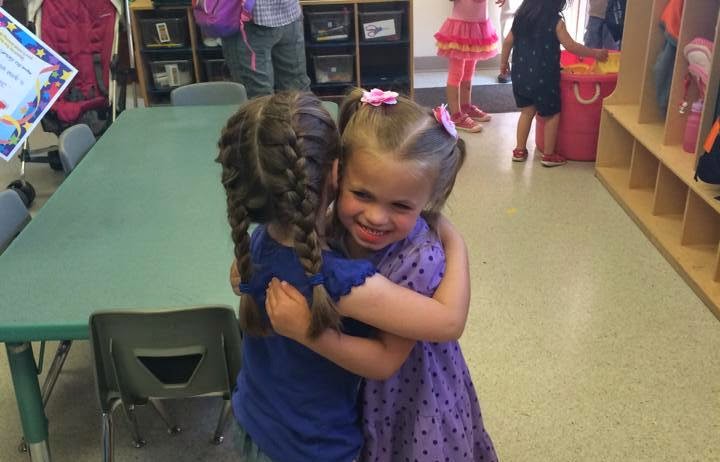
    School has been an absolute blessing for Ashlynn, my social butterfly.  She never let her limited speech hinder any of her relationships.  In fact, her first word was ‘hi’ and it was all she needed.  She could and still can engage anyone with that simple word and her beautiful smile, and they are hooked. 

    But

    That’s why it was so hard to go to IEP meetings, parent teacher conferences, and get reports from her teachers and therapists.  No matter how many positives were relayed, we always sit there waiting for the

    But.

    She is so happy and works so hard,

    But

    She is friendly, sociable, and loving

    But

    She is an absolute joy

    But

    I’m not gonna lie.  The “buts” hurt.  It really doesn’t matter if they are framed around 100 glowing adjectives, the “buts” can be overwhelming.  Especially when for one child she needs a

    speech therapist
    occupational therapist
    physical therapist
    special education teacher
    social worker

    They all come with their own set of “buts.” 

    Today though was different!!  Today, her last day of Pre-K, there were no “buts.”  Today, as I picked her up, I heard this:

    Teacher: “I have been blessed having Ashlynn is my class.”
    Social Worker: “Ashlynn is the sweetest, kindest child. She is friends with everyone, and everyone is friends with her.”
    Another parent: “My son told me this morning he was really going to miss Ashlynn. When I asked him what he would miss, he told me her laugh.”

    It just brings tears to my eyes. There’s no standard score or percentile for that….but if there were she would be way above average. 
      
    Ashlynn is my sweet, kind, loving, daughter who blesses those around her with her smile, her laugh, and her friendship.

    No buts about it.


  • nacd apraxia app review

    nacd apraxia app review

    This was one of the first speech apps for apraxia that I bought.  It was enticing because it was a good price and the description looked much like a digital version of the Word FLIPS book I was using in therapy.

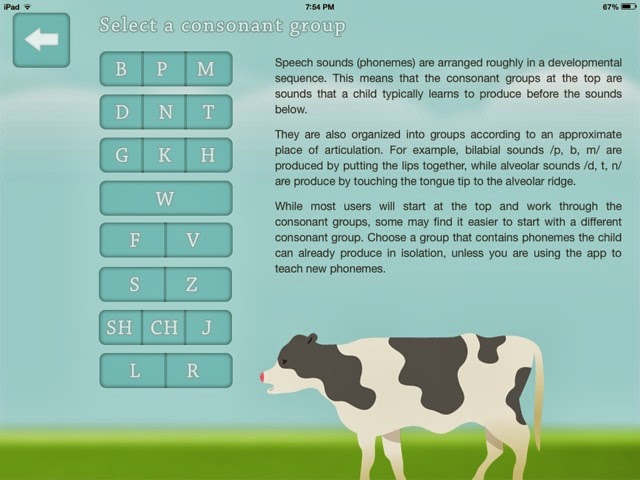
    It starts with a screen that allows you to pick a CV consonant/vowel group, seen below.

    For the purposes of this review, I chose the top group BPM.
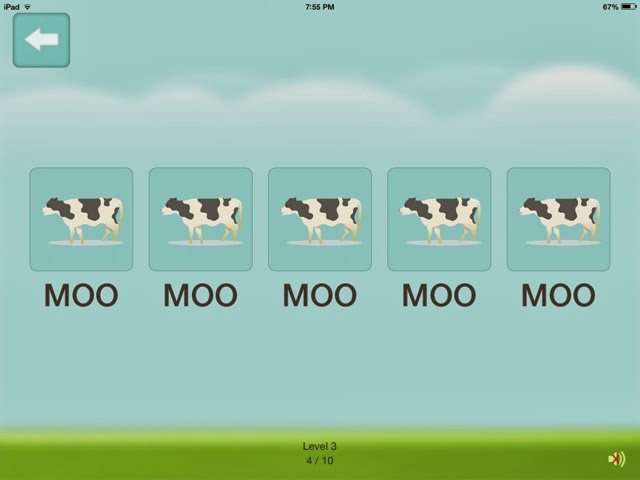
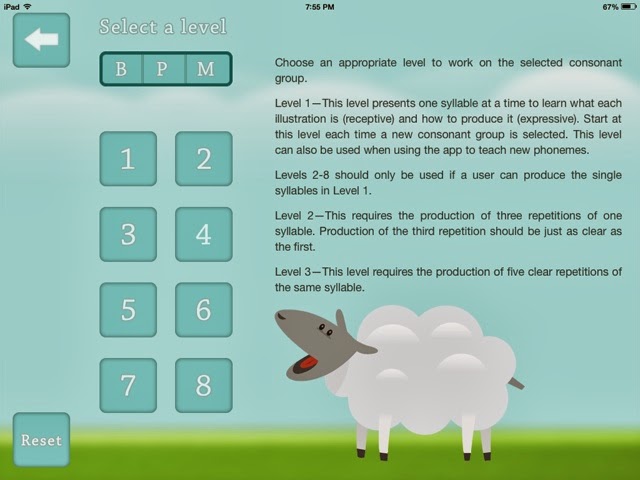
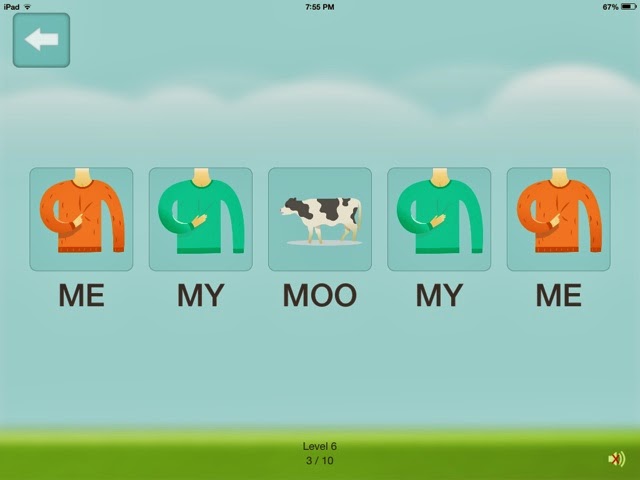
     You then have your choice of levels.  Level 1 is really just to learn the pictures, so each picture is presented one time.  In Level 2, there are three required productions of the same word.  By Level 3 (see above), there are five pictures of the same word. 
    By the time the you choose Level 8, the pictures change to have three different pictures depicting different words in alternating fashion.  (see below). 

    You can choose to have the sound on, in which a verbal model is presented when you touch the picture; or you can mute the sound so a verbal model is not given when you press the button.
    There is a also a “tracking” feature to tally correct/incorrect productions for data collecting purposes.
    What I love
    This app is great because of it’s simplicity.  It’s more fun for kids to practice these skills on the iPad then it is to use the flip book.  They are just more motivated by digital versions of everything these days!  Also, therapy for Childhood Apraxia of Speech requires A LOT of practice and repetition, and this app lends itself to multiple chances for repetitions in either blocked or randomized fashion (elements essential when treating motor based speech disorders).  
    In addition, most of the kids I treat with apraxia like it.  You can get a quick “warmup” in using this app while getting a lot of repetition right off the bat.

    What it’s missing
    I would probably use this app more, or longer during therapy sessions if it had some sort of reward or fun reinforcement.  However, since I only use it as a supplement to therapy, it’s still a nice app to have. Also, just recently my daughter was confusing her t/k and d/g, so I went back to this app and we practiced using these pictures alternating between the two sound patterns.
    The other thing that is missing is a voice record option.
    Overall impressions:
    I love this app for it’s simplicity, price, and ability to get A LOT of practice in a short amount of time.  Most of the kids I treat with apraxia, and my own daughter with apraxia, have used this app successfully and enjoy tapping, repeating, and swiping the iPad.    I would highly recommend this app to parents and SLP’s as a supplement to therapy for Childhood Apraxia of Speech.

  • “She just needs more repetition than most.”

    “She just needs more repetition than most.”

    Today was Ashlynn’s Spring parent/teacher conference.  I don’t know what I expect really.  As much as most of the time is spent focusing on her strengths, all that hits me like a ton of bricks is what she ISN’T yet doing. My husband thought I was crazy.  He couldn’t come to the meeting today, but read the paper tonight at dinner and told me he felt it was predominantly positive.  Look at all the things she’s doing that she wasn’t doing last year at this time.

    True.

    I guess I just hate listening to all the positives while holding my breath and waiting to hear the “but…..” 

    It sucks.  I just leave there feeling desperate, sad, and worried, no matter how many positives they managed to come up with.

    Hearing all the buzz words I’ve used in meetings before, “needs more repetition than other children” “learns differently” “has a great attitude which is a huge asset”

    I guess I should focus on the positive though.  Her strength was in pro-social behavior and she even gets in trouble now for talking too much!  Um, what?  Talking too much??  She didn’t even talk to her peers last year in preschool so that is AWESOME.   Her language sample during sensory table was as follows:

    I help you?
    What doing?
    I’m making a pizza to baby.
    I like pink.
    You have purple.
    I sit here?
    I play with Austin?
    Blue goes right there, see?

    As an SLP, this is awesome.  She’s four years old and is using primarily 3-4 word sentences.  Still a little behind, but her sentence length is only a little under than what is expected for her age.  This is exciting.  Also, she was SO clueless about her colors last year.  It sounds like she’s finally starting to retain them.

    The report said “she is understood by most familiar people and strangers can usually understand her if she speaks slowly.”  That is also great news!  I need to revel in all of this progress.  Can’t I just remember when  I was freaked out she wasn’t talking to anyone and all I wished for was that she would talk?  I know….I NEED to….it’s just…then there is all the academic things she needs to know now.
    She still needs more practice recognizing and naming the letters in her name. She can count to ten and count up to five objects accurately using 1:1 correspondence.

    Okay, yay, that’s awesome…..except I know by the end of preschool they need to know ALL their letter names and letter sounds, count to 20, and be able to write their name by the time they enter Kindergarten.  The teacher tried to encourage me by saying, “well, she does have one more year in preschool.”  and then ended, “but summer is a critical time because a lot of kids do show some regression.” 

    Yes, yes that’s true.  I hope next March at her Spring parent/teacher conference we will be on target.  In the meantime, I am officially off my sabbatical of only being Ashlynn’s mom.  She needs me more than that.  I went out and bought a bunch of alphabet cards, foam letter puzzles, and a dry erase board.  I sorted the letters of her name into a bag, and we’re going to practice putting them in order and naming them every day.  We’re also going to go through the foam letters and name the letter and the sound daily.

    I downloaded a kid weekly planner so that Ashlynn can learn the days of the week and each day we can talk about what she is going to do, and then at the end of the day we can talk about what she did. 

    I printed out three picture sequence cards so she can practice putting them in order as well to encourage pre-reading and narrative abilities there too. 

    I’ve been depressed today just thinking about all of our hard work ahead, but tonight when I was working with Ashlynn, she’s not depressed at all.  She was thrilled to have 1:1 attention from her mama and just attacked it all with her positive attitude. 

    So here’s to a lot of work, but most importantly, a positive attitude to go with it. 

  • First professional CAS presentation

    First professional CAS presentation

    I stood waiting 30 minutes early to enter the room.  The room where I would present information on my personal and professional experiences and knowledge about Childhood Apraxia of Speech for the first time at a professional conference.

    As the door opened, people started clammering for a seat.  I looked around thinking to myself, “are they sure they know they are coming to see me?”  I took my place at the front and started to set up my power point presentation.  My cousin, and SLP from a neighboring school district found me and gave me a much needed hug and wished me good luck.  It wasn’t long before the room was so full that the side door had to be opened.  People asked me if I could request more chairs.

    I started to feel sick and any hunger feeling I did have during this brief lunch break was long gone.

    Soon, people crowded in and just sat on the floor.  They sat in front and in back, and pulled up chairs in the back and side hallway.  I found my mentor in the hallway and leaned on her shoulder proclaiming I was about to be sick.   With a reassuring pat she sent me back in ordering I save her a chair in front.

    Soon the announcer came up to introduce me.  Nervously I chatted with him stalling for time.  As he said my name I experienced an almost out of body experience.  I heard him in the background, but I thought of Ashlynn.

    I thought of the two boys I had treated with apraxia before her, and how they came to me nonverbal in Kindergarten. I suddenly remembered that I’m giving this talk so that another child with apraxia doesn’t have to wait longer than they have to to find their voice.  To say their name.  To tell their parents they love them, or even call their parents by name.  I realized  I have an audience of well meaning, awesome professionals who wake up each morning and help children find their voice and I have first hand experience and professional experience on how to help them make that happen. It was clear from the number in attendance that they want to know more; so, with a big breath I began my presentation drawing strength from my little ones with apraxia who have to be braver than me in that moment,  EVERY moment of their young lives on their journey to find their voice.

    If the email inviting me back for next year is any indication, I hope I did them all proud.

    A link to my presentation is here: Importance of Differential Diagnosis and Treatment Approach in Childhood Apraxia of Speech

  • Did I cause her apraxia?

    Did I cause her apraxia?

    It starts with a question: 
    Did I cause her apraxia?  I know I’m not the only mom to wonder this, or worse, believe this.  This is where the guilt sets in.  It set in early and would tap on my shoulder in the shower, at lunch, or when I was trying to go to bed.

    Even though I’m an SLP, and I tell parents all the time that the speech delays are not their fault, I still felt like somehow I must have done something wrong.  Maybe my C-Section had something to do with it.  Could it have been the petocin, the pain meds, the stress? Maybe if I had only taken my pre-natal vitamins more strictly and just dealt with the fact they made me sick.  Then, after she was born, maybe I didn’t talk to her enough.  Maybe I didn’t give her enough attention.  Maybe it’s because I went back to work and she was sad her mom wasn’t there full time.  Maybe it’s because I talked to her TOO much.  I was trying TOO hard to make her talk she never had a chance to just be herself.

    Ugh, enough already!  It’s exhausting to feel this way.  It’s exhausting to go through every scenario in my mind wondering if there was something else I could have done, not done, tried to do.  She has apraxia and the truth is, there is nothing I could have done to prevent it.

    I know it’s not my fault, but….is it really not my fault?
    Now, I just have to believe this. That’s the hard part. I’m not alone because I read stories almost daily on my support group page of parents wondering if it was the c-section, should they have breastfed or breastfed longer?  Was it the food they ate, a cold they got, a toxin they were exposed to……the list goes on.  Theories with no basis that mothers will beat themselves up over.  Well, I want to tell you to stop it.  I know it’s hard, I know it’s still in the back of your mind, but if our thoughts become our truths, then this thought process is a cancer.   Further more, it doesn’t matter.  It doesn’t change the fact your child or my child has it.  What does matter are our actions right now to make it better.  To fight for our child and help them through it.

    How I actually banished the guilt
    I have finally shed my guilt over it, and the credit is due to my son.  My typically developing son who is so eager to be older and to grow up.  He learns things and picks up things without me literallymighty doing anything.  He is 18 months and already sings his ABC”s.  I have NEVER worked on this song with him. That’s how easy talking is supposed to be.  Despite my daily dose of the alphabet song with Ashlynn well into her third year, she only could sing it at 3 1/2.  My son, on the other hand, picked up the iPad, listened to it on repeat for a couple days, and started singing it.  I remember watching a video on facebook of a friend’s  2 year old when Ashlynn was the same age and crying thinking what a bad mom I was.  This little girl was younger than Ashlynn, singing her ABC’s and I’m supposed to be an SLP no less and still my little girl wasn’t singing it.

    Last night we were eating noodles for dinner.  My four year old with apraxia kept resorting to using her fingers, and I kept prompting her helping her to use her fork.  It’s hard to pick up spaghetti noodles that need to be scooped rather than stabbed.  I briefly looked back at my son in his highchair, and he was not only scooping up the noodles like a pro, but he was stabilizing the bowl with his other hand to steady it.  I looked at this situation in awe.  Again, I have maybe once showed my son how to scoop with a fork instead of stab, and here he was, doing it as well, if not better, than Ashlynn.  That’s how easy it’s supposed to be.  He picked that up without any special help from me, and even after years of practice with Ashlynn, she still has a hard time.

    I start to realize even more, her progress or lack of progress or slow progress is apraxia’s fault.  It’s not my fault or her fault.

    This morning I was asking my kids what they wanted for breakfast.  I threw out two ideas to my son and he shook his head and said ‘no.’  I have never taught him the word no.  I never had to teach him that instead of stomping his feet and throwing a tantrum, he could simply say, ‘no.’  He just does it.  There was a time that the child throwing tantrums instead of saying ‘no’ was my daughter at 2 1/2.  Myself, my husband, and my mother-in-law literally had to tell her for months to stop and say “no.”  Yes, that happened.  I actually had to teach a child to say “NO.”  Chances are if you have a child with apraxia, you have been there done that.

    If you are a mother and are looking for something to fault, then I suggest you personify apraxia and fault the disorder.  It’s not your fault.  You hear me?? It’s NOT your fault.  Even if you have two kids with it, it’s still not your fault.  Stop the guilt.  Stop the obsession with trying to figure out why your child has it.  It doesn’t matter anyway.

    I say this to you again as a parent AND an SLP; talking should be easy.  Though it is a highly complex skill that parents only fully realize when they see their child struggle, a child should talk regardless of what you did or didn’t do.

    I just want to say one more thing.  I think parents get the message that it’s their fault when the SLP (myself included) gives them suggestions for home.  These suggestions might be to make their child grunt or make some type of sound or word approximation everytime they want something.  Don’t let them get away with saying a sound wrong that you have heard them say correctly in therapy.  Don’t let them point and give them what they want when they can say a word for it etc. etc.

    I want to tell you we say these things not to fault you.  Parents of typically developing children didn’t make their child talk.  Their child just naturally did so.  Don’t listen to your family member, or well meaning friend or whomever, tell you it is your fault because you never made them talk.  Children don’t have to be made to talk.  I really  BELIEVE this now with my son.  My pivotal moment occurred when I realized I have never made him talk.  He talks so much I can’t make him stop talking. In fact, the one time I did try to teach him a word I was trying to get him to say “Jake” when requesting the show “Jake and the Neverland Pirates,” since Jake would be easier to say.  Well guess what?   He didn’t say Jake, he said pirates instead and has continued to do so.

    So there you go.  I am the same mom, the same SLP I was with him as I was with Ashlynn;  and I am here to tell you I tried my DANGDEST to get her to talk.  I did everything I knew how to do as a professional.  Guess what though?  She has APRAXIA.

    Yes.  Apraxia.  I’ve channeled all that guilt and blamed it on Apraxia.  I wish you the same!
  • She really does have “special needs.”

    She really does have “special needs.”

    So, I obviously am well aware my daughter has apraxia.  I’m well aware of her challenges, but for some reason, I didn’t want to admit she’s “special needs.”  I don’t know why.  I work with special needs kids all day long.  It’s what I do.  I don’t see them as special needs.  I just see them as maybe learning differently, or needing different supports than other kids to be successful.  I guess that’s why it has taken me until now to admit that yes, my daughter does in fact have special needs.

    When she was first diagnosed I was drowning in a sea of sorrow and desperation.  Sorrow because I knew how much more work it would really take her to talk, and desperation because I so desperately wanted to help her and hear her voice, her thoughts, her say, “I love you.”  After that though, I picked myself up and took her to endless therapy appointments spending thousands of dollars on her therapy and little by little, her speech improved.  I’ve been riding a pretty good high for awhile.  She’s talking at school, she’s speaking in sentences, and for all intents and purposes, she has found her voice! Oh, and now with a neat trick from OT she is putting on her coat BY HERSELF and is able to get her shoes and socks on without help.  I see the light at the end of the tunnel!

    Until about a month ago.  It’s one thing to be told you’re daughter will be sitting in a cube chair and has a weighted lap blanket to help keep her focused.  It’s another to see her with those accommodations in the classroom.  She was happy though and if it was helping her, well ok.  Then at teacher conference, the teacher told me she needed us to work on Ashlynn’s name, or at least get her recognizing the first three letters and being able to put them in order.  Sounds easy right?

    Wrong.

    She doesn’t consistently identify the right letter, even when I only have three in front of her; and I have to keep cueing her to start at the left and put them in order in a linear fashion to the right.  I created a grid with three boxes so she could visually see where the letters fit, and she started to get it a little.  In the bathtub, I would take the foam letters and have her put one on each tile of the wall.  Then the OT started sending home packets.  Ashlynn isn’t crossing midline.  She switches hands instead of reaching across her body, and she needs to cross midline to eventually develop hand dominance, and oh yea, to write!  Hmm…I realized she wasn’t starting with the left box for the first letter of her name because she wasn’t crossing midline.

    I know this doesn’t seem like a big deal, but now I have to work on getting her to cross midline with various activities, and also work on her name.

    Ok, that’s cool.  I got this. I’ll keep cueing her with the letters and I’ll add practicing in the bathtub making sure she crosses midline washing herself, and when I’m working on her brushing her own teeth (which she still can’t do well yet)  I’ll also remind her to cross midline.  When she’s eating dinner, instead of just cueing her EACH time to use her fork (which is hard to use because of her apraxia), I’ll also make sure she is crossing midline instead of switching hands.  That while practicing drinking out of a big girl cup and not managing to spill her drink, plate, or drop her fork.  Oh, and when I read her a book at night, while I’m busy reading and then asking questions and making her answer using complete sentences and correcting her articulation, I’ll make sure she flips the pages by crossing midline with her right hand and turning the page. Phew.  Yes, I can fit this in though.  I got this.

    Then on Monday I get caught by the OT in person.  Ashlynn has very weak upper body strength and she needed me to also do exercises with her to improve it.  I was left with another packet.  My shoulders started feeling a little bit heavier.  It’s okay though, I got this.  No problem.  When I work out, I can just have Ashlynn “work out” with me.

    Wrong.

    She needs max assist to do the exercises. I see the need though as she really is weak and can’t even lay on her tummy for more than 30 seconds without fatiguing. Her upper core just isn’t there.  Hmm, I wonder if that’s why it’s hard for her to ride a tricycle, oh crap, I haven’t practiced pedaling with her in awhile.  What kid can’t ride a bike!  I need to get out there with her.  Oops, I digress.

    Oh no!  I just remembered the teacher sent out a newsletter that the kids will be having show and tell every week and Ashlynn’s turn is tomorrow.  Crap, how is she going to do show and tell?  Yes, she can talk, but on demand she clams up.  Better email the SLP.  Okay, that’s done.  I wrote three questions and practiced them with Ashlynn after dinner.  I sent it with Grandma who drops her off, and then I emailed the SLP who promised to practice with her before it was her turn.  Success!

    The next morning I get her ready for school.  She comes out with her coat on upside down and her shoes on the wrong feet.  Sigh.  I haven’t worked on her jacket or shoes in awhile….
    ….and I finally realize.

    My daughter has special needs.

    5/17/17 Edit – I am editing this to reflect my education around special needs, and though she has special needs, the term that is being universally more accepted now is neuro-divergent.