Tag: Apraxia

  • My head gets messed up sometimes

    My head gets messed up sometimes

    This is what Ashlynn has said to me twice today.  It’s rather timely since I just wrote about a post about letting our kids know they have apraxia so they have a name for the problems they experience.

    Ashlynn (I thought) has known she has apraxia, but I realized I said it a lot when we were still just trying to get her words out and her sounds right, but maybe I hadn’t said it lately.

    This morning she called me Grandma, stopped, and then hit her head and said “ugh.  WHY DO I DO THAT???  You’re not Grandma…you’re um………….”   I waited patiently.  “Mommy.  You’re mommy.  Ugh.  My head gets messed up sometimes,” and she hit her forehead.

    I quickly told her “Ashlynn, your head is not messed up.  You have apraxia, and that is what makes it hard to get the words out sometimes and also why you may say the wrong word.”  My husband quickly followed up with his own words of encouragement.

    Two hours later I was working on my computer, and she came over and started talking to me.  I was asking her what she wants for her birthday.  She told me her standard: cards, papers, pens.  She’s always fighting over Jace’s magna tiles, so I asked if she wanted magna tiles.  She immediately said yes!  Then she said, “I couldn’t think of that word: magna tiles.  I said Legos but that’s not right.  Ugh.  My head gets so messed up sometimes.”  I started to say something, and she interrupted and said, “That’s because I have apraxia?”  I quickly agreed and told her that’s why she goes to speech therapy.  (Except she hasn’t been to private speech lately because of some personal family extenuating circumstances).  So, literally two minutes later I look up and see this:

    14322205_10208408247856355_8135929580253810417_n

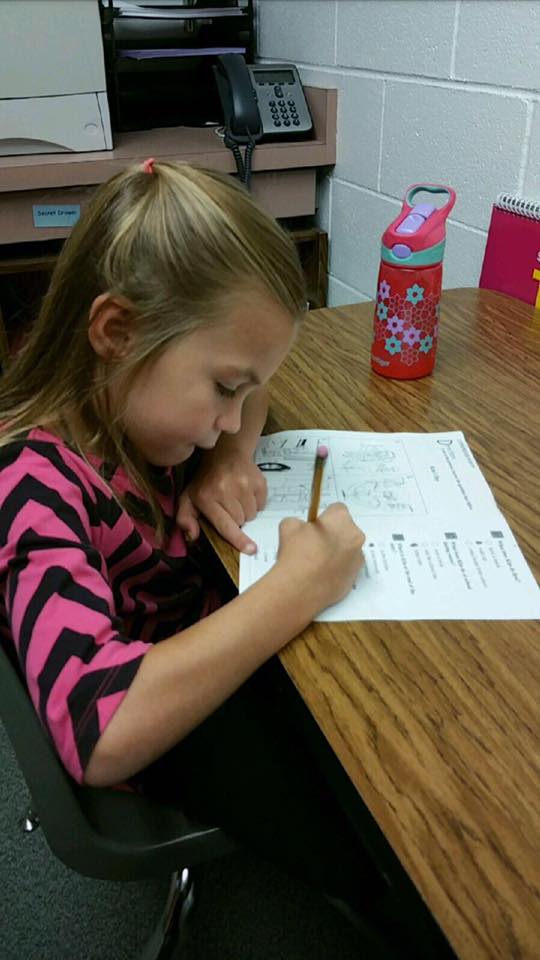
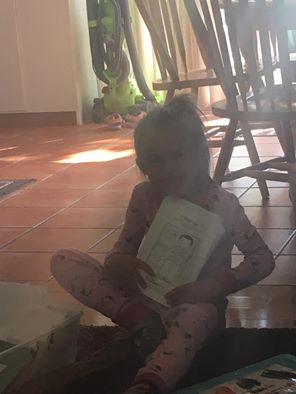
    It’s not the best picture, but she has a box of decodable books we keep in the living room open and she is trying to read them.  She noticed me looking at her and she asked, “When am I going back to speech therapy mommy?”

    Sigh

    Apraxia sucks.  Ashlynn is amazing and her head is anything but “messed up.”  Why does she have to work so damn hard.  Why does she have to know she has to work so damn hard.   Am I doing enough?  Am I saying the right things?  I swear being a parent is half doing what you think is right, and half second guessing what you said and did.  14358743_10208416578424614_2540639598855195286_n

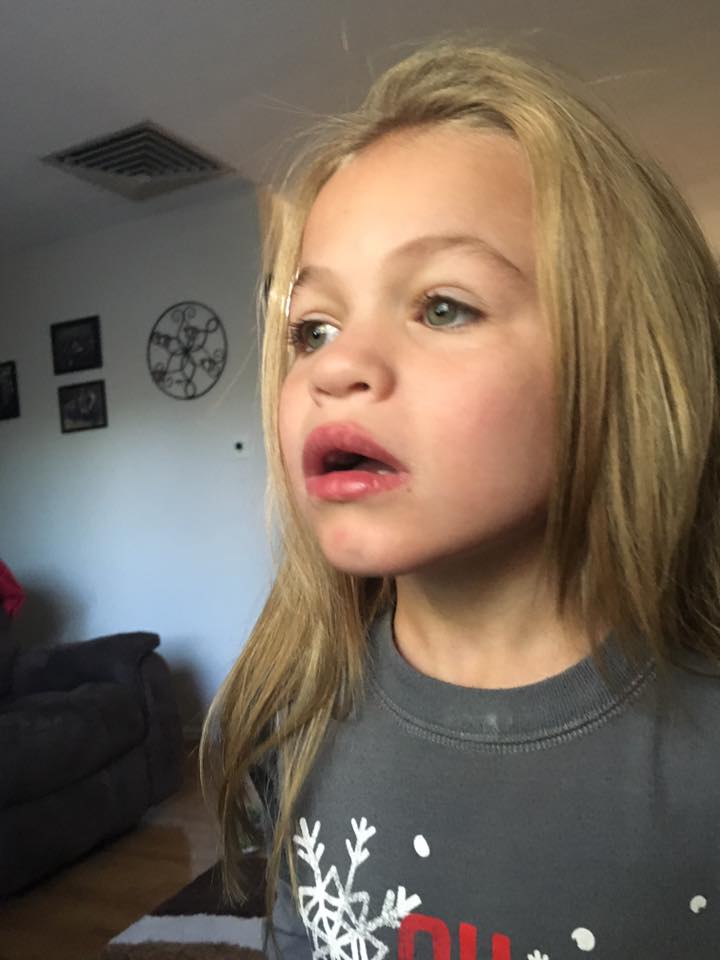
    It’s such an invisible disability at this point.  No one would look at her and think apraxia.  No one would look at her and think her “head’s messed up.”  Ugh.  That kills me.  Look at her.  She’s looking out our window here taking it all in.  She is seeing and looking at WAY more than she says.  Maybe one day I will know everything in her head.  Maybe.

    Sometimes, I feel like I’ve been jipped. Other parents get to hear the thoughts behind this picture.  I try to read her eyes and her facial expressions.  Oh she talks.  That she does and she does it well now.  I still don’t know everything though, and she knows it now too…..and I don’t know whether or not to be sad or happy she is empowered to know why talking and getting the words out is hard for her.

    Sometimes I wonder if that’s unique to parenting a child with a communication disorder, or a more universal experience as a mother.  I think of the ABBA song I love so much:

    Do I really see what’s in her mind
    Each time I think I’m close to knowing,
    she keeps on growing,
    slipping through my fingers all the time.

    14333826_10208405647911358_6797084407173307315_n


  • Lessons in emotional intelligence..courtesy of a 6 year old with apraxia

    Lessons in emotional intelligence..courtesy of a 6 year old with apraxia

    Ashlynn’s classroom has a color clip system for behavior.  Basically, every child starts the day on pink, which is a neutral color, and during the course of the day, students’ behavior earn them a “clip up” or “clip down” depending on their actions.  At the end of the day, they get a star to take home that is the color of where their clip was for that day.

    Ashlynn has never had below the neutral pink color.  On occasion, she has been coming home with greens and even some purple stars!  Yesterday, she had a green star and I asked her why she clipped up today.  She answered first that she didn’t know (easy, known, motor plan), but when I pressed more she said for sitting in her seat.

    When we were leaving, I was able to ask the teacher, who told us it was because Ashlynn finished a writing assignment and stayed focused even as many others around her were not.  I mean, maybe that’s what she meant by “sitting in her seat.”  Who knows.  Stupid apraxia.  I never feel like I get the entire story, and how frustrating for Ashlynn that she knows but can’t convey everything she knows.

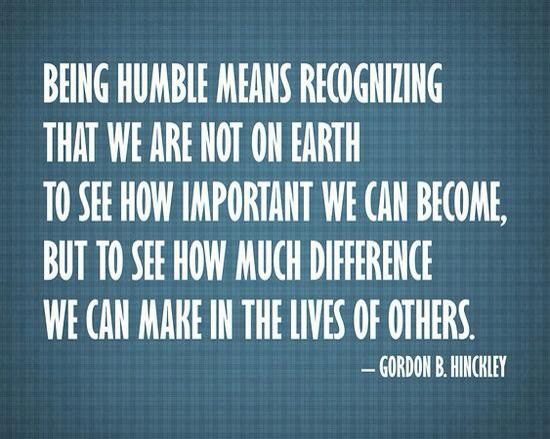
    I made a joke to the teacher that I told Ashlynn if she clipped up she should know why so it can happen again!  I started thinking though, maybe that’s not right.  Mother Teresa was canonized this week and there were a lot of memes floating around social media.  This one caught my eye and reminded me of Ashlynn.

    5ced00a7497e4c1baefc1e97d69a62e3

    My God I pray she keeps this mentality.  She really does know who she is.  She could care less about clipping up.  I mean let’s be honest.  If you’ve read my blog, you know that girl works harder than anyone else and is always trying to learn to write, to talk, to read, to do jumping jacks….like literally her play is stuff she practices in her various therapies.  Basically, Ashlynn earns a clip up everyday.  Most people have to learn humility, ESPECIALLY egocentric kids.  As I write that, I don’t mean to imply there are *some* egocentric kids.  Kids in general ARE egocentric.  It’s their nature.

    Not Ashlynn though.  Nope.  Ashlynn was born with humility.  Seriously.  I can’t tell you how many times she gets told she’s pretty on a daily basis and she always accepts the compliment with a smile and grace.  I’ve never heard her once walk around bragging about anything, but conversely, she is not devastated by criticism either.  If you don’t believe me, read this incident at the park where one of our worst dreams comes true and she is asked why she “talks like a baby” when she was just learning to talk and use her words and was putting herself out there.  She handled it way better than me and I’m the adult.

    Anyway, when I first started this blog, one of my most liked posts was called lessons from a tricycle.  Really, this blog could be called Lessons from Ashlynn.  I always talk about emotional intelligence, and I really wish it was talked about or even acknowledged at IEP meetings because it’s a real thing and people with it make this world a better place.  Seriously.  I would posit that most people need lessons in emotional intelligence, even  adults….including me.

    If you follow my fb page, you know that I won this award, a media award from ASHA, which is the governing body over ALL speech pathologists and audiologists nationwide.  ASHA is basically our American Academy of Pediatrics.  I unabashedly felt the need to publish it on my fb page.  I would love to go to the national conference in November, but I probably can’t; but really, if I think about it, it’s just vanity, or lack of humility, that makes me want to be there so bad…..and that’s when I take a lesson from Ashlynn.

    She just does her thing whether people notice or not, and I seriously feel like the biggest A-hole for thinking I need to go to some conference to be recognized.  Oh Ashlynn.  Here we are.  You teach me lessons again and again and you are only six.  Humility is probably on my top five virtues I admire in people. Honesty and integrity being up there too, humility is admirable to me and Ashlynn has it naturally.  Keep it up my young chickadee.   I’m so proud of you.  I love you, I admire you, and I know you are destined for great things.

    5eafe4f8e363019b047f6c794d392933 41445ff098ce46c4c12a1a82619d45cc cfb5d19bfeab46d927dc0303c6593b92


  • To tell or not to tell……..your child they have apraxia of speech?

    To tell or not to tell……..your child they have apraxia of speech?

    I see a question that gets asked a lot.  In fact, I asked it myself.  It usually goes something along the lines of,

    “Did you tell your child they had apraxia?  If you did, how did you say it? What did you say?”

    I remember thinking when I first saw this question that I wouldn’t tell Ashlynn until way later….and then…maybe if she still seemed apraxic, I would tell her.  I didn’t want her to feel different.  I wanted her to know I believed in her and I wanted her to believe in herself.  I wanted her to know that she can do anything anyone else can do.

    Yep.  That was my stance…..

    Until,

    Sharon Gretz, the executive director of CASANA answered someone’s question.  She made so much sense, I couldn’t help but immediately question my own decision.  She told this parent that it’s important kids know from an early age what their problem is, so they have a name for the difficulties they are facing. Providing a name empowers the child because they realize their struggles are due to something that is real.  In this way, they have a name for the struggles they are experiencing, and don’t develop their own schemas about it.  These schemas anyway, are usually negative and may include: I’m stupid, I’m dumb, or, I’m different.

    Aren’t we as parents the first to tell anyone who questions our child’s abilities that they are smart??  Aren’t we the first people to defend their honor?  What do we use an excuse?  Well, we explain apraxia don’t we?  We defend our children’s honor by labeling them.  Right?

    So, why wouldn’t you offer that SAME defense to your child?  You’re the first one to say your child is smart. I’m the FIRST one to say my child is capable.  If I, if you, truly believe this; can you really think your child doesn’t know they are different?  Do you really think that, or are you just hoping they don’t know?

    I have a feeling it’s the latter.  I have this feeling, because I have hoped the same thing.

    Truth is, Ashlynn has always known.  I remember when she had JUST turned three and was put in preschool as a nonverbal child, the teachers reported she would just laugh when they asked her to do something.  I could see it in their eyes:

    Low cognition
    Poor comprehension

    However, I knew….I KNEW as her mother, that Ashlynn laughed as a coping mechanism because she couldn’t do what was being asked.  It didn’t matter if it was speech or otherwise.  Ashlynn has GLOBAL APRAXIA, meaning overall motor planning difficulties. It didn’t matter what they asked her to do, she couldn’t do it…so…she laughed.

    Every heard of emotional intelligence?  My daughter has it in spades.  If you haven’t, it’s because we live in a society who only values academic intelligence, completely ignoring the fact that a genius who can’t relate to people or get along with people can’t be successful in life.

    No.

    I’m ever so thankful I read that post and the response from Sharon.  Before I was even sure my daughter knew what I was saying, I told her she had apraxia.  Whenever she even remotely paused and looked upset, I would tell her “oh dangit.  That darn apraxia!”

    If you have read my blog for awhile, I talk about apraxia being the new stuttering.  Back in the day, no one wanted to tell a child they stuttered.  Surely they didn’t notice, so you didn’t want to draw attention to it.  Years of research later, low and behold children who stuttered DID know they were different, and instead of understanding their disability, they developed shame.

    Shame is a bitch.  Shame develops when you feel as though you have done something wrong.  If we don’t talk to our kids about apraxia, we risk them feeling ashamed of it.  Apraxia is NOTHING to be ashamed of.

    That leads me to my final thought.

    The walks for apraxia taking place around the country.

    I recently learned so many people think the walk is about awareness.

    I mean, I guess.  I can see that.  Certainly a part of the walks is about awareness.  Publicity leading up to the walk and various news stories all bring awareness and awareness is very good.

    However, it may surprise you to know, especially from me, that the walk itself has very, very little to do with awareness in my eyes.

    The walk, in particular, the medal ceremony, has EVERYTHING to do with honoring our children.

    No shame.

    We HONOR them for their struggle.  We HONOR them for differences.  We HONOR them for their perseverance and hard work..

    We HONOR them.  We RECOGNIZE them.  Their family and friends HONOR them.  Their therapists HONOR them.  We all honor them, because despite the odds, they persist and achieve.  We recognize their achievement in spite of apraxia, and they can feel pride, not shame.

    Even if your child is considered “resolved,” I would urge you to rethink your stance on not telling them. People………..they KNOW.  They may not know what apraxia means, but they know they aren’t like other kids. They know they are different.

    On final thought.  A label should never be used an excuse and trust me, our sweet babes are smart enough to use a label to their advantage.  I’ve definitely heard a story or two about, “oh I can’t do that because I have _____.”

    On the contrary, it’s a teachable moment to say, “It makes it more difficult for you, but YOU are capable and I believe in you.”

    If you don’t believe me, ask my daughter some day!  We are obviously an atypical family because I specialize in apraxia so I see kids all day with apraxia and of course Ashlynn has it; however, my youngest son asked me why he DIDN’T have apraxia.  lol.

    No shame in this house.  Only knowledge…and knowledge is power.

    14067711_10208822639500870_2427710843928303952_n
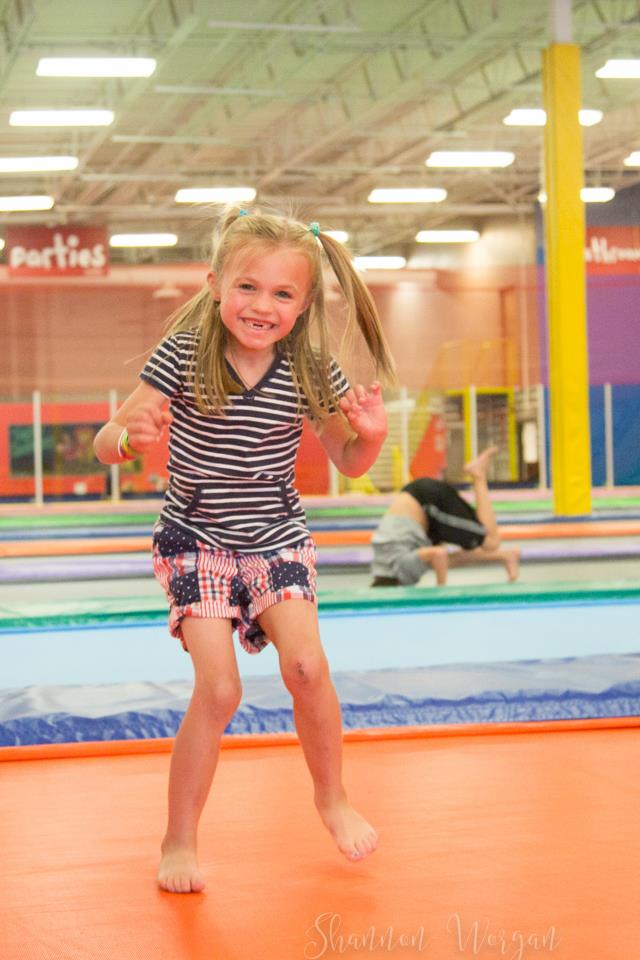
    Jumping her heart out at a fundraiser for the Apraxia Walk


  • The day I met Ronda Rousey, and she told my sister to “keep fighting” for her words!

    The day I met Ronda Rousey, and she told my sister to “keep fighting” for her words!

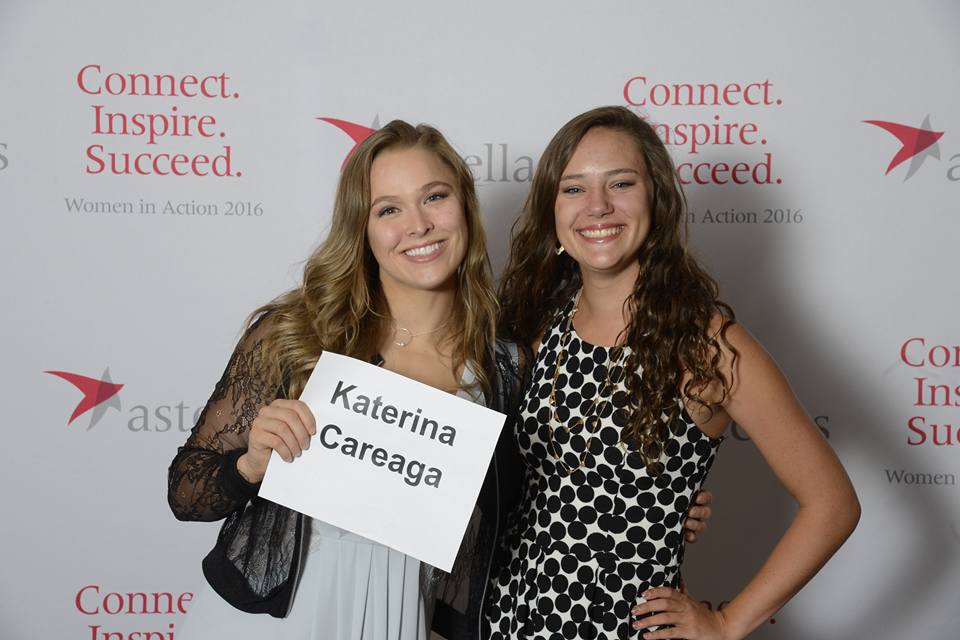
    Hi Katerina!

    I’m so excited to have you here today.  I saw in the Ronda Rousey #knockoutparaxia your mom posted a video of you attending a Women’s Leadership Conference in Chicago where you were able to ask Ronda a question about apraxia and meet her in person.  Can you explain to my readers why you wanted to go to this?

    Back in May, I was sitting at my school’s awards assembly when I got a text from my mom, telling me that I had been invited to the Astellas Women in Action conference in Chicago by a family friend who works for Astellas. My first reaction was “OMG, yeah!” I couldn’t tell my mom though, because I wasn’t even allowed to have my phone! (oops.) My mom was so anxious for an answer she came to my assembly and found me in the bleachers! It was a huge opportunity that a girl like me doesn’t get very often, so I said yes right away!

    Before the conference, the company launched an app that connected everyone attending. It was a smart idea, because there were people flying in all around the world for this conference. And in the app, you could compete in little “competitions” with everyone. There was an “Ask Robin” and “Ask Ronda” competition, as well as a selfie contest. The “Ask Ronda” contest was the only one I competed in, and I only entered one question. “My sister has been diagnosed with apraxia, a disability you once had. From your experience, what can I do to help her succeed?” And that was the beginning of this amazing experience.

    I think it’s so amazing that as a sibling you have so much concern for your younger sister you were prompted to go to this.  In the video you took, I heard you holding back tears.  We don’t often think about how apraxia can affect the siblings.  Can you tell us why you were so emotional?

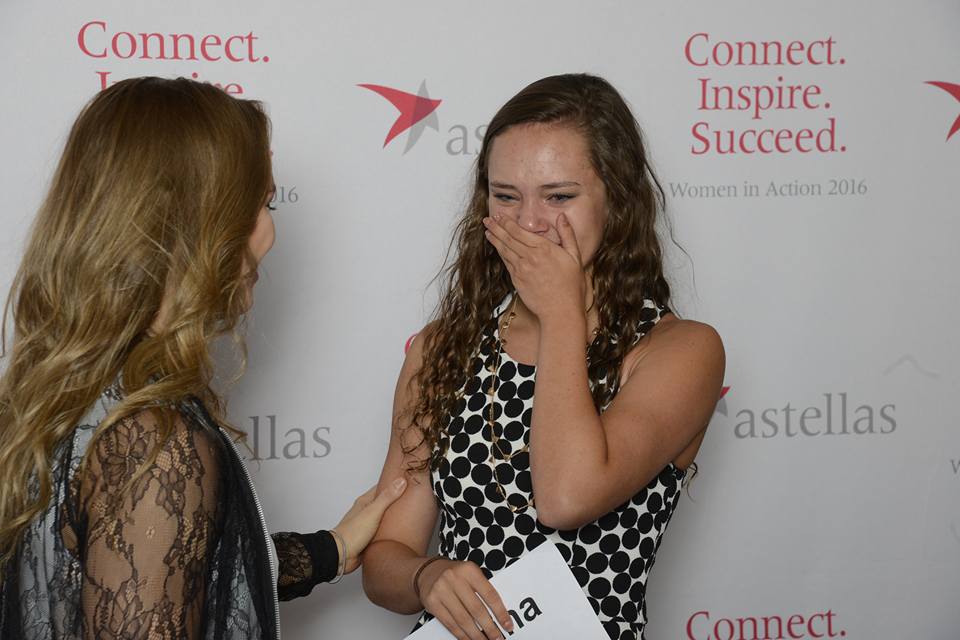
    Well, I had a bit of a rocky start at the conference. My flight had been canceled, my mom and I drove to Chicago instead, and I was very tired. I had a whirlwind of emotions all weekend, and when Robin Roberts announced her name, I immediately started crying! And that was even before the interview! I had no idea that the one question I submitted would be chosen out of hundreds, and the way Ronda answered it answered a lot of personal questions I had. I knew how to help my sister when she was younger, but I have no idea how to help her now and in the future. My little sister is in first grade, and other kids are already asking one of my brothers (grade 4) why his little sister is stupid. And it hurts because I had no idea how to help her succeed. But thanks to Ronda, I know how, and just the thought of that makes me very happy and emotional.

    You were able to go back and meet Ronda! What was that experience like?  What was Ronda like?

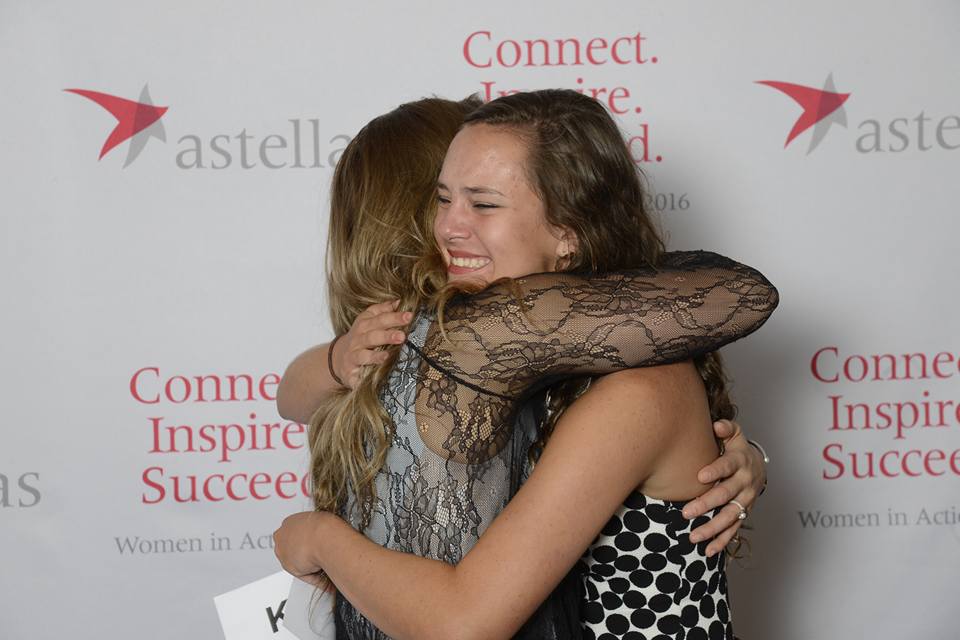
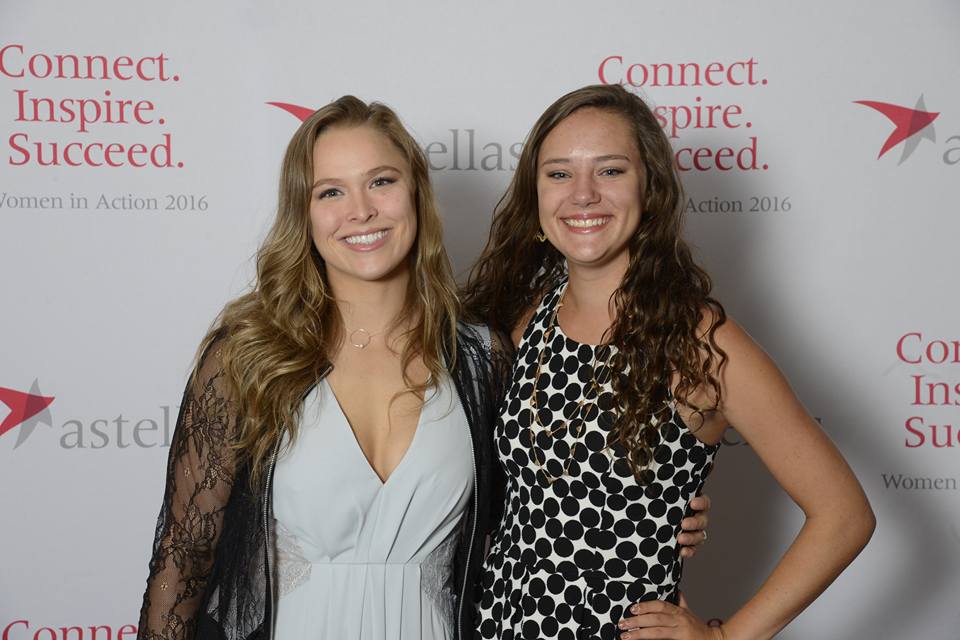
    The whole experience was just amazing. When I walked into the room for the photo opportunities, I immediately started crying again. I made a security guard tear up a little bit too! Actually, I don’t think I stopped crying until that afternoon because the whole experience was so surreal. Ronda was so sweet the entire time and kept hugging me, and telling me I was an amazing older sister for asking my question.

    What did you learn (if anything) from this experience?

    I had no idea my little 2 minute video would affect so many people, and it puts into perspective how many families have loved ones with apraxia, and are going through the same things my family is. I’m so glad I could help others with my own experiences!

    13770264_10209187233773060_6637643273288338583_n
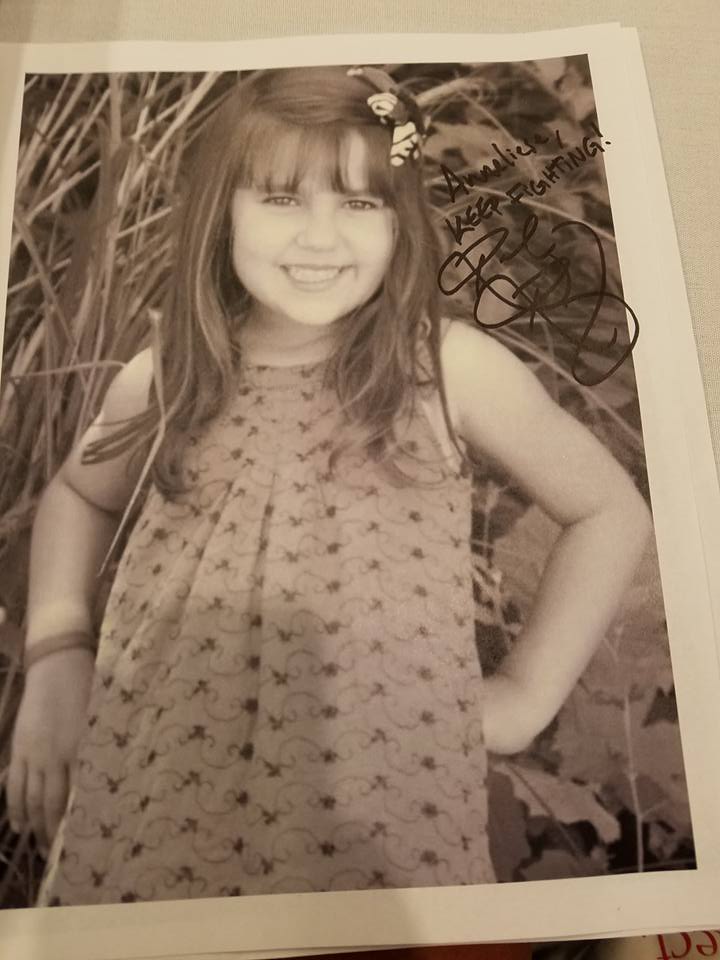
    Autographed picture by Ronda Rousey encouraging Katerina’s sister to “keep fighting!.”

    You experience resonated with so many parents and families!  For me, I can so appreciate your description of Ronda.  She was the same with me and my daughter; sweet, kind, and genuine!  Thank you for telling your story.  You are obviously an AMAZING young woman, and your sister is so lucky to have you in her corner!

    13769600_10209215987651889_6720564369997804624_n13775429_10209215987851894_3052223350579417984_n13726615_10209215988491910_4431537346054282392_n 13770369_10209215988051899_2918489909754762781_n


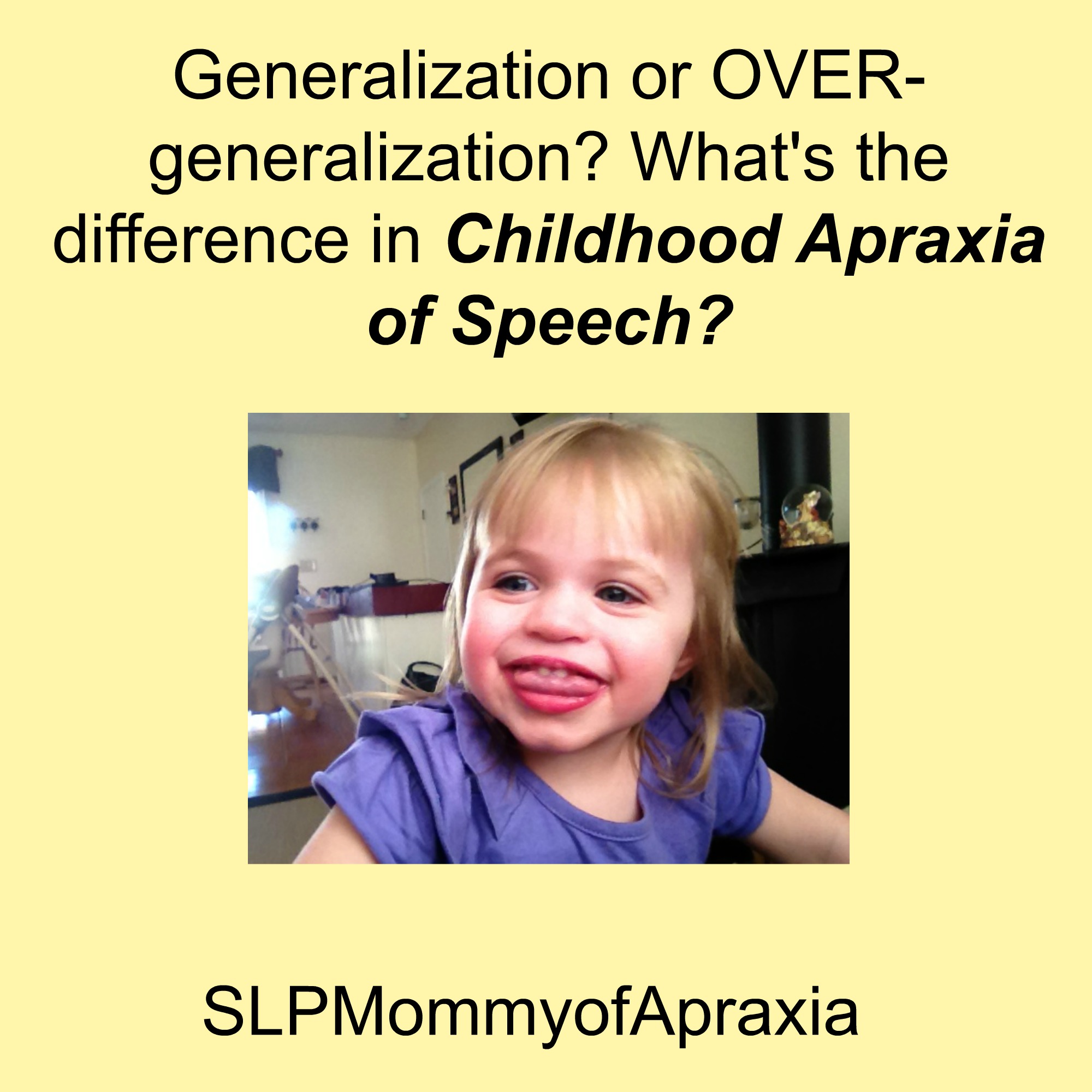
  • Overgeneralization: a caution for clients with CAS

    Overgeneralization: a caution for clients with CAS

    overgeneralization


    Before I knew my daughter Ashlynn had CAS, and before I spent countless hours researching, taking trainings, and becoming an expert in CAS; I was an elementary school SLP.  Like any new SLP, I was relatively inexperienced with CAS.  One year, I transferred schools and a 3rd grade boy with a dx of CAS popped up on my caseload.  Most people, including his mother, still found him very hard to understand.  In her defense, it didn’t help that her first language was Spanish, and this boy only spoke English (apraxic English, you can say).11wwpm
    Anyway, I could understand him most of the time, but his errors were bizarre.  He had an /l/ substitution EVERYWHERE, but mostly for sounds he had not yet acquired including /r/ and /th/.  Some examples: (blown/brown, muller/mother, bruller/brother).

    This was my first experience with “over-generalization” and it’s potential to have a negative  lasting impact on kids with CAS.

    It was not my first experience though with over-generalization.  In kids with phonological disorder, this will happen occasionally.  For example, we might be focused on a pattern, let’s say, /s/ blends.  A child with a phono disorder will usually omit the /s/ in an /s/ consonant cluster.  One of my mentors used this example:

    “I see a star in the sky” would be “I tee a tar in the tye.”  There are a few phono processes going on here, but suffice it to say, the child is still omitting the /s/ which would be considered a consonant cluster reduction.

    When we start targeting /s/ blends, the child will usually (temporarily), start adding an /s/ before every sound. Soon after they learn the pattern without any real long term consequence to existing speech patterns.  This is generally regarded a positive sign with phonological disorder, because the child is showing they are making system-wide changes that are generalizing.

    This is NOT necessarily true if a child has a dx of CAS.  Over-generalization can cause havoc on an already faulty motoric system.  There is a limited research I found regarding this phenomenon; however, there is some in the adult literature regarding acquired apraxia of speech (AOS).   Wambaugh et.al. (1999) found that in adults with apraxia,  sound production training did yield system-wide positive changes in the acquisition of a sound; however, overall maintenance effects exhibited declines in sound production accuracy (intelligibility).  The authors concluded this decline was directly attributed to over-generalization of the taught target sound.  They recommended using multiple sound targets to increase variability and stabilization during training.

    I have searched for more research articles on the subject but have come up empty.  This is NOT to say; however, that it is not a common occurrence.  Research in the field of communication disorders isn’t exactly robust like it is in the medical field.  Even the research we have on apraxia, though more than it was, rarely meets the criteria for the highest level of evidence to be proven effective.  Many times we have to go on our clinical experience, and in treating kids with CAS, I have now seen plenty of cases of over-generalization directly caused by the current therapeutic approach.  Of course, questions like these usually lead to one pursuing a doctorate and doing a research study….but……that is for another time.  lol

    I do feel though I need to write on the topic.  So here it is.

    Therapy for apraxia needs to include many target sounds, sound placements, and syllable shapes.  This is very different from many (most) treatment approaches for other speech sound disorders.  Let me give you some examples.

    In articulation approaches, therapy focuses on one sound.  They work to get accuracy and generalization for that particular sound in many different places of words: initial, medial, and final.  Therapy then progresses from word, to phrase, to sentence, to conversation.

    In phonologic approaches, therapy focuses on patterns of errors.  For example, in a popular Cycles approach, kids consistently may delete final consonants (ca/cat, do/dog) or leave off consonant clusters (tar/star, no/snow), to name a few.  Therapy would then focus on including final consonants, or consonant clusters.

    These are common approaches to most speech sound disorders.  These are what most SLP’s will have experience with.  They will have seen these in their internships.  It’s no surprise then when we fall back on these therapies.

    However, this WILL not do for apraxia.  Let me give you many personal examples I have now seen in my experience.

    For my first example, let’s go back to my 3rd grade boy with crazy /l/ substitutions.  Recall he had a history of apraxia and when I met him he was substituting /l/ for sounds he had not yet acquired (r, th).  If you are an SLP, you will know this is a pretty unusual error.  It was also an error that, at the time, before I knew motor learning principles, I had an INCREDIBLE difficult time extinguishing.  I can’t help but wonder (actually I’m really sure now), that the child had fairly good apraxia therapy, and probably was working on /l/.  At younger ages, we typically don’t work on later developing sounds such as /th/ and /r/.  However, he overgeneralized ALL of his errors to mean he needed to produce an /l/ and there I met him in 3rd grade, and what I saw was a child now saying /l/ for every sound he still had in error.

    My second example is a child who has a TON of language, but who is severely apraxic.  Unlike my daughter, he can tell stories for hours, but the sounds are completely muddled, jumbled, and in no sensible order.  At the word level he would remember to include final consonants, but at the conversational level all of his final consonants were omitted.  I am working with his school SLP who is amazing, and she noticed this pattern (phonological disorders and apraxia CAN co-exist), and decided to remediate it.  She remediated it SO well, he was adding final consonant sounds to syllables and/or words he had previously mastered that DID NOT have a final consonant.  One phone call revealed the error, and we both worked feverishly to rid him of this overgeneralization pattern.  We were able to do it, but only after using principles of motor learning.  Had she not been so open, there is not doubt in my mind he would still be adding these final consonants to every word. Much like my first example, established motor plans in a child with apraxia is VERY hard to extinguish.

    My third example includes a child I started seeing in the very early stages.  Though she was able to say many early developing sounds in isolation, she had extreme difficulty sequencing them correctly at the word level.  I was seeing her along with another private SLP and school SLP.   Early on, she made incredible progress.  The other SLP’s  were using Kaufman cards, and the first set of Kaufman cards account for all the variables I mentioned above: varying sounds, sound positions, and syllable shapes.  When you are dealing with a motor planning disorder, a “sequencing” disorder, these three things are very important. In fact, Nancy Kaufman herself describes her method on her website as:

    This is performed through using cues, fading cues, using powerful and strategic reinforcement (motor learning principles), errorless teaching (cueing before failure), gaining many responses within a session, and mixing in varying tasks to avoid over generalization.

    Only problem with example number 3 is that she progressed beyond the level 1 cards and so the SLP defaulted on what she knows.  This client wasn’t producing any fricatives (s, f, sh) so she started with the fricative (/f/) and starting hitting it hard.  The result?  My shared client is now using this taught phoneme for all other current fricatives and errored phonemes, and getting her to eliminate this now very strong motor plan is taking longer than expected.  What SHOULD have happened is that we target all fricatives now (a variety of sounds) in all word positions and stimulable syllable shapes, STILL using the principles of motor learning theory.

    Overgeneralization.  It’s a PROBLEM in CAS.  If you are an SLP and you start seeing this, you need to look at what you need to change.  It’s not a positive indicator like it is for phonological disorder.  You are literally carving incorrect motor plans. Remember, we cannot focus on a single sound.   We cannot focus on a single pattern.  We cannot focus on a single word position.  We cannot focus on a single syllable shape.  We have to choose targets that are variating ALL of the above that are including sounds within a child’s repertoire.  If we don’t, we are going to have a kid with apraxia overgeneralize what we have taught them, and it’s going to cause havoc on their motor system, and potentially make them even less intelligible.

    In addition, you will always hear me talk about wasting TIME.  Time is so, SO precious to a parent with apraxia, more specifically, getting a child to improve as quickly as possible.

    This is ALSO why it’s SO important that even after a child has resolved, a dx of CAS always be included in the case history, because principles of motor learning theory are still the most effective in driving treatment.  This is true even when you have moved on to grammar or additional language targets.  Apraxia is a different monster.  Educate yourself.  Learn more. Vist apraxia-kids.org.
    30022940f


    Resources:
    Wambaugh, J. L., Martinez, A. L., McNeil, M. R., & Rogers, M. A. (1999). Sound production treatment for apraxia of speech: Overgeneralization and maintenance effects. Aphasiology, 13(9-11), 821-837.
     

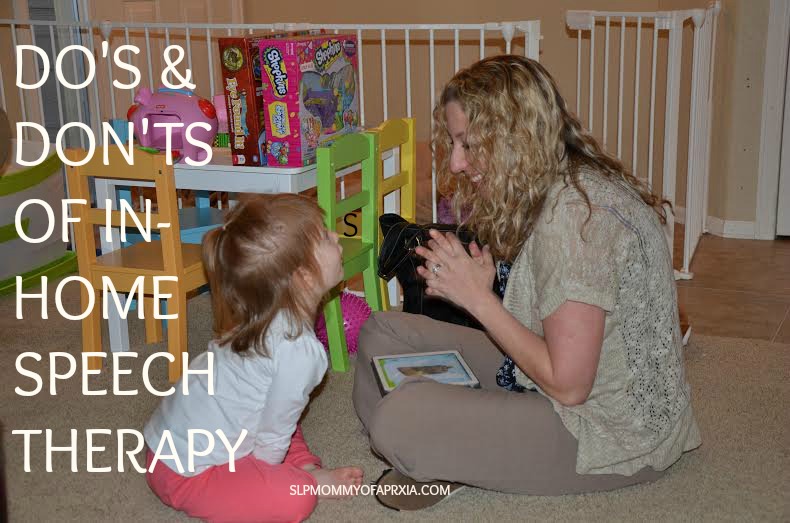
  • The Do’s and Don’ts of in-home speech therapy

    The Do’s and Don’ts of in-home speech therapy

    Being both an SLP AND a mother to a child with a severe speech disorder, I have this unique and sometimes bizarre perspective; that perspective, of course, being that I now intimately understand both sides.  That being said, I think parents/my clients, typically feel more comfortable telling me things parent to parent vs. parent to SLP.

    As a mother now to a child with apraxia, I have a new appreciation for the “other” side.  This post is targeted for all the amazing and well-meaning SLP’s out there, who may not understand some things because they haven’t been on the parent side.  Here are my top five Do’s and Dont’s for in-home therapy.

    Don’t spend therapy time talking about your wedding, the death of your dog, or your friend’s miscarriage. Do spend the therapy session focusing on the child and reserve personal conversations for a time outside the therapy session.

    Many times, our client’s mothers may have a lot in common with us.  However, literally every minute of therapy is as important to a parent as it is to the child.  I remember watching the digital clock in the first speech room Ashlynn was in.  If the SLP had to use the bathroom before seeing Ashlynn, I would of course understand; but honestly, I was staring at the clock hoping she didn’t waste too much of Ashlynn’s time.  I currently have a client who put those minutes into dollars.  For a 30 minute session at $50,  a person is paying almost $2.00 per minute!  We pay because we know they are valuable, but please, make sure all the minutes count.

    Many parents have told me that at times, they have been at fault for wasting minutes talking because they were with kids all day and craving another adult interaction; however, regardless of whose fault it is, always try to stay professional and keep the focus on the child.

    Don’t blurt out suspicions, concerns, or think out loud.  However, do make sure you make referrals and not withhold information if you feel there are additional concerns that need to be addressed.

    Parents have reported that therapists have flippantly mentioned apraxia and turned their world upside-down unnecessarily, only to find out later it was in fact, NOT apraxia.  In a different scenario,  I have had parents upset that an SLP never even mentioned apraxia, and now they were just finding out years later, distraught, worried, and feeling guilty they had not done something sooner; and in yet another scenario, a parent has told me her SLP casually mentioned a serious diagnosis like apraxia frequently without ever moving forward with a different treatment plan.

    As an SLP, you have a responsibility to relay a suspected dx in a responsible manner; and if you don’t know what to do, it’s your job to figure it out or make a referral.  There are so many more resources available now including apraxia-kids.org or ASHA’s practice portal.  We are counting on you!!

    Don’t start planning your lesson when you enter the house. Do have a plan heading into therapy.

    Look, as an SLP I get it. Planning time isn’t exactly built into our pay.  Also, it can get overwhelming to carry a bunch of materials from house to house.  Shouldn’t we be teaching the parent how to use toys in their house?  Yes, that’s great, but you should STILL have a plan whether it’s using a child’s toys or your own.  Nothing looks more unprofessional than spending five minutes letting the child decide what toy or game to play. Remember my previous comment?  The parent just paid you almost $10.00 now just to plan the lesson and get started.

    If you are in early intervention, some of your time might be for planning and writing notes.  If so, please explain that to a parent before-hand so they aren’t thinking you are deliberately short-changing a session.

    Don’t continually cancel or run late.  Do respect people’s time and schedule, and refer out if you are unable to be a consistent provider.

    Okay, first of all, if you are consistently late or cancel a lot, you make the profession look bad.  However, even more important is that you are not helping the child the way you should when you do this.  Be conscientious, and if you are frequently late and/or cancelling, refer out.

    A parent also told me that a quick apology is nice, but an entire explanation is not necessary.  Parents do understand if you are late sometimes.

    Don’t assume parents aren’t worried, involved, invested, or not working with their child. Do provide resources, assume the parents are doing the best they can with the knowledge and tools they have, and that they are worried and just want the best for their child.

    I had a post last year entitled Nature Versus Nurture.  In it, I beg SLP’s not to assume nurture played more of a piece in a child’s language delay.  This is especially true for apraxia of speech.  I’m an SLP.  A pediatric SLP.  My daughter has a great language rich environment, and not only that, I DID work with her almost every night on speech.  Guess what?  She STILL had apraxia and continues to have a persistent receptive/expressive language delay.

    Parents are human too, and might not have the background we have in child language development. Please do not assume though, that they don’t care.  Even parents who seem like they don’t care, care….trust me.  If you are there, it’s because they care.  They had to make the phone call after all.

    The best thing you can do is not only to provide therapy, but provide them with resources.  Some parents may not use the resources, but I think it’s our job to provide them.  Give them articles, handouts, point them to online resources, support groups, walks, conferences, etc.


    Most of all, DO realize you are appreciated and valued more than you may ever realize.  Helping a child get their voice is one of the most amazing things I think we do as SLP’s.

    06a8417b-9bbf-4414-8e54-d5e557b66394

    Thank you to all the parents who added their feedback to this article.  

    LAURA SMITH M.A. CCC-SLP IS A SPEECH/LANGUAGE PATHOLOGIST IN THE DENVER METRO AREA SPECIALIZING IN CHILDHOOD APRAXIA OF SPEECH.  CASANA RECOGNIZED FOR ADVANCED TRAINING AND EXPERTISE IN CHILDHOOD APRAXIA OF SPEECH, SHE SPLITS HER TIME BETWEEN THE PUBLIC SCHOOLS AND THE PRIVATE SECTOR.  SHE IS DEDICATED TO SPREADING CAS AWARENESS. HER PASSION IS FUELED BY ALL OF HER CLIENTS, BUT ESPECIALLY HER OWN DAUGHTER WHO WAS DIAGNOSED WITH CHILDHOOD APRAXIA OF SPEECH.  FOR MORE INFORMATION VISIT SLPMOMMYOFAPRAXIA.COM