Tag: Apraxia

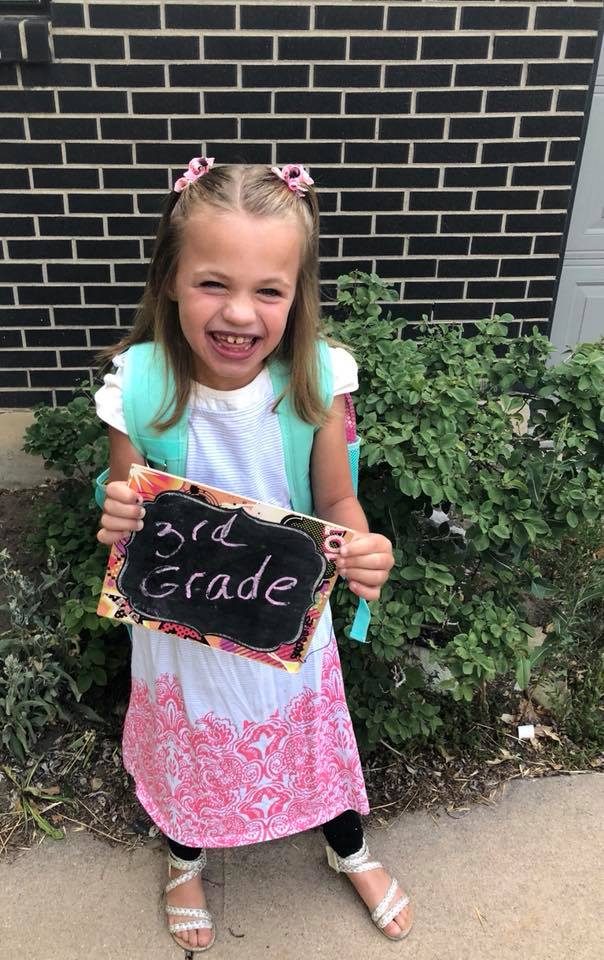
  • 1st Day of 3rd Grade

    1st Day of 3rd Grade

    My dearest Ashlynn,

    Your courage amazes me daily.  It inspires me and pushes me beyond any limit real or imagined.  Today was your first day of 3rd grade.  You have been waiting for this day since the last day of 2nd grade.  Actually, quite possibly since the first day of 2nd grade when you told me,“After 2nd grade you I will be in 3rd grade!”

    I emphatically responded,

    “We need to make it through 2nd grade first!”

    We bought you a new backpack, new outfit, new shoes, and you got a new haircut.  Two out of the four items went as planned.  The backpack and new shoes went off without a hitch.  The other two? Well Ashlynn, it’s just not our style to have a few hiccups is it?

    Getting a new haircut is always an adventure.  Your dyspraxia, ADHD, SPD, and receptive language issues make following specific commands somewhat challenging don’t they?  I stepped in to help guide your head where it needed to go so the stylist would stop reminding you of how hard it was for you to follow those simple commands.

    Then came the new outfit.  We picked it out together!  I didn’t think we needed to try it on because I know what size you are and I was sure it would fit.  Last night we hung it up on your dresser anticipating the first day of school! However, this morning when you went to put it on you were more confused than ever.  I came into help and realized I had bought you a romper! That flowey material fooled both of us didn’t it!!  I could have sworn it was a dress.  A romper though?  Yeah, not a friend to the girl who has dyspraxia.  I apologized and offered other options in your closet.  We chose a pretty sun dress you hadn’t worn much, but I still felt bad.

    You took it in stride though!

    All morning you were jumping up an down and excited to go to school and I marveled at you.  School is so hard for you.  Last year you came home with bloodied shirts or completely different shirts because you had so thoroughly stained yours from picking your finger nails.  Almost every assignment you completed you struggled in, and many times you ate and played alone.  How on Earth were you excited to go back to that?

    Three days before we saw an ex client of mine who is your age.  Her apraxia is resolved and she has residual learning disabilities.  She told us how she didn’t want to go back to school because she was bullied and you sat there un-phased.   I thought to myself if I were in either of your shoes I would feel like my client; yet I was so grateful you are you.

    You have a strength and internal resolve I am working towards.  You have courage and resiliency I have yet to conquer.  Where my instinct is to run back your instinct is to jump forward.

    I am inspired by you.  I am always going to be here by your side.  I’m going to love you, but I’m going to push you.  I’m going to do everything in my power to help you obtain the tools you need in order to live life on your terms.

    It took me many years to believe and even more to practice this simple advice:

    Heck it takes grown men and women to follow this advice, and let’s face it.  Some die before they ever follow this advice at all. YOU embody this.  YOU are a living testament to this.

    Pursue it all Ashlynn!  I’ve always got your back and I’m your biggest fan!

    Love,

    Mommy

  • This school year, teach your children to be kind.

    This school year, teach your children to be kind.

    Fresh backpack, lunchbox, shoes and school outfit are waiting tomorrow for my child’s first day of school.  There is an excitement in the air as we bought school supplies and met her teacher last week.  She picked out her name tag like the other kids and picked her seat.  She flashed a big smile to her new teacher and chattered endlessly about school starting again and how she was excited to go back and to learn.  We went and got a new haircut and she told the stylist how she was starting third grade.

    Tomorrow I will take the historic first day of school picture. I will probably proudly post it on all of my social media accounts.  I will most likely scroll back and look at it a couple of times and wonder where my baby has gone.  I will marvel at how this school aged girl with long legs is standing on my front porch.

    That is where the similarities will end.

    As many parents cheer and are relieved to get back to a routine, I’m left with only nerves and trepidation.  The summers in my house are happy.  My daughter is a child who can explore the outdoors and experience life as a carefree and curious kid.  She plays with neighbor children until bedtime and explores campgrounds on the weekend.  She makes mud pies and collects dirt under her fingernails that need to be clipped and scrubbed frequently.

    Unfortunately school brings other stories.  The child who played carefree until bedtime with neighbors is the same child who is frequently seen sitting with her teacher’s aid (TA) at lunch and playing by herself on the playground.  The fingernails that grew long and collected dirt over the summer are replaced with widdled down nubs during school that are bit, picked and chewed so much that her shirts frequently come home bloodied or on some really bad days, have to be changed completely.

    The girl who chatted endlessly to family and friends is the same girl who is quiet and reserved at school, frequently clamming up when put on the spot or asked a direct question.

    The child who could explore during the summer and jump from varying activities is the same child who frequently loses focus and can’t concentrate on subjects at school.

    My child has invisible learning disabilities.

    Many of them.

    However underneath them, she is still just a kid like your son or your daughter.  She is curious.  She is friendly.  She wants friends.  She craves connections.  She’s excited to learn.

    This year as you talk to you children about their new teacher, new classroom, and new adventures, I beg you to talk to your kids about being kind.  I beg you to explain to your child that children with disabilities are just like them, but it might take a little longer to understand or get to know them.  If nothing else though, please just teach your children to be kind.  Maybe ask about something they did that was kind alongside your questions of who they played with or what they learned.

    Our kids will thank you for it!

    Sincerely,

    A proud mama to a child with hidden disabilities

  • Executive functioning home intervention

    Executive functioning home intervention

    Let’s talk executive functioning.  If you follow my facebook page SLPMommyofApraxia (click here), you already know we are making our house an executive functioning friendly zone and you might have read a prior post I wrote a  “What is Executive Functioning, and Why Do You Need to Know?”

    What does an executive functioning friendly zone mean exactly?  I decided to put all of it into a post so you can see and hopefully help others who may have children with similar issues.

    Before I begin, I just want to say this:

    Children with learning differences, many, many, MANY times benefit from the use of visuals.  There have a been a handful of cases in my career where visual aids actually confused the student more; but for the most part, visual aids benefit everyone.  This visual from northstarpaths really explains why:

    Executive functioning (EF) deficits are a common comorbidity with a variety of conditions including: ADHD, OCD, ID and others just to name a few.

    Visuals are AMAZINGLY helpful for children with EF dysfunction.   The problem is, most teaching involves auditory input.  The teacher (or parent) talks, children listen, and learning takes place.  For kids like my daughter, who have a language processing impairment, the teacher (or parent)  talking is basically the equivalent to the teacher in the Peanuts comic series.  All the children hear are “wah wah, wah wah wah wah.”

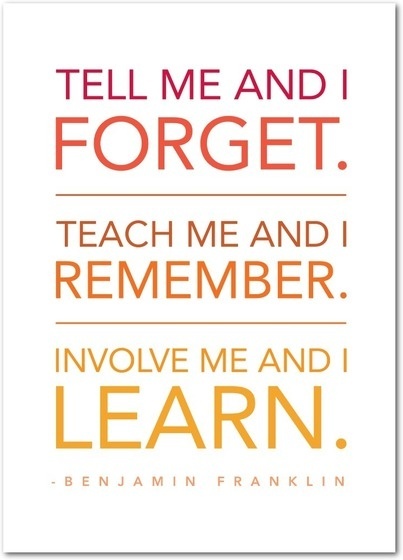
    Visuals bridge the gap.  I couldn’t say it better than Benjamin Franklin, who himself had a learning disability when he said,
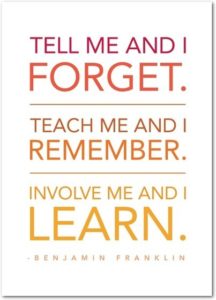
    Aside from just visuals though, kids with EF dysfunction benefit from organization and time management strategies.  The following is what we currently have implemented in my home.

    Morning Routine

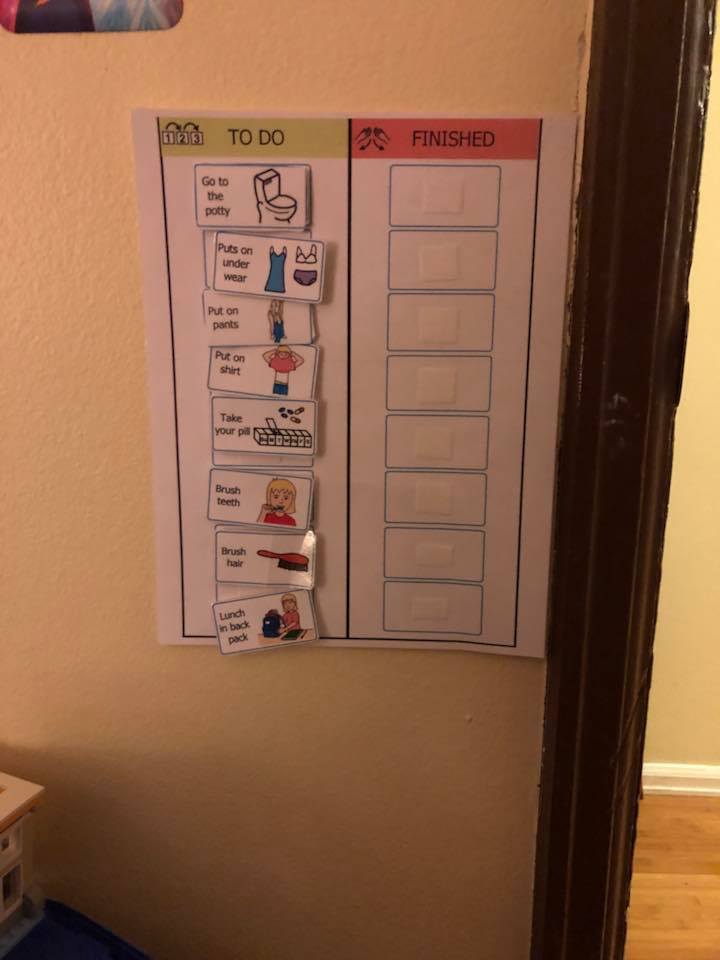
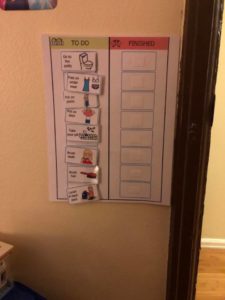
    The most recent example from my personal experience involved the steps to getting ready for school.  If I told Ashlynn what to do, she immediately forgot or I had to go through step by step and tell her, which is not promoting independence.  With the help of her SPED teacher, we made this visual schedule and she was successfully completing all of her steps without our help in about two weeks.
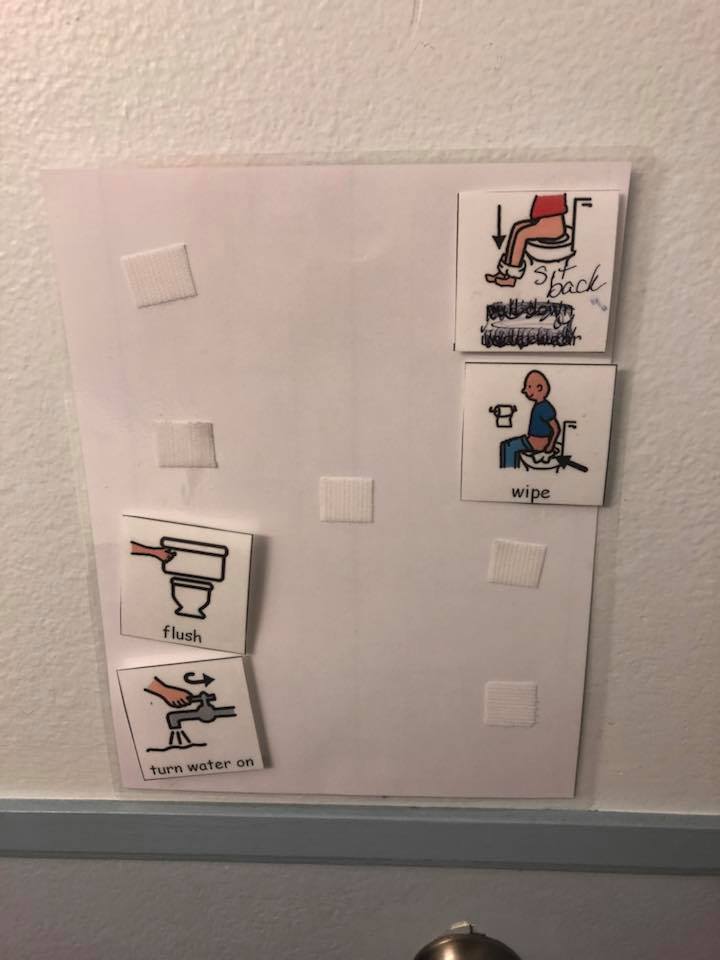
    Restroom steps

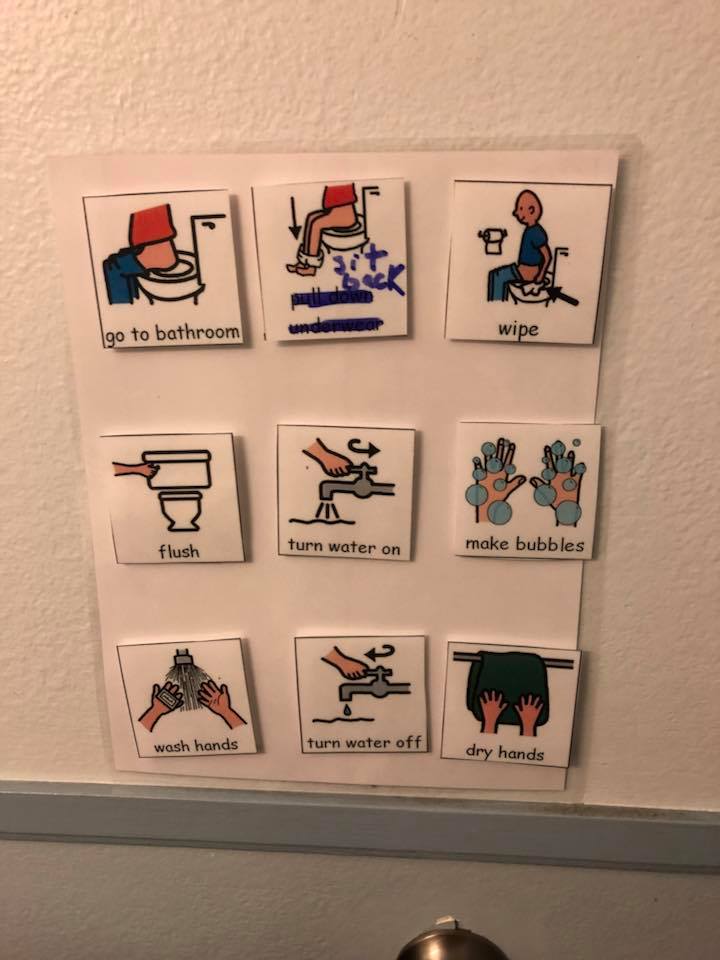
    We decided to make a visual schedule for completing bathroom steps.  Let me tell you that we have been working on remembering these for AT LEAST a year.  Last year in 2017, I sent her to Adam’s Camp and remember telling the therapists she can say all the steps but still is not consistent.  After Adam’s Camp she came home being able to sing them as well, and still, we could not get consistency.   So we made a visual schedule a little different than her morning schedule and it looked like this.
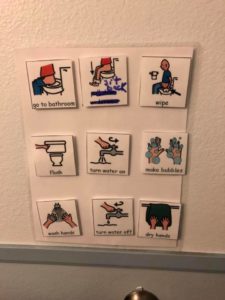
    This was NOT successful.  It probably has too many steps and it doesn’t have the nice left to right motion the morning schedule this, so I modified and made this.
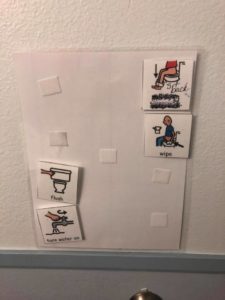
     

    I’d be lying if I said this was a complete success right off the bat, but it has worked better than any other strategy to date and now that the summer has hit, we have made sure she has to go back and complete her steps every single time.

    Cleaning her room

    The next step was to tackle completing a basic chore like cleaning her room.  I can’t even begin to explain the difficulty with this.  What I do know, is that many adults with ADHD continue to struggle with disorganization into adulthood.  It behooves us now to help our kids develop strategies that are going to serve them well throughout their lives.

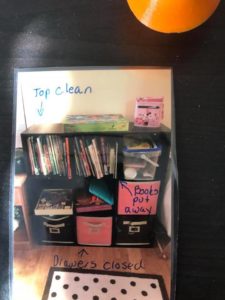
    The first step is to make sure everything has a place.  Classrooms are set up this way for a reason.  There is a specific space for each and every item that is used or played with in a classroom.  If not, things will inevitibely end up in a pile of clutter.  Ashlynn and I went through her room and designated certain drawers and bins for different things.  Everything has a spot.  There is a bookshelf, a lego bin, a writing utencil drawer, a baby clothes bin, you get the idea.

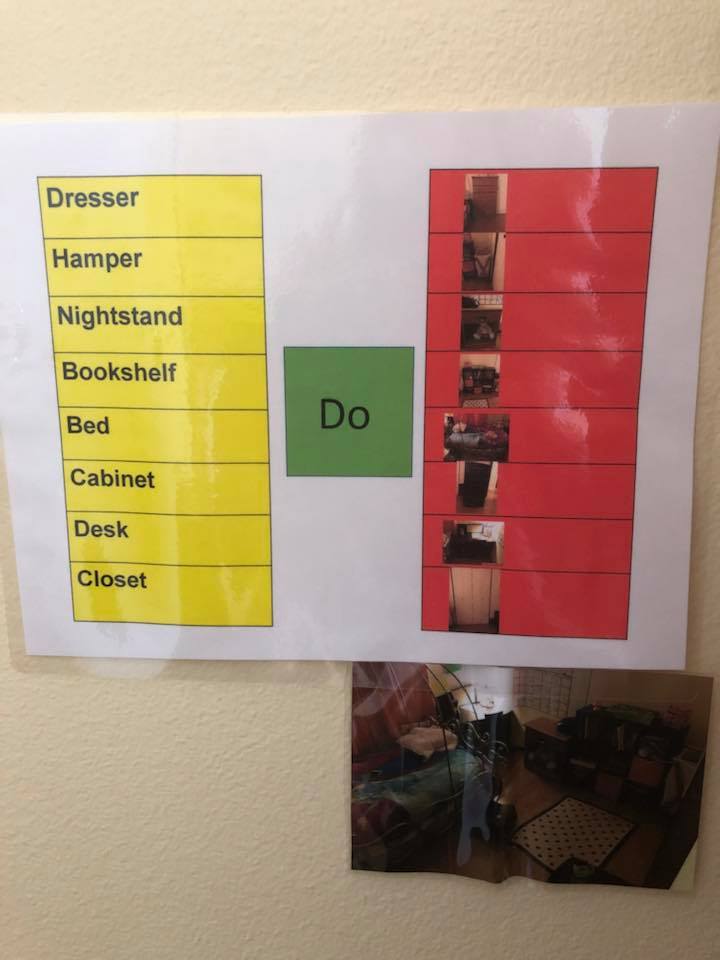
    I then created a visual schedule of each piece of furniture that she could check off as she went about her cleaning routine.
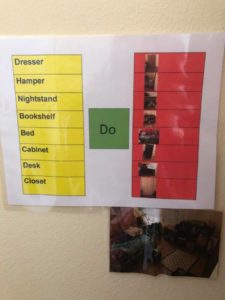
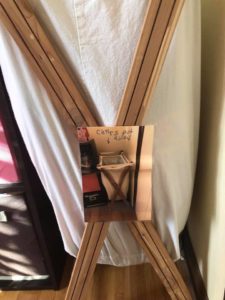
    I know it’s hard to read, but basically each furniture item is listed on the left, with a picture representation on the right of what it looks like done.  The picture on the bottom is a grand finale picture of what the entire room should look like clean after completing all of the steps for one last check.

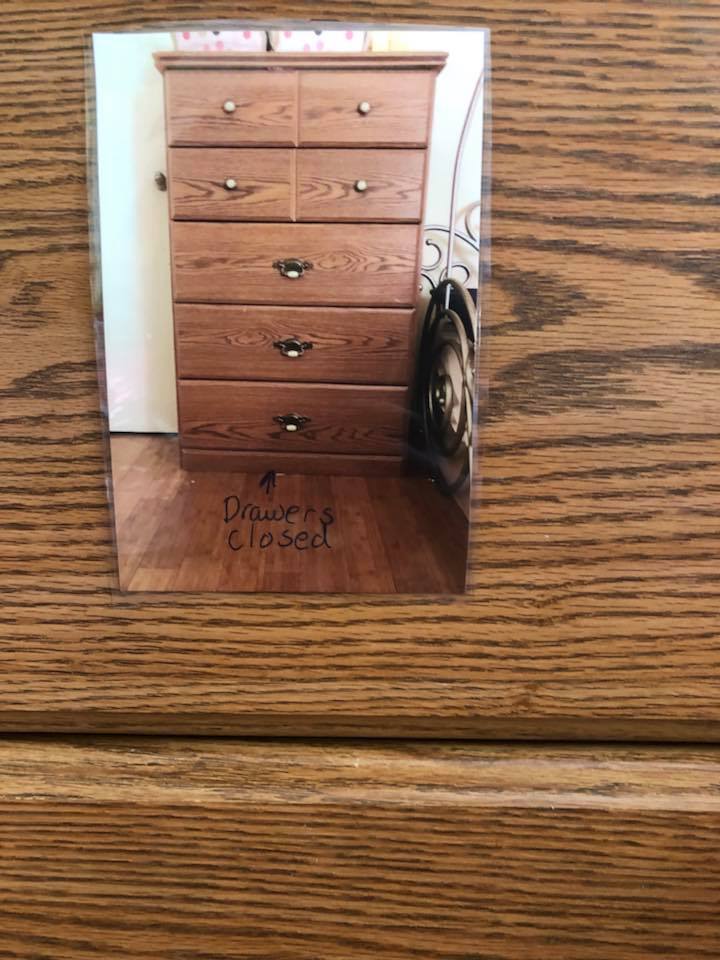
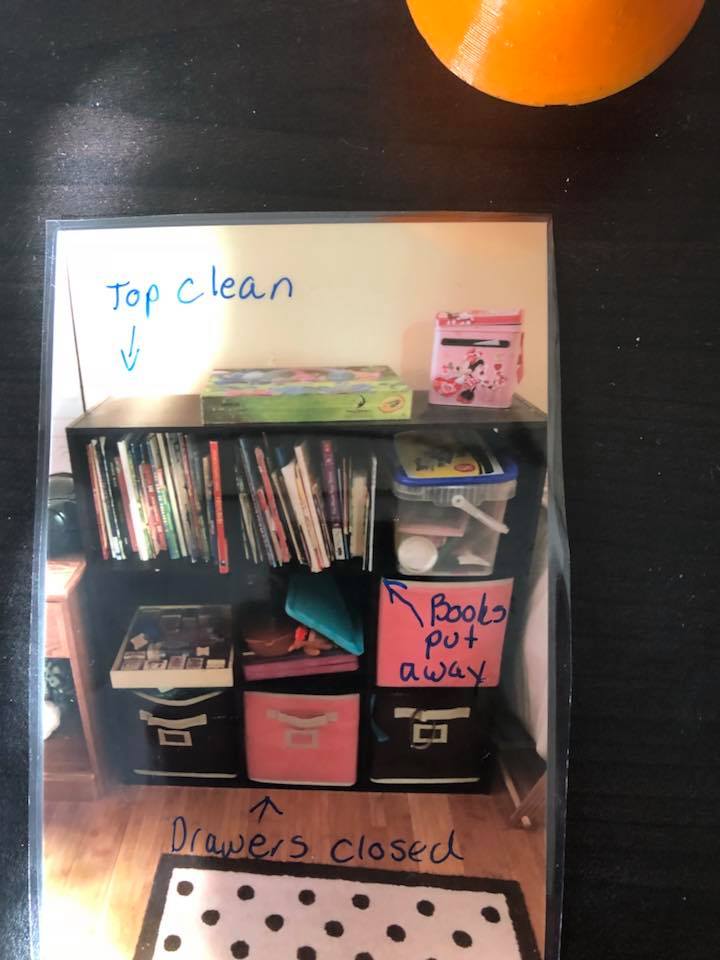
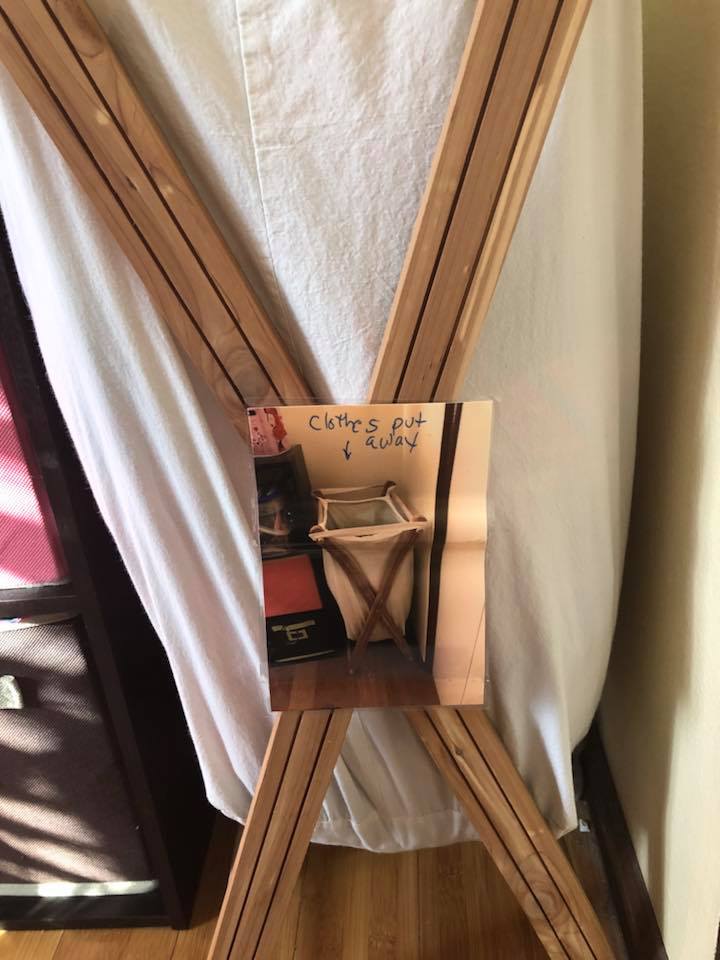
    Next up was to have bigger picture velcroed to all of the furniture items so she could see as she was cleaning them what they are supposed to look like.  I know it seems redundant, but seriously if you have a child who struggles this, then you will relate when I say that a dresser with closed drawers looks fine with clothes hanging out of it to her.  Same with a picked up hamper.  I even have a picture showing what the closet should like closed and no that doesn’t mean it is closed until it hits the piles of crap.  It means actually closed and looking neat.
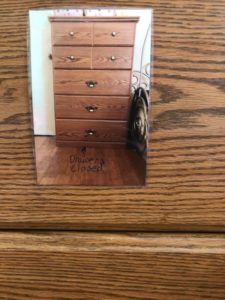


    I have to add that these helped, but still had to be taught.  In fact, it’s still a work in progress.  Some nights, I am so frustrated and just want to pull my hair my out.  I’m only human after all.  I do though, in those times, try and decompress and remind myself this is not a *fix* but a lesson.  Ashlynn doesn’t learn like other kids and that’s okay.  I have to realize though that all of this will pay off in the long run, and when we start early kids have the best outcomes.

    Homework

    Oh man don’t we hear horror stories about homework from parents of kids with varying learning differences.  Teachers make homework sound so easy.  Ten minutes for every grade you are in, so a first grader shouldn’t be more than 10 minutes a night.

    Say….what???  That assignment just took my kid an hour….and then when we went to second grade, that so called 20 minute assignment just took upwards off and on of two HOURS?  Minutes?  What?

    Know that homework can always be modified, but there are strategies that can be put in place to help with this too. Number one is to just start with a place that is going to make them successful for learning.  If you are like me, my first baby is the one with learning differences so instead of preparing for the ultimate learning environment, we were more focused on transitioning my son from a crib to a toddler bed and spent our money on that.  Needless to say, our kitchen table became her homework place.  Yes, the place that she eats and the chair in which she sits that her feet don’t touch on the ground yet is what we thought would be the perfect location for her to sit down and do that quick assignment in 10 minutes.  I should mention too it’s a thoroughfare in my house, so my kid with ADHD was also constantly distracted by the events taking place all around her.  Can we talk about set up to fail???

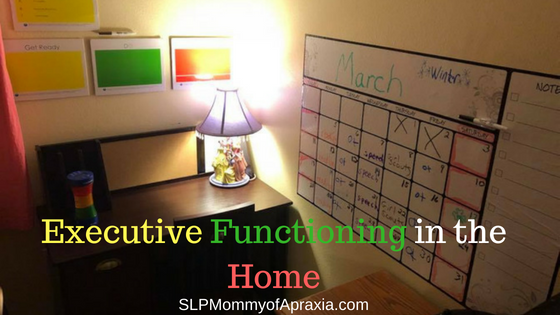
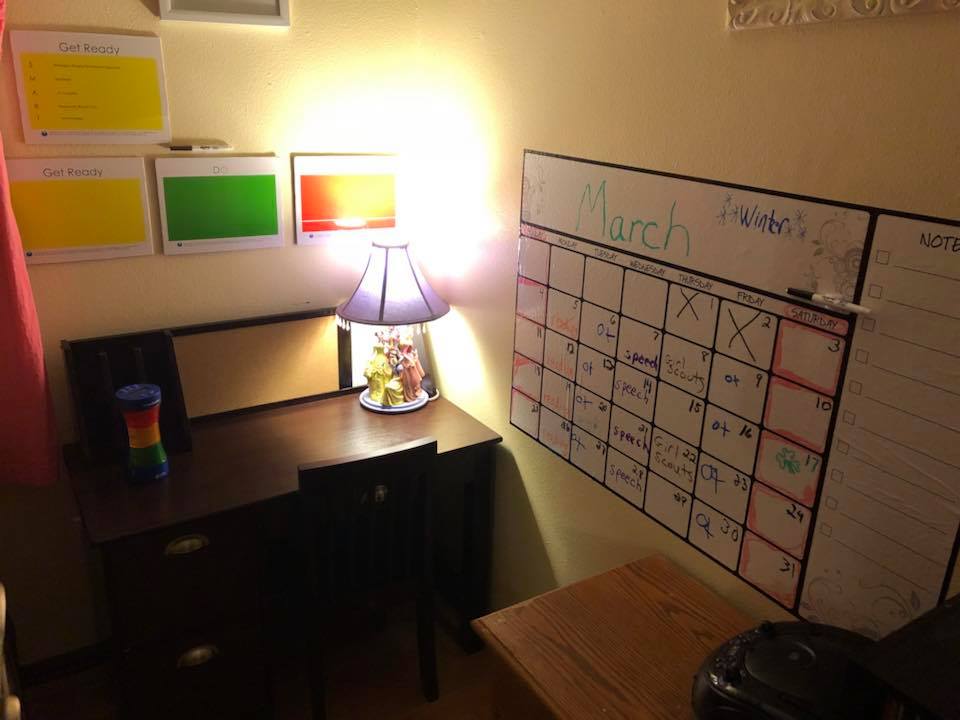
    I redid her room and created a homework corner.  I bought her a new desk in which she sat at a 90 degree angle, perpendicular to the floor, and decked it out with strategies from executive functioning queen Sarah Ward from the website Cognitive Connections.
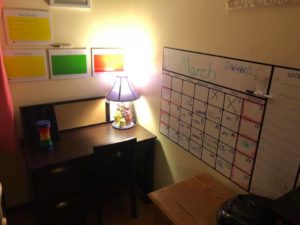
    New desk with feet on the floor

    As you can see, I have her own desk, in a corner of her own room, that is quiet and in which her feet touch the floor!

    Get ready, do, done boards

    The colored board above the desk are suggestions from the cognitive connections website.  In the yellow, we write everything we need to get ready.  It might be as simple as a pencil and it might be more complicated if doing a project.  (To modify for non-readers, you can tape or velcro pictures that you need.).

    The green stands for “doing.” These are the steps you need to do to reach the finished project.  The finished project then is the red board and reflects what the assignment looks like when it is finished.  For lower level, you can put a picture of what a completed assignment looks like, or for readers you can simply write it.  Sarah Ward also recommends to “start with the end in mind,” meaning kid with EF deficits benefit from knowing what the end is supposed to look like and then working backwards. For a more elaborate description, go see Sarah Ward talk.  She’s amazing.

    Calendar

    We have tried a few different things to help Ashlynn learn time, and I’m not just talking time management.  Ashlynn has had a lot of difficulty learning the seasons, days of the weeks, the months, and understanding the difference between yesterday, today, tomorrow, last week, next week etc.
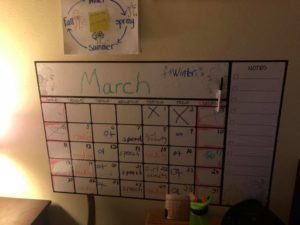
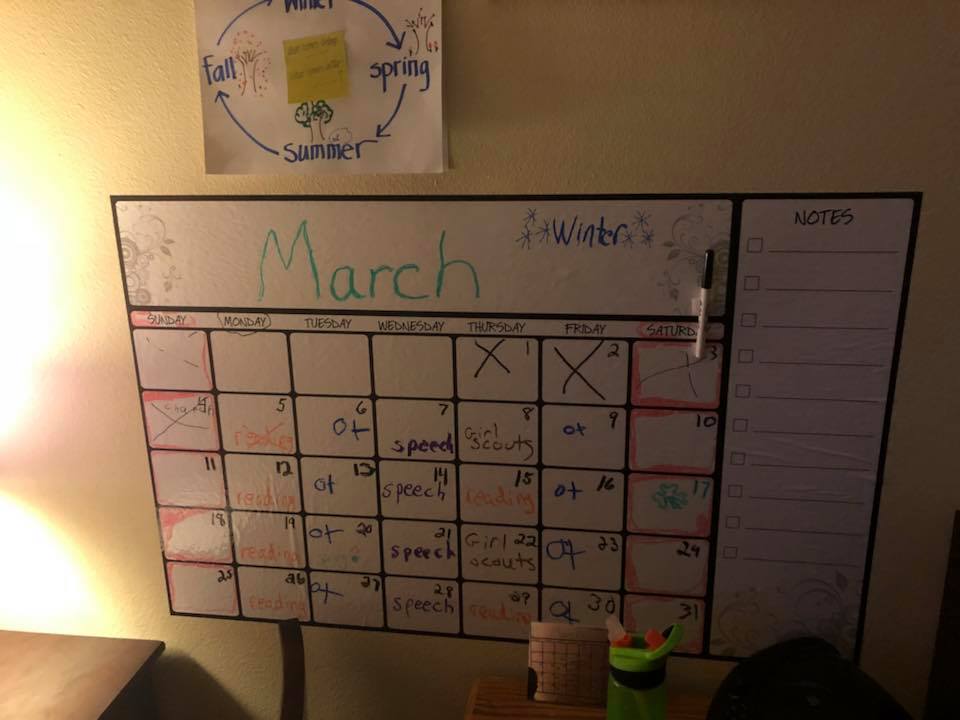
    I decided to buy this peeling dry erase calendar at target.  It’s huge and sits right by her desk.  Every month, she helps me write the month and the days.  We then go through and write her therapy/activity schedule and color code them.  Each activity is written in a different color.  The weekends are shaded on red since she has a difficult time understanding that Saturday and Sunday are one unit (the weekend) when they are split up on a normal calendar.  We then marked an X for each day that had passed and talked about yesterday and tomorrow.  This calendar has been AMAZING.  I might be so bold as to say it almost helped her understand days of the week right away.

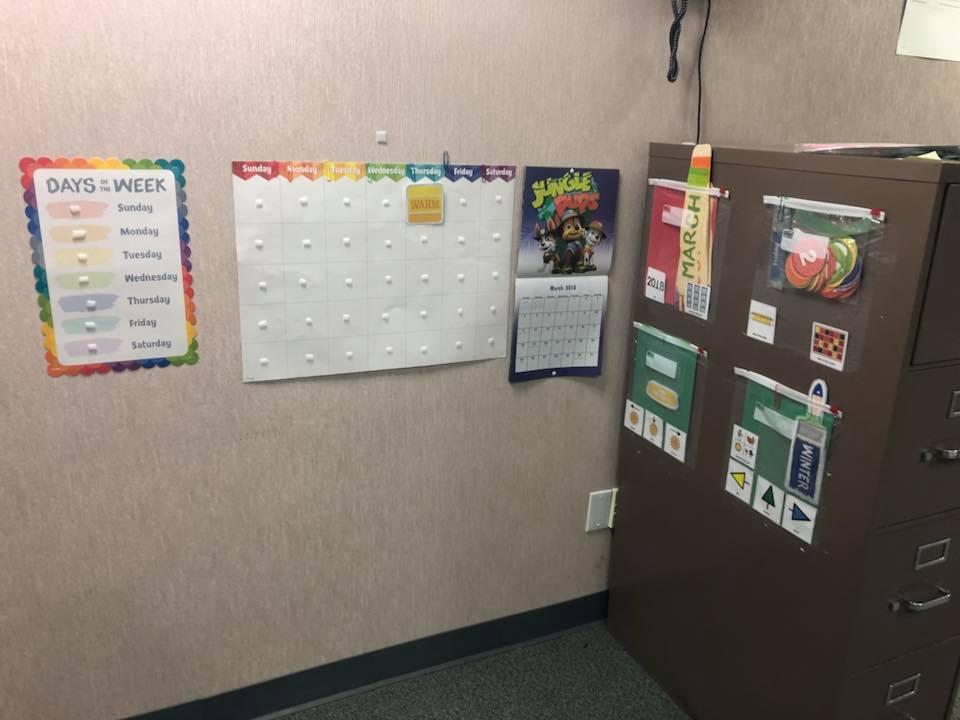
    Her school though also hit this hard visually and created the following corner in the SPED room just for her.
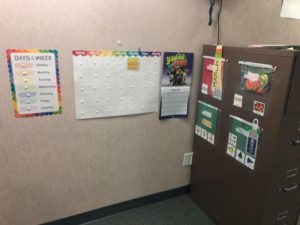
    This picture is also hard to see, but basically you see the basic calendar color coded by day in the middle.  To the left, each day of the week is color coded.  On the file cabinet on the right, the months are placed and she has to pick out the right month each day for added repetition.  The days are in the second bag, and there are tiles for the season and then arrows to talk about the concepts yesterday and tomorrow.  A normal calendar was provided as a reference to keep track of how her modified calendar related to a typical calendar.

    Timer

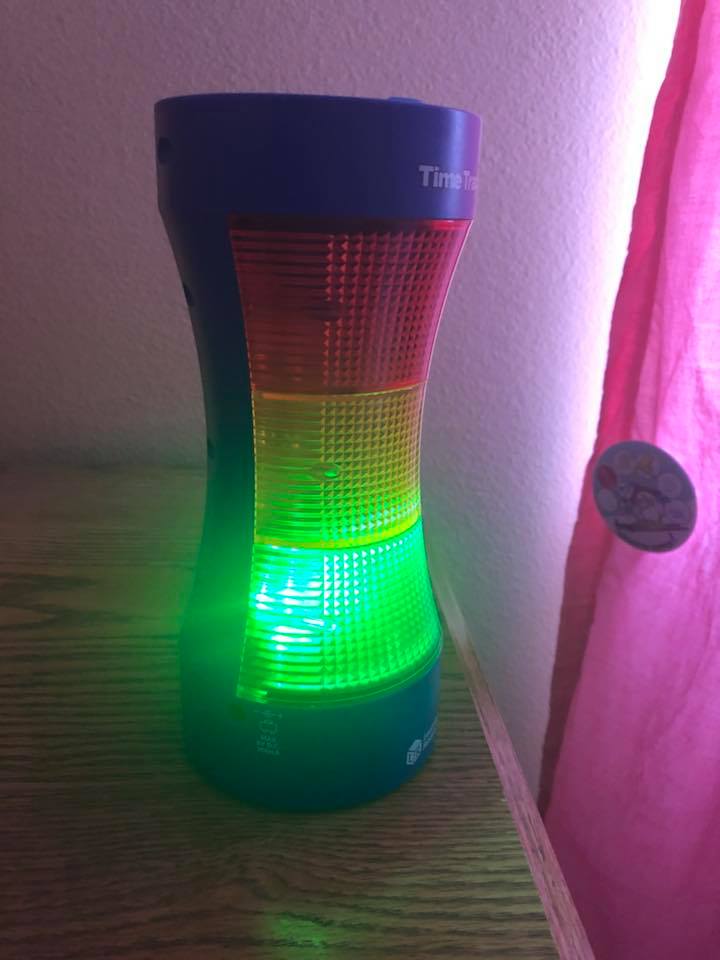
    Last to come is the timer I used for all of these tasks!  Time management is another HUGE skill that is difficult for those with EF deficits.

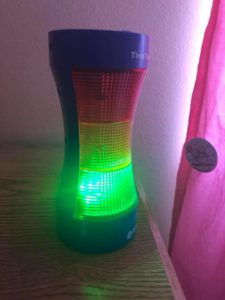
    The timer is from the autism community store here in Denver, but I’m sure you can find them on Amazon or other places.  This timer is amazing!!  The colors stand for different things similar to a stoplight.  Green means go, yellow means caution you are nearing the end, and red means you need to be done or stop NOW. What is best, is that each color is completely customizable by time.  For her morning routine, we usually set it for 3-3-3.  For homework, it might be  2-20-2.  Did I mention it also comes with sound?  So that means every color it changes to also has a sound to go with it, aka, an auditory cue.
    The impact

    I have to admit, there were times that as even I were making all of these materials and buying all these things that I wondered will this really make a difference?  Was all this work really worth it?? My answer came from Ashlynn.  As I was making these visuals, she probably thanked me more than 10 times.  She knows how she learns.  She was just waiting on me to help her.

    Laura Smith is a mom to two children, one of which who has multiple learning differences.  She is also an SLP (speech/language pathologist) specializing in CAS (Childhood Apraxia of Speech), a passion that was fueled by her daughter’s dx in 2012.  To learn more, visit slpmommyofapraxia.
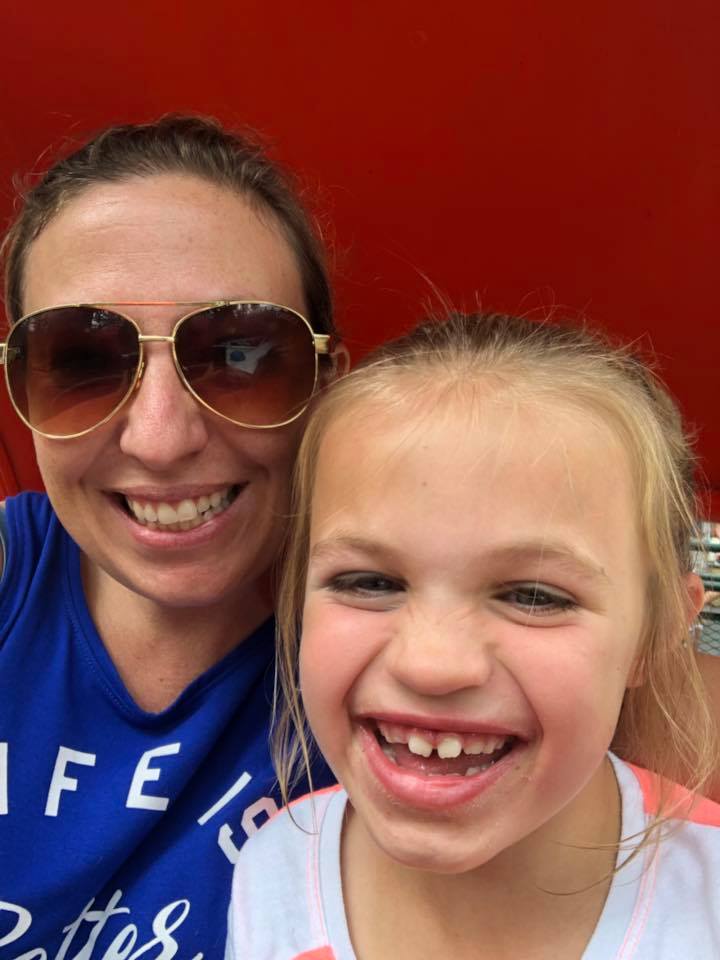


  • The 6th apraxia awareness day brought smiles, tears, and a jaw dropping moment

    Can it be that this is officially the SIXTH Apraxia Awareness Day?  The first one was way back in 2013 and was fresh off the heels of Ashlynn’s diagnosis.  At that time I was in such a sad place and having an awareness day was uplifting, empowering, inspiring, and amazing.

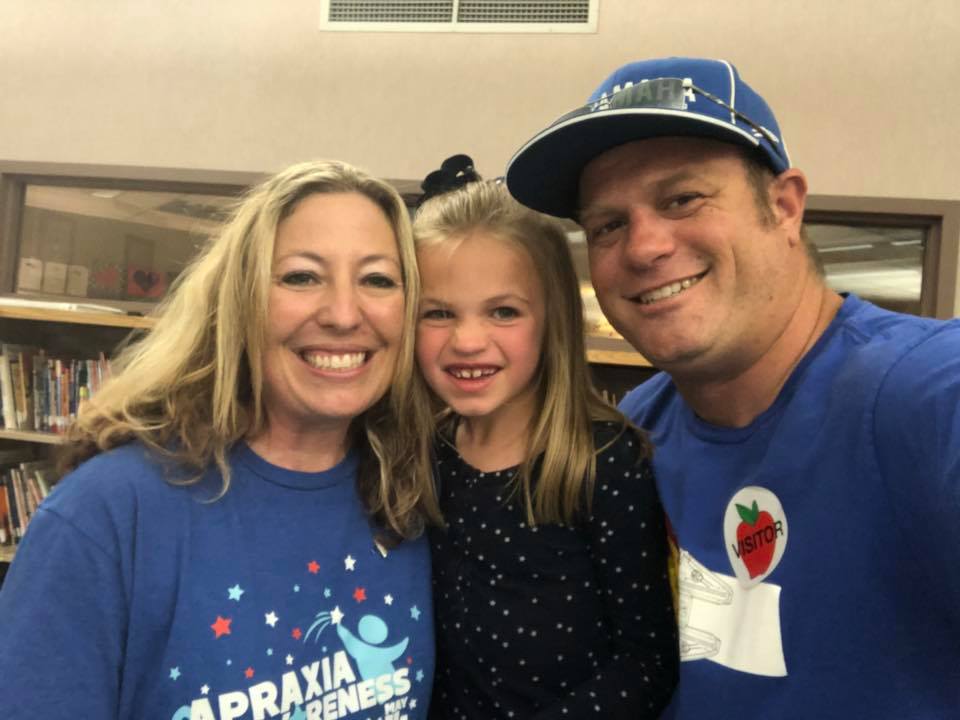
    Not much has changed, but for different reasons.  This was the first year I decided to go into Ashlynn’s classroom and officially “teach” about apraxia to her classmates.  I hadn’t done it before because apraxia didn’t seem to be keeping her from living her life and making friends, but this year had been different.  Though Ashlynn’s apraxic component is considered mostly resolved, her co-morbidities of dysarthria and language disorder impact her word finding, ability to get her words out, and make her talk slower and sound a little slushier and not as crisp as other students.

    I had a 5th grade student I have seen since second grade come and give the presentation with me.  Interestingly enough, I met and started treating him in second grade, when he was in the very same classroom that Ashlynn was currently in.  As we sat in front of 86 second graders, I saw his confidence grow throughout the presentation.

    I sat behind him ready to clarify anything that didn’t need clarifying.  Like a pro, he listed the three main causes:
    1.) Genetic
    2.) Brain injury
    3.) No known cause and just present at birth

    He was adamant to me beforehand that the kids know you “can’t catch it.”  I thought it was odd and told him I thought most kids wouldn’t think that, but if he wanted to say that it was a valid point.  I was shocked, I mean stunned, when I tell you what happened when he asked those 86 second graders if they thought they could catch it like a cold.

    THEY ALL RAISED THEIR HANDS.

    I was shocked, but my 5th grade student wasn’t. He knew.  I know a lot about apraxia, but this was new.  I had no idea kids thought they could catch it just by hanging out with her.  Oh my gosh!!  Had I known this I would have been teaching about apraxia to her class EVERY awareness day since she was in preschool.    Like a professional, and with his apraxia on display, my 5th grade student explained apraxia was nothing like a cold and you couldn’t catch it.  He reiterated the three main causes and moved on.  I had to have been beaming with pride from behind him.

    Next up was our demonstrations on what it feels like to have apraxia. My student gave the example of having the kids imagine they wanted to say “dog” and they knew the word “dog” but when they opened their mouth they said something completely different like “bwog,” and no matter how much you know how to say it and what you want to say, your mouth won’t say it correctly.  The second graders eyes were big and curious.
    Since Ashlynn also has extreme word finding issues compounded by anxiety, I had prepared an activity in which we called up two students.  I had a sentence written on a piece of paper that student 1 would have to act out for student 2 to guess without saying words.

    My student called on a boy and a girl each time for the first three examples.  For the fourth, just like a true teacher, he asked Ashlynn to call on two students.  She was excited to have control.

    After this activity it was time for questions.

    “How many kids have it?” asked one student.  About to jump in this 5th grader said,
    “1 in every two schools.”  What a great way to say 1 in every 1000 students!

    “What does it feel like?  Does it hurt?” asked one child.  The 5th grader answered that it doesn’t hurt physically but it hurts emotionally.  Actually he had an apraxic moment and said the opposite, but I was there to make the minor clarification and he went on to explain that it hurts emotionally.  “It hurts when you want to get something out and you can’t and it makes you sad.”  I seriously think I had tears in my eyes.  He was getting through to these kids.

    The day was so full circle.  When I met this 5th grader, I had just completed my Apraxia-Kids bootcamp training and was ready to help and empower children with apraxia.  Here I sat three years later from bootcamp and six years later from Ashlynn’s diagnosis beaming with pride.  What I learned today was our kids with apraxia are going to be okay.  Empowering them with knowledge and giving them a platform to educate and be their true authentic selves is going to be the winning formula.  Beyond resolving or not resolving, having residual effects or not, empowering our kids with knowledge and then giving them the opportunity to educate is going to change the world.  It really is, and I know our kids may struggle in school, but they are going to win in LIFE.

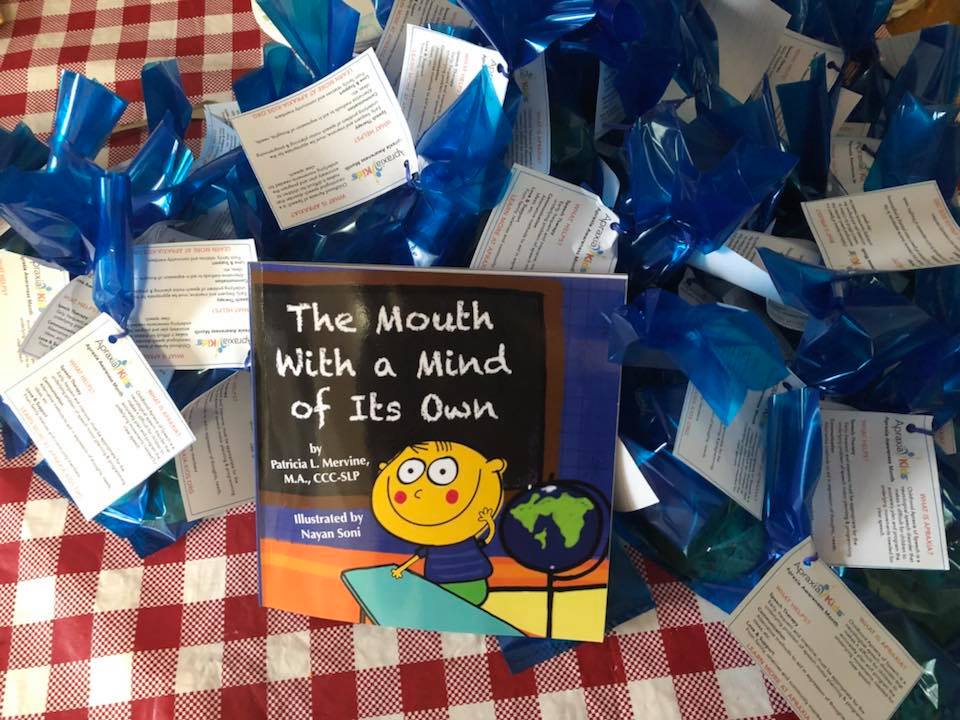
    We sent the kids away with treat bags and an informational tag on apraxia.  I had planned on reading the book in the picture but decided against it because the demonstration was so much more powerful and interactive.

    At the end, my 5th grade student passed out treat bags with Ashlynn.  Where Ashlynn was shy and reserved, he encouraged her to stand with him and help him pass them out.  She beamed and felt special.  I looked at them and saw the passing of the torch.  I had empowered him, and here he was empowering and encouraging my daughter.  I just sat back and watched with tears of gratitude in my eyes.  I have told him multiple times, begged him actually to come back and find me somehow when he is older.  I know he is destined for so many greater things than just his apraxia.  In fact, apraxia has prepared him to be the incredible person I know he’s going to be.

  • A fish in a tree and the teacher who helped her swim

    A fish in a tree and the teacher who helped her swim

    Ashlynn is in 2nd grade and is in Girl Scouts.  She has been in Girls Scouts since Kindergarten.  She loves it; but honestly, Ashlynn loves most activities and new adventures.  Yes she has apraxia, dyspraxia, SPD, ADHD, learning disabilities and a language processing disorder; but despite all of those disabilities she is a true extrovert that one.

    Ashlynn’s Girl Scout troop leader is seriously amazing.  If there were an award, I would nominate her to be the best girl scout troop leader in the state, because she is.    A girl scout troop leader is a volunteer who donates their time.  This woman though I think must be a real life saint who deserves a salary.  When Ashlynn first started Girl Scouts I wrote a post about how she became misty eyed and told me that she knew what Ashlynn was going through.

    When I first met her, I noticed something a little off with her speech.  Later I found out she has a hearing disability, and has had one since birth.  From the beginning she was very concerned about Ashlynn’s needs.  I was also surprised to learn that she had never had anyone with a disability before.  She told me she just wanted to make sure this experience was the best possible experience for her, and that she was willing to make accommodations or help her however she could.  We ended up having to make a few accommodations, especially with requirements. For example, in Kindergarten the girls needed to have memorized their name AND address to earn a special pin.  It took everything we could do for Ashlynn to learn the address, but we could just not get the phone number at that time.  Ms. E made an accommodation like a trained special education teacher would; and said as long as she can memorize one of the two, she would earn her pin.

    The other night the girls had homework.  It was a picture where you had to find items hidden in the picture.  She sent home the actual picture; and then she found, on her own, a simpler picture and told me that Ashlynn just had to finish one.  In special education we call this modifying the curriculum.  This woman has never read Ashlynn’s IEP.  She does not in fact know her modifications or accommodations.  She intuitively does them.  I can’t help but think it’s because she understands.  She has walked Ashlynn’s shoes.  She totally, totally gets it.

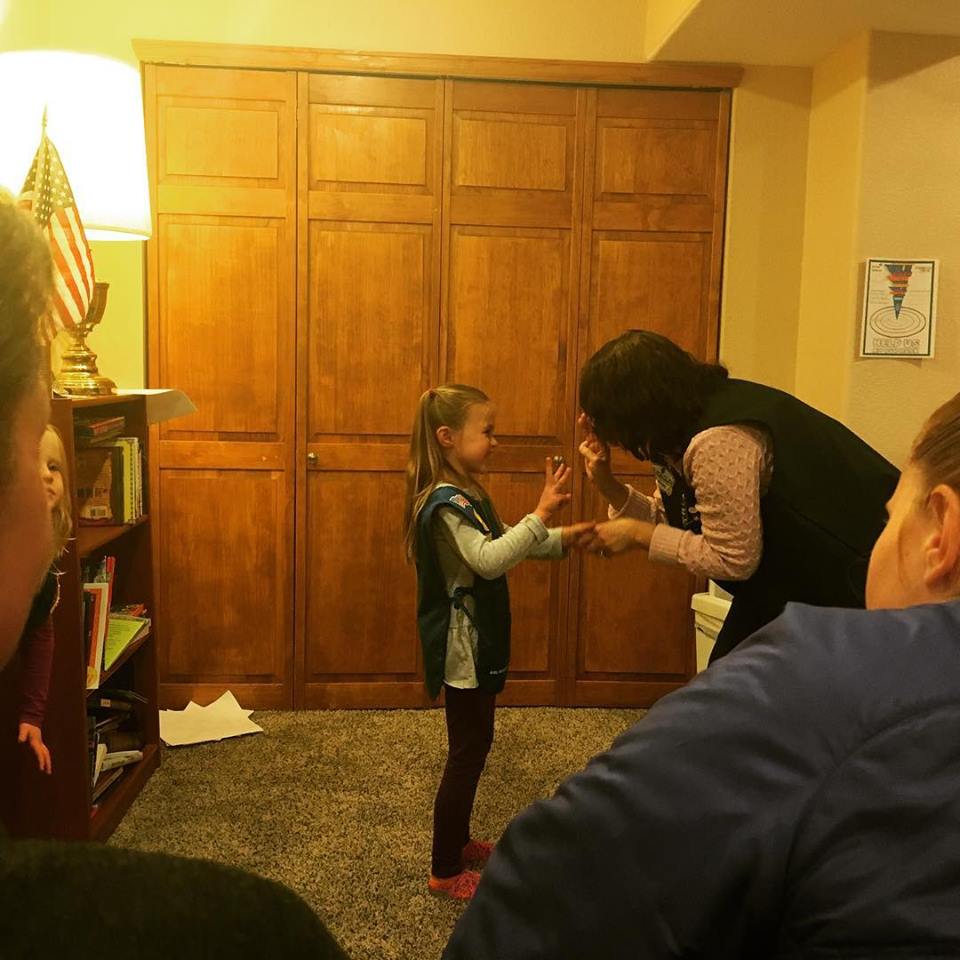
    This past weekend there was an event at the Denver Zoo called “Bunk with the Beasts.”  The girls would get to spend a night away from home and “camp” at the zoo.  Right after I received the group email about the event, her troop leader followed up with a personal email requesting that she know of any special accommodations or help that Ashlynn would need so she could do them.  She didn’t want Ashlynn to miss out.  I sent back a big list.  Ashlynn has dyspraxia.  Activities of daily living, like all the steps to get ready for bed are NOT easy. Her troop leader wrote back it wouldn’t be a problem.  A few days later a chaperone pulled out so I was asked to come.  I was thrilled!  I said yes immediately.  This way her troop leader could focus on the other 18 girls, and I could be there and help Ashlynn.

    When we arrived, there were 4 adults to 19 girls.  Her troop leader split them into groups of two.  She told me that usually a chaperone or leader is not placed with their girl, but in this case she made an exception.  So her and I were in charge of one group of girls in which Ashlynn was a part of, and the other two co scout leaders were in charge of the other group of girls for the zoo tour and excursions.  Some would find this preferential treatment; but it is in fact, an accommodation. I found a renewed sense of awe in this woman.  She went onto explain that many of the girls have developed “best friends” and she purposefully separated them for this event because a troop cannot be a troop unless they all learn how to work together.  I shrugged it off.  She looked at me more earnestly and said, “No, when I mean best friends I mean like this,” and she proceeded to hug my arm and not let go.  I still shrugged it off not realizing yet her point.

    As she gathered the girls and called out what group they were in, one of the girls was visibly shaken.  Her mom is a girl scout troop co-leader and I was standing next to her at the time.  She told me that this was a big reason her daughter wants to quit Girl Scouts next year, because Ms. E insists that the girls be separated from their best friends.  As she talked I looked on.  Most girls had a best friend in which they were sitting next too.  If not, they were still obviously part of the group.  Two girls sat in the back of the group slightly removed, but Ashlynn was basically completely removed in the back by herself.  Don’t get me wrong, she wasn’t acting upset or lonely.  Ashlynn loves girl scouts.  It just struck me in that moment that most girls had an “arm clinging” best friend, and my daughter had no one.  This mother I was standing next to felt so bad her daughter would feel alone and away from her best friend for a couple of excursions, and my daughter felt that way basically all the time.  I don’t fault this mom.  Maybe if I didn’t have a kid with a disability, I would feel the same way too.  Maybe I wouldn’t understand or even notice that another child in the group, the child with disabilities never had any of those best friend moments.  Maybe I would be sad that my child would be sad for a couple hours and never realize this girl in the same troop sitting in the back by herself doesn’t EVER have an “arm hugging” best friend. Maybe…..

    Ms. E did though.  Ms. E noticed.  That’s why she split them up.  Society needs to stop casting those who are different to the outside, but including them and accepting them too!  We are all better when we work together.  Ashlynn and I had the best time.  Ms. E paired each child with a “buddy” and Ashlynn was thrilled to have a peer’s hand to hold as she walked around the zoo.  Ashlynn’s joy is so contagious and she is an adult magnet.  I could see though in this setting, just how unlike her peers she looks.  She’s not shy.  She doesn’t get embarrassed or worried about making mistakes.  She bonks into stuff and people and laughs at herself.  She loses attention easily and starts to wander which would annoy her buddy.  She would randomly start talking or singing when you weren’t supposed to and her buddy would have to shush her. It didn’t matter though.  It made Ashlynn’s entire night to be part of her peer group.

    I came home and cried to my husband I get why girls think she’s different.  She’s not stuck up.  She’s not concerned about what other people think.  It’s amazing how society gets it’s grasp into children as young as second grade.  I noticed so many girls tugging at their shirts, checking their appearance, and censoring what they say because they want to fit in.  I couldn’t help but look at Ashlynn and think of the Dr. Seuss quote, “Why fit in when you were born to stand out?”

    What’s ironic is these kids who “stand out” end up changing the world.  I am almost obsessed with successful people.  Notice I didn’t say “famous” people, though many might be famous.  No SUCCESSFUL people.  People actually changing the world and making it a better place.  The innovators and visionaries.  Most of them were kids who were a little different.  Some may have had a “disability” like ADHD, dyslexia, or whatever.  Bill Gates said once, “Be nice to the nerds.  You might end up working for them.”

    Last month in the news the boy scouts were under fire for revoking the eagle scout badge for a teen with Down Syndrome.  The parents filed a lawsuit claiming that their son was being discriminated against because without accommodations, there would be no way he could earn the necessary requirements to get the Eagle Scout Award.    

    The argument against him earning the award was that though he tried his hardest, he did not meet the requirements set forth.  If you don’t have a person with a disability in your family, I could see how this could make sense to you.  There are requirements that have been established, and if a person can’t meet them for whatever reason, they don’t.  There are able bodied children who don’t meet the requirements either and that’s just the way it is, right?

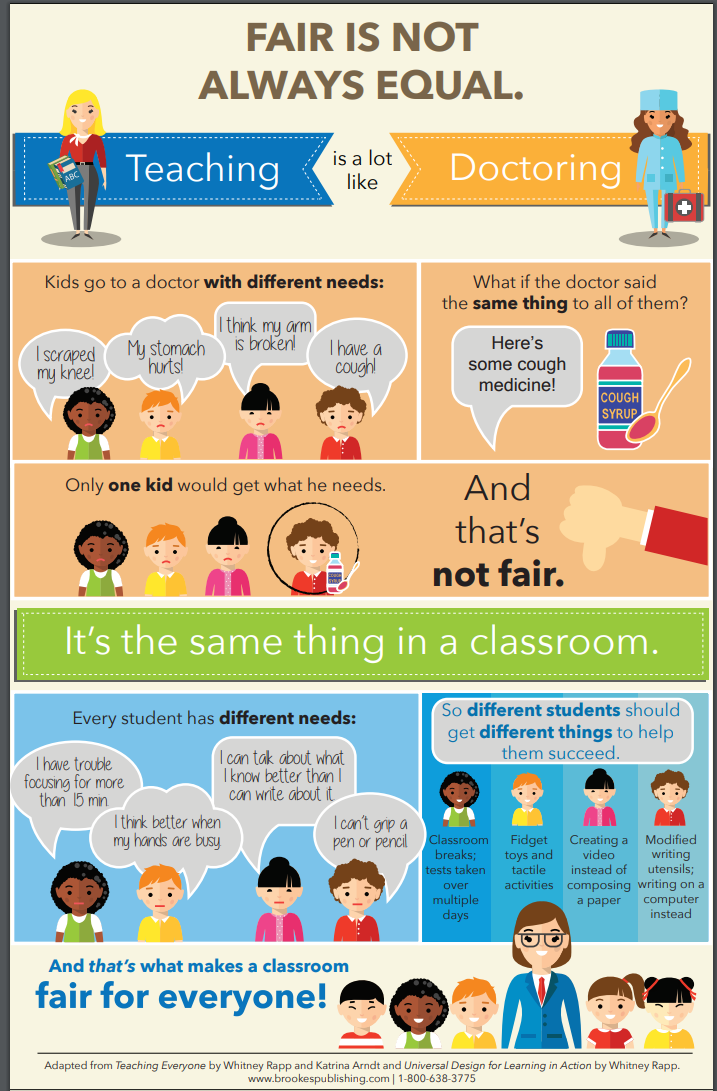
    Let me point out this graphic.

    This graphic compares teaching to going to a doctor.  Kids go to the doctor for different symptoms, and the doctor treats the symptoms.  It would be ridiculous though if you went in with a broken arm and the doctor prescribed antibiotics.  Under our current educational model that is not inherently inclusive; this is exactly what is happening.  The current educational model is based on a child without any learning, attention, or behavioral disabilities.  The lessons are made and the classrooms are set up for kids who can sit in a chair, listen and interpret information, and then attend to their work.  It is not equipped for  the child who needs sensory breaks, or the child who needs to use asisstive technology to help them write because they can’t, or the child who needs assistive technology to have something read to them because they can’t read.  It is not set up for the child who cannot learn through the auditory channel but learns best through visual and tactile channels.  Here is the most important piece though about all of this.  Children who are not “typical” CAN show their learning and skills in other ways if they are just given accommodations!!

    That’s not fair, you might say.  I would counter that it’s not fair we have a bunch of children with broken arms (learning disabilities) being forced to take antibiotics (traditional education), and then are penalized for failing. They are SET UP to fail.  A system that mandates all children must learn the same and prove they have learned the same is a broken, discriminatory system.  As Albert Einstein once said, “If you judge a fish by it’s ability to climb a tree, it will spend it’s whole life thinking it is stupid.”

    Ms. E understands this and I am so, so thankful to her.  The challenge today for apraxia awareness month was to recognize a teacher making a difference.  There are so many amazing people I could choose, but today I Thank you Ms. E, for recognizing my daughter is a fish and deserves a chance to swim.

  • Good SLP’s for apraxia are addressing the head in the hands

    Good SLP’s for apraxia are addressing the head in the hands


    Therapy for apraxia is direct and intense.  Any task that involves motor planning is this way.  Motor planning any skill, whether it be learning to shoot hoops, hit a tennis ball, or learning to speak when your etiology is motor planning (apraxia), instruction needs to be intense and involve a lot of repetitive practice.

    I remember when I attended an intensive 4 day training, Dr. Ruth Stoeckel from Mayo clinic was asked how many repetitions SLP’s should be looking to get in therapy.  She hesitated and expressed concern about giving a number.  I didn’t understand her hesitation at the time.  It was a simple question, how many repetitions should we be trying to get in therapy?  We were all professionals.  We all understood that this number would be in the ideal circumstance, and that many factors would decrease the number.  Still, she was hesitant to give a number.  She did finally say in the ideal circumstance, we are looking to get around 200 reps per session.

    I now realize why Dr. Stoeckel was hesitant to throw out that number.  It’s not only because it can only happen in the most ideal circumstances and we might frequently fall short.   The main concern is that a number doesn’t take into account a child’s emotional health.

    Let me say it again.  Yes our goal is to get a lot of reps, but it doesn’t take into account a child’s emotional health!

    I was talking to a student who is Ashlynn’s para right now and he is looking to earn his special education degree.  He expressed concern that others seemed so much smarter than him and he was worried he wouldn’t be as good a teacher.  He was the only person in Ashlynn’s life thus far who recognized her anxiety and nail picking and fixed it by buying her a rubber band ball.  His professor actually admonished him for it.  It just went to show his professor sitting at the university was completely out of touch with what was going on the field, and that was my point to this young man.

    I have met brilliant SLP’s.  Seriously brilliant.  “C’s get degrees” does not apply in my field.  I’m not trying to boast either, it just doesn’t happen.  Graduate school for speech/language pathology is extremely competitive, and average GPA’s, AVERAGE, were 3.88 to 3.97 at the time I was trying to get into graduate school.  That means a fair amount of current SLP’s held college level GPA’s that were 4.0.

    It’s important to have the best of the best teaching our children to talk; however, a GPA can never account for what I would consider to be one of the most important qualities in an SLP.  It’s a quality I can’t even succinctly put into one word, but it is by and far the most important.  It is a therapist’s ability to read and then respond to the emotional health of their student or client.  If we, in our quest to get 200 reps completely disregard any signs of emotional anxiety, distress, or defeat in the child; we have lost everything we had hoped to gain.

    Let me say that again.  If we sacrifice a child’s emotional health for the sake of getting in so many reps, we have lost EVERYTHING.

    Speech therapy is predominately speech and language therapy, but the counseling aspect I believe is significantly underscored. My graduate program did include a class on counseling in speech therapy, but it was geared primarily to the adult population or for those who stutter.  Our pediatric field recognizes now the importance of counseling in stuttering therapy, but there is very little information out there on counseling and our kids with not just apraxia, but also a phonological disorder, articulation disorder, or a language impairment.

    What Dr. Stoeckel was trying to tell us in her hesitation of throwing out a number of reps we should be targeting, is that if we sacrifice their emotional health and our trust relationship with them for the sake of getting in a certain amount of reps, we have sacrificed everything.

    I get sent videos from time to time asking for advice, and usually what I find striking is NOT the speech therapy that is being done, but the absolute blind eye turned to a child’s nonverbal signs of emotional distress.  I remember watching one video and the child was enrolled in PROMPT therapy.  The SLP was kind, competent, and skilled at what she was doing.  What she never even once acknowledged though was that the child would constantly put his head in his hands when she asked him to repeat anything.  Nothing was said.  Nothing at all!  Not, “It’s okay, I know this is hard, but you got this!” or “I know it’s so hard and I can see you are frustrated so let’s take a break.”

    Nothing. Just, “Say it again, try again.”

    It was all about reps and speech and reps and speech and reps and speech and reps and speech.

    I’m here to tell you, if we aren’t addressing the head in the hands, the best and the smartest SLP in the world isn’t going to make progress.  I told this student, if we aren’t addressing the nail picking that causes bleeding, the best and smartest SPED teacher in the world isn’t going to make progress.

    Let’s go back to motor planning though, since the research is telling us that is the most effective form of treatment for apraxia.  If we liken it to another motor skill like basketball, is the job of a coach JUST to teach the kid the right technique and the right form to shoot a basket?  Or, is the job a coach to also encourage, foster, and nourish their confidence as well?  In that analogy, it seems obvious; yet with speech therapy we still don’t seem to be there yet.

    A final example comes from a newer client of mine.  Completely nonverbal at the age of 7, her school SLP, who is amazing, risked her job to recommend private therapy.  After three months, she was making progress, but much, much slower then I wanted.  She had major avoidance behaviors and if she were asked to repeat anything again she would point to something else, pretend her finger hurt, or try to get off topic.  The avoidance behaviors decreased the more she developed trust and had success, but I still felt like I was missing something.

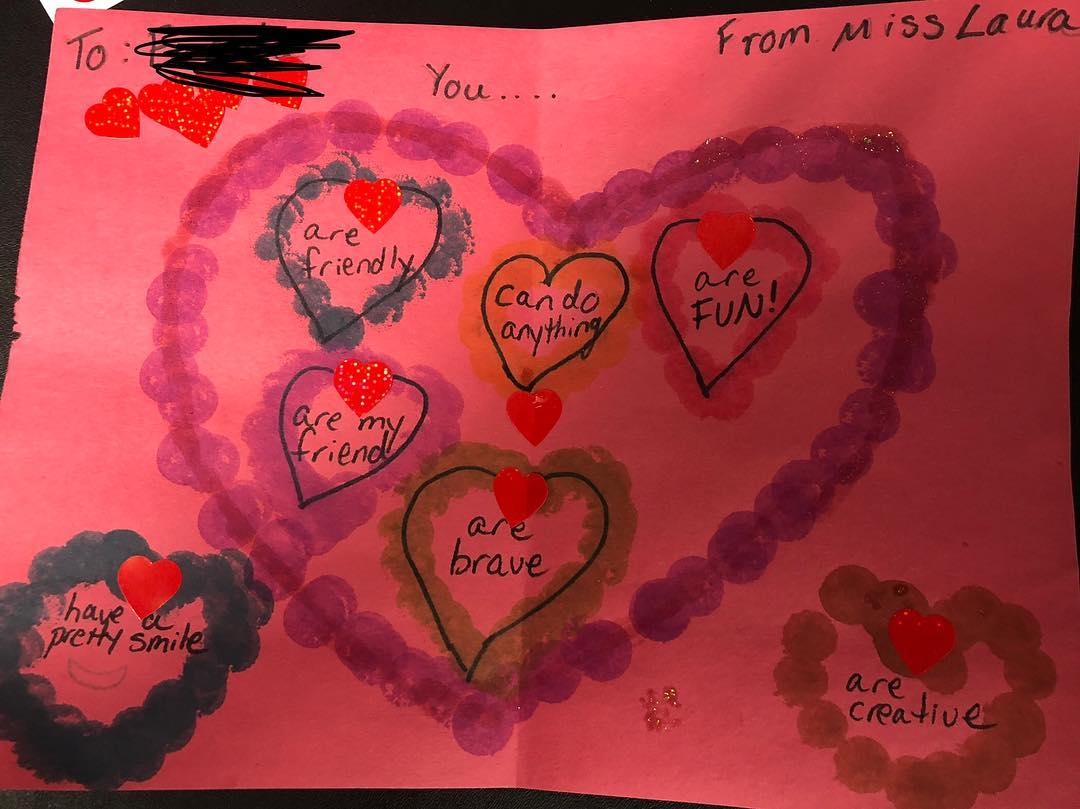
    Since Valentine’s day was coming up, I decided we would take a break from speech and do something fun.  Make Valentine’s.  I still embedded a few target words in the activity, but for the most part, the focus was on the Valentine.  She made one and I made one.  When I showed her mine, I read all the things I wrote about to her.  I stressed that she was brave and could do hard things.  Her brown eyes searched my face, wanting to believe me.  When I read she was creative, she proudly pointed to the Valentine she had made, and I nodded in affirmation.  After the session, I had her mom come in and read it.  She beamed as her mom read the words on the page.  Before she left I looked her in the eye again and told her she was brave and could do hard things.  This time, though her eyes still searched my face, she nodded her head.

    The next day her school SLP sent me a video.  She had a breakthrough and said two new words and her confidence was through the roof.  We both decided taking time to address her emotional health was going to be just as critical to her speech progress as were the principles of motor learning.


    My message today is this.  You can have the smartest, most competent, adept and amazing SLP in the world;  but if they aren’t addressing the head in the hands, the avoidance behaviors, or a child’s emotional heath; they are sacrificing EVERYTHING. In our quest to provide good therapy for apraxia, we keep in mind the principles of motor learning, but ALSO what it means to be a child’s coach and champion.  That might mean some sessions we elicit 0 reps, but what we gain in trust is immeasurable.

    Be the therapist who is looking to give good therapy, but who first and foremost is always looking for and then addresses the head in the hands.  Your kids will thank you.