Tag: Apraxia Awareness

  • Apraxia Awareness Month 2024 is right around the corner!

    Apraxia Awareness Month 2024 is right around the corner!

    Apraxia Awareness Month is May of 2024! The first EVER Apraxia Awareness Day was recognized only 11 years ago on May 14th, 2013. Right on the heals of Ashlynn’s diagnosis in 2012, this day filled my cup!

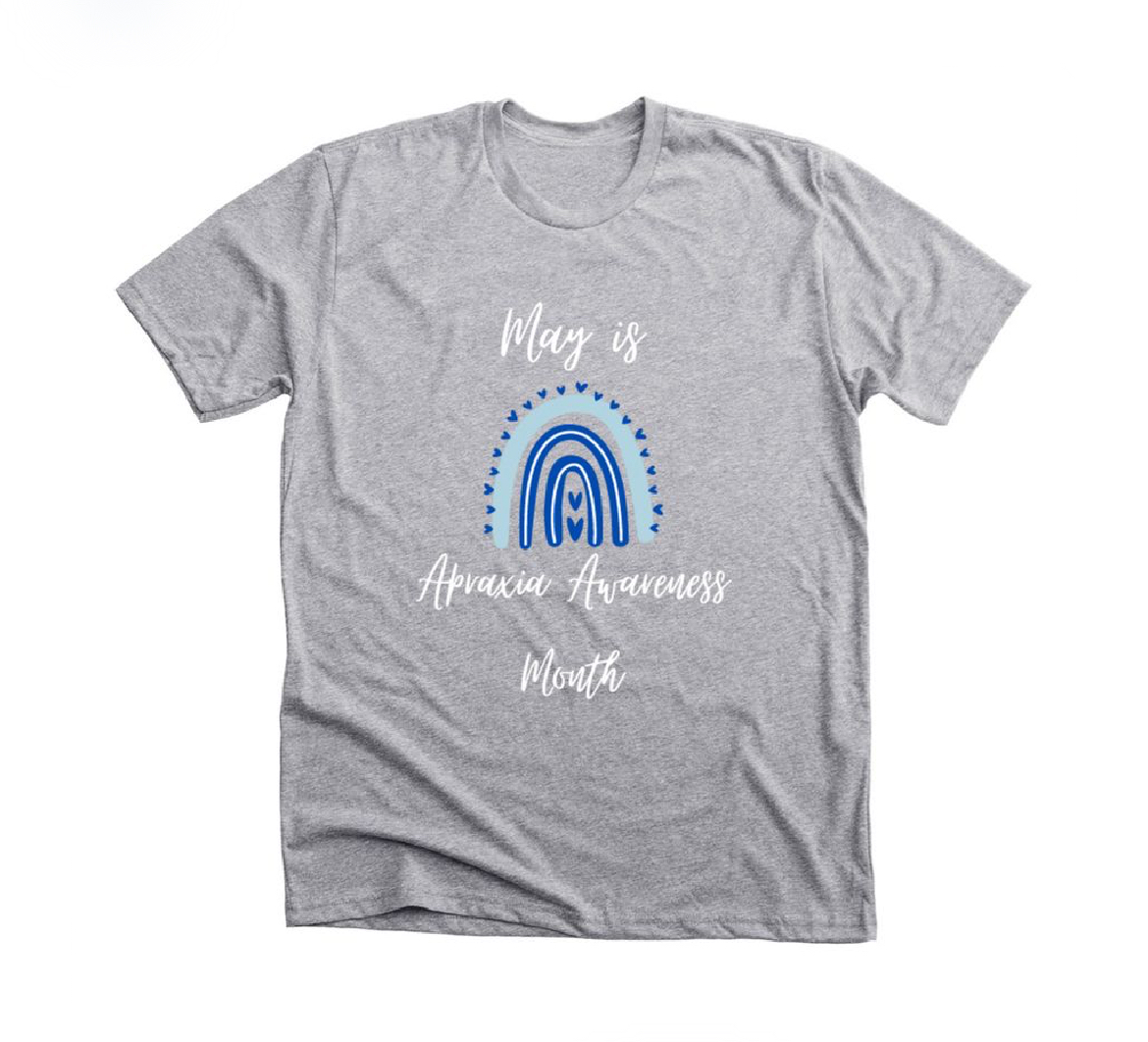
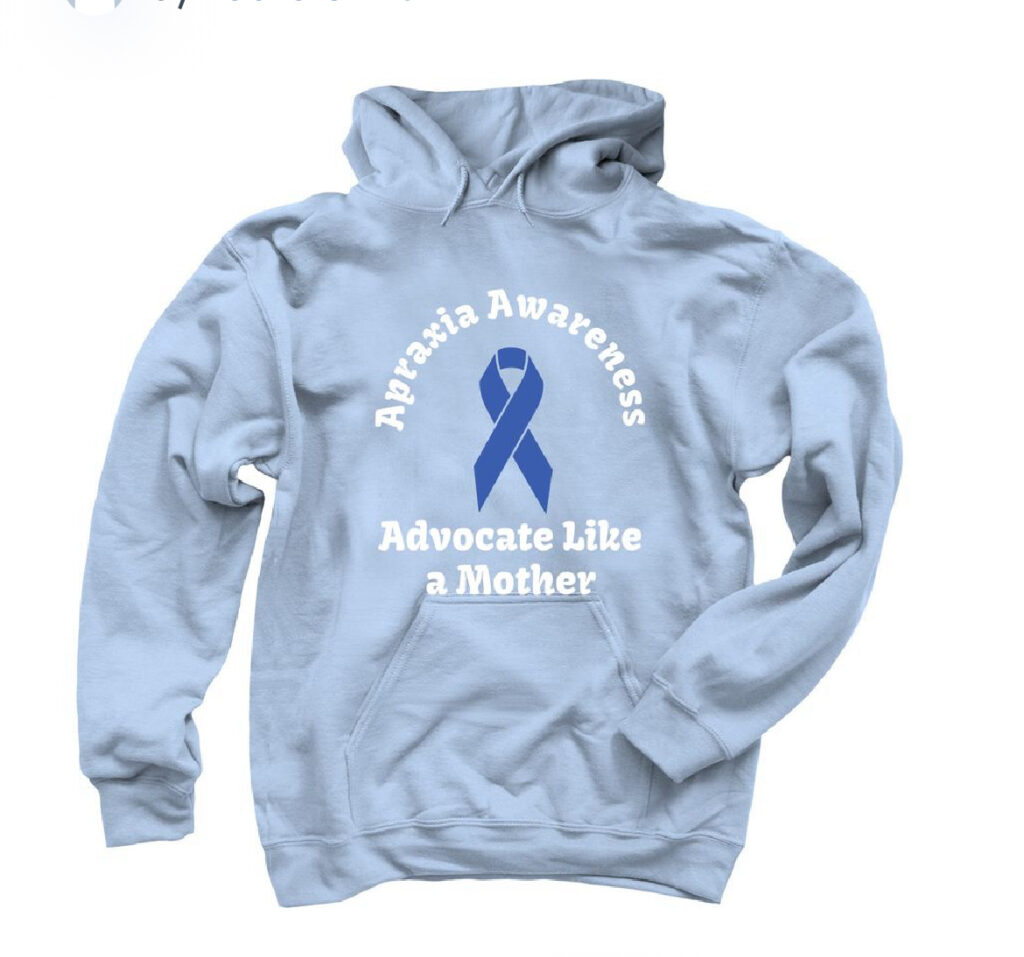
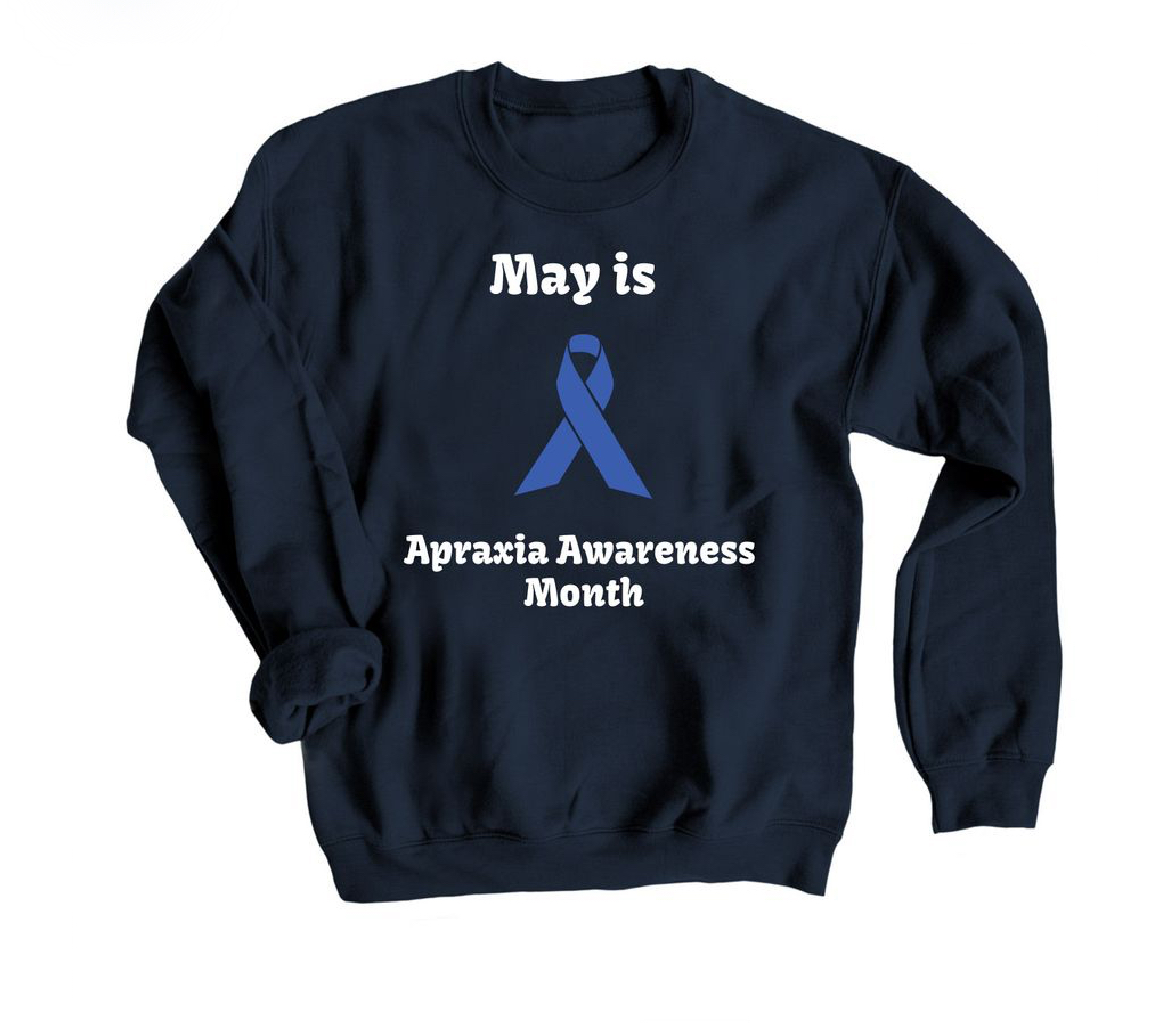
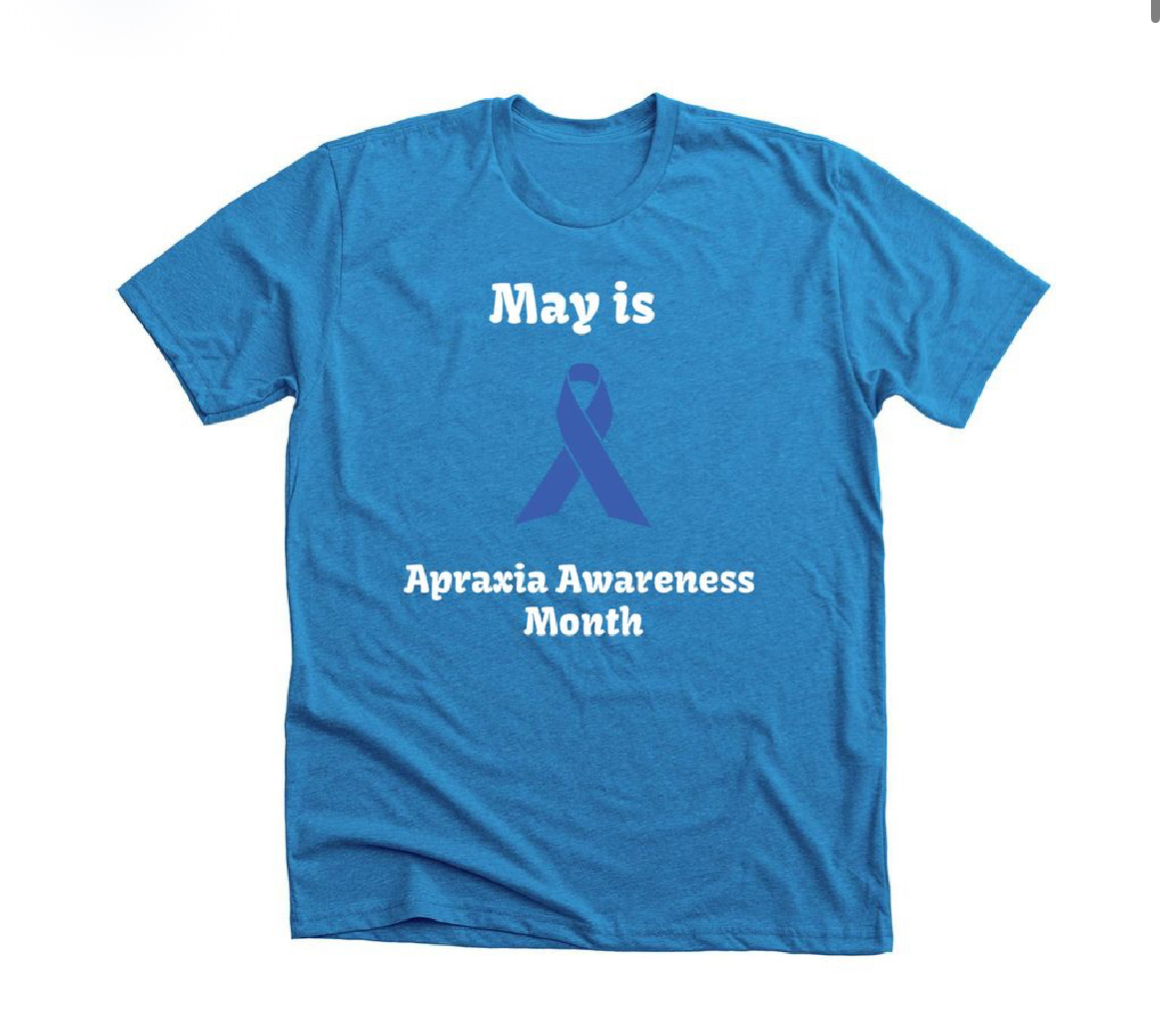
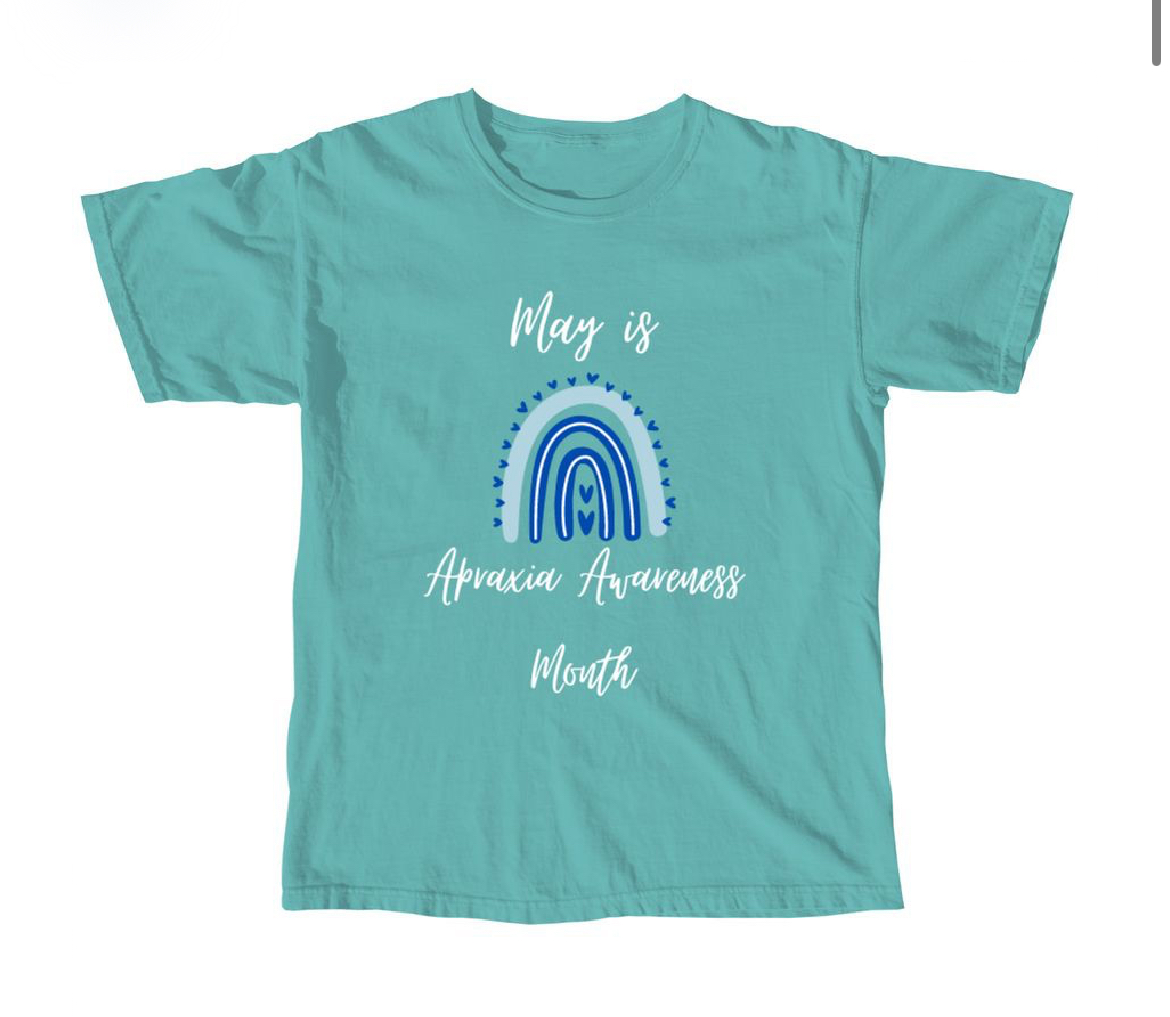
    Each year since it has grown bigger and bigger! One thing that’s a MUST is to wear your apraxia awareness gear! For a short time, my store is offering shirt sales through April 11th 2024. That’s the last day to ensure you will get yours in time for Apraxia Awareness month, which is just month away! Look for more posts on other ideas to help spread awareness leading into next month!

    Grab yours by APRIL 11TH to ensure delivery by May 1st! Link to store here!

    May is Apraxia Awareness Month
    Apraxia Awareness Advocate Like a Mother
    May is Apraxia Awareness Month
    May is Apraxia Awareness Month

    Tag me, SLP Mommy of Apraxia on social media in May during Apraxia Awareness Month 2024 with the hashtag #slpmomyofapraxia2024 and #apraxiaawarenessmonth2024 so I can reshare you wearing your gear!

  • Top Ten Questions for SLP’s treating CAS

    Top Ten Questions for SLP’s treating CAS

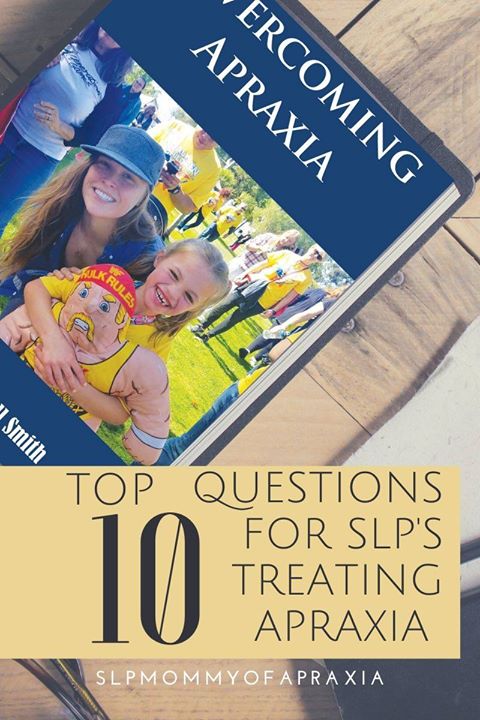
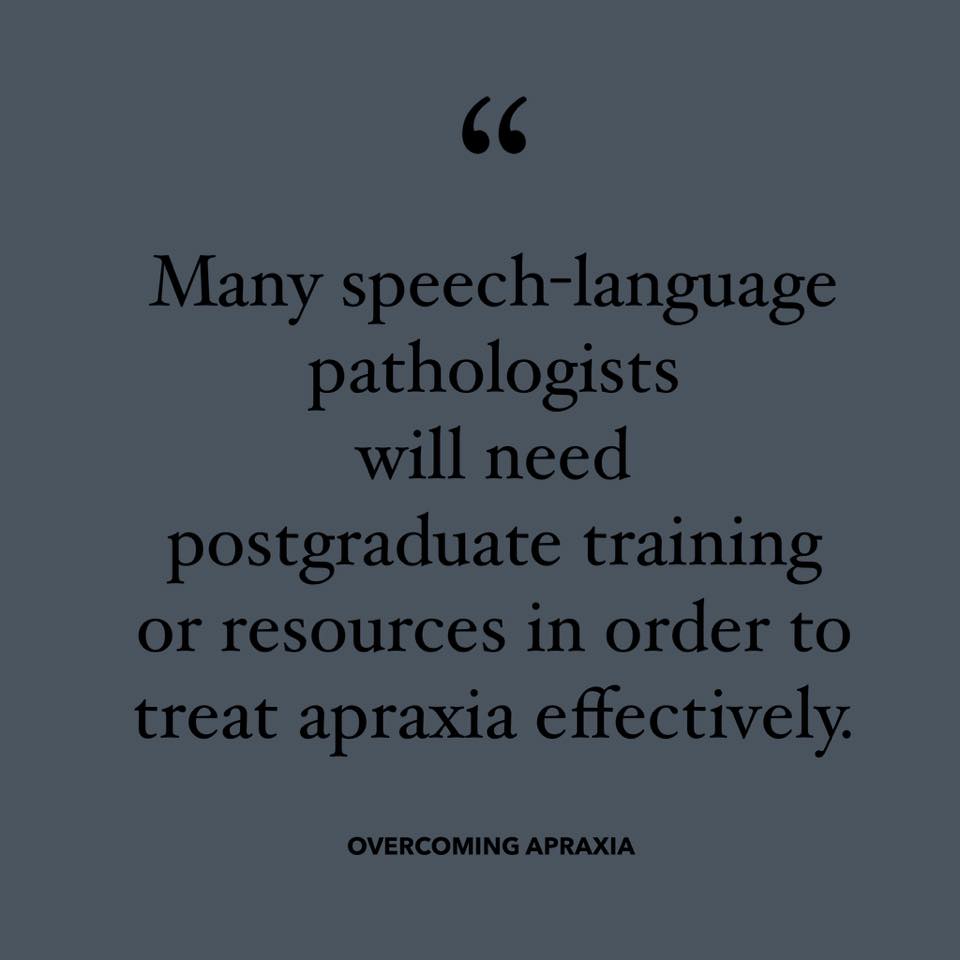
    I recently posted a quote from my book Overcoming Apraxia that was met with a lot of questions. The first question was from SLP’s asking about the additional trainings and resources I would recommend. You can read about that here. The second question came from parents wondering what questions to ask? I’ve created a (not exhaustive) list of questions to ask a potential SLP about their knowledge and experience treating childhood apraxia of speech.

    As I was writing them, I thought, though this list is a great starting list for parents, this is ALSO a great list for SLP’s to ask themselves when evaluating whether they are actually an expert in it! Self reflection is always good, right?”

    Okay so here we go! My top ten questions for speech-language pathologists!

    1. How comfortable do you feel treating childhood apraxia of speech?
    2. What treatment approach do you use?
    3. How is treatment for CAS different than other speech sound disorders?
    4. Do you have any additional trainings or certifications in apraxia?
    5. What causes apraxia?
    6. What are the red flags for apraxia?
    7. How do you diagnose apraxia?
    8. What are the principles of motor learning and how are they used in therapy?
    9. How many children have you treated with CAS?
    10. What resources would you recommend for parents?

    What other questions would you ask? Find me on social media under the handle SLP Mommy of Apraxia and let me know!

    Laura Smith, M.A. CCC-SLP is a 2014 graduate of Apraxia Kids Boot Camp, has completed the PROMPT Level 1 training, and the Kaufman Speech to Language Protocol (K-SLP). She is the author of Overcoming Apraxia and has lectured throughout the United States on CAS and related issues. Currently, Laura is a practicing SLP specializing in apraxia at her clinic A Mile High Speech Therapy in Aurora, Colorado. 

  • Trainings and resources for SLP’s on childhood apraxia of speech (CAS).

    Trainings and resources for SLP’s on childhood apraxia of speech (CAS).

    I recently posted a quote from my book Overcoming Apraxia on social media that garnered quite a bit of attention. It wasn’t to criticize or disparage SLP’s. It’s just a fact many of us speech-language pathologists, (myself included) didn’t get adequate training in graduate school on how to treat apraxia. I had maybe 15 loose leaf pages on it, and that wasn’t about treatment.

    Many SLP’s asked what trainings I would recommend and many parents asked what questions they should ask. I’ve compiled a list of trainings and resources on childhood apraxia of speech for speech-language pathologists.

    SLP training and resources

    There are numerous online free trainings for apraxia, believe it or not.

    1. Currently Edythe Strand has a free course on DTTC (dynamic temporal tactile cueing) that gives you CEU’s through the University of Texas at Dallas found at Child Apraxia Treatment.
    2. Another FREE resource is out of the University of Syndney that has a free online training and AND supplemental materials for ReST (Rapid Syllable Transition Training)
    3. PROMPT (Restrucuring Oral Muscular Phonetic Targets) is a method of tactile cueing that only offers in person training and is pricey.
    4. Lynn Carahaly has the Speech EZ Apraxia program with videos for sale and workshop opportunities.
    5. Nancy Kaufman has a commercially available video detailing her method that I liked when I was first learning about CAS because she gives a lot of video examples.
    6. Apraxia-Kids.org offers on demand videos that can be accessed through a yearly subscription fee that is relatively cheap (around $90 for the entire year).
    7. ASHA.org has a recently updated practice portal on CAS.
    8. A book that is awesome on how to treat apraxia is by Margaret Fish called “Here’s how to treat childhood apraxia of speech.”
    9. Another book that is fantastic is by Cari Ebert and David Hammer called “The SLP’s Guide to Treating Childhood Apraxia of Speech.”
    10. A newer and AWESOME book targeted for parents and early intervention professionals is “Let’s Get Talking,” by Mehreen Kakwan. It explains direct therapy tips to use when a child has suspected motor planning difficulties including visual and verbal cueing ideas.

    *Both DTTC and ReST have the current highest evidence base in the research on apraxia*

    Fellow speechies, here’s the deal. Yes we come out of graduate school with a wealth of knowledge, and yes, the Certificate of Clinical Competence behind our name makes us qualified to treat speech/language disorders; however, the field is VAST. We should not apologize or feel bad about not being an “expert” in every speech and language disorder from birth to geriatrics.

    However we DO have a responsiblity to be honest with parents, clients, and families about our level of expertise in a given area, and whenever possible, try to gain additional training and expertise in that area if we are lacking.

    Laura Smith, M.A. CCC-SLP is a 2014 graduate of Apraxia Kids Boot Camp, has completed the PROMPT Level 1 training, and the Kaufman Speech to Language Protocol (K-SLP). She is the author of Overcoming Apraxia and has lectured throughout the United States on CAS and related issues. Currently, Laura is a practicing SLP specializing in apraxia at her clinic A Mile High Speech Therapy in Aurora, Colorado. 

  • Oral Language and Phonological Skills May Be the Best Predictors for Reading Disorders in Childhood Apraxia of Speech

    Oral Language and Phonological Skills May Be the Best Predictors for Reading Disorders in Childhood Apraxia of Speech

    A new study finds that 65% of children with a history of suspected Childhood Apraxia of Speech (sCAS) are low proficiency readers, suggesting that early literacy intervention is justified for this group of children.

    August 17, 2019

    Research recently published in the American Journal of Speech Language Pathology (AJSLP) suggests children with sCAS are at increased risk for reading disorders and should receive early intervention targeting early literacy and language skills, along with the speech motor planning component in their speech therapy program.

    The current conceptualization of CAS as primarily a motor speech disorder may encourage interventions that rely largely on habituating accurate motor speech plans with little attention paid to the development of literacy skills. Viewing CAS as a motor speech disorder that commonly includes reading impairment may be more useful to clinicians given the high percentage of children with CAS who exhibit decoding difficulties. “

    The study by Miller, Lewis and colleagues had several aims.  First, the researchers wanted to identify the frequency of reading disorders in children with sCAS and Speech Sound Disorder (SSD).  Also, researchers wanted to learn how children with sCAS differed from one another and also how they differed from children with SSD in various levels of reading proficiency and performance.

    Participants were a group of 40 children ranging in age from 7-18 with sCAS and 119 participants ranging in age from 7-18 with SSD. All the study participants were tested and then compared on various measures for speech, language, reading, and cognitive-linguistic skills.

    Several findings are of interest:

    • Sixty-five percent of children with sCAS were low proficiency readers, which is substantially more than the percentage of low proficiency readers in the general population.
    • Specific risk factors for literacy difficulties in children with sCAS were oral language and phonological skills.
    • While speech motor skill deficits were identified in all children with sCAS, the participants’ speech difficulties did not predict their reading proficiency.

    Overall, the findings indicate that viewing CAS solely as a motor speech disorder may be a disservice as SLP’s might miss out on the opportunity to address the intertwining of speech, language and literacy deficits as early as preschool. The current study provides justification for providing early literacy intervention coupled with appropriate speech and language therapy for children with sCAS to strengthen weak phonological processing skills found in the population and which negatively impact later reading proficiency.

    Future research needs to explore the differences or similarities in the trajectory of reading achievement between groups considered resolved or with persistent CAS as well to explore what specific interventions are particularly helpful for kids with CAS and reading impairment.

    Sources:

    Gabrielle J. MillerBarbara LewisPenelope BenchekLisa FreebairnJessica TagKarlie BudgeSudha K. IyengarHeather Voss-HoynesH. Gerry Taylor , Catherine Stein, “Reading Outcomes for Individuals With Histories of Suspected Childhood Apraxia of Speech.” American Journal of Speech-Language Pathology. (August 17, 2019).
    https://pubs.asha.org/doi/full/10.1044/2019_AJSLP-18-0132

    Laura Smith, M.A. CCC-SLP is a 2014 graduate of Apraxia Kids Boot Camp, has completed the PROMPT Level 1 training, and the Kaufman Speech to Language Protocol (K-SLP). She has lectured throughout the United States on CAS and related issues. Laura is committed to raising and spreading CAS awareness following her own daughter’s diagnosis of CAS and dyspraxia. She is the apraxia walk coordinator for Denver, and writes for various publications including the ASHA wire blog, The Mighty, and on a website she manages slpmommyofapraxia.com.  In 2016, Laura was awarded ASHA’s media award for garnering national media attention around apraxia detailing her encounter with UFC fighter Ronda Rousey, and also received ASHA’s ACE award for her continuing education, specifically in the area of childhood motor speech disorders. Currently, Laura is a practicing SLP specializing in apraxia at her clinic A Mile High Speech Therapy in Aurora, Colorado. 

  • Growing up apraxia: “I want them to learn what it is.”

    Growing up apraxia: “I want them to learn what it is.”

    Hi Alexis!  I remember first seeing you on the facebook page apraxia awareness and hearing you do a very real and raw live Q&A.  That was very brave of you! You were so gracious to answer so many questions openly and honestly.  This past year, I set a goal to reach people outside of the United States.  I want to help those who have apraxia worldwide get the help they need and deserve!! Having you on this blog post to start May and Apraxia Awareness month is helping achieve just that!!  Thank you for your bravery!

    To start, can you begin by telling us a little about yourself and your journey with CAS?

    I am 23 years old. I am an insurance advisor in Alberta, Canada with the Co-operators. I took speech therapy from kindergarten until grade 5. I remember really realizing for the time that I had a speech impediment when I was about 7. I became interested in learning more about it in grade 6 – what it was & why I had it.

    What do you remember as a child with CAS and speech therapy?

    Like I said, I started speech therapy in kindergarten. I have really vivid memories of the hearing test they would do. Putting a headset on and listening for the beeping. You’d have to tell the person what side the beeping was coming from. I was always so proud because I aced those tests every time. The pride was usually met with confusion the first few times though. I did so well, you told me I got all of them right, so why do I have to come meet with you for lessons?

    I remember being told I had a speech impediment. I remember all of the “that’s not how you pronounce that”, “listen to me”, “watch my mouth”, “it still doesn’t sound right”, but I didn’t get it. I can remember being frustrated and angry. This woman would tell me all these things over and over again and I was sitting there thinking lady, I just heard myself say it, it sounds exactly the same as when you do it. Of course, it didn’t.

    When I say the first time I remember really knowing I had this was 7, it’s because I’m fairly sure that was the first time my speech therapist used a tape recorder. This thing was the bane of my existence. I’m 7, over confident, and a little annoyed with this woman because we’re saying the same thing. Was I ever showed up. This tape recorder comes out because after give or take two years my speech therapist must of realized I really didn’t hear what she was hearing. My voice in my head has no speech impediment and I was too young to understand that I just wasn’t hearing it right. I was about to have my little world crushed.

    Every session started with me telling her about my last week. This session, she recorded it. The moment she hit play and I had to hear my actual voice, instead of the one in my head, I wanted to disappear forever. She’s not wrong when she says my sounds aren’t right. All of a sudden two years of fighting this woman came crashing down around me. I was wrong, she was totally right, and I sounded (to my very young self) weird. I can not tell you how miserable I was hearing this recording. I did everything I could after that to prevent her from using the tape recorder again. It did help though. My sessions went better and I got more done, because I knew I actually was saying the sounds wrong, even if I couldn’t hear it.

    Were you ever bullied?

    I know this isn’t what parents are going to want to hear, but yes, I was bullied a ton. The bullying continued all the way into highschool. Luckily for me, I had a great few friends and family members. We really started to look at people who said anything about it as just being sad, or a little pathetic. It might sound harsh, but really of all the things to choose to pick on someone for, this was pretty ridiculous (it’s always ridiculous though). Honestly, “they talk a little different then me so I’m going to bully them”. We’d think about their bullying in that really point blank way, and just laugh at them. That train of thought is may more ridiculous sounding then I’ll ever be.

    How has apraxia affected your life, or has it?  Do you have any residual issues?

    The bullying did affect my life. Most days my above tactics worked great, but of course everyone has their off days where it just sucks. It still does just suck sometimes, but that’s not the end of my world. I still can’t say any of my R sounds. R sounds were the last thing to work on when I was in grade 5, and due to a lack of speech therapists in the school and time, I was seen 3 times that year. Once I got into middle school it wasn’t provided through the schools anymore and the cost was too high to do it privately. Now, I’m 23 years old with no real talent for R sounds. My last name is Berger and I work in the insurance field. Good choice, self. Other than that I have no real side effects or issues concerning my Apraxia.

    Most parents are so worried about the future when their child gets an apraxia diagnosis.  What would you tell them?

    Your child is going to find their voice, it might be missing a few sounds or it might be through something less conventional than talking, but they will find it. We look at speech as so important, and it is, but you can live such a full life without being perfect at it. They are going to have talents and skills all their own that have nothing to do with how they talk, and chances are their speech being a little off won’t affect it at all. Support them, be there for them, and be ready to answer questions if they have them, but don’t make their entire life be Apraxia. You can find your voice without talking perfectly; talking is really the smallest part of it.

    What do you wish more people knew about apraxia?

    That it existed. No, really, just that it existed. I have been explaining this to people for about 11 years now. What it is, what it does, why I sound the way I do, and answering their questions. I just feel like if more people had known what it was when I was in school, it wouldn’t have been such a big deal to them.

    What would you tell a child who is currently struggling to speak or who lives with a dx of CAS?

    Don’t feel pressured to tell people it’s an accent. Most of my life people have thought that’s why I sound like I do. On an almost daily basis people ask me where I’m from. I always politely tell them it’s a speech impediment and give them some basic info. I want them to learn what it is. The most common response? “Oh, you should just tell people it’s an accent”. This is my absolute biggest pet peeve. The truth is, if someone tells you to say it’s an accent it is because they are uncomfortable with your explanation and with the truth. They feel a bit bad that they asked you where you from and they were wrong about it. They wouldn’t have to feel that little awkwardness if you had told them it was an accent and played along. I can promise you this is the real reasoning 99% of the time, even if people deny it. Do not let someone tell you to say you have an accent, unless that is truly more comfortable for you and what you want to do. You have a speech impediment. It is a part of you and there is absolutely nothing wrong with having one.

    Aside from that, if you are working through your speech therapy at the moment, listen to them when they tell you to practice at home. I was supposed to practice my sounds in front of a mirror for at least 20 minutes a night and I flaked on it all the time. Don’t flake on it. Practice the sounds, it really will help things.

    What do you think professionals such as teachers and therapists need to know about CAS?

    Number one thing is that it exists and what it is. I have had so many awkward moments with teachers over the years. The second thing is how to handle it. If the student is old enough, ask them if you can help in some way. If they are still quite young, ask the parents.

    I had teachers make me repeat an answer in class (in middle and high school) over and over and over because they couldn’t understand what I was saying. It was embarrassing. The other students would laugh and the teacher still wouldn’t realize that they should probably just stop. I would go up and just write what I was saying on the board. Then I’d get in trouble because it was unnecessary to do. Let your students help themselves and help you understand them.

    If a teacher didn’t understand me after a few tries often one of my friends would just repeat my answer to them. This was great for me. I loved and appreciated them for doing this. Sometimes the teachers would get angry about it though. Let them help if need be!

    Another big one is if you pick me to read something out loud I might take an extra second to read a word out. I would be thinking of how to pronounce it and trying to be sure it was going to come out properly. The teacher would just interrupt and say the word themselves. Let your students at least try to get it out. If they do happen to mispronounce it, see if they correct themselves. If they don’t correct themselves and just keep going, then leave it. Do not point out their mispronunciation in front of an entire body of students. If they are still in speech therapy you could try writing it down and letting them know after class which words came out wrong. Then they can take that to their next session as helpful information.

    Thank you Alexis!  This has been one of my favorite interviews.  Your honesty and candidness are exactly what people need to here.  I love your perspective. I just can’t say enough. Thank you for your willingness to share your story!

    Growing up CAS is part of an ongoing series that aims to celebrate neurodiversity and highlight those who have grown up with Childhood Apraxia of Speech and related struggles.  If you are interested in being featured, send an email to lauraslpmommy@gmail.com


  • Famous Faces Walk for Apraxia in L.A’s Walk to Talk!

    Famous Faces Walk for Apraxia in L.A’s Walk to Talk!

    [wysija_form id=”1″]

    It almost seems crazy now, but just 3 years ago Apraxia didn’t have a face. There was not ONE well known person who had fought apraxia and overcome.  I was an SLP before my daughter was born and I can tell you after she was diagnosed, even though I was an SLP, the fear, worry, and guilt that gripped me hung onto me and wouldn’t let me go.

    It haunted me. It would keep me up at night.

    I would scour the internet but I could not find one famous person who had apraxia. Stuttering has faces.  Dyslexia has faces.  Down syndrome has faces.  Autism has faces of successful people living their dreams, but apraxia? Nope.

    The fear in my heart would threaten to overtake me at times.

    I remember wishing and praying with every ounce of my being that apraxia had a face.  Not even a spokesperson, but JUST a face that I could look at and say, “hey, that person had apraxia and look at them now.”  I tried to follow the advice of Ghandi who said “Be the change you wish to see in the world,” and I started my blog and my facebook page in an attempt to spread awareness.   I could have never dreamt or even prayed that awareness would come after I would read a Rolling Stone Article, an article whose first paragraph read like a case history for apraxia; and I would find myself standing in the rain that very night with my daughter waiting to ask Ronda Rousey if the speech impediment she had when she was little was in fact apraxia.  

    Since that time I have now met many, many faces of apraxia and I have found many of them in the unlikeliest of places. Mikey from Mikey’s Wish is one of them. This 16 year old boy from the UK started a Facebook page around the same time I started mine,  and he is probably one of my favorite faces who is always doing and writing amazing things and encouraging Ashlynn.

    This past weekend I once again packed my daughter up in tow on a wild adventure to go to L.A.’s Walk To Talk for Apraxia to benefit the Childhood Apraxia of Speech Association of North America.  Unlike the time I drove across town during rush hour and waited in the rain to see Ronda, this trip had more merit.  Ronda Rousey was confirmed to be a guest speaker and I knew if I didn’t go I would forever have regretted it.

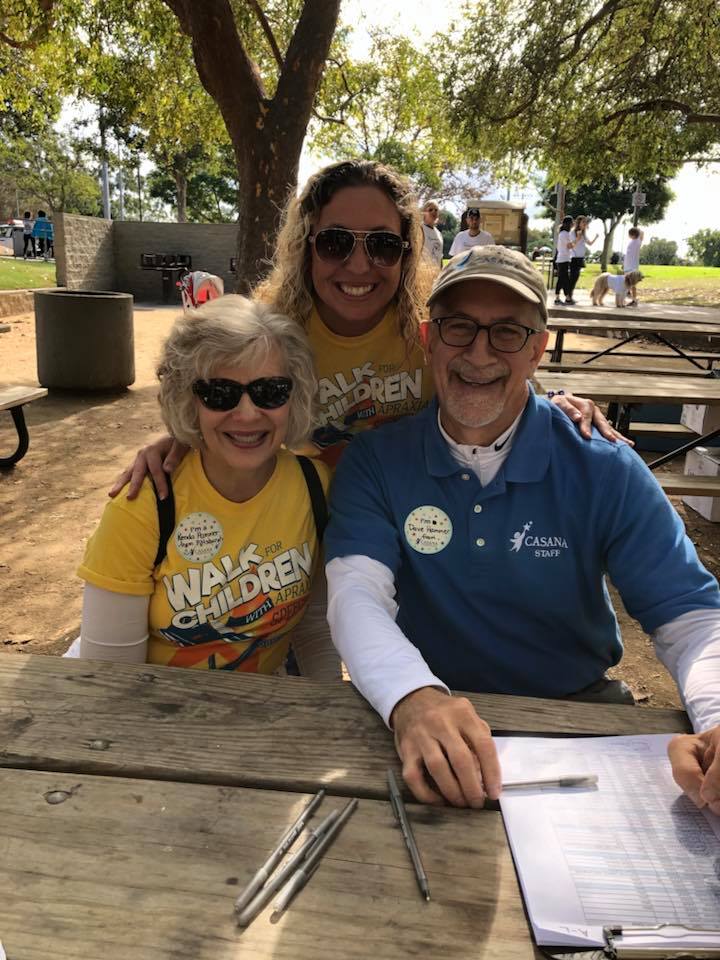
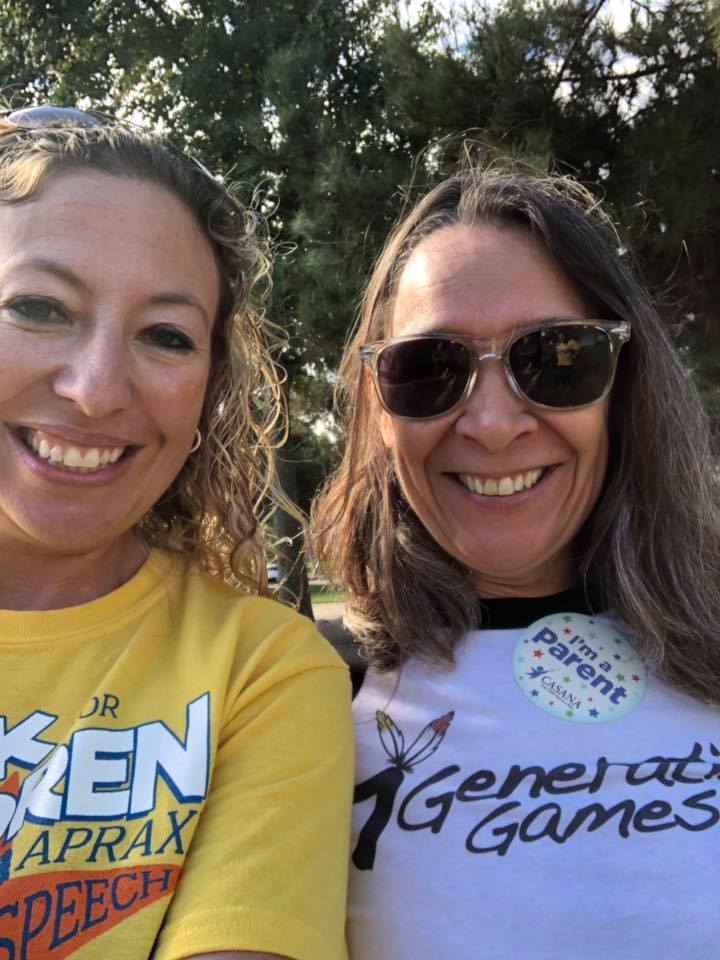
    Upon arriving at the walk, we happened to park our rental car next to my fellow apraxia mom and admin to the group Ronda Rousey: #knockoutapraxia, Bree Vanegas who drove down from Inland Empire, California.  As we walked to the registration table together, I saw one of my bootcamp apraxia mentors and apraxia SLP extraordinaire Dave Hammer.  He had come out from Pittsburgh as a rep for CASANA.  His wife Kenda was also there and I was excited to see them.  Ashlynn loved Kenda and they bonded while walking around the park petting the puppies.

    Making my way through the park I spotted Alyson Taylor of A Girl with a Funny Accent, who I met in San Diego this past summer at the apraxia conference. I wanted so badly for Ashlynn to meet her then but we couldn’t make it work.  This time was different and was special for all of us.  Alyson immediately dropped to Ashlynn’s level and told her that she too had apraxia.   Ashlynn doesn’t always have the words when she’s put on the spot and gripped with anxiety, but I saw the spark and glimmer in her eyes.

    As I meandered over to get coffee and check out the face painting station, I saw a cute fluffy white dog.  As I looked up I immediately recognized actress Gage GoLightly, who gave a revealing interview about growing up with global apraxia.  I went over to introduce myself and asked to take a picture.  Ashlynn was shy at first, but when Gage asked her to pet her dog she had Ashlynn hook, line and sinker. Gage was such a real, down to earth, and sweet person.  I was immediately struck by her genuineness and her joy at supporting a cause she felt so close to.  She laughed about still being severely dyspraxic and practically doing the splits in the shower the other day.  I smiled at her story and marveled about just how much she reminded me of Ashlynn and in that moment I knew Ashlynn was going to be okay.  How do you thank a person for giving you that moment of peace and comfort when they didn’t do anything but be themselves?  It was amazing.

    As I was talking to my friend, I ran into the L.A Walk Coordinator Jaclyn Senis who made all of this happen!  Meeting fellow walk coordinators is in may ways, like looking in the mirror.  We all spend countless (unpaid) hours devoting every second of our spare time to creating an event that is memorable and meaningful to every child with apraxia that attends.  This was her first walk, and it fell on her BIRTHDAY!  I think that should speak volumes as to the character of people who volunteer to coordinate a walk.

    Soon there was buzz Ronda has arrived with her family and supporters.  Nervously I made my way across the grass to the tent.  I immediately spotted Ronda’s mom, who I instantly recognized from social media. She apparently recognized me or Ashlynn too because she flashed a large smile and waved in our direction.  All my nerves disappeared in that moment because I recognized her not as “Ronda’s mom” but as a mom who understood me without ever even meeting me.

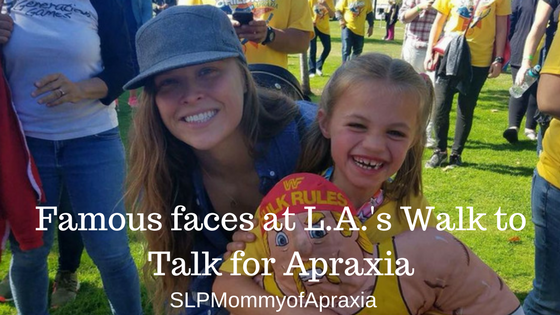
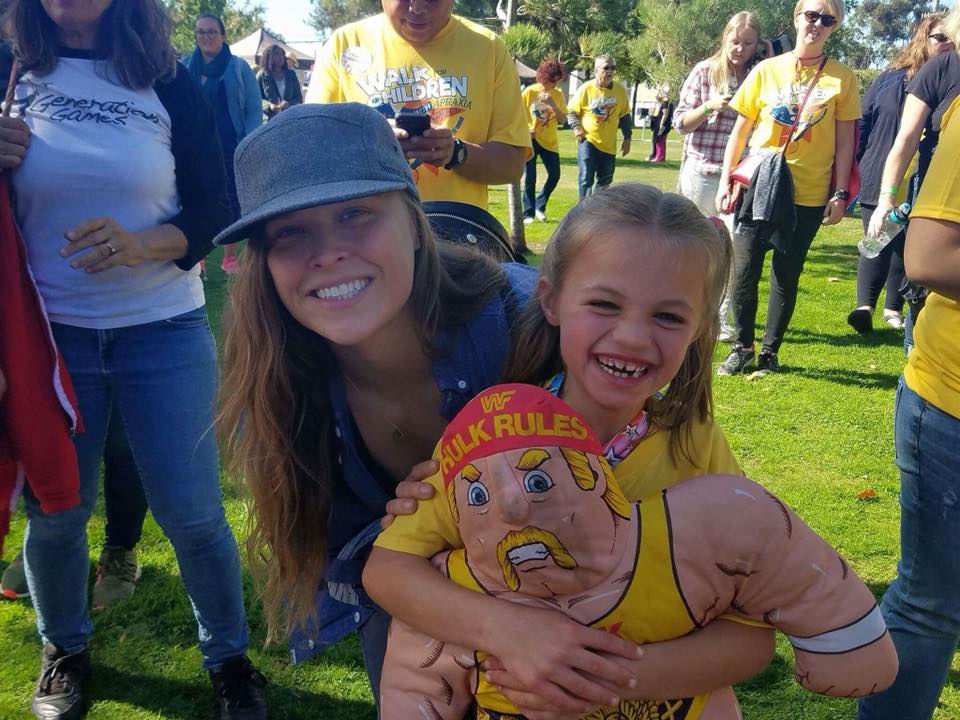
    As we rounded the corner of the tent, Ronda stood in the middle.  When I met her the first time I had no idea who she was, but this time I think I was not only star struck, but amazed she was actually HERE.  Ronda Rousey was HERE at an apraxia walk of just a few 100 people and was going to speak.  How did this happen?  I stared on incredulously.  Ashlynn immediately freaked out and got shy.  She basically ran away.  Haha.  Ronda said she had her “balgrin” in the car and asked if she should get it.  I immediately said yes and  if you don’t know what that is….read her book.  It’s amazing!

    When Ronda returned with the balgrin, the ice was broken and Ashlynn immediately came up and held it.  I marveled at the fact that ALL three adults with apraxia had managed to cut through Ashlynn’s anxiety by finding something to make her feel comfortable with first.  Alyson dropped down to her level, Gage offered her puppy, and Ronda offered her “balgrin.”  This is home people.  When I say I want to find Ashlynn’s tribe…..this is EXACTLY what I am talking about.

    The speeches by Alyson and Ronda were both incredible in VERY different but wonderful ways.  No two people with apraxia are the same, and as Alyson mused in her blog post, “There’s no right or wrong way, our fights were won in two different ways.” 

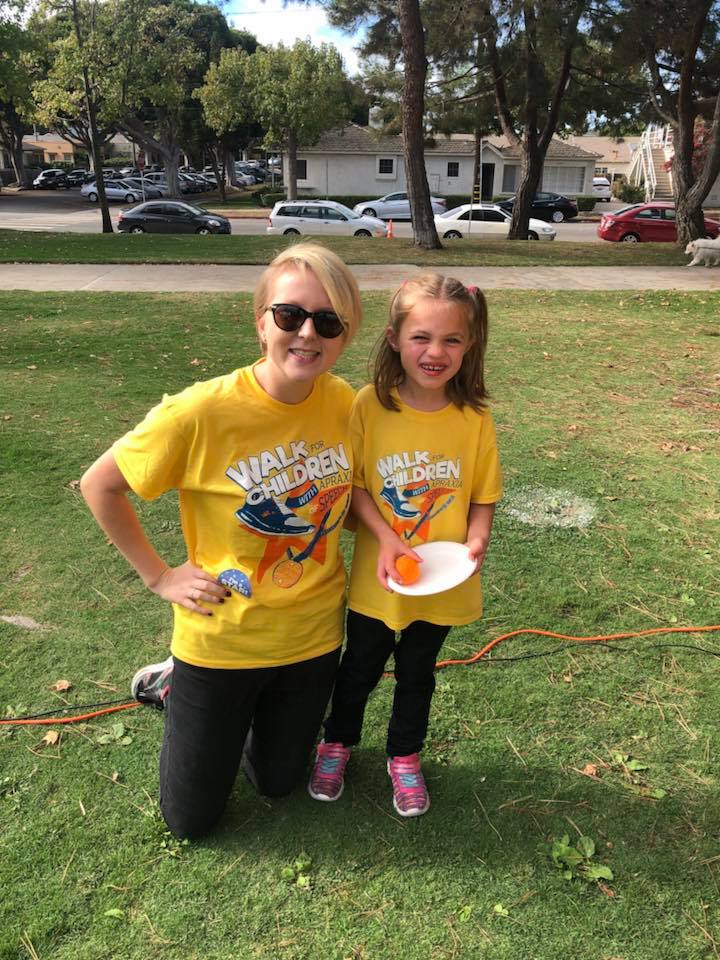
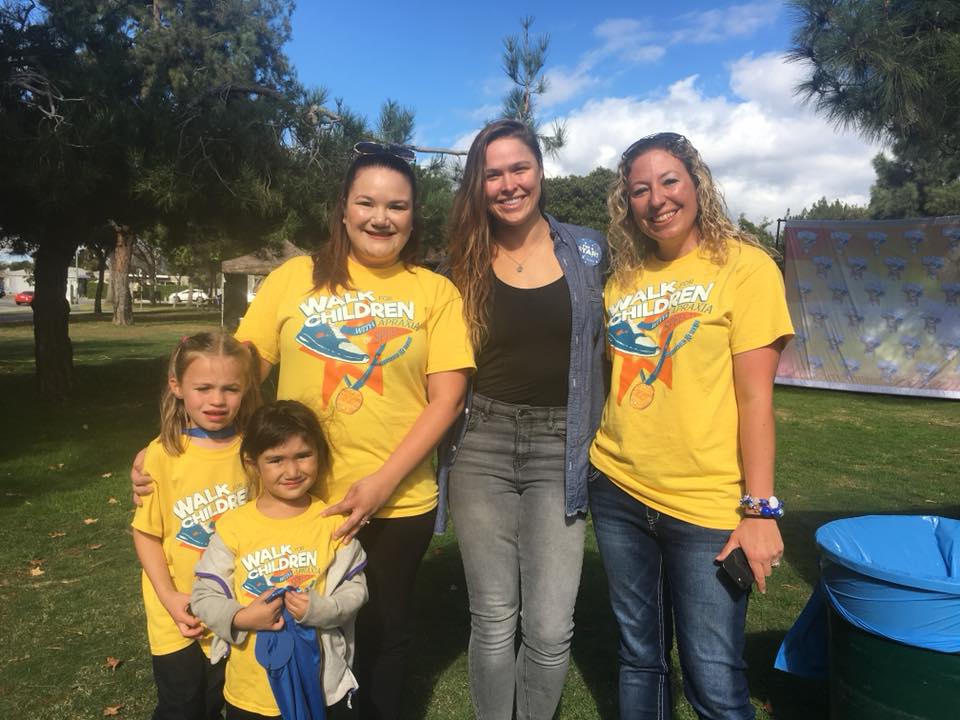
    Ronda, Gage, Alyson, EVERYONE walked the walk around the park.  In that moment in this small park in Santa Monica on this fateful day of November 5th, 2017;  there was no dumb kid or smart kid. No MMA star or actress.  No successful or not successful person.  There were just families and their children walking and raising awareness with the shared belief that EVERY CHILD DESERVES A VOICE.   On the walk Ronda took Ashlynn’s picture on her cell phone as I talked to Gage and we both remarked at the “goosebumps” we got while talking to each other.  Ronda’s mom talked to Alyson’s mom and the humanity of our shared experiences blurred out boundaries of fame, wealth, or status.

    There is the expression about pinching oneself to make sure it is real.  I literally did this during this moment in time.  It was THAT incredible and unreal.

    You know, the world is so much smaller than we think.  We are all so much more connected than we ever dare to imagine.  I’m learning every person, on every end of the country or even globe, famous or not, is walking a journey called life full of love and laughter, but also bumps and pitfalls.  The human experience is a shared experience that transcends money, wealth, power, or race.  We all have a story to tell, and we are all shaped by our story. We are all souls looking for a connection.  Olympian, Judo fighter, author, writer, actress, SLP, teacher, or any other walk of life; our lives take on meaning when we can connect with others who share a familiar story.

    What started as a mission for hope, turned into a lesson about life on one sunny day, in a beautiful park in Santa Monica, California.