Blog

  • Apraxia and Down Syndrome

    I came across a great blog the other day regarding Speech/Language and Down Syndrome.  I love this interview about Down Syndrome and Apraxia.  I couldn’t agree more with the therapist’s view point.

    Ask an Apraxia Expert

    I have worked with many kids who have Down Syndrome, and they are some of my favorite kiddos.  They are sweet and loving, and usually have a stubborn streak.  If you can earn their trust though, you are their buddy for life.

    When I was 9 months pregnant, my car stalled in the middle of a busy intersection.  It was a young man with Down Syndrome who helped push my car to safety.  He ran off to catch his bus before I could thank him  <3

  • Ashlynn play boats with daddy.

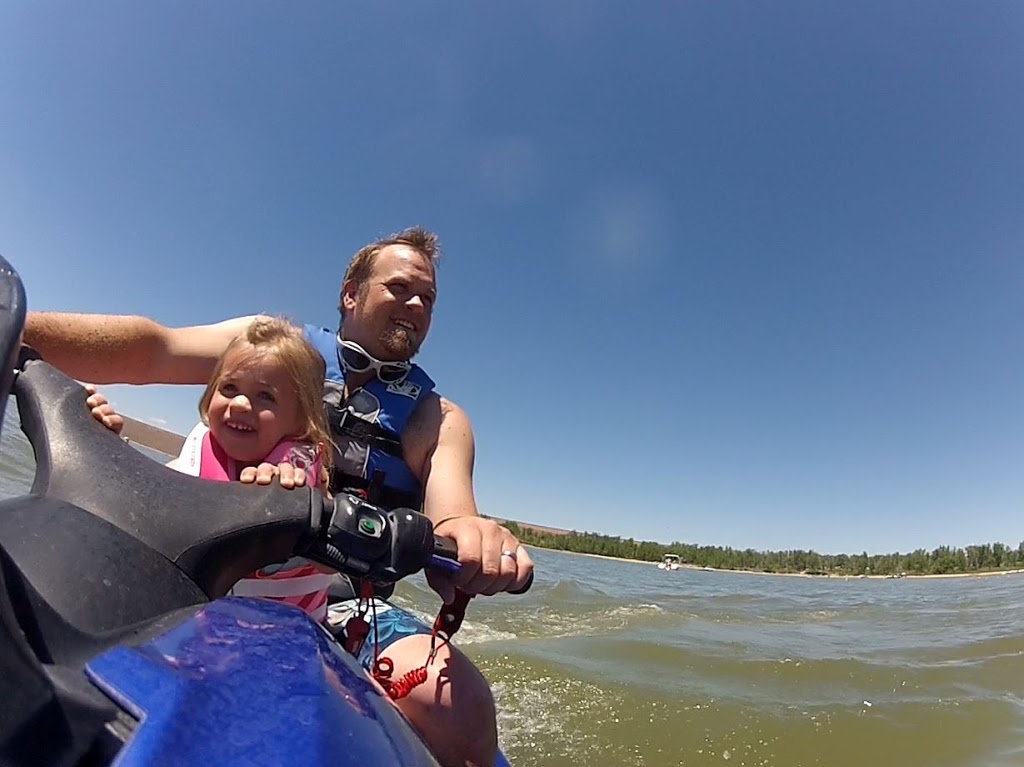
    Ashlynn play boats with daddy.

    This past Fourth of July weekend we went on our annual trip to Glendo State Park in Wyoming. My husband and I have been going since before we had kids. Without getting into all the details, once you go to Glendo for the Fourth, you always go back if you can! Last year we couldn’t go because I was having my son so we were very excited.

    When we went to the beach, Ashlynn saw my husband pull up on the jetski. She looked at her grandpa and me and announced, “Ashlynn play boats with Daddy?” I teared up immediately. I know I sound like such a sap, but when you are the parent of someone with apraxia and they say things and put novel words together in context, it is just the best feeling! I asked her if she wanted to ride the jetski with daddy, to which she enthusiastically replied “yes.” I of course then scripted the appropriate  way to ask the question and had her repeat, I want to ride the jetski with daddy.

    We still have a ways to go. We’ve been working on her using the first person “I” since before school was out. It’s just such a testament to how much repetition a child with apraxia needs, because I correct her and make her repeat her phrases and sentences using “I” every time she refers to herself as Ashlynn. We were so intent on getting her to learn her name that now it’s hard to get her to use something else.  However, I do know that she will get that too, and that’s a comforting feeling.

    Two years ago we took her to Glendo when she was 21 months old. At that time she had just learned to start walking really well and she only had a handful of word approximations. Unfortunately, anything that wasn’t a flat surface was difficult to walk on, so we still had to help her walk everywhere. She only had a handful of word approximations, and her favorite thing to say was “a dah.” and “hi.”  I’ve learned from my parent support group that most kids with apraxia have a go to sound that they use for everything, and “a dah” was Ashlynn’s.

    Fast forward though two years (and a lot of therapy and extracurricular activities to work on motor skills) and she was running on the beach and bending down on the sand. She is still unsteady in the waves and can’t be trusted around the fire pit for fear she will lose her balance and fall, but that will be a progress report for another time. For now, we celebrate that in two short years, a dah was replaced with a complex sentence asking to play boats with daddy, and now she fearlessly got up on the jetski.

    I look forward to coming years when she will be navigating around the campsite without fear of falling, swimming in the water, and maybe waterskiing or jetskiing on her own.  Also, I excitedly anticipate her talking our ear off around the campfire.


  • ABC Song and “Happy Birthday Jace”

    Two HUGE developments with Ashlynn popped out over the weekend! We celebrated my youngest’s 1st Birthday on Sunday. Six months ago, my daughter had to really focus on including all the sounds in syllables, so when it was my husband’s birthday, she could day “Happy Day” with cueing. Well, after the celebration ended and everyone had gone home, she went over to her brother and clear as day said “Happy Birthday Jace. ” There are substitutions so it was more like, “Happy buhday Dace” but my husband and I understood it perfectly. In fact, after she said it we both kind of looked at each other as if to see if we both had heard it. Then we teared up realizing we both DID hear it and it was perfect and beautiful! We asked her to say it again, and she did it again! It was just an awesome moment.

    Then, the next day she sang her ABC song independently without a model for me. More than a year ago, when she was 2 and a 1/2 and I was very pregnant with my son, I sang this song to her multiple times a day. She also heard it on a variety of apps on my iPad she played daily. I remember feeling so sad when people asked me if she was singing it yet, and a Facebook friend had posted their younger than Ashynn daughter singing it that summer. Ashlynn would smile, but never tried.
    But, to hear her sing it yesterday, and to see her smile with pride was better than hearing it last summer.  She also let me video tape it, so her first ABC song I have on video!

  • Speech FlipBook App Review

    Speech FlipBook App Review

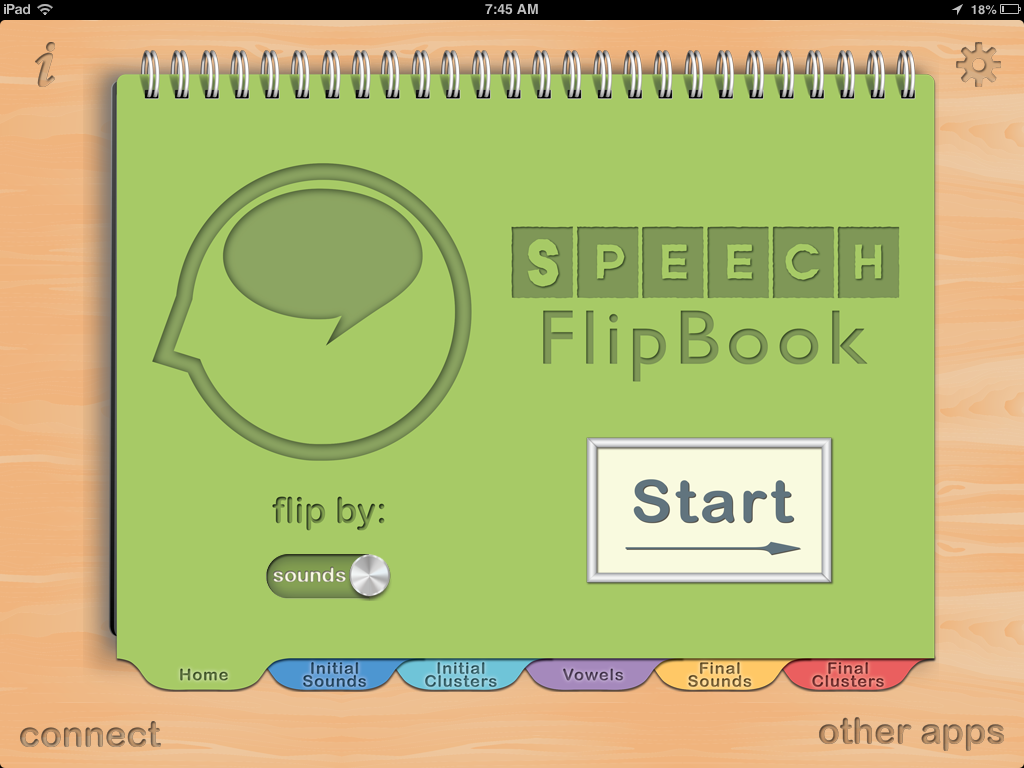
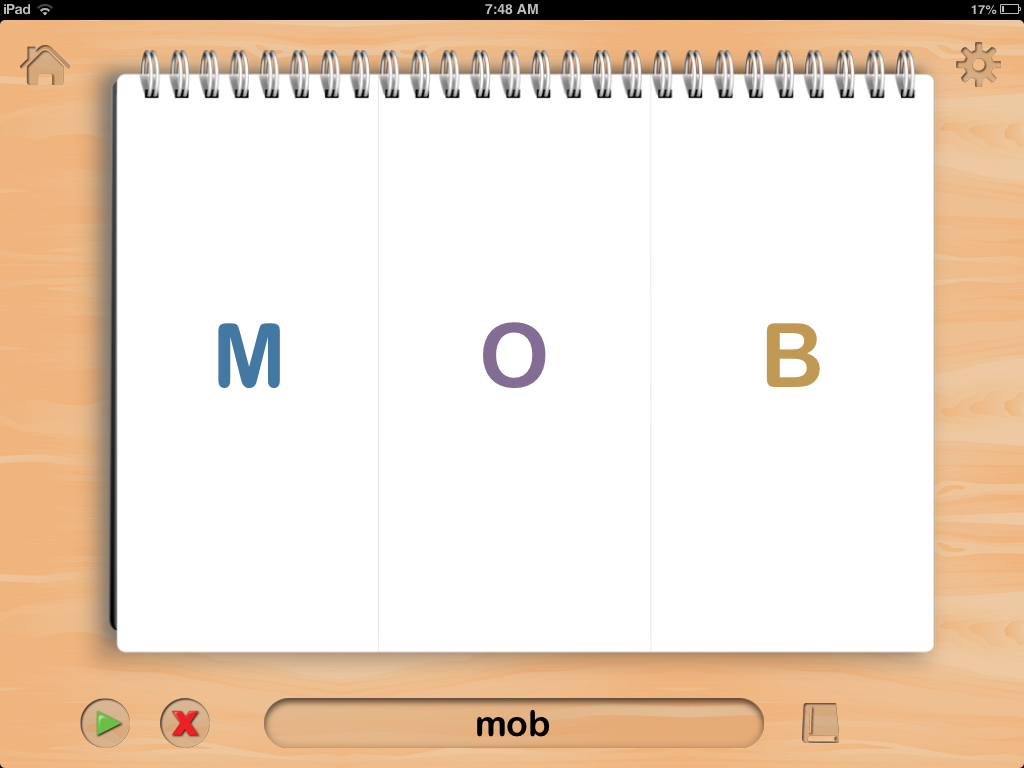
    Speech FlipBook by TACTUS Therapy is a versatile app more suited for use with older children or adults.  It is in a flip book format seen below. It has the option to flip each section of the word (onset, nucleus, and coda), or to flip the entire word.
    It contains literally every sound and consonant cluster found in words, allowing practice at the single syllable level.  It is completely customizable, allowing you to choose any consonant, vowel, or consonant cluster combination you want in any position of  the word.

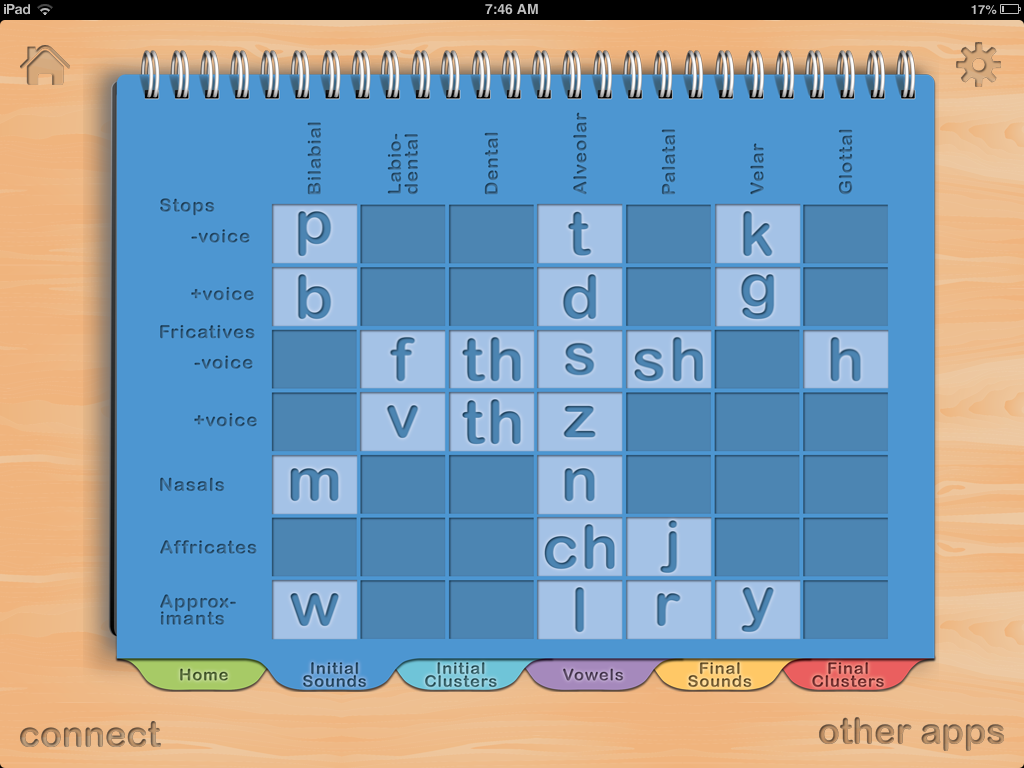
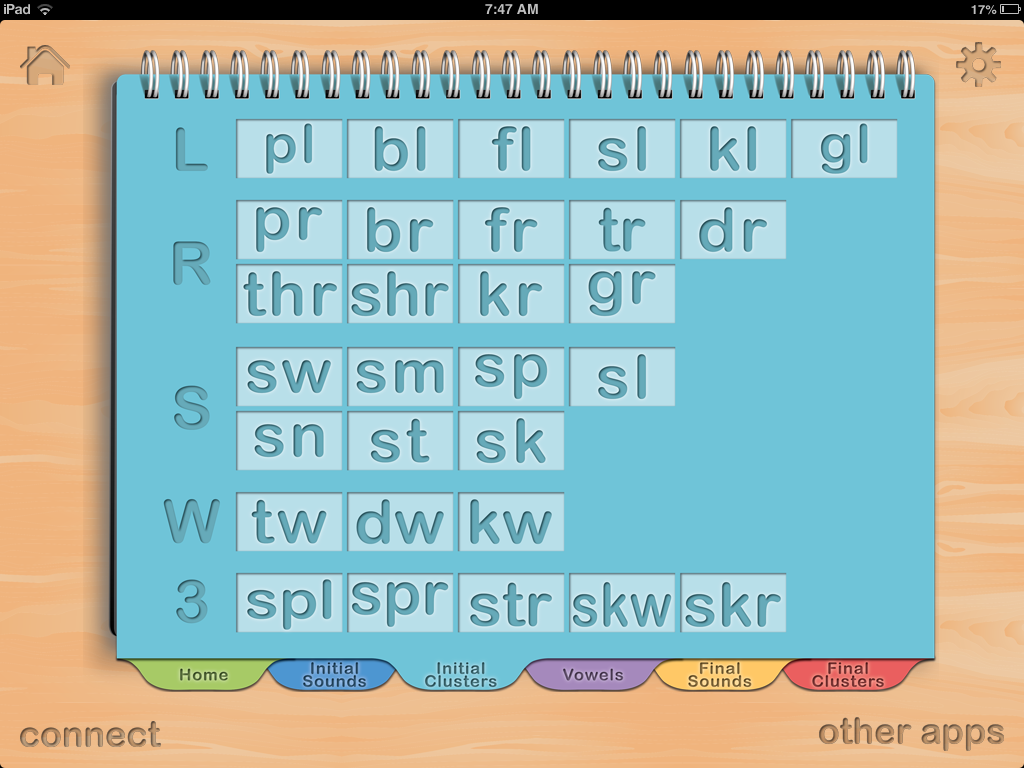
    The dark blue tab is the initial sounds you can choose from.  You can choose all of them as shown, or highlight the ones you do not want to use.  The light blue tab contains the list of available initial blends you can choose from.

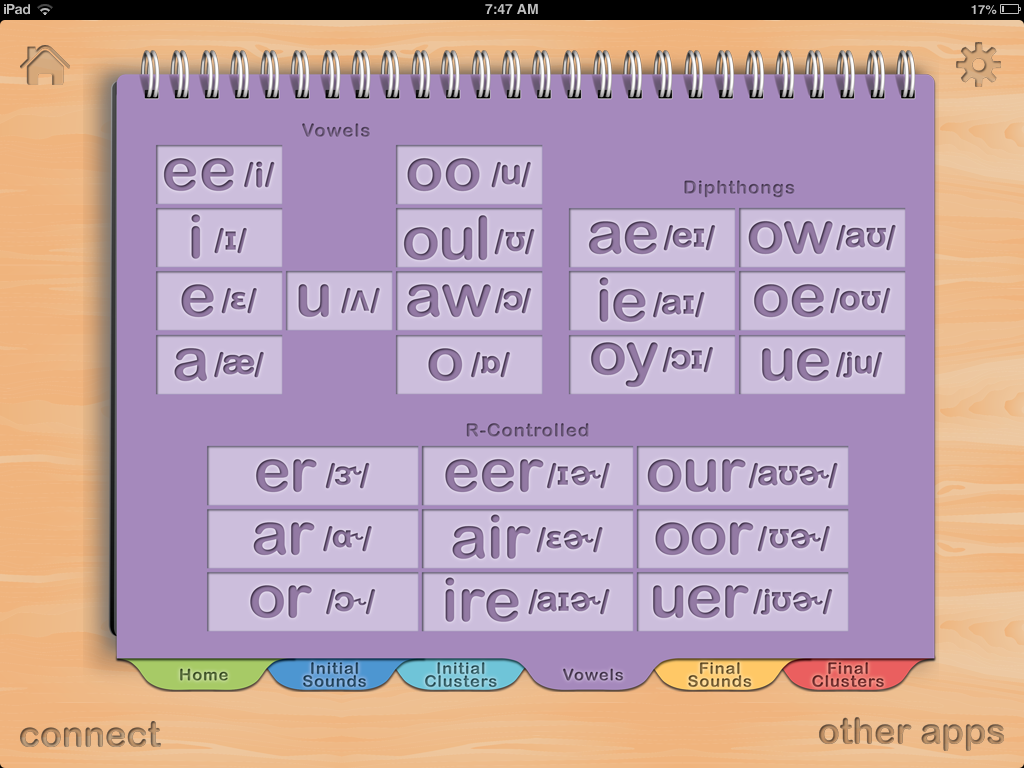
    The purple tab below shows the vowels.

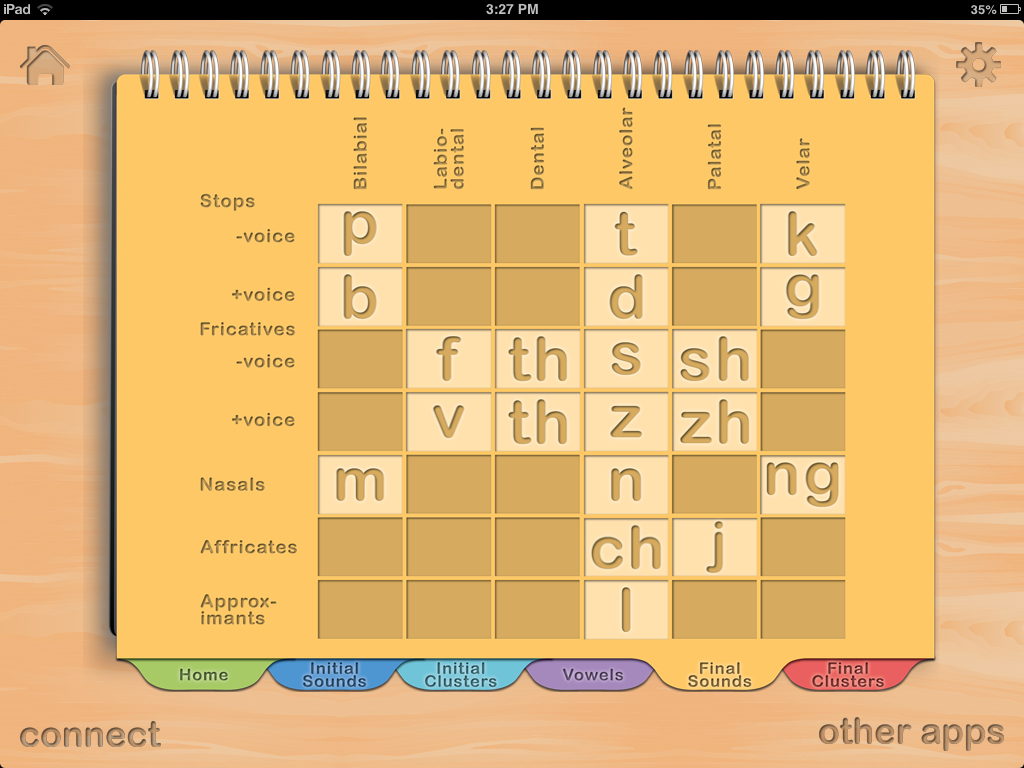
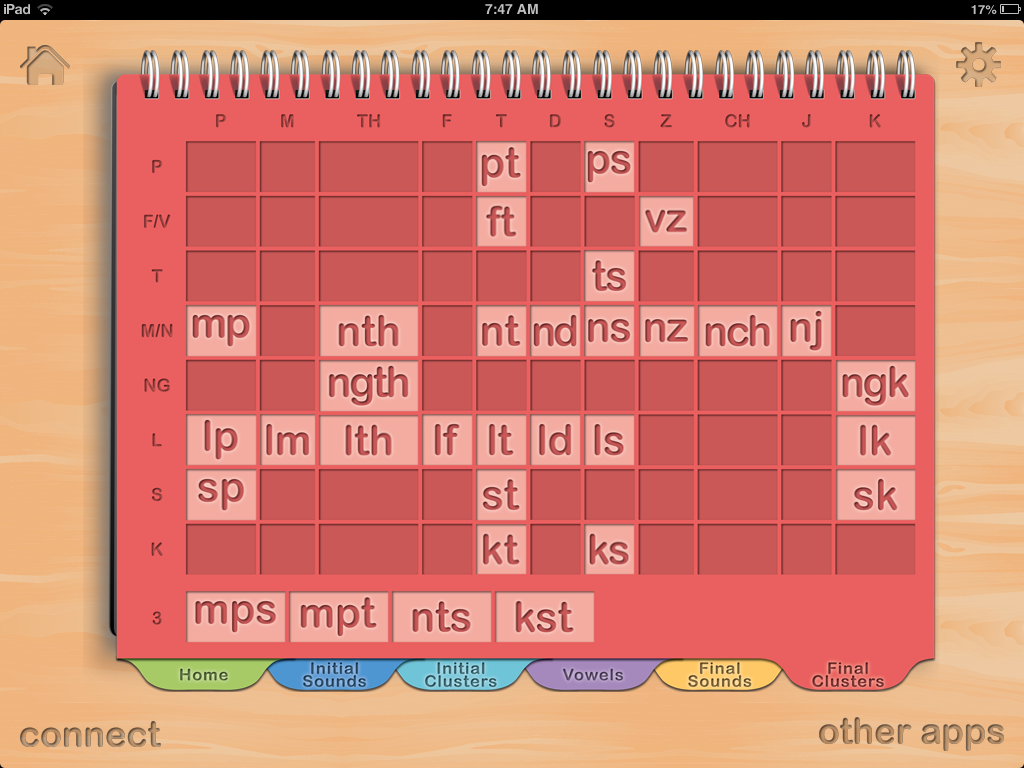
     The yellow tab contains your final consonant singleton choices, and finally the red tab contains your final consonant cluster choices.    As you can see, these tabs allow you to customize a seemingly endless word list that you can create specifically for the client’s needs.

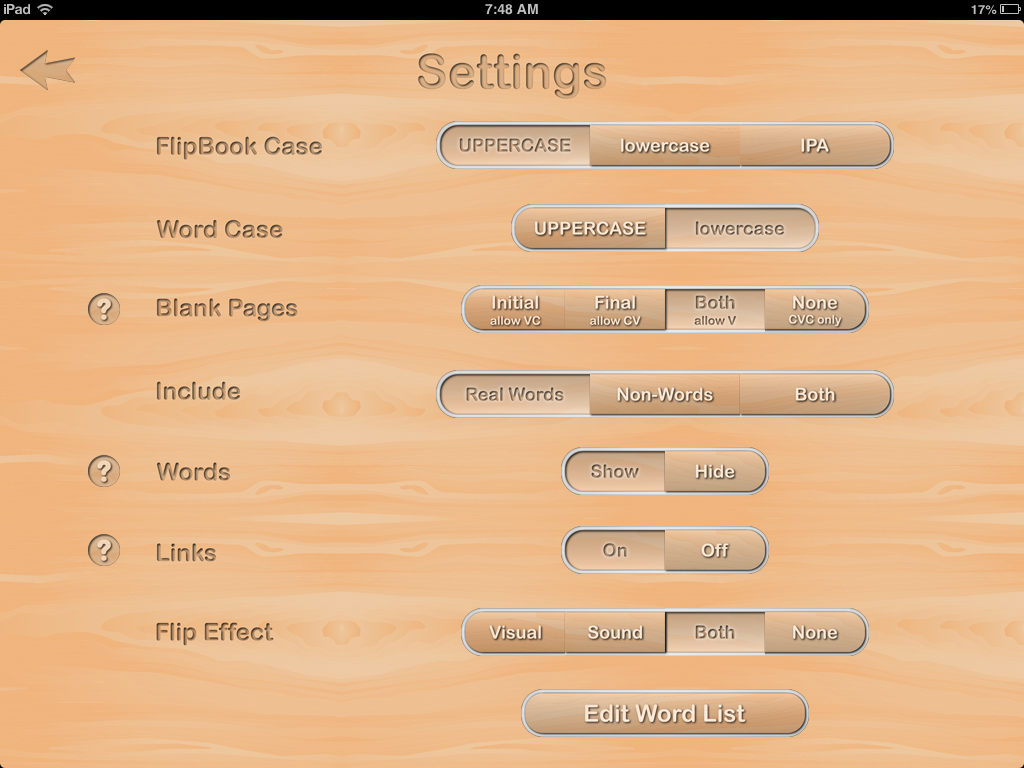
    The settings tab allows for additional options.  You can choose to have the letters shown in upper or lower case, you can put in a blank page if you choose not to use all three sections of the word and want to just work on CV words for example, and you can also choose to use real words, nonsense words, or both.  This is important in reading programs, because when  child can read nonsense words, they usually have the phonics skills they need to be good decoders.  If not, it helps them gain these phonics skills.  You can also edit the word list if you choose.

     For use with apraxia, it allows the client to practice sequencing sounds from the CV level (i.e bow), CVC level (shown left), all the way to complex syllable structures such as CCVCC (i.e switch).  In the options, you can choose any sounds in any position to keep or hide, and you can also choose to use only specific words.  This is a nice alternative for older clients including adults with apraxia, who may find most apraxia apps geared toward younger children.

    For use with reading, this app would be a good compliment to reading programs that use phonics principles such as Orton Gillingham approaches and the Wilson Reading Program.  Most SPED teachers have flash cards like this in which they switch out the sounds; however, kids love working on the iPad and I can see how they would like learning their digraphs or consonant clusters in this format.  I could also see this working well in a classroom in which each student has their own iPad, which is becoming more of a reality.
    In therapy the other day, I used it to work on phonemic awareness with an 8th grade student. I chose to flip by sound and kept the same nucleus and coda, and just had her flip the initial sound to get practice with rhyming.
    As an SLP, I could also use this app when working on accent reduction with adult clients.

    Other features include:
    Playback and record function
    Choice to show or not show the actual spelling of the word at the bottom

    What I Like
    This app has all the sound and sound combinations an SLP, parent, or teacher could need to work on any sounds in all positions of words.  There is also an IPA option (International Phonetic Alphabet), which is nice for those SLP’s working on accent reduction.  It is versatile in that it can be used by SLP’s, parents, and teachers.  It’s an affordable app that can compliment therapy and reading programs.
    What It’s Missing
    This app doesn’t have a lot of bells and whistles.  For those with older clients or students though, it may be just what you need so they don’t feel what they are working on is “too babyish.”  (For those in the special education field, we’ve all heard this at one point or another).
    There isn’t a data collection feature, or ability to store and save different user data.

    Overall this app delivers what is says, which is an affordable tool to compliment therapy and reading intervention for older children and adults.

  • “Ashlynn Happy….. Papa’s House”

    “Ashlynn Happy….. Papa’s House”

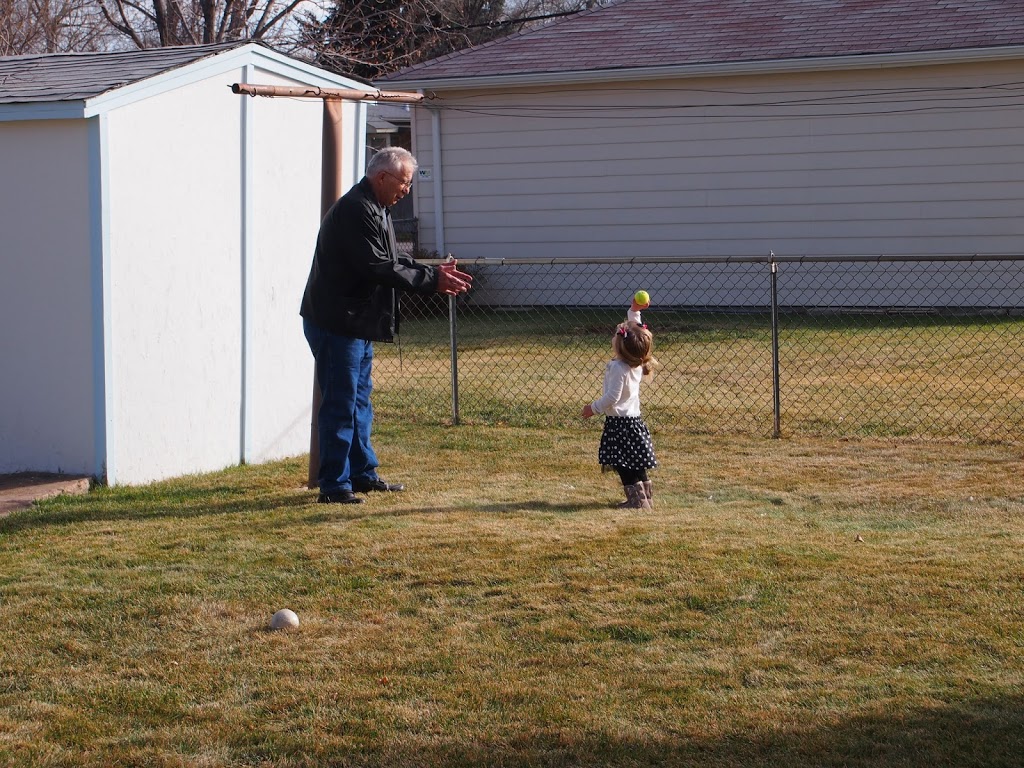
     It’s no secret that my dad is the pushover.  Don’t get me wrong, he could lay down the law when he had to; but when it came to playing my dad is the person to sweet talk.  Ever since Ashlynn was a little baby, my dad would play ball with her.  It started out almost as a game of fetch, but each time she gets better and better. 

    After Jace was born when she was 2 1/2 and still wasn’t really talking, he came over to see the kids.  He hadn’t seen Ashlynn in a while.  He no sooner walked in the door and she went running for a ball.  That day he went home and told my mom that he didn’t think Ashlynn remembered him.  I was incredulous!  Was he kidding?  Ashlynn NEVER just went and grabbed a ball whenever someone walked in the house!!  She knew exactly who he was. 

    Fast forward almost a year later.  My husband and I were going to drop the kids off at Grandma and Grandpa’s so we could celebrate our 8th wedding anniversary.  The whole ride there she was talking about “papa’s house.”  When we rounded the corner of their street she announced, “Ashlynn happy.  Ashlynn papa’s house.  Ashlynn play ball….papa’s house.” 

    Ashlynn has told me she was happy before when I asked her if she was happy, or we were reading a book about characters who were happy.  I’ve never heard her say out of the blue, and perfectly in context that she was happy….and THEN tell me why she was happy.

    It made me tear up, maybe for multiple reasons.  The first and most obvious being that she had communicated to me that she was happy in context without prompting.  The second being that I related to her like no one else could.  Growing up we didn’t have a lot of money, but I did have a dad who cared about me and who liked to play ball, and I was the richest girl in the world for that.  I always knew if I begged long enough (which never was very long), he would give in and go play.  I remember how happy I was to play catch with him, and especially to practice basketball with him when I got older.  I’m so happy my daughter gets to experience that too.
    So today, despite having a great anniversary with my incredible husband, the sweetest words spoken were

    “Ashlynn happy…play ball……papa’s house.”

  • Articulation Station App Review

    Articulation Station App Review

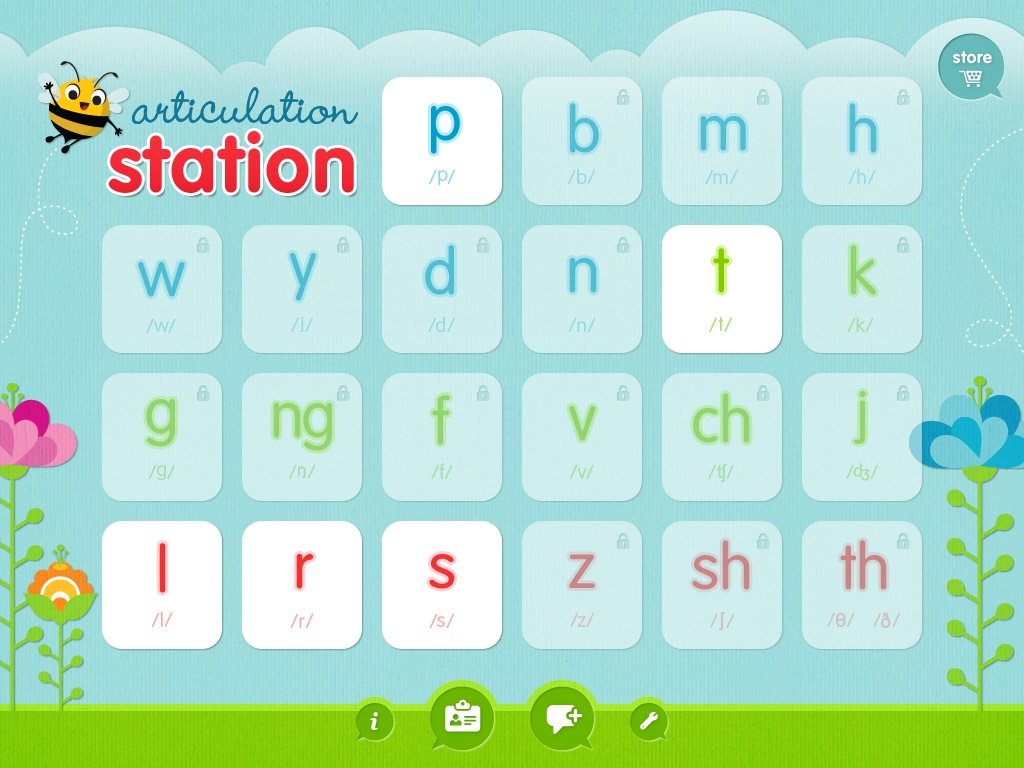
    Articulation Station is a comprehensive articulation app that I use quite a bit in therapy.  You can choose to purchase each consonant deck separately to save on cost. As you can see from this screen shot, I haven’t purchased all of the sounds myself; however, I did purchase ‘l’ ‘r’ and ‘s’ because those decks also contain blends, which I do use a lot in therapy.
    I chose ‘P’ for the purposes of showing you all the things you can do with this app. First, you can choose to work on the sound in three different contexts: word, sentence, or story level.
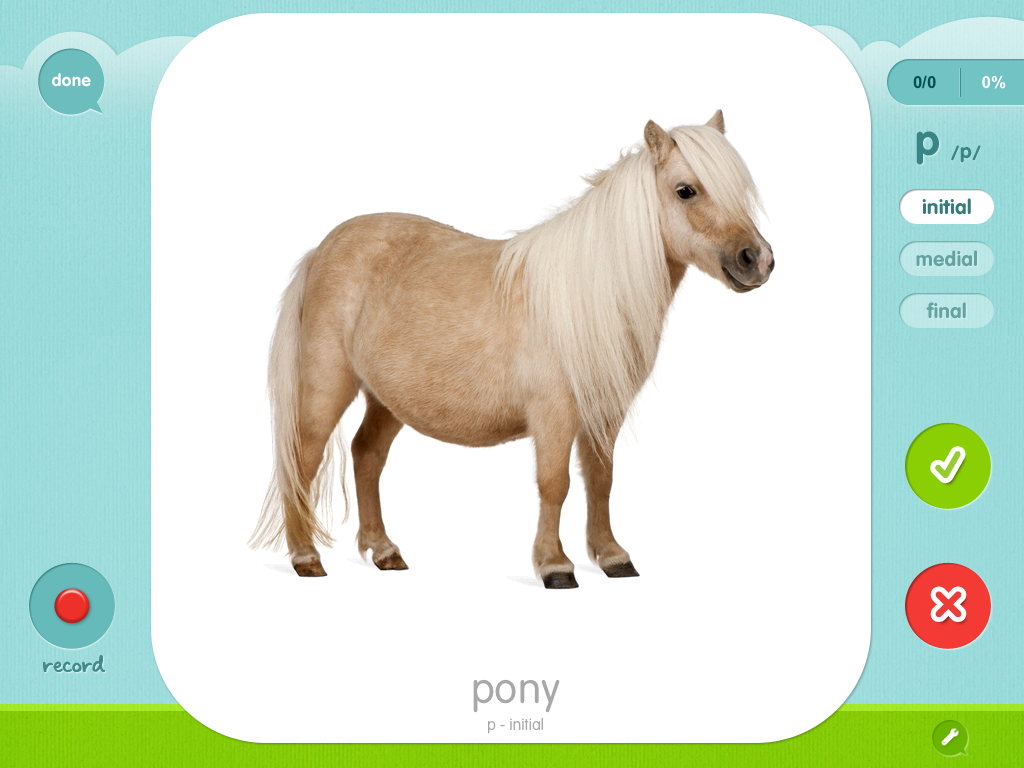
    At the word level, you can choose flashcards or choose to play a matching game.
    Once you’ve chosen your activity, you can isolate a sound position: initial, medial, or final.  There is also an option to sort the words in ascending syllable complexity. The app allows you to collect data by touching the green check or red X buttons seen on the left, and automatically calculates a percentage and puts it into a chart that you can email to yourself.  There is also an option to calculate word approximations that you can turn on in the settings menu if you choose. I’ve used this option with my kids who have difficulty with ‘r.’
    The is a group setting option that allows you to use this app with more than one child which is nice from an SLP perspective.  The kids’ names will be shown at the top in little tabs (not pictured here) if you are working with a group.
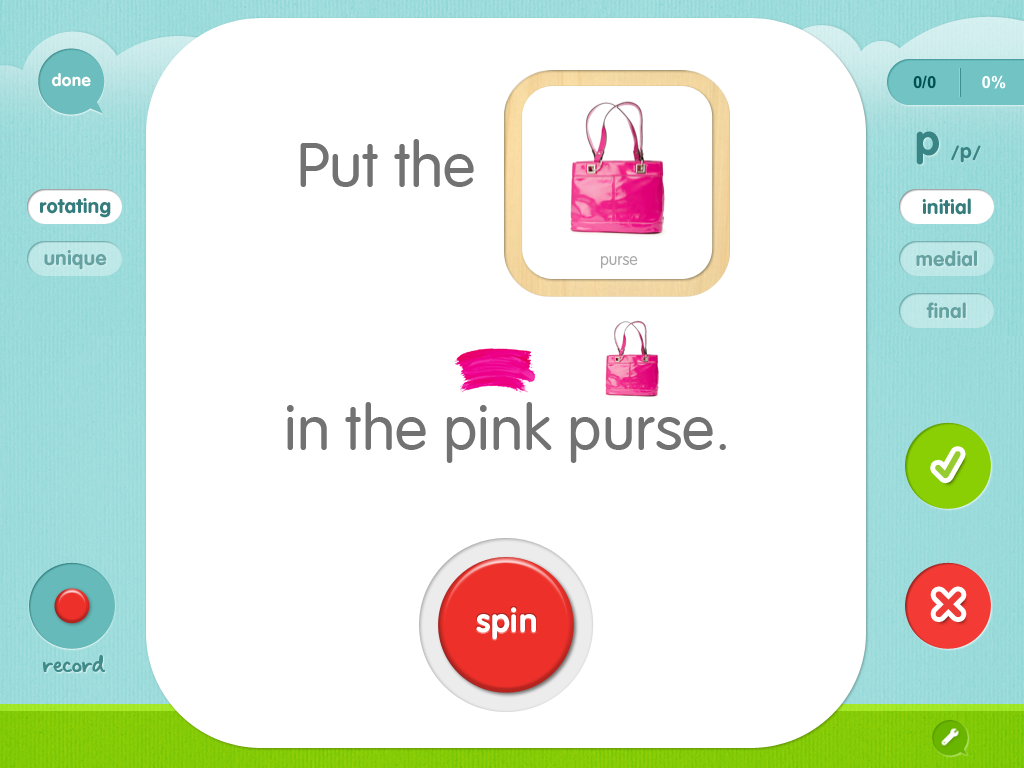
    The second option allows the child to practice the words in a sentence. There is an option to rotate the words in one sentence seen on the left (rotating) or to practice the words in a different sentence (unique). The first option is nice for my kids who may not be strong readers, but are at the sentence level in practicing their speech sounds, because they can remember the sentence and still get practice saying their sounds by reading at the sentence level. The second option is equally as nice for my stronger readers to practice saying their words correctly in a variety of sentences, promoting greater carryover. However, I can still use it with my younger kiddos because there is always an option to press the screen, and the words/sentences/stories will be read for them first allowing them to repeat if necessary.
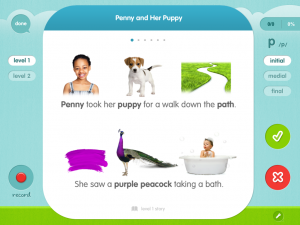
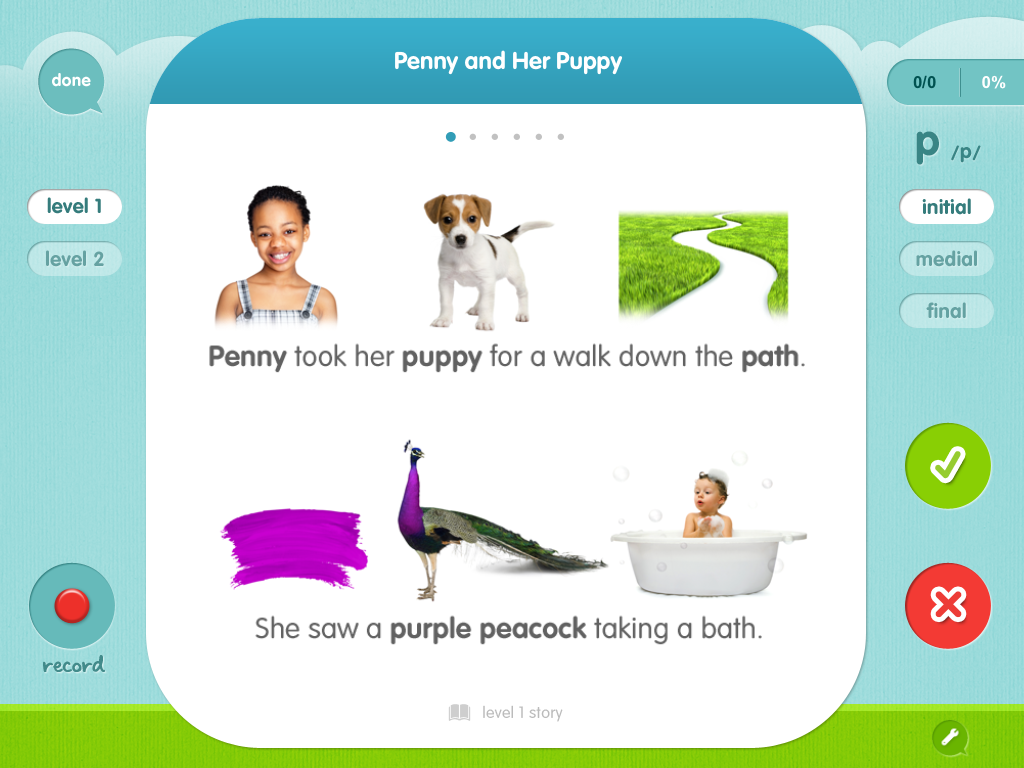
    Finally, there is a third setting for stories.  Once again, you have two options to choose from in this setting as well: Level 1 and Level 2.  Level 1 has a the story set in a rebus or picture format (on left) to help beginning readers practice their target sounds at a story level.  Level 2 is for a more proficient reader, and includes the target words in text. As mentioned above, there is always the option to touch the screen and have it read first if necessary.  The story modes also have comprehension questions at the end, which works on receptive language, but also requires the child to use one of the target sounds in their answer. This is also great to promote carryover, because it helps the child practice saying their sounds in a spontaneous production.

    Other features this app includes is a record/playback function, which is personally a must have for me.  I think it’s powerful to have the kids hear themselves say it.  Depending on their level, I might also have them score themselves.

    You can also modify the word lists, and include your own custom images.  However, custom images are only available if you have all the sound decks.

    Pros: Honestly, this is one of my favorite articulation therapy apps.  It contains almost every feature I can think of, with the option to turn any of them off or on depending on your preference.  I love the pictures, I like all the options, I like the ability to scaffold the sound productions for one syllable words  all the way up to the story level, and to be able to put them in the varying positions of the words.

    Cons: For me, there aren’t really any cons for me.  If I was being picky, it would be nice if the kids could make a profile that included their picture, but they usually recognize their name, so this isn’t a deal breaker. There also isn’t really a game or little reward, but the app is so colorful with interesting pictures and lots going on that my kids don’t seem to mind or get bored.

    Since a lot of my readers deal with apraxia, I have to say I don’t feel like this is the best app for apraxia, especially for those kids in the early CV, VC stages of production.  It doesn’t contain a lot of words with these basic syllable shapes, and it doesn’t have options for blocked practice like the apraxia apps will.  However, it’s important to note this app isn’t marketed as an apraxia app either.  It’s marketed as an articulation app, and I think for that purpose, it’s fantastic.  In fact, it’s probably my favorite.

    I would definitely recommend this app for SLP’s and parents to use with kids who have articulation and phonological processing delays.