Blog

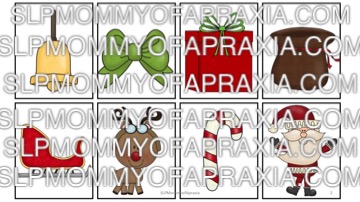
  • I Know an Old Lady Who Swallowed a Bell: Speech/Language Book companion activity pack


    Slide01-1

    She’s baaack!! My students just LOVE these books.  Here is my latest speech/language book companion activity pack.  Since I LOVE repetitive stories for speech and language, it once again contains:

    • the repetitive vocabulary pictures from the book
      • Slide02-1
    • a sequencing grid to practice sequencing and to aid in story retell
      • Slide03-1
    • a following directions activity to cut and paste using positional/spatial concepts
      • Slide05-1
    • a four page mini book to practice the carrier phrases: I have, I see, I want, & I ate + book vocabulary pictures
      • Slide07-1
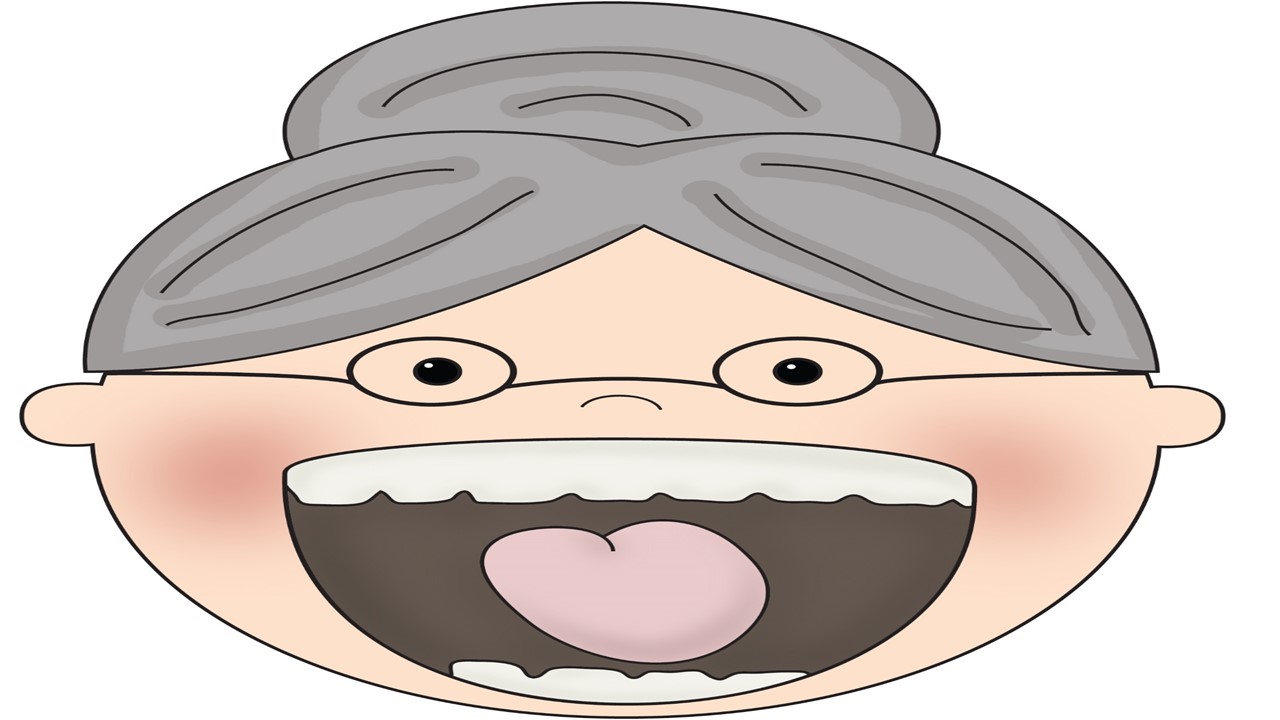
    • an enlarged picture of the old lady to glue on a manila envelope or cereal box and “feed her” the vocabulary pictures.
      • Slide12

    To get this activity, visit my TpT store!

  • What can I find to be thankful for?

    turkey


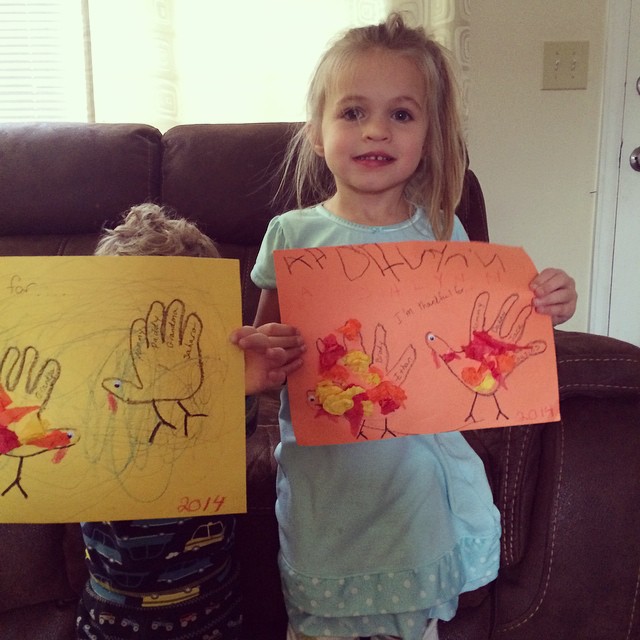
    Thanksgiving 2014.  Ashlynn is 5 and Jace is 2.  I love these little guys.  This morning we made our annual thankful Turkeys.  This year Jace answered yes or no to my suggestions, and Ashlynn for the first time came up with her own with little difficulty.

    She’s thankful for her mommy (tear), daddy, Jace, and cousins.  She loves seeing her cousins and will get to see them today.

    I had her trace one of her hands after I had traced it in pencil, and she did a really good job.  We crumpled up tissue paper and glued it on to work on some fine motor skills, and lastly I had her write her name;  which is probably the one area that didn’t show much improvement from last year, but she’s trying and that’s important.

    Jace follows along beside her.  He colored his turkey and also glued on the tissue paper for feathers.  He quickly lost interest and went off to play.

    I like Thanksgiving for a lot of reasons, and the best being it’s a day where everyone is forced to think about what they are thankful for.  Gratitude goes a long way in fostering happiness in my opinion, and this day is ripe with it.

    Whatever the challenges one is facing, today is a day we can all look past those and focus on that with which we are truly blessed, because truth is, we all have things to be thankful for.

    I’m thankful for the small family Cody and I have created together.  I’m thankful for another year in which my kids can celebrate with both sets of Grandparents and aunts, uncles and cousins they know on both sides.

    For food in my pantry, heat in my house, and clothes on my body.  For careers we both love, for the children I’m honored to treat, and for a community of people who mean a lot to me that I never knew before apraxia wasn’t just something I treated, but something I’ve come to know very personally.

    For my health and the health of my children and their happy smiles.  For their snuggles and random kisses.  For our carefree dances and silly faces.

    For the everyday blessings that I take for granted.


  • What is your future like when you have GLOBAL apraxia?

    My friend Kim, (a fellow apraxia mom and SLP) and I talk a lot about how most people, including professionals and pediatricians, just have NOT SEEN global apraxia.  What is global apraxia?

    Well, it’s not an official diagnosis.  You’re not going to find it in the DSM 5, and when you google it, you’re not going to find some great scholarly articles.  Nope.

    Instead, you can google Childhood Apraxia of Speech and get some great information now on verbal apraxia thanks to CASANA of apraxia-kids.org.  Members of their advisory panel were critical in the recognition of the actual disorder from ASHA (The American Speech/Language Hearing Association).

    Google oral apraxia, and a lot of information comes up for verbal apraxia, even though they are two very different things.

    Oral apraxia refers to difficulty coordinating non speech oral movements.  These include: sucking, blowing, puckering, lip rounding, etc. whereas Childhood Apraxia of Speech refers to difficulty planning the precise movements for speech.

    Google  plain old “apraxia” and the first two references are to apraxia-kids and ASHA, both referencing Childhood Apraxia of Speech.

    The third entry is from Wikipedia, which references acquired apraxia of speech only.  This is for adults with brain insults for the record.

    The fourth result is from WebMD which does acknowledge it as a developmental disorder as well, but says “typically, it is found in adults.”

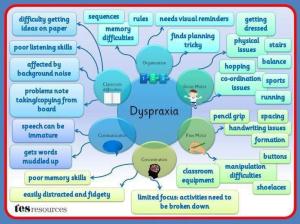
    Google “dyspraxia” and the first entry form ncld.org indicates “people with dyspraxia have trouble planning and completing fine motor tasks.”

    Okay, so she now has: Childhood Apraxia of Speech aka verbal apraxia, oral apraxia, and dyspraxia.

    Hmm…but she also has trouble with motor planning gross motor movements as well.  So what label is that?  Oh, and she also has trouble with visual motor planning as well.  So….what label is that?!?

    So let’s see here.  According to a lot of testing, my sweet little Ashlynn has motor planning difficulties in these areas:

    Verbal, Oral, Fine Motor, Gross Motor, and Visual Motor skills.

    Does a human have any other motor planning skills?  Right now as I type this, I can’t think of any and it makes me so sad.  How does that sweet baby with normal cognition, have motor planning deficits in literally every part of her little body?

    That my friends is why there is the term “global apraxia.”

    You’re not going to find it with a search from google.  You’re not going to find it in a scholarly article, but if you do I implore you to email it to me because I have looked!!

    You’re not going to find the term global apraxia in the Childhood Apraxia of Speech research, or the developmental motor planning research, on the dyspraxia websites, or searching under the term developmental coordination disorder.  I think this is because the research is already so lacking in these specific areas, that we are still a ways away from collectively combining all these separate disorders into diagnosing one “global apraxia.”

    However, if you have a child with motor planning deficits in ALL of these areas, I don’t have to tell you, the term “global apraxia” makes absolute, unequivocal sense.

    Can you imagine??  A pure definition of apraxia according to medicinenet.com is simply,

    “The inability to execute a normal, voluntary motor movement despite being able to demonstrate normal muscle function.”

    So as my friend Kim, another SLP put it: her son is essentially trapped inside his body.  How awful is that?  They know what they WANT their body to do.  They see peers or younger siblings executing the same things seemingly effortlessly…..and there they stand. Knowing what they need to do.  Knowing what they are ASKED to do.  Knowing what they WANT to do, but unable to do so.

    It’s almost like being paralyzed, except everyone knows you’re not; so they expect you to do things you simply cannot do.

    How does a sweet child respond to that situation?  How would you respond?  You can’t  tell someone you can’t do it, yet they see you as any other child.  Normal muscle function, seemingly normal cognition….

    I ask you again.  How would you respond??

    I can tell you how my daughter responded.  She would laugh and act cute.  Dang she is so socially competent.  It worked.  Sure they thought her receptive language skills were low and she didn’t understand what they were saying (read into this low cognition aka mentally retarded), but at least it gave her a pass.  Other times she just acted like she didn’t hear them. She still does that.  Oh…”attention problems” they say.

    I ask you again though!  How would you respond when adults think you can do something, demand you to do things,  that you cannot do?! Oh and remember, you can’t TELL them you can’t…because,  well,  motor planning has got your tongue.

    I can tell you about my friend Kim’s son.  He hangs by the door.  He tries to escape!  Poor baby is so smart!! Does the staff see that though?  Not really.  They see behavior problems.

    I’m also not trying to down professionals.  Look.  I get it.  Apraxia of anything is RARE, much less apraxia of EVERYTHING.

    I’m an SLP too.  Before Ashlynn, would I have been one of the misguided staff?!?

    This leads me to my question though.  What is a future like for global apraxia? I honestly don’t know.

    I know that my husband is right when he says my daughter always conquers all the mountains.  She does.  But is conquering the mountain the same as owning the mountain?  Will she have a skill, a gift, or something else?

    Things were so cut and dry for me.  I was good at English not at Math.  I was a great speller and poor mathematician. I was athletically inclined and was naturally good at basketball.  What about Ashlynn?  What will she have?

    I know already she has this incredible ability to unite people, to make people happy.  Everywhere she goes, despite when she was nonverbal or now verbal, people engage her.  They are drawn to her.  She is kind.  She is accepting.  She is sweet to a fault. She doesn’t see bullying, she sees hurting. She is naturally inclusive.  She makes people feel good about themselves.

    These things make me incredibly  proud.  But can I tell you a secret?  I’m scared to death these “strengths” will kill her inside.  Society is cruel.  Kids are cruel.  Will this be enough to carry her through?

    I want her to feel proud of herself.  I want her to feel and to know there is something she is amazing at.  I want her to know I am always and forever will be proud her…but I want her to feel that for herself.

    I already know she’s resilient.  I already know she’ll overcome her obstacles.  At what price though?  What will she be interested in?  What will her passion be?  Right now, I don’t know those answers, but I know this one.

    Whatever her passion is, I will do everything in my power to support it.  When she wants something…like to talk…she will work tirelessly and endlessly, equipped with a positive attitude to make it happen, and I will be right there making it happen with her.
    dyspraxia_chart (1)


  • Friday Freebies Thanksgiving subject pronoun/verb agreement

    Pronoun subject/verb agreement FREEBIE


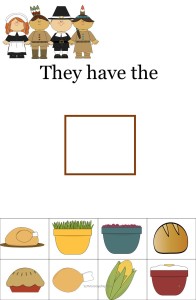
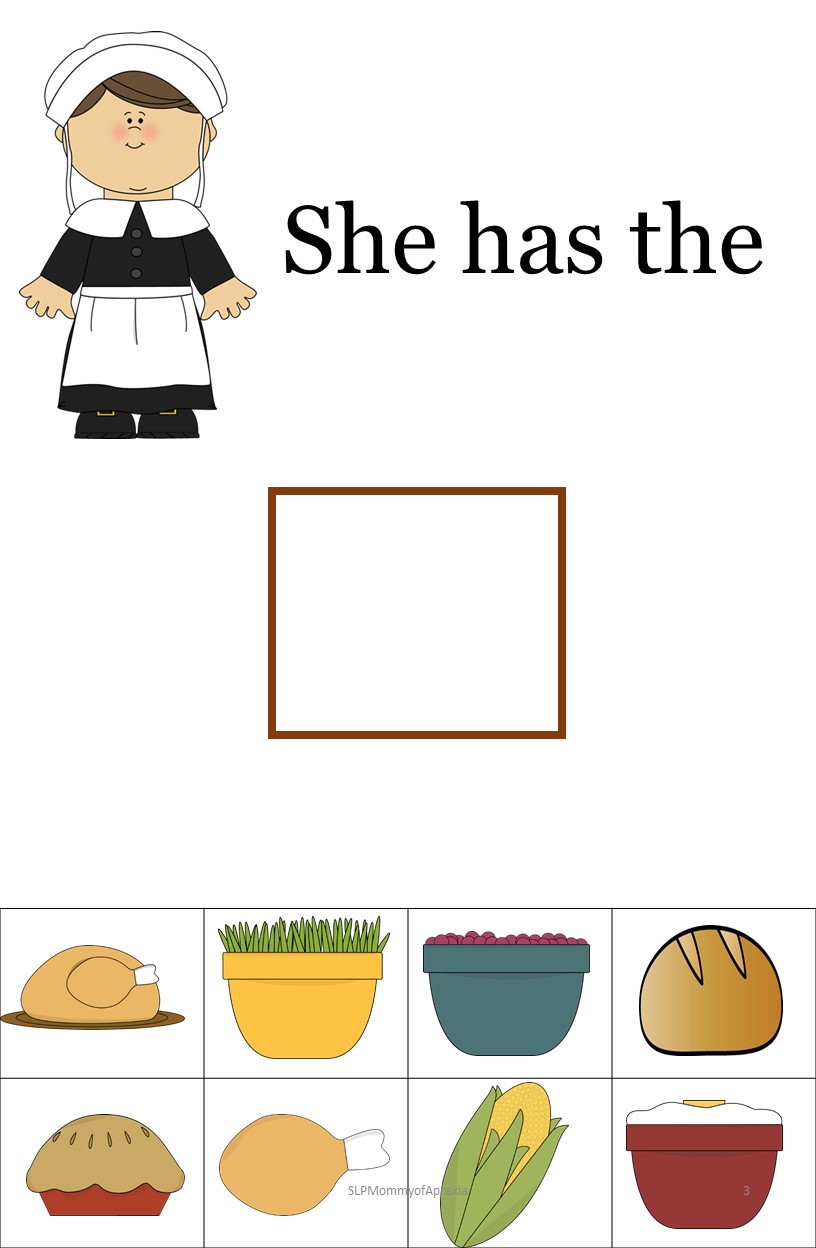
    I needed an activity to work on subject pronouns and has/have this week with a few kids, so I made these activity sheets to go along with the Thanksgiving theme.

    Slide4


    Visit my TpT store now to get it free, and please leave a comment or rating!  Also, don’t forget to follow me so you can get notified first thing of any sales, other freebies, or new items!

    Slide3

    Also be sure to visit FridayFreebies for weekly FREE speech/language activities!

  • What exactly DO I want to hear at parent teacher conference?

    What exactly DO I want to hear at parent teacher conference?

    I had Ashlynn’s Fall parent-teacher conference for this, her last year of Pre-K.   The teacher gave me a HUGE packet for Pre-school standards for my review, and said she didn’t need to go through all of it.

    Um…okay.


    She showed me a picture Ashlynn had drawn the first day of school of a person with her name on the paper, and then another current picture of a person with her name on it.  There was improvement in both.  Okay…..cool.

    Then she said she had an idea to work on the morning routine.  Every morning the kids are to complete a series of 4 steps before the parents leave.  1.) Hang up Coat 2.) Wash Hands 3.) Check in 4.) Write name.

    Despite three months of doing the same thing, Ashlynn always comes in, gets distracted, and needs physical prompts to do each one.  She seems absolutely oblivious to verbal prompting.  It’s not ignoring either.  She is just so engrossed in what the other kids are doing, she loses focus.

    So,back to the teacher’s idea.  She wants me to physically take her to each station instead of verbally prompting her, to hopefully just get Ashlynn successfully completing the routine, and then we can add language.

    Ok….not a problem.

    She seemed relieved I agreed.  I mean, honestly, I’m not too wrapped up in the routine.  I need to know if my baby is making progress.  Is she going to be ready for Kindergarten?  What do I need to be doing at home?

    She really couldn’t pinpoint one thing.  Just kinda said Ashlynn is getting a lot of services to try and catch her up.

    She did say Ashlynn is engaging in collaborative (not just parallel) play, and is using her imagination to make up things.

    Okay….that’s good.

    Oh, and then she said she usually has the kids change seats on the carpet, but she thinks it would be best to keep Ashlynn in the front so she’s not as distracted.

    Okay…sounds good.  She should be getting preferential seating per her IEP, so…. I mean….how is my baby really doing?

    Sigh.

    I don’t know what I want.  The whole thing was underwhelming.  No rave reviews, but then no suggestions on how to help her.

    Not at that meeting anyway.  I gleaned plenty when I finally had a chance to read through the skill sets.

    Let me just pick one out here:

    Early Literacy Skills Assessment:

    Out of 14 pre-literacy skills, Ashlynn has four boxes checked.  🙁

    Damnit.

    FOUR!!! out of FOURTEEN!!!

    It makes me want to cry.  Nevermind, I am crying now.  It’s not fair.

    So, I’m going to tackle those skills.  Comprehension, Phonological Awareness, Alphabetic Principle, and Concepts about Print.

    That’s just reading FYI

    Cody is going to tackle the math part….and that’s a whole other list of checks she doesn’t have that I just can’t bear to look at again.  Thank God my husband is amazing and helps lift some of the burden.

    Stupid Apraxia.  Stupid Apraxia.  I hate apraxia.  I hate this damn disorder.  I HATE IT.  I HATE IT.

    Okay, tantrum over.  Put on your big girl panties Laura.  You don’t see Ashlynn crying about all the work there is to do.  In fact, she’s looking at your right now with alphabet cards in hand ready to learn.

    Alright bug, bug.  We haven’t come this far to raise our white flag yet.  Like I said in my post at the beginning of the year, “Bring it on.  We’re going to give it everything we got.”


    235ecb4e5ac75fa53eb219d99c3ac320

  • Apraxia? How does that affect her vision and hearing?

    So today I took Ashlynn to her 5 year checkup at the doctor’s office.  Her pediatrician is one I met at a pediatrician’s office, but who decided to go work at a family medicine facility.  I love the pediatrician, but having her housed in a general practice creates some challenges….such as today.

    The regular physician assistant was out on vacation, so  another one was there to fill in.  Though she was friendly and seemed good with kids, she really had no clue.

    This was the first year they did a vision and hearing screening on Ashlynn.  I didn’t know what they were doing until she asked,

    “Is she better with shapes or letters?”

    Huh?  Oh.  I realized then she was talking about the vision board.  Oh Lord help me, “The shapes I guess.”

    Ashlynn knows her shapes, and knows many of her letters, but as I’ve written about before, word recall really gets in her way.  I’ve had to tell professional after professional, “You need to have her point for it to be a better indicator of what she really knows.”  Today though I thought screw it.  Whatever.  Let’s just see what happens.

    She takes her out into the hallway and has Ashlynn stand back at a distance.  She points to a star.  “What’s this?”

    Ashlynn, “A rectangle.”

    Me (talking silently to myself): Oh boy, I can see how this is going to go.

    And it went.  She missed every single shape.  When the P.A asked her simple yes/no questions, “Is this a star?” she decided to answer, “no.” For EVERYTHING.

    “Any concerns with her vision?”

    Me:  “No.  She has apraxia.  When she gets put on the spot she has severe word finding issues and just gives you an answer trying to please you.”

    P.A. looks at me skeptically.

    Sigh.  I hate apraxia. This girl can spot a spider on the wall an entire room away, notice her daddy’s new haircut within seconds, or when decorations in the house change, within minutes.  No…I have zero concerns about her vision.

    Back in the room, we wait for the hearing test.  She comes back with a hand held device.

    P.A. “Now raise your hand when you hear the beep.”

    I mean really?  I wanted to start laughing.  My daughter has global motor planning issues!  I should have laughed, because as the saying goes, if you don’t laugh, you’ll cry.

    P.A. “Do you hear that?”

    Ashlynn: “No”

    P.A. turning up volume.  Ashlynn’s eyes dance in recognition. “Did you hear that sweetie?”

    Ashlynn: “No”

    My mind starts to wander.   I have absolutely NO concerns at this point in time with vision and hearing.  She’s passed all of her school screenings and this girl can be distracted by the tiniest noise.  Just ask all of her teachers, including in swimming.  This girl can hear. However, here I am watching this and I wonder, how many more professionals will underestimate her?  This P.A. was ready to pass on a referral for hearing and vision.  It’s not fair.  This is why I don’t want a cognitive test in the spring.  This is why……

    P.A. “Ma’am?”

    Okay, reel yourself in Laura.

    The rest of the visit went great.  Her pediatrician praised her speech and was genuinely impressed.  She laughed when I told her about the screening, and said if I didn’t have concerns she doesn’t either. That’s why I love this woman.  She has a son with autism, and she knows, just like I know, a mother is your best reporter.  She is the expert on her child.  She respects my decisions even if she doesn’t agree with me, and that is the kind of person I need helping me and my child.


    fcef745bba7298fd9b4b7952660573ae