Blog

  • Did we squash my son’s light to save my daughter’s?

    Did we squash my son’s light to save my daughter’s?

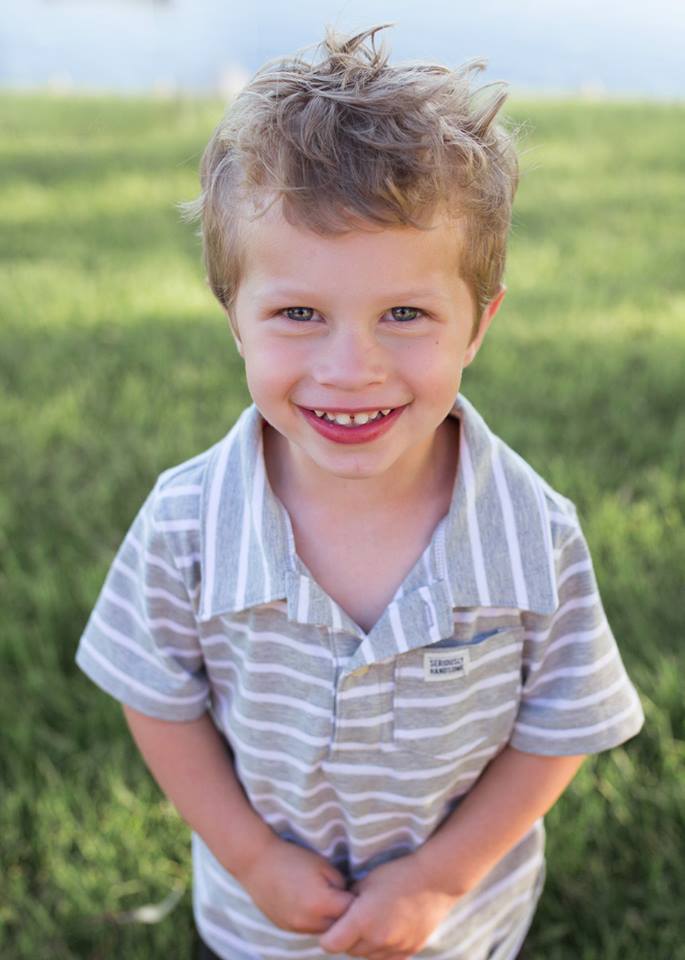
    As most of you know, I’m SLPMommyofApraxia – referring to the fact that I’m an SLP and mom to a child with 19399_10205281065438749_3352492548506817500_napraxia.  I’m also a mom to a typical developing, smart, energetic, and curious  3 year old, little J.

    I have my own private blog for J, because somewhere along the way I decided I like to document my kids’ lives through my own written words.  No one can tell their story like me, and I hope one day they will enjoy reading their story through their mother’s eyes.

    However, today I’m writing about J here because my husband and I realized something the other day.  In the midst of our worry about A and our exhaustive daily struggles to help her master the simplest of daily living tasks, J was meeting and surpassing them daily.  Of course we were proud, but we had some unspoken, never said aloud agreement, that we wouldn’t praise J too loudly so as not to hurt our daughter who has literally worked years to not yet master some things J can now do.

    However, in the process, I started to notice J seemed to be acting out so much more. Yes, he is two and just turned three, but it seemed so much more than the typical terrible twos and horrible threes.

    One night our kids were getting ready for bed.  A was struggling to put her clothes on, and J whizzed through quickly and had his jammy tops and bottoms on in no time.  My husband then instructed him to put on his socks and he protested.  As I watched this, I realized on the rare occasion A can completely dress herself without help, we praise her to high heaven.  Here my son did it, and we were barking at him to now get his socks on. He threw a tantrum, he got in trouble, the night ended on a bad note.

    The next night found us again in the same scenario.  A was putting her pull-up on backwards (yes she is still in a night pull-up because her global apraxia issues along with SPD make it impossible for her to even know she wet herself at night), missing the wrong leg hole, etc etc…..and J had whipped on his clothes.  He was again instructed to put on his socks.  He did unlike the previous night without protest, and instead of praise, he was met with…now get in and brush your teeth…tantrum ensued.

    And that’s when it hit me.  My poor little dude needs praise. If he were our first child, we would be singing his achievements for all to hear!  We would be so proud and be telling everyone who would listen.  We would probably be posting facebook updates on our prodigy and the newest thing he learned.

    But we weren’t.  So scared to discourage A, we remained silent….and me…knowing the pain other moms of special needs kids feel when someone posts about their typical developing child doing typical or extraordinary things, I remained silent, only keeping a private blog so that he knew one day just how proud I really am of him.

    What is one to do?  I talked to my husband and told him he never praises J.  He admitted all the same things I felt.  I expect more of him.  I know he can do it.  I don’t have to worry about him.

    I said again he never praises J, and in that moment we both were solemn.  He said he didn’t want to hurt A.  In the process though, were we hurting our son?  Every child wants their parent to feel proud of them.  The cards our daughtger were dealt aren’t fair, but does that mean our son has to suffer too?

    He is made to tag along waiting in the waiting room while A goes to school, to speech, to O/T,  and private swim lessons. As a baby I was just trying to keep him busy, but as he has grown into a toddler he has began protesting that he too wanted to go: to school, to speech, to O/T, to private swim.  The day we told him he could go to private swim if he pooped in the potty, he pooped and kept saying over and over “I pooped in the potty! Now I can go to swimming with Josh! (the swim teacher’s name).”  When he went, he was miserable and cold, but he never complained.  He tried his best, he looked for…..praise.

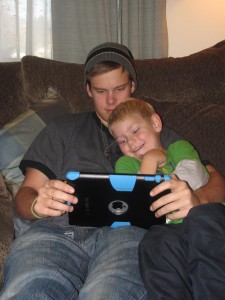
    I decided to start a sticker chart for both of them.  Anytime they did something that made me proud, they earned a sticker.  When it was filled up, they got a prize of their choice.  I already see a change in Jace.  His face lights up when he hears he has made us proud.  He kisses me more.  I used to say he was my snuggle bear, and I have my snuggle bear back.  He’s such a little lovey…and you know what?  A is not crushed.  We should have known.  That girl is incredible.  She cheers for him too and tells him good job.  Tonight, they declared at the dinner table together,

    “We love each other.”

    11401370_10205281067238794_8594670222307513210_n

    And we do.  We have so much love here, and I don’t want to hide any of it anymore because it might hurt someone’s feelings.  We all have different strengths and talents, and if we don’t have a strength or talent someone else possesses, we shouldn’t be jealous.  In turn, if we have a talent or strength someone else doesn’t have, we should be allowed to proud, because that is what makes us all unique.

    We should be cheering each other on and praising each other’s successes, making sure we let them know just how proud we are of them and of each other….. just like A does, despite all her challenges.  I have so much to learn from her.

    drseusstodayyouareyou


  • Apraxia Walker Spotlight: My renewed faith and hope in my Shining Star by Jenny Boncich

    It goes without saying that all my babies are amazing and wonderful!  It’s true. When11694302_10207014452382957_1967691699_n I delivered my 3rd child, I didn’t know it at the time, but I had just given birth to a star!  A shining STAR!  I know, I know, every woman believes her child is a star!  But the kind of star I am talking is pretty special.  My son Mark was born with Childhood Apraxia of Speech (CAS).  CAS is a neurological motor planning disorder.  In a nutshell my son’s brain isn’t able to send the right messages to his mouth, lips, cheeks, jaw, or tongue; so he has great difficulties in executing intelligible speech.  His words are understood by only about 65% of unfamiliar listeners.  In addition to coordinating his speech, our son also has great difficulty globally with his body movements.  That means he struggles with coordinating all of his body, and that just plain SUCKS!


    At about two years old I noticed the beginning of Mark’s symptoms.  No babbles, not walking, etc. I turned to our pediatrician and as much as I loved that man he didn’t have a lot to offer.  A doctor is supposed to know EVERYTHING!  What the heck was I to do??  Oh yeah… GOOGLE THAT S*$%!!   I surfed the web hour upon hour upon hour.  I was in the fight or flight mode.  I needed to put on my suit of armor and begin the good fight!  In doing so, I stumbled upon CASANA.  Thank God I did!  As I began reading the family start guide I just kept nodding, “yep, that’s Mark.  Uh huh that’s Mark. Why yes….that’s my kid!!!!  I took all the information I had devoured and went back to our pediatrician with the diagnosis.  He was as humble as he could be and said, “You’re onto something here!” He even let me wear his stethoscope for a few minutes, as it was I that delivered the diagnosis (I’m just kidding). Over the next couple of months, together we started making the necessary appointments to have him professionally diagnosed by starting Speech Therapy and Occupational Therapy.

    What got me through those first few years were other parents of children with apraxia, my rock solid husband and friend, and CASANA.  It felt good to know I wasn’t alone in this journey.  There were other families out there enduring the same things. What helped me get through this were other Facebook groups. I became educated and encouraged.  It wasn’t long before my family began participating annually in CASANA’s awareness walk.  I really looked forward to CASANA’s annual Apraxia walk, as it was a time we celebrated Mark and all the hard work he done throughout the year. We walked with our family and friends and it felt GREAT!  It was Mark’s day to SHINE like the star he is.

    11693048_10207014452622963_642304763_n

    However…..

    The years have continued to come and go.  My son is now 11.  We have climbed many MOUNTAINS.  We do live in Colorado so that isn’t too amazing.  However,

    I’m not talking about a 14’er.   I am talking the things most of us parents of typical children take for granted.  Crawling, walking, babbling, cooing, coloring, writing, potty training, tricycles, 2 wheeled bikes, blowing bubbles, buttoning, zippering, tying shoes, play dates, sports, and singing.  The list is literally ENDLESS!  Every single thing has been a CHORE for my child.  And I began to get really pissed off about it.  It began to sink in that this was a more severe diagnosis then that of most children. I saw many of the kids that I first met on walks beginning to resolve the issues they had with Apraxia, while my son continued to have such slow progress. It all became too much. Denial after denial from insurance companies, and then ultimately thousands and thousands of dollars in private speech therapy, battle upon battle in conference rooms during our annual IEP meetings fighting for what seemed to be so obvious in what he needed and deserved, the constant stares from strangers, one even asking, is he death?”  (Wanting to say, “No, he’s alive…oh, did you mean deaf?”)  But instead answering kindly,  “No he’s not deaf but we use sign language for expressive communication and…..blah…..blahhhh, blaaahhhh!”

    UGH! “Make it all stop!”  I would scream in my head!  It was obvious that the once very optimistic part of me gave into the GREAT APRAXIA MONSTER, and I became a very cynical, defensive and angry woman.  I actually withdrew from the people and things that once made me feel like we were not alone.  Last year, I purposely and proudly boycotted the Annual Apraxia Kids Walk.  There take that!  I am done.  I’m going to take our toys and go play somewhere else.  Very immature, I know.

    That is until I was fortunate enough to come across a very well written blog from a woman I had sat next to in one of CASANA’s conferences.  The one in Denver a couple of years back.  I remembered her because I thought how LUCKY her daughter was in having a mom who was an SLP!!  If you’re going to have an Apraxia diagnosis, how blessed to be born to a mommy who knows how to help you from the get-go!

    I began reading Laura’s blog about how she and her daughter Ashlynn got to go to a book signing.  The book was about a woman wrestler.  A BEAUTIFUL woman wrestler, Ronda Rousey, who not only wrestled in a ring with opponents, but that also once wrestled with WORDS!  The book was written about a famous person.  And this person once had APRAXIA too!  As I was reading the blog, I could literally feel the excitement and passion Laura had experienced in her meeting with someone that once had what our children are struggling with.  She overcame Apraxia, and then went on to lead a very successful life….despite her early struggles with Apraxia.

    And that’s when it happened.

    Because of this one very simple, loving, blog I began to cry. TEARS?  Yes Tears! And lots of them!  Happy ones.  Because it set in motion a familiar feeling in my stomach, like that of a roaring fire. A roar that made this mom want to start fighting the good fight again! That post not only helped me regain faith, it also restored hope in the fact that my son will someday resolve his struggles with Apraxia.

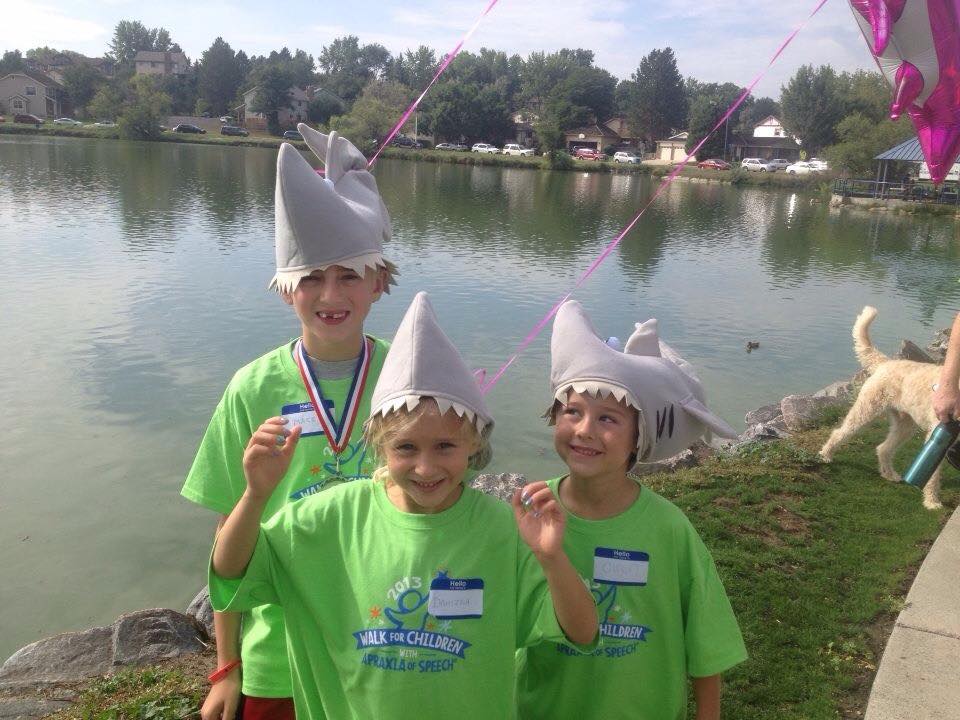
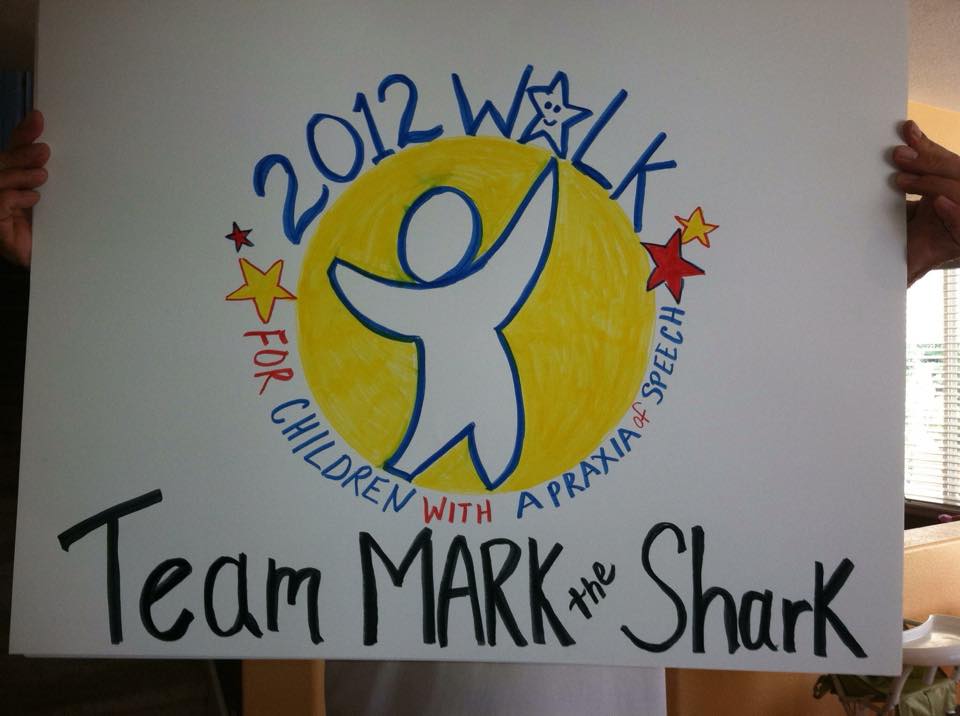
    Thanks to Laura’s enthusiasm spilling over and onto me, I am VERY proud to say, “WE ARE WALKING” in CASANA’s walk this September.  We have invited our friends and family to once again rally around our SHINING STAR and make the day all about him.  We look forward to celebrating his amazing resilience, stamina, and success.  I can’t wait to get TEAM MARK THE SHARK back on the track… in oh so many ways!


    11655524_10207014452142951_42301946_n 11720446_10207014452462959_463885552_n


  • Walker Spotlight: Why I walk for CASANA, by Monica Mayhak

    Our story is much like many other families’ stories. A relatively quiet baby, the missing “mama” and “dada,” the doubt creeping in. For us, it was easy to know that something was off. Our little Emmett is the youngest of six. We knew how this all worked and something wasn’t working here. After five typical and healthy children, when Emmett was 18 months old we had our first experience of asking our pediatrician if something might be wrong. Looking back, I realized I felt embarrassed—was I overreacting? I didn’t want to bother her with this if it was just that he was a bit different from our other children.

    But she was concerned too and referred us to early intervention services. I remember going for Emmett’s evaluation. We walked in, just Emmett and me, to what felt like a roomful of people. It was only about three evaluators, but it scared me. They played with Emmett one-on-one, having him try to go down a slide, stack blocks, do pretend play. As I watched, it slowly dawned on me that he couldn’t do any of these things. When one of them looked at me and asked, “Does he always drool this much?” my heart sank. Why yes, he does, and that is concerning me too. They didn’t give me any answers then, but when I got in the car and called my husband, I told him, something is really wrong here. I think really, really wrong.

    But I didn’t know what. Emmett qualified for services, so a speech therapist came to our home one day a week. This was supplemented with some meetings with an OT. Then, because Emmett couldn’t get through a therapy session without shutting down or hitting or just doing his own freaky things, they called in a DI. “What is a DI?” I asked. A developmental interventionist. Hmmm, what is that? We were told they used to be called “behavioral therapists.” Great I guess. She’ll help us, but what is going on? No one could tell us.

    So I did what probably every other confused mother does—turned to Google. I typed “2 year old can’t talk.” And boom—got lots of hits. Ok, not as helpful as I thought. Lots of ideas to encourage kids to talk and lots of reassurances that it all gets better on its own. Hmmm…ok, let’s try “3 year old can’t talk.” And again, boom—lots of links. But this time, they start referring to the possibility of autism. Emmett doesn’t have autism, so this wasn’t making sense to me either. Keep digging, going up in age, and deeper into links and I ran into my first encounter with apraxia.

    This was also my first encounter with CASANA. I read and read and read and read.  And cried and cried and cried, because this was describing my son. At our next speech therapy session, I asked the SLP about it. She said, “I’m not really familiar with that and it isn’t diagnosed until they are older.” And that was that. For her. But not for me. Back to the internet and reading more and more.

    And then, God mercifully gave us hope. In looking around I found that CASANA was putting on a small workshop here in Denver. Perfect! I’ll go to that! Looking back now, I realize how extraordinarily blessed we were to have this all line up like this. I could have easily missed this workshop, it could have easily not been scheduled here in Denver, I could have easily thought it wasn’t worth it. Sharon Gretz was the presenter. Didn’t know anything about her, but like many families with a child with CAS, I do know her now. And she is our hero!

    I attended the small workshop, absorbed everything, and then cried all the way home. Sobbed really. I went home to my husband and told him “we are doing everything wrong!” I realized that we had not been addressing his needs correctly because we simply did not know how. But this moment of despair disappeared quickly, and I realized that I had found something else besides information at that workshop. It was hope.

    But that fear that I felt when I first took Emmett to be evaluated got big and ugly. I was so very, very afraid. I told my husband, “I can’t do this.” He is a rock and said to me, “You are going to do this. We are going to do this. This is what God is asking us to do. He gave us Emmett…how can we say no?”

    So now we knew. But what to do from here? We found a private SLP who understood apraxia. She helped us to understand and started to work with Emmett. For a couple of years we worked with her and made some progress. Emmett’s behavioral issues constantly got in the way, but she was able to help him with that and help us understand. It was eye opening to see how I could help Emmett.

    And I began devouring everything I could find about CAS. I turned to CASANA’s resources more and more. And then another miracle! I learned that the national conference was to be held in Denver—it felt like my own private miracle, that God worked it so that I could go! I could never have attended it without it being in my own backyard.

    It may sound melodramatic, but that conference changed our lives. My mother had passed away a few short weeks before, and because I had spent six weeks caring for her in my home, Emmett’s needs got lost in the shuffle. That conference was an incredible boost for us, a new beginning in a way. I was exhausted at the end of those days—my brain trying to keep everything. Exhausted!

    And it was like meeting rock stars! David Hammer! Ruth Stoeckel! Dee Fish! Nancy Kaufman! (I sat down at her session and thought, “I HAVE HER CARDS!!!” That is how geeked out I was.) I absorbed everything. And learned and learned and learned. So I left there with information, motivation, ideas, and most of all hope.

    I discovered CASANA’s webinars. Fantastic! It is like being able to have those conference sessions in your own home. I have attended many of them and besides learning more and more, they became important periodic motivators for me. They are a reminder that I need to keep building knowledge and keep fighting every day for him. It is so, so easy to get discouraged–these webinars are great helps for my heart. The webinar presenters are familiar faces from the conference. It is like having a friend, who really cares about my child and my family, sit down with me to give me new information and some needed encouragement. unnamed (5)

    We then threw our hat in the ring to see if we could qualify for an iPad for Emmett through CASANA’s iPad for Apraxia Project. Our SLP helped us with the application and we did qualify! Emmett’s iPad is just his. He doesn’t share it with anyone else and it is loaded with speech apps and learning games. The ease of using the Ipad with Emmett gave us a new way to help him, and that now familiar dose of hope that only CASANA could provide us.

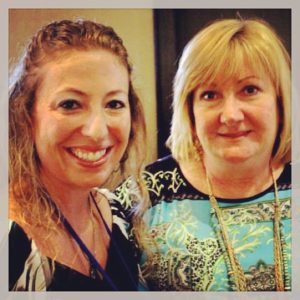
    It was after that we had a change in health insurance and thought that for the first time, we had a shot at getting coverage for Emmett’s treatment. While we were sad to leave our SLP, I realized what an opportunity this was for us. I looked around, and in doing so ran across mention of CASANA’s bootcamp attendees. I wondered if there was anyone from our area who had attended. I can’t remember how I stumbled across it, but I saw mention that Laura Smith from the Denver area was in the current class. Score! I then found out that she was working at a clinic that could help us with insurance. Score again! Our insurance didn’t change until October, so I began to see if I could make this work. To be honest, I began stalking Laura a bit on the internet—even found her picture!

    So, as you can imagine, when I saw her at the Denver Walk for Apraxia, I had to talk to her! I don’t know if she remembers, but I probably came across as a crazy person. I went up to her and I think I said something like, “Are you Laura Smith? I’ve been stalking you on the internet!” Great start! But thankfully I did not scare her off. I began to tell her about us and she patiently listened and then gave me her contact information. She gently told me she had to go be with her kids, and I then realized that I was keeping her hostage. She walked off and I felt like I had won the lottery!

    We were able to get scheduled with her and begin therapy the next week. I learned that she had a little girl the same age as Emmett with CAS. I watched her work with him that first time. I soaked in her gentle reassurances to me. I got in the car at the end of the session and cried and cried. She is just perfect for Emmett and just perfect for me. What CASANA gave to Laura through support and the bootcamp was trickling down to me. Laura, just like CASANA, gives me the tools and information and support I need to help Emmett. But more than that, we have been given hope!

    I started this out by saying that our family’s story is much like that of other families who have a child with CAS. But I know that our ending is not the same as many. At the conference in Denver, there was a final question and answer session. I chose to go the one offered for parents new to a CAS diagnosis with younger children. In the middle of the session, a mother approached the microphone with her question. She said that she was overwhelmed with information, but had a specific question for the panel. Her son was 15 and had just finally been diagnosed with apraxia. He had floundered in the school system and never had appropriate treatment. She asked, “Is there hope for him now?”

    The panel was gracious and so helpful, but I think everyone there felt a knot in their stomachs and knew how serious and devastating that situation was. When treatment is started early, yes, there is hope. For a child that age, it is difficult. The SLPs on the panel spent a good amount of time talking with her and did their best to help her.

    And again at a more recent visit by Sharon Gretz to Denver for another workshop, there was a mother who asked about how to help her nine year old son who had not received appropriate treatment. She said he was resisting all her efforts. She also asked, “Is it too late? Is there hope for him?”

    I think of those women often. That could have been me in a few years, confused and despairing. But we are not in that place. CASANA has provided a lifeline for our family. They offer workshops and the conference and webinars and more. They fund research and educate the world about this disorder. They provided the training that Laura uses to help Emmett. They helped us to see that we are not alone. But the most important thing they give to all of us is hope. And truly it is only with that hope that we can continue this fight and do this work with and for our kids.

    unnamed (1) unnamed (3) unnamed (4) unnamed (2)


  • Why apraxia? Master plan? Coincidence? Destiny?

    When I first started in the field, I actually had not set out to be an SLP.  It seems crazy to me now since I can’t imagine doing anything else, and it seems especially crazy since I not only think about speech everyday, but I think about apraxia even more.  If I’m not thinking about apraxia or something apraxia related, it doesn’t last long.

    No, I was working at a Dodge Dealership straight out of highschool, and stayed there to support me and my bachelor degree through college.  It was perfect because many times as a receptionist I had time to do my homework in between phone calls.  I initially thought I wanted to be a broadcast journalist.  I was good at writing and speaking, or so my teachers said.  However, the advisor said the market was saturated and that to be doing this career in Denver, I would have to get my start first in a small town.

    Dealbreaker.  Taking me out of Denver away from my family has always been a dealbreaker.

    Well, what else can I do in speech communications?  They had me fill out a questionairre, and I indicated I also liked physical therapy.  I had blown out my knee my senior year of highschool basketball and it was honestly devastating to me at the time.  I was a starter and the team captain, and I thought I could go to college and play ball. Well, God had other plans.  I remember working a lot with my trainer and I thought that would be a cool job.  The advisor suggested marrying the two and sent me to talk to the head of communication disorders to look into speech therapy.  I had never really heard of speech therapy.  I just wrote that and it seems unbelievable, but it’s true.  Nope.  At that time in my short life, I had never heard of speech therapy.

    Catherine Curran was the head of the communication disorders at the time and suggested I take a language acquisition class to see if I liked it.  I loved the class, the only problem was to be a speech therapist I’d have to have a masters, and no one in my family to this point had a college degree.  I was going to college, but didn’t have any grand expectations, and I sure didn’t think I would ever have an advanced degree.  That was just a crazy dream.  I’m still very Type A though, and maintained a good GPA.

    I pursued working at Dodge and found myself working my way up in customer relations.  I got to know big wigs at Chrysler Corp and was certain I could work my way up from there.  My umbrella degree was speech communications which seemed applicable.  I wouldn’t have to mention the emphasis was in disorders.

    Then, in 2003, right when I was graduating, the Great Recession hit.  The car business TANKED.  My boss who I was set to replace was making 40k and all the GM offered me was 13.50 an hour to do her job.  I was livid.  I had 5 years into the company.  Was this is a joke?

    Around that same time, Lisa Gessini, the head of the speech department in Denver Public Schools called me.  DPS has approved SLPA’s and she saw I was on the list of students who had completed the pilot program.  This program was a grant sponsored by three area colleges where I literally was paid to train to be an SLPA.  Yeah, I did it, but again, not because I thought I would be doing speech therapy.  They gave me 3k to go through the program.  Sure I thought!  I can get paid to do a little more college and practicums.

    Lisa said the pay would be about what I was making currently at Dodge, but I would have summers and holiday breaks off.  In the car business, this is when you MUST be working, because those are the times people want to buy cars.

    Okay, what the hell.  I’ll interview.

    I got the job.

    Hmm, alright.  I’ll take it.  Sucks that I have no opportunity to move up, since moving up would require a master’s degree, but I was disenchanted with Dodge and thought I would keep my contacts with Chrysler and go back once the economy recovered.

    Guess you all know by now I didn’t go back.

    No, instead I met another key player who is still in my life.  Insert Deborah Hensley Comfort.  That is literally what her name tag said.  I was immediately intimidated.  She used her maiden name as her middle name?  Who does that?  Her dad was a doctor.  She had gone to Vanderbilt.  She could quote researchers like I could quote pop singers.  That’s not all that made her amazing.  As I worked those two years as an SLPA, every SLP I worked under made progress with their students, but no one made it as quickly as Deborah.  Her secret wasn’t really any surprise.  Always planning out her lessons, never flying by the seat of her pants, constantly researching….her students’ progress wasn’t really a coincidence.

    I worked under other SLP’s during that time.  No one planned like Deborah.  Many went into a session just winging it.  Some did the same methods they had been doing for the past 30 years.  Deborah’s sessions were always dynamic.  To be honest, even though she could come across like a total ‘b’ word to colleagues (and she knows this because I have told her out of love), when she was in therapy someone turned on a switch.  Her kids wanted to please her.  They worked for her.  She just had that “it” factor.  I can’t explain it.

    Anyway, there was absolutely NO way I could ever be like her.

    I had another mentor at that time who I loved dearly.  She was another master’s degree leveled woman with the name Roberta Hill Fehling.  Yep, another woman who used her maiden name as her middle name.  It may sound dumb, but this was just not the culture I came from.  Anyway, Roberta could handle caseloads of 90 and have spotless and meticulous paperwork.  She taught me a lot about CYA.  Unfortunately, you don’t have as much time to see kids when your paperwork can stand “Judge Judy’s Test” as she would put it; so though her kids made progress, they didn’t make it as quickly as Deb’s.  That doesn’t mean I fault Roberta.  Not at all.  In my field one lawsuit can bring down your entire career.  Everyday when we write an IEP, we literally write a legal document and we are not lawyers.  I’m sounding dramatic, but we can get fired on technicalities  Seriously.

    Anyway, these two women kept asking me when I would go to graduate school.  I would laugh and give them a half smile.  I had no plans to be an SLP.

    One day, I walked into work and Deb had an impressive display of paperwork laid out on the table. As I looked at it, I realized it was paperwork to get me into graduate school.  I saw the application, dates of the GRE, and a letter of recommendation.

    “Deb….I….”

    “Don’t say anything but that you’ll apply,” she pressed.

    “Deb….you know I can’t afford to not work and go to school,” I stammered.

    “I know that.  I called my contact at UNC.  They have a distance learning program.  You can still work as an SLPA under me and go to school,” she said proudly.

    My head was spinning.  I didn’t want to let her down, but this was crazy. I started to stammer again and

    “Laura, fine.  You can say no.  You can choose not to do this, but at least I will know in my heart I did everything I could to get you to go.”

    What does one do with that?  90% of me wanted to say no, but 10% told me maybe I could actually get a master’s degree someday.

    “Okay,” I said.  “But I’m only applying to this one program.  If I don’t get it, it wasn’t meant to be.”

    “Fine,” she said beaming.

    You may not be aware, especially if you haven’t had a great experience with an SLP, but graduate programs in speech language pathology are incredibly competitive and limited.  It is not an exaggeration to say students will apply to 5-10 schools and maybe get accepted into one, if that.  There are only two colleges in Colorado that have a program.  At the time, the average GPA for students accepted was 3.9 at one and 3.87 at the other.  I had the GPA….but….

    Needless to say, I got in.

    During that time, Deb had a kiddo with apraxia pop up on her caseload.  She wanted me to attend a training with her.  It was expensive…of course.  I argued, she got the principal to pay, and next thing I knew I was sitting in a training given by an apraxia expert out of the Mayo Clinic.

    Insert Ruth Stoeckel.

    If I thought Deb was intense, Ruth was intense meets steroids.  She was crazy smart.  I spent the entire time scribbling notes and looking over at Deb who seemed to be understanding what Ruth was saying.  That’s good.  If I said I understood 50% of her talk at that time, it would probably be stretching it.

    My first year as an SLP a little boy who was entering Kindergarten appeared on my caseload.  Shy and frustrated, he was smart but nonverbal.  About two months in, I had an alphabet BINGO game sitting on the table.  Daniel took it out and proceeded to name all the letters.

    “Daniel!!” I cried.  “Listen to you!!”  I exclaimed excitedly.

    He beamed.

    When we tried to combine the sound though with just one more sound….no go.

    Hmm.

    I googled apraxia that afternoon and found…

    Insert CASANA.

    I printed out articles from David Hammer and Edythe Strand.  Certain it was apraxia I changed my treatment approach and pulled out that Mayo Clinic talk.

    The day his dad came in and he said “Hi Papa” his father cried tears of joy.  He picked up Daniel and hugged him with tears streaming down his face.

    That was my first personal experience with apraxia.  That summer I was terrified Daniel would regress.  His family had no money for therapy, no medicaid, and his dad supported them by working at Chipotle.  I offered to see Daniel for free.  I really thought nothing of it.  I loved Daniel, truly.  I just wanted to continue the momentum, and at that time I didn’t have a family so I had free time.  I’m happy to say I left Daniel speaking with a residual articulation disorder.  He went to another district afterward.  I think about him a lot.

    One day I got a call from the SLP who filled in for my maternity leave during that time.  She was working intake acute care at Denver General and Daniel had come through the door.  She was sick.  Daniel had been in a sledding accident and his speech was back to baseline.

    Apraxia didn’t really come around again for me until Ashlynn’s dx.  Around that time, I had another Kindergarten student walk through my door nonverbal with a working dx of suspected apraxia.  I did exactly what I did with Daniel, and then started doing the Kaufman method, which Ashlynn was getting. His name was Bryan, and yes I love him too.  During that time I discovered the CASANA conference was coming to Denver.  This was the year after Ashlynn’s dx.  I was on maternity leave and broke.  It was expensive, but not one to disregard a coincidence I just KNEW it came for me.  I went.  I met the head of CASANA.

    Insert Sharon Gretz.

    She will laugh when (if) she reads this, but I told my husband I was going to meet my Julia Roberts.  When I met her, I will never forget as I was telling her about Ashlynn tears welled in her eyes.  I’ll never forget that.  She didn’t say a word and yet she understood me so completely.  I went on to tell her about Daniel and how I treated him using articles from google and a man named David Hammer.  “Dave,” she said.

    Insert David Hammer

    I looked on incredulously.  I must have been in a dream.

    I was seated at a table with other SLP’s who were “bootcampers.”

    “What’s bootcamp?” I asked innocently.

    Sharon told me it was highly competitive and there was already someone who had done it from my area.

    “Oh,” I said, face falling.

    “But you should still apply,” she offered.  I half-heartedly smiled.  I’m young.  I don’t have the experience others have, and I never went to colleges like Vanderbilt.  Oh well, it was a cool thought.

    I applied anyway that Fall.  I needed a letter of recommendation from a family.  At the time, I was only treating Bryan, and his family only spoke Spanish.  The teacher said I could ask them to write one and she would translate it. I have never been so touched by a letter in my life.  It was hand-written and so heart-felt.  I had no idea that the things I had done with Bryan they had noticed. When the dad dropped it off, his brow was furrowed.  He apologized for not having an education to write me a good letter, and he hoped it would be good enough.  He really wanted it for me.  I assured him it was good enough! Education has nothing to do with it!  It was better than any perfectly punctuated letter in English.  He looked skeptical. I smiled an enormous smile.

    I sent it to CASANA.  I was accepted!

    Ruth, Dave, & Sharon awaited in Pittsburgh.

    Walking on the campus of Duquesne University I had to pinch myself.  How had a girl who thought she would be in the car business end up in Pittsburgh with an elite group of SLP’s and apraxia experts that I had read about in journals ready to mentor me?

    To wrap up this story (if you’re even still reading) Deborah Hensley Comfort is now my daughter’s SLP (there is no one better).  As I was relaying my Ronda Rousey story (another coincidence?), she smiled and said so sure,

    “Oh Laura.  I will retire soon.  But I can’t wait to watch you as a PhD level professional.”

    I laughed, but this time it was a different laugh.  This time, my eyes had a glimmer.  Laura Baskall Smith PhD CCC-SLP has a nice ring to it! Ha!

    Now one could say they were all a series of coincidences, or others could say it was all part of a master plan.  I don’t believe in either though.  I believe God gives you messages and puts people in your life depending on circumstances or choices you have made, and you can choose to listen, or you can shrug your shoulders and brush them off.

    I’m so glad I chose to listen.
     

    945703_10200574050606320_652369658_n 10868026_10203905948541686_128339030901666165_n


  • Apraxia Walker Spotlight: Team Power – Why I Walk

    Why I Will Walk for Children with Apraxia of Speech on September 19th.

    by Linda Power

    Many kids get medals in school and on sports teams as recognition of their abilities relative to peers. More subtle, but no less deserving, are the achievements made by our children with special needs. Such is the case with our 3 year old son Ashton, who was diagnosed with severe apraxia of speech last year.  Something as seemingly simple as speech doesn’t come easy to him.  It’s glaringly obvious every day how frustrated he is.  He wears in emotions on his sleeve.

    This year has been a roller coaster for our family.  A few months ago, Ashton developed a severe stutter (common in apraxia) which took away the words that he had learned and regressed his speech into “Ada ada ada.”  We were terrified that his stutter, which progressed rapidly, would become permanent.  It was painful to hear and to watch him struggle every time he wanted to say something.  I received the ultimate gift on Mother’s Day when Ashton walked up to me with a huge smile, holding a card he’d made in speech therapy and fluently said, “Happy Modders Day Moddy.”  My eyes well up with tears just recalling that moment.  While his stutter is essentially gone, Ashton still has Apraxia of Speech and gets “tongue tied” when trying to talk.  His brain has trouble coordinating the muscles of his mouth to produce intelligible words.  He still has years of speech therapy ahead of him, which is specialized and evidence based courtesy of a wonderful non-profit organization called CASANA.  CASANA funds research and training, and helps educate the community about Apraxia.  CASANA even provides scholarships for selected Speech and Language Pathologists to attend training events so they can disseminate information to the community and provide the highest quality treatment to children such as Ashton.  We feel extremely fortunate that Ashton’s SLP Laura Smith was one of those selected to receive advanced training to become a CASANA recognized expert in Childhood Apraxia of Speech.

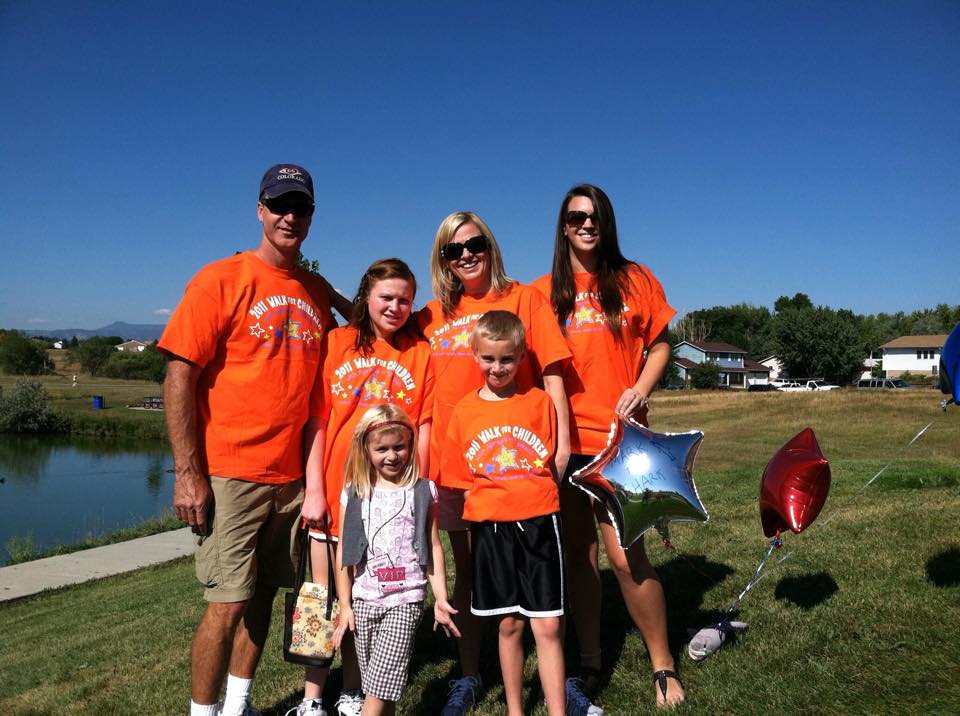
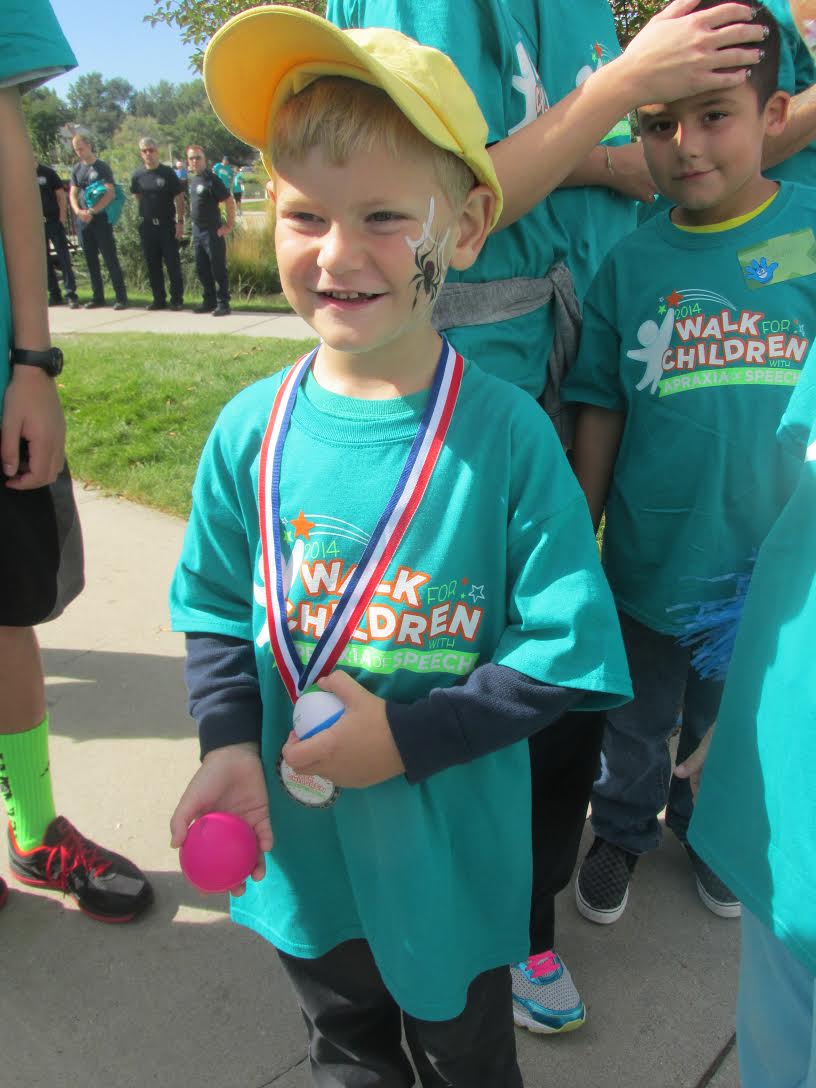
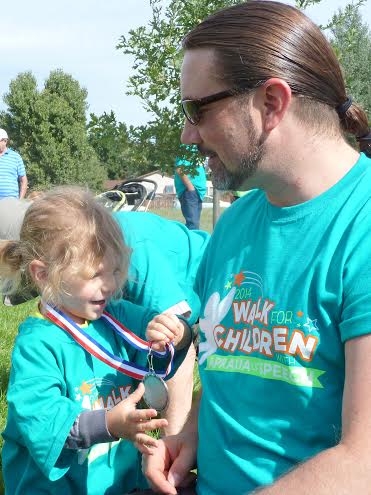
    Whereas we, as parents, have Mother’s and Father’s Day to celebrate our hard work throughout the year, our kiddos with Apraxia, will have their day at the Apraxia Walk.  We will celebrate their accomplishments during the medal ceremony where each and every child with Apraxia will have their name called and proudly walk up and receive a medal.  Ashton, representing “Team Power” loved his and learned to say a new word that day, “Medal.”  To his older brother, he referred to it as “My medal.”

    unnamed (1)unnamed (3)

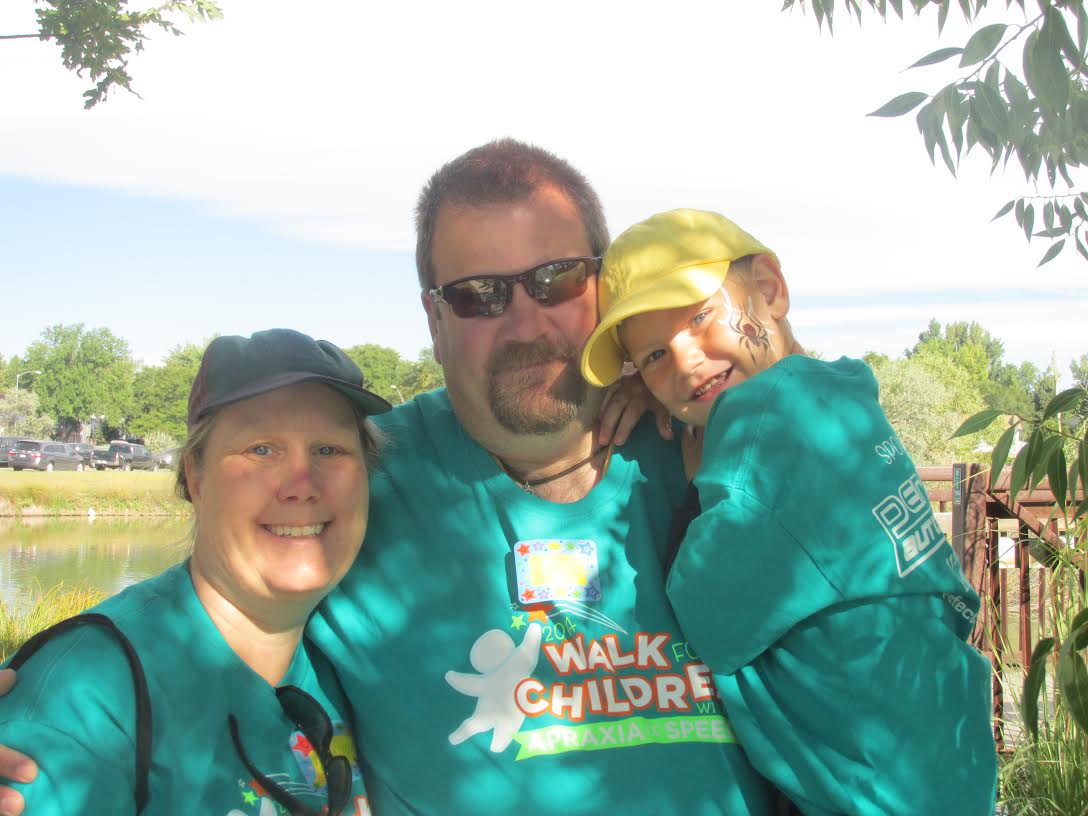
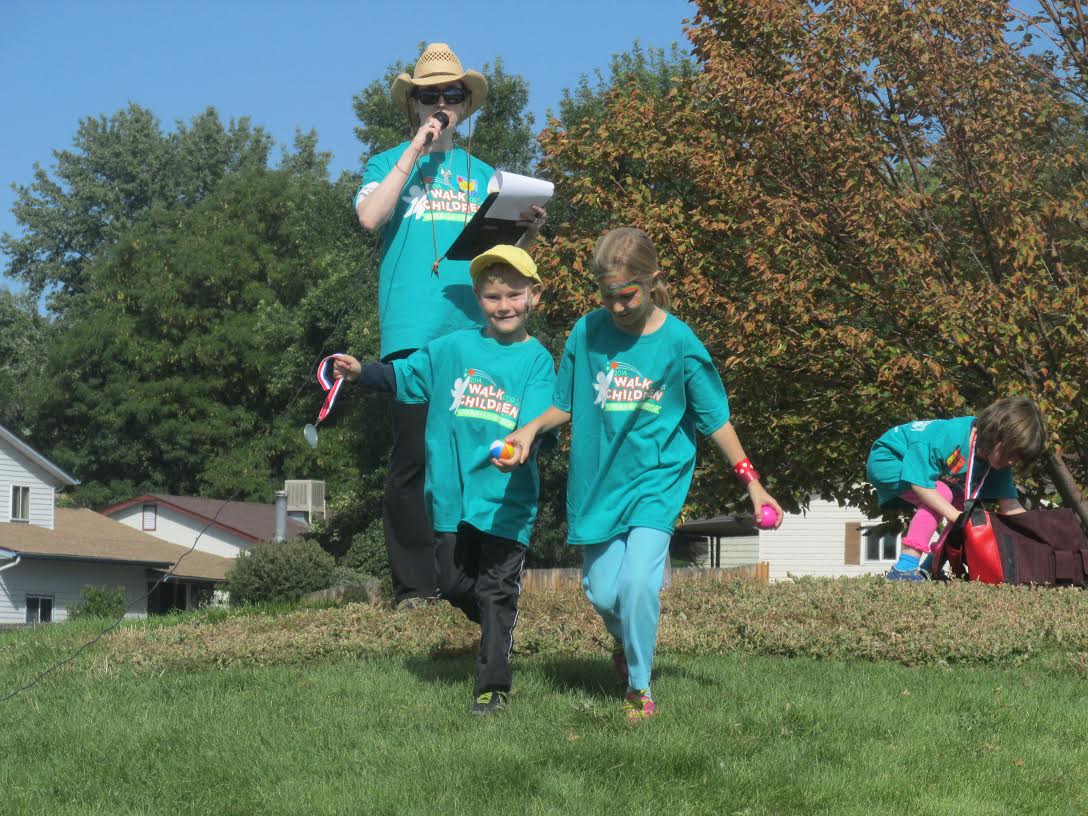
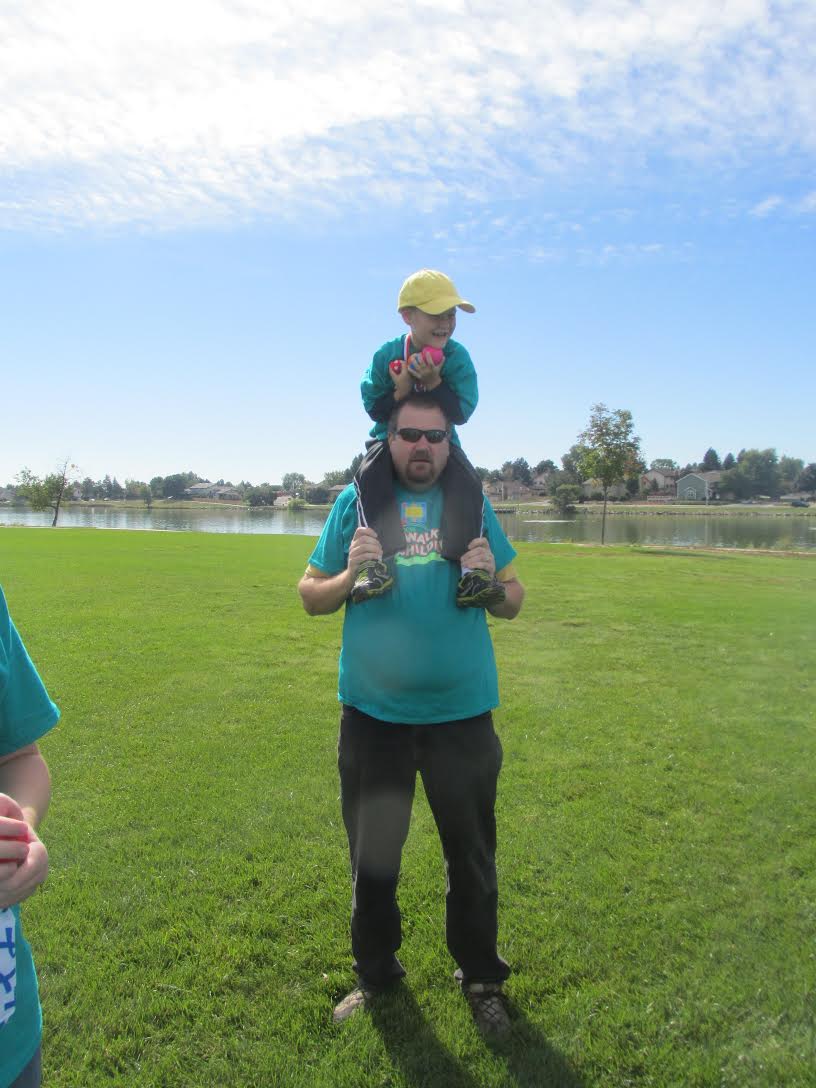
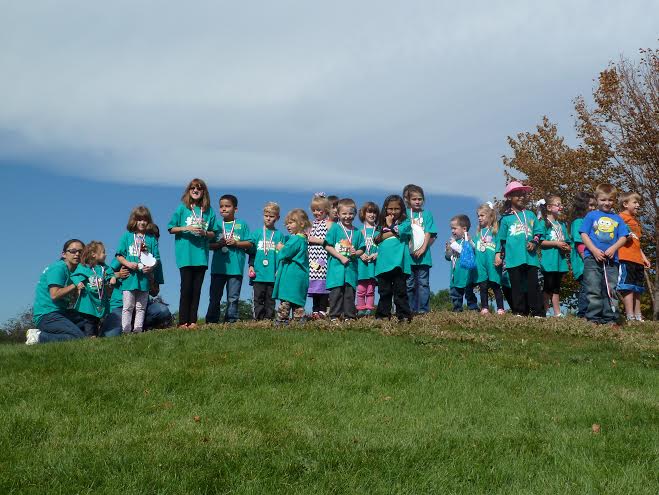
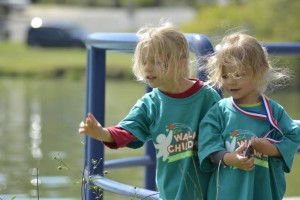
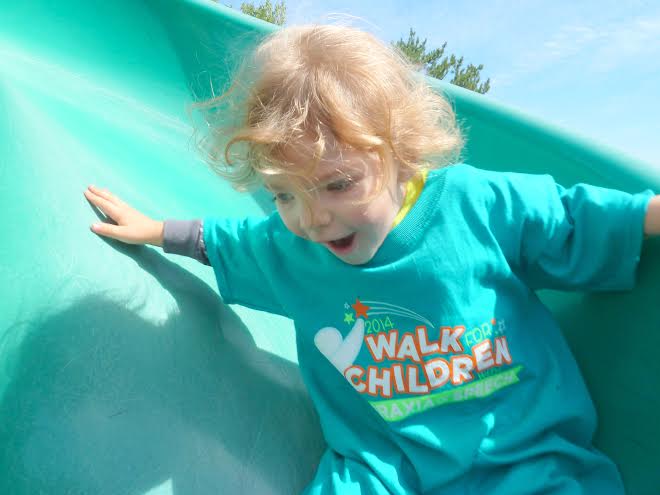
    The award ceremony is only one part of the wonderful day for kids.  Ashtunnamed (4)on’s 5 year old brother, Adam, also had a wonderful time.  They got to have their face painted, get to see a big red fire truck, get to walk (or hitch a ride on shoulders) around a beautiful lake with us, their supporters, all wearing Apraxia Awareness T-shirts.  For our children with Apraxia, they get to meet and play with other children who understand their struggle to communicate.  They get to see that they are not alone, and that they are supported in every direction they look.

    unnamedunnamed (2)


  • I failed her

    I failed her

    Little Jace is 2:11, the exact age my daughter was when I took her into Child Find.  This is also the time I started blogging.  I was talking with a client’s mom today, and he is the baby…the baby of like 6 or 7 kids (I tend to lose track), and she was saying every once in awhile they realize just how much they are missing out on.  These include the funny sayings, or the inside jokes each family develops.

    My situation is slightly different.  Ashlynn was my first born.  Her milestones (or inchstones) are etched not only in my memory, but in written words as well.  Each time my son does or says something, I can’t help but have flashbacks to her development.

    Just the realization that Jace is 2:11 was mind blowing.  That’s the age I took Ashlynn to Child Find.  I will NEVER forget that age.  I will NEVER forget the dread walking her up the sidewalk, the overwhelming desire to turn back toward my car, or the three words that made my head spin because I instantly knew they were true,

    “This is apraxia.”

    I read an old post around that time: Background and suspicions of apraxia in my own daughter.  My last line was:

    “I had to accept that I had failed her.”

    Wow.  Ouch.  However, yes, this was EXACTLY the place I was in.  So much fear, so much weight, so much worry, so much pain, so much GUILT.

    The post is surreal.  I talked about how my mentor took me to a conference years earlier given by Ruth Stoeckel.  I could not have even IMAGINED that years later I will be able to say Ruth Stoeckel is also my mentor.  Seriously, that would have been so UNBELIEVABLE to me at that time.

    Yet, it happened.

    I remember feeling so embarrassed that I was an SLP who couldn’t help my child.  I had a parent support group I found, but no one was an SLP.  I felt so lonely.  I would not have believed you if at that time someone would have said I would be part of a newly found support group with 22 other women who shared my exact experience.

    Yet, it happened.

    I would have laughed if  you told me I would have gone on a crazy gut intuition to meet MMA superstar Ronda Rousey just because I had a suspicion from an interview that she had apraxia, but I did; and now my daughter will always know a famous woman who had apraxia and beat it, and will have an autographed copy of her book. (Edited to add we now have our own book of OUR story with Ronda and Ashlynn on the cover).

    Yet, it happened.

    Just recently in my SLP Moms of Apraxia group a fretting mother reminds me of my early self. She made the comment “I’m afraid I’ll miss something and ruin his life.”

    I told her she couldn’t put that out there.  She had to stay positive because she is already amazing and doing everything she could for him……but today I realized, at her stage I felt the same way.  I felt the same way, but time marched on, Ashlynn got better, so much better in fact, a fellow mom of apraxia met her yesterday to take my family pictures and told me she would never know Ashlynn had apraxia.

    Dang.  Imagine that.  I guess I didn’t fail her after all, but no one could have convinced me of that during that fateful day I received her diagnosis.  I KNEW in my SOUL I had failed her.

    So glad and grateful I was wrong.

    Another mom further in this process in my SLP MOM group said, “If you put your concern out into the universe, the answer always comes in the strangest ways.”

    I couldn’t agree more.  For me, I don’t believe in coincidences.  Coincidence to me, is code for “God is telling you something right now.  Listen.”

    My journey, Ashlynn’s journey, is far from over.  I’ve stopped worrying about what will come.  Instead, we believe in what will come.

    6266f7e061f3b1d04a3617ed8c1585fc

    Laura Smith, M.A. CCC-SLP is a 2014 graduate of Apraxia Kids Boot Camp, has completed the PROMPT Level 1 training, and the Kaufman Speech to Language Protocol (K-SLP). She is the author of Overcoming Apraxia and has lectured throughout the United States on CAS and related issues. Currently, Laura is a practicing SLP specializing in apraxia at her clinic A Mile High Speech Therapy in Aurora, Colorado.