Category: Uncategorized

  • Why apraxia? Master plan? Coincidence? Destiny?

    When I first started in the field, I actually had not set out to be an SLP.  It seems crazy to me now since I can’t imagine doing anything else, and it seems especially crazy since I not only think about speech everyday, but I think about apraxia even more.  If I’m not thinking about apraxia or something apraxia related, it doesn’t last long.

    No, I was working at a Dodge Dealership straight out of highschool, and stayed there to support me and my bachelor degree through college.  It was perfect because many times as a receptionist I had time to do my homework in between phone calls.  I initially thought I wanted to be a broadcast journalist.  I was good at writing and speaking, or so my teachers said.  However, the advisor said the market was saturated and that to be doing this career in Denver, I would have to get my start first in a small town.

    Dealbreaker.  Taking me out of Denver away from my family has always been a dealbreaker.

    Well, what else can I do in speech communications?  They had me fill out a questionairre, and I indicated I also liked physical therapy.  I had blown out my knee my senior year of highschool basketball and it was honestly devastating to me at the time.  I was a starter and the team captain, and I thought I could go to college and play ball. Well, God had other plans.  I remember working a lot with my trainer and I thought that would be a cool job.  The advisor suggested marrying the two and sent me to talk to the head of communication disorders to look into speech therapy.  I had never really heard of speech therapy.  I just wrote that and it seems unbelievable, but it’s true.  Nope.  At that time in my short life, I had never heard of speech therapy.

    Catherine Curran was the head of the communication disorders at the time and suggested I take a language acquisition class to see if I liked it.  I loved the class, the only problem was to be a speech therapist I’d have to have a masters, and no one in my family to this point had a college degree.  I was going to college, but didn’t have any grand expectations, and I sure didn’t think I would ever have an advanced degree.  That was just a crazy dream.  I’m still very Type A though, and maintained a good GPA.

    I pursued working at Dodge and found myself working my way up in customer relations.  I got to know big wigs at Chrysler Corp and was certain I could work my way up from there.  My umbrella degree was speech communications which seemed applicable.  I wouldn’t have to mention the emphasis was in disorders.

    Then, in 2003, right when I was graduating, the Great Recession hit.  The car business TANKED.  My boss who I was set to replace was making 40k and all the GM offered me was 13.50 an hour to do her job.  I was livid.  I had 5 years into the company.  Was this is a joke?

    Around that same time, Lisa Gessini, the head of the speech department in Denver Public Schools called me.  DPS has approved SLPA’s and she saw I was on the list of students who had completed the pilot program.  This program was a grant sponsored by three area colleges where I literally was paid to train to be an SLPA.  Yeah, I did it, but again, not because I thought I would be doing speech therapy.  They gave me 3k to go through the program.  Sure I thought!  I can get paid to do a little more college and practicums.

    Lisa said the pay would be about what I was making currently at Dodge, but I would have summers and holiday breaks off.  In the car business, this is when you MUST be working, because those are the times people want to buy cars.

    Okay, what the hell.  I’ll interview.

    I got the job.

    Hmm, alright.  I’ll take it.  Sucks that I have no opportunity to move up, since moving up would require a master’s degree, but I was disenchanted with Dodge and thought I would keep my contacts with Chrysler and go back once the economy recovered.

    Guess you all know by now I didn’t go back.

    No, instead I met another key player who is still in my life.  Insert Deborah Hensley Comfort.  That is literally what her name tag said.  I was immediately intimidated.  She used her maiden name as her middle name?  Who does that?  Her dad was a doctor.  She had gone to Vanderbilt.  She could quote researchers like I could quote pop singers.  That’s not all that made her amazing.  As I worked those two years as an SLPA, every SLP I worked under made progress with their students, but no one made it as quickly as Deborah.  Her secret wasn’t really any surprise.  Always planning out her lessons, never flying by the seat of her pants, constantly researching….her students’ progress wasn’t really a coincidence.

    I worked under other SLP’s during that time.  No one planned like Deborah.  Many went into a session just winging it.  Some did the same methods they had been doing for the past 30 years.  Deborah’s sessions were always dynamic.  To be honest, even though she could come across like a total ‘b’ word to colleagues (and she knows this because I have told her out of love), when she was in therapy someone turned on a switch.  Her kids wanted to please her.  They worked for her.  She just had that “it” factor.  I can’t explain it.

    Anyway, there was absolutely NO way I could ever be like her.

    I had another mentor at that time who I loved dearly.  She was another master’s degree leveled woman with the name Roberta Hill Fehling.  Yep, another woman who used her maiden name as her middle name.  It may sound dumb, but this was just not the culture I came from.  Anyway, Roberta could handle caseloads of 90 and have spotless and meticulous paperwork.  She taught me a lot about CYA.  Unfortunately, you don’t have as much time to see kids when your paperwork can stand “Judge Judy’s Test” as she would put it; so though her kids made progress, they didn’t make it as quickly as Deb’s.  That doesn’t mean I fault Roberta.  Not at all.  In my field one lawsuit can bring down your entire career.  Everyday when we write an IEP, we literally write a legal document and we are not lawyers.  I’m sounding dramatic, but we can get fired on technicalities  Seriously.

    Anyway, these two women kept asking me when I would go to graduate school.  I would laugh and give them a half smile.  I had no plans to be an SLP.

    One day, I walked into work and Deb had an impressive display of paperwork laid out on the table. As I looked at it, I realized it was paperwork to get me into graduate school.  I saw the application, dates of the GRE, and a letter of recommendation.

    “Deb….I….”

    “Don’t say anything but that you’ll apply,” she pressed.

    “Deb….you know I can’t afford to not work and go to school,” I stammered.

    “I know that.  I called my contact at UNC.  They have a distance learning program.  You can still work as an SLPA under me and go to school,” she said proudly.

    My head was spinning.  I didn’t want to let her down, but this was crazy. I started to stammer again and

    “Laura, fine.  You can say no.  You can choose not to do this, but at least I will know in my heart I did everything I could to get you to go.”

    What does one do with that?  90% of me wanted to say no, but 10% told me maybe I could actually get a master’s degree someday.

    “Okay,” I said.  “But I’m only applying to this one program.  If I don’t get it, it wasn’t meant to be.”

    “Fine,” she said beaming.

    You may not be aware, especially if you haven’t had a great experience with an SLP, but graduate programs in speech language pathology are incredibly competitive and limited.  It is not an exaggeration to say students will apply to 5-10 schools and maybe get accepted into one, if that.  There are only two colleges in Colorado that have a program.  At the time, the average GPA for students accepted was 3.9 at one and 3.87 at the other.  I had the GPA….but….

    Needless to say, I got in.

    During that time, Deb had a kiddo with apraxia pop up on her caseload.  She wanted me to attend a training with her.  It was expensive…of course.  I argued, she got the principal to pay, and next thing I knew I was sitting in a training given by an apraxia expert out of the Mayo Clinic.

    Insert Ruth Stoeckel.

    If I thought Deb was intense, Ruth was intense meets steroids.  She was crazy smart.  I spent the entire time scribbling notes and looking over at Deb who seemed to be understanding what Ruth was saying.  That’s good.  If I said I understood 50% of her talk at that time, it would probably be stretching it.

    My first year as an SLP a little boy who was entering Kindergarten appeared on my caseload.  Shy and frustrated, he was smart but nonverbal.  About two months in, I had an alphabet BINGO game sitting on the table.  Daniel took it out and proceeded to name all the letters.

    “Daniel!!” I cried.  “Listen to you!!”  I exclaimed excitedly.

    He beamed.

    When we tried to combine the sound though with just one more sound….no go.

    Hmm.

    I googled apraxia that afternoon and found…

    Insert CASANA.

    I printed out articles from David Hammer and Edythe Strand.  Certain it was apraxia I changed my treatment approach and pulled out that Mayo Clinic talk.

    The day his dad came in and he said “Hi Papa” his father cried tears of joy.  He picked up Daniel and hugged him with tears streaming down his face.

    That was my first personal experience with apraxia.  That summer I was terrified Daniel would regress.  His family had no money for therapy, no medicaid, and his dad supported them by working at Chipotle.  I offered to see Daniel for free.  I really thought nothing of it.  I loved Daniel, truly.  I just wanted to continue the momentum, and at that time I didn’t have a family so I had free time.  I’m happy to say I left Daniel speaking with a residual articulation disorder.  He went to another district afterward.  I think about him a lot.

    One day I got a call from the SLP who filled in for my maternity leave during that time.  She was working intake acute care at Denver General and Daniel had come through the door.  She was sick.  Daniel had been in a sledding accident and his speech was back to baseline.

    Apraxia didn’t really come around again for me until Ashlynn’s dx.  Around that time, I had another Kindergarten student walk through my door nonverbal with a working dx of suspected apraxia.  I did exactly what I did with Daniel, and then started doing the Kaufman method, which Ashlynn was getting. His name was Bryan, and yes I love him too.  During that time I discovered the CASANA conference was coming to Denver.  This was the year after Ashlynn’s dx.  I was on maternity leave and broke.  It was expensive, but not one to disregard a coincidence I just KNEW it came for me.  I went.  I met the head of CASANA.

    Insert Sharon Gretz.

    She will laugh when (if) she reads this, but I told my husband I was going to meet my Julia Roberts.  When I met her, I will never forget as I was telling her about Ashlynn tears welled in her eyes.  I’ll never forget that.  She didn’t say a word and yet she understood me so completely.  I went on to tell her about Daniel and how I treated him using articles from google and a man named David Hammer.  “Dave,” she said.

    Insert David Hammer

    I looked on incredulously.  I must have been in a dream.

    I was seated at a table with other SLP’s who were “bootcampers.”

    “What’s bootcamp?” I asked innocently.

    Sharon told me it was highly competitive and there was already someone who had done it from my area.

    “Oh,” I said, face falling.

    “But you should still apply,” she offered.  I half-heartedly smiled.  I’m young.  I don’t have the experience others have, and I never went to colleges like Vanderbilt.  Oh well, it was a cool thought.

    I applied anyway that Fall.  I needed a letter of recommendation from a family.  At the time, I was only treating Bryan, and his family only spoke Spanish.  The teacher said I could ask them to write one and she would translate it. I have never been so touched by a letter in my life.  It was hand-written and so heart-felt.  I had no idea that the things I had done with Bryan they had noticed. When the dad dropped it off, his brow was furrowed.  He apologized for not having an education to write me a good letter, and he hoped it would be good enough.  He really wanted it for me.  I assured him it was good enough! Education has nothing to do with it!  It was better than any perfectly punctuated letter in English.  He looked skeptical. I smiled an enormous smile.

    I sent it to CASANA.  I was accepted!

    Ruth, Dave, & Sharon awaited in Pittsburgh.

    Walking on the campus of Duquesne University I had to pinch myself.  How had a girl who thought she would be in the car business end up in Pittsburgh with an elite group of SLP’s and apraxia experts that I had read about in journals ready to mentor me?

    To wrap up this story (if you’re even still reading) Deborah Hensley Comfort is now my daughter’s SLP (there is no one better).  As I was relaying my Ronda Rousey story (another coincidence?), she smiled and said so sure,

    “Oh Laura.  I will retire soon.  But I can’t wait to watch you as a PhD level professional.”

    I laughed, but this time it was a different laugh.  This time, my eyes had a glimmer.  Laura Baskall Smith PhD CCC-SLP has a nice ring to it! Ha!

    Now one could say they were all a series of coincidences, or others could say it was all part of a master plan.  I don’t believe in either though.  I believe God gives you messages and puts people in your life depending on circumstances or choices you have made, and you can choose to listen, or you can shrug your shoulders and brush them off.

    I’m so glad I chose to listen.
     

    945703_10200574050606320_652369658_n 10868026_10203905948541686_128339030901666165_n


  • Real women are beautiful too

    A departure today from apraxia, but all the talk about the Duchess Kate and how she looked has been eating at me.  What message are we sending?  Why are women everywhere feeling bad about themselves??

    I was eating lunch with my kiddos the other day, and I was scrolling through facebook.  The Duchess Kate just gave birth to a baby girl, and the internet was buzzing about how hours later she was up greeting the public looking fresh as a daisy.

    Mom’s everywhere were apparently gasping, in awe of how amazing she looked after giving birth. Many were feeling bad about themselves and remarking they didn’t look like that.

    I can honestly say I wasn’t jealous of her at all.  How ridiculous!  Duchess Kate doesn’t live real women’s lives.  She obviously had a glam squad.  Sure, I’d look like that too if I had people like that. I wouldn’t have wanted to though.  That’s not reality.  That’s not beauty.  Not to me.

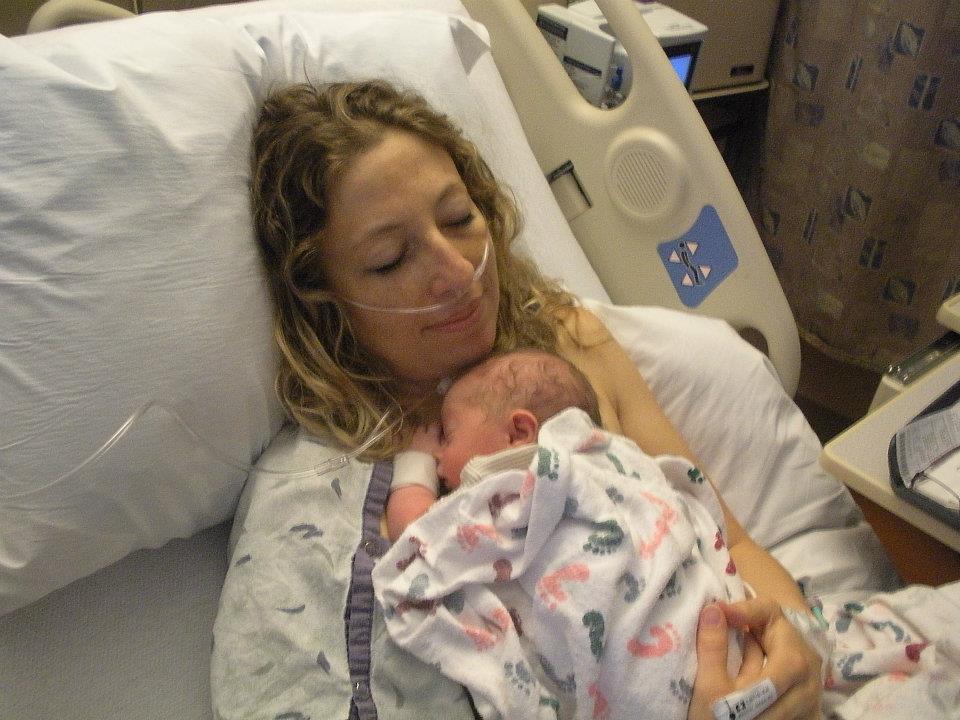
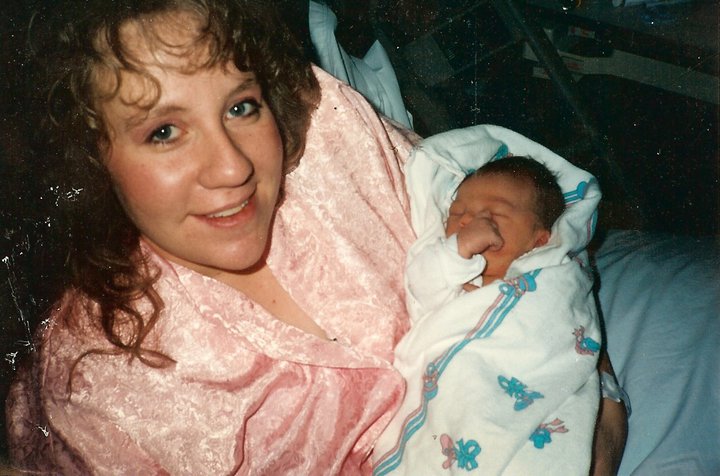
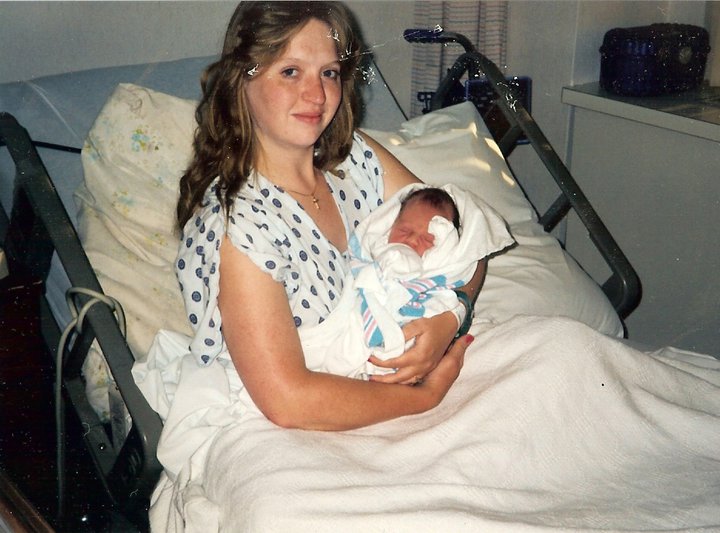
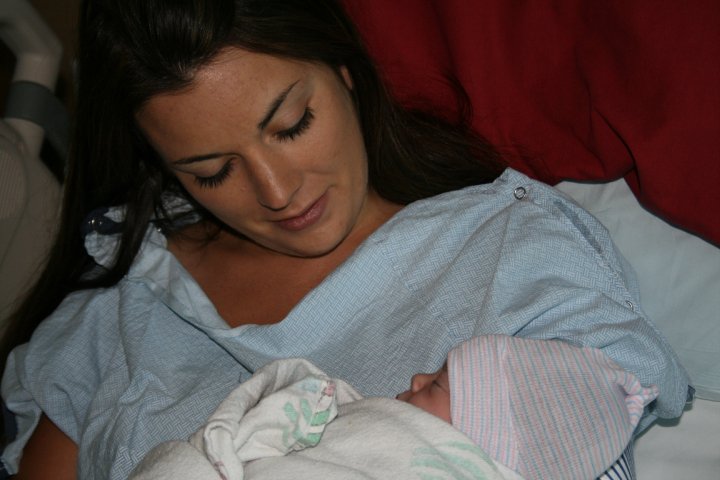
    Beauty is the miracle of childbirth.  Beauty is in the body that grew a life and then birthed it. Beauty should be in the sweat and in the certain smile that only a new baby can give a woman.  I remember my picture after giving birth.  I have no makeup, my hair is disheveled, I’m in pain and I’m wearing a hospital gown, but I am smiling a genuine smile snuggling with my baby.

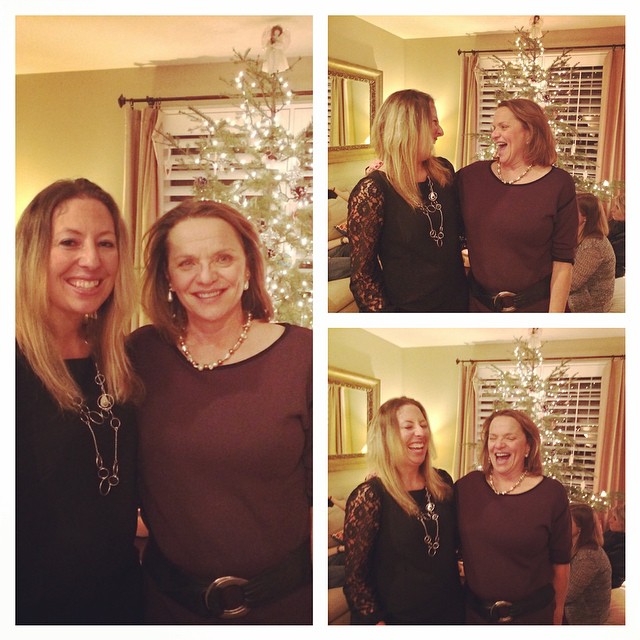
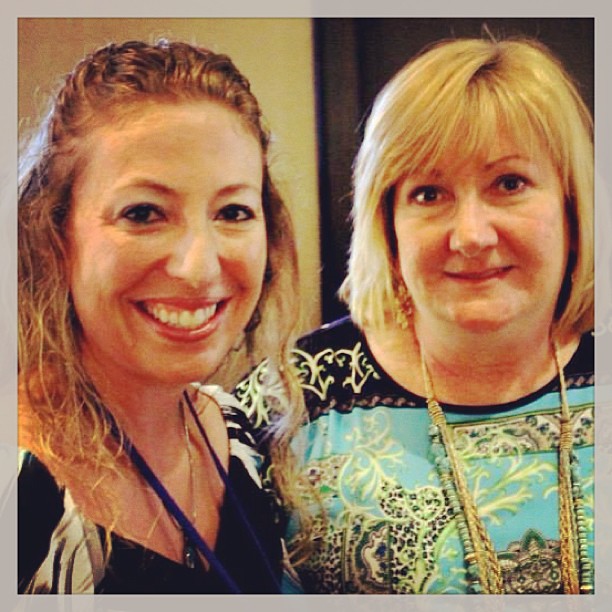
    My son and daughter,  I want you to see the faces of real women with no glam squad.  Real women who look beautiful with no makeup and no team of beauty experts.  I want you to see these women and think about how you love them.  Their kindness, their laughter, their love, their generosity, their strength, their love for Christ, and remember….. THOSE things are what make a woman beautiful….and REAL.

    399481_3673756515103_1715178024_n 249968_2085368657911_2259734_n 249027_2085365377829_345646_n 36747_1409684254048_8087086_n


  • Success WAS there, and we will revel in it.

    Exactly 18 months ago, I wrote one of my favorite and initially most popular posts: Lessons from a Tricycle.  

    At that time, Ashlynn was close to 4 and still could not pedal a tricycle.  I describe how we bought it a couple months before her third birthday when I was pregnant with my son.  A year later, I wrote that post and explained that she STILL wasn’t able to ride it.  When one has motor planning difficulties, the steps involved in riding a tricycle become glaring.

    Core strength
    Bilateral coordination
    Vestibular and propriocepive systems
    Balance
    Strength
    Endurance

    Who knew one needs ALL of the above to do a simple childhood rite of passage like ride a tricycle.  In that blogpost, I described “arched back and frazzled patience.”  My back hurt every time I tried to teach her how to ride.  I would lean over and pull or push her, while she struggled just to keep her feet on straight.  I wondered time and time again, will she ever actually get this down?  Do you have any idea how heartbreaking it was to have her “walk” her trike back home??  I knew deep inside though she would get it one day.  I wrote,

    “Success will surely be there, waiting more patiently than me.”

    After having my son, I realize how easy people have it.  I didn’t teach my son anything.  I gave him his big wheel and said “have fun.”  I didn’t have to teach him how to keep his feet on the pedals.  He just did it.  I didn’t have to remind him that while he was pedaling he had to look up and pay attention because he was going to fall off the curb.  He just did it, and I’m so proud of him.  He loves flying down the street on his big wheel shouting “faster!  FASTER!!”

    I remember my husband posting enthusiastically when Ashlynn had actually purposefully and independently pushed the pedal forward herself and propelled herself for at least two rotations.  We were so sure she had arrived.  That was it right?  She got it down, right?

    No, no it wasn’t.  The motor plan wasn’t quite carved out enough in her brain.  At least, that’s how I imagine it.  I imagine pathways in her brain as a ski slope full of thick powder.  Every motor activity requires her to carve a path herself to the bottom.  It’s hard.  It’s tiring, and when she gets back up the hill to try again, she may swerve off track and be forced to try again.

    Once the motor plan is mapped though?  Oh boy.  Then it’s like the groomed hill, wide and easier to maneuver.  I dare say we are beginning to revel in the groomed slopes.3b5621f62a9782ca81aaa1185f4ca8a8

    She rode her trike around the block tonight.  As I watched her in front of me, the sun was setting, and there she was….laughing, smiling, turning the handlebars when she was in danger of veering off the curb, and going as fast as she could and then stretching her legs out in front of her to feel the wind on her face.  This to me is childhood.. This to me is what apraxia had robbed from her for so long.  As I watched her, hair blowing carefree in the wind, the setting sun once again caught my gaze….and I realized, the sun was setting on a chapter in her life.   There it was….success…just as I predicted, waiting more patiently and more beautifully than I ever could have imagined.


    Here’s the video if you’re interested.  Warning: She’s so far ahead, she’s hard to see 🙂


  • Sing, sing out loud!

    Apraxia is a journey.  Speech apraxia is a journey, but global apraxia?  Even MORE SO. So many skills to work on.  So many things to improve.  So many negative prognostic indicators to plow through.

    The good news is that Ashlynn doesn’t know anything about prognostic indicators.  She doesn’t know how heavily loaded she is in the negative column.  Not yet anyway.

    When I first had her receive services she was just under three. Her first week of Pre-K had her singing a melody similar to  the song “Baby Bumblebee” with a lot of repetitive /B/ sound combinations.  I was still able to pick up on it though.

    I remember her first real radio song that she sang.  I vowed to buy the CD back then.  Well, I never did, but I still remember the song, title, and artist like it was yesterday.

    Her current preschool teacher has been AMAZING for Ashlynn.  At parent night, she described herself as someone who puts on “A SHOW.”  I didn’t really understand what she meant, until recently.  She sets everything to song!!  Routines, concepts, new ideas….all set to melody.  Ashlynn has thrived!  She knows about hibernation, her native state of Colorado, and now the seven continents……because of song.

    Ashlynn has sang a song “What’s the matter” frequently since she started school.  That’s the only line she knew though.  Tonight we were eating dinner, and Ashlynn  just randomly busted out a “what’s the WEATHER” song.  OMG.  It’s not “what’s the matter!”  It’s “what’s the weather!!”  I figured out this time, because she sang it all the way through.

    Mommy fail.  Stupid apraxia, but Ashlynn awesomeness despite her apraxia!  Sing, sing out loud Ashlynn!

    Here is the song!  So proud of my girl.  


    20150217_162239981_iOS

  • Prognosis is not just a funny word, there is nothing funny about it.

    Prognosis is not just a funny word, there is nothing funny about it.

    I don’t know why I am obsessively thinking about prognosis lately, but I am. I am required to give a prognosis when evaluating children. I’ve had to stare at a prognosis in my own child.

    I received a prognosis once. I was seventeen and I balled my eyes out in my mom’s car. I was a senior in highschool, a starter and captain of the girl’s basketball team when my knee gave out after three games; and truth is, I only got through the last two on pure adrenalin. I wanted this season sooooo bad. I thought maybe I would get a scholarship. I never had the benefit of year round jam leagues or extra basketball camps like many highschool athletes. Everything I had achieved was with my home and park basketball hoops and my dad who practiced with me….A LOT.

    We went to see Dr. Nygaard. Yes, I remember his name and it’s been almost twenty years and I only saw him twice. Let’s just say he made that much of an impact.

    He could find nothing structurally wrong with my knee. MRI scans revealed there was a ton of fluid and it was inflamed, but nothing structural was amiss. Blood work revealed elevated rheumatoid factors (like rheumatoid arthritis), but it wasn’t high enough to dx with juvenile rheumatoid arthritis yet. I remember hanging on his every word, and that’s when he said,

    “In ten years you will probably be in a wheelchair. It looks degenerative in nature and in a couple years your blood will probably show levels high enough to be officially diagnosed with a life of rheumatoid arthritis.” He went on about cortisone shots, anti-inflammatories etc.

    “So wait. Are you saying I can’t play basketball?”

    Yes, I was seventeen. I couldn’t believe what I was hearing. I cried all the way home while my mom put on her tough mama bear face and told me it was going to be okay. “Laura, you have to accept the prognosis, but I will always be by your side, wheelchair and all.” I cried harder. How could my mom believe him? It couldn’t be true, could it?  I found out later her guilt was overwhelming, and yet it was nothing she did.  Moms I guess are all universal and pretty predictable.

    Now, one could argue he was being kind. In the end, it’s better to be honest and not give me wild hopes.  If he truly thought I had the onstage of juvenile rheumatoid arthritis, wasn’t it better to start preparing me?  All I know, is telling me I couldn’t play basketball was crushing enough, but now I had to accept I had some sort of degenerative auto-immune condition too.  I mean, what else could it be?

    I went on with my life, and pretty much abandoned ever picking up a basketball again. I still worked out and stayed active. I grew stronger. My knee improved slightly over the years.

    At 27, ten years after that grim prognosis, I went back into my general practitioner and asked for my rheumatoid levels to be checked. They all came back normal, and guess what? I am still walking upright. I don’t have rheumatoid arthritis. Found out later after doing research, inflammation of the joints and rheumatoid symptoms can be a side effect of vaccines, which I received right before the start of my basketball season at my physical. My mom is convinced that is what did it. Oh, but medical doctors don’t question vaccine safety. That wasn’t on his radar so I must have a degenerative disease that would mean I don’t walk in ten years. Whatever.

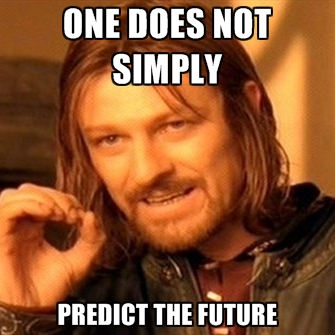
    Anyway, back to prognosis. Yeah, I don’t like them. I’m not a fan. I want to be honest, but I think my honesty might be a simple, “I don’t know, but we’re going to work our butt off.” Unfortunately, I still have to write a “statement” in a report. Guess this isn’t the last I’ll be thinking about prognosis.


    one-does-not-simply-predict-the-future

  • It’s hard to explain how global apraxia affects so much

    It’s hard to explain how global apraxia affects so much

    We went on a Santa Train again this year at Georgetown Loop Railroad.  Ashlynn has never talked to Santa before.  When she was 3, she cried and clung to her dad for dear life.  When she was 4, we went on a different Santa Train, and though she wasn’t scared, she was too reserved to say anything audible enough for him to hear.

    This year a four year old girl was sitting across from us.  As her parents were asking her what she was going to ask Santa for, she eagerly said she wanted another Elsa doll.

    Ashlynn’s not really into Frozen, or any movie really.  Though each year we try, she just has no desire to sit and watch TV…much less a movie.  As for toys, we took her around a toy store three times leading up for her birthday, and though she was mildly interested, it’s just not like the “kid in a toy store” image that might usually come to mind.

    Fortunately, I have my friend Kim, an SLP who also has a son with global apraxia.  I also have a 7 year old client with it too, and interestingly enough, they all are similar in these areas.  They don’t have an overt interest in movies, TV, or toys.  Why?  I really don’t know.  The toys I think has to do with their struggle to play with toys they would cognitively be interested in, but can’t mainuplate because of the gross and fine motor apraxia.  That happened to her last year when she actually asked for baby clothes but then couldn’t put them on or take them off the baby.   To engage in imaginative play is equally as challenging due to their delayed speech and language skills.  Who knows.

    All I know I I started to feel sad listening to this four year old chatter away about what she wanted….until it was Ashlynn’s turn to sit with Santa.  Though he kept asking her what she wanted, what she wanted was to talk.  She asked him “What’s this?” and “What are you doing?” until he smiled and then moved onto another kid.  As he was walking away, she grabbed me frantically and said, “I need presents!!”

    Smile

    Oh Ashlynn.  That’s my Ashlynn and she’s perfect and in that moment I had nothing to be sad about. All she wanted, all she’s ever wanted is to engage people in conversation, and then as an afterthought she thinks about herself.  Even then though, she had nothing specific.  Just presents.  From the outside I’m sure she looks like a typical 5 year old, and it’s hard to explain just how involved her needs are, or how they affect so much.

    However, today, she asked for presents from Santa Clause just like a typical 5 year old and she will find them waiting for her on Christmas morning.

    from the outside in