Category: Therapy for apraxia

  • Pot O’Gold Articulation Game for Apraxia

    Slide1 (2)

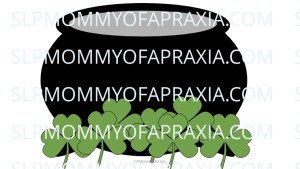
    I was finally able to make a new game for my kiddos with enough time to spare for St. Patrick’s Day! This game follows the same idea as my other repetitive games.  Kids have a game board, in this case, a black pot:

    Slide13


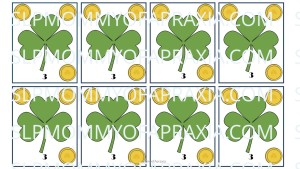
    The kids draw a card from the card deck.  If the card contains a shamrock with gold coins, the child collects the amount of coins shown and then practices their targeted speech sound/syllable that amount of times.

    Slide7 (2)


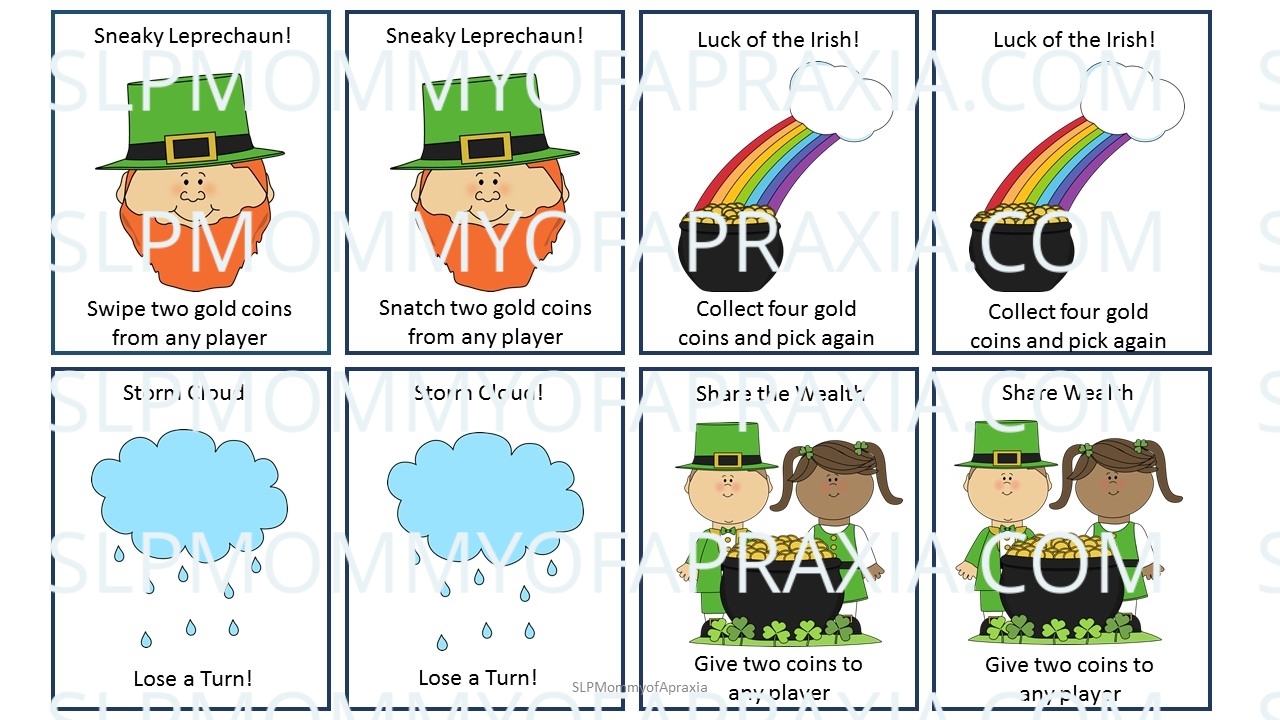
    Some cards have surprise twists that include “snatching coins from other players,” losing a turn, or giving some of their coins to other players.

    Slide11 (2)


    The player with the most coins at the end wins the game! My kids really enjoy these games and I hope kids on your caseload do too!  Enjoy!  Get it in my teachers pay teachers store for free for a short time!

  • Experience is the Key Architect of the Brain in Childhood Apraxia of Speech

    Brain


    I went to my state’s annual school based symposium for SLP’s this weekend and one of the keynote speakers was Dr. Amy Meredith CCC-SLP.  She is a professor at Washington State University and specializes in Childhood Apraxia of Speech with a focus on Early Literacy Skills.  Of all the things she said, the one quote that really stood out to me was this:

    “Experience is the key architect of the brain.”

    What does this mean?  Well,  you could interpret it in different ways I suppose, and put your own twist and connotations on it.  For me though, it means this.

    The brain is adaptable and can change.  For someone with a neurological disorder like apraxia, it means those pathways can be re-written.   Oh and haven’t I seen that already with Ashlynn?  Occupational Therapy, Physical Therapy, Speech Therapy, and swimming have already been re-wiring her pathways.

    An architect is defined as a person who designs and makes buildings.  Studies show the brain is literally capable of changing structure!

    Dr. Meredith cited a very recent study (Kadi et al., 2014) that found children with idiopathic apraxia (idiopathic meaning of no known origin), had significantly thicker left posterior supramarginal gyri than controls.  However, kids treated with a motor based approach to apraxia showed a significant decrease in the cortical thickening area after 8 weeks, and resulted in improved speech as well.

    That is amazing people!  Therapy literally changed the structure and size of the brain!! We know therapy changes function.  That’s why we all spend thousands of dollars on therapy, but to know that it actually changes the structure?  To me, that’s really something.

    This also tells me to never give up.  Not that we would, but now we have research to back us up!

    Literacy:

    Of particular interest to me was the literacy piece.  I know Ashlynn is at risk for learning disabilities.  One sobering study she cited was a Raitano et al. (2004) study which examined pre-literacy skills in subgroups of children with speech sound disorders (not CAS specific).

    Basically, the results indicate children with SSD’s  (speech sound disorder) performed more poorly than the controls, and children with SSD and LI (language impairment) add an additive risk factor for deficits in pre-literacy skills.    Lewes et al. (2004) conducted a follow up study and found children with CAS improved articulation but continued to have difficulties with:

    syllable sequencing
    nonsense word repetition
    language abilities
    reading and writing

    Right.  Okay.  So, what do we do about this?!?  Well

    Experience is the Architect of the Brain

    Let’s amp up their pre-literacy skills and give them more exposure and experience to things like:

    naming letters and letter sounds
    categorizing pictures by rhyme or initial sound
    identifying things in their environment that start with a certain sound etc

    Programs she recommended were Phonic Faces and the Lindamood Bell Program.  Dr. Meredith runs “Camp Candoo” over the summer for kids with apraxia focusing on speech sound production and early literacy using Phonic Faces.  Her data taken over the past three summers shows significant improvement in all pre-literacy skills after the two week intensive.  It was so compelling, I’m seriously going to try and get Ashlynn in this summer.  I’m also actually thinking of doing a small group a day with the kids I see in private practice with apraxia and Ashlynn.  It would give me experience, and benefit Ashlynn while also benefiting all the other kids.  We’ll see.  I always have big plans.


  • Strategies to promote speech and language in the pre-verbal or minimally verbal child with Apraxia

    Strategies to promote speech and language in the pre-verbal or minimally verbal child with Apraxia

    The great thing about speech and language, is that it a task that can be worked on in any activity.  Familiar routines in the home provide the perfect platform for encouraging speech and language, because this “routinized language” is predictable and context based.

    A fellow SLP and mommy of apraxia, Kim from Landonjourney.blogspot.com and I teamed up for Part I in my series of parent strategies to promote speech at home.  We wrote a list of some of the most effective strategies to encourage early speech in the pre-verbal child, including those with Childhood Apraxia of Speech (CAS).  Part II in the series will focus on strategies for the verbal child with CAS.

    Parents ask a lot, “How do I get my child to practice speech at home?”  Well, we are here to tell you, you don’t need worksheets and flashcards.  Basically, with kids who are minimally verbal, we look for opportunities to model and encourage functional language.  Functional language refers to language the child is more apt to use frequently throughout their day, or may be highly motivating to them.

    With kids who have apraxia, not only do we think just about functional language, but words that also contain simple syllable structures.    These are some of our favorite strategies and targets and how we incorporate them:


    Powerful motivators:

    As moms, Kim and I know that when you have a child who is nonverbal, you anticipate their needs for them.  After all, our babies can’t tell us when they hurt, or where they hurt if they are crying.  They can’t tell us they’re hungry or thirsty; and if they have global apraxia like our kids, they may even have trouble pointing to communicate to us that way.  However, as SLP’s we know that kids need to be motivated to communicate.  If we keep anticipating their needs, they never have a reason to really force themselves to try at something they know is hard for them anyway.   As the parent, you are truly the best person to encourage them to try, even when it’s hard.

    Teach and pair signs with a verbal model:

    Some worry that teaching sign will inhibit speech; however, as long as you make sure to always pair sign with verbal models and give verbal reinforcement after the child uses a sign, sign language can be a powerful bridge to helping the child say it once they begin speaking.

    • “help” “more” “go” and “bye” are good beginning signs to teach. Always provide a verbal model when you sign to your child, but encourage your child to sign, and reinforce any attempt by repeating the word and modeling the sign before giving your child what they want.

    Cloze activities:

    • Cloze activities are great for our kids with CAS because their mouth/body gets ready to respond, and the response is familiar. It reduces cognitive allocation and helps get the motor plan “set.” We do cloze for everything.
      • “Turn the music (pause) ” on, and wait for “on.”
      • “Ready, set (pause)” go!  We do “go” at every green light and I start the sentence and he tries to finish it. This has helped him feel more success at speaking “on command.”
      • “One, two _____” three!
      • Sing nursery rhymes and pause before the last word.  Ashlynn and I would sing “The Itsy Bitsy Spider” and “The Wheels on the Bus” and I would pause before some words that had simpler syllable structures.  For example “down came the rain and washed the spider (pause) out.” or “The wheels on the (pause) bus go round and round.”
      • Read repetitive story books, pausing before the predictable repetitive words.  To read more about repetitive books and to get a free download on how to use them visit my on repetitive books that are great for apraxia.

        • Keep reading for more cloze ideas. 

    Require your child to respond to your yes/no questions:

    • assessing your child’s understanding (i.e. Do you want to go outside?) can often be done with simple yes/no questions before your child is verbally able to respond more.
      • I require my child to answer yes/no questions in anyway he can. Before he could nod/shake his head (difficult for motor planning), I modeled the response based on how I knew he reacted.  Do you want help? (giggle giggle). Yes (nodding my head), I want help. I had to physically move his head before he was able to do this. Now, I will say “yes” or “no” and wait.  This has also helped my son to be able to say yes/no, and they are words we have targeted often. 

    Focus on functional words:

                (These are some of our favorites, but individualize them for your child!)

    1. Bye-bye

                * Bye bye is good because it can also signal the end to an activity if the child cannot say “more.” We say bye to each activity, place, and even to our toys at bedtime.  This works on the motor planning for waving, and then saying bye bye.

    1. In

                * Emphasize each time you put them in: bed, the bath, car-seat, highchair, stroller, park swing.

    * Model when pouring a drink in their cup etc.

    1. Out

                * Emphasize each time you take them out of: crib, bath, car-seat, highchair, stroller, park swing

    * In the kitchen, model each time you take food out of a container, the fridge, a cupboard.

    * In the bathroom, model when squeezing out: toothpaste, shampoo, tissue, diaper wipes, etc.

    1. On

    * Emphasize each time you put music on, water on, lights on.

    * In the bath, “ok let’s turn the water (pause) on.

    1. Down

    * Emphasize when going down the stairs, getting them down from highchair, putting them down,                                       when something falls down, playing “Ring Around the Rosie,” etc.

    * Use a cloze procedure here too, “uh oh! The cup fell (pause) down.” Or “We all fall (pause)                                                down.”

    Again, these are some of our favorites, but work with your SLP to determine your own that work for your child.  Other suggestions:

    Uh oh

    Hi

    Nigh-Night

    More (Mo)

    Child’s age

    Mama

    Dada

    Put

    Done

    Do

    Set activities to song:

    • Based off of research done with melodic intonation therapy, music can provide a bridge to stimulate language.
    • Have fun and make up your own silly songs set to melodies you already know, to make it easy.
      • During bath time, I would sing a body parts song to Ashlynn set to the tune of “Mary Had a Little Lamb”:
        • “Now we’re washing Ashlynn’s hands, Ashlynn’s hands, Ashlynn’s hands, Now we’re washing Ashlynn’s hands while we are taking a bath.”  You can use a cloze procedure here too: “while we are taking a (pause) bath.” 
    • To get on demand phonation, something that is hard for our kiddos,  set songs to Row, Row your Boat and change it to:
      • Row, row, row your boat, gently down the stream, if you see your feet, don’t forget to scream. For my son, this song works to assess areas that he often can’t tell me/show me on command, but in a song, he gets his body ready and is more interested/able to do so.

     Repeat and reinforce spontaneous utterances.  

    • If your child says a sound or word, try to say it back at them and encourage them to say it again.  On demand speech is hard for our kids, so getting them to imitate back to you might be easier when you first imitate something they just said.
      • Ashlynn had a “go to” sound “a dah” that she said for everything.  I would tell her, “a dah?  dah dah, dah, dah” and see if I could get her to say it again on demand.  If she did, then I would change the vowel and see if I could get that on demand, “a dee, dee, dee, dee.”  Play around with sounds and have fun with your child.  This should be a low stress activity and just seem like fun to your child.

    Praise and Encourage ALL communicative attempts           

    • Our kids know talking is hard. A little bit of praise goes a long way!

    Laura Smith M.A. CCC-SLP is a speech/language pathologist in the Denver Metro Area specializing in Childhood Apraxia of Speech.  CASANA recognized for advanced training and expertise in Childhood Apraxia of Speech, she splits her time between the public schools and the private sector.  She is dedicated to spreading CAS awareness.  Her passion is fueled by all of her clients, but especially her own daughter who was diagnosed with Childhood Apraxia of Speech.  For more information visit SLPMommyofApraxia.com  

    Kimberly Haas-McEneny M.S. CCC-SLP, mom to two boys: one with CAS and the other with suspected CAS.  Kim is a Bilingual SLP practicing in Syracuse, NY at the Syracuse City School District. She blogs about her experiences with being both a mom and SLP at landonjourney.blogspot.com
    Parent strategies


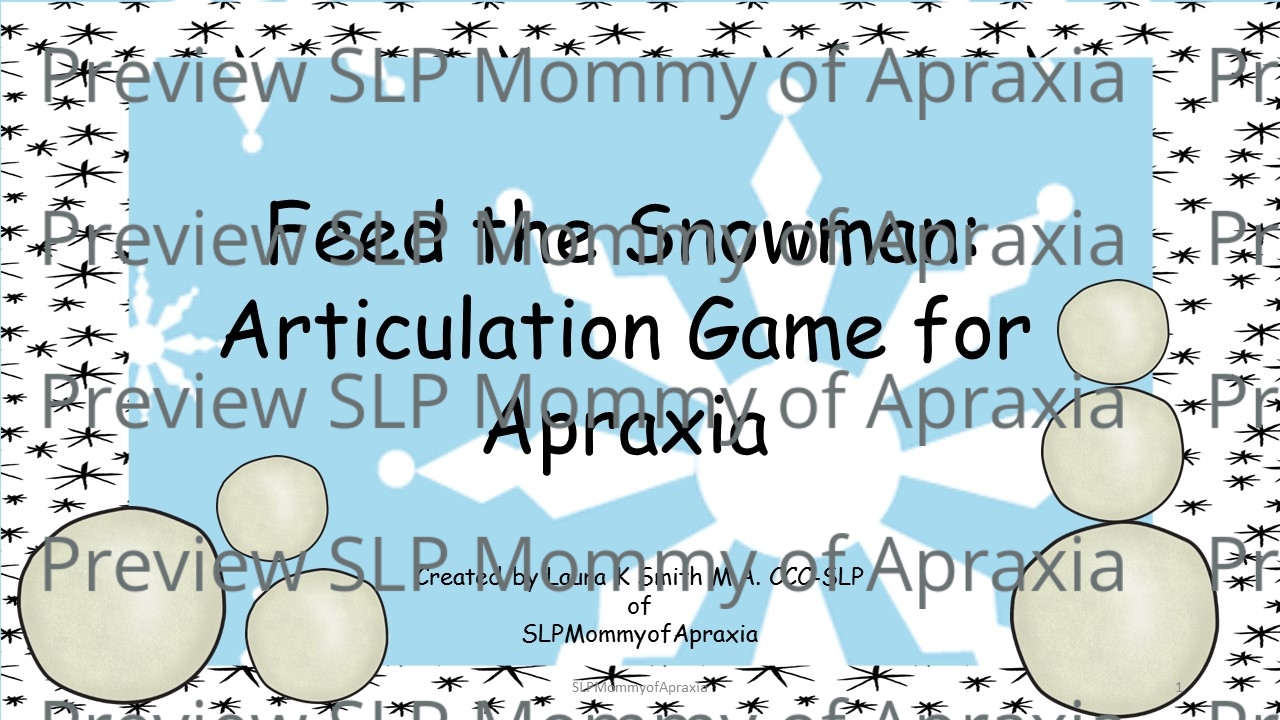
  • Feed the Snowman Articulation Game for high repetitions

    Feed the Snowman Articulation Game for high repetitions

    Slide1

    I decided since my Spooky SpiderWeb game was so popular, I’d make another one for my kids with a winter snow theme.  I go back to work tomorrow and I’m excited to play this with the kids.

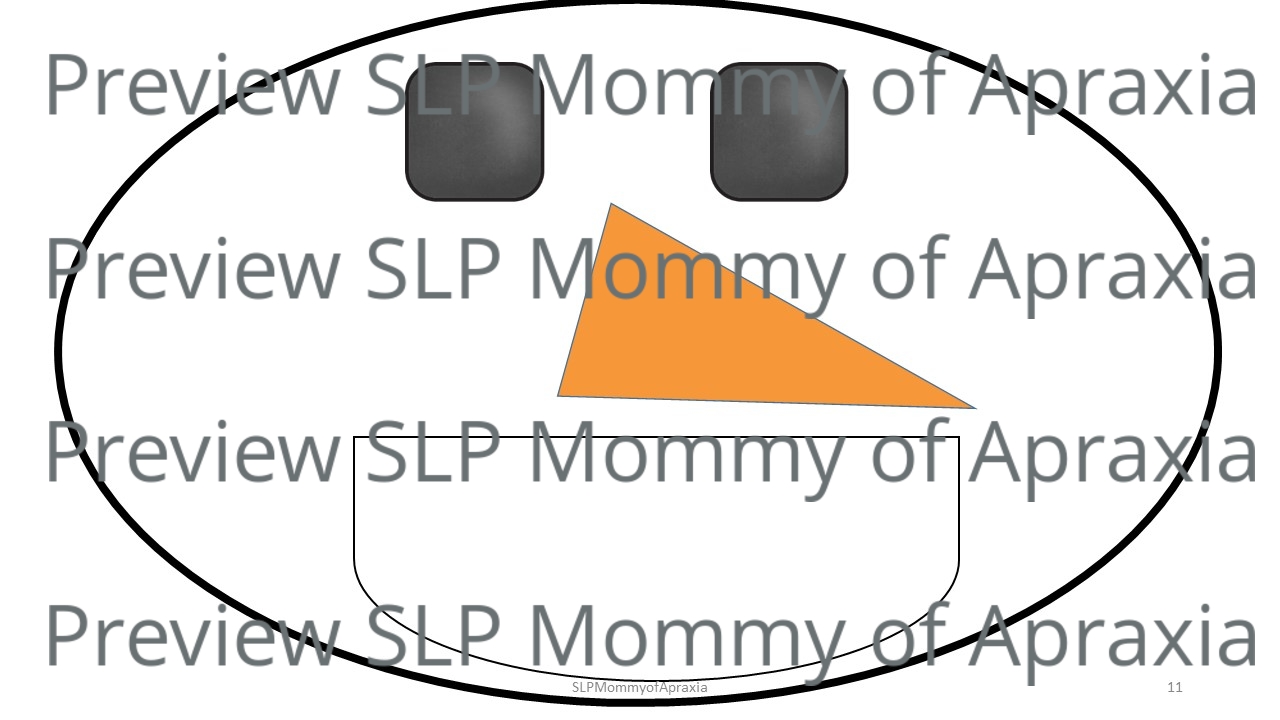
    You start with printing out the snowman boards. Glue onto a manila envelope or cereal box and cut out the mouth.


    Slide11


    Then cut out the game cards and snow balls.  Cutting out the snowball will be a bit tedious, but if you laminate them, then you’ll never have to do it again!

    Slide6 Slide7


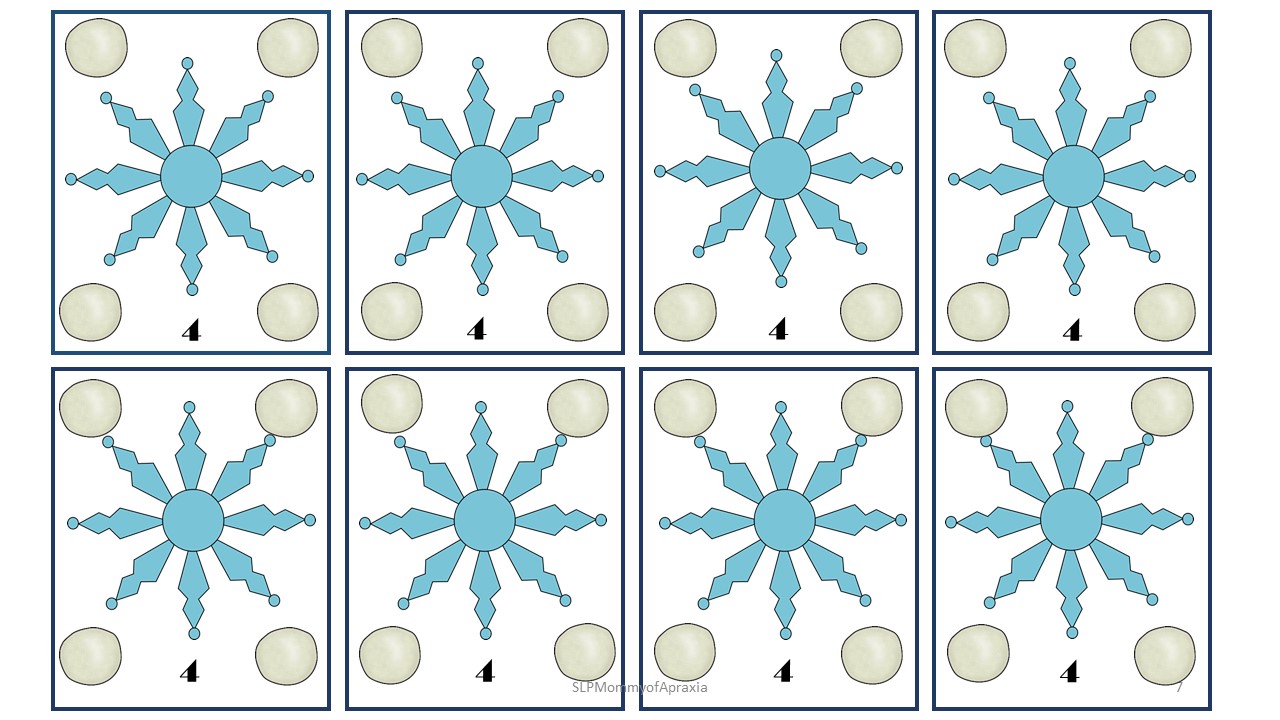
    The snowflake game cards come with pages containing 1-4 snowballs.  The child picks a card, and then gets to feed his/her snowman the number of balls on the card.  Of course, the number of snowballs dictates the amount of times the child must say their target word or sound.

    The snowman with the most snowballs wins!  Get it FREE in my TpT store for a limited time.  Follow me there or here so you don’t miss out on any freebies.

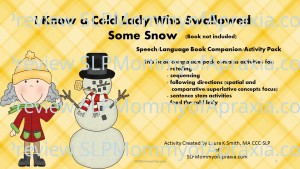
  • There was an Old Lady Who Swallowed Some Snow: Book Companion/Activity Pack

    Slide1


    As we move into January and I’m spending some time off during my winter break snowed in, I decided to create a follow up companion pack to my most popular companion pack to date, which was “I know an Old Lady Who Swallowed a Bell.”

    This is a similar repetitive story named, “There was an Old Lady Who Swallowed a Bell.”  This companion pack follows a similar format:

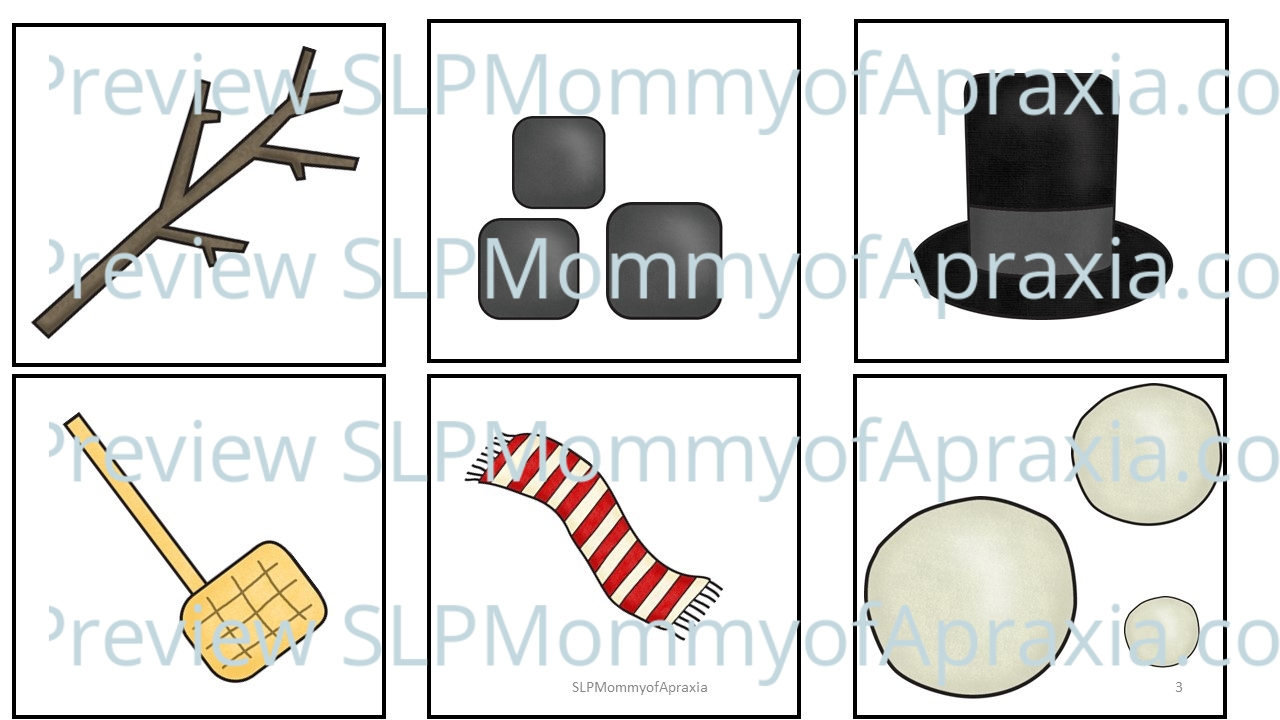
    I start with blown up pictures to aid in story participation.  When I’m in a group, I give each child a picture and then they are to read that “part” of the book when it comes up.

    Slide3


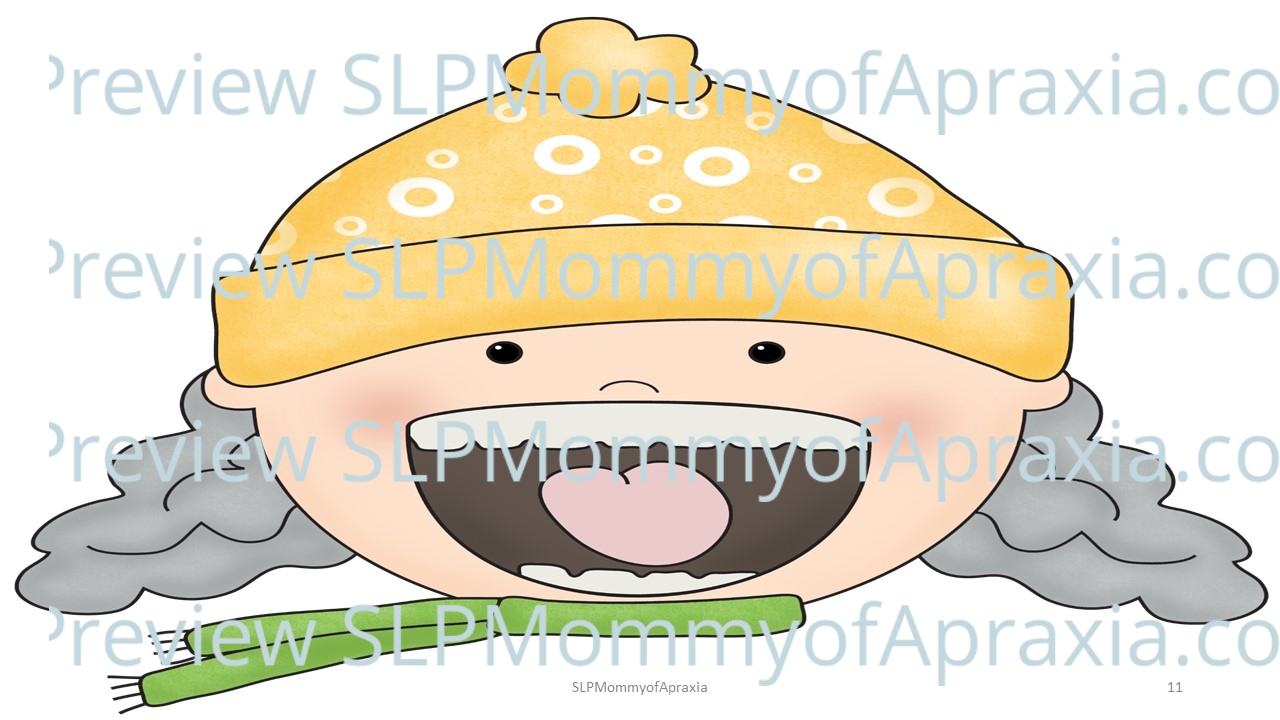
    Afterward, they take these pictures and “feed” the lady the items.  I have this blown up picture glued to a manila envelope with the mouth cut out.

    Slide11


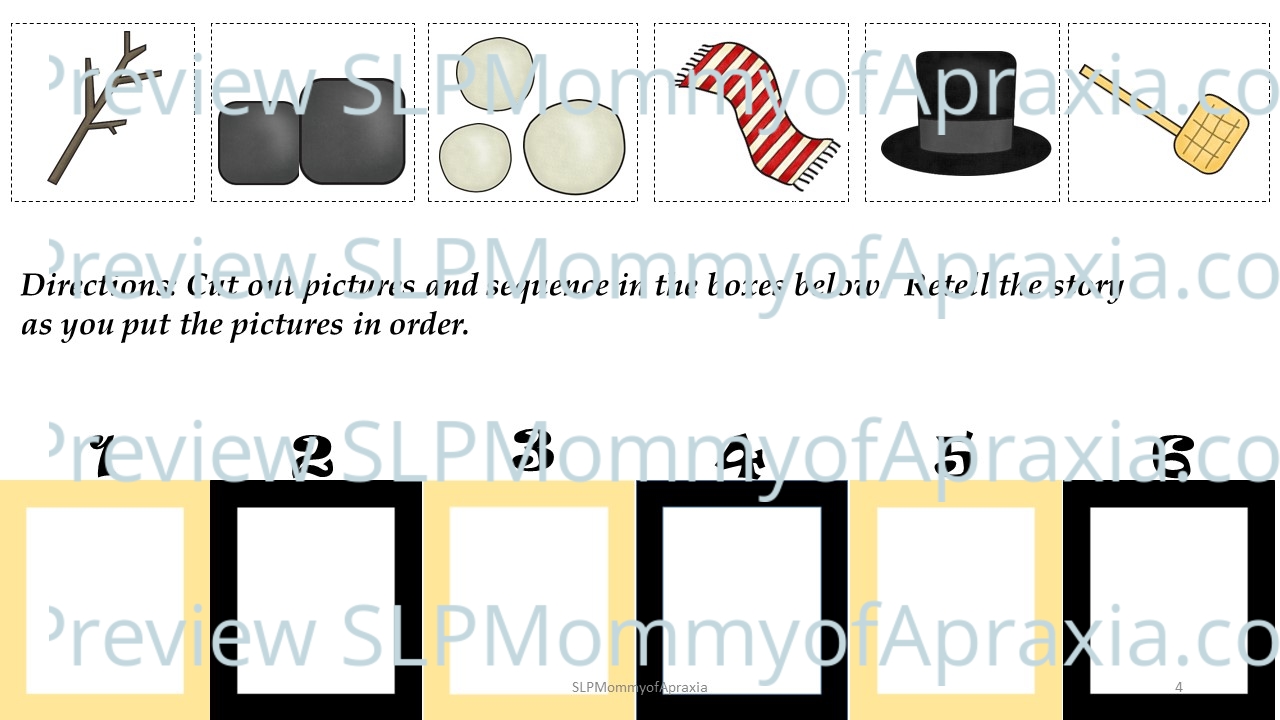
    Next I have a story pictures and sequencing grid to have the children sequence the story and then have the option of visual aids to use for the story retell.

    Slide4


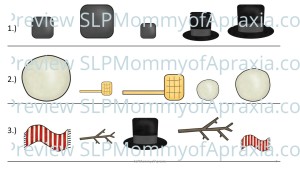
    I did a following directions activity focusing on comparatives and superlatives.  The directions ask the child to circle the smallest coal lump, or draw a line above the largest snowball etc.

    Slide7


    For an added challenge, I included an additional page to work on temporal concepts.  Directions include things like, “Before you touch the smallest coal lump, touch the largest hat.”

    Finally, I included 3 sentence stem worksheets.  “She saw….” “She has…..” “She ate…..”

    To get this activity, please visit my TpT store at: SLPMommyofApraxia.  Stay warm!

  • The Gingerbread Man Speech/Language Activity/Companion Pack

    The Gingerbread Man Speech/Language Activity/Companion Pack

    Slide1

    The Gingerbread Man is a classic story that all my kid’s love.  It is a repetitive style book, and as you know, I love using repetitive books in therapy!  The first page has some pictures to cut out and use while reading the story as props.  You can even glue them onto popsicle sticks if you’re so inclined!


    Slide3


    Next, if you’ve bought any of book companions, you know what a fan I am of sequencing activities.  This one contains one too with sequencing grid.

    Slide4


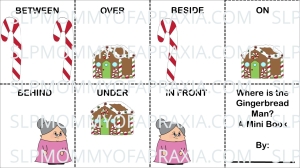
    The mini book in this unit works on “where” questions and teaching early spatial concepts.  The child glues the gingerbread men on a preceeding page in the correct places in the mini book.


    Slide6


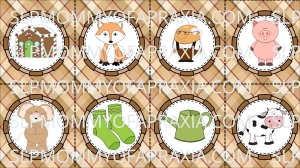
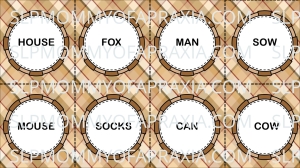
    The next four pages contain 8 sets of rhyming words in picture and written form for you kids to match or play with to work on early phonemic awareness skills.


    Slide7

    Slide8


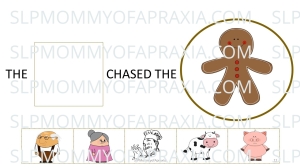
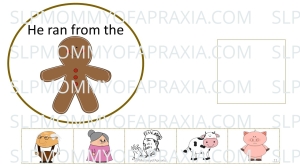
    The last two pages have sentence stem activities for repetitive practice for regular past tense and an irregular past tense verb using the story vocabulary.Slide12

    Slide11


    To get this activity, go to my TpT store!