Join me for my first episode in Season 2 of the SLP Mommy of Apraxia Podcast as I talk to Breanna Waldrup, speech/language pathologist and director of the private non-profit Child Apraxia Treatment. We talk about her role as the director of the foundation, it’s mission statement and elements of Dynamic Temporal Tactile Cueing (DTTC) for the treatment of CAS.
A new study finds that 65% of children with a history of suspected
Childhood Apraxia of Speech (sCAS) are low proficiency readers, suggesting that
early literacy intervention is justified for this group of children.
August 17, 2019
Research recently published in the American Journal of Speech
Language Pathology (AJSLP) suggests children with sCAS are at increased risk
for reading disorders and should receive early intervention targeting early
literacy and language skills, along with the speech motor planning component in
their speech therapy program.
” The
current conceptualization of CAS as primarily a motor speech disorder may
encourage interventions that rely largely on habituating accurate motor speech
plans with little attention paid to the development of literacy skills. Viewing
CAS as a motor speech disorder that commonly includes reading impairment may be
more useful to clinicians given the high percentage of children with CAS who
exhibit decoding difficulties. “
The study by Miller, Lewis and colleagues had several
aims. First, the researchers wanted to
identify the frequency of reading disorders in children with sCAS and Speech
Sound Disorder (SSD). Also, researchers
wanted to learn how children with sCAS differed from one another and also how
they differed from children with SSD in various levels of reading proficiency
and performance.
Participants were a group of 40 children ranging in age from
7-18 with sCAS and 119 participants ranging in age from 7-18 with SSD. All the
study participants were tested and then compared on various measures for
speech, language, reading, and cognitive-linguistic skills.
Several findings are of interest:
Sixty-five percent of children with sCAS were
low proficiency readers, which is substantially more than the percentage of low
proficiency readers in the general population.
Specific risk factors for literacy difficulties
in children with sCAS were oral language and phonological skills.
While speech motor skill deficits were
identified in all children with sCAS, the participants’ speech difficulties did
not predict their reading proficiency.
Overall, the findings indicate that viewing CAS solely as a
motor speech disorder may be a disservice as SLP’s might miss out on the
opportunity to address the intertwining of speech, language and literacy
deficits as early as preschool. The current study provides justification for
providing early literacy intervention coupled with appropriate speech and
language therapy for children with sCAS to strengthen weak phonological
processing skills found in the population and which negatively impact later reading
proficiency.
Future research needs to explore the differences or
similarities in the trajectory of reading achievement between groups considered
resolved or with persistent CAS as well to explore what specific interventions
are particularly helpful for kids with CAS and reading impairment.
Laura Smith, M.A. CCC-SLP is a 2014 graduate of Apraxia Kids Boot Camp, has completed the PROMPT Level 1 training, and the Kaufman Speech to Language Protocol (K-SLP). She has lectured throughout the United States on CAS and related issues. Laura is committed to raising and spreading CAS awareness following her own daughter’s diagnosis of CAS and dyspraxia. She is the apraxia walk coordinator for Denver, and writes for various publications including the ASHA wire blog, The Mighty, and on a website she manages slpmommyofapraxia.com. In 2016, Laura was awarded ASHA’s media award for garnering national media attention around apraxia detailing her encounter with UFC fighter Ronda Rousey, and also received ASHA’s ACE award for her continuing education, specifically in the area of childhood motor speech disorders. Currently, Laura is a practicing SLP specializing in apraxia at her clinic A Mile High Speech Therapy in Aurora, Colorado.
Hi readers! I haven’t been as active on the blog as usual because my goal for 2018 was to write a book and I’m happy to say I completed that goal! My goal of 2019 is for it to be published, so we will see! In the meantime, I did manage to get some blogging done and here are my top 10 posts for 2018! Thank you so much for your support and your love throughout the years. It truly means so much.
Cheers to an eventful 2018. It was a year full of pain and happiness, love and sorrow, and hope and despair. May we all remember that life can be intensely beautiful and irreparably sad all at once, because that my friends, is the definition of living.
This 2019, I wish you all the gift of perspective in life. We all have bad things happen. We all have stress and we all have pain. We also all have a choice, and that choice is to wake up each morning with a grateful heart and to focus on our happy and joyful moments rather than be sucked into the pain of despair and heartache. There was a time Ashlynn’s dx seemed like the darkest event in my life, but I realized it was the beginning of my testimony to some of the most beautiful characteristics this human life affords us. May God bless us all this year and always.
Love and Peace,
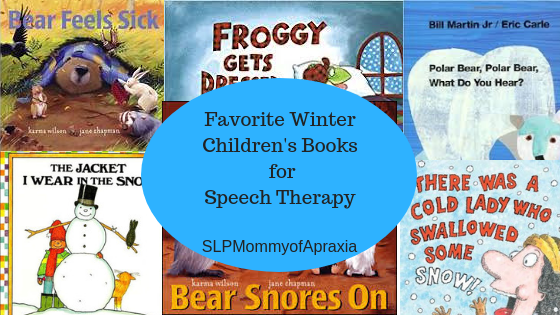
Favorite Winter Children’s books for Speech Therapy
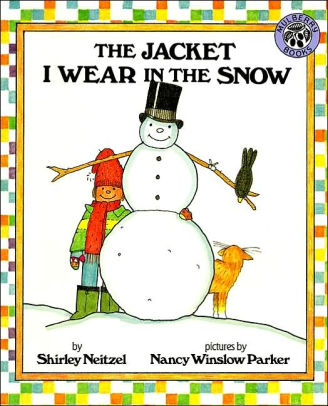
The Jacket I Wear in the Snow by Shirley Neitzel A great repetitive, rebus style book! So many target words in this book include: cap, scarf, mittens, sweater etc. Good for winter clothing vocabulary and sequencing too!
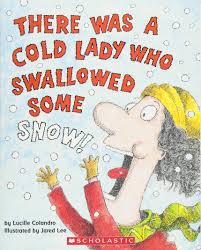
2. There was a Cold Lady Who Swallowed Some Snow by Lucille Colandro Lucille Colandro always makes my list for favorite books because her Old Lady series contains all the elements I work on with apraxia therapy including repetition, prosody, and sequencing!
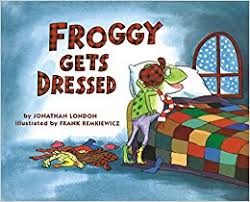
3. Froggy Gets Dressed by Jonathan London
Another great winter clothing repetitive book that the kids LOVE. I work on target words “out” and “in” a lot in this book since Froggy is always going outside and inside; however, I can also hit “put on” when he’s putting on his clothes or work on prosody when Froggy and his mom are yelling back and forth to each other.
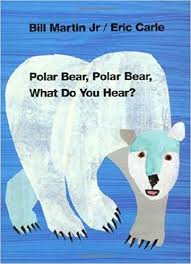
4. Polar Bear, Polar Bear by Eric Carle
It’s a classic for a reason! Repetitive and engaging, kids love to participate in the book read.
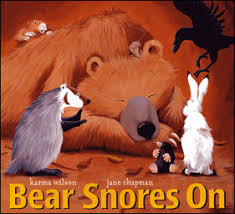
5. Bear Snores On by Karma Wilson Love the Bear book series! Bear is hibernating and sleeps through a winter party while his friends all gather in his lair to escape the cold. Target words for this book include: “on” in the early stages or “snores on” when working on /s/ blends.
Activity: Free character cutouts from Making Lemonade in Second Grade available on TpT here:
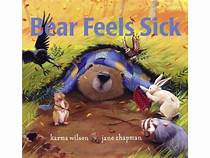
6. Bear Feels Sick by Karma Wilson I was going to stick to a top five list, but I couldn’t resist adding another Bear book. Kids relate to poor bear feeling sick and the familiar and lovable characters are always heartwarming! Target word in this book is “sick” so you have to make sure you have a kiddo who can produce both /s/ and /k/; but if they can, this is a great target word.
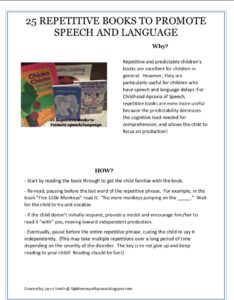
Below you will find a free graphic I have on my TpT store explaining how to use repetitive books with your child to promote language and practice speech. My targets and books are always strategically selected based on the child’s sound repertoire. Click the picture to get the free download.
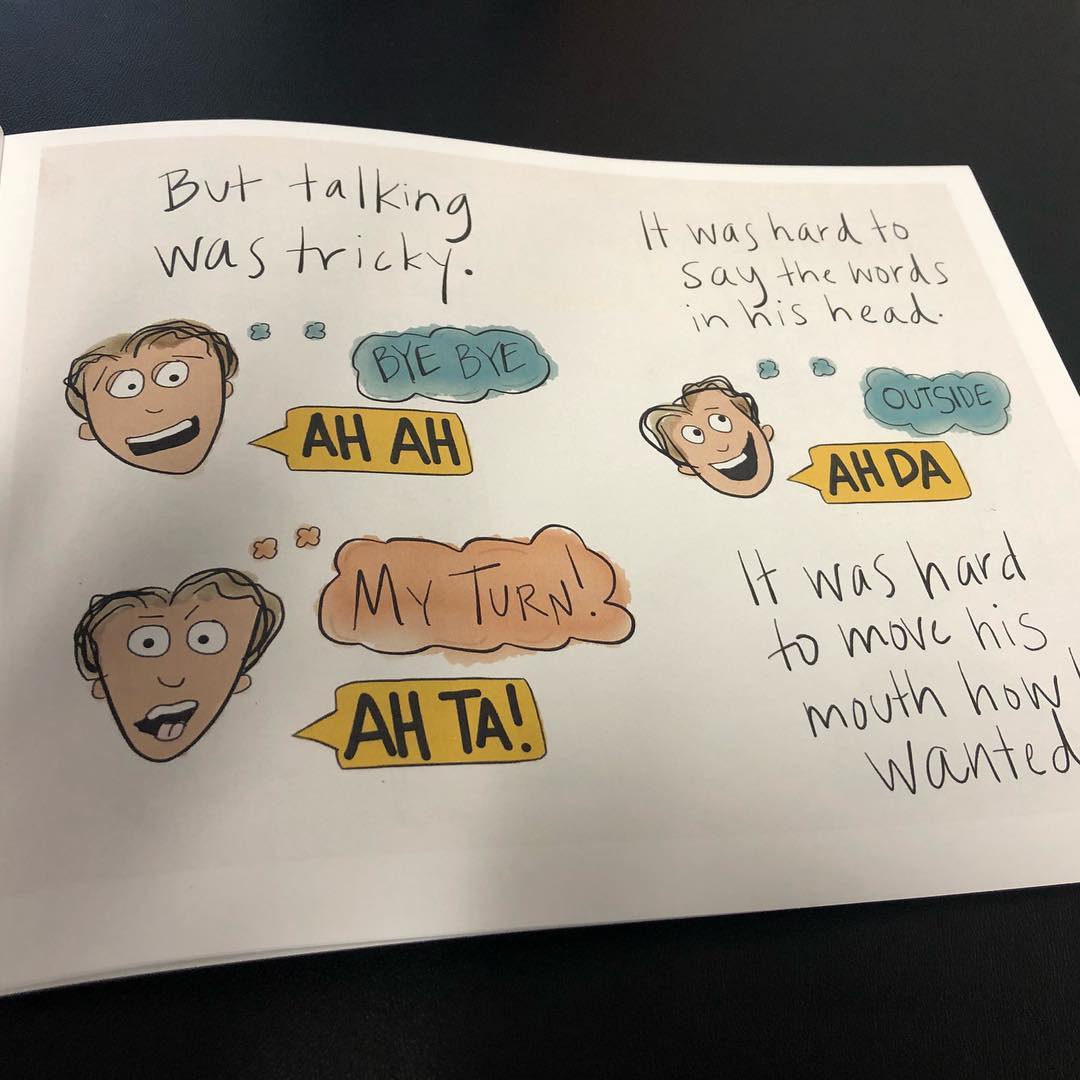
Mehreen Kakwan first emailed me a couple of months ago to simply ask if I could be listed as a resource for her new book on apraxia, “Billy Gets Talking.” I asked to read the book and she sent me a PDF version, in which I was instantly hooked.
I don’t just say that lightly either….
I get a lot of pitches in my email to review or promote a product, but honestly I have to feel it in my soul to promote it because I know what it is like to be a parent and to grasp or buy anything you think will help.
Last apraxia awareness day, I was searching for a book I could read Ashlynn’s classmates that was simple, yet accurate enough to understand her life as a kid going through speech therapy. This book would have been perfect.
However, I knew this book was gold when I trialed it on a client of mine. She has and continues to endure a lengthy battle with her ability to speak. I read her this book and she was enthralled. She hung on every word. When I was done, I asked her if she could relate and she enthusiastically nodded her head in agreement.
As a mom to a child with resolving apraxia, and as a speech/language pathologist specializing in apraxia, I highly recommend this book! You can enter to win a free giveaway below!
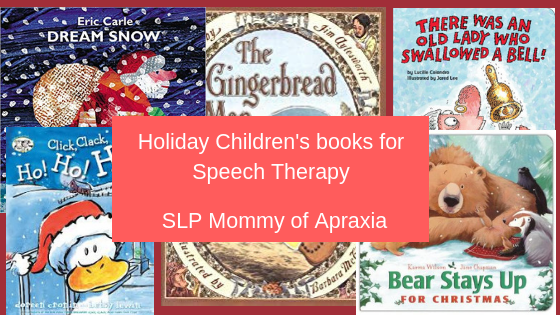
6 Favorite Children’s Holiday books for Speech Therapy
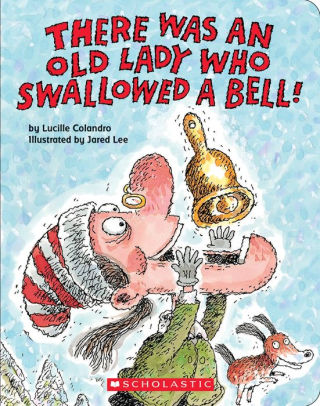
1. There Was an Old Lady Who Swallowed a Bell by Lucille Colandro As with all the Lucille Colandro Old Lady Books, this is a repetitive children’s holiday book. Nice target words that are repeated include “bow” and “hat” that can be used for repetitive practice. The pictures in this book too are colorful and fun.
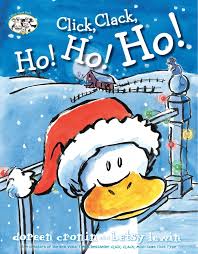
2. Click, Clack, Ho! Ho! Ho! by Doreen Cronin Kids laugh at this funny, repetitive book in which duck gets stuck in a chimney
and the barn animals take turns trying to get duck out. The words for good
repetition in this book include “uh oh” “oh no” and “ho ho ho,” which are nice
CV and VC targets in the early stages of therapy.
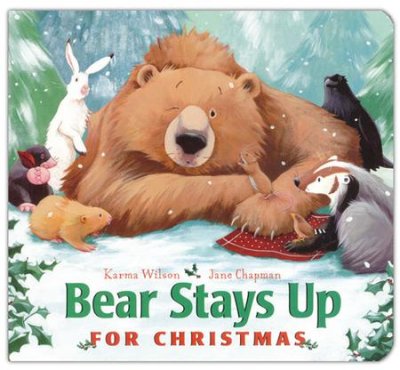
3. Bear Stays Up for Christmas by Karma Wilson Bear’s friends help Bear stay up for Christmas in a sweet and heart warming book. Repetitive Targets I use in this book include “up,” for the early stages of apraxia, expanding to “stays up” for kids who may be working on /s/ blends.
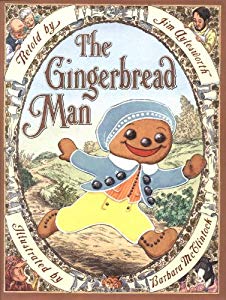
4. The Gingerbread Man by Jim Aylesworth The classic tale of the Gingerbread Man is told in this fun story about a mischievous
cookie. Love a lot of repetitive targets in this book such as “me” or the entire phrase
“you can’t catch me” (which can also target prosody), “man” in Gingerbread Man and the word
“back” expanding to the phrase “come back” if possible.
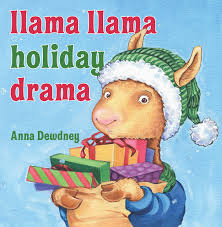
5. Llama llama Holiday Drama by Anna Dewdney
Llama llama is impatient for Christmas in this relatable book about a child’s anticipation
for Christmas. I love the rhymes in this book and the repetition of “mama” and “llama”
that can be targeted for repetitive practice, depending on the child’s repertoire.
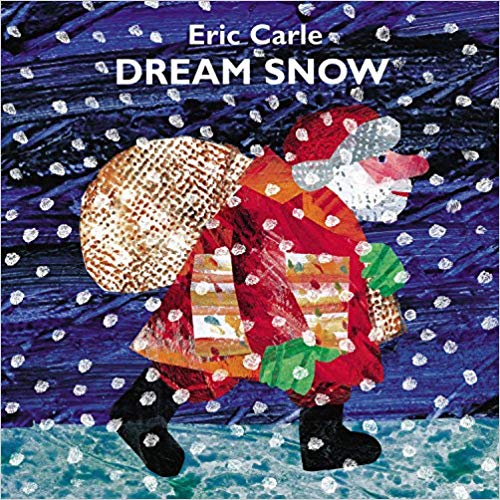
6. Dream Snow by Eric Carle Interactive with colorful and vibrant pictures, this book is a children’s favorite.
Targets for this book include counting to five and repeating the words “on” or “snow” as
each animal is covered with a blanket of snow.
Activities: Freebie on TpT by Mrs Plemons Kindergarten. Find it here.
Below you will find a free graphic I have on my TpT store explaining how to use repetitive books with your child to promote language and practice speech. My targets and books are always strategically selected based on the child’s sound repertoire. Click the picture to get the free download.




 A
A