Category: Speech/Language therapy

  • A Gift of Speech Printables Giveaway!

    A Gift of Speech Printables Giveaway!

    Today I’m featuring A Gift of Speech’s Shannon Archer!  Included in this bundle will be THREE separate activities you can print out and start using!

    Interactive Multisyllabic Words! Minimal to No Prep Activities in color and black & white! Practice multisyllabic words with multi-modalities: visual, auditory, tactile, verbal, and FUN!

    Activity include 23 pages of interactive activities to practice multi-syllabic words!

    This activity was created to help work on multisyllabic words in an interactive way. There are 3 and 4 syllable words included in this practice. This activity includes:

    1. 20 interactive pages 10 in color and 10 in black & white. There are 24 different multisyllabic words in these pages (3 and 4 syllables). The activity was designed to use backward chaining or syllable build up. Thus the syllable divisions might look different. This is to account for the coarticulation in the words.
    2. 2 color pages with images and syllable support dot with the words.
    3. 2 different crowns to cut, color, and practice with.
    4. Circle interactive cut, color, and fold pages (which includes 6 multi-syllabic words).

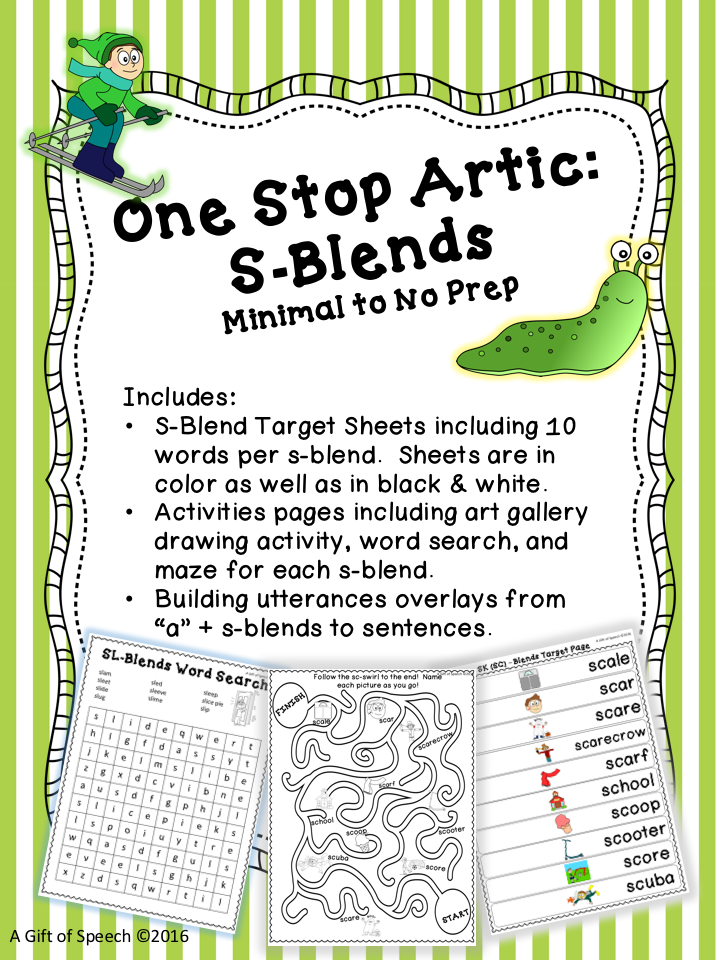
    The One Stop Articulation activity for s-blends includes activities for practicing s-blends. We start with a target page including 10 words for each blend sound (sk, sl, sm, sn, sp, st, sw). Then there are 3 activity pages for each blend. There is an overlay to support movement from the s to the following consonant blend sound as well as coarticulation and increasing the length of utterance. This activity include no-prep and minimal prep activities for articulation practice.


    Expanding Utterances was created to help with building utterances (MLU). This is perfect for working with individuals with CAS, articulation disorders, or expressive language disorders. This activity combines a subject, verb, article/preposition, and object to create phrases and sentences. You can start with “bunny”, “a bunny”, “see a bunny”, “I see a bunny”, and then to “The girls saw the bunny”.

    The subjects include pronouns and basic subjects. The verbs include 8 basic verbs in present, present progressive, past, and future tenses (look for more verbs coming soon). There is a set of 3 articles and 12 alternative words (prepositions and some prepositions with articles). The Keep Talking 1 comes with 23 cvcv words, 40 multisyllabic words (CVCVCV and CVCVCVCV), 38 plural multisyllabic words, and 16 trochee words. The parts of speech are color coded (modified Fitzgerald key) for additional cueing. Also included are blank color coded cards so that you can make your own words. I use this system with the created object cards as well as mas produced articulation card sets. There are full color and find and color activities to add some fun.


    a Rafflecopter giveaway

  • The problem with school SLP’s.

    The problem with school SLP’s.

    I only realized after being a part of the special needs community that school SLP’s have a bad rap.  Like a really, REALLY, REALLY bad rap.  

    I’m preparing a talk next month for Colorado school SLP’s, and every time I prepare a talk for this demographic, I have to tell you they have a special place in my heart.  No, it’s not just because I started as one and work as one part time, but it’s because I have literally worked under, with, and around many, many, MANY of them. I have worked with so many of them, and I can tell you they are a jack of all trades.  They are the EXPERT in eclectic, and may be the ONLY person in the school who understand in depthly just how a student’s unique communication challenges actually affect them in school.

    In the schools, you don’t have the option to specialize.  Kids from every disability show up on your caseload and you are expected to be the expert.  It might be hard to understand as a parent, but there are soooo many different disabilities and speech and language disorders, and a parent (rightly so) expects the SLP to do right and best for their baby.

    Every single SLP I know and have met has a desire in their heart to help children.  Please, let that sink in.

    When I took Ashlynn to her first private SLP who had never worked in the schools she was asking me about qualification.  She asserted that she could never be a school SLP because she felt it was unethical to not qualify students who clearly had some sort of speech or language problem.  I had a hard time refuting her.  Aside from saying qualification is different in the private versus educational sector, I really had no excuse.  I know that funding is limited in the public sector so that obviously plays a part in qualification.  I also know if every SLP took her stance, than NO kids would be serviced in the public schools, and is that really what we are going for?

    Public school SLP’s have caseloads that are probably double if not more of the private SLP.

    Where the private SLP can see kids 1:1, school SLP’s rarely have that luxury.  With weekly caseload averages around 45 to 55 and some maxing out at 90 (Yes 90 people I’ve seen it), even the most skilled SLP will not be able to do what a private SLP can do 1:1 for 45 minutes (though they will kill themselves trying).

    The result?  Parents become outraged at the lack of progress or progress they feel the child should be making. They surmise the school SLP just isn’t as good as the private SLP and they become disillusioned and write them off.  They post memes about preparing for battle when going into an IEP meeting! This honestly breaks my heart.  I feel bad for the parent who feels the SLP doesn’t care, and I feel bad for the SLP who is trying to manage an unmanageable caseload, writing IEP’s at night, or staying up until 2 Am (true story from an SLP I just talked to last week) to write a lesson plan, only to be ravaged by a parent unsatisfied with the results.


    I’m not sure if everyone is aware of this, but ANY SLP in ANY setting is as qualified as the next SLP by basic certification standards.  What does that mean?  That means, as long as an SLP received their masters degree and the Certificate of Clinical Competence (CCC) through ASHA they can work anywhere.  So that means, your school SLP can apply for a job at Children’s Hospital right now and probably get hired tomorrow (because in case you didn’t know there is an SLP shortage as well).  For some reason though, there is this perception that the school SLP just isn’t as good as the private SLP.  If it’s true, it probably has MORE to do with caseload and workload size than it actually has to do with the qualification of the SLP.

    I get calls and emails all the time from concerned school SLP’s desperate to meet the needs of their kids with apraxia but not knowing how.  They want to see the kid more, or see the child 1:1, but their caseload simply does not allow for it.  They cannot add more hours to the day, yet they still call, or write and wonder if there is something they have not yet thought of.  Oh, and here’s a dirty secret.  Listen close.

    Are you listening because this is VERY important.

    If an SLP feels in their heart a child needs private, supplemental speech services, they CANNOT say it.  People, they CANNOT tell you this.  Why?  Well, their license and job is on the line.  In most cases, school SLP’s are told not to recommend any sort of outside therapy.  Why do you ask? Why?

    I’ll tell you.  If a school SLP recommends outside services, the parent can sue the district and win, and potentially disbar an SLP from ever practicing again.  Are you asking why again?  I’ll tell you.  If a school SLP recommends outside services, they are essentially saying that the child can not benefit or make progress from the therapies provided by the school, and the school is required by law to show progress.  If the SLP recommends outside service thereby saying the school is inadequate, the school gets worried or they will get sued for not providing adequate services and the SLP potentially fired.

    Would you take that risk?

    I’m not saying unilaterally every school district would do this, I’m just saying, school SLP’s are told this is a possibility, and so they would find it best not to recommend outside services.

    You need to know this as a parent of a child with any disability.  Some SLP’s will risk their professional license and recommend this to you.  Let me  tell you though what they are risking.  They are risking 4 years of a bachelor degree, 2 years of a masters degree, 1 year of a clinical fellowship, and the usually 3 years of probationary status as a teacher.  That is an entire decade of work and dedication to a profession they love and believe in.  Would you take the risk then to recommend a parent pursue outside therapy?  This is where they are at!  It is truly a catch 22.

    If you are upset about your school services, you probably have every right to be!  I was VERY unhappy with Ashlynn’s preschool, in-class only, speech/language services.  However, it is important to place the blame on the right entity and in most cases I can assure you it is NOT on the school SLP’s shoulders.  In Colorado, the Colorado Department of Education mandated an inclusion model only of special education services in preschool thus making it extremely difficult for any school SLP to pull a student out into a 1:1 session.

    My message today is this: School SLP’s are some of the most phenomenal group of people I ever have the honor to speak with or to. They do not get the option to specialize, and so they pursue advanced training and expertise in every disability that may affect communication: from Apraxia to Angelman’s Syndrome, from Developmental Delay to Down Syndrome, from Cerebral Palsy to Stuttering, from Language Impairment to Nonverbal Learning Disability, from Assistive Technology to Autism, from Auditory Processing Disorder to Articulation Disorder,  school SLP’s will see it all and be expected to rise to the challenge.  They cannot “refer out” or “discharge for lack of progress” as an can be done in private speech. No, the school SLP is expected to figure it out regardless of the lack of resources, lack of funding, or lack of time.
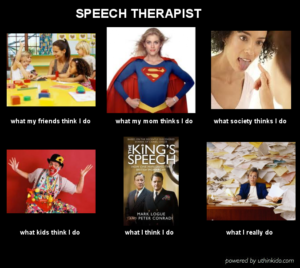
    They will be faced with limited or no space, they will be strapped with high caseloads, and criticized by parents; yet they will persist and pursue only becoming better for it, because of their love for the children and the profession.  I personally have witnessed it time, and time, and time again!

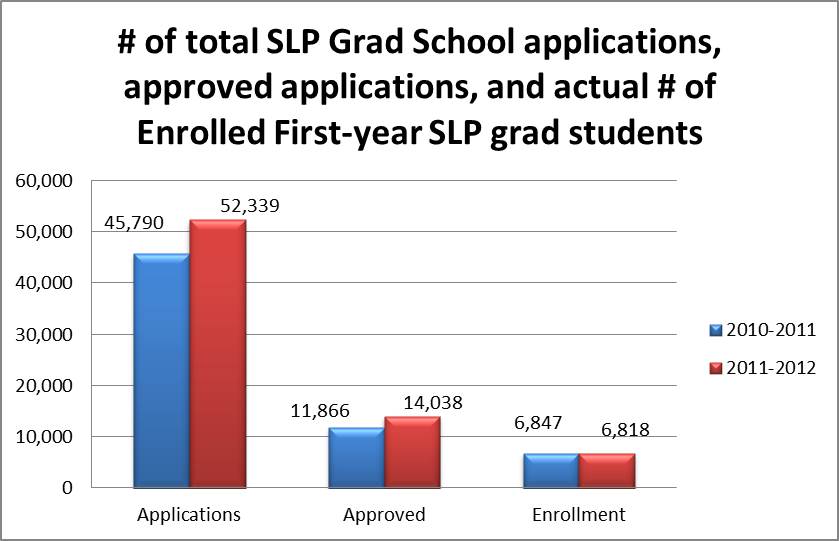
    I can tell you firsthand, getting into graduate school for speech/language pathology is VERY difficult.  It is highly competitive, and here in Colorado, the average COLLEGE GPA was a minimum of 3.87 when I applied.  I found this graphic from 2011 but I can tell you things have not changed much.  There is a HUGE gap between the number of applicants and the number of people selected. 
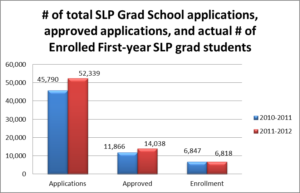
    The disparity should be striking, and please remember that MANY of these applicants will be YOUR school based SLP.  If you have the mentality that “C’s get degrees” and you are certain your school based SLP fits the latter, let me correct you.  NO average C students make it to graduate school in the first place for speech/language pathology.

    Truth

    For my final thoughts I wish not to be adversarial.  I hope that this article has persuaded you, a parent OR SLP, to reach out to the other side and bring about the change you wish to see.  I have the unique perspective of being on both sides, and as such, I have the utmost RESPECT and LOVE for both sides.  I truly wish for there to be a conduit of communication, and not a  ridge of animosity and distrust; and at the the forefront, I wish to impart a spirit of solidarity between my professional and special needs relationships.

    To read more from SLPMommyofApraxia follow her on facebook, pinterest, or twitter.



  • The Do’s and Don’ts of in-home speech therapy

    The Do’s and Don’ts of in-home speech therapy

    Being both an SLP AND a mother to a child with a severe speech disorder, I have this unique and sometimes bizarre perspective; that perspective, of course, being that I now intimately understand both sides.  That being said, I think parents/my clients, typically feel more comfortable telling me things parent to parent vs. parent to SLP.

    As a mother now to a child with apraxia, I have a new appreciation for the “other” side.  This post is targeted for all the amazing and well-meaning SLP’s out there, who may not understand some things because they haven’t been on the parent side.  Here are my top five Do’s and Dont’s for in-home therapy.

    Don’t spend therapy time talking about your wedding, the death of your dog, or your friend’s miscarriage. Do spend the therapy session focusing on the child and reserve personal conversations for a time outside the therapy session.

    Many times, our client’s mothers may have a lot in common with us.  However, literally every minute of therapy is as important to a parent as it is to the child.  I remember watching the digital clock in the first speech room Ashlynn was in.  If the SLP had to use the bathroom before seeing Ashlynn, I would of course understand; but honestly, I was staring at the clock hoping she didn’t waste too much of Ashlynn’s time.  I currently have a client who put those minutes into dollars.  For a 30 minute session at $50,  a person is paying almost $2.00 per minute!  We pay because we know they are valuable, but please, make sure all the minutes count.

    Many parents have told me that at times, they have been at fault for wasting minutes talking because they were with kids all day and craving another adult interaction; however, regardless of whose fault it is, always try to stay professional and keep the focus on the child.

    Don’t blurt out suspicions, concerns, or think out loud.  However, do make sure you make referrals and not withhold information if you feel there are additional concerns that need to be addressed.

    Parents have reported that therapists have flippantly mentioned apraxia and turned their world upside-down unnecessarily, only to find out later it was in fact, NOT apraxia.  In a different scenario,  I have had parents upset that an SLP never even mentioned apraxia, and now they were just finding out years later, distraught, worried, and feeling guilty they had not done something sooner; and in yet another scenario, a parent has told me her SLP casually mentioned a serious diagnosis like apraxia frequently without ever moving forward with a different treatment plan.

    As an SLP, you have a responsibility to relay a suspected dx in a responsible manner; and if you don’t know what to do, it’s your job to figure it out or make a referral.  There are so many more resources available now including apraxia-kids.org or ASHA’s practice portal.  We are counting on you!!

    Don’t start planning your lesson when you enter the house. Do have a plan heading into therapy.

    Look, as an SLP I get it. Planning time isn’t exactly built into our pay.  Also, it can get overwhelming to carry a bunch of materials from house to house.  Shouldn’t we be teaching the parent how to use toys in their house?  Yes, that’s great, but you should STILL have a plan whether it’s using a child’s toys or your own.  Nothing looks more unprofessional than spending five minutes letting the child decide what toy or game to play. Remember my previous comment?  The parent just paid you almost $10.00 now just to plan the lesson and get started.

    If you are in early intervention, some of your time might be for planning and writing notes.  If so, please explain that to a parent before-hand so they aren’t thinking you are deliberately short-changing a session.

    Don’t continually cancel or run late.  Do respect people’s time and schedule, and refer out if you are unable to be a consistent provider.

    Okay, first of all, if you are consistently late or cancel a lot, you make the profession look bad.  However, even more important is that you are not helping the child the way you should when you do this.  Be conscientious, and if you are frequently late and/or cancelling, refer out.

    A parent also told me that a quick apology is nice, but an entire explanation is not necessary.  Parents do understand if you are late sometimes.

    Don’t assume parents aren’t worried, involved, invested, or not working with their child. Do provide resources, assume the parents are doing the best they can with the knowledge and tools they have, and that they are worried and just want the best for their child.

    I had a post last year entitled Nature Versus Nurture.  In it, I beg SLP’s not to assume nurture played more of a piece in a child’s language delay.  This is especially true for apraxia of speech.  I’m an SLP.  A pediatric SLP.  My daughter has a great language rich environment, and not only that, I DID work with her almost every night on speech.  Guess what?  She STILL had apraxia and continues to have a persistent receptive/expressive language delay.

    Parents are human too, and might not have the background we have in child language development. Please do not assume though, that they don’t care.  Even parents who seem like they don’t care, care….trust me.  If you are there, it’s because they care.  They had to make the phone call after all.

    The best thing you can do is not only to provide therapy, but provide them with resources.  Some parents may not use the resources, but I think it’s our job to provide them.  Give them articles, handouts, point them to online resources, support groups, walks, conferences, etc.


    Most of all, DO realize you are appreciated and valued more than you may ever realize.  Helping a child get their voice is one of the most amazing things I think we do as SLP’s.

    06a8417b-9bbf-4414-8e54-d5e557b66394

    Thank you to all the parents who added their feedback to this article.  

    LAURA SMITH M.A. CCC-SLP IS A SPEECH/LANGUAGE PATHOLOGIST IN THE DENVER METRO AREA SPECIALIZING IN CHILDHOOD APRAXIA OF SPEECH.  CASANA RECOGNIZED FOR ADVANCED TRAINING AND EXPERTISE IN CHILDHOOD APRAXIA OF SPEECH, SHE SPLITS HER TIME BETWEEN THE PUBLIC SCHOOLS AND THE PRIVATE SECTOR.  SHE IS DEDICATED TO SPREADING CAS AWARENESS. HER PASSION IS FUELED BY ALL OF HER CLIENTS, BUT ESPECIALLY HER OWN DAUGHTER WHO WAS DIAGNOSED WITH CHILDHOOD APRAXIA OF SPEECH.  FOR MORE INFORMATION VISIT SLPMOMMYOFAPRAXIA.COM


  • Spring themed DOT dauber games for repetitive practice

    spring cover


    My speech kids love using BINGO daubers!  It’s great too because I can get a lot of practice repetitions in while making it fun and playing a game.  Each player gets a game board.  Then we roll the dice and practice saying our target words the number of times on the dice while filling up the spots on the board.  Whoever fills it up first wins!

    Slide5 Slide7

    Slide4 Slide10


    You can also use chips or color in the dots.

    If you don’t have dice, I included some game cards that can be cut out and used as well.

    Slide11Slide12

    Find it in my TpT store here!  Enjoy!

  • Old Lady Who Swallowed a Chick Speech/Language Activity Pack

    Slide1 (2)


    This is a little late, but I see private clients on Saturday and I needed an activity to go along with the book “There was an Old Lady Who Swallowed a Chick,” by Lucille Colandro.  As you probably know, I usually incorporate repetitive books into therapy as a way to provide vocabulary in context, but to also have the kids participate by having a part in the book to practice language and/or speech targets.

    I start with story cards while I’m telling the story:

    Slide2 (2)

    Afterward, I have a sequencing grid place the pictures in order and work on various concepts such as first, next, last or before/after; or to aid in a story retell.

    Slide3 (2)


    I included two separate following directions activities for the kids who need additional work with receptive language:

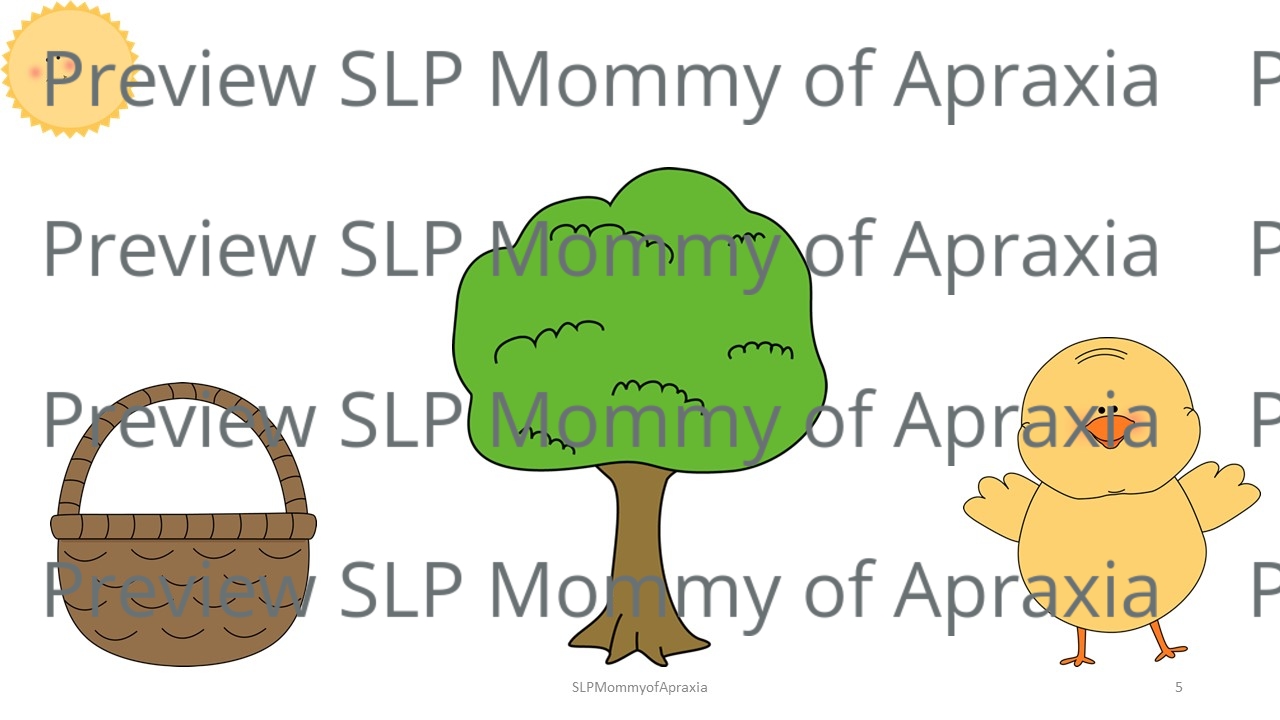
    Slide4 (2)Slide5 (2)


    Slide6 (2)


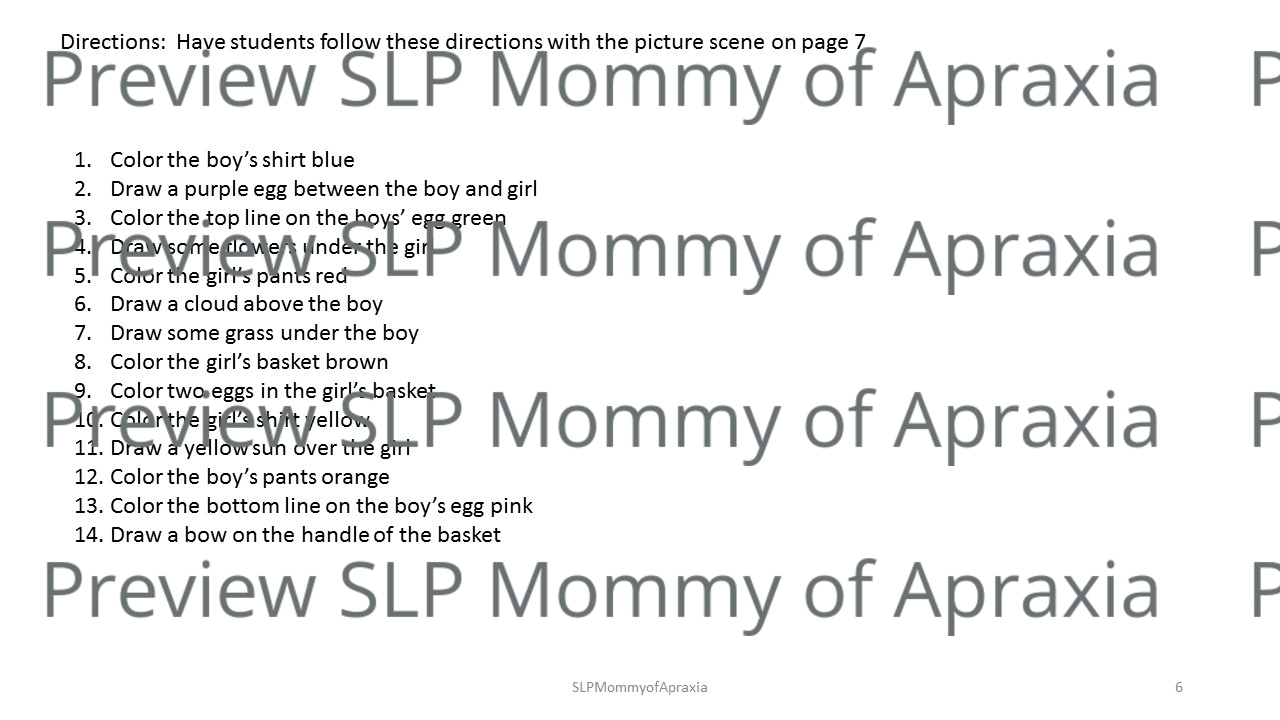
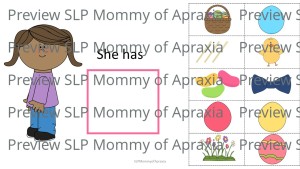
    Sentence stem pages for subject pronoun and has/have agreement: she (pictured), he, and they

    Slide8 (2)

    Finally a blown up picture of the “Old Lady” to place on a manila envelope or cereal box and have students “feed” her the story cards.  We usually practice saying “She at the…..”


    To get this activity, visit my TpT store: SLPMommyofApraxia TpT store


  • Baking with speech and language

    Baking with speech and language

    Parents are always looking for ways to incorporate speech and language activities at home.  Whether it is to stimulate a typically developing child’s vocabulary and language, or to help a speech or language delayed child; baking is great and fun way to work on speech and language.

    The first and most important rule before you start, is you have to accept the fact that your toddler will make a mess, and that is just part of the process, or um, fun.

    When I do baking or food activities with kids in school, they absolutely love it.  That’s the key. When kids have fun they are at their best learning.  Also, baking is a multi-sensory activity, meaning many sensory systems are activated.  When children are using multiple sensory systems, acquisition and retention of skills is more likely.  Baking with your kids inherently promotes:
    Vocabulary development
    Sequencing
    Following directions and comprehension
    Pragmatic language – the social piece of language

    Let me explain a little bit further.

    Vocabulary Development:  

    For the young child, words are learned best in context.  Certain authors refer to this as “event-based knowledge.”  Many of children’s first words are usually embedded within scripts that are part of their daily lives.  Examples could be: bottle, cookie, doggie, bath, etc.  These words are said to them frequently throughout the contexts of their daily lives.  Baking provides the same event-based knowledge experience, and exposes them to new vocabulary.

    Sequencing:  

    The ability to understand sequences and to sequence is an important skill.  Sequencing most simply refers to the order of things.  When kids get into school, sequencing is very important to understanding: patterns, math, a story etc.  Following a sequence of steps is inherent in baking and makes it the perfect activity for this skill.

    Following directions and Comprehension:

    These two things fall under receptive language skills; however, they are very important to the development of overall language skills.  Kids who are good at retaining and following directions have less difficulty in school since they are not devoting a lot of their cognitive load on simply understanding and remembering what they are supposed to do.  Baking is a fun and easy way to help your child practice these skills at home.

    Pragmatic Language:

    This is usually referring to the “social” element in language.  This involves the way language is used to communicate with others.

    With a little forethought, baking can also be a way to sneak in more direct speech language targets while working with your kid at home.

    Muffin Mondays and Waffle Wednesdays

    This summer I implemented Muffin Mondays and Waffle Wednesdays. Ashlynn is VERY interested in what day of the week it is, so I did this to also give her a framework of her week.
    Ashlynn’s current speech/language needs include: syntax (the form or structure of a sentence), and consonant blends (two consonants found together in a word: sp, st, sl, fl, bl, for example).

    It’s important to know your child’s goal, and then structure your baking around the goal.  Get creative, but it’s not as hard as it seems.  In Ashlynn’s case, I chose  the words: spoon, flour, stir.  For syntax, I had her ask me “Can I do it?” to work on her questions forms.

    Then each time we used a spoon I had her repeat “spoon.”  While she was mixing the batter, I would ask her what she was doing and cue her as needed to say the “st” blend in “stirring.”  Instead of using 1 cup of flour, I broke it up into four parts to give her more practice saying “flour” each time she poured in the flour.  For an extra bonus, she had to put “stir flour” together in a simple phrase.  I would hold the spoon until she said the desired words, and then I would give her the spoon back when she was successful!  She loved it.

    If your child isn’t yet talking as much as Ashlynn, hum the ‘m’ sound while you mix the batter or if your child isn’t great at imitating yet, just have him/her make any vocalization to request an item.  If they can’t yet imitate even a vocalization, imitate any spontaneous sounds they make to provide an opportunity for vocal play. If they aren’t really vocalizing yet, don’t get discouraged!  Practice turn taking and reciprocal play.  They pour then you pour.  You stir then they stir.

    With other clients who needed a final stop, I might have chosen the word “dump” and then every
    time we pour in an ingredient, we work on the word “dump.”

    Really, the possibilities are endless!

    In addition, you can also tell your SLP that you incorporated some great “distributed” practice throughout your child’s day.  In motor learning approaches to therapy, mass practice refers to the production of a large number of repetitions of a single target(what you should be seeing in therapy) and distributed practice refers to hitting targets with a greater amount of time between trials or sessions.  However, distributed practice is very important for stabilization and generalization!  Parents are the greatest asset when it comes to carryover, because you are in a better position to afford the child numerous opportunities for distributed practice!  In addition, you can do it in ways that are fun and multi-sensory in the child’s natural environment.