Category: Speech/Language therapy

  • What’s new in my speech therapy office?

    What’s new in my speech therapy office?

    Poke-a-dot books

    I am absolutely OBSESSED with the Poke-a-Dot books! I recently had a few new clients with a high interest in dinosaurs, so I knew the Poke-a-Dot dinosaour book was a MUST have for the clinic.

    While I was at it, I decided to also “add to cart” the Poke-a-Dot Old MacDonald and the Poke-a-Dot Goodnight Animals. You can never have too much of a good thing right? If you’re looking for ideas on how to use these books in therapy, check out my instagram post on five goals to target using the Poke-a-Dot Ocean book.

    Dinosaurs and more dinosaurs, oh my!

    To appease a few of my clients with an insatiable appetite for all things dinosaurs, I also added some dinosaur magnets that are versatile. They stick to the file cabinet and also are fun to “fish for” with a simple fishing magent!

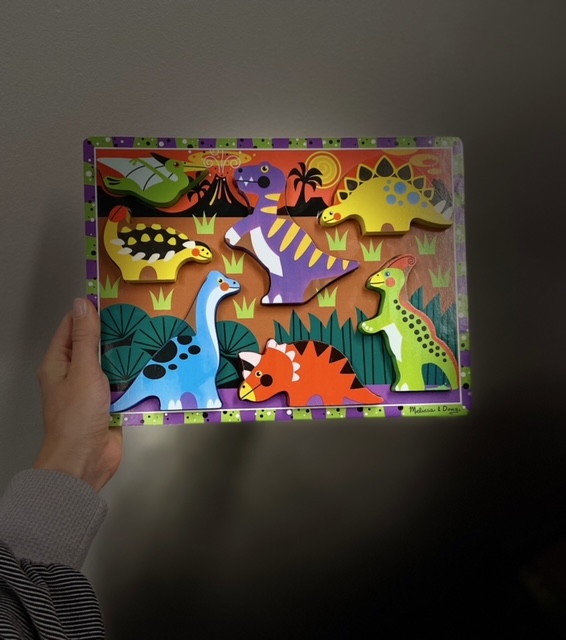
    Add a dinosaur chunky puzzle by Melissa & Doug to not only work on speech but fine motor skills!

    While I was there, I couldn’t resist adding another Melissa & Doug sound puzzle to my collection. Did you know you can also “fish” for these pieces as well? Kids love to fish and this is such a fun and easy way to incorporate more fun into a simple puzzle activity! For ideas on goals to target in therapy using this activity check out my Instagram post here.


    Laura Smith, M.A. CCC-SLP is a 2014 graduate of Apraxia Kids Boot Camp, has completed the PROMPT Level 1 training, and the Kaufman Speech to Language Protocol (K-SLP). She is the author of Overcoming Apraxia and has lectured throughout the United States on CAS and related issues. Currently, Laura is a practicing SLP specializing in apraxia at her clinic A Mile High Speech Therapy in Aurora, Colorado. 

  • Top Ten SLP Mommy of Apraxia Posts for 2018

    Top Ten SLP Mommy of Apraxia Posts for 2018

    Hi readers!  I haven’t been as active on the blog as usual because my goal for 2018 was to write a book and I’m happy to say I completed that goal!  My goal of 2019 is for it to be published, so we will see!  In the meantime, I did manage to get some blogging done and here are my top 10 posts for 2018!  Thank you so much for your support and your love throughout the years.  It truly means so much.

    1. The Problem With School SLP’s

    A

    2. Interview with Mikey: The Wish That Turned Into a Passion

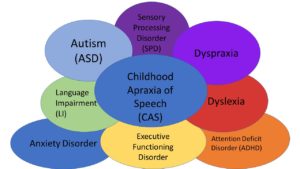
    3. Apraxia as a Symptom to a Bigger Picture

    4. Strategies to Promote Speech and Language in the Pre-Verbal or Minimally Verbal Child with Apraxia

    5. This School Year, Teach your Children to be Kind

    6. Finding our Umbrella

    7. Good SLP’s are Addressing the Head in the Hands

    8. The 6th Apraxia Awareness Day Brought Smiles, Tears, and a Jaw Dropping Moment

    9. Report Cards are Bitter Sweet in Special Needs Parenting

    10. Old Faces, New Faces, and the Passing of the Torch

    Cheers to an eventful 2018.  It was a year full of pain and happiness, love and sorrow, and hope and despair.  May we all remember that life can be intensely beautiful and irreparably sad all at once, because that my friends, is the definition of living.

    This 2019, I wish you all the gift of perspective in life.  We all have bad things happen.  We all have stress and we all have pain.  We also all have a choice, and that choice is to wake up each morning with a grateful heart and to focus on our happy and joyful moments rather than be sucked into the pain of despair and heartache.  There was a time Ashlynn’s dx seemed like the darkest event in my life, but I realized it was the beginning of my testimony to some of the most beautiful characteristics this human life affords us.  May God bless us all this year and always.
    Love and Peace,

    Laura

  • Favorite Winter Children’s books for Speech Therapy

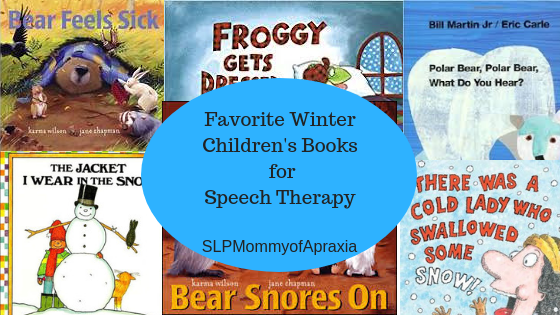
    Favorite Winter Children’s books for Speech Therapy

    Favorite Winter Children’s books for Speech Therapy

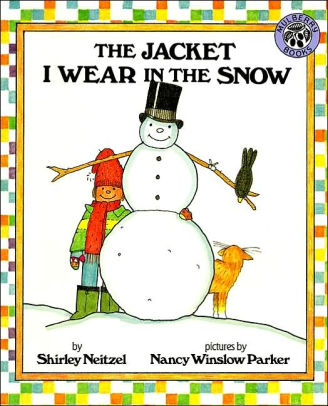
    1. The Jacket I Wear in the Snow by Shirley Neitzel
      A great repetitive, rebus style book!  So many target words in this book include: cap, scarf, mittens, sweater etc.  Good for winter clothing vocabulary and sequencing too!

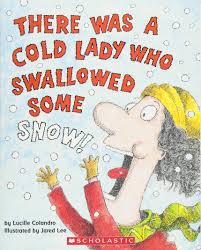
       2. There was a Cold Lady Who Swallowed Some Snow by Lucille Colandro
           Lucille Colandro always makes my list for favorite books because her Old Lady series contains all the elements I work on with apraxia therapy including repetition, prosody, and sequencing!

    Activity: Find my book companion in my TpT store here: Cold Lady Book Companion

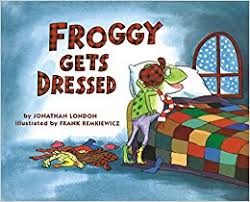
    3. Froggy Gets Dressed by Jonathan London
    Another great winter clothing repetitive book that the kids LOVE.  I work on target words “out” and “in” a lot in this book since Froggy is always going outside and inside; however, I can also hit “put on” when he’s putting on his clothes or work on prosody when Froggy and his mom are yelling back and forth to each other.

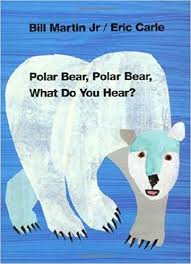
    4. Polar Bear, Polar Bear by Eric Carle
    It’s a classic for a reason!  Repetitive and engaging, kids love to participate in the book read.

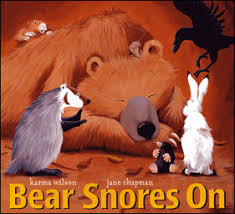
    5. Bear Snores On by Karma Wilson
    Love the Bear book series!  Bear is hibernating and sleeps through a winter party while his friends all gather in his lair to escape the cold. Target words for this book include: “on” in the early stages or “snores on” when working on /s/ blends.

    Activity: Free character cutouts from Making Lemonade in Second Grade available on TpT here:

    6. Bear Feels Sick by Karma Wilson
    I was going to stick to a top five list, but I couldn’t resist adding another Bear book.  Kids relate to poor bear feeling sick and the familiar and lovable characters are always heartwarming!  Target word in this book is “sick” so you have to make sure you have a kiddo who can produce both /s/ and /k/; but if they can, this is a great target word.

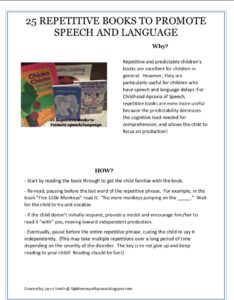
    Below you will find a free graphic I have on my TpT store explaining how to use repetitive books with your child to promote language and practice speech. My targets and books are always strategically selected based on the child’s sound repertoire. Click the picture to get the free download.

  • Favorite Holiday books for Speech Therapy

    Favorite Holiday books for Speech Therapy

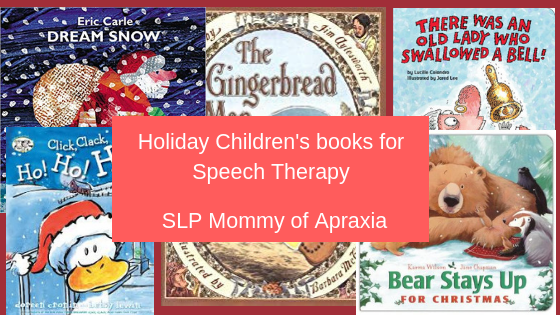
    6 Favorite Children’s Holiday books for Speech Therapy

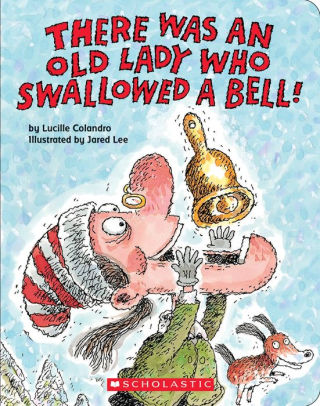
       1. There Was an Old Lady Who Swallowed a Bell by Lucille Colandro
    As with all the Lucille Colandro Old Lady Books, this is a repetitive children’s holiday book.  Nice target words that are repeated include “bow” and “hat” that can be used for repetitive practice.  The pictures in this book too are colorful and fun.

    Activities:
    Book Companion Pack on my SLP Mommy of Apraxia TpT store.  Find it here.

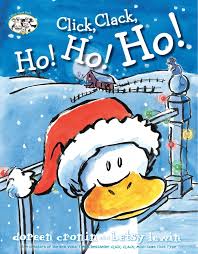
       2. Click, Clack, Ho! Ho! Ho! by Doreen Cronin
    Kids laugh at this funny, repetitive book in which duck gets stuck in a chimney
    and the barn animals take turns trying to get duck out.  The words for good
    repetition in this book include “uh oh” “oh no” and “ho ho ho,” which are nice
    CV and VC targets in the early stages of therapy.

    Activities: Free sequencing and comprehension book companion from Thumb Bunny Speech.
    Find it on her TpT here. 

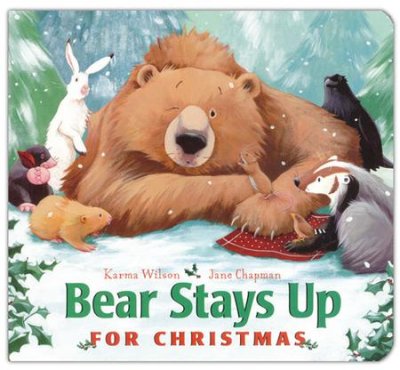
    3. Bear Stays Up for Christmas by Karma Wilson
    Bear’s friends help Bear stay up for Christmas in a sweet and heart warming book. Repetitive Targets I use in this book include “up,” for the early stages of apraxia, expanding to “stays up” for kids who may be working on /s/ blends.

    Activities: I found a free read aloud companion on TpT from Making Lemonade in 
    Second Grade.  Get it here.

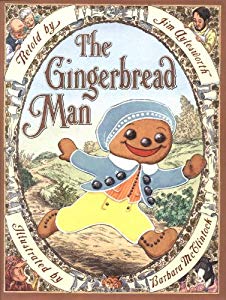
    4. The Gingerbread Man by Jim Aylesworth
    The classic tale of the Gingerbread Man is told in this fun story about a mischievous
    cookie.  Love a lot of repetitive targets in this book such as “me” or the entire phrase
    “you can’t catch me” (which can also target prosody), “man” in Gingerbread Man and the word
    “back” expanding to the phrase “come back” if possible.

    Activities:  Book companion pack on my SLP Mommy of Apraxia TpT store. Find it here. 

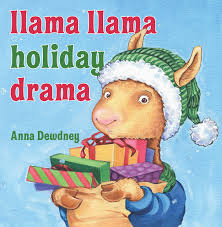
    5. Llama llama Holiday Drama by Anna Dewdney
    Llama llama is impatient for Christmas in this relatable book about a child’s anticipation
    for Christmas. I love the rhymes in this book and the repetition of “mama” and “llama”
    that can be targeted for repetitive practice, depending on the child’s repertoire.

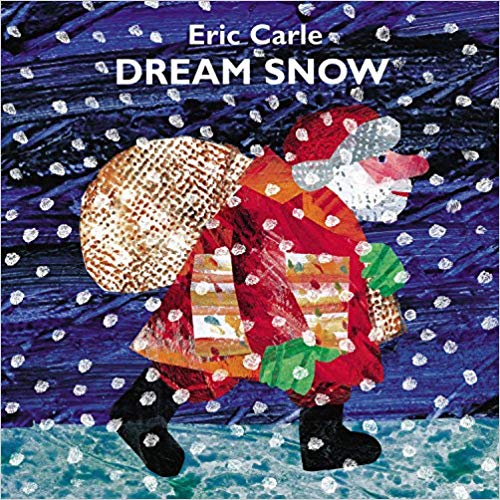
    6. Dream Snow by Eric Carle
    Interactive with colorful and vibrant pictures, this book is a children’s favorite.
    Targets for this book include counting to five and repeating the words “on” or “snow” as
    each animal is covered with a blanket of snow.

    Activities: Freebie on TpT by Mrs Plemons Kindergarten.  Find it here. 

    Below you will find a free graphic I have on my TpT store explaining how to use repetitive books with your child to promote language and practice speech. My targets and books are always strategically selected based on the child’s sound repertoire. Click the picture to get the free download.


  • Favorite Thanksgiving books for Speech Therapy

    Favorite Thanksgiving books for Speech Therapy

    5 Favorite Children’s Thanksgiving books for Speech Therapy

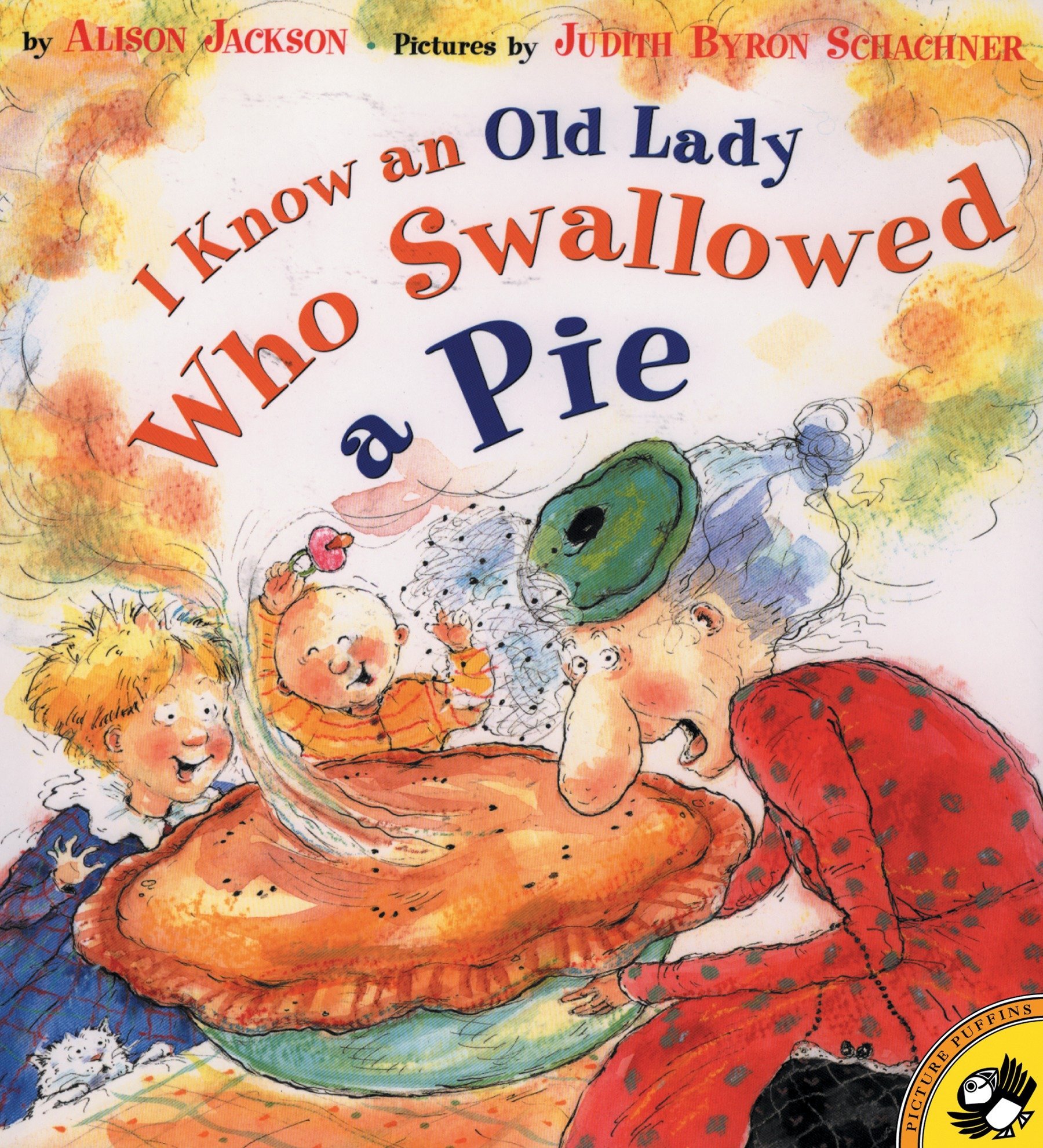
    1. I know an Old Lady Who Swallowed a Pie 
      Repetitive in nature, there are great words for repetitive practice including “pie” and “cider.”  (Tip: I change the “perhaps she’ll die” part to “I don’t know why.”)

    Activities:
    Book Companion Pack on my SLP Mommy of Apraxia TpT store.  Find it here.

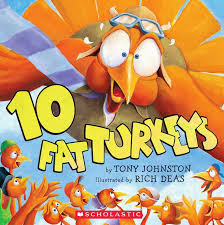
    2. 10 Fat Turkeys by Tony Johnston
    Kids love this book about ten silly turkeys who do tricks and take turns falling off the fence.
    They love repeating the phrase “gobble gobble, wibble wobble!” and you will too!

    Activities:
    Freebie for this book courtesy of Simple SpeechFind it on her TpT store here.

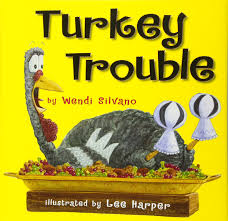
    3. Turkey Trouble by Wendi Silvano
    Turkey is worried about being Thanksgiving Dinner for Farmer Jake!  Kids laugh at turkey’s
    creative costumes and clever idea to ultimately avoid being eaten, in this funny, and repetitive
    book.

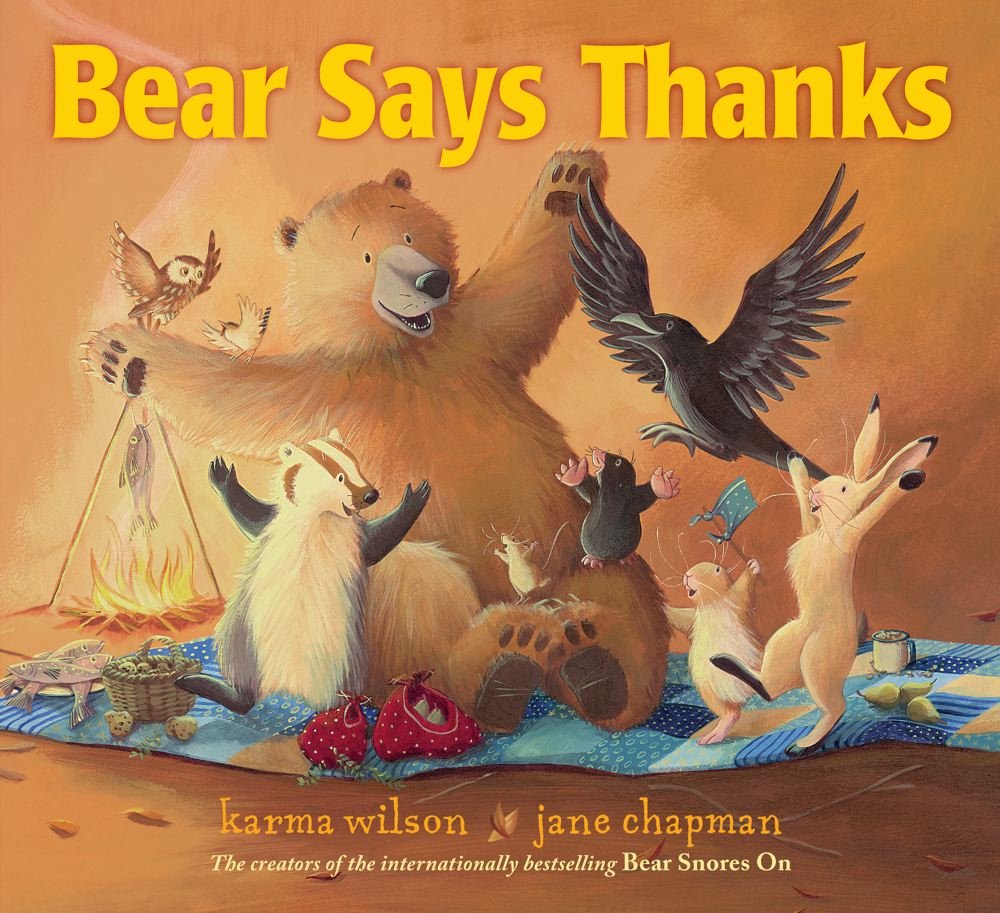
    4. Bear Says Thanks by Karma Wilson
    In this heart warming book, Bear decides to throw a feast but his cupboards are bare!  As his
    friends stop by with dishes of food, “Bear Says, Thanks.”

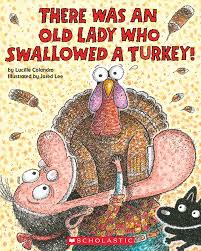
    5. There Was an Old Lady Who Swallowed a Turkey, by Lucille Colandro
    Kids love the crazy Old Lady who his back and eating all kinds of crazy things!  I love to work
    on prosody with her books as well as speech.

    Activities:
    Freebie book companion courtesy of Fun in Speech available on her TpT store here. 

  • SLP’s integral role in the five components of reading

    SLP’s integral role in the five components of reading

    When I was younger and learned to read, I remember I was taught phonics.  I remember the phonics workbooks I had, and would read the rules at the bottom of the page for spelling.  It was all very systematic. Little did I know at the time, phonics was just one part of the five components of reading that can contribute to reading disorders.

    Today, a concept called whole language dominates our public education systems.  Not every school district or school uses this approach, but very many of them do and it is at a detriment to our children who have reading disorders.  Some critics go so far as to say whole language is “anti-phonics.”  I don’t believe it’s quite that extreme.  However, for kids who have reading disorders, the vast majority struggle with phonemic awareness and decoding, which a whole language curriculum is not even close to adequately addressing.

    I’m fortunate that when I started my career, Ashlynn’s SLP was very knowledgeable on the topic.  I had no idea that learning about the five components of reading before my child was even conceptualized would come back and benefit her some day.

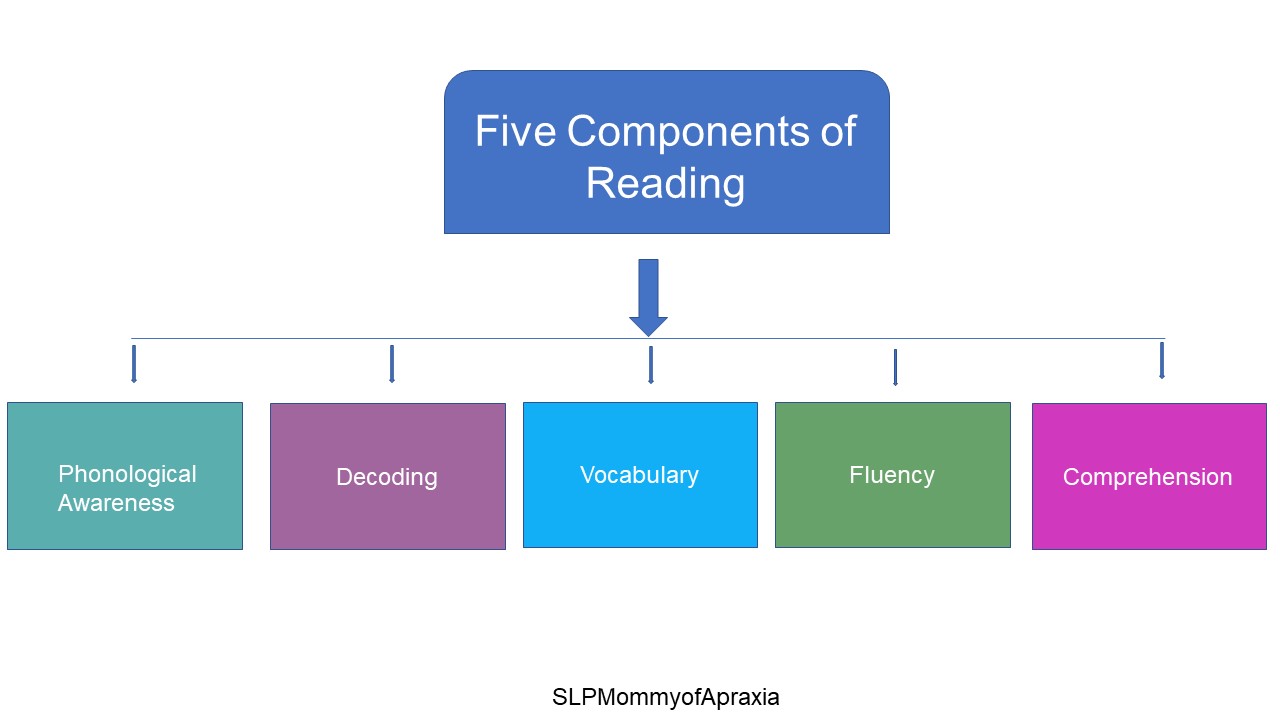
    So, what are the five components of reading?
    They are: Phonemic Awareness, Decoding, Fluency, Vocabulary, and Comprehension. These areas were identified by the National Reading Panel that was convened by Congress in 1999. It’s very important that parents and educators are aware of these five components, because weaknesses in any one component can cause a child to struggle to read.

    Speech/Language Pathologists can play a big role in reading.  They are trained and certified to treat children with three of the five components.  A Speech/Language Pathologist can work on phonemic awareness, vocabulary, and comprehension.  This is why they are frequently on IEP’s when children have reading disorders.  It is very infrequent that the older school-aged child with dyslexia is seeing the SLP to work on their “sounds.”

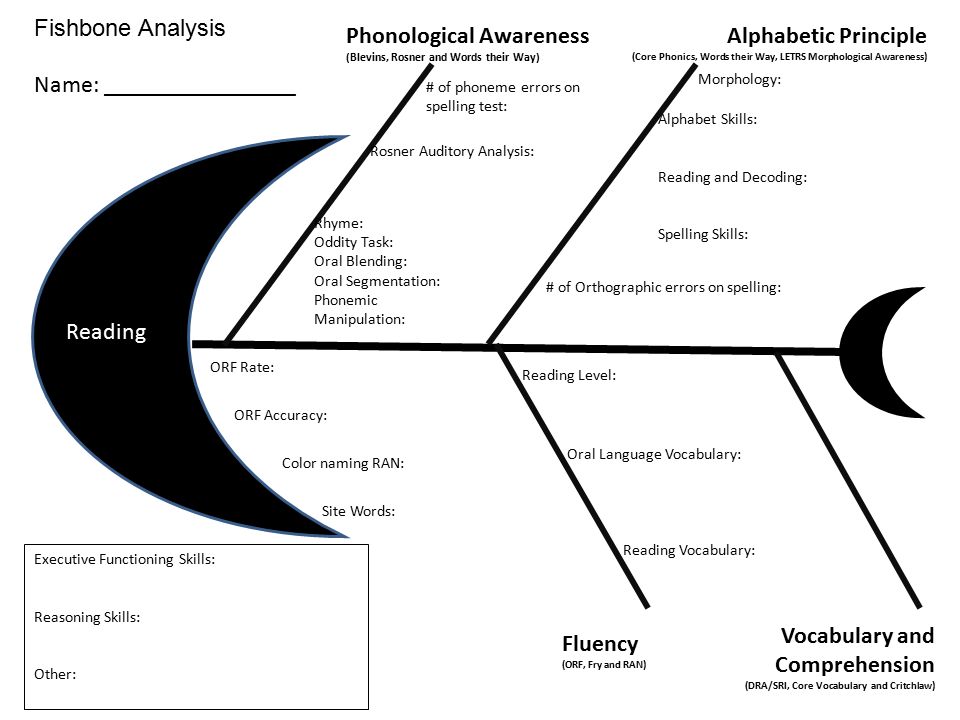
    Parents and educators all need to be aware and familiar with these five components if they want to help children effectively who are struggling to read.  During my time in Denver Public Schools, an excellent teacher advocated the use of a “fishbone” analysis when testing kids who were struggling to read.
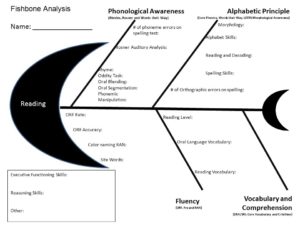
     

    As you can see, it contains the five components of reading, and spaces to document a child’s performance in all five areas.  It could be possible to have a child who has difficulties in all of these areas.  However, more frequently a couple of areas usually stand out.  One area that is frequently a problem is with phonological awareness skills.  This can be tricky because elementary school children many times get identified with a reading disorder past the time that instruction with phonological awareness is taught.  Teachers jump right into reading instruction without realizing the child is lacking the basic building blocks for reading in the first place.

    So what is phonological awareness?

    Phonological awareness refers to a child’s ability to manipulate sounds out loud.  Tasks included in this umbrella might be to identify the initial sound in a word, blend sounds, segment sounds, identify the last sound in a word, or be able to identify and formulate rhyming words.  Logically it would make sense why this is a building block skill.  If a child can’t do these things out loud, it’s going to be very difficult to transfer these skills when looking at graphemes (letters).

    Phonics/Decoding

    Phonics refers to the actual act of sounding out words.  To do this skill, children need to have mastered knowing letters and letter sounds, and then be able to use this knowledge of letter sounds to “decode” a word.

    Vocabulary

    A child’s vocabulary many times affects background knowledge, which is important in reading.  If the words they are trying to read hold no meaning due to low vocabulary skills, it is going to be harder for them to understand what they are reading.  In addition, a child with weak vocabulary skills will have a harder time monitoring their comprehension when reading sentences.  I see this all the time as an SLP. An example of this would be if a child were to read the sentence “He saw the dog.”  Instead of “saw” he/she read “sam” and they would continue reading.  Many children without a language disorder would realize “He sam the dog” didn’t make sense and go back and try and fix the sentence so that it makes sense. Kids with language disorders have a very difficult time with this skill.

    Fluency

    Fluency refers to a child’s ability to read text accurately and quickly while maintaining good expression.  The ability for a child to read fluently helps with comprehension.  If a child’s fluency is slow and choppy, they may be allocating so much brain power to decoding that they are not monitoring comprehension. If a child lacks expression in their reading, this too can affect comprehension.

    Comprehension

    Comprehension is simple terms, means understanding what we read.  Kids with a mixed receptive/expressive language disorder or an auditory processing disorder frequently experience difficulties with text comprehension.

    What does this mean for parents?

    The bottom line for parents is that reading is a complicated process that has many components.  A deficit in one or more of the above listed components can cause a child to struggle when learning how to read.  Children with speech and language disorders are at high risk for reading disabilities. Being aware of all five components helps parents be more informed regarding treatment approaches and options their child may need to catch up in reading.

    This article contains information from the National Reading Panel’s Findings


    Laura Smith is a first and foremost a mom to two amazing children, one of which who carries a constellation of invisible labels including: Childhood Apraxia of Speech, dysarthria, SPD, ADHD, MERLD, dyspraxia, dyslexia, and cerebral palsy. She is a speech/language pathologist specializing in Childhood Apraxia of Speech following her daughter’s diagnosis.  SLPMommyofApraxia is her space to share her professional and personal experiences related to the complex but beautiful world of neuro-diversity and to spread a message of hope, positivity, acceptance, and kindness.