Category: special needs parenting

  • Anxiety and PTSD. What you don’t know about special needs parenting.

    Anxiety and PTSD. What you don’t know about special needs parenting.

    Can everyone agree parenting is stressful? I’m sure we all can.  I read something the other day though that perfectly described my life.

    “If parenting can feel like a roller coaster of anxiety, than special needs parenting is a whole carnival.”  I’ve also read that PTSD is common among parents of kids with special needs.

    I’ve also read and seen quoted a very popular article: Autism moms have stress similar to combat soldiers.
    N
    ow, I’m not pretending to know THAT stress or try and compare, but seriously people, if you have a kid with special needs it’s really not that hard to believe.  If you don’t, it may be hard to understand, but let me assure you it’s INCREDIBLY stressful.
    PTSD-battle-fb

    Two years ago, I wrote a very scary blog post that I still can’t re-read.  I’m not even going to link it here because that would require me going back and potentially reading some of it. It detailed a near drowning incident with my daughter when she was in a group swim lesson.  I still haven’t really ever recovered from it.  We are around water all the time too, and everytime I’m stricken with an anxiety I can’t quite put into words.

    I really don’t know if it’s the global apraxia or her disordered sensory system, but Ashlynn does not have normal reflexes, for lack of a better word.  Instead of her body responding appropriately to survive, hers does the exact opposite.  Add to it an under-responsive sensory system in which she rarely feels pain, and it’s a recipe for disaster.

    An under-responsive tactile system is rare, but I find it is very common among kids with “global” apraxia, and that “global” word is important.  It’s scary though.  Let me give you some examples.

    When Ashlynn was a baby, probably around 4 months or so, I was getting her ready for bed.  That’s when I noticed her baby toe had a hair wrapped around it and was swollen.  It was so swollen I couldn’t even see the hair as it had created a turniquette.  My baby was never fussy.  She never cried unusually more than any other time.  I had absolutely no indication this had happened.  We had to go to the ER and get it removed it was that bad.

    In another instance when she was probably three, we were at the playground and she had a full speed head on collision with another boy.  Both kids had immediate goose eggs swelling on their forehead; the only difference?  The other boy burst into tears and went running to his mother while Ashlynn followed, not crying, wondering if he was ok.

    Another one happened recently right as school ended.  Ashlynn woke up with a horrific stomach ache.  Knowing she NEVER complains of pain I start panicking (it’s that anxiety I’m talking about) and immediately call the doctor and take her in.  The result?  She had a burst ear drum from an ear infection!!  She wasn’t sick or sniffling, she never complained of her ear, pulled at her ear…..NOTHING.  The pain in her stomach was described as “referred pain.”  I’d never heard of it before.  Apparently it’s a thing.

    When she was a baby, she didn’t chew her food.  Literally if something went into her mouth she swallowed it and this lasted well into her toddler years.  I remember a friend came over one day and brought bagels.  As we were chatting, Ashlynn started choking.  I swooped in, turned her upside down and started violently patting her back.  An entire piece of barely chewed bagel appeared on the floor.  My friend was horrified.  So was I, but sadly it wasn’t the first time that had happened.  She’s going to be seven and I still cut up her grapes and hot dogs.  If she chokes, it literally is her life on the line.  How can I NOT helicopter??

    Has your child ever been choking and looks at you with wide, terrified eyes?  I’ve never had that experience even once with my son, but with Ashlynn I can’t even count the number of times it’s been so many.  Each time brought a flood of overwhelming panic and anxiety.

    These are just four of MANY, MANY, MANY instances.  Hopefully you have some idea now why I helicopter.  I used to think if she could just talk she would be able to tell me what was wrong.  Hah! If you still aren’t convinced these examples are enough reason for me to have the anxiety I do, let me outline ONE day in her life that happened this weekend.

    We went to a ski town called Breckenridge to visit my husband’s family.  We were walking along the side of the street when we heard a car coming.  Ashlynn wasn’t in the middle of the street, but like any reasonable parent we both beckoned her to move closer to us.  For reasons I probably will never know, she freaks out and goes darting into the center of the road! I went running after and ended up dragging her back to the side.  I mean, what is that??  Tell me.  What IS that??  I don’t know what that is, but I DO know my stress level went through the roof.  I DO know that next time we are in that situation I will now be helicoptering because her natural instinct for whatever reason was to dart into the CENTER of the street.

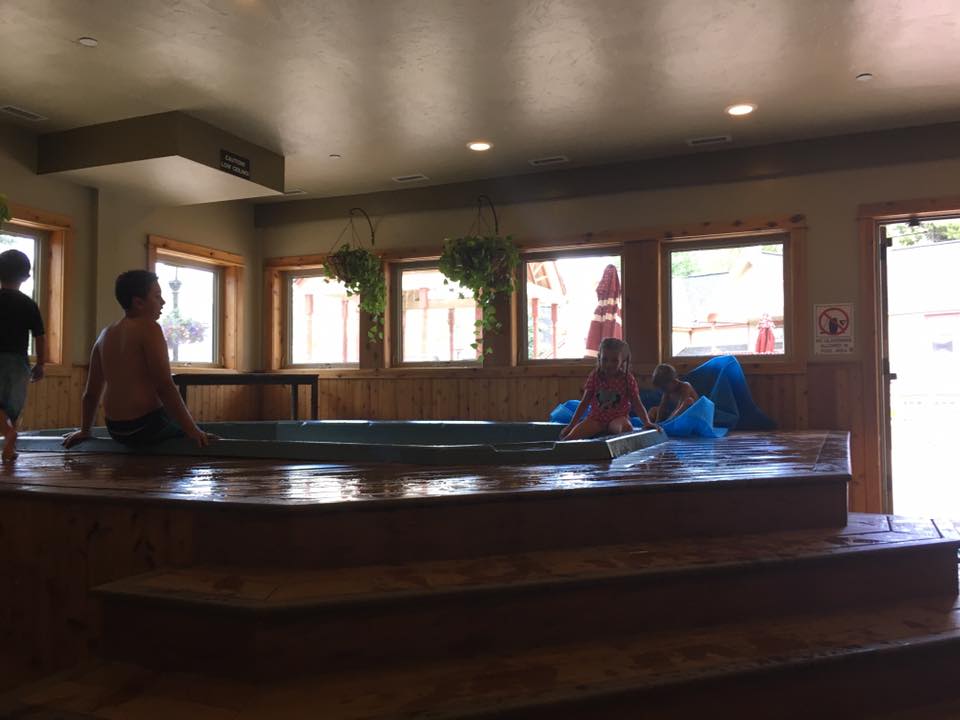
    Next was a trip to the hotel hot tub.  As much as I am at lakes and around water, you would think my anxiety over her near drowning incident would have subsided.  Nope.  I immediately started panicking thinking about it.  I had remembered their swim suits but not the floaties.  Their cousins assured me it was shallow and even the shortest kid amongst us could touch the bottom.  I still with every being of my body want to tell them no, but that’s MY issue and I don’t want to punish my kids for my anxiety. I guess it’s fine if I’m right there.  A hot tub is small.  I can save them if something happens.  They both wanted “privacy” and change in the bathroom with closed doors.  Unbeknownst to me, they went out a different door and made it to the hot tub without me.  When I realized they were gone , my stress goes through the roof again and I take off into a sprint toward the hot tub.

    They were there with their cousins having fun and splashing around.  I wish I could say I breathed a sigh of relief, but my stress and anxiety levels could not recover that quickly. I scolded them for leaving without me.

    I took a seat on the bench.  I watched Jace (my four year old son) jump in  (he doesn’t know how to swim) and his head goes under.  I stand up and immediately I see him dart out of the water.  A human’s natural instinct is to stiffen their body and shoot toward the top, which he did.

    Dear God, am I going to get through this?  Ashlynn was being more cautious.  Okay that’s good. My sister-in-law came in to keep an eye on her kids.  My anxiety started to come down.  I started to relax (a little).  Suddenly and silently, as I’m watching Ashlynn, one second she’s walking, and the next second her head falls under the water.  She NEVER voluntarily puts her entire head under the water.  In fact, we’re working on that in private swim lessons.  I tell you this so you can understand that if her entire head was underwater it was NOT of her own volition.  My heart starts pounding, my ears start ringing, I’m seriously panicking.  I’m taken back to that day two years ago in swimming lessons and I have to jump in again and save her.  Luckily my older nephew was in the water and no sooner did I say grab Ashlynn, he had her in his arms.

    She looked scared.  Spooked.  My nephew looked scared.  I’m not sure if it was because of Ashlynn or my reaction.  My hands were shaking.  In fact, they are shaking now as I type this.

    Unlike my son, who went under water and then came shooting out of it, my daughter’s natural instinct is to pull up her legs into a fetal position.  I know this, because I saw her do it in the pool that day two years ago, sitting underwater, and I also know this because she is much taller than that hot tub was deep.  The only way she could have gone under was she pulled up her legs.

    She stayed along the side of the hot tub after that as I sat there wanting to just pull my kids out and go home.  The stress is just too much.  I need to keep her in my house in bubble wrap and then at least I know she’ll stay alive.  I’m being sarcastic of course because the rational side of me realizes I can’t do it, but there is an irrational side that very, very much wants to do that.  I’m not gonna lie.

    My husband walks past at that moment.  He mouths a question “are you ok?”

    I shake my head no.

    He back up and walks in the pool area.  He asks me what’s wrong.  Just talking about it has me panicking all over again.  He tells me to leave.  I can’t stop talking.  I’m so scared.  He says he will stay, but he’s not even looking at her.  Doesn’t he realize he needs to look at her every second?  He tells me to leave again more firmly.  I hesitate, and then he says my anxiety is making everything else worse and giving everyone else anxiety.  I’m upset, but not at him.  I’m upset because I know he’s right, but what can I do?

    He managed to get her back in the water he told me later, and hopefully she doesn’t have PTSD over it like I do.

    So yeah.  It’s not hard at all to believe mothers of special needs children have stress levels similar to that of combat soldiers, because our stress never goes away.  It’s a daily fight for your child’s survival.
    13728973_10207953930258699_5847861193958388927_n
    Ashlynn staying alongside the hot tub after the incident
    13680505_10207953930338701_291093249682823046_n
    Playing around and being silly. Love her duck face here.

    13406745_10100653496539656_1976337265973063999_n d

  • Why we’ll never stop working

    Why we’ll never stop working

    I’ve been down lately.  Really, really down.  It pretty much started at Ashlynn’s re-evaluation meeting and went downhill from there.  For all the work she’s done, for how far she has come, for what she knows in the face of so many challenges,  it was like a slap in the face.

    It’s really not anyone’s fault.  It’s just the way it is.  I’m dealing with mixed expressive/receptive language issues now.  I knew this, I did….it’s just seeing those damn numbers.  1st percentile, .5th percentile.  Phew.  Deep breath

    There were also awesome numbers.  Articulation is in the average range.  The AVERAGE range!  That’s phenomenal.  Ashlynn is intelligible to perfect strangers in and out of context.  For someone with apraxia of speech, she beat it in 2 years with a TON of therapy, but she overcame it.

    Now we’re faced with new deficits.  Word finding, expressive language, grammar, syntax, receptive language, memory, attention, writing.

    It was overwhelming.  My husband had tears, and he’s the one who always finds the positives and the “what she can do’s.”

    Even her receptive vocabulary test came back just under the average range.  Receptive vocabulary tests have been shown to correlate with IQ tests (even though I didn’t give her an IQ test), and even though I don’t think the test was totally valid since I’m sure her attention played a factor…..

    It still made me pause.  For once I started thinking, maybe we don’t have this.  Maybe I am dealing with limitations.  Maybe I am in denial.  Maybe I’m not seeing things because I don’t want to see them.

    I would read stories and updates on other blogs and get jealous someone’s child ONLY had apraxia of speech.  CAS is no joke either, but if Ashlynn only had CAS then she would almost be over speech forever!  Sigh.  You know you’re down when you’re jealous of other kids’ disabilities.  That is wrong on so many levels.

    I looked everywhere trying to get my positivity back.  I talked to family, to friends going through this journey too, co-workers…nothing helped.  I poured over pinterest looking for inspirational memes and quotes that were going to change my negativity and squash my doubts.  I found nothing.

    I scoured the internet looking for success stories for global apraxia.  One I found was on disability now but at least happy she had made it through childhood.  That wasn’t exactly lifting my spirits.

    At the same time, I finally read a new research article on Apraxia that’s been in my pile.  The article describes kids with motor planning deficits (kids with apraxia) rely heavily on auditory feedback which was proven when they demonstrated diminished speech articulation in the presence of noise.  Gee, I thought. That’s great these kids found a compensatory strategy to make up for their motor planning deficit, but what happens when you have sensory processing disorder and possibly some receptive language issues that makes that feedback unreliable.  UGH

    But then I found it.  My inspiration was sitting right under my nose.

    I know this guy who has bipolar disorder.  When I met him he was kind of a hot mess.  He hadn’t gone to college, was partying, and constantly getting fired from his jobs.  Of course, having bipolar disorder is very difficult.  There are daily struggles in his mind I will never know.  The statistics for someone with bipolar disorder are less than impressive: 90% of marriages end in divorce when one person is Bipolar.  Less than 50% of people with bipolar take their meds, and 1 in 5 commit suicide.  Many live on disability.  Many are homeless.  This guy though, he’s been married for 10 years with no sign of stopping.  He’s loyal, faithful, hardworking, finished college AFTER his diagnosis, and stays on his medication.  Who is he?

    He’s my husband.  He’s Ashlynn’s dad.  Everything he shouldn’t be doing he’s doing.  Everything he shouldn’t be, he is.  My husband, Ashlynn’s dad, defies statistics.

    Then I started thinking, I know this other guy.  He was raised under an extremely physically abusive, alcoholic father.  His parents ultimately divorced.  He was forced to go to war and and live in actual nightmares.  What are the stats on a guy like this?  Well, since he’s the product of divorce, he’s 40% more likely to end up divorced himself.  He’s four times more likely to be an alcoholic.  As a vet, he faces a higher possibility of homelessness.  What did the future hold for this guy?

    Well, he’s my dad, father of three. Married for 45 years and happily retired.  He’s healthy and has a drink maybe once a year.  My dad, Ashlynn’s grandfather, defies statistics.

    And that’s when I started to realize.  Ashlynn comes from a long line of statistic breakers.  It’s in her blood.

    I thought of me.  Had I defied statistics?  Well, neither of my parents went to college, so it would be less likely I would receive a college degree or much less an advanced degree….yet here I am. It was highly unlikely I would have ended up at Duquesne University for an elite group of SLP’s, yet there was I was last summer.  Maybe I do defy statistics.

    My dad’s nephew years ago was on the wrong track.  He was in jail, and he didn’t know how to make a life for himself after he got out.  He was lost.  He asked my dad for advice and my dad said “keep working.  All I know is to work.”  Years later that same nephew had kept a job and was raising adopted children.  He was not in jail and will never go back.  He told my dad he always remembered his words to just keep working.

    So there it was!  Right under my nose.  We are statistic breakers.  We are hard workers, and Ashlynn is no exception. She always wants to work, do homework, practice writing, ball skills, pedaling, speech, read..you name it.  She attacks it, and I realized, I may not have success stories for her EXACT same situation, but I do have success stories for many other hard or seemingly impossible situations and she will be one too…..if we just keep our head down and

    working.

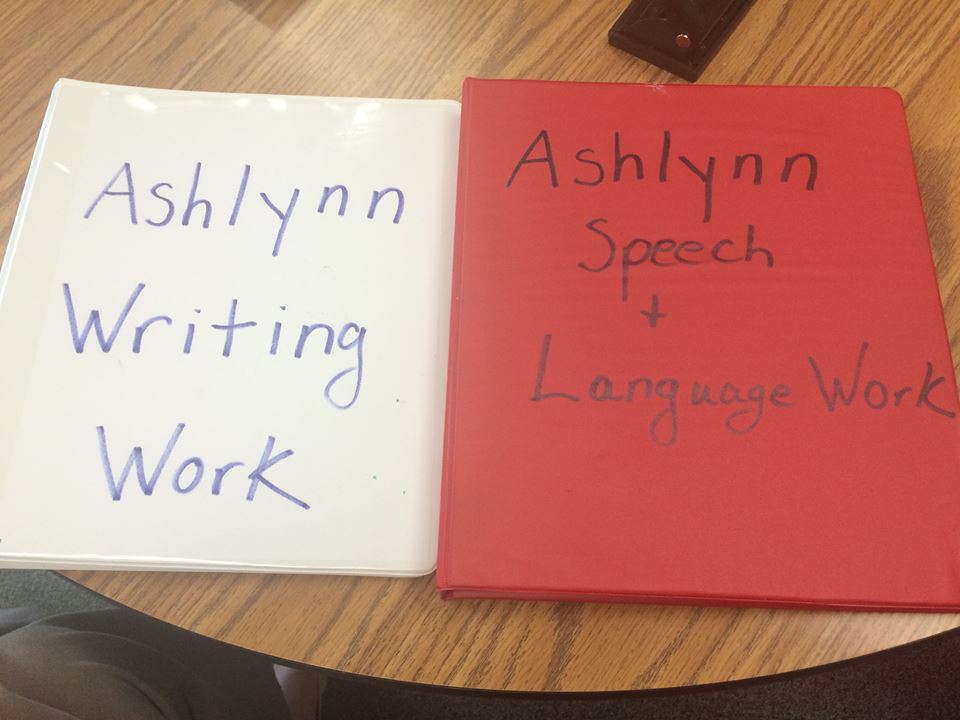
    7e94b6ca15764dd139ba2f8146844331ashlynn work


  • Baking with speech and language

    Baking with speech and language

    Parents are always looking for ways to incorporate speech and language activities at home.  Whether it is to stimulate a typically developing child’s vocabulary and language, or to help a speech or language delayed child; baking is great and fun way to work on speech and language.

    The first and most important rule before you start, is you have to accept the fact that your toddler will make a mess, and that is just part of the process, or um, fun.

    When I do baking or food activities with kids in school, they absolutely love it.  That’s the key. When kids have fun they are at their best learning.  Also, baking is a multi-sensory activity, meaning many sensory systems are activated.  When children are using multiple sensory systems, acquisition and retention of skills is more likely.  Baking with your kids inherently promotes:
    Vocabulary development
    Sequencing
    Following directions and comprehension
    Pragmatic language – the social piece of language

    Let me explain a little bit further.

    Vocabulary Development:  

    For the young child, words are learned best in context.  Certain authors refer to this as “event-based knowledge.”  Many of children’s first words are usually embedded within scripts that are part of their daily lives.  Examples could be: bottle, cookie, doggie, bath, etc.  These words are said to them frequently throughout the contexts of their daily lives.  Baking provides the same event-based knowledge experience, and exposes them to new vocabulary.

    Sequencing:  

    The ability to understand sequences and to sequence is an important skill.  Sequencing most simply refers to the order of things.  When kids get into school, sequencing is very important to understanding: patterns, math, a story etc.  Following a sequence of steps is inherent in baking and makes it the perfect activity for this skill.

    Following directions and Comprehension:

    These two things fall under receptive language skills; however, they are very important to the development of overall language skills.  Kids who are good at retaining and following directions have less difficulty in school since they are not devoting a lot of their cognitive load on simply understanding and remembering what they are supposed to do.  Baking is a fun and easy way to help your child practice these skills at home.

    Pragmatic Language:

    This is usually referring to the “social” element in language.  This involves the way language is used to communicate with others.

    With a little forethought, baking can also be a way to sneak in more direct speech language targets while working with your kid at home.

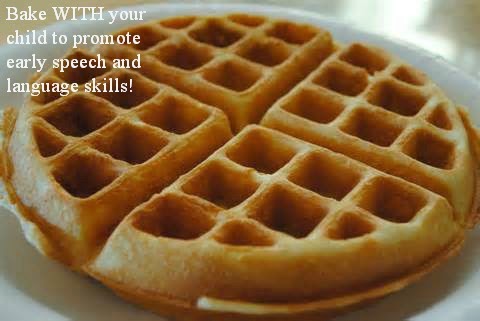
    Muffin Mondays and Waffle Wednesdays

    This summer I implemented Muffin Mondays and Waffle Wednesdays. Ashlynn is VERY interested in what day of the week it is, so I did this to also give her a framework of her week.
    Ashlynn’s current speech/language needs include: syntax (the form or structure of a sentence), and consonant blends (two consonants found together in a word: sp, st, sl, fl, bl, for example).

    It’s important to know your child’s goal, and then structure your baking around the goal.  Get creative, but it’s not as hard as it seems.  In Ashlynn’s case, I chose  the words: spoon, flour, stir.  For syntax, I had her ask me “Can I do it?” to work on her questions forms.

    Then each time we used a spoon I had her repeat “spoon.”  While she was mixing the batter, I would ask her what she was doing and cue her as needed to say the “st” blend in “stirring.”  Instead of using 1 cup of flour, I broke it up into four parts to give her more practice saying “flour” each time she poured in the flour.  For an extra bonus, she had to put “stir flour” together in a simple phrase.  I would hold the spoon until she said the desired words, and then I would give her the spoon back when she was successful!  She loved it.

    If your child isn’t yet talking as much as Ashlynn, hum the ‘m’ sound while you mix the batter or if your child isn’t great at imitating yet, just have him/her make any vocalization to request an item.  If they can’t yet imitate even a vocalization, imitate any spontaneous sounds they make to provide an opportunity for vocal play. If they aren’t really vocalizing yet, don’t get discouraged!  Practice turn taking and reciprocal play.  They pour then you pour.  You stir then they stir.

    With other clients who needed a final stop, I might have chosen the word “dump” and then every
    time we pour in an ingredient, we work on the word “dump.”

    Really, the possibilities are endless!

    In addition, you can also tell your SLP that you incorporated some great “distributed” practice throughout your child’s day.  In motor learning approaches to therapy, mass practice refers to the production of a large number of repetitions of a single target(what you should be seeing in therapy) and distributed practice refers to hitting targets with a greater amount of time between trials or sessions.  However, distributed practice is very important for stabilization and generalization!  Parents are the greatest asset when it comes to carryover, because you are in a better position to afford the child numerous opportunities for distributed practice!  In addition, you can do it in ways that are fun and multi-sensory in the child’s natural environment.


  • Ashlynn play boats with daddy.

    Ashlynn play boats with daddy.

    This past Fourth of July weekend we went on our annual trip to Glendo State Park in Wyoming. My husband and I have been going since before we had kids. Without getting into all the details, once you go to Glendo for the Fourth, you always go back if you can! Last year we couldn’t go because I was having my son so we were very excited.

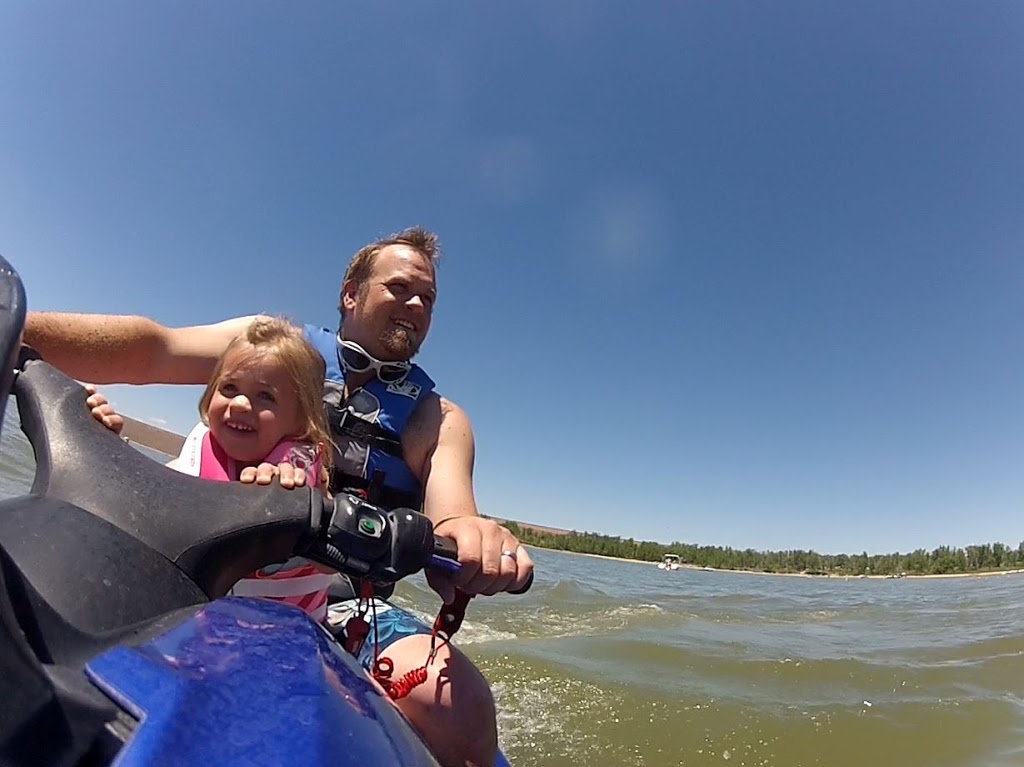
    When we went to the beach, Ashlynn saw my husband pull up on the jetski. She looked at her grandpa and me and announced, “Ashlynn play boats with Daddy?” I teared up immediately. I know I sound like such a sap, but when you are the parent of someone with apraxia and they say things and put novel words together in context, it is just the best feeling! I asked her if she wanted to ride the jetski with daddy, to which she enthusiastically replied “yes.” I of course then scripted the appropriate  way to ask the question and had her repeat, I want to ride the jetski with daddy.

    We still have a ways to go. We’ve been working on her using the first person “I” since before school was out. It’s just such a testament to how much repetition a child with apraxia needs, because I correct her and make her repeat her phrases and sentences using “I” every time she refers to herself as Ashlynn. We were so intent on getting her to learn her name that now it’s hard to get her to use something else.  However, I do know that she will get that too, and that’s a comforting feeling.

    Two years ago we took her to Glendo when she was 21 months old. At that time she had just learned to start walking really well and she only had a handful of word approximations. Unfortunately, anything that wasn’t a flat surface was difficult to walk on, so we still had to help her walk everywhere. She only had a handful of word approximations, and her favorite thing to say was “a dah.” and “hi.”  I’ve learned from my parent support group that most kids with apraxia have a go to sound that they use for everything, and “a dah” was Ashlynn’s.

    Fast forward though two years (and a lot of therapy and extracurricular activities to work on motor skills) and she was running on the beach and bending down on the sand. She is still unsteady in the waves and can’t be trusted around the fire pit for fear she will lose her balance and fall, but that will be a progress report for another time. For now, we celebrate that in two short years, a dah was replaced with a complex sentence asking to play boats with daddy, and now she fearlessly got up on the jetski.

    I look forward to coming years when she will be navigating around the campsite without fear of falling, swimming in the water, and maybe waterskiing or jetskiing on her own.  Also, I excitedly anticipate her talking our ear off around the campfire.