In my opinion, Ashlynn’s birth history was significant.
No, she wasn’t born premature. No, there wasn’t a dramatic rush to the ER. However, I was failing to dilate or efface and the labor was taking so long that vaginal fetal electrodes were placed on her head. In addition, every contraction brought concern to the fetal hear monitor. My OB recommended at least three times that I get a C-section; but hopped up on drugs and determined to deliver my baby naturally, I didn’t read between the lines.
When Ashlynn was three months old I started to become concerned about her toes.
My friend affectionately pointed out her “ballerina toes,” but they were cause for concern. Her feet were always in a pointed flexed position, otherwise known as “plantar flexion.” If I tried to stretch her feet to what is known as a “dorsal flexion,” I was unsuccessful.
At her 6 month well baby check I brought my concerns to the pediatrician. She offered two possible solutions. I could get a referral to neurology, or I could stretch our her tight heel cords each night and at the next well-baby visit we could re-evaluate. I chose the latter.
I was an SLP working in the severe needs classrooms before Ashlynn was born. I co-treated with PT’s and watched them massage and stretch out kids with cerebral palsy for at least two years. I tried to replicate the same motions and massages in Ashlynn, and meticulously stretched her out every night in the bathtub for 6 months. At her next well baby check, her heel cords were loose and we could easily get her in a dorsal flexion. A referral to neurology no longer seemed necessary.
Ashlynn continued though to be delayed in every milestone. I was convinced it was Cerebral Palsy (CP). I worked with her every night doing a speech therapy approach called “language stimulation.” I was exhausted. Physically and emotionally run down from working each day, but I would look at my daughter’s smiling face and pull reserves out from the depths because she was by far my most important client.
At around a year I took her to a PT I worked with who saw children with CP everyday.
“I think she’s fine, Laura,” she said to me. She had her crawl, stand, and try to walk. I was relieved, but still skeptical. When Ashlynn started to pull up on furniture I noticed she would stand on her toes. I immediately and diligently would relax her calves or physically manipulate her legs to stand flat-footed. When she finally went to walk (very late at 19 months), we didn’t have a problem with toe walking. I felt relieved at the time; but little did I know I had successfully suppressed all the soft signs of CP through my training and experience with children who had severe needs.
I’ll never forget her Child Find Evaluation shortly before she was three.
I had been working with her every night on speech, and the progress was less than amazing. I wanted to turn back a million times, but knew I had to take her to this evaluation to get her qualified for extra services. The diagnosis of apraxia smacked me hard in the face. Though I instantly knew it was true, I was mortified I had not thought of it until that moment.
I grieved.
I had a difficult time looking myself in the mirror after that. All questions of CP had been ruled out and I had missed a diagnosis of apraxia in my own child. I was beyond disappointed and angry in myself. I struggled to look at myself in the mirror. My confidence was shattered and I questioned as to whether I was really helping children or not. I didn’t know it at the time, but looking back I think I was deeply depressed. I decided during that time that I had to do something with this situation. I could sit in sorrow, guilt and regret; or I could turn all this pain into a purpose.
I started my blog and my mission to specialize in apraxia.
During this time period I was PROMPT trained, Apraxia-Kids trained, and watched the Kaufman K-SLP method on video. I became so fanatical about apraxia that I earned an award from ASHA for obtaining a crazy amount of continuing education in a short period of time. During this time, Ashlynn improved and I finally started to be able to look at myself in the mirror again.
Ashlynn went on to receive additional diagnoses of: dyspraxia, ADHD. SPD, and dysarthria at this time through various professionals. I had accepted that Ashlynn seemed to have “global apraxia,” which is a term for kids who seem to be globally impacted by motor planning issues.
I sought expertise from neurologists who ordered MRI’s and genetics but came up empty. I knew from an article I had read once that in some circles, global apraxia was considered a type of CP; but no one would believe me. I had settled on global apraxia, aka apraxia and dyspraxia until….
At the age of 8, Ashlynn toes started curling forward.
I had noticed it, but hadn’t done anything about it until her Grandma told me that she noticed it and Ashlynn told her they hurt. Concerned I took her to her pediatrician who was completely stumped. She did refer to me the orthopedic department at Children’s and I felt I was on another wild goose chase to figure out why Ashlynn’s feet were acting like this. That was until a mother to a client I have with CP told me that toe curling is common is kids who have CP during the time of a growth spurt. She referred me to a specific doctor at Children’s Hospital Denver called a “physiatrist.”
I scheduled the appointment and arrived early with Ashlynn. Trying to shake off nerves we played on snap chat and laughed.
d.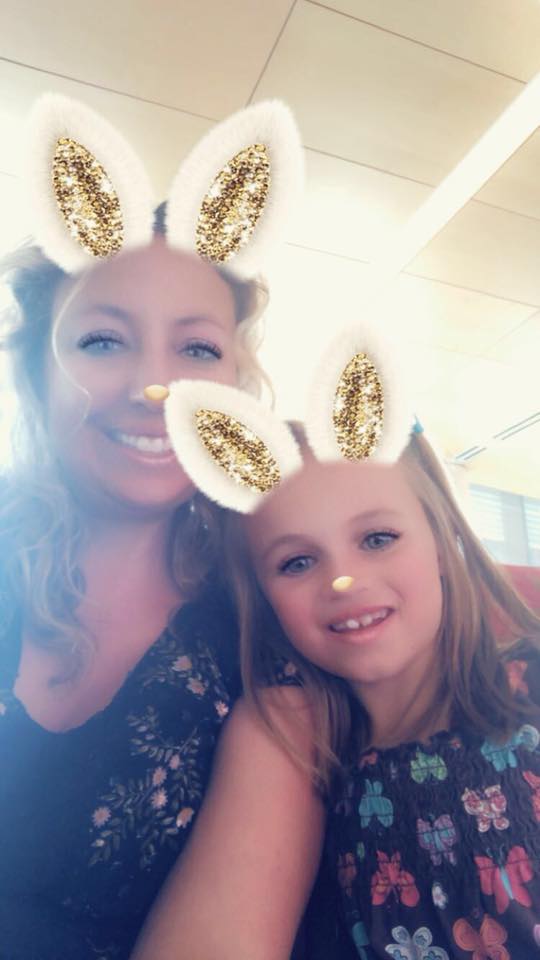
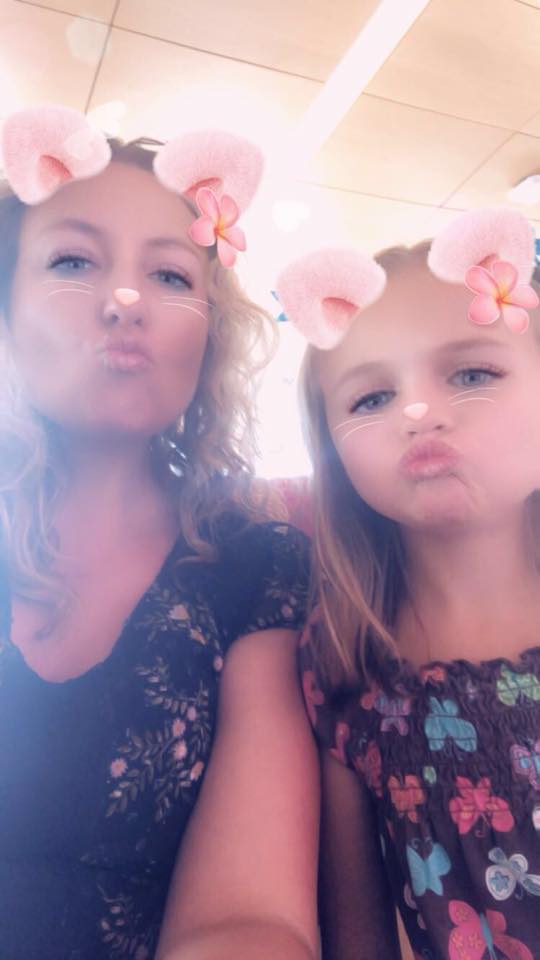
I was so proud of her pucker in the second picture because puckering has been a task that has been traditionally something that is difficult for her. Finally we were called back and ushered to our examination room.
The doctor and resident came in skeptical.
They asked me why I was there and when I mentioned CP they looked at Ashlynn and seemed pretty dismissive at first. CP? Why on Earth did I think this girl sitting before them had CP? I soaked in her skepticism and it killed me. Great. Here we go again. Another person who doesn’t believe me. She had Ashlynn walk down the hallway away from us. Ashlynn was scared so I walked with her. The next task was to run and the doctor instructed Ashlynn to run by herself and explained she needed me to stay behind. As Ashlynn ran ahead this woman began a running commentary of medical jargon I was desperately trying to keep up with. She was talking to both me and her resident.
“Notice the Pie Pan arm hold as she runs.”
I looked at Ashynn’s peculiar arm and finger posture.
“Sweetie will you skip now?”
Ashlynn skipped happily down the hallway and Pam began her expert observations,
“Notice how that pie pan hold switched sides.”
Ashlynn returned.
The rest of the evaluation went much the same. I watched on in disbelief. Somewhat invested but still skeptical, they had Ashlynn take off her socks and shoes and repeat the exam. As she ran down the hallway, what had been no evidence of toe walking with shoes, revealed a slight toe walk without shoes. I was in awe of Pam’s expertise and knowledge. Her observations and running commentary were impressive.
Back in the exam room the revelations were revealed.
They tested all of her reflexes and Pam remarked how all of her reflexes were “brisk,” which was code for “not normal,” and observed that all of Ashlynn’s primitive or baby reflexes were still present. When I questioned her she explained that children with CP never outgrow those early reflexes and will retain them into adulthood. I was fascinated. I had OT reports from multiple places that described how Ashlynn hadn’t lost her primitive reflexes, but I didn’t realize it was due to a possibility of her having CP.
I knew from my apraxia blog groups that some kids with global apraxia received a dx of “ataxic cerebral palsy” early on. This doctor had Ashlynn touch her own nose and then touch the doctor’s finger. Ashlynn did well with this. The doctor immediately ruled out ataxic CP. I asked her if a child could improve on that task with OT (since Ashlynn used to be bad at that but has had therapy) and she shook her head and said there was no way Ashlynn had ataxic CP.
Ok. I wasn’t even offended. My mommy gut was telling me this woman knew what she was talking about and I was in the exact spot I needed to be.
The next test, from a lay person’s view, seemed to be the most definitive diagnostic marker of the evaluation. It was a “clonus test” that is done at the foot and ankle level. I could google it and come up with this amazing medical definition, but I want to report this as a mom. As they were testing reflexes, one reflex test they did put Ashlynn right back into those ballerina toes I saw as a baby. They then tried to push up on her foot so she could achieve a dorsal flexion, and her foot started pulsing. Apparently, pulses beyond 2-5 are considered abnormal and Ashlynn was at an 8 or above. It was so significant, they couldn’t get her out of it without changing her body position completely.
It was after this the treating MD told me that based on Ashlynn’s pie pan hand posture when running and clonus in the ankles, she exhibited symptoms consistent with dystonic cerebral palsy.
I gasped.
It wasn’t a gasp of pain or sadness. It was…relief. I couldn’t believe someone listened to me. I couldn’t believe that after almost 9 years of knowing this was what Ashlynn had, it was only now being diagnosed. I beat myself up for years missing apraxia. It was so bad, it was what made me specialize in it. I couldn’t look at myself in the mirror. It was a big blow to my self esteem as a professional. I thought I was a good SLP and then I had missed apraxia and CP was ruled out and I felt incompetent. The guilt was overwhelming. I did everything in my power to make up for the error. I specialized in apraxia, received awards related to apraxia, and helped my daughter every way I knew how.
To find out now that I had been right all along was a feeling I can’t put into words. It had come full circle. I actually did know my stuff back then, but this experience with Ashlynn shot me to a place with apraxia expertise I could have never imagined.
I was talking with a client I had who brought their daughter with diagnosed CP into see me for a differential dx over a year ago, and was telling her the story. Our stories our reversed. Her daughter immediately received a CP dx, but no one believe her daughter had apraxia until she came to me to get a differential dx. She said exactly to me what I said to that doctor.
“So you believe me?? I’m not crazy? Oh my gosh!! Oh my gosh!!! I freaking knew it.”
She went on to tell me this day that she was thankful that I didn’t know Ashlynn had this rare presentation of CP, because I probably would have went all in on the CP awareness train. Instead, I went all in on apraxia and because of it; her daughter got the right dx and subsequent treatment she needed to find her voice.
I had to agree that she was right.
In the end, life has been a journey with my Ashlynn. However, I actually and finally feel like all the pieces to her “puzzle” have been found. A good friend said it best when she told me,
“You found your umbrella.”
I didn’t cry at any point during the evaluation or dx. After we left I called my husband, mom, and mother in law and explained the findings over the phone with Ashlynn in the back seat. When I hung up my last phone call I heard this little voice ask,
“Mama? What do I have?”
I didn’t expect to tear up when I answered her my voice cracked and I said, “Baby, you have cerebral palsy, or CP. It doesn’t change who you are at all. It’s just something you have, like apraxia.”
“That says Exit, Mississippi” she said right after, reading the freeway exit sign to our house; and in that moment, I knew everything was going to be okay.