Category: learning disability

  • Report cards are bittersweet with special needs

    Report cards are bittersweet with special needs

    End of the year is here! Summer is around the corner and the excitement of summer is palpable. There is something else though that is tangible I hold right before the excitement of summer.  It’s a small manila envelope that holds the children’s report cards.

    When I was a kid, I LOVED report card season.  My report card was always glowing.  I couldn’t wait to take it home and show my parents who would shower me with accolades and possibly reward me with ice cream.  I could not WAIT to open up that envelope and see the delicious and positive contents hiding inside.

    Ashynn, my first born child with apraxia and related learning disabilities was the second time aside from myself that I had looked at report cards.  I remember opening up her first one and feeling like someone had sucker punched me.  Despite her working hard every night, and going to therapy almost every night, the scores were more than concerning.  The grades were absolutely devastating.

    Yes I KNEW she has on an IEP. Yes I KNEW she had a modified curriculum and the report card shows her performance based on same aged peers.  Yes, I KNEW that.  It didn’t make the blow any less intense.   How was it fair?? While other kids played soccer or did gymnastics, mine spent every spare minute in a therapy and yet she was still behind.  Again I ask you, “How is that fair??”  As she went through first grade I started taking longer and longer to open that envelope.  You have to work up to putting yourself through that kind of pain again.

    Ashlynn is in second grade now.  Her manila envelope aka report card was sent home first.  I saw it in her backpack. Yes, I saw it.  I never pulled it out.  Why would I?  I know what I’m going to see.  I’m going to see that in spite of the fact that she has therapy after therapy and tutoring after tutoring after school; she remains dificient in most areas of her life. Despite her positive attitude, her resiliency, and her stellar attention to task and work ethic in therapy…she has true disabilities that will persist throughout her entire academic career and will be highlighted by the scores on her report card.

    Yeah so that report card. It kinda makes me sick.  I have to work up to reading it and it usually takes a couple of weeks.

    One day later a same manila looking envelope ended up in my son’s backpack.  I found myself excited and ready to tear into it!  I had a hard time waiting until we drove home.   I was over the moon to read the narrative,

    “It has been a pleasure to be Jace’s Kindergarten teacher.  He is outgoing, inquisitive, and comes to school excited to see his friends. He is a hard worker and determined to do his best. He takes great pride in his work.”

    I looked at the description with awe.  The same could have been written about my daughter with disabilities, yet, this person, MY SON, had scored all three’s (A’s) and my daughter still remained far behind.

    My daughter is outgoing, inquisitive and loves to see her friends too.  She is a hard worker and is determined to do her best.  She takes great pride in her work too.

    The next morning I received a text from her special education teacher.

    “Did you read A’s Progress Report yet???”

    I had been caught.  I felt ashamed, but I wrote back honestly and said,

    “Looking at her report card is so painful I have to work up to looking at it.  It usually takes a week or more.”

    She wrote back that after her IEP in March she had completely revamped her programming and she encouraged me to look at it.  I thanked her and sighed a heavy sigh.  I wanted to see all the progress which would be on the special progress reports that are added to the report card based on her IEP (Individualized Education Plan) goals, but I would have to look at the report card too which I knew still had low scores.  I looked at the two manila envelopes lying on the floor in the living room.  One opened, and one un-opened.  I want to read all the wonderful progress, but I’m just not ready to get punched in the gut today with the other papers sitting behind it.

    Not yet.

    I will.

    I promise I will.

    I just can’t face it yet today.
  • Diagnosis, Disability, and Finding your Tribe

    Diagnosis, Disability, and Finding your Tribe

    ​Parenting children is hard.  That isn’t a secret.  Parenting a child with a disability has even extra challenges that shake us to our core.

    I have a daughter with special needs and numerous learning challenges.  When she was almost three, she received her first diagnosis of Childhood Apraxia of Speech, a rare and severe speech disorder in children.  That was the beginning of many a “dark day” in my parenting journey with her.  I remember putting her in her car seat, tears in my eyes as her bright blue eyes smiled back at me and seemed to ask, “why are you crying?”  I sobbed that day.  I cried for so many reasons.  Fear, uncertainty, guilt and confusion.  I texted a friend I was devastated, and I truly felt like I had the wind knocked out of me.

    Slowly I found a community of parents who had children with apraxia as well; and I started to feel hope again.  I started to believe what was possible for their children was possible for mine as well.  I found my tribe, as I like to say.  All these parents understood me, my daughter, our challenges and the significance of our small successes!  I discovered there was a walk to honor kids like mine and spread awareness.  I connected with others in my community and no longer felt alone.  I no longer felt devastated but instead felt blessed by the friendships I had formed.

    My daughter has went on to receive multiple and additional disabilities since that first one of apraxia.  I can’t lie.  Each new diagnosis, report, or low test score feels like a punch in the gut all over again.  However, we have our people now.  We have our tribe.  We have others who understand.  They understand that sometimes you are in such a state of deep grief you can do nothing else but cry and cannot face the world that day.  We also know that stage doesn’t last, and when a member of our tribe is down, we will rally around them and be ready to pick they back up when they are ready to face the day again.

    I learned that some of my darkest nights were followed by the most glorious sunrise; and I found that sunshine in the community around us.  No one should suffer alone.  No matter the struggle, we should all find others who understand our unique situation in the world.  For us, community was the light that found its way into the dark tunnel of grief and showed us the way out.

  • Interview with Mikey.  The wish that turned into a passion.

    Interview with Mikey. The wish that turned into a passion.

    I am so excited to have probably my favorite person I know on social media I know with us today. His name is Mikey and he is admin to the page Mikey’s Wish – Verbal Dyspraxia Awareness. Mikey’s famous tagline is that himself and others with verbal dyspraxia/apraxia are “too cool to follow the neurotypical rule.”

    Mikey thank you so much for being here! For my readers who don’t know, can you start by telling us about yourself?

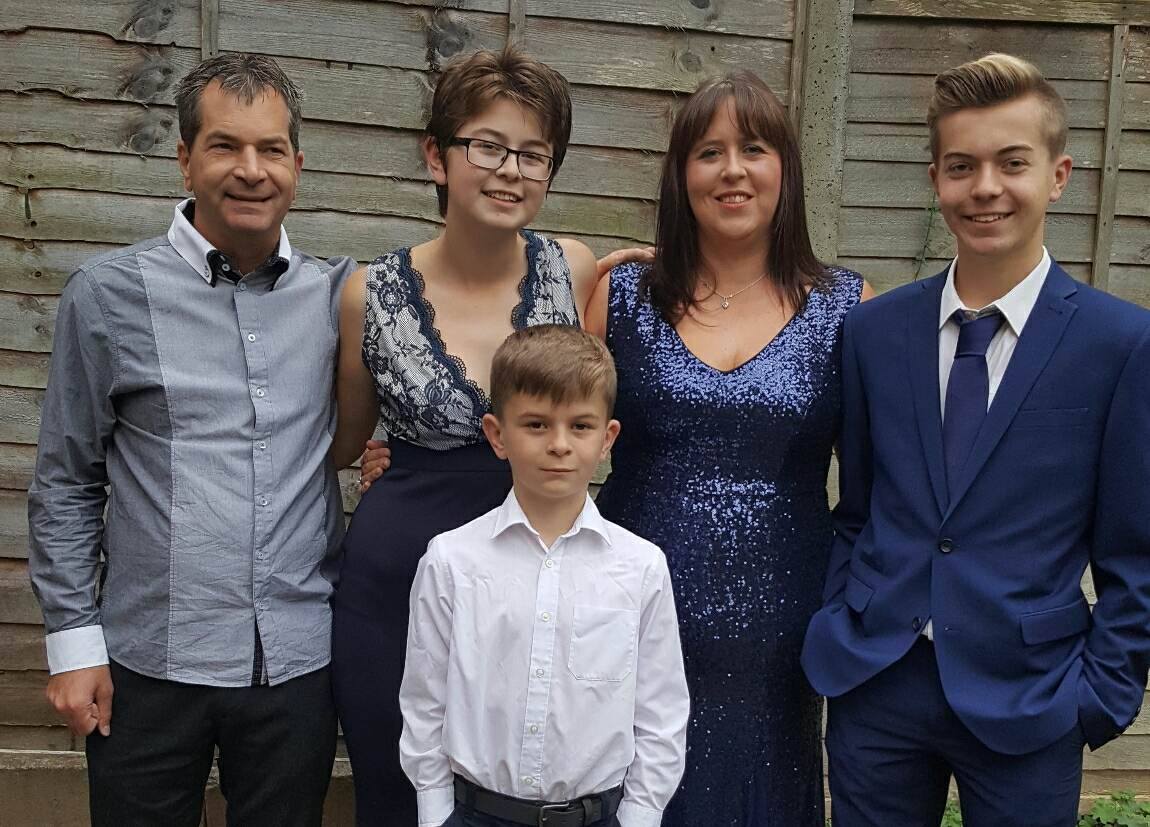
    My name is Mikey and I am 16 years old. I was diagnosed with verbal dyspraxia/apraxia when I was 2 and ½ years old. I live in a village just outside Birmingham in the UK. I finished school last year and I am now doing a level 3 photography course in college. I live with my mum, dad, older sister Becki and younger brother Ben. My family have been a huge support throughout my journey with verbal dyspraxia.

    1. What made you decide to start your facebook page of now 6000 worldwide followers and how have you seen it grow and evolve?

    I started my facebook page 3 years ago after writing a poem called ‘I am the Boy’ about living with verbal dyspraxia/apraxia and wanting more awareness. This prompted a conversation with my mum where she said that the loneliness and not knowing anyone else who shared my diagnosis was the hardest thing to live with. This made me think that if my mum felt this way there must be others feeling the same. I had seen many facebook pages about verbal dyspraxia but they were more about parents asking questions and looking for answers. I hadn’t actually seen one from the point of view of the person living with it. That is when, with support from my mum, I set up my Mikey’s Wish Facebook page. It started off with the aim to raise awareness but the more I shared my story of growing up and living with verbal dyspraxia/apraxia the more I realised that it was actually helping others who shared my diagnosis and their families. I began receiving messages from people thanking me for helping them to understand what their child might be going through and also helping their child realise that they were not the only ones living with verbal dyspraxia/apraxia. I was actually giving them hope for the future. Supporting others, knowing that I am helping others understand their child’s diagnosis and helping them realise that there are others sharing their diagnosis is the most rewarding part about sharing my story on my Facebook page.

    1. How has verbal dyspraxia/apraxia affected or changed you in more ways than just speech?

    When I was younger living with verbal dyspraxia was difficult. Struggling to talk in a world where so much importance is put on speech, watching all those around you find speech so easy wondering what is wrong with you is soul destroying. Then going to school, already feeling different, to then find out that you also struggle with reading and writing even at a young age knocks your confidence. My family and school had to fight to get a Statement of Educational Needs so that the school received the funding needed to give me the 1:1 support and speech therapy that I needed to have any chance of achieving. Even with all this support in place I still started senior school 4 years behind my peers, still feeling different and not good enough. My self esteem and confidence were really low. I was determined to improve. My speech was becoming intelligible and I had great support in school. I had access to 1:1 support in most lessons. Dyslexia was also mentioned throughout my schooling but because I already had great support in place it was decided that we didn’t need to push for a diagnosis. After 4 years in senior school I managed to all but catch up with my peers and I managed to gain 3B’s and 3 C’s in my GCSE’s and managed to secure a place at college doing a level 3 photography course. Even now, at 16 years old, having had amazing support from everyone around me I have huge anxiety surrounding my speech. I can’t bring myself to talk in front of people I don’t know and social situations can be difficult. Having said that I am surrounding by a large group of amazing friends. Verbal dyspraxia/apraxia, I believe, has moulded me into the person I am today. It has made me compassionate, quietly confident and determined.

    1. What would you want people to know about you and others living with verbal dyspraxia/apraxia?

    I would like people to know that those of us that happen to live with verbal dyspraxia/apraxia are just ‘normal’ people. We can understand everything that is said to us. We know in our heads exactly what we want to say but the messages from our brain to our mouth get mixed up causing our speech to become unintelligible. Once our speech becomes intelligible we can then also be left with word finding issues. If you are lucky enough to come across someone with verbal dyspraxia/apraxia just give us time to process what is said and find the words we need to answer you. Take the time to understand us. Not being able to talk does not mean that we are unintelligent. We are intelligent, amazing, hardworking and determined. Just take the time to get to know us and we could end up being the coolest person you know.

    1. What advice do you have for those growing up with and/or living with verbal dyspraxia/apraxia?

    The advice I would give to others growing up with verbal dyspraxia/apraxia is to work hard on their speech but don’t let it get them down. It will be a long, slow road but it will be so worth it. I know that it is hard growing up feeling different but as you get older you will realise that it is the difference that makes you, you. Fighting for a voice, facing adversity and overcoming everything that verbal dyspraxia/apraxia throws at you is what will mould you into the person that you will become. I would not be me or had all the amazing opportunities that I have had if I didn’t have verbal dyspraxia/apraxia and I am proud of who I have become and what I have achieved so far. You are amazing and don’t let anyone tell you any different. Embrace your uniqueness.

    1. What advice do you have for parents of kids with verbal dyspraxia/apraxia?

    The advice I would give to parents is be supportive but not too pushy. Fight to get your child the support they need but don’t make them feel any different from their siblings. My family have always been really supportive but they have never treated me any differently from my siblings. I have been given the same opportunities as them and never been stopped from doing or trying anything. Don’t push too hard with speech therapy. Obviously it needs to be done but try and do it in a way that the child doesn’t know they are doing it. Play family games and make it fun. It’s hard for a child spending all day in school and then come home and be sat down to do even more work, especially when it is so difficult and frustrating for them. Finally, it’s a long, hard road with no quick fixes so celebrate every tiny milestone.

    1. Why is awareness so important to you? What is your ultimate goal?

    Awareness is so important to me because it is the lack of awareness and understanding that is so difficult to live with. Having to explain to everyone you meet why you struggle to communicate or why your speech sounds ‘funny’. Everyone deserves understanding. Young children being called lazy because their speech is delayed when they live with a neurological speech condition is wrong! Parents being told that it is their fault because they didn’t talk or read to their child enough is wrong! Professionals having never heard of verbal dyspraxia/apraxia is wrong! Schools not having any strategies or understanding of how to teach those with verbal dyspraxia/apraxia is wrong! Discrimination in the work place because of some ones speech is wrong! Awareness and understanding of verbal dyspraxia/apraxia is the only thing that will help change all those wrongs. My ultimate goal would be for verbal dyspraxia to be known and understood in every school, college and work place so that those who share my diagnosis will get the understanding and inclusion that they deserve.

    Mikey I can’t thank you enough for this interview but also just for ALL that you are doing to for verbal dyspraxia/apraxia worldwide!  You are an amazing young man who gives me so much hope for Ashlynn and also comfort in knowing she has a worldwide community who has her back.  Thank you for encouraging her and all others!  You have already accomplished so much at 16 and I have confidence that in the future you will see all that you wish to see come true.  Maybe me and my daughter Ashlynn with apraxia will meet you one day!

    To follow Mikey and his story follow him on:

    Facebook: Mikey’s Wish – Living with Verbal Dyspraxia

    Twitter: Mikey’s Wish

    Instagram: Mikey’s Wish


  • SLP Mommy Top 10 posts of 2017

    SLP Mommy Top 10 posts of 2017

    I started this blog in 2012, shortly after my daughter’s diagnosis of apraxia when she was just under three. Since that time, she has made tremendous growth.  She speaks, she speaks clearly, and she can tell me about her day. She can tell me when people are mean to her, what her teacher said that was funny, and what she had for lunch.  These were all things she couldn’t do and I worried she would never be able to do when she was first diagnosed.

    We’ve added more diagnoses through the years including a language disorder, dyspraxia, ADHD, dysarthria, and this year….dyslexia.

    In spite of all of these challenges, watching my now 8 year old daughter wake up each morning and attack the day with happiness, kindness, bravery, and a resilience that is unmatched inspired me to do the same.  I always think, I have NONE of her issues….what’s my excuse?

    This blog/website has grown with an average of 300 visitors daily.  Whether you are a professional, parent, or just someone who cares, thank you so much for following along and being part of my desire to spread apraxia awareness in the hopes of helping every child with apraxia to achieve intelligible speech.

    Here is the Top Ten Countdown to my most read posts of 2017.  Cheers to 2018!

    10. As children walk to find their voice, local news outlets stay silent.

    “I have to say I want to give up sometimes.  It seems like no one is going to care and sometimes the fight just doesn’t seem worth it anymore.  But then I look at these smiling faces who never give up, and like the song says, I need to get up again to see what’s next.”

    9. It feels like home this year: Apraxia Conference 2017

    “Have you ever stopped to think, and then believe, that one person, ONE, could change the life of hundreds; if not thousands, if not millions of others?”

    8. Whatever it takes: A day on the brink.

    “She’s finally in bed. I have the song “Whatever it takes” on again.  Tomorrow is a new day.”

    7. It’s like juggling 8 balls and desperately hoping one doesn’t roll away. 

    “Sometimes I wonder what it would be like to just worry about the speech, or just worry about the motor skills, or just worry about homework or just worry about executive functioning, or just worry about language processing.”

    6. It’s rare so no one cares? Prevalence of CAS.

    “Would it surprise you then if I told you the prevalence rates for Down Syndrome are 1-2 children in every 1000 births.  Sound familiar?  Maybe that’s just because I just wrote that figure for CAS.”

    5. “She’s a puzzle” or…she has dyspraxia.

    “I don’t want professionals to tell me she’s a puzzle.  I don’t want to know that she’s so unusual that her very being challenged your knowledge, or that you are confused by her.”

    4. No, not another diagnosis.  Adding dyslexia to apraxia. 

    “In that moment, my dear readers, I had the same gut feeling I had when that SLP told me back when Ashlynn was 2:11 “Laura this is apraxia.”

    3. The Hulk and Rousey on struggling to speak.

    “Everyone is handicapped either physically, mentally, or emotionally.  It’s all about maximizing what you have.  As a kid I had trouble speaking.  It’s all about overcoming adversity.”

    2. Apraxia, special ed, and grad school.  One woman’s remarkable tale.

    “Whatever you accomplish in life will be perfect, as long as you keep loving yourself for who you are.”

    1. The Problem with School SLP’s

    “They cannot “refer out” or “discharge for lack of progress” as an can be done in private speech. No, the school SLP is expected to figure it out regardless of the lack of resources, lack of funding, or lack of time.”

    Sign up for my newsletter to get all the info related to apraxia, dyspraxia, and dylexia for 2018.

    [wysija_form id=”1″]

    Follow me on facebook: SLP Mommy of Apraxia/dyspraxia/dyslexia

    Follow me on Pinterest: SLP Mommy of Apraxia

    Follow me on Instagram: Laura SLP Mommy

    Follow me on Teachers Pay Teachers: SLP Mommy of Apraxia

  • Happy 8th Birthday Bug Bug.

    Happy 8th Birthday Bug Bug.

    [wysija_form id=”1″]Mr. B,  here is your beautiful baby girl.

    My dad would say this to me EVERY birthday.  I’m not exaggerating.  I was born 10 year after my sister, and it wasn’t customary to hand the baby to the father so early; so when my parents had me and my dad held me for the first time, this phrase was forever burned into his mind.

    My due date was October 16th.  The four days following my due date were excrutiating.  I wanted to meet you so bad Ashlynn.  Each day passed and  you still didn’t come.

    It was a Monday night football game on the 19th of October, 2009. I was having Braxton hicks contractions like I had had all month, but this time I was distracted by the Bronco game!  I paced up and down the hallway trying to forget the pain as I cheered on our home team.

    When the game ended, the contractions were intense but erratic.  Being my first baby, I didn’t know if I should go in or not.  I finally called the on  call doc who said to come in.  Your dad took me to the hospital in a big and burly blue Dodge Ram. The ride was anything but smooth, and each bump brought pain.

    After laboring from 11:00 PM on Monday to 8:00 AM on Tuesday, you were born.  I can remember the exact moment.  I can remember the smell of the room, the blue of the cover, the humanity in the anesthesiologist, and then the moment I saw you.  They raised you up above the cover and I stared at the most beautiful wrinkled sight of red pink skin and tears I had ever seen.  My eyes streamed with tears and so did your dads.

    Our baby had been born to us.

    I have always found it funny since that day, Tuesday, October 20th, 2009, that your birthday was your happiest day.  I mean, I hope it is, and I will do everything I can do to make sure it is.  But, your birthday, and the birthday of your brother; were two of the most happiest days of MY life.

    Today is Thursday.  I am tired.  It’s been a long week. However, every birthday since we’ve lived in this house, I have hung balloons in our hallway for you to pass through on your birthday.  I thought about not doing it, but then I thought, you and your brothers birthdays were the happiest days of MY LIFE.  Losing sleep is a small price to pay to celebrate the happiest day of one’s life.

    So I stayed up and blew up the balloons and I hung them in the hall.  I watched old videos and smiled until tears flowed from my eyes.   I can’t believe you are 8 years old.  I can’t believe just a few short years ago life was so hard that my mantra was “the days are long but the years are short.”  Here we are.  The days were long and I blinked and you are 8 and when I blink again you will be 16.

    I’m so blessed to be your mother.  I want you to know I am ALWAYS proud of you.  Your friendliness undeniable, your determination unstoppable, and your spirit, unparalleled.

    Behind your name are a countless number of diagnoses, but they do not and never have defined you.  You have learned to overcome.  You have learned to press on.  You have learned happiness is found in simplicity.  You have learned that the secret to life is gratitude, and despite all of your challenges, I couldn’t be prouder.

    Happy Birthday “bug bug.”  I love you more than words could ever, ever say; and trust me, this writer usually has a lot to say.


  • Does my child have dyslexia?

    Does my child have dyslexia?

    If you have a child with a speech or language disorder, you have probably heard that they are “at risk” for future learning disabilities.  What are the prevalency rates though, and what does the actual research tell us?

    A study by Catts (1993) is a frequently cited study and found that,

    The literacy outcomes of children with SSD (speech sound disorder) have provided convincing evidence that children with SSD and concomitant LI (language impairment) (SSD+LI) have higher rates of literacy difficulties than children with isolated SSD.

    So what does this mean?  How high are the higher rates and what exactly are “literacy difficulties?”

    In 2004, Lewis et.al followed 10 children diagnosed with CAS (Childhood Apraxia of Speech) and compared literacy outcomes for them into the school aged years along side kids who were diagnosed with SSD (speech sound disorder) and another group who had SSD + LI (language impairment). At follow up, all 10 children with CAS demonstrated co-morbid disorders of reading and spelling.  This was a small sample size, but let me reiterate, ALL TEN children with CAS had future problems with reading and spelling.  Co-morbid rates though can’t be 100% right?

    A study in 2011 by Anthony et.al found that,

    Children with SSDs are at increased risk of having difficulties learning to read (Bird, Bishop, & Freeman, 1995; Bishop & Adams, 1990; Carroll & Snowling, 2004; Catts, 2001; Larivee & Catts, 1999; Raitano et al., 2004; Roberts, 2005; Snowling, Bishop, & Sothard, 2000). In fact, between 30% and 77% of children with SSDs struggle with reading (Bird et al., 1995; Larrivee & Catts, 1999; Lewis, 1996; Nathan, Stackhouse, Goulandris, & Snowling, 2004). Children with SSDs have as high a risk of developing a reading disability (RD) as children with a family history of RD (Carroll & Snowling, 2004), which is remarkable in light of heritability estimates for RD that range from 40% to 70% (e.g., Friend, Defries, & Olson, 2008; Pennington, 1989). The risk of children with SSDs having literacy problems increases with comorbid language disorders (Nathan et al., 2004; Raitano et al., 2004), severity of the SSD (Nathan et al., 2004), persistence of the SSD (Nathan et al., 2004; Raitano et al., 2004), and patterns of articulation errors that do not follow developmental trajectories (Leitão & Fletcher, 2004; Leitão, Hogben, & Fletcher, 1997; Mann & Foy, 2007; Rvachew, Chiang, & Evans, 2007).

    A study by McNeill (2009) found:

    The results indicated that the CAS group had inferior phonological awareness than the ISD and typical development groups. The CAS group had a greater proportion of participants performing below their expected age level than the comparison groups on phonological awareness, letter–sound knowledge and decoding tasks. There was no difference in the performance of the CAS and ISD groups on the phonological representation task.

    In this study, speech sound disorders are all lumped together.  Speech sound disorders include: phonological disorder, articulation disorder, and apraxia.  Depending on the study, anywhere between 30% to as high as 77% of children with a “Speech Sound Disorder” have difficulty learning to read.  That’s the quite the gap right?  There is almost a 50% discrepancy between studies.  So what gives?  Who is more at risk?

    We know every co-morbidity(which is a fancy word for additional diagnoses) increases the risk.  This especially includes children who have a language disorder.  This includes kids diagnosed with “mixed receptive/expressive language disorder,”  SLI (specific language impairment), language disorder, or language processing disorder

    I also bolded the phrase “patterns of articulation errors that do not follow developmental trajectories,” because up until 2007, apraxia was not officially recognized as a distinct childhood speech disorder by the American Speech Language Hearing Association. This is only relevant because the studies this data is taken from all are around 2007 and before; and if you know what apraxia is, it is a speech sound disorder, but also a motor planning disorder that does not present with patterns of errors and may or may not follow developmental norms for articulation.  In the above information, that EXACT description increases the risk for a reading disorder.

    The most recent research is now indicating dyslexia is a phonological processing disorder that parallels the core phonological deficit in speech sound disorders (Anthony et al., 2011). This research is groundbreaking because before we knew the risk for reading disability was higher in kids with SSD’s, but we didn’t have research telling us why.

    The bottom line though is this.

    Any childhood speech and language disorder increases the risk for a future reading disability.

    It would appear that children with CAS are at an increased risk, and those with CAS plus a language impairment or comorbid phonological disorder, are even more at risk.

    Are all reading disabilities then dyslexia?  The short answer is no, but dyslexia is by far the most common reading disability and can manifest in varying severities.  If you read research articles, reading disorder and dyslexia are almost synonymous.  For example in the 2004 article by Vellutino et al., this is the opening statement.

    We summarize some of the most important findings from research evaluating the hypothesized causes of specific reading disability (‘dyslexia’) over the past four decades.

    According to the National Institute of Child Health and Human Development, “reading and language based learning disabilities are commonly called dyslexia,” and according to the International Dyslexia Association,

    15-20% of the population has a language-based learning disability. Of the students with specific learning disabilities receiving special education services, 70-80% have deficits in reading. Dyslexia is the most common cause of reading, writing and spelling difficulties. Dyslexia affects males and females nearly equally as well as, people from different ethnic and socio-economic backgrounds nearly equally.

    The schools do not diagnose dyslexia, although they give all the same tests that learning centers give to diagnose it.  Schools are an educational entity, and thereby give “educational” diagnoses. The educational diagnosis for dyslexia is specific learning disability.  Knowing prevalency data and co-morbidities better equips special education teachers, parents, and other professionals to implement treatment strategies that can include pre-cursory and preventative measures to address potential and additional difficulties later in the child’s academic career.