Category: language disorder

  • Does my child have dyslexia?

    Does my child have dyslexia?

    If you have a child with a speech or language disorder, you have probably heard that they are “at risk” for future learning disabilities.  What are the prevalency rates though, and what does the actual research tell us?

    A study by Catts (1993) is a frequently cited study and found that,

    The literacy outcomes of children with SSD (speech sound disorder) have provided convincing evidence that children with SSD and concomitant LI (language impairment) (SSD+LI) have higher rates of literacy difficulties than children with isolated SSD.

    So what does this mean?  How high are the higher rates and what exactly are “literacy difficulties?”

    In 2004, Lewis et.al followed 10 children diagnosed with CAS (Childhood Apraxia of Speech) and compared literacy outcomes for them into the school aged years along side kids who were diagnosed with SSD (speech sound disorder) and another group who had SSD + LI (language impairment). At follow up, all 10 children with CAS demonstrated co-morbid disorders of reading and spelling.  This was a small sample size, but let me reiterate, ALL TEN children with CAS had future problems with reading and spelling.  Co-morbid rates though can’t be 100% right?

    A study in 2011 by Anthony et.al found that,

    Children with SSDs are at increased risk of having difficulties learning to read (Bird, Bishop, & Freeman, 1995; Bishop & Adams, 1990; Carroll & Snowling, 2004; Catts, 2001; Larivee & Catts, 1999; Raitano et al., 2004; Roberts, 2005; Snowling, Bishop, & Sothard, 2000). In fact, between 30% and 77% of children with SSDs struggle with reading (Bird et al., 1995; Larrivee & Catts, 1999; Lewis, 1996; Nathan, Stackhouse, Goulandris, & Snowling, 2004). Children with SSDs have as high a risk of developing a reading disability (RD) as children with a family history of RD (Carroll & Snowling, 2004), which is remarkable in light of heritability estimates for RD that range from 40% to 70% (e.g., Friend, Defries, & Olson, 2008; Pennington, 1989). The risk of children with SSDs having literacy problems increases with comorbid language disorders (Nathan et al., 2004; Raitano et al., 2004), severity of the SSD (Nathan et al., 2004), persistence of the SSD (Nathan et al., 2004; Raitano et al., 2004), and patterns of articulation errors that do not follow developmental trajectories (Leitão & Fletcher, 2004; Leitão, Hogben, & Fletcher, 1997; Mann & Foy, 2007; Rvachew, Chiang, & Evans, 2007).

    A study by McNeill (2009) found:

    The results indicated that the CAS group had inferior phonological awareness than the ISD and typical development groups. The CAS group had a greater proportion of participants performing below their expected age level than the comparison groups on phonological awareness, letter–sound knowledge and decoding tasks. There was no difference in the performance of the CAS and ISD groups on the phonological representation task.

    In this study, speech sound disorders are all lumped together.  Speech sound disorders include: phonological disorder, articulation disorder, and apraxia.  Depending on the study, anywhere between 30% to as high as 77% of children with a “Speech Sound Disorder” have difficulty learning to read.  That’s the quite the gap right?  There is almost a 50% discrepancy between studies.  So what gives?  Who is more at risk?

    We know every co-morbidity(which is a fancy word for additional diagnoses) increases the risk.  This especially includes children who have a language disorder.  This includes kids diagnosed with “mixed receptive/expressive language disorder,”  SLI (specific language impairment), language disorder, or language processing disorder

    I also bolded the phrase “patterns of articulation errors that do not follow developmental trajectories,” because up until 2007, apraxia was not officially recognized as a distinct childhood speech disorder by the American Speech Language Hearing Association. This is only relevant because the studies this data is taken from all are around 2007 and before; and if you know what apraxia is, it is a speech sound disorder, but also a motor planning disorder that does not present with patterns of errors and may or may not follow developmental norms for articulation.  In the above information, that EXACT description increases the risk for a reading disorder.

    The most recent research is now indicating dyslexia is a phonological processing disorder that parallels the core phonological deficit in speech sound disorders (Anthony et al., 2011). This research is groundbreaking because before we knew the risk for reading disability was higher in kids with SSD’s, but we didn’t have research telling us why.

    The bottom line though is this.

    Any childhood speech and language disorder increases the risk for a future reading disability.

    It would appear that children with CAS are at an increased risk, and those with CAS plus a language impairment or comorbid phonological disorder, are even more at risk.

    Are all reading disabilities then dyslexia?  The short answer is no, but dyslexia is by far the most common reading disability and can manifest in varying severities.  If you read research articles, reading disorder and dyslexia are almost synonymous.  For example in the 2004 article by Vellutino et al., this is the opening statement.

    We summarize some of the most important findings from research evaluating the hypothesized causes of specific reading disability (‘dyslexia’) over the past four decades.

    According to the National Institute of Child Health and Human Development, “reading and language based learning disabilities are commonly called dyslexia,” and according to the International Dyslexia Association,

    15-20% of the population has a language-based learning disability. Of the students with specific learning disabilities receiving special education services, 70-80% have deficits in reading. Dyslexia is the most common cause of reading, writing and spelling difficulties. Dyslexia affects males and females nearly equally as well as, people from different ethnic and socio-economic backgrounds nearly equally.

    The schools do not diagnose dyslexia, although they give all the same tests that learning centers give to diagnose it.  Schools are an educational entity, and thereby give “educational” diagnoses. The educational diagnosis for dyslexia is specific learning disability.  Knowing prevalency data and co-morbidities better equips special education teachers, parents, and other professionals to implement treatment strategies that can include pre-cursory and preventative measures to address potential and additional difficulties later in the child’s academic career.

     

  • Why you are the CEO and CFO in special needs parenting

    Why you are the CEO and CFO in special needs parenting

    A discussion in one of my groups the other day centered around the fact that parents of kids with special needs have to be the CEO on their child.  This extends beyond the idea that we are experts on our child.  The CEO, by definition, is in charge of making all management decisions.

    Parents of children with special needs have to be the CEO, and there is LOT to manage.

    Some days, it can feel unmanageable.  A CEO is typically responsible for the success of a company, which is no doubt stressful; but a parent feels they are responsible for the success of something even greater than a company……

    Parents feel they are responsible for the success of their child’s future.

    I know all parents feel this way about all of their children of course, including those with special needs.  However, the stakes are higher when you have a child with some sort of delay or disability.  A child with special needs is already starting life behind the eight ball.  A parent of a child with special needs feels intense responsibility to give them the best chance at a normal life, which is hard enough in this world without a disability!

    Parenting a child with special needs is a juggling act.

    When a parent has a kid with special needs, they spend their time not only at the pediatrician, but are bounced from specialist to specialist in many cases, just in an effort to get an actual diagnosis.  Kids with special needs in many cases have visited developmental pediatricians (different from regular pediatrician), neurologists, and psychologists. They have had blood taken, scans done, and more doctor visits to discuss results.  They have been poked, prodded, and examined more than the neuro-typical peer.  Their tiny bodies might have been subjected to sleep studies, sedation, and sometimes surgery.

    Therapy is always in the mix.  They may see occupational therapists, physical therapists, speech therapists, play therapists, behavior therapists, early interventionists, vision therapists and the list goes on.  Seeing a therapist always means another new evaluation, where this child who struggles anyway is subjected to tests and judgement calls as to their performance compared to typical peers.

    Obviously, there are only so many hours in a day and so a parent; the CEO if you will, has to choose  and prioritize many of the above listed appointments and even others not on this list.

    Unless you have been in this position, you have no idea how excrutiatingly difficult it is to decide which doctor or therapy your child needs most or more.

    Remember what I said before.  As a person making these decisions, the weight of your child’s future feels like it lay squarely on your shoulders.  Hopefully, you can get an appreciation of how big that weight becomes.

    Let’s not forget though, money.  All of these things cost money.  Insurance in many cases does not cover the brain scans, the MRI’s, the evaluations and the therapies.

    It causes a parent to become the CFO for their child as well.

    A CFO is responsible for the financial affairs.  Oh, and in the case of a parent with special needs, one doesn’t count on paying thousands of dollars out of their budget when they are starting a life with their partner, buying their home, and preparing for a new baby.  I had a supervisor tell me once at a private practice, no one can afford therapy, because no one counted on the huge hit to the budget these therapies, doctor appointments, and evaluations will cost your family.

    If you are lucky to get some sort of disability, Medicaid, or scholarship to help fund the cost; it’s not without another price.

    Time.

    All of these applications take an enormous amount of time.

    Parents need to gather required documentation, letters from insurance companies, doctors, evaluations, tax returns, and medical records to name a few.  A parent will spend hours filling out paperwork, spending time on the phone, and listening to hold music.  This time is well spent if a parent can get insurance to cover or get money to help with expenses; however, prioritizing time and finding time is not easy when we are shuffling our kids to doctor appointments and therapy appointments (see above).  This on top of finding time to put them in “typical” kid stuff like soccer or gymnastics and letting them go to birthdays like other kids do; in hopes that they can feel “normal” at least some of their childhood.

    If we are lucky, there are times we CEO parents find the perfect team.  We’ve got the diagnosis, the plan and team of therapists to treat it, and we see our child do the most amazing thing in the entire world……

    Make PROGRESS

    It’s probably the most beautiful gift in the entire world and in that moment; all the guilt, all the stress, all the worry, all the money, and all the time was 100% worth it.


  • Apraxia would have destroyed me

    Apraxia would have destroyed me

    I often think about what would have happened had it been me who had apraxia, dyspraxia, SPD, dysarthria, and a learning disability when I was young.  It’s pointless I know, but I was/am a perfectionist.  That’s not a good thing.  I learned early I was really good at spelling, reading and writing, but math I had to work for.  I won a math award in 3rd grade and I looked at the teacher, Mrs. Plummer,  like she was crazy.

    “I’m not good at math.  Give this to Keith or Jimmy.”  She maintained I was good at math, but I didn’t believe her and I never cared about that award.  I knew what I was good at, and it wasn’t something I had to work that hard to do well.

    I think about that because Ashlynn has to work at everything to do well.  There’s not like one thing that comes naturally to her….well actually social skills do, but she’s behind in that too only because of her other issues.  I had to work at math so it made me mad and I didn’t want to try, despite the fact I could do well.

    Her disability would have destroyed me.

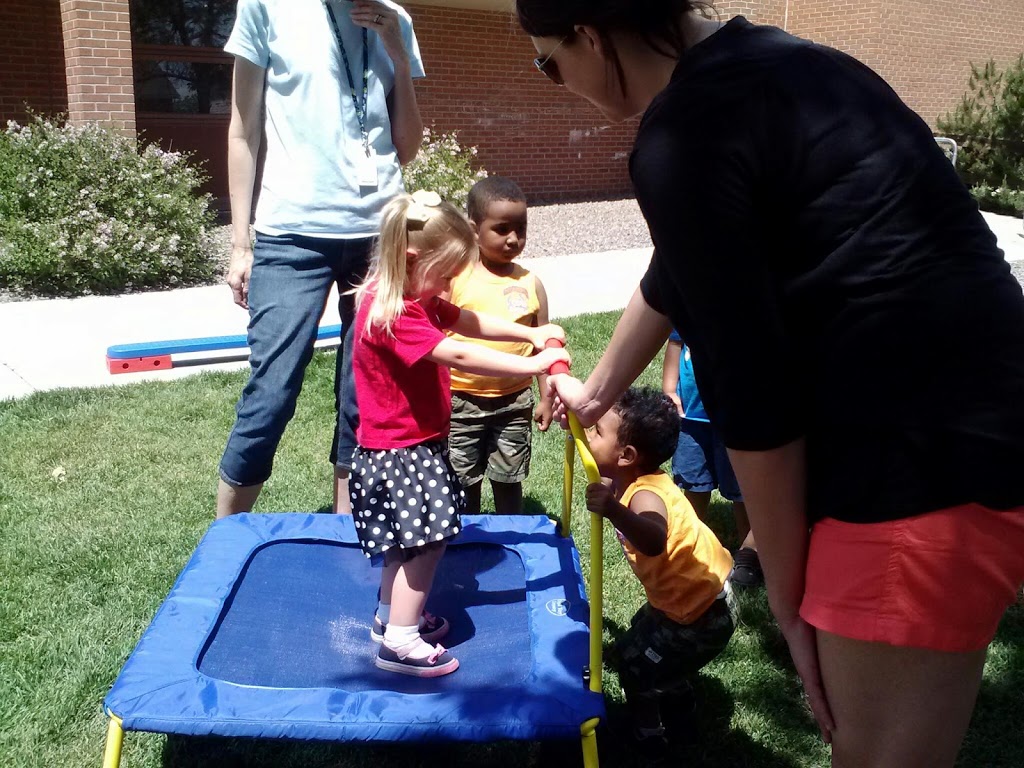
    She has the best of my husband’s personality THANK GOD.  She doesn’t get embarrassed, she attacks everything, she’ll try anything, and she’ll never give up until she conquers it.  That’s a page straight up out of her daddy’s book.  She’s in a first grade performance Tuesday, and I was watching the practice with the art teacher.  I said the songs were hard for a kid with a speech problem (bear necessities, supercalifragilisticexpialidocious) and the art teacher smiled and said she loves Ashlynn because she just goes for it.  I smiled.  It’s true…she does.  She always has.  I can still cry thinking about her preschool observation where she couldn’t jump on the trampoline so she smiled and marched instead.  All the kids were encouraging her to jump like them….

    and she couldn’t bear walk so she hung across a teacher’s arm upside down to at least get a feel for the movement….still smiling.

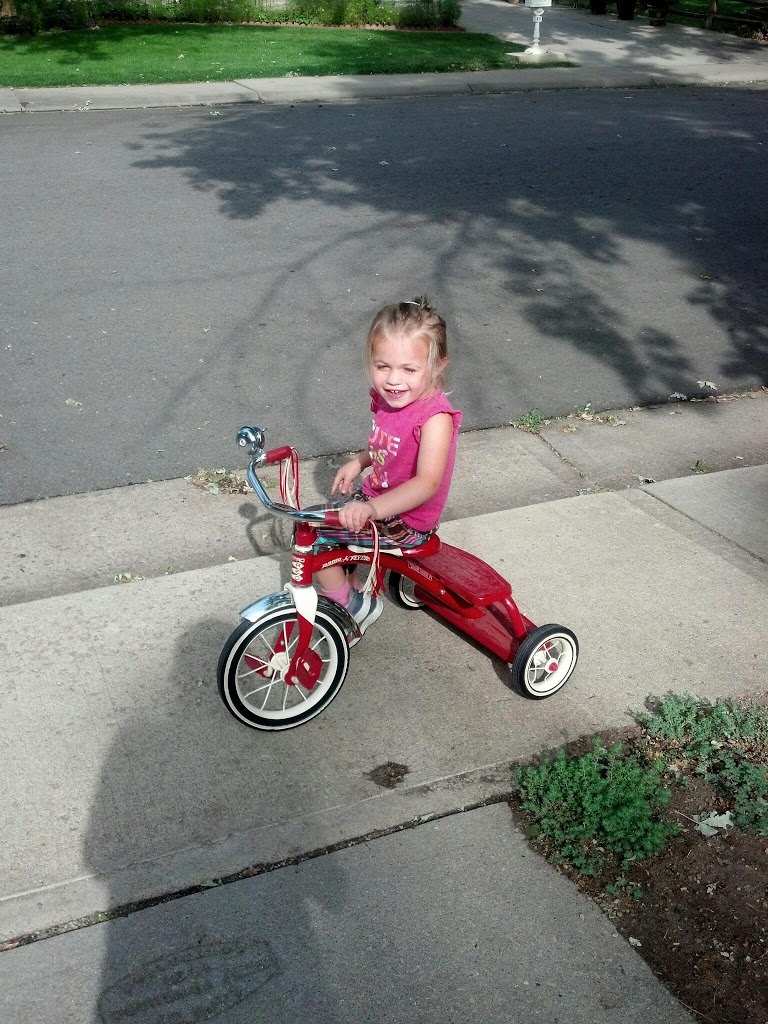
    When she rode her tricycle and couldn’t pedal she never stopped trying……and not only trying, but smiling. Oh, and guess what.  She learned all these skills eventually, on her own time.  She walks, she runs, she jumps, she bear walks, she skips!  She puts me to shame.  She puts that third grade girl who decided math wasn’t her thing to shame.

    Well not anymore.  I’m not sure anyone becomes a parent to be inspired by their child, but she has inspired me and made me better.  There are things I do now I would have NEVER attempted.  Every time I’m scared or nervous, I think about Ashlynn.  One year on a camping trip everyone was cliff diving.  I was terrified as I stood on the cliff, but I thought of Ashylnn and I’m on video jumping and while I’m in the air you can hear me say “for Ashlynn.”

    Tonight we were watching “Zootopia” and a song came on “Try Everything.”  Ashlynn started clapping and dancing around the kitchen.  She always dances like no one is watching.  Isn’t that phrase people have to try and follow?  Well, Ashlynn just lives it.  It’s her essence.

    So I started listening to the lyrics and I’ll be damned if this isn’t that girl’s theme song.  I downloaded it immediately.  (I’m also admittedly a Shakira fan so I was hooked anyway).  We put it on outside and her AND Jace were going crazy.  It’s a great song.

    “I messed up tonight, I lost another fight
    I still mess up but I’ll just start again
    I keep falling down, I keep on hitting the ground
    I always get up now to see what’s next

    Birds don’t just fly, they fall down and get up
    Nobody learns without getting it wrong

    I won’t give up, no I won’t give in
    ‘Til I reach the end and then I’ll start again
    No, I won’t leave, I wanna try everything
    I wanna try even though I could fail
    I won’t give up, no I won’t give in
    ‘Til I reach the end and then I’ll start again
    No, I won’t leave, I wanna try everything
    I wanna try even though I could fail

    Look how far you’ve come, you filled your heart with love
    Baby, you’ve done enough, take a deep breath
    Don’t beat yourself up, don’t need to run so fast
    Sometimes we come last, but we did our best”

    So many times she has come in last but she gets back up and tries again. As a witness to this strength I have no choice but to do the same.  Look how far you’ve come, but don’t keep looking back.  Look up and I’ll walk next to you guys through anything and I’ll pick you up when you fall.


  • The Rise

    The Rise

    I have Ashlynn on a new game plan.  We had to take a break from her private speech because of unforseen financial issues in our life, but now we are back and better than ever.

    She’ll be seeing her awesome private SLP again on Tuesdays (who just happens to be my mentor, friend, and speech mom), and then Wednesdays we have insurance finally paying for 20 sessions, which is not to mention the two sessions she gets at school.

    Last night my husband took her in to the new SLP and she was given language testing.  Knowing I would never be satisfied with his summary, he prudently told the SLP to call me personally.  I had already emailed, called and left messages (oops), but hey.  I need to know this stuff.

    Well, tonight she called.  She was lovely actually.  Experienced.  Moms of kids with disabilities will totally feel me when I say, “I instantly had  a good feeling in my gut about her.”

    She told me she tested Ashlynn in language. I was anxious to hear the results.

    Before I get to that.  Let me set the stage really quick.  Two years ago, Ashlynn was tested at school as part of a re-eval.  The ONLY area, and I mean the ONLY area in the average range was her articulation skills, and even then, it was barely.   Language testing was no exception.  The one area kinda close to at least low average was a the receptive vocabulary test where she was to point to pictures depicting certain vocab words.  It was STILL slightly below the average range.

    I was devastated. Despite so much work at home, Ashlynn’s expressive and receptive language skills were tested to be significantly below the average range.  Beating apraxia at that point seemed pointless.  When Ashlynn actually spoke, most people could understand her now, but her language development was so delayed she still hadn’t really found her voice.  She spoke in scripts she had been taught. Sentence formulation consisted of scripts she’d practiced in therapy. If you have any idea about apraxia, then you know how jacked up it is to wish your child *just* had apraxia, and you might have a greater appreciation of just how damn freaking hard that sweet little girl has to work.

    BUT

    Fast forward to today.  The day I talked with this new SLP.  Ashlynn scored a standard score of 90 and corresponding percentile rank of 25 on the picture vocabulary test!!  DEAD average for receptive vocabulary skills.  My heart was leaping out of my chest.

    With a sympathetic and somber voice, she told me Ashlynn had just barely squeaked in the average range for a measure of relational vocabulary, which is telling how two things are alike.  My heart started singing and I think I took her aback.  I had to hear it again. Wait, she scored in the average range for what?? Tell me again.  Well, it’s the low average range, borderline really, but yes……

    I zoned out.  I checked out and started cheering.  OMG.  I work in the schools with her school SLP and this is what they have been working on!!  It’s working!!  She’s doing it!!  We are climbing!! We are RISING!!  We are OVERCOMING!!  I texted her school SLP.

    “Private speech gave Ashlynn the TOLD and she scored in the 25th percentile for picture vocab and 16th for relational. That’s ALL you.  Thank you for working with her.  I can’t believe it!”

    Her response was golden: “I believe it!  Ashlynn needs the gift of time to develop and mature.  Her brain is working hard right now but it will get easier and better!  Proud mama time!!”

    Um…people..cue the waterworks.

    It took me some time, but I finally found Ashlynn’s village.  I can’t help her overcome on my own, but I found a village who not only believes she can, but is helping her to do it.  There are so many working parts.  There is general ed, and special ed.  There is school speech and private speech. There is private OT and school OT.  There is physical therapy, extracurricular activities, and a legion of family members praying for her.

    Most importantly though, there is Ashlynn.  She is a fighter.  She doesn’t look like one, but she is.  That face is deceiving.  She has this understated determination, this quiet ferocity, and this unceasing resilience.

    It’s good to look back and see what we have conquered.  At times though, it’s too overwhelming to look up and see what’s left ahead.  So in this present moment, we will look a few steps in front of us and as my dad always says, “just keep your head down and working,” and one day, we will reach the top.


  • Ashlynn play boats with daddy.

    Ashlynn play boats with daddy.

    This past Fourth of July weekend we went on our annual trip to Glendo State Park in Wyoming. My husband and I have been going since before we had kids. Without getting into all the details, once you go to Glendo for the Fourth, you always go back if you can! Last year we couldn’t go because I was having my son so we were very excited.

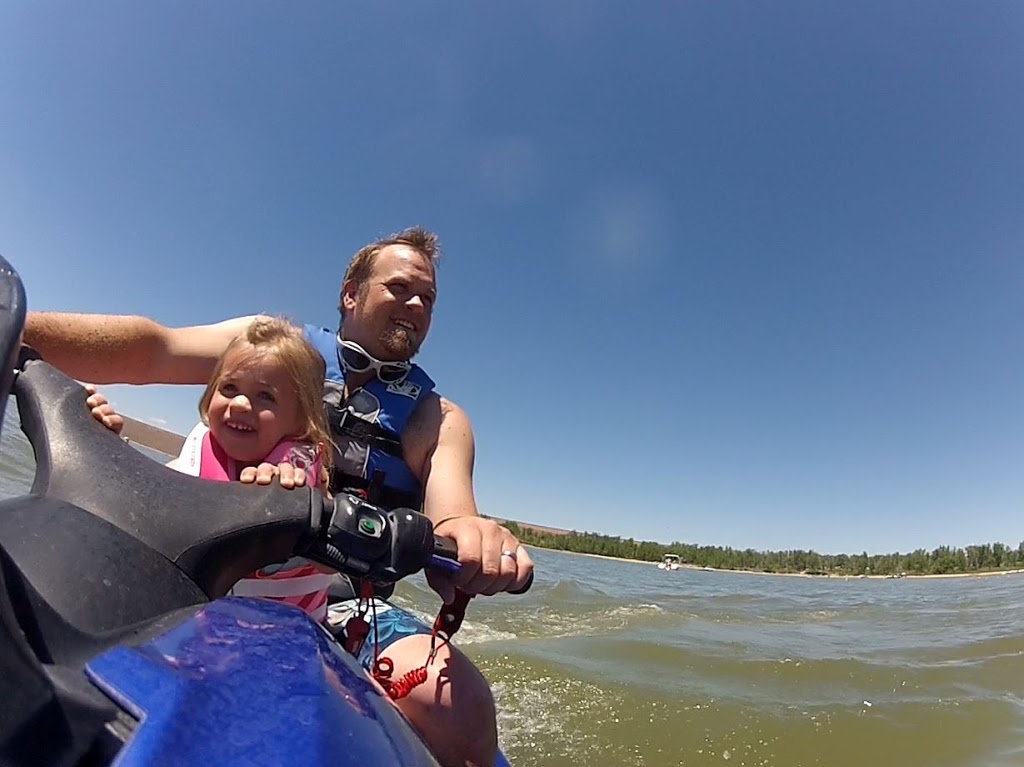
    When we went to the beach, Ashlynn saw my husband pull up on the jetski. She looked at her grandpa and me and announced, “Ashlynn play boats with Daddy?” I teared up immediately. I know I sound like such a sap, but when you are the parent of someone with apraxia and they say things and put novel words together in context, it is just the best feeling! I asked her if she wanted to ride the jetski with daddy, to which she enthusiastically replied “yes.” I of course then scripted the appropriate  way to ask the question and had her repeat, I want to ride the jetski with daddy.

    We still have a ways to go. We’ve been working on her using the first person “I” since before school was out. It’s just such a testament to how much repetition a child with apraxia needs, because I correct her and make her repeat her phrases and sentences using “I” every time she refers to herself as Ashlynn. We were so intent on getting her to learn her name that now it’s hard to get her to use something else.  However, I do know that she will get that too, and that’s a comforting feeling.

    Two years ago we took her to Glendo when she was 21 months old. At that time she had just learned to start walking really well and she only had a handful of word approximations. Unfortunately, anything that wasn’t a flat surface was difficult to walk on, so we still had to help her walk everywhere. She only had a handful of word approximations, and her favorite thing to say was “a dah.” and “hi.”  I’ve learned from my parent support group that most kids with apraxia have a go to sound that they use for everything, and “a dah” was Ashlynn’s.

    Fast forward though two years (and a lot of therapy and extracurricular activities to work on motor skills) and she was running on the beach and bending down on the sand. She is still unsteady in the waves and can’t be trusted around the fire pit for fear she will lose her balance and fall, but that will be a progress report for another time. For now, we celebrate that in two short years, a dah was replaced with a complex sentence asking to play boats with daddy, and now she fearlessly got up on the jetski.

    I look forward to coming years when she will be navigating around the campsite without fear of falling, swimming in the water, and maybe waterskiing or jetskiing on her own.  Also, I excitedly anticipate her talking our ear off around the campfire.