Category: #knockoutapraxia

  • Ronda Rousey changes public perspective about disability

    Ronda Rousey changes public perspective about disability

    In the facebook group, Ronda Rousey: #knockoutapraxia, I love hearing from people who were inspired by Ronda, and recently, a member named Shawna posted that she wrote a school paper on the very subject.

    When I met Ronda and wrote my article, it was never about making her a spokesperson for CASANA (even though Ronda that would still be awesome if you are reading this).  It is the fact that parents, who experience many dark, lonely, and worrisome hours when their child is dx with a rare disability people don’t know much about, can see someone who made it out on the other side, and did so successfully.  That was my goal along with raising awareness.  The goal was HOPE and INSPIRATION.  Love this story.  Thanks Shawna for sharing!

    For this journal I chose an article about Ronda Rousey because she has apraxia of speech.

    Ronda is an example of changing public perspective about disability because she became famous before anyone ever learned of her condition.  My youngest son has apraxia of speech.  When he was younger I was obsessed with understanding his potential outcome.  He began intense speech therapy shortly before his second birthday.  By this, I mean I took him to three different therapists, four days a week for intense one-on-one sessions.  I wanted to know how it might help him because having your two year old committed to such a schedule can make you feel awful about forced learning.

    Ronda’s story is an example of how a person can overcome a tremendous amount of social anxiety and change how the public views disability.

    Within this article we learn how Ronda experienced anxiety related to public speaking and had her sister help her at speaking engagements early in her career.  To know that she was possibly affected, at birth, by deprivation of oxygen which led her to have this condition is paramount.  The general public tends to assume if someone sounds differently-abled then they must have a mental deficit.  To see Ronda achieving great things in life while dealing with a communication issue helps people understand disability has many different meanings.  Tragically, many people will excuse a disabilities importance if they can find a way to blame it on a factor such as environment or self infliction.  I do not agree with this perception, but having Ronda talk about how she was given this disorder by no other contributing factor than deprivation of oxygen, forces people to accept it.  The public views her as competent in all areas of life including her ability to speak. Therefore, she is educating the general public in a way they do not realize.

    She’s obviously beautiful and a lot of men would like to date her.  Some might shy away from her if they heard her struggling to speak.  They would be uneducated enough to assume she has mental disabilities.  She has presented herself as a strong, successful fighter and now we learn of her struggles to speak. 

    Before anyone knew her disability they knew only of her abilities. 

    I think this personal story of Ronda might encourage people to be more compassionate.  If you watch her interviews there are moments where you see her still struggling to find words.  I would never have the deep understanding of facing a communication disability if I did not witness it firsthand from someone I love with my whole heart.  In the article she talks about how her sister remains someone who speaks for her when she has moments where the words will not come out of her mouth.  In general, everyone has some minor symptoms of apraxia. Have you ever struggled to remember the name of an actor in your favorite movie?  You can see their face but you cannot recall their name?  Does it ever frustrate you so much you have to grab your phone to Google their name?  That is what it is like for someone with apraxia to even make sounds for speech.  For the public to realize someone as big and strong as Ronda faces adversity with something we all tend to take for granted, undoubtedly leads to understanding.

    The correlation between Ronda being an MMA fighter and the struggles of all children with apraxia of speech does NOT go unnoticed within the apraxia community I am deeply involved with. 

    For us, being able to show our children someone they can relate to, and show their success in every aspect of life, is difficult to express in words.  Apraxia is also something diagnosed in adult stroke victims-people who once had an ability to speak but now struggle with words to define things they know full well the meaning of.  These are people who fight to develop or regain skills we are normally given with ease.

    The analogy of her fighting and the fight of all people struggling to communicate does not go unnoticed.

    In closing, this is an issue I have a difficult time speaking about. Ironic, given the struggles of a population trying to learn how to communicate basic wants and needs.  When I first learned of Ronda’s diagnosis of apraxia I immediately looked for videos of her speaking.  I thought, “This is someone who is already a success in the eye of the public. To hear her speech and to know her struggle will encourage compassion because people will see she has all her other abilities.”  This is a big deal for the apraxia community.  Families of those struggling with apraxia feel like info-mercials. 

    |Some of us have been known to hand out pamphlets about our child’s condition just so that people will quit staring in public. 

    I have been known to give out little business cards with a brief description of my son’s condition.  Not only to get people to quit making him feel anxious, but to make people see that you never know the struggles of the person next you in line at the store.  Ronda is helping people to have empathy because she expresses her social anxiety.  She is a person who could knock someone out for making fun of her, yet she talks about shutting down and becoming overwhelmed with emotion when faced with communication struggles.  That is profound when thinking of others and their struggles.
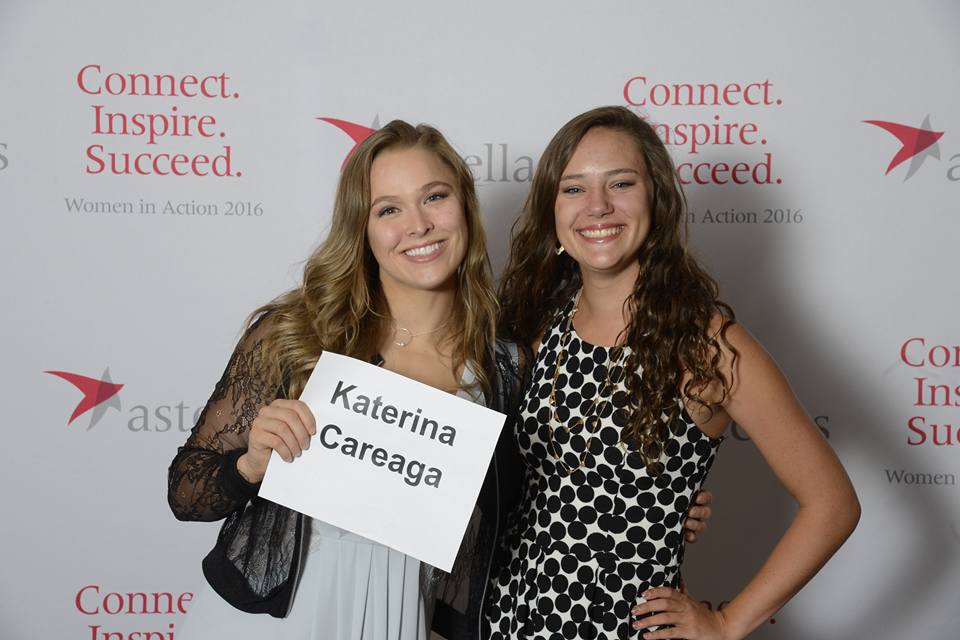
  • The day I met Ronda Rousey, and she told my sister to “keep fighting” for her words!

    The day I met Ronda Rousey, and she told my sister to “keep fighting” for her words!

    Hi Katerina!

    I’m so excited to have you here today.  I saw in the Ronda Rousey #knockoutparaxia your mom posted a video of you attending a Women’s Leadership Conference in Chicago where you were able to ask Ronda a question about apraxia and meet her in person.  Can you explain to my readers why you wanted to go to this?

    Back in May, I was sitting at my school’s awards assembly when I got a text from my mom, telling me that I had been invited to the Astellas Women in Action conference in Chicago by a family friend who works for Astellas. My first reaction was “OMG, yeah!” I couldn’t tell my mom though, because I wasn’t even allowed to have my phone! (oops.) My mom was so anxious for an answer she came to my assembly and found me in the bleachers! It was a huge opportunity that a girl like me doesn’t get very often, so I said yes right away!

    Before the conference, the company launched an app that connected everyone attending. It was a smart idea, because there were people flying in all around the world for this conference. And in the app, you could compete in little “competitions” with everyone. There was an “Ask Robin” and “Ask Ronda” competition, as well as a selfie contest. The “Ask Ronda” contest was the only one I competed in, and I only entered one question. “My sister has been diagnosed with apraxia, a disability you once had. From your experience, what can I do to help her succeed?” And that was the beginning of this amazing experience.

    I think it’s so amazing that as a sibling you have so much concern for your younger sister you were prompted to go to this.  In the video you took, I heard you holding back tears.  We don’t often think about how apraxia can affect the siblings.  Can you tell us why you were so emotional?

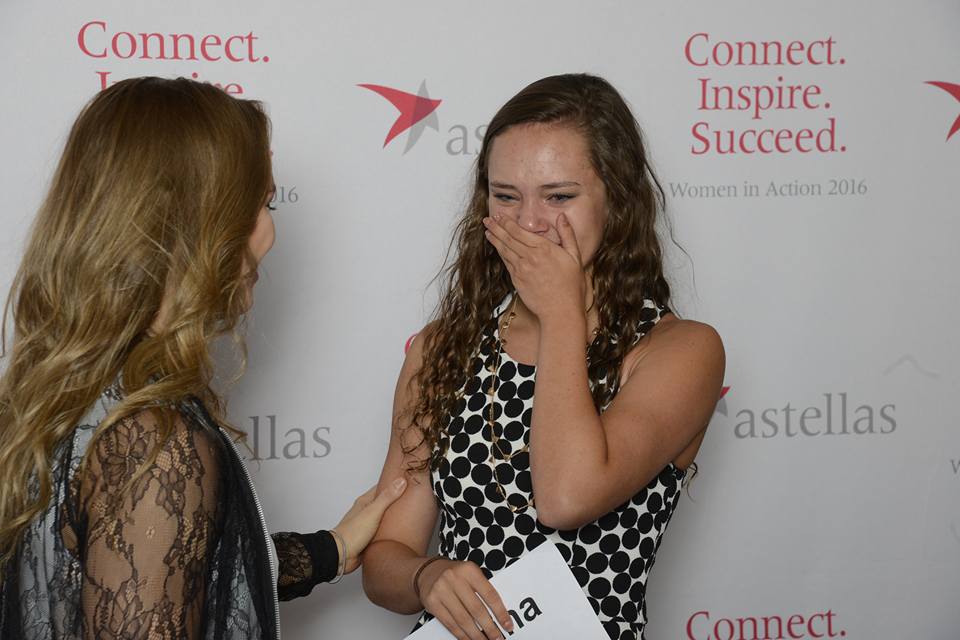
    Well, I had a bit of a rocky start at the conference. My flight had been canceled, my mom and I drove to Chicago instead, and I was very tired. I had a whirlwind of emotions all weekend, and when Robin Roberts announced her name, I immediately started crying! And that was even before the interview! I had no idea that the one question I submitted would be chosen out of hundreds, and the way Ronda answered it answered a lot of personal questions I had. I knew how to help my sister when she was younger, but I have no idea how to help her now and in the future. My little sister is in first grade, and other kids are already asking one of my brothers (grade 4) why his little sister is stupid. And it hurts because I had no idea how to help her succeed. But thanks to Ronda, I know how, and just the thought of that makes me very happy and emotional.

    You were able to go back and meet Ronda! What was that experience like?  What was Ronda like?

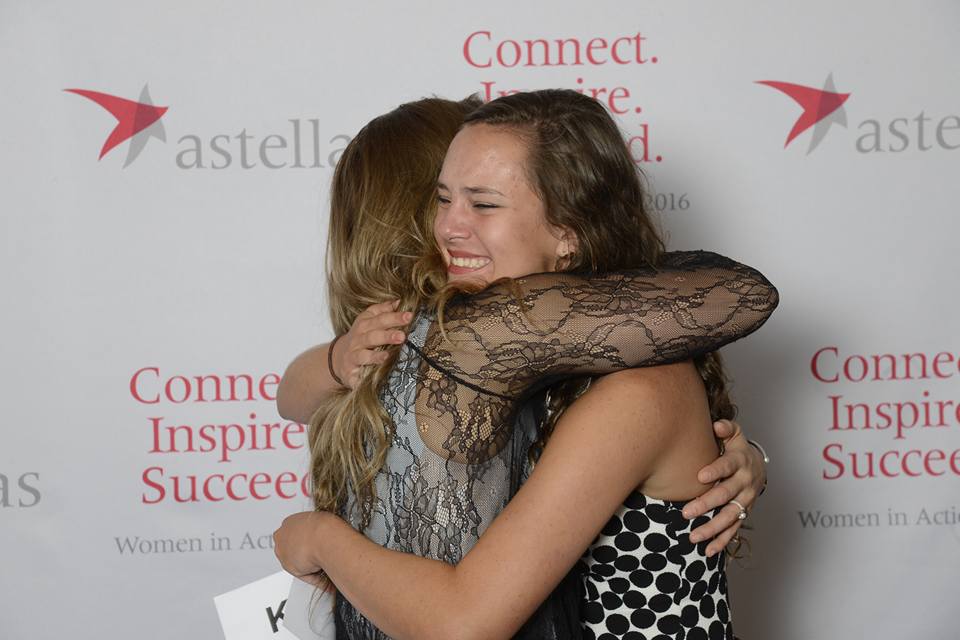
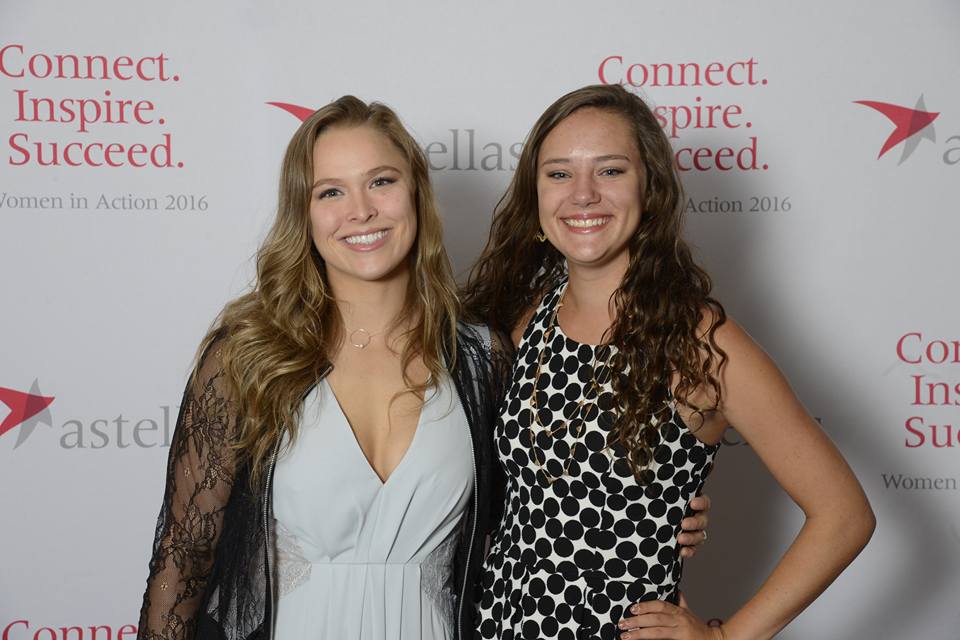
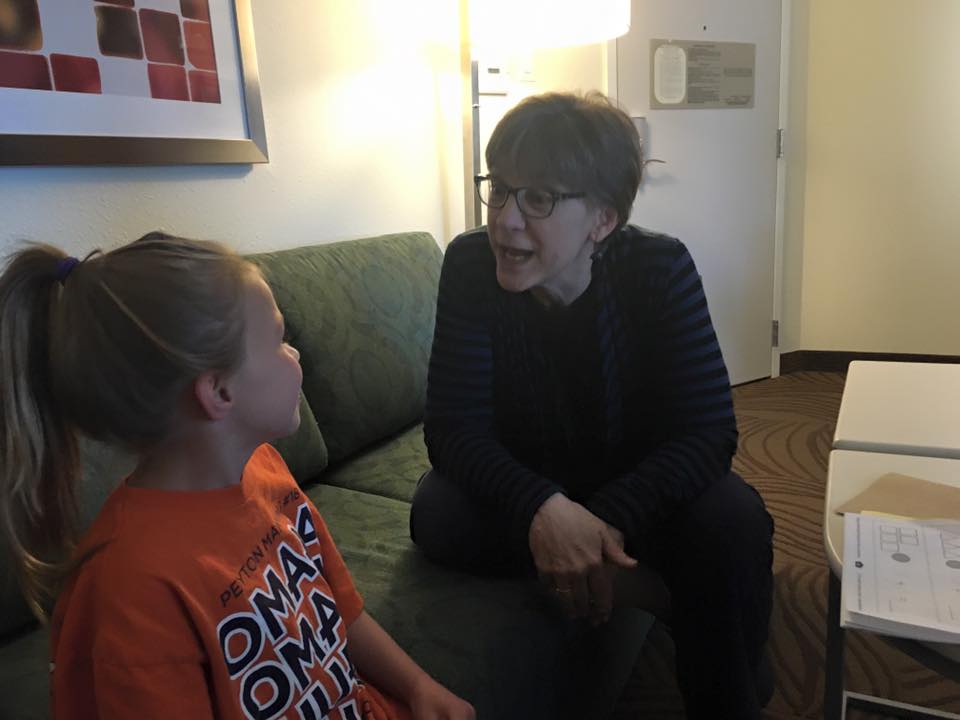
    The whole experience was just amazing. When I walked into the room for the photo opportunities, I immediately started crying again. I made a security guard tear up a little bit too! Actually, I don’t think I stopped crying until that afternoon because the whole experience was so surreal. Ronda was so sweet the entire time and kept hugging me, and telling me I was an amazing older sister for asking my question.

    What did you learn (if anything) from this experience?

    I had no idea my little 2 minute video would affect so many people, and it puts into perspective how many families have loved ones with apraxia, and are going through the same things my family is. I’m so glad I could help others with my own experiences!

    13770264_10209187233773060_6637643273288338583_n
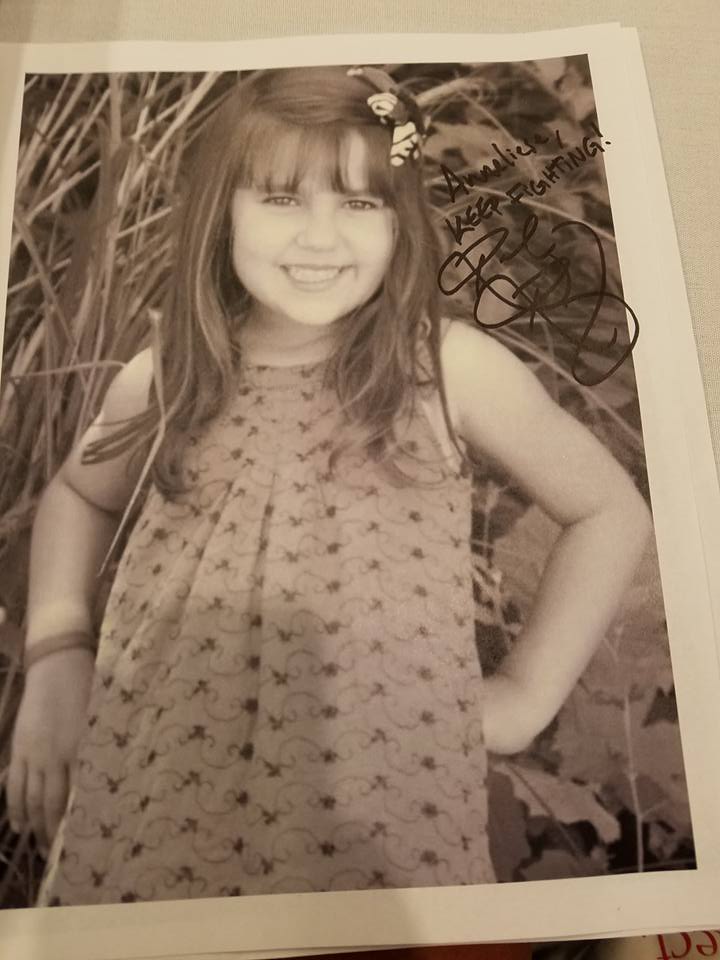
    Autographed picture by Ronda Rousey encouraging Katerina’s sister to “keep fighting!.”

    You experience resonated with so many parents and families!  For me, I can so appreciate your description of Ronda.  She was the same with me and my daughter; sweet, kind, and genuine!  Thank you for telling your story.  You are obviously an AMAZING young woman, and your sister is so lucky to have you in her corner!

    13769600_10209215987651889_6720564369997804624_n13775429_10209215987851894_3052223350579417984_n13726615_10209215988491910_4431537346054282392_n 13770369_10209215988051899_2918489909754762781_n


  • Serendipity, coincidences, and Childhood Apraxia of Speech

    Serendipity, coincidences, and Childhood Apraxia of Speech

    I just gave a talk at Bowling Green University this past week.

    13000123_542057462642586_2027650629331159215_n
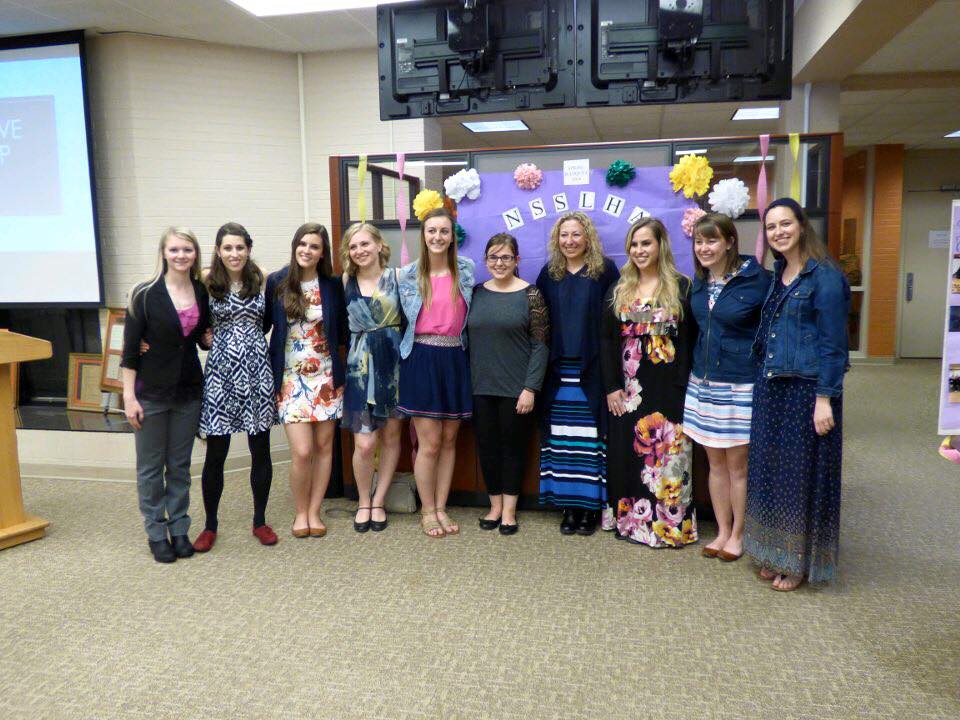
    The NSSLHA crew at Bowling Green State University!

    Since the talk was to undergrads, I talked about my serendipitous journey to becoming an SLP, and why I am a firm believer in listening to “coincidences.” The talk then culminated with my story about meeting Ronda Rousey.

    For my final slide, my takeaways were to believe in serendipity and to listen to coincidences.  Life is more eerily connected than people think.  Another perfect example happened tonight, but before I talk about tonight, it’s important to take you back to 2005.

    Serendipity and coincidence found me in an SLPA (speech/language pathology assistant) position under the tutelage of an SLP named Deborah Comfort.

    1917925_1196257979188_1787516_n
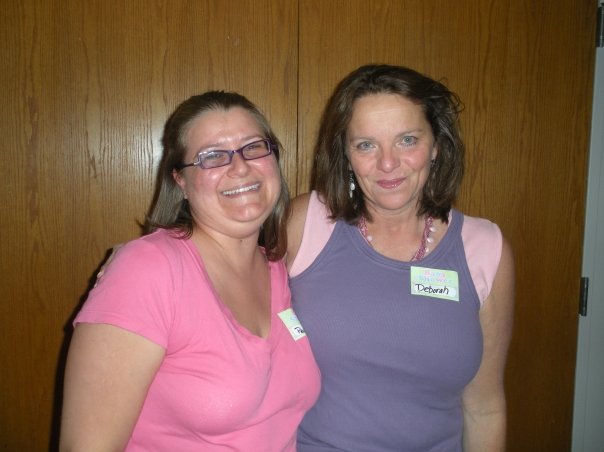
    Deborah is on the right with a good friend and SLPA Pearl on the left

    In 2005, I was starting my first year of graduate school thanks to her unrelenting push and unwavering belief that I should become an SLP; something I never planned on doing.  That year, a 1st grade boy with apraxia showed up on her caseload and she wanted to refresh her knowledge.  Knowing that kids with apraxia need more frequent therapy, she put the child on 3x a week, and I was partly assigned to her so I could provide the 3rd day of therapy, since she was only in the building 2x per week.  She asked the principal to pay for an apraxia workshop coming to Denver and also requested I go as well since I would also be seeing the child.  That workshop was given by Ruth Stoeckel out of the Mayo Clinic in Minnesota.

    Fast forward to today, April 24th, 2016.  A little over 10 years later.  I have now have a daughter with apraxia and Deborah Comfort is her private SLP.  Ruth was back out in Denver today because she is giving a talk to Children’s Hospital tomorrow, and I found myself at her hotel with my daughter Ashlynn.

    13062231_542901615891504_1629672816954912335_n


    How bazaar is that?

    Pretty bazaar if you don’t believe in serendipity or listen to coincidences.

    I met Ruth again when she was in Denver in 2013 for the Apraxia National Conference.  I remember going up to her, stammering about how much I appreciated her and all of her work.  She was having wine with friends and smiled politely at me before saying thank you and returning to her conversation.

    Embarrassing!

    That wasn’t the last I would see of Ruth though.  I learned about CASANA’s apraxia intensive training institute while I was there, and (coincidentally) was accepted.  Guess who was my mentor?  Yup.  Ruth.

    Since that time she has entertained all my emails I have sent her that have had videos of Ashlynn accompanied by a paragraph of symptoms related to another neurological disorder called dysarthria.  Ruth is not only an apraxia expert, but working at Mayo she is an expert in motor speech disorders, of which apraxia and dysarthria are both.  I have always thought Ashlynn had dysarthria, but I have only known one child with it and he didn’t have apraxia.  Ruth would know for sure.  Ever the expert though, she would refrain from giving any sort of diagnosis over video.

    A few months ago, after I sent her yet another question, she told me she would be coming to Denver again in April and would be willing to see Ashlynn while she was here.

    The verdict?

    Ashlynn has oral and verbal apraxia haha.  Yes, I just laughed.  Four years ago, I cried at that diagnosis.

    What a difference those four years made.

    She has expressive language disorder (yep) and word finding difficulties (double yep).
    Ashlynn also has mild dysarthria.  I nodded my head.  I knew it all along.  I just needed it confirmed by an expert who had actually seen it before in a child with apraxia.

    Dysarthria is a tricky disorder.  It can manifest in many different ways and in many different speech subsystems.  In Ashlynn though, it is the cause for her messy eating, difficulty with managing her saliva, especially when she’s talking and it pools at the corner of her mouth, and some overall imprecision in her speech.  Those are HER symptoms.  However, that doesn’t mean every child who presents like that has dysarthria. (just my qualifying statement.  Don’t dx over the internet!).

    The treatment approach really isn’t that different at this point.  Although, I did get GREAT tips for her residual errors.  Ruth recommended to work on her residual artic errors now (even though language is a concern and seems to be the priority), because kids like Ashlynn are only getting these plans further ingrained in their system.  That means I need to start working on the lisp now.

    All that aside though, think about this for a minute.   Humor me, if you will.  More than ten years ago, I met a woman who would become my future daughter’s SLP.  My future daughter, would have apraxia, the same disorder I was helping her future SLP treat in a young child, which brought us to a workshop given by Ruth Stoeckel, who is now seeing my child and is determining if she also has dysarthria.

    Maybe it’s just me, but that seriously blows my mind.

    What would I have said to 24 year old Laura?  Childless Laura.  Not yet an SLP Laura. Had I visited her from the future, could she have ever believed me if I told her she WOULD go to grad school some day.  She would have a child, a child who would have apraxia.    A child who, some ten years later, would be seen by the very expert giving a talk in the room she was in where she hearing about apraxia for the first time.  A child who would be seeing the SLP sitting next to her on a weekly basis.   That SLP, the sole person responsible for getting her (Laura) to college to get a degree in speech/pathology when she had NO intent of getting that degree.

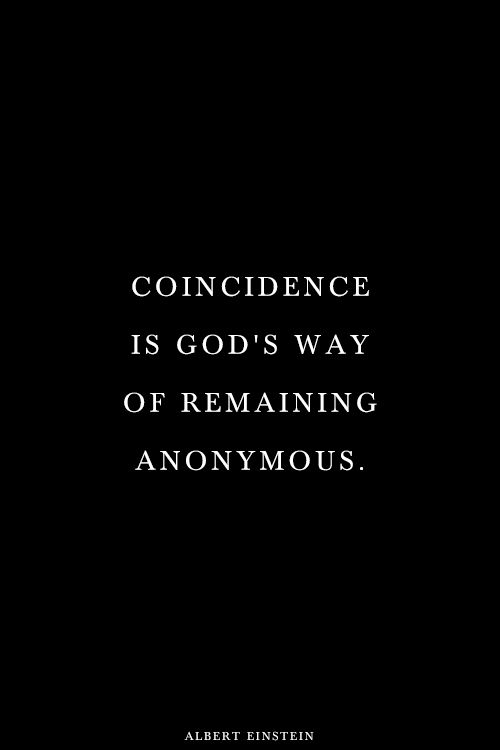
    I’ll say it again.  That seriously blows my mind.  I’ll quote Albert Einstein again,

    6266f7e061f3b1d04a3617ed8c1585fc

    Yes.  Life is more eerily connected than we think.

    If you follow my blog, you know now even more why I don’t believe in a coincidence, and why I went and met Ronda Rousey that fateful day.

    I leave you with what I left the undergrads at Bowling Green:

    • Believe in serendipity
    • Listen to coincidences…and
    • “When it comes to challenges, I honestly believe that things happen for a reason,” Rousey said. “At the time, yes, it’s hard on a personal [and] emotional level, and it’s hard to look past what’s happening to the future; but you have to believe in yourself – because down the line in two, five, ten years’ time, you’ll look back and think that was actually the best thing that ever happened to me.”
  • It all happened, Apraxia or Not

    It all happened, Apraxia or Not

    We went on vacation for Spring Break. I took a picture of me and my girl on an amusement park ride:

    20160329_181611105_iOS

    She told me the chairs we were sitting in were “penguin chairs.” Two years ago she couldn’t do that. Mark a noun with an adjective like that. Adjectives let us be creative with our speech. She barely had the basics down, but I was still happy then because she was talking.

    My time hop showed me this picture today.

    baby A
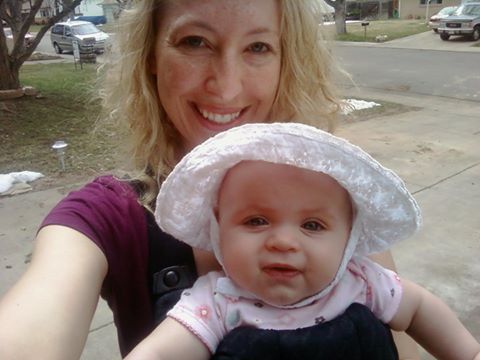
    This was before I knew the no-no’s of baby wearing so don’t judge! My son was the happy recipient of a moby…..

    Anyway, I digress. She would have been six months here. I had no idea she had apraxia in this picture.  I  look so happy. Haha. Just kidding, it’s not that apraxia made me sad….okay never mind, it DID make me sad, but the point is I’m also happy in the first picture. I’m also wiser and more compassionate. So is my daughter. Apraxia is in our life, but it isn’t our life. I’m still as happy with her now as I was back then. Apraxia didn’t change that. Her words or no words didn’t change that.

    She keeps growing and maturing in spite of apraxia. She’s no different that way, and I’m still the cliche mom who shakes her head and wonders where the time has gone. The days are long but the years are short, and I try to remember that on the days I am fraught with worry. Suddenly six years have passed and I went from having a new baby to a school aged girl, and in another six years I will have a pre-teen, and then in another six she will be 18 and beginning to embark on her own path; and it will all have happened with apraxia or not.

    I love this song by ABBA. I think of it often, especially on the days Ashlynn seems more grown up.

    Sometimes I wish that I could freeze the picture
    And save it from the funny tricks of time
    Slipping through my fingers
    Slipping through my fingers all the time
    I try to capture every minute
    The feeling in it
    Slipping through my fingers all the time

  • The day she had enough!

    The day she had enough!

    When I was in 1st grade, a little boy kept kissing me on my head.  After the third time, I told my mother in exasperation.  I explained that even though I kept telling him to stop, he still kept doing it.  That night, both my parents had decided my mom would go to school the next day and let the teacher know and put a stop to it.

    “Nooooo,” I remember begging.  “He’s trying to be nice!”

    “You just said you don’t like it and you want him to stop,” my mom said matter-of-factly.

    “Yes, I know, but if you go in there he will get in trouble and I don’t want him to get in trouble,” I pleaded.

    My parents stood firm.  No meant no.  The boy did get in trouble, and I did feel terrible, but as a woman now, I realize the message that sent to me then.  No meant no…everytime.  Even if I thought someone was trying to be nice, no still meant no if I didn’t like it.  I didn’t have to pretend.  I shouldn’t pretend.

    My 6 1/2 year old daughter with speech apraxia got in the car last Friday.

    “I’m tired mommy,” she sighed.

    Oh no.  My senses went on alert.  She never says she’s tired, like ever. She must mean she’s sick.

    “Are you sick honey?” I probed.

    “No.  You know E?  He hits me and bats at me, and GOSH! I AM TIRED!”

    Oh wow. She means she’s tired of someone bothering her.  I asked if she had told the teacher and she said no.  I asked if the teachers had seen it, and she said no.  I told her to tell the teacher, and she just said ok with an unconvincing smile.  She told me again she was tired, and then said,

    “I don’t like him mommy.”

    Wow!  Ashlynn has NEVER said she doesn’t like someone.  Not even to me or her dad or her brother when she’s mad.  I kinda chuckled inside.  I recalled a conversation between the boy’s mother and Ashlynn’s grandma in which the mom had said how much E loves Ashlynn.  He’s obviously acting that way because he likes her.  I was about to say that when I thought of this meme I had seen on facebook about a month ago:

    910a445ef6b34f94d9f91842afe6b2ec

    No means no.  It didn’t matter if he liked her.  I told her I would talk to the teachers Monday and she seemed visibly relieved.  It’s hard to know all the time because of how much apraxia impacts her word finding, but I could see in the rear-view mirror her entire body heave a sigh of relief.  This girl who has always maintained everyone is her friend, this girl who when she was bullied in preschool still maintained the bully was just, “sad,” this girl had had enough and needed help.  I’m so glad my response was to tell a teacher and not tell her he’s just being mean because he likes her.

    No means no, Ashlynn, everytime. A boy who loves you is a boy who respects you, and I will always have your back on that one.  I’m just so thankful you had the words today to tell me, and that I understood.


    10418541_10207040829991763_2521707221450008513_n


  • Finding all the wrong words or no words at all.

    Finding all the wrong words or no words at all.

    I think one thing, well actually I KNOW one thing I never knew about CAS before Ashlynn, was the significant difficulty kids with CAS tend to have with word finding.

    Ashlynn and all of my clients struggle with this to varying degrees.  Sometimes, Ashlynn’s seem innocent.  She’ll call me grandma after she’s been with her grandma all day.  She’ll say “today” when she really meant “tomorrow,” or say “tomorrow” when she really meant “today.”

    Sometimes though, despite being able to speak, “finding her voice” as we like to say, that doesn’t always mean she can find her words.  This is especially true when she is sick, tired, or both.

    I received a text from a friend a couple weeks ago.  Her son is a year older than Ashlynn, still in speech, but talks non-stop now.

    “I debated calling in today and letting G stay home.  He was just not himself this morning.  He said, ‘No school. I can’t.’  He walked down the hallway with drooping shoulders.”

    I asked her why.  She didn’t know.  That’s all he said.  “No school.  I can’t.”

    My response?

    “Stupid apraxia.  Even when they can talk, they can’t verbalize everything they are thinking/feeling.”

    A few hours later she texted me that G was sent home from school because he was sick.

    My daughter used to become overheated in her carseat.  It would cause her to throw up, but she would only tell me, “my neck hurts.”  I became really good at diving to a shoulder when Ashylnn’s “neck hurt!”

    Today I had the day off with both of my kids.  It was great!  We played, relaxed, and even took a nap.  Aren’t they cute?

    12813978_10206896459142582_2658989607059906506_n


    Ashlynn NEVER takes naps anymore, so I should have known something was up then.  She went to her private swim lesson tonight, and then we all went out to dinner.  I spent most of the dinner in the bathroom with her.  She kept thinking she had to go “potty.”  We walked around, we jumped, we danced, nothing.  She started saying she was tired.  She NEVER says this. I asked her if she felt sick.  She said no.

    We drove home, gave her a bath, and she went straight to bed.  I rubbed her back and asked her again if she felt sick. Did she feel like she was going to throw up?  Did her tummy hurt?  She just shook her head no.

    I went out to the living room, and not 5 minutes later I hear coughing and she is throwing up.

    Sigh.

    Not that it matters I guess whether she had told me she felt sick or not.  It’s not like the outcome would have changed; but it is a glaring reminder of how speaking intelligibly and finding her voice, did not fix everything like I thought it would.  She will still struggle to find her words.

    I remember listening to a Ronda Rousey interview, and she was saying that when she received a bronze medal in the Olympics she was a young girl in her teens and people wanted to interview her.  She would beg her mom not to make her do it.  Her mom made her do it anyway, but her older sister would sit behind her chair, and when Ronda couldn’t find her words, her sister whispered some to her.  Ronda doesn’t do interviews anymore with her sister behind a chair, and that gives me hope.

    For now though, I’ll file away this event in case I need it later.  Just like I did when Ashlynn’s neck hurt.  I always say a mother is an expert on her child, and this is why.  Only I know these signs.  Only I was there through all of these situations and experiences.  ALL of them.

    Next time, I will know she needs to throw up and I’ll be prepared.

    I’ll give her the words when she can’t, or is just too tired to find them herself.  I will know because I have always listened and I will always listen to way than her words, and I always will.

    12687891_10206775282433240_6331308953531011615_n