Category: Growing up with CAS

  • Had it not been for Ashlynn: Head to Sophomore year

    Had it not been for Ashlynn: Head to Sophomore year

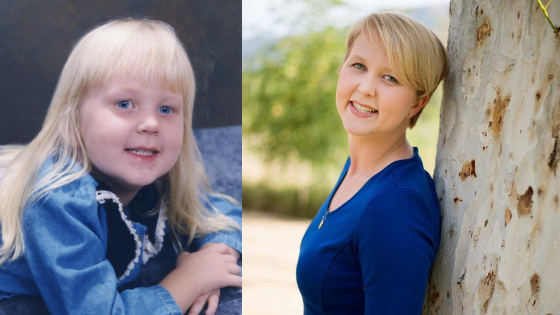
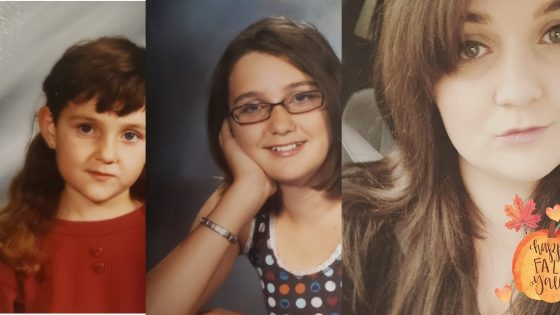
    We registered Ashlynn for her sophomore year in high school today. As I waited behind her as she took her picture for her school ID, I reflected a little. Staring at this young woman taking a picture at her high school, I some flashbacks of the journey.

    Before, just a few short years ago, she would have needed me to help her talk to the photographer. I would have had to explain to the photographer that she has a motor planning disorder which makes it difficult to smile. I would have physically gone into the space with her rather than staying back. I would have helped her onto this stool to ensure she didn’t fall off of it since it doesn’t have a back. I would have gone home and wondered if it were always to be like that.

    Walking through the school she recognized many teachers and staff who all smiled at her and had a short conversation. I only had to help her once when she experienced an apraxia freeze about what she did over the summer. My hint of “cruise” was all she needed to be off and running talking about it.

    So much has changed since those early years, and yet so much still remains the same. She has become more independent and she can certainly talk your ear off! Everyone she talks to can understand her. She has made her way in the world, forging relationships I didn’t have to help her make. Even leaving a classmate called out “what up Ashlynn? Good to see you!” These little moments can be big enough to me to bring tears to my eyes.

    Ashlynn’s social high school experience has been amazing so far, and I have no doubt it will be great again this year. From unified cheerleading, to basketball, to poms, to track and field, homecoming and more, she truly lives her best life, disability or not. That’s actually though one of the things that has stayed the same. Even when Ashlynn couldn’t speak, she would peak out of her door with a huge smile and attack the day with the same enthusiasm. So many obstacles to overcome, she never wavered. And because I watched this tiny but strong girl attack life this way, I realized I needed to do the same.

    Had it not been for Ashlynn, I never would have been determined to specialize in CAS. Had it not been for Ashlynn, I would never have gone into private practice. Had it not been for Ashlynn, I never would have thought about the need to spread apraxia awareness. Had it not been for Ashlynn, I never would have written a book. Had it not been for Ashlynn, I would not be giving podcasts, workshops, conferences or consultations on CAS. Had it not been for Ashlynn, I wouldn’t be on the professional advisory board for The Apraxia Foundation. Had it not been for Ashlynn, I wouldn’t be planning The Denver Apraxia Fall Festival. Had it not been for Ashlynn, I would have always played it safe. Had it not been for Ashlynn, I never would have taken risks. Had it not been for Ashlynn, I would have never known what it’s like to be someone’s person. Had it not been for Ashlynn, I would not be for the better a completely changed person.

    Have fun my love! I know you’re going to have another great year. Not because I have a crystal ball, but because past proves future. I’ve had almost 16 years of watching your quiet determination and big beautiful smile. I know for a fact you aren’t going to stop now. You’re such a gift and may you always know your worth.

  • Top Ten SLP Mommy of Apraxia posts for 2019

    Top Ten SLP Mommy of Apraxia posts for 2019

    Hi readers! Not only another year, but another decade is coming to a close! My daughter Ashlynn was born in 2009, and it’s astounding all of the changes that set off in my life throughout the past ten years! This past decade was one of joy as a I built my family, but also sorrow facing numerous challenges with Ashlynn.

    I have faith though that this next decade will be one of overcoming! I know ten years from now I’m going to be writing another success and triumph story, much like I did in the book I published this year called “Overcoming Apraxia.” I also want this next decade to be one of exponential growth in apraxia awareness and information so all children have the access to the best therapy.

    Happy New Year and I wish you all a blessed 2020!

    Here are my top ten posts from 2019.

    1. The Exploding Genetic Findings in Childhood Apraxia of Speech
    Click here

    2. Growing up with CAS: Never Stop Dreaming

    Click here

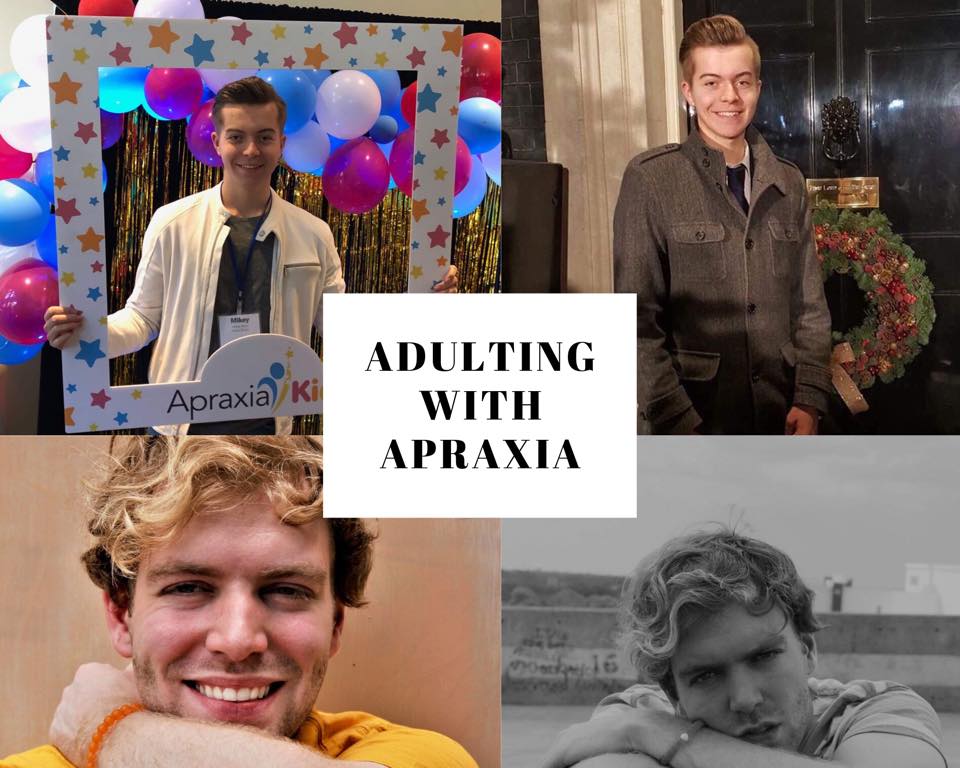
    3. Adulting with Apraxia

    Click here

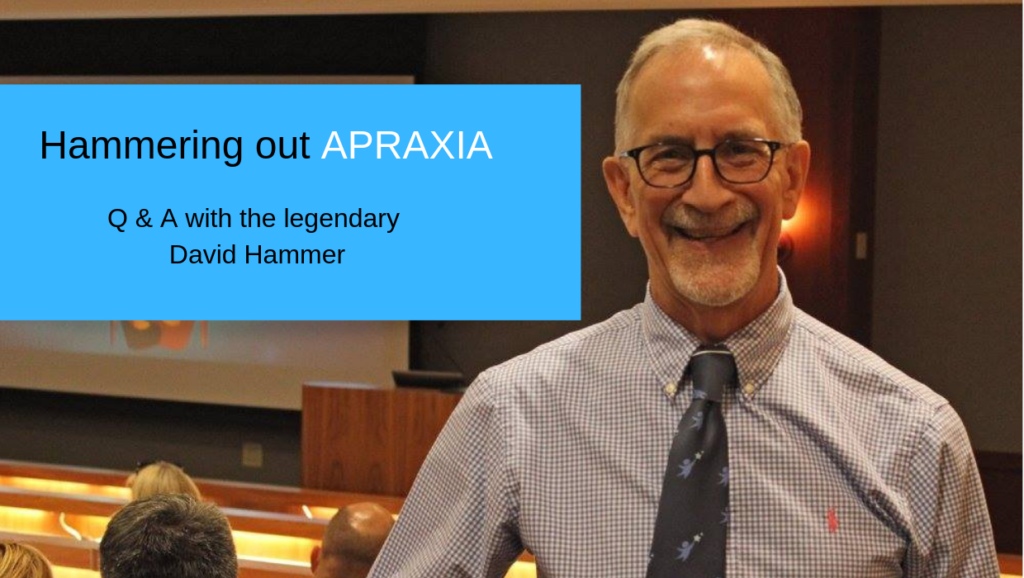
    4. Hammering out Apraxia

    Click here

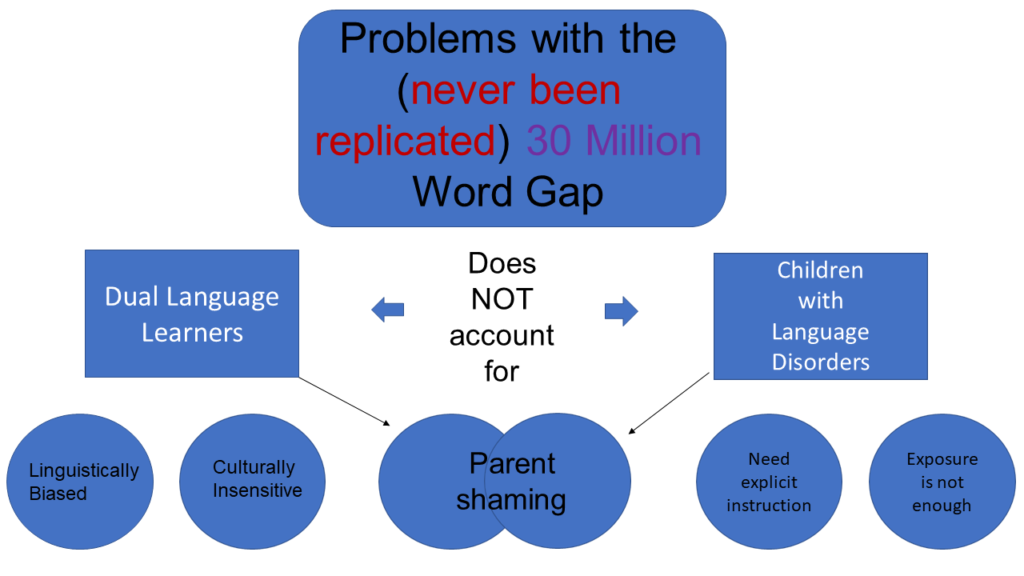
    5. Mind the (30 milllion) Gap: Beyond the Catchy Headline

    Click here

    6. Who diagnoses Childhood Apraxia of Speech?

    Click here

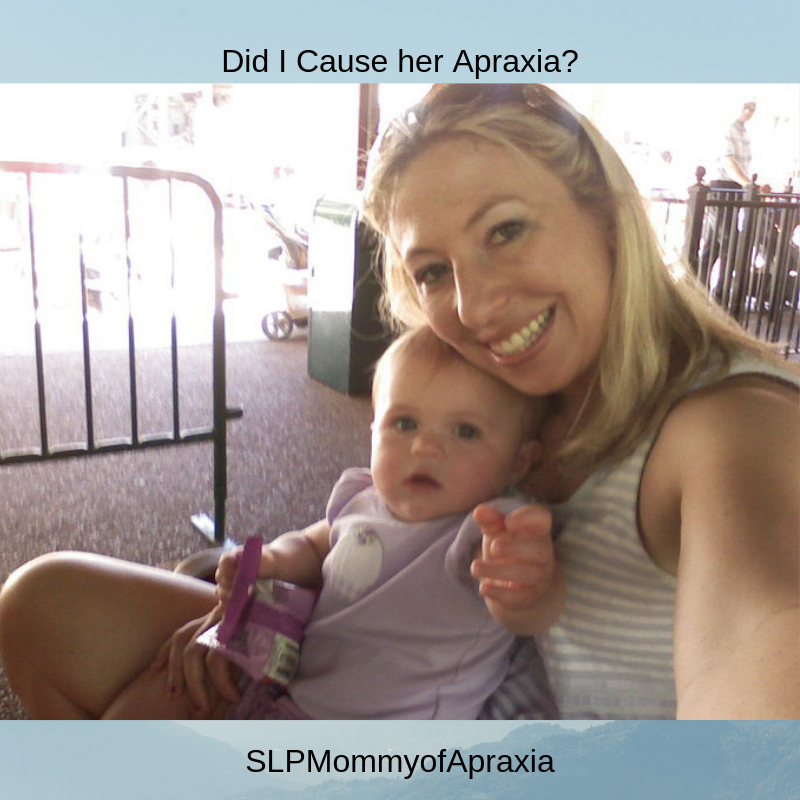
    7. Did I cause her CAS?

    Click here

    8. Oral Language and Phonological Skills May Be the Best Predictors for Reading Disorders in Childhood Apraxia of Speech

    Click here

    9.Shaming parents about home carryover

    Click here

    10. Growing up apraxia: I want them to learn what it is

    Click here

    Happy New Year friends! Always believe in the magic of new beginnings! Stay present. Love. Hope. Live.

    With Gratitude,
    Laura

  • Growing up with Apaxia: A hidden card up his sleeve

    Growing up with Apaxia: A hidden card up his sleeve

    Hi Mark!  I’m so excited to have you as part of my Growing up CAS series! You recently just completed your first year of college correct?

    No it was my first semester of college.

    Congratulations!  I hope you know by you sharing your story and experience you give other parents out there so much hope!  You are an inspiration and someone for our kids to look up to! 

    Can we start with you telling us a little bit about yourself?  

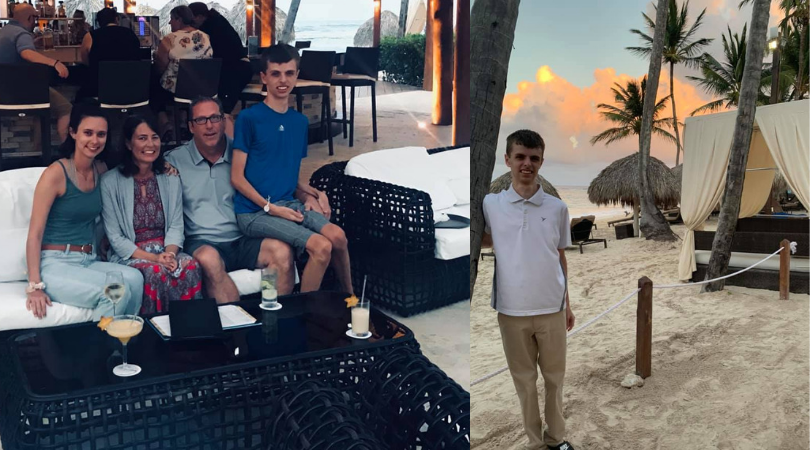
    I’m Mark Lippert and I’m 19 years old. I live in Saint Paul Minnesota with my Mom, Dad and my sister. When I was diagnosed with apraxia I was 2 ½ years old.

    What are your childhood memories of having apraxia and going to therapy?

    My early memory of being in speech therapy is that I needed my mom and sister to be in the speech therapy room with me or I would not work.  As a reward for me after speech therapy my mom would take me and my sister out for ice cream by my speech therapy center.  It was 40 minutes away from my house and my sister had to sit with me in many speech therapy sessions, so that is why she got ice cream too!  At the end of each summer speech therapy, my mom would take me and my sister to “Chuck e Cheese” which had 2 floors.  

    Did you have any additional academic struggles or co-morbidities?

    Yes i had a lot of struggles with school over the years. I had a IEP since I started school K-12. I got diagnosed with a learning disability when I was in 2nd grade.

    How has apraxia affected your life, or has it?  Do you have any residual issues?

    Apraxia has affected me and my whole life in good and bad ways.  My speech can be an issue but I  do not let it define my life.  For example, I might not be understood the first time when I’m talking to someone. But I do not let it interfere in the conversation with someone.  Apraxia has shaped me into who I have become and if I did not have Apraxia my whole world would change. I bet I would not have the same work ethic and motivation that I have. I have gotten so many compliments by teachers on work ethic and motivation that I show in my life.

    Work ethic is a huge key to success!  Speaking of school, what was your school experience like?

    My school experience has been mostly good where teachers would support me and what I had on my IEP where I might not have been as good as other students but they would always understand. For all of my school career I have been that type of student in the Special education program were the student would be flip flopped being in a regular classroom and being in every kind of special education classroom. My case managers over the years have been ok at best.  In high school I was  put in special education classrooms where it did not fit my educational needs in that it was really too easy for me. In total over having case managers excusing elementary school, I have had four with the the most being in high school. Overall my school experience has been good when my supports fall into place.

    What do you want people to know about you and others living with CAS?

    Trust your child’s class performance over IEP Re-evaluation testing.

                                IN SOME CASES     

    That apraxia kids can understand everything that you say. I think that apraxia kids’ brains can process at the same or a little faster as anyone can.

    What advice do you have for those growing up and/or living with CAS?

    Just keep fighting! I know that you might not want to go to speech therapy because you know that you can’t say the  word you have been trying to say as clearly as possible.  You might not say it that time but you are going to say it in the long run. When i was younger I hated when people said that I was going to speech therapy. I would tell them to just call it “Speech.”

    Most parents are so worried about the future when their child gets an apraxia diagnosis.  What would you tell them?

    Like my mom says “ there is always a light at the end of the tunnel.”

    Do not set any expectations for their education career and their life.  They might surpass them all like I did! My parents did not think I could ever be in college. They thought at the best I would go to a Trade school. Do not ever let the internet shape a picture of your child’s life going forward, because your child might have a card up their sleeve that they might not show you at their start of life, but at the end they are going to show you everyday!

    That gave me chills Mark!  You are helping to change the stigma around apraxia and special education!  I can’t wait to see what you do moving forward!  You definitely had a few cards up your sleeve and I’m sure your parents couldn’t be prouder!

    Growing up with apraixa is part of an ongoing series that aims to celebrate neurodiversity and highlight those who have grown up with Childhood Apraxia of Speech and related struggles.  If you are interested in being featured, send an email to lauraslpmommy@gmail.com

  • Growing up with CAS: Never stop dreaming

    Growing up with CAS: Never stop dreaming

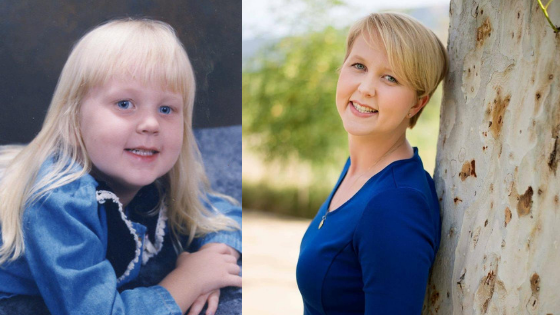
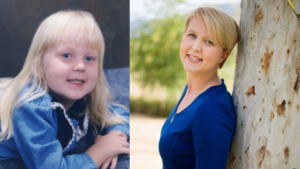
    This month I’m excited to introduce Alyson Taylor! I’ve had the pleasure of hearing Alyson and her mother speak at the Apraxia-Kids National Conference; as well as speaking to her personally on a few occasions.  Alyson is smart, witty, funny and has a great outlook on life!  Oh, and she also grew up with Childhood Apraxia of Speech!  Welcome Aly!
    Can you tell my readers a little bit more about yourself?

    Hello! My name is Alyson Taylor and I am a former child with Apraxia of Speech. It was definitely a long journey-I didn’t fully communicate until I was 7 years old, early special education courses, and 13+ years of speech therapy. Fortunately, the journey itself gave me the strength and wisdom to find success as a young adult.

    With hard work and finding comfort in my speech, today I speak with what sounds like an accent. Despite this I attended and graduated from Emory University with my BA in Political Science and Spanish. I work now as a Paralegal at Thinkwell Group, an Experience Design Company known for their Theme Parks. I also volunteer and advocate for the Apraxia Cause; I’m on the Board of Directors for Apraxia Kids and also maintain my own blog “Girl With A Funny Accent.”

    My family and I understand how difficult the Apraxia Journey was with limited resources in the nineties, so today it’s exciting to contribute these resources for the next generation.

    What do you remember as a child about CAS and speech therapy?

    As a child, I actually didn’t know about CAS. Frankly, I thought I was speaking normally and everyone else had poor hearing. It wasn’t until I was about 9 that I even became aware of Apraxia and that I spoke ‘differently’ than others.

    As far as Speech Therapy, I enjoyed it when I was younger. The time passed quickly between games and toys. Also, my Speech Therapy was rather experimental. I was a Case Study at a local university studying Apraxia and how to treat it, so some of the practices were unique. One of them being peanut butter on the roof of my mouth to direct my tongue on how to say ‘R.’

    Sadly, I grew to resent Speech Therapy around the teen years. Understandably so, I was doing well in my courses, transitioning into higher Honors classes, and playing Varsity sports. Speech Therapy took time away from my personal interests and goals as a teenager, so I quit attending at 15/16 years old. Best and scariest decision I ever made; choosing to live the rest of my life with a Speech Impairment in turn for my personal goals-college, career, and advocacy.

    Were you ever bullied?

    Um, yes!

    Some bullies were worse than others I’ll admit. I knew to ignore them, stay silent, and avoid them. However, there were some bullies that my friends and family helped me with. Thank goodness, right?

    Overall, I’m thankful I had engaged parents and friends that knew when to get involved and help me. I was definitely more patient with bullies than I should have been. Some of my most notable bullies were those following me around the playground, demanding I said ‘Rose’ or ‘Rabbit,’ then laughing when I did or calling me stupid for not responding at all. The other most notable bully was one that threw a snow cone at me during a Cheerleading Fundraiser and suggested that “The Retard to go back to speech.”

    Thankfully that bully didn’t stain the Cheerleading Uniform. Both instances, my parents and my friends were always there to have my back, call the bullies out, and life went on. [On a side note, the snow cone Bully never bothered me again, my Dad had a one-on-one chat.]

    How has apraxia affected your life, or has it?  Do you have any residual issues?

    For one, I still have an accent that I constantly need to explain. This past weekend at a Happy Hour I explained to two bartenders what Apraxia is. Anyone else after who asked, I lied and said I was from London. It tries my patience sometimes, I want to enjoy my night out like anyone else without constantly explaining why I speak the way I do. I know those asking don’t know better, but it does try my friends’ and my own patience sometimes.

    Aside from my personal life, it hasn’t affected my professional life and I’ve been fortunate enough that no one has asked about it during an interview. Additionally, Apraxia gave me the tools I need for success-being resourceful, adaptable, and always working hard to figure it out. These skills help in any field and I truly believe it helped me get to where I am at now.

    Most parents are so worried about the future when their child gets an apraxia diagnosis.  What would you tell them?

    All parents worry about their child and their future-Apraxia or not. Sadly though, Apraxia is an immediate threat to their child’s potential. With it, parents lose hope and quit dreaming for their child to achieve those grandiose goals-like becoming a doctor, a lawyer, a firefighter, etc. They begin to settle for the bare minimum-for them to talk.

    My advice would be to never quit dreaming, to never quit being hopeful for your child. If you’re not hopeful for them, then who else will be?

    What do you wish more people knew about apraxia?

    In the very beginning of the Apraxia Journey, many adults say that their child isn’t speaking. To a certain extent that’s true; however, in a child’s perspective they are in fact communicating. In their heads, they are saying the words correctly yet everyone else cannot understand them. The purpose of speech therapy isn’t only to help the child speak, it’s retraining their mind as to what is considered communication and what is actual gibberish. I wish more people knew that treating Apraxia isn’t only physical practice through therapy, but it’s also mental training. You are changing what a child’s brain determines as the ‘right’ way and the ‘wrong’ way.

    What would you tell a child who is currently struggling to speak or who lives with a dx of CAS?

    1. Find your strengths and interests; cling onto those and appreciate them. We easily know our weaknesses (everyone seems to tell us), but our strengths are what carries us.
    2. Live as if you had nothing to fear or be embarrassed about. (Yes, this means speak up in class when you know the right answer)
    3. Find your friends, stay with your friends, and thank your friends.

    What do you think professionals such as teachers and therapists need to know about CAS?

    Professionals should understand that CAS hinders a child’s execution and delivery, but it does not hinder their intent. A child wants to succeed and be rewarded for their hard work

    Professionals should never confuse lack of delivery for lack of intent. A professional should never claim that a child will never succeed or be rewarded. In either incident, the professional is contributing to a child’s downfall more so than equipping them for success.
    Growing up CAS is part of an ongoing series that aims to celebrate neurodiversity and highlight those who have grown up with Childhood Apraxia of Speech and related struggles.  If you are interested in being featured, send an email to lauraslpmommy@gmail.com