Category: global apraxia

  • What’s in a number? Why I refused cognitive testing.

    What’s in a number? I refused cognitive testing today at Ashlynn’s school.  Despite me saying I was so sure about not doing it two months ago, I still agonized over the decision until today.  Today, the psychologist and myself finally had a chance to chat.  She has 20 years of experience and has been working with preschool kids exclusively.  She sounded smart, thoughtful, and honest.

    As I ran through my list of concerns to her, I didn’t realize how emotional I still am about it.  The more I talked about how I don’t feel a cognitive test would be valid right now and why, the more upset I became.  I really have no idea why.  Maybe I can process that another time.  I just know the more I made a case for myself and Ashlynn, the more I realized I already knew my decision was “no.”

    The woman had to agree that her global apraxia (s) would impact performance, which in turn would impact the score “the number,” I thought to myself..   She also reminded me I might get a score (number)  I don’t like.

    It all comes back to that damn score and my post outlining concerns about this testing: Accuracy of IQ scores with global apraxia.

    I know there are professionals who would read the testing and use it for programming, but I also know there are professionals who go straight to that “number.”  They want the quick and dirty FSIQ, full scale IQ, and make a judgement on a kid just from that.  People working with a child who will make a blanket judgement about their capability (or lack there of) based on A NUMBER.  I’ve seen teachers and even principles ask for that number, and did they read the report?  Did they read all the disclaimers or qualifying statements?  No.  Why would they do that?  They have that number.  They know what the kid is capable of.

    Well that’s not happening to my kid.

    She is not a number.  She is not a score.  Maybe one day, probably one day in the future I will consent to that particular testing, but today is not the day.  Her body isn’t yet cooperating enough to really show what her mind knows.

    I could be wrong, maybe I’m being sensitive, but I see them looking at me like I’m in some sort of denial.  I can’t explain it, but my friend Kim, an SLP in NY who also has a kiddo with global apraxia summed it up best.  “They see her as more disabled.  They want to show you.”  And that is exactly right.  They want me to see a number in black and white as some sort of proof that she is more disabled than I believe her to be.

    There’s just one problem.  They don’t see what I see.  Ever since Ashlynn started talking, what the school saw lagged behind what she was doing at home.  Ashlynn said her first word “hi” at 1 year and said it consistently and on demand.  When she entered school at 3, it took her half the year to utter it to anyone .  The SLP had to work on that, and finally a note came home that said she did it without prompting.  I was happy she was doing it at school, but I mean, this wasn’t progress to me.  She already said hi without prompting.

    That’s just the first example in what would be many.

    “She’s counting consistently to 5!”  I smile.  She’s been counting to 20 (skipping 13) for months now.

    “She knows the letters of her name!”  I smile.  She can find or point to most of the letters when we are home.  At least the SPED teacher’s assessment was more accurate, but it still isn’t what Ashlynn shows here at home.

    “She’s talking to peers, but still doesn’t have a lot of pretend play.”  She plays pretend games with her brother everyday at home.  Another half smile from me.

    The list goes on.  Bottom line, I always say a mother is the expert on her child, and she doesn’t have to be in the educational field.  We KNOW our children.  We live and breathe them.  If Ashlynn has yet to show what she actually knows in 3 years of being in school, am I really to think she will perform accurately on a standardized, formal assessment??

    On the consent form the SLP wrote “mom does not agree to cognitive testing.”  To make it clear, I crossed that out and wrote “mom refused cognitive testing.”  I don’t know what got into me. I guess my claws came out.  I am refusing a number.  A number is just a number.  Now let’s get busy helping her reach her potential.
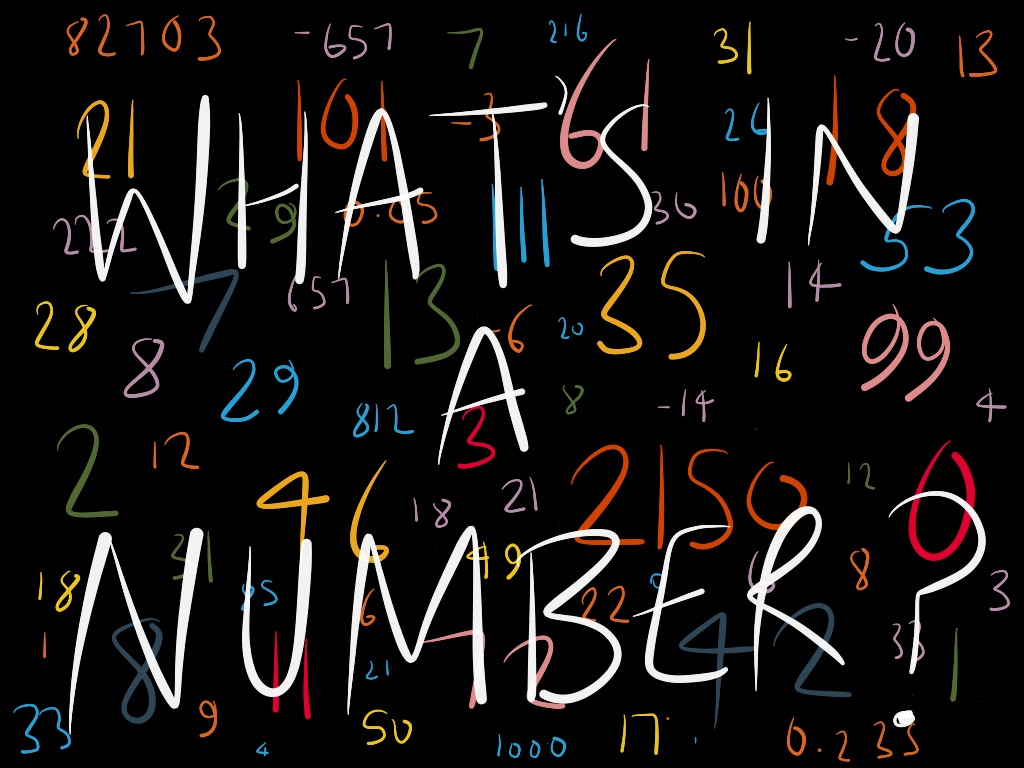
    numbers

  • Success WAS there, and we will revel in it.

    Exactly 18 months ago, I wrote one of my favorite and initially most popular posts: Lessons from a Tricycle.  

    At that time, Ashlynn was close to 4 and still could not pedal a tricycle.  I describe how we bought it a couple months before her third birthday when I was pregnant with my son.  A year later, I wrote that post and explained that she STILL wasn’t able to ride it.  When one has motor planning difficulties, the steps involved in riding a tricycle become glaring.

    Core strength
    Bilateral coordination
    Vestibular and propriocepive systems
    Balance
    Strength
    Endurance

    Who knew one needs ALL of the above to do a simple childhood rite of passage like ride a tricycle.  In that blogpost, I described “arched back and frazzled patience.”  My back hurt every time I tried to teach her how to ride.  I would lean over and pull or push her, while she struggled just to keep her feet on straight.  I wondered time and time again, will she ever actually get this down?  Do you have any idea how heartbreaking it was to have her “walk” her trike back home??  I knew deep inside though she would get it one day.  I wrote,

    “Success will surely be there, waiting more patiently than me.”

    After having my son, I realize how easy people have it.  I didn’t teach my son anything.  I gave him his big wheel and said “have fun.”  I didn’t have to teach him how to keep his feet on the pedals.  He just did it.  I didn’t have to remind him that while he was pedaling he had to look up and pay attention because he was going to fall off the curb.  He just did it, and I’m so proud of him.  He loves flying down the street on his big wheel shouting “faster!  FASTER!!”

    I remember my husband posting enthusiastically when Ashlynn had actually purposefully and independently pushed the pedal forward herself and propelled herself for at least two rotations.  We were so sure she had arrived.  That was it right?  She got it down, right?

    No, no it wasn’t.  The motor plan wasn’t quite carved out enough in her brain.  At least, that’s how I imagine it.  I imagine pathways in her brain as a ski slope full of thick powder.  Every motor activity requires her to carve a path herself to the bottom.  It’s hard.  It’s tiring, and when she gets back up the hill to try again, she may swerve off track and be forced to try again.

    Once the motor plan is mapped though?  Oh boy.  Then it’s like the groomed hill, wide and easier to maneuver.  I dare say we are beginning to revel in the groomed slopes.3b5621f62a9782ca81aaa1185f4ca8a8

    She rode her trike around the block tonight.  As I watched her in front of me, the sun was setting, and there she was….laughing, smiling, turning the handlebars when she was in danger of veering off the curb, and going as fast as she could and then stretching her legs out in front of her to feel the wind on her face.  This to me is childhood.. This to me is what apraxia had robbed from her for so long.  As I watched her, hair blowing carefree in the wind, the setting sun once again caught my gaze….and I realized, the sun was setting on a chapter in her life.   There it was….success…just as I predicted, waiting more patiently and more beautifully than I ever could have imagined.


    Here’s the video if you’re interested.  Warning: She’s so far ahead, she’s hard to see 🙂


  • Global apraxia, you brought your “A game,” but my daughter’s game is better.

    Global apraxia, you brought your “A game,” but my daughter’s game is better.

    My friend introduced me to an AWESOME website call “The Mighty.”  During the month of March, they challenged readers to write an open letter to a disability that a loved one faces.  I have no idea if I’ll get accepted, but hey, at least I have a blog.  For as much writing I do about apraxia, it was definitely high time to talk to apraxia myself.

    Hello apraxia.  Hello global apraxia.  It’s hard to believe we’ve never talked, especialaughlly since I’ve certainly done my fair share of talking about you.  When I gazed into my new baby girl’s eyes, and laughed along happily to her hearty giggles, I had no idea then that you were there, lurking in the shadows.

    The day I discovered you were behind the delayed motor milestones and the lack of speech I cried heavy tears and felt a weight I don’t think I quite have shaken yet.  You certainly brought your “A game” global apraxia.  I hate to admit I have felt defeated by you before.  However, you never managed to crush a small little girl’s determination, attitude, resilience and perseverence.  We are told you will never go away.  Anything requiring a motor plan will always take “more repetition than most.”  Oh how many times have we heard that?  I hated you once.  I hated watching my baby girl struggle to: speak, to jump, to ride her bike, to drink without choking. In fact I still hate you as I continue to see her struggle to: dress herself, feed herself, and write her name.  In fact, I don’t think I’ll ever quite forgive you when I think about the day she almost drowned.

    Mostly though, I feel sorry for you.  You have no more power here in this house, because my little girl has shown she can beat you time and time again.  She is a hero who wins daily, weekly, and monthly battles, and that winning is something you will never know.  Bet you didn’t expect something so strong to come out of something so small did you?   Well, we actually have that in common.  My daughter’s bramightyvery took me by surprise too.

    You will never know winning here, but because of your stubborness, we only grow stronger and more confident, knowing that any obstacle in our way can be defeated with faith, tenacity, and an unrelenting positive attitude.


  • Sing, sing out loud!

    Apraxia is a journey.  Speech apraxia is a journey, but global apraxia?  Even MORE SO. So many skills to work on.  So many things to improve.  So many negative prognostic indicators to plow through.

    The good news is that Ashlynn doesn’t know anything about prognostic indicators.  She doesn’t know how heavily loaded she is in the negative column.  Not yet anyway.

    When I first had her receive services she was just under three. Her first week of Pre-K had her singing a melody similar to  the song “Baby Bumblebee” with a lot of repetitive /B/ sound combinations.  I was still able to pick up on it though.

    I remember her first real radio song that she sang.  I vowed to buy the CD back then.  Well, I never did, but I still remember the song, title, and artist like it was yesterday.

    Her current preschool teacher has been AMAZING for Ashlynn.  At parent night, she described herself as someone who puts on “A SHOW.”  I didn’t really understand what she meant, until recently.  She sets everything to song!!  Routines, concepts, new ideas….all set to melody.  Ashlynn has thrived!  She knows about hibernation, her native state of Colorado, and now the seven continents……because of song.

    Ashlynn has sang a song “What’s the matter” frequently since she started school.  That’s the only line she knew though.  Tonight we were eating dinner, and Ashlynn  just randomly busted out a “what’s the WEATHER” song.  OMG.  It’s not “what’s the matter!”  It’s “what’s the weather!!”  I figured out this time, because she sang it all the way through.

    Mommy fail.  Stupid apraxia, but Ashlynn awesomeness despite her apraxia!  Sing, sing out loud Ashlynn!

    Here is the song!  So proud of my girl.  


    20150217_162239981_iOS

  • Accuracy of IQ scores with global apraxia

    Cognitive testing, psychological evaluation, IQ, psychologist, neuropsychologist.  What do all these have in common?  What do they have to do with a child who has a speech delay?  What does it matter?

    Tests of intelligence, commonly referred to as “cognitive” testing in the schools, are standardized measures usually administered to children as part of a complete battery of testing a child will receive when being considered for special education services (including just speech).

    Ashlynn never had a cognitive test administered when she was first found eligible for special education services because she was so young.  She is now five, and it is her three year review.  As part of the battery of assessments, the school district is really pushing for a cognitive assessment.  I’ve been hesitant for multiple reasons.  This article on apraxia-kids.org Special Considerations for Psychological/Educational of Children with No Speech or Unintelligible Speech  sums up my main fear.

    “The first thing to keep in mind when testing children with significant speech delays is that most standardized tests of intelligence will either be inappropriate or of questionable validity.”

    Apraxia of Speech definitely fits the bill in the definition of “significant speech delay.”  In the schools, at least in the districts I have worked in for the past ten years, the test of choice remains the WISC (Weshler Intelligence Scale for Children) and the WPSII (Weschler Preschool and Primary Scale of Intelligence).  These tests are great and provide a lot of information about how children learn.  However, as the article points out, they would “at best, provide a crude comparison of a child’s ability in certain areas.”  I would also add, that if a child has GLOBAL APRAXIA, meaning motor planning issues effecting the entire body, they are at even MORE of a disadvantage.  There are visual scanning and visual motor components that will obviously come out low if the child is still in OT working to improve these skills.  There are fine motor and  pencil/paper tasks that will also come out low if the child is still working to improve these motor skills.   To be blunt, I don’t think they are many subtests that could be validly assessed when a child is globally impacted.   Which leads to my second fear that again this article sums up nicely,

    “The second consideration (and most important), is that these types of tests should never be used to make predictions about a severely language impaired child’s eventual functioning.”

    I want to laugh, and this is really NOT funny.  I want to laugh because unfortunately this DOES happen ALL the time in the schools.  It’s sad to say but I hear this statement quite frequently, “Well, he’s performing to his potential.”

    Yep friends.  It’s not like I’ve heard this once.  I’ve heard this so, so, soooooo many times over my career.

    Now, it’s not all bad.  If the cognitive assessment is an accurate reflection of the child’s abilities, then it is important that we are not pushing a child to do something that they just cannot do.  It’s not fair to the child.  It causes stress, it makes them feel stupid, and many times they feel like failures.  Accepting a child where they are at is important.

    However, if the score is inaccuratethis is also not fair to the child.  That is why these types of tests should never be used to make predictions about the child’s eventual functioning……but as I’ve just explained, they are, more frequently than not, at least in my experience.

    So, what do we DO about this?  Well that certainly has been my dilemma as of late.  I can tell you what I am doing.  If the school pushes to test, then I will talk to the psychologist and make sure a nonverbal test of intelligence is administered.  I do not want a test that has a verbal section.  Period.

    I am going to take Ashlynn to a neuropsychologist for testing.  A school psychologist is trained and qualified to assess cognition, but they do not have the advanced training in neuropsychological and cognitive testing that a neuropsychologist does. Why is this important?  Well, I personally think a psychologist with more advanced training in neurological disorders and subsequent testing will yield more accurate results.

    Lastly, I’m still going to be Ashlynn’s biggest fan, the one who has her back, and the one in her corner.  I know her potential and I’m going to make sure she always knows it too.

    10959359_380345585480442_7809582703136476705_n

  • I need to remember they are my sunshine, when skies are gray.

    I always say they aren’t any easy answers, only tough choices in this game of parenting.  Sometimes, I think I know too much.  The special education teacher approached me yesterday about placement for Ashlynn going into Kindergarten.  Her attention is such a problem.  It could be related to the apraxia and sensory processing disorder, or it could be something else.  Who the hell knows.  I know she was giving me professional courtesy by asking what I thought would be best, but I have no professionalism when it comes to my children.  I’m their mama, plain and simple.  It is just tooo hard to be both.

    I could tell this woman was clearly hinting toward a program called ILC.  It basically means a more restrictive special education programming where Ashlynn would have a teacher’s aid assigned to her, but it would be integrated full time into the Kindergarten classroom  FML.  Decisions, decisions.

    I don’t want her to have that “label.”  Yes I know, I’m an SLP and I work with those labels everyday and yes, I love each and everyone of those kids.

    I also know this.  I know that this past week my colleague was working with a high functioning kiddo with ASD, also in “ILC.”  He is also mostly mainstreamed in regular education, holding his own.  The class was doing a compare/contrast assignment on characters in a story.  He did an amazing bubble map and flow chart and compared the characters, even comparing their feelings.  When he went back to class, the SLP had him share his work, including the great insight on the character feelings.  The teacher responded, “oh, well he could have just said one was a boy and one was a girl.”  I’m sorry, but I had to  wonder, was it because this boy was in ILC?  He had come up with something way more abstract than just one was a boy and one was a girl…but whatever.

    I had pretty much already decided last night Ashlynn wasn’t a fit for ILC.  I mean sure, extra teacher support would benefit her greatly, but she can do this.  Don’t underestimate her.  Oh, and may I mention I came to that decision easily (meaning tears).

    Then today happened.  The one day I’m not at my daughter’s school, I come home to find out my daughter “ran away” at recess, and no one found her until they did a head count.  She was still on school grounds “collecting rocks in a bucket with a friend” when they found her.

    So….is this the wake up call I need to admit my daughter needs this special programming?  If she had a teacher’s assistant, she would never be out of someone’s sight.  Ugh.  I hate this!!!

    Oh, and did I mention the social worker reminded me I still hadn’t filled out the “the Vanderbilt.”  For those of you that don’t know, that’s a test for ADHD.  Again, FML. All these decisions are freaking overwhelming.

    Then, as I was going home, my mother-in-law who watches my kids told me that Ashlynn, exasperated over something today exclaimed, “bummer!!”  When asked who said that, she matter of factly told her, “my mommy.”

    Smiles

    Oh, and Jace sang “You are My Sunshine” all the way through today.  Yep, he learned that from me.  I sing it to them every night.

    And I remembered.  That is what life is about.  Not the special programming, the teacher’s aid, the ADHD test, the “running away and, and, and…….

    Life is about my rays of sunshine.  Everytime.  Everywhere.  Always.  No matter what.  I wouldn’t trade it.

    “You are my sunshine, my only sunshine.  You make me happy, when skies are gray.  You’ll never know dear, how much I love you.  Please don’t take my sunshine(s) away.

    sunshine