Category: global apraxia

  • Can you have a talent if you have global apraxia?

    That question in the subject line.  Yes.  I’ve asked it.  Many times.  To whom I am asking, I don’t really know, but my fear is that the answer to my rhetorical question is…..No.

    I never told anyone this, though I was probably hinting when I would ask my husband, “what do you think Ashlynn will be when she grows up?”

    It’s not that I don’t believe in Ashlynn.  Oh the farthest things is from the truth.  However, when I am forced to think about global motor planning issues, what on earth could you be truly “talented” at?

    But then that got me thinking.  What is talent? I was always taught our talents are God-given gifts.  We are naturally inclined to be good at some skills than other people.  I mean, who can doubt some people are simply better at singing than others, no matter how much they practice?

    However, ,who can also deny that some people hone a skill, and become better at it simply because they practiced and worked harder than maybe someone who had the talent, but never utilized it.

    Ok, true but when you have global motor planning issues, and NOTHING comes naturally or easily, does it still work the same way?  Practice and work harder and you will be good at it?

    I had a mentor who used to tell me to look for the strengths in every child, because every child has them.  At the time I was young, and kinda absorbed her words and dismissed them at the same time.  Oh of course.  Every child is good at something.

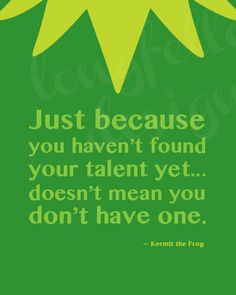
    Until I had Ashlynn.  Then I started thinking about this a lot.  What was Ashlynn naturally good at?  She has trouble with everything that involves any sort of motor skill.  Of course even Kermit would say:
    163513eb6f497e5fd40fd57d8d33baad

    I consoled myself with the fact that she is kind.  The kindest child I know in fact.  She is happy, she is social, and she can connect to people without words. She really is that good. Yes, I would think . That MUST be her talent.  That is until I talked to an adult with her disorder, and he said that very quality in fact turns out NOT to be valued by society.  That talent caused him to be used and taken advantage of.  When he saw a person begging for money, he genuinely believed they must have needed it, until he got burned and taken for all of his bank account.  “Some talent,” he had thought.

    I’m on Winter Break this week, so I have more time to just “be” with my kids.  My mother-in-law watches my children when I work, and she happens to be a very good baker and cook.  Actually, she happens to be quite talented at basically everything crafty.  I have never been crafty and really never had the desire.  However, Ashlynn is very crafty despite all of her limitations.  In addition, she absolutely loves cooking and baking.  Fortunately she has a grandma with ample amounts of patience who loves cooking with her.

    I came home from work one day to see Ashlynn and her Grandma covered in flour from an “accident” where Ashlynn turned on the blender before they got the lid on.  I’m glad it was her grandma and not me, because sadly when I come home from work my patience is very thin and I’m not sure I could create a learning rich environment such as this moment.

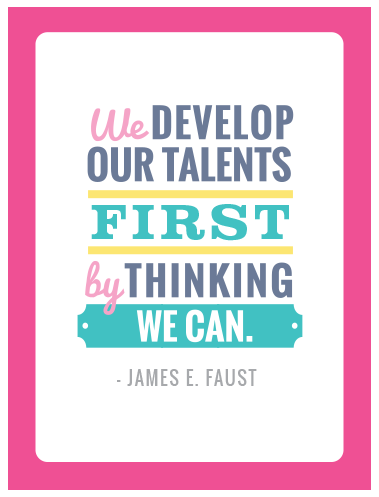
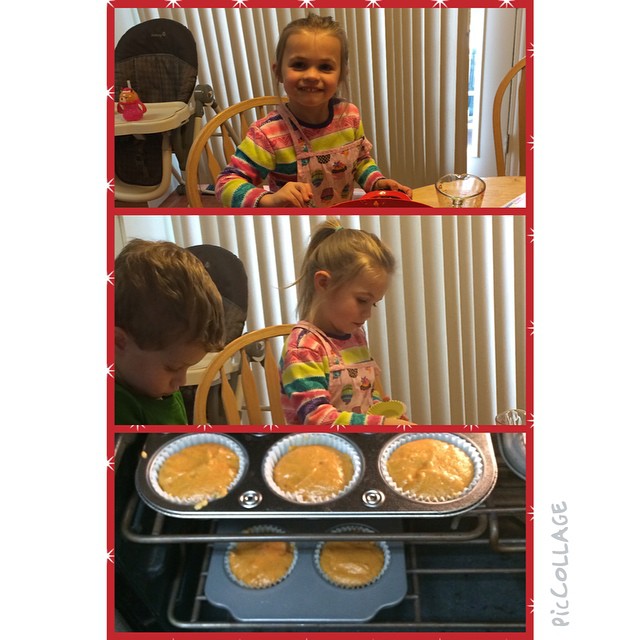
    On break though is a different story.  As a said, I had Ashlynn bake muffins with me.  She impressed me with her egg cracking that she did all by herself.  She measured out the baking soda being careful to slide it along the top to make it “smooth” as she said.  She carefully measured the water to line on the measuring cup that I asked her fill up, and methodically spooned out all the pumpkin from the can.  My son tried to “help” too, but quickly became bored and would just pop in and out.  Not Ashlynn though. She stayed with me to the very end.  I started thinking about talent again, and I ran across this quote:
    Thoughts_Quote_Day08_WEB


    I’ve decided that talent may include your natural God-given gifts; however, true talent is born from passion and determination.  Ashlynn has those in spades.  Plus, the only thing Ashlynn has to overcome is motor planning.  Once she masters the motor plan, she has mastered it.  Plain and simple.  Talent doesn’t seem to be so important anymore, and I know my husband’s right when he answers me,

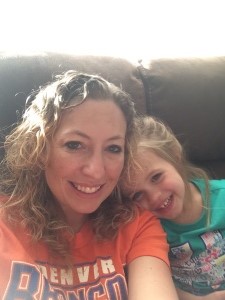
    “Ashlynn will be and do whatever she wants to do.”  Just look at that smile!
    1469922_10203965489630176_7742200900676801700_n


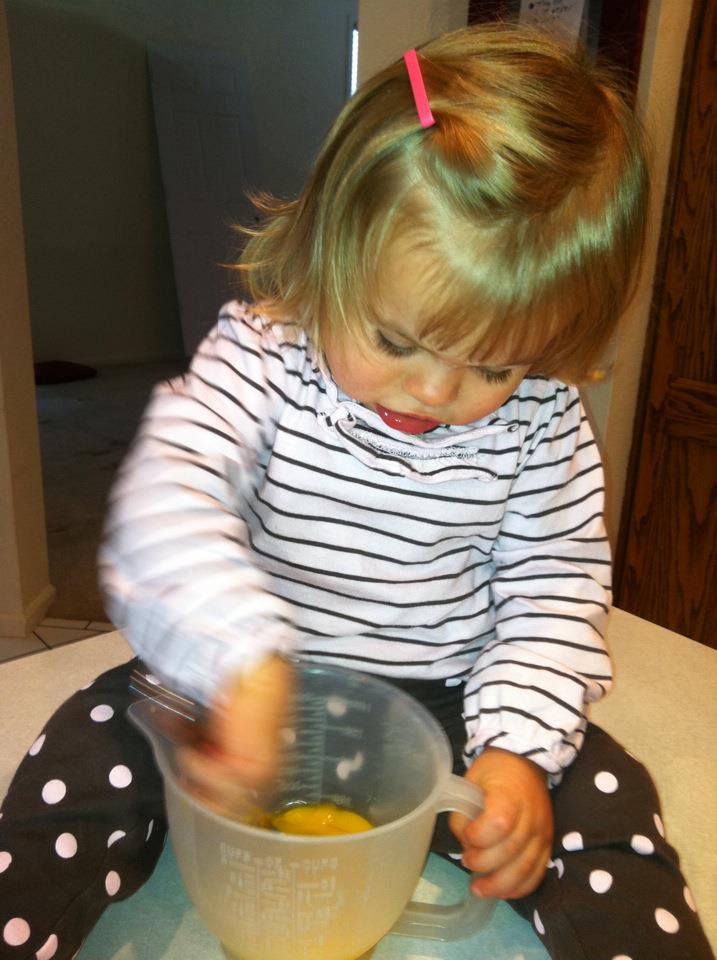
    Ashlynn not yet two years old making scrambled eggs with Grandma.
     

    302972_300090636673090_369283188_n


  • There are no easy answers, only tough choices

    There are no easy answers, only tough choices

    image5-300x225

    I didn’t expect to cry today,  yet that’s how the cards fell.  I dropped Ashlynn off at school today, and asked her teacher if she had talked to the OT about changing her name card to all capitals per the private OT recommendation given in my last post .  Her face kinda dropped and she said she had talked to the OT, but she wanted to talk to the SPED teacher first, could we talk after school?

    Oh sure, I said.  Inside though, I felt that pit in my stomach.  They don’t agree with that.  I guess I’ll find out why in a couple of hours.

    I went back to school and the SPED teacher, teacher, and SLP were there.  The SLP kinda accidentally walked in, but I had her stay.  So basically in a nutshell, there are two theoretical professional recommendations for this issue.  The SPED and classroom teacher both have research to show that kids need to be writing their name in both upper and lower case because that will be the automatic expectation when they go to Kindergarten.  At a recent conference, the teacher said the one of the speakers pleaded that if they are still focusing on uppercase, to please at least expose them to lowercase because lowercase letters are what they will predominantly see in literacy.

    The OT’s position (and I ran this past the school OT too who agreed with my private OT) is that developmentally, uppercase letter formation comes before lowercase.  Basically, uppercase letters contain more pre-writing strokes like basic horizontal, vertical and diagonal straight lines that are still hard for Ashlynn to visually interpret and copy correctly.  It’s a problem with the praxis, or motor plan, not a problem with her perception.  So for example if she sees an M she can point to an M not a W, but when she goes to write it, it looks completely messed up.

    Hmm.  Sounds familiar.  Sounds like speech apraxia.  She understands what people say. She understands correct and incorrect production, but when she goes to say it, it’s all messed up.  Apraxia.  Yup.  Nothing new there.

    Back to the situation though.  The SLP voiced what I was thinking  She sees writing and literacy almost as two separate entities.  Why can’t she write in uppercase but still be taught and exposed to both?

    Well, they felt that writing reinforces reading and vice versa.

    Okay, but my kid could write her name almost legibly last Thanksgiving, and this Thanksgiving she can’t write it all. Her motor plan is completely confused. Don’t you guys see how concerning that must be to me?

    But we’ve gone half the year doing it this way, the teacher said.  I keep thinking it’s going to click.

    SPED teacher: Yes and again, don’t you want her to practice this early so she gets extra time with these skills?  She needs to be writing two sentences with correct punctuation, which includes capitalizing the first letter….by the end of Kindergarten.

    Insert lump in throat. I can’t talk.

    We just want to get her ready for Kindergarten.  That’s our job.

    Me: Lump still in throat.  “So, I’ve been told by experts in writing development that they must learn uppercase before lowercase.  I have personally seen the regression in writing her name.  I’m not talking about literacy.  I’m talking about writing, and, do you think, I mean, I hate to say this but

    this is hard for me to even say but

    Is it really realistic to think that Ashlynn will be able to learn 52 graphemes by the time she hits Kindergarten when it took her a year to consistently write 5, and now those are gone?

    Silence

    It kills me to say this.  I WANT to say that by having THREE years in Pre-K she would be Kindergarten ready, and now I have to say, out loud to you all, that writing both uppercase and lowercase letters is just not in the cards for her right now.  I hear your research and I appreciate it, but my daughter has GLOBAL apraxia.  Have any of you actually had a child with global apraxia?

    Crying. Nope, not one of them had.  Neither had I, until now.  Ashlynn is our guinea pig, but she’s MY daughter.  What do I do?

    The teacher folded slightly and said she was willing to do whatever I decided, but she did want it to be consistent across disciplines so that she gets the most bang for her buck.  We all kinda left with a question mark and promise to consult with various professionals and come back with our recommendations.

    I left and cried again.

    Such is my journey in GLOBAL apraxia.  When I asked them if they had ever had a student with global apraxia, they all had to admit they hadn’t.  I started thinking. I hadn’t either, except recently.  One out of my 6 kids with apraxia have it globally.  Most have other soft signs, but only one has it everywhere. The three I saw in the schools before Ashlynn only had verbal and some fine motor issues.

    Wow.  I guess since I’m part of a support group online, I don’t see it as rare as it really is.  This is rare.

    REALLY, REALLY RARE.

    Sucks.

    I spent the last 2 plus years thinking if we could resolve the speech, she would be ready for Kindergarten.  I’ve read many books.  Speaking of Apraxia is a popular book, but yeah…only dealing with CAS and SPD. Not global apraxia.

    My daughter fits into two columns: her can do’s, and her cannot’s.  My husband usually lives in the can do’s, and I live in the cannot’s.  Why?  I guess because I feel so crazy responsible for getting her from the cannot to the can, but then when I get to the can, I immediately give a sigh of relief and then go back to the cannot column to work on the next goal.

    It sucks, and today was low.  I had to admit out loud that I can’t remediate the cannot column, because that column contains more than speech.  It’s just too much.  To be honest, the speech was too much too, it’s just that I felt such responsibility and I went on an exhausting mission to specialize in it. However, I can’t specialize in it all.

    I’m vulnerable now.  I have to be a mom now, and I tell people all the time mom’s are the expert on their child, despite all the experts on the various disorders their child might have.  So, I’m taking my own advice, and it’s scary, because what if my decision negatively impacts her entire academic career.

    But, here we are.  Here we are, and I have decided, and I’ve felt all along, the experts in writing, the OT’s, know what they are talking about when it comes to writing, and Ashlynn needs to stick to upper case for writing.

    That said, she will continue to be exposed to both uppercase and lowercase letters, but to write…we have to stick with uppercase.

    I wish there was a cookbook.  Heck, I wish there was some credible info on GLOBAL apraxia.

    For now though, I have to trust my mommy instinct, and my mommy instinct say that although I wish to God…I would wish my life on this Earth that Ashlynn could learn like the other students and handle both upper and lower case; deep down, I know she can’t.  At least not yet.  I know I have to just stick with the uppercase until mastery, and then when she masters it, we’ll cross the lower case bridge when we get there.

    No one said life would be easy, only that it would be worth it, and she is worth it.  There are no easy answers, only tough choices, and today was very hard.

  • I’m never doing enough

    Since I’m an SLP, I’ve been in the meetings where we, as well meaning professionals, give our advice and tips.  Simple and easy tips that seem so easy, but when you have 4-5 people giving you these tips, the weight seems to get a little heavier.

    Such was the case tonight.  My grant finally ran out for my private OT and speech services that I was able to get starting at the beginning of the summer. So for the last OT session, I asked the OT to just kinda look at all the skills and give me an update.

    She immediately started in on handwriting to start.  Handwriting is probably her hardest area right now.  I didn’t want to admit it, but when we did our Thanksgiving craft, I thought she might have regressed.  Plus, private OT has been working more on gross motor skills and core strengthening, and we’ve seen some big growth.  She can finally pedal her big wheel the span of three houses and back, and is able to sit on the carpet in school during circle time without any special seating or weighted blankets.   That doesn’t mean her core is better though.  I observed her in class on her birthday, and by the end of circle time, she was practically mush melting into the floor.

    However, there were improvements….and this is good.

    Back to handwriting though. Long story short, we haven’t been focusing on handwriting.  As she had Ashlynn write her name, the struggle was apparent.  Since I have also worked with this OT, I know her “hmms” and “ok’s.”  They meant Ashlynn was NOT doing OK and she had concerns.  I waited.

    “Have you seen regression in her handwriting?

    Me: Groping for words

    “I just say this because I hadn’t been focusing on handwriting because the school was.  They are right?  Focusing on her handwriting?”

    I was launched back to her IEP meeting.  I remember the teacher saying the kids write their names with the Uppercase AND lowercase letters, and then she looked at the OT and mentioned they could chat since OT’s typically don’t want the kiddos writing in lowercase.

    That was the end of it.  Ever since then, I’ve noticed Ashlynn traces her name everyday, and that papers come home with her tracing her name after someone had highlighted it first.

    I kinda stuttered.  Well, I know they have really been working on drawing a person and getting all the body parts.  I proudly showed her a sample, and the OT admitted it looked good.

    Her name though.  Her name.  Damnit.  I don’t want to admit I saw regression too and now I realize it might have had to do with changing from uppercase to lowercase before she had even mastered uppercase.

    I asked if she recommended staying in uppercase and she said yes.  That would be best, because we’re going to have a situation where she won’t be able to do either.

    Stupid apraxia.  Stupid apraxia.  Stupid APRAXIA.  sigh.

    She works so hard too.  My poor baby. She knows it’s tough, and yet I see her march on.  She tried to smile, act cute, and divert attention, but the OT made her write all those letters….and it was hard, yet she smiled through it all.  Knowing she wasn’t writing them correctly.  She always tries so damn hard.

    I applied for more funding.  I don’t know how we can afford private speech and OT, but I know she needs it, so we’ll find a way.

    You know what’s so hard, is this same OT that is seeing her is my friend and colleague from my old school district.  Before she knew Ashlynn I would talk to her about her issues, and not knowing Ashlynn, she would always say she was sure school OT was enough and that I was probably overreacting.  Assuring me not to worry.  But  then today, the last session until I get funding, her brow was furrowed and she said, “oh I just didn’t have enough time with her.”  It killed me to hear, because it means she sees professionally what I have seen all along.  Ashlynn needs so much help.  As she left, she told me maybe we could plan a playdate over break.  I eagerly agreed and then she offered a freebie therapy session.  She’s such a good friend and I appreciate her charity, but again, it let me know just how serious this is.

    Yay apraxia.  Yay GLOBAL apraxia.

    As I went to help get Ashlylnn ready for bed, I found myself pulling patience from the depths of me because I know she needs it.  She can’t yet take off or put on her shirt.  She’s five.  I think I mentioned in a prior blogpost my son who is 2 takes it off no problem. That’s hard.  It hurts.

    Then, the things she can do, like putting on her pants or socks take a very long time.  Tonight her pajamas had buttons.  I sat on the floor waiting for her to try, and try she did.  It took her 10 minutes to button three buttons, but she never gave up.  Think about that.  10 minutes doesn’t sound like a long time, but just to button three buttons?!?

    Tick tock, tick tock.

    I have to wait though.  I can’t do it for her anymore.  She will never learn that way.  I have to sit there, even though I desperately just want to veg out and not think about her speech, her writing, her drawing, her pedaling, her drawing a person, her feeding herself, dressing herself, oh and I didn’t even mention the letters and letter sounds we work on every night I can.

    And she always comes through. My nerves were frazzled and my husband emerged from her room and said she told him that she buttoned the three buttons by herself but mommy “did this one” (the last one).  She was so proud.

    Like I said, the weight is sometimes overwhelming.  There is so much to do, and when I focus on one thing, it seems we have lost in another.  All I can do is keep on keeping on.  I’ll take my cue from Ashlynn.  That’s what she does and I love her for it.  I just hope I can be the mom she deserves to have.


    c1bb0206e5db5bcbe29d3e262b064a18

  • It’s hard to explain how global apraxia affects so much

    It’s hard to explain how global apraxia affects so much

    We went on a Santa Train again this year at Georgetown Loop Railroad.  Ashlynn has never talked to Santa before.  When she was 3, she cried and clung to her dad for dear life.  When she was 4, we went on a different Santa Train, and though she wasn’t scared, she was too reserved to say anything audible enough for him to hear.

    This year a four year old girl was sitting across from us.  As her parents were asking her what she was going to ask Santa for, she eagerly said she wanted another Elsa doll.

    Ashlynn’s not really into Frozen, or any movie really.  Though each year we try, she just has no desire to sit and watch TV…much less a movie.  As for toys, we took her around a toy store three times leading up for her birthday, and though she was mildly interested, it’s just not like the “kid in a toy store” image that might usually come to mind.

    Fortunately, I have my friend Kim, an SLP who also has a son with global apraxia.  I also have a 7 year old client with it too, and interestingly enough, they all are similar in these areas.  They don’t have an overt interest in movies, TV, or toys.  Why?  I really don’t know.  The toys I think has to do with their struggle to play with toys they would cognitively be interested in, but can’t mainuplate because of the gross and fine motor apraxia.  That happened to her last year when she actually asked for baby clothes but then couldn’t put them on or take them off the baby.   To engage in imaginative play is equally as challenging due to their delayed speech and language skills.  Who knows.

    All I know I I started to feel sad listening to this four year old chatter away about what she wanted….until it was Ashlynn’s turn to sit with Santa.  Though he kept asking her what she wanted, what she wanted was to talk.  She asked him “What’s this?” and “What are you doing?” until he smiled and then moved onto another kid.  As he was walking away, she grabbed me frantically and said, “I need presents!!”

    Smile

    Oh Ashlynn.  That’s my Ashlynn and she’s perfect and in that moment I had nothing to be sad about. All she wanted, all she’s ever wanted is to engage people in conversation, and then as an afterthought she thinks about herself.  Even then though, she had nothing specific.  Just presents.  From the outside I’m sure she looks like a typical 5 year old, and it’s hard to explain just how involved her needs are, or how they affect so much.

    However, today, she asked for presents from Santa Clause just like a typical 5 year old and she will find them waiting for her on Christmas morning.

    from the outside in

  • What is your future like when you have GLOBAL apraxia?

    My friend Kim, (a fellow apraxia mom and SLP) and I talk a lot about how most people, including professionals and pediatricians, just have NOT SEEN global apraxia.  What is global apraxia?

    Well, it’s not an official diagnosis.  You’re not going to find it in the DSM 5, and when you google it, you’re not going to find some great scholarly articles.  Nope.

    Instead, you can google Childhood Apraxia of Speech and get some great information now on verbal apraxia thanks to CASANA of apraxia-kids.org.  Members of their advisory panel were critical in the recognition of the actual disorder from ASHA (The American Speech/Language Hearing Association).

    Google oral apraxia, and a lot of information comes up for verbal apraxia, even though they are two very different things.

    Oral apraxia refers to difficulty coordinating non speech oral movements.  These include: sucking, blowing, puckering, lip rounding, etc. whereas Childhood Apraxia of Speech refers to difficulty planning the precise movements for speech.

    Google  plain old “apraxia” and the first two references are to apraxia-kids and ASHA, both referencing Childhood Apraxia of Speech.

    The third entry is from Wikipedia, which references acquired apraxia of speech only.  This is for adults with brain insults for the record.

    The fourth result is from WebMD which does acknowledge it as a developmental disorder as well, but says “typically, it is found in adults.”

    Google “dyspraxia” and the first entry form ncld.org indicates “people with dyspraxia have trouble planning and completing fine motor tasks.”

    Okay, so she now has: Childhood Apraxia of Speech aka verbal apraxia, oral apraxia, and dyspraxia.

    Hmm…but she also has trouble with motor planning gross motor movements as well.  So what label is that?  Oh, and she also has trouble with visual motor planning as well.  So….what label is that?!?

    So let’s see here.  According to a lot of testing, my sweet little Ashlynn has motor planning difficulties in these areas:

    Verbal, Oral, Fine Motor, Gross Motor, and Visual Motor skills.

    Does a human have any other motor planning skills?  Right now as I type this, I can’t think of any and it makes me so sad.  How does that sweet baby with normal cognition, have motor planning deficits in literally every part of her little body?

    That my friends is why there is the term “global apraxia.”

    You’re not going to find it with a search from google.  You’re not going to find it in a scholarly article, but if you do I implore you to email it to me because I have looked!!

    You’re not going to find the term global apraxia in the Childhood Apraxia of Speech research, or the developmental motor planning research, on the dyspraxia websites, or searching under the term developmental coordination disorder.  I think this is because the research is already so lacking in these specific areas, that we are still a ways away from collectively combining all these separate disorders into diagnosing one “global apraxia.”

    However, if you have a child with motor planning deficits in ALL of these areas, I don’t have to tell you, the term “global apraxia” makes absolute, unequivocal sense.

    Can you imagine??  A pure definition of apraxia according to medicinenet.com is simply,

    “The inability to execute a normal, voluntary motor movement despite being able to demonstrate normal muscle function.”

    So as my friend Kim, another SLP put it: her son is essentially trapped inside his body.  How awful is that?  They know what they WANT their body to do.  They see peers or younger siblings executing the same things seemingly effortlessly…..and there they stand. Knowing what they need to do.  Knowing what they are ASKED to do.  Knowing what they WANT to do, but unable to do so.

    It’s almost like being paralyzed, except everyone knows you’re not; so they expect you to do things you simply cannot do.

    How does a sweet child respond to that situation?  How would you respond?  You can’t  tell someone you can’t do it, yet they see you as any other child.  Normal muscle function, seemingly normal cognition….

    I ask you again.  How would you respond??

    I can tell you how my daughter responded.  She would laugh and act cute.  Dang she is so socially competent.  It worked.  Sure they thought her receptive language skills were low and she didn’t understand what they were saying (read into this low cognition aka mentally retarded), but at least it gave her a pass.  Other times she just acted like she didn’t hear them. She still does that.  Oh…”attention problems” they say.

    I ask you again though!  How would you respond when adults think you can do something, demand you to do things,  that you cannot do?! Oh and remember, you can’t TELL them you can’t…because,  well,  motor planning has got your tongue.

    I can tell you about my friend Kim’s son.  He hangs by the door.  He tries to escape!  Poor baby is so smart!! Does the staff see that though?  Not really.  They see behavior problems.

    I’m also not trying to down professionals.  Look.  I get it.  Apraxia of anything is RARE, much less apraxia of EVERYTHING.

    I’m an SLP too.  Before Ashlynn, would I have been one of the misguided staff?!?

    This leads me to my question though.  What is a future like for global apraxia? I honestly don’t know.

    I know that my husband is right when he says my daughter always conquers all the mountains.  She does.  But is conquering the mountain the same as owning the mountain?  Will she have a skill, a gift, or something else?

    Things were so cut and dry for me.  I was good at English not at Math.  I was a great speller and poor mathematician. I was athletically inclined and was naturally good at basketball.  What about Ashlynn?  What will she have?

    I know already she has this incredible ability to unite people, to make people happy.  Everywhere she goes, despite when she was nonverbal or now verbal, people engage her.  They are drawn to her.  She is kind.  She is accepting.  She is sweet to a fault. She doesn’t see bullying, she sees hurting. She is naturally inclusive.  She makes people feel good about themselves.

    These things make me incredibly  proud.  But can I tell you a secret?  I’m scared to death these “strengths” will kill her inside.  Society is cruel.  Kids are cruel.  Will this be enough to carry her through?

    I want her to feel proud of herself.  I want her to feel and to know there is something she is amazing at.  I want her to know I am always and forever will be proud her…but I want her to feel that for herself.

    I already know she’s resilient.  I already know she’ll overcome her obstacles.  At what price though?  What will she be interested in?  What will her passion be?  Right now, I don’t know those answers, but I know this one.

    Whatever her passion is, I will do everything in my power to support it.  When she wants something…like to talk…she will work tirelessly and endlessly, equipped with a positive attitude to make it happen, and I will be right there making it happen with her.

    dyspraxia_chart (1)


  • Ashlynn play boats with daddy.

    Ashlynn play boats with daddy.

    This past Fourth of July weekend we went on our annual trip to Glendo State Park in Wyoming. My husband and I have been going since before we had kids. Without getting into all the details, once you go to Glendo for the Fourth, you always go back if you can! Last year we couldn’t go because I was having my son so we were very excited.

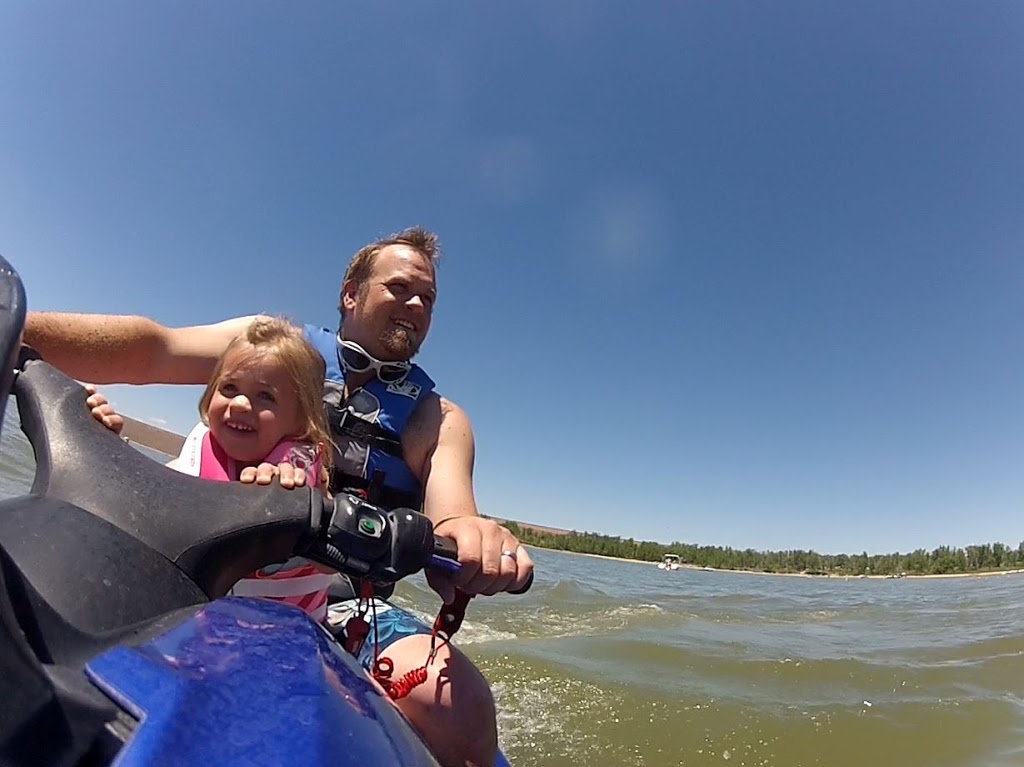
    When we went to the beach, Ashlynn saw my husband pull up on the jetski. She looked at her grandpa and me and announced, “Ashlynn play boats with Daddy?” I teared up immediately. I know I sound like such a sap, but when you are the parent of someone with apraxia and they say things and put novel words together in context, it is just the best feeling! I asked her if she wanted to ride the jetski with daddy, to which she enthusiastically replied “yes.” I of course then scripted the appropriate  way to ask the question and had her repeat, I want to ride the jetski with daddy.

    We still have a ways to go. We’ve been working on her using the first person “I” since before school was out. It’s just such a testament to how much repetition a child with apraxia needs, because I correct her and make her repeat her phrases and sentences using “I” every time she refers to herself as Ashlynn. We were so intent on getting her to learn her name that now it’s hard to get her to use something else.  However, I do know that she will get that too, and that’s a comforting feeling.

    Two years ago we took her to Glendo when she was 21 months old. At that time she had just learned to start walking really well and she only had a handful of word approximations. Unfortunately, anything that wasn’t a flat surface was difficult to walk on, so we still had to help her walk everywhere. She only had a handful of word approximations, and her favorite thing to say was “a dah.” and “hi.”  I’ve learned from my parent support group that most kids with apraxia have a go to sound that they use for everything, and “a dah” was Ashlynn’s.

    Fast forward though two years (and a lot of therapy and extracurricular activities to work on motor skills) and she was running on the beach and bending down on the sand. She is still unsteady in the waves and can’t be trusted around the fire pit for fear she will lose her balance and fall, but that will be a progress report for another time. For now, we celebrate that in two short years, a dah was replaced with a complex sentence asking to play boats with daddy, and now she fearlessly got up on the jetski.

    I look forward to coming years when she will be navigating around the campsite without fear of falling, swimming in the water, and maybe waterskiing or jetskiing on her own.  Also, I excitedly anticipate her talking our ear off around the campfire.