Category: dyspraxia awareness

  • Interview with Mikey.  The wish that turned into a passion.

    Interview with Mikey. The wish that turned into a passion.

    I am so excited to have probably my favorite person I know on social media I know with us today. His name is Mikey and he is admin to the page Mikey’s Wish – Verbal Dyspraxia Awareness. Mikey’s famous tagline is that himself and others with verbal dyspraxia/apraxia are “too cool to follow the neurotypical rule.”

    Mikey thank you so much for being here! For my readers who don’t know, can you start by telling us about yourself?

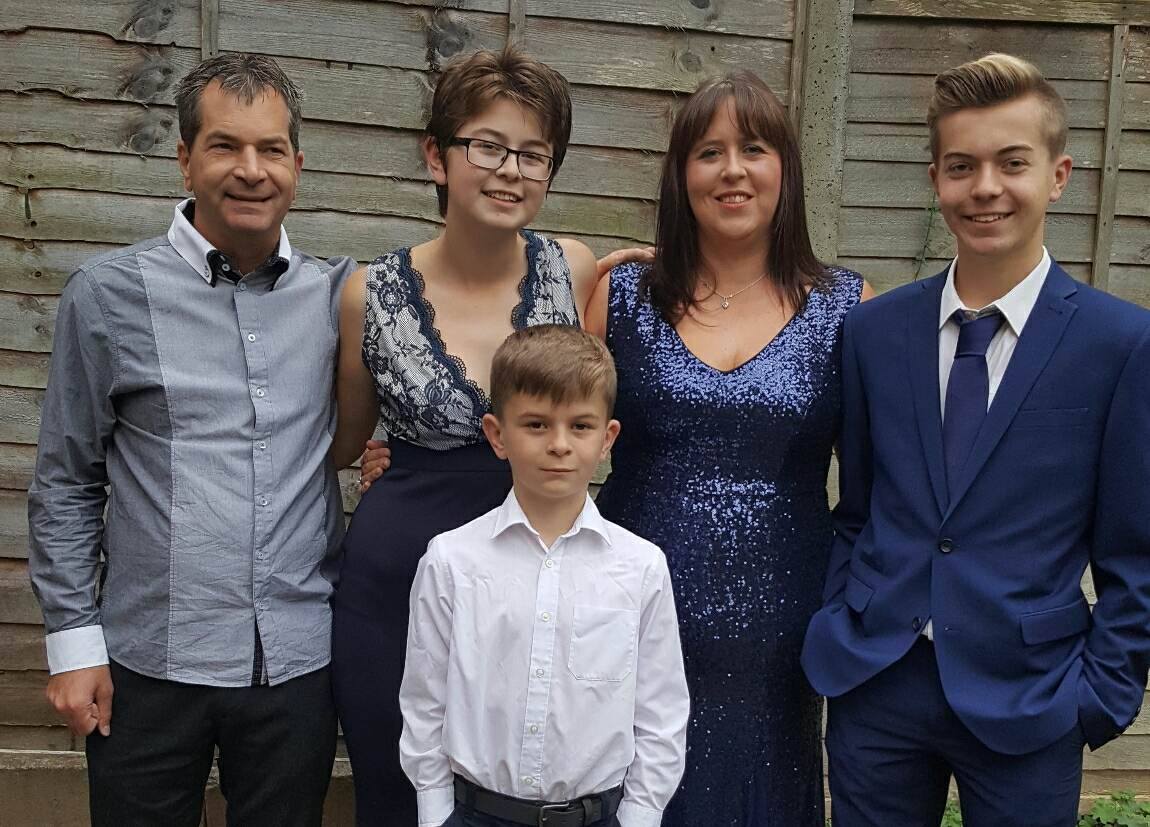
    My name is Mikey and I am 16 years old. I was diagnosed with verbal dyspraxia/apraxia when I was 2 and ½ years old. I live in a village just outside Birmingham in the UK. I finished school last year and I am now doing a level 3 photography course in college. I live with my mum, dad, older sister Becki and younger brother Ben. My family have been a huge support throughout my journey with verbal dyspraxia.
    1. What made you decide to start your facebook page of now 6000 worldwide followers and how have you seen it grow and evolve?

    I started my facebook page 3 years ago after writing a poem called ‘I am the Boy’ about living with verbal dyspraxia/apraxia and wanting more awareness. This prompted a conversation with my mum where she said that the loneliness and not knowing anyone else who shared my diagnosis was the hardest thing to live with. This made me think that if my mum felt this way there must be others feeling the same. I had seen many facebook pages about verbal dyspraxia but they were more about parents asking questions and looking for answers. I hadn’t actually seen one from the point of view of the person living with it. That is when, with support from my mum, I set up my Mikey’s Wish Facebook page. It started off with the aim to raise awareness but the more I shared my story of growing up and living with verbal dyspraxia/apraxia the more I realised that it was actually helping others who shared my diagnosis and their families. I began receiving messages from people thanking me for helping them to understand what their child might be going through and also helping their child realise that they were not the only ones living with verbal dyspraxia/apraxia. I was actually giving them hope for the future. Supporting others, knowing that I am helping others understand their child’s diagnosis and helping them realise that there are others sharing their diagnosis is the most rewarding part about sharing my story on my Facebook page.

    1. How has verbal dyspraxia/apraxia affected or changed you in more ways than just speech?

    When I was younger living with verbal dyspraxia was difficult. Struggling to talk in a world where so much importance is put on speech, watching all those around you find speech so easy wondering what is wrong with you is soul destroying. Then going to school, already feeling different, to then find out that you also struggle with reading and writing even at a young age knocks your confidence. My family and school had to fight to get a Statement of Educational Needs so that the school received the funding needed to give me the 1:1 support and speech therapy that I needed to have any chance of achieving. Even with all this support in place I still started senior school 4 years behind my peers, still feeling different and not good enough. My self esteem and confidence were really low. I was determined to improve. My speech was becoming intelligible and I had great support in school. I had access to 1:1 support in most lessons. Dyslexia was also mentioned throughout my schooling but because I already had great support in place it was decided that we didn’t need to push for a diagnosis. After 4 years in senior school I managed to all but catch up with my peers and I managed to gain 3B’s and 3 C’s in my GCSE’s and managed to secure a place at college doing a level 3 photography course. Even now, at 16 years old, having had amazing support from everyone around me I have huge anxiety surrounding my speech. I can’t bring myself to talk in front of people I don’t know and social situations can be difficult. Having said that I am surrounding by a large group of amazing friends. Verbal dyspraxia/apraxia, I believe, has moulded me into the person I am today. It has made me compassionate, quietly confident and determined.

    1. What would you want people to know about you and others living with verbal dyspraxia/apraxia?

    I would like people to know that those of us that happen to live with verbal dyspraxia/apraxia are just ‘normal’ people. We can understand everything that is said to us. We know in our heads exactly what we want to say but the messages from our brain to our mouth get mixed up causing our speech to become unintelligible. Once our speech becomes intelligible we can then also be left with word finding issues. If you are lucky enough to come across someone with verbal dyspraxia/apraxia just give us time to process what is said and find the words we need to answer you. Take the time to understand us. Not being able to talk does not mean that we are unintelligent. We are intelligent, amazing, hardworking and determined. Just take the time to get to know us and we could end up being the coolest person you know.

    1. What advice do you have for those growing up with and/or living with verbal dyspraxia/apraxia?

    The advice I would give to others growing up with verbal dyspraxia/apraxia is to work hard on their speech but don’t let it get them down. It will be a long, slow road but it will be so worth it. I know that it is hard growing up feeling different but as you get older you will realise that it is the difference that makes you, you. Fighting for a voice, facing adversity and overcoming everything that verbal dyspraxia/apraxia throws at you is what will mould you into the person that you will become. I would not be me or had all the amazing opportunities that I have had if I didn’t have verbal dyspraxia/apraxia and I am proud of who I have become and what I have achieved so far. You are amazing and don’t let anyone tell you any different. Embrace your uniqueness.

    1. What advice do you have for parents of kids with verbal dyspraxia/apraxia?

    The advice I would give to parents is be supportive but not too pushy. Fight to get your child the support they need but don’t make them feel any different from their siblings. My family have always been really supportive but they have never treated me any differently from my siblings. I have been given the same opportunities as them and never been stopped from doing or trying anything. Don’t push too hard with speech therapy. Obviously it needs to be done but try and do it in a way that the child doesn’t know they are doing it. Play family games and make it fun. It’s hard for a child spending all day in school and then come home and be sat down to do even more work, especially when it is so difficult and frustrating for them. Finally, it’s a long, hard road with no quick fixes so celebrate every tiny milestone.

    1. Why is awareness so important to you? What is your ultimate goal?

    Awareness is so important to me because it is the lack of awareness and understanding that is so difficult to live with. Having to explain to everyone you meet why you struggle to communicate or why your speech sounds ‘funny’. Everyone deserves understanding. Young children being called lazy because their speech is delayed when they live with a neurological speech condition is wrong! Parents being told that it is their fault because they didn’t talk or read to their child enough is wrong! Professionals having never heard of verbal dyspraxia/apraxia is wrong! Schools not having any strategies or understanding of how to teach those with verbal dyspraxia/apraxia is wrong! Discrimination in the work place because of some ones speech is wrong! Awareness and understanding of verbal dyspraxia/apraxia is the only thing that will help change all those wrongs. My ultimate goal would be for verbal dyspraxia to be known and understood in every school, college and work place so that those who share my diagnosis will get the understanding and inclusion that they deserve.

    Mikey I can’t thank you enough for this interview but also just for ALL that you are doing to for verbal dyspraxia/apraxia worldwide!  You are an amazing young man who gives me so much hope for Ashlynn and also comfort in knowing she has a worldwide community who has her back.  Thank you for encouraging her and all others!  You have already accomplished so much at 16 and I have confidence that in the future you will see all that you wish to see come true.  Maybe me and my daughter Ashlynn with apraxia will meet you one day!

    To follow Mikey and his story follow him on:

    Facebook: Mikey’s Wish – Living with Verbal Dyspraxia
    Twitter: Mikey’s Wish

    Instagram: Mikey’s Wish


  • “She’s a puzzle” or…. she has dyspraxia

    “She’s a puzzle” or…. she has dyspraxia

    [wysija_form id=”1″]

    It’s no secret apraxia, dyspraxia, and developmental coordination disorder are not well known. Ask any parent, or heck, even any professional, and you will find out pretty quick few people really know what it is.

    Hey, I was one!  I was one of those professionals before my daughter was born. Here’s the thing.  I had my bachelor degree and masters degree AND my SLP CCC certification, and yet I had very few pages detailing apraxia of speech. Dyspraxia?  Developmental Coordination Disorder?  Pretty sure I never even learned those two terms.  My masters degree program taught us to research, but should I have really had to “google” to figure out how to treat a kid with apraxia?  Shouldn’t that have been addressed in school? Shouldn’t dyspraxia and developmental coordination disorder at least been given a shoutout like all the other rare disorders I had to remember including Fragile X and Rett Syndrome?

    I digress though.  THIS is why we need dyspraxia awareness week, this year October 8th through the 14th.  Oh, I should mention awareness week was started in the UK by the dyspraxia foundation.  I hope to carry it over here to the U.S., because just because my daughter lives here it doesn’t mean it’s any less prevalent. 

    When I took my daughter in for her first Child Find Evaluation, I remember the PT(physical therapist) telling me,

    “She’s a puzzle.”

    If you are a professional reading this like I was once, you probably didn’t think much about that last statement.

    “She’s a puzzle.”

    We all have one of those kids on our caseloads that we just can’t quite put our finger on exactly what’s going on; and part of the diagnostic process is testing a kid and finding out all the pieces to the puzzle to help develop the best treatment plan for the child.  Sounds about right.

    I can tell you though, hearing your child is a puzzle is quite frankly heartbreaking as a parent.  A puzzle is something you haven’t figured out yet.  As a noun, the definition of a puzzle is, ” a game, toy, or problem designed to test ingenuity or knowledge.” As a verb, the definition of puzzle is “to feel confused because they cannot understand or make sense of something.” So, with those two things in mind, think of how you might feel when professionals who treat children who exhibit similar problems like your child tell you “She’s a puzzle.”

    I don’t want professionals to tell me she’s a puzzle.  I don’t want to know that she’s so unusual that her very being challenged your knowledge, or that you are confused by her.  I mean seriously?  As I’m further on in this journey now, and as I’ve been able to talk to numerous parents nationwide who have a child with apraxia and dyspraxia, I can tell you she’s not a puzzle at all.  Her presentation, to varying degrees, is exactly the same presentation as other children with her disability.  This includes a high likelihood of sensory processing disorder and attention problems to name a couple. Despite this, I was still told last week by someone that her attention issues are a “puzzle.”  Sigh

    This fabulous research article probably puts it best in their opening statement positing,

    Dyspraxia is an enigma to many people, both professional and lay alike

    Enigma now!  It’s ridiculous if it weren’t completely true.  Dyspraxia IS an enigma to both professional and lay people alike.  Listen, the only puzzle, or enigma that I can see after being on this journey for about 5 years now is this.  It’s puzzling THAT PROFESSIONALS IN THE FIELD don’t know about apraxia and dyspraxia.  Now THAT is the puzzle.  I’m including myself friends.  I’m not exempting myself.  How is it, that according to some data it’s prevalent in as high as 10% of the population, yet my daughter is “a puzzle.”  There’s something wrong with that.

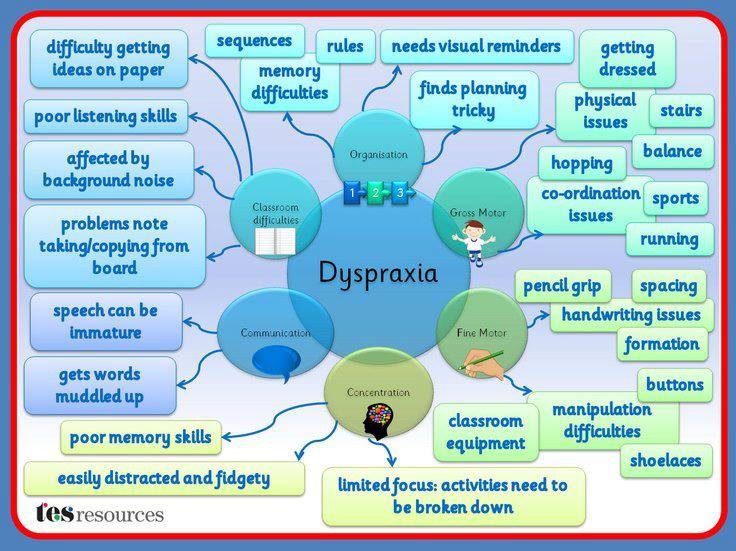
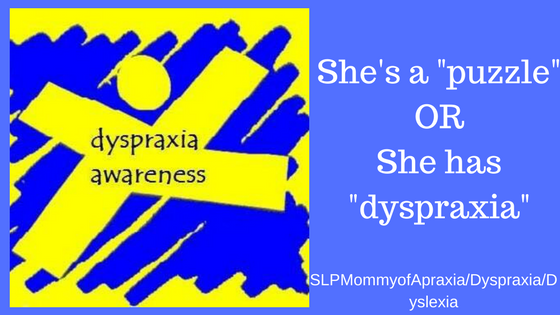
    A simple google search of dyspraxia, apraxia, and dyslexia though will reveal a list of symptoms that are exactly what my daughter has and experiences.  She’s not a puzzle at all.  She fits in all the little boxes of these graphics completely, like the one below. I could quite literally check every…single….box. I guess all the separate boxes resemble a puzzle, but if you put them together they all fit perfectly to complete that big box in the middle: dyspraxia.

    Ultimately though, this article is more than a rant.  This is a dyspraxia awareness post and this is what I want to see.  I want to see these disorders as understood and as well known as other relatively rare global developmental delays like Down Syndrome.  When a professional hears the word “Down Syndrome,” I can guarantee a list of characteristics common to those with DS will pop into their head.  There are always varying severities of course; but a professional is going to know what to expect and be better equipped to help them.

    I hope there is a day no other person with dyspraxia is told they are a puzzle or an engima and instead is greeted with, “Oh dyspraxia?  Okay.  We know exactly how to help you.”

  • Ashlynn play boats with daddy.

    Ashlynn play boats with daddy.

    This past Fourth of July weekend we went on our annual trip to Glendo State Park in Wyoming. My husband and I have been going since before we had kids. Without getting into all the details, once you go to Glendo for the Fourth, you always go back if you can! Last year we couldn’t go because I was having my son so we were very excited.

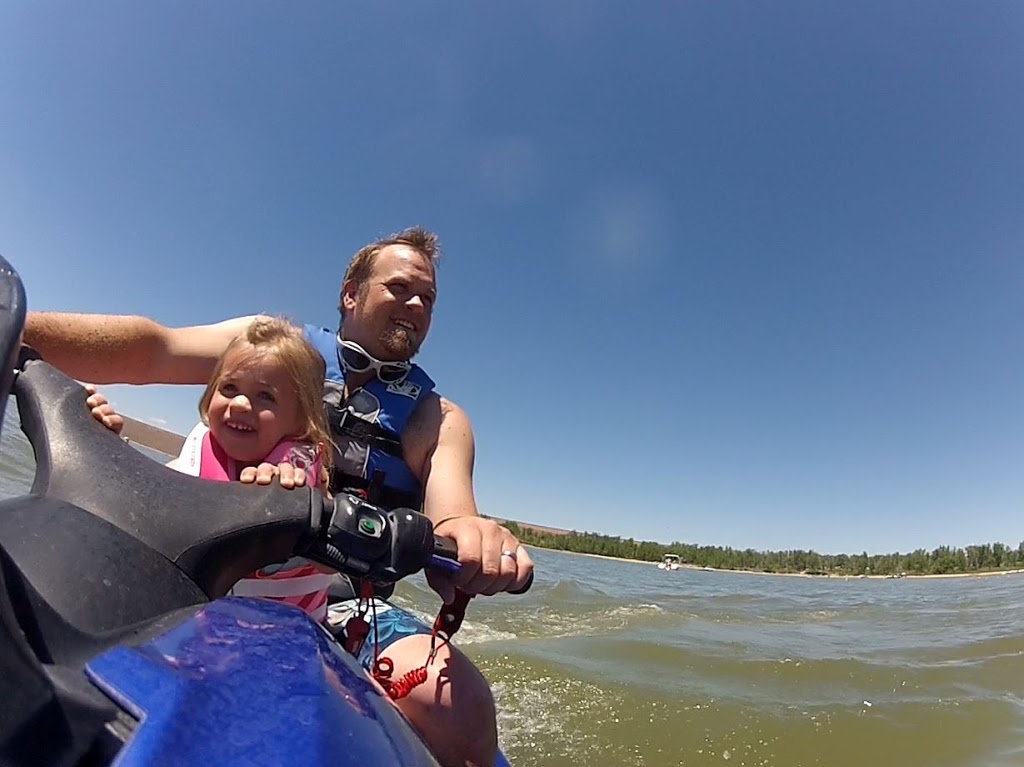
    When we went to the beach, Ashlynn saw my husband pull up on the jetski. She looked at her grandpa and me and announced, “Ashlynn play boats with Daddy?” I teared up immediately. I know I sound like such a sap, but when you are the parent of someone with apraxia and they say things and put novel words together in context, it is just the best feeling! I asked her if she wanted to ride the jetski with daddy, to which she enthusiastically replied “yes.” I of course then scripted the appropriate  way to ask the question and had her repeat, I want to ride the jetski with daddy.

    We still have a ways to go. We’ve been working on her using the first person “I” since before school was out. It’s just such a testament to how much repetition a child with apraxia needs, because I correct her and make her repeat her phrases and sentences using “I” every time she refers to herself as Ashlynn. We were so intent on getting her to learn her name that now it’s hard to get her to use something else.  However, I do know that she will get that too, and that’s a comforting feeling.

    Two years ago we took her to Glendo when she was 21 months old. At that time she had just learned to start walking really well and she only had a handful of word approximations. Unfortunately, anything that wasn’t a flat surface was difficult to walk on, so we still had to help her walk everywhere. She only had a handful of word approximations, and her favorite thing to say was “a dah.” and “hi.”  I’ve learned from my parent support group that most kids with apraxia have a go to sound that they use for everything, and “a dah” was Ashlynn’s.

    Fast forward though two years (and a lot of therapy and extracurricular activities to work on motor skills) and she was running on the beach and bending down on the sand. She is still unsteady in the waves and can’t be trusted around the fire pit for fear she will lose her balance and fall, but that will be a progress report for another time. For now, we celebrate that in two short years, a dah was replaced with a complex sentence asking to play boats with daddy, and now she fearlessly got up on the jetski.

    I look forward to coming years when she will be navigating around the campsite without fear of falling, swimming in the water, and maybe waterskiing or jetskiing on her own.  Also, I excitedly anticipate her talking our ear off around the campfire.


  • Baby development screens

    Baby development screens

    When I held my baby, and even when she was in utero, I had visions and dreams of her being this incredibly verbose child with a large vocabulary.  In fact, I dreamed she would be like me.  The first few months brought all the regular milestones: tracking with her eyes, smiles, giggles, and even rolling over.

    However, she did have a case of very pointy toes.  So pointy in fact, I couldn’t get her foot into a flexed position to even put on shoes.   During her developmental screens I filled out at the doctor’s office, she started losing pace. Motorically, she wasn’t able to sit alone without help at 6 months, she wasn’t crawling, or even able to get up on her legs and rock back and forth.  Verbally, she wasn’t babbling.  She would coo, but not babble.  I just didn’t get it.  Despite my almost constant visual modeling and babbling to her, she would just smile and giggle.  I put her in front of mirrors to have her look at her mouth, but she appeared disinterested.  I consulted with other colleagues who gave me all the suggestions I was already doing, and told me not to worry.  There was one colleague who suggested baby sign and told me lack of babbling was a sign of apraxia, but I wasn’t ready to hear that.  However, I did start signing with her.  I bought the signing time videos and signed to her throughout the day.  Peculiarly though, she wasn’t able to imitate my signs either.

    To address the pointy toes, her pediatrician and I discussed the possibility of CP based on my case history of her delivery.  We talked about a referral to a neurologist, but I was convinced I could help her.  The pediatrician told me to work out her calves daily which I did religiously every night in the bathtub.  Her calves were so tight and I would have to massage them until I could finally get a small flex in her foot.   By a year she was able to flex her feet and I was praised by the pediatrician who said it was so great she had such a knowledgeable momma.  I didn’t realize this would start my damaging thought process that if I sought help I wasn’t being a good mommy.

    Since she only had one word “hi” at 1 year and wasn’t even babbling other sounds, the pediatrician raised her eyebrows and told me she could make a referral to child find.  However, I was convinced that another SLP couldn’t do anymore 30 minutes or 60 minutes a week than what I was doing with her every spare chance.  I utilized all my therapy techniques.  We continued with sign, even though she only caught on to a few, and we played while making various sounds, since imitating sounds precede speech.  I bought a play zoo and play farm and I made the noises the various animals make while she sat quietly and giggled.  I would ask her to say, “moo” or “quack” and she would just smile. We played with cars and pull toys while I made the sounds “vroom, bonk, beep beep, etc.”  She wouldn’t utter even a sound.  I bought and read books that were repetitive such as “Brown Bear” or books that had sounds such as “Mr. Brown can Moo, Can You?”  I was so frustrated as the days went on, but continued to try and work with her every night after work KNOWING that these techniques are evidence based and WORK!  I kept telling myself I knew they would work eventually.  I remembered reading a study in regard to the Hanen therapy model of teaching parents how to work with their children with a speech delay.  In it, the authors said that the techniques are used by parents of typically developing children that are just abandoned by parents of children with a speech delay because they don’t appear to be working.  If there is no reward or positive feedback (i.e. the child mooing when the parent moos), than the parent will not do that anymore.  I was determined to stick with the techniques despite weeks and months going by without them seeming to work.

    My husband, sensing my frustration, bought a baby babble CD.  He explained it wasn’t to undermine me, but just to help.  I was actually relieved.  Maybe they knew something I didn’t.  There was a tip section for parents on working with children.  I watched it over and over hoping to glean something I wasn’t doing, but I was doing everything they suggested and then some.  Ashlynn was so smart, but why wasn’t she talking??