Category: dyslexia

  • Does my child have dyslexia?

    Does my child have dyslexia?

    If you have a child with a speech or language disorder, you have probably heard that they are “at risk” for future learning disabilities.  What are the prevalency rates though, and what does the actual research tell us?

    A study by Catts (1993) is a frequently cited study and found that,

    The literacy outcomes of children with SSD (speech sound disorder) have provided convincing evidence that children with SSD and concomitant LI (language impairment) (SSD+LI) have higher rates of literacy difficulties than children with isolated SSD.

    So what does this mean?  How high are the higher rates and what exactly are “literacy difficulties?”

    In 2004, Lewis et.al followed 10 children diagnosed with CAS (Childhood Apraxia of Speech) and compared literacy outcomes for them into the school aged years along side kids who were diagnosed with SSD (speech sound disorder) and another group who had SSD + LI (language impairment). At follow up, all 10 children with CAS demonstrated co-morbid disorders of reading and spelling.  This was a small sample size, but let me reiterate, ALL TEN children with CAS had future problems with reading and spelling.  Co-morbid rates though can’t be 100% right?

    A study in 2011 by Anthony et.al found that,

    Children with SSDs are at increased risk of having difficulties learning to read (Bird, Bishop, & Freeman, 1995; Bishop & Adams, 1990; Carroll & Snowling, 2004; Catts, 2001; Larivee & Catts, 1999; Raitano et al., 2004; Roberts, 2005; Snowling, Bishop, & Sothard, 2000). In fact, between 30% and 77% of children with SSDs struggle with reading (Bird et al., 1995; Larrivee & Catts, 1999; Lewis, 1996; Nathan, Stackhouse, Goulandris, & Snowling, 2004). Children with SSDs have as high a risk of developing a reading disability (RD) as children with a family history of RD (Carroll & Snowling, 2004), which is remarkable in light of heritability estimates for RD that range from 40% to 70% (e.g., Friend, Defries, & Olson, 2008; Pennington, 1989). The risk of children with SSDs having literacy problems increases with comorbid language disorders (Nathan et al., 2004; Raitano et al., 2004), severity of the SSD (Nathan et al., 2004), persistence of the SSD (Nathan et al., 2004; Raitano et al., 2004), and patterns of articulation errors that do not follow developmental trajectories (Leitão & Fletcher, 2004; Leitão, Hogben, & Fletcher, 1997; Mann & Foy, 2007; Rvachew, Chiang, & Evans, 2007).

    A study by McNeill (2009) found:

    The results indicated that the CAS group had inferior phonological awareness than the ISD and typical development groups. The CAS group had a greater proportion of participants performing below their expected age level than the comparison groups on phonological awareness, letter–sound knowledge and decoding tasks. There was no difference in the performance of the CAS and ISD groups on the phonological representation task.

    In this study, speech sound disorders are all lumped together.  Speech sound disorders include: phonological disorder, articulation disorder, and apraxia.  Depending on the study, anywhere between 30% to as high as 77% of children with a “Speech Sound Disorder” have difficulty learning to read.  That’s the quite the gap right?  There is almost a 50% discrepancy between studies.  So what gives?  Who is more at risk?

    We know every co-morbidity(which is a fancy word for additional diagnoses) increases the risk.  This especially includes children who have a language disorder.  This includes kids diagnosed with “mixed receptive/expressive language disorder,”  SLI (specific language impairment), language disorder, or language processing disorder

    I also bolded the phrase “patterns of articulation errors that do not follow developmental trajectories,” because up until 2007, apraxia was not officially recognized as a distinct childhood speech disorder by the American Speech Language Hearing Association. This is only relevant because the studies this data is taken from all are around 2007 and before; and if you know what apraxia is, it is a speech sound disorder, but also a motor planning disorder that does not present with patterns of errors and may or may not follow developmental norms for articulation.  In the above information, that EXACT description increases the risk for a reading disorder.

    The most recent research is now indicating dyslexia is a phonological processing disorder that parallels the core phonological deficit in speech sound disorders (Anthony et al., 2011). This research is groundbreaking because before we knew the risk for reading disability was higher in kids with SSD’s, but we didn’t have research telling us why.

    The bottom line though is this.

    Any childhood speech and language disorder increases the risk for a future reading disability.

    It would appear that children with CAS are at an increased risk, and those with CAS plus a language impairment or comorbid phonological disorder, are even more at risk.

    Are all reading disabilities then dyslexia?  The short answer is no, but dyslexia is by far the most common reading disability and can manifest in varying severities.  If you read research articles, reading disorder and dyslexia are almost synonymous.  For example in the 2004 article by Vellutino et al., this is the opening statement.

    We summarize some of the most important findings from research evaluating the hypothesized causes of specific reading disability (‘dyslexia’) over the past four decades.

    According to the National Institute of Child Health and Human Development, “reading and language based learning disabilities are commonly called dyslexia,” and according to the International Dyslexia Association,

    15-20% of the population has a language-based learning disability. Of the students with specific learning disabilities receiving special education services, 70-80% have deficits in reading. Dyslexia is the most common cause of reading, writing and spelling difficulties. Dyslexia affects males and females nearly equally as well as, people from different ethnic and socio-economic backgrounds nearly equally.

    The schools do not diagnose dyslexia, although they give all the same tests that learning centers give to diagnose it.  Schools are an educational entity, and thereby give “educational” diagnoses. The educational diagnosis for dyslexia is specific learning disability.  Knowing prevalency data and co-morbidities better equips special education teachers, parents, and other professionals to implement treatment strategies that can include pre-cursory and preventative measures to address potential and additional difficulties later in the child’s academic career.

     

  • Why you are the CEO and CFO in special needs parenting

    Why you are the CEO and CFO in special needs parenting

    A discussion in one of my groups the other day centered around the fact that parents of kids with special needs have to be the CEO on their child.  This extends beyond the idea that we are experts on our child.  The CEO, by definition, is in charge of making all management decisions.

    Parents of children with special needs have to be the CEO, and there is LOT to manage.

    Some days, it can feel unmanageable.  A CEO is typically responsible for the success of a company, which is no doubt stressful; but a parent feels they are responsible for the success of something even greater than a company……

    Parents feel they are responsible for the success of their child’s future.

    I know all parents feel this way about all of their children of course, including those with special needs.  However, the stakes are higher when you have a child with some sort of delay or disability.  A child with special needs is already starting life behind the eight ball.  A parent of a child with special needs feels intense responsibility to give them the best chance at a normal life, which is hard enough in this world without a disability!

    Parenting a child with special needs is a juggling act.

    When a parent has a kid with special needs, they spend their time not only at the pediatrician, but are bounced from specialist to specialist in many cases, just in an effort to get an actual diagnosis.  Kids with special needs in many cases have visited developmental pediatricians (different from regular pediatrician), neurologists, and psychologists. They have had blood taken, scans done, and more doctor visits to discuss results.  They have been poked, prodded, and examined more than the neuro-typical peer.  Their tiny bodies might have been subjected to sleep studies, sedation, and sometimes surgery.

    Therapy is always in the mix.  They may see occupational therapists, physical therapists, speech therapists, play therapists, behavior therapists, early interventionists, vision therapists and the list goes on.  Seeing a therapist always means another new evaluation, where this child who struggles anyway is subjected to tests and judgement calls as to their performance compared to typical peers.

    Obviously, there are only so many hours in a day and so a parent; the CEO if you will, has to choose  and prioritize many of the above listed appointments and even others not on this list.

    Unless you have been in this position, you have no idea how excrutiatingly difficult it is to decide which doctor or therapy your child needs most or more.

    Remember what I said before.  As a person making these decisions, the weight of your child’s future feels like it lay squarely on your shoulders.  Hopefully, you can get an appreciation of how big that weight becomes.

    Let’s not forget though, money.  All of these things cost money.  Insurance in many cases does not cover the brain scans, the MRI’s, the evaluations and the therapies.

    It causes a parent to become the CFO for their child as well.

    A CFO is responsible for the financial affairs.  Oh, and in the case of a parent with special needs, one doesn’t count on paying thousands of dollars out of their budget when they are starting a life with their partner, buying their home, and preparing for a new baby.  I had a supervisor tell me once at a private practice, no one can afford therapy, because no one counted on the huge hit to the budget these therapies, doctor appointments, and evaluations will cost your family.

    If you are lucky to get some sort of disability, Medicaid, or scholarship to help fund the cost; it’s not without another price.

    Time.

    All of these applications take an enormous amount of time.

    Parents need to gather required documentation, letters from insurance companies, doctors, evaluations, tax returns, and medical records to name a few.  A parent will spend hours filling out paperwork, spending time on the phone, and listening to hold music.  This time is well spent if a parent can get insurance to cover or get money to help with expenses; however, prioritizing time and finding time is not easy when we are shuffling our kids to doctor appointments and therapy appointments (see above).  This on top of finding time to put them in “typical” kid stuff like soccer or gymnastics and letting them go to birthdays like other kids do; in hopes that they can feel “normal” at least some of their childhood.

    If we are lucky, there are times we CEO parents find the perfect team.  We’ve got the diagnosis, the plan and team of therapists to treat it, and we see our child do the most amazing thing in the entire world……

    Make PROGRESS

    It’s probably the most beautiful gift in the entire world and in that moment; all the guilt, all the stress, all the worry, all the money, and all the time was 100% worth it.


  • No, not another diagnosis. Adding Dyslexia to Apraxia

    [wysija_form id=”1″]I had an epiphany the other day.  It came after reading an article someone sent me discussing how American schools are failing kids with dyslexia.   It was an excellent article and accurate in every way.  I started my career in Denver Public Schools in 2004, and at the time, an approach called “whole language” was being used to teach reading.  Just four years before this time, in 2000, my mentor (and now Ashlynn’s SLP) was telling me about the 2000 National Reading Panel Results that showed there were 5 components of reading that children needed to read, and whole language was missing many of them, particularly the two that had to do with phonological awareness and decoding.

    During my career in Denver, a special education coach named Robert Frantum Allen, came out and was training our intervention and special education staff to look at struggling readers and identify the component of reading in which they were having the most difficulty.  I remember the ones that were the most prevalent were in the areas of phonological awareness and decoding.  Many teachers weren’t even testing phonological awareness, and since the schools were using a whole language approach, it wasn’t getting taught either.

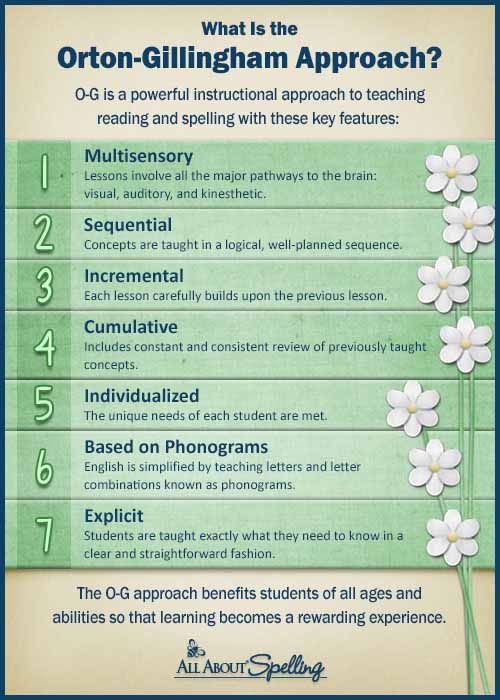
    I was in a Title 1 school, which in some ways is good because we get more funding to get more intervention teachers.  We had a great response to intervention system set up, with teachers hired to do 6 week intervention and track data on struggling readers.  The interventions included LLI (leveled literacy instruction) and Reading Recovery.  These were great programs for our ELL (English Language Learner) students, but for our kiddos who would eventually fall into special education, they weren’t helping at all.  I remember Robert stressing to us that these interventions would not remediate our kids with a reading disability (dyslexia) because they did not identify and then focus on the root cause of the issue, which in many cases was phonological awareness.  He believed 100% in an approach called Orton Gillingham or approaches based off this reading program.  In the school I was at, I had two Kindergarten kids come in with apraxia, and they THRIVED on an OG approach called Fundations.  OG has a TON of research and is in many cases considered the gold standard for reading intervention approaches.

    At the time, I didn’t have the research to back up Mr. Frantum Allen’s claims, but I had my professional experience which consistently showed our kids with a reading disability did not make growth in these reading intervention approaches; but the kids receiving an OG approach to reading did.

    I have never forgotten all the training and professional experience, but a little thing called apraxia kinda took over my life.  That is, until I read that article I mentioned above.  Everything I learned in DPS came flooding back, especially when I read the line that said one teacher said she didn’t learn how to teach kids how to read until she was trained in Orton Gillingham.  It went onto say many are now advocating for a “balanced approach” to reading as opposed to a whole language approach, but basically we are just doing a bunch of things that don’t work with some things that work really well.

    In that moment, my dear readers, I had the same gut feeling I had when that SLP told me back when Ashlynn was 2:11 “Laura this is apraxia.”

    In that moment, that article told me, “Laura, this is dyslexia.”

    I started to cry at the end of that article.  Damnit.  I missed it again.  I missed another OBVIOUS dx in my OWN daughter.  Why does this keep happening??  What good was all my training and experience when I’m not applying it to my OWN baby??

    Maybe it’s not dyslexia Laura.

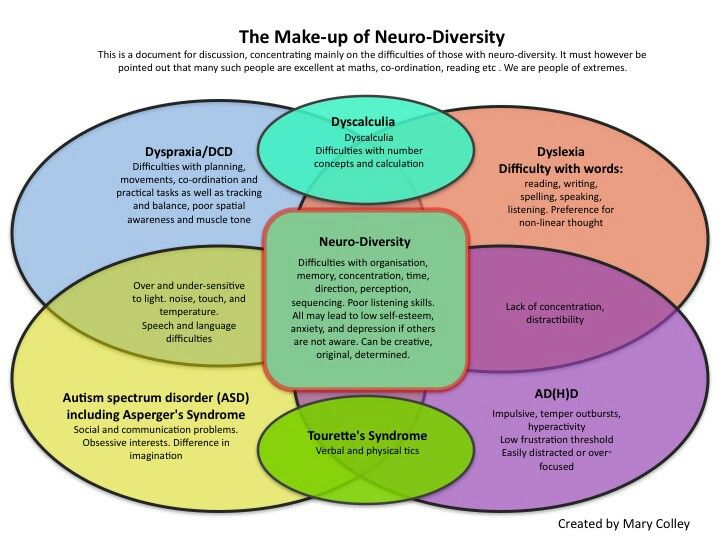
    Oh no.  It is. It IS. How do I know this?  Ashlynn participated in a balanced literacy intervention over the summer.  She did make progress in some areas, but she just took the test at school and her scores were….the exact same.  It changed by 1 point.  Didn’t I say I SAW THIS EXACT THING in DPS when I worked there?  My kids with reading disabilities didn’t make progress with those approaches. I started thinking about how she still can’t rhyme (despite me working on it constantly), still has trouble identifying how many syllables are in a word (despite clapping them out since preK), has a poor working memory….I mean everything I KNOW she is struggling with correlates with dyslexia.  Look at my graphic at the way top.  Dyspraxia and Dyslexia and all those neurological disorders overlap.  But here we are, my daughter is in 2nd grade, and I’m just NOW seeing the writing on the wall. I think for so long I wanted to explain her problems were based on apraxia.  I was totally missing the forest for trees again.

    You know what else sucks?  Kids who have poor reading skills by 3rd grade usually remain behind until 9th.  I remember that chilling statistic because when you work in an inner city, the fear is that by 9th grade if a kid is still struggling academically, they will drop out.  Someone will have to put me in a grave first before Ashlynn drops out, but I remember being worried about the 4th and 5th grade kids I had on my caseload at the time.

    Oh and this is not to mention we have older adults now who have grown up to talk about apraxia such as Gage GoLightly who says she had dyslexia too, or Daniel Radcliff who had dyspraxia and dyslexia.  I know these disorders all have crazy comorbid prevalencies.

    So, long story short, is, I have Ashlynn on the 6-8 month wait list for the learning center at Children’s Hospital.  Yes the school could test her, but schools don’t dx dyslexia. I know this.  I work in one.

    I hired a tutor who will come 2x a week trained in OG.  I should have done this two years ago, just like I should have had Ashlynn in the right speech therapy a year before I did too.  If I can take any solace in any of this, it’s that someone reading my blog will learn from my mistakes.  It wasn’t too late for Ashlynn’s speech, and hopefully it’s not too late for her reading either.