Category: Childhood Apraxia of Speech

  • Ashlynn update 3.10 years

    Ashlynn is in a regular preschool this year with about 15 other kids.  Most are typical with about six on IEP’s.  I asked the SLP if she was talking at all in the classroom, and she looked at me like I was crazy and then answered “yes?”  I presumed it meant she was surprised that I didn’t think Ashlynn was!  In the Spring, Ashlynn was still gesturing and pointing in the the classroom to express her wants/needs, even though she was speaking at home in 2-4 word phrases; so this is major progress!

    Ashlynn for all intents and purposes can be considered verbal at this point.  She no longer gestures to comment or request; rather, she relies on her speech to communicate.  Her sentences are approximately 2-4 word in length, usually including a subject and verb.  Since she started school, I’m getting a lot more of, “momma wook(look)!!” or “momma! watch!”

    Her Grandma and Grandpa both had surgery recently, and a cute thing she said was,

    “Dama (Grandma) ha (have) an owie, Papa ha an owie…..daddy ha an owie too?”  Haha  She says a lot of stuff now that makes me laugh.  I remember waiting for the day I would hear her say cute things, and actually being sad thinking we were missing out on all the funny things kids say as they are learning language….but we are experiencing it…just a little later than some.


  • Ashlynn play boats with daddy.

    Ashlynn play boats with daddy.

    This past Fourth of July weekend we went on our annual trip to Glendo State Park in Wyoming. My husband and I have been going since before we had kids. Without getting into all the details, once you go to Glendo for the Fourth, you always go back if you can! Last year we couldn’t go because I was having my son so we were very excited.

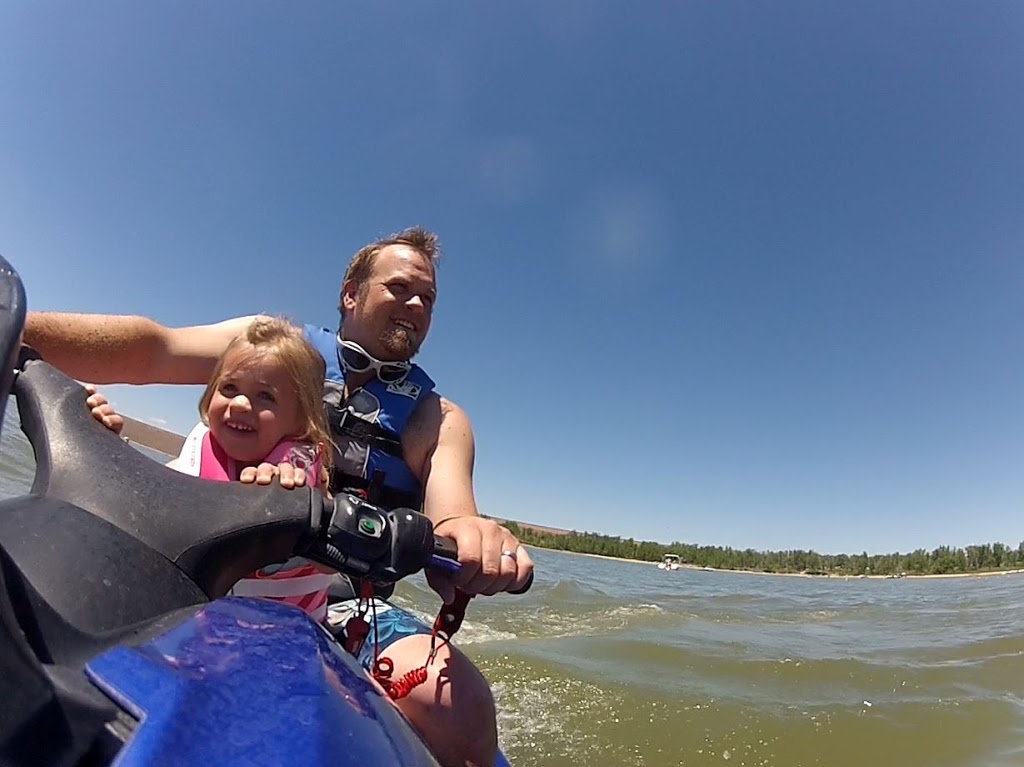
    When we went to the beach, Ashlynn saw my husband pull up on the jetski. She looked at her grandpa and me and announced, “Ashlynn play boats with Daddy?” I teared up immediately. I know I sound like such a sap, but when you are the parent of someone with apraxia and they say things and put novel words together in context, it is just the best feeling! I asked her if she wanted to ride the jetski with daddy, to which she enthusiastically replied “yes.” I of course then scripted the appropriate  way to ask the question and had her repeat, I want to ride the jetski with daddy.

    We still have a ways to go. We’ve been working on her using the first person “I” since before school was out. It’s just such a testament to how much repetition a child with apraxia needs, because I correct her and make her repeat her phrases and sentences using “I” every time she refers to herself as Ashlynn. We were so intent on getting her to learn her name that now it’s hard to get her to use something else.  However, I do know that she will get that too, and that’s a comforting feeling.

    Two years ago we took her to Glendo when she was 21 months old. At that time she had just learned to start walking really well and she only had a handful of word approximations. Unfortunately, anything that wasn’t a flat surface was difficult to walk on, so we still had to help her walk everywhere. She only had a handful of word approximations, and her favorite thing to say was “a dah.” and “hi.”  I’ve learned from my parent support group that most kids with apraxia have a go to sound that they use for everything, and “a dah” was Ashlynn’s.

    Fast forward though two years (and a lot of therapy and extracurricular activities to work on motor skills) and she was running on the beach and bending down on the sand. She is still unsteady in the waves and can’t be trusted around the fire pit for fear she will lose her balance and fall, but that will be a progress report for another time. For now, we celebrate that in two short years, a dah was replaced with a complex sentence asking to play boats with daddy, and now she fearlessly got up on the jetski.

    I look forward to coming years when she will be navigating around the campsite without fear of falling, swimming in the water, and maybe waterskiing or jetskiing on her own.  Also, I excitedly anticipate her talking our ear off around the campfire.


  • Speech Stickers App for Apraxia Review

    Speech Stickers App for Apraxia Review

    Speech Stickers is the first app that I downloaded for Ashlynn (my daughter with apraxia) when she had first turned three.  I chose it because it was cheap, and said it was developed for children with apraxia.  The app is simple in design with not a lot of bells and whistles; however, my daughter loved practicing her speech with this app.

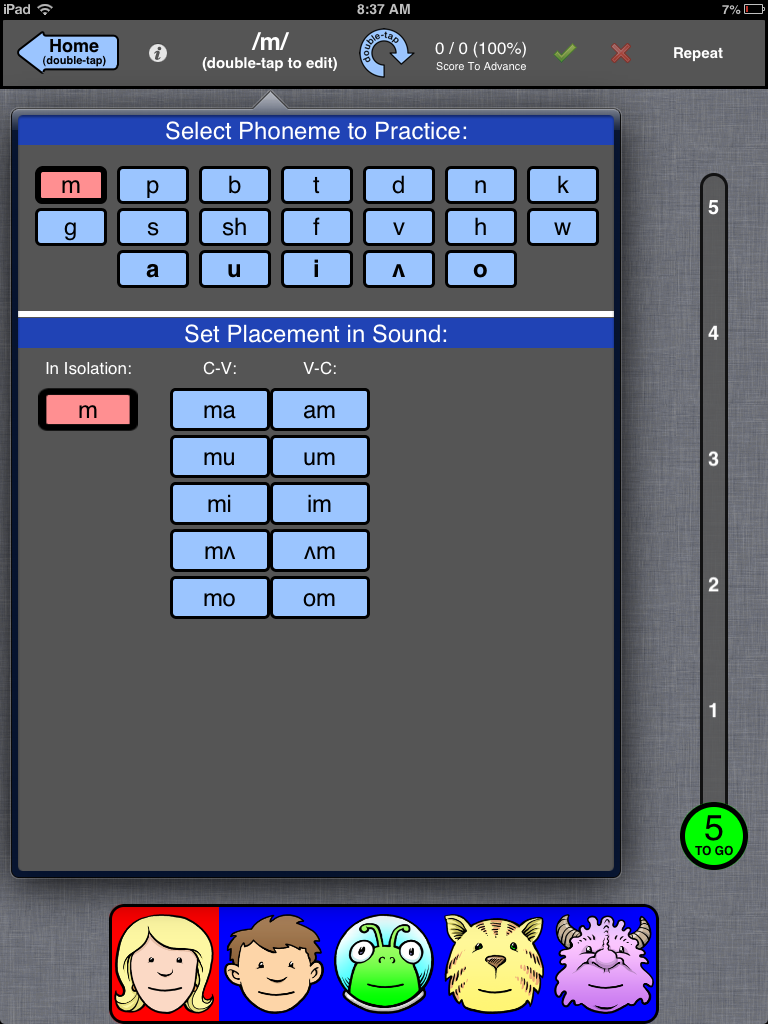
    The app is set up for kids in the very early stage of apraxia therapy.  The child can practice sounds in isolation and in CV(consonant-vowel) and VC(vowel-consonant) combos. The app is based around blocked practice with a lot of repetition that is necessary for apraxia therapy.

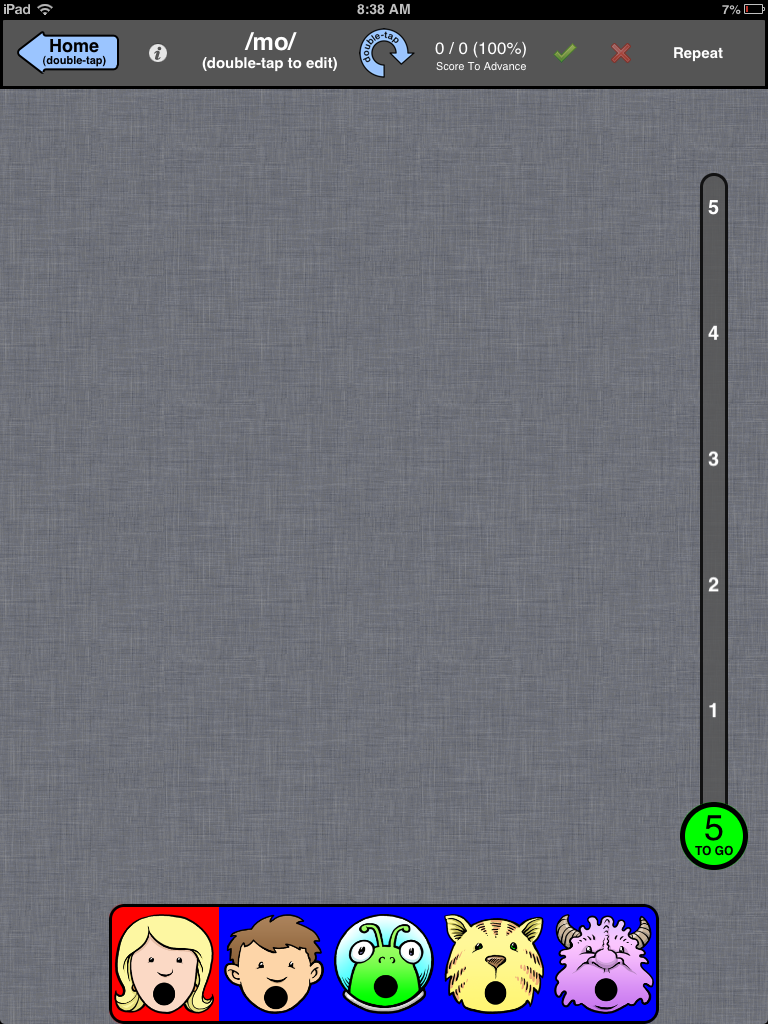
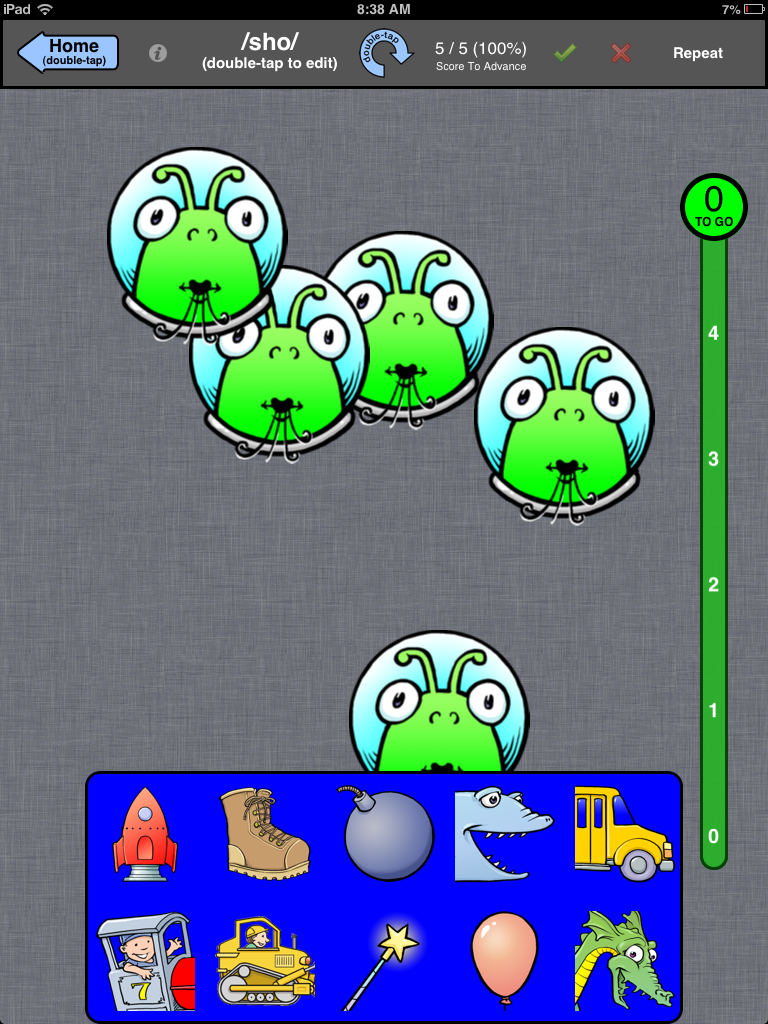
    After you pick your sound or sound combo, you can then decide how many times times the child has to say it before they get a “sticker” or a little animation as a reward.  Then, the child chooses between five characters on the bottom, all of which have a different pitch to their voice.  This is a bonus too, because children with apraxia have difficulty with “prosody” or the melody of speech.  The characters’ mouths model the correct placement.  The above picture is showing ‘m.’  Below the characters are modeling ‘mo.’ This is also great because it gives the kids a visual cue for the correct mouth posture.
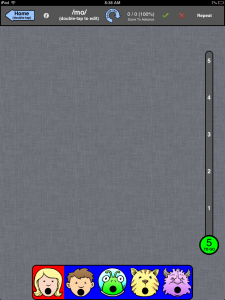
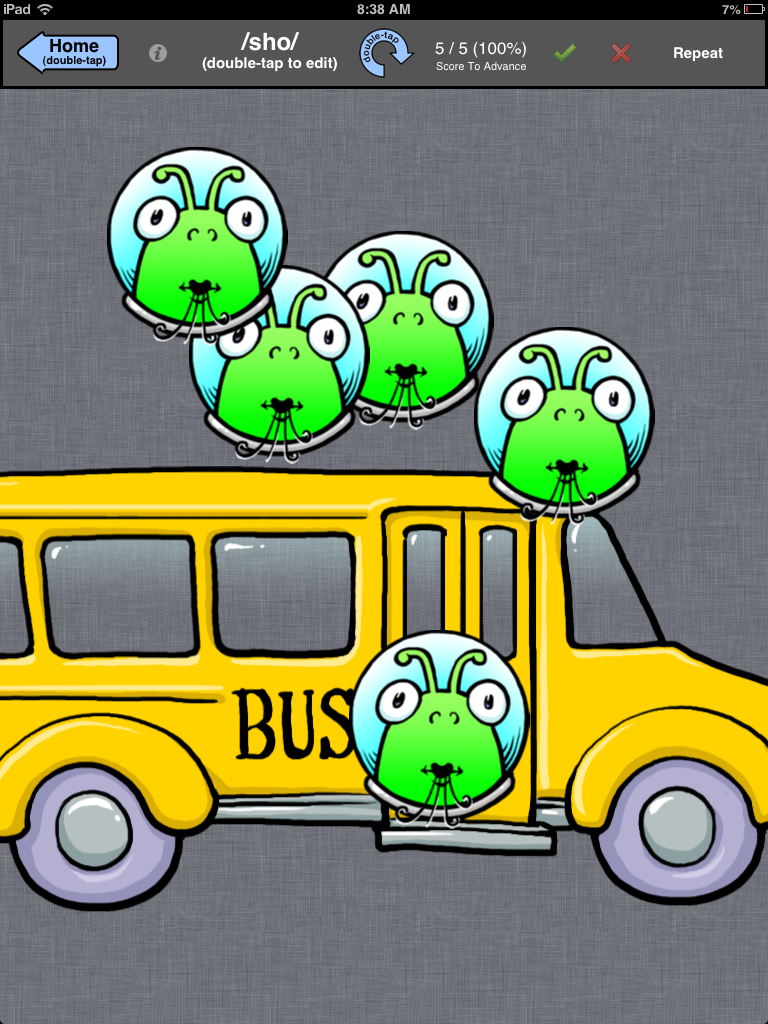
    A scoring bar at the top help score and keep track of data. You must press the green check or the red x to move onto the next practice sound.  The app is designed so that the bar can also turn upside down so that the therapist can discreetly score; however, my daughter picked up on this in a heartbeat and would push the buttons haphazardly just so she could move on!    Once you reach the set number you earn a “sticker” or reward.  You can choose from eight stickers seen below:

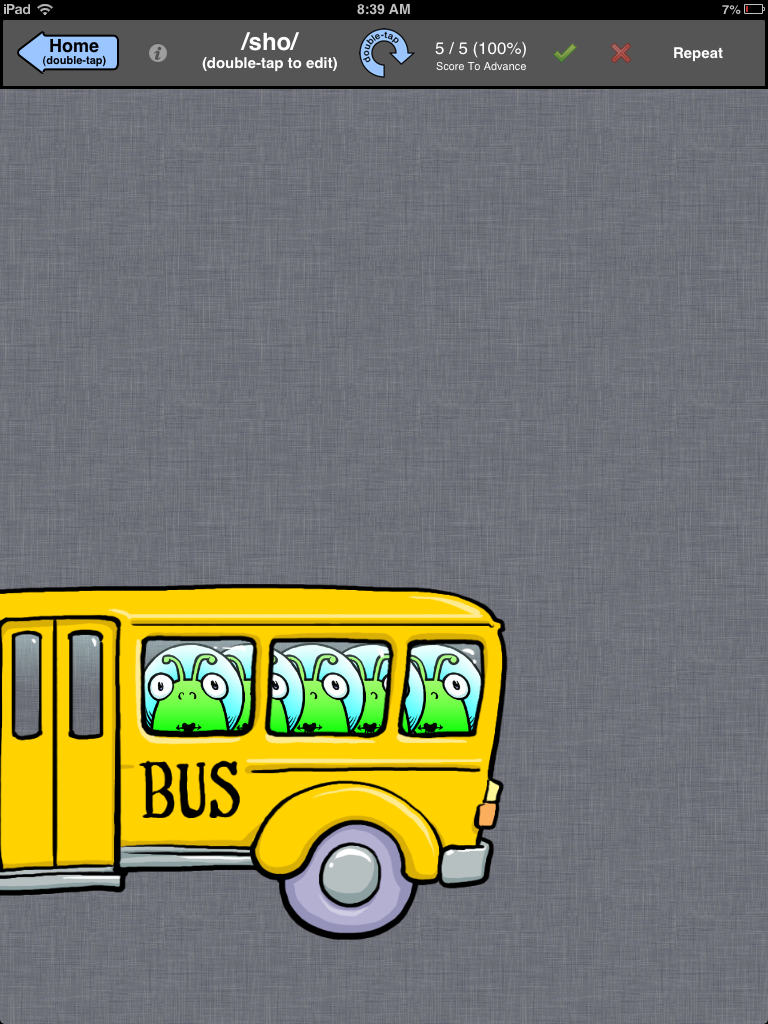
    They are so simple, but my daughter loved them.  I chose the bus just so you can get an idea of the animation.

    It has been almost three years since I have used this app for Ashlynn, but the app lives on with all of my clients!  Kids of all ages and disabilities LOVE this app.

    I have a 5th grade boy with Down Syndrome who laughs every time he earns a sticker and watches the animation.

    I have a 3 year old who loves picking the alien because it reminds him of a popular TV show right now “The Octonauts!”

    I could go on!  Really, I can’t say enough about this app, and when I reached out to the creator Carol Fast MSPA, CCC-SLP I realized why this app is soo good.  Here are some comments from her:

    “It’s truly been a labor of love for me and I’m always gratified to find that other SLPs appreciate what we do. I’m glad that you found Speech Stickers to be helpful for your daughter and other students.  I work mostly with preschoolers and have found a special interest and passion in my little nonverbal CAS kids. I really love helping find their true voice. This is probably the most rewarding work I’ve done in over 30 years as an SLP.”

    Thank you Carol!  Thank you for your passion for working with kids who have CAS and for a great app that allows us to get a lot of repetitions of targeted syllable shapes in a fun and engaging way for the kids.

    What I Love: 
    – Works on early developing syllable structures
    – It really helped us work on final consonants when my daughter wasn’t adding them.  Helped us get the final ‘n’ and final ‘t’
    – Gives a reward in the form of a short animation that is interesting to kids
    – Models different pitches and inflections, which is difficult for kids with apraxia

    What it’s Missing
    I would like the option for the child to record their voice
    – As an SLP, I would appreciate the option to email the data
    – It doesn’t include more complex syllable structures such as CVC and CVCV, so it’s only applicable for the early stages of therapy

    Impressions:
    This app was helpful during the early stages of therapy, when Ashlynn was struggling to sequence basic syllable structures.  She had just turned three, and was motivated to practice speech.  In addition, she loved the sticker rewards.  It did help us get those final consonants that she was struggling with too.
    As an SLP, I have also used this app with a five year old, and he enjoyed it too.  For the price, I would recommend this app if you have a kiddo in the early stages of therapy.

  • ApraxiaVille app review

    ApraxiaVille app review


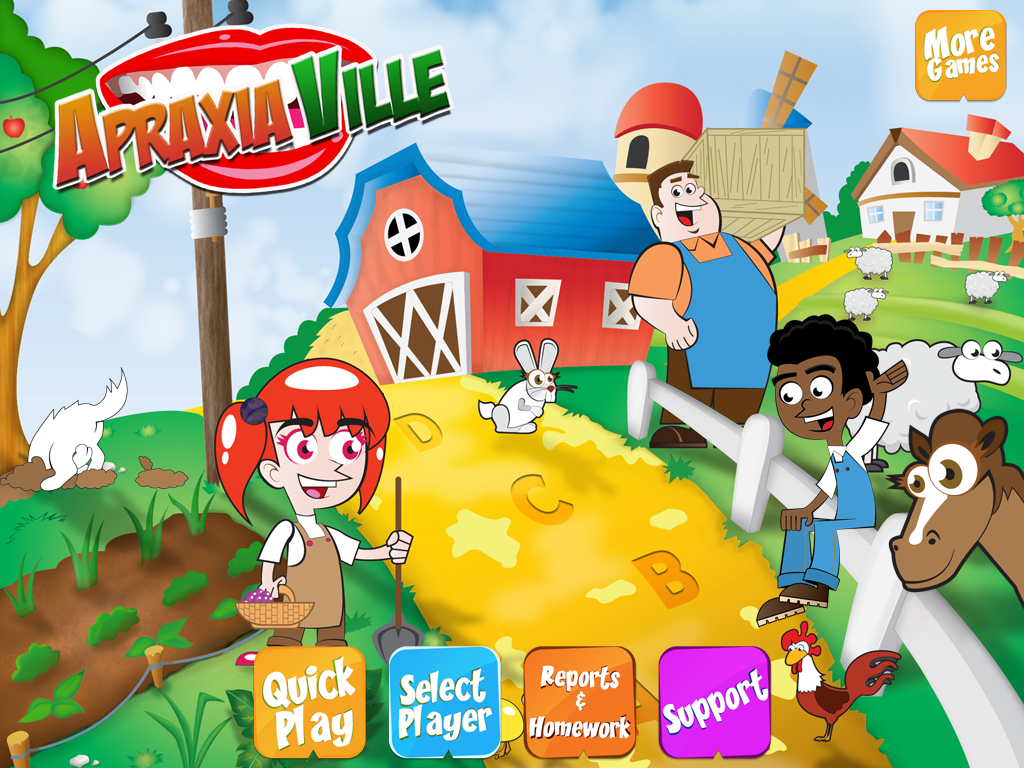
    ApraxiaVille is an app from Smarty Ears, and is the newest speech app that I have downloaded to use at work and with Ashlynn my daughter with CAS.
    To get started, you create your players.  You can make an avatar, or import your own picture.  The application allows up to four players, which is nice from an SLP perspective, since you can use it during group therapy.
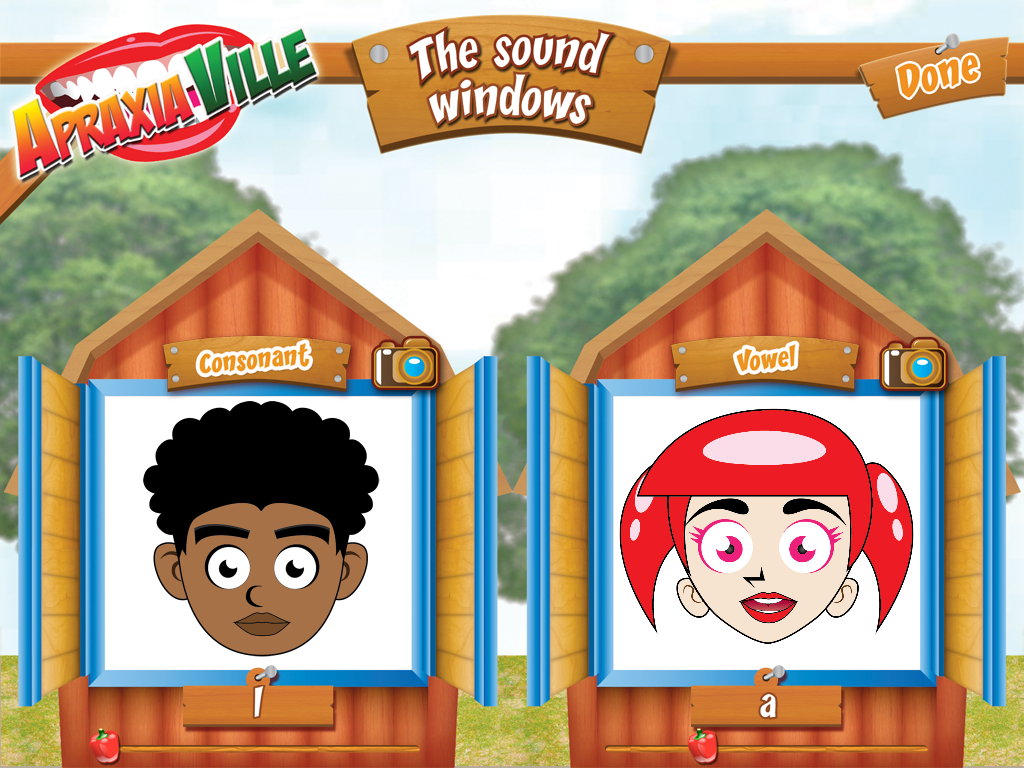
    Next, you choose your activity from a list of three.  The first activity is the sound windows, which allows the child to practice a sound.

    The avatar gives the child a visual and audio cue on how to say the sound.  In the upper right corner is a camera, and if you press it, the child can see themselves in the window as they try to mimic how to say the sound.  I was a little skeptical about this, but I tried it with Ashlynn (my daughter who is 3 and 1/2) on a sound she hasn’t been able to say.  /f/  I have cued her and showed her the current production many times, but she loved seeing it on the avatar and then looking at herself in the camera.  Guess what?  We have /f/ in isolation!  Wahoo!

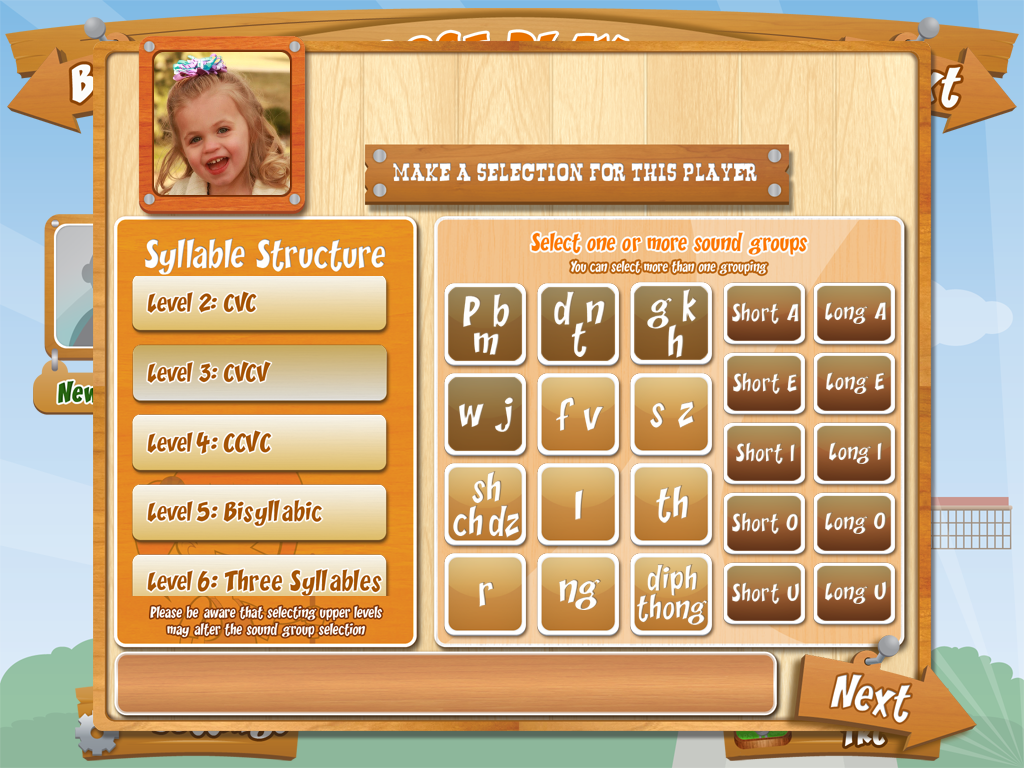
    The next activity is the Farm house.  In this activity, you can choose from a variety of syllable structures and sound groups.  This is exactly how apraxia therapy is usually structured, from easier consonant vowel combinations all the way to four syllable words.

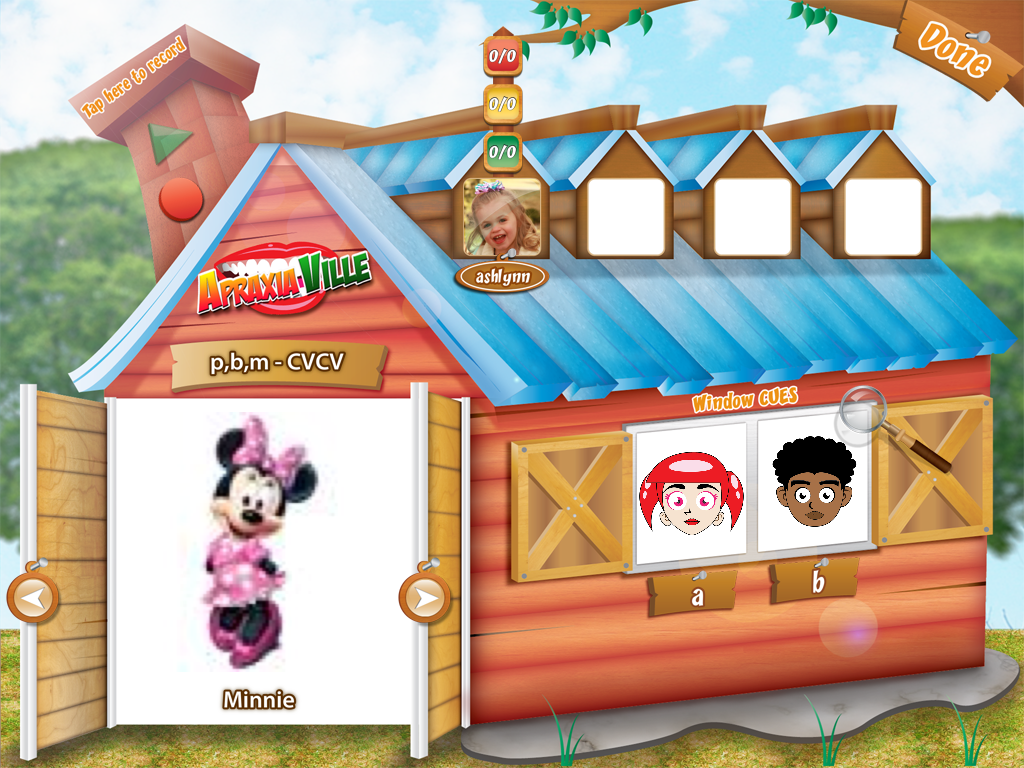
    What I really like, is that you can customize it for the child.  For example, they have consonant groups, but if your child can’t produce one of them, you can go to settings and just choose the words you want your child to work on.  You can also add your own words and pictures to the rotation, which is also awesome.  My daughter has a tendency to drop medial ‘n’ and ‘d.’  She really likes Mickey Mouse Clubhouse, so I added pictures of Minnie and Toodles. Then you can record the name to correspond with the picture.  I also think this would be great if you wanted your child to practice family member names, pet names, etc.

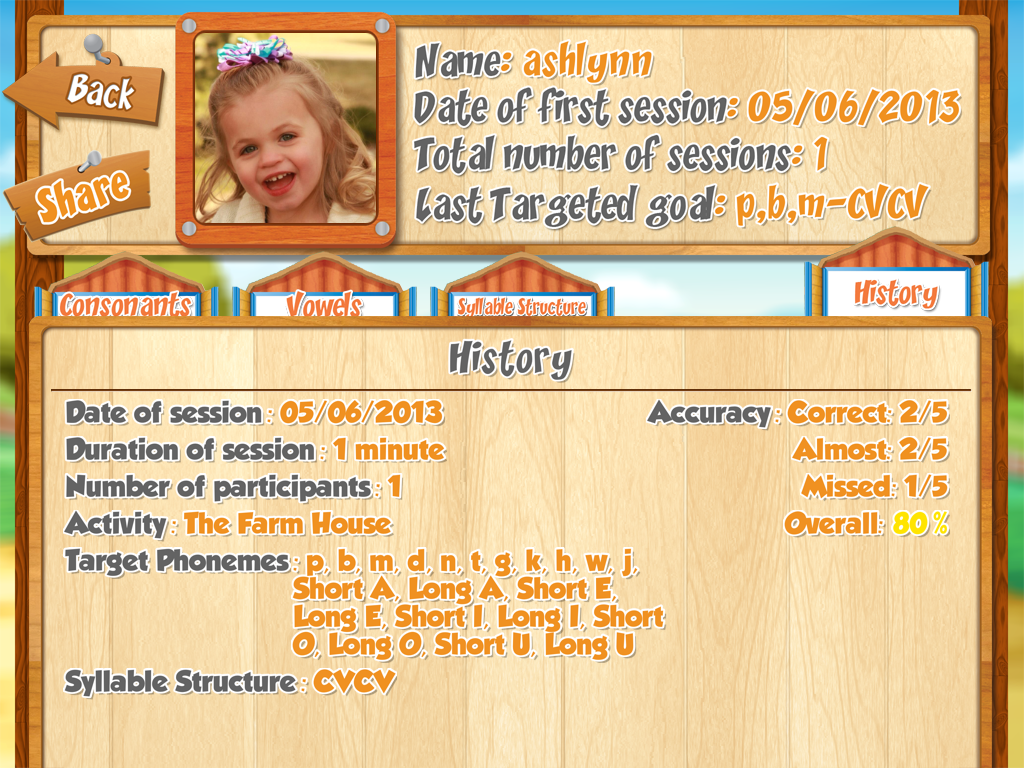
    Once in the farm house, you can practice the words.  A scoring system is set up above each child’s picture to record data.  There is a record feature in the chimney to record and playback the child’s production, and there are the avatars on the body of the barn to model appropriate production for a sound if needed.  After the activity, you can obtain a spreadsheet that collects the data with the option to email it.  I love this option as an SLP.

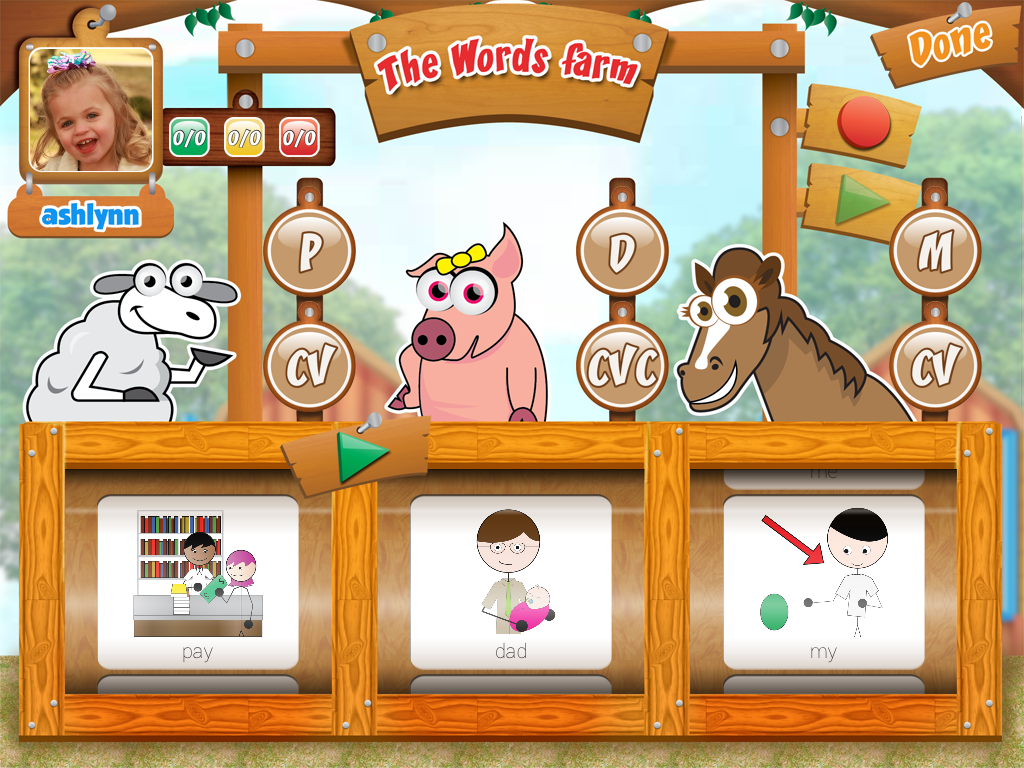
    Finally, the last activity is the Words Farm, where you can choose 2-3 words to practice.  This is great for doing targeted blocked and/or randomized practice necessary when using a motor based approach to therapy.  This activity only allows one child, but again there is a record/play function, and you can take data that will be generated into a spreadsheet at the end of the activity.

    What I Love:
    – Has practice items on a syllable structure hierarchy used with apraxia therapy
    – Can customize sound and syllable combinations to only include those in the child’s repertoire
    – Allows for adding your own additional pictures from your child’s own life with ability to record
    – Avatar’s give visual and auditory cues with a camera feature so the child can immediately practice
    – The second activity allows up to four players, which is helpful in group therapy
    – Data collection feature that is automatically generated into a spreadsheet and can be emailed and/or shared electronically

    What it’s Missing
    Though the app is colorful and visually appealing to kids, there really isn’t any game or reward to it.  It would be nice to have some fun reinforcement for practicing the words.

    Overall impressions
    Overall, I think this is a great app for young kids with Childhood Apraxia of Speech.  I would recommend this application to parents and SLP’s.

  • First annual Apraxia Awareness Day! What it means to me as a mom and SLP

    First annual Apraxia Awareness Day! What it means to me as a mom and SLP

    I never thought when I was going through school to be a speech/language pathologist, or when I became a speech/language pathologist, that I would one day have a child who would have apraxia. It’s funny, because before I had Ashlynn, I was still drawn to the disorder. I was highly disappointed about the information that was available on it in graduate school. I think I have a packet of maybe 20 papers that discusses Childhood Apraxia of Speech (CAS), and that’s it. Luckily, I had an amazing mentor who was able to take me to a conference given by Ruth Stoeckel from the Mayo Clinic in 2005. I still have her packet today, and have shared the knowledge I gained there with many colleagues.
    In 2008, I had a child enter my school and on my caseload when he was in Kindergarten.  He did have an IEP from Early Intervention; however, therapy had been primarily unsuccessful.  One day, he pulled out an alphabet BINGO game I had on my shelf.  He proceeded to say every letter sound in isolation.  I quickly realized he must have Childhood Apraxia of Speech (CAS)!  Apraxia is a motor planning disorder that affects a child’s ability to accurately plan, sequence, and execute the sounds needed for intelligible speech. Since he could say all the sounds in isolation, it was clear to me the breakdown must have been in the sequencing.  I pulled out my packet from Ruth, and searched for resources.
    Fortunately by the end of the school year, he was talking in sentences!  That’s the power of information.  That’s the power of awareness.  That’s the power I hope other SLP’s who may only have a 20 page packet from grad school get when they are called attention to Apraxia Awareness Day.
    I am so grateful that there is now an Apraxia Awareness Day, not only for the children affected by CAS and their families, but also for the professionals who treat it.  We all know that early identification is key, but many kids can be identified much sooner than they are!  I currently am in another school building, in almost the exact same situation.  I have a child from a bilingual home come into Kindergarten nonverbal.  Now that I have more experience, now that I’m armed with more information and more tools, we started making progress the first week.  Though I’m happy for his progress, I am sorry for it’s tardiness.   Especially, for his sake.  He is so smart.  He can point to any sight word in English AND Spanish, but just can’t put those sounds together coherently.  He’s frustrated and embarrassed.  This shouldn’t have to happen to any more kids, and this is what Apraxia Awareness I hope, will accomplish.
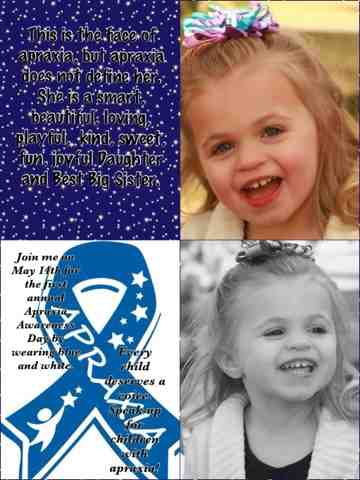
    As for my daughter?  I could never have fully appreciated the disorder outside the disorder, if it wasn’t for her.  In her I see it’s humanity and complexity,  it’s heartbreak and hope,  it’s tenacity and victory!  My 3 year old daughter has taught me more about CAS then graduate school, then professional developments, or my professional experience.  I can only believe that God chose me to be an SLP for a reason, and that my daughter has CAS for a reason.  I don’t want to disappoint Him, and I don’t want to disappoint her;  so I stand up for all the kids who DESERVE  a voice to raise awareness on this first ever Apraxia Awareness Day!
     
     
  • “I Will Wait” Struggles have made victory that much sweeter.

    Ashlynn’s progress continues to grow by leaps and bounds.  So many times I catch myself smiling and my eyes well up with tears to see her knock down all of her obstacles.

    Last month she learned to jump for the first time at 3 1/2.  At the beginning of the year, it broke my heart to watch her try on a classroom trampoline.  On their turn, all the other kids exuberantly bounced away.  When it was Ashlynn’s turn, all she could do was march.  Now, she is not only exuberantly bouncing, but she is catching air in my kitchen, on my patio, and even on her bed.  I was scolded for jumping on the bed, but I don’t care if she busts every spring and I have to buy  her a new one.  It’s worth it.  It’s all worth it.  Every penny spent, every happy and sad tear shed, every minute in therapy; it’s all worth it!  
    She also sang to a song that she had never heard before in the car last week.  Mumford and Son’s “I Will Wait” song was on the radio.  I was singing to it, and all of a sudden I heard her.  Her little voice filling the car with the chorus.  There are no words to describe the feeling.  I will buy the CD and put the album cover in her baby book. 
    These little triumphs, so sweet when  you have a child with a developmental delay.  She has taught me so much.  We may have had challenges, but we experience something so much sweeter when there are victories.  We appreciate all the little things so much more.  We never take for granted, not even for a second, her talking, her jumping, her SINGING.