Category: Childhood Apraxia of Speech

  • The Rise

    The Rise

    I have Ashlynn on a new game plan.  We had to take a break from her private speech because of unforseen financial issues in our life, but now we are back and better than ever.

    She’ll be seeing her awesome private SLP again on Tuesdays (who just happens to be my mentor, friend, and speech mom), and then Wednesdays we have insurance finally paying for 20 sessions, which is not to mention the two sessions she gets at school.

    Last night my husband took her in to the new SLP and she was given language testing.  Knowing I would never be satisfied with his summary, he prudently told the SLP to call me personally.  I had already emailed, called and left messages (oops), but hey.  I need to know this stuff.

    Well, tonight she called.  She was lovely actually.  Experienced.  Moms of kids with disabilities will totally feel me when I say, “I instantly had  a good feeling in my gut about her.”

    She told me she tested Ashlynn in language. I was anxious to hear the results.

    Before I get to that.  Let me set the stage really quick.  Two years ago, Ashlynn was tested at school as part of a re-eval.  The ONLY area, and I mean the ONLY area in the average range was her articulation skills, and even then, it was barely.   Language testing was no exception.  The one area kinda close to at least low average was a the receptive vocabulary test where she was to point to pictures depicting certain vocab words.  It was STILL slightly below the average range.

    I was devastated. Despite so much work at home, Ashlynn’s expressive and receptive language skills were tested to be significantly below the average range.  Beating apraxia at that point seemed pointless.  When Ashlynn actually spoke, most people could understand her now, but her language development was so delayed she still hadn’t really found her voice.  She spoke in scripts she had been taught. Sentence formulation consisted of scripts she’d practiced in therapy. If you have any idea about apraxia, then you know how jacked up it is to wish your child *just* had apraxia, and you might have a greater appreciation of just how damn freaking hard that sweet little girl has to work.

    BUT

    Fast forward to today.  The day I talked with this new SLP.  Ashlynn scored a standard score of 90 and corresponding percentile rank of 25 on the picture vocabulary test!!  DEAD average for receptive vocabulary skills.  My heart was leaping out of my chest.

    With a sympathetic and somber voice, she told me Ashlynn had just barely squeaked in the average range for a measure of relational vocabulary, which is telling how two things are alike.  My heart started singing and I think I took her aback.  I had to hear it again. Wait, she scored in the average range for what?? Tell me again.  Well, it’s the low average range, borderline really, but yes……

    I zoned out.  I checked out and started cheering.  OMG.  I work in the schools with her school SLP and this is what they have been working on!!  It’s working!!  She’s doing it!!  We are climbing!! We are RISING!!  We are OVERCOMING!!  I texted her school SLP.

    “Private speech gave Ashlynn the TOLD and she scored in the 25th percentile for picture vocab and 16th for relational. That’s ALL you.  Thank you for working with her.  I can’t believe it!”

    Her response was golden: “I believe it!  Ashlynn needs the gift of time to develop and mature.  Her brain is working hard right now but it will get easier and better!  Proud mama time!!”

    Um…people..cue the waterworks.

    It took me some time, but I finally found Ashlynn’s village.  I can’t help her overcome on my own, but I found a village who not only believes she can, but is helping her to do it.  There are so many working parts.  There is general ed, and special ed.  There is school speech and private speech. There is private OT and school OT.  There is physical therapy, extracurricular activities, and a legion of family members praying for her.

    Most importantly though, there is Ashlynn.  She is a fighter.  She doesn’t look like one, but she is.  That face is deceiving.  She has this understated determination, this quiet ferocity, and this unceasing resilience.

    It’s good to look back and see what we have conquered.  At times though, it’s too overwhelming to look up and see what’s left ahead.  So in this present moment, we will look a few steps in front of us and as my dad always says, “just keep your head down and working,” and one day, we will reach the top.



  • Apraxia and the village.

    Apraxia and the village.

    I work in the schools a few days along with my private practice work.  I say I work in the schools because I like working in Ashlynn’s school, and that’s partially true.  However, I have always in my career had at least one child on my caseload with apraxia in every school in which I have worked.

    If you have a child with apraxia, you’re probably thinking, “what’s the big deal?”

    If you are an SLP, you might be thinking, “Wow!  I’ve only ever had one, or none, or….”

    Anyway, if you are in the apraxia community, you know about the “apraxia coincidences” and if you know me, you know I don’t believe in coincidences.  So part of me feels like I’m put at a school I am at because I can be of service and have a connection to a particular child, with Ashlynn’s school being no exception.

    Currently I have a 4th grader that I see and I can only say so much because of confidentiality, but I love this boy.  Actually, I wrote about him once.  You can read about it here, but it turns out, I was right.  He’s gifted.

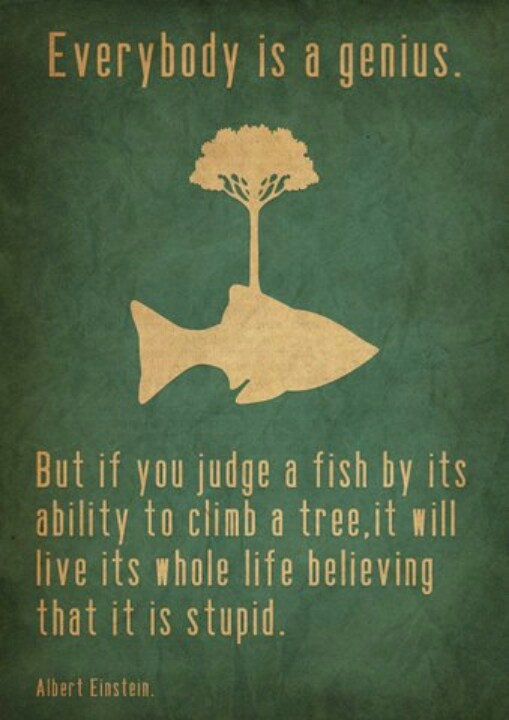
    Ha!  As I went to link that last post, I had actually included this graphic two years ago.  How things come full circle right?

    Anyway, his nonverbal IQ is off the charts and now he’s in the gifted program.  However, he’s a fourth grader and still can’t read or write, such is the extent of his disability.  I can’t imagine being so smart, but being unable to read or write.  Such is his life.

    We have every AT tool at his fingertips.  Technology though still hasn’t totally caught up to the extent of his disability.  His grades remain sub-par, and he is unable (and many times defeated so he’s unwilling) to produce any written work.

    There are sooo many people in this boy’s life who believe in him and who want to help him.  Meeting after meeting takes place behind the scenes.  I’m serious.  If you don’t work in the schools, you have NO idea the mobilization and time occurring on behalf of our children.  I know his parents don’t.

    Anyway, after at least two major meeting of the minds with every professional expertise (OT, Speech, SPED, gen ed, ATRT specialist, TA), we finally came up with a plan we thought will help him become more independent with his school work regardless of current reading, writing, or spelling ability.

    We set a meeting date of today with ALL of these above listed professionals and the child.

    Let me take a quick digression.

    A week ago, I posted on my SLP Mommy of Apraxia/Dyspraxia Fb page that the librarian at the school stopped me to show me this book called “Fish in a Tree.”  The book is written by a woman who had dyslexia as a child, and writes a fictional novel based on real life events about her life and the people in it.

    The librarian read this one chapter to me the other week, in which the girl’s teacher listed famous minds of our past and current generation.  They all were brilliant, but as it turned out, they were all believed to have had dyslexia.  I was so inspired.  I couldn’t WAIT to read it to my 4th grader.  The librarian was going to read it aloud to the entire class during library time, but she wanted me to read it to this child first so he knew we were all thinking of him.

    Today I got the chance.  I asked him if he knew the names of the people and what they were famous for.  He didn’t disappoint.  He can’t read, but he knew most of them as I read them to him:

    Thomas Edison? – “Invented the light bulb”

    Alexander Graham Bell?  – “Invented the telephone”

    Albert Einstein? – “Really, really, really smart.” 🙂

    Walt Disney? – “Made Pluto!”

    The list went on, and as I read the pages to him, some he knew and some he didn’t, I swear I could see a spark glow in his eyes and it was everything I could do not to cry.  People, this boy is as brilliant as all these people I was reading to him.  I honestly believe that, and it’s not just me….EVERY professional who works with him feels the same way; but if  you can’t read, and you can’t write and you’re in the fourth grade, you don’t feel that way.

    I barely got through reading the entire thing without completely breaking down.  When I finished there were stars in his eyes.  I’m telling you.  Bright, bright stars, and he smiled as he said, “Wait, all those people were like me!  They couldn’t read, but they were super smart and they invented stuff BECAUSE they weren’t typical.”

    I nodded my head.  That may not be a completely accurate assessment but I sure wasn’t going to contradict it, would you?  Oh, and I should mention, his comment came after a therapy session we had a few weeks ago in which I showed him Mikey from Mikey’s Wish who was talking about “neurotypical” and “neurodiverse.”  I knew he was alluding to this because he was inspired by the idea of being “neurodiverse.” (Thanks Mikey).

    As fate or coincidence would have it (coincidences aren’t coincidences), let me take you back to the meeting of all the professionals, the village, that helps this 4th grade student.  We scheduled another meeting, this time to include him.  It just happened to be that it was right after I read him those excerpts on these brilliant minds needing to find another way to express themselves.

    I took him to class where the meeting was about to take place, and his awesome 4th grade science and math teacher, who had already prepped him (for being in such a daunting meeting by himself with so many adults) told him we are here because we believe in him, and sometimes great minds have to find another path to greatness.

    His eyes lit up.  “Like Albert Einstein, and Disney, and the guy who invented the telephone!”

    People, the tears were in full force behind my eyes, but I still didn’t let them go.

    As the entire special education and general education team piled in, I watched this incredible strong and resilient 9 year old, listen to the plan set before him.  He was surrounded by people who loved him, but still.  He was outnumbered by 1:9 and he listened to our plan on how to help him read and write using technology, and, get this….his VOICE.   Yes, his VOICE would be a huge part in his written output via voice memo, and that’s possible, because he has one.

    We are all under no illusions.  We know this will be hard for him.  We know he will be frustrated and maybe even resist.  But literally, 8/9 people at that table believe he is capable (the 1 out-liar being him), and as one of his reading specialists said, “Maybe he doesn’t believe he can do this, but hopefully he will remember all the adults who think he can and it will keep him moving forward.”

    I was so proud to be sitting there as part of his team….his village; because we all know, these kids need a village.  I was trying pretty hard to reign in my emotions.  I thought about how lucky Ashlynn is to have this village too.  I don’t need doubters in her corner, I need believers; and I really know we have that.

    Oh, and about my 4th grader.  Believe me when I tell you he has BIG ideas.  His ideas cannot be adequately explained through his reading, his writing, or even his voice. I predict one day these BIG ideas will be turn into something even bigger.  I look forward to seeing it.


  • Neurology, delays, a dream, and a miracle.

    Neurology, delays, a dream, and a miracle.

    Most parents of kids who have a child with global apraxia will at some point visit the neurologist.  It’s usually before the age of 7, which is the age Ashlynn is today.

    I remember the referral, although the dates are a little fuzzy.  We were either at Ashlynn’s 6 or 9 month checkup and I had to fill out one of those dreaded developmental screens.  Don’t get me wrong, as a professional I’m very, VERY pleased my pediatrician had them; but as a parent each question only served as a slap in my face to everything in which Ashlynn was behind and it was hard.  Really hard.

    Well anyway, I had mentioned Ashlynn had very tight calves (or heel cords) as the professionals view it.  The pediatrician, knowing I was in the profession tread lightly.  The result though was a possible referral to the neurologist.

    I declined.

    So curious to me now.  Why did I decline?  Why wouldn’t I have at least gone to the appointment?  The pediatrician, sensing my hesitation, told me to massage her calves in in the bathtub every night and come back and we could re-evaluate at her next well baby visit.  I pounced on the cop out and religiously massaged her calves every night.  By the time of her next visit, her heel cords were looser and she could flex her foot.  I remember being praised by the pediatrician for Ashlynn having such an involved mommy and she left it up to me if I still wanted the neuro referral.  Of course I said no.  I could help her.  I could do this.  I thought for sure when Ashlynn started walking, she would be a toe walker, but she wasn’t.  We had to remind her when she learned how to stand to keep putting her heel down, but you would never detect even a hint of toe walking now.

    Anyway, that’s water on the bridge, because yesterday found me and my seven year old Ashlynn finally at the neurologist.  I actually would have went sooner, but our insurance sucks!  I knew going to a neuro would mean a recommended MRI at least, and our insurance comes with the lovely 80/20 policy and a deductible of 5K anyway before that kicks in, so I had to be willing to pay of out pocket basically for her MRI which I wasn’t willing to do.  We have her in all the right therapies, I would wait when maybe my insurance would get better.  This past year I switched the kids to my insurance plan.  It still has a high deductible, but is more manageable and at least offers 20 visits of speech and OT a year, so it’s now or never.

    Ashlynn’s “ballerina toes”

    The appointment itself was good.  She took our case history, and did an exam on Ashlynn.  She was a lovely
    person who commented how she could not detect any heel cord or tight calves now, what a great and friendly personality Ashlynn has, and when she watched Ashlynn run, commented on how good it looks considering all of her motor planning issues.  I was so proud.  I told her Ashlynn works hard and gross motor skills are the area in which Ashlynn is seeing the most progress.    I added that the school PT said she will probably meet all of her goals and be within the average range within the next year.

    She was a resident, so she went to get her supervisor for the final conclusions and recommendations.  The supervisor came in and examined everything she missed.  I felt bad because in five minutes this woman identified an under-active gag reflex, oral apraxia, and verbal apraxia (based on a measure called the diadochokinetic rate).  She didn’t say this aloud, but I knew as an SLP that was what she was examining.  They recommended a Tier 1 level of tests first which include an MRI and genetic micro-array testing.  I nodded my head.  It’s what I was expecting.  I know many, many kids now in the apraxia world and this is the next step.  We want to see if there is an actual cause we can pinpoint for all the motor planning issues.

    Then, this.

    “We would classify her at this point as a developmental delay (insert loss of breath.  Loss of breath even though I KNOW she has this, it’s just so hard to hear) and that she’s functioning right now around a 4 year old level.”

    I just stared back at them.  I was thinking, what on Earth did they do to just decide she’s functioning at a 4 year old level?  They heard her talk, ok.  They have my case history, ok.  I wouldn’t put her at a 4 year old level based on that.

    “Does that sound about right?”

    I kept staring.  Her dressing skills.  They asked me in detail about her personal care, adaptive skills we call them, and, oh yes.  Yes.  She can’t brush her teeth independently, still can’t spit, can get dressed independently but usually has things on backward or on the wrong feet……the adaptive skills is what gave them this conclusion….

    “Ms. Smith?  Does that sound about right?”

    I nodded my head.  I couldn’t get any words out.  It felt cruel.  It’s not their fault, it is just the way these appointments are.  I thought of Ashlynn’s four year old brother on the way out.  He can get dressed independently, brush his teeth independently, spit, can almost shower by himself…..punch in the gut.

    I looked over at Ashlynn holding my head walking out of the hospital.  She was smiling holding my hand, and holding a notebook and pens in the other hand.  Always working that girl.  ALWAYS.  During the appointment she “took notes” for the doctor and gave them to her at the end.  The doctor who smiled and was nice to her believes she’s functioning 3 years under her actual age level.  Similar to the day she was dx with CAS and Ashlynn smiled at me and said the one word she could, “hi,” she remains happy and with a positive attitude.  I wanted to cry, but I won’t.  That’s not to say I’m against crying.  It’s just to say it’s not how I want to process it all.  I will write it all out and when Ashlynn looks at me I will smile because that is what she deserves.

    I turned on “The Fighter” by Gym Class Heroes.

    “Just waking up in the morning
    And the be well
    Quite honest with ya,
    I ain’t really sleep well
    Ya ever feel like your train of thought’s been derailed?
    That’s when you press on Lee nails
    Half the population’s just waitin’ to see me fail
    Yeah right, you’re better off trying to freeze hell
    Some of us do it for the females
    And others do it for the retails

    But I do it for the kids, life through the tower head on
    Every time you fall it’s only making your chin strong
    And I be in the corner like mick, baby, til the end
    Or when you hear this song from that big lady”
    One last thought.  My dad has never been a dreamer and he certainly did not encourage us to dream.  He encouraged us to work, stay out of debt, and have a plan B.  He’s a practical man.  I think maybe at one time he did have dreams, but they were crushed slowly until they were snuffed out.  Between Vietnam and then coming back with no college degree and no credit, he was a blue collar worker his entire life.   That’s why it was surprising the other day when my mom called me and said,
    “Dad wants to know if you know what Ashlynn’s name means?”  Seems like something I would know.  I didn’t know though.
    “No, what?”
    “To Dream,” she responded.
    We both paused.
    “Wow” I managed.  “Dad told you to tell me that?”
    “Yes.”
    I was silent.  Honestly it was hard to process.
    “He told me the other day too, Laura, he believes Ashlynn will be a miracle.”
    Silence.
    “Wow” I managed again.
    So Ashlynn, one day when you are reading this, I want you to remember that Christ once told us in Matthew 17:20 “And he saith unto them, Because of your little faith: for verily I say unto you, If ye have faith as a grain of mustard seed, ye shall say unto this mountain, Remove hence to yonder place; and it shall remove; and nothing shall be impossible unto you.”
    So work baby girl, and I’ll work alongside you;  but most importantly DREAM and BELIEVE and your entire family will be here dreaming and believing alongside of you.
    My dad with four of his grandchildren including Ashlynn
    To read more from SLPMommyofApraxia follow her on facebook, pinterest, or twitter.
  • The problem with school SLP’s.

    The problem with school SLP’s.

    I only realized after being a part of the special needs community that school SLP’s have a bad rap.  Like a really, REALLY, REALLY bad rap.  

    I’m preparing a talk next month for Colorado school SLP’s, and every time I prepare a talk for this demographic, I have to tell you they have a special place in my heart.  No, it’s not just because I started as one and work as one part time, but it’s because I have literally worked under, with, and around many, many, MANY of them. I have worked with so many of them, and I can tell you they are a jack of all trades.  They are the EXPERT in eclectic, and may be the ONLY person in the school who understand in depthly just how a student’s unique communication challenges actually affect them in school.

    In the schools, you don’t have the option to specialize.  Kids from every disability show up on your caseload and you are expected to be the expert.  It might be hard to understand as a parent, but there are soooo many different disabilities and speech and language disorders, and a parent (rightly so) expects the SLP to do right and best for their baby.

    Every single SLP I know and have met has a desire in their heart to help children.  Please, let that sink in.

    When I took Ashlynn to her first private SLP who had never worked in the schools she was asking me about qualification.  She asserted that she could never be a school SLP because she felt it was unethical to not qualify students who clearly had some sort of speech or language problem.  I had a hard time refuting her.  Aside from saying qualification is different in the private versus educational sector, I really had no excuse.  I know that funding is limited in the public sector so that obviously plays a part in qualification.  I also know if every SLP took her stance, than NO kids would be serviced in the public schools, and is that really what we are going for?

    Public school SLP’s have caseloads that are probably double if not more of the private SLP.

    Where the private SLP can see kids 1:1, school SLP’s rarely have that luxury.  With weekly caseload averages around 45 to 55 and some maxing out at 90 (Yes 90 people I’ve seen it), even the most skilled SLP will not be able to do what a private SLP can do 1:1 for 45 minutes (though they will kill themselves trying).

    The result?  Parents become outraged at the lack of progress or progress they feel the child should be making. They surmise the school SLP just isn’t as good as the private SLP and they become disillusioned and write them off.  They post memes about preparing for battle when going into an IEP meeting! This honestly breaks my heart.  I feel bad for the parent who feels the SLP doesn’t care, and I feel bad for the SLP who is trying to manage an unmanageable caseload, writing IEP’s at night, or staying up until 2 Am (true story from an SLP I just talked to last week) to write a lesson plan, only to be ravaged by a parent unsatisfied with the results.

    I’m not sure if everyone is aware of this, but ANY SLP in ANY setting is as qualified as the next SLP by basic certification standards.  What does that mean?  That means, as long as an SLP received their masters degree and the Certificate of Clinical Competence (CCC) through ASHA they can work anywhere.  So that means, your school SLP can apply for a job at Children’s Hospital right now and probably get hired tomorrow (because in case you didn’t know there is an SLP shortage as well).  For some reason though, there is this perception that the school SLP just isn’t as good as the private SLP.  If it’s true, it probably has MORE to do with caseload and workload size than it actually has to do with the qualification of the SLP.

    I get calls and emails all the time from concerned school SLP’s desperate to meet the needs of their kids with apraxia but not knowing how.  They want to see the kid more, or see the child 1:1, but their caseload simply does not allow for it.  They cannot add more hours to the day, yet they still call, or write and wonder if there is something they have not yet thought of.  Oh, and here’s a dirty secret.  Listen close.

    Are you listening because this is VERY important.

    If an SLP feels in their heart a child needs private, supplemental speech services, they CANNOT say it.  People, they CANNOT tell you this.  Why?  Well, their license and job is on the line.  In most cases, school SLP’s are told not to recommend any sort of outside therapy.  Why do you ask? Why?

    I’ll tell you.  If a school SLP recommends outside services, the parent can sue the district and win, and potentially disbar an SLP from ever practicing again.  Are you asking why again?  I’ll tell you.  If a school SLP recommends outside services, they are essentially saying that the child can not benefit or make progress from the therapies provided by the school, and the school is required by law to show progress.  If the SLP recommends outside service thereby saying the school is inadequate, the school gets worried or they will get sued for not providing adequate services and the SLP potentially fired.

    Would you take that risk?

    I’m not saying unilaterally every school district would do this, I’m just saying, school SLP’s are told this is a possibility, and so they would find it best not to recommend outside services.

    You need to know this as a parent of a child with any disability.  Some SLP’s will risk their professional license and recommend this to you.  Let me  tell you though what they are risking.  They are risking 4 years of a bachelor degree, 2 years of a masters degree, 1 year of a clinical fellowship, and the usually 3 years of probationary status as a teacher.  That is an entire decade of work and dedication to a profession they love and believe in.  Would you take the risk then to recommend a parent pursue outside therapy?  This is where they are at!  It is truly a catch 22.

    If you are upset about your school services, you probably have every right to be!  I was VERY unhappy with Ashlynn’s preschool, in-class only, speech/language services.  However, it is important to place the blame on the right entity and in most cases I can assure you it is NOT on the school SLP’s shoulders.  In Colorado, the Colorado Department of Education mandated an inclusion model only of special education services in preschool thus making it extremely difficult for any school SLP to pull a student out into a 1:1 session.

    My message today is this: School SLP’s are some of the most phenomenal group of people I ever have the honor to speak with or to. They do not get the option to specialize, and so they pursue advanced training and expertise in every disability that may affect communication: from Apraxia to Angelman’s Syndrome, from Developmental Delay to Down Syndrome, from Cerebral Palsy to Stuttering, from Language Impairment to Nonverbal Learning Disability, from Assistive Technology to Autism, from Auditory Processing Disorder to Articulation Disorder,  school SLP’s will see it all and be expected to rise to the challenge.  They cannot “refer out” or “discharge for lack of progress” as an can be done in private speech. No, the school SLP is expected to figure it out regardless of the lack of resources, lack of funding, or lack of time.

    They will be faced with limited or no space, they will be strapped with high caseloads, and criticized by parents; yet they will persist and pursue only becoming better for it, because of their love for the children and the profession.  I personally have witnessed it time, and time, and time again!

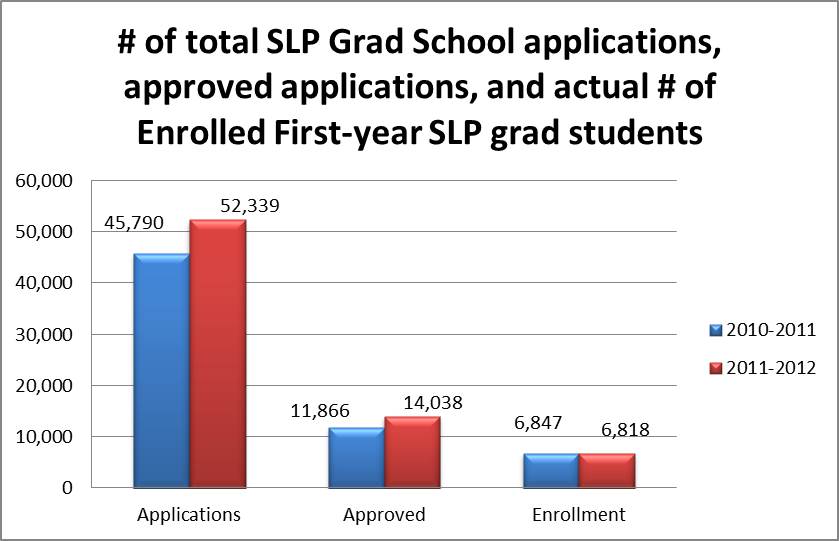
    I can tell you firsthand, getting into graduate school for speech/language pathology is VERY difficult.  It is highly competitive, and here in Colorado, the average COLLEGE GPA was a minimum of 3.87 when I applied.  I found this graphic from 2011 but I can tell you things have not changed much.  There is a HUGE gap between the number of applicants and the number of people selected. 

    The disparity should be striking, and please remember that MANY of these applicants will be YOUR school based SLP.  If you have the mentality that “C’s get degrees” and you are certain your school based SLP fits the latter, let me correct you.  NO average C students make it to graduate school in the first place for speech/language pathology.

    Truth

    For my final thoughts I wish not to be adversarial.  I hope that this article has persuaded you, a parent OR SLP, to reach out to the other side and bring about the change you wish to see.  I have the unique perspective of being on both sides, and as such, I have the utmost RESPECT and LOVE for both sides.  I truly wish for there to be a conduit of communication, and not a  ridge of animosity and distrust; and at the the forefront, I wish to impart a spirit of solidarity between my professional and special needs relationships.

    To read more from SLPMommyofApraxia follow her on facebook, pinterest, or twitter.


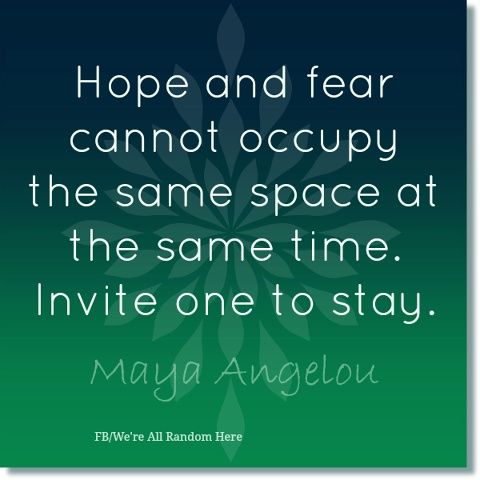
  • There is either fear or hope.  Pick one

    There is either fear or hope. Pick one

    Life would be so much less complicated if we lived on breaks.  haha.  Yes, that is my opener and I realize it’s not only a statement captain obvious would make, but it’s completely devoid of reality.

    Seriously though, breaks are awesome.  Family comments how far Ashlynn has come.  We are all stress free (well at least from school and work stress).  We can spend time as a family doing things together we wouldn’t normally have time to do.  We’re not in “go” mode all week trying to get to school, to therapy, get the homework done, and all the other million appointments we have.

    I don’t have a daily reminder of how hard things are for Ashlynn, like tonight, doing homework with her again.  Don’t get me wrong, she’s improving…so, so SO much.  It’s just, when we’re doing homework,  I realize we’re improving, but nowhere near the pace the class is going.  I feel like Ashlynn is more keenly aware of it too now, or maybe she always has been and now she can just verbalize it.  Tonight we did her reading, her math, and then practiced her spelling test.  I think she said at LEAST 8 times something like, “it’s just my brain!  ugh.”

    We are not punitive.  We are patient.  We tell her EACH time, something to the effect of, “Ashlynn, it’s okay sweetie.” and I might add, “you have apraxia and also have a hard time getting the words out, it’s okay.  The more you practice the better you’ll get,” but then she’ll stumble on a word again, or say the wrong number when we are counting by tens and hit her head and again announce “Ohhh my brain!’

    Hearing it once is hard.  Hearing her say it twice is hard.  Hearing her say it repeatedly despite our words of reassurance and patience is excruciating.

    Damnit.  Damnit.  I had to walk away and have my husband help her.  This isn’t fair!!!

    I got on my phone and checked fb.  In the apraxia group a woman posted a picture of her son crying while looking at a reading passage.  My heart broke all over again.  Stupid apraxia.  Stupid apraxia.  Ashlynn isn’t crying….yet.  Will she be? Will she get to that level of frustration?

    I was feeling down again.  Two weeks back at school and I feel sad again.  All that joy and happiness of the vacation gone.

    Then I read this.  A blog post by an adult who had grown up having apraxia.  She outlines the day she went back to her old reports and progress reports and how she discovered that in early elementary school she spent 80% of her time in special education. She says the reports all started with how teachers would comment she was a hard worker and tried hard. I immediately thought of Ashlynn.  Every report says that about her.

    She talks about how she just wanted to feel normal.  She says you could see her “subtle progress” through the years as she started spending more and more time in general education.  By highschool she still had report cards that said she was a hard worker and tried hard, but now she had a GPA of 4.5. She muses that she doesn’t even know when that transition from “special education” to “straight-A honors geek” even happened.

    She concluded that apraxia fueled her strong work ethic, and though she is sad she never achieved “normalcy” she decides maybe it was all for the best.

    I needed to read that right now.    I needed to read that because I needed hope.

    You know what drives parents of special needs kids?  You may think it is the love for them, and yes of course that is true.  However, at the core, even on the darkest days, what drives us to face a new day with strength while we hold their hand is….hope.

    Hope is the belief that despite any challenges we may face and how many times life will knock us down, we will wake up tomorrow still standing, still growing, and still achieving.  Sometimes hope may be a flicker, and other times a fire, but as long as it is still there, we will continue to rise

    again

    and again

    and again.

    Thank you Alyson for sharing your story AND re-igniting HOPE.


  • When you can talk but have no words

    When you can talk but have no words

    If you are familiar at all with apraxia of speech, then this meme makes perfect sense to you. Most kids with apraxia, especially in the early stages cannot communicate what they are thinking because they cannot talk or make the sounds make sense.

    (Not) fun fact: Some kids (I don’t know the percentage offhand), will also have an additional language processing disorder with the apraxia.  This adds another layer of complexity and makes it more difficult for kids to express themselves with language even if they can actually articulate all the sounds correctly.

    Such is the case with Ashlynn.   Now, to be clear, Ashlynn can  talk my ear off.  She talks so much sometimes I have to tell her to stop talking, like when she has food in her mouth or when we are brushing her teeth!  She speaks in sentences, has long sentences, has question forms, and is gaining new vocabulary words daily.

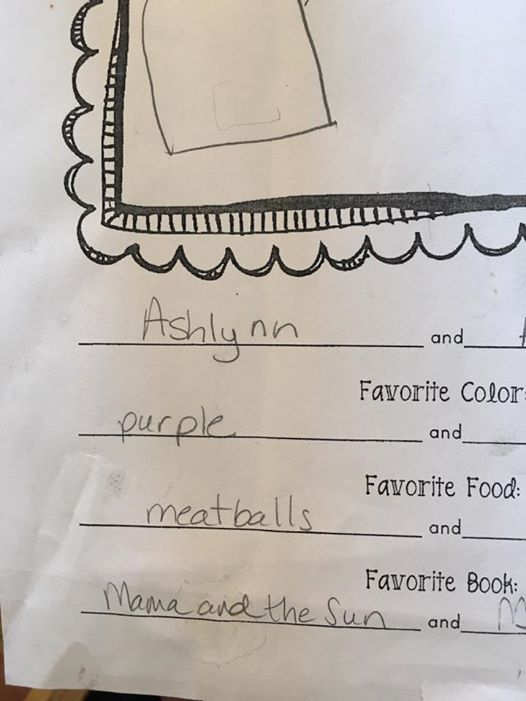
    The other day, she comes home with this paper:

    Seems normal, except, the only thing correct is her name.  She has never declared a favorite color, she doesn’t eat meatballs, and I’ve never heard of this alleged “favorite book.”

    “Ashlynn,” I asked.  “Why did you say your favorite food was meatballs?”

    “Ugh my brain!” she said as she slapped her forehead.

    “Honey, why would you say meatballs though?”

    She points to a cookie tupperware sitting on the counter.  Over break we had made Christmas cookies called Pecan Drops that are round little balls.  She says, “What are those called?”

    “Pecan drops?” I offer.

    “Yes! Pecan Drops!  Ugh my brain!” she exclaims.  Sigh.  Poor thing.  Can you imagine?  What must that be like?  She knew EXACTLY what she wanted to say, but couldn’t access the word pecan drop and settled on meatball instead.  Someone even wrote it down for her and she just had to go along with it.  This is what always amazes me about Ashlynn.  She like NEVER gets frustrated.  How is that?  Wouldn’t that be frustrating?  She was just happy she could spit out a word and complete the activity.  She didn’t care they didn’t know she was trying to say pecan drops.

    I look down the list.  What book is this?  We’ve never read this book?  Is this really your favorite book?

    “No,” she laughed.

    I looked at my husband and told him maybe one day one of these about me papers will be accurate.

    Later that day, I saw a fun game on facebook where parents were asking their kids to answer questions they asked them.  It was to show how much your kids pay attention and really know you.  Questions were things like, what is my favorite food, what makes me happy, etc.

    I asked my four year old and he was funny.  I told my husband to do it with Ashlynn and handed him the questions.  This girl who talks with her mouth full and while she brushes her teeth was reduced to a pantomiming nervous wreck.  I could have cried watching it.  She knows all those answers.  She pays more attention to us than anyone.  She will be the first one to notice a haircut, a new shirt, or change in the decor.

    My husband asks the first question:

    “What is something I say a lot?”

    I KNEW she would get this one.  She tells me what he says all the time.  She tells me “Daddy says he loves me forever.”

    She stood there and looked visibly anxious shuffling her feet from side to side.  We gave her processing time, we didn’t rush her, we were patient, we both asked again phrasing it differently, still nothing.

    “Ask the next one,” I said sure it would be easier.

    “What is something that makes me happy?” Cody questioned. I knew she would have this easy.  She waited a time and then just pointed at herself.  She didn’t even say her name.  It’s true she makes Cody happy, but I couldn’t believe she wasn’t saying the jetski, or his snowboard, or his video games.  Hmm.

    “What makes me sad?” Cody asked as the next question.  She pointed to herself again.  My husband gave a half smile.  “You don’t make me sad Ashlynn,” he said as I sat there feeling that exact feeling.  Sad.  This was so sad.  Where were her words?  When I say and write about crippling word finding, this is what I’m talking about.

    He skipped down.  Ashlynn has been to his work now twice with him for take your kid to work day.  She knows he works on computers.  He asked her if she knew what his job was.  She sat there and started shuffling her feet again.

    He asked the last question, “How much do you love me?” and she put her arms out wide, again with no words. 🙁 🙁 🙁

    Sometimes it’s such a cruel, cruel, cruel disorder.

    Seriously.